Blog in 2017: The Grenfell tragedy has resurrected the madness of fire privatisation

Grenfell_Tower_fire_morning

Grenfell Tower: The next morning Pic credit: Wikipedia

CROSS POSTED ON BYLINE.COM

This year my small news site received an extraordinary boost from a five year old post which appeared to have been regenerated by the Grenfell fire tragedy.

The Grenfell disaster showed the bravery of the London fire brigade in tackling such a grim scenario. Heroism and extreme tragedy side by side.

The post that got revived in the wake of the fire was the almost unbelievable story of how an Old Etonian baronet living in a semi in Wellingborough, Northants had got his hands on the management of London’s entire fire engine fleet for £2. It is probably still the most egregious act of privatisation in this country. He of course had to hand it back after a few weeks as he couldn’t run it.

sir aubrey brocklebank

Sir Aubrey Brocklebank: Sacked by the London Fire Brigade; Picture courtesy Daily Telegraph

The public authority had been powerless when the dodgy private company they gave the contract to maintain the fire engine fleet- Assetco London – handed over  London’s fire service to the baronet as the directors realising the game was up and fled the scene.

The good news here – though it has never been reported  by mainstream media-  is the authorities in their own slow way are ensuring the perpetrators get their just deserts.

Grant Thornton , the auditors for Assetco, have been fined  £3.5m (reduced to £2.275m  after they co-operated with the Financial Reporting Council) and found guilty of no fewer than 12 cases of professional misconduct.  The details are in this blog.

assetco_3417t

Assetco’s John Shannon stands astride two London fire engines

Robert Napper, the individual accountant  responsible for auditing Assetco was fined £200,000, reduced to £130,000 after  he co-operated  with the inquiry. He had already retired but I traced him to an Oxfordshire village enjoying his expensive wines. 

Now Assetco directors John Shannon, Raymond ” Frank ” Flynn and Matthew Boyle are to face a disciplinary tribunal by the Financial Reporting Council on January 15. The statement is here.

The press release reads: 

“The Formal Complaint contains multiple allegations against each of Mr Shannon, Mr Flynn and Mr Boyle. The Formal Complaint includes allegations they acted dishonestly or recklessly; that they breached the fundamental principles of integrity and objectivity in the manner in which they prepared the financial statements; and that their conduct fell significantly short of the standards reasonably to be expected of members of Chartered Accountants Ireland (CAI). The complaint covers a wide range of issues which pervaded AssetCo plc’s financial statements.

Some idea of what was going on has already been covered on this blog. Don’t hold your breath that the London Evening Standard will cover the story.

The original blog attracted over 2,500 hits when it was published. This year it topped my ratings with over 14,700 hits – showing that readers are interested in such issues.

Altogether over five years it has received some 20,000 hits.

The other stories have been posted on both my blog and byline.com – so the figures on my blog will be a small proportion of the number of hits on the stories.

The second highest hit from readers tells the heroic story of a London Midland train driver whose quick reaction in nine seconds prevented a commuter disaster near Watford. It  came out in an accident report and had over 5170 hits and can be read here.

ConservativesTwo stories about the plight of the Conservative Party also rated highly. A story revealing that membership of the Conservative Party had plummeted to 100,000 attracted nearly 5000 hits and one on changes to the Tory Party constitution attracted well over 1700 hits. The two blogs are here and here and on Byline here and here.

The real block to enormous boundary changes in Parliamentary constituencies is the DUP and this blog  and byline.com disclosed this last July. The links are here and here. 

On my site it got 2600 hits – mainstream media have finally followed it up last week but put the blame on Jeremy Corbyn instead.

Also popular was a blog on how secret influencers are bankrolling right wing  think tanks by the organisation Transparify . This attracted over 2400 hits on my site and the links are here and here.

dave-prentis-pic-credit-twitter

Dave Prentis, general secretary, Unison Pic Credit: Twitter

The attempt to force Unison to rerun the election for the general secretary Dave Prentis also attracted a lot of readers. Again the public hearings by the Certification Officer received no coverage in mainstream media except the Morning Star. All the blogs received over 1000 hits – the largest being  over 1850 hits for a blog publishing the statement of a former union official who accused the union of ” anti Democratic practices”. The link is here and here. 

The issue is not quite over as a judge is due to hear the opponent’s case again  for an appeal on February 8.

Three other issues made the top slots – the  bonus payments to top DWP civil servants who set up the hated Universal Credit payments which I also wrote up for the Sunday Mirror; the scandal of 3.3 million pensioners who will have to wait years for the state pension and the prospect of two Tory Lord Chancellors facing legal action for institutional racism over the appointment of judges and tribunal members.

All this has to show that there is a  public appetite for investigative journalism and the mainstream media are increasingly ignoring important stories by sticking to a narrow agenda. Much more to come in 2018.


The top Tory power grab that turns their party members into mere pawns

Rob Semple and Theresa May

Rob Semple, chair of the Conservative Party Convention, and Theresa May – the ” Old Elizabethans” Pic credit: Twitter

CROSS POSTED ON BYLINE.COM

Update December 21: Since writing this piece I have discovered that the Conservative Home website, had already raised  objections to the power grab a few days after the convention. The link to their story is here .

 It is good news  for democrats everywhere that  some Conservatives are challenging this. For avoidance of any doubt my Conservative source and myself were unaware of this when I published the story.

While  the public and press have been absorbed in Tory battles over Brexit the top hierarchy in the Conservative Party have mounted an extraordinary power grab behind the scenes that strips their ordinary members of any meaningful say in the running of their organisation.

On November 25 the party held a convention in Birmingham attended by 100 invited people which rewrote sections of the party’s constitution. For policy nerds I attach the document sent out by Rob Semple, chairman of the Conservative Convention and deputy chairman of the Conservative Party Board. I have also written about this in Tribune magazine.

Masquerading as ” small suggestions to bring us into the 21st Century “the convention agreed to rewrite the party constitution to remove references to constituencies altogether;limit the right of local associations to choose their own candidates and scrap the annual meeting of the Conservative Convention where people could listen and vote for candidates for top posts. Instead on line voting would be used for all top posts in the party.

The changes will go for final approval next March at a meeting of the Conservative Convention and will be put to MPs at a meeting of the 1922 Committee in Westminster the same month.

The Tories are hoping that by removing the word constituency from the constitution it will encourage people to form wider associations – which has had some success in Kent where six associations in the Thanet area have combined. But it also reflects the dire state of activists in some Tory constituency associations – where a number have now fallen to fewer than 50 members and operate from a P O Box address.

 The change in selection proposed in the constitution gives power to the candidates committee of the Board of the Party – whose members are appointed rather than elected. The new wording is:“The selection of all candidates, including Parliamentary, Police Commissioners, Elected Mayors and local government candidates shall follow a process in accordance with rules and guidance published from time to time by the Committee on Candidates of the Board of the Party.”

Not surprisingly the proposals have been  vehemently attacked  by Tory members who quite naturally believe if they join a political party – they should have some say in its policies and be able to choose their own candidates.

John Strafford, chairman of  Conservative Campaign for Democracy. said: “If these proposed changes are not voted down you might as well say The Conservative Party: The End”

 “And if MPs don’t take any action to stop these proposals they will find the only activists campaigning for them at the next general election will be themselves.”

 I did contact Conservative Central Office last week  for a comment but there has been no response and there does not appear to be a press release.

And in addition the review  into the failed General Election campaign by  Sir Eric Pickles, the former MP and chairman – probably about to be made a peer by Theresa May – contains one extraordinary overlooked proposal.

It suggests the Tory Party – which wasted £4.5 million on consultants to the failed campaign this year – could hand over lock, stock and barrel – the running of the next campaign to a private company.

This frankly is an extraordinary state of affairs in British politics for the 21st century.

Two parties – Labour and the Liberal Democrats – will fight the next general election with  the largest number of members and supporters  they have had for ages- reflecting a democratic revolution.

The top Labour Party people will be elected by the membership – there is an election for the National Executive Party going on now. So will the candidates.

But the  cash rich Conservative Party will basically turn itself into an unelected commercial organisation – where investors and private companies will decide the presentation of policies for the people.

The contrast could not be much starker. Labour will go into the next general election as a mass movement with a mass membership who can influence policy and decide on who stands for Parliament, the police and the local council.

The Tories go into the election as a small clique with their members little more than cannon fodder.

A libertarian academic suggested to me that the Tories had turned politics back four centuries – to the days when the Elizabethans and the Dutch Indies companies – used private investors to  create a joint enterprise to rule parts of the globe and general populus had no say. What an achievement in 2017.


Child sex abuse:How Lady Macur exonerated the Waterhouse inquiry over convicted paedophile Gordon Anglesea

lady justice macur

Lady Macur

gordon-anglesea-pic-credit-bbc-and-john-price

Gordon Anglesea: Now a dead convicted paedophile Pic Credit: BBC and John Price

CROSS POSTED ON BYLINE.COM

While the political world was convulsed over Brexit  Whitehall decided to remove one of  the major redactions in last year’s report by Lady Macur, an appeal judge, which reviewed the inquiry undertaken by Sir Ronald Waterhouse  in the 1990s into the scandal of child sex abuse in North Wales.

The redaction involves her investigation and findings into the  tribunal’s role  in investigating  Gordon Anglesea, a retired North Wales police superintendent, convicted of sexually abusing two teenage boys in October last year.

He is the superintendent who won £375,000 damages in 1994 ina libel case against two national newspapers, The Observer and the Independent on Sunday, the magazine Private Eye and HTV, the holder of the ITV franchise in Wales. His legal costs were underwritten by the Police Federation.

Anglesea claimed the four media organisations had accused him of being a child abuser during visits he made to the Bryn Estyn children’s home just outside Wrexham. He denied it and jury found for Anglesea.

The recent death of Anglesea – which meant he can’t appeal  his conviction last year- allows him to be named in her report for the first time. And the findings are interesting given the subsequent conviction of Anglesea by Operation Pallial, the National Crime Agency’s investigation and also the libel case in 1994.

The references to Anglesea are in the chapter on freemasonry. She examines the investigation carried out by the Witness Interviewing Team (WIT). This was headed  by Reginald Briggs, a retired Detective Chief Inspector who had served in the South Wales police force and was a Freemason.  She sees no conflict in  the tribunal employing a freemason to investigate another freemason. Gordon Anglesea was also a freemason.

“This Review has specifically considered whether there is anything within the material which suggests that the investigations made on behalf of the Tribunal into freemasonry was less thorough by reason of this fact. I have found nothing to suggest this was the case and illustrate the point below predominately in relation to two establishment figures identified during the course of the Tribunal as Freemasons, namely Gordon Anglesea and Lord Kenyon,” [ Lord Kenyon was a Provincial Grand Master, and a member of the North Wales Police Authority in the 1980s]

She accepts that one  survivor witness against Anglesea was difficult to trace and when finally contacted mentioned other people not him. Another witness who was in prison is described as ” fixated by Anglesea’s and his alleged involvement in a
paedophile ring.”

“The statement produced records his assertions that in 1991 he had seen part of a video featuring  Anglesea sexually abusing a boy and girl.

“The video had allegedly been stolen from a local Councillor subsequently prosecuted for
possession of a large quantity of pornography.

“He said he developed photographs from the video and sent them anonymously to the Chief Constable of the NWP.”

The tribunal concluded this witness was not credible and he was never called.

A lot of time was spent tracing people who might know Anglesea and about his visits to Bryn  Estyn including finding one freemason in the same lodge but he said he only knew him by sight.

The report adds: “However, more than one contributor to this Review still question whether enough was done to find evidence against Anglesea or to properly examine the links between freemasonry and the failure to investigate child abuse allegations.”

The inquiry was hampered by one witnesses refusing to give a statement and another witness was deemed to be unreliable despite evidence of Anglesea helping the notorious paedophile Peter Howarth, who ran the home and was subsequently jailed, line up boys. The tribunal was not certain whether he was there at the time.

She does add one very interesting piece of evidence that was witheld from the tribunal.

“I am aware that an allegation of a relatively minor indecent assault was made against Anglesea by an adult acquaintance of his family prior to the commencement of the Tribunal hearings.

“It appears that Counsel to the Tribunal was informed that “the CPS had decided to take no further action in the case on the grounds that there was insufficient evidence to support criminal proceedings”, but apparently not of the fact that Anglesea had lied, on his own subsequent admission, when first interviewed under caution about the allegation.”

…” I wrote to the present Chief Constable of the NWP on 15 May 2015 in relation to this
non disclosure. The Chief Constable responded indicating that there is no material
in the possession of the NWP to indicate why the file was not disclosed, but that it is
possible that the file’s relevance to the issue of credibility was overlooked.

She concludes:”I regard the evidence that had lied when first interviewed under caution about the allegation of indecent assault against an adult acquaintance of the family was relevant to the issue of his credibility.

Counsel to the Tribunal do not appear to have been made aware of this fact and would have been at a disadvantage in justifying their request for disclosure. It is likely that the NWP overlooked the issue of credibility in favour of considering whether the facts of the
alleged offence constituted similar fact evidence.

“This information may have been significant in the Tribunal’s appraisal of his credibility and would have been ‘fresh’ evidence to that which had been available in the libel trial.”

In other words in a civil case which ended up  with the media paying out £375,000 damages – the fact that Anglesea was a proven liar could have swayed the jury to bring in a different verdict.

Her overall verdict is to exonerate the Tribunal. And she is not in favour of further reviews of other tribunals covering child  sex abuse and certainly not a public inquiry. She does not accept there were any paedophile rings involving Freemasons and VIPs- witholding the information from the public.

She is in favour of thorough police investigations – and perhaps mindful that the police might secure a conviction after her report- hedges her bets on this saying police investigations are better at solving complaints than public inquiries.

Her one other recommendation suggests the police should look at the perversion of course of justice and malfeasance in public office.

She concludes:

“In general, I would advise caution in embarking upon a review of the workings of previous tribunals or boards of inquiry without a considered opinion of the time likely to be involved and the consequent outcome to be achieved.

” The conclusions of a rapid investigation into a broad and complex topic will be unlikely to allay the concerns and anxieties of interested parties or the public in general.

“An exhaustive review will produce results that may no longer be relevant to the circumstances which initiated the investigation.

“In any event, it should be appreciated that the conclusions of any such body will not meet with universal approval. Those with an interest, personal or otherwise, will seek
justification for their views and be unlikely to accept the contrary.”

A very Establishment view, Lady Macur. The full report and written statement from Alun Cairns, the Wales Secretary is here.


Paul Settle: a tragic case of a traumatised former senior Met police officer who is lashing out at politicians and child abuse survivors

dci-paul-settle

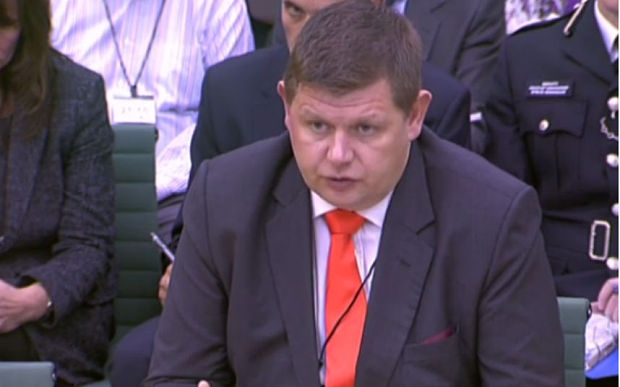
Detective Chief Inspector Paul Settle giving evidence to Parliament

CROSS POSTED ON BYLINE.COM

Paul Settle, the former head of Met Police’ paedophile unit,, has given two interviews to the media in the last few days.

In the first to the BBC he describes how he has quit the Met at the very young age of 44 because he is suffering from Post Traumatic Stress Disorder after a career as a high flying policeman.

He told the BBC:”Most of my career was dealing with serious crime and it was not uncommon for me to see things that most people would regard as horrific. I’ve probably dealt with 100 murders,” he says.

But eventually things which had happened years before started to haunt him – an IRA bomb attack in Wood Green, London in 1992 and his work to help identify and repatriate Britons killed in the 2004 Thailand tsunami.

“It is really difficult to understand because for the best part of 20 years it never affected me, then out of nowhere it started to affect me in a very nasty and intrusive way.”

He started to have nightmares where he would wake up feeling the heat from the bomb blast.

“In the case of the tsunami, I could smell the bodies when I woke up. It was quite a rapid descent. You begin to dread going to sleep so you stay up later.”

He says he initially turned to alcohol to help him get to sleep, but quickly found that made matters worse so sought intensive treatment instead to try to help him overcome debilitating symptoms which he says have reduced him to a shadow of his former self.

Even after treatment he still finds it hard to go out or be in a crowd.

Sirens and some loud noises can trigger gut wrenching and exhausting episodes of hyper arousal, an intense anxiety which can last for weeks on end.

“On two occasions I was preparing to kill myself. But whilst I was at my lowest point I decided I needed to try to make the best of a bad situation. I don’t think I’ll ever recover fully.”

One would feel extremely sorry for him – if not for an interview in the Daily Mail two days later – which skates over his state of mind – where he follows the paper’s agenda of rubbishing any paedophile case involving anybody remotely important. The interview is one of three in the last two weeks all on the same theme.

In it- and he has done this before – he aggrandises the role of  Labour deputy leader, Tom Watson, describing the Met Police’s as being  “terrified ” of him ( I doubt that myself.)

Mr Settle told the Mail :: ‘The management at the Yard were absolutely petrified of Tom Watson. They were scared of what he could do to their careers.

‘They hung me out to dry. It was about their self-preservation. I was an expendable DCI and their careers were more important to them.

‘I was quite emphatic that the allegations against Lord Brittan were nonsense.’

He is particularly angry that Tom Watson contacted the DPP over an historic allegation  that Lord Brittan had raped a young woman.

The Mail said: He was ‘disgusted’ to learn that a month earlier, Mr Watson had written directly to the Director of Public Prosecutions, Alison Saunders, asking her to review the decision and demanding that Lord Brittan – who was dying of cancer – be interviewed. The letter was forwarded to Met chiefs. ”

Yet the CPS did decide that a different approach should have been made and I am sure not just because it wanted to appease a Labour MP, then a backbencher. And Brittan was interviewed though there was not enough evidence to bring charges.

Mr Settle also believes ” Nick” who is  a child sex abuse survivor should be prosecuted for bringing forward such allegations  which did involve prominent figures and accusations of murder as well as child sex abuse and led to the Operation Midland investigation.

“If the evidence is there, he should be charged. He has done more harm to victim rights’ than anyone in modern criminal history.’

He also has told the Mail that he believed he lost his job because of his stand.

‘I was hounded out at the Met purely because I stood up and said ‘we should not do that’. But I can look myself in the mirror. I did the right thing.

‘However it was patently obvious that having exposed the failings of senior officers – and the level of indecision that existed and some would say incompetence – that I had no place in the organisation.’

‘I have been vindicated in the end but I have lost the job I love.’

Scotland Yard disagree. A spokesman is reported by the Mail as saying : “The Met does not believe that Mr Settle was “hounded out” of the organisation.”

To my mind there is one big unanswered question in all this. Given the high profile role and all the complexities of the Westminster paedophile investigation – why was a man who was in such a bad mental state – drinking himself to sleep and having nightmares because of previous police duties – ever put in charge of it in the first place.

He would have difficulties in dealing with such graphic and  difficult allegations and putting such prominent people through the mill.It strikes me that the main criticism of the Met must be whether it followed its ” duty of care ” to its own staff, not any suggestion that it hounded him out of office.


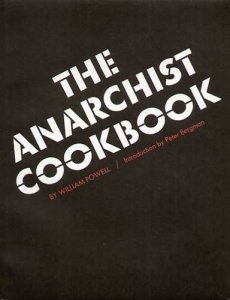
Are you a terrorist if you have a copy of the Vietnam protesters’ Anarchists Cookbook ( published 1971)?

Anarchistcookbook

The Anarchist Cookbook: Are you a terrorist if you have it.

CROSS POSTED ON BYLINE.COM

Imagine you have a dog eared copy of an old book that told  you various pranks, how to make fireworks and home made bombs and cheat credit card companies. Or you have recently bought one off Amazon.

You would not expect owners of  The Anarchists Cookbook to be front line terrorists in the age of Isis. Yet this precisely what the Crown Prosecution Service and a Birmingham high court judge thought when they tried  27 year old Josh Walker, a University College,  Aberystwyth student for borrowing a copy of it for a  student role playing game.

He was charged under the Terrorism Act, 2000, which when MPs challenged the then home secretary, Jack Straw, about the breadth of the act – he told them

” we can all invent hypothetical circumstances—fantastic circumstances—in which any of us, according to the criminal code, could be charged and subject to conviction; but there is no point in our doing so.”

…”Such circumstances therefore do not arise, and I do not believe that they ever will”

Not so Mr Straw. As it is the jury decided to acquit him after three days. But one wonders if the person – given the current climate had been a Muslim rather than white British it would have gone so easily.

And no doubt people wanting to reinvent Reds under the Beds will soon start asking how  many members of Momentum have  such books or ordered them from Amazon. For those wanting to relive the 70s entryism I expect they will take it is as their litmus test and ring the Daily Mail.

The full  story is on the excellent Inforrm’s Blog and is also reproduced below:

Is your library criminal? – Joel Bennathan QC

In 1999 the Home Secretary, Jack Straw, was presenting what was to become the Terrorism Act 2000 to the House of Commons. Answering a challenge about the breadth of its terms he said:

“Of course, we can all invent hypothetical circumstances—fantastic circumstances—in which any of us, according to the criminal code, could be charged and subject to conviction; but there is no point in our doing so. We know that, in the real world in which we live, the criminal law is subject to a significant series of checks and balances, including proper invigilation by the courts of the land and control of the Crown Prosecution Service by Members of Parliament who are answerable to the House of Commons and the other place. Such circumstances therefore do not arise, and I do not believe that they ever will”.

Tell that to Josh Walker; in the summer of 2015 he was organising a student role playing game at his university in Aberystwyth. To make it more real he signed into his student library internet account, searched and printed off a partial copy of the Anarchist Cookbook, a ragbag originally produced in early 1970s USA containing a mix of pranks, firework and bomb recipes and tips on how to make free phone calls and cheat the US credit card companies. He could have bought a copy off Amazon, but didn’t bother. At the end of the game the students planned to destroy all the paperwork but Josh forgot and ended taking the partial book and some other random papers home. A year and a half later they were found in the drawer under his bed.

In the meantime Josh had seen what was going on in Syria and flown out to help the Kurdish groups who were fighting against ISIS. He came home in December 2016 and was arrested as police tried to work out what he had been doing in the Middle East; he was not charged for helping the same group that the Americans, the French and the UK are assisting, but a police search of his Aberystwyth bedsit found the book and 10 months later he stood trial in Birmingham Crown Court, accused of possessing information likely to be useful to a terrorist, under section 58 of Jack Straw’s 2000 Act.

No one said Josh Walker was going to make one or more of the bombs described in the book. No one said he knew any terrorists. No one said there was any sensible prospect of a terrorist looking in the drawer under the bed in his room. Yet the terms of section 58 don’t require the person owning the book to be a terrorist, nor that their copy of the book might fall into the hands of a terrorist; if the information in the book is such as is “likely to be of use to a terrorist” the owner is guilty unless he or she has a “reasonable excuse”.

It wasn’t meant to be this way. Jack Straw thought he was passing a law that would only be used to stop terrorism. The House of Lords in the appeal of G seem to have been told the offence would not be used against books such as an “A to Z” and placed great faith in prosecutors who are “very familiar with the need to exercise a wise discretion in deciding whether taking proceedings would ultimately be in the public interest”. Tell that to Josh.

And so, on 23 October 2017 Josh Walker and his legal team turned up at Birmingham Crown Court. An application was made for the trial Judge to halt the prosecution on the basis it was an unjustified interference with both common law rights and the European Convention right to “receive information”, and that the Director of Public Prosecutions’ consent to the case proceeding should never have been given. The Judge refused and the trial started. Three days later a Birmingham jury decided that a student owning a book with no intention to harm anyone was a reasonable excuse and Josh Walker was found not guilty.

Questions remain. What was the public interest in prosecuting this case in the first place? Do Jack Straw’s assurance to Parliament and the expectation of the Law Lords in G count for nothing? And if the CPS wishes to criminalise a book, why not pick on someone their own size, like Amazon, instead of a student on legal aid who had risked his life fighting terrorists in Northern Syria? Someone really ought to ask the DPP.

This post originally appeared on the Doughty Street Chambers website and is reproduced with permission and thanks

Unreported by the national media: How some bosses can help if you are one of 2 million people enduring domestic abuse

Elizabeth Filkin

Elizabeth Filkin: chair of the steering group of the Employers Initiative on Domestic Abuse

CROSS POSTED ON BYLINE.COM

This week the BBC hosted an extraordinary conference on how business and public employers can act to help employees if they are suffering the living hell of domestic abuse.

The conference attracted big names. Lord Hall, director general of BBC; Cressida Dick, Metropolitan Police Commissioner; Amber Rudd, the home secretary (by video); Ben Page, chief executive of ipsos MORI;Lieutenant General Richard Nugee, Chief of Defence People;Victoria Atkins,Home Office minister for crime and directors from accountancy giant, Grant Thornton, and Vodafone, the mobile phone provider.

It also was addressed by a remarkably brave woman,Serena, who told her story of both child sexual abuse and an adult abusive relationship, which led her unsympathetic employer to sack her and the actor and series producer of TV drama Holby City, whose story line included an abusive gay relationship which ended up with one partner being beaten up.

The event was organised by an organisation you have probably never heard of – the Employers’ Initiative  on Domestic Abuse – run by Elizabeth Filkin, a no nonsense figure who as Parliamentary Commissioner for Standards once took on Peter Mandelson and Keith Vaz over allegations of bad behaviour..

People might think what has business got to do with people’s personal lives – but what was noticeable was the firms that are backing the initiative had got involved after a traumatic event involving their staff.

Cressida Dick told the extraordinary story of how a very competent senior police officer in the Met rang her own switchboard to report that she was  a victim of domestic abuse. The police commissioner read out her testimony and described how she , though finding it an extremely difficult thing to do, is now coping with it

Another  big accountancy firm became involved after an employee jumped off London Bridge and committed suicide because they couldn’t cope with domestic abuse.

And a person attending from a hotel group told me they got involved after a young man attending a function was sexually abused when sleeping off the effects of too much alcohol on their premises. He went to the police, they decided they should join an organisation that dealt with abuse.

The BBC’s involvement comes some 18 months after the shock of the Jimmy Savile scandal – and ironically the conference was held in the same room where Tony Hall pledged to take action in the wake of Dame Janet Smith’s devastating findings on the issue.

Ad the Ministry of Defence actually tackles predators as well both those serving in the forces and those in the families of serving officers.

But they are the good ones. Ben Page told the conference that HR departments ” talked the good talk ” but often didn’t take any action or did not know how to to take action. Only one in twenty medium and large companies have a policy to deal with domestic abuse.

He described the present situation as akin to the position on mental health – which had been ignored by firms but was now accepted as an issue. He was an optimist saying ” In 10 years time all the misogynists will be dead ” – a point challenged by Jess Phillips, Labour MP for Yardley, who takes up domestic abuse issues, and is regularly trolled by people on the net.

Probably his most interesting admission was as chief executive of an organisation employing 1400 he did not know or had never come across a case of domestic abuse among his staff. He admitted that could not be the case.

His report makes a number of recommendations which could be included in the government’s new Domestic Violence and Abuse Bill- including removing the minimum qualifying period for domestic abuse victims to get flexible working and introducing  ten days paid leave a year for domestic abuse victims. The latter, he admitted, would lead to protests from the Tory right. I can just imagine MPs like the nappy change refusnik Jacob Rees Mogg having apoplexy.

The government is obviously keen on employers sharing responsibility. But below the surface there are huge issues of resources, the fate of women refuges, austerity, pressure on local authorities and the police and social services to handle this huge problem.

I shall return to some  of these issues in future blogs. But one point needs to be made. This conference was covered by none of the national media – not even the BBC who hosted it. Only The Telegraph and ITN did show some interest. And that is despite energetic efforts made by conference  organisers.

There is an interesting parallel. In the media industry – only the BBC and ITN – have  signed up  to the group which now numbers over 150 companies who are trying to help victims of domestic abuse.

So the entire national  and regional press and the major social media sites believe there is no problem with domestic abuse among their thousands of employees. A likely story. No wonder they didn’t cover it.


The 3.3 million women “pensioners” who can’t get a penny from Theresa May

Today I am putting up on my website a  documentary film  released today made by the Backto60 campaign who have interviewed women now in their early 60s who suddenly found that they weren’t going to get their pension when they retired at 60. Some of them sadly have committed suicide, some have thought of committing suicide.

They are angry at both the coalition and present Tory government decided to change the pension age without any notice so they can plan. They are the people who have worked all their loves and brought up families, often sacrificing their opportunity to work. Some have even put extra money into their pension, only to find they won’t get it until they are 66.

The government shows no sign of giving in to them – in fact ministers like David Gauke, the  works and pensions secretary, have frozen other benefits instead- and if the Tories had a majority now would be pressing to end winter fuel allowances, free bus passes and the triple lock that guarantees pensions will  rise by 2.5 per cent a year.

There is a  contribution from Ken Loach, the radical film maker and pensioner himself, who made the searing film, I, Daniel Blake, about the trials and tribulations of being on social security after you have lost your job.

Hypocrisy and double standards: How a Tory flagship council denies the ” just about managing ” their new homes

2630b1b

Nickie Aiken – Westminster Tory leader and a bit of a hypocrite over housing

CROSS POSTED ON BYLINE.COM

Today Philip Hammond the Chancellor made a big statement aimed to help the young get on the housing ladder with promises to build hundred of thousands of new homes and no stamp duty for the first £300,000 of the cost of a first time buyer home.

At the same time the Tory flagship council of Westminster has just decided NOT to make available affordable homes for young people which  it could provide by legally demanding a deal with a developer to provide cash and new homes for ordinary people in the centre of London.

The development around Baker Street by Portman Estates will allow the company to make a mint by building 51 homes, new offices and shops in a part of London where flats easily go for over £1m and much more.

By law Westminster could demand that nearly a third of the homes are made available at affordable (still high) rents to ordinary people and that the developers given £12.5 m towards the council’s own affordable housing fund – this is used often to export the homeless to other cheaper places.

In fact council documents show Westminster is about to agree a deal to accept the wealthy developer’s offer of providing just ten affordable homes ( under 20 per cenr) and contribute less than half the £12.5m the council could demand  from them = by agreeing to their offer of £5m.

You might think that this is well par for the course for the council that was famous in the 1990s for the ” homes for votes ” gerrymandering scandal under Dame Shirley Porter. They tried to move out poor families by letting new council homes to the middle class in Tory marginal seats.

But the new feisty leader Nickie Aiken  – she gave a good compassionate speech at the Tory party conference in a local government fringe – has made the point of NOT being another Dame Shirley.

She has told the Financial Times in June : “My view is that too many times we have not always pushed back enough in requiring affordable homes on-site, have buckled on viability or surrendered to the idea that brutal market economics simply denies housing opportunities for most people and that is just a harsh fact of life.”

And in case you missed it told the London Evening Standard  the same thing in January this year.  They reported : She suggested she would do things differently by no longer accepting “cheques” from developers in lieu of building more affordable homes.

“I can tell you there will be a lot more built under me than today.”

Well really – what a hypocrite – obviously not accepting cheques from developers meant they needn’t pay her so much to make even more money.

Councillor Paul Dimoldenberg, Labour’s Business, Planning and Public Realm spokesperson, said:

 “Once again the Conservatives prove that they cannot be trusted on delivering new affordable homes for Westminster residents. The Conservatives talk tough but roll over when developers plead poverty on major multi-million pound redevelopment schemes. The Conservatives are giving the go-ahead to more luxury housing and failing those in need of an affordable home in central London.”

If anything he was probably being too polite. The Tory leader is very keen to show a compassionate face for next May’s elections. The trouble is deeds count much more than words for the plight of young people who can’t get homes. Hypocrisy is not necessarily a good vote winner. I bet you don’t see this story in the London Evening Standard.

The full details  of the planning application and Westminster’s recommendation are here.


Exclusive: Are whistleblowers now too frit to reveal when NHS patients and care home residents are in danger?

dr-henrietta-hughes

Dr Henrietta Hughes, 4 day a week National Guardian Pic Credit: CQC

CROSS POSTED ON BYLINE.COM

Tucked away in a recent National Audit Office report on the NHS and social care regulator, the Care Quality Commission, is the extraordinary statistic that the number of whistleblowers who tipped off the regulator fell by a staggering 16 per cent to 7452 in 2016-17. That is one in six fewer whistleblowers than the previous year. See paragraph 2.19 of the report.

The figure compares with 153,000 members of the public – an increase of one per cent – expressing concerns about services during the same period.

I have written about this in Tribune this week.

And the latest figures come after  a report by Robert Francis QC to Jeremy Hunt, the health secretary,which was highly critical of the way some had been treated after they made a complaint.

In 2015, Francis reported widespread severe victimisation of staff by senior management when they spoke up for patients. Francis recognised that sacked whistleblowers are blacklisted and recommended a re-employment scheme but nothing seems to have come of it.

His most substantial recommendation was for a National Guardian to protect staff. This led the CQC to create a part time post with no powers. The first appointee, Dame Eileen Sills, quit before starting.

Since then Dr Henrietta Hughes . a GP has been appointed  as National Guardian, on a four day week. And according  to the CQC  yesterday marked her first year as the National Guardian for the NHS with the publication of her first case review report and her annual report highlighting the work of Freedom to Speak Up Guardians.

The one case review she published covered Southport and Ormskirk Health Trust which  has the unenviable reputation for bullying and discriminating against black and ethnic minority staff , a dodgy appointments system favouring some people against others and an attitude of not bothering when staff raise concerns about patients. This might sound familiar incidently for those who have followed my articles on staff practices at the Equality and Human Rights Commission but we should wait for the employment tribunals to see what happened there.

Dr Hughes has recommended a series of recommendations to put matters right – 22 in all – and there is promise from the interim chief executive of the trust, Karen Jackson, to act  with a new senior management team. We shall see. Also this was a trial – how many reports are we going to get from her in future?

The National Guardian has also produced a series of high flown documents which sound terribly good in theory – but again I think we should wait to see what happens.

What has happened so far is that the appointment of a national guardian has coincided with a drop in whistleblowers telling the CQC when things are going wrong.

What we do know is that staff do lose jobs are blacklisted and get the reputation of being troublemakers. There is a  website which covers 11 such cases here. All designed I suspect to cover up an NHS and care system creaking at the seams and not being adequately financed. I hope Dr Hughes does not turn out to be a convenient fig leaf for a service in trouble.


Exclusive: Supreme Court ruling opens way for legal action against Michael Gove and Liz Truss for racial discrimination and victimisation

liz truss

Liz Truss former Lord Chancellor Pic credit:BBC

CROSS POSTED ON BYLINE.COM

UPDATE: At a Press Gallery lunch in Parliament last week I raised the issue of the Supreme Court ruling and the potential case to be brought by three judges with David Lidington, the current Lord Chancellor and Justice Secretary.

He did not want to comment about the Supreme Court judgement or any pending legal action but he vigorously defended any of the judges from institutional racism. He said it would be against their ” oath of office” and  believed all of them would be  fair minded and ” in no way racist.” He did admit that the judiciary did not have enough judges from black and ethnic minorities and promised a ” mentoring programme” so more top barristers would come forward and become judges.

Michael Gove and Liz Truss, two former Lord Chancellors,  the former lord chief justice, Lord Thomas, six High Court judges and  heads of the tribunal services are facing lthe prospect of legal action for victimisation and racial discrimination by three fellow black and Asian  judges and a black former tribunal member following a ground breaking ruling by the Supreme Court. An article appears in this week’s Tribune magazine. the link is here.

The virtually unreported Supreme Court judgement last week, which involved interpreting an EU equality treatment directive, is seen by campaigners as removing immunity claimed by the Ministry of Justice, the Metropolitan Police, magistrates and tribunal bodies, barristers, solicitors, doctors and dentists disciplinary bodies, from the Equality Act when handling misconduct inquiries.

It will also apply to disciplinary hearings involving sexual and gender discrimination and disabled people.

The original case was brought by a disabled black woman police officer, known as Ms P against the Metropolitan Police. She claimed discrimination because of her disability during a disciplinary and misconduct hearing.  She had previously been assaulted and was then involved in an incident which led to her arrest. She claimed post traumatic distress syndrome following the assault had led her to act in this way.  The panel rejected her claim and she was dismissed immediately.  She appealed to an employment tribunal  saying she had been  subject to disability discrimination but it struck out her case because it ruled that the panel was exempt from the Equality Act.

Her case was turned down by the lower courts but they have now been overruled by the Supreme Court. At the hearing her case was joined by four black and ethnic minority organisations, Operation Black Vote, Black Activists Rising Against the Cuts (BARAC UK) the Society of Black Lawyers, and The Association of Muslim Lawyers who asked for a ruling on civil law in this case.

pete rherbert caseThe ruling has had an immediate impact on four other cases involving racial discrimination and victimisation brought by three judges and a tribunal member that had been stayed at employment tribunals because the Ministry of Justice said it had immunity under the Equality Act.

These involve cases bought by Peter Herbert, a recorder and part time immigration and employment judge and chair of the Society of Black Lawyers; Daniel Bekwe,of African descent,  a former member of Croydon Employment tribunal; a district judge and an immigration judge, who plan to go public at a later date.

Peter-Herbert-2

Recorder Peter Herbert who is also chair of the Society of Black Lawyers. Pic Credit: Operation Black Vote

Mr Herbert said: “We met last night and decided that our solicitor will write to the Employment Tribunal asking for the stay to be lifted and the hearing re-opened following the supreme court’s judgement. We hope to get a hearing in December.”

Dianne Abbott, the shadow home secretary, is planning to raise questions with ministers on the judgement.

Groups were jubilant following the ruling. BARAC said: “Today’s important ruling we believe, means that Judges, Magistrates, lay tribunal members, barristers, solicitors, doctors, dentists, nurses and other professionals and office holders cannot be prevented from enjoying the full protection of the Equality Act 2010. We are writing to the MoJ and the Government to ask them to clarify all those professions where this ruling will apply.”

Lord Herman Ouseley, former Chair of the Commission for Racial Equality and the Chair of Kick It Out stated:

“There should be no hiding place in the form of judicial immunity for decision making bodies, decision makers and their processes enabling institutions to lawfully discriminate and not have these decisions challenged by those persons affected.
Too many attempts have already been made by the state to restrict access to and
therefore deny justice for individuals rightfully seeking to invoke the provisions of the
Equality Act 2010. No more denial of Justice”

Lee Jasper, former adviser to the Mayor of London on Equality, Chair of London Criminal Justice Consortium stated:

“The filing of an amicus brief indicates a renewed determination by British black organisations to embark on a focused legal strategy to achieve civil rights and equality. The notion of legal immunity from the Equality Act 2010 will now be the subject of intense legal examination. The black WPC at the centre of this case has been to hell at back at the hands of the Metropolitan Police, suffering the triple oppressions of race, gender and disability.”

“ Those involved in the suspension of Recorder Peter Herbert can now be exposed as exercising institutional white privilege,   as they had been given cover by the
Government relying on the misguided concept of judicial immunity to give licence
to institutional racism. ”

The decision  by the Supreme Court will have enormous ramifications for disciplinary panels. But there is also  extraordinary irony as well. This case could be appealed by the Metropolitan Police or the Ministry of Justice to the European Court of Justice.

But given the entire  stance being taken at the Brexit negotiations where the ECJ is a red line for ministers – it is the one thing that the government can’t do.

Meanwhile the Equality and Human Rights Commission has indicated it wants to make sure the government doesn’t sneakily change the law once we have left the EU.

EHRC Chief Executive Rebecca Hilsenrath said:”This case goes to highlight the importance of EU law in protecting fundamental rights. This is why we are pressing for amendments to the Withdrawal Bill to protect our rights under the Brexit process.”

A summary of the Supreme Court judgement is here.