Misdiagnosis,bad prognosis then last minute brilliance: my treatment by the NHS

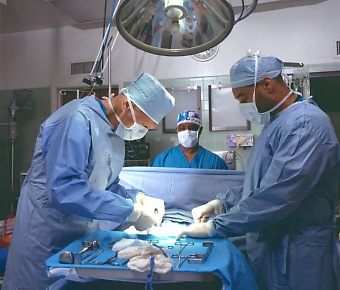
preparing to go under the knife(not my operation)

Being treated by the NHS is like riding a rollercoaster or watching England play in the World Cup ( even as a non football fanatic).

One minute you cannot believe professionals can make such errors, the next you can’t quite believe how they brilliantly they got their act together.

I had the misfortune to trip over a rock on a remote headland path on the Isles of Scilly – falling flat on my face with my arm outstretched skidding across another rock. I was unable to get up unaided.

 I should have known not to do this except on Tuesdays between 2.0 pm and 4.0pm – the only time there are X ray facilities on these  islands some 30 miles from the Cornish mainland. I was later to find that while Scilly has  brilliant first aiders and paramedics who use a jet ambulance boat, its cottage hospital at St. Mary’s is a one man and a dog operation.

And unfortunately for me this was a Thursday afternoon- so no x ray without calling in an air ambulance to Penzance. I was diagnosed as to have nothing wrong with me except  sprained and badly bruised muscles and sent home with Paracetamol and Ibuprofen.

For the rest of our holiday we spent quietly on Tresco. Only after visiting my GP in Berkhamsted nearly a week later and being sent off to casaulty at Watford General Hospital, did I find I had fractured my shoulder in three places. But never mind, the prognosis was that the bones would heal by themselves. I would be sent to the fracture clinic at Watford to arrange physio.

A week later and seen by orthopaedic doctors at the clinic, it suddenly emerged that I needed an operation to restore my shoulder and upper arm to full mobility. And worse still there was only a week left to do  it, because my bones were well on the way to trying to heal themselves  in the wrong position.

Here despite a horrendous reputation trying to run a busy overstretched hospital on a  shoestring (West Herts having closed down our nearest  a&e hospital Hemel Hempstead), fingers were (metaphorically) pulled out.

Within two hours, I had a CT scan, bloods and swabs taken in case I was carrying MRSA without knowing it. Within 24 hours the hospital found me an orthopaedic surgeon, South African Andrew Irwin, who specialises in smashed shoulders and upper arms.

They had a problem- no bed. A hospital administrator -Jane Ward- came to the rescue ( remember those people politicians despise because they don’t  do front line care) and three hours before I was due to come in-had found one.

My 44 hr stay on Flaunden  general surgery ward was a minor miracle -with almost every NHS cliche in the book. The surgeon turned out to be the typical no bedside manner type – in the one minute consultation- it was simply  “you have a smashed shoulder. We’ll fix it.” The nursing care-despite staff shortages- was superb with one staffer, Trish, doing a double night shift and staying on an extra hour to  complete unfinished tasks. And while the operation took six hours -described as ” a tricky one” by a junior surgeon the next day, I actually did feel safe before and afterwards.

Slight shock at being turfed out with one hour’s notice the next day- but I suspect that with one or two patients with undiagnosed infections surrounding me, it was for my own good. Yet they managed to get me to see a phsyiotherapist, get a final X ray ( when I discovered I have a metal plate and a long pin in my shoulder), get some drugs and talk to a pain nurse and after a strong representations from my anxious wife, arrange for patient transport home.

The experience suggests -despite Labour’s spending boom –  an NHS much on the edge trying to provide best patient outcomes. My shoulder is starting to recover. All I can say is that if David Cameron or Nick Clegg – start thinking of squeezing the NHS in any way- I shall use it to thump them when I meet in the House of Commons as part of my job.

Roast beef rebels plan Cameron Stew

Will Tory Roast Beef Rebels carve up Cameron? pic: courtesy BBC

Today’s first tranche of  spending cuts  will be small beer to rebellious right wing Tories  who are now heading for a serious  battle with David Cameron.

Already angry the he has given too much away to his new coalition partners, the Liberal Democrats, Tory conspirators are already gathering in Commons dining rooms to plot the blue lines he should never cross.

The full story is in my blog at http://www.progressonline.org.uk/ in my Tory Tracker column.

  Cameron may have won a vote  by rewriting the election rules for the 1922 committee to allow fellow ministers to vote but his decision infuriated his own whips and some of his own Cabinet colleagues – who seem to have been given no prior warning. And it could come back to haunt him this week. 

All this is going to do is to  further anger some of  his biggest  critics -the Cornerstone group- the Thatcherite No Turning Back Group and  Conservative Way Forward.

The first lot are now dominating Dining Room A  in increasing numbers   where they plot over traditional English Fare -like roast lamb and beef – hence the name the ” roast  beef rebels”. Their champions  vary from Iain Duncan Smith, the new works and pension secretary, to young right of centre Tory blades like Greg Hands.

They are starting to attract support from mainstream Tories who are reporting bad news from the golf courses as angry middle class  Conservative activities find out they may well be paying 40 per cent capital gains tax on their second home or seaside flat – which had been earmarked as their ” second pension”.

One of them faced with people saying to him ” I did not vote Tory for this” had to lamely reply ” It is a Liberal Democrat policy”.

The growing anger means that Camerom will find it an increasingly rocky road- as cuts and tax rises bite. Today covered the easy cuts, tomorrow will be different. And Cameron will have to be careful that the roast beef rebels don’t turn his new coalition into an overcooked stew.

Election Campaign:What the politicians and civil servants didn’t tell us

Are you voting without them telling you all the facts?

The election is virtually over. Tomorrow  you can cast your vote.  The parties will concentrate on their key messages over the last hours before polling day. But have all the issues been covered? No way.
 
Just as there is a black hole in all the parties’ planned spending cuts, there are lots of issues that have not been properly covered and many more that have been completely ignored.
They fall into three groups: there are issues that have been discussed but  not properly explored; there are issues that have been ignored by the political parties; and, perhaps surprisingly, there have been issues that Whitehall – not the politicians – has buried under the carpet.
 
The biggest issue that has not been properly explored is immigration. It was partly catapulted into the election by Gordon Brown’s “Bigotgate” gaffe after meeting pensioner Gillian Duffy, but the parties have tried to obscure the facts.
 
The Tories have promised to introduce a cap on immigration – but it will not apply to the 27 existing members of the European Community. They account for 80 per cent of immigration – according to Channel Four’s fact check file – almost 1.8 million people coming into Britain against 1 million Brits going to live in the EU.
 
While those coming from outside the EU account for only 20 per cent of immigration, according to a BBC analysis for the last recorded year, 8,000 more people left than came in. In effect this makes Cameron’s cap almost meaningless.
 
The Liberal Democrats, while promising to give an amnesty to illegal immigrants who have been here for 10 years, estimate it could help 600,000 – but, as Nick Clegg admits himself, nobody knows where they are. UKIP would block immigration altogether – but that will mean leaving the EU as well. The Liberal Democrats’ policy would mean hundreds of thousands of illegal immigrants paying taxes, while Labour say they would deport them all, if they can find them. So more heat than light.
 
Then there are buried issues. The biggest is pensions and how we are going to fund an ageing population. The Tories have promised to raise the pension age to 66 but not until 2016, after the next election.
 
And while the election is taking place, more companies are ending final salary schemes, which will make it more difficult to get a good pension, and the cost of providing care is going up all the time. The parties have touched on the cost of care but the multi billion pounds for pensions has not even been debated. Anyone thinking seriously about this would know that something has got to give.
 
Similarly, for younger people, one issue that might have been raised is the draconian measure – rushed through Parliament just before the election – to curb illegal file-sharing.  There is now a law that could give the music and video business powers to demand internet providers disconnect people from the internet. This has been barely mentioned.
 
Other issues hardly touched on include the environment, overseas aid, transport and housing.
 
But probably the most surprising thing that happened during the election was a decision by Whitehall – which runs the country while the PM is busy campaigning – to ban the release of new statistics which would have revealed how much you are funding farmers and agribusiness through the European Union.
 
Last Friday the EU expected every one of their 27 members to release details of the billions of euros spent subsidising farmers and big companies to produce food for last year. Every country except the UK published these figures.
 
In Whitehall, civil servants took the decision that to release this information in the middle of an election campaign would be wrong. They justified this on the grounds that some Parliamentary candidates might be receiving the  subsidies. I quote the explanation: “This decision reflects the need to maintain, and be seen to maintain, the impartiality of the UK Civil Service, given the potential risk that … payment  information relating to any individuals involved in the election might be used as part of election campaigning.” Possibly as many as 80 candidates, mainly Conservative, and a few UKIP and Liberal Democrats are benefitting from this.
 
Extraordinarily, in Scotland – where there is a devolved government – the figures were released. They showed that 19,000 farmers and businesses shared nearly £600m of taxpayers’ money. The figure for the UK was over £3 billion the previous year.
 
But the effect was to close down any political debate on the cost of the EU to the taxpayer. Other statistics like hospital admissions, road statistics and all the economic data have all been released.
 
So it is not only politicians who have limited debate during the election.

This blog is also on the msn website as part of their general election coverage.

Whitehall’s censorship of farming subsidies spares Tories (and UKIP’s) blushes

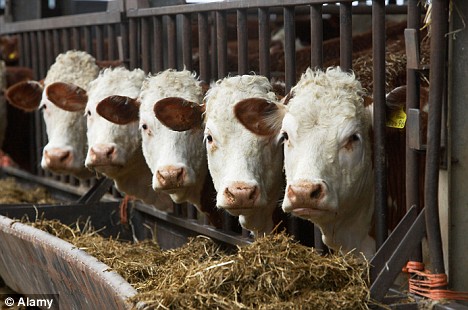
tucking into censored farm subsidy pic courtesy daily mail

Over the bank holiday weekend senior civil servants running the country took an extraordinary decision to ban the public  from seeing  information because  they thought it was so controversial that it would disrupt election campaigning.

They decided to protect candidates from being asked questions on the issue and thought it best the public be left in ignorance about the facts.

 What was this issue? Not some horrendous economic figure, some real facts on immigration. No, it was decision not to reveal which farmers and agribusinesses scooped up some £3 billion from the taxpayer from EU farm subsidies last year.

On Friday statistics were published simultaneously in the other 26 EU countries revealing who had been paid what – it is part of a victory by European journalists to force countries under freedom of information acts to release all this previously secret information.

But in London – against an EU directive – the information was banned. The Department for Environment, Food and Rural Affairs website says: “Due to the general election campaign, this website will not be updated with the 2009 figures until after the election.”

A letter from a DEFRA official to Jack Thurston, head of farmsubsidy.org, which campaigns for transparency for EU payments, says why:

“This decision reflects the need to maintain, and be seen to maintain, the impartiality of the UK Civil Service, given the potential risk that CAP payment  information relating to any individuals involved in the election might be used as part of election campaigning.”

Yet ministries continue to publish information on hospital admissions and roads just to name two. And in Scotland because of devolved government – they have taken the opposite decision. They published their figures over the weekend –revealing that 19,000 farmers and agribusinesses shared nearly £600m of public money and the world has not fallen apart north of the border.

So who does this protect? Initial research by farmsubsidy.org reveals that possibly up to 70 of the 650 Tory candidates standing at the election could be receiving some sort of subsidy. Up to half a dozen UKIP candidates- who campaign against the EU- could be receiving EU cash as well as a smattering of Liberal Democrat and BNP candidates. On the Tory side they have discovered that the declared postcode for receipt of EU subsidies is often the same one as used by a local Conservative Association, suggesting that leading officials of the local parties are also receiving subsidies. These are all taken from the previous year’s subsidy figures.

 Yet we won’t know, thanks to Whitehall, until after the election- even though the EU has made it clear in an article in the EU Observer today that it is disappointed with Britain and intends to write to the new government pointing out it is not in line with the EU directive.

Frankly disappointment is too weak a word. It is scandal that unelected officials should decide what information should be made public and when. The decision is also partisan in that it appears to protect opposition party candidates more than Labour candidates from scrutiny – particularly in the case of the Conservatives.

Sir Gus O’Donnell, the Cabinet Secretary, should reverse this now. Otherwise it bodes very badly if we are in “ hung Parliament “ territory when Whitehall  will be effectively  running the country while politicians sort out a new government. If officials are going to select what information the public should know and what should be kept secret, they are exceeding their brief.

This blog is also on the Guardian’s Comment is Free website.

Election debate: Why you should treat Dave,Nick and Gordo like dodgy car salesmen

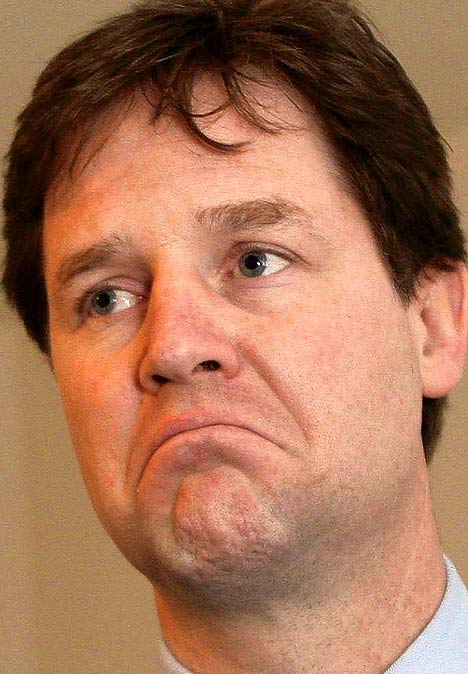
nick clegg:pic courtesy daily mail

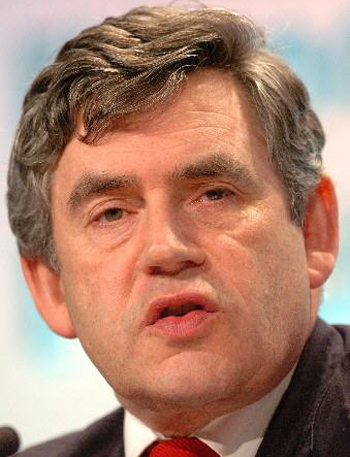
gordon brown:pic courtesy apoliticus

david cameron: pic courtesy greenpeace

Tonight is the last time you can see the three party leaders go head to head before polling day. The subject for the last TV debate on BBC1- the future of the economy – could not be more important for you, your family and your future.

 This time don’t treat the clash like watching the X factor. Instead think of your vote as the equivalent of writing a very big cheque at a car showroom for a dream motor or at a department store for a designer kitchen. You are going to spend a lot of money. You want a good product that lasts, is not going to cost you a bomb to service or repair, and some guarantee that you can afford to pay for it.

Now treat the three party leaders not as politicians but like the salesmen you would encounter on the forecourt or in the shop and take a very critical view of how they pitch their sale to you.

On the economy you already have your own independent Which? report provided by the Institute for Fiscal Studies about the huge hidden failings in the product. Look it up before the debate. In short you will discover, just like many salespeople, the politicians may not have deliberately lied, but they have seriously misled you about the huge cost of the product you are about to buy.

They have not told you the price they will charge you to bail out the bankers either in lost services or higher taxes and charges.

 The scale of their deception is highest among the Tories, pretty bad from Labour and slightly better from the Liberal Democrats.

David Cameron – the smoothest of the salesmen – has concentrated on the nice extras you will get from the Tories – an extra £3 a week for married families, no extra bills on your national insurance, a freeze on your council tax.

But he has not told you how you are going to cope with a whopping £52.4 billion in public spending cuts- beginning weeks after May 7. It’s like 

a salesman diverting you to look at the car’s funky stereo system while not telling you the motor does five miles to the gallon.

To get such cuts the Tories will have to go much further than anything they have said. You are looking at things like a dramatic rise in the retirement age – not their stated 66 but more like 70 – or doubling commuter rail fares if they  have to remove the transport subsidy. Or VAT will have to go up. Their unfunded cuts are the largest of any party.

 Labour’s salesman, grumpy Gordon Brown, has promised to exempt front line staff in the NHS, schools and the police from cuts. What he hasn’t told you is that this means you are going to face much steeper cuts to find the £52.1 billion of savings from other departments like local government, the arts, housing, transport, social security and  defence .And this is on top of higher national insurance. Or again VAT will go up. The problem with Labour is that you have to pay more to safeguard what they have promised to exempt and this will happen from next April.

The Liberal Democrats salesman genial Nick Clegg is the nearest the IFS find to being anywhere near honest. They have to find the lowest sum – some £34.5 billion.

They may not have to introduce more tax increases but they will have to introduce more cuts. Their policy sees a meaningful tax cut worth £700 a year to anybody earning between £10,000 and £113,000. Those earning less than £10,000 including many pensioners on low incomes will be exempt from tax altogether.

Better off families with children will lose out on child tax credits, lose their child trust fund and the NHS, schools and the police will not be exempt from cuts unlike Labour. What you have from the Liberal Democrats is the nearest to a consumer product guarantee but you still don’t know the call out charges.

By the end of the debate it is likely that none of the leaders will have  genuinely spelled out the real cost of their policies to tackle the deficit. It is up to you to decide which is the least worst option. Unlike a disgruntled shopper, you can’t entirely walk away because you are going to get one of the products anyway.

You also should not forget that these were the people who conned you over their expense claim system and you should not allow them to con you again. Also ignore the distractions over hung Parliaments, that is a problem for the politicians not you.

Remember also there are other candidates standing from the Nationalists,Green Party, UKIP and independents. It’s your vote.

This blog also appears on the UK site  of MSN’s general election feature page.

Has Cameron blown it?

Cameron- what's going wrong: Picture courtesy Greenpeace

In an election that began competing with the Icelandic volcano for volatility and unpredictability, it is probably tempting fate to write any epitaph for David Cameron midway through the campaign.

 Yet what has become clear is that Dave has not “sealed the deal” with the electorate and has squandered a ten point plus lead which should have ensured that he easily formed a government on May 7, albeit with a small majority.

If he fails he faces a damning post mortem by his party but the seeds of his own potential destruction have been around before the campaign even started. They lie in the weakest links in his own shadow cabinet- George Osborne, his chancellor, and Chris Grayling, his shadow home secretary.

The  rise in Liberal Democrat support following the first debate is not so surprising when you compare the quality of the two key spokesmen backing Clegg with their Tory counterparts-Vince Cable dominates Osborne and Chris Huhne, a former leadership contender, outsmarts Grayling. The weakest link in the Liberal Democrats was until then Clegg who? Then came his first performance on our TV screens, reinforced by the second.

Osborne has been tainted ever since a Parliamentary investigation into the undeclared funding for his office during the last session (Tenth report  Standards and Privileges Committee. Conduct of Mr George Osborne HC 560) revealed that it had received some £487,000 of donors’ cash to fund his office from high fliers in the city and a scion of the Rothschild family.

What is extraordinary is that these huge sums to fund research and the access he had to brains in the City have failed to produce an economic policy to challenge Labour. Instead there seems to have been a combination of policies that would particularly benefit the donors (the big hike in the threshold for inheritance tax), a rush to introduce public spending cuts and a claim that a £6 billion jobs tax would snuff out the entire economic recovery..

The latter appeared to be holed last week when Sir Terry Leahy, the head of Tesco’s, announced he was not supporting a Tory co-ordinated call to cut the job tax – but was creating 9000 new jobs in the UK despite it. No explanation from Mr Osborne on that one.

Grayling has been effectively marginalised by Cameron during the campaign. He is symbolic of the fault line dividing the attempt by the leader to present a new “green blue” caring Tory agenda and the traditional Tory “ slash and cut taxes” backwoodsman – still the majority of old Tory voters. Expected to toe the new party line on gay tolerance, his mask slipped when he defended a Christian B&B owner turning away a gay couple.

Grayling is an Old Tory in New Conservative clothing – and the electorate are rumbling this. They don’t know where the Tory party really stands or if they are traditional Tories, what they stand for. This made the vacuous “Time for Change” slogan open to easy hijack from Nick Clegg.

Of course, Cameron might just bounce back to squeeze a minute majority by polling day, but time is now against him. Votes can be cast by post from this week so by the time the third debate takes place  it will be too late to sway millions.

The right wing press attack on the Liberal Democrats also had a fatal flaw – the majority of the new voters attracted to Clegg are the internet savvy under 35 generation.They don’t buy the papers anyway, so it would have zilch influence.

Whatever happens in this election – short of a miracle doubling of the Tory lead- Cameron has thrown away the Tories best chance for 13 years.

This blog is also on the Progress website.

Own Goal by the Revenue:Why we must foot their bill

gordon brown:His watch saw inept off shore tax deal for revenue -pic courtsey apoliticus

If you have just had a new tax code or VAT demand, it is likely that the Revenue and Customs office that issued it is managed in a tax haven.

And if you have recently visited an old Abbey National office of Santander Bank you are on the premises of an off shore managed office.

You probably didn’t know either. Today an analysis by Parliament’s watchdog the National Audit Office reveals the off shore company that managed both deals are legally set to avoid paying hundreds of millions of tax to the very offices making tax demands on you.

The findings by the Commons Public Accounts Committee is the latest revelation on signing an outsourcing contract 8 years ago which MPs describe today as “ highly damaging to the Department’s reputation”.

 In effect to save an estimated £1.2 billion Revenue and Customs signed a £3.3 billion contract with a firm now called Mapeley to hand over for 20 years the ownership and management of 591 tax offices including the freehold of 132 offices to an offshore company then based in the Cayman Islands.

Today the cost of contract has risen to £3.87 billion, the maximum potential savings have dropped by £300 million and the department has found that it cannot recover its own VAT from the rent. It will have to draw up contingency plans costing over £100m should the company walk away following a decision to close 130 tax offices as part of the first wave of efficiency savings.

But the most extraordinary revelation is the rare glimpse given into tax avoidance by auditors from the NAO. After a stormy hearing at the Commons public accounts committee, the company allowed the NAO access to its offshore books to see the effect of the loss of tax revenue to the government. The figures, hidden at the back of the report, are staggering.

If Mapeley, now part of the US offshore Fortress Group was based in Britain rather than Bermuda, the tax coffers would be swelled by £184m. Easily enough to build a teaching hospital or renovate a lot of schools. In fact the company is expected to pay £14m –saving £170m. That is hardly enough to renovate a big secondary school. Furthermore Gordon Brown’s efficiency savings by closing down tax offices is going to give the offshore company a tax bonanza if it can get a good price for them. Only the recession is stopping them.

These tax savings are only on the Revenue and Customs contract. The company has a similar deal with the old Abbey National and if branch closures follow bank mergers under Santander, logic dictates even more tax savings.

No wonder the NAO concludes in its prosaic way; “There is unlikely to be any overall benefit to the Exchequer from such arrangements as any apparent savings for the Department are accompanied by reduced tax revenues.”

With everybody living in this country having to pay more tax and face cuts in services to pay for the bail out of the banks, the prospect of the Treasury being deprived by the  Revenue of extra tax is obscene.

The people who negotiated this deal should hang their heads in shame and the politicians, and that includes Gordon Brown, chancellor at the time, should be brought to account for such an inept negotiation.

For while we debate the scale of tax rises and cuts in the general election campaign, the directors of the company involved must be laughing all the way to their offshore bank.

This blog is also on The Guardian’s Comment is Free website.

Will bad planning by the Tories let the lights go out?

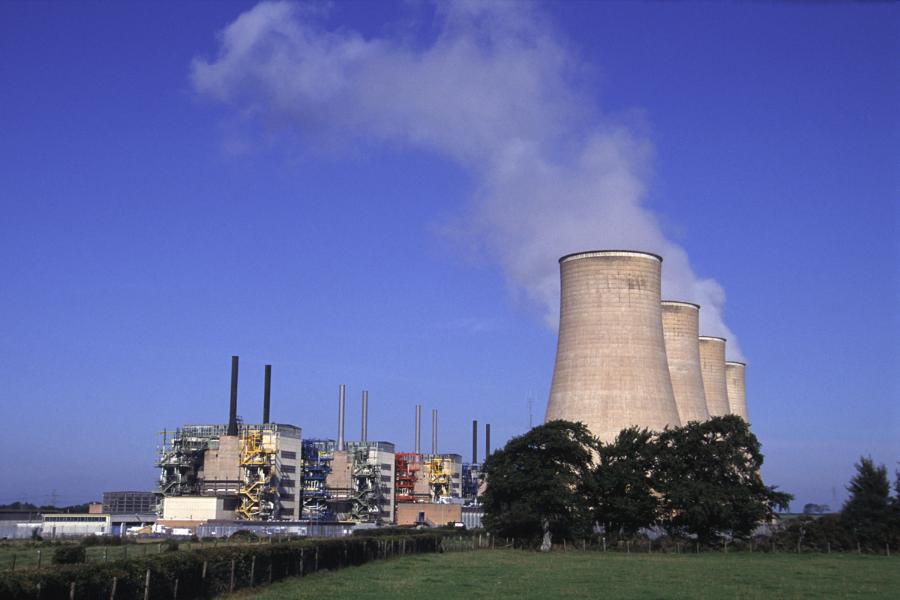
A new nuclear power station every 18 months -Cameron. Pic courtesy http://freefoto.com

A mad rush by the Tories to cut public expenditure the moment they are in office is already leading to fears that it could destabilise Britain’s fragile recovery. But there is now growing evidence that other policies could have similar damaging effects on the country.

Two Green Papers –one on planning and the other on energy- are leading to serious questions from some of the Tories natural allies – the CBI and the British Property Federation about their effectiveness. And when one looks at the detail, it is no wonder why.

The green paper on planning looks on the surface as a great, pro local democracy, anti bureaucracy document. And it does contain some good ideas, notably Open Source documents for all future planning applications.

 But in their rush to cull New Labour quangos, the Tories look set to stall rather than quicken the economic recovery. Their dash to kill the Infrastructure Planning Commission is actually going to cause chaos and confusion for any major schemes that might require planning permission in the next few years.

For the Tories want to bring back Parliamentary private bills for major projects and are daft enough to quote the Crossrail bill as a wonderful example of an alternative way of handling objections. This bill took literally years to get through Parliament with all day sittings and an enormous toll on the disinterested MPs who were supposed to monitor it.

Worse still The Tories are proposing an interim period when the Commission facing abolition will still be handling applications, while Parliament is geared up for a new role. Confused? Anyone would be.

But never mind. In their green energy paper, they propose using the same procedure to build an ambitious high speed rail link and nuclear power stations.

They deride Labour’s  London to Birmingham link as not ambitious enough and want to build a high speed railway across England .But imagine how long this will take under their planning reforms. The long winded Crossrail bill was just concerned with greater London but a bill for the whole of England will need the full term of the next Parliament for authorisation..

Cameron also promises to build a new nuclear power station every 18 months to solve the energy crisis – again using Parliamentary private bills to get planning permission. Energy analysts are not impressed. Inencom, the UK’s largest energy analysts, warned that this target is “verging on the impossible”, claiming that even if the party overcame planning delays, solving the skills shortages and construction complications would be a “huge challenge.”

Some of the smaller proposals in both papers also don’t stand heavy scrutiny.

On planning the Tories want to allow local residents and third party groups to object to new house building. This could also cause chaos for new home developments and traditional allies are not impressed.

 The British Property Federation said: “This would cause chaos for the system by allowing all manner of appeals.”

John Cridland, CBI Deputy Director-General, says: “The CBI agrees with the Conservatives that the planning system is broken, but it remains to be seen whether these proposals will fix it.”

And some energy schemes like encouraging micro generation of electricity in every home have not impressed the CBI either. Dr Neil Bentley, the CBI’s Director of Business Environment, said: This could end up increasing energy costs for businesses and consumers without increasing investment.”

The danger here is that not only will the Tories scupper a fragile recovery but manage to ensure that some half baked proposals will stifle new investment. They could even put the lights out.

This blog is also on http://progressives.org.uk as part of my Tory tracker column.

How ex-ministers make a fortune out of insider lobbying

stephen byers- like a cab for hire-pic courtesy daily telegraph

The damning disclosures about former Cabinet ministers Stephen Byers, Geoff Hoon and Patricia Hewitt touting for paid advocacy expose a fundamental flaw in the regulation of the lobbying industry. They also reveal fundamental weaknesses in blocking ex ministers and former senior civil servants making a fortune from “insider” knowledge gained in government.

For years it has been an open secret that the lobbying industry has failed spectacularly to regulate itself. Divided between two groups, the Association of Professional Political Consultants and the Public Relations Consultants Association, it is still not agreed to set up a joint body with agreed standards on how to conduct business. Nor do all companies have to belong to either association. Some companies voluntarily register clients, others keep lists secret. Some companies (belonging to the APPC) ban politicians from directorships, but the politicians themselves can and have set up their own lobbying and public relations companies which avoid membership of the APPC. Similarly large legal firms also have lobbying and public relations arms and avoid disclosing the identities of their clients under   spurious “client confidentiality” rules. They also employ ex Cabinet ministers.

The government had a chance to do something about this a year ago by introducing a statutory register for lobbyists. The all party Commons Public Administration Committee called for it in a report. Tom Watson, as a junior Cabinet Office minister, was sympathetic to tougher action to curb excesses, but only now has Harriet Harman, leader of the House, committed the government to do anything about it. Better late than never, but I suspect the Sunday Times and Channel Four Dispatches revelations have had more effect than any serious deliberations by MPs.

If the government had acted earlier neither the TV company nor the Sunday Times could have set up a fake lobbying company to talk to ex ministers, because it would have be registered- and the game would have been up from day one.

Worse this lack of control of lobbying is compounded by the toothless role of the Advisory Committee on Business Appointments which is supposed to vet ex-ministers jobs. Effectively however, this body allows ex ministers to do what they like when they leave office. Yes, they are expected to seek their advice for any appointment within two years of leaving government. And the committee can impose restrictions on jobs they could take up. But ministers can ignore their advice knowing they face no penalty whatsoever and knowing that the committee has no resources to ever check up whether the minister is even following their imposed restrictions – particularly over lobbying.

 The fundamental weaknesses on both sides created the perfect storm that allowed the media to expose the latest lobbying scandal over the weekend. Sadly we shouldn’t be too surprised that ex ministers can carry on like this in private in order to make more money in a day than a state pensioner receives in a year. The present system is designed to allow both ministers and lobbyists to get away with it with impunity.

A shorter version of this post is in today’s Guardian and a longer version on the Guardian’s Comment is Free website.

How Ashcroft got a peerage and no tax bills

lord ashcroft- a non dom peer for a decade-picture courtesy the Guardian

Lord Ashcroft must have been laughing all the way to the tax office for the last decade if the revelations produced by the release of Whitehall memos telling the story of the scrutiny of his peerage are anything to go by.

 They show that the ultra canny lord successfully managed to pull the wool over the eyes of the scrutiny committee, enlist the loyal support of leading Tories to keep his non dom status and befuddle and exasperate some of the country’s leading mandarins. No wonder he is a billionaire, pity any business partner negotiating over the small print with him.

 By concentrating on the semantic difference between being a “long term resident” rather than a “permanent resident” Lord Ashcroft managed to both escape paying tax and still get a peerage with all the status and influence that implies in both Parliament and the business world.

 It is totally clear from the reaction of Baroness Dean that the scrutiny committee believed that he had agreed to the terms and conditions to pay tax in order to get his peerage. But in fact under a deal negotiated by the then chief whip, James Arbuthnot, and Sir Hayden Phillips, the Whitehall mandarin in charge of the negotiations, it was nothing of the sort.

What yesterday’s hearing by the Commons Public Administration committee reveals is a question mark over Sir Hayden’s role – whether he knew that the deal he was negotiating had let Ashcroft off the hook. Certainly Sir Hayden was probably fed up to the back teeth with the issue and probably wanted it sorted out. But it is rather surprising that he insists he did not know of the tax implications.

 What I have been told by a very senior Whitehall source is that Sir Hayden happily took on the job because another figure Lord Wilson, then Cabinet Secretary, didn’t want his hands dirty over such a hot political potato. It is therefore possible that the jovial Sir Hayden got out of his depth in dealing with such a slippery customer as Lord A.

This leaves the issue of how much senior Tories knew about it all. It is crystal clear that Arbuthnot knew exactly what was going on. He seems to have been up to his eyes in securing Ashcroft the peerage. I find it hard to believe that William Hague was also  in ignorance. Ashcroft  is very close to Hague, funds his Parliamentary office and jets around the world with him as shadow foreign secretary. Even at that time his office could have had a look at Ashcroft’s chequebook- and see where the donations came from. So it is possible that Hague could have known at the time, not just in the last few months, that Ashcroft was not paying tax.

Two figures come out well in this sorry saga. Tony Wright, the Labour chairman of the committee, who stuck to his guns and held the inquiry, despite a childish boycott by Tories on the committee. The other is Gus O’Donnell, the present Cabinet secretary. By releasing the documents rather than keeping them secret, he has shed a lot of light on a very murky tale about the award of peerages. Both have done voters a great service in the run up to the election.

This blog is also on the Guardian’s Comment is Free website.