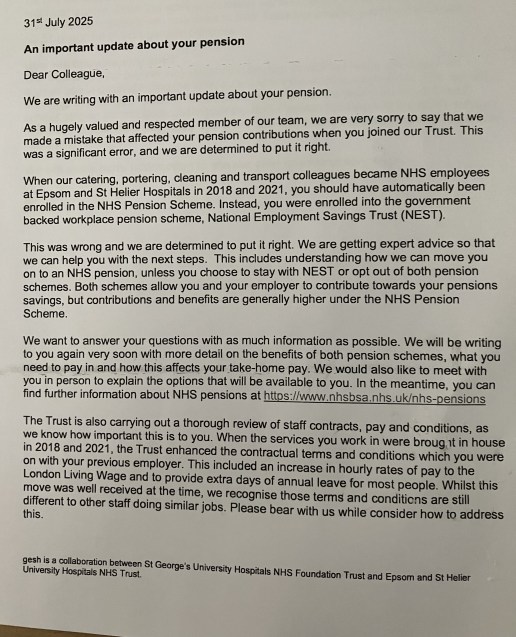
The trust running St Helier and Epsom hospitals in South London and Surrey has admitted it has deprived hundreds of its lowest paid workers their rightful NHS pensions for up to seven years due to a major blunder by its management in signing them up to the wrong scheme.
A letter sent out two weeks ago to catering staff, porters, delivery and transport drivers and cleaners admits it made ” a significant error” when it took the workers back in house in 2018 and 2021 from private contractors.
The move at the time was welcomed by staff as it gave the lowest paid staff higher pay than the going rate by private firms.
It has now emerged that instead of automatically signing staff up to the NHS pension scheme the workers were signed up to an inferior government backed workplace pension scheme, the National Employment Savings Trust (NEST).This pension scheme is aimed at small businesses as well as large private employers.
The letter says that benefits and contributions to the NHS pension scheme are higher.
The trust now part of the St George’s, Epsom and St Helier University Trust employs 5000 staff in the two hospitals – a sizeable number will be low paid staff. The trust will have to compensate workers for this error and has called in the Government Actuary Department to help estimate the scale of the problem which could cost several million pounds at a time when the NHS is squeezed in trying to bring down waiting lists.
The letter also reveals that the new trust has ordered a review of all staff contracts, pay and conditions as a result of the error. It now appears that there are differences between staff doing the same jobs with some receiving extra days leave than others and others on different pay rates.
There is also a suggestion of racism over Sunday working for low paid workers One rate seems to apply for many people from black and ethnic minority workers of £13.86 an hour while Agenda for Change workers, who are mainly white, get £26.31 an hour.
There appears to be a high level of dissatisfaction among lower paid workers with a ballot result for strike action for porters and cleaning staff by their union, the United Voices of the World, just announced of 98 per cent wanting to go on strike. This suggests workers are very unhappy working there.
The trust has one of the highest paid chief executives in the country, Jacqueline Totterdell, who gets £340,000 a year. She and her predecessor, Daniel Elkeles, now chief executive of NHS Providers, were in charge when these errors were made. Jacqueline Totterdell is planning to step down as the NHS faces a big reorganisation under the health secretary, Wes Streeting.
But no answers from the ministry on plans to cost and scope the establishment of an Office of the Whistleblower
The Department for Business and Trade is changing the law to strengthen the right of people to report sexual harassment at work by making it a protective disclosure under whistleblowing legislation.
Bizarrely this measure was missed by mainstream media when the bill was published last month with most of the coverage being devoted to the measure improving employees rights in the job market and repealing some of the Tory legislation restricting trade union actions.
But there is a section of the new bill devoted to strengthening the rights of people who suffer sexual harassment at work. It proposes a three pronged attack to change the current law.
First it is strengthening the duty of employers to do something about the issue by amending the Equality Act to say they must take ” all reasonable steps ” to stop it happening.
This change has already been noted by lawyers who take up sexual harassment cases since it significantly reduces the wriggle room for employers to get out of any responsibility.
The new bill spells out what specific actions employers should take and will be further covered in regulations to be issued by ministers. These include carrying out assessments to deal with sexual harassment, publishing company policy, and drawing up reporting and complaints procedures.
The definition of sexual harassment is also extended to say “that sexual harassment has occurred, is occurring or is likely to occur“. ( my bold emphasis)
The second big change is that employers would have to act if a third party is sexually harassing their employee opening up the ground to take action if there are subject to unwanted sexually offensive social media attacks or customers are sexually harassing their employees.
The final big change is to incorporate reporting of sexual harassment as a protected statement under whistleblowing legislation by amending the 1996 Employment Relations Act so it is covered by PIDA.
A Department for Business and Trade spokesperson said:
“We’re committed to making workplace rights fit for the modern workplace and that’s why the Employment Rights Bill will strengthen whistleblowing protections, including women who report sexual harassment at work.
“We encourage workers to speak up about wrongdoings to their employer or a regulator and we will ensure they’re protected if they’ve been dismissed or treated unfairly for doing so.”
There is a really good blog on sexual harassment changes in the law, including some prior to the new bill, by Mandy Bhattal, a senior solicitor at Leigh Day. The link is here.
While this is good news, especially for women, there are certain caveats to be made. The main one is that if a person ends up being dismissed or feels she has to leave her job, the case is likely to go to the employment tribunal system. It is fact that some male employment judges appear to be patronising and offensive towards women. I am thinking of the way judge Philip Lancaster treated whistleblower Alison . McDermott, during her case involving Sellafield. Eight women have complained about they way he treated them in different cases.
Nasty playbooks by barristers at employment tribunals
Secondly there is a rather nasty playbook used by barristers and solicitors engaged by employers to deal with whistleblowers at employment tribunals. They discredit them by bringing up other matters unrelated to the whistleblowing issue. This includes suggesting the person is a bully or cannot work with their colleagues. I fear a new playbook being invented to present the woman as a flirt or leading men on to undermine her case.
Indeed looking at the bill altogether employment tribunals are going to be central to the implementation of the new laws and safeguards for workers – increasing the need for their procedures to be reformed as I have said before.
Office of Whistleblower silence
Last week Baroness Jones of Whitchurch, the new junior minister at the Department for Business and Trade, took peers by surprise, by suddenly announcing the ministry was evaluating whether to set up a new Office of the Whistleblower, a demand long pressed by Whistleblowers UK, headed by Georgina Halford Hall. Their site is https://www.wbuk.org . WBUK is also doing a national survey of whistleblowers experience and perceptions which will lead to a detailed report to develop proposed improvements to the UK Whistleblowing Framework. The link for the survey is here .
She told peers in answer to a question from Liberal Democrat Baroness Kramer:” With regard to an office for the whistleblower, there are a number of ideas around this. We are looking at the role and remit that such a body could have. There will be a need to look at the cost, role and function of a potential new body, but we are looking at all the ways we can ensure that whistleblowers are protected at the workplace, as they should be. “
Baroness Kramer had previously promoted a bill to create such an office.
Baroness Jones also gave an answer to hereditary peer, Lord Cromwell, on non-disclosure agreements.
She told him “We have already noted the concerns about the misuse of non-disclosure agreements. We share his concern, because they are being used to silence whistleblowers and cover up sexual harassment and discrimination. I stress that there are existing legal limits to how NDAs can be used in an employment context, which means they are void and unenforceable in certain circumstances. The use of NDAs is not something we would support and, if there were ways of limiting it, we would do so.”
I contacted the ministry’s press office about Baroness’s Jones remarks. I asked them for the timetable for reviewing the need for an Office of the Whistleblower, whether there was a plan for a consultation paper on the idea and when such a review would report.
Answer came there none, it was completely ignored and instead I was told about the new measures affecting sexual harassment.
I am rather surprised. Either Baroness Jones had gone off piste or the civil servants at the ministry aren’t keen on this. I don’t believe she would have risked making such a statement which is reported in Hansard and is now permanently on the record. So we have a mystery. I am sure campaigners will follow this up.
Orgreave rally being held in Sheffield tomorrow by the Orgreave Truth and Justice Campaign
Campaigners who have fought for years for justice following the infamous ” Battle of Orgreave” during the miners strike and the Hillsborough tragedy have convinced Labour to introduce a new law and hold a long demanded inquiry.
The decision, in the small print of the manifesto, to hold an inquiry into the 1984 “Battle of Orgreave ” where 6000 police fought striking miners picketing a coke plant, has been demanded for years by the Orgreave Truth and Justice Campaign and is now in Labour’s manifesto for the next Parliament.
The decision comes at a key moment when a new documentary on Orgreave will be screened at the Sheffield DocFest on Sunday. The director, Daniel Gordon of Strike: An Uncivil War, has wanted to make the film for a decade after seeing links between South Yorkshire Police handling of the strike and the treatment of families of the 97 Liverpool football fans who died when an overcrowded stand collapsed at Hillsborough in 1989. He gives an interview here to the BBC.
Any such inquiry is likely to be forensic into the police methods used against the miners. My own book on the miner’s strike, Marching to the Fault Line, written jointly with author and playwright Francis Beckett, points a finger at Peter Wright, then chief constable of South Yorkshire Police, who died in 2011, who after Orgreave, wrote a memo released to us under freedom of information, called for Arthur Scargill, to be prosecuted for conspiracy. The memo reached ministers but was blocked by the Director of Public Prosecutions for lack of evidence. Other very limited circulated memos, show that Thatcher, and Cabinet ministers Leon Brittan, Norman Tebbit and Peter Walker had drawn up a strategy in advance for this big confrontation with the pickets with Ian MacGregor , head of the Coal Board and Bob Haslam, chair of British Steel.
Labour’s decision to call for an inquiry has one extraordinary and unlikely precedent. Some nine years ago Theresa May, met with the Orgreave Truth and Justice Campaign, to set up such an inquiry.
As my blogreported then: “Theresa May agreed to meet an extraordinary delegation of Labour MPs, lawyers, ex miners through the Orgreave Truth and Justice Campaign ( see their website here) at the end of July and has agreed to accept a detailed legal submission from Mike Mansfield and three other distinguished barristers arguing for the case to set up an independent inquiry.”
This never happened because Theresa May’s successor as home secretary, Amber Rudd, blocked the inquiry.
Bishop James Jones – who chaired the Hillsborough Independent Panel Pic Credit: BBC
The other significant promise by Labour which could have wide ranging ramifications, is a long demanded implementation of the Hillsborough Law, sought after the independent panel inquiry by Right Revd James Jones, the former Bishop of Liverpool, which forensically examined the tragedy.
This would introduce a duty of candour for all public officials – similar to the professional duty for doctors in the NHS – and say they had to co-operate and assist any public inquiry investigation. It would also provide that taxpayers money will be available for the victims or the bereaved needing legal representation at any inquiry. Effectively this would provide a level playing field between the authorities – who are already funded by the taxpayer – and those who were affected by any future scandal. This has a widespread application – and would affect future inquiries into NHS failings and would have been extremely helpful to those at the Grenfell, Contaminated Blood, and Sub Postmasters inquiries.. Also it would make it very difficult for officials to try and conceal the truth as it would be against the law.
Given that Labour are under fire for producing a cautious and lacklustre manifesto in other areas I am surprised the party has not highlighted these changes. There are also plans to reform the House of Lords, strengthen the independence of the Prime Minister’s adviser on ministerial interests, curb MPs having second jobs and set up an independent Ethics and Integrity Commission. Why have we not heard more of this from Sir Keir Starmer?
This week I paid a lightening visit to the Labour Party Conference in Liverpool and found a remarkably changed and brutally focused party.
Out had gone any commitment to state ownership, hugely expensive pledges to spend, spend, spend and in had come a sharp focus on bread and butter issues like cutting hospital waiting lists and building lots of homes for generation homeless..
There was also a brutal message from Sir Keir Starmer that the party would be raising very little on new taxes- beyond taxing non doms and VAT on private school fees. Everything was going to depend on growing the economy from its present feeble state to pay for new public spending. If that fails the whole Labour project will collapse once they are in government – a big hostage to fortune.
What was also noticeable was the huge presence of corporate firms and large charities and ngos – never have I seen such numbers in the exhibition hall and its overflow corridor.
The main reason why Labour is being cautious is the state of the British economy post Brexit. Although Brexit was never mentioned by the Labour leadership, the chaos and incompetence of the present Tory government ( now also emerging in the Covid inquiry) has virtually torched the British economy, now bedevilled with a cost of living crisis and high inflation. And they can’t blame the EU. But it is worse than that – the chopping and changing in government policy -illustrated by scrapping HS2 at Manchester during their conference last week and delays in the net zero programme – has even bewildered their business allies who don’t know where they are and how they should plan.
That is why they see a Labour government as a better bet than the Tories. It is ironic that after all the attacks on Jeremy Corbyn turning Labour into a cult – it is now the Tories that are turning into one – with their obsession with opposing trans rights, boat people, cancel culture and recreating the UK in the image of the 1950s. No wonder much of business ran off to Liverpool.
David Blunkett; Official House of Lords portrait
I did attend two very interesting fringe meetings during my short stay. Both illustrated the new order at Labour. One organised by the TUC was on the subject of tackling Britain’s skill shortages among the workforce. It was addressed by Steve Rotherham, the Labour Metro Mayor of Liverpool; Bridget Phillipson, Labour’s shadow education secretary; Labour peer David Blunkett; and chaired by Kevin Rowan from the TUC. What was impressive was that the TUC and David Blunkett had drawn up a very detailed plan to tackle the crippling skills shortage – often overlooked by politicians – and Bridget Phillipson, was keen to implement it. It included scrapping the very low wage of £5.28 a n hour for apprentices and replacing it with the minimum wage and radically changing the funding programme to tackle skills shortages and prevent employers exploiting it for cheap labour. If Labour are serious in doing this, it will be fundamental to economic recovery.
An even bigger eyeopener was a fringe meeting organised by Labour’s environment campaign, Chaired by a Westminster Labour councillor , the campaign had both the head of forests, from Global Witness and a Aviva, the private insurance company on the panel. It turned out that both Global Witness and Aviva had been working together to ensure UK legislation that would stop British firms contributing to global deforestation by de investing in companies that did this. Even this it appeared had been opposed by the Tories.
One extraordinary meeting I did not get into was on the controversial future of rail to be addressed by Labour’s shadow transport secretary, Louise Haigh. Organised by Lodestone Communications, whose clients include US whiskies, the Countess of Chester Hospital ( not best to advertise this at the moment) and IT firms, it was private but important enough for the general secretaries of ASLEF and the RMT to attend. I was told it shouldn’t have been advertised in Labour’s conference programme and been placed there by mistake. Very intriguing.
Women born in the 1950s who have faced a six year delay in their pension would have been pleased by a motion which was passed by Labour’s women’s conference. It commits the next Labour government to fully implement in law the UN Convention on the Elimination of All Discrimination Against Women (CEDAW) and ensure equal pay for women is fully implemented. We shall see if Sir Keir Starmer makes this a manifesto commitment.
A serial killer haunts the streets of the Rhondda Valley. Bent Police who torture suspects and beat up a whistleblower colleague come to the Rhondda on a mission to get rid of evidence. In North Wales two children escape the clutches of a care home run by a paedophile only to be murdered later. And in London a far left group backing the miners strike is run by a control freak hypocrite with a penchant for sexually abusing young women.
This is a riveting and horrific tale and there is hardly a sympathetic character in the book. Only Terry Vaughan, a local policeman who joined the force to escape the Valleys and is described as a ” wet behind the ears sheep-shagger ” by his bent superiors emerges as a hero in the tale.
Roger Cottrell
The author, Roger Cottrell, is a former investigative crime reporter and was a young Trotsykite on the Central Committee of the Worker’s Revolutionary Party during the miner’s strike. Now a script writer for TV and film in Ireland and a university academic this is part of a ” work in progress” trilogy.
For those, like me, who love to frighten themselves watching edgy Scandi Noir on BBC 4 on a Saturday night this tale is a perfect fit. Indeed the author has already written a script.
Put together in the mix, an ambitious graduate local reporter nicknamed ” Clever Trevor” with a drug habit in the Rhondda; an ambitious woman hack on the Sun and News of the World and those senior bent police officers, all on the trail of a serial killer who murders paedo victims and young women who support the miner’s strike. It also a cover up of a paedophile ring involving Westminster politicians. To add a literary angle the mysterious killer who taunts the police goes by the name of Azazel, the fallen angel who joined Satan in Milton’s Paradise Lost and Dante’s Inferno creeps into the story.
Azazel as portrayed by Gustav Dore in Paradise Lost
For those who remember this era the background of the miner’s strike with pickets stoning coaches bring in scabs, and police from the Met roughing up striking miners in the back of vans, is very familiar. Added spice comes when striking miners smash up Rhondda’s police station and the police wreck a miner’s club in retaliation.
Some references in the book are more than just fiction. There is the murder of a black social worker Americk Fraser for trying to expose a paedophile ring operating in the London borough of Lambeth. He was handcuffed to shopping trolley, doused in lighter fuel and set ablaze and dumped in the Thames. In real life Bulaq Forsythe a black social worker was murdered for trying to expose a paedophile ring in Lambeth. He didn’t die in such horrendous circumstances But he had notes linking the South Vale Care Home in South Norwood to paedophiles. The Met Police launched an investigation into his death but nothing came of it. Now we know from the official Independent Inquiry into Child Sexual Abuse and a recent internal inquiry there was widespread child sexual abuse in Lambeth.
Similarly the North Wales care home where the boys absconded in the book had for years been part of a paedophile ring and its ring leaders in the 1980s included the late North Wales Police chief superintendent Gordon Angelsea. He was never exposed until a National Crime Agency investigation secured his conviction in 2016. All the stuff about Masonic links and the police co-operating with care homes is based on grim fact.
And Liam O’Leary, the head of the Workers Revolutionary League, is based on the now long dead Gerry Healy, the head of the WRP, who is said to have sexually abused 26 women and employed two thugs to impose discipline in the far left organisation.
This is indeed a very dark book but made more menacing because a lot of the fiction in the tale has a basis in reality. It has a very dramatic ending which I won’t spoil by revealing but it is very cinematic. Read it if you can stomach it.
Jaded Jerusalem by Roger Cottrell. Available from Amazon £12.99
Please donate to Westminster Confidential to allow me to continue my investigations.
The short snippet above from Unison delegate Lianne Dallimore is the moment the 1.3 million member Unison trade union came out in favour of backing implementing the UN Convention on the Elimination of All Discrimination Against Women into UK law.
This is a very important move as the union will be the first big organisation to endorse a policy that will require women to get equal pay, equal rights to pensions, rights to child care fast and finally put an end to the painfully slow progress there has been to grant women equal rights to men.
Unison banners; pic credit: unison.org
Unison is one of the largest trade unions in the UK It has a woman general secretary, Christina McAnea and women outnumber men as members by a huge majority. There are over one million women members to 300,000 men. Most of its members are among the lowest paid in the country whether they are teaching assistants,, dinner ladies, low paid NHS staff or local authority workers.
Unison is also an influential union in the Labour movement and in the Labour Party. So its delegates decision to endorse such a policy will now mean the national executive committee will have to decide whether to back it. If it does the Shadow Cabinet will have to sit up and take notice – and it will put pressure on Labour to include a promise to do so in their next party manifesto. Angela Rayner, the deputy party leader, has previously backed implementing Cedaw.
The full motion read;
Conference we call on theNational Executive Council to:
1) Work with National Labour Link and the national women’s committee to develop a comprehensive campaign for the implementation of CEDAW into domestic legislation;
2) Work with Learning and Organising Services (LAOS) on developing a training and awareness package on CEDAW for activists and members;
3) Report back to National Delegates Conference 2023 on progress made.
North Cumbria Northumberland, Tyne and Wear Health
It also comes at an opportune moment as Boris Johnson’s government is under fire from the United Nations for taking far too long to implement a convention that Margaret Thatcher signed up to in 1986.
The Labour Party went part of the way introducing the Equality Act, which became law in 2010 – but it is still a half hearted piece of legislation – more bark than bite. Nicola Sturgeon, the Scottish first minister, has gone further by including in her last manifesto a promise of legislation implementing it in full.
But she is up against Boris Johnson – who shows not the slightest interest in this issue – and has blocked at the Supreme Court any chance of Scotland introducing a parallel law implementing the UN convention on the rights of the child, which the UK has also ratified but not properly implemented.
The decision by Unison at its delegate conference, which endorses a report prepared by Dr Jocelynne Scutt, President of the Cedaw Tribunal, that calls for sweeping reforms to radically change the position of women in society – from immediate equal pay to ending the long running sore that has bedevilled 3.8 million women born in the 1950s who had to wait six years to get their pensions and were never properly informed by the change.
Ground breaking issue
Last year the CEDAW People’s Tribunal was held. his was a ground breaking tribunal backed by Garden Court Chambers where academics, activists and women’s rights experts produced a wide range of evidence-based policies to end women’s discrimination.
The union’s backing is an important development for CEDAWinLAW which I am a patron, to get this issue on the agenda.
Last year some detractors, sadly a number of them professional women, tried to rubbish the CEDAW People’s Tribunal as though the whole hearing was a waste of time and space. They would rather keep women in their place than fight for change.
Another tribunal hearing on the way
Next month CEDAWinLAW will hold another tribunal to specifically look again at the issue of 50s women and their loss of a pension and how it happened.
In the meantime the action by Unison delegates will only spur women who want change now – not dragged out for decades – to continue the fight.
Please donate to my blog to allow me to continue my forensic coverage.
In the dying days of last week’s Parliament the government finally quietly agreed that shopworkers alongside other workers who serve the public should get greater protection from abusive customers.
USDAW campaign poster
Ministers are using the Police, Crime and Sentencing Bill to make it an aggravated offence to assault or abuse people who are serving the public. At present it is up to the judges’ discretion whether it is under the present sentencing guidelines.
It follows years of campaigning by USDAW, the retail workers union, to get more protection for shopworkers and growing evidence, sadly, of more violence, abuse and threats, from customers to staff.
The government chose the House of Lords to amend the bill last Wednesday night.
Baroness Williams., minister of state at the Home Office: Official portrait
Baroness Williams of Trafford, a junior home office minister, said: “The amendment places in statute the aggravating factor applied by the courts in cases of assault where an offence is committed against those providing a public service, performing a public duty or providing a service to the public.
…..”This includes assault occasioning actual bodily harm, wounding with intent to cause grievous bodily harm, malicious wounding and threats to kill, as well as an inchoate offence in relation to any of these offences. These are the assault offences most likely to be experienced by front-line workers. Importantly, the provision also allows the court to apply the aggravating factor to any other offence, where the court considers this factor relevant.”
“This amendment will reinforce in statute the seriousness with which the courts should treat these offences. It will send a very strong signal to the public that assaults of this kind are totally unacceptable. The Government want to ensure that all those who serve the public can feel protected from abuse when working.”
Baroness Trafford added: “
“During the pandemic we have all seen some appalling stories of how shop workers have been treated. USDAW has been really good in standing up to that.
I pay tribute to John Hannett, the former general secretary of USDAW, to Paddy Lillis, the present general secretary, to the staff and to the many hundreds of thousands of USDAW members who have not let this issue rest. I also pay tribute to some really good employers, the supermarkets that understand the problems their staff have. The Co-op, Tesco and many others have stood up and backed the union and its members. This amendment has also been led by the work of Daniel Johnson MSP in Scotland. He got his Private Member’s Bill through last year. “
Lord Vernon Coaker, official portrait
The move was welcomed by all peers include Lord Coaker, who as Vernon Coaker was Labour MP for Gedling in Nottinghamshire, and an USDAW member, who proposed a specific offence to protect shopworkers resulting in one year’s imprisonment.
The union itself described it as ” a step in the right direction” after years of campaigning for it.
Former Tory minister Baroness Neville-Rolfe said: ” That is against a background of 455 security incidents a day, according to the BRC,[British Retail Consortium] and very few prosecutions.
Inadequate police response
“The police response to these incidents has historically been inadequate. We need to ensure that the police have the right resources and can put a higher priority on prosecuting these retail crimes. This is particularly important given the role of retail workers in enforcing Covid restrictions such as masks, but also in addressing knife crime and shoplifting23>
She succeeded, in getting a promise from the minister to review how the new measures were working in a year’s time.
This was backed up by Lord Dholakia, a Liberal democrat peer, who said: “forces such as Thames Valley Police inform local shops that they will not send out officers to deal with shoplifters who steal less than £100-worth of goods. How can this foster trust and build confidence? It cannot; it means that many businesses feel as if they are alone in this fight—a fight that is a risk to their very business.”
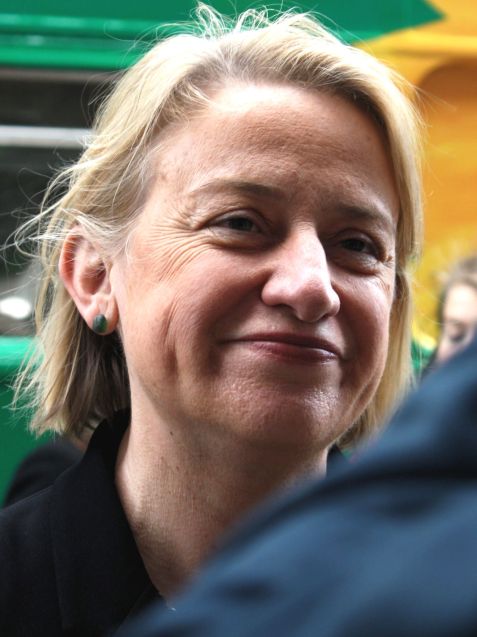
Natalie Bennett Green P:arty peer
Green Party peer Baroness Natalie Bennett also pressed the minister whether the change in the law would cover threats over the phone or on line. The minister thought it would.
One extraordinary omission in this debate was any reference to the fact that Therese Coffey, the work and pensions secretary, is about to submit an application from the United Kingdom to ratify the International Labour Organisation’s new convention outlawing violence and harassment at work.
This change in the law speaks directly to both the spirit and letter of the new convention and will certainly be used as an example that the UK is complying with it. Yet it seemed to have passed ministers and peers by. Perhaps this government is so disjointed that Therese Coffey has not talked about it with Priti Patel, the home secretary. Given all the furore on everything else perhaps she forgot to tell her.
Please donate to WestminsterConfidential to allow me to continue my forensic investigations.
Top accountancy firm loses appeal over failing to spot forged documents in huge London fire brigade privatisation scandal
A London fire engine -once owned by Assetco
The big four accountancy firms make a fat living from auditing the large number of private companies taking over public services.
But a Court of Appeal ruling last month suggests that if they don’t do the job properly they could now face huge damages claims from directors of companies who were duped by their negligent auditing.
The Assetco saga has been extensively covered on this blog. It involved the sale and leasing of the entire fire engine fleet of London and Lincolnshire to a gang of spivs and fraudsters – who were last known to still be evading justice nearly a decade after swindling investors and conning the London Fire Brigade. The Fire Brigades Union also took up the issue on behalf of its members.
ban after causing fraud
A separate investigation by the Financial Reporting Council found Assetco’s chief executive John Shannon ” causing or facilitating fraud. He was banned as practising as a chartered accountant for 16 years – a new British record – fined £250,000 and ordered to pay £300,000 in costs.
Raymond “Frank” Flynn (former Chief Financial Officer) for banned from practising for 14 years and Matthew Boyle (former Financial Controller) for 12 years. Additionally, £150,000 and £100,000 respectively have been imposed and they share paying part of the £400,000 costs bill.
Grant Thornton, and the accountant who audited the company Robert Napper, has led to a £3.7m fine for both of them for professional misconduct. ( Napper was fined £120,000) Neither Grant Thornton nor Mr Napper made any financial gain out of the scandal. The accountant took early retirement and now lives in a bucolic Oxfordshire village developing his hobby as a wine buff.. See here.
Now the Abu Dhabi directors of Assetco who took over in 2011- straight after the London and Lincoln operations collapsed have successfully sued Grant Thornton for £22m and their case has been upheld by the Court of Appeal.
The first trial lasted 20 days, involving extensive evidence from factual and expert witnesses and consideration of a large volume of documents and of 877 pages of written submissions as well as oral submissions.
Grant Thornton appealed but lost the case. The court was told that if Grant Thornton had audited the accounts properly they would have found evidence of forged documents which inflated the value of the firm.
Fraudster John Shannon when he was boss of Assetco
The court were told Mr Shannon and Mr Flynn told GT that the “unitary payments” due under the London Contract had increased by nearly £47,000 per month (£564,000pa) from April 2009 and produced documents to establish it. The statements were dishonestly made, and the documents were forged. It was only on the basis of these alleged payments that the London Contract appeared to be profitable.
Grant Thornton argued unsuccessfully that they couldn’t be responsible for all the losses. The judges found in the company’s favour.
The Financial Reporting Council did pass its findings to the Serious Fraud Office but so far it appears nothing further has happened. Mr Shannon has thought to have moved to Thailand while Mr Flynn remains in Northern Ireland.
The most important development is this judgement could form a major piece of caselaw if any other major accountancy firm does not do its auditing job properly. It is a big shot across the bows of the big four accountancy firms to be more diligent.
Stephen Barclay, chief secretary to the Treasury. Pic Credit: gov.uk
Judicial review forces ministers to open negotiations and defer major changes to pension schemes until 2022
Steve Barclay, Chief Secretary to the Treasury,chose a heavy news day today to slip out anannouncement that the Treasury had finally given way to the courts and dropped pension discrimination against 4.1 million workers in Whitehall, the NHS,teachers, prison officers and firefighters and ambulance staff .
This came after losing legal battles to the FBU firefighters union, the GMB, the PCS Whitehall union and the Prison Officers Association over what was seen as age discrimination over cuts to their workplace pensions.
The announcement means that terms offered to staff will revert back to the original position – and that includes a lower retirement age – until 2022 and everything is up to grabs during fresh consultations.
£2.4 billion in pension surpluses
It could also mean that some £2.4 billion at present held in pension surpluses, particularly in Whitehall, may have to be redistributed back to the workers in reduced pension contributions or better benefits.
The sting in the tail is that the government want the costs of the victory won by the FBU at the Court of Appeal – which scrapped a discriminatory system that put younger people employed at a disadvantage – should be taken out of the pension surpluses.
The story of the FBU victory appeared in an articlein December on this blog.
Any such moves are to be fiercely resisted by the unions. As one GMB official put it: ” We are not going to accept we should pay when we won the argument and the government lost.”
“They knew they were wrong”
Rehana Azam, GMB National Secretary said:
“It’s welcome that Ministers have in the face of sustained pressure finally U-turned on the pause they imposed on the drawing down of pension benefits. Their indefensible decision has left public sector workers facing financial hardship.
“GMB has long campaigned for the lifting of the benefits pause the Government unilaterally imposed on our members without consultation. Hard-working public sector workers should now get what they’re owed.
“The Government has had to make a U-turn because they knew they were in the wrong and were poised to lose the Judicial Review GMB and others had brought against them.
“Any suggestion that it should now be public sector workers who now bear the costs of Ministers’ discriminatory errors will be fiercely resisted. GMB will not stand by if the Government intends to break its word and force public servants to pick up the bill for its own mistakes. “
The timing of the climb down is interesting as it comes a week before the court of appeal hears the case against raising the pension age from 60 to 66 without proper notice brought by BackTo60 on behalf of 3.8 million women demanding full restitutionb for the loswt money.
The GMB which led the charge over part of the fight is 100 per cent behind the 50swomen and their cause to get their money back.
Earlier Times: Unison delegation with Jackie Jones, BackTo60 campaigner and expert on the UN Convention for the Elimination of Discrimination Against Women.
The success of the crowdfunding appeal by BackTo60 campaigning group to run a series of films exposing the plight of 1950s born women yet to get their pension has been partly due to campaigning trade unionists.
As well as getting a large number of small donations from many of the women themselves, two grassroots campaigners from the trade union movement managed to raise an astonishing £3400 towards the campaign.
Mac Hawkins from Unison and Louise Matthews from Unite – both women’s officers at their local branches – and strong supporters of BackTo60.
Mac Hawkins got support from the Wales region of Unison and Louise Matthews got support from Unite’s Equality Team and Unite Companions.
But the key thing is how much money they got from their local branches Mac Hawkins raised some £1400 from her Caerphilly branch while Louise Matthews got support from her Unite branch in Southampton.
Tireless campaigners
Both have been tirelessly campaigning to get money for the films which will form a key part of keeping the issue in the public eye before BackTo60 appeal the judicial review decision on July 21.
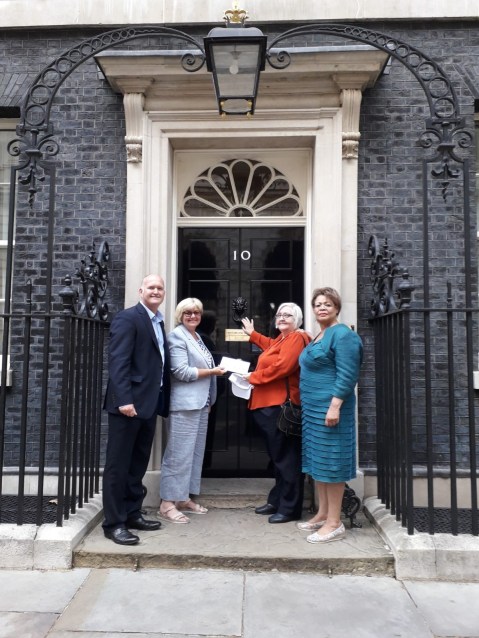
The one sad thing in this story is that at national level in both unions there appears to be a cooling off in financing the campaign. Before the general election, Unison and Unite contributed to the campaign, and Unison came alongside BackTo60 to deliver a petition to Downing Street.
This time the national unions are still supportive – but possibly because of the divisions within Waspi on what they want from the government, they may be holding back.
BackTo60 is sticking with full restitution and compensation for all the 3.8 million 50s women – while some other Waspi groups still have to spell out exactly how much compensation they want.















 Westminster Confidential