Whitehall embarrassment: How the DWP took 16 months to respond to a MPs report that single mums were turning to “survival sex” because of Universal Credit

It was a subject of great embarrassment to officials at the Department for Work and Pensions. A prominent committee of Mps then chaired by the Independent MP, Frank Field, decided to hold an inquiry into why people having to wait five weeks to get their first Universal Credit payment were turning to offer sexual services to men to make ends meet.

That is not the sort of news that people responsible for the ministry’s flagship benefit wanted to hear. So they sent what MPs called a “defensive, dismissive and trite” submission. Instead of wanting to know why this might be happening the officials immediately tried to dismiss the idea.

As the MPs say: “The Department’s first written response to our inquiry addressed the narrow question of whether there is a “direct causative link” between Universal Credit and “prostitution”. The Department displayed little interest in either the lived experience of claimants or the expertise of frontline support organisations.” Indeed, officials tried to blame everything but the benefit, citing drug addiction, the rise of AirBnB, even EU immigration.

Then matters took an unexpected turn. Will Quince, the junior minister for family support and benefit delivery took against his officials. As the report said: the committee held “an evidence panel in private with B, K, M and T: four women who are, or have been, involved in survival sex or sex work.”

“Given our concerns about the Department’s engagement with our inquiry, we invited the Minister for Family Support, Housing and Child Maintenance, Will Quince MP (the Minister), to attend our private panel with B, K, M and T. We hoped that hearing directly from people with lived experience of the relationships between sex work, “survival sex” and UC would help the Department to better understand the issues.”

The evidence was graphic:”I am about to be moved on to Universal Credit. I will lose £200 a month, approximately […] The thought of going into debt and having no money is really frightening. I have children. I can’t do that. I will sell my body. – K”

“I am about to be moved on to Universal Credit. I will lose £200 a month. The thought of going into debt and having no money is frightening I will sell my body”

“I didn’t go out looking for it, I said no at first. It wasn’t until about three weeks later
that I said ‘OK, yeah,’ because I thought I need to, because I need money […] It was
during the eight weeks that I was waiting to get the Universal Credit. I couldn’t wait
eight weeks for money. I just couldn’t. – Julie”
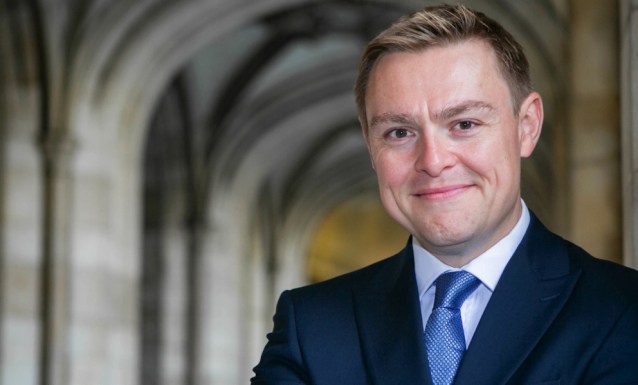
Will quince MP and DWP minister: Pic credit: willquince.com

It changed the minister’s mind and he wrote a letter to the committee apologising for his official’s submission, He wrote a letter to the committee praising the bravery of the people who came forward and in evidence later made it clear that he disagreed with his officials submission. The submission was revised.

The report came out in October 2019 and it proposed some practical ways to change the situation – particularly ending the now 5 week delay before people can get any money. The ministry has tweaked the rules and allowed people to take out loans which they have to start paying back after three months and they are reducing the maximum amount each month that has to be repaid. But the ministry will not budge over the wait. Fast forward 16 months and the ministry have finally replied to the MPs now with a new chair, Labour MP Stephen Timms. Earlier this week he commented: “The experiences of survival sex heard by the last committee act as a reminder of the hugely damaging impact that the wait for a first Universal Credit payment has been having on so many for so long. The Government’s latest rejection of constructive proposals for cutting the five week wait goes down as another wasted opportunity to rectify the harm it is causing to many vulnerable people.”

The reply, in my view, also tried to evade the issue. They have written a new guide. As their response said:

“The Department has developed a new Universal Credit Detailed Help and Support Guide for stakeholders, partners and support organisations to help vulnerable claimants get the financial and practical support they need, including helping them to make a claim for Universal Credit.

The new guide has been drafted and designed by working in collaboration with key stakeholders, including organisations who provide support and other areas where further detailed information is deemed beneficial.”

New DWP guide still not published

Unfortunately it is still to be published. On the specific issue the response said:

“Our Work Coaches are trained to encourage disclosure in the most complex and sensitive
of situations. This includes domestic abuse, modern slavery and immigration concerns.
We deliver this type of support daily across our jobcentres.”..The acts of buying and selling sex are not in themselves illegal in England and Wales. However, there are many activities that can be associated with prostitution which constitute offences.”

It goes on to talk about modern slavery and sex trafficking which are serious issues. But I feel it still doesn’t address the main point – the problem people have feeding their family while they wait five weeks for their first payment. My feeling is that the officials are still embarrassed by these revelations. The women involved are not slaves nor are they being used as sex traffickers – they are desperate for money and this is an extreme example of what happens when they are. It brings it back to the very issue officials won’t talk about – the structure of Universal Credit.


Another fine mess: MPs slam £425m school food voucher scheme as firm walks off with the profits

The Department for Education promoting the Edenred scheme

Company predicted “successful business performance” on the back of feeding poverty stricken children

The spectre of poor children going hungry during the Covid 19 crisis is something the government have had to be put under pressure to remedy – notably by Marcus Rashford, the Manchester United footballer.

But now it has emerged that even when the government finally did the right thing – they managed to make a mess of it. The initial scheme was poorly implemented and the supervision by the Department for Education (DfE) of the private company, Edenred UK Ltd, was lamentable.

Naive civil servants thought they were getting a bargain when the company told them that they get the supermarket vouchers for them at their face value without it costing them a penny more. What they hadn’t realised was that the company could get a huge discount from supermarkets by bulk buying and pocket the difference themselves. And on an initial contract worth £77m later increased five fold to £425m that’s a lot of cash.

Whitehall ” surprisingly unconcerned” about Edenred making big profits out of taxpayers’ money

The report by the Commons Public Accounts Committee expresses dismay that the ministry even now seemed ” surprisingly unconcerned” about the profits made out of our money and has hit back at the MPs for suggesting it – backing the company which is also trying to deny it. A wonderful example of how the Johnson government is prepared to be shamed faced about making money out of Covid 19 and the plight of poor children.

There were serious problems in the early weeks of the scheme” and “unacceptable delays in Edenred processing orders from schools and getting vouchers to families,” the report reveals..

Those words cover up the distressing evidence given by individual schools to MPs.

School staff had to work in the middle of the night to get Edenred’s vouchers

Ms Andrea Howard ,School Business Manager at Truro & Penwith Academy Trust at the time of using Edenred, wrote to Mps, saying she was ” subjected to extreme levels of stress.”

“From the onset, the portal was not fit for purpose, initially it continually crashed and when the portal was first upgraded, there was a very long wait to access the site, this wait was sometimes more than two hours.  “For several nights in a row, I and many other school business manager colleagues took to waking up in the middle of the night to attempt to upload our spreadsheets, and site traffic was better in the early hours of the morning.  However, the fact that there was still traffic at these times is evidence of the desperation of school staff to be able to provide their families with vouchers.”

“Once parents received their vouchers, we had reports from the majority that they were not able to access the platform to redeem them.  It must be recognised that many of these families have limited access to the internet and tried to redeem the vouchers through their phones using their limited mobile data. 

 ” Additionally, we are located in a rural part of Cornwall with no nearby supermarkets, many of our families do not have access to their own transport and there is a very limited bus service, however the vouchers were only able to be used in large supermarket chains and not local shops such as co-op (initially) and Spar. “

Gavin Williamson, education secretary

Gavin Williamson made ” untrue statements”- headteacher

Raphael Moss, Headteacher, Elsley Primary School, Wembley, told MPs:” Due to the untrue statements made by the Secretary of State [Gavin Williamson] and DfE, their lack of acceptance of many of the issues, or the downplaying of the impact, I feel compelled to submit evidence for what amounts to gross negligence. As a result of the delays to providing vouchers, our own school set up a food bank, relying on donations from staff and the public, to ensure that children did not go hungry. “

“A major flaw in the scheme was that there was a huge incentive for schools to use the Edenred scheme rather than use a local alternative. A school’s own scheme would require laying out the cost of it it ourselves, with DfE guidance placing several limitations on which schools could claim and maximum amounts that could be claimed.

“The Edenred voucher amount of £15 was also in excess of the usual funding of £11.50 which also acted as an incentive to use the Edenred scheme. The public messages implied that schools had a choice to use their own scheme but without mentioning the limitations on schools reclaiming costs.”

Profits of £10.7 million

Taking this evidence it is quite clear that the scheme was aimed ( with Whitehall connivance) as much as benefitting Edenred as the poor hungry children. No wonder after a National Audit Office investigation and a critical report by MPs they have decided to return one per cent of the cost of the contract.

Their latest accounts – they are a subsidiary of a French firm – show they made profits of over £10.7 million.

Their annual report says they were ” honoured ” to get the food voucher contract which” will enable a successful business performance in 2020.”

You bet it did. The pay rise for their highest paid director last year was £136,000 – it went up from £235,000 to £371,000. That pays for a lot of food vouchers – more likely in caviar and French champagne than baked beans and spaghetti.

A damning indictment on the uncompassionate Roman Catholic Church

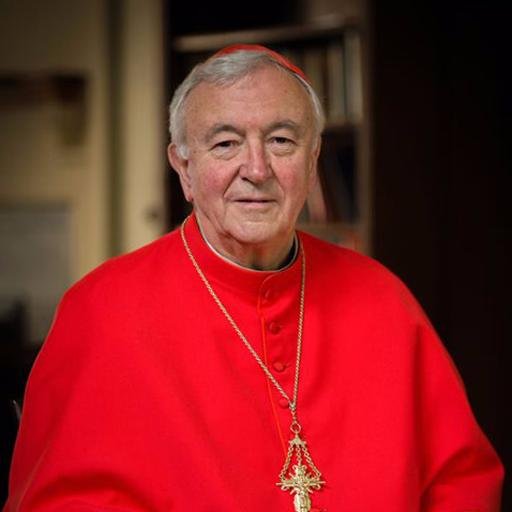
Cardinal Vincent Nichols: Pic credit: Twitter

The Independent Child Sex Abuse Inquiry’s verdict on lip service provision to tackle child sexual abuse

The CSA inquiry report into the Roman Catholic Church -published this week – and its handling of years of child sexual abuse makes very grim reading . It suggests that while the Church may have put in structures to deal with the issue there was no real compassionate commitment from the top of the Church to act.

In particular the report is scathing about Cardinal Vincent Nichols, the  Archbishop of Westminster and President of the Catholic Bishops’ Conference of England and Wales, for his lack of compassion and the extraordinary failure of the former Papal Nuncio,  Archbishop Edward Joseph Adams, to proffer even a statement to the inquiry. Instead he retired without saying a word.

This would suggest that neither Pope Francis nor the Cardinal – whatever words of contrition he made – are really bothered about the serious state of child sex abuse in the church in England and Wales.

3000 complaints of sexual abuse

And serious it is. The report says:

“Between 1970 and 2015, the Church received more than 3,000 complaints of child sexual abuse against more than 900 individuals connected to the Church. Those complaints involved over 1,750 victims and complainants. Civil claims against dioceses and religious institutes have resulted in millions of pounds being paid in compensation.

Even so,the true scale of child sexual abuse is likely to be greater than these figures.” (my emphasis).

The Church’s attitude is in contrast to the Anglican Church – which while by no means perfect – does seem committed to change its ethos and culture. Archbishop Justin Welby, the Archbishop of Canterbury, seems more determined to take practical measures than Cardinal Vincent Nichols.

Not that the Roman Catholic Church did not know it had a problem. Two reports -one by the late Lord Michael Nolan – who also was the founder chairman of the Committee on Standards in Public Life which investigated Westminster- and another by Baroness Cumberlege, a former health minister in John Major’s government -looked at the issue.

Both provided a framework to protect and safeguard children and adolescents from sexual abuse.

Lord Nolan’s thorough review

Lord Nolan made a thoroughly reviewed the situation, The inquiry said:

“His report, published in 2001, contained 83 recommendations applicable to the dioceses and religious institutes. At the heart of the Nolan report was the ‘One Church’ approach – a single set of principles, policies and practices across the Church that put the welfare of the child first.

“The first recommendation required the Church to “become an example of best practice in the prevention of child abuse and in responding to it”.

 A body was set up to implement Nolan but it was not wholeheartedly done with some bishops opposing it and Baroness Cumberlege did another review in 2007. There were improvements but more needed to be done.

The report says:

“In May 2019, Cardinal Vincent Nichols said: “We humbly ask forgiveness … for our slowness and defensiveness and for our neglect of both preventative and restorative actions”.

“That slowness is exemplified by the Church’s failure to fully implement two of the Cumberlege Recommendations (one of which was 13 years overdue) and by its failure to establish the Safe Spaces joint project with the Anglican Church until September 2020. Six years have elapsed since this project was commenced and it seems little progress has been made to ensure that victims and survivors have access to the pastoral and therapeutic support that the Safe Spaces project was set up to provide.”

I suspect Safe Spaces was set up because the church knew they faced criticism by the inquiry.

The report details the most harrowing cases of sexual abuse.

As it says: “we heard appalling accounts of sexual abuse of children
perpetrated by clergy and others associated with the Roman Catholic Church. The sexual offending involved acts of masturbation, oral sex, vaginal rape and anal rape. On occasions, it was accompanied by sadistic beatings driven by sexual gratification, and often involved deeply manipulative behaviour by those in positions of trust, who were respected by parents and children alike.”

sexual crimes

Examples include sexual crimes against children at Gilling Castle, a preparatory school for Ampleforth College; Downside School, Ealing Abbey St, Benedicts School in Ealing. Ampleforth College was particularly determined that these crimes should not exposed. Child sexual abuse at St. Benedicts was described the report as extensive.

Yet despite this harrowing evidence Cardinal Nichols did not show any compassion for the victims and survivors. The report says:

“”As the figurehead and the most senior leader of the Roman Catholic Church in England and Wales, Catholics look to Cardinal Nichols to lead by example. During the final public hearing in November 2018, he apologised for the Church’s failings, noting that this was a source of “great sorrow and shame for me and, indeed I know, for the Catholic Church”. But there was no acknowledgement of any personal responsibility to lead or influence change. Nor did he demonstrate compassion towards victims in the recent cases which we examined.”

terrible indictment

This is a terrible indictment of both the man and the organisation. The report makes seven recommendations ” covering leadership and oversight on safeguarding matters, a framework for dealing with cases of non-compliance with safeguarding policies and procedures, re-framing canonical crimes relating to child sexual abuse, reviewing policies and procedures, and also a complaints policy for safeguarding
cases.”

My worry is that the Roman Catholic Church will still see a repeat of these problems even after receiving such a damning report. If the leadership is not there to get things changed, there will be no real progress.

Will the Church of England keep faith with supporting and compensating child sex abuse survivors?

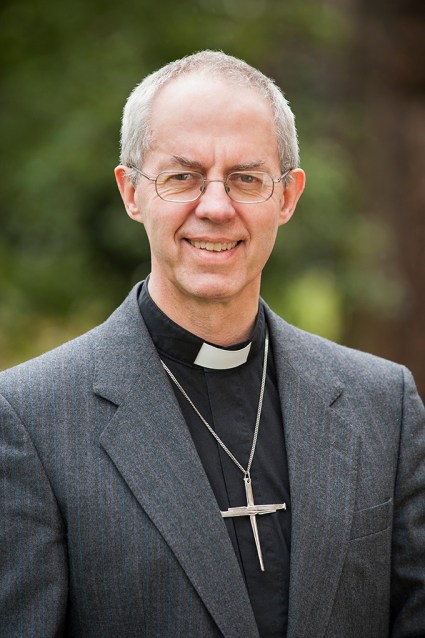
Justin Welby, Archbishop of Canterbury, moved to help survivors with emergency fund

It will take time to implement and insiders think it will cost the Church tens of millions of pounds to put right

Just three weeks before the Independent Inquiry into Child Sex Abuse produced its shocking report on child sexual abuse inside the Anglican Church, the Archbishops Council decided to provide both help and financial support for survivors of this heinous crime.

The support was two fold – an emergency fund drawn from the reserves for just over a handful of desperate child abuse survivors and a long term project for a major compensation and support scheme for possibly hundreds if not more survivors.

As well as direct financial support this would fund counselling for survivors which is by nature long term and very expensive.

bigger demand from survivors

Inquiries revealed that the emergency package of help has already produced a bigger demand from survivors than anticipated. As the Church Times reported one survivor known as ” VB” received emergency funds both before ( at the Archbishop of Canterbury’s insistence) and after the emergency fund was set up after suffering bouts of severe depression following historic child sex abuse by multiple church officers as his business, already hit by Covid-19 was about to go bust.

Last week the Church confirmed that three survivors had received emergency help – one of them receiving a large sum – and that 12 people had either been referred or applied for help from the fund.

The good news is that the Church says none of 12 has been ruled ineligible for help and that more money will be forthcoming from the reserves to help them if that is what is required. The figure for the fund is being kept confidential but I understand it is not far short of £1m.

The big question us the long term solution. Phil Johnson, chair of the Minister and Clergy Sexual Abuse Survivors, and has been critical of the support given to survivors in the past, is delighted at the support being given now.

Could cost tens of millions

He estimates that if the Church is to help all the people who have been victims of child sex abuse the cost could run ” to tens of millions of pounds”- if not shy of £100m.

This will be a tall order and must raise the issue of whether the Church will have to sell any of its assets and investments.

The Church itself says: “No way to tell [the final cost] and there is an important point to make that redress is not all about money but also apology, restorative justice and other factors. The Church is now responding to and engaging with survivors to provide the help and support needed to overcome the impacts of abuse, whatever form that takes. This is initially with the most urgent cases for help but eventually to address the needs of all Church-based abuse survivors.”

The delay in setting up a permanent fund is because it will take time to set up formal structures and procedures and the Church hopes to learn from running the emergency fund the best way to proceed.

Meg Munn

Meg Munn, chair of the National Safeguarding Panel, is also keeping an eye on progress.

She said :We were updated that work is ongoing on the final scheme with recruitment of a manager for it. Work is also underway to establish the interim hardship fund that was agreed by the Archbishop’s council in September.

“We don’t have a date for when the interim scheme will be in place, but we were assured that there is a desire to have this in place as soon as possible.”

Meg Munn’s warning

In a recent blog she wrote: “Profound change will not be established until there is complete acceptance across the whole of the church that striving for a safe church is at the heart of its mission. Consequently, the current structure which sustains unaccountable and powerful clergy must change. Without this, the Church will continue to have dangerous places for children and adults as I described in my interview nearly two years ago.

“There may never be a better opportunity for those with responsibility and influence to step up to this challenge. It will mean tackling long and dearly held principles, something some might not want to do. But not doing so will lead to more lives devastated, and more damage to the reputation of the church. Is this generation of church leaders prepared to accept that? “

If the Church do proceed and keep up their good intentions perhaps at last the stain of hidden child sex abuse will be finally removed. That is why I am pleased IICSA will look again at the progress made by the Anglican Church before the inquiry is over.

Updated: Why Rishi Sunak’s rip off rates at National Savings should be boycotted this month

Rishi Sunak: King of the rip off rates for the ordinary savers

See end of this blog for three accounts offering you more money than these scam rates

While The Treasury has had to hand out the largesse to keep the economy alive during the Covid-19 pandemic a really nasty trick is being played on the millions of small savers who rely on National Savings for a safe home for their money.

Effectively Rishi Sunak, the Chancellor, is making sure that millions of savers and those who have a flutter on the Premium Bonds subsidise the government’s multi billion pay outs by losing money every year they invest.

Their savings are being destroyed and made smaller every year – even if we are having record lower rates of inflation.

It is also sending out an appalling message to people who wish to save money by telling them that even their meagre savings will be reduced year on year as inflation erodes them.

What I am talking about is the new interest rates being offered by National Savings from November 24. They echo the free fall in interest rates offered by most banks hit by the Covid-19 panic. The only difference is that this government will use your money to prop up their finances.

The rates are truly horrendous as shown here. The worst case example are Income Bonds shown here.

As you can see the rate falls from 1.15 per cent to 0.01 per cent – virtually providing nobody with any income. Indeed if you have less than 646 pounds invested you literally won’t even get a penny.

Similarly with an investment account. And you will get far fewer prizes from premium bonds – the odds rise from 24,500 to 1 to 34,500 to 1.

So basically this is one giant rip off – in total contrast to the rich and wealthy who can game the stock market , invest in tax havens or have the money to take advantage of investment returns in China and the Far East. Indeed as there is a limit on claiming Universal Credit if you have savings above six thousand pounds in National Savings it is worth spending them or your payment will be reduced. If you have over sixteen thousand pounds you won’t get a penny.

I notice Rishi Sunak himself has recently set up a blind trust which means he has substantial investments – which he does not want people to know about. I bet you they are not offering a return of 0.01 per cent to help fund his millionaire life style.

UPDATE: Three accounts which give you higher interest if you want to boycott National Savings

According to the reliable Which? Money there are three instant access savings accounts that offer you higher interest and allow you to access your money. All three have unfortunately now been withdrawn but their replacements still offer better value than anything at National Savings

The new ones are:

Coventry Building Society Easy Access Isa. Tax free and pays 0.50 per cent . Can withdraw money at any time

Principality BS Easy Access Web Saver 0.6 per cent with unlimited withdrawals

Yorkshire Building Society Six Access e-Saver No 3 and e-Saver ISA issue 3 both over tiered rates between 0.2 per cent and 0.6/0.55 per cent and allow sui withdrawals a year

How the ” emotionally attached ” architect of Universal Credit will now be its chief DWP scrutineer

Dr Stephen Brien: The architect of Universal Credit. Pic credit: BBC

Self declared non politically active appointee turns out to be one of Iain Duncan Smith’s close advisers

A very important quango appointment has been made by the Conservative government which could affect the treatment of millions of benefit claimants -especially the huge number on Universal Credit.

It is to a fairly obscure body known as the Social Security Advisory Committee – which provides impartial advice on social security. It scrutinises most of the complex secondary legislation that underpins the social security system.

Put it more simply, its advice will influence how the DWP treats millions of poor, disabled, jobless people who are living on the breadline. It will cover a period when the government plans to to claw back money after the huge spending splurge to combat Covid-19.

The appointment is for the chair of the body and it has gone to Dr. Stephen Brien, a man who is publicly credited as the architect of one of the country’s most hated benefits, Universal Credit.

He will now lead until 2024 a committee of people who will both comment on future benefit changes and do independent research on the effects of the benefits system on the poor. The membership of the committee includes Seyi Obakin, Chief Executive of the homeless charity Centrepoint: Phil Jones,Director, The Prince’s Trust Cymru and Liz Sayce, board member of the Care Quality Commission.

Charlotte Pickles.Pic credit: Conservative Home

But Therese Coffey, the secretary of state for works and pensions, has also recently appointed Charlotte Pickles, director of the “non partisan” think tank, Reform and former adviser to Iain Duncan Smith, who piloted Universal Credit. She wrote an article for Conservative Home calling for the abolition of child benefit for millions of people and taxing the Disability Living Allowance. Read it here.

The appointment process for Dr Brien was marred from the start. The works and pensions committee was never informed of the recruitment process which is a breach of Cabinet Office guidelines as the appointment has to be scrutinised by Parliament. They learnt about it after a member of the committee staff spotted it.

This led to an exchange of correspondence between Stephen Timms, the committee’s Labour chairman and Therese Coffey. It is reproduced here.

Not only did Mr Timms complain about the omission but also some subtle change in the wording of the job specification. The 2018 wording asked for ” strong leadership qualities”. The 2020 specification is ” measured and balanced leadership qualities”. Similarly the words ” independent” has been dropped in favour of “impartial”.

Therese Coffey defended the change in wording to reflect the future strategic direction of the organisation and that she wanted ” to strengthen relationships” between ministers and shareholders. She admits she was embarrassed by the omission but can’t bring herself to apologise. It took an earlier letter from Mr Timms to Baroness Stedman-Scott, Lords minister for work and pensions to give her ” sincere apologies”.

The appointment process looked fair – though the small number of applicants -12- were overwhelmingly white with just one disabled person. Six were ruled out without an interview including the disabled person.

Six made the interview including one BAME person. Four were women and two men but only three were considered appointable.

The interviewing panel itself did include one BAME “fast track” woman , Tammy Fevrier, from the DWP Partnership Division.

Dr Brien’s appointment comes under the category of a ” non political ” one according to the code adopted by the Commissioner for Public Appointments. He declares himself :” I am not now and have never been politically active.”

Yet his CV is pretty questionable on this matter. As well as developing the idea for Universal Credit he was on the board of Iain Duncan Smith’s Centre for Social Justice from 2008-11 and 2013-19. This is where he developed the idea of Universal Credit and this is the body that wants to deprive people in their late 60s and early 70s of a state pension by raising the age to 75.

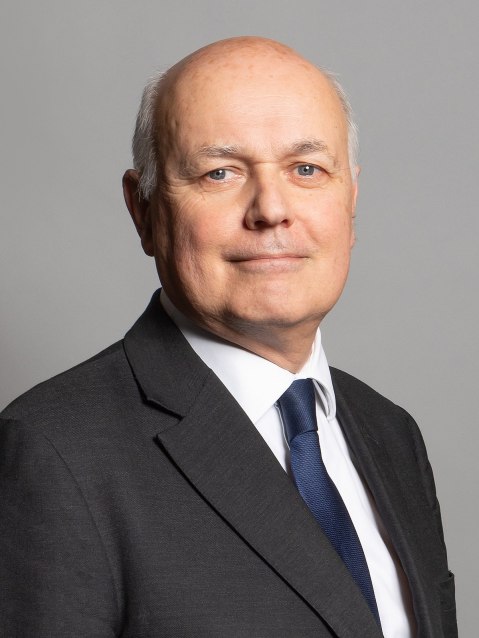
Official Commons portrait of Sir Iain Duncan Smith

On top of this he was a special expert adviser to Iain Duncan Smith in the coalition government from 2010 to 2013 at the DWP where in his words he “Played a substantial role the DWP’s engagement with the Treasury and Office for Budget Responsibility to secure the financial settlement for the reform programme” and “Worked in partnership with the senior officials delivering the Universal Credit”.

This was the time the Treasury insisted on speeding up the rise in the pension age to 66, refused to introduce national insurance auto-credits for women born in the 1950s while keeping them for men and imposed other welfare cuts.

And guess what Charlotte Pickles – also just appointed to SSAC- started her policy career at the Centre for Social Justice and then went on be the expert special adviser to Iain Duncan Smith at the DWP.

Critical friend

MPs did question Dr Brien thoroughly at the appointment hearing – with both Labour MPs Stephen McCabe and Debbie Abrahams pushing him on disabled people’s deaths and whether he was emotionally attached to Universal Credit. See here.

Dr Brien’s mantra was he would be impartial and he kept repeating he will be a ” critical friend” of the ministry.

I wonder. It depends on the balance of being friendly and critical. Either he will use his knowledge- he claims to be passionate about social security since he was 19- to try and make the new system work better. Or will he be part of the new Chumocracy – which takes in everyone from Dominic Cummings, the PM’s adviser and Michael Gove to Rishi Sunak – and give a fair wind to new benefit cuts no doubt with the approval of Charlotte Pickles.

I did an article for Byline Times on how the Conservatives through a former Vote Leave adviser are trying to pack quango appointments with Brexit inclined Tories – though it is not clear whether this is one of them.

I shall be watching. He can start with something he did promise to MPs over transparency. The minutes of SSAC should be public. They have not been published for over a year which is a disgrace. Let’s see how he gets on with this first.

Revealed: Dramatic rise in benefit and disability claims from women born in the 1950s

Disclosure undermines ministry claim of no link between poverty and bad health and loss of state pension

DWP case undermined by new figures


Days after the Court of Appeal rejected the judicial review brought by the BackTo60 campaigners the House of Commons library produced a set of previously undisclosed figures showing huge leaps in the numbers of 50sborn women claiming universal credit[UC] or Jobseekers allowance[JSA] and employment and support allowance [ESA].

Claims for UC and JSA – which of course were non existent when the pension age was 60 – have gone up by an average of 382 per cent between 2013 and 2019. The figures are still relatively low (from 7582 to 36,531) but the trend is overwhelmingly upwards. It also excludes those who are battling on or using up savings rather than claim.

Claims for ESA – a difficult benefit to claim unless you are hospitalised and involving a 25 page questionnaire and work capacity assessment – have soared by 185 percent – to reach 205,385 -over the same six year period.

The figures are bound to be a huge underestimate as they take no account of the rule change that allowed people to claim the benefits if they had to stay at home because of Covid 19 this year. But they do allow a direct comparison during the period when the only big material change for this group of women was the loss of their state pension.

The disclosure of these figures -obviously not available at the time of the hearing – does undermine the forceful case made by Sir James Eadie, QC, who represented the Department of Work and Pensions, that any poverty or ill health suffered by these women could not be linked to the rise in the pension age to 66.

They also back up the argument made by Mr Mansfield who is quoted in the judgement:
” It is not uncommon for women born in the 1950s to have contracted various ailments and health problems by the time they reach their early 60s, because of the environment they lived in during their early years.  He said further that it is common for women in this age group to be living in straitened circumstances particularly if they are now single, with part time jobs at best and working for low pay. 

” It is also very common for them to be caring for elderly and infirm parents.  He argued that the lack of state pension means that they have to resort to makeshift measures to make ends meet, selling their houses, using up their savings and cutting back on any non-essential spending so that they are not in a position to enjoy their retirement years.”

But the judges concluded: ” there is no sufficient causal link here between the withdrawal of the state pension from women in the age group 60 to 65 and the disadvantage caused to that group. 

” The fact that poorer people are likely to experience a more serious adverse effect from the withdrawal of the pension and that groups who have historically been the victims of discrimination in the workplace are more likely to be poor does not make it indirectly discriminatory to apply the same criterion for eligibility to everyone, if that criterion is not more difficult for the group with the protected characteristic to satisfy.”

The figures also provide a useful constituency by constituency breakdown – showing an unequal distribution of the misery caused by ill health and failure to get as job depending on where you live. The guide would provide a very useful campaigning tool if people wish to lobby their MP over the bad treatment of 50s born women over their loss of pensions – as they can quote the figures back at their MP.

These are some of the top increases and the names of the MPs who were elected at the last election.

Unemployment biggest percentage constituency rises

Knowsley 1388 pc rise from 8 to 119 George Howarth ( Lab)

Newcastle North 1347 pc rise from 6 to 88 Catherine McKinnell (Lab)

Morecombe and Lunesdale 1300 pc rise from 6 to 84 David Morris (Con)

Birmingham Yardley 1270 pc rise from 10 to 137 Jess Phillips (Lab)

Wells 1220 per cent rise from 5 to 66 James Heappey (Con)

Disabled and ESA biggest constituency percentage rises

Glasgow North East 315 pc rise from 214 to 889 Anne McLaughlin (SNP)

NE Hampshire 300 pc rise from 32 to 128 Ranil Jayawardena (Con)

Linlithgow and East Falkirk 292pc rise 149 to 584 Martyn Day (SNP)

Brecon and Radnorshire 292 pc rise from 77 to 302 Fay Jones (Con)

Leeds NE 291pc rise from 89 to348 Fabian Hamilton (Lab)

Glasgow SW 287pc rise from 205 to 794 Chris Stephens (SNP)

Interestingly Martyn Day is the one MP who challenged Boris Johnson about the court judgement at Prime Minister’s Questions on Wednesday.

The full report is available here. You need to download the table on working age benefits 2020 to get all the info on the big increases in payments. There is also an up to date breakdown of the numbers of 50sborn women living in individual constituencies.

So again we yet have another disclosure backing up the case for the 50swomen to get their pensions.

Exclusive: Now 9.8 million men over 60 had their national insurance contributions paid by the state

The revised DWP answer

Revised figure doubled for ” men only national insurance subsidy”

The Department for Work and Pensions has revised the estimated number of men over 60 who received what are known as ” auto credits” towards getting a full pension from 4.65m to 9.8m between 1983 and 2018.

The 4.65 million figure was already staggeringly high but the new figure is more than double the number previously disclosed. It is also well over double the number of 1950s born women who are currently waiting for their pension for up to six years.

The scale of the payments has been kept quiet by the Department for Work and Pensions for 37 years. It was only revealed last month when Myfanwy Opeldus, one of 3.8 million women facing now a six year delay to get her pension, got the admission from the ministry through a Freedom of Information request. 

Letter issued after court hearing

Yesterday the Department for Work and Pensions wrote to her again raising the figure to 9.8 million. The letter came just after the Court of Appeal hearing into the judicial review this week heard about the plight of women affected by the rise in the pension age and was told by Michael Mansfield about the men receiving ” auto credits” which was not known at the time of the first judicial review.

The new disclosure makes it even more galling for the women who were originally promised they would have their national insurance contributions paid between 2010 and 2018 only to have the offer withdrawn a year before it was due to start. A number have had to pay thousands of pounds to make up the sum for a full pension while others simply have not been able to afford it.

The letter does say that not all 9.8 million men would have benefited as some would have died, others would have full insurance records and some would have been working abroad.

enormous subsidy for men

Nevertheless the scale of the subsidy must be enormous and a benefit for people years after it was offered by Sir Geoffrey Howe, the Chancellor of Exchequer in 1983, to encourage men to get off the dole to keep the very high unemployment numbers down at the time.

This story seems to get worse and worse so let us hope there will some justice from the courts for all the women concerned.

50 women’s pensions: An extraordinary Judicial Review Appeal hearing

The Master of the Rolls, Sir Terence Etherton Pic credit Wikipedia

Judges are inscrutable. Like wise old owls you can never be sure what they are thinking. This week’s two day hearing of the Court of Appeal into the rejected judicial review on behalf of 3.8 million women born in the 1950s who saw their pension age rise from 60 to 66 was no exception.

However the proceedings were extraordinary for a number of reasons. For a start the introduction of new technology clashed with the traditional proceedings of the courts.

Hit by Covid 19, the Court of Appeal decided that ” public interest ” in the case was so great that it should be live streamed with some of the judges and lawyers contributing via video link. They were justified with audiences over 2000 peaking at one point to just below 4000 – Court No 71 could never hold anything near that number ever, Covid 19 or not. Now two days later it has been seen by over 16,000 people.

For the first day it worked. But during the second day it ran into a number of technical problems -including cutting people off. And at the very end of the day the technology fizzled out for me so I didn’t see the very last part of the hearing . I have now seen it and Michael Mansfield makes a strong defence of why 50s women have been so badly affected by the delay in the pension age, citing one case where a woman contemplated suicide. He also emphasised the failure to notify people properly, saying there was a common law duty to do so.

Henrietta Hill was questioned by the judges about indirect and direct sex and age discrimination and how the lawyers saw their case being applied.

The judges reserved judgement which means it could be a few months before there is a decision.

Judges were engaged

The three judges presiding over the hearing were engaged with the debate.. The Master of the Rolls, 69 year old Sir Terence Etherton, is also president of the Property Bar Association and chairman of the Trust Law Committee and a visiting professor at Birkbeck College. In his youth he was a fencer and a member of the GB International Fencing Team, including being selected for the 1980 Olympics in Moscow.

Lord Justice Sir Nicholas Underhill Pic credit: Judiciary website

Lord Justice Sir Nicholas Underhill, 68, is a former president of the Employment Appeal Tribunal so well versed in complex cases. He also is a former Attorney General to the Prince of Wales.

Lady Justice Dame Vivien Rose Pic credit: judiciary website

Lady Justice Dame Vivien Rose,60, is the most recently appointed appeal judge of the three, is an expert in EU and UK competition law, tax, has been a Treasury legal adviser and held a post in the Ministry of Defence as Director of Operations and International Humanitarian Law during the Gulf War. Unlike the other two judges, who were educated at public schools, she was educated at a London comprehensive school and is the first lawyer in her family. She also sings in a choir.

Sir James Eadie : Pic Credit: blackstonechambers.com

Given this expertise of the judges it was extraordinary that Sir James Eadie, QC, the Treasury First Counsel, nicknamed the ” Treasury devil” should try to get the Judicial review declared unlawful.

He was building on the questioning in the previous judicial review which raised whether Ms Justice Dame Beverley Lang was right in granting the judicial review for the 3.8 million women in the first place.

He was shot down with a rapier like comment from the Master of the Rolls who pointed out he could have raised this immediately after her judgement at a special hearing and again when the judicial review was heard.

” Not in my brief” -Sir James Eadie

His reply was “it was not in my brief from the DWP ” and talked about ” the bigger picture”. My interpretation of that is Amber Rudd, then works and pensions secretary, would have been well aware that to strike out a review for 3.8 million women would have been political dynamite and caused widespread furore well beyond the actual case.

But Sir James persisted citing judgments which said that the case could have been held in 1995 as soon as the Pension Act was passed. Michael Mansfield,QC dealt with that claim in his summing up.

What is important is that the judges were really engaged with the arguments and tested both sides equally. They looked at the notification ( or non) notification issue of the pension age rise, listened to the arguments involving EU law and the relevance of the UN Convention of the Elimination of Discrimination Against Women and noted the auto credits issue which allowed 4.6 million men over 60 from 1983 to 2018 to have their national insurance contributions paid by the state.

Sir James Eadie’s tactics seem to be to try and get most of the case law raised by Adam Straw and Henrietta Hill for the 50swomen ruled as irrelevant.

At one point the Master of the Rolls intervened to point out to Sir James that Adam Straw’s argument about one particular case was aimed at making a specific legal point not about the content of the case.

The other DWP tactic was to use out of date information. Sir James used 2011 as the reference for the continuing rise in longevity ( and pension payment costs) – the high point of the increase – ignoring it flatlining since. This I gather was corrected by Michael Mansfield later.

Sir James also got it wrong when he said the purpose of the case was to reduce the pension age to 60 for all women. It isn’t. It is to fully compensate the 3.8 million women who feel cheated about waiting six years for a pension and not being properly told about the change.

The DWP switched tactics over the economic plight of the 1950s women – in the original judicial review he made great play of the fact they were not worse off but some were well off.

This time he acknowledged that 1950s women faced economic disadvantages and social ills but these, he argued, were nothing to do with the raising of the pension age.

For people watching this case it must have seemed a bit arcane that it is based on case law rather than – though Michael Mansfield did highlight their catastrophic plight – going into detail of the hardships of 50swomen. Full statements on the hardships faced by the two women cited in the case were passed to the judges by Michael Mansfield.

judgement time

Now for a judgment. The point of a judicial review is to question the administration of a policy to see if it was fit for purpose and had not disadvantaged people.

Therefore don’t expect a judgement ordering the women must have all the money. But you could expect a judgement saying the system cheated them which will have to lead to action by the government to redress the matter.

Either way win or lose the BackTo60 campaign will be considerably enhanced by the outcome of this case – because it highlights the women’s plight and will be a force to reckon with. Going to law is much more powerful than trying to persuade MPs.

After all very few campaigners can claim to have their case examined by the Master of the Rolls and I know BackTo60 lawyers are delighted that they got an appeal on all the points they raised in the first judicial review.

Universal Credit: Fear and Loathing for 2.9 million in the Poverty Trap

The government’s Universal Credit logo – the slogan is makes work pay. Pic Credit: gov.uk

Today the National Audit Office produces a timely report on the operation of Universal Credit and the impact on claimants of having to wait five weeks to get paid.

It comes when the numbers claiming the benefit has jumped from 2.9m to 6.1 million because of Covid 19.

The report investigates the plight of those needing to claim before Covid 19 struck and it paints a particularly bleak picture.

It is also relevant to the group of 1950s born women whose pension has been delayed from 60 to 66. As the Independent reported separately recently the rise of women making claims for such benefits – soared from 7,578 to 36,527 between 2013 and 2019 – and was almost three times more than men who are aged 60 and over.

Fear factor

What is alarming about the findings – which are an analysis by the NAO of the Department for Work and Pensions own figures – is that many of the people were too frightened to claim and delayed claiming for up to three months after they lost their job.

This damning point is raised in the report. It says:

“Our consultation with claimants and support organisations indicated
that a “fear factor” about Universal Credit is also likely to play a part in some people delaying a claim, or not claiming at all. This may result from people hearing about bad experiences from friends, family or the media, for example.
Some respondents told us they were worried about whether they would be able to cope during the wait.”

As a result the report says the DWP’s analysis of earning data ” found that almost half(49%) of households who claimed Universal Credit in the four years to mid-2018 had no earnings in the three months before they claimed the benefit.

Taking this into account and the additional five week wait to get the benefit this meant that many had to apply for advance payments to tide them over or go to food banks simply to get food to live which then had to be paid back by deducting it from the meagre universal credit they have to live on.

DWP headquarters in Westminster,London.

A particularly revealing table in the report puts together this bleak picture. It shows that an astonishing 80 per cent of all low income people starting to claim the benefit were in serious debt. Some 77 per cent had to rely on advance repayable payments. Another 34 per cent owed money to other government departments – often historic debts. And six per cent had third party debts,like unpaid council tax, child maintenance, rent and water arrears.

Nearly as badly off were claimants with a disabled child, disabled people and carers. Some 65 and 70 per cent had serious debts.

Now as the report shows this is against a dramatic improvement of paying the benefit on time from 55% in January 2017 to 90% in February 2020.

However, as the number of people claiming Universal Credit has grown, the number of people paid late has also increased from 113,000 in 2017 to 312,000 in 2019. In 2019 those new claimants who were paid late faced average delays of three weeks in addition to the five-week wait. Some 6% of households (105,000 new claims) waited around 11 weeks or more for full payment.

Universal Credit expansion delayed

The government has also limited the expansion of universal credit – delaying the final date of switching from other benefits from March 2023 to September 2024 at an extra cost of £1.4 billion to £4.6 billion.

Yet despite spending £39m to try and explain the new benefit to wary claimants the National Audit Office concludes the ministry has a communications problem.

Meg Hillier, chair of the Commons public accounts committee, said: ” too often the most vulnerable claimants still aren’t receiving the money they are entitled to when they need it most.”  

Stephen Timms, chair of the Commons work and pensions committee. Pic credit: Twitter

Stephen Timms, chair of the Commons work and pensions committee said:

“This hard-hitting report on Universal Credit from the National Audit Office confirms the Select Committee’s concern that that the five week wait for the first payment causes ‘financial hardship and debt’.

” It provides further evidence that the initial planning assumptions for Universal Credit were naive. We now know UC will cost an extra £1.4bn to the public purse.  It will take more than twice as long to roll out as originally planned.  Far from reducing fraud and error, Universal Credit is driving historic record high levels – more than £1 in every £10 paid through UC is incorrect”

Neil Couling director general Universal Credit

There is one man who has done rather well out of all this. He is “Mr Universal Credit” Neil Couling, who is in charge of the benefit at the DWP. According to the latest DWP accounts for 2019 he received a bonus of £15,000 on top of a salary of between £150,000 and £155,000 a year. He has got pension benefits worth a cool £80,000.

He will be appearing before the Commons work and pensions committee next Wednesday to explain how well he has handled the benefit for the 2.9 million claimants.