Glyndebourne case: When Courts Don’t Listen: A Struck-Out Claim, A Void Application, and a Law Firm in Freefall

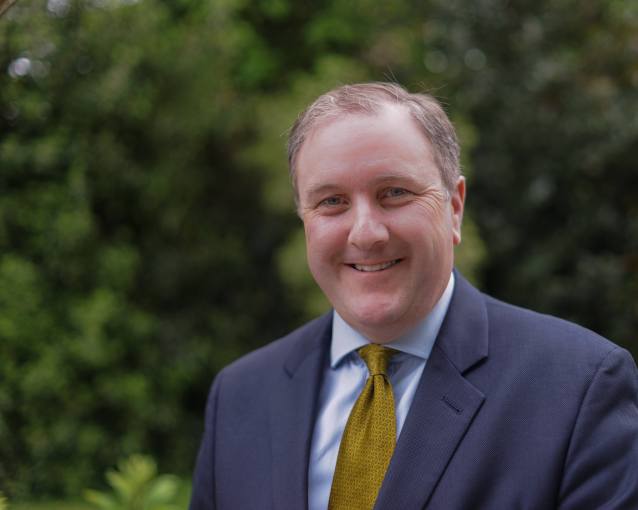
Joe Milner ex Loch Employment Law now Brightstar Law Ltd

Three months after this blog first reported (see here) unusual conduct by a leading employment law firm, public records reveal just how far that conduct went — and how the courts may have got it very wrong.

High Court records confirm that on 8 October 2025, Loch Employment Law Ltd launched a breach of contract claim (Case No. BL-2025-001254) against a group of former employees and entities, including a newly formed legal outfit called Brightstar Law Ltd.

Among the seven named defendants is Joe Milner, formerly a director of Loch Employment Law and Claudia Yorath former Group People Director for Loch Group.

Strikingly, Milner and Brightstar have fired back. Part 20 counterclaims have been filed not just against Loch Employment Law, but against its parent company Loch Associates Group Ltd, and even against Pamela Loch, the firm’s founder, in her personal capacity.

The public filings suggest not a polite departure — but a full-blown legal and commercial rupture.

Pamela Loch -founder of law firm

The Timeline That Should Have Stopped Everything

Official records from Companies House show that Milner’s directorship at Loch Employment Law ended on 24 July 2025. The company filed the required TM01 termination form the very next day.

And yet — a full 35 days later, on 28 August 2025, a legal document known as an N260 Statement of Costs was filed with Milner’s signature, identifying him as “Partner” of Loch Law.

That same day, a strike-out application brought in Loch Law’s name was allowed by the High Court. Costs were awarded against the claimant. The judge, Master Eastman, made no reference in his ruling to the fact that the signatory had no authority to act on behalf of the firm.

Four days later, on 1 September 2025, Milner became a director of Brightstar Law Ltd — a direct competitor.

A Warning Ignored

What makes this situation particularly troubling is that the issue was flagged to the court in advance.

According to public filings, the claimant — who had no legal representation — had:

  • Submitted evidence from Companies House showing Milner’s removal
  • Filed detailed submissions alleging that Milner’s filings were unauthorised
  • Cited Yonge v Toynbee [1910], a century-old case establishing that documents filed by solicitors without authority are void
  • Provided metadata analysis suggesting that at least one signature may have been reused from unrelated proceedings.

Despite these warnings, the strike-out application was allowed to proceed. The claimant’s submissions appear to have been entirely disregarded. There is no indication that the court considered the authority of the solicitor filing the costs claim — or whether the underlying application was even valid.

 The Legal Consequence: A Void Strike-Out?

Lawyers consulted about the case (who are not connected to the parties) note that if Milner lacked authority, the strike-out application was not merely procedurally defective — it was void.

It is a foundational principle of English law that someone without standing or instructions cannot bind a firm. If the court had taken proper account of this, the claim might never have been struck out — and costs might never have been awarded.

That it was allowed to proceed suggests a serious failure to scrutinise who was behind the filings.

Vindicated — But at What Cost?

The claimant, Edward Romain, who now runs Blind Justice, a community interest company supporting litigants in person, appears to have been correct in every material respect, Milner had no authority and the strike application should not have been entertained.

Yet the cost order remains. The ruling stands.

In the view of legal observers, this raises a deeper question: How many other strike-outs, cost rulings or orders are being granted without the court verifying the authority of the legal representative?

When professional parties operate in bad faith — or when firms collapse mid-case — the risks to access to justice are real. The consequences fall heaviest on litigants without lawyers.

A Case That’s Still Unfolding

The High Court dispute — Loch Employment Law Ltd v Brightstar Ltd & Ors (BL-2025-001254) — remains live as of 2 December 2025.

Whether regulators or courts will revisit the earlier strike-out ruling is unclear. But one thing is certain: a litigant was right, and the system failed to listen.

One-Time
Monthly
Yearly

Make a one-time donation

Make a monthly donation

Make a yearly donation

Choose an amount

£5.00
£10.00
£20.00
£5.00
£15.00
£100.00
£5.00
£15.00
£100.00

Or enter a custom amount

£

Your contribution is appreciated.

Your contribution is appreciated.

Your contribution is appreciated.

DonateDonate monthlyDonate yearly

cards
Powered by paypal

Revealed: Hospital doctors are the top target for the NHS Resolution Practitioner Performance Service

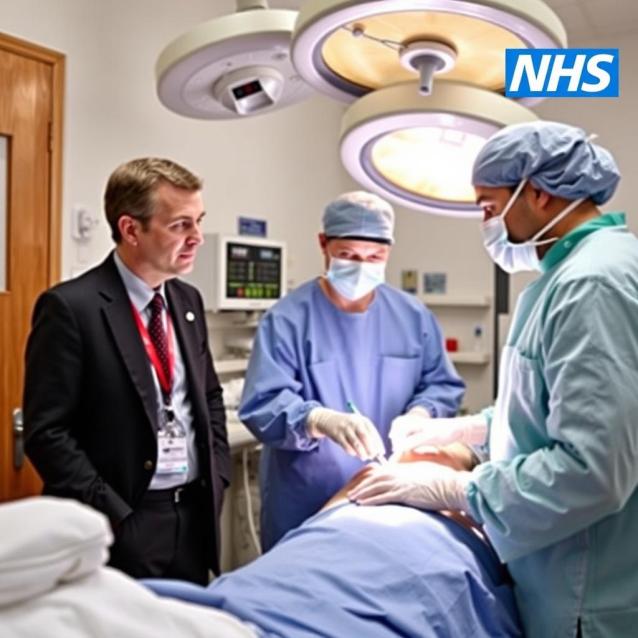
NHS Resolution solicitor overlooking hospital doctors under investigation. An AI image illustrating the situation facing hospital doctors in the NHS

Following my blog on the secret process using NHS Resolution to help hospital managers discredit whistleblowers I decided to ask the advisory body a series of questions on its operations using the Freedom of Information Act.

What emerged was extremely revealing. NHS Resolution hides in its annual report how many hospital doctors are involved by lumping them together with dentists and pharmacists. But the breakdown revealed through FOI reveals it is almost exclusively targeting doctors to advise trusts on how to handle them.

It shows that in the last financial year it advised in cases involving 1168 doctors in England, Wales and Northern Ireland. And the number of cases would be higher – as a number have multiple complaints from managers against them. This compares with 53 dentists and under 5 pharmacists. Indeed the pharmacists involved are so few – it won’t give me an exact number for fear of identifying individuals.

The PPS was last audited in 2019 and the organisation says it was then considered to be adequate and. effective. A more recent review in July this year by Dr Penny Dash looked just at the patient safety and learning role of the organisation and not wider issues.

Nor does NHS Resolution check whether it is given accurate information by managers. It said:” our role is to provide impartial and expert advice which is aimed towards supporting the local management and resolution of performance concerns. We are not a decision-making or an investigative body – in all cases, any decisions about the ongoing management, employment or contractual status of the practitioner rests solely with the healthcare organisation.”

In other words it is there solely to support health managers – who have no duty of candour – and it tries to include doctors by saying managers should tell them about their request for advice. In fact managers can and do ignore this as there is no requirement for them to say anything to the doctor they are investigating. So without hearing the doctor’s case it cannot be genuinely impartial. Also should a practitioner object to the partial advice given by a health manager they are ignored and the body continues to deal with the health manager.

NHS Resolution has not carried out any audit on the effect on doctors who are subject to complaints but it does do occasional research into problems arising on a very small scale. One example in its Insight Publication series last year was looking at whether ethnic minority doctors were badly treated in the NHS.

Involving just 11 doctors it said:”Most participants felt discriminated against based on their ethnicity and/or where they qualified. They felt this was reflected in the way their cases were handled by both their employer and Advice, and the higher rates of concerns raised against practitioners from ethnic minority backgrounds.”

Not surprisingly there was a lot of ignorance of how NHS Resolution’s advice service worked – given that health managers needn’t tell them about it. Again NHS Resolution’s solution was to give advice to managers which they need not take up. The full report is here.

Then there is the question of the phrase, performance. Is it a misnomer? NHS Resolution advice service does not look into the question of performance by doctors – relying on hospital manager for that – and it does not employ people qualified to do so. Many are solicitors, human resources staff and employment law experts and are not qualified to know when say a complex heart operation went wrong or the details of paediatric care. Indeed from doctors who have contacted me the trust often cites uncooperative behaviour and not working well with colleagues as part of its case.

Taken with earlier articles on the role of the General Medical Council a disturbing picture emerges which shows the hospital doctor is always at a disadvantage while the responsible officer – usually the medical director – holds all the cards – using NHS Resolution for advice and reporting the doctor to the GMC. Yet neither body is necessarily equipped to handle this and in NHS Resolution’s case, it is toothless to influence decisions by trusts. It can help to easily ruin a doctor’s career and even ban him or her for life for continuing their careers.

There seems to be a wholly unregulated sector covering NHS Resolution, the GMC and the trusts themselves and certainly no accountability. Patients have no idea how this is handled -yet their safety should be paramount in the NHS. And while NHS Resolution says it works under the direction of the Department for Health and Social Care my research shows it is not clear who regulates them.

If ever there was a case for reform of both systems, now is the time for something to be done.

One-Time
Monthly
Yearly

Make a one-time donation

Make a monthly donation

Make a yearly donation

Choose an amount

£5.00
£10.00
£20.00
£5.00
£15.00
£100.00
£5.00
£15.00
£100.00

Or enter a custom amount

£

Your contribution is appreciated.

Your contribution is appreciated.

Your contribution is appreciated.

DonateDonate monthlyDonate yearly

You can also donate using PayPal on the link below.

https://www.paypal.com/ncp/payment/865JAS3QJ3CGQ

Government commissioned research reveals whistleblowers have no faith in the system to protect them

Glum whistleblower at an Employment tribunal. Picture created through AI

A research report published this July by the new Labour government has painted a devastating picture of the failure of the culture of the whistleblower system in the United Kingdom.

The report, originally commissioned by the Tories under Rishi Sunak, and undertaken by researchers at Grant Thornton, one of the big accountancy firms, pulls no punches. It reveals how whistleblowers, whether in industry, the NHS and other public bodies, see a failure by the courts, employers, and even those appointed to help them, to protect them.

The sad news is the report, commissioned by the Department of Business and Trade, looks like remaining on the shelf – and the one improvement planned by the justice ministry could make matters worse. It plans to appoint 50 new employment tribunal judges to handle an increase in whistleblowing cases, among other issues, following the implementation of the new Employment Rights Act. For those who follow my blogs, they will know, they are more than often part of the problem, not the solution.

For a start whistleblowers found the terms used to describe whistleblowers as vague and confusing.

The report notes that terms like “reasonable belief,” “public interest,” and “worker” are seen as subjective, vague, inconsistent, and narrow, creating uncertainty about whether protections actually apply. One whistleblower expressed surprise when an Employment Tribunal decided their concerns didn’t meet legislative requirements despite their employer telling them they did.

The majority of whistleblower participants reported feeling victimized by their employer after blowing the whistle. The research found that many whistleblowers believed the framework doesn’t provide effective protection in practice. The “protection” offered is essentially just the right to seek redress after harm has already occurred, not proactive prevention of retaliation.

Multiple barriers for whistleblowers

Multiple barriers existed for whistleblowers when their case came before an employment tribunal. These included:

Resource imbalance: They lacked time, money, knowledge, and skills compared to their employers Mental toll: The process was described as complex, draining, and requiring resilience many didn’t have Evidential burden: Proving detriment was directly related to their disclosure was extremely challenging Delays: Tribunals experience significant delays

Time limits: Strict deadlines created additional barriers

Unfair treatment: Limited access to evidence and risks around non-disclosure agreements

Lack of trust: Many didn’t believe tribunals would be balanced or deliver meaningful

Nor did whistleblowers find people designated to help them such as regulators much good.

They found they could not protect them from detriments or victimisation. Some were conflicted particularly where there had been regulatory failure.

Several whistleblowers stated it was “not easy” to blow the whistle internally: They found:

  • Little faith in the process based on previous experience
  • Fear of retaliation after hearing stories from others
  • Restrictions from non-disclosure agreements
  • Conflicts of interest when those receiving reports were implicated
  • Lack of independence in investigations
  • Concerns not being properly investigated or addressed
  • No feedback or perceived remedies

The report describes the huge tolls on whistleblowers. At employment tribunals,phrases from whistleblowers included: public execution,exhausting, beyond difficult, miserable. complex, ardous, horrible and abusive, soul destroying,toxic and unsafe.

Litigants in person fared worse with descriptions that they were not treated respectfully by judges, lawyers and other parties and that they were not impartial.

Many stated they would not blow the whistle again due to negative experiences

Cases that involved international jurisdictions were even more complicated with slow co-operation from countries and regulators abroad.

The report makes suggestions for change. These are:

  • create a central body for whistleblowing
  • ongoing engagement and research to assess and monitor all aspects of the GB
    framework
  • efforts to improve effectiveness should be multifaceted and monitored
  • improved mental health support for individuals
  • legal advice and a degree of financial security while the claim progresses
  • consideration of disincentives and incentives, for example implementation of a United
    States style reward system

I contacted the ministry about the report:

A Government spokesperson said:

The Employment Rights Bill will strengthen protections for whistleblowers reporting sexual harassment at work and extend time limits for bringing tribunal claims from three to six months.

“We are also fixing the employment tribunal system by ensuring more cases are resolved before reaching them and recruiting more Employment Judges.”

They said that didn’t regard the report’s conclusions as firm recommendations and many of the suggestions were outside the remit of the ministry.

The full report can be read here.

One-Time
Monthly
Yearly

Make a one-time donation

Make a monthly donation

Make a yearly donation

Choose an amount

£5.00
£10.00
£20.00
£5.00
£15.00
£100.00
£5.00
£15.00
£100.00

Or enter a custom amount

£

Your contribution is appreciated.

Your contribution is appreciated.

Your contribution is appreciated.

DonateDonate monthlyDonate yearly

You can donate by PayPal using the link below

https://www.paypal.com/ncp/payment/865JAS3QJ3C

Whistleblower claimant denied justice after employment tribunal transcript recording was so corrupted it was unreadable

A stormy tribunal case around Bradford City Hall. An AI generated image.

The Employment Tribunal system is being dragged kicking and screaming into the 21st century yet still fails to deliver on open justice or provide what should be a basic expectation: a recording or transcript of public proceedings. Many claimants navigating the painfully slow-moving appeals process cannot obtain recordings because their original hearings predate the introduction of the recording system. The only alternative—the judge’s notes—will never be released, according to the Judicial Conduct Investigation Office. 

Labour MP Anna Dixon recently raised this as a serious issue again at a Public Accounts Committee meeting in Parliament. Officials were unable to ,provide an answer.

Now a new problem has emerged: corrupted recordings. This latest case involves a 2024 hearing at Leeds Employment Tribunal between former Bradford Council employee Noreen Taylor and the authority, presided over by Judge Neil Maidment. Taylor had been employed as a contracted employment hub coach in the Children’s services Skills House team

Judge Maidment dismissed Taylor’s case, where she had raised serious concerns including safeguarding failures affecting children, notably by one staff member; data protection breaches involving children; misuse of European funds and recruitment irregularities. The recruitment irregularities emerged after evidence and were accepted by the respondents. Applicants were encouraged to apply for two jobs – a business manager and programme services manager – that had already been filled a month earlier.

Taylor said she had suffered years of detrimental treatment by senior staff there, many of whom have now left. But it was not until the first day of a 14 day trial that the council accepted 9 out of 13 protested disclosures.

Astonishingly, when she stated her lawful right to contact her MP and report these issues to police, she was warned against doing so.

Judge described claimants racism fears as ” jovial fun”

Taylor, who is from an ethnic minority background, was singled out in a business meeting with her white British colleagues. During the meeting, she was repeatedly referred to as “your inner chimp, Noreen your chimp,” and everyone laughed—except Taylor. She later confirmed via texts and phone calls with her colleagues that she had been visibly upset and distressed by these comments. The judge did not agree and described it as ” jovial fun”.

This incident occurred after Taylor had raised whistleblowing concerns, in what appeared to be an attempt to shut her down. The business manager, who had been involved in recruitment irregularities, was supported by the Assistant Director of Children’s Services. This detrimental racial treatment of Taylor continued for months, ultimately affecting her health. The manager later explained in an internal meeting that his reference to The Chimp Paradox was intended to refer to a behaviorial psychology book, not as a racist remark aimed at Taylor

Taylor, who was experiencing disability-related health issues, due to the onslaught of bullying and harassment within Children’s services was ultimately dismissed on ill health capability grounds, this was after she was kept as a NIL pay employee for years until the council covered up and prevaricated, intimidated, harassed and even trespassed into her house shown  on CCTV and to the ET Judges at Leeds.

The judge ruled that her dismissal was due to ill health, and not her whistleblowing activity. Despite her protected disclosures being linked to a long list of detriments, she was subject to exclusion, harassment, gas lighting when she raised concerns. She was removed from the business team and her IT access and her work email address was stopped.

She was a litigant in person pitched against the fourth largest local authority who had the money and access to barristers to fight her. It took the authority from late 2020 until the 14 day trial in April 2024 to accept any of her protective disclosures. But she was determined to continue for the sake of getting vulnerable children justice.

During the preliminary hearings, she says one of the judges referred to the head of legal team on first name terms and did not recuse himself. Later it was found out the judge was employed by the council as a consultant. This judge threatened to strike out all her whistleblowing claims at the request of the council’s lawyers but did not succeed. She had been unable to get the Judicial Conduct Investigations Office to investigate her complaint, because it came too late as she had only three months to complain.

In May 2024 Taylor says the judge appeared to do a U turn by portraying her in a negative way after accepting at a preliminary hearing there was a case to answer particularly over the safeguarding issues.

Transcripts of hearing withheld for 2 years

Taylor immediately decided to appeal but encountered months of obstruction and delays in obtaining the hearing transcript. She needed the transcript to challenge evidence given by a staff member (and to lodge a complaint about the conduct of the judge) Even after Conservative MP Robbie Moore who represents Keighley and Ilkley became involved the claimants request for a transcript was sent again in December 2024 but clerks gave varying excuses making each and every one more suspect, yet from May 2024 to end of 2025 it will be almost 2 years the transcript has been withheld by Leeds ET by current Regional Judge D N Jones.

 For a July Employment Appeal Tribunal hearing, she enlisted veteran whistleblower Alison McDermott to act as a McKenzie friend.

At the Rule 3.10 hearing—which determines whether an appeal can proceed—Taylor explained her inability to obtain the transcript. The EAT judge was sympathetic, telling her: “I don’t have the power to order the lower courts to produce it because it’s an administrative matter, but I can direct a letter to the acting regional judge explaining you have an appeal and that the transcript is required. I am content if you’re applying to adjourn today’s hearing until the trial transcript is provided.”

Taylor has now been informed she cannot have the transcript because the recording SENT BY LEEDS ET  is too damaged. Acolad, which processes court recordings, told her: “Unfortunately, our back office advised the disc was too damaged to extract any information as it wasn’t possible to upload the audio from the disc to the system.”Acolad have emailed and written to Leeds ET on numerous occasions and have been ignored for months since July 2024.

Without the transcript, Taylor cannot proceed with her appeal application. This extraordinary situation points to either gross incompetence or negligence at Leeds Employment Tribunal—another example of a broken system. Staff should know whether a recording is functioning properly.
Taylor says: “It is outrageous  that a whistleblower who raised serious concerns about child safeguarding can be denied my right to appeal because the tribunal failed in its basic duty to maintain a proper record of proceedings. This isn’t just administrative failure—it’s a perversion of justice that makes a mockery of the entire tribunal system. 

How can justice be seen to be done when there is no verifiable record of what was said? This goes to the heart of the rule of law and the principle that courts must be accountable and transparent.”

But for the whistleblower it is another dead end and an impediment to get any justice.

Meanwhile the justice department continues to obfuscate over the provision of court records to claimants.

On 20 March 2025, Anna Dixon MP asked the Ministry of Justice two questions at the Public Accounts Committee. Simple questions. Pre-notified questions.

“How can people receive a fair trial if a record of proceedings is not made available to them?”

“How can judges block access to those records when they themselves are being accused of misconduct?”

Dr Jo Farrar, the Permanent Secretary, talked about “court productivity.” Gemma Hewison, Director General, said: “We’ll have to write to the Committee.”

They couldn’t answer. Because the answer is indefensible.

One-Time
Monthly
Yearly

Make a one-time donation

Make a monthly donation

Make a yearly donation

Choose an amount

£5.00
£10.00
£20.00
£5.00
£15.00
£100.00
£5.00
£15.00
£100.00

Or enter a custom amount

£

Your contribution is appreciated.

Your contribution is appreciated.

Your contribution is appreciated.

DonateDonate monthlyDonate yearly
You can also donate to Westminster Confidential via PayPal using the link below

https://www.paypal.com/ncp/payment/865JAS3QJ3

Revealed: How a whistleblower doctor’s career was wrecked by a NHS trust manager aided by NHS Resolution

Two weeks ago I published a critical examination of how NHS Resolution’s Practitioner Performance Advice service contributed to the demise of whistleblower doctors revealing patient safety issues who stand to lose in 97 per cent of cases when they come before an employment tribunal.

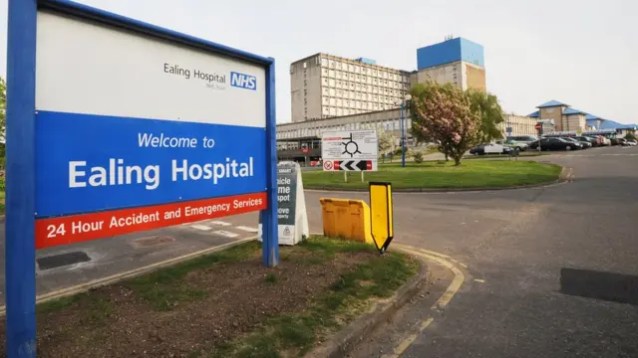
Ealing Hospital Pic credit:BBC

Since publication a number of doctors and patients have contacted me about their experiences with NHS Resolution and it makes disturbing reading. This is one of the cases.

One of the key points in the previous blog is that NHS Resolution does not require the health trust to inform a doctor when it has received advice from NHSR on what action to take against a doctor accused by the trust. So the doctor is completely ignorant that this has happened.

The paragraph in their letter, which is similar in other cases involving doctors, reads: “We encourage transparency in the management of cases and recommend that practitioners should be informed when their case has been discussed with us. I am happy for you to share this letter with the practitioner unless you consider it inappropriate to do so. Moreover, the practitioner is also welcome to contact us for a confidential discussion regarding their case.”

The London and North West University NHS Trust

I am not naming the doctor – an obstetrics and gynaecology consultant – as there will be an employment tribunal in 2027 – six years after the incident – but I am naming the trust, the London North West University NHS Trust- and the manager involved Dr Martin Kuper, then its chief medical officer – as events following this case were in the public domain.

A very tragic story

The incident that caused the referral to NHS Resolution is a very tragic story. An Afghan woman came to the hospital for a  myomectomy – a surgical procedure to take out fibroids ( small lumps) from the uterus.

The operation can be performed by either an incision into the abdomen or key hole surgery. The woman chose to have keyhole surgery as it is less invasive. The doctor performed the operation with an anaesthetist putting her to sleep. Unfortunately during the operation she arrested, bled heavily  and died.

The doctor was blamed by the trust for acting ” seriously below the accepted standard” despite PM Examination clearly reported absence of any injuries to major arteries and veins. According to the doctor what NHSR was not told that the delay in helping the patient was caused by the delay in transfusing blood products especially platelets as Ealing theatres did not stock any Emergency Platelets like Northwick Park theatres when the incident took place. The surgeon used to operate at Northwick Park and he was asked to move his complex surgeries to Ealing Hospital because he had a number of cases waiting more than two years. The day prior to index surgery the surgeon wrote to Trust management explaining that his cases were complex and should be operated upon at Northwick Park and not at Ealing theatres.

Worse the record of the conversation involving Dr Kuper in a letter from NHSR says the doctor was accused of tampering with the electronic record of the incident and omitted to tell NHSR that the doctor was a whistleblower who had raised serious questions about maternity and gynaecology services by that hospital which had not pleased the management. 

The doctor says this account is distorted. He had made an electronic draft entry into the record at 07:30, then made few linguistic corrections to finalise the draft and few hours later at 11:45 he submitted his statement. All these entries and the changes made to the draft are available should you press the Audit Tap of the software used at any time.

As for his concerns about maternity services, it was confirmed on the following month when the Care Quality Commission inspected the hospital and ruled the service as ” inadequate.”

The letter showed NHSR had been told by MD (Chief Medical Officer) that there were ” no other concerns in relation to this surgeon of a clinical nature brought to his attention in the last two years”, i.e, since he joined the Trust.

The letter from NHSR – based on Dr Kuper’s submission- advised as the doctor went off sick following the incident that the doctor should be referred to the Occupational Health service for possible mental and physical health problems. The surgeon also suffered series of sanctions upon his practice including his maternity work despite no concerns were raised at any stages in relation to his maternity work. On the contrary, he was one of the two consultants appointed to the Trust in 2006 to turn the maternity services around following CQC imposing measures on the maternity unit  being ranked in 2005.

Trust was selective and biased during collecting and while considering various witnesses statements aiming at victimising the surgeon. The surgeon and all gynaecologist involved were excluded from the initial stages to set him up for the next step. He was also subjected to an internal special investigation taken through Maintaining High Professional Standards procedure which amounts to an internal disciplinary procedure. Trust was selective 

None of this advice was conveyed to the doctor and the trust ignored the suggestion from NHSR that they should be open and transparent about the letter.

The letter was not sent to the doctor in a timely manner prior to start of MHPS investigation and he had to submit a subject access at some point, which cannot be refused, to obtain all the correspondences between Trust and NHSR.

There had been a coroner’s hearing under senior coroner Lydia Brown in which he was blamed for the death and the coroner blocked his barrister from pursuing questions about the action taken or not taken by the anaesthetist especially the delay in transfusing coagulation factors and the trust emphasised he had been reported to the General Medical Council for Fitness to practice investigation to protect patients and public.

However, this was not enough for the trust which made it impossible for him to get a job elsewhere by requesting NHSR to issue HPAN against his practice advising other potential employers not to appoint him advising responsible officers in other organisations to contact Dr Kuper’s successor Dr Johnathon Baker, the current CMO). By issuing the Notice the NHSR was given Trust another opportunity to wreck the surgeon career. This HPAN notice will be kept at NHSR records for thirty years before it can be destroyed.

Dr Baker raised numerous concerns regarding the Surgeon practice following carrying out an unjustifiable look back investigation into his unblemished practice, ending up referring a total of 23 cases to GMC but did not mention at any stage that the doctor raised patients’ safety concerns.

Helen Vernon, chief executive NHS Resolution

But when the report came back from the GMC he was completely exonerated of any clinical allegations in relation to the index case or any of the other 22 cases.

The surgeon complained to the NHSR in November 2023. The reply from Helen Vernon, the chief executive a month later is very revealing.

First the adviser was on prolonged sick leave and was unable to be involved. But her reply raises points on the role of the NHSR which show how weak it is.

She says: “As the Advice Service is not a decision-making body, any decisions regarding the management of a practitioner must rest solely with their employer/contracting body. Whilst the employer/contracting body may have regard to any advice provided by the Advice Service, having considered and weighed up all the relevant information available, they may take a view which differs from the opinion expressed by the Advice team.”

It was also clear that NHSR did not know he was a whistleblower, and were not certain whether it was aware of the bad CQC report on maternity care at the hospital. An unsatisfactory reply. altogether.

There is a postscript about the senior manager involved in this case – Dr Martin Kuper. He went on to become chief executive of the prestigious Moorfield Eye Hospital NHS Trust.

Martin Kuper

This year GB News reported that no fewer than 80 consultants had sent a letter to the board of the hospital complaining it had a culture of bullying, financial mismanagement and lack of transparency.

The report is here. As a result both the chair and the chief executive resigned. The trust in a statement said “Martin Kuper has taken the decision to resign from his position as chief executive of Moorfields and will formally leave the organisation.” There was very little about his achievements while he was there and at the moment does not appear to have got another job in the NHS.

One-Time
Monthly
Yearly

Make a one-time donation

Make a monthly donation

Make a yearly donation

Choose an amount

£5.00
£10.00
£20.00
£5.00
£15.00
£100.00
£5.00
£15.00
£100.00

Or enter a custom amount

£

Your contribution is appreciated.

Your contribution is appreciated.

Your contribution is appreciated.

DonateDonate monthlyDonate yearly

You can donate to Westminster Confidential via Paypal at the link below.

https://www.paypal.com/ncp/payment/865JAS3QJ3CGQ

Ten brave women still need your help to bring a ground breaking court case that could change employment tribunals forever

Stormy scene around tilted scales of justice as judges avoid complaints

Remember the ten brave women I wrote about who are challenging the bullying behaviour of Employment Judge Philip Lancaster? See my blog here. The ones the justice system refused to investigate despite overwhelming evidence?

They’re now in a race against time – and the Judicial Conduct Information Office is playing its oldest trick: delay, delay, delay until they run out of money or miss their deadline.

Here’s what’s happening:

The women issued their Letter Before Action to the Judicial Conduct Investigation Office (JCIO) in September. The JCIO’s deadline to respond under the pre-action protocol was 8 October. They missed it. The women waited another week. They missed that too.

Now the JCIO says they won’t respond until 20 October – leaving barely two weeks before the women must file at court in early November or lose their right to bring these proceedings forever.

Classic establishment tactics. Unlimited taxpayer funding and government lawyers versus women running on crowdfunding and determination.

But here’s why this matters more than ever:

In September 2025, Baroness Harriet Harman KC published a damning report on judicial misconduct. Her conclusions are devastating:

“The problem is the culture of impunity for those at the top who commit misconduct. Those in powerful positions whether at the Bar or in the judiciary who choose to engage in bullying, harassment or sexual harassment can be pretty confident that nothing will be done about it. And that is what must change.”

She identified a “cohort of untouchables” amongst the judiciary and “particular judges who are widely known for making everyone’s lives a misery.”

This is EXACTLY what these women are fighting to expose.

The women need £40,000 total to see this through

They’ve raised £17,335 so far – incredible progress from 472 supporters. But they need £40,000 in total to get this case into court and finish what they’ve started.

Their legal team of outstanding women lawyers at Deighton Pierce Glynn has already slashed fees dramatically. But even at reduced rates, taking on the government is expensive.

What’s at stake:

  • 35,000+ employment tribunal users face these tribunals every year
  • If this judicial review succeeds, the JCIO will be forced to properly investigate judicial misconduct
  • Judges who egregiously abuse their power and block the release of the court record will finally face consequences
  • Whistleblowers will be better protected

This isn’t about these women and whistleblowers getting compensation – their chance at justice has been lost forever. If they win the judicial reivew there won’t be any compensation – just the knowledge that they exposed a corrupt complaint system. And showing judges that they are not above the law.

How to donate:

Go to: https://www.crowdjustice.com/case/exposing-judge-lancaster/

Every pound counts. They cannot let the judicial establishment win by simply outlasting them financially. Not when they’re this close.

Please help them as they have shown remarkable courage and integrity to do this for the greater good but they can’t do it without further financial help.

The secret influence of NHS Resolution that ensures so many doctor whistleblowers don’t get their jobs back

logo for NHS Resolution

Why do 97 per cent of whistleblowers fail to win their cases in employment tribunals? Why are they sacked – not for their disclosures of patient safety which is illegal – but under the nebulous title – some other substantial reason (SOSR)? This could be allegations of bullying or saying they cannot get on with colleagues.

But how does a trust gather such information to discredit a doctor? What I have discovered is that NHS trust managers can get a free advice service or an endorsement for actions considered by managers against a Whistleblower from NHS Resolution, an arms length quango from the Department for Health and Social Care.

This ” phone a friend” service would allow the manager to set up a case file under Practitioner Performance Advice without the doctor even knowing this has happened. Effectively the evidence will be later presented at an employment tribunal by highly skilled and expensive lawyers hired by the trust to discredit the unfortunate doctor.

This process has no transparency, no verification with the doctor and there are no public records of what happens in these cases.

The only information that there is such a process is in the annual reports and accounts of NHS Resolution and even that is very sparse.

While there are reams of statistics about the organisation’s public facing work dealing with patients complaints about clinical and non clinical issues which it tries to resolve without going to expensive legal action, the role of practitioner performance advice service gets very little mention.

In the 2024-25 annual report it acknowledges “NHS Resolution’s Practitioner Performance Advice service delivers expert advice, support and interventions on the fair management of concerns about the performance of doctors, dentists and pharmacists.”

How do they judge performance having branded the therapist with a “behaviour” issue at the outset even with untrue claims or without awareness of risks to patients? Only when the formal referral actioned the therapist or doctors may get an opportunity to represent their side of the story BUT if the behaviour analyse are not even clinicians, how would they understand what culture therapist or doctor has been working in.

The PPA service also claims to be very efficient. It says 90% of advice and other case interventions delivered within target timeframe – this was achieved in 2024/25 NHS Resolution annual report and accounts 2024 to 2025 90% of all exclusions/suspensions critically reviewed (where due) – this was within tolerance at 82%, with 155 of 189 exclusions/suspensions reviewed within required timescales.

What it does reveal is that trusts searching to use its services are booming.

The report says: “The service received 1,420 new and reopened requests for advice from healthcare organisations with concerns about the practice of individual practitioners as well as services in 2024/25, representing a 24% increase compared to 2023/24.The open caseload at the end of the financial year stood at 1,149, a 15% increase when compared with the end of 2023/24 .”

It adds: “Requests for assessment and remediation services remained at a high level in 2024/25, with 50 requests for professional support and remediation action plans, 44 requests for behavioural assessments, six requests for clinical performance assessments and four requests for team reviews.”

And it says:” NHS Resolution delivered OARs ( Organised Activity Reports) to 18 secondary care trusts in England, offering follow-up consultations with a Performance Practitioner Advice adviser to each, and finalized reports for primary care trusts, mental health trusts and trusts in Wales and Northern Ireland for delivery in 2025/26″.

Helen Vernon, CEO of NHS Resolution

On what grounds has this service without transparency or regulation of its advisors been set up and run?Sally Cheshire Chair of the NHSR , and Helen Vernon,CEO, need to explain this.

The only other references are likely to lead to hollow laughs from some of the whistleblowers who lost their jobs at trusts – notably Martyn Pitman at Hampshire Hospitals NHS Trust and Usha Prasad at the now St Georges and Epsom and St Helier Hospitals Trust.

It claims that the whole process is to “develop Compassionate Conversations in relation to performance conversations to support kindness and compassion within the NHS .”

It goes on to say: the aim of the advice includes” Fostering just and learning cultures rather than punitive approaches” and” Ensuring fairness and proportionality in managing performance concerns.”

If there is a lack of transparency how can it be justified as a just culture suitable for learning?

Having covered employment tribunals now in NHS sacking cases the last thing I have seen is any compassionate conversation. Instead the trusts are keen to employ numerous highly paid lawyers to terrify and frighten professional doctors reducing in some cases people to tears – at enormous cost to the taxpayer who foots the bill for their salaries.

So if NHS Resolution is boasting about saving lawyer’s fees in patient complaint cases, it is also responsible for increasing lawyer’s fees – often running to hundreds of thousands of pounds – by advising trusts on how to ruin doctors’ careers when all they have raised is patient safety problems.

If you take this process alongside my previous blog about the role of the General Medical Council and its relationship with the responsible medical officer in the trust- it is no wonder that whistleblowers have little chance of success in the NHS. I now know of senior doctors who are NOT going to report patient safety issues because they fear it will be the end of their careers if they do.

NHSR’s PPA is yet another tool like the unregulated triage by the GMC that can be exploited to bury serious concerns using public funding.

One-Time
Monthly
Yearly

Make a one-time donation

Make a monthly donation

Make a yearly donation

Choose an amount

£5.00
£10.00
£20.00
£5.00
£15.00
£100.00
£5.00
£15.00
£100.00

Or enter a custom amount

£

Your contribution is appreciated.

Your contribution is appreciated.

Your contribution is appreciated.

DonateDonate monthlyDonate yearly

Please donate to Westminster Confidential through Paypal link below

https://www.paypal.com/ncp/payment/865JAS3QJ3CGQ

The Black Hole of Accountability: Employment Judges Block Evidence in Their Own Misconduct Cases

Judge Barry Clarke who is president of employment tribunals in England and Wales

The English and Welsh Employment Tribunal system is operating under an extraordinary contradiction that strikes at the heart of judicial accountability: judges accused of misconduct can legally withhold the only evidence that exists against them.

This isn’t a bureaucratic quirk. It’s a fundamental breach of justice that’s destroying lives and making a mockery of the complaints system.

The Case That Exposes Everything

Employment Judge Philip Lancaster faces multiple misconduct complaints from whistleblowers, including Sellafield Whistleblower, Alison McDermott, and many others. The evidence needed to investigate these complaints? The judge’s own handwritten notes from the hearings in question.

Here’s where it gets explosive: Justice Secretary Shabana Mahmood has confirmed to MPs that where no audio recording exists, these judges’ notes constitute the official court record.

Yet Lancaster refuses to release the official court record. The very judicial notes that the Justice Secretary says are the official record. The only evidence that exists of what happened in his courtroom.

In other words, the judge accused of multiple breaches of misconduct and betraying his judicial oath has become the sole gatekeeper of the evidence against himself.

A System Designed to Block Scrutiny

Let’s be absolutely clear about what’s happening here. No other professional under investigation could do this:

  • Police officers can’t withhold bodycam footage when under investigation
  • Civil servants can’t lock away departmental emails
  • Politicians can’t refuse to release official documents
  • Doctors can’t refuse to release patient notes

But Employment Tribunal judges can — and do — withhold their notes – the only record of proceedings, even when facing serious misconduct allegations and even though the Justice Secretary has categorically confirmed that the judicial notes are the official court record.

The President’s Defensive Wall

When I pressed Judge Barry Clarke, President of the Employment Tribunal, for answers to this blatant unfairness, the response was revealing. I asked  direct questions:

  1. Does he accept that judges’ notes are the official record, as stated by the Justice Secretary?
  2. If yes, what legal authority allows Lancaster to withhold them?
  3. If no, who can intervene?

Instead of answers, I received pages of case law about judicial independence — a concept that was never meant to shield judges from accountability when facing misconduct investigations.  Clarke’s office has chosen to defend a practice that subverts open justice rather than confront a shocking flaw that undermines the entire tribunal system.

Clarke defended the practice as a matter of “judicial discretion.” But this is precisely the problem: access to the official court record should never be discretionary. It should be an absolute right. In every other court in the land, parties can obtain transcripts, recordings, or official records of proceedings. But in the Employment Tribunal, Clarke has normalised a system where individual judges become personal owners of public records, free to release or suppress them as they see fit. This isn’t about protecting judicial independence — it’s about placing judges above the law.

The fact that Clarke sees nothing wrong with a judge under investigation controlling access to evidence against himself reveals how deeply this corruption has infected the tribunal system. When the President himself cannot grasp that court records belong to the public, not to individual judges, we’re no longer talking about reform. We’re talking about a system that needs to be torn down and rebuilt from scratch.

“This Is Not Justice — It’s a Travesty”

For Alison McDermott, the Sellafield whistleblower, who is leading a judicial review against Employment Judge Lancaster, the situation is both personal and devastating:

“I was horrified to discover my hearing was not recorded. No audio, no video — nothing. Judge Lancaster, who is facing multiple charges of misconduct, is refusing to release the very evidence that could prove it. In any other profession, this would be seen as obstructing evidence. In the Employment Tribunal, they call it standard practice. We’re not asking for special treatment. We’re simply asking for the official court record of our own hearing. But in Britain’s tribunals, the accused judge gets to be the gatekeeper. When judges can keep secret notes, and then withhold those notes when under investigation, we don’t have a justice system. We have a closed shop where judges police themselves. .This is not justice.  It is disgusting perversion of justice and a travesty that denies any possibility of a fair trial.”

The Deeper Rot

This scandal reveals three interconnected failures that should alarm anyone who believes in the rule of law:

First, many Employment Tribunals don’t record their proceedings. In an age where every high street shop has CCTV, our tribunals rely solely on judges’ handwritten notes — notes taken by people who receive no training in accurate record-keeping and face no monitoring of their note-taking abilities.

Second, these unverified notes become the official court record. Your career, your reputation, your access to justice — all hang on a judge’s personal scribbles. Yet you are denied access to them.

Third, when that judge faces investigation, they alone decide whether anyone can see those notes. The accused becomes the gate keeper of the very evidence needed to prove misconduct.

Why This Matters Beyond One Case

This isn’t simply about Judge Lancaster. It’s about a system that has abandoned its most basic principle: open justice. The latest annual report from the Judicial Appointments and Conduct Ombudsman – see here – show that there were 424 complaints against judges last financial year where people contacted the Ombudsman because they were dissatisfied. Of course only a few – 23 – were investigated – the vast majority being thrown out often because it breached the three month time limit for complaints to be heard.

Regional Judges and the President of the Employment Tribunal have also applied this three month deadline rigidly, striking out cases before their substance can even be tested. Campaigners say the effect is to silence victims and protect those in positions of power. And now Baroness Harriet Harman agrees.

Harriet Harman’s Independent Review of Bullying, Harassment and Sexual Harassment at the Bar [see here]was blunt about the flaws. In paragraph 34 she wrote: “There is no benefit in restricting complaints arbitrarily. Indeed, the only practical benefit it has is to protect those engaging in misconduct.” She added it was “surprising that the judiciary confirmed the reasonableness of this time limit after reviewing it as part of the consultation on judicial discipline in 2023.”

Courts must be open to scrutiny. Proceedings must be transparent. The court record. must be accessible. These aren’t optional extras — they’re the key foundations that separate justice from an abuse of arbitrary power.

The Question That Demands an Answer

Either the Justice Secretary is right that judges’ notes are the official court record — in which case Lancaster’s refusal to release them is a scandal that should trigger immediate intervention — or she has misled MPs about how the tribunal system actually works.

There is no third option.

The government cannot claim these notes are the official record while simultaneously allowing judges to treat them as private property, especially when facing misconduct investigations.

A System in Crisis

A tribunal system that allows judges to withhold evidence against themselves cannot command public confidence. A President who defends this practice rather than reforming it has failed in his duty. A Justice Secretary who knows this is happening but doesn’t act has abandoned her responsibility.

The principle is devastatingly simple: without access to the court record, there can be no proper appeals, no effective complaints process, and no real justice.

Until this changes, the Employment Tribunal will remain what it has become: a system where judges facing serious allegations can simply make the evidence disappear.

That’s not judicial independence. It’s judicial impunity.

And in a democracy that claims to value the rule of law, it’s completely unacceptable.

The full letter from his office is here if you want to read it.

Also it is essential to help fund the judicial review so it can reach its £30,000 target. The link to donate is https://www.crowdjustice.com/case/exposing-judge-lancaster/

One-Time
Monthly
Yearly

Make a one-time donation

Make a monthly donation

Make a yearly donation

Choose an amount

£5.00
£10.00
£20.00
£5.00
£15.00
£100.00
£5.00
£15.00
£100.00

Or enter a custom amount

£

Your contribution is appreciated.

Your contribution is appreciated.

Your contribution is appreciated.

DonateDonate monthlyDonate yearly

You can donate via PayPal via this link

https://www.paypal.com/ncp/payment/865JAS3QJ3CGQ

Two damning reports from Parliamentary Ombudsman say Charity Commission failed complainants about sexual abuse

The Parliamentary Ombudsman’s Office today published two reports into the Charity Commission’s handling of separate sexual abuse cases following Parliament’s rare privilege decision last week – see my report here – to compel Paula Sussex, the Parliamentary Ombudsman, to release them in the face of the Commission starting legal action to stop or delay publication.

Both reports highlight the failure of the Charity Commission to implement some of its findings and the total dissatisfaction of the two complainants – Lara Hall, 37 and Damian Murray, who is 66. Both decided to waive their anonymity. I will be publishing a separate follow up story on Mr Murray’s case after he contacted me – particularly after the local media failed to cover it. It is a truly shocking story.

The two cases are different. Lara Hall’s case involves the sexual exploitation by a trustee of a UK charity where she acted as a whistleblower.

Damian Murray’s case involved historic sexual child abuse by a prominent figure in the local community which was concealed by the charity and the college where he worked.

Lara said:

“The Charity Commission’s repeated failures have caused me profound pain and ongoing injustice. Instead of holding a trustee to account for appalling sexual exploitation, it questioned my experience and forced me to relive my worst trauma. How can survivors feel safe reporting abuse if they think they will be treated like I have? 

“By trying to block Parliament from seeing the reports, the Commission attempted to avoid scrutiny – striking at the heart of accountability in our democracy. Even now, it refuses to accept responsibility or act to put things right.

“It is my hope that by bringing the reports to Parliament’s attention action will finally be taken. The Commission must urgently address safeguarding to protect vulnerable people. Right now, it is failing in its core duty.

“It is time for change, oversight, and accountability within the Charity Sector so what happened to me is never repeated. I call on Parliament to hold the Commission to account and restore public trust. People deserve to feel safe approaching charities, and they deserve a regulator that takes safeguarding seriously

Damian Murray said:“For over seven years the Charity Commission has refused to act upon my complaint about the concealment of child sexual abuse.

“The Charity Commission has doggedly resisted all efforts by me, and latterly the Parliamentary Ombudsman, to encourage it properly or promptly to discharge its statutory responsibilities, choosing rather to shield the charity and its Trustees from scrutiny and accountability.

“After much unnecessary time incurred due to this resistance, the Ombudsman’s report has now been laid in Parliament. I trust now that politicians will hold the Commission to account, where I as an ordinary UK citizen failed.

“By stark contrast with the Commission, I very much appreciate the careful, professional and empathetic way that the Ombudsman’s team have dealt with me and with the complex and consequential concerns I have raised.”

Parliamentary and Health Service Ombudsman CEO, Rebecca Hilsenrath KC (Hon) said: 

“The Charity Commission indicated throughout our investigations that they did not agree with our findings.  They have not complied with the bulk of our recommendations, despite our best efforts and our willingness to work with them to ensure compliance.

“It is important that the Commission provides a full apology for their failings and reassures Lara and Damian that they will put things right by complying completely with our recommendations. They have not done this so far. 

“Our report has now been laid in the House of Commons, following the intervention of Parliament last week. The Commission had prevented us from doing so by bringing legal proceedings. We act on behalf of Parliament to hold Government and other national bodies to account for failures, and we have a responsibility to make Parliament aware of cases of non-compliance. I am pleased that Parliament has taken an interest in these cases and has given us the opportunity to bring them to the attention of the House so that it can intervene.

“The purpose of our investigations is always to encourage learning and service improvements. If an organisation looks at what went wrong, it will be able to stop the same mistake from happening again.”

The Charity Commission released a statement criticising the action of Parliament to order publication of the reports.

A spokesperson said: “We have long accepted that there are genuine and important lessons for the Commission to learn from these two sensitive cases, principally in the way in which we communicate with complainants, and we have made improvements to our processes as a result. We have previously apologised to both complainants.

The Commission undertook detailed reviews in each case, as set out by the Ombudsman, and concluded that the overall outcome in each case was sound. In the case of Ms Hall, we had already issued an official warning to the charity concerned. 

But it is our view that by making the decision that we did not comply with certain recommendations in its reports, the Ombudsman has misunderstood our remit and overstepped its role, meaning that its decision making was unlawful.

We respect the work and authority of the Ombudsman, but it is vital that we, in turn, are enabled to do the job that Parliament set us

We have worked hard to seek to resolve the matter with the Ombudsman directly, but this has not proven possible. For that reason, we have brought legal action at the High Court. 

We have not asked the court to block the laying of any report before Parliament. We did, though, ask the Parliamentary committee to delay considering the reports to allow the courts to give judgment on our own and the Ombudsman’s statutory remits first.”

One-Time
Monthly
Yearly

Make a one-time donation

Make a monthly donation

Make a yearly donation

Choose an amount

£5.00
£10.00
£20.00
£5.00
£15.00
£100.00
£5.00
£15.00
£100.00

Or enter a custom amount

£

Your contribution is appreciated.

Your contribution is appreciated.

Your contribution is appreciated.

DonateDonate monthlyDonate yearly

You can also donate via PayPal The link is:

https://www.paypal.com/ncp/payment/865JAS3QJ3CGQ

Charity Commission reported to Privileges Committee by MPs after it tries to stop a critical report by Parliamentary Ombudsman

Simon Hoare MP, Tory chair of the Public Administration and Constitutional Affairs Committee

Exclusive: Report will reveal huge dispute over two reports into complaints of sexual abuse by charities supervised by the Commission

An extraordinary stand off between Parliament and the Charity Commission was revealed yesterday after Simon Hoare, Tory chair of the Commons Public Administration and Constitutional Affairs Committee, made a rare use of privilege to compel the Parliamentary Ombudsman, Paula Sussex, to publish a critical report into the Charity Commission next week after MPs were told the Commission was blocking its publication.

Lyndsay Hoyle, the Speaker, granted the request. It was the second one he has granted in four years – the last being from Angela Rayner, when she was in opposition in 2021 ordering the release of Government minutes of meetings between former Tory MP Owen Paterson, health minister, Lord Bethell and special advisers over the award of up to £777 million Covid testing contracts to Randox Laboratories, without competition who employed the MP as a consultant for £8333 a month.

MPs were told by Mr Hoare that the Charity Commission was blocking publication by going to judges and he wanted it reported to the Privileges Committee.

He said “The Charity Commission is bringing legal proceedings deliberately to prevent the laying of two reports before this House. That completely undermines the linkage between the ombudsman and this place, and …undermines our opportunity and decisions to look at any information that we deem to be of importance, or that matters to us, in order to allow us to advance policy.”

He claimed:  “Members from across the House have privately raised with me concerns about decisions that the commission is taking. It is appearing to do so in a slightly abstract or perverse way, without any degree of accountability. That matter is separate from this motion, but it is important for all our arm’s length bodies, and particularly the Charity Commission, to understand that this House will not be bullied by arm’s length bodies seeking recourse to the courts to stop us doing our job properly, efficiently and professionally on behalf of all our constituents.”

He was backed by Tory frontbench spokesman Alex Burghart and junior Cabinet Office minister Georgia Gould.

The Charity Commission has put a different interpretation of events in a statement issued yesterday which is at the end of this blog. Basically it is saying it was not aiming to block publication.

Bizarrely Mr Hoare said he had no knowledge of the complaints by a Miss A and Mr U in the two reports and had not seen him.

But both are already in the public domain on the Parliamentary Ombudsman’s website. Both contain criticism of safeguarding over sexual misconduct. Miss A has publicly named herself as Lara Hall, aged 35, and is a survivor of sexual abuse and a whistleblower.

She says in the news report issued by the Ombudsman: ” “I feel institutionally betrayed by the Commission. It made repeated commitments to me to deregister the charity and said it would do all it could to disable the trustee from acting in the name of charity in future, but the Commission dramatically changed regulatory course. This left me feeling incredibly vulnerable and confused.

“I feel so thankful and humbled to the PHSO for its diligent and thorough investigation into my complaint. I’m disappointed at the lack of contrition from the Commission.”

Acting Parliamentary Ombudsman Rebecca Hilsenrath said “Our investigation uncovered a number of failings around the Charity Commission’s handling of serious safeguarding concerns. It is important that the Commission apologises for its mistakes and reassures Lara that it will put things right.”

The full news report is here.

The second report involving Mr U involves historic child sexual abuse by a charity and in a sixth form college run by a religious charity. The abuse was hidden by the charity and it involved priests including one perpetrator who has a building named after him and was given a celebratory mass when he died.

The report said:” Mr U had long suspected he had also been a victim of grooming by the perpetrator. He told us it was only the book written by the victim in 2017 that allowed him to confirm the abuse as such. He told us the apparent absence of other victims was part of the reason he gave the perpetrator the benefit of the doubt for many years. ” When he raised issues he was treated as a vexatious complainant. The full report is here.

The Charity Commission says:“The Commission is challenging a PHSO decision that we have failed to implement some of its recommendations in two specific cases. We are concerned that PHSO’s approach expects us to act beyond our legal remit, at odds with Parliament’s intentions, and undermines our ability to regulate independently and effectively.

“We sought to resolve these matters without the need for legal proceedings but have been forced to put these matters beyond doubt, for the benefit of both organisations in fulfilling our respective public duties. We are therefore seeking the guidance of the High Court via a public law challenge.

“We welcome proper Parliamentary scrutiny of our role and have not asked the courts to prevent PHSO from laying any report before it. We had previously invited PACAC to delay its consideration of any report from PHSO related to this case, pending the outcome of these legal proceedings.”

 We are mindful this matter has arisen from complaints of difficult personal experiences related to charities. We accepted there are some genuine lessons for the Commission to learn from these two sensitive cases, and we have made improvements to the way we communicate with complainants.”

A charity should be a safe and trusted environment. As regulator, we are clear that keeping people safe should be a priority for all charities.”

One-Time
Monthly
Yearly

Make a one-time donation

Make a monthly donation

Make a yearly donation

Choose an amount

£5.00
£10.00
£20.00
£5.00
£15.00
£100.00
£5.00
£15.00
£100.00

Or enter a custom amount

£

Your contribution is appreciated.

Your contribution is appreciated.

Your contribution is appreciated.

DonateDonate monthlyDonate yearly

You can donate via Paypal via the link below:

https://www.paypal.com/ncp/payment/865JAS3QJ3CGQ