This week I gave a long interview with radio presenter Marie Greenhalgh who is also a 1950s born woman. It is as much a chat as an interview.. For those who missed it and would like to have heard it here it is – courtesy of the community radio station. I was absolutely delighted to be given such a chance to explain in detail this sorry story which has never been properly covered by mainstream media and TV. After the chat there is some music and reaction to my interview and chat.
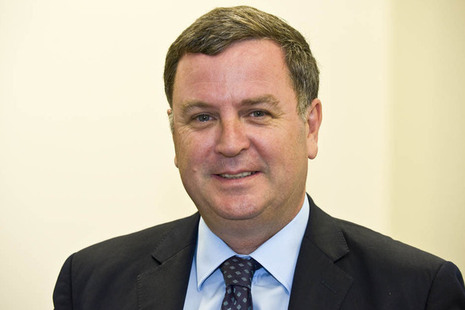
Not one MP in Parliament came to the rescue of Mel Stride, the work and pension secretary, when he made his initial statement on the Parliamentary Ombudsman’s report which concluded that there was maladministration over the delay in communicating the six year delay to women in the 1950s and either Parliament or the DWP should compensate them.
Essentially it was a holding statement with the minister emphasising that it was a complex 100 page report which he had to consider very carefully.
“The ombudsman has noted in his report the challenges and the complexities of this issue. In laying the report before Parliament, the ombudsman has brought matters to the attention of the House and we will provide a further update to the House once we have considered the report’s findings.”
He also tried to drag in the judicial review, then pursued by Back to 60, for the reason for the delay in the Ombudsman’s report, citing that the two courts the High Court and the Court of Appeal had presented as fact that the DWP had not acted unlawfully ( no one said they had) over maladministration. The trouble is he got it wrong, the hearings which I attended, were about discrimination in the past not maladministration. As Marcia Will Stewart, the lawyer from Bimberg Peirce, said in 2019 “Our judicial review had nothing to do with maladministration investigation, whatever others may say”. And as she was bringing the case I prefer her analysis to Mel Stride’s.
Liz Kendall
Indeed Mr Stride’s only other friend in Parliament was Liz Kendall, Labour’s Opposition spokesman, who said:
“This is a serious report that requires serious consideration. The ombudsman has rightly said it is for the Government to respond but that Parliament should also consider its findings.
“Members on this side of the House will look carefully at the report too and continue to listen respectfully to those involved, as we have done from the start.” ( in other words we don’t want to lose your vote in case you think we are siding with Tories).
Tories were not Stride’s best friends
But it was the Tories who, while polite, were not his best friends. None of them defended the government’s delay and all pressed for a decision. It started with Caroline Noakes, who chairs the Women and Equalities select committee, who said:
““I recognise this is an interim update but I would gently press (Mr Stride) that Waspi women have been waiting five years for the ombudsman, they won’t want to wait for a select committee inquiry into this report in order to see action from the Government.”
Soon it became clear that many other Tories, mindful of holding on to their seats, did not want unnecessary delays. Tory MPs representing Stroud, Scunthorpe, North Norfolk, Eastbourne, Waveney, Weston super Mare, Amber Valley and the Isle of Wight were among many who made it abundantly clear they would not brook this being pushed into the long grass.
Bob Seely
Bob Seely, the MP for the Isle of Wight, while praising the government for keeping the triple lock, had every reason to be concerned – he has the largest number of 50swomen in his present constituency and foul wind combined with their lack of support ( even if the Island now gets two seats) could sweep him away.
But the government faced its greatest attack from the Scottish National Party who members slammed ministers. Patricia Gibson, their official spokesman and MP for North Ayrshire and Arran, hit out at ” timid Labour” and ministers.
“We in the SNP stand shoulder to shoulder with these women, who have been abandoned and betrayed by the UK Government and the future Labour Government. Will the Secretary of State tell the House what it will take to compensate these women? Do we need another TV drama to embarrass and shame the Government into doing the right thing? “
Other SNP MPs cited deaths of the women in their constituencies and the anger among the women. Ian Blackford, the former Westminster SNP leader said: “Can we imagine what would happen in this place if it was announced that private sector pensions were being put back by six years? Rightly, there would be outrage, and there should be outrage about what happened to the WASPI women.”
Joanna Cherry picked up on Mel Stride and Labour muddying the waters over raising the judicial review
“The WASPI campaign has asked me to emphasise its annoyance about how often Government Ministers, when talking about these issues, attempt to muddy the waters by referring back to the unsuccessful litigation to reverse the increase to the state pension age, or to claim direct discrimination. That was not litigation by the official WASPI campaign, and I am sure that its members were annoyed to hear a senior Labour Front Bencher doing the same thing on the radio last night.”
Labour backbenchers took a much stronger line than their front bench demanding a timetable for the implementation of compensation starting with Marsha de Cordova, representing Battersea.
“The Secretary of State has said that he wants to continue to look in detail at the findings of the report, but surely he should be able to make an unambiguous commitment to compensation for these women.”
Imran Hussain, representing Bradford East said: “Will he at least accept that every time a Minister stands up and says “undue delay” or “due process” they really mean that they have no intention of addressing the problem, and are saving face and kicking the can down the road?
Other criticism came from Jeremy Corbyn and John McDonnell, the former shadow chancellor, told him:” we have no confidence in the Department for Work and Pensions to resolve its basic failure of decades ago..”
It will not have been a pleasant experience for Mel Stride who was probably glad Parliament closed for the day after this statement. He would be extremely stupid not to take note but MPs will have to keep up the pressure to get any compensation out of this government. Only the fear of being swept out of power will make them do anything, but whether it be enough money will be another matter.
Today’s report from Robert Behrens, the Parliamentary Ombudsman, is one of the most underwhelming publications ever to come from a public figure asked to redress a major injustice.
After toiling over his report for some seven years all he can produce is a mouse of a publication which leaves some 3.5 million women born in the 1950s having to fight their corner all over again to get compensation for waiting six more years to get their pension.
We should have known it was likely to be lacklustre after his first preliminary report conceded only “partial maladministration ” for the way the Department for Work and Pensions failed to communicate with the women about the long wait they would have to get their pensions. This immediately lowered the amount of compensation he might award at the end – ruling out the highest level. And WASPI under Angela Madden, were totally stupid not to challenge this at the time, particularly as evidence emerged during the judicial review brought by the ” Back to 60 ” campaign that the DWP’s own civil servants had urged the then secretary of state, Peter now Lord Lilley, to run a campaign to tell the women as long ago as 1997. They knew the women hadn’t realised the implications.
Spurious objections from the DWP
Now today’s report completely ducks the issue, make no recommendation for an award and caves into spurious objections from the DWP that it is either too costly to find the people affected or too costly to pay out. Given the DWP know the details of every pensioner bank account as they have to pay them every month, this is plain ridiculous. At least he spared them the other claim from the DWP that some of the 50s women were fraudsters if they put in a claim. No doubt this civil servant who wrote this relished prosecuting and jailing these elderly women like the managers who led the Post Office pursued the sub postmasters.
There is some guidance in his report which appears to suggest he might have thought giving them a range of compensation from £1000 each to £2900 but there is no detailed mechanism of how this could be done.
And as for asking Parliament to decide, the big question is how? For start there is no agreement on the level of compensation. Is it the £1000 – £2900 hinted by the Ombudsman ? Is it the £10,000 promised by Angela Madden and the All Party Parliamentary Group on this issue? Should it be the £58 billion that the former Labour chancellor, John McDonnell, promised during Labour’s last election campaign?Or should it be full restitution of all the money promised by CEDAWinLAW, which could end up with some getting over £40,000. There is plenty of space for everyone to disagree and delay.
What is the mechanism that will force the DWP to give into demands from Parliament? The answer is that there is none. Angela Madden today was spectacularly naive in thinking that is is wonderful that Parliament will decide.
Parliament controlled by Government whips
For a start the Parliamentary agenda is almost totally controlled by Government whips. And do people really think the government, which opposes paying anything, is going to make Government time available to debate something they don’t want to hear? Also Labour may be reluctant to use one of its Opposition days to debate the issue because it would force them to declare their hand and then be subject to barrage of attacks from the Tories claiming everybody’s taxes were to go up to pay these women? Only the Scottish National Party could risk calling a debate as the bill falls on Westminster not Holyrood.
A backbencher could put up a motion but I gather this would not be binding on the DWP who would safely ignore it.
The Parliamentary Ombudsman, who retires this week, could have given a clear uncompromising lead on what could have been done but flunked it. Frankly if I read the Jerusalem Post correctly he has give more uncompromising support to the Israeli government’s bombing of Gaza than he has defending the rights of cheated pensioners in this country.
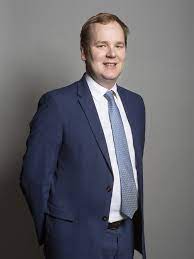
William Wragg, the Tory chair of the Public Administration and Constitutional Affairs Committee, has belatedly intervened in the growing crisis over the failure of the Prime Minister to appoint a new Parliamentary Ombudsman to replace Rob Behrens who quits on March 31.
In a letter published on the committee’s website Mr Wragg asks Sir Alex Allan, the senior non executive director on the Parliamentary and Heath Services Ombudsman board, what measures will be taken to keep the office going and what is going to happen to people who, via their MP, want to lodge a complaint to the Ombudsman. He also raises whether reports can be published and complaints investigated. Particularly at risk is the long awaited report on the partial maladministration for 50swomen who faced a six year delay getting their pension.
The letter discloses that recruitment for a new Ombudsman began last October and a panel chose the winning candidate at the beginning of January. Since then the Cabinet Office and Rishi Sunak, who has to approve the appointment, have not responded. The silence from Whitehall and Downing Street means no motion can be put to Parliament appointing a new Ombudsman, who then appears before the PACAC for a pre appointment hearing. PACAC has only a couple of weeks to set up the hearing.
Sir Alex Allan
The publication of the letter by the committee is in fact a response to a letter written to Mr Wragg from Sir Alex warning of dire consequences for the corporate body if no one was appointed and suggesting that Rebecca Hilsenrath, the current chief executive is appointed as an Interim Ombudsman. The letter was briefly on the committee’s website but withdrawn the moment I published a blog about it.
Part of it read:
I am aware that, due to the preferred candidate’s notice period, there will be a need to appoint an interim Ombudsman and that the view remains that this should be Rebecca Hilsenrath, Chief Executive Officer at PHSO. We have yet to receive confirmation of this, despite the urgency, which is making it difficult for the organisation to properly plan for leadership change. As a corporation sole, the organisation cannot operate without an Ombudsman in post. Any delay to the appointment puts the organisation at considerable risk. In particular because key casework decisions could not be taken it puts at risk all of the work to reduce the queue and improve service to complainants. Clarity of the timeline for both the permanent and interim Ombudsman appointments is therefore pressing,
However the antiquated legislation suggests that the PHSO board cannot appoint its own acting ombudsman. It has to be appointed from outside the board.
The legislation specifically refers to an “Acting Ombudsman” and, as such, cannot be appointed by the PHSO Board of Directors.
Section 3A of the 1967 Act deals with the appointment of an Acting Commissioner who serves at the pleasure of His Majesty.
The Acting Commissioner can only serve for a maximum of 12 months or until a new Commissioner is appointed (whichever is sooner).
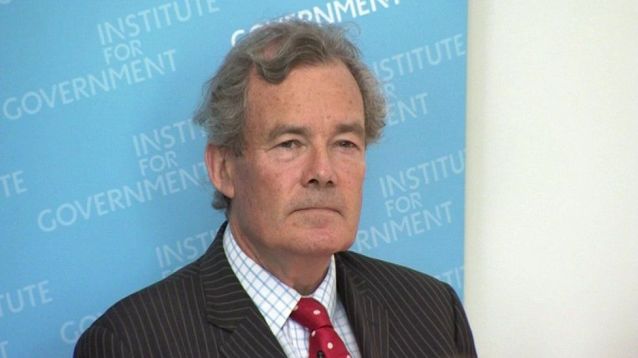
Last week I attended a meeting of the industry forum, a progressive think tank that discusses crucial business and economic issues often addressed by Labour politicians and MPs under Chatham House rules. This one was different for two reasons. It was “on the record” and it was addressed by a former Tory minister, Francis Maude, one of the founders of Policy Exchange, a Conservative think tank and traditionally to the right of the party.
But before anyone on the left start to think this is another example of Sir Keir Starmer’s lurch to the right, this was an unusual and useful meeting of minds.
Lord Maude has recently conducted a thorough and detailed independent review of the governance and accountability of the civil service for the government – not the most sexiest of subjects. But its important findings have been spurned by the present Tory government.
To my mind there is a lot to be learned from this review for both Labour, the Liberal Democrats and the Green Party. It is quite clear from the latest interviews with Labour’s shadow chancellor, Rachel Reeves, that she believes that if Labour win the next election it is going very difficult for them to spend more cash on the day to day running of public services. Labour needs to make sure it doesn’t waste a penny of taxpayer’s money and Lord Maude’s proposed reforms could help them achieve this.
What Lord Maude frankly exposes is that Whitehall is directionless. Yes there are theoretical controls – the PM is technically responsible for running the civil service. But there is no system of delegating this power to either civil servants or ministers.
Centre of Whitehall is unwieldly
The result in his words: ” The centre is now unwieldy, with confusion about where responsibilities lie and a lack of clear lines of accountability. Other jurisdictions with similar systems provide signposts to improved arrangements.”
Why this is important is that it means there is a lack of overall control on how large areas of government spending are made and how effective the policies implemented by governments are in practice. One only has to read my articles in Byline Times to see legions of exposures by the National Audit Office of waste, inefficiency and bad decision making which could have saved the taxpayer billions.
Lord Maude’s proposals include merging the Cabinet and the Prime Minster’s office into one powerful body – so a future PM will have much greater control over the direction of the government – and a new Office of Budget and Management to bring together cross Whitehall projects which tend to fall into a void because of Whitehall’s silo mentality.
The head of the civil service should also be a full time job so he or she can concentrate on bringing about all these reforms and so should the First Civil Service Commissioner who should be in charge of a wider programme and be able to hold the head of the civil service to account and make an annual report to Parliament.
Every minister should get a letter telling him or her clearly what their powers are and what they should expect from civil servants.
Not a lot of this is radical stuff. Australia, Canada, Ireland and New Zealand already have similar systems because they are more modern democracies than the UK.
Labour are about to start talking to the civil service under the usual courtesy given to opposition parties before a general election. This would be an ideal situation to raise this. I would also suggest that the Shadow Cabinet should have a session with Gareth Davies, the head of the National Audit Office, to draw on the independent body’s wealth of experience of what went wrong in the past and how they could avoid such pitfalls in the future. Voters will depend on Labour getting it right.
Also ” Ombudsman friend “of Rob Behrens facing a corruption hearing in Australia
MPs today publish their official annual scrutiny of the work of the Parliamentary Ombudsman but what it doesn’t say is more important than what it says.
The committee call again – this time for a manifesto commitment from all political parties – to reform the 57 year old Ombudsman legislation – to give the Ombudsman and Health Service Commissioner more clout and powers to ensure his or her recommendations are implemented This follows the blank refusal of this government to take any action to do so. Michael Gove when he was in the Cabinet Office ruled out even a draft bill.
In a desperate plea the chairman, Tory William Wragg, who is also quitting at the election, says:
“As we have done annually for many years now to no avail, we are once again calling on the Government to bring forward what is now very long-overdue legislative reform of the PHSO, so that it can provide the level of service the public requires from it.
“Given the necessity of PHSO reform, we urge all political parties to include a commitment to reforming the legislation relating to the PHSO in their election manifestos ahead of the next General Election.”
Whether the Tories will commit to this must be unlikely since it suits the present government, particularly the Department for Work and Pensions, and to some extent the NHS, to have a weak Ombudsman who can be safely ignored if they don’t like what he says.
The Parliamentary Ombudsman’s Office has welcomed the committee’s statement:
“We are pleased to see the Committee’s support for reform of our outdated legislative framework and their call for Government to reconsider its position and consult with stakeholders ahead of the General Election. We agree with their sentiment that reform has been ‘neglected’, is ‘long overdue’, and that ‘further delay is no longer tenable’.
The rest of the report seems a mixture of praise and criticism over the Ombudsman’s performance. He is praised for dealing with a backlog of complaints that followed the Covid 19 pandemic but criticised for the way he didn’t handle well complaints affecting the elderly and the disabled.
Rob Behrens, retiring Parliamentary Ombudsman
But there were two huge elephants in the room missing in the report. Retiring Ombudsman Robert Behrens when he faced MPs had to spend a good part of the session facing criticism from MPs of the huge and unprecedented delay in publishing his report on the plight of 50swomen – some of them WASPI supporters – and recommending compensation for maladminstration in the six year delay in getting their state pension. Indeed his report is taking longer than the actual delay in getting their pensions.
Yet from today’s report you would think this never happened. There is not one word in the report acknowledging this. All there is a footnote referring to the WASPI evidence while the evidence from CEDAWinLAW does not even merit that.
Yet any reader of this blog knows the present draft recommends NO compensation for the women leaving it up to MPs in Parliament to debate whether women should get a penny.
This is more outrageous given that over 500 people know what it says and practically every sitting MP knows the outcome but most are happy to participate in a conspiracy of silence hoping it will go away. WASPI is playing the same game and one is beginning to wonder whether they want to get any money at all.
The other missing information is who is going to be new Ombudsman. The committee inadvertently published the letter sent to the Cabinet Office from Sir Alex Allen, once adviser to David Cameron and Boris Johnson until he resigned, and now a member of the Parliamentary Ombudsman Board – see my blog here– asking for a speedy decision from Rishi Sunak to replace Rob Behrens. Now it is nearly a month since I wrote about this and nothing has happened. The Cabinet Office appears not to have replied.
Yet they have only until March 27 – when Parliament goes into Easter recess – to fix up a meeting to approve the appointment of a successor. Even if the board appoints an acting ombudsman under the 1967 legislation it would still need Parliamentary approval by the committee, I am told.
Rob Behrens also had strong links with the various international organisations – a couple of which have been hit by scandals.
A war crime and a corruption scandal
Josef Ziegele, the European Ombudsman Institute ‘s general secretary, was behind the alleged deportation of two Ukrainian refugee children from Austria to Russia which could be a war crime according to the Kyiv Independent which led to other Ombudsmen, including Rob Behrens resigning from it last April.
The president of the International Ombudsman Institute, Chris Field, who is the Western Australia state Parliamentary ombudsman, is apparently a good friend of Rob Behrens. But at the moment Field is at the centre of corruption hearings in Western Australia over his huge annual travel expenses of $266,000 Australian dollars (£136,840) and for subsidising his organisation through money allocated from Australian taxpayers.
At a visit to Ukraine in 2022 Mr Field heaped praise on Mr Behrens saying “I am deeply grateful to my good friend and colleague Rob Behrens CBE, IOI Vice President Europe, who joined me on this visit. He is a person of utter integrity, searching intellect and profoundly good values. He came to Ukraine. He lives his values” .
He also put a submission to the PACAC saying: ” He is counted as a wise mentor and friend by me and so many of his colleagues around the world. Ombudsman Behrens has not just transformed the office of the PHSO into one of the world’s leading Ombudsman offices, he has made a contribution to the IOI and the institution of the Ombudsman globally of inestimable value. It is of some note that I was accompanied by only one Ombudsman on my visit to Ukraine in December in 2022, namely Ombudsman Behrens. He distinguished his office and his country during this visit.”
The annual report of his Ombudsman’s report for West Australia revealed Field had visited Taiwan, China, Ukraine, Britain, the US, Slovenia, Thailand, Austria, Morocco, France, Russia, Poland and Hungary. Just prior to his visit to Ukraine, the IOI president met with the Australian Ambassador to Poland Lloyd Brodrick, and the Australian Ambassador to Ukraine Bruce Edwards in Poland.
Chris Field, Western Australia Ombudsman
During the first tranche of the corruption hearings against him ( they resume mid March) it was revealed that he decided to end rules disclosing gifts he had received on foreign trips by raising the disclosure limit from around £25 to £125. It was revealed that he planned to give the OECD in Paris from Australian taxpayers funds , over $213,000 (about £107,000) for a project concerning, ‘the role of Ombudsman institutions in building a culture of open government for stronger and more resilient communities.’ The first invoice from OECD of half the cash was blocked by the Ombudsman’s chief finance officer.
He also ordered his office to pay for a private limousine to take him from the Paris Hilton to the OECD headquarters because he said taxis were difficult to find in Paris.
It was said he was only in the office for two days out of ten because of all these world trips and he designated other people to take operational decisions.
Behrens stands with Israel
MPs in today’s report praise the Ombudsman for seeking co-operation with international organisations. It also discloses that the Parliamentary Ombudsman is working closely to co-operate with Israel’s Ombudsman.
So closely that Matanyahu Englman, Israel’s Ombudsman requested both Chris Field and Rob Behrens to issue a statement by the International Ombudsman Institute giving unqualified support to Israel to fight HAMAS.
Chris Field obliged saying: “There can be no false moral equivalences in the lawful and correct response of Israel to those who came to slaughter the Jewish people,” in a letter to Israel’s State Comptroller and Ombudsman Matanyahu Englman. “No international body should be allowed to falter in their resolve to eradicate a body that actually pays their members to kill Jews. There can be no peace in the Middle East while terrorism and undemocratic representation of the peoples of Gaza seek to eliminate the Jewish people.”
Whistleblower Dr Chris Day won the right to appeal today when a a Deputy High Court Judge Andrew Burns of the Employment Appeal Tribunal granted permission to appeal the November 2022 decision of the London South Employment Tribunal on six out of ten grounds at a hearing in London.
The saga which has now being going on for almost ten years began when Dr Day raised patient safety issues in intensive care unit at Woolwich Hospital in London. The Judge said today this was of the “utmost seriousness” and were linked to two avoidable deaths but their status as reasonable beliefs were contested by the NHS for 4 years using public money.
Deputy High Court judge Andrew Burns
In a series of twists and turns at various tribunals investigating his claims Dr Day has been vilified by the trust not only in court but in a press release sent out by the trust and correspondence with four neighbouring trust chief executives and the head of NHS England, Dr Amanda Pritchard and local MPs.
This specific hearing followed a judgement in favour of the trust by employment judge Anne Martin at a hearing which revealed that David Cocke, a director of communications at the trust, who was due to be a witness but never turned up, destroyed 90,000 emails overnight during the hearing. A huge amount of evidence and correspondence that should have been released to Dr Day was suddenly discovered. The new evidence showed that the trust’s chief executive, Ben Travis, had misled the tribunal when he said that a board meeting which discussed Dr Day’s case did not exist and that he had not informed any other chief executive about the case other than the documents that were eventually disclosed to the court..
The hearing went on for an extra week because of all these disclosures and the British Medical Association, who are representing Dr Day, asked for their costs to be repaid yesterday because of the additional expense at the hearing. The judge agreed that a separate appeal to recover the BMA costs should also be granted permission to be heard.
Instead of a decision to allow an appeal this hearing was held today to decide whether there was an ” arguable case ” for an appeal.
Dr Chris Day won the right to appeal that some of the findings of the judgement were perverse, that the judgement failed to draw any inferences from the destruction of 90,000 emails and the failure to provide documents that would have helped Dr Day’s case. This in particular followed the disclosure in documents that under oath the chief executive, Ben Travis gave an untrue account about a board meeting and had hidden he had contacted other trust chief executives about Dr Day.
The judge seemed exercised that the trust despite the Care Quality Commission expressing concern about a press release which attacked Dr Day decided to do nothing about it and the judgement appeared to ignore this.
Andrew Allen KC
The judge also allowed the right of appeal for Dr Day about the way he had been treated as an employee and how events had unfolded at the trust.
What was not allowed was the right of Andrew Allen, the BMA’s funded lawyer, to cross examine the trust’s lawyer, Ben Cooper, about remarks he had made about Dr Day during the hearing. some of which he was forced to concede were not accurate. Mr Cooper was rescued By Judge Anne Martin from having to respond to Dr Day’s supplementary statement on this point and was further rescued by the EAT today. Coincidently today Mr Cooper was representing the retail giant Asda in a case next door to today’s hearing.
The Judge also blocked a ground of appeal relating to factual findings being made on whether MPs and the Press has been misled on Dr Day’s protected disclosures. Also blocked was Dr Day’s and his legal team’s clear request for a formal finding on whether deliberate concealment had occurred as part of Dr Day’s protected disclosures. It was made clear to the Judge these points were what the case was about.
Ben Cooper QC
Despite this the decision of a senior judge does call into question the judgement made by Anne Martin who it is now arguable made some poor calls -particularly avoiding the issue of the destruction of emails and withholding documents that should have been disclosed to Dr Day’s lawyers.
The judge also paid Dr Day a compliment saying by raising the dangers for patient safety caused by staff shortages in 2014 he was ” way ahead of his time.” This might suggest that judiciary is becoming increasingly aware about the state of the NHS and its effect on patient safety. Perhaps judges are seeing too many scandals reported in NHS trusts.
Met Police says it was not a crime for council staff to proposition children for sex in 1984
Keith Hinchliffe, the child sex abuse survivor, who got his predator sentenced to six years in jail 40 years after he abused him for three years , is facing an uphill battle with the Met Police and the London borough of Richmond to get compensation or even recognition there was a problem.
The Met Police are describing his allegation that he was propositioned for sex by a member of staff at Grafton Close Children’s home as ” not a crime” and the council have employed lawyers and insurers to say it did not fail in its duty of care to look after him.
Keith’s abuser, Phillip Saunders, had open access to the children’s home where he took him out to sexually abuse him and the member of staff propositioned him when she invited him to her flat in return for saying she would help him leave the home early.
Documents show the Met Police has reviewed the allegations he made in 1984 which resulted in ” no further action” but came to the same conclusion again. The documents show that at first Richmond Council tried to say there was no evidence that he was at the home and then because he was not certain whether her name was Christine or Linda they could not trace anybody.
But the most damning finding was that the Met concluded that no crime existed in the first place.
The report said: “You stated ..that you had been propositioned but that the suspect had not touched you or physically sexually abused you. You stated that it was verbal comments only. I agree that crimes of such nature are fully within the public interest, however, there has to have been a crime committed for that interest to exist.”
Detective Sergeant Alex Woolley of the Met Police Child Sex Abuse Investigations Team, wrote to him saying: ”
“In relation to what happened you at Grafton Close, this report has been closed and classified as a “no crime”. “Clearly the conduct of the member of staff is entirely unacceptable. However, we have to apply the law as it was at the time that the incidents happened. This happened before the Sexual Offences Act 2003 and so we have to consider what legislation is available to us in the 1980s.” Keith Hinchliffe was very dissatisfied by the decision and has appealed to the London Mayor’s Office for Policing and Crime (MOPAC) for a review of the case at the end of October when Saunders was convicted. The office has accepted his complaint but warned him it could take 8 months to get a reply because of a backlog of complaints against the Met.
Richmond’s response has been even more negative. First they questioned whether he had ever been at Grafton and said there were no records showing he was there. Then by pursuing the issue with his local MP and a Freedom of Information request the South London Legal Partnership found a log confirming he had been admitted to Grafton Close and discharged six weeks later. But it said all the social work records at that time had been destroyed. It refused to release any documents on the Fernbridge investigation by the Met into child sexual abuse at Grafton Close home in 2015 which the authority did confirm it had co-operated with the police on the grounds that they were too sensitive because they contained details of third parties involved.
When he persisted in pursuing Richmond over this the council turned the case over to lawyers in Nottingham, Browne Jacobson, an Anglo-Irish firm, who cover business, government and health issues.
The firm in a letter this month set out to demolish Keith’s claims of negligence or breach of duty of care at Grafton Close. It cited case law to exonerate social workers who may be involved in his case and also said he had to meet stringent tests to bring any claim that the staff failed to protect him. One of them included he couldn’t produce documents to show the council’s policies at the time – since the council has destroyed all the records.
You can’t bring a negligence case if there was no duty of care -Richmond Council’s lawyers
The lawyers also said he was out of time to bring a case and they would challenge this in court. They were also sceptical of whether the conviction of Saunders would help. The lawyers wrote to him saying ” a claim in negligence cannot succeed if there is no duty of care in the first place”.
It goes on to say the council have neither admitted or denied the conviction of Mr Saunders but would need a certification of conviction or indictment.
The firm warned him they had agreed to represent Richmond if he brought a case and that he could incur substantial costs and he should take independent legal advice.
Since publication of the first blog I have been contacted by one other resident at Grafton Close suggesting there was a woman member of staff at Grafton Close who did sleep with at least one of the boys there. What Keith is exposing is a cess pit of behaviour which the Met and Richmond Council want to forget.
I don’t think Keith is going to give up on this so I expect there will be further developments. Watch this space.
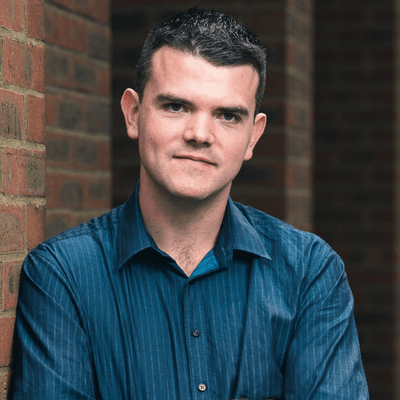
Keith Hinchliffe. He contacted me and gave me permission to use his name to encourage other survivors to come forward and get justice in the courts and compensation.
Judge described him as ” an immensely impressive witness, honest, reasonable and composed under pressure”
A child sex abuse survivor has got justice 40 years after he was groomed and sexually assaulted by a paedophile who went on to commit other offences against boys in Holland and a girl in Kent.
Philip Saunders, 67, was sentenced to six years in jail, with the judge saying only a rule that sentences had to reflect the law in the 1980s stopped him from giving him an even longer sentence.
Keith Hinchliffe, now 54, was abused at Saunders home, in his car, in his office at night, at Wembley Stadium and his predator was given open access to Grafton Close children’s home in the London borough of Richmond to take him out to abuse him when he was put in care.. The abuse continued for three years starting when he was 12 until he turned 16. Saunders was 27 at the time.
His case raises questions again about the role of Richmond Council under Liberal Democrat control and the Met Police in the 1980s who took no effective action to stop paedophiles abusing children in the borough. Grafton Close is the same home where a Roman Catholic priest, Tony McSweeney, was jailed for three years for indecent assault after escaping justice for 35 years following a fresh Met Police investigation in 2015. Like Saunders, McSweeney was able to take boys out of the home with the help of John Stingemore, then the deputy manager of the home, who was already a convicted paedophile. Stingemore died before the case got to court. See my blog on this here.
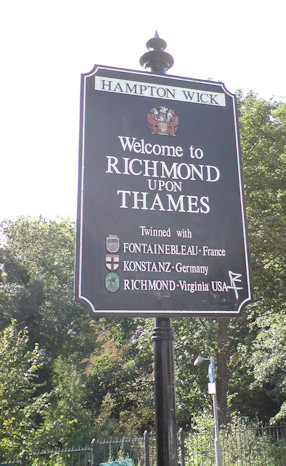
Richmond on Thames Council sign
Keith reported the incidents to the Met police when he was at Grafton Close care home in 1984 and allegations that he had been propositioned for sex as a 15 year old by a woman staff worker at the home. The Met interviewed him and decided to take no further action.
Keith plucked up courage in 2019 to report the abuse again after seeing the BBC investigation into paedophile Jimmy Saville and went to the NSPCC who reported it to Thames Valley Police.
Unlike the Met, Thames Valley Police took his claims seriously and the case went to Reading Crown Court where Saunders tried to deny everything but he was convicted last October and sentenced in December.
The judge, recorder John Ryder, in his sentencing remarks in court, told the whole grisly story. He revealed that Saunders, after abusing Keith, went over to the Hague and sexually abused two boys in his care and was sentenced to two years and six months in jail. In 2005 in Maidstone he was jailed for four years for three indecent acts with a young girl, the daughter of his current wife.
Saunders got access to Keith and his family because he was his sister’s boyfriend for about a year. The judge described how he got Keith to stay overnight at his home in Langley and then asked him to sleep in his bed because he claimed the spare bed was broken. The abuse began overnight and then he was given expensive gifts. This included a microcomputer – rare in 1982 – a Raleigh bike and a Michael Jackson DVD, Thriller. He also exploited the boy’s passion for fast cars taking him to test drives and shows.
” unusually expensive gifts were to groom him for sex abuse”
As the judge said: “giving unusually expensive gifts coveted by an adolescent boy and exploitation of his interests were a means of grooming him to sex abuse.”
He also took pictures of him with an Instamatic camera naked or dressed up at his home, in his car, at work and at Wembley Stadium where he took him to see an American football match.
Keith told the Judge if he didn’t comply Saunders , who is six foot four inches tall, became violent.
The judge says he said: “If I didn’t do things, he would let me know. Arm behind back- pain” .”Rebuffed once and pinned to floor and decanter of scotch all over my face as punishment and made to pleasure him again.”
Other times he was plied with drink, forced to watch pornography and forced to perform oral sex on him. These events made Keith feel both fear and shame and he started skipping school. The judge summed up his evidence as finding “relationships hard. No friends. Initial abuse hard, aftermath is life changing. Did not finish education. Rebelled. Hated the world and everything around me. Navigated life without education guidance and to relive events in court and answer challenges again and again – had almost broken him.” His changed behaviour led him to be put into care by Richmond council.
He was too ashamed to tell his family and feared his father, an ex merchant navy man, would take it out on him if he knew. He has now told his mother, his present wife and has children of his own and has a job as a furniture maker. But he told the police he now regretted never taking exams at school and getting a good job because of the constant abuse from Saunders.
The judge said:
“I found Keith Hinchliffe an immensely impressive witness, honest, reasonable and composed under pressure about [a] sensitive and damaging experience. Impressive man.” He described him as an ” insightful and measured in expression”. “Trauma and fear and shame shaped his personality and altered [his] outlook on the world.”
The judge was highly critical of Saunders for trying to deny the whole story and showing no remorse for what he had done.
” You continue to deny any sexual activity at all with him.{You] told PSR author only interested in adult female relationships. That assertion is completely contradicted by the facts in the Holland conviction. I have no doubt on the basis of evidence I heard from KH at trial – he suffered substantial and serious psychological harm as result of your actions. {You] abused a position of trust in relation to him.”
The police interview with Keith revealed he partly came forward because he had seen in the media that perpetrators of historic child sexual abuse were now being caught and jailed.
Despite securing a conviction against Saunders he is now having to fight the Met and Richmond Council to get redress. They won’t admit they did anything wrong in the 1980s or had a duty of care towards him. In the second part of this grisly story I will be revealing their responses to him.
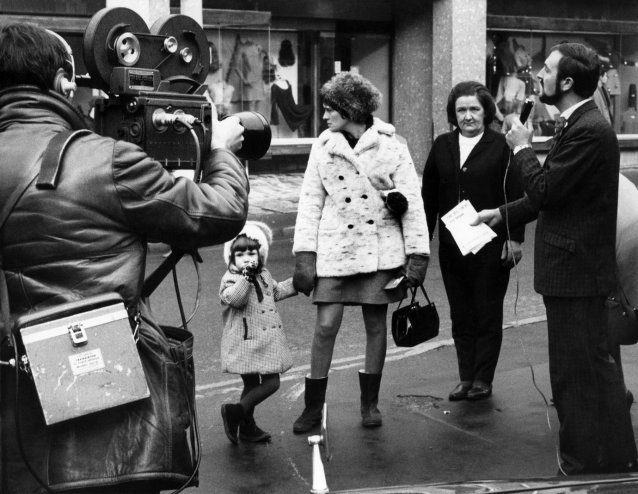
Wellingborough By Election. John Mann of the Labour Party, canvassing outside the John White factory. ;November 1969 Pic credit: Alamy and Trinity Mirror
Tomorrow’s Wellingborough by-election brings back memories of an earlier by-election there 55 years ago which nearly ended my career.
The election was triggered by the death of the sitting Labour MP. Harry Howarth and was won by the Tory candidate Peter Fry a right wing populist who blamed Labour for the permissive society of the 1960s and later voted against joining the European Economic Community, the predecessor of the European Union. He died in 2015. His losing Labour opponent was John Mann, a local man, who with his wife Jean, a county councillor, was a stalwart of the local Labour Party. He is alive and we still exchange Christmas cards.
I was a young cub reporter, fresh from Warwick University, one of the first graduates to join the Northamptonshire Evening Telegraph, apprenticed at £16 and sixpence a week. I had that summer married my wife, Margaret. Aged just 22, I was young and enthusiastic and learnt my trade covering parish councils, magistrates courts and local societies.
Imagine my excitement when a by-election was declared in the autumn of 1969 in Wellingborough, a sleepy Northamptonshire market town, extended only by a Greater London Council estate which meant the town had a mixture of Northamptonshire and Cockney accents. I would be able to rub shoulders with the ” big boys ” – then they were mostly male – from the nationals coming to cover it. And indeed I did, meeting, I remember, Laurence Marks from the Observer and numerous journalists from the Mail , Express and the Daily Mirror.
Now Peter Fry being on the right of the party invited Enoch Powell to speak at a hustings meeting. I managed to get there – not to report- and bring my wife, than a teacher at a local infants school.
Powell did not repeat his infamous ” rivers of blood speech” on immigration made the year before but instead gave a rather dry speech on economics. But the audience had been infiltrated by local Young Socialists. They started heckling him and then my wife joined in. I decided as I was a reporter I should remain neutral and didn’t.
After the meeting we had some drinks with some of the national journalists who thought my wife had been brave and I didn’t think much more about it.
” You failed to control your wife”
The next day I discovered that the local Tory big wigs and Mr Fry had been in touch with the editor, Ron Howe, to get me the sack. My crime was ” I had failed to control my wife” at the meeting. I had not thought about that as I always regard my wife as an independent person and not supposed to be controlled by me. But it says a lot about attitudes in Wellingborough in the late 1960s.
But the editor decided not to sack me. Instead I was banned from the Conservative Club in the town for at least a year ( I didn’t mind that) and was not allowed to write about Conservatives. If I had been sacked my journalist career would have just been 15 months long instead of the 56 years today. I had escaped nemesis by a hair’s breath.
Wellingborough inner ring road scandal
I did redeem myself two years later. Wellingborough Urban District Council called a secret meeting of the whole council to discuss plans for six options for a new inner city ring road – these were the fashion in the early 1970s. One option involved demolishing 300 houses to make way for the road. A local Labour councillor decided this was too much and leaked all the proposals to me. It made the splash, the project was eventually buried and I won my first journalist award as reporter of the year on the East Midlands Allied Press group. I did get a summons to see to town clerk who was furious with me saying ” Who the hell do you think you are, you’re not working for the Guardian”. When I did six years later I was tempted to ring him up. My local editor backed me and in turn threatened the town clerk with national publicity for the cover up.
I then left the Northants ET as a qualified journalist and I got a job on the Western Mail in Cardiff. I suspected the Tory Establishment in Wellingborough were glad to see the back of me.











 Westminster Confidential