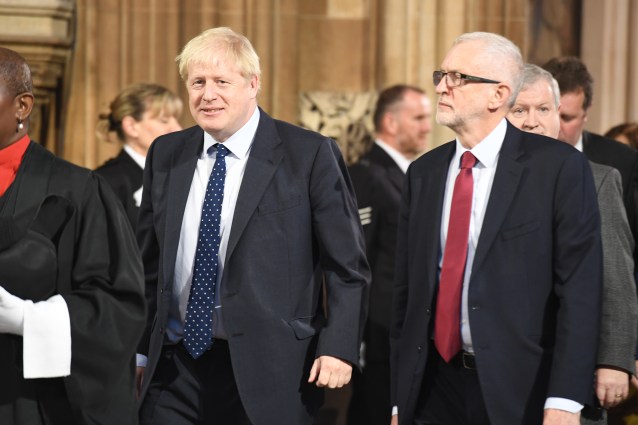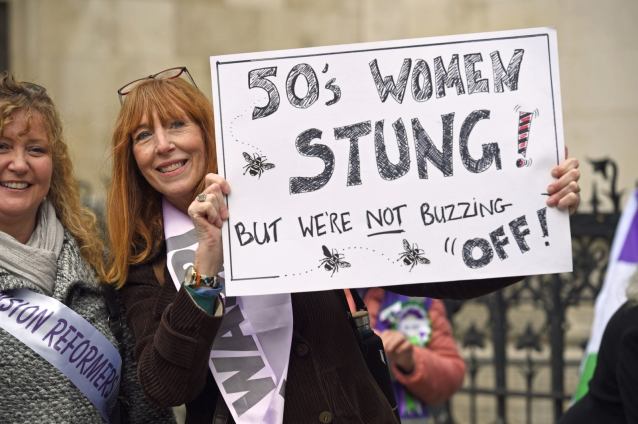
I have done a short piece on Byline Times on how Boris Johnson is already reneging on his pledges to act immediately on social care and help the #50sWomen get some compensation for their lost pensions. The link is here.

I have done a short piece on Byline Times on how Boris Johnson is already reneging on his pledges to act immediately on social care and help the #50sWomen get some compensation for their lost pensions. The link is here.

Tonight I have written a story for Byline Times disclosing that lawyers have decided to seek permission to appeal the Judicial review which rejected all the discrimination claims for the 1950s born women who face a six year delay in getting their pension. The story is here.
BackTo60 have also launched a £72,000 crowdfunding site to raise money for this action. The crowdfunder site is here. Already at time of writing it has raised over £10,000.

I have written an article for Byline Times on the judgement and the next steps to fight it. Byline Times are also committed to following the story.
The article is here.

While the media has been almost entirely focused on Brexit tomorrow’s judicial decision on whether 3.8 million women born in the 1950s are entitled to full restitution for the pension they lost will be ground breaking.
The BackTo60 campaign brought the case using individual examples of hardship caused by successive governments raising the women’s pension age from 60 to 66 and not taking action to give them adequate notice of the change.
Whatever decision is made it will not mean the lowering of the current pension age of 66 and will have no effect on the primary legislation that introduced the change – the 1995 Pension Act. It is entirely about compensation and discrimination towards this group of women as a result of the implementation of this and subsequent Acts of Parliament – again by successive governments- of the change.
Frankly it has not been surprising that two judges have taken nearly four months to reach a decision – even though it has been frustrating for the women themselves – many of whom have suffered severe financial hardship.
If it was a simple decision – just pay out the money – or say there is no case to answer and it can be easily dismissed- we would have had a decision months ago.
Instead the judges will have had to consider both UK and EU law and the UK’s ratification by Margaret Thatcher of the UN Convention for the Elimination of Discrimination Against Women ( CEDAW) – which specifies that women who have suffered discrimination must be fully compensated.
The fact that CEDAW is part of this judicial review affecting so many people is in itself ground breaking. The only other contentious issue where CEDAW has been used before, to my knowledge, is the Labour Party’s decision to apply it under the Equality Act – to use it for all women shortlists to change the composition of Parliament.
The other key issue is whether the 1995 Pensions Act itself years after it was passed created discrimination against women who are now suffering hardship. This was a key feature of the granting of the judicial review in the first place by Mrs Justice Lang who rejected the Department of Work and Pensions argument that the challenge to the 1995 Act was too late. She saw instead the courts intervening to relieve the plight of women suffering now – rather than a tardy response to legislation passed over 20 years ago. It will more than interesting to see the judges’ ruling on this point.
What will also be important will be the judges ‘reaction to the case put forward by the government’s top lawyer, Sir James Eadie, known as the Treasury Devil, who did not just accept that the women had not been informed of the change but said the DWP has no duty under the 1995 Act to inform them in the first place.
If this was accepted by the judges it would mean that nobody was entitled to be informed by law about any change in their pension – not just the 1950s women.
The opposite case was put by Michael Mansfield who argued that the Government’s decision was an ” abuse of power” which had targeted a large sub group of people who had endured hardship.
Whatever the decision tomorrow it will be a landmark one – not only for women who had to wait up to six years for their pension but also for age and sex discrimination.

Senior Labour figures are preparing to improve their offer to compensate 3.8 million women born in the 1950s who are facing hardship by having to wait up to six years for their pensions.
John McDonnell, the shadow chancellor, indicated that the party is now looking at a new offer as the general election approaches.
He made the comment after a private meeting at Labour’s annual conference this week organised by his office which enabled leading figures from campaigning organisations fighting the women’s cause to pitch their case to senior people from the Labour Party.
The meeting came as the two largest trade unions affiliated to Labour, Unison and Unite, backed the case for full restitution for the women. Len McCluskey, leader of Unite, personally endorsed full restitution, in a tweet. The party is also discussing putting the offer in its general election manifesto.
Among the leading figures at the meeting were Laura Alvarez, the wife of Jeremy Corbyn: Andy Whitaker and Rory Macqueen respectively head of strategic communications and chief economic adviser at John McDonnell’s office; Mike Amesbury, shadow employment minister, and Fran Springfield, co chair of Labour’s disability organisation and one of the people drawing up the party’s manifesto. Mr McDonnell came to the end of the meeting.

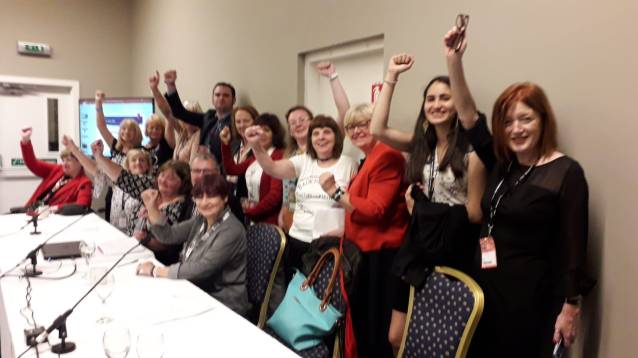
The organisations represented included BackTo60, Waspi Scotland, Waspi Ltd and Waspi 2018.
They were backed up by two women from Unison in Wales, Lianne Dallimore and Mac Hawkins who also addressed the meeting.
Jackie Jones, Labour MEP for Wales, also pressed the case for full restitution and explained how it come done by a special temporary measure through Parliament using the UN Convention on the elimination of all forms of discrimination against women (CEDAW) which was ratified by Margaret t5hatcher in 1986. This allows the money to be paid without amending the present pension age of 66 for men and women.
At present Labour’s offer is confined to backdating payments for two years from 66 to 64 for 1950s born women but no further compensation.
Labour is also waiting the result of the judicial review held in June where Michael Mansfield, QWC put the case for full restitution for all 50s women. It has now been announced it will report on October 3 – next Thursday.
Among other people who attended the meeting were Christine Blower, former general secretary of the National union of Teachers, who is about to be ennobled as Baroness Blower; Labour MP for Ipswich Sandy Martin; Labour MEPs Jude Kirton-Darling and Richard Corbett. Moira Ramage, prospective Labour candidate for Paisley and Renfrewshire South.

At the TUC I was commissioned to write an article for Union News, the website that reports on all trade union action, about Unison’s decision to back the 1950s born women for the full restitution of their pension from the age of 60.
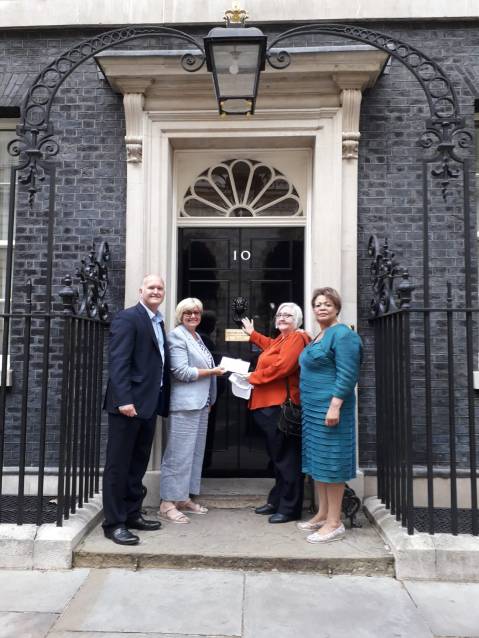
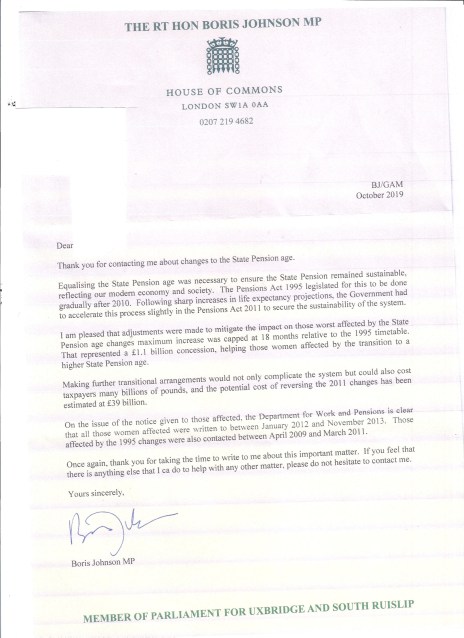
Unison were keen enough to support the BackTo60 campaign to come to Downing Street to hand in a letter to Boris Johnson, supporting their case which has been backed by a Parliamentary motion, started by Anna McMorrin, Labour MP for Cardiff, North and now signed by 190 MPs from all parties.
Next week Unison will be backing the campaign at a fringe meeting supporting the cause of the 3.8 million women at the Labour Party conference on Tuesday in the Metropole Hotel, Brighton.
You can read my article on the Union News website here.

BackTo60s new guerrilla campaign to highlight the plight of the 50s born women who are waiting up to six years to get their pension took on a new dimension yesterday – and brought the displeasure of Parliament’s top official, Black Rod.
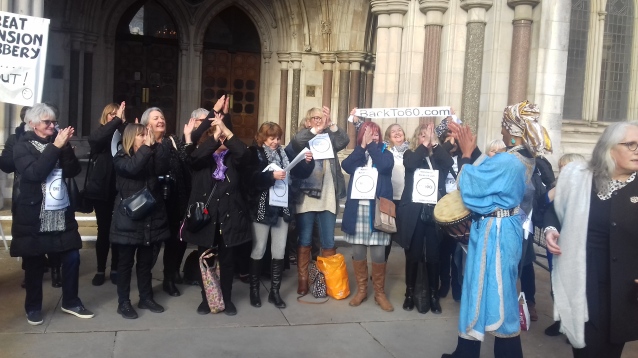
Campaigners engaged Pandora’s Box performers to do a flash mob dance performance on College Green opposite the House of Lords. This is part of a guerrilla marketing campaign that has so far seen images backing the campaign projected onto Parliament and the Bank of England at night and the appearance of campaigning graffiti washed into the pavement outside Portcullis House, the Treasury and the Supreme Court.
But little were they to know that College Green – which might seem to me or you a public green place – is in fact part of the private Parliamentary estate.
So no sooner had the music started and the dancing began, Black Rod, who is The Queen’s representative in the House of Lords instructed one of her 30 staff to come down to remonstrate with BackTo60 organiser, Joanne Welch.
A lively discussion followed only mellowed when the member of staff, Fiona Shannon, who had been instructed to ask the dancers to go, realised she was one of the women born in the 1950s who would benefit from a victory by the campaign.
She then went off however to get reinforcements – allowing the dancers to do a quick encore – before the dancers decided to disappear down a Westminster sidestreet.
Joanne Welch said: ” I genuinely thought this was a public place and didn’t think we needed permission to stage the event. It is used regularly by broadcasters and also has been used by Remainers and Brexiteers to stage noisy demonstrations. I apologise if we needed permission.We will know next time.”
A House of Lords spokesperson said that College Green is part of the parliamentary estate. Any requests for filming or other activity are dealt with by Black Rod’s office on behalf of the House of Commons.
The spokesperson added :”Protests and operating amplified noise equipment are not permitted on College Green. The participants were made aware of this and left voluntarily.”
But not without accompanying their mission.

For those curious about Black Rod,the current holder of the office is Sarah Clarke, the first woman appointed to the £93,000 a year post in 650 years.
She organises the State Opening of Parliament and the highest profile part of her role is summoning the House of Commons to hear the Queen’s Speech. She is also responsible for business resilience and planning for the House of Lords, and leads a department that includes the Yeoman Usher and the House of Lords Doorkeepers.
She was appointed last year having previously organised the Wimbledon tennis championships for a number of years.
As the Queen’s representative she now knows that her 1950s British subjects are pretty angry about the loss of their pensions.. Perhaps Her Majesty should be sent a video of Pandora’s Box great performance compliments of BackTo60,


Secret ministry documents reveal that successive government ministers and Whitehall officials failed over two decades to tell over 3.8 million women born in the 1950s that they would lose their pensions for up to six years.
The documents – made public in last month’s judicial review – call into question whether the ministry was up to the job to properly inform millions of people of such a drastic change to their retirement plans.
The full story is in BylineTimes here.

The Department for Work and Pensions has produced statistics to frighten the public into believing that compensating 3.8 million women born in the 1950s who lost out through the rise in the pension age from 60 to 66 will cost more than double the real price.
A new DWP research report issued a day after judicial review hearing on June 5 and 6 and given widespread coverage in mainstream media put the cost at an eye watering £188 billion and £212 billion instead of a previous figure of £77.2 billion. The directly comparable figure hidden in a footnote is £91.1 billion at today’s prices.
The full story including how the DWP really knows that 50s women are badly off is in BylineTimes here. https://bylinetimes.com/2019/06/20/project-fear-how-the-dwp-is-trying-to-mislead-the-public-over-the-backto60-pension-costs/

The 3.8 million women born in the 1950s who lost lost billions of pounds by the raising of the pension age from 60 to 66 had no right to expect to be told about the changes to their pensions, lawyers for the Department of Work and Pensions told a judicial review today.
Sir James Eadie,QC, on behalf of Amber Rudd, the current work and pensions secretary, argued that the women had no legal remedy to get their money back because the judges hearing the case could not challenge the primary legislation which authorised the change. He said constitutional grounds prevented the judges challenging any major primary legislation passed by Parliament.
The full story is on Byline Times here.