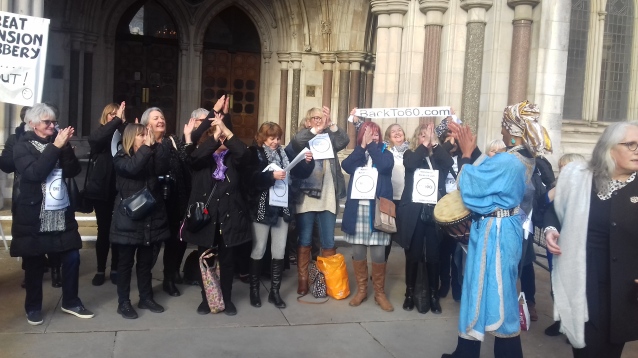
The Judicial Appointments Commission, the body that appoints the top judges in England and Wales, is pursuing a journalist for an unprecedented bill to try and silence him after a six year investigation exposed huge shortcomings in the handling of applications for new judges, especially from ethnic minorities.
Barnie Choudhury, a journalist on Eastern Eye, a national Asian paper, has pursued the JAC using Freedom of Information requests and covering tribunal cases brought by applicants only to face a £14,200 costs bill from the JAC for daring to challenge the body in a tribunal hearing. The action by the body has been widely condemned by the National Union of Journalists and by newspaper organisations as an attempt to silence him which could have widespread implications for other journalists using FOI requests and covering tribunal cases to root out malpractice.
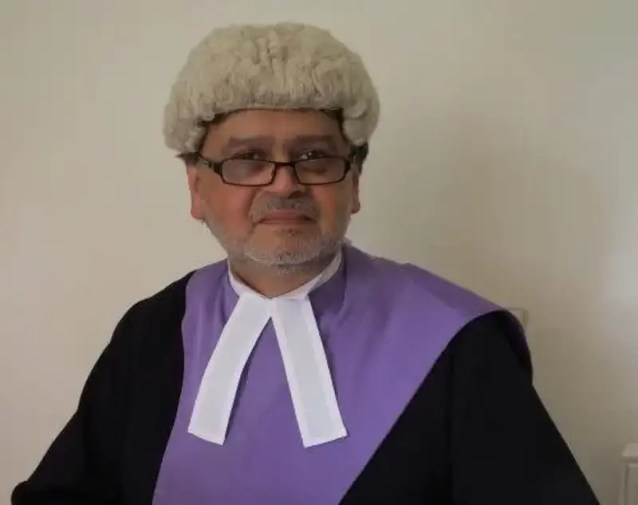
One of the cases he covered involved Abbas Mithani KC, a former designated civil judge for the West Midlands and Warwickshire. He was asking the General Regulatory Chamber to rule whether the Judicial Appointments Commission [JAC] and Information Commissioner’s Office [ICO] were wrong to deny him full disclosure to three freedom of information requests he made.
He accused the JAC of “avoiding public scrutiny” and one of its heads of being “guilty of gross negligence and deliberate recklessness”.
The JAC used exemptions under the act, and the ICO upheld its decisions, even though there was an error in the decision-making process, the panel heard. “Their reliance on those exemptions are flawed and incorrect,” said Mithani in his opening statement to the online tribunal.
One exemption under the FOI act which allows public bodies to refuse information on the grounds that it would “prejudice the effective conduct of public affairs” depended on a qualified person to approve this. Through Choudhury’s work the judge discovered the JAC had no qualified person to do this.
His public challenge has been echoed by complaints from a number of anonymous judges who did not want to challenge the body as they did not trust them to treat them fairly.
The judges – South Asian and white – talked of bullying, racism and misogyny as being widespread in the judiciary – when applying for new appointments. But complaints are only accepted if they come from people who publicly say who they are. Some are on on anti depressants, others even contemplated suicide.
Worse, bodies that would have powers to investigate what appears to be widespread abuse of the system have no resources to do so. Their budgets have been hollowed out by previous governments and Labour show no signs of giving them extra resources. These include the Information Commissioner’s Office, the Equality and Human Rights Commission, and even Parliamentary select committees who have turned down investigations.
There is push back from inside the judiciary. Notably Judge Kaly Paul from the Justice Support Network who won £50,000 in a settlement after she took from her employer to a tribunal over bullying claims. She wrote to the Commons justice select committee:
“We understand that this cancer of secret soundings: sifting for attitudes, allegiances, composed of gossip and never revealed to the candidate has crept in and proliferated within the system, being used at a far earlier stage in the process than before. It creates bias and undermines the apparent objectivity of scoring from other subjective panel assessment and other information sources,”
What appears to be here is the harassment of a journalist who over a long period has reported and revealed a very bad situation in one of the country’s most important legal bodies.
In my view they have misused laws designed to protect the public and the press using both their rights under the Freedom of Information Act and regulations governing tribunals.
Over 20 years ago I sat on the Lord Chancellor’s advisory committee on implementing the 2005 Act. The whole emphasis was to make it easier for people to obtain information and hold public bodies to account. it is simply called open government. The JAC has abused its position to withhold fundamental material – like how much as been spent on staff and legal costs fighting these judges. We don’t know the full package given to the chief executive of the organisation who resigned, we do now know that at least £212,000 was spent in legal costs to stop challenges from judges.
As for the £14,200 costs the journalist is facing – it goes against the whole grain of the tribunal system where the vast majority of claimants are not charged any costs. Indeed to seems to me to be a device used to intimidate whistleblowers who have annoyed public bodies and the NHS ( examples include Alison McDermott exposing bullying at Sellafield, and a leading cardiologist at St Helier hospital who exposed patient safety issues. It seems vindicative and aimed to ruin an individual.
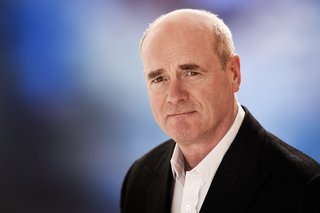
I note the JAC is employing one of the most expensive KC known as the “Treasury Devil” – the colloquial title for the First Treasury Counsel (Common Law), a leading barrister retained to represent the UK Government in major civil litigation, often in the Supreme Court. Currently, this key legal role is held by Sir James Eadie KC. He is the man who fought the judicial review to stop the government paying any cash to 3.6 million 50s women pensioners who felt cheated by the system and also took on the Scottish government.
As for Barney himself there is an excellent description of where he stands in an Eastern Eye article.
” The problem with me is that I’m a campaigning journalist who isn’t scared or overawed by authority. It’s always been this way. My bosses say I’m a maverick. I argue that every organisation needs one. My family worry that I don’t know when to back down with authority figures. That problem is exacerbated by the fact I’m brown. Sadly, some white people just don’t get that we of colour can be as intelligent as they are.”
As for the JAC it doesn’t comment on individual cases but there was a telling response from one of their lawyers during the Mithani case.
JAC’s barrister Natasha Simonsen told the hearing “Some very serious allegations have been made, and they are rejected in their entirety,” Simonsen said.
“The allegations are not only against the JAC but also against that JAC’s legal advisers, the GLD and perhaps me as well.
“These are matters we take extremely seriously.
“If the tribunal considered any of that relevant then we would wish to respond in writing to those specific allegations.
“Mr Thomson and his colleagues in the JAC, and my colleagues at the GLD are extremely hard working civil servants who have strived consistently to do the right thing at every stage of the proceedings.
“There is absolutely no desire to cover things up or suppress information.
“What there is is a concern to protect personal information, including sensitive or special category information for both applicants of judicial office and panel members.
“There is also a concern to ensure the appointments system is not prejudiced by disclosure of scoring frameworks which may be unable to be reused in subsequent exercises.”
Make a one-time donation
Make a monthly donation
Make a yearly donation
Choose an amount
Or enter a custom amount
Your contribution is appreciated.
Your contribution is appreciated.
Your contribution is appreciated.