
Exclusive: Infected Blood Compensation Authority plans to gag lawyers from publicly criticising their actions

Sir Brian Langstaff, chair of the infected blood inquiry

Lawyers representing thousands of haemophiliacs who unknowingly got hepatitis, HIV and Aids from blood transfusions provided by drug addicts and criminals in the United States in one of Britain’s biggest health scandals could be gagged from publicly criticising compensation payments.

A new draft contract proposed by the Infected Blood Compensation Authority (ICBA), the body set up by the government to pay out an estimated £11.8 billion by 2029 ,could take legal action for ” reputational damage” if lawyers publicly criticise the authority’s actions without their permission.

The ICBA, despite its name, is not a public body, but a private contractor to the Cabinet Office, so it intends to impose a standard contract on people who deal with it.

The draft clauses read;

15.7.1 not make any press announcement or other public statement or publicise the Contract or any part of it in any way, or make any public statement about the Scheme, without the prior written consent of the Buyer [the Cabinet Office] and must take all reasonable endeavours to ensure that Supplier Staff do not either; and

15.7.2 not (and must ensure its Subcontractors do not) embarrass the Buyer or IBCA or otherwise bring the Buyer or IBCA into disrepute or diminish trust placed in the Buyer or IBCA (“Reputational Damage”) by engaging in any act or omission which is reasonably likely to diminish the trust that the public or Scheme Applicants place in the Buyer and/or IBCA or impacts the reputation of the Buyer and/or IBCA,

This effectively amounts to a comprehensive “gagging clause”, specifically prohibiting lawyers from making “any press announcement or other public statement” about the scheme without prior Cabinet Office approval. Firms would also be required to ensure their staff comply with these restrictions. 

The ICBA is seeking requirements that could compel law firms to take specific actions or make public statements at the IBCA’s direction to mitigate perceived reputational damage, regardless of whether any breach has occurred.

One law firm said; “On any basis this variation is unacceptable to us for professional, ethical and regulatory reasons.  This firm is instructed by individual clients to provide individual, independent legal advice regarding the scheme and will continue to do so.”

The Haemophilia Society, which also supports victims, is consulting lawyers about what action it should take to counter these proposed restrictions.

The  Cabinet Office has told people that these are standard clauses in procurement processes for private companies being paid taxpayers money, but that they are in conversations with IBCA but could not confirm the outcome.

The issue follows negative publicity over problems with interim compensation payments to people which generated criticism of the IBCA.

An IBCA spokesperson said:

“We are committed to supporting the infected blood community, and are working with legal providers currently to agree contracts that will provide support for those claiming. 

“The legal providers are not restricted in the legal advice they deliver to people claiming compensation, and we provided amended terms to clarify this. 

“We welcome an open discussion with all those who are impacted by infected blood, and those who represent them.”

Years of cover ups

Given the history of the infected blood scandal which dates back to the 1970s, culminating in the recent interim report by Sir Brian Langstaff, there have been years of cover -ups. People were never informed that their relatives were infected, there were attempts to use ” commercial confidentiality” to hide the source of the contamination, and this will not add to public trust or increase transparency.

So far £1 billion has been paid out in £100,000 interim payments and the IBCA is just starting to pay full compensation to other people.

Nick Thomas-Symonds, Minister for Cabinet Office, updated Parliament with IBCA’s latest compensation figures this week.

  • 113 people have been invited to start their compensation claim
  • 84 people have accepted their invitations and submitted their claim
  • 23 offers of compensation have been made, totalling £34.4m
  • So far 14 people have accepted their offers with more than £13.3m paid in compensation

New laws will also be passed by the government extending payments to relatives of infected blood victims, which could lead to an extra 140,000 people claiming.

One-Time
Monthly
Yearly

Make a one-time donation

Make a monthly donation

Make a yearly donation

Choose an amount

£5.00
£10.00
£20.00
£5.00
£15.00
£100.00
£5.00
£15.00
£100.00

Or enter a custom amount

£

Your contribution is appreciated.

Your contribution is appreciated.

Your contribution is appreciated.

DonateDonate monthlyDonate yearly

Please donate to Westminster Confidential

£10.00
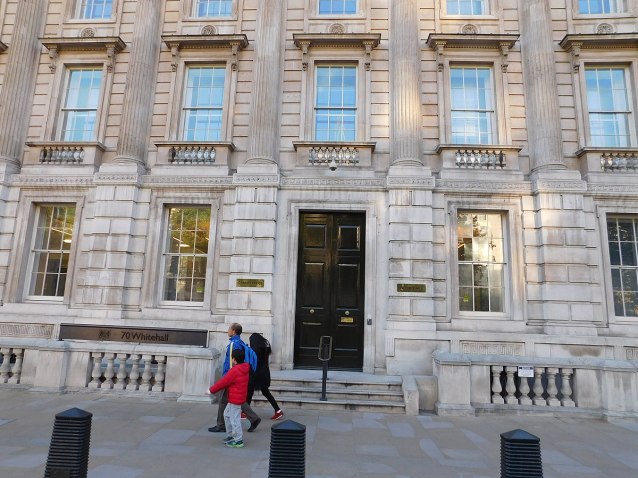
Whitehall whistleblowers: Cabinet Office monitors nothing, knows nothing and does nothing

Cabinet Office – 70 Whitehall Pic credit: Wikipedia Commons

The day after Parliament went into recess a damning Public Accounts Committee report exposes why Whitehall like the National Health Service has such an appalling record in dealing with whistleblowers.

The Cabinet Office, the ministry at the apex of power and responsible for co-ordinating all government policy should be interested in improving public service is turning a blind eye to any concerns that are raised by whistleblowers when things go wrong.

The Cabinet Office is supposed to collect data on whistleblowing across Whitehall but the report reveals it is making remarkably slow progress in doing so.

The report says: “There are some key metrics missing, such as data on “ongoing cases” and the length of time an investigation takes, making it difficult to understand whether cases are taking too long and why that might be the case. “

“The current data collection also does not ask for data on the treatment of whistleblowers which would help indicate whether whistleblowers are being treated fairly. Furthermore, some of the existing data collected lacks detail, for example the data shows that less than 5% of investigated concerns lead to changes in policies or procedures which suggests a lack of action is taken in response to concerns.”

40 per cent of Whitehall whistleblowing cases are about fraud

It goes on: “there is a lack of data analysis and sharing of insights regarding whistleblowing across of the civil serviceThe Cabinet Office does not utilise its central position to analyse the cross-government data it collects. It appears that 40 per cent of the whistleblowing cases involve fraud “but there is no further detail beyond this categorisation so the Cabinet Office do not understand why this is the case.”

“A ‘speak up’ environment is not yet embedded throughout departments to encourage people to comfortably raise concerns. There are still negative perceptions of whistleblowing which can create barriers to achieving the right environment for speaking up. The annual Civil Service People Survey in 2022 had a median organisational score of only 52% of people agreeing they ‘think it is safe to challenge the way things are done in my organisation’. So nearly half think it is not safe.

The report says the Cabinet Office and other departments do not seek feedback from whistleblowers and so are missing vital insights into the effectiveness of the process.

“We have seen no clear indications that any departments routinely seek feedback directly from whistleblowers. Some feedback can be given to departments through their Nominated Officers (senior members of staff who are nominated to receive and consider concerns), but it is not collected in a formal or systematic way for it to be informative and there are limitations with anonymous whistleblower.”

The report calls for a radical shake up across Whitehall with a serious approach from the Cabinet Office to monitor what is going on.

Ray of Hope

There is one ray of hope from one organisation that worked with the National Audit Office and obviously takes whistleblowing seriously – that is the Maritime and Coastguard Agency which is principally concerned with safety at sea and environmental protection. It is a Department for Transport agency. In evidence to MPs it has developed a strong whistleblowing policy and takes cases from both staff and members of the public including ships crew.

A fishing vessel Pic Credit: HM Coastguard UK

The external cases were mainly categorised under danger to the environment or health and safety related issues. These cases included safety of vessels in UK ports, failure to meet the obligations under the Maritime Labor Convention (noise and rest hour disturbance), untrained ship crew and fraudulent issue of seafarer competence certification.

Unlike health trusts the anonymity of whistleblowers is protected throughout the investigation and their names kept from the board of the agency.

The evidence says: “A recent example of protecting the identify of a whistleblower was following a report of health and safety concerns in relation to coastguard rescue equipment in one location. In order to protect the identify of the whistleblower the health and safety investigation manager reviewed equipment at more than one location. Similarly where there have been reports of potential travel and expense claim and government procurement card irregularities, spot checks across several employee claims have been undertaken to avoid identifying the whistleblower.”

As a result last financial year there were 34 whistleblowing investigations – 27 from staff and seven from members of the public.

“The internal cases during 2023-24 covered breaches of the civil service code, conflict of interest, recruitment irregularities, possible fraud, Health & Safety, Safeguarding of employees, Security breach, misuse of official position/ influence by improper pressure, GDPR breach and offer of a bribe. Of the 27 cases, four were not classed as Whistleblowing but “Speak Up” and were referred to MCA HR.

“The external cases during 2023-24  were health and safety issues on passenger vessels, potential security/ GDPR breach by an MCA contractor’s employee, security/environmental issue referred to the Joint Maritime Security Centre, a referral to the National Crime Agency and a modern day slavery report transferred to the appropriate authorities via Gov.Uk”

This appears to be exception rather than the norm. But it shows that if whistleblowing was taken seriously in Whitehall and the NHS far more serious safety issues could be investigated and fraud stopped. This lack of interest in whistleblowing – and the negative attitude towards doctors who report patient safety issues in the NHS – is a nasty blot on our public services. It does nothing to protect the public either.

One-Time
Monthly
Yearly

Make a one-time donation

Make a monthly donation

Make a yearly donation

Choose an amount

£5.00
£10.00
£20.00
£5.00
£15.00
£100.00
£5.00
£15.00
£100.00

Or enter a custom amount

£

Your contribution is appreciated.

Your contribution is appreciated.

Your contribution is appreciated.

DonateDonate monthlyDonate yearly

Please donate to Westminster Confidential

£10.00

Why author Andrew Lownie’s fight to stop the Cabinet Office keeping secret Lord Mountbatten’s diaries must be supported

Lord Mountbatten: Pic credit: Allan Warren and Wikipewdia

The Cabinet Office under Michael Gove is getting an appalling reputation for its handling of Freedom of Information requests. It is already facing court action from Open Democracy after being accused of blacklisting journalists making requests and setting up – totally against the spirit of the legislation – a clearing house to handle requests from journalists and advise other departments how to handle them. Under the FOI Act you don’t even have to disclose your own identity to get information – it is a public right.

But now it has plumbed new depths in trying to censor important historic documents years after the death of Lord Mountbatten, one of the country’s most interesting and controversial figures. And it is hoping to make it impossible for the author of his biography, Andrew Lownie, to challenge the Cabinet Office by making it too expensive for him.

The diaries of Lord Mountbatten were purchased by Southampton University for £2.8 million – with £2 million from the taxpayer – as part of a huge archive covering both Lord Mountbatten and Lord Palmerston. The archives is known as the Broadlands archive, named after his famous home.

Andrew Lownie has written an excellent biography, The Mountbattens: Their Lives and Loves, published two years ago. It explores the lives of both Mountbatten and his wife Edwina. It was his research for this book that led him to the Broadlands archives, and he has been attempting to gain access to the diaries and documents from 1935 onwards.

So far using the Freedom of Information Act he has spent four years successfully fighting the Cabinet Office and Southampton University to get the censored part of the diaries released. He has won every step of the way and the Information Commissioner has ordered them to be released.

Cabinet Office employing two QCs at vast expense to fight the disclosure

But now the Cabinet Office and Southampton University are going to a tribunal to stop the release of the diaries and have employed, at vast taxpayer’s expense two QC’s to argue why these documents should not see the public light of day.

Andrew Lownie has launched a crowdfunder appeal to raise £50,000 to defend himself against these two QCs.

 The documents could shed light on the royal family and the independence and partition of India. Lord Mountbatten was the uncle of Prince Philip, Duke of Edinburgh, confidant of Edward VIII (Duke of Windsor) and the last Viceroy of India, while Lady Mountbatten had a close relationship with the Indian leader Jawaharlal Nehru.

The Guardian took up the issue and suddenly the Cabinet Office decided to release the diaries up to 1934 but no further. This means that some of the most interesting episodes that also included Lord Mountbatten’s controversial war record in the Navy and the extraordinary coup attempt against Harold Wilson, and possibly his version of the advice he gave to Prince Charles, our future king, when he was a young man, remain secret.

Andrew Lownie deserves enormous support to take on the Cabinet Office which must, rather than Southampton University, be behind this censorship of these documents. They belong to the nation, not Michael Gove or the Royal Family.

Support Andrew Lownie’s appeal

I suggest you get on to his crowdfunder page here and donate if you can. I have also written an earlier review of his book on this blog.

The link is: https://davidhencke.com/2019/11/18/book-review-the-mountbattens-their-lives-and-loves/

On Byline Times: The Cabinet Office, a rushed controversial contract and a revamp of how you will get the right to vote

Cabinet Office building in Whitehall Pic credit: gov.uk

I have put up tonight a very interesting story on Byline Times about a rushed award of a £1.7m contract without competitive tendering to Idox, an electoral management software company, which will change the canvassing system to get you on the electoral register next year and mean sharing data on you held by the Department of Work and Pensions. Read it here.

Should £1 bn of unclaimed pensions, shares and insurance policies be used to alleviate austerity?

Rob Wilson

CROSS POSTED ON BYLINE.COM

Just before Christmas the government  that promised a ” bonfire of the quangos”set up a new one.

It is called the Dormant Assets Commission and it is unusual in that every member of the quango is a wealthy business person.

Not surprisingly there was little coverage of this body. But the government itself provided a lot of information about what it would do and who was sitting on it. I have written about it in last week’s Tribune magazine.

It has been given a year to scour the financial markets to find unclaimed stocks and shares, pensions, bonds and insurance policies which have not been claimed for more than 15 years.

The quango, set up by the Cabinet Office, follows on the work of identifying dormant bank accounts which led to £850m being distributed to good causes by the Big Lottery Fund since it was set up by the last Labour government in 2008.

The decision on who will get the new money however will depend on Cabinet Office ministers who are making it clear that it is likely to go to charities which are replacing services provided by local government and the state.

Minister for Civil Society, Rob Wilson said:

“More than a billion pounds of assets, that might otherwise sit gathering dust, will go into funding for charities that make a real difference to people’s lives across the country.

“To build an even more caring and compassionate country we need to transform dormant resources and give the funds to those who need it.”

The commission is entirely staffed by business people – many global players – under the chairmanship of Nick O’Donohoe, chief executive officer of Big Society Capital until the end of last year and a former head of global research for bankers J P Morgan.

The business people aiding him are Richard Collier-Keywood, PwC Global vice-chairman; Kirsty Cooper, group general counsel and company secretary, Aviva plc;Gurpreet Dehal, former chief operating officer Global Prime Services, Credit Suisse;Rachel Hanger, partner, KPMG; Jackie Hunt, non-executive director, CityUK and member of the Financial Conduct Authority Practitioner Panel; Mark Makepeace, group director of information services, London Stock Exchange Group and chief executive of FTSE Group; Susan Sternglass Noble, senior advisor to the Investor Forum; and Martin Turner, group business risk director, Lloyds Banking Group.

Richard Collier-Keywood was the head international tax expert for PriceWaterhouseCoopers advising international companies on global taxation.

Rachel Hanger from KPMG is also another international tax adviser for hedge funds providing what her biography describes as “pro tax advice” to fund managers.

Mark Makepeace is the man who co-ordinated the “big bang” deregulation at the London Stock Exchange and runs his own global index business. He is the only one of the new appointments who declares any interest in charities, having been a long-standing supporter of Unicef.

To my mind the present Conservative government is pursuing a pretty nasty policy of cutting services. But should it make up the shortfall by grabbing other people’s assets and employ wealthy people skilled in tax avoidance to find them.

And how will ministers spend other people’s money. Will  the ” sofa style ” government of Tony Blair be replaced by the ” dinner party ” style of government by David Cameron and George Osborne distributing other people’s assets to their mates favourite charities or services in Tory marginal seats.?I am deeply suspicious of this venture and we are entitled to know more about it.

Misusing deregulation to smash journalists’ freedom

One of the most precious freedoms for journalists is the protection of their sources. Now it appears the Cabinet Office is using an obscure bill – as part of the government’s drive to cut “red tape”- as cover to erode that freedom.
By changing the rules to allow the police to go to court to obtain reporter’s notebooks, pictures and computer files- without facing an open challenge from newspapers, TV, or even individual freelance journalists themselves – they are placing that protection in serious danger.
No wonder the Newspaper Society is up in arms and media lawyers are raising very serious questions. There is an excellent and elegant argument on the Inforrm blog by Gill Phillips,the Director of Editorial Legal Services at Guardian News and Media, about the dangers.
She rightly concludes: “This appears to be yet another backdoor attempt to limit and restrict essential and hard-fought journalistic protections.”
Bloggers should also be aware of this as it could affect them – and they will be much more vulnerable to a police raid- as they would be in a weak position to defend themselves. It is worth reading Vox Political’s blog on this point and taking action.

The official response according to my former colleague Owen Bowcott in the Guardian has been muted.
He reports :A Cabinet Office spokesman said: “Every measure in the deregulation bill is intended to remove unnecessary bureaucracy. Clause 47 would bring the Police and Criminal Evidence Act into line with other legislation in this area and would allow the criminal procedure rules committee to make procedure rules that are consistent and fair.

” However, the government has noted the concerns raised about this issue and Oliver Letwin is happy to meet with media organisations about this before the bill goes to committee.”
I think the government should go further and drop this now. It can hardly save much money and I think their motives in introducing this are questionable and undo good work under the Defamation act and by the Information Commissioners’ Office to protect journalists from interference by the police and the state.

Whitehall’s nasty agenda:Impoverish the low paid, reward their bosses with riches

The Student Loans Co headquarters in Glasgow

The Student Loans Co headquarters in Glasgow

The government has always claimed that the main reason it is holding down pay in Whitehall, schools and the NHS is because the taxpayer can’t afford it and we need to cut the deficit. Francis Maude, the Cabinet Office minister responsible for Whitehall’s industrial relations, claims to have safeguarded the very lowest paid and attacked perks given to richer civil servants. The ex banker is on record as saying ” It is absurd to expect that people can be paid the same amount in the public sector as they are paid in the private sector.” This reference is to the higher paid where he is pledged to end perks. It was made in 2011 just at the time when Ed Lester, head of the Student Loans Company, had secured a very lucrative deal where he avoided paying tax or national insurance at source on a £223,000 a year package.
Now in the very same organisation a new drama is being played out which also proves the government is lying about its intentions to protect the lowest paid and curb bonuses for the rich. I have written about it in Tribune.
The Public and Commercial Services Union, which represents Whitehall’s lowest paid, put forward a rather interesting negotiating ploy for 2014. They suggested that his successor, Mike Laverty, forgo a £25,000 a year bonus on top of his £160,000 salary and taxable expenses of £30,000 a year. Instead it suggested that the bonus be redistributed to the staff,benefiting the lowest paid.
The union had calculated that, if all the money available, including a below inflation rise and one off £265 payment (worth £595) for those earning less than £21,000 a year and a one-off £560 payment to those over £21,000, all 2400 staff could get an increase of more than £600 incorporated into their salaries. The few very lowest paid would get a £960 pay rise to take them up to the nationally-recognised living wage. It would benefit people working in Glasgow, Darlington and Colwyn Bay.
But it is understood that the Cabinet Office blocked this move and are insisting the bonus is paid to one person instead.
Now it is not known whether Mike Laverty, the present chief executive of the SLC, would have agreed. But he is unusual in that he returned some £80,000 to the Treasury last year from a previous redundancy deal when he got his new job. This is almost unknown among senior mandarins.
Unfortunately he is so media shy, he seems worried, like his predecessor,to talk to me. I can’t think why.
However what this sorry saga exposes is that the lower paid are not having to take a pay freeze to save taxpayers’ money to help bring down the deficit because such a deal would hardly have cost the taxpayer another penny.
What it does show is that the government WANT to keep the lower paid poor and reward the rich – probably because those at the top in the private sector are seeing their salaries soar during the recession.
The results can already be seen in the prosperous parts of the country with the rich looking for things to spend all their money while the poor economise or go into debt.
I was behind a well paid young couple in Berkhamsted Waitrose at the butchery counter who were ordering fillet steak – not for their own dinner- but to feed their dog. The complacent man boasted that he wouldn’t normally be at Waitrose because he regularly got the fillet steak for the dog at Harrods food hall.
I have no doubt Francis Maude – if it is he who approved this – is happy for the rich to buy fillet steak for their pampered pets this Christmas, while the poor juggle the cost of the fuel bills to cook their Christmas turkey. He has created a system where this happens every day.