Privileges Committee hears all sides over Charity Commission breaching Parliamentary privilege on Ombudsman’s sex abuse reports

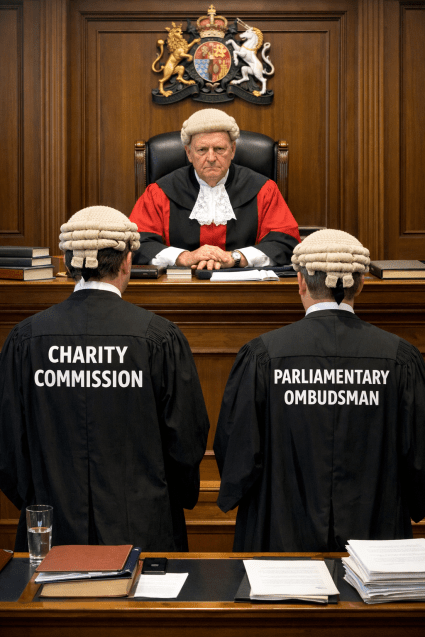
A rare but virtually unreported public hearing by the Privileges Committee on Budget Day revealed a sharp divide between the Parliamentary Ombudsman and the Charity Commission over the role of charities in safeguarding children and adults who have been sexually abused.

The hearing was sparked off by Parliament unanimously reporting the Charity Commission to the Privileges Committee after Stephen Hoare, the chair of the Public Administration and Constitutional Affairs Committee, decided the Commission had breached Parliamentary privilege by wanting to delay publication of the reports until after a judicial hearing being called by the Commission. I did a report here .

The reports which Parliament compelled the Ombudsman to publish with final conclusions covering complaints of a recent adult sex abuse case – Miss A – and a historic child sexual abuse at a school -Mr U.

Mr U later contacted my blog and waived his anonymity to give me a detailed account of what had happened at a Roman Catholic school in Blackburn when it was run by a paedophile priest. The blog about this is here.

Saira Salimi, the Speaker’s Counsel

The hearing began with a statement on the issue from Saira Salimi, the Speaker’s Counsel.

She told the hearing: “This is quite a difficult case, because it does raise difficult questions about
the relationship between parliamentary and legal accountability. There is a power conferring a discretion on a public authority to report in certain circumstances, and the report is made to Parliament. Although it looks at first glance like a function that might be reviewable by the courts, the interaction of parliamentary and legal accountability may mean that the decision is not justiciable.”

She said that if the issue of privilege had not been the raised the Parliamentary Ombudsman would have been inhibited from laying the reports before Parliament.

She added:” this is an unusual case where Parliament and the courts are on the same territory at the
same time. That is not unprecedented but is unusual, because of the self denying ordinance that the House normally maintains in relation to matters before the courts under the sub judice resolution. It is my hope that our intervention in this case will assist both the courts and Parliament in carrying out their respective roles, which are constitutionally distinct ands equally important.”

Karl Banister, Director of Operations, Legal and Clinical and Deputy Ombudsman at Parliamentary and Health Service Ombudsman (PHSO). gave evidence.

He told MPs: “the[ charity] commission should have an independent person review Mr U’s case to consider whether the reasoning was adequately accounted for; consider whether the outcome would have been different; look for learning on how it engages in such cases;[and] look at
its risk guidance;” Similar recommendations were made in Miss A’s case.

It is these recommendations that the Charity Commission is objecting to and says that the Ombudsman exceeded her powers and that such recommendations are unlawful.

He revealed considerable attempts were made at mediating the dispute.

“My assessment was that it was better not to provoke the commission to issue legal proceedings. It is obviously unattractive for two public bodies to be litigating. Were they to do so, they would likely get an injunction, and that would be an additional cost to the public purse.”

However in the end the Charity Commission decided to go ahead with a judicial review. it said:”“a declaration that the decision of 14 March 2025 is unlawful”—that is, our decision that it was
not compliant—“that the 14 March decision is quashed, that the defendant pay the claimant’s cost of the claim or any other order the court considers appropriate. That is what the judicial review sought.”

The Public Administration and Constitutional Affairs Committee were informed and the Parliamentary Ombudsman stuck to its point that the Charity Commission had not fully complied with decision. It was then taken out of their hands and Mr Hoare, the committee chair, decided to raise the privilege issue and compel the reports to be published so the committee could consider them.

David Holdswoth, chief executive of the Charity Commission

The Charity Commission brought a team of people to hearing headed by the chief executive David Holdsworth.

He told MPs:”The decision of the PHSO in its letter of 14 March—that we should reinvestigate criminal matters already investigated by the police, the CPS or the wider criminal justice system but deemed not able to proceed—has grave implications, in our view, for anyone involved in running a charity and, indeed, for wider citizens’ rights under the criminal justice process.
It is also our view that the ombudsman cannot retake regulatory decisions made by the commission to force a different conclusion, replacing our judgment with its own. It is for those reasons that we reluctantly sought to clarify matters through the courts.”

It soon became clear – and this was reinforced during the national Child Sex Abuse inquiry – that the commission regards the Commission as primarily an administrative and registration authority not an investigatory authority.

It was also clear MPs and the Speaker’s Counsel thought that the matter could have been cleared up at a meeting of the PACAC committee without going to the courts.

But Felix Rechtman, head of litigation at the commission said:”: We are not saying that the PHSO decision is just inappropriate. We go further: we say it is unlawful, and matters of law are
reserved to the courts under our constitutional arrangement.”

It is quite clear this issue is going to run and run. The courts have not given the Charity Commission a date for a judicial review hearing yet. The commission will first have to get permission to bring the judicial review and then have a hearing. The next stage will be the Privileges Committee report on whether the Commission has committed a contempt of the House.

One-Time
Monthly
Yearly

Make a one-time donation

Make a monthly donation

Make a yearly donation

Choose an amount

£5.00
£10.00
£20.00
£5.00
£15.00
£100.00
£5.00
£15.00
£100.00

Or enter a custom amount

£

Your contribution is appreciated.

Your contribution is appreciated.

Your contribution is appreciated.

DonateDonate monthlyDonate yearly
cards
Powered by paypal

Exclusive: Complainant” Mr U ” waives anonymity to reveal the child sex abuse cover up behind the Charity Commission and Parliamentary Ombudsman dispute

Kevin O’Neill Marist college principal and paedophile Pic credit: Lancashire Evening Telegraph

Damian Murray tells Westminster Confidential about his long battle with the Roman Catholic charity which covered up child sex abuse for 11 years

This is a story of the concealment and denial of child sex abuse by a charismatic principal of a college and religious charity who escaped justice in his lifetime and the failure of many organisations, including the Charity Commission and the charity to do anything about it.

Father Kevin O’Neill, a Marist priest, was principal of the Roman Catholic St Mary’s College in Blackburn. It was closed down in 2022 with £8.2 million debts reportedly caused by falling student numbers. It had been propped up by the last Tory government with emergency funding since 2020.

He was principal of the college from 1978 to 1993 and worked in Blackburn since 1964. He was born in Barking, east London and attended the Roman Catholic St Mary’s College in Middlesbrough going on to a get a degree at Christ’s College, Cambridge.

Damian was a pupil at the school between 1970 and 1977 and only discovered years later when a former pupil Graham Caveney revealed in a memoir that he had been sexually assaulted by O’Neill when he was a pupil there. It was then he realised O’Neill, as he long suspected, had been trying to groom him. The book, The Boy with Perpetual Nervousness was reviewed in The Guardian in 2017. See here.

Unlike Graham Caveney he was never sexually assaulted. It was in 2017 -seven years ago – that he started putting in a complaint to the Charity Commission and the Department for Education only to discover that neither were keen to take action. That is what led him to complain via his MP to the Parliamentary Ombudsman who have been the only people to do something about it

His view of the process is scathing. “This tortuously extended process also uncovered to me the worryingly close personal and organisational relationships actively fostered and maintained between the UK Roman Catholic Church and both the DfE and the Commission. It has shown in my view the
Commission in particular to be proudly unaccountable, intransigent, incompetent and
completely unfit for purpose.”

The former St Mary’s College, Blackburn Pic credit: Lancashire Evening Telegraph

The cover up by the Marist priests is as bad as the actual child sexual abuse. When it was admitted in 1993 none of the governors of the school were apparently told and the principal was packed off to the United States on the grounds he was sick. When he died back in the UK in 2011 after getting dementia a celebratory mass was held at the school and the Lancashire Evening Telegraph is full of glowing tributes to him from former pupils with his nickname ” the Rev Kev” prominently mentioned. None of the pupils would have known about his dirty secret.

As bad as that the school in 2008 named a new £2.5 million arts centre in his honour – the O’Neill Academy for Performing Arts – which is now in use as a community venue.

And as late as 2024 the accounts of Marist society a curious note reveals :“At the start of 2023, the Charity was informed by the RLSS [ Religious Life Safeguarding Service] of an historic allegation made against a deceased member of the Society. The allegation was immediately investigated with all relevant parties (including the Charity Commission) notified of the event. After a full investigation and professional advice, the victim received a private financial settlement of £30,000 in full and final settlement of the claim. The RLSS has now closed this case.”

Damian says the charity ” deliberately lied about and concealed O’Neill’s abuse from the police; from school and charity regulators; from charitable donors and beneficiaries; from current, former and prospective staff, pupils and parents at St Mary’s College from other potential victims of O’Neill’s grooming or abuse; and from the wider public.”

He said :”The Diocese of Middlesbrough, the Department for Education and the Charity Commission have all failed to demonstrate effective, timely, or appropriate oversight of the Marist Fathers at any time
since the abuse was disclosed in 1993. Between 2017 and 2020 when I brought these important concerns to their attention in great detail and in line with their statutory or other formal responsibilities, these allegedly independent regulators have blankly refused to address any of them directly. They have simply chosen to turn a blind eye, both to O’Neill’s sexual abuse of a child in his care and to its long-term, deliberate concealment by the Marist Fathers.”

He managed to send his evidence to the national child sex abuse inquiry in the UK headed by Professor Alexis Jay about the case, though by that stage its formal hearings were closed. The inquiry has published a wider critical report on child sexual abuse in the Roman Catholic Church.

The Charity Commission says it is beyond its power to do anything about a charity’s role in “historic ” cases of child sexual abuse but this will be tested in a judicial review it is bringing against the Parliamentary Ombudsman claiming it is exceeding its powers in this case.

Blackburn is not alone in suffering child sexual abuse at the hands of Marist Fathers or the associated Marist Brothers. The Royal Commission into child sex abuse in Australia reported in 2014 on cases in schools in Queensland and New South Wales – one involving 19 boys – and in New Zealand nine Marist brothers were convicted of child sexual abuse.

One-Time
Monthly
Yearly

Make a one-time donation

Make a monthly donation

Make a yearly donation

Choose an amount

£5.00
£10.00
£20.00
£5.00
£15.00
£100.00
£5.00
£15.00
£100.00

Or enter a custom amount

£

Your contribution is appreciated.

Your contribution is appreciated.

Your contribution is appreciated.

DonateDonate monthlyDonate yearly
You can donate via Paypal using this link

https://www.paypal.com/ncp/payment/865JAS3QJ3CGQ

Two damning reports from Parliamentary Ombudsman say Charity Commission failed complainants about sexual abuse

The Parliamentary Ombudsman’s Office today published two reports into the Charity Commission’s handling of separate sexual abuse cases following Parliament’s rare privilege decision last week – see my report here – to compel Paula Sussex, the Parliamentary Ombudsman, to release them in the face of the Commission starting legal action to stop or delay publication.

Both reports highlight the failure of the Charity Commission to implement some of its findings and the total dissatisfaction of the two complainants – Lara Hall, 37 and Damian Murray, who is 66. Both decided to waive their anonymity. I will be publishing a separate follow up story on Mr Murray’s case after he contacted me – particularly after the local media failed to cover it. It is a truly shocking story.

The two cases are different. Lara Hall’s case involves the sexual exploitation by a trustee of a UK charity where she acted as a whistleblower.

Damian Murray’s case involved historic sexual child abuse by a prominent figure in the local community which was concealed by the charity and the college where he worked.

Lara said:

“The Charity Commission’s repeated failures have caused me profound pain and ongoing injustice. Instead of holding a trustee to account for appalling sexual exploitation, it questioned my experience and forced me to relive my worst trauma. How can survivors feel safe reporting abuse if they think they will be treated like I have? 

“By trying to block Parliament from seeing the reports, the Commission attempted to avoid scrutiny – striking at the heart of accountability in our democracy. Even now, it refuses to accept responsibility or act to put things right.

“It is my hope that by bringing the reports to Parliament’s attention action will finally be taken. The Commission must urgently address safeguarding to protect vulnerable people. Right now, it is failing in its core duty.

“It is time for change, oversight, and accountability within the Charity Sector so what happened to me is never repeated. I call on Parliament to hold the Commission to account and restore public trust. People deserve to feel safe approaching charities, and they deserve a regulator that takes safeguarding seriously

Damian Murray said:“For over seven years the Charity Commission has refused to act upon my complaint about the concealment of child sexual abuse.

“The Charity Commission has doggedly resisted all efforts by me, and latterly the Parliamentary Ombudsman, to encourage it properly or promptly to discharge its statutory responsibilities, choosing rather to shield the charity and its Trustees from scrutiny and accountability.

“After much unnecessary time incurred due to this resistance, the Ombudsman’s report has now been laid in Parliament. I trust now that politicians will hold the Commission to account, where I as an ordinary UK citizen failed.

“By stark contrast with the Commission, I very much appreciate the careful, professional and empathetic way that the Ombudsman’s team have dealt with me and with the complex and consequential concerns I have raised.”

Parliamentary and Health Service Ombudsman CEO, Rebecca Hilsenrath KC (Hon) said: 

“The Charity Commission indicated throughout our investigations that they did not agree with our findings.  They have not complied with the bulk of our recommendations, despite our best efforts and our willingness to work with them to ensure compliance.

“It is important that the Commission provides a full apology for their failings and reassures Lara and Damian that they will put things right by complying completely with our recommendations. They have not done this so far. 

“Our report has now been laid in the House of Commons, following the intervention of Parliament last week. The Commission had prevented us from doing so by bringing legal proceedings. We act on behalf of Parliament to hold Government and other national bodies to account for failures, and we have a responsibility to make Parliament aware of cases of non-compliance. I am pleased that Parliament has taken an interest in these cases and has given us the opportunity to bring them to the attention of the House so that it can intervene.

“The purpose of our investigations is always to encourage learning and service improvements. If an organisation looks at what went wrong, it will be able to stop the same mistake from happening again.”

The Charity Commission released a statement criticising the action of Parliament to order publication of the reports.

A spokesperson said: “We have long accepted that there are genuine and important lessons for the Commission to learn from these two sensitive cases, principally in the way in which we communicate with complainants, and we have made improvements to our processes as a result. We have previously apologised to both complainants.

The Commission undertook detailed reviews in each case, as set out by the Ombudsman, and concluded that the overall outcome in each case was sound. In the case of Ms Hall, we had already issued an official warning to the charity concerned. 

But it is our view that by making the decision that we did not comply with certain recommendations in its reports, the Ombudsman has misunderstood our remit and overstepped its role, meaning that its decision making was unlawful.

We respect the work and authority of the Ombudsman, but it is vital that we, in turn, are enabled to do the job that Parliament set us

We have worked hard to seek to resolve the matter with the Ombudsman directly, but this has not proven possible. For that reason, we have brought legal action at the High Court. 

We have not asked the court to block the laying of any report before Parliament. We did, though, ask the Parliamentary committee to delay considering the reports to allow the courts to give judgment on our own and the Ombudsman’s statutory remits first.”

One-Time
Monthly
Yearly

Make a one-time donation

Make a monthly donation

Make a yearly donation

Choose an amount

£5.00
£10.00
£20.00
£5.00
£15.00
£100.00
£5.00
£15.00
£100.00

Or enter a custom amount

£

Your contribution is appreciated.

Your contribution is appreciated.

Your contribution is appreciated.

DonateDonate monthlyDonate yearly
You can also donate via PayPal The link is:

https://www.paypal.com/ncp/payment/865JAS3QJ3CGQ

Charity Commission reported to Privileges Committee by MPs after it tries to stop a critical report by Parliamentary Ombudsman

Simon Hoare MP, Tory chair of the Public Administration and Constitutional Affairs Committee

Exclusive: Report will reveal huge dispute over two reports into complaints of sexual abuse by charities supervised by the Commission

An extraordinary stand off between Parliament and the Charity Commission was revealed yesterday after Simon Hoare, Tory chair of the Commons Public Administration and Constitutional Affairs Committee, made a rare use of privilege to compel the Parliamentary Ombudsman, Paula Sussex, to publish a critical report into the Charity Commission next week after MPs were told the Commission was blocking its publication.

Lyndsay Hoyle, the Speaker, granted the request. It was the second one he has granted in four years – the last being from Angela Rayner, when she was in opposition in 2021 ordering the release of Government minutes of meetings between former Tory MP Owen Paterson, health minister, Lord Bethell and special advisers over the award of up to £777 million Covid testing contracts to Randox Laboratories, without competition who employed the MP as a consultant for £8333 a month.

MPs were told by Mr Hoare that the Charity Commission was blocking publication by going to judges and he wanted it reported to the Privileges Committee.

He said “The Charity Commission is bringing legal proceedings deliberately to prevent the laying of two reports before this House. That completely undermines the linkage between the ombudsman and this place, and …undermines our opportunity and decisions to look at any information that we deem to be of importance, or that matters to us, in order to allow us to advance policy.”

He claimed:  “Members from across the House have privately raised with me concerns about decisions that the commission is taking. It is appearing to do so in a slightly abstract or perverse way, without any degree of accountability. That matter is separate from this motion, but it is important for all our arm’s length bodies, and particularly the Charity Commission, to understand that this House will not be bullied by arm’s length bodies seeking recourse to the courts to stop us doing our job properly, efficiently and professionally on behalf of all our constituents.”

He was backed by Tory frontbench spokesman Alex Burghart and junior Cabinet Office minister Georgia Gould.

The Charity Commission has put a different interpretation of events in a statement issued yesterday which is at the end of this blog. Basically it is saying it was not aiming to block publication.

Bizarrely Mr Hoare said he had no knowledge of the complaints by a Miss A and Mr U in the two reports and had not seen him.

But both are already in the public domain on the Parliamentary Ombudsman’s website. Both contain criticism of safeguarding over sexual misconduct. Miss A has publicly named herself as Lara Hall, aged 35, and is a survivor of sexual abuse and a whistleblower.

She says in the news report issued by the Ombudsman: ” “I feel institutionally betrayed by the Commission. It made repeated commitments to me to deregister the charity and said it would do all it could to disable the trustee from acting in the name of charity in future, but the Commission dramatically changed regulatory course. This left me feeling incredibly vulnerable and confused.

“I feel so thankful and humbled to the PHSO for its diligent and thorough investigation into my complaint. I’m disappointed at the lack of contrition from the Commission.”

Acting Parliamentary Ombudsman Rebecca Hilsenrath said “Our investigation uncovered a number of failings around the Charity Commission’s handling of serious safeguarding concerns. It is important that the Commission apologises for its mistakes and reassures Lara that it will put things right.”

The full news report is here.

The second report involving Mr U involves historic child sexual abuse by a charity and in a sixth form college run by a religious charity. The abuse was hidden by the charity and it involved priests including one perpetrator who has a building named after him and was given a celebratory mass when he died.

The report said:” Mr U had long suspected he had also been a victim of grooming by the perpetrator. He told us it was only the book written by the victim in 2017 that allowed him to confirm the abuse as such. He told us the apparent absence of other victims was part of the reason he gave the perpetrator the benefit of the doubt for many years. ” When he raised issues he was treated as a vexatious complainant. The full report is here.

The Charity Commission says:“The Commission is challenging a PHSO decision that we have failed to implement some of its recommendations in two specific cases. We are concerned that PHSO’s approach expects us to act beyond our legal remit, at odds with Parliament’s intentions, and undermines our ability to regulate independently and effectively.

“We sought to resolve these matters without the need for legal proceedings but have been forced to put these matters beyond doubt, for the benefit of both organisations in fulfilling our respective public duties. We are therefore seeking the guidance of the High Court via a public law challenge.

“We welcome proper Parliamentary scrutiny of our role and have not asked the courts to prevent PHSO from laying any report before it. We had previously invited PACAC to delay its consideration of any report from PHSO related to this case, pending the outcome of these legal proceedings.”

 We are mindful this matter has arisen from complaints of difficult personal experiences related to charities. We accepted there are some genuine lessons for the Commission to learn from these two sensitive cases, and we have made improvements to the way we communicate with complainants.”

A charity should be a safe and trusted environment. As regulator, we are clear that keeping people safe should be a priority for all charities.”

One-Time
Monthly
Yearly

Make a one-time donation

Make a monthly donation

Make a yearly donation

Choose an amount

£5.00
£10.00
£20.00
£5.00
£15.00
£100.00
£5.00
£15.00
£100.00

Or enter a custom amount

£

Your contribution is appreciated.

Your contribution is appreciated.

Your contribution is appreciated.

DonateDonate monthlyDonate yearly

You can donate via Paypal via the link below:

https://www.paypal.com/ncp/payment/865JAS3QJ3CGQ

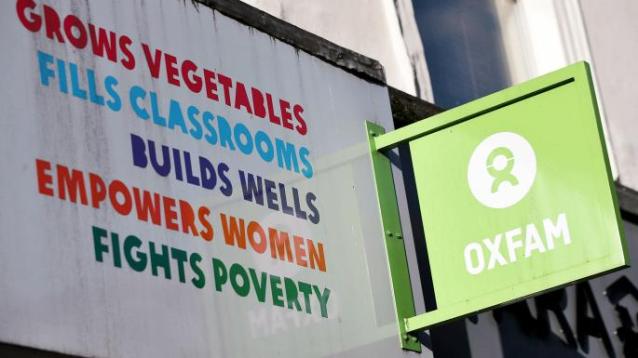
Byline Times Exclusive: Charity Commission to condemn Oxfam over Haiti sex exploitation but ignore damning report exposing 23 other charities

Oxfam to be damned tomorrow while 23 other international charities could have a worse history of sex exploitation of women

 The Charity Commission will tomorrow issue an excoriating report on Oxfam’s mismanagement and failure to act over the sexual exploitation of victims of the Haiti earthquake in 2011.

But the Commission will ignore a much wider scandal that suggests that 23 of the world’s biggest overseas aid charities are hiding far worse sexual exploitation of vulnerable people by their own staff and of fellow women and gay aid workers.

The full story is in Byline Times here.

Time to bin Keep Britain Tidy

image003

Time for Keep Britain Tidy to be put in the bin

CROSS POSTED ON BYLINE.COM

Nearly three years ago Parliament produced a damning report saying England was one of the worst developed countries in the world for litter and fly tipping. Worse than most of the rest of Europe, worse than Japan and worse than the United States and Canada.

Furthermore this situation has remained the same for 12 years under successive Labour, Coalition and Tory governments. And this is despite tens of millions of pounds of taxpayers money being poured into the former quango Keep Britain Tidy to provide leadership to tackle this problem.

The deregulatory coalition government of Tories and Liberal Democrats  thought they would find a solution by abolishing the quango and turning it into a charity  which now has to raise funds from cash strapped local authorities and big business.

The knee jerk reaction of a Left minded blogger might be to persuade an incoming Labour government to push taxpayer’s money back to Keep Britain Tidy. But after an investigation looking at its precarious finances and its rather lacklustre approach to tackling the problem this would be the worst thing it could do.

The real problem is that successive gutless ministers of all parties  (perhaps they have at the back of their minds that they could take lucrative directorships after leaving politics)  won’t tackle the real cause of much of our litter – the  products of big multinationals like McDonalds and Wrigley’s and the tobacco companies –  who take no or little responsibility for the problem.

There is a parallel here  with  Her Majesty’s Revenue and Customs – who connive with big multinationals to avoid paying their fair share of tax which would go a long way to providing better public services and a cleaner  public space.

There is a simple solution here either these companies pay up for a clean up or the Government levies a tax on them ( not us) to employ someone else to do it. I bet the firms would come up soon with some innovative solutions to avoid either.

Now why have I concluded that Keep Britain Tidy is a no no solution  despite being told by some people that its  new director,Allison Ogden-Newton is much livelier than her predecessor, Phil Barton.

The charity has a guilty secret. It has a pension deficit of  £4.5m  for a closed scheme on a turnover of just £5m and assets worth £2.5m. For some private companies this  could lead them to cease trading.

The 2015-16 accounts lodged with the Charity Commission say :

 “The pension deficit as at 31st March 2016 is £4.511m. Future contributions to the scheme have been negotiated with the Trustees of the scheme.
The Company is the principal employer and paid approximately £131,000 to reduce the deficit this year. Keep Britain Tidy will continue to make contributions in line with terms agreed at the last triennial review until any new scheme of payments is agreed. In the financial year to March 2017 it will pay approximately £134,000 towards reducing the deficit in addition to the scheme running costs of approximately £72,000.”


The report reveals that the trustees – who would be liable if  Keep Britain Tidy went bust – certify it is a going concern. But to do this they have had to put aside £2m – equivalent to six  months operating costs -to ensure that it stays afloat.

Allison-Ogden-Newton_1

Allison Ogden-Newton, new chief executive of Keep Britain Tidy

When I put this to the charity – who first ignored my request – I got this reply from Ms Ogden-Newton.

 “Our Annual Accounts have been audited by RSM UK Audit LLP and a clean audit opinion has been given. Standard audit procedures include an assessment of Keep Britain Tidy as a Going Concern and this specifically includes an assessment of our ability to meet the agreed pension scheme contributions. No issues were raised in this respect.
 “We have an agreed schedule of contributions between Keep Britain Tidy and the Pension trustees in order to address the pension deficit and this has also been submitted to the Pensions Authority whom have accepted this plan.
 “To that end we and the relevant authorities consider our agreed repayment programme to be satisfactory and sustainable for both the fund and Keep Britain Tidy.”
Now that is all well and good – but I don’t believe it doesn’t restrict its activities. It has got some income from the 5p levy on plastic bags ( notably £500,000 from Lidl) but as a Defra paper reveals most private companies use the levy to fund other worthy causes whether it is the Alzheimer’s Society, the Woodland Trust, animal welfare or Kew Gardens.
The other major reason why Keep Britain Tidy does not seem to be working well was shown up when MPs questioned the former chief executive at the Commons communities and local government committee.
 He was taken apart by MPs of all parties in an evidence  session.
He produced figures which he couldn’t defend, evidence that MPs found flawed and finally admitted that Keep Britain Tidy refused to talk to the tobacco industry. Given cigarette stubs are a source of litter MPs found this extraordinary.

Clive Betts MP

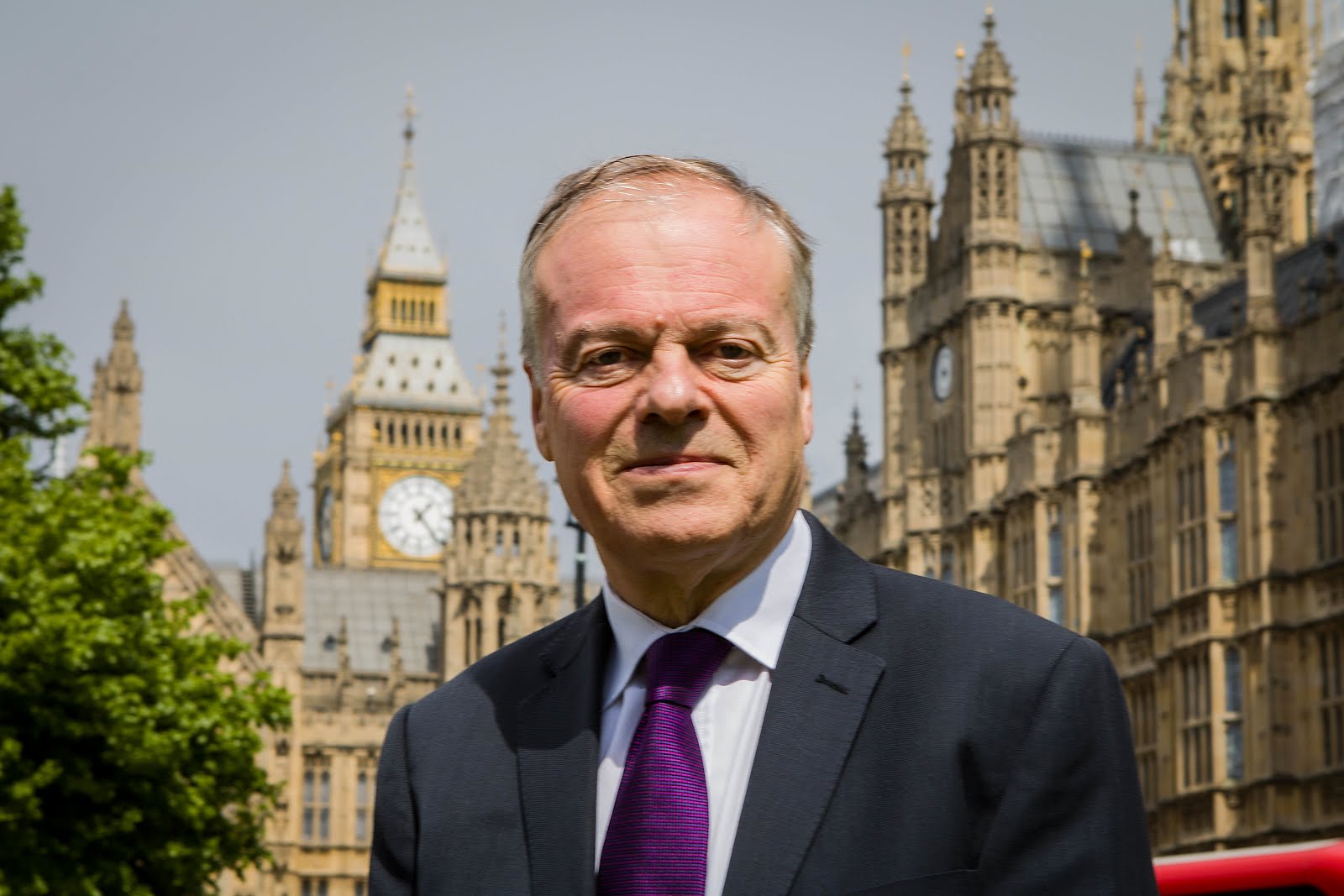
Clive Betts MP, chair of critical House of Commons report on the state of England’s litter.

Clive Betts, the Labour chairman of the committee, also made this observation.

 ” Frankly Keep Britain Tidy was not a main part of our report or inquiry,. We were more interested in some of the innovative work down by local authorities to tackle fly tipping and litter.”
 Now this is really damning with faint praise given Keep Britain Tidy was meant to be the leadership body.
Since then nothing has improved much. A House of Commons library briefing on litter last July said this :
“Levels of litter in England have hardly improved in over a decade and 81% of people have said they are angry and frustrated by the amount of litter in the country. Local government net expenditure on street cleaning (which includes but is not limited to clearing litter) in 2015/16 was £683 million.”
It also clear that by dividing up responsibility between four Whitehall departments doesn’t work. Perhaps the Cabinet Office should take over responsibility for a national litter strategy. At the moment neither Keep Britain Tidy nor the various ministries seem capable of negotiating with a paper bag.


Q:Who’s afraid of the big bad Fox? A:The Charity Commission

Liam Fox:Back in the News Pic courtesy:Metro

So Liam Fox is back from the political dead after having to quit as defence secretary.  How interesting! It comes after a little noticed report  from the Charity Commission into the affairs of  his doomed charity, Atlantic Bridge.  Conveniently it closes down any further investigation into his dubious past.

Remember this was the charity that promoted the Margaret Thatcher and Ronald Reagan view of Anglo-American relations and gave a Margaret Thatcher Freedom medal to Henry Kissinger.

 The Charity Commission would never have looked at it if it had not been the persistence of Stephen Newton the Labour blogger who lodged a complaint. The charity run by Mr Fox and his best man, former special adviser,Adam Werrity ( remember him too?) was found not to be a charity, not have charitable purposes and was also operating in breach of Parliamentary rules from Liam’s office in the House of Commons.You might have thought after the furore  over the Smith Institute which was dragged through a formal inquiry for being too close to Gordon Brown,you would get  a devastating critique from them. You’d be wrong.

The report reveals that because it was a faux charity – HM Revenue and Customs demanded that some £50,000 in back tax, which according to the Financial Times, was paid by Tory donor.billionaire City trader Michael Hintze. See http://on.ft.com/N5zxqS as part of a £53,478 loan to the charity from his hedge fund company CQS.

However the Charity Commission did not believe any of the trustees or for that matter their advisory board were culpable so it could not recover the money from them. As the report says: “in taking such proceedings it would need to be clear that the trustees were sufficiently culpable in law to make good the loss and the proceedings were in the public interest.”

It added that there was ” no evidence the trustees acted in  bad faith” and “no compelling evidence of deliberate wrongdoing.” It accepted the evidence from the trustees that they just thought they were acting lawfully and its was perfectly proper to set up a charity to pursue the political objectives of Margaret Thatcher and Ronald Reagan.

Of course it could just be that  Professor Patrick Minford of Conservative Way Forward, Lord Astor of Hever, a hereditary Tory peer, and the lobbyist Andrew Dunlop a former advisor to Margaret Thatcher, were a load of naive gits who didn’t have a clue how a charity works or an inkling of charity law. And of course their board of advisers was not stuffed with clever worldly political activists – it  was only composed of William Hague, George Osborne and Michael Gove.

And Liam Fox is so innocent he seems to have forgotten to declare some other US lobbying appointment in his ministerial interests, according to revelations in today’s Political Scrapbook.http://politicalscrapbook.net/

Curiously Dame Suzi Leather . chair of the Charity Commission, could have referred the matter up to Dominic Grieve, the Attorney General, to rule on whether there was a case to answer. But conveniently for  Dominic he was not placed in such an embarrassing position.

Of course it was different for the Smith Institute – everybody knows that Gordon Brown and Ed Balls  were  through Wilf Stevenson (now Lord) manipulating charity law and unlike Liam Fox had to be taken to task in much stronger terms. 

Job not well done, Dame Suzi. But I am sure you will be up for peerage as soon as your appointment ends, as a thank you for saving the present Establishment a lot of angst.

Four Cabinet Ministers and a Tory special relationship “charity” get off lightly

Henry Kissinger- a star speaker at Atlantic Bridge's uncharitable events- picture courtesy UPI

Any political activist knows that party politics and charitable status don’t mix. And if they do and someone complains the effects can be toxic for the organisation and any leading figures involved.

The Smith Institute found this to its cost when it was torn apart by a Charity Commission investigation two years ago accusing its trustees and organisers of appearing to be too party political and too close to Gordon Brown. The damage to Labour was enormous and the Commission used its powers to hold a full inquiry and directed its trustees to reform the organisation or else.

This week it was the turn of the Tories – or did you notice it?

 Atlantic Bridge- patron Margaret Thatcher  and an advisory board composed of four prominent Tory Cabinet ministers, Liam Fox, George Osborne, William Hague and Michael Gove – was given a year to change its act- after facing exactly the same allegations as Labour. The charity which promotes the “special relationship” with the US – was found in a damning report to be little more than a promotion for Thatcherite party political beliefs and neo-Cons in the US.

But one reason why it may not have hit the headlines is that the Charity Commission was far softer on the offending Tory charity. For a start its press officer advised after they received the initial complaint from Labour activist Stephen Newton that the word investigate could not be used as they had not launched a formal investigation. Instead the phrase “engaging with the charity to address concerns” through a regulatory compliance case was used instead.

Now nine months later the report has been issued with the almost same findings against The Smith Institute. The key phrase is the finding that the charity is “promoting a policy which is closely associated with the Conservative Party.”

But instead of a six month direction the charity has been given a year to change and only then is there a threat against the charity’s trustees of further action.

But more significantly while it is clear that the charity had broken the rules for at least seven years nothing is being done about its tax free position.

These are not minor sums. This was the charity that was charging £700 a seat for VIPs and £400 a seat for ordinary mortals to hear Henry Kissinger speak at a luxury London hotel last year and see him presented with a Margaret Thatcher Medal of Freedom. The commission’s report discloses that the charity admits this event was part of a tax free fund raising drive. The donors – probably mainly higher rate taxpayers – could claim the money against their tax returns. And it is now clear that Atlantic Bridge can’t claim the same charitable status as the National Trust.

So why hasn’t this been referred to Revenue and Customs?  Why aren’t more searching questions not being asked of the advisory panel of Cabinet ministers who presided over an organisation that clearly broke charity rules?

Atlantic Bridge is not actually being repentant either. In a statement they reluctantly promised to follow the Commission’s ruling and have taken down their website for “updating”. But it expressed its  “ disappointment” at the Commission’s ruling  and refused to answer any questions about the role of their trustees or advisory panel.

 The Charity Commission is being a little too careful in handling this scandal. I wonder why.

A similar version of this blog has now appeared on the Guardian’s Comment is Free website.