How Claire McLaughlan got promoted to review Lucy Letby in 2016 two years after the NHS was told she had to apologise for distorting whistleblower Dr Chris Day views in a major health trust investigation

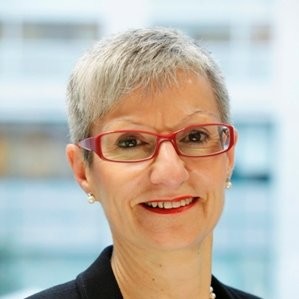
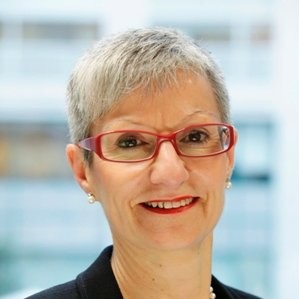
Claire McLaughlan

Her role in the Lucy Letby case comes out in a savage cross examination at the Thirlwall inquiry

Claire McLaughlan may not be nationally known but has great influence in the NHS. She has become the “go to” person when health trusts want to deal with what they see as troublesome doctors raising inconvenient issues such as patient safety and helping trusts to discredit whistleblowers who do this. Her career has included being head of fitness to practise at the Nursing and Midwifery Council and as associate director at the National Clinical Assessment Service. Her work for NHS also includes being a lay member of the Performance Advisory Group and chair of the Performance List Decision Making Panel, which assigned people to internal NHS inquiries. . For more information I have written up her profile here.

She gave evidence last week to Lady Justice’s Thirlwall Inquiry, which is investigating what went wrong at the Countess of Chester hospital that led to the murder of babies by nurse Lucy Letby. She claimed she has great expertise in examining doctors, dentists, pharmacists and nurses behaviours and attitudes when they were facing complaints.

Lucy Letby Pic credit: BBC and Cheshire Constabulary

She was called to the inquiry as a lay reviewer appointed by the Royal College of Paediatrics and Child Health. She was asked to review the maternity department at the Countess of Chester Hospital. She was part of a team led by Dr David Milligan, a retired neonatal paediatric consultant; Dr Graham Stewart, a paediatrician from Glasgow and Alex Mancini, a neo natal nurse, representing the Royal College of Nursing.

The review, invited by the Countess of Chester medical director, Ian Harvey, came before the involvement of the police but after consultants who suspected Lucy Letby had been threatened by the management after they raised concerns.

Given her evidence that at one stage she was in a position to review 300 doctors including their competence while she was at the National Clinical Assessment Service it is rather remarkable that in two cases covered by this blog – Dr Chris Day, then a junior doctor at Woolwich Hospital and Dr Usha Prasad, a cardiology consultant at Epsom and St Helier Trust(now combined with St George’s), she has a history of distorting facts to the detriment of their careers. More of that later.

At the Thirlwall inquiry, Ms McLaughlan was skewered by the experienced barrister, Nicholas de la Poer, from New Park Court chambers who previously appeared at the Manchester Arena bombing and Grenfell Tower inquiries. In many cases, she couldn’t recall or answer his persistent questions.

Nicholas de la Poer KC Pic Credit: New Park Court chambers, barrister for the Thirlwall inquiry

From the start he challenged her about her statement that she was a “non practising barrister” – and what that meant she could have practised as a barrister in the past. He pointed out Sue Eardley, the head of health policy at the Royal College of Paedriatrics, “appears to have ascribed some considerable significance … to the fact that you were a qualified barrister when being asked about your experience of legal process. In fact, is this fair: your experience as a barrister would not have involved you engaging in any legal process,” he suggested.

His questioning effectively revealed that she had given a misleading impression to the Royal college in 2014 particularly as she had to change her description to being an unregistered barrister in later years.

She could not answer why the person who engaged her for 14 reviews for the college from 2014 had that impression.

It then emerged from her and other witnesses that prior to the review coming up to the Countess of Cheshire the team were never told that consultants had raised complaints that babies there could have been murdered. It was sprung on them 12 hours after they arrived.

This is significant because a review by a Royal College cannot take place if there is suspicion of misconduct or criminal behaviour. It has to be cancelled immediately but it wasn’t.

Claire McLaughlan’s response to this was that while doctors had raised this possibility, people said that Lucy Letby was a good nurse, therefore it should not have been cancelled. She later went on to attack one of the consultants who did.

“Well it is possible to be a good nurse and murderer?” was the lawyer’s response. She also claimed she was given false assurances by the trust.

Lack of empathy for the parents of the dead babies

The questioning was also revealing about Claire McLaughlan’s views on her role of safeguarding patients and the public interest. When quizzed about that she claimed she had a wider role and unlike other witnesses never expressed regret about the babies’ deaths and the effects on the their parents. She was rather vague about her own safeguarding training.

When it came to the crunch about the doctor’s concerns about the deaths of the babies she depicted Dr Steve Brearery’s concerns as a personal rather than a professional judgement. Cross questioned by the lawyer she insisted:

“In my opinion I cannot speak for the whole team. This was the personal view, feelings, interpretation of
one person regarding Ms Letby, it was not based on fact and was uncorroborated. Even now I would not consider his view as objective or impartial as he was too involved, too close to the situation and had a conflict of interest.”

She went on to attack him for preparing a rota sheet showing who was on when a baby died.

“It’s not normally the role of somebody of that doctor’s status and experience to have any involvement,
is my understanding, in the rostering of staff. And therefore I would not have — I wouldn’t have called it
his professional role for him to take on the analysis that he apparently did of those rosters.”

Later when questioned by Lady Justice Thirlwall herself she claimed the document could have been manipulated because she had not seen the source of the material.

It was also revealed that she tried to get the report for ” balance” to say that some of the babies died because of congenital problems without any medical knowledge- but this was not included.

Frankly her evidence seems to betray a prejudice against doctors, a lack of empathy for patients, and it was obvious that her preferred solution would have been to treat it as an internal disciplinary matter run by the human resources department. This would have chimed with what the trust wanted to do as one non executive director said to ” contain it.”

She also seemed to suffer a loss of memory and recall about what documents she had seen and conversations that had taken place. There was also a rather bizarre incident about how she got hold of Lucy Letby’s telephone number. She couldn’t explain why and thought someone else might have put it there.

She has previous form with other doctor’s and consultants. One of the most egregious cases involves Dr Chris Day a whistleblower who is still fighting as ten year old battle with Lewisham and Greenwich Health Trust, after he reported two avoidable deaths in the intensive care unit at Woolwich Hospital.

She interviewed Dr Day on behalf of the trust and I’ll let his pleadings tell the story. The way she distorted the interview was sent to Department of Health, the courts and senior people at the top of the NHS who took no action.

Also evidence submitted by ,Dr Sebastian Hormaerche, a consultant anaesthetist, severely criticised Claire McLaughlan’s investigation and safeguarding in this case, not commenting on two serious incidents.

In Dr Usha Prasad’s case, a well qualified cardiologist who was popular with patients who was also whistleblower over an avoidable death at Epsom Hospital, was dismissed. Claire McLaughlan presided over an internal hearing and decided she was ” unfit for purpose.” No such ruling exists in employment law. To decide this she ignored the fact that the General Medical Council revalidated her to work anywhere in the NHS as a competent and well qualified doctor. But no doubt Ms McLaughlan thought that was just a personal rather than a  professional view.

One can only wonder how many other doctors have suffered from Claire McLaughlan.

The full day’s evidence from Claire McLaughlan and others is here.
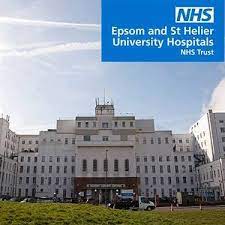
How the St Georges, St Helier and Epsom Hospital Group fixed the dismissal of whistleblower cardiologist Dr Usha Prasad

St Helier Hospital

After my blog on the double standards of the Epsom and St Helier University Hospital Trust over its treatment of whistleblowers which included references to Dr Usha Prasad, I received an email from the communications team of the hospital group.

According to the team I had got everything wrong. The whistleblowing case had absolutely nothing to do with her dismissal. They said: ” It is not correct to say Ms Usha Prasad was dismissed for raising patient safety concerns. A disciplinary panel concluded that she should be dismissed for competency grounds, concerns around her practice/conduct and because relationships with key colleagues had broken down. This decision was upheld on appeal.”

Technically they are correct. But if you delve deeper it shows that this disciplinary panel was a completely flawed process – ignoring vital information and chaired by a person whose integrity had already been called into question and falls into a management playbook used by other trusts to get rid of troublesome doctors who raise unwelcome concerns about patient safety.

Even the conclusion of this disciplinary panel used a fake term. The chair concluded that she was ” unfit for purpose”. There is no such term in English employment law – a system can be ” unfit for purpose” but an individual cannot. And this has been raised at the highest level in NHS England by colleagues of her when they met Professor Stephen Powis, the national medical director, who could not explain such a term applying to an individual doctor.

Then there is the issue of competency. The big flaw in this is that after she raised her protected disclosure on patient safety the trust sent 43 complaints about her practice to the General Medical Council .These were organised by Dr James Marsh, then medical director of the Epsom and St Helier University Trust now Deputy Group Chief Executive Officer of the St George’s Group.

Dr James Marsh

Dr Marsh chose close colleague Dr Peter Andrews, a fellow renal physician who worked on the same ward, to investigate the claims, and Dr Ian Beeton, a cardiologist in private practice at nearby St Peter’s Hospital as an “independent” expert. Dr Beeton works with Dr Marsh’s wife, a radiologist at the same hospital. They asked Dr Richard Bogle, the head of the cardiology at the Epsom and St Helier Trust, to file the complaints who also works closely with private cardiologist Dr David Fluck at St Peter’s Hospital.

When it came to the disciplinary hearing the trust brought in Dr David Fluck to sit on the tribunal to judge Dr Usha Prasad. He also worked on joint projects with Dr Marsh.

I leave you to judge whether this was a genuinely independent investigation without any conflict of interest. But when the complaint went to the General Medical Council and was seen by a genuine independent cardiologist in Teesside and formerly at the world famous Papworth Hospital every complaint was thrown out. In fact I am told the GMC looked at the eight most serious complaints and decided there was nothing to see. And not only was it thrown out by the GMC , it decided to validate Dr Prasad as competent to work in any hospital in the UK for the next five years.

This GMC ruling was brushed aside by the disciplinary hearing and ignored by the judge when it came to an employment tribunal hearing later. The only clue came at the tribunal hearing when Dr James Marsh claimed that the trust had higher standards than the GMC. Frankly this was insulting to both the GMC and the eminent cardiologist who thought differently.

The second charge against her is that she couldn’t work with colleagues. Certainly relations with Dr James Marsh did deteriorate over her decision to say an elderly patient who died because the trust did not act on a serious heart condition was an ” avoidable death” and should have been notified to the coroner and the Care Quality Commission. Dr Marsh wanted this conclusion struck out and she refused to do it.

But if this is correct this would apply elsewhere and it doesn’t. Her work at Pinderfields Hospital in Yorkshire and at St George’s is praised by the hospitals and there have been no complaints about her relations with colleagues.

Dr David Ward

Dr David Ward, a close colleague of hers at St George’s, said this: ” I am pleased to say that I worked alongside Dr Usha Prasad when she was a visiting Consultant Cardiologist at St George’s Hospital (now part of the united Trust with Georges-Epsom- St-Helier or GESH). I found her to be collegiate, knowledgeable in general cardiology, skilled in her specialised areas (echo, heart failure etc). She was well-liked by all staff with whom she worked (catheter lab, echo). I (or anyone in the cardiology department at St George’s) never had any concerns about Dr Prasad’s clinical skills or competence and I find it most surprising that St Helier have retrospectively (for that it what it amounts to) found reason to question her abilities, coincidentally or not, after she had raised concerns about patient safety. I suspect this, also known as whistleblowing, is the underlying motive for the profoundly vengeful and unjustified response by the Trust.”

Claire McLaughlan

Finally there is the question of the disciplinary hearing itself. It was chaired by Claire McLaughlan – a profile of her is here – who ran into trouble with a judge at a hearing with cardiologist Dr Mattu, who won his case, for omitting evidence and over an interview for Lewisham and Greenwich NHS Health Trust with whistleblower Dr Chris Day, whose case is still continuing. He found the record of the interview with him had been altered, missing key points. As he had a secret recording of it, she had no alternative but to apologise and change back the record.

One final point. Dr Usha Prasad told me the former CEO of the Epsom and St Helier Trust, Daniel Elkeles ( now chief executive of the London Ambulance Trust) was prepared to “stop” the disciplinary hearing if I was prepared to drop “all you have against the trust; an ET case of whistleblowing detriment and harassment, discrimination”. One wonders how many back door deals take place over patient safety.

One-Time
Monthly
Yearly

Make a one-time donation

Make a monthly donation

Make a yearly donation

Choose an amount

£5.00
£10.00
£20.00
£5.00
£15.00
£100.00
£5.00
£15.00
£100.00

Or enter a custom amount

£

Your contribution is appreciated.

Your contribution is appreciated.

Your contribution is appreciated.

DonateDonate monthlyDonate yearly

Please donate to Westminster Confidential

£10.00

Whistleblower doctors fury over Roddis Associates suitability to run medical ethics courses for the Medical Defence Union

Doctors involved in high profile whistleblower cases have put in complaints to the Medical Defence Union over a day long virtual course in medical ethics run by a clinical management company that makes tens of thousands of pounds from NHS trusts challenging doctors who raise patient safety issues.

Tomorrow the MDU host a course run by Dr Mike Roddis of MJ Roddis Associates and Claire McLaughlan, who is also occasionally employed by M J Roddis, on medical ethics. I have already published a profile of Claire McLaughlan here.

Details of the course are here and the MDU is charging £249 a head (£149 for members) and it is already sold out.

The dispute over both Dr Mike Roddis and Claire McLaughlan involvement in the medical ethics issue comes from doctors who have been at the receiving end of reports written by both of them which are used by NHS health trusts to discredit whistleblowers at employment tribunal hearings. The work they do for trusts – in two recent cases – involve helping the trust to either downplay or dismiss the deaths of people in NHS hospitals.

This has led to highly critical letters going into the MDU from junior doctors and consultants including the Justice for Doctors organisation.

Dr Chris Day

One of the complainants is Dr Chris Day – currently awaiting the result of a tribunal covered by this blog into patient safety concerns at Woolwich Hospital, where two patients died in its intensive care unit because the Lewisham and Greenwich NHS Trust ignored national staffing guidelines for intensive care units.

Dr Mike Roddis and Claire McLaughlan produced a report for the trust entirely ignoring this.

Dr Day says that he is shocked that the MDU is employing two investigators implicated in the cover up of his whistleblowing complaint to lecture on medical ethics. Their report was heavily criticised by Dr Megan Smith, a consultant anaesthetist and witness at Dr Day’s employment tribunal hearing in June.

Her statement is here and there is a report on my blog here. She told the tribunal:

“You would not find an anaesthetist or ICU doctor in the country who would accept those ratios. There was a clear and present danger to patient safety – no question about that.”

Dr Usha Prasad

Dr Usha Prasad, a former consultant cardiologist at Epsom and St Helier University NHS Trust, has written in similar terms to the MDU.

She wrote; “Claire Mclaughlan was the Chair of the internal appeal panel, hired by Epsom & St Helier Hosptial and her involvement including one sided conclusion was greatly damaging to my career…

“I am shocked to find that the MDU are using the very same investigator implicated in the cover up of whistleblowing cases. The MDU is using them to present a seminar on medical ethics of all topics which is very worrying. “

Her case, among other matters, involved the ” avoidable death” “of a cardiology patient at the hospital which was not reported to the coroner.

David Ward and Jane Somerville, two distinguished retired consultants have written to the MDU about both cases.

“We are retired physicians supporting NHS whistleblowers. We are aware of the MDU’s invitation to Roddis Associates and Claire McLaughlan to participate in a meeting on the subject of Medical Ethics. We are alarmed and dismayed to say the least.”

” Ms Claire McLaughlan was hired by St Helier Hospital Trust to undertake investigations and chair a Maintaining High Professional Standards (MHPS) hearing for Dr Usha Prasad. The outcome, published in June 2020, recommended her dismissal from the NHS Hospital where she had been working as a consultant cardiologist for over a decade (and with numerous plaudits from patients and administrators). 

“Some spurious and non-legal reasons were included in Ms McLaughlan’s written judgement recommending dismissal (these are the subject of an 3 inquiries which we have referred to the to the Ministry of Justice, the Tribunals President Barry Clarke and to the National Medical Director, Sir Stephen Powis). Given what we know about the conduct of these companies who claim to “help” doctors, we are extremely concerned about their ability to present meaningful, honest and understandable concepts in Medical Ethics.”

Justice for Doctors complains to MDU

The organisation Justice for Doctors has also complained to the MDU. A letter from doctors Salam-al- Sam and Azhar Ansari said:

“We learned to our disbelief that the MDU has invited Claire McLaughlan to talk about the subject of medical ethics at a shortly coming meeting.

“We write to express our serious concerns supported by more than 100 members of a group of doctors and other professionals known as Justice for Doctors. Many members were victims of those who made a fortune from NHS money by destroying the livelihood and reputation of intelligent, hardworking, and committed doctors simply because they did not remain silent when witnessing bad practices, bullying, fraud, and similar despicable acts on the NHS premises. Roddis Associates and Claire McLaughlan were hired for a fee originating from taxpayers which is supposed to be used for patient care to complete the acts of abusers of power in our NHS.  We and members of Justice for Doctors urge you to reconsider your plan and ask you not to encourage such individuals to spoil the reputation of your good offices.”

The MDU did not wish to comment on the letters.

Please donate to Westminster Confidential to allow me to continue my forensic reporting.

One-Time
Monthly
Yearly

Make a one-time donation

Make a monthly donation

Make a yearly donation

Choose an amount

£5.00
£10.00
£20.00
£3.00
£9.00
£60.00
£3.00
£9.00
£60.00

Or enter a custom amount

£

Your contribution is appreciated.

Your contribution is appreciated.

Your contribution is appreciated.

DonateDonate monthlyDonate yearly

Please donate to Westminster Confidential

£10.00

Unfit for Purpose: The NHS appeal panel that upheld the sacking of Dr Usha Prasad

Earlier this month the appeal panel set up by the Epsom and St Helier University NHS Trust under Mrs Claire McLaughlan rejected the appeal by Dr Usha Prasad, the cardiologist, against her sacking. She is said to be ” unfit for purpose”. For many the verdict was thought to be inevitable given the enormous lengths the trust had gone to dismiss her, but the findings are worth highlighting because it is a perfect example of why this internal system is in disrepute and needs to be scrapped.

The unwieldly nature of the Maintaining High Professional Standards Appeal system set up in 2003 by the NHS is itself “unfit for purpose” as illustrated by an enlightening article in the Health Services Journal by Alastair Currie, a partner with the law firm Bevan Brittan.

“No sane NHS manager would use MHPS”

He wrote: “MHPS is a calamitous mess of a document,” and goes on to say:

“MHPS, at 59 pages, is a bloated mixture of inconsistent policy verbiage and labyrinthine procedure. It seems designed to promote High Court debate … and so it often does. There is a devastating trail of case-law left by MHPS, each case involving a doctor or dentist and their employer becoming miserably entrenched in MHPS for years before landing in the courts.”

“No sane manager wants to touch MHPS, let alone use it frequently or to intervene early in borderline bad practice. It is well known that any attempt to use MHPS risks years of disputes and litigation.”

So it is a supreme irony that the law firm Bevan Brittan is the very company that facilitated the MHPS hearing on the Usha Prasad case. While Alastair Currie denounced the system in the most colourful language, his colleague Tim Gooder, was fixing up the arrangements for the hearing. Still never get between a law firm and their business to make money. I wonder which ” insane” manager from the trust engaged them.

Now to the hearing itself. The report begins with a desperate defence that the three main members of the panel are independent. Claire McLaughlan emphasises that she is a non practising barrister. What she should have said, I am told, is that she is an unregistered barrister because she has never worked for a law firm and never completed any pupillage. The analogy which she should know is that a qualified doctor is not properly qualified until he or she has worked in a hospital.

Dr Zoe Penn has a high flying job as a medical director and lead for professional standards at NHS England and Improvement (London region). She, I understand, has refused to communicate any explanation of the decision hiding behind the “labyrinthine procedure” of MPHS.

And Ms Aruna Mehta, a former banker and non executive director of the trust, I gather was appointed to the trust without any competition for the post.

The panel could not find that Dr Prasad was ” not fit to practice” because she has been both exonerated and revalidated by the General Medical Council. They didn’t even bother to read all the detailed expert findings in the GMC report. So citing the bad relations in the hospital trust between medical colleagues they decided that Dr Prasad was not fit for purpose.

Back of an envelope decision

The relevant paragraph said: “The GMC were concerned with Dr Prasad’s fitness to practise whereas the MHPS panel were concerned about Dr Prasad’s fitness for purpose. The Panel are fully cognisant that these are two different considerations, with different tests, thresholds, processes and outcomes. Fitness to practise distinguishes behaviours which are not in keeping with GMC requirements on good medical practice and therefore may have an impact on a doctor’s licence or registration from behaviours which are not in keeping with a doctor’s ability to carry out a particular professional role. Although the latter do not breach the threshold for GMC action it does mean that a doctor is not fit
for purpose.”

Yet nowhere are these different tests and thresholds explained nor how a human being rather than a system or faulty goods can be classified as unfit for purpose. It is as almost Mrs McLaughlan made the concept up on the back of the envelope just to find anything to attack her. And also safe in the knowledge that the MHPS protects her from explaining herself.

Certainly there are purple passages slamming Usha Prasad’s perceived failings: “Dr Prasad made mediation unviable, refused to participate in a behavioural assessment, made a placement impossible, refused a sabbatical, did not engage with the Trust’s MHPS investigation, responded antagonistically throughout and submitted multiple grievances as a result of any challenge. She appears unable to accept help from her peers but sees everything through the prism of victimhood.”

Yet this is at total odds with reports from Pinderfields Hospital near Wakefield where has received glowing tributes for being able to work there with colleagues while on a placement from St Helier – the report seems to suggest that she is a Jekyll and Hyde figure.

The report does not exonerate other senior figures in the cardiology department. Dr Richard Bogle, who was head of the cardiology department, is criticised: “The Panel were concerned about some of Dr Bogle’s actions and non-actions while clinical leader and how little leadership he demonstrated. He displayed little empathy in relation to the anonymous letters. As the departmental leader he could have undertaken an investigation himself into the relationships within the department.”

Also the inquiry has to admit that the way the trust collected evidence against her to send to the GMC was dubious. “The 43 cases do appear to have been gathered in a haphazard, rather than properly random, fashion. This could be construed as a hunt for evidence rather than a proper audit of clinical care against known gold standard best practise which is properly comparative with others i.e. benchmarking.”

This sorry saga has ended with a popular and competent cardiologist dismissed from the trust and declared to be ” unfit for purpose” as a human being. The truth, as I see it, is that it is the system that judged her that is ” unfit for purpose” not Dr Prasad.

THE USHA PRASAD FILE: PREVIOUS STORIES

 A bizarre tribunal hearing on the treatment of Epsom’s health-trust’s sole woman cardiologist

Top cardiologists back Usha Prasad’s fight against ” badly behaving ” health trust

Botched internal inquiry hearing into Dr Usha Prasad at St Helier Hospital as doctors fight death from Covid- 19

https://davidhencke.com/2021/03/10/exclusive-general-medical-council-investigation-exonerates-dr-usha-prasad-of-any-medical-failings/

https://davidhencke.com/2021/04/21/hidden-justice-in-the-nhs-profile-of-claire-mclaughlan-a-doctors-career-terminator-and-rehabilitator/

Professor Jane Somerville; Pic credit: World Heart Foundation

Professor Jane Somerville, a distinguished cardiologist , who took part in the first heart transplant in the UK, has put up this comment on the situation:

This story highlights a serious problem within the National Health Service which needs urgently to be addressed by the Department of Health. The number of new whistleblowing scandals is steadily increasing. It is concerning when dismissal of a senior doctor following a “whistleblowing” event (as in this case) occurs at a time when insecure young doctors and new consultants are worrying about what sort of National Health Service has employed them – and in the middle of the worst pandemic for 100 years! In David Hencke’s excellent factual reports, a BAME consultant, easily bullied by the Trust despite being found by our regulatory body (the GMC) to be ” fit to practice” has lost her livelihood on grounds of not being “fit for purpose”. This interesting phrase does not appear in English Employment Law, and when used applies to services or goods. Perhaps the Trust wishes to show she is as useless as a cardboard box!

Why does the Department of Health or NHS England allow hospital Trusts to do this, to fight whistleblowing staff but fail to address their original concerns or even pay any lip service to them, using vast sums of taxpayers money (>£700k going on £1m in the case of Dr Chris Day, see @drcmday on Twitter) which the “little person”, the doctor under fire, cannot hope to match? In an exercise of gross imbalance of power and taxpayers’ money Trusts respond to whistleblowers by using panels of seemingly prejudiced and dubious panellists and often expensive lawyers.

These bullying Trusts have too much power and no one seems to be able or willing to control their excesses. This is not a unique case. There have been several very prominent examples in the national press over the past 2 decades. The Department of Health should be concerned about the oppression of their vital professionals, unequipped to fight back and often not helped by representative bodies (such as the BMA), or seniors who may themselves be too frightened of a Trust’s retribution. This cannot be a fair outcome for whistleblowers whose primary motives are to preserve and maintain patient safety, often requesting simple as well as fundamental changes and fair but thorough investigation of underlying problems. A Trusts’ response to whistleblowing often seems corrupted by internal bias. The Department of Health turns a blind eye or does not care. Sir Robert Francis QC was asked to report (2010 and 2013) on failings of Mid Staffs management and avoidable loss of lives. He made many (290) recommendations and introduced the Freedom To Speak Up Guardian. Only a few of 290 recommendations were adopted and FTSU process is not functioning as intended. The Dept of Health should be ashamed of ignoring its responsibilities to the NHS, its doctors (and nurses) and the British electorate. Not to mention the huge sums of taxpayers money expended to save face and cover up the initial problems as well as the labyrinthine process itself.

Professor Jane Somerville

Hidden justice in the NHS: Profile of Claire McLaughlan – a doctors’ career terminator and rehabilitator

Claire McLaughlan. Pic credit: Linked In

The National Health Service has a largely hidden system of justice when a health trust is involved in a dispute with a doctor. It holds internal inquiries and appeals in private to decide whether a doctor should be dismissed.

The people who chair and sit on the inquiry are drawn from a list that a health trust can choose. The same people are also chosen and paid by trusts to build up a case against a doctor. The people who get onto the list normally have had a career in the NHS but are now running their private businesses in Claire McLaughlan’s case offering rehabilitation to doctors who have fallen foul of their own health trust.

I have chosen Claire McLaughlan as an example because she has been and is involved in three high profile cases where doctors have challenged decisions by health trusts to dismiss them. They are Dr Raj Mattu, who won a spectacular £1.2 million settlement after being unfairly dismissed for warning about patient safety in a cardiology department; Dr Chris Day, who is still fighting his dismissal for warning about patient safety at an intensive care unit at Woolwich Hospital, and as readers of this blog will be familiar, Dr Usha Prasad, a consultant cardiologist at the Epsom and St Helier University Health Trust, who is currently awaiting an internal inquiry appeal over her dismissal from the trust.

I did offer Claire McLaughlan an opportunity to comment but have received no reply to my request.

From Royal Navy nurse to clinical assessment services

Claire McLaughan’s nursing career started in the Royal Navy before she became Head of Fitness to Practise at the Nursing and Midwifery Council and then moved to the now renamed National Clinical Assessment Service (NCAS) becoming, an Associate Director. There she developed the NCAS Back on Track Services for doctors, dentists and pharmacists between 2008 and 2014. 

She also did obtain a law degree and was called to the Bar but as far as I could ascertain never practised as a barrister despite calling herself a non practising barrister. Certainly the Law Society do not appear to have any records of her working for chambers.

She left NCAS and set up her own business which offers a huge list of services which are listed on her Linked In page. It begins “Claire provides bespoke, holistic services and access to resources relating to performance management, revalidation, remediation, reskilling and rehabilitation for health professionals and the organisations they work in.”

Her company CC McLaughlin Services ( website here) which appears to be run according to the website from their home in Stockbridge, Hampshire, ( though it has a registered office in Winchester), which they purchased according to the land registry for £600,000 in 2010.

The latest Companies House accounts for the firm show that she and her husband, fellow director, Charlie ,have a thriving business. Latest company returns show it made a profit of £137,000. Both directors pay themselves in dividends rather than salaries which is more tax efficient.

While working in the private sector she holds a number of NHS posts including Chair for NHS England’s Performers List Decision making panels( they decide the internal inquiries) She is also an Invited Review panellist for the Royal College of Paediatrics and Child Health and an appointed lay member of the Royal College of Veterinary Surgeons.

Given this stellar series of appointments it is rather surprising that in two cases she has been subject to criticism- and in one case had to apologise.

The first case involved Raj Mattu, a cardiologist with the University Hospitals Coventry and Warwickshire NHS Trust. He was dismissed after he warned of serious patient safety problems at Walsgrave Hospital. He lost his court battle but won an employment tribunal and was awarded over £1m damages in 2016.( see here).

Claire McLaughlan, who appeared for the trust, was criticised by employment judge Pauline Hughes for an important omission in her evidence. The extract in her judgement says:

Her second case was highlighted by Chris Day. She was paid by Greenwich and Lewisham NHS Trust to investigate his claims of patient safety concerns at and was working with M J Rhoddis Associates. They were paid over £40,000 for the work.

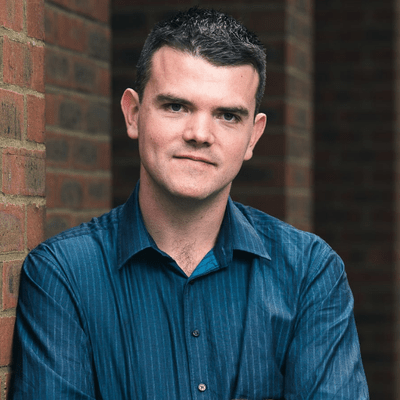
Dr Chris Day; Pic credit: Twitter

In a recent letter to the Care Quality Commission Dr Day said that he came to a meeting with them to explain the circumstances of his concerns – only to find afterwards that the record of what happened had been completely altered, important points were left out, his views were distorted and comments attributed to him which he never said.

He got an apology from Mrs Mclaughlan and the record was altered.

Now at the moment Mrs McLaughlan is about to issue her verdict as chair of an internal inquiry on the fate of Dr Usha Prasad, who has already been exonerated by the GMC, so there can no question of patient safety being at risk. There is the question why this appeal is being heard while we still have a pandemic and St Helier hospital has been hit badly by it. It goes against NHS guidance to have it now and Mrs Mclaughlan as chair of the NHS England Performers List should know. Obviously she has not followed NHS guidance in this instance.

Is it a chumocracy?

These internal NHS hearing are areas where journalists rarely investigate but to my mind raise a lot of questions which need answering. Is this rather closed system open to chumocracy? How curious that people can glide between the public and private sector running a successful business on the proceeds? How independent are these people if they are paid by the trust which obviously in all three cases wants to get rid of the doctor concerned?

And most importantly whatever findings come out – they can ruin the professional careers of doctors – and should that be left to a secretive system to decide their fate? And why is all this taxpayers’ money going on these long and drawn out proceedings which are money making troughs for all the lawyers concerned?