Information Commissioner orders EHRC to provide answers over Covid breach by former chief executive Rebecca Hilsenrath

Rebecca Hilsenrath

NEW: Since this post was published I have learned that Rebecca Hilsenrath has been awarded an honorary KC and been appointed a member of the Civil Justice Council, chaired by the Master of the Rolls,Sir Geoffrey Vos. She is responsible for advising the judiciary on the use of alternative dispute resolution, where disputes are settled outside the courts. Ironically this would include the demand from CEDAWinLAW to solve the dispute over compensation for 50swomen pensioners which ministers oppose. She was and still is chief executive of the Parliamentary Ombudsman’s Office when the former ombudsman ,Robert Behrens, recommended compensation for partial maladministration by the DWP. It would be curious to know what her position will be on this if this ever came up.

John Edwards, the Information commissioner, has ruled that the Equality and Human Rights Commission must answer what action it took when it was revealed that its former chief executive, breached Covid rules at the height of the pandemic by driving from north London to her holiday cottage in Wales for a family Christmas in 2020.

The decision is a partial victory for Mark Benny, a dogged campaigner, who sought answers to what action it took when it became publicly known through an article in The Times that she had driven hundreds of miles when there was a ban on any long distance travel as part of the national lockdown.

But the information commissioner has decided not to release a report of an EHRC investigation or correspondence from her because it goes into her private life and might cause unwanted distress.

Rebecca Hilsenrath’s Welsh holiday cottage

However his ruling is significant for a number of reasons. He has had to weigh up public interest in this case versus a person’s right to privacy. And he has come down very firmly that there is a public interest case about how senior public figures conducted themselves during the pandemic. He also ruled that public bodies cannot, as the EHRC did, impose a blanket ban under the privacy section of the Freedom of Information Act, to refuse to confirm or deny anything because it involves personal data.

This could have wider implications since public bodies use this technique where there are controversial appointments or resignations to refuse to provide information because itinvolves personal data

John Edwards, Information Commissioner

Rebecca Hilsenrath’s case was particularly controversial because she resigned her chief executive’s job at EHRC only to be parachuted into a top position at the Parliamentary Ombudsman’s Office where since became Interim Ombudsman and chief executive, an equivalent or even better status than she had at the EHRC.

Extraordinarily when Mark Benny pressed the Parliamentary Ombudsman’s Office on what they knew or whether they took into account of her Covid breach during her appointment, the office said it had lost the papers on her appointment process.

So now the EHRC will have to answer his questions within 30 days or as the Commissioner says in his report “failure to comply may result in the Commissioner making written certification of this fact to the High Court pursuant to section 54 of the Act and may be dealt with as a contempt of court.”
The questions he has asked include whether there was a proper investigation into the breach, whether it was completed and what was the outcome. He also wants to know whether she was suspended by the EHRC or put on gardening leave and whether she was dismissed or decided to resign.

All the public had at the time was a terse statement by the EHRC to the press. It said:

“The Equality and Human Rights Commission said they will consider whether further action against its chief executive is needed.
“She has apologised for this error of judgement,” said EHRC chair Baroness Kishwer Falkner.
“I will establish all the facts before deciding if any further action is
required.”

Nothing has been heard of this since and it is now known whether it came up again when she was interviewed to be Interim Ombudsman last year.

What the ruling by the Information Commissioner does is say that Mark Benney’s request was legitimate and it was necessary for the information to be released. But he thought this could be done through his questions and it was not a legitimate interest to release the full report because it contained details of her private life.

Interestingly he thought it might throw some more light on what happened at the Parliamentary Ombudsman’s Office. He said “he considers that disclosure of the requested
information would allow further scrutiny of that process.”

One-Time
Monthly
Yearly

Make a one-time donation

Make a monthly donation

Make a yearly donation

Choose an amount

£5.00
£10.00
£20.00
£5.00
£15.00
£100.00
£5.00
£15.00
£100.00

Or enter a custom amount

£

Your contribution is appreciated.

Your contribution is appreciated.

Your contribution is appreciated.

DonateDonate monthlyDonate yearly

Please donate to Westminster Confidential

£10.00

Gove kicks reform of the Parliamentary Ombudsman service into the long grass

Official portrait of Chloe Smith MP and Cabinet Office minister for the constitution and devolution

Government dumps on Parliamentary Ombudsman as waiting list of cases forecast to rise to 4000

The government has thrown out any proposals to reform the overburdened Parliamentary Ombudsman service until after the next General Election in 2024.

A reply from Chloe Smith, junior Cabinet Office minister, to MPs on the Commons Public Administration Committee on their report into the Parliamentary Ombudsman reveals that reforms far from being delayed a year will not take place until 2025.

She writes:” The Government appreciates the desire of PACAC to modernise Ombudsman standards and agrees that this is an important matter. As outlined by the Chancellor of the Duchy of Lancaster[ Michael Gove] in September 2020, the current pressures on the Government and the parliamentary timetable mean the 2016 Bill has not progressed and there are no plans to reform the Ombudsman system up to and including 2023–24. We will nonetheless carefully consider the committee’s findings and any future opportunities.”

The decision to delay any improvements to the service come at a time when there are 2663 cases waiting to be allocated and long delays for people awaiting to hear the result of their cases.

At the same time minutes of a board meeting at the Ombudsman’s office on February 18 and only just published reveals that the waiting list for cases to be allocated is forecast to rise to 4000. This is entirely due to complaInts arising from relatives of Covid 19 victims.

The report said: “It was proposed that, to allow the organisation to focus on complaints raising more serious issues, it would not routinely progress health complaints where the impact of the claimed injustice is relatively limited. This would apply to complaints determined to be at level 1 and level 2 of our Severity of Injustice scale. This is in line with other Ombudsman organisations.”

Relatives of Covid 19 victims not likely to get their complaint investigated

This is bad news for relatives of Covid 19 victims who are already been denied justice by Boris Johnson choosing to delay a Covid-19 public inquiry. It also raises the question how the Ombudsman would know a complaint was a serious problem until he had investigated it.

Rob Behrens Parliamentary Ombudsman

Robert Behrens, Parliamentary Ombudsman, in his reply to the committee suggests he might try and persuade Matt Hancock, the health secretary, to allow some changes to the Ombudsman’s powers in forthcoming legislation to reform the NHS.

He writes: “The forthcoming NHS legislation could also grant PHSO ‘own initiative’ powers to look at an NHS-related issue where someone would struggle to bring a complaint or where there is a fear that complaining to the Ombudsman might bring about personal repercussions in terms of the NHS care received. For example, if someone is a long-term inpatient with learning disabilities, they or their family may be reluctant to complain formally for fear that it would adversely affect that person’s care.
“PHSO would welcome the Committee’s support for including these measures in the legislation that will follow the NHS Integration and Innovation White Paper. We would also welcome similar support for removing the out-dated MP filter and making other improvements in our Parliamentary jurisdiction when appropriate legislative opportunities arise.”

So the Ombudsman is left clutching at straws to get any reform at all. The public are left with a lousy service and the prospect of complaints being dumped because the Ombudsman will not have the resources to cope.

My thanks to a couple of readers for alerting me to the board meeting and the government’s reply. It is nice to know people are keeping an eye on this

Crisis in the tax office: The cost of Covid 19 to HM Revenue and Customs

Chancellor to make a statement this week

Tax revenue down £70 billion while tens of billions spent saving jobs and the economy

Just before the first phase of Covid 19 peaked HM Revenue and Customs had a very good year. Tax revenues had peaked at £636.7 billion from more national insurance contributions, a record target of 95.3 per cent of tax due had been paid and £36.9 billion had been recovered from tax fraud and evasion. Then Covid hit.

Now as the Chancellor prepares his latest spending statement the latest annual report and accounts of HMRC and a National Audit Office report qualifying the accounts a very different picture is emerging. To give you an idea the Revenue lost £70 billion in tax revenue in five months.

The Covid-19 pandemic turned HMRC upside down and at least three planned targets will be missed this year. Just like the Department for Work and Pensions thousands of staff were moved to help handle the pandemic. But the pandemic also means a big loss of revenue , the cancellation of plans to combat firms who avoid tax by using the black market and an expected increase in money lost through fraud and error on working tax credit.|

On working tax credit it says: “As we no longer accept new claims to tax credits (with limited minor exceptions), our work to restrict error and
fraud now focuses on existing awards.. ..The continuing need to divert compliance staff to support other departmental pressures means we expect not to meet the 5% maximum target for 2019 to 2020.”

On collecting tax it says:” Due to the impact of the COVID-19 outbreak, the end of year HMRC debt balance for March 2020 is £2.5 billion higher
than forecast, coming in at £22.4 billion, significantly over the forecast of £19.9 billion… It is anticipated that the economic impact of COVID-19 will continue into financial year 2020 to 2021 as customers find it increasingly difficult to fulfil their tax obligations.”

black market tax avoidance

And on tackling black market tax avoidance – called conditionality in tax office jargon – it says:” Budget 2018 said that the government would consider legislating to introduce conditionality at Finance Bill 2019-20.
However Budget 2020, which was delayed from autumn 2019, announced that the legislation would be included in Finance Bill 2020-21. Internal milestones were adjusted to work towards that revised timetable.”

You have to turn to the report by the NAO to find out the real impact of Covid-19 on the tax offices. For a start offices were deserted. 80 per cent of the 50,000 staff worked from home and as a result the public faced long delays in getting through to HMRC because only 7000 had secure phones to handle queries.

People kept waiting on the phone

From March 2020 there was an increase in the time HMRC took to answer telephone calls, peaking at 14:59 minutes in May and improving to 9:15 minutes in June 2020.

Like DWP large numbers were switched to working on Covid-19 work.

“At the peak, in May 2020, of 58,592 full-time equivalent staff, 9,097 (16%) were reallocated to COVID-19-related roles. Of the two largest groups of staff, 25.2% of staff in the customer services group were allocated to COVID-19-related work in April 2020 and 17.3% of staff from customer compliance group were allocated to COVID-19 in May 2020.”

Numbers have since fallen but will probably have gone up again with the second wave. The key schemes were the Coronavirus Job Retention Scheme, Self Employed scheme and “Eat to Help Out”. The Job Retention Scheme is thought to have been targeted by organised crime and billions of pounds may have been defrauded. See my article in Byline Times.

As a result “yield from its tax compliance activities is likely to
reduce in 2020-21. For comparison purposes, HMRC achieved a compliance yield of some £7.5 billion in the period April to June 2020, 51% less than the yield of £15.4 billion achieved in the same period in 2019-20.”

tax losses

The detail over tax losses is daunting. Some £70 billion between April and August this year -£38 billion alone from VAT. Some £13.5 billion from tax and national insurance; Another £10 billion from Corporation tax and over £4 billion from fuel duties as people stopped travelling.

Receipts recovered at the end of the first lockdown in July and August, particularly VAT by £10 billion.

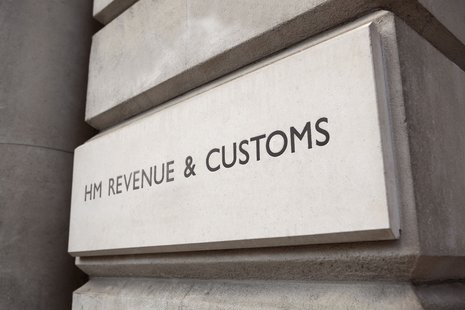
HMRC: Pic credit: David Palmer

However a tables in both report also reveal how much HMRC is paying out and how much they don’t how much it will cost. The furlough scheme was £39bn up to September; Eat Out to Help Out cost them £522m for August, Payments to the self employed cost £13bn but they don’t yet know the real cost of a host of projects. Some £1.5m was set aside for putting up basic working tax credit by £1045 for the tax year but figures for the claims are not available. Another £200m was put aside for repaying employers contributions to statutory sick pay but we don’t know how much was spent.

At least eight other measures spending figures are not available – these include the concessions on stamp duty for homer buyers, deferring tax payments for the self employed, VAT reductions on food and accommodation, exempting personal protective clothing from VAT, and cutting import duties on essential medical equipment.

We do know that as of June £28 billion of VAT was deferred.

Finally the Department’s bad record of recovering payments on working tax credits led its annual accounts to be qualified by the auditor general.

Some £1.11 billion was overpaid or almost 5 per cent of all payments and it will get worse this year. But because staff disruption over Covid 19 we won’t know this year’s figure until next June. Covid-19 could currently slow the transfer of people from working tax credit beyond the current delayed deadline of 2024.

Only 10 people switched to universal credit

Just TEN people instead of an expected 2000 transferred to Universal Credit last year under a new pilot project. The project has now been halted. Covid 19 did encourage a number of people to voluntarily transfer after the rates were temporarily raised.

Meanwhile the huge expense of preparing for Brexit – temporarily stalled by Covid 19 for part of the year – is now estimated to have cost £516m in the last tax year and there are now 6,100 staff working on it. Altogether since the referendum it has cost not far short of £800m because they have to prepare for so many scenarios.