The tragic death of a talented and hard working ITV news editor and the dramatic inquest that fell short of providing answers

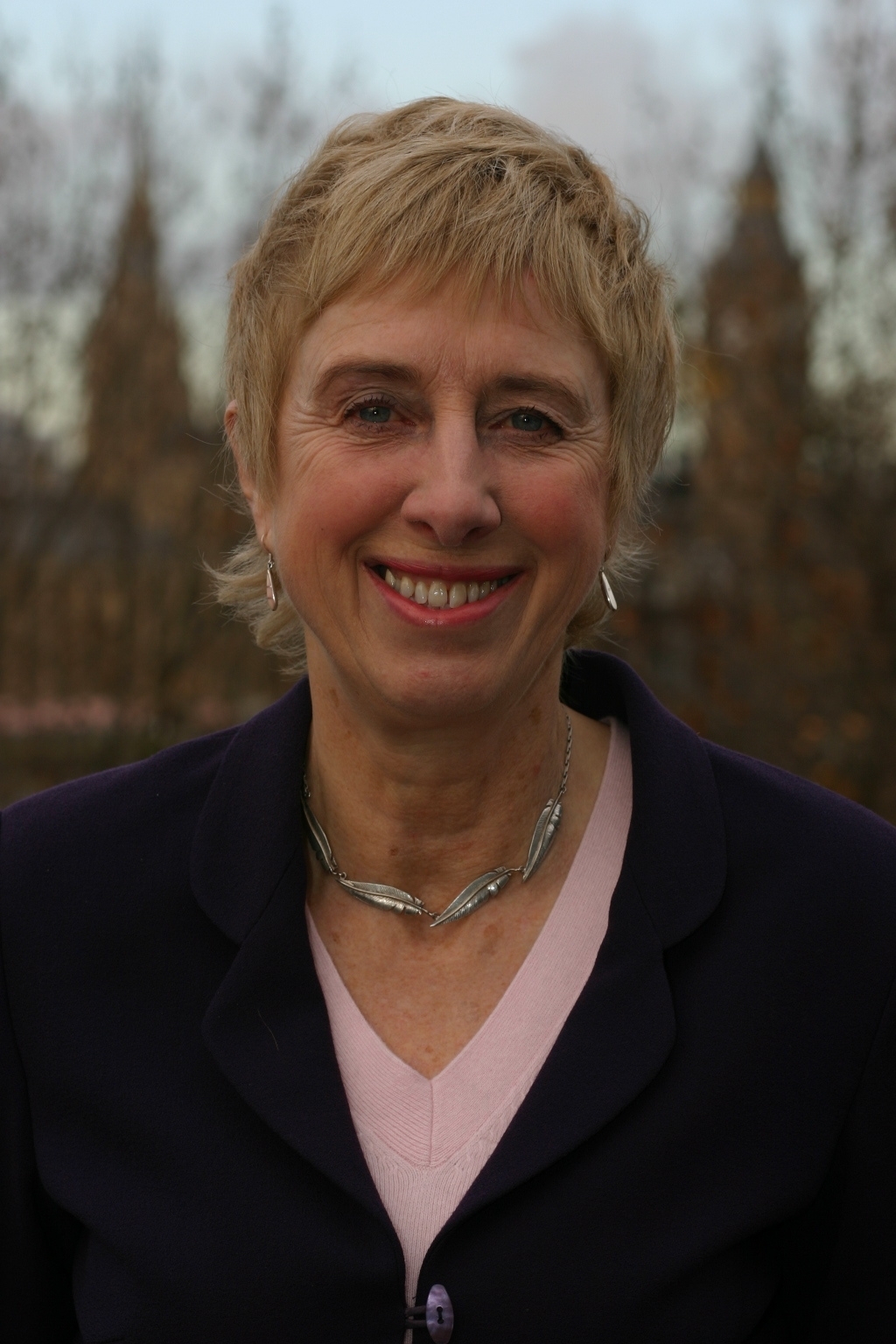
Teresa McMahon Pic credit Linked In

Coroner Mary Hassell now facing bereaved members of two families unhappy about the way she conducts inquests

Teresa McMahon was a well liked news editor for ITV’s Granada Reports who had a first class honours degree in journalism and was based in Salford. From humble beginnings she was rated by colleagues as ” a highly competent news editor, who had worked on and overseen – some of the biggest news stories including the Manchester Arena terror attack, the coronavirus outbreak and Tyson Fury’s world heavyweight championship win.”

Over three years ago she was found hanged at her home in Little Holten, Salford and it took until last week for an inquest to be held. What emerged is that the police “investigation” into her death, the pathologist’s report and the conduct of the coroner who heard the case, Mary Hassell, fell well short of the professionalism and unbiased news values Teresa McMahon had practised during her life.

The hearing itself did not start for an hour after lawyers for Lorna McMahon requested an adjournment because she had not received all the documentation she needed, had no confidence in the robustness of the process and thought her rights to participate compromised procedures under Section 2 of the European Court of Human Rights legislation particularly in relation to domestic abuse.

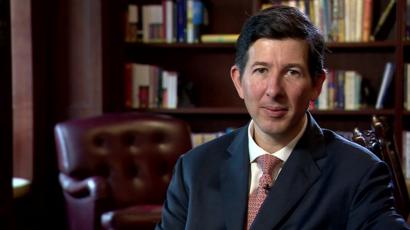
Michael Etienne Pic credit: Garden Court Chambers

Her lawyer, Michael Etienne, from Garden Court Chambers, who acted pro bono, highlighted concerns that coroners did not pay enough attention as to whether domestic abuse by a partner or ex partner led to suicide and cited previous cases. He told the coroner ” the inquest will (or at else is very likely to) fall short in its primary duty to provide a full and fearless inquiry into these important matters.”

All this was rejected by Mary Hassell, the coroner who insisted she would conduct a frank and fearless inquiry.

The hearing had already been moved from Manchester West coroner’s court to Inner London because of a conflict of interest and concern about the involvement of Greater Manchester Police. A senior coroner had recused himself from hearing – hence the delay in hearing the case.
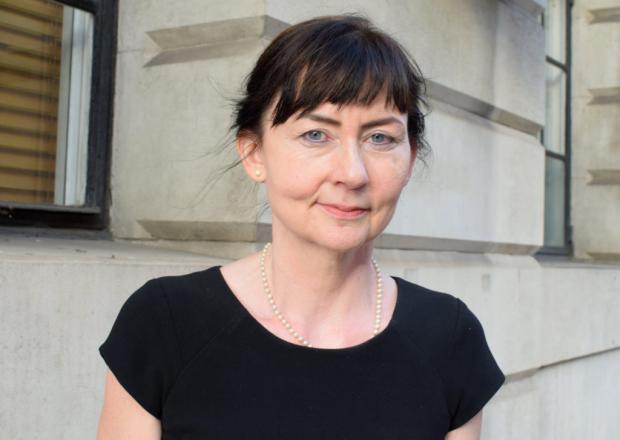
Mary Hassell ” suicide verdict” Pic credit: Archant

Mary Hassell decided that it was a suicide and ruled that there was no coercion or control by her ex partner Robert Chalmers that led to her death.

Mohammed Bashir – no ” Silent Witness” material

For her the star witness was Pathologist Dr Mohammed Bashir. He insisted that the ligature around her neck was consistent with hanging and not strangulation but he knew nothing about her complaint about domestic abuse and said there were no other marks on her body. Extraordinarily he had taken no photos when he examined the body and his evidence was partly contradicted by the policeman who went to the scene who noted bruises on her breast and biceps. Certainly Dr Bashir would not have qualified for a star role in ” Silent Witness.” He was no Dr Nikki Alexander and Lorna McMahon complained that the body had not been examined by a forensic pathologist.

This lax approach was compounded by the so called investigation by Greater Manchester Police. Detective Chief Inspector Gareth Humphries who arrived on the scene and immediately ruled out murder. She was already dead and it was Robert Chalmers, who snapped the cord. Her brother Bernard, who was also there, confirmed that Chalmers had done it by himself,

No pictures taken by pathologist or police

Extraordinarily again he did not take any pictures either and apologised to the coroner for not doing so. “Policy at the time was to take photos if you think there’s a crime. I did not think there was a crime at the time. I could have accessed the digital camera and I did not. I wish I had. If I had, you would have got photos for the answers you seek and I apologise that I did not.”

Instead he read her journal which he found in the bedroom where she expressed her loneliness, lack of contact with her daughter, and a list of complaints about the way her ex Robert Chalmers had treated her.

But only three weeks before this she made a complaint about domestic abuse to a police constable under Clare’s Law and was wrongly told that she had no right to find out whether he ex had convictions for violence. She then withdrew the complaint and police found that they had given her the wrong advice but could not contact her to tell her.

A lot of this came out during the hearing because of persistent questioning by Lorna McMahon not the coroner. She ended up being told off because the coroner did not think her hearing should be an inquiry into the police.

Her ex, Robert Chalmers, was supposed to give evidence but did not turn up. Mary Hassell issued an arrest warrant and he was taken by the police from his home to Bolton Coroner’s Court where he had to give evidence. He is a NHS estates manager working for the trust in Salford.

Her ex was nervous and unprepossessing

He emerged as a nervous, unprepossessing character, replying with monosyllabic answers and denying he was in any way responsible for her death. His only concession was that their relationship was ” volatile” – an under statement given neighbours had witnessed shouting, him being thrown out of her flat, and she tearfully sitting outside her house with her head in her hands. He also denied that he alone had snapped the cord contradicting her father’s statement.

Her father did not give evidence in person either but the coroner accepted a statement from him as he said he was to ill to attend. He painted a sad picture of his daughter being caught up in an alcohol fueled relationship with a man was not good enough for her. But it was also revealed that this man had been his best man at his wedding and he had known him for 25 years.

When his sister, Lorna, complained she could not question him, Mary Hassell accused her of preventing him coming because she had damaged his health by her attitude towards him. It was clear brother and sister did not get on but a coroner should be above that.

The final indignity was a decision by the coroner to first vet Lorna’s statement to the hearing and then ban most of its contents. Her reason was that coroner’s hearings were not a place where either side could try to influence a coroner’s verdict. To my mind this was preposterous. It was obvious that Mary Hassell was a very strong minded woman and the idea that anybody could influence her in any way was absurd. She may even have made up her mind before the full hearing.

I suspect the real reason is that she did not want any more criticism of Greater Manchester Police in public or more details about the behaviour of Teresa’s ex including his past, particularly as this hearing was well covered by the press and TV.
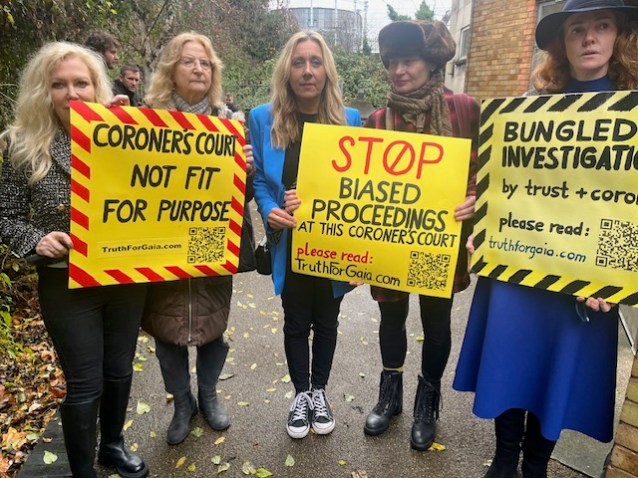
Lorna McMahon (far left) and Dorit Young ( second from right) demonstrate outside the coroner’s court

And it is not the first time she has silenced a bereaved relative. Lady Dorit Young was similarly treated over the death of her only daughter, Gaia. That is why there was a small demonstration outside the coroner’s court whereby Lady Young and her supporters and Lorna combined to protest. You can read about their case on https://truthforgaia.com/ and an earlier blog by me here.

One-Time
Monthly
Yearly

Make a one-time donation

Make a monthly donation

Make a yearly donation

Choose an amount

£5.00
£10.00
£20.00
£5.00
£15.00
£100.00
£5.00
£15.00
£100.00

Or enter a custom amount

£

Your contribution is appreciated.

Your contribution is appreciated.

Your contribution is appreciated.

DonateDonate monthlyDonate yearly

Please donate to Westminster Confidential

£10.00

DWP dumps on benefit watchdog and ignores plea for more help for victims of domestic violence

The Department of Work and Pensions has rejected any changes to its new minimalist regulations to exempt victims of domestic violence -mainly women – from paying the ” bedroom tax ” and helping them to find out how they could qualify to keep more of their benefits.

Ministry turns down plea from social security watchdog

As I reported ten days ago the release of minutes from the little known Social Security Advisory Committee revealed in July the body chaired by Stephen Brien who worked for Ian Duncan Smith’s think tank had written to the ministry criticising the proposed regulations for being too narrow and the ministry for not running a prominent campaign to let victims know they will now be exempt.

The exemption applies to anybody who wants to stay in their own home and has thrown out an abusive partner and enrols in a sanctuary scheme – which provides extra locks, a fireproof letterbox and in extreme cases a reinforced door to a ” panic room” should the abusive partner return and break into the house.

The problem is that not all women know about this and the exemption only applies to council homes and flats. Also abuse from stalkers or strangers is not covered by the new regulations.

Mr Brien wrote: “Given the vulnerable situations of those affected, there is a compelling case for the Department to examine what options exist in terms of proactively identifying those potentially affected. This should be supplemented by a strong communications strategy that sets out clearly the criteria for this exemption, along with guidance on how to access it.”
“There is a risk that a number of claimants entitled to take advantage of this scheme, particularly those who have already benefitted from a sanctuary scheme security adaptation prior to these regulations coming into force, will be unaware of this change.”

Ministry rejects plea to change the regulation

But the DWP has told me not only will there be no changes but they had already implemented the regulations which came into force on October 1.

A DWP spokesperson said:

“The Department offers support to victims of domestic abuse, whether in the private rented sector or not. The benefit system acts as a safety net for people who find themselves in need of financial support with living and housing costs for a variety of reasons. A range of Universal Credit measures are designed to support victims of domestic abuse, including special provisions for temporary accommodation, same day advances, easements from work-related requirements and signposting to expert third-party services.”

Now for these regulations to become law they have to be scrutinised by Parliament. So I looked up what had happened.

It turns out the ministry laid the regulations before the House of Commons and the House of Lords on September 9 – a Thursday evening just before MPs and peers went off for the weekend. They were laid under what is known as a negative statutory instrument – which means that unless a peer or a MP objects they automatically can become law three weeks later.

Not one MP or peer spoke up about this

The regulations were laid alongside numerous other regulations including changes to Covid 19 pandemic regulations. Not one MP or peer objected or even spoke about it.

They would not have known about the criticism from the watchdog body because its minutes had not been published then. Nevertheless this shows up the ineffectiveness of MPs and peers – who have more time – in scrutinising what the executive is doing.

Given the high profile issue of violence against women after the kidnap and murder of Sarah Everard by a serving Met Police officer it is pretty deplorable that a ministry can get away with this.

Benefits watchdog keeps mum

I sent the ministry’s response to the watchdog body – which regards scrutinising regulations as its main priority – and it decided not to comment, preferring to keep silent about its advice being ignored .I haven’t had a reply from the House of Lords on why the new regulations were missed.

However I have discovered the ministry has issued new advice six days ago to its housing benefit officers. It is here and victims of domestic abuse should challenge officials about getting an exemption.

For those in England I would suggest contacting Shelter. The charity has a comprehensive guide for victims of domestic abuse here. It includes a list of other charities who can help.

So if the ministry, the social security watchdog and Parliament are so ineffectual, at least this blog can highlight some information so more people know about it.

Previous Blog

https://davidhencke.com/2021/10/03/exclusive-half-baked-and-half-hearted-dwps-help-for-women-facing-domestic-abuse-and-violence/

Please consider a donation to allow me to expand and develop this blog to hold more people and government to account

One-Time
Monthly
Yearly

Make a one-time donation

Make a monthly donation

Make a yearly donation

Choose an amount

£3.00
£5.00
£10.00
£3.00
£9.00
£60.00
£3.00
£9.00
£60.00

Or enter a custom amount

£

Your contribution is appreciated.

Your contribution is appreciated.

Your contribution is appreciated.

DonateDonate monthlyDonate yearly

Donate to Westminster Confidential

£10.00

EXCLUSIVE: Half baked and half hearted: DWP’s help for women facing domestic abuse and violence

With the horrendous murder of Sarah Everard by a serving Met police officer dominating the headlines by coincidence the government’s benefit watchdog this weekend released minutes of a meeting with officials from the Department for Work and Pensions on tackling domestic abuse.

Domestic abuse Pic credit: HelpGuide.org

The little known Social Security Advisory Committee was examining new regulations from the ministry due to come into law on payments and help for victims (usually women) of domestic abuse.

You might not think the DWP would have any role in domestic violence but actually it can help by removing benefit penalties and also open the door to money to improve security measures in a victim’s home.

The ministry must have been pretty tardy in doing anything about this as the reason for the new regulations stemmed from a government defeat at the European Court of Human Rights.

At the centre of this case was the much loathed ” bedroom tax ” where 14 per cent of your housing benefit payment can be clawed back if you have more bedrooms than you need.

Women who throw out an abusive partner or grown up member of the family could find themselves liable for this ” tax” if they want to stay in the family home. This regulation exempts them.

No relief from benefit penalties if you are pursued by a stalker

But as the committee found it is a pretty narrow concession. If you are being abused by a stranger or a stalker you can’t escape the penalty. The ministry has decided they are not ” family” even if they are being as violent or frightening as any member of the family.

And it only applies if you live a council house or flat – is you live in private rented accommodation you have to apply for a discretionary housing payment – and given it is discretionary you may not get it. And that applies whether it is family or a stalker.

That’s why I think the change is half hearted and half baked -designed to help a minimum number of people.

But the meeting also disclosed much more. To qualify for these payments and removal of penalties you have to enrol in a sanctuary scheme. This is service which can protect you in your home -by installing extra locks, fireproof letterboxes and in some cases a ” panic room” with a reinforced door where you can flee from attack from an abusive partner or intruder and call the police.

But guess what? The onus is on the claimant to find out about the sanctuary scheme – not on the Department to tell them about it. Just like the millions of 50swomen over their pensions and the millions of people opted out of SERPS who have lost out on a guaranteed minimum pension, the ministry is not bothered to ensure they know. Both of these issues led to rulings of ” maladministration” against the ministry by the Parliamentary Ombudsman.

Department for Work and Pensions hasn’t a clue

But it is even worse than that. The ministry hasn’t a clue how many people are in sanctuary schemes because there is no central record.

Only next year will local authorities have a duty to collect this information but otherwise it is being left to charities, the police and other bodies to tell claimants. The minutes say: “A number of ways to identify claimants in scope of the measure were attempted – requests were made to local authorities, the Ministry of Housing, Communities and Local Government and the Home Office – but the information is not available”

Details of the sanctuary scheme are here – it is aimed at charities.

Stephen Brien;:Chair of the Social Security Advisory Committee

Such a situation has led the chair of the committee, Stephen Brien, to write to the DWP:

“Given the vulnerable situations of those affected, there is a compelling case for the Department to examine what options exist in terms of proactively identifying those potentially affected. This should be supplemented by a strong communications strategy that sets out clearly the criteria for this exemption, along with guidance on how to access it.”
“There is a risk that a number of claimants entitled to take advantage of this scheme, particularly those who have already benefitted from a sanctuary scheme security adaptation prior to these regulations coming into force, will be unaware of this change.

” A number of claimants will be unaware “-Stephen Brien

“Given the vulnerable situations within which this group finds itself, there is potential risk of harm should these claimants remain unaware of the support available to them resulting in their leaving a home where additional security has been installed.”

He also said the definition of who could escape the penalty was too narrow and should be extended to stalkers and that there was not enough being done to support people in private rented accommodation.

“The narrow focus adopted by the Department could lead to inconsistent treatment of people at risk of violence because their circumstances fall outside of those defined by the regulations.”

The SSAC has not formally objected to the new regulation but is seeking some improvements.

This seems to be yet another example of the ministry not informing people of their rights and in this case in an area where public concern has been heightened by the issue of male violence makes it doubly important that something is done. Will the DWP do it though?

please donate to help me investigate more stories

One-Time
Monthly
Yearly

Make a one-time donation

Make a monthly donation

Make a yearly donation

Choose an amount

£3.00
£5.00
£10.00
£3.00
£9.00
£60.00
£3.00
£9.00
£60.00

Or enter a custom amount

£

Your contribution is appreciated.

Your contribution is appreciated.

Your contribution is appreciated.

DonateDonate monthlyDonate yearly

westminster confidential

£10.00

British stalkers and abusers rejoice: Life will get easier in Europe after Brexit

Government Campaign Poster on Domestic Abuse

Imagine you are being pursued by a stalker or an abusive ex. You get a court order or an injunction to stop them pursuing you. You decide to take a break to get out of the country and away from it all . Your abuser follows you abroad and starts to pester you. You call the local police.

If that happened now a European directive would allow you immediately to invoke the order in 27 countries and the person would be arrested and would likely end up in jail.

But from January 1 the order you obtained from a British court will no longer be recognised and you will have to start from scratch if you want your abuser to be stopped. And the change is coming just as good legislation under the Domestic Abuse Bill will give courts new powers to stop abusers – mainly but not exclusively men – harassing you on pain of being jailed.

Details of this state of affairs has come to light in an obscure report to the Commons European Scrutiny Committee. The issue was thought to be so minor that neither the EU nor the UK thought it worth even discussing in their negotiations – which shows you how low down the agenda domestic abuse is for top officials.

Victims Right Directive

The directive – known as the Victims Rights Directive -allowed any UK court order including restraining and stalking orders to be automatically applicable in the 27 EU countries, including when a person was on holiday there, without having to resort to separate civil action.

It has actually taken a committed Brexiteer – Bill Cash as chair of the committee – to raise the issue at all.

He writes in a report:

“From 1 January 2021, it will no longer be possible for orders made by UK courts to safeguard an individual against a criminal act that may endanger their life, physical, psychological or sexual integrity, dignity or personal liberty to be recognised and enforced in a foreign jurisdiction if that individual moves (even temporarily) to an EU Member State.”

Domestic Abuse Bill

 Her added: “There will no longer be a relatively simple mechanism for ensuring, for example, that the domestic abuse protection orders envisaged in the Domestic Abuse Bill will be recognised and enforced within the EU.”

The junior minister in the Justice department, Alex Chalk, also confirmed this.

“There is “no comparable fallback option” after transition as the European Protection Order is “a unique European Union law-based mechanism”. As a consequence, “an individual seeking a protective order after transition will need to secure a domestic (civil) protection order from the EU Member State that they are visiting.”

Frankly it seems extraordinary that this issue has been overlooked. As it is this measure is very simple – allowing British law to be extended to 27 countries to protect British citizens. Yet we are throwing this away on January 1 for the sake of ideology. I have written about this measure for Byline Times earlier this month.

There is a glimmer of hope that the matter could be taken up by the Women and Equalities Committee in Parliament or the Joint Committee on Human Rights. But sadly there is very little time to do anything about it. Ministers have promised to include the provision in domestic law – so people will have to have a staycation to stay safe.

Unreported by the national media: How some bosses can help if you are one of 2 million people enduring domestic abuse

Elizabeth Filkin

Elizabeth Filkin: chair of the steering group of the Employers Initiative on Domestic Abuse

CROSS POSTED ON BYLINE.COM

This week the BBC hosted an extraordinary conference on how business and public employers can act to help employees if they are suffering the living hell of domestic abuse.

The conference attracted big names. Lord Hall, director general of BBC; Cressida Dick, Metropolitan Police Commissioner; Amber Rudd, the home secretary (by video); Ben Page, chief executive of ipsos MORI;Lieutenant General Richard Nugee, Chief of Defence People;Victoria Atkins,Home Office minister for crime and directors from accountancy giant, Grant Thornton, and Vodafone, the mobile phone provider.

It also was addressed by a remarkably brave woman,Serena, who told her story of both child sexual abuse and an adult abusive relationship, which led her unsympathetic employer to sack her and the actor and series producer of TV drama Holby City, whose story line included an abusive gay relationship which ended up with one partner being beaten up.

The event was organised by an organisation you have probably never heard of – the Employers’ Initiative  on Domestic Abuse – run by Elizabeth Filkin, a no nonsense figure who as Parliamentary Commissioner for Standards once took on Peter Mandelson and Keith Vaz over allegations of bad behaviour..

People might think what has business got to do with people’s personal lives – but what was noticeable was the firms that are backing the initiative had got involved after a traumatic event involving their staff.

Cressida Dick told the extraordinary story of how a very competent senior police officer in the Met rang her own switchboard to report that she was  a victim of domestic abuse. The police commissioner read out her testimony and described how she , though finding it an extremely difficult thing to do, is now coping with it

Another  big accountancy firm became involved after an employee jumped off London Bridge and committed suicide because they couldn’t cope with domestic abuse.

And a person attending from a hotel group told me they got involved after a young man attending a function was sexually abused when sleeping off the effects of too much alcohol on their premises. He went to the police, they decided they should join an organisation that dealt with abuse.

The BBC’s involvement comes some 18 months after the shock of the Jimmy Savile scandal – and ironically the conference was held in the same room where Tony Hall pledged to take action in the wake of Dame Janet Smith’s devastating findings on the issue.

Ad the Ministry of Defence actually tackles predators as well both those serving in the forces and those in the families of serving officers.

But they are the good ones. Ben Page told the conference that HR departments ” talked the good talk ” but often didn’t take any action or did not know how to to take action. Only one in twenty medium and large companies have a policy to deal with domestic abuse.

He described the present situation as akin to the position on mental health – which had been ignored by firms but was now accepted as an issue. He was an optimist saying ” In 10 years time all the misogynists will be dead ” – a point challenged by Jess Phillips, Labour MP for Yardley, who takes up domestic abuse issues, and is regularly trolled by people on the net.

Probably his most interesting admission was as chief executive of an organisation employing 1400 he did not know or had never come across a case of domestic abuse among his staff. He admitted that could not be the case.

His report makes a number of recommendations which could be included in the government’s new Domestic Violence and Abuse Bill- including removing the minimum qualifying period for domestic abuse victims to get flexible working and introducing  ten days paid leave a year for domestic abuse victims. The latter, he admitted, would lead to protests from the Tory right. I can just imagine MPs like the nappy change refusnik Jacob Rees Mogg having apoplexy.

The government is obviously keen on employers sharing responsibility. But below the surface there are huge issues of resources, the fate of women refuges, austerity, pressure on local authorities and the police and social services to handle this huge problem.

I shall return to some  of these issues in future blogs. But one point needs to be made. This conference was covered by none of the national media – not even the BBC who hosted it. Only The Telegraph and ITN did show some interest. And that is despite energetic efforts made by conference  organisers.

There is an interesting parallel. In the media industry – only the BBC and ITN – have  signed up  to the group which now numbers over 150 companies who are trying to help victims of domestic abuse.

So the entire national  and regional press and the major social media sites believe there is no problem with domestic abuse among their thousands of employees. A likely story. No wonder they didn’t cover it.