Veteran NHS whistleblower campaigner, Dr Chris Day, has written a damning letter to Lord Fairley, President of the Employment Appeal Tribunal, accusing the system of “Institutional Corruption” in the way it has handled his case.
Dr Day, who has just lost an appeal case heard by employment appeal judge Sheldon, compared the way both the employment appeal court and the previous employment tribunal handled the proceedings to the verdict in the infamous Daniel Morgan murder case which has never been solved after a trial of suspects collapsed.
The way this murder was handled by the Metropolitan police led the independent panel to rule: ““Concealing or denying failings, for the sake of an organisation’s public image, is dishonesty on the part of the organisation for reputational benefit. In the Panel’s view, this constitutes a form of institutional corruption.”
Dr Day has emerged bloodied but not unbowed from a judgment that rejected all the detriments he claimed and was surprisingly unconcerned about the defendants Lewisham and Greenwich Health Trust’s chief executive lying on oath about a board meeting and its deputy communications office, Mr Cocke, destroying 90,000 emails that could have been useful to his case during the hearing. The worst the judgment could say was this was ” troubling.” Given this centred on his whistleblowing about the avoidable deaths of two patients in Woolwich hospital’s intensive care unit, which the trust has always tried to deny, this is a remarkably tame comment.
What was particularly hurtful to Dr Day is that at the appeal hearing he was accused in open court of lying about cost threats. He had been clear that he was forced at one stage to try to settle his case because he was told by his barrister that he would face a proposed application from the NHS for £500,000. See my report on his wife’s evidence here.
Effectively he was being called a liar by saying this had happened. Instead there is copious evidence that it did happen.
As he says in his letter: “At my most recent hearing, Mr Justice Sheldon explicitly stated in front of public observers that I was “lying” about being threatened for costs. He did this in circumstances when he knew my belief in cost threats was robustly grounded on written material from by former barrister Chris Milsom. He also knew that this material was enough to convince 2 MPs, the Telegraph and Financial Times that I had been threatened for costs. Accusing me of lying about cost threats in these circumstances was nothing more than a cheap smear to make me look like a liar in public.”
Or as he wrote earlier: “Dishonest or deluded whistleblowers don’t tend to have the support of former health ministers, senior doctors and the BMA to fund a KC.”
Also there is ample evidence in reports by lawyers that attempts to put costs on whistleblowers are commonplace. Indeed some lawyers moan they can’t get enough of them.
Dt Chris Day
His complaint about ” institutional corruption ” is not directed at individual judges but at the legal system where lawyers socialise with each other and don’t want to see a colleague’s reputation or career damaged by having to admit they got it wrong.
As he says in his letter: “My complaint is not directed solely at individual judges but at the institutional handling of this matter. The EAT has placed judges in an impossible position: adjudicating on issues that, if determined on the evidence, would have serious implications for people with whom they admit to having ongoing professional or social relationships including being connected on social media. “This is precisely the type of reputational self-protection identified as “institutional corruption” in the Daniel Morgan inquiry. I am not expecting you or the EAT to do anything about this but want to record my position and the fact that it has been put to you as EAT president. You will note 2 MPs have called for a public inquiry into this case.”
My view from covering a number of tribunals- both involving whistleblower doctors, nurses and in the world of industry and the arts – is that lawyers are getting too cosy and comfortable with each other. Add to this the loss of media interest in all but the most lurid of court cases, there are precious few journalists left to observe what is happening in the courts.
All this is to the detriment of the ordinary member of the public when they fight their case. Arraigned against them is a club that knows how to fix the outcome. And this is destroying the principle of open justice and why we need radical reform of both the employment tribunal and county court system.
For those with long memories some 32 months ago I wrote a disparaging blog about justice in employment tribunals after sitting through yet another hearing involving Dr Chris Day’s ten year whistleblowing battle against the Lewisham and Greenwich NHS Trust. So shocked I was over the way justice was meted out to Dr Day that I labelled it as the Tribunal of the Absurd – liking it to a Harold Pinter play that could be set in a court room.
This was the tribunal that revealed that lawyers and the Trust had held back evidence which should have been given to him and his lawyers years ago; that the chief executive of the trust, Ben Travis had lied under oath about a virtual board meeting and other matters to discuss his case, and that a senior communications officer of the trust, David Cocke, had gone into the trust’s offices at 5.0 am and destroyed 90,000 emails which could have been relevant to his case. The latter happened while the hearing was taking place and he then failed to appear as a witness.
Yet the judge Anne Martin ignored all this and exonerated the trust’s case against Dr Day. To remind readers the original claim was a serious patient safety issue – two people had died in the intensive care unit of Woolwich Hospital where he was working because of serious mistakes by other staff. Yet the trust for reputational reasons has always denied this really happened.
Now a long time later – the courts take ages to progress issues – a judge at an employment appeal tribunal has largely rubber stamped her decision and found against Dr Day and rejected an application to return legal costs to the British Medical Association to compensate for the extra days of hearing caused by the destruction and concealment of evidence. Worse than that during the hearing Dr Day’s reputation for telling the truth about a previous hearing was called into question. It was like the second house in the theatre of the absurd.
Mr Justice Sheldon who presided over the hearing found only two faults. He thought the tribunal should have ruled on whether the trust was wrong not to remove disparaging comments about Dr Day sent to MPs and the press after concerns were raised by the watchdog body, the Care Quality Commission was a detriment to Dr Day. And it criticised the tribunal for misinterpreting one area of employment law.
But the judgment adds: “The Employment Appeal Tribunal concluded that the errors were immaterial to the outcome, as the Employment Tribunal had correctly found that the protected disclosures did not materially influence the Respondent’s actions. The appeal against the Costs Judgment was also dismissed, with the Employment Tribunal’s reasoning found to be within its discretion and supported by the evidence.”
It refused to return the case to another employment tribunal for reconsideration.
What this means is that the trust’s actions in this case have been exonerated by a higher court. Mr Ben Travis is regarded as a credible witness despite not telling the truth under oath about the board meeting.
And Mr Cocke’s destruction of 90,000 emails while thought to be ” troubling” are largely exonerated setting what could be a dangerous precedent in other whistleblowing cases for people in NHS trusts and private companies to destroy evidence that should be passed under discovery to the claimant. They can now cite this judgment.
What was also amazing and bizarre was that the judge accepted from Daniel Talbot Brown KC , instructed by lawyers Capsticks, an argument used in another legal case which said that tribunals could take a benevolent view of the proceedings and if they did not comment on a finding it did not mean they had not considered it.
This seems to go against forensic testing of arguments put forward at a hearing – where both sides must probe for the truth. If they do this and a judge decides not to comment on the issue, surely this more like a dereliction of duty than anything else.
This judgment marks a bad day for whistleblowers and good day for bureaucrats who want to hide the truth. It shows that even if you have the support of medical experts to back your judgment and the support of two prominent former politicians, Jeremy Hunt, the former health secretary and Norman Lamb, a former health minister, this counts for nothing in the eyes of judges.
Perhaps the judges prefer the judicial theatre of the absurd to life in the real world.
From L to R: Alex Whitfield, Hampshire Ben Travis, Lewisham Daniel Elkeles London Ambulance
Three of the top 50 NHS chief executives chosen by a panel set up by the Health Services Journal in 2024 as the best people to run the NHS have been involved in attempting to cover up patient deaths and persecuting doctors and nurses who raised the issues.
One of the top three NHS awards went to Daniel Elkeles, as chief executive of London Ambulance Service Trust and is now chief executive of NHS Providers. He was chief executive of the Epsom and St Helier Trust when Usha Prasad, a cardiologist, reported the ” avoidable death ” of a heart patient. He told her to drop her case at an employment tribunal or face an internal disciplinary hearing which led to her being sacked.
I have since been told that Mr Elkeles was involved in an alleged cover up at the London Ambulance Service when a paramedic was suspended during the stressful period of the pandemic. He had alleged bullying, Elkeles said he would investigate but got the person to sign a non disclosure agreement. When it was signed it is said any investigation was dropped.
The second chief executive is Alex Whitfield who heads Hampshire Hospitals Foundation Trust, was involved in the sacking of Dr Martyn Pitman, a well respected obstetrician and gynaecologist, who raised patient safety issues in the already nationally stressed maternity services. The former oil executive is rated the 15th best chief executive.
The lack of care at the hospital in Winchester led to one mother and a baby dying, but Alex Whitfield used the tribunal to claim that Dr Pitman was ” putting patients at risk” rather than supporting the doctor and midwives who were helping patients. Lawyers for the trust monstered Dr Pitman claiming he was a bully for raising these issues.
Julie Dawes, the chief nursing officer at the trust, who also pursued Dr Pitman ,has just been awarded an MBE for services to nursing in the King’s Birthday Honours List.
The third award winner is Ben Travis, chief executive of Lewisham and Greenwich NHS Trust, which the Care Quality Commission, say ” requires improvement.”
Ben Travis was heavily involved in the 2022 tribunal hearings brought by Dr Chris Day, who has fought the trust for 10 years after he raised important patient safety concerns that became associated with two avoidable deaths in the intensive care unit of Woolwich Hospital, run by the trust. The 2022 tribunal ruled against him despite evidence given by Ben Travis which shown to be untrue, the destruction of 90,000 emails during the hearing and the discovery of fresh documents .which should have been released by the trust to him to help his case.
The results of the last hearing is up for appeal on six grounds next week. He won the right to appeal that some of the findings of the judgment were perverse, that the judgment failed to draw any inferences from the destruction of 90,000 emails and the failure to provide documents that would have helped Dr Day’s case. This in particular followed the disclosure in documents that under oath the chief executive, Ben Travis gave an untrue account about a board meeting and had hidden he had contacted other trust chief executives about Dr Day.
Chris DayUsha PrasadMartyn Pitman
Yet Mr Travis won the award on his personal performance over the last year; the performance of the organisation he led, given the circumstances it is in; and the contribution made to the wider health and social care system.
Award for Diversity
At the same time the trust has won a second award for its equality, diversity and inclusiveness despite its NHS staff report showing that it has a below average rating for the fair promotion of ethnic minority staff and for racial discrimination inside the trust and from members of the public.
The panel who decided the awards for the best chief executives included Dr Rosie Benneyworth, chief executive, Health Service Safety Investigations Body:Steve Brine, former Tory MP for Winchester and former chair, Commons Health and Social Care Committee,; Matthew Taylor, head of the NHS Confederation;Sir Julian Hartley, former chief executive of NHS Providers; Patricia Marquis, executive director for England, Royal College of Nursing and Dr Vish Sharma, chair, BMA’s consultant committee.
It is inconceivable that many of them did not know about the whistleblower cases. Dr Chris Day’s case is high profile; Dr Martyn Pitman’s case was in the national press and Steve Brine was his local MP. Usha Prasad’s case was a long running one.
There is another issue which is worth pursuing in a later blog – how ethnic minorities are treated in the NHS and the level of racial discrimination and whether black and Asian people have fair promotion prospects. Lewisham and Greenwich NHS Trust is not alone
The latest in the long saga of employment tribunal hearings involving whistleblower doctor Chris Day and his ten year fight for justice over patient safety following the avoidable deaths of two patients in the intensive care unit at Queen Elizabeth Hospital, Woolwich ended with a judge reserving her decision.
This particular hearing concerned the role of top NHS lawyers Hill Dickinson, who were paid public money to draft commissioning contracts each worth tens of millions controlling the employment of junior doctors at every NHS trust in the country. As a result some 100 people observed the hearing on line over two days – more than could be accommodated in any of London South Employment Tribunal courts.
Directly involved in the case is the now defunct body Health Education England (HEE) which used to fund, commission and govern the employment and training of all English doctors on their path to hospital consultant or GP at NHS health trusts before it was merged with the rest of the NHS bureaucracy as part of NHS England.
Hill Dickinson was engaged by HEE to draw up a series of contracts called Learning and Development Agreements which were drafted in 2014 underpinning the £2 billion commissioning relationship between HEE and NHS Trust that was concealed from the courts in Dr Day’s case until last week’s hearing.
But the existence of these contracts — which exposed as false the denial from HEE made by Hill Dickinson that HEE had substantial influence over doctors – were kept from the courts during the long battle by Dr Chris Day over over the loss of his career and claims of deliberate concealment of patient safety issues,
Journalist’s Freedom of Information request was crucial
A freedom of information request put in by the indefatigable investigative journalist, Tommy Greene, resulted in the very LDA contract being disclosed that was in force during the time of Dr Day’s case between Lewisham and Greenwich NHS Trust and Health Education England . This came after Dr Day had agreed to no less than 3 separate settlement agreements one of which designed to protect all lawyers in the case from wasted costs arising out of misconduct.
This week’s wasted cost hearing was triggered by Tommy Greene’s discovery in July 2019. The hearing had been delayed for over 4 years by the London South Employment Tribunal since Dr Day’s original application. Since all the way back in 2015 and the all the way up to the Court of Appeal in 2017 and down again to the ET in May 2018, HEE and Hill Dickinson clung to the false factual submission that all contemporaneous documents showed Dr Day’s claim that HEE had substantial influence over the terms of engagement was fanciful.
The wording of the 2014 contract strengthened the power of the postgraduate dean employed by HEE who could end the career chances of an aspiring junior doctor who wanted to become a consultant as well as withdrawing money from a trust who was employing him. This included the power to delete a doctors National Training Number or as Dijen Basu KC, Hill Dickinson’s lawyer, admitted “a career death sentence”.
Yet HEE and Hill Dickinson powered by public money went all the way up to the Court of Appeal to argue that HEE had no substantial influence over a doctors career and that Dr Day’s claim that they did was fanciful. At the EAT level this resulted in Dr Day being threatened for costs for effectively defending whistleblowing for the nation’s doctors
Much of this week’s hearing was taken up with the semantics of whether these contracts really meant the HEE had the upper hand or whether the trust was still really the employer. The Court of Appeal had ruled that both the HEE and the trust were employers. Hill Dickinson admitted the ruling was a game changer but tried to argue it did not apply to Dr Day’s case as he had been employed under an earlier version.
Dr Day argued that if the documents had been shared by Hill Dickinson and HEE at the time of earlier hearings it would have saved taxpayers a fortune and him and his wife 10 years- hence the argument to claim back ” wasted costs” from Hill Dickinson because of all the legal fees spent.
Dijen Basu KC Pic credit: Serjeants’ Inn Chambers
Dijen Basu, barrister from Serjeants’ Inn chambers and a qualified doctor, cross questioned Dr Day about the difference between what is known as the ” gold guide” for junior doctors and the contract — implying he should have worked out for himself the existence of the hidden LDA contracts or could have used the Gold Guide himself to win the case.
Dr Day pointed out that it was Health Education and Hill Dickinson’s case from the 2015-2018 that the Gold Guide made fanciful Dr Day’s claim that HEE had substantial influence and also made the point that the ” Gold Guide” was worded as mere guidance on how doctors should be dealt with by NHS Trusts while the LDA was a proper contract that gave HEE a right to sue any NHS Trust if the LDA terms were not met.
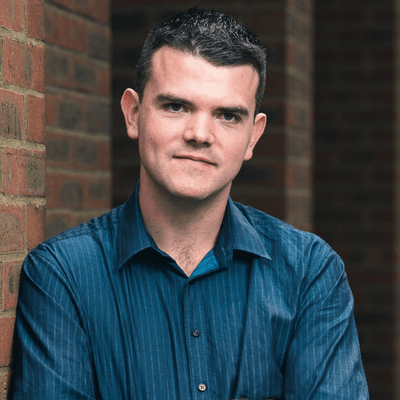
michael wright, partner Hill Dickinson
Michael Wright, a partner with Hill Dickinson, even tried to argue in the hearing that the new contract was not a contract because of the rule in the NHS that different branches never sued its each other so it couldn’t be upheld in the courts. He was rather shot down when it was clear that HEE had the power to withdraw all the money given to trusts if they broke the detailed rules over the training of junior doctors which is just as powerful.
In his witness statement to the tribunal Mr Wright said he first had no knowledge of LDA’s as they were drawn up by the firm’s commercial department not his department. When he did have knowledge he thought they were irrelevant which is his explanation why they were not handed over to Dr Day’s solicitors. After the Court of Appeal ruling which said both HEE and the trust were employers, he still argues that they are just a further extension of the ” gold guide” which is seen as guidance. Much of what really happened was clothed in secrecy as he claimed legal privilege not to disclose discussion that had gone on between Hill Dickinson and HEE.
Judge Kathryn Ramsden
Mr Basu also argued that Dr Day was out of time to pursue this case, which had already failed during a previous strike out hearing on wasted costs. See the Byline Times article on this. He said that the 2014 changes to the LDA came after he left, and urged the judge to throw out the claim because a three day summary hearing was not enough to deal with such a complex issue. He also appeared to suggest to the judge, Kathryn Ramsden, that if she ruled in Dr Day’s favour, she could be overruled by a higher court citing a House of Lords case. Is he prepared to go to Supreme Court over this?
Andrew Allan KC
It took Andrew Allan, KC, funded by supporters on Crowdjustice, o put in real context what Dr Day had had to put up with in his ten year struggle.
In his closing submission he said: “Whistleblowers in the NHS are stamped upon – it happens in case after case – in which extra hurdles are added to the already numerous hurdles in Part IVA of the ERA[ Employment Relations Act] 1996 – the first is that you must be rich enough fund endless litigation; the second is that you must have sufficient stamina to survive years of litigation – the second is that you must be perfect – because any imperfection will be seized upon and never let go – the tactic is to attack the whistleblower – they are obsessive – they are litigious – can’t let an injustice go – not the sort of people who get on in the NHS ” The skeleton argument on behalf of Hill Dickinson is a case in point – most of it is taken up in a partisan account of C’s [ Chris’s] litigation which – and frequently inaccurate – such as the comment about him having got nowhere in the EAT.. and is largely irrelevant a comment that C made about LJ Simler (as she was then) in 2020 is a favourite stick to beat C with – what possible relevance it could have to this application is unknown. And it came back again in My Learned Friend’s oral submission – These attacks are now routine – that C has had to prepare a ‘smears / misinformation document in anticipation of the same old points being trotted out.” See the smear file on Dr Day’s whistleblowing site on the hearing here.
Dijen Basu’s new smear against Dr Chris Day
And guess what ! At this tribunal a new smear against Chris was laid before the judge and Chris Day was not even asked about during his 4 hours of cross examination by Dijen Basu so he could reply. In his late submission to the tribunal Dijen Basu accused Dr Chris Day of failing to refund £55,000 he had received in an earlier costs ruling to his Crowd Justice Fund implying he had pocketed the money.
His submission said: “he accepts that he has raised £470,490 for the crowd funding of his legal costs through Crowd Justice Limited (www.crowdjustice.com) and he has failed to show a single penny being refunded to Crowd Justice Limited on his behalf, e.g. when HEE paid him £55,000 in respect of his earlier employment tribunal costs which shows £284,719.61 then received (mostly) from Crowd Justice Limited, the £55,000 from HEE and £3,700 from Dr. Day, being entirely gobbled up by legal fees and disbursements, none of which was a refund to Crowd Justice Limited).”
This allegation was refuted by Crowd Justice Ltd itself who pointed out that none of the money raised to Dr Day goes to himself and is instead paid directly to law firms recognised by the Solicitors Regulation Authority. I am told Hill Dickinson and its law firm were informed this allegation was not the case by Crowd Justice Ltd
Andrew Allan’s and Elizabeth Grace’s submission covers this and can be read in full here.
Yet Dijen Basu went ahead. Given he works as a leading barrister for Serjeants’ Inn Chambers, he should have known this himself. He also markets himself as the go to barrister for chief constables up and down the country for handling police work. I would have thought they might express a bit of a surprise that he chose to influence a judge by using what is false information in a tribunal case.
The next stage in Dr Chris Day’s long fight will be an employment appeal tribunal on July 1 and July 2 next year. He will appeal the extraordinary case where employment judge Martin ignored the destruction of 90,000 emails by a management witness during the hearing against his former employer, Lewisham and Greenwich NHS trust and took no action. She has since wisely retired. My report on the hearing that led to the appeal is here. My verdict on judge Martin’s case – the tribunal of the absurd – is here.
For a full list of legal submissions and witness statements see Chris Day’s whistleblowing site. The link is here.
UPDATE: In a further twist in this long saga, High Court judge Dame Jennifer Eady, President of the Employment Appeal Tribunalinitially took a decisionnot to read Dr Day’s lettercomplaining about the injustices in the procedure of his tribunal case against Lewisham and Greenwich NHS Health Trust . Now it has been decided that another judge will rule whether she should read the letter. Such a move has been opposed by the trust, who are represented by Old Square Chambers.
Superficially the ruling by Deputy High Court judge Andrew Burns looked like a victory for the long campaigning whistleblower Dr Chris Day to get a fair hearing at his forthcoming Employment Appeal Tribunal. He was granted an appeal on six of the ten grounds presented to the hearing and he was publicly commended by the judge for restoring the employment rights of 54,000 doctors which had been taken away in a sleight of hand by the now merged Health Education England.
But a closer look at the judgement gives a rather different picture. Instead of allowing a full appeal of employment judge Ann Martin’s flawed hearing he introduced caveats and blocked the re-examining of crucial issues. These include examining whether MPs and the press have been misled by the NHS and their lawyers, whether deliberate concealment has occurred and such startling behaviour as a Lewisham and Greenwich health trust communications director destroying mid hearing 90,000 emails that could have helped Dr Day’s defence and subsequently declining to appear as a witness.. It also allowed the health trust’s lawyers to to traduce Dr Day’s public reputation and misrepresent his motives without fear of being dragged before the libel courts or even being properly cross examined about this at the tribunal.
In short Andrew Burns judgement is a ruling equivalent to the infamous “three wise monkeys” carving at a Japanese shrine. He ” sees no evil, he hears no evil and speaks no evil” at that flawed tribunal. And he has been given by Dr Day a chance to review his findings to take account of these omissions.
To put it simply he is blind to Ann Martin’s mishandling of that tribunal, he is deaf to Dr Day’s arguments to put this right, and he is silent about the outrageous behaviour of the trust’s employees and their lawyers, particularly Ben Cooper, KC on traducing Dr Day’s reputation and it being broadcast to MPs, the public and other trusts.
As Dr Day puts in an email accompanying his crowd justice website ” which goes into all the legal details “The Judge has allowed me to have an appeal but taken all my weapons and has blocked key issues being explored.”
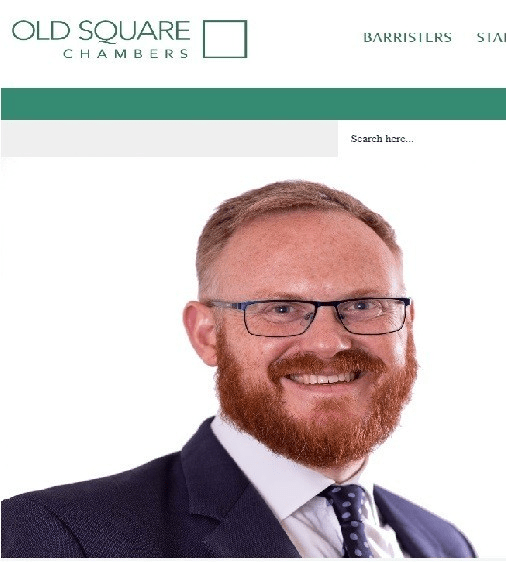
Ben Cooper KC
The language used against Dr Day by Old Square chambers lawyer Ben Cooper would be defamatory outside a court room. He is described as ” having an obsessive belief in his victimhood”, accused of an “elaborate rewriting of history by him to fit in with his narrative” and condemned his evidence as ” dishonest and underhand.”
When pressed on this by Dr Day’s barrister Andrew Allen KC at the June 2022 Mr Cooper conceded he had no example of what he meant from Dr Day’s witness statement and Mr Allen was then prevented from cross examining Mr Cooper on Dr Day’s supplementary statement rebutting Mr Cooper’s insults and allegations.
To make matters worse Ben Cooper’s attack on Dr Day’s character has been picked up by a lawyer defending lawyers Hill Dickinson against Dr Day in another case. Dijen Basu, KC from Sergeants Inn Chambers, in a skeleton argument in a case still to be heard said of Dr Day ” The diagnosis of whistleblowitis is a pithy way of describing a man who had developed an obsessive belief in his own victimhood to the point of being prepared to dishonest and underhand in pursuit of what he saw as the virtue of his cause as Mr Cooper described him.”
The irony of this attack is the case revolves around Hill Dickinson depriving 54,000 junior doctors of their whistleblowing rights whilst not revealing key commissioning contracts in disclosure the firm were paid to draft. Now who was really being dishonest and underhand!
As Dr Day purchased the transcript of Ann Martin’s tribunal he has been able to point out that cross examination of Ben Cooper’s claims was halted by the judge but she went on to allude to Ben Cooper’s argument against Dr Day in her public judgement. Dr Day argued that this a breach of court procedure but the judge did not agree.
Judge Andrew Burns did agree he had made a mistake in describing Dr Day’s withdrawal in a previous hearing in this long dispute as being caused by duress rather than misrepresentation.. This was when his lawyer Chris Milson, without his instructions, tried to negotiate a settlement which included a confidentiality clause. Dr Day was able to get Judge Burns to accept that his case was not one of duress but one of serious allegations of misrepresentation from a number of lawyers whose accounts of the infamous settlement of the Day Case in 2018 do not add up.
Dr Day has now written to Judge Dame Jennifer Eady, President of the Employment Appeal Tribunals, asking her to intervene.
He writes: “It may come as no surprise that I and large numbers of doctors feel deeply let down by the way the EAT has handled my case over the last 10 years. I believe its decisions have not been logical and have ignored evidence, pleadings and important appeal points. I believe the most likely explanation for this is the EAT’s failure to manage properly the conflicts of interests and human factors that have come into play when Judges have dealt with certain issues in my case affecting their legal colleagues.”
He goes on: “The destruction, concealment and ignoring of large amounts of evidence at the June 2022 ET hearing of my case and the obstruction of 2 of our proposed cross examinations was widely reported and shocked people. Many were expecting these obvious issues to be dealt with decisively by the appeal tribunal. Instead, I have had to get into an argument with the EAT about whether such extraordinary conduct is enough for me to advance procedural unfairness as a ground of appeal”
He adds: “I am seriously considering whether I can proceed with an appeal in this court whilst the EAT refuses to answer” these points.
A check on social media of Judge Burns X account by 54,000 doctors, a group who campaign for the whistleblowing rights of junior doctors reveals how closely 3 of the lawyers involved on both sides of the Day settlement are connected socially.
Judge Andrew Burns, a former lawyer at Devereux follows and is followed by Chris Milsom – Dr Day’s lawyer in a previous 2018 case that settled ; he follows Old Square Chambers, which has a leading role in pursuing whistleblowers; Martin Hamilton, managing partner, Capsticks who Dr Day alleges misled MPs and the Board of Lewisham and Greenwich about his case and settlement. Other followers include Nadia Motraghi, KC, another Old Square Chambers that was against Dr Day, who also pursued Dr Usha Prasad, a whistleblower cardiologist at Georges and Epsom St Helier NHS trust.
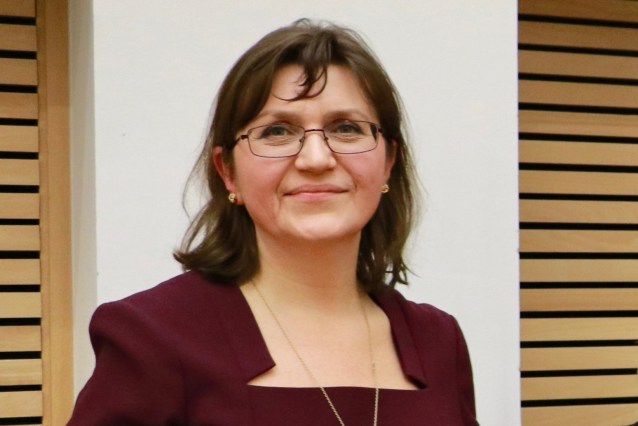
Dame Jennifer Eady
Finally it turns out that judge Dame Jennifer Eady – whom Dr Day is relying on to adjudicate about this – is a former lawyer at Old Square Chambers from 1990 to 2013. During her time at Old Square Chambers, for 13 years from 2000, Ben Cooper KC, and from 2004 Nadia Motraghi were colleagues. It would be amazing if they don’t know each other very well as they practised in the same field.
So how will Dr Day get a fair hearing when three of the lawyers he is accusing of misleading on the settlement are so closely linked to the judge and the final arbiter is their former colleague now in an all powerful position to control the entire employment appeal tribunal system.
My final point from covering a number of whistleblower tribunals is that I am disgusted at the way very senior professional lawyers seem to enjoy denigrating, insulting, and belittling the careers of eminent doctors whose main concerns are to protect the public from bad medical practices which endanger lives.
Whistleblower Dr Chris Day won the right to appeal today when a a Deputy High Court Judge Andrew Burns of the Employment Appeal Tribunal granted permission to appeal the November 2022 decision of the London South Employment Tribunal on six out of ten grounds at a hearing in London.
The saga which has now being going on for almost ten years began when Dr Day raised patient safety issues in intensive care unit at Woolwich Hospital in London. The Judge said today this was of the “utmost seriousness” and were linked to two avoidable deaths but their status as reasonable beliefs were contested by the NHS for 4 years using public money.
Deputy High Court judge Andrew Burns
In a series of twists and turns at various tribunals investigating his claims Dr Day has been vilified by the trust not only in court but in a press release sent out by the trust and correspondence with four neighbouring trust chief executives and the head of NHS England, Dr Amanda Pritchard and local MPs.
This specific hearing followed a judgement in favour of the trust by employment judge Anne Martin at a hearing which revealed that David Cocke, a director of communications at the trust, who was due to be a witness but never turned up, destroyed 90,000 emails overnight during the hearing. A huge amount of evidence and correspondence that should have been released to Dr Day was suddenly discovered. The new evidence showed that the trust’s chief executive, Ben Travis, had misled the tribunal when he said that a board meeting which discussed Dr Day’s case did not exist and that he had not informed any other chief executive about the case other than the documents that were eventually disclosed to the court..
The hearing went on for an extra week because of all these disclosures and the British Medical Association, who are representing Dr Day, asked for their costs to be repaid yesterday because of the additional expense at the hearing. The judge agreed that a separate appeal to recover the BMA costs should also be granted permission to be heard.
Instead of a decision to allow an appeal this hearing was held today to decide whether there was an ” arguable case ” for an appeal.
Dr Chris Day won the right to appeal that some of the findings of the judgement were perverse, that the judgement failed to draw any inferences from the destruction of 90,000 emails and the failure to provide documents that would have helped Dr Day’s case. This in particular followed the disclosure in documents that under oath the chief executive, Ben Travis gave an untrue account about a board meeting and had hidden he had contacted other trust chief executives about Dr Day.
The judge seemed exercised that the trust despite the Care Quality Commission expressing concern about a press release which attacked Dr Day decided to do nothing about it and the judgement appeared to ignore this.
Andrew Allen KC
The judge also allowed the right of appeal for Dr Day about the way he had been treated as an employee and how events had unfolded at the trust.
What was not allowed was the right of Andrew Allen, the BMA’s funded lawyer, to cross examine the trust’s lawyer, Ben Cooper, about remarks he had made about Dr Day during the hearing. some of which he was forced to concede were not accurate. Mr Cooper was rescued By Judge Anne Martin from having to respond to Dr Day’s supplementary statement on this point and was further rescued by the EAT today. Coincidently today Mr Cooper was representing the retail giant Asda in a case next door to today’s hearing.
The Judge also blocked a ground of appeal relating to factual findings being made on whether MPs and the Press has been misled on Dr Day’s protected disclosures. Also blocked was Dr Day’s and his legal team’s clear request for a formal finding on whether deliberate concealment had occurred as part of Dr Day’s protected disclosures. It was made clear to the Judge these points were what the case was about.
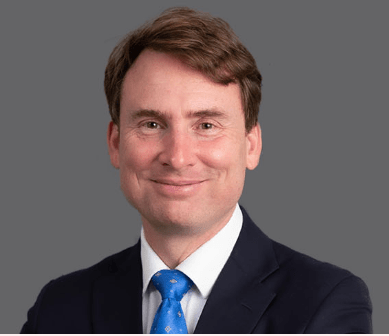
Ben Cooper QC
Despite this the decision of a senior judge does call into question the judgement made by Anne Martin who it is now arguable made some poor calls -particularly avoiding the issue of the destruction of emails and withholding documents that should have been disclosed to Dr Day’s lawyers.
The judge also paid Dr Day a compliment saying by raising the dangers for patient safety caused by staff shortages in 2014 he was ” way ahead of his time.” This might suggest that judiciary is becoming increasingly aware about the state of the NHS and its effect on patient safety. Perhaps judges are seeing too many scandals reported in NHS trusts.
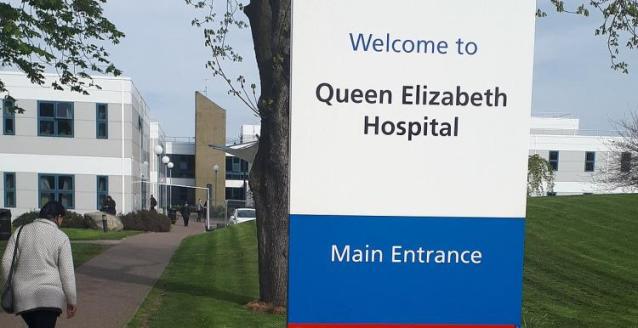
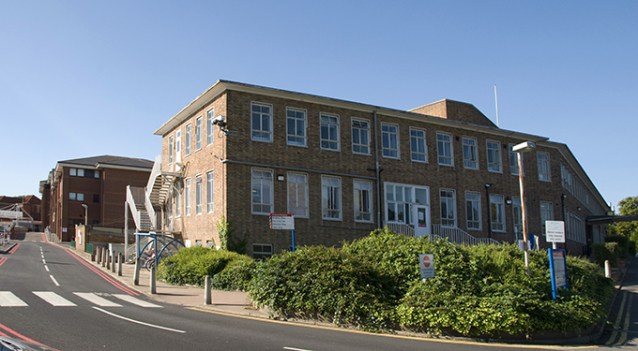
Queen Elizabeth Hospital, Woolwich pic credit: Lewisham and Greenwich NHS trust
Lewisham and Greenwich NHS Health Trust is facing a second whistle blowing case at an employment tribunal over patient safety six years after Dr Chris Day, a junior doctor, in 2014 brought a still on going case on two ” avoidable deaths” in their intensive care unit.
Francisca Holmes, a 61 year old nurse who has since resigned from Queen Elizabeth Hospital, Woolwich has claimed detriment after reporting an elderly frail patient was found to have died in her ward without the staff realising this had happened. She is also claiming age and racial discrimination.
She is being represented by her local solicitor Winston Brown, from Brown and Company. The trust is being represented by solicitors Capsticks and Camille Ibbotson, a junior counsel from Old Square Chambers.
Before the hearing even started Francisca contacted me saying she have been told that a journalist could not report the case because “all NHS cases” are confidential. When I pointed out this was nonsense her solicitor told her I could be given a link to attend the remote hearing.
Camille Ibbotson, junior barrister at Old Square Chambers
Then during the hearing I requested via the chat box to see a copy of her witness statement and the report into the investigation of the death. This was vigorously opposed by Camille Ibbotson, on behalf of the trust. She claimed that under the remote practice rules I had to make a formal application for the documents explaining why I wanted them and insisting that the report contained sensitive information and the witness statement contained allegations about people I should not see.
But the salaried employment judge Eion Fowell decided that my chatbox application was equivalent to a formal request, pointing out that in a physical tribunal hearing a journalist could raise the matter directly with a judge. I had also explained that I wanted the document so I could understand the case.
After an over night discussion the judge ruled in my favour on the grounds of ” open justice” rejecting the trust’s arguments. He said the trust was ” a large professional organisation” that could have applied before the hearing to keep some of the documents in the tribunal legal bundle private but had failed to do so.
Then it was revealed that the ” investigation” into the patient death is just a one page ” incident report”. The judge allowed the report to be flashed on the screen so I could take notes. It shows that an elderly frail lady was admitted with ” lower respiratory problems” and needed, at times, a nebuliser and oxygen to stay alive.
Evidently she was found to have died because this happened during the Covid pandemic on 17 May 2020 and the trust say ward was short staffed and unable to give her the continual care they would normally do. She was found dead after vomiting with her mask on her pillow and there was no oxygen in the nebuliser.
There seemed to be no suggestion that she had Covid herself but she was in a ward with Covid patients.
I will be reporting in full when the evidence given in the tribunal hearing is finished. But I thought this tussle over getting the documents should be reported as the judge’s ruling against the trust is important. Particularly as these arguments by the trust could be repeated elsewhere by Old Square Chambers.
The scandal of the murdered babies at the Countess of Chester Hospital and the threats by managers to doctors who wanted it investigated has gone global. So has the treatment of Dr Chris Day – who has an international following – and Dr Usha Prasad – whistleblowers at two NHS trusts.
This is a guest blog by Tristam Price, a whistleblower from Wellington, who runs an employment law website with two law advocates in Auckland. Their site Leighton Associates can be found here. They were particularly interested in Dr Usha Prasad’s case as under New Zealand law an unsuccessful litigant can be asked to pay £2000 a day for the hearing.
This is a long read but I thought UK readers would be interested to know how much detailed coverage NZ readers are getting on a site aimed at lawyers and whistleblowers in the country. Two of my blogs on Usha’s case have had nearly 2000 hits on their site.
Where the NHS whistleblower retaliators are – by Tristam Price
Where the NHS Whistleblower Retaliators are – by Tristam Price
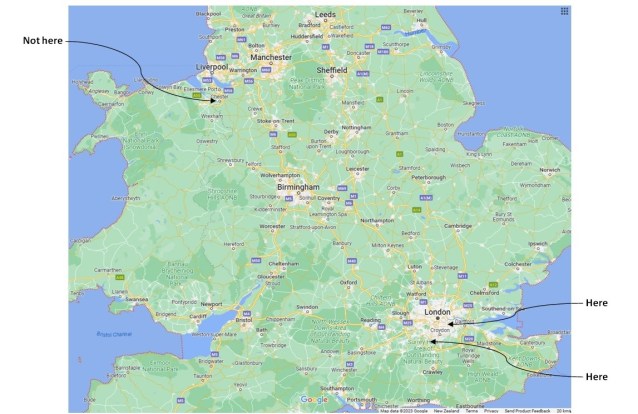
This map shows where the whistleblower cases are – future articles could populate these case
Letby case, Countess of Chester Hospital (murder of seven infants, attempted murder of another six)
There were two whistleblowers, Dr Stephen Brearey and Dr Ravi Jayaram who shared an office.
It’s too early to go into too much detail as there is an enquiry underway. But we can stand back and examine publicised reports for evidence of whistleblower retaliation.
There were 7 deaths for which nurse Lucy Letby was found guilty of murder, between 8 June 2015 and 24 June 2016.
Dr Brearley raised concerns with managers Eirian Powell and Alison Kelly, Oct 2015. It was brushed off as a coincidence and no action was taken.
In February 2016, Dr Ravi Jarayam noted suspicious behaviour (a baby had stopped breathing).
Dr Brearley demanded Letby be taken off duty in June 2016, after the last two suspicious deaths later found to be murders (the hospital initially refused, but then moved Letby to an admin role, and the deaths stopped).
Medical Director Ian Harvey and another senior manager Stephen Cross opposed calling the police, preferring another agency the Royal College of Paediatrics and Child Health to investigate, which they did in Sept 2016, recommending a further external review which did not happen. After Letby’s arrest in July 2018 it was discovered that Ian Harvey had Dr Brearey marked for retaliatory action, namely a complaint to the General Medical Council (GMC). Fortunately that retaliatory complaint didn’t happen.
In January 2017 the CEO Tony Chambers met with seven neonatal consultants and insisted they apologise to Letby, and warned them not to “cross the line” again. That apology happened on 28 Feb 2017 in a mediation that Dr Jarayam attended with Letby (but Dr Breary refused to). However, the consultants persisted and persuaded hospital management to ask police to investigate.
Police quickly launched Operation Hummingbird in April 2017. Letby was prevented from returning to the neonatal unit and instead worked in the admin role for a further year before her arrest in July 2018. That was nearly three years after Dr Brearey raised the alarm. Around April 2018 Dr Brearey found evidence that one baby had been poisoned by insulin.
Ian Harvey was replaced by Dr Susan Gilby the following month, in August 2018. She found evidence in Harvey’s office of poor reporting practices and an overly secretive management culture. A few months later CEO Tony Chambers resigned and Dr Gilby replaced him, staying in that post until 2022. She is now suing the NHS for unfair dismissal.
Alison Kelly has been suspended from her subsequent job in light of evidence that emerged during the Letby trial (probably not listening to Dr Brearley in Oct 2015).
Conclusion:
Whistleblower retaliation at the low end by NHS standards
Bullying and malicious complaints at the low end by NHS standards
An overly secretive management culture; we’re not sure if this was normal by NHS standards
Negligence, which resulted in two more deaths than would have occurred if the whistleblowers were not stonewalled.
However, if Drs Brearley and Jarayan had experienced whistleblower retaliation (perhaps utilising a legal mechanism similar to Leighton Associates’ October 2020 “manual” on gagging whistleblowers with money, threats or both), then almost certainly more premature infants would have died at the hands of Letby.
Overall, while some poor decisions were made between October 2015 and June 2016 when Letby was finally put on administrative duties, putting a halt to the suspicious deaths and sparking investigations, however clumsily, there does not appear to have been whistleblower retaliation, just stonewalling. Nobody close to the Letby case is likely to come out of this unscathed, but at least there should be comfort in the apparent absence of a “smoking gun” of whistleblower retaliation.
Epsom Hospital – Usha Prasad
Epsom and St Helier University NHB Trust (Epsom-St Helier), 15km South of Central London is where Dr Usha Prasad received the full Machiavellian treatment at the hands of senior management as punishment for making Public Interest Disclosures in relation to a coverup of the avoidable death of a heart patient. Epsom-St Helier made 43 complaints about her to the GMC. All were found to be without merit. However, Epsom-St Heliers’ counsel did manage to argue Dr Prasad out of her whistleblower protection and her personal grievance for unjustified dismissal was unsuccessful. In the vast majority of these cases, costs lie where they fall, but Epsom-St Helier chose to pursue Dr Prasad for costs anyway.
Dr Prasad is now unable to afford a lawyer and her GP advised the Employment Appeal Tribunal (EAT) that she was too unwell to attend a hearing on the costs claim against her. Judge Khalil ruled that the 23 August hearing would go ahead anyway. But given the fallout from the Letby case, Epsom-St Heliers appear to be panicking, with an initial reduction of its demand to £24,000, 13.3% of the amount it sought last week. A hearing on the new amount was adjourned by Judge McLaren.
But the CEO can’t un-ring that bell. While much of the litigation pre-dates “Ms T” who has been the CEO since August 2021, the initial £180,000 costs claim of against whistleblower Dr Usha Prasad seems unlikely to have progressed without the sweep of Ms T’s pen, or the click of her mouse. If that is to be her legacy, it’s an unfortunate one.
For those who were wondering what Epsom-St Heliers’ values are:
“Above all we value RESPECT
It helps us to live our behaviours:
Kind
Positive
Professional
Teamwork.
So we can achieve our mission statement: outstanding care, every day.”
Erm… that’s nice. Let’s see what’s happening about 15km northeast.
Lewisham Hospital – Dr Chris Day
The South London Trust Lewisham and Greenwich NHS Trust (Lewisham-Greenwich) dismissed whistleblower Dr Chris Day in 2014, and he has been involved in litigation since. He had similarly raised concerns about patient safety.
Lewisham-Greenwich website says:
“The judgment of the June/July 2022 Employment Tribunal case between Dr Chris Day and Lewisham and Greenwich NHS Trust has been published. This has been a complex, long-running and high-profile case, difficult for many involved.
The Trust welcomes the Tribunal’s finding that “the Claimant’s claims of detriment for having raised protected disclosures are not well founded and are dismissed.”
The judgment did find, however, that some of the wording of a press statement issued by the Trust was detrimental to Dr Day. We apologise for that.
We also recognise that the judgment contains some criticism of the Trust, in particular with reference to storage and retrieval of corporate records. We acknowledge that there are lessons to learn here and we commit to doing so.
As a Trust we are fully committed to an open culture, where everyone should feel able to raise any concerns, and be supported in that.”
Lewisham-Greenwich destroyed evidence valuable to Dr Day, apologised for it, and won.
On whistleblowing, Lewisham-Greenwich’s website goes on to say:
“About Freedom to Speak Up (FTSU) guardians
FTSU guardians in NHS trusts were recommended by Sir Robert Francis, following his review and subsequent report into the failings in Mid-Staffordshire. FTSU guardians have a key role in helping our staff with concerns they might have with or within the Trust. The guardians help ensure our Trust is an open and transparent place to work, where everyone is encouraged to speak up safely to address any concerns or issues they might have.”
Yeah, good luck with that, Lewisham-Greenwich staff.
With the fallout from the Letby case it seems likely that the burden of whistleblower retaliation will shift to the retaliators themselves, and not only in the UK.
Please donate to Westminster Confidential to allow me to continue my forensic reporting on whistleblower issues.
It is a fact that among the tens of thousands of employment tribunals held every year claimants do not have to pay their employers costs in 99.95 per cent of all cases.
Therefore it is absolutely extraordinary that Dr Usha Prasad, a whistleblower cardiology consultant at Epsom and St Helier University NHS Trust is facing a special costs tribunal next week for an astonishing £180,000 claim from her employer at the London South tribunal in Croydon.
Even in rare cases where costs are sought the maximum is £20,000 and the level of proof has to be very high. The claimant has to be seen to have been acted “vexatiously, abusively, deceptively or otherwise unreasonably” or has brought proceedings deemed to be misconceived.
Epsom Hospital part of the Epsom and St Helier NHS Trust
However it is looking like that where whistleblowers are sacked and go to an employment tribunal more and more judges have agreed to hold cost hearings so the public body can recover some or all of its costs. And lawyers acting for these bodies threaten huge costs against whistleblowers to deter them from proceeding further. This has been used against Dr Chris Day in his decade long battle against the Health Education Executive and Greenwich and Lewisham NHS health Trust over patient safety and , against Dr Duffy, author of ‘Whistleblowing in the Wind’. Non NHS whistleblowers also face this. More recently this involved a case against Alison McDermott, a management consultant, at Sellafield and the Nuclear Decommissioning Authority (NDA), who exposed a raft of bullying, harassment and other grave failings at the nuclear plant.
Alison then faced a £40,000 cost hearing – both bodies sought the maximum figure – with judge Lancaster refusing to accept she was a whistleblower- only to have his decision declared ” unsafe” by a judge at the high court. He determined that the costs were unsafe and must be ‘quashed.’ HHJ Auerbach also overruled Judge Lancaster and confirmed that Alison was whistleblower. A FOI has revealed that Sellafield and the NDA have spent an extraordinary sum – £660,000 resisting that she was a whistleblower.
Unbelievably Sellafield and the NDA have just sought to reinstate the cost hearing again with the same judge who made the ” unsafe” costs ruling which has already been thrown out by the higher tribunal. Which of course sends a chilling message to any would be whistleblowers at the most dangerous nuclear site in Western Europe.
In Dr Usha Prasad’s case the trust and its lawyers, Capsticks, have gone one step further by getting a hearing next week wanting the judge to order a £180,000 costs finding against her.
Now in researching whether this has happened before – the only case I found which is highlighted by the Association of Costs Lawyers is Gosalakkal v University Hospitals of Leicester NHS Trust, where the paediatrician who made a series of whistleblowing claims walked out of the costs assessment hearing and ended up being ordered to pay £82,000 to the trust. This went to appeal in 2019 and the judge was criticised for misunderstanding the whistleblowing nature of the case and the initial award was quashed. It turned out there was a breakdown of relationships among consultants there as well, a disciplinary hearing and he was dismissed. He left Leicester and got a new job in the United States.
Judge Heap ruled in April 2017 that she could do this citing rule 78 of tribunal regulations set in 2013 which allows her to exceed the £20,000 limit by having a detailed costs assessment or send it to a county court to decide. I am pretty sure Capsticks will be citing these rules and the case next week.
I am sure the Association of Costs Lawyers would have highlighted any higher settlement than this so this will make the Dr Prasad hearing a new record for tribunals pursuing whistleblowers for costs. The biggest sum ever awarded at an ET tribunal to an employer was £432,001.85 in a dispute between Copthorne Hotels and a Mr Tan who had withdrawn any whistleblowing claims.
The problem for Dr Prasad is that these hearings specifically rule out discussing the merits of previous tribunal hearings in her case. She has had enormous support from other practising colleagues at the Epsom Trust trust. You only have to look at a website to see the appreciation of her work at Pinderfields General Hospital in West Yorkshire to see pages of praise from patients. These were made while the case against her was being pursued by the Epsom and St Helier NHS Trust.
She has still to await the official result of an employment appeal tribunal hearing against her case claiming perversity and bias and error of law by the judge involved ( see below) and the trust has secured a costs hearing in just over five months while the average wait for the overloaded employment tribunal system to hear a case is now 335 days. She has been refused access to the judge’s notes to defend herself and her barrister who appeared for her previously is not available to defend her.
Judge Tony Hyams -Parish
The judge who heard her case Tony Hyams-Parish, threw out all “her allegations of victimisation, sex harassment, and sex and race discrimination” and ignored in his judgement the admission from the trust that it had failed to report to the coroner an ” avoidable death” of a heart patient treated by another doctor and tried to get her to change a report on the incident. My reports of this part of the hearing is the only record that it happened. See it here and here.
Capsticks have seized on this to write to her saying :” The Respondent has incurred very substantial costs indeed in defending the unmeritorious proceedings, of in excess of £150,000 plus VAT. The costs incurred correlate to the Claimant’s unreasonable conduct and the unmeritorious nature of her complaints.”
What is also missing is that the trust put in 43 complaints to the General Medical Council to build up a case against her.. Every one of those complaints was thrown out by the GMC after a highly skilled cardiologist looked at them and she was automatically approved to continue working as a doctor without any further revalidation.
The BMA despite receiving letters of support from her medical colleagues has refused to give her any financial backing to fight this hearing, citing that it did not have a 51 per cent or more chance of success. In my view that is short sighted as far as I can see the hearing is about the costs incurred by the trust in fighting a whistleblower case and if they do not challenge this, they are leaving all their members to be hung out to dry by NHS trusts.
Not to put to fine a point on all this my thoughts are this has all the hallmarks of being a ” Kangeroo tribunal ” next week where a litigant in person, an excellent doctor, is being arraigned by legal heavyweights with little chance of being able to defend herself. Let’s see if this is true next week
Please donate to Westminster Confidential so I can continue my forensic reporting.
Happy New Year. Last year My WordPress blog reached 304,297 hits with 218,257 unique visitors – compared to 286,840 hits and 203,099 visitors the previous year.
This figures does not include hits on my Facebook and Linked In sites which means the numbers are actually much higher though more difficult to exactly measure. Nor does this include my articles on Whitehall and Westminster for Byline Times. Byline Times is worth subscribing to for all the other independent journos who contribute to it.
Thanks to everybody who chose to read my stories and special thanks to those who kindly donated to my site. Last year I raised some £5600 via WordPress plus another £1600 through Paypal before charges.
The two campaigns I run on this site – the demand for full restitution for the 3.6 million women who lost out when the pensions age was raised from 60 to 66 – and valiant whistleblowers fighting for justice in the NHS and at the nuclear facility in Sellafield – attracted the most interest.
The Department for Work and Pensions emerged as the most hated ministry by pensioners and benefit claimants.
DWP most hated ministry
The biggest hit on the site was not from my campaign for the #50swomen but from the blog exposing the millions of people who have been swindled by the DWP out of a Guaranteed Minimum Pension. Here I was helped out by a retired expert on the issue Christopher Thompson who has tirelessly pressed ministers and the Commons DWP committee to do something about it. This attracted 15,281 hits.
Four blogs on the 50swomen campaign attracted over 10,000 hits – the highest being my report of the WASPI meeting at the Labour Party Conference which attracted 12,405. Myreport on the proposed remedies for the women by the Parliamentary Ombudsman which I and many women see as a betrayal attracted 10,054 hits. An opportunity to download the summary of the changes attracted 4,400 people to do so – adding a little to more transparency given only a selected few were supposed to see it.
Dr Day case was followed across the world
On the the whistleblower front I decided to do a daily report on the Dr Chris Day case – the appalling story of a junior doctor who lost his training place because he tried to expose patient safety dangers at an intensive care unit at Woolwich Hospital where two patients had already died. This was really old fashioned journalism when people used to cover courts regularly – in this case an employment tribunal – making the proceedings publicly accountable. It paid off not only with a big following of the blog here but thousands of people followed it on Linked In including doctors from Denmark, Australia, New Zealand, the US, Canada and Brazil. He lost the tribunal despite the health trust destroying 50,000 emails relating to its case that should have been examined by the tribunal. But the good news is that the British Medical Association is backing his appeal.
There is similar interest -including internationally – in the tribunal case of Alison McDermott who was commissioned by Sellafield to review its human resources policies and found appalling shortcomings and also in India and the UK in the fight by Dr Usha Prasad, the former cardiologist at the Epsom and St Helier University Trust, who was sacked after refusing to change a report on an ” avoidable death” there that should have been reported to the coroner. My thanks to two retired cardiologists, Dr David Ward and Jane Somerville for their help on these cases.
Whistleblower cases call into question the employment tribunal system
These cases have thrown up serious questions about the competence and bias of employment judges and called in question the entire running of the employment tribunal system and its failure to keep records of cases. I am now beginning to be inundated with dissatisfied people who feel they have been cheated by going to an employment tribunal.
This year has been a frustrating year for whistleblowers and for women seeking a just solution to maladministration and direct discrimination over the raising of the pension age. But there is no reason to stop reporting this – though I will be taking a long break at the beginning of this year only to come back reinvigorated.
One final point. A very small minority of people are trying to put up comments on this blog using false names from fake email addresses. I see some national newspapers are no longer going to put up comments on the web from people who don’t declare who they are. So from this year I will no longer carry comments from people who do this.
Please donate to this blog to allow me to continue my reporting.











 Westminster Confidential