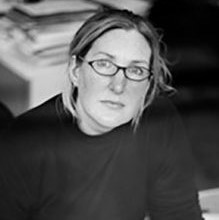
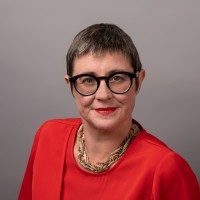
Dr Jocelynne Scutt on why mediation is the only legal way forward to solve the 13 year old pensions dispute for 1950s women

Davina Lloyd interviews Dr Jocelynne Scutt, author of the groundbreaking Judge’s report on the plight of 1950s women who faced a six year delay in getting their pensions

Meanwhile Rob Behrens, the Parliamentary Ombudsman, stalls WASPI on any date they will get his delayed findings

It is well worth watching the above video interview with Dr Jocelynne Scutt which explains clearly and concisely the current impasse over resolving the dispute between 3.5 million 1950s born women and the government over the six year delay in getting their pensions.

She provides both a clear explanation of why an Alternative Dispute Resolution is the only way to solve the impasse and why the Ombudsman’s current draft report – now being rewritten – only provides a partial solution to the problem by concentrating solely on the delay caused by maladministration and not on the direct discrimination against the women themselves under the UN Convention on the Elimination of all Discrimination Against Women (CEDAW). The latter is crucial because Mrs Thatcher signed up and ratified this convention in 1986 and the UK is responsible to the UN in Geneva to follow its provisions.

As Dr Scutt argues ” the law is the law”.

Laura Trott MP Pensions Minister Pic credit: Official Portrait, House of Commons

Her explanation comes as the pension minister, Laura Trott, has muddied the waters saying that the offer of mediation by the internationally respected law firm Garden Court Chambers, cannot be taken up at the moment by Mel Stride, the works and pension secretary, because the Parliamentary Ombudsman is still working on his report.

Laura Trott is wrong. Mediation can go ahead while the Parliamentary Ombudsman is still investigating as it is an entirely separate from whatever the Ombudsman recommends. Indeed it might save Rob Behrens a lot of work as he is obviously struggling to put together a fresh report and would probably love to drop this hot potato.

The reason why Laura Trott is offering these lame excuses and why there is silence from Mel Stride, I suspect, is that Garden Court has started a legal process by writing now twice to the Secretary of State and offering to act as impartial mediators to end this dispute. Their reputation as impartial mediators is second to none.

“No reply” Mel Stride, secretary of State for Work and Pensions

He is trying to avoid replying because if he says yes – it will automatically go ahead. But if he says no, his lawyers at the Department for Work and Pensions have probably warned him he risks the whole matter going back to the courts. If that happens what sensible judge is not going to think the Secretary of State is being obstructive. To borrow Cabinet colleague Michael Gove’s words on another matter, he will be portrayed as “a blocker not a builder.”

The dilemma both the government and Parliamentary Ombudsman are facing is what is the position of the UK under CEDAW. If Dr Scutt’s cogent judgement is correct,, they just can’t ignore the implications of direct discrimination for this particular group of people. It is the ” elephant in the room.”

I am grateful to the Waspi Pembrokeshire branch for tweeting about the recent meeting between the Parliamentary Ombudsman and Waspi which ended in a stalemate despite them sending in two lawyers to help argue their case. The Ombudsman could give no publication date when this so called ” urgent” issue could be resolved and talked of completely rewriting the second part of its report because of the issues ” Waspi and others ” had raised.
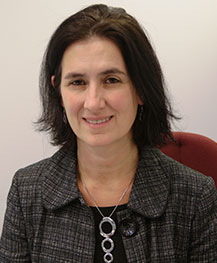
Rebecca Hilsenrath,chief exec of the Parliamentary Ombudsman’s Office

I suspect the “others” refers to Dr Scutt’s judgement as I know CEDAWinLaw has sent her judgement to the Parliamentary Ombudsman’s chief executive, Rebecca Hilsenrath, and I can’t see how the Ombudsman can produce a report without referring to it. Mrs Hilsenrath has also agreed to meet CEDAWinLAW on a date yet to be agreed.

Again I advise everybody to watch the interview for a clear understanding of the present position taken by CEDAWinLAW as everyone awaits events.

Please donate to Westminster Confidential to allow me to continue my investigations.

One-Time
Monthly
Yearly

Make a one-time donation

Make a monthly donation

Make a yearly donation

Choose an amount

£5.00
£10.00
£20.00
£5.00
£15.00
£100.00
£5.00
£15.00
£100.00

Or enter a custom amount

£

Your contribution is appreciated.

Your contribution is appreciated.

Your contribution is appreciated.

DonateDonate monthlyDonate yearly

Please donate to Westminster Confidential

£10.00

Exclusive: Top law firm writes to Mel Stride inviting him to start mediation talks on restitution for 50swomen

Mel Stride, Secretary of State for Work and Pensions

One of London’s top law firms has written to Mel Stride, the work and pensions secretary, inviting him to agree to mediation talks to end the long suffering impasse on awarding compensation to the now 3.5 million 50s born women who had to wait another six years before they got their pension.

Garden Court Chambers, which takes up human rights issues, has a specialist role in mediation. Next month it will be hosting a seminar evaluating the use of mediation in the Court of Protection, which makes and regulates decisions on behalf of people who don’t have the mental capacity do so, publishing research done by Dr Jaime Lindsey of Essex University.

The law firm has a long history of looking at women’s equality issues and two years ago hosted a people’s tribunal looking at the full implementation in the UK of the UN Convention on the Elimination of All Discrimination Against Women (CEDAW) which Lady Thatcher ratified in 1986.

Six barristers and leading KC’s from the firm gave their time pro bono to advise on the legal arguments and took evidence from witnesses. The pro bono support was seen as unprecedented at the time. Each session was chaired by a panel of senior lawyers from the firm. They were ” counsel assisting ” to Dr Jocelynne Scutt, the former Australian judge and anti discrimination, who chaired the hearings.

Dr Jocelynne Scutt

Dr Scutt also chaired a one day inquiry which looked into the long standing plight of 50s women who were having to wait for their pension. Dr Elgun Safarov, vice chair of (CEDAW) from Geneva, gave evidence. She is in the UK teaching law at Buckingham University.

Dr Scutt’s report into the issue was published at the end of November and concluded that there was direct discrimination of women for all pensioners born after 1950 but those born up to 1960 had to bear the full brunt of the change.

Dr Scutt said: “What my report says is that women born 1950s were directedly discriminated against because they were targeted to bear the full impact of the change from 60 years, so as to equalise the retirement age with men’s retirement age. Most had no notice, or inadequate notice, of the change so suffered egregious economic hardship, stress, anxiety and psychological trauma as they had to change retirement plans and try to negotiate staying in their jobs or getting a new job in a time frame that was unrealistic or impossible to do.”

It has also to be taken into account that 9.8m men were given 5 years free auto credits to retire 5 years early, aged 60, whilst the state pension of 3.8m 1950’s women was twice deferred, by stealth, and they were then coerced back to work for up to another 6 years having been denied the promised similar auto credits awarded to men.

Dr Scutt hand delivered the report to Rishi Sunak at Downing Street just before it was published. It was also delivered to Robert Behrens, the Parliamentary Ombudsman, who is currently involved in a long inquiry into how much the women should be compensated after finding partial maladminstration.

CEDAWinLAW.com sent the judge’s report to Garden Court Chambers and briefed the law firm on the issue. and asked them whether this injustice would benefit from mediation talks.

The law firm has now written to Mel Stride inviting him to consider impartial mediation talks as a further pro bono move.

This move chimed in with MPs who have been calling for an an Alternative Disputes Resolution talks. Sir George Howarth, Labour MP for Knowsley and Lloyd Russell-Moyle, MP for Brighton, Kemptown and Peacehaven, have already written to Mr Stride.

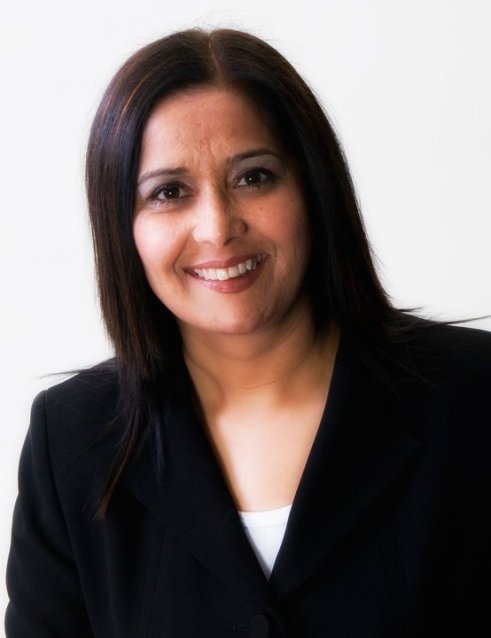
Yasmin Qureshi, Labour’s women and equalities shadow minister

Yasmin Qureshi, Labour shadow women and equalities minister, has added her voice saying ” 50s women have been left in the lurch” and drawing Mr Stride’s attention to the judge’s report’s conclusion:

‘Government and Parliament have a responsibility to face up to and acknowledge the grave wrong done. There is no room for obfuscation or quibbling. Historical discrimination requires relief. There is a moral imperative to right this wrong. The law is on the side of the 1950s-born women. 1950s born women alone are the group targeted.This is a debt of law and honour. Full restitution is the only proper legal, ethical and moral outcome.’

Some 50 MPs from the Labour Party to the Scottish National Party, Plaid Cymru, the SDLP, Alba and the Democratic Unionist Party support Sir George’s initiative.

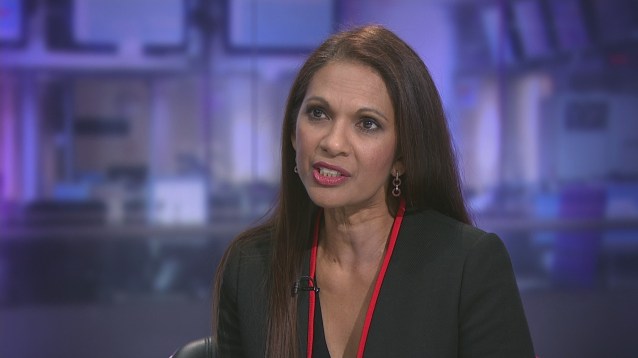
Gina Miller when she was interviewed by Channel 4

At the same time the campaigner, Gina Miller. leader of the True & Fair Party, and best known for her fight with the government over Brexit, has accepted an invitation to advocate with CEDAWinLAW on behalf of all 1950’s women victims.

Finally Ms Rebecca Hilsenrath, Chief Executive Officer of the Parliamentary Ombudsman’s office, has agreed she will meet Joanne Welch, from CEDAWinLAW.com. A date has to be agreed between both parties.

This is the statement issued by CEDAWinLAW:
“CEDAWinLAW.COM takes this welcome opportunity to thank The Hon Dr Jocelynne Scutt AO for her ongoing treasured pro bono counsel.

Today, Gina Miller, Leader, True & Fair Party, welcomes CEDAWinLAW.COM’s announcement below and has accepted our invitation to join us as we advocate for 1950’s Women with said matters in hand.

Garden Court Chambers impartial invitation letter to Mediation Talks with Joanne Welch, Founder, CEDAWinLAW.COM, [on behalf of all 1950’s Women out of The Judge’s Report] has been sent to the Rt Hon Mel Stride MP, Secretary of State for Work & Pensions.

Ms Rebecca Hilsenrath, CEO, PHSO, has invited Ms Welch to meet with her.”

Please donate to my blog so I can continue my forensic reporting on this and other issues.

One-Time
Monthly
Yearly

Make a one-time donation

Make a monthly donation

Make a yearly donation

Choose an amount

£5.00
£10.00
£20.00
£5.00
£15.00
£100.00
£5.00
£15.00
£100.00

Or enter a custom amount

£

Your contribution is appreciated.

Your contribution is appreciated.

Your contribution is appreciated.

DonateDonate monthlyDonate yearly

Please donate to Westminster Confidential

£10.00
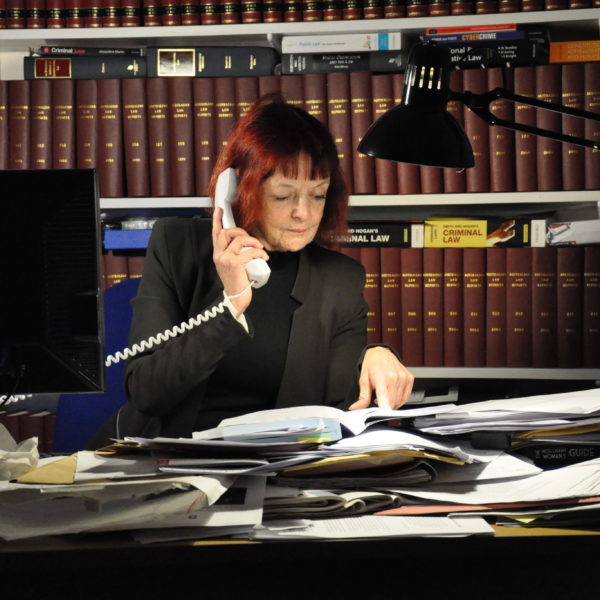
CEDAW People’s Tribunal opens with powerful attack on decades of neglect of women’s rights and views

Margaret Owen, first witness at the CEDAW People’s Tribunal

A leading women’s human rights barrister yesterday launched a wide ranging attack on the failure of the UK to stamp out discrimination against women -during the 41 years after the UN convention on the elimination of all forms of discrimination against women (CEDAW) was passed.

Margaret Owen,-from the National Council of Women founded in 1895 and which has more than 40 women’s organisations affiliated to it – criticised the government, Brexit and Liz Truss, the current women’s minister and international trade secretary for all contributing to either ignoring or downgrading women’s rights.

She was the first witness to a unique tribunal – the CEDAW People tribunal – which has been set up with the help of one of the country’s leading human rights law firms, Garden Court Chambers. The tribunal will hear evidence and then with the help of judges and leading QC’s plans to draw up a women’s bill of rights aiming to implement the convention into UK law.

The UN convention was ratified by Margaret Thatcher in 1986 but has never been implemented by the UK.

Ms Owen’s position was that women’s groups used to have a statutory right to be consulted about government legislation but all this was swept away when more wide ranging changes were introduced. She thought CEDAW could introduce new procedures restoring statutory rights for women’s groups.

” Now all we have is consultations with the Government Equalities Office.”

She said that the civil servant there was sympathetic but had already told women’s groups that the provisions of CEDAW was “unlegislatible” -saying there was already human rights legislation. Shed said this amounted to an ” oxymoron”.

She accused Liz Truss of having ” a conflict of interest ” in being both negotiating trade deals -including arms deals – with regimes – some of whom were misogynistic – while standing up for women’s rights. She attacked the recent cuts in overseas aid which she said had damaged help for women and girls-partiuclarly in health and providing contraception.

Scottish developments on legislation

Kasey McCall-Smith from Edinburgh Law School

Developments in Scotland, which is preparing to legislate to put the UN Convention into Scottish law, were explained by Dr McCall-Smith, a lecturer in Public International Law and Programme Director for the LLM in Human Rights. She is a US qualified lawyer and an adviser to the Scottish government.

She explained that Scottish interest in women’s rights had grown out of the country having a more progressive policy towards children’s rights than in England.

She said there were three ways of introducing CEDAW into Scottish law. One was to create a framework of law putting the entire convention on the statute book. The second, as had happened in South Africa, was to put it in the country’s constitution, and the third was to introduce sectional changes into individual laws. She thought the most effective was the first.

She also pointed out that the present 2010 Equalities Act failed because it was ” gender neutral ” rather than ” gender sensitive ” to women – when much of the existing discrimination affected mainly women.

She also said the current CEDAW convention- written before the introduction of the internet and social media – should not be regarded as a static situation but should be developing all the time. She said it was important it covered economic, social and cultural rights.

As a US lawyer she said a Women’s Bill of Rights should be able to strike down legislation that would become incompatible once it was law. She added that Britain leaving the EU also had created a problems because EU law – while not perfect- was more supportive of women’s rights.

Women ambassadors told to go to the ” diplomat wives room”

Jennifer Cassidy – Oxford University

Jennifer Cassidy , a policy adviser, and a former UN diplomat, gave a grim picture of the way women diplomats were treated. She said that while the Foreign office always used statistics to show there were more women diplomats, they were not sent to the most important capitals in the US, France or Brussels. In some countries where women were not given equal status, some women ambassadors were told by their hosts to go to the ” diplomats wives room” until they had to point out they were the ambassador.

Wales “gender sensitive” act on domestic abuse

Rachel Minto Cardiff University

The most positive picture was given by Dr Rachel Minto, a politics lecturer at Cardiff university. She said that Wales already had passed new legislation on domestic abuse which was ” gender sensitive” legislation on domestic abuse recognising that most of the victims were women not men. This was in contrast to the Westminster legislation which was ” gender neutral”. She also said that women’s groups were keeping up links with the EU despite Brexit

Over 18000 trafficked people awaiting a Home Office decision about their fate

Kevin Highland, former first Anti Slavery Commissioner

Kevin Highland, former head of the Met Police’s Human Trafficking Unit, gave a grim picture of the treatment of trafficked victims in the UK. The Home Office is currently holding some 18,000 awaiting a decision whether they can stay here. He thought CEDAW could help improve the treatment of women and girls, particularly pregnant women, who have just been offered a paltry extra £3 a week by the Home Office to help them.

He was highly critical of failures by police forces to investigate trafficking because it was complicated crossing police borders – and found investigators had treated trafficking as ” a game of tennis” passing the ball from one force to another.

He was also revealed that the” county lines ” drug dealers who used vulnerable children to carry drugs across the country also ran a ” county lines” trafficking in young girls – often for prostitution. He told the tribunal they often targeted vulnerable children in care homes, promising them a new life only to be dragged down into alcoholism, drugs and prostitution.

Northern Ireland ” years behind in women’s rights”.

Rachel Powell – Women’s Resource and Development Agency, Belfast

A startling picture of how far women are behind in Northern Ireland in gaining their rights was highlighted by two witnesses, Rachel Powell, and Jonna Monaghan, from the Northern Ireland Women’s European Platform.

Rachel Powell provided some alarming statistics showing how 30 per cent of women in Northern Ireland, earn nothing, staying at home. Many others with higher qualifications take low paid part time jobs because they have unpaid caring responsibilities.

Opposition to women’s rights from the Democratic Unionist Party and to CEDAW in particular, were highlighted by both of them. The current first minister, Paul Givan, is piloting the Severe Fetal Impairment Bill, through the Northern Ireland Assembly to restrict abortion despite the UK government in Westminster passing an anti abortion bill. The Assembly is at the moment refusing to implement the UK legislation.

There were also fears that the people in Northern Ireland would not get new rights if the EU passed further laws now the UK has left Brexit even though Northern Ireland is still in the single market.

Exclusive: London’s largest human rights law chambers backs initiative to end all discrimination against women in the UK

Garden Court Chambers

Plans for a People’s Tribunal in London later this year to hear the case for implementing the UN Convention to eliminate all discrimination against women (CEDAW) have received a huge boost after one of London’s leading international law firms have offered to work for them free of charge.

Garden Court Chambers, which has 197 barristers and 27 QC’s, and specialises in human rights cases has offered the services of six of its leading women barristers and QC’s to head up the People’s Tribunal which aims to draw up an ” oven ready ” Bill of Rights for Women which could be put into British law. All are working pro bono.

Smita Bajaria, a solicitor, is also working pro bono and will be instructing the barristers for the CEDAW tribunal.

The decision by Garden Court Chambers, to offer such a huge amount of pro bono work to the inquisitional tribunal is thought to be unprecedented in legal circles. All will be working on the preparation and presentation of the legal arguments and examine over 20 witnesses across the three day tribunal hearing.

The six QCs and barristers are:

Sonali Naik: Pic Credit: Garden Court Chambers

Sonali Naik QC

Sonali has an extensive judicial review practice in challenges to Home Office policy, trafficking and unlawful detention and has won a number of high profile cases including a landmark case which found that Priti Patel, the home secretary, had acted illegally in demanding the “instant removal” of migrants without having access to lawyers.

Amanda Weston QC:.

Amanda Weston QC

A leading expert on public and administrative law and judicial reviews and on the preferred counsel list for taking up cases for the Equality and Human Rights Commission.

Nicola Braganza. Pic Credit; Garden Court Chambers

Nicola Braganza

An expert on gender and race discrimination. Won a landmark case against the Home Office in the Supreme Court for the Public and Commercial Services Union and Prospect union over the discrimination against black and older applicants in promotion tests , winning a settlement of over £1m.

Louise Hooper Pic credit: Linked In

Louise Hooper

She is an equality and human rights lawyer with a particular expertise in cases involving child, refugee and migrant rights, sex, gender, LGBTI+, trafficking and detention. Advises the Council of Europe.

Maria Moodie Pic Credit Twitter

Maria Moodie

A specialist public law practice in the areas of community care (Adult and Children Act cases), human trafficking, migrant welfare, housing, and immigration and asylum law.

GraceBrown Pic credit: Legal 500

Grace Brown

She commenced practice in 1995 inspired by the desire to promote the rights of the under privileged and disadvantaged and quickly established herself as a well-respected and busy human rights and immigration barrister. She is on the preferred list of Lawyers for the Equality and Human Rights Commission.

A statement from the CEDAW People’s tribunal said : “Every woman and girl born in the UK should be able to realise, as of right, her true potential.

“There is no reason why CEDAW cannot be transposed into domestic law and the delay in doing so is nothing short of unconscionable.

OUR GOALS

• A published Report out of the tribunal hearing signed-off by the Independent Panel of Judges

• Instructions for a Women’s Bill of Rights

• A film of the journey

• Roadshow e-Drop-Ins

The CEDAW Peoples Tribunal will leave a lasting legacy by providing a body of evidence for individuals, women’s campaign groups and politicians to hold governments to account.

This will lead to changes in laws and the creation of new laws to bring about a Women’s Bill of Rights and substantive, transformative equality for all women and girls.”

The tribunal website is here.