The legal establishment v Charlotte Proudman: An extraordinary exposure of misogyny and arrogant male entitlement in family courts

Charlotte Proudman Pic Credit:charlotteproudman.com

Last week I attended with Janice Chapman from CEDAWinLAW the launch of barrister Charlotte Proudman’s book He Said, She Said in London.

She is an extraordinary brave woman who stands up for sexually abused women and children in one of the most secretive parts of the judicial system – the family court – where estranged couples fight for custody of their children following a marriage breakdown. Most hearings are in private, ostensibly to protect the children, though a few can be reported in public following recent reforms.

For those familiar with my reporting of judgments in employment tribunals where whistleblowers stand only a 4 per cent chance of success this may not be such a surprise. Hearings such as those conducted by Leeds employment judge Philip Lancaster who has received 16 complaints from women he has insulted, belittled and patronised during hearings fit a pattern that seems rife in the family court system.

Janice Chapman and me with Charlotte Proudman at her book launch on the roof garden at Carmelite House. Janice asked her as a patron of CEDAWinLAW about the convention for the elimination of all forms of discrimination against women and why it needed to become law here.. Evidently the UK has not had a representative on the Geneva based committee under the last government and Baroness Helena Kennedy did not know whether the present government had to done anything to rectify this.

The book is a shocking eye opener into what goes on these largely secretive area of justice and exposes the appalling treatment of women in family courts – both by husbands and judges and ends with a failed attempt by the Bar Standards Board to end Charlotte’s career because she was exposing the mentality of the “boys club” world by both some male barristers and judges.

Among these is the case of a judge -Judge Scarratt – who threatened a woman who had been raped by her abusive partner and had been forced by him to take drugs to take away her daughter and put her in care and report her to social services for taking drugs. He made it clear that he was going to allow her abusive husband to have unsupervised contact with her daughter and said the whole proceedings were a waste of time. Charlotte Proudman managed to get his decision reversed by the Court of Appeal but by then the woman was traumatised as she says ” forcing even those who win to crawl over broken glass, leaving wounds that may never heal.”

Other highly disturbing material in the book includes the role of parental alienation used against women by men to say that women are turning their children against them. Extraordinarily these claims are backed up by so called experts – some who have no qualifications – who seem to be making a business out of the family court system.

Husband made wife sign a written contract allowing him to sexually assault his wife whenever he wanted

The most disgusting stuff is in a chapter on abortion and and reproductive coercion. It includes two contracts one before a woman became pregnant – which men forced on their partners. One insisted the husband would not have to give his sporting hobbies while she had to agree to shop for clothes in charity shops and ” keep the house as tidy as possible” and included the phrase ” I will entertain all sex requests- whenever and whatever -with a smile on my face and as a willing participant. It went to specify conditions for oral sex. As she comments; “It was, in effect, a charter for a man to rape and sexually assault his wife whenever he chose – a disgusting power fantasy.”

Two other chapters deal with a tragic case that involved the Hague Convention which is so limited in its scope that a woman fleeing her partner in Australia with her child because of domestic abuse was forced to return to him – as the issue of domestic abuse could not be used as a reason under the Hague Convention as it would have to be decided in Australia. The man then broke all his promises to the court.

Another case involved the hostile environment against child asylum seekers who faced female genital mutilation in their own country. Though the practice is illegal in the UK, the Home Office decided to split two sisters – allowing an 11 year old to stay but to deport her 14 year old sister on the wrong grounds she was too old to have FGM. After a desperate battle Charlotte managed to prevent the 14 year old from being deported.

The final part of the book turns the tables on Charlotte herself when she finds herself facing a tribunal at the Bar Standards Board for bringing the judiciary into disrepute – while far worse attacks are made against her on line by other barristers and men who lost their cases.

The tribunal decides that the justice system is robust enough to accept her on line criticisms of it – and board loses the case. The arguments put by the board to discredit her frankly look pathetic.

What this devastating book shows is that we still have along way to go to reform the judiciary and end the outdated boys club mentality. But Charlotte Proudman is on the right side of history and I am sure will prevail.

One-Time
Monthly
Yearly

Make a one-time donation

Make a monthly donation

Make a yearly donation

Choose an amount

£5.00
£10.00
£20.00
£5.00
£15.00
£100.00
£5.00
£15.00
£100.00

Or enter a custom amount

£

Your contribution is appreciated.

Your contribution is appreciated.

Your contribution is appreciated.

DonateDonate monthlyDonate yearly

Please donate to Westminster Confidential

£10.00

Ministry of Justice and Lady Chief Justice Dame Sue Carr refuse to explain the lawfulness of withholding official ET court records

05/07/2024. London, United Kingdom.Chancellor and Secretary of State for Justice, Shabana Mahmood. poses for a photograph following her appointment to Cabinet by Prime Minister Sir Keir Starmer in 10 Downing Street. Picture by Lauren Hurley / No 10 Downing Street

By David Hencke and Alison McDermott

Direct complaint to the Lord Chancellor signed by 150 people is being blocked by officials at the Ministry of Justice

Whitehall and the judiciary are engaged in an extraordinary exercise to block, obfuscate and deny there is a legal issue over the public release of judge’s notes where they amount to an official record in employment tribunals.

We are now in the absurd position of Barry Clarke, the President of Employment Tribunals in England and Wales, both admitting the judge’s notes where tribunals are not recorded are the only official record but saying at the same they must remain private because they are personal notes under the Data Protection Act.

Employment tribunals are already in transition. After a new practice ruling the aim is that all hearings will be recorded but that is not happening yet in many cases. Also transcripts of the hearings can be made available but litigants have to buy them at huge cost and are not provided before the six weeks deadline to appeal. So what’s the point of them ?

But for a majority of tribunals the only official record is the judge’s notes – which can be used by appeal judges when they are adjudicating on an appeal to guide them. Barry Clarke has recently ruled that they are the official record but the public, press and both parties involved in a case cannot see them.

Thus the one vital official record of what the judge has recorded about the case is kept secret – contrary to any policy of transparency and open justice. It also means judges are not open to scrutiny, could be biased against either the claimant or defendant, are out of step with other European court systems and in the days of digital recordings, keep an archaic system of hand written notes. It also means if there are complaints against judges – the secrecy of the notes means the judge can withhold the information to prove it which is very helpful to an errant judge.

So what is legal position of this which allows this type of official record to be withheld? This is the question that led Alison McDermott, a former ET complainant against Sellafield, and 150 other people to wrote to the Lord Chancellor demanding an explanation, using the examples I have quoted and many more.

The letter is here. But guess what? You can’t send it direct to the Lord Chancellor’s Office or even to the Lord Chancellor as an MP unless you are a constituent in Birmingham, Ladywood. Instead you can only write to the ministry of justice and hope it can be passed on.

Dame Sue Carr: Pic Credit: Rory Lindsay

So Alison McDermott and I decided another tack. I put questions into the Ministry of Justice press office to ask for explanations. Alison had previously been told by Dame Sue Carr, the Lady Chief Justice that the only way she would get answers was to go to the Appeal Courts – an incredibly expensive business. This is also absurd as it puts the onus on the claimant to get a ruling to clarify the law and makes a lot of money for lawyers. Most people are not involved in tribunals so why should they be denied from knowing where the law stands?.

These are the questions I put to the Ministry of Justice which it refused to answer:

1.Does the MoJ agree that an official record of legal proceedings, including Employment Tribunal hearings, must be made available to parties and the public?

 2.Which specific law or authority allows judges to withhold their notes from ET proceedings, given that  ET President  Barry Clarke has recently confirmed that these notes serve as the official record where no other record exists?

3. If no such law or authority exists will the MoJ commit to releasing all judges’ notes? 

 4.. If not, does the MoJ acknowledge that judges’ notes cannot be considered the official record, as official records must be accessible?

5. In the absence of an accessible official record, does the MoJ agree this breaches the right to a fair trial under Article 6 of the Human Rights Act?  If not, what is the justification? 

6.  Why is the MOJ suggesting  that this can be resolved by individual appeals, as proposed by the Lady Chief Justice to Ms McDermott, rather than providing a clear policy response that would benefit all ET users?

Answer came there none. The ministry declined to answer any questions and said it was a matter for the Judicial Office to answer the questions.

I put the same questions to the Judicial Office press office. I heard nothing for a week and then sent them a reminder. The initial response was to refer them back to the Ministry of Justice until they suddenly realised I had already contacted them.

The office then sent a reply. This is it.

“We have answered the questions we can from a judicial perspective (see below) but other questions are for not for us and you may wish to ask other parts of Government.

Parties involved in an Employment Tribunals are given decisions following a hearing. If the decision is a judgment, the Tribunal will either give an oral judgment with reasons or reserve its decision and give a written decision at a later date. ” It goes on to quote existing rules and procedures.

So here we have it. They haven’t answered my questions. There is a failure to confirm what the lawful basis is for a judge to withhold the official record of an ET hearing and they have side stepped whether the refusal to do so breaches the right to a fair trial.

Judge Barry Clarke, president of the England Wales employment tribunals- an outlier with Europe advocating secrecy

Alison using AI found how outdated and Nethanderal this is compared to other advanced democracies. In France, Germany, Spain, the Netherlands, Sweden, Belgium and Italy all parties have access to the judges’ notes. This leaves the UK as an outlier, failing to provide basic transparency in proceedings that can have life-altering consequences. .

It added: “The practices in these European countries generally support greater transparency and access to court records, including judges’ notes, in employment cases. This trend aligns with principles of fair trial and effective appeal rights, as parties are given the opportunity to fully understand and, if necessary, challenge the basis of decisions made against them.”

The conclusions using AI are very powerful;

“The current state of the UK’s employment tribunal system is untenable and legally questionable. It operates on a contradiction that undermines the very principles of justice it’s meant to uphold. The solution is clear, legally grounded, and non-negotiable:

  1. Judges’ notes must be released to all parties.
  2. All hearings must be recorded.
  3. These records must be made accessible to all parties involved.
  4. These steps are essential for maintaining the integrity of the UK’s legal system, ensuring compliance with human rights law, and upholding the principles of natural justice and open courts. The time for obfuscation and delay is over. It’s time to resolve this legal paradox and restore faith in our justice system. Release the notes, record the hearings, and let justice be truly seen to be done.”

Only in the UK do we pursue a policy of secrecy masquerading as privacy to cover up official records, frustrating claimants and respondents in employment tribunals, and protecting judges from any scrutiny that could effectively challenge them. What a backward country we are. A judicial review can change this and looking at procedures in Europe eventually lead to a well deserved adverse ruling against the UK in the European Court of Human Rights. We understand that the Lord Chancellor holds the copyright to all court records so she can decide to release them.

One-Time
Monthly
Yearly

Make a one-time donation

Make a monthly donation

Make a yearly donation

Choose an amount

£5.00
£10.00
£20.00
£5.00
£15.00
£100.00
£5.00
£15.00
£100.00

Or enter a custom amount

£

Your contribution is appreciated.

Your contribution is appreciated.

Your contribution is appreciated.

DonateDonate monthlyDonate yearly

Please donate to Westminster Confidential

£10.00
Backtracking and pussy footing: How a top judge reneged on plans to start nationwide recordings at tribunals

Employment Tribunal Open Justice Campaign

Judge Brian Doyle, former president of employment tribunals for England and Wales Pic credit: Salford University

New information has emerged showing how HM Court and Tribunal Service has backtracked and pussy footed over ending the scandalous failure to provide proper recordings and transcripts at employment tribunal hearings.

This failure led to a letter signed by over 320 people -including 80 NHS consultants and leading professors- demanding an explanation from Sir Keith Lindblom, senior president of the tribunals, on why this has not been done. There is widespread dissatisfaction among whistleblowers both in the NHS and industrial hearings about this.

Now minutes from a national tribunal user group have revealed that a plan to introduce the recording of tribunals across the country was dumped – despite resources being available – two years ago.

Judge Brian Doyle, the former president of Employment Tribunals for England and Wales, promised on February 27, 2019 to introduce the recording of tribunals, at a meeting of the group. The group is attended by senior judges, representatives of the TUC, ACAS the Law Society, the Business Energy and Industrial Strategy department and the Citizens Advice Bureaux

Roll out of recording facilities planned to be completed by March 2020

The minutes record: “The President addressed the need for audio-recording of ET hearings. Resources had been found to enable this to be achieved and both the Employment Tribunal and the First-tier Tribunal would benefit from the acquisition of recording equipment in hearing rooms. It was planned to be a gradual rollout from April 2019 to March 2020.”

He went on: “Testing of equipment would be required. A nationally agreed protocol would cover the practice of recording hearings and the provision of transcripts. If a party were to ask for a transcript, as in the courts it would be on the payment of a fee.”

“The President said that audio-recording would be welcome for a number of reasons: reducing the need for the judges to take verbatim notes; providing parties with a transcript of the hearing; improving the conduct of hearings generally; providing some discouragement for litigants or witnesses to misconduct themselves in hearings; and giving leadership judges the means to check complaints about how a judge allegedly behaved in a hearing (and thereby perhaps discouraging unmeritorious complaints).

By November 2019 the minutes recorded: “The President updated the members on the intention to provide audio-recording equipment in all Employment Tribunal hearing rooms. A budget for the equipment had been secured, but making this proposal operational was taking a little longer than intended because it was important to get the right recording equipment and to have in place a protocol for its use. “

Yet by March 2020 when the pandemic struck nothing appears to have been done -apart from a few trials. One of them at social security and child support hearings in Exeter had already been a success before February 2019.

Judge Barry Clarke, current president of employment tribunals for England and Wales

Now two years later under a new president Judge Barry Clarke there appears to be little progress – no protocol has been published let alone sent out for consultation. If there had been transcripts could have been provided in a number of highly controversial whistleblowers cases – notably the case between Alison McDermott and Sellafield and the Nuclear Decommissioning Authority; Usha Prasad and Epsom and St Helier University Health Trust and further cases involving the junior doctor Chris Day and the Health Education England.

Instead there appears to be a hostile attitude by some judges to any transparency in the tribunal system.

I would cite Judge Hughes as a good example. She ruled in a Birmingham employment tribunal case ( Mr R Kumar V MES Environmental Ltd.) The case involved racial discrimination and victimisation. He lost the case and applied for a transcript.

She ruled this was ILLEGAL. He was told by a court administrator:.

“Employment Judge Hughes has asked me to inform you that the reason you cannot apply for a transcript is because you are not legally entitled to make such an application. You are referred to the Employment Tribunals (Rules of Procedure Regulations) 2013. “

The judge doubled down the was “no legal mechanism by which an application for a transcript of Employment Tribunal proceedings can be made”. The judge stated that there was no prospect of her decision being varied or revoked “because there is no legal right to a transcript of Employment Tribunal proceedings”.

Judge Auerbach Pic Credit: Law Gazette

Two months ago this ruling went before Judge Simon Auerbach at an appeal tribunal. He revoked this saying that since in this case HMCTS had made a recording of the hearing Mr Kumar was entitled to apply for it and it was not illegal to do so.

Now judges are many things but they are not stupid. It seems extraordinary that Judge Hughes was not aware that discussions were going ahead at the time to introduce recordings and she must known in that case the hearing had been recorded. She obviously did not want him to have it.

Similarly anti recording attitudes seem to be propagated by Judge Tony Hyams-Parish in Dr Usha Prasad’s case ( see previous blogs) and by the Judge Lancaster in Alison McDermott’s case agaInst Sellafield. He refused Alison’s request for a recording even though he had the equipment to do so. Both just say there is no recording so you cannot have it. Hyams-Parish also believes that journalists should not have access to the bundles in cases either.

Alex Chalk MP, the solicitor general

But there is worse to come. Anybody listening to a tribunal hearing is banned from recording it. One person who did is now being prosecuted by the solicitor general., Alex Chalk, the Conservative MP for Cheltenham.

Katarzyna Paczkowska has had her case referred to the High Court after she used a recording to challenge a tribunal judgement. Her case is complicated and runs to 1800 pages so I won’t go into it now – except to say how ferociously this rule is being used without the tribunals agreeing to record the hearings. Manchester employment tribunal and her respondent, R-com. Consulting, raised the issue.

For my mind the present situation is one of drift, back tracking and pussy footing by the top judges.

A Ministry of Justice Spokesperson said:

“Though there is no legal requirement to record employment tribunals, handheld recording devices have been made available through this pilot which started in September 2019.”

My understanding is that HMCTS has an aspiration of a nationwide recording of all tribunals but no timetable yet on how this going to be achieved. But there does not appear to be any drive and determination to get this done, even though resources had been put aside. It is simply not good enough.

Please donate to Westminster Confidential so I can continue my forensic research.

One-Time
Monthly
Yearly

Make a one-time donation

Make a monthly donation

Make a yearly donation

Choose an amount

£5.00
£10.00
£20.00
£3.00
£9.00
£60.00
£3.00
£9.00
£60.00

Or enter a custom amount

£

Your contribution is appreciated.

Your contribution is appreciated.

Your contribution is appreciated.

DonateDonate monthlyDonate yearly

please donate to Westminster Confidential

£10.00

Firefighters and Judges win £5 billion pensions battle with the government

A victorious Matt Wrack points the way for firefighters to get justice Pic credit : FBU

The new government has suffered two major losses within days of winning the general election over economies made to workplace pensions in the public sector.

First on Monday judges won a victory which will benefit up to 1000 part time judges who lost out on their pensions when they moved from part time to full time work.

They claimed they while they were working part time they were being discriminated against by the government because they were denied pensions. The case had originally been thrown out by a tribunal because it was ruled ” out of time”.

However the Supreme Court, in one of the last judgments presided over by Lady Hale overturned this, and said: ” in the context of judicial pensions, a part-time judge may properly complain: during their period of service that their terms of office do not include proper provision for a future pension; and, at the point of retirement, that there has been a failure to make a proper pension available. “

The ruling could cost the government £1 billion.

Then a few days later after a long campaign by the Fire Brigades Union an Employment Tribunal ruled that following the government’s defeat at the Court of Appeal when current cuts in firefighters pensions were ruled as discriminatory the only remedy was that the pension scheme introduced in 2015 to impose such cuts should be scrapped.

The ruling will not only affect 6000 firefighters who would have had to save an extra £19,000 to offset such cuts but also applies to  schemes for the NHS, civil service, local government, teachers, police, armed forces and the judiciary. This will leave the new government with a £4 billion bill.

A triumphant Matt Wrack, FBU general secretary, said:

“Last Christmas, we gave firefighters the gift of a victory in the courts. This year, firefighters can celebrate knowing that their union has secured their rightful retirement – a gift borne of solidarity that proves what unions can achieve.

“The law has now changed and our FBU claimants will be entitled to return to their previous pension schemes. Legislation will need to be amended, but there can be no delay in implementing this remedy. Firefighters were robbed, and they must now be repaid.

“To the new Tory government, let me be clear. We fought tooth and nail against your attacks on our pensions and won. If you dare to try to pay for these changes by raiding the pensions of current or future firefighters, we will come for you again – and we will win.”

Ministers had spent nearly £500,000 fighting the case which basically left firefighters on a two tier system – with substantially worse conditions for the latest recruits.

In 2015, the Tory-Lib Dem coalition imposed a series of detrimental changes to firefighter pensions, which included a built-in “transitional protection” which kept older firefighters on better pension schemes while younger members were moved onto a new, worse pension scheme, which included a requirement to work until aged 60.

The victory shows once again that the courts can overturn decisions made by governments. Since this applies to workplace pensions rather than the state pension. sadly it is not a parallel case which would bring justice for the 3.8 million women born in the 1950s who have had to wait up to six years for their pensions. But it is another reason for them not to give up hope that they can convince the courts of the justice of their cause.

The two legal views on the rights of 3.8 million 1950s women to get full restitution for their lost pensions

BackTo60 outside Royal Courts of Justice

The decision by Lord Justice Irwin and Mrs Justice Whipple to dismiss ALL claims of discrimination and failure to inform 3.8 million women born in the 1950s about the rise in their state pension age from 60 to 66 is in total contrast to the decision of Mrs Justice Lang who granted ALL the claims to be heard four months ago.

Obviously there is a big difference between permission for a judicial review to be granted so the case can be argued than a judicial hearing where the arguments are tested.

Nevertheless this startling contrast to me suggests that there are grounds for an appeal because the two judgments are so far apart. That is presumably why the two judges did not ban an appeal.

To remind people Mrs Justice Lang decided that even though the 1995 Pensions Act was passed 24 years ago the effect of the implementation of the Act was happening now and therefore this issue was subject to judicial review. She also agreed that both age and sex discrimination could be part of the hearing, and the issue on whether government action was contrary to EU directives on social security and whether people had been adequately informed about the changes.

The two judges have rejected all of this and upheld the case put by the Department of Work and Pensions in its entirety. No wonder the DWP is cock a hoop today.

They describe any challenge to primary legislation passed over 20 years ago as ” fatal” and they have published in detail all the attempts by the DWP to inform people. They have included discussions from 1993 onwards about changing the law as part of informing people.

But they abrogate any responsibility on whether the DWP did a good job or not. ” We are not in a position to conclude that the steps taken to inform those people affected by the changes to the state pension age for women were inadequate or unreasonable”.

They have also accepted the DWP’s argument that it was under no obligation to tell people at all and certainly not to individually informing anybody about the change because it was not written into the law.

This ruling should be a red line for MPs to insist in the future that any Parliamentary legislation that affects millions of people must include a clause requiring a ministry to individually inform the people affected in language they can understand and in good time.

Goodwill or good sense is obviously not enough to be left in the hands of individual ministers. It must be made mandatory that people are told.

The arguments over whether government action in handling the rise in the pension age contradicted EU directives amounted to age and sex discrimination or indirect legislation are complex.

But broadly the judges have accepted the DWP’s interpretation of the wording so as to exclude the changes to the pension age from any such directives.

They have also ruled out the role of the UN Convention on the Elimination of Discrimination against Women from having any bearing on the case.

” We have not been assisted by reference to CEDAW, it adds nothing to the claimaint’s case”, they say.

Their main argument is that the 1995 Pensions Act removed an advantage (my emphasis) that women had over men at the time they retired and anyway the decision was part of primary legislation which could not be challenged.

Jackie Jones, Labour MEP for Wales and an expert on CEDAW, says the judges have misunderstood the purpose of CEDAW which could make a possible grounds for appeal.

In her view the Judges did not consider the cumulative effect of unequal laws in the past on this particular group of women who were denied contributing to their own pensions when they worked part time which is one of the issues covered by CEDAW.

The judges also ruled out the recent victories in civil service and firefighters pensions having any bearing on the case because they involved transitional arrangements for work pensions rather than their right to a state pension.

Despite the harshness of the judgement the immediate effect has been to create widespread sympathy for the plight of the 50swomen in the media, among the general public and brought finally to national attention the whole issue.

It has also galvanised campaigners to fight on and with a general election on the horizon to put politicians in all political parties under pressure. It could cost the government, if it does nothing, 3.8 million votes from people who reliably go down to the polling station.

Exclusive: Supreme Court ruling opens way for legal action against Michael Gove and Liz Truss for racial discrimination and victimisation

liz truss

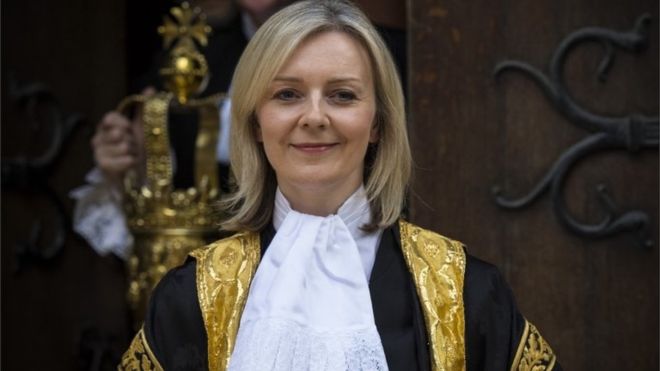
Liz Truss former Lord Chancellor Pic credit:BBC

CROSS POSTED ON BYLINE.COM

UPDATE: At a Press Gallery lunch in Parliament last week I raised the issue of the Supreme Court ruling and the potential case to be brought by three judges with David Lidington, the current Lord Chancellor and Justice Secretary.

He did not want to comment about the Supreme Court judgement or any pending legal action but he vigorously defended any of the judges from institutional racism. He said it would be against their ” oath of office” and  believed all of them would be  fair minded and ” in no way racist.” He did admit that the judiciary did not have enough judges from black and ethnic minorities and promised a ” mentoring programme” so more top barristers would come forward and become judges.

Michael Gove and Liz Truss, two former Lord Chancellors,  the former lord chief justice, Lord Thomas, six High Court judges and  heads of the tribunal services are facing lthe prospect of legal action for victimisation and racial discrimination by three fellow black and Asian  judges and a black former tribunal member following a ground breaking ruling by the Supreme Court. An article appears in this week’s Tribune magazine. the link is here.

The virtually unreported Supreme Court judgement last week, which involved interpreting an EU equality treatment directive, is seen by campaigners as removing immunity claimed by the Ministry of Justice, the Metropolitan Police, magistrates and tribunal bodies, barristers, solicitors, doctors and dentists disciplinary bodies, from the Equality Act when handling misconduct inquiries.

It will also apply to disciplinary hearings involving sexual and gender discrimination and disabled people.

The original case was brought by a disabled black woman police officer, known as Ms P against the Metropolitan Police. She claimed discrimination because of her disability during a disciplinary and misconduct hearing.  She had previously been assaulted and was then involved in an incident which led to her arrest. She claimed post traumatic distress syndrome following the assault had led her to act in this way.  The panel rejected her claim and she was dismissed immediately.  She appealed to an employment tribunal  saying she had been  subject to disability discrimination but it struck out her case because it ruled that the panel was exempt from the Equality Act.

Her case was turned down by the lower courts but they have now been overruled by the Supreme Court. At the hearing her case was joined by four black and ethnic minority organisations, Operation Black Vote, Black Activists Rising Against the Cuts (BARAC UK) the Society of Black Lawyers, and The Association of Muslim Lawyers who asked for a ruling on civil law in this case.

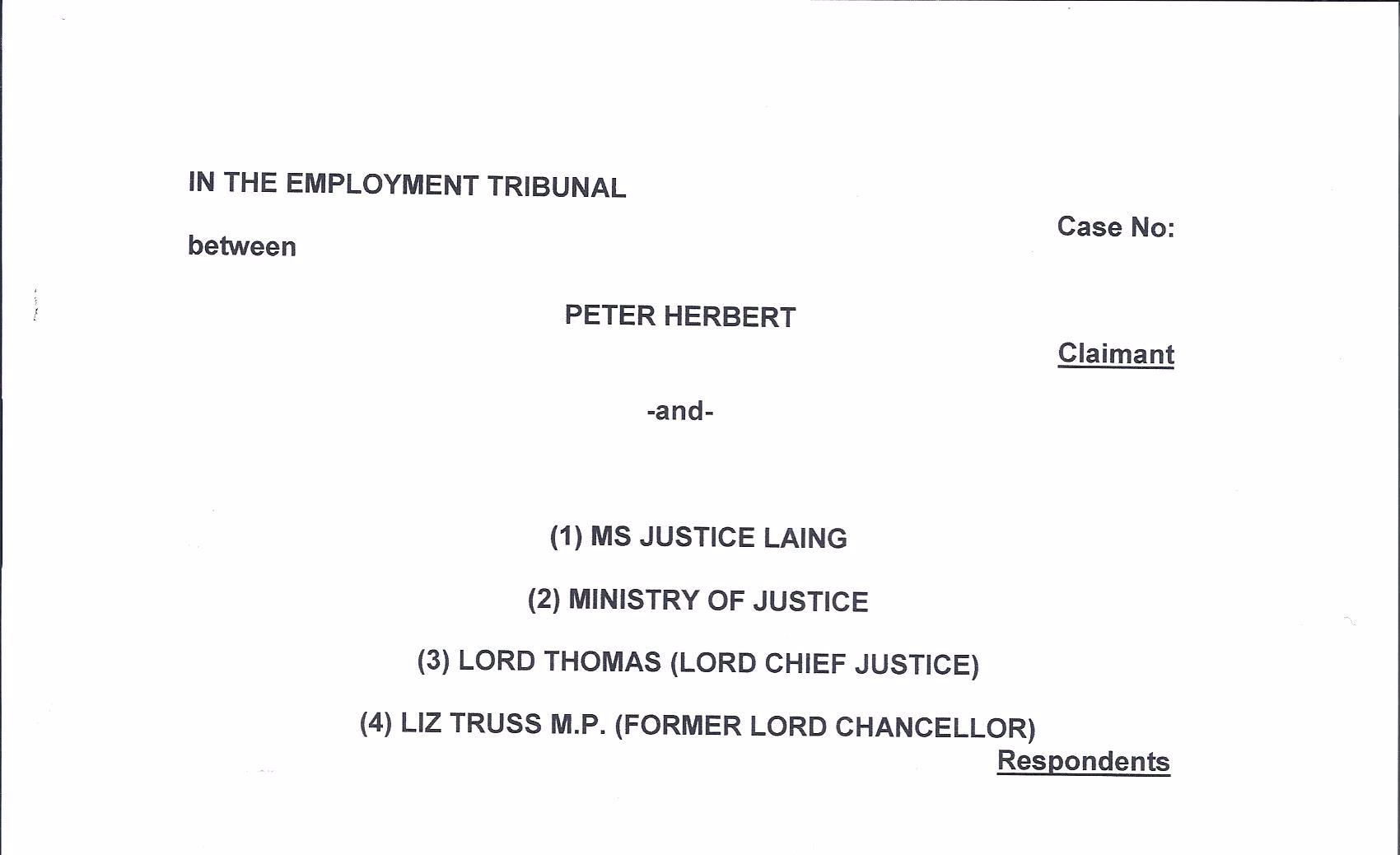
pete rherbert caseThe ruling has had an immediate impact on four other cases involving racial discrimination and victimisation brought by three judges and a tribunal member that had been stayed at employment tribunals because the Ministry of Justice said it had immunity under the Equality Act.
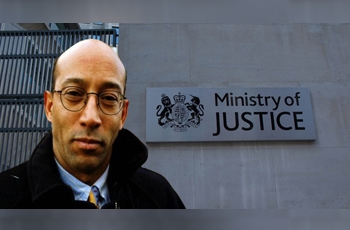

These involve cases bought by Peter Herbert, a recorder and part time immigration and employment judge and chair of the Society of Black Lawyers; Daniel Bekwe,of African descent,  a former member of Croydon Employment tribunal; a district judge and an immigration judge, who plan to go public at a later date.

Peter-Herbert-2

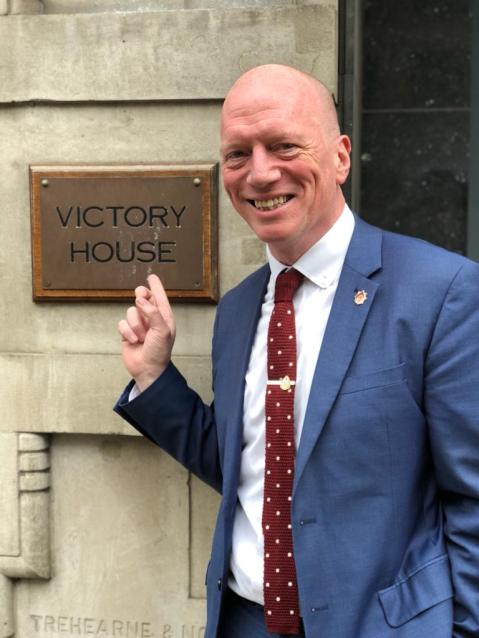
Recorder Peter Herbert who is also chair of the Society of Black Lawyers. Pic Credit: Operation Black Vote

Mr Herbert said: “We met last night and decided that our solicitor will write to the Employment Tribunal asking for the stay to be lifted and the hearing re-opened following the supreme court’s judgement. We hope to get a hearing in December.”

Dianne Abbott, the shadow home secretary, is planning to raise questions with ministers on the judgement.

Groups were jubilant following the ruling. BARAC said: “Today’s important ruling we believe, means that Judges, Magistrates, lay tribunal members, barristers, solicitors, doctors, dentists, nurses and other professionals and office holders cannot be prevented from enjoying the full protection of the Equality Act 2010. We are writing to the MoJ and the Government to ask them to clarify all those professions where this ruling will apply.”

Lord Herman Ouseley, former Chair of the Commission for Racial Equality and the Chair of Kick It Out stated:

“There should be no hiding place in the form of judicial immunity for decision making bodies, decision makers and their processes enabling institutions to lawfully discriminate and not have these decisions challenged by those persons affected.
Too many attempts have already been made by the state to restrict access to and
therefore deny justice for individuals rightfully seeking to invoke the provisions of the
Equality Act 2010. No more denial of Justice”

Lee Jasper, former adviser to the Mayor of London on Equality, Chair of London Criminal Justice Consortium stated:

“The filing of an amicus brief indicates a renewed determination by British black organisations to embark on a focused legal strategy to achieve civil rights and equality. The notion of legal immunity from the Equality Act 2010 will now be the subject of intense legal examination. The black WPC at the centre of this case has been to hell at back at the hands of the Metropolitan Police, suffering the triple oppressions of race, gender and disability.”

“ Those involved in the suspension of Recorder Peter Herbert can now be exposed as exercising institutional white privilege,   as they had been given cover by the
Government relying on the misguided concept of judicial immunity to give licence
to institutional racism. ”

The decision  by the Supreme Court will have enormous ramifications for disciplinary panels. But there is also  extraordinary irony as well. This case could be appealed by the Metropolitan Police or the Ministry of Justice to the European Court of Justice.

But given the entire  stance being taken at the Brexit negotiations where the ECJ is a red line for ministers – it is the one thing that the government can’t do.

Meanwhile the Equality and Human Rights Commission has indicated it wants to make sure the government doesn’t sneakily change the law once we have left the EU.

EHRC Chief Executive Rebecca Hilsenrath said:”This case goes to highlight the importance of EU law in protecting fundamental rights. This is why we are pressing for amendments to the Withdrawal Bill to protect our rights under the Brexit process.”

A summary of the Supreme Court judgement is here.

The Brexit court case: Much ado about nothing

daily-mail-enemies-of-the-people

The absurd and despicable take by the Daily Mail on the court judgement

CROSS POSTED ON BYLINE.COM

The reaction to the High Court decision saying that Parliament should be able to debate and trigger Britain’s application to leave the EU has been both depressing and ludicrous.

Newspapers like the Sun, Daily Mail and Daily Telegraph have treated the judges as ” enemies of the people ” just for having the temerity to lay down what is a perfectly valid constitutional decision.

They have NOT ruled that Britain should never leave the European Union but only that our leaving should follow proper constitutional procedures.

The papers have whipped up popularism on a totally false premise and played to the ignorance of people about what is actually happening.

The people who voted to leave the European Union should be delighted not furious about what has happened.

Their main case for leaving the EU was that they didn’t want to be ruled by Brussels and wanted to take back our sovereignty to rule ourselves.

Well what has happened. A British court composed of British judges has ruled that a British Parliament should have the last word and decide how we leave the EU. Brussels or any other foreign power has not said a word.

That seems perfectly reasonable to me. We are a Parliamentary democracy who elect MPs to pass laws and take up issues on our behalf. What we had earlier this year was a referendum not a general election in which the people decided to leave the EU. Therefore it  is Parliament not the government that should be guardian of that referendum.

The last general election was won by a party that promised a referendum on whether we should leave the EU, not on a mandate that we will leave the EU – you had to vote UKIP for that.

The other criticism of media coverage of this ruling is the  despicable attack on both the person who brought the case and on the judges themselves. Anybody has a right to bring a case and the idea they should be pilloried for doing so is anathema to democracy.

And the attack on the judges – particularly the homophobic criticism of one of them – was absolutely beyond the pale. What right has the Daily Mail to highlight that one of the judges was gay. Do we have ruling that no gay judge can pass judgement in this country? That is utterly despicable – worthy more of Donald Trump than Paul Dacre.

There is another profound reason why Parliament should make the final decision. Yes we voted to leave the EU but nobody was given a clear picture of how we were going to leave the EU during the referendum. The No camp did not have a plan.

So given there  about 57 Heinz varieties of doing so – it is right that our MPs and for that matter peers under the present system  should  debate  how we are going to do it and question the government on their plans.

The government is arguing that to do so would give away their hand. This is ridiculous and untenable. If the government think they can negotiate in secret  they misunderstand the role of the press in this country and Europe. their plans will inevitably be leaked and when it comes to the negotiations to leave in Europe- journalists will have the resources to tap officials from 28 countries to find out what is going on. Theresa May is living in cloud cuckoo land if she thinks she can keep a lid on it.

So what is all this sound and fury about this decision by the judges – in my view it is much ado about nothing. People should grow up and accept in a mature democracy the issue should be debated and decided in the best forum to safeguard our sovereignty- Parliament.


Child Sex Abuse Inquiry: Survivors should unite not fight

The future of the current child sex abuse inquiry reaches a  ” make or break ” moment this Wednesday. On that day it will either be wound up or reinvented.

What has particularly depressed me about the whole business is the way it has been handled. The Home Office, in particular, has not covered itself in glory – recommending two chairs that had to resign – and with a new chair still to be appointed months after the inquiry was originally set up.

What started with great hopes when seven MPs of opposing parties got together to ask Theresa May, the home secretary, to set this up has ended in despair with people quarrelling with each other on-line, demanding resignations  of panel members and refusing to co-operate or attend listening events.

I don’t think people realise what a mean feat it is – thanks to the open-mindedness of Tory Mp, Zac Goldsmith- to get together  seven MPs from four parties with opposing views- Conservative, Labour, Liberal Democrat and Green – and get them to agree to press an initially reluctant government to set up the overarching inquiry in the first place.

The MPs have frankly not followed the ” yah boo ” script of scoring political points off each other – and tried to take the issue out of party politics. The Opposition has also rightly tempered its criticism of Theresa May in Parliament  when it would be easy to score cheap points from her discomfort as the debacle unfolded. They recognised she was genuinely committed to the inquiry- and respected that.

I wish I could say the same for some of the survivors and professionals but I can’t. By all means have a lively, rational debate on what is to be done and try to convince others of your case. But to descend into demanding people are removed from a panel, banned from attending meetings ( as the Survivors Alliance wants) or to claim that your view is what every one of the probably millions of survivors want is both arrogant and wrong.

You can change people’s minds. I originally thought it would be better to have a non statutory inquiry after the success of Hillsborough. I now think it should have statutory powers because of the issues it is dealing with – and the fact it has to tackle very powerful people whose instinct will be to want to cover  everything up.

However they are lots of ways to run a statutory inquiry. The simplest one is to scrap the existing panel replace it with a judge, employ phalanxes of highly paid lawyers and hold judicial style hearings where witnesses are cross-examined in public. This means it  will be transparent but survivors will have to face cross-examination even if their hearing is in private. It will also mean that the judge – and the judge alone – will decide what the report will say. And I am afraid the history on this is not good – with  findings often at odds with the evidence presented – take Hutton and Leveson for starters. Or more pertinently, take the Waterhouse inquiry into North Wales child sexual abuse, which is now having to be reviewed. Also statutory inquiries can be delayed and delayed  as lawyers argue about their findings – as is the Chilcot inquiry into the Iraq War for example,

Survivors will be confined to giving their evidence in this model -but the judge will decide whether to believe them.

The other way to do this is to combine the present panel with a judge and work in a collegiate way. Here survivors not only give evidence but alongside other professional people – have an input into what the report will say. They are real participants.

Just a moment. Isn’t this what we have got already? Yes it is, we have a panel of  experts who can tackle the issue and understand child sexual abuse. So why throw the whole thing out and start again.

Now it is clear from an article I have written with Mark Watts in Exaro today that while some survivors  and professionals have told Theresa May the whole inquiry has to be scrapped other survivors who have attended the listening events in London and Manchester passionately want it to continue. And I don’t understand why the people who want it scrapped seem to want to deny the people who want it to continue any voice. Particularly as some of them have turned down invitations to attend.

Isn’t it  about time that survivors tried  to work with each other rather than undermine each other?

Misusing deregulation to smash journalists’ freedom

One of the most precious freedoms for journalists is the protection of their sources. Now it appears the Cabinet Office is using an obscure bill – as part of the government’s drive to cut “red tape”- as cover to erode that freedom.
By changing the rules to allow the police to go to court to obtain reporter’s notebooks, pictures and computer files- without facing an open challenge from newspapers, TV, or even individual freelance journalists themselves – they are placing that protection in serious danger.
No wonder the Newspaper Society is up in arms and media lawyers are raising very serious questions. There is an excellent and elegant argument on the Inforrm blog by Gill Phillips,the Director of Editorial Legal Services at Guardian News and Media, about the dangers.
She rightly concludes: “This appears to be yet another backdoor attempt to limit and restrict essential and hard-fought journalistic protections.”
Bloggers should also be aware of this as it could affect them – and they will be much more vulnerable to a police raid- as they would be in a weak position to defend themselves. It is worth reading Vox Political’s blog on this point and taking action.

The official response according to my former colleague Owen Bowcott in the Guardian has been muted.
He reports :A Cabinet Office spokesman said: “Every measure in the deregulation bill is intended to remove unnecessary bureaucracy. Clause 47 would bring the Police and Criminal Evidence Act into line with other legislation in this area and would allow the criminal procedure rules committee to make procedure rules that are consistent and fair.

” However, the government has noted the concerns raised about this issue and Oliver Letwin is happy to meet with media organisations about this before the bill goes to committee.”
I think the government should go further and drop this now. It can hardly save much money and I think their motives in introducing this are questionable and undo good work under the Defamation act and by the Information Commissioners’ Office to protect journalists from interference by the police and the state.