Justice minister Sarah Sackman KC: Apologist for a failing county court system

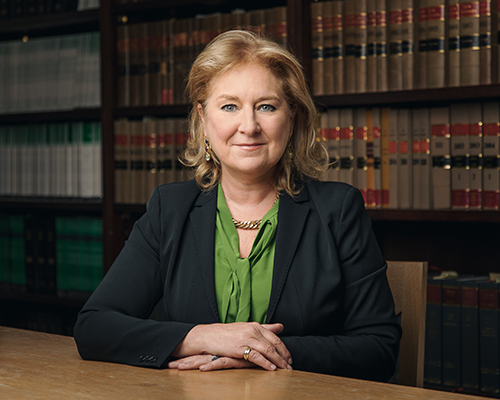
Sarah Sackman KC:Justice minister

At the end of July I published a scathing report from the House of Commons Justice Committee on the appalling state of the dysfunctional county court system. MPs were so appalled that they demanded a root and branch inquiry into the system to address its myriad problems – huge waiting times to hear cases, court buildings infested by rats, lack of disabled access and a chaotic and incompatible digital system to handle cases. You can read it again here .

Now we have the ministerial response. And what a tepid, pathetic and apology for an answer it is from Sarah Sackman KC. It even incorporates a potential ” pork barrel” issue with somehow one of the few courts now undergoing modernisation is in her own Finchley and Golders Green constituency in North London.

She rejects the main finding of the committee – the call for the inquiry to deal with the problem.

She said: “Rather than focusing on a root and branch review of the County Court, the Government is keen to focus on taking tangible and practical steps to improve the operation of the County CShe rejects the main finding of the committee – the call for the inquiry to deal with the problem.

She said: “Rather than focusing on a root and branch review of the County Court, the Government is keen to focus on taking tangible and practical steps to improve the operation of the County Court – which will benefit everyday users – without further delay. We are already seeing these measures bear fruit with improvements to the timeliness of claims that got to trial, improving call waiting times, growth in small claims mediation and further improvement to case management and file transfer systems.”

Her so called improvements include a reduction in waiting times for Small Claims cases from 50.5 weeks a year go to an amazing 49.2 weeks up to July. A fantastic reduction of of 1.3 weeks – I am sure she being cheered to the rafters for that. While those waiting longer face a 72.4 week delay compared to 79 weeks a year ago. I am sure they appreciate that.

Meanwhile many litigants are facing wasted costs for travel, legal fees and subsistence to attend hearings that are ” overlisted ” or as the result of poor management of the courts and MPs thought they should be compensated. But for Sarah Sackman ” over listing ” is fine and she rejected any money to reimburse claimants.

Probably the most interesting revelation is the paucity of the programme to modernise the courts to bring them up to 21st century standards. Only three courts are currently being modernised- Norwich, Taunton and Barnet and there are plans for Reading and Blackpool.

The Barnet court project got funding in October 2024 – three months after Sarah Sackman had been appointed solicitor general and two months after she became justice minister. I may be being unfair to her but I do find it curious that of all the courts to get modernise first is in her constituency.

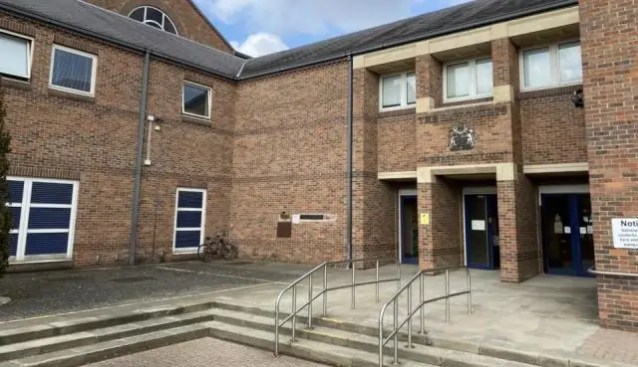
Barnet County Court, Regents Park Road, Finchley

When you compare this with the long list in the justice committee ‘of courts that don’t even provide wheelchair access – only Taunton is being modernised. So for disabled people there is no hope of admission to Mansfield County Court; Brentford County Court; Darlington County Court ;Edmonton County Court; Hertford County Court and Lewes Combined Court Centre to name a few.

She does accept a number of reforms to improve digital communication in county courts but again I wonder if these will just add to the different schemes already in operation. On litigants in person, she accepted that there should be more granular data on their cases and also that guidance for litigants should be improved . But I wonder how far this will go given the heavy criticism from MPs on how difficult it is for litigants in person to understand procedure.

Frankly this is a disappointing response from the new Labour government to tackle the enormous problems in the court service and Sarah Sackman as a KC should be well aware of this. But it seems to reflect the general public mood that Labour is failing to make an impact.

The full response to MPs is here.

One-Time
Monthly
Yearly

Make a one-time donation

Make a monthly donation

Make a yearly donation

Choose an amount

£5.00
£10.00
£20.00
£5.00
£15.00
£100.00
£5.00
£15.00
£100.00

Or enter a custom amount

£

Your contribution is appreciated.

Your contribution is appreciated.

Your contribution is appreciated.

DonateDonate monthlyDonate yearly


You can also donate via PayPal using the link below.

https://www.paypal.com/ncp/payment/865JAS3QJ3C

Whistleblower claimant denied justice after employment tribunal transcript recording was so corrupted it was unreadable

A stormy tribunal case around Bradford City Hall. An AI generated image.

The Employment Tribunal system is being dragged kicking and screaming into the 21st century yet still fails to deliver on open justice or provide what should be a basic expectation: a recording or transcript of public proceedings. Many claimants navigating the painfully slow-moving appeals process cannot obtain recordings because their original hearings predate the introduction of the recording system. The only alternative—the judge’s notes—will never be released, according to the Judicial Conduct Investigation Office. 

Labour MP Anna Dixon recently raised this as a serious issue again at a Public Accounts Committee meeting in Parliament. Officials were unable to ,provide an answer.

Now a new problem has emerged: corrupted recordings. This latest case involves a 2024 hearing at Leeds Employment Tribunal between former Bradford Council employee Noreen Taylor and the authority, presided over by Judge Neil Maidment. Taylor had been employed as a contracted employment hub coach in the Children’s services Skills House team

Judge Maidment dismissed Taylor’s case, where she had raised serious concerns including safeguarding failures affecting children, notably by one staff member; data protection breaches involving children; misuse of European funds and recruitment irregularities. The recruitment irregularities emerged after evidence and were accepted by the respondents. Applicants were encouraged to apply for two jobs – a business manager and programme services manager – that had already been filled a month earlier.

Taylor said she had suffered years of detrimental treatment by senior staff there, many of whom have now left. But it was not until the first day of a 14 day trial that the council accepted 9 out of 13 protested disclosures.

Astonishingly, when she stated her lawful right to contact her MP and report these issues to police, she was warned against doing so.

Judge described claimants racism fears as ” jovial fun”

Taylor, who is from an ethnic minority background, was singled out in a business meeting with her white British colleagues. During the meeting, she was repeatedly referred to as “your inner chimp, Noreen your chimp,” and everyone laughed—except Taylor. She later confirmed via texts and phone calls with her colleagues that she had been visibly upset and distressed by these comments. The judge did not agree and described it as ” jovial fun”.

This incident occurred after Taylor had raised whistleblowing concerns, in what appeared to be an attempt to shut her down. The business manager, who had been involved in recruitment irregularities, was supported by the Assistant Director of Children’s Services. This detrimental racial treatment of Taylor continued for months, ultimately affecting her health. The manager later explained in an internal meeting that his reference to The Chimp Paradox was intended to refer to a behaviorial psychology book, not as a racist remark aimed at Taylor

Taylor, who was experiencing disability-related health issues, due to the onslaught of bullying and harassment within Children’s services was ultimately dismissed on ill health capability grounds, this was after she was kept as a NIL pay employee for years until the council covered up and prevaricated, intimidated, harassed and even trespassed into her house shown  on CCTV and to the ET Judges at Leeds.

The judge ruled that her dismissal was due to ill health, and not her whistleblowing activity. Despite her protected disclosures being linked to a long list of detriments, she was subject to exclusion, harassment, gas lighting when she raised concerns. She was removed from the business team and her IT access and her work email address was stopped.

She was a litigant in person pitched against the fourth largest local authority who had the money and access to barristers to fight her. It took the authority from late 2020 until the 14 day trial in April 2024 to accept any of her protective disclosures. But she was determined to continue for the sake of getting vulnerable children justice.

During the preliminary hearings, she says one of the judges referred to the head of legal team on first name terms and did not recuse himself. Later it was found out the judge was employed by the council as a consultant. This judge threatened to strike out all her whistleblowing claims at the request of the council’s lawyers but did not succeed. She had been unable to get the Judicial Conduct Investigations Office to investigate her complaint, because it came too late as she had only three months to complain.

In May 2024 Taylor says the judge appeared to do a U turn by portraying her in a negative way after accepting at a preliminary hearing there was a case to answer particularly over the safeguarding issues.

Transcripts of hearing withheld for 2 years

Taylor immediately decided to appeal but encountered months of obstruction and delays in obtaining the hearing transcript. She needed the transcript to challenge evidence given by a staff member (and to lodge a complaint about the conduct of the judge) Even after Conservative MP Robbie Moore who represents Keighley and Ilkley became involved the claimants request for a transcript was sent again in December 2024 but clerks gave varying excuses making each and every one more suspect, yet from May 2024 to end of 2025 it will be almost 2 years the transcript has been withheld by Leeds ET by current Regional Judge D N Jones.

 For a July Employment Appeal Tribunal hearing, she enlisted veteran whistleblower Alison McDermott to act as a McKenzie friend.

At the Rule 3.10 hearing—which determines whether an appeal can proceed—Taylor explained her inability to obtain the transcript. The EAT judge was sympathetic, telling her: “I don’t have the power to order the lower courts to produce it because it’s an administrative matter, but I can direct a letter to the acting regional judge explaining you have an appeal and that the transcript is required. I am content if you’re applying to adjourn today’s hearing until the trial transcript is provided.”

Taylor has now been informed she cannot have the transcript because the recording SENT BY LEEDS ET  is too damaged. Acolad, which processes court recordings, told her: “Unfortunately, our back office advised the disc was too damaged to extract any information as it wasn’t possible to upload the audio from the disc to the system.”Acolad have emailed and written to Leeds ET on numerous occasions and have been ignored for months since July 2024.

Without the transcript, Taylor cannot proceed with her appeal application. This extraordinary situation points to either gross incompetence or negligence at Leeds Employment Tribunal—another example of a broken system. Staff should know whether a recording is functioning properly.
Taylor says: “It is outrageous  that a whistleblower who raised serious concerns about child safeguarding can be denied my right to appeal because the tribunal failed in its basic duty to maintain a proper record of proceedings. This isn’t just administrative failure—it’s a perversion of justice that makes a mockery of the entire tribunal system. 

How can justice be seen to be done when there is no verifiable record of what was said? This goes to the heart of the rule of law and the principle that courts must be accountable and transparent.”

But for the whistleblower it is another dead end and an impediment to get any justice.

Meanwhile the justice department continues to obfuscate over the provision of court records to claimants.

On 20 March 2025, Anna Dixon MP asked the Ministry of Justice two questions at the Public Accounts Committee. Simple questions. Pre-notified questions.

“How can people receive a fair trial if a record of proceedings is not made available to them?”

“How can judges block access to those records when they themselves are being accused of misconduct?”

Dr Jo Farrar, the Permanent Secretary, talked about “court productivity.” Gemma Hewison, Director General, said: “We’ll have to write to the Committee.”

They couldn’t answer. Because the answer is indefensible.

One-Time
Monthly
Yearly

Make a one-time donation

Make a monthly donation

Make a yearly donation

Choose an amount

£5.00
£10.00
£20.00
£5.00
£15.00
£100.00
£5.00
£15.00
£100.00

Or enter a custom amount

£

Your contribution is appreciated.

Your contribution is appreciated.

Your contribution is appreciated.

DonateDonate monthlyDonate yearly

You can also donate to Westminster Confidential via PayPal using the link below

https://www.paypal.com/ncp/payment/865JAS3QJ3

The Black Hole of Accountability: Employment Judges Block Evidence in Their Own Misconduct Cases

Judge Barry Clarke who is president of employment tribunals in England and Wales

The English and Welsh Employment Tribunal system is operating under an extraordinary contradiction that strikes at the heart of judicial accountability: judges accused of misconduct can legally withhold the only evidence that exists against them.

This isn’t a bureaucratic quirk. It’s a fundamental breach of justice that’s destroying lives and making a mockery of the complaints system.

The Case That Exposes Everything

Employment Judge Philip Lancaster faces multiple misconduct complaints from whistleblowers, including Sellafield Whistleblower, Alison McDermott, and many others. The evidence needed to investigate these complaints? The judge’s own handwritten notes from the hearings in question.

Here’s where it gets explosive: Justice Secretary Shabana Mahmood has confirmed to MPs that where no audio recording exists, these judges’ notes constitute the official court record.

Yet Lancaster refuses to release the official court record. The very judicial notes that the Justice Secretary says are the official record. The only evidence that exists of what happened in his courtroom.

In other words, the judge accused of multiple breaches of misconduct and betraying his judicial oath has become the sole gatekeeper of the evidence against himself.

A System Designed to Block Scrutiny

Let’s be absolutely clear about what’s happening here. No other professional under investigation could do this:

  • Police officers can’t withhold bodycam footage when under investigation
  • Civil servants can’t lock away departmental emails
  • Politicians can’t refuse to release official documents
  • Doctors can’t refuse to release patient notes

But Employment Tribunal judges can — and do — withhold their notes – the only record of proceedings, even when facing serious misconduct allegations and even though the Justice Secretary has categorically confirmed that the judicial notes are the official court record.

The President’s Defensive Wall

When I pressed Judge Barry Clarke, President of the Employment Tribunal, for answers to this blatant unfairness, the response was revealing. I asked  direct questions:

  1. Does he accept that judges’ notes are the official record, as stated by the Justice Secretary?
  2. If yes, what legal authority allows Lancaster to withhold them?
  3. If no, who can intervene?

Instead of answers, I received pages of case law about judicial independence — a concept that was never meant to shield judges from accountability when facing misconduct investigations.  Clarke’s office has chosen to defend a practice that subverts open justice rather than confront a shocking flaw that undermines the entire tribunal system.

Clarke defended the practice as a matter of “judicial discretion.” But this is precisely the problem: access to the official court record should never be discretionary. It should be an absolute right. In every other court in the land, parties can obtain transcripts, recordings, or official records of proceedings. But in the Employment Tribunal, Clarke has normalised a system where individual judges become personal owners of public records, free to release or suppress them as they see fit. This isn’t about protecting judicial independence — it’s about placing judges above the law.

The fact that Clarke sees nothing wrong with a judge under investigation controlling access to evidence against himself reveals how deeply this corruption has infected the tribunal system. When the President himself cannot grasp that court records belong to the public, not to individual judges, we’re no longer talking about reform. We’re talking about a system that needs to be torn down and rebuilt from scratch.

“This Is Not Justice — It’s a Travesty”

For Alison McDermott, the Sellafield whistleblower, who is leading a judicial review against Employment Judge Lancaster, the situation is both personal and devastating:

“I was horrified to discover my hearing was not recorded. No audio, no video — nothing. Judge Lancaster, who is facing multiple charges of misconduct, is refusing to release the very evidence that could prove it. In any other profession, this would be seen as obstructing evidence. In the Employment Tribunal, they call it standard practice. We’re not asking for special treatment. We’re simply asking for the official court record of our own hearing. But in Britain’s tribunals, the accused judge gets to be the gatekeeper. When judges can keep secret notes, and then withhold those notes when under investigation, we don’t have a justice system. We have a closed shop where judges police themselves. .This is not justice.  It is disgusting perversion of justice and a travesty that denies any possibility of a fair trial.”

The Deeper Rot

This scandal reveals three interconnected failures that should alarm anyone who believes in the rule of law:

First, many Employment Tribunals don’t record their proceedings. In an age where every high street shop has CCTV, our tribunals rely solely on judges’ handwritten notes — notes taken by people who receive no training in accurate record-keeping and face no monitoring of their note-taking abilities.

Second, these unverified notes become the official court record. Your career, your reputation, your access to justice — all hang on a judge’s personal scribbles. Yet you are denied access to them.

Third, when that judge faces investigation, they alone decide whether anyone can see those notes. The accused becomes the gate keeper of the very evidence needed to prove misconduct.

Why This Matters Beyond One Case

This isn’t simply about Judge Lancaster. It’s about a system that has abandoned its most basic principle: open justice. The latest annual report from the Judicial Appointments and Conduct Ombudsman – see here – show that there were 424 complaints against judges last financial year where people contacted the Ombudsman because they were dissatisfied. Of course only a few – 23 – were investigated – the vast majority being thrown out often because it breached the three month time limit for complaints to be heard.

Regional Judges and the President of the Employment Tribunal have also applied this three month deadline rigidly, striking out cases before their substance can even be tested. Campaigners say the effect is to silence victims and protect those in positions of power. And now Baroness Harriet Harman agrees.

Harriet Harman’s Independent Review of Bullying, Harassment and Sexual Harassment at the Bar [see here]was blunt about the flaws. In paragraph 34 she wrote: “There is no benefit in restricting complaints arbitrarily. Indeed, the only practical benefit it has is to protect those engaging in misconduct.” She added it was “surprising that the judiciary confirmed the reasonableness of this time limit after reviewing it as part of the consultation on judicial discipline in 2023.”

Courts must be open to scrutiny. Proceedings must be transparent. The court record. must be accessible. These aren’t optional extras — they’re the key foundations that separate justice from an abuse of arbitrary power.

The Question That Demands an Answer

Either the Justice Secretary is right that judges’ notes are the official court record — in which case Lancaster’s refusal to release them is a scandal that should trigger immediate intervention — or she has misled MPs about how the tribunal system actually works.

There is no third option.

The government cannot claim these notes are the official record while simultaneously allowing judges to treat them as private property, especially when facing misconduct investigations.

A System in Crisis

A tribunal system that allows judges to withhold evidence against themselves cannot command public confidence. A President who defends this practice rather than reforming it has failed in his duty. A Justice Secretary who knows this is happening but doesn’t act has abandoned her responsibility.

The principle is devastatingly simple: without access to the court record, there can be no proper appeals, no effective complaints process, and no real justice.

Until this changes, the Employment Tribunal will remain what it has become: a system where judges facing serious allegations can simply make the evidence disappear.

That’s not judicial independence. It’s judicial impunity.

And in a democracy that claims to value the rule of law, it’s completely unacceptable.

The full letter from his office is here if you want to read it.

Also it is essential to help fund the judicial review so it can reach its £30,000 target. The link to donate is https://www.crowdjustice.com/case/exposing-judge-lancaster/

One-Time
Monthly
Yearly

Make a one-time donation

Make a monthly donation

Make a yearly donation

Choose an amount

£5.00
£10.00
£20.00
£5.00
£15.00
£100.00
£5.00
£15.00
£100.00

Or enter a custom amount

£

Your contribution is appreciated.

Your contribution is appreciated.

Your contribution is appreciated.

DonateDonate monthlyDonate yearly

You can donate via PayPal via this link

https://www.paypal.com/ncp/payment/865JAS3QJ3CGQ

Institutional Corruption in Employment Tribunals: Dr Chris Day’s damning letter to top judge

Lord Fairley

Veteran NHS whistleblower campaigner, Dr Chris Day, has written a damning letter to Lord Fairley, President of the Employment Appeal Tribunal, accusing the system of “Institutional Corruption” in the way it has handled his case.

Dr Day, who has just lost an appeal case heard by employment appeal judge Sheldon, compared the way both the employment appeal court and the previous employment tribunal handled the proceedings to the verdict in the infamous Daniel Morgan murder case which has never been solved after a trial of suspects collapsed.

The way this murder was handled by the Metropolitan police led the independent panel to rule: ““Concealing or denying failings, for the sake of an organisation’s public image, is dishonesty on the part of the organisation for reputational benefit. In the Panel’s view, this constitutes a form of institutional corruption.”

Dr Day has emerged bloodied but not unbowed from a judgment that rejected all the detriments he claimed and was surprisingly unconcerned about the defendants Lewisham and Greenwich Health Trust’s chief executive lying on oath about a board meeting and its deputy communications office, Mr Cocke, destroying 90,000 emails that could have been useful to his case during the hearing. The worst the judgment could say was this was ” troubling.” Given this centred on his whistleblowing about the avoidable deaths of two patients in Woolwich hospital’s intensive care unit, which the trust has always tried to deny, this is a remarkably tame comment.

What was particularly hurtful to Dr Day is that at the appeal hearing he was accused in open court of lying about cost threats. He had been clear that he was forced at one stage to try to settle his case because he was told by his barrister that he would face a proposed application from the NHS for £500,000. See my report on his wife’s evidence here.

Effectively he was being called a liar by saying this had happened. Instead there is copious evidence that it did happen.

As he says in his letter: “At my most recent hearing, Mr Justice Sheldon explicitly stated in front of public observers that I was “lying” about being threatened for costs. He did this in circumstances when he knew my belief in cost threats was robustly grounded on written material from by former barrister Chris Milsom. He also knew that this material was enough to convince 2 MPs, the Telegraph and Financial Times that I had been threatened for costs. Accusing me of lying about cost threats in these circumstances was nothing more than a cheap smear to make me look like a liar in public.”

Or as he wrote earlier: “Dishonest or deluded whistleblowers don’t tend to have the support of former health ministers, senior doctors and the BMA to fund a KC.”

Also there is ample evidence in reports by lawyers that attempts to put costs on whistleblowers are commonplace. Indeed some lawyers moan they can’t get enough of them.

Dt Chris Day

His complaint about ” institutional corruption ” is not directed at individual judges but at the legal system where lawyers socialise with each other and don’t want to see a colleague’s reputation or career damaged by having to admit they got it wrong.

As he says in his letter: “My complaint is not directed solely at individual judges but at the institutional handling of this matter. The EAT has placed judges in an impossible position: adjudicating on issues that, if determined on the evidence, would have serious implications for people with whom they admit to having ongoing professional or social relationships including being connected on social media.
“This is precisely the type of reputational self-protection identified as “institutional corruption” in the
Daniel Morgan inquiry. I am not expecting you or the EAT to do anything about this but want to record
my position and the fact that it has been put to you as EAT president. You will note 2 MPs have called
for a public inquiry into this case.”

The full letter is on the internet here. His account of the case on Linked In is on https://lnkd.in/dZuKkTFG.

My view from covering a number of tribunals- both involving whistleblower doctors, nurses and in the world of industry and the arts – is that lawyers are getting too cosy and comfortable with each other. Add to this the loss of media interest in all but the most lurid of court cases, there are precious few journalists left to observe what is happening in the courts.

All this is to the detriment of the ordinary member of the public when they fight their case. Arraigned against them is a club that knows how to fix the outcome. And this is destroying the principle of open justice and why we need radical reform of both the employment tribunal and county court system.

One-Time
Monthly
Yearly

Make a one-time donation

Make a monthly donation

Make a yearly donation

Choose an amount

£5.00
£10.00
£20.00
£5.00
£15.00
£100.00
£5.00
£15.00
£100.00

Or enter a custom amount

£

Your contribution is appreciated.

Your contribution is appreciated.

Your contribution is appreciated.

DonateDonate monthlyDonate yearly

Pay via Paypal. Use link below.

https://www.paypal.com/ncp/payment/865JAS3QJ3CGQ

Dysfunctional County Courts are a failure for civil justice, damning MPs report

Norwich County Court

Yet another arm of the court system has failed millions of people who want justice because it is totally dysfunctional, a scathing report by MPs warned this week.

The Commons Justice Committee describes the county court system as the ” Cinderella ” of civil justice, a finding that might be similarly applied to readers of this blog to those experiencing the employment tribunal system.

The report calls for an ‘urgent and comprehensive, root-and-branch’ review is required to address systemic delays and entrenched inefficiencies across its operations. It reveals a decade-long digital Reform programme has fallen well short of its ambition, leaving a myriad of incompatible systems and outdated paper-based processes. It still only covers 23 per cent of cases while the rest of the court cases rely on paper or a mixture of digital and paper.

Andrew Slaughter, the Labour chair of the justice committee, described the situation as one of the most serious problems and said the county court system was ” living in another world” compared to the rest of the country.

The scale of the mess is breath taking and it does not surprise me.

The report says: “We found that the situation in the County Court is dire and requires urgent attention. The court estate is in a state of significant disrepair following years of “chronic underfunding,” with regional variation remaining a perennial issue, and the operations of the court having been failed by a
dysfunctional attempt at digital reform. The Committee found that the problems would be all the greater without the commendable efforts of court staff to operate a system that fails to provide access to justice”

The report describes buildings subject to rat infestations and still containing asbestos and wondered if any of the £220 million allocated to rebuilding the court system had been spent on county courts.

Other problems include access to the courts which amounts to a postcode lottery and the retention of staff when facing a big turnover of people. Examples of the first problem included some courts like Barnet and Romford not responding to inquiries and Mansfield County Court; Brentford County Court;
Darlington County Court ;Edmonton County Court; Hertford County Court; Lewes Combined Court Centre; and Taunton Crown,County and Family Court not permitting people in wheelchairs to access the courts.

The report points out that many people bringing cases to court are litigants in person and says the problems people face needed to be addressed.

The report says: “Despite persistent calls, litigants-in-person are not adequately supported through the court process. The language used in court applications is inaccessible, court procedure is not explained, and there is limited support available. The insufficient data collection on the prevalence of litigants-in-person means the Ministry of Justice cannot understand how to direct and provide the support needed.”

The report reveals that five decades ago in the 1970s this issue was raised and still nothing has been done about it.

I am at present monitoring one case at Sheffield County Court involving a young welder, Matthew Reynolds, who got life changing injuries after a heavy refractory brick fell 150 feet from the roof of the steel works at Port Talbot. The case has been going on for five years and he still has not adequate compensation as the case is dragged through the county courts in Doncaster and Sheffield. He is facing as a litigant in person expensively paid KC’s by Tata Steel, Babcock and an insurance company who while admitting liability don’t want to pay anywhere near the money he needs for the rest of his life. I intend to write up the full story as it proceeds through the county court system.

Andrew Slaughter, described his case as ” an extreme one”.

His committee is planning to look at the whole issue of legal aid across the legal and inquiry system after the previous Conservative government slashed billions from the legal aid budget.

Andrew Slaughter MP Pic Credit: Official Portrait Parliament

Andy Slaughter MP said: The conclusions of our report make for stark reading: the County Court is a dysfunctional system, that has failed adequately to deliver civil justice across England and Wales. It is the ‘Cinderella service’ of the justice system, evidenced by the reviews currently underway into both sentencing and the criminal courts, while there is a fundamental absence of any equivalent process across civil justice.

With over a million claims each year and a vast jurisdiction, the County Court is where most citizens and businesses encounter the justice system, yet it is beset by unacceptable delays, recruitment and retention issues across frontline staff and the Judiciary, and a complex “patchwork” of paper-based and digital systems.

The causes of the inefficiencies and delays in the County Court are chronic, following years of underfunding, yet what is unclear is how HM Courts and Tribunals Service (HMCTS), together with the Judiciary and the Ministry of Justice, intends to address such a serious situation.

“Justice delayed is justice denied. The Justice Committee recommends an urgent and comprehensive, root-and-branch review of the County Court launched by Spring 2026 to establish a sustainable plan for reducing the systemic delays and inefficiencies entrenched across its operations. It is not tenable to continue without fundamental reform.”

One-Time
Monthly
Yearly

Make a one-time donation

Make a monthly donation

Make a yearly donation

Choose an amount

£5.00
£10.00
£20.00
£5.00
£15.00
£100.00
£5.00
£15.00
£100.00

Or enter a custom amount

£

Your contribution is appreciated.

Your contribution is appreciated.

Your contribution is appreciated.

DonateDonate monthlyDonate yearly

Please donate to Westminster Confidential

£10.00

Top London coroner faces accusation of tampering with an inquest audio and a judicial review on the handling of her hearing into the death of an ITV journalist

Senior coroner Mary Hassell Pic credit: Archant

Judge blocked her attempt to keep her name secret during the hearing

A highly controversial senior coroner is facing serious allegations that she or her staff removed parts of a transcript and recording of her hearing into the death of a talented and hardworking ITV news editor Teresa McMahon who was found hanged at her home four years ago.

Mary Hassell found that she committed suicide and ruled out that she was subject to ” coercive control” by her ex boyfriend, Robert Chalmers, an NHS estates employee, who had previous convictions for violence. Mary Hassell believed the words of the pathologist ,Dr Mohammed Bashir, who examined the body but kept no photographic evidence and discounted domestic violence and Greater Manchester Police who decided from the start that no crime had been committed and never took any photographs either at the scene of her death.

Throughout the hearing this version was challenged by Teresa’s aunt, Lorna McMahon, who was frequently interrupted by Mary Hassell when she raised questions about the competence of Greater Manchester Police in handling the investigation into her niece’s death.

I was present at the hearing at the hearing with many other journalists. My report on it is here.

Yesterday’s hearing at the Royal Courts of Justice was meant to decide whether the court could give her permission to bring a judicial review into Mary Hassell’s hearing claiming her conduct was irrational and procedurally unfair in coming to her verdict.

Teresa McMahon

But the hearing took a completely different turn under Mr Justice Stephen Morris when Lorna McMahon, having obtained both the transcript and audio recording of the hearing said parts of both, covering descriptions of previous violence against her niece by her ex boyfriend had been omitted.

It also emerged from correspondence I have seen from Mary Hassell’s lawyers and a public ruling by a previous judge Mr Justice Kerr, that the coroner had tried to get her name kept out of the public domain during the hearing.

Her lawyers claimed ” it was customary” to be not named. She wanted it done under ” the slip rule” which meant there would be no hearing about the application. The judge ruled this procedure could not used in this way and rejected her application because it raised issues of ” open justice”.

When Mr Justice Morris heard Lorna McMahon’s evidence he weighed up whether to continue the hearing or adjourn it to allow her complaint to be properly looked at and for her to provide evidence from other people at the original hearing – including members of the public and journalists – to back up her claim.

All sides in the case agreed it was an extremely serious allegation which could be viewed as a criminal case of perverting the cause of justice.

Her own lawyer, Jonathan Glasson KC, agreed as such and but added by adjourning the case until the late autumn it meant that the accusations against the coroner were left hanging over her for some weeks.

The judge also made it clear by adjourning the hearing it did not mean that he was convinced about Lorna’s case and said she would need more evidence.

The directions he gave are worth reporting in full:

IT IS ORDERED THAT

  1. The application for permission to apply for judicial review is adjourned

2. By 4pm on 12 August 2025, the Claimant is to file and serve a witness statement, verified by statement of truth, identifying any and all parts of what was said at the hearing of the inquest by the Defendant on 5 December 2024 (“the Hearing”) which she contends have been omitted from the audio recording of the Hearing provided to the Court and the Claimant by email dated 14 July 2025 at 513pm and sent by Payne Hicks Beach LLP (“the Audio Recording”).

3. At the same time as filing and serving her witness statement pursuant to paragraph 2 above, the Claimant is to file and serve any and all witness statement evidence from others (including witnesses called at the Hearing and/or members of the press and/or members of the public) in support of her contention that parts of what was said at the Hearing have been omitted from the Audio Recording.

4 By 4pm on 9 September 2025, the Defendant is to file and serve a witness statement, verified by statement of truth, in response to the evidence filed and served pursuant to paragraphs 2 and 3 above, to include an explanation as to how the Audio Recording was produced.

5.By 4pm on 23 September 2025, the Claimant, if she so wishes, is to file and serve a written statement stating whether, and if so, why, she seeks a further oral hearing for directions in respect of the matters covered by paragraphs 2 to 4 above.

6.As soon as possible thereafter, the matter is to be placed before a judge (if possible, Mr Justice Morris) on the papers to consider directions for the progress of the case, and in particular whether there should be a further oral hearing dealing with the matters covered by paragraphs 2 to 4 above, taking account of all necessary reasonable adjustments.

7 The case to be reserved to Mr Justice Morris, if possible.

8. Costs of the adjournment and of the matters raised above reserved

This is the second recent case where there has been controversy about Mary Hassell’s handling of inquests.

Earlier that year she held an inquest into the tragic death of Gaia Young,25, who  was rushed to accident and emergency at University College Hospital with severe headaches only to die of an unexplained brain condition and doctors have yet to correctly diagnose what was wrong with her.

Again Mary Hassell  patronised and showed no empathy for her bereaved mother, Lady Dorit Young, who had lost her only child ,Gaia, and failed to properly investigate her death. The full story is on the Truth for Gaia website. She even blocked her from making a statement at the inquest. I reported that hearing and you can read about it here.

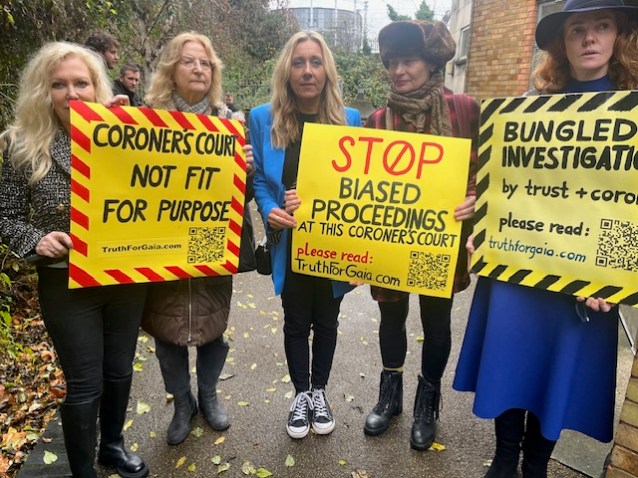
The treatment of both relatives led to a protest outside the coroner’s court during Teresa’s inquest. Pictures are below.

One-Time
Monthly
Yearly

Make a one-time donation

Make a monthly donation

Make a yearly donation

Choose an amount

£5.00
£10.00
£20.00
£5.00
£15.00
£100.00
£5.00
£15.00
£100.00

Or enter a custom amount

£

Your contribution is appreciated.

Your contribution is appreciated.

Your contribution is appreciated.

DonateDonate monthlyDonate yearly

Please donate to Westminster Confidential

£10.00

Ministry of Justice and Lady Chief Justice Dame Sue Carr refuse to explain the lawfulness of withholding official ET court records

05/07/2024. London, United Kingdom.Chancellor and Secretary of State for Justice, Shabana Mahmood. poses for a photograph following her appointment to Cabinet by Prime Minister Sir Keir Starmer in 10 Downing Street. Picture by Lauren Hurley / No 10 Downing Street

By David Hencke and Alison McDermott

Direct complaint to the Lord Chancellor signed by 150 people is being blocked by officials at the Ministry of Justice

Whitehall and the judiciary are engaged in an extraordinary exercise to block, obfuscate and deny there is a legal issue over the public release of judge’s notes where they amount to an official record in employment tribunals.

We are now in the absurd position of Barry Clarke, the President of Employment Tribunals in England and Wales, both admitting the judge’s notes where tribunals are not recorded are the only official record but saying at the same they must remain private because they are personal notes under the Data Protection Act.

Employment tribunals are already in transition. After a new practice ruling the aim is that all hearings will be recorded but that is not happening yet in many cases. Also transcripts of the hearings can be made available but litigants have to buy them at huge cost and are not provided before the six weeks deadline to appeal. So what’s the point of them ?

But for a majority of tribunals the only official record is the judge’s notes – which can be used by appeal judges when they are adjudicating on an appeal to guide them. Barry Clarke has recently ruled that they are the official record but the public, press and both parties involved in a case cannot see them.

Thus the one vital official record of what the judge has recorded about the case is kept secret – contrary to any policy of transparency and open justice. It also means judges are not open to scrutiny, could be biased against either the claimant or defendant, are out of step with other European court systems and in the days of digital recordings, keep an archaic system of hand written notes. It also means if there are complaints against judges – the secrecy of the notes means the judge can withhold the information to prove it which is very helpful to an errant judge.

So what is legal position of this which allows this type of official record to be withheld? This is the question that led Alison McDermott, a former ET complainant against Sellafield, and 150 other people to wrote to the Lord Chancellor demanding an explanation, using the examples I have quoted and many more.

The letter is here. But guess what? You can’t send it direct to the Lord Chancellor’s Office or even to the Lord Chancellor as an MP unless you are a constituent in Birmingham, Ladywood. Instead you can only write to the ministry of justice and hope it can be passed on.

Dame Sue Carr: Pic Credit: Rory Lindsay

So Alison McDermott and I decided another tack. I put questions into the Ministry of Justice press office to ask for explanations. Alison had previously been told by Dame Sue Carr, the Lady Chief Justice that the only way she would get answers was to go to the Appeal Courts – an incredibly expensive business. This is also absurd as it puts the onus on the claimant to get a ruling to clarify the law and makes a lot of money for lawyers. Most people are not involved in tribunals so why should they be denied from knowing where the law stands?.

These are the questions I put to the Ministry of Justice which it refused to answer:

1.Does the MoJ agree that an official record of legal proceedings, including Employment Tribunal hearings, must be made available to parties and the public?

 2.Which specific law or authority allows judges to withhold their notes from ET proceedings, given that  ET President  Barry Clarke has recently confirmed that these notes serve as the official record where no other record exists?

3. If no such law or authority exists will the MoJ commit to releasing all judges’ notes? 

 4.. If not, does the MoJ acknowledge that judges’ notes cannot be considered the official record, as official records must be accessible?

5. In the absence of an accessible official record, does the MoJ agree this breaches the right to a fair trial under Article 6 of the Human Rights Act?  If not, what is the justification? 

6.  Why is the MOJ suggesting  that this can be resolved by individual appeals, as proposed by the Lady Chief Justice to Ms McDermott, rather than providing a clear policy response that would benefit all ET users?

Answer came there none. The ministry declined to answer any questions and said it was a matter for the Judicial Office to answer the questions.

I put the same questions to the Judicial Office press office. I heard nothing for a week and then sent them a reminder. The initial response was to refer them back to the Ministry of Justice until they suddenly realised I had already contacted them.

The office then sent a reply. This is it.

“We have answered the questions we can from a judicial perspective (see below) but other questions are for not for us and you may wish to ask other parts of Government.

Parties involved in an Employment Tribunals are given decisions following a hearing. If the decision is a judgment, the Tribunal will either give an oral judgment with reasons or reserve its decision and give a written decision at a later date. ” It goes on to quote existing rules and procedures.

So here we have it. They haven’t answered my questions. There is a failure to confirm what the lawful basis is for a judge to withhold the official record of an ET hearing and they have side stepped whether the refusal to do so breaches the right to a fair trial.

Judge Barry Clarke, president of the England Wales employment tribunals- an outlier with Europe advocating secrecy

Alison using AI found how outdated and Nethanderal this is compared to other advanced democracies. In France, Germany, Spain, the Netherlands, Sweden, Belgium and Italy all parties have access to the judges’ notes. This leaves the UK as an outlier, failing to provide basic transparency in proceedings that can have life-altering consequences. .

It added: “The practices in these European countries generally support greater transparency and access to court records, including judges’ notes, in employment cases. This trend aligns with principles of fair trial and effective appeal rights, as parties are given the opportunity to fully understand and, if necessary, challenge the basis of decisions made against them.”

The conclusions using AI are very powerful;

“The current state of the UK’s employment tribunal system is untenable and legally questionable. It operates on a contradiction that undermines the very principles of justice it’s meant to uphold. The solution is clear, legally grounded, and non-negotiable:

  1. Judges’ notes must be released to all parties.
  2. All hearings must be recorded.
  3. These records must be made accessible to all parties involved.
  4. These steps are essential for maintaining the integrity of the UK’s legal system, ensuring compliance with human rights law, and upholding the principles of natural justice and open courts. The time for obfuscation and delay is over. It’s time to resolve this legal paradox and restore faith in our justice system. Release the notes, record the hearings, and let justice be truly seen to be done.”

Only in the UK do we pursue a policy of secrecy masquerading as privacy to cover up official records, frustrating claimants and respondents in employment tribunals, and protecting judges from any scrutiny that could effectively challenge them. What a backward country we are. A judicial review can change this and looking at procedures in Europe eventually lead to a well deserved adverse ruling against the UK in the European Court of Human Rights. We understand that the Lord Chancellor holds the copyright to all court records so she can decide to release them.

One-Time
Monthly
Yearly

Make a one-time donation

Make a monthly donation

Make a yearly donation

Choose an amount

£5.00
£10.00
£20.00
£5.00
£15.00
£100.00
£5.00
£15.00
£100.00

Or enter a custom amount

£

Your contribution is appreciated.

Your contribution is appreciated.

Your contribution is appreciated.

DonateDonate monthlyDonate yearly

Please donate to Westminster Confidential

£10.00