Exclusive: Infected Blood Compensation Authority plans to gag lawyers from publicly criticising their actions

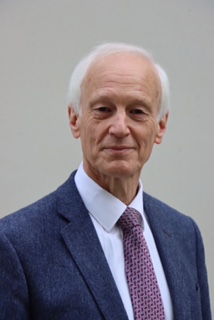
Sir Brian Langstaff, chair of the infected blood inquiry

Lawyers representing thousands of haemophiliacs who unknowingly got hepatitis, HIV and Aids from blood transfusions provided by drug addicts and criminals in the United States in one of Britain’s biggest health scandals could be gagged from publicly criticising compensation payments.

A new draft contract proposed by the Infected Blood Compensation Authority (ICBA), the body set up by the government to pay out an estimated £11.8 billion by 2029 ,could take legal action for ” reputational damage” if lawyers publicly criticise the authority’s actions without their permission.

The ICBA, despite its name, is not a public body, but a private contractor to the Cabinet Office, so it intends to impose a standard contract on people who deal with it.

The draft clauses read;

15.7.1 not make any press announcement or other public statement or publicise the Contract or any part of it in any way, or make any public statement about the Scheme, without the prior written consent of the Buyer [the Cabinet Office] and must take all reasonable endeavours to ensure that Supplier Staff do not either; and

15.7.2 not (and must ensure its Subcontractors do not) embarrass the Buyer or IBCA or otherwise bring the Buyer or IBCA into disrepute or diminish trust placed in the Buyer or IBCA (“Reputational Damage”) by engaging in any act or omission which is reasonably likely to diminish the trust that the public or Scheme Applicants place in the Buyer and/or IBCA or impacts the reputation of the Buyer and/or IBCA,

This effectively amounts to a comprehensive “gagging clause”, specifically prohibiting lawyers from making “any press announcement or other public statement” about the scheme without prior Cabinet Office approval. Firms would also be required to ensure their staff comply with these restrictions. 

The ICBA is seeking requirements that could compel law firms to take specific actions or make public statements at the IBCA’s direction to mitigate perceived reputational damage, regardless of whether any breach has occurred.

One law firm said; “On any basis this variation is unacceptable to us for professional, ethical and regulatory reasons.  This firm is instructed by individual clients to provide individual, independent legal advice regarding the scheme and will continue to do so.”

The Haemophilia Society, which also supports victims, is consulting lawyers about what action it should take to counter these proposed restrictions.

The  Cabinet Office has told people that these are standard clauses in procurement processes for private companies being paid taxpayers money, but that they are in conversations with IBCA but could not confirm the outcome.

The issue follows negative publicity over problems with interim compensation payments to people which generated criticism of the IBCA.

An IBCA spokesperson said:

“We are committed to supporting the infected blood community, and are working with legal providers currently to agree contracts that will provide support for those claiming. 

“The legal providers are not restricted in the legal advice they deliver to people claiming compensation, and we provided amended terms to clarify this. 

“We welcome an open discussion with all those who are impacted by infected blood, and those who represent them.”

Years of cover ups

Given the history of the infected blood scandal which dates back to the 1970s, culminating in the recent interim report by Sir Brian Langstaff, there have been years of cover -ups. People were never informed that their relatives were infected, there were attempts to use ” commercial confidentiality” to hide the source of the contamination, and this will not add to public trust or increase transparency.

So far £1 billion has been paid out in £100,000 interim payments and the IBCA is just starting to pay full compensation to other people.

Nick Thomas-Symonds, Minister for Cabinet Office, updated Parliament with IBCA’s latest compensation figures this week.

  • 113 people have been invited to start their compensation claim
  • 84 people have accepted their invitations and submitted their claim
  • 23 offers of compensation have been made, totalling £34.4m
  • So far 14 people have accepted their offers with more than £13.3m paid in compensation

New laws will also be passed by the government extending payments to relatives of infected blood victims, which could lead to an extra 140,000 people claiming.

One-Time
Monthly
Yearly

Make a one-time donation

Make a monthly donation

Make a yearly donation

Choose an amount

£5.00
£10.00
£20.00
£5.00
£15.00
£100.00
£5.00
£15.00
£100.00

Or enter a custom amount

£

Your contribution is appreciated.

Your contribution is appreciated.

Your contribution is appreciated.

DonateDonate monthlyDonate yearly

Please donate to Westminster Confidential

£10.00

Judge quashes £10,000 costs order against rail safety whistleblower

One of Vossloh Cogifer UK Ltd biggest projects: Supplying 149 sets of points outside London Bridge Station Pic credit: Network Rail.

Nigel Midgley, a former employee with Vossloh Cognifer, a private contractor to Network Rail, who was dismissed after he reported rail safety issues to the Health and Safety Executive, today got a £10,000 costs order quashed by a judge at an Employment Appeal Tribunal.

VCUKL is a wholly owned subsidiary company of Vossloh Cogifer a French managed but German owned global company. VCUKL’s Managing Director is Mrs Wendy Anne Preston and its main customer is Network Rail.

The judge ruled that the UK based company had been wrong to with hold from an employment tribunal, part of a email sent by Edward Flanaghan, head of Gosschalks Solicitors in Hull, to Mr Midgley offering to settle the case without going to a tribunal.

Instead it left the first and last two paragraphs out of the letter, sending a redacted version to the tribunal omitting the offer but painting a nasty picture of Mr Midgeley as a failed probationary employee who was sacked but used whistleblowing complaints to explain his dismissal. It told the tribunal that these had no merit and Mr Midgley had no chance of winning his case.

Judge Martyn Barklem however ruled that the omission of the offer by the employer to settle the case changed the whole picture presented to the tribunal and would have not led to the award of costs. He also saw it as an attempt to stop a litigant in person, who was not a qualified lawyer, to abandon the case. He pointed out that no judge had decided that Mr Midgley did not have a case. The company also tried to argue that Mr Midgeley should not have disclosed the unredacted letter to the employment appeal tribunal because it was covered under legal privilege. This was rejected by the judge.

David Stephenson, Pic Credit: Doughty Chambers

Mr Midgley’s case was taken up by an advocate, David Stephenson from Doughty Chambers, whom the judge praised for his succinct presentation of the issues. The company did not employ a lawyer in person to present their case but gave a written submission. The judge revealed their non appearance was for commercial reasons as it would have cost them more than £10,000 to be represented. This highlights what is wrong with public authorities like the NHS and Sellafield which have access to unlimited sums of taxpayer’s money to pursue whistleblowers like cardiologist Usha Prasad and human resources consultant, Alison McDermott, through the tribunal system, while a commercial company would cut its losses.

More disturbing stuff about NDA’s

There is more disturbing stuff about the way lawyers from Gosschalks and the private rail company behaved in Mr Midgeley’s case. He was strongly supported by his wife, Keely Midgley, over his whistleblowing claims and treatment by the company. She sent a large volume of emails to directors of the company and posts were put up on Linked in. The company then threatened Mr Midgley with harassment proceedings unless it stopped.

But the most disturbing part of the proceedings was the COT3 agreement which the company wanted him to sign written up by their lawyers.

Among the provisions were: “The Claimant will not publish, cause, assist or knowingly permit to be published (including but not limited to by his wife) in any media whatsoever, any article or comment relating to his employment with the Respondent, or its termination, or the existence or terms of this agreement.  The Claimant will not contact by any means any customer, supplier, employee, consultant, advisor or other organisation with which the Respondent has a professional relationship in respect of any matter whatsoever.”

It also banned him from approaching the Information Commissioner or making any data subject request. ” The Claimant will not make any further Data Subject Access Request under the General Data Protection Regulations ((EU) 2016/679) (GDPR) or the Data Protection Act 2018 or other legislation and agrees that any existing or ongoing such request should be treated as withdrawn. The Claimant will not make any complaint to the Information Commissioners Office in respect of Subject Access Requests and further waives any civil claim for damages in respect of breaches of data protection legislation.”

The proposed agreement led a firm of lawyers, Marjon Law, to disagree on Mr Midgley’s behalf.

“We would contend that Mr Midgley is entitled to use all documents that were read to or by the court, or referred to, at a hearing which has been held in public. To that end, we do not believe that the draft undertaking for him is reasonable or appropriate. In any event, Mr Midgley should be able to disclose documents from the Claim for the purpose of:
(a) reporting a suspected criminal offence to the police or any law enforcement agency or cooperating with the police or any law enforcement agency regarding a criminal investigation or prosecution;
(b) doing or saying anything that is required by HMRC or a regulator, ombudsman or supervisory authority;
(c) whether required to or not, making a disclosure to, or co-operating with any investigation by, HMRC or a regulator, ombudsman or supervisory authority regarding any misconduct, wrongdoing or serious breach of regulatory requirements (including giving evidence at ahearing);
(d) complying with an order from a court or tribunal to disclose or give evidence;
(e) disclosing information to HMRC for the purposes of establishing and paying (or recouping)
tax and National Insurance liabilities arising from his employment or its termination; or
(f) making any other disclosure as required by law.”

The company’s lawyer’s disagree and said this was only guidance and could be ignored.

If I take this with moves to silence whistleblowers at Sellafield through non disclosure agreements this suggests that lawyers seem to think they can force litigants in person to shut up about matters that affect public safety whether in the NHS, Sellafield or on Network Rail.

One-Time
Monthly
Yearly

Make a one-time donation

Make a monthly donation

Make a yearly donation

Choose an amount

£5.00
£10.00
£20.00
£5.00
£15.00
£100.00
£5.00
£15.00
£100.00

Or enter a custom amount

£

Your contribution is appreciated.

Your contribution is appreciated.

Your contribution is appreciated.

DonateDonate monthlyDonate yearly

Please donate to Westminster Confidential

£10.00

How Sellafield and its lawyers attempted to subvert the Freedom of Information Act to harass whistleblowers

Sellafield

A very disturbing story is emerging from Sellafield about attempts by the management and its lawyers to make whistleblowers sign away their rights to make freedom of information and subject access requests to their organisation or face large costs bills through the employment tribunal system.

This attempt – when I checked with the Information Commissioner’s Office – is outside the law as Parliament gave all UK citizens the inalienable right to make FOI requests to public authorities and subject access requests. No public sector organisation can ask a person to withdraw a subject access request or an FOI request let alone use it as bargaining chip in litigation at an employment tribunal.

Yet lawyers either through total ignorance about the FOI Act or a deliberate attempt to con whistleblowers threatened with costs into giving up their rights under British law appear to be using this as a tool to harass whistleblowers.

The misuse of FOI legislation has emerged in two whistleblower cases involving Sellafield and the Nuclear Decommissioning Authority. One is well known – the case of Alison McDermott, a human resources and diversity consultant, who has been involved in a long battle with the nuclear authorities after they attempted cover up a toxic and bullying culture.

The second which I covered recently involved the tragic case of a whistleblower who self harmed when threatened by Sellafield with costs after he withdrew a claim at an employment tribunal.

Documents from Sellafield that I have seen reveal that a legal document drawn up by their lawyers and Emma Mills, a partner with DLA Piper, an international law firm, included this demand:

“The Claimant hereby further agrees …to withdraw any and all outstanding data subject access requests and/or Freedom of Information requests.”

For good measure it added that he was “to withdraw any complaint made to the Chartered Institute of Personnel and Development (CIPD).”

The withdrawal of FOI requests is directly linked to Sellafield’s claim for £14,000 costs against him after he withdrew his claim at the tribunal. If he does the legal document reads: “The Respondent hereby confirms that it shall immediately write to the Employment Tribunal in the terms of the letter at Appendix withdrawing its outstanding application for costs against the Claimant in relation to the conduct of the Tribunal Claim.”

Luckily the whistleblower was savvy enough not to agree to sign this. As he wrote to the management:

“A COT3 [ name of the document] that limits my ability to exercise my statutory rights under the Freedom of Information Act 2000 (FOIA) and the General Data Protection Regulation (GDPR) could be considered an undue restriction.”

When I put what had happened at Sellafield to the Information Commissioner’s Office this was the response from a senior press officer: “Everyone has the right to ask an organisation for copies of the personal information held about them. As well as the right to request recorded information held by public authorities.

There is no option in data protection or freedom of information law for organisations to remove these rights for an individual, and the ICO would intervene where requests were not being handled in line with the law.

Sellafield are now saying: ” Sellafield Ltd have not breached any legal requirements, and involved ACAS as an intermediary.

“The individual is not subject to any restrictions preventing them from making an information request under either FOI or data protection legislation.”

That is correct but would not have been had the whistleblower signed the agreement.

Emma Mills; Partner at DLA Piper

I contacted Emma Mills , the partner with DLA Piper, who was paid by Sellafield, to draft the agreement directly, pointing out that she did not seem to know what the Freedom of Information Act says by drafting such a demand which appears to be outside the law. She has not responded.

Now there is another issue where the Nuclear Decommissioning Authority (NDA) lawyers have linked applications for FOI’s and subject access requests to a cost hearing against a whistleblower.

During a cost hearing against Alison McDermott two more lawyers, Jonathan Coley of Pinsent Masons and Rachael Levene, a barrister with Nine StJohn Street chambers, which accused her of being disruptive, abusive and vexatious in bringing a case against the NDA, cited FOI and DSAR requests as costing the authority a lot of expense. The accusation read to recover costs: “Submitted four Data Subject Access Requests and six Freedom of Information Requests over the last three years, the majority of which were complex and involved significant work and additional legal time and cost by the Second Respondent to answer. “

Rachel Leve KC at Nine St John Street Chambers

The £20,000 cost claim was thrown out by a judge at a recent hearing but again this claim shows total ignorance of FOI legislation.

The correct procedure if the NDA wanted to challenge the cost of the FOI requests ( it can’t charge people for subject access requests) would have been to raise the cost issue when she submitted them not tag the costs to the authority at a later hearing to intimidate the whistleblower. The NDA had granted the requests – it can’t then demand reimbursement later. Of course if it had at the time Alison would have the right of appeal right up to the Information Commissioner’s Office and knowing her determination would have had no problem in doing so.

I suspect that the behaviour of these lawyers to restrict people’s rights to use freedom of information and subject access requests could be more widespread than we know – because of the secrecy surrounding non disclosure agreements. It appears they are backed up by the Solicitor’s Regulation Authority if they do so but that is for another story.

I would make two points. If you are presented with an NDA containing such restrictions send it to the Information Commissioner’s Office before you sign it. Secondly if you have had attempts as a whistleblower to silence you by restricting your rights under this legislation let me know.

One-Time
Monthly
Yearly

Make a one-time donation

Make a monthly donation

Make a yearly donation

Choose an amount

£5.00
£10.00
£20.00
£5.00
£15.00
£100.00
£5.00
£15.00
£100.00

Or enter a custom amount

£

Your contribution is appreciated.

Your contribution is appreciated.

Your contribution is appreciated.

DonateDonate monthlyDonate yearly

Please donate to Westminster Confidential

£10.00


Historic conference at the Royal Society of Medicine on Patient Safety paves way for campaign to protect whistleblowers from trusts in the NHS

Yesterday a conference of doctors, patients and journalists held at the prestigious Royal Society of Medicine in London highlighted the appalling treatment of doctors by NHS management who raise patient safety issues to protect patients. Examples were given from doctors who had been dismissed after they raised patient safety issues and how trust managers spend unlimited funds on lawyers to make sure they lose employment tribunal cases, sometimes even aided by the judges hearing them.

The conference arranged by Justice for Doctors, a new organisation representing many of the affected doctors, coincided with a series of articles in The Daily Telegraph, which showed that these are not isolated cases but involve doctors right across the country and is a national problem which trusts are trying to hide.

One of the main organisers is David. E. Ward,, a retired cardiologist from St George’s Hospital, South London, who has already written two guest blogs on this site. I have included his planned closing statement to the conference as a fresh blog from him as it succinctly sums up all the issues that were raised.

By David Ward

First, I would like to thank all the contributors to this historic meeting. In a way it is a celebration of all those oppressed whistleblowers who have spoken up for patient safety.

I would personally like to thank my friend Professor Somerville who has been a driving force behind this and many other ideas to stand up for whistleblowers. Jane and I have been trying to set up a second meeting about Patient Safety for 5 years following the first one in March 2019 when we re-enforced our personal campaign to expose – and do something about – the appalling treatment of doctors who speak up for patient safety also known as ”whistleblowers”. During our campaign we met the Justice for Doctors group who helped to organise this meeting

In the past 3 decades a Hospital Trust with its senior management has accrued the powers to destroy a doctor’s career by imposing restrictions, suspensions, referrals to regulators (GMC, CQC) and, astonishingly, an unfettered power to dismiss. These major life-changing decisions are arbitrary and undertaken, incredibly, without any independent or regulatory oversight. For dismissal, “get out” is apparently sufficient.

Allegations against the victimised doctor may be based on made-up and unsubstantiated claims. If major criteria for dismissal cannot be met there is always the “loophole” of “some other substantial reason” which conveniently does not exclude but also does not mandate any additional explanation.

Doctors who see poor practices, faulty equipment, processes (and the like) are obliged to speak-up by Duty of Candour (HSCA 2008 reg 20). But by speaking up but they may put their careers at risk as we have seen so many times recently.

The “The National Guardian” program introduced by Sir Robert Francis and intended to accommodate doctors who speak-up, evidently does not function as intended. It’s called “marking your own homework”.

Investigations into a whistleblower together with their concerns should be independent of the Trust in which they work and be seen to be so. But evidently, they are not. Furthermore, the Trust managements who make these decisions are themselves unregulated. That doesn’t seem right? Does the phrase “judge, jury and executioner” come to mind? Managers should also be regulated, shouldn’t they?

Arcane procedures such as MHPS appeal hearings can be overseen or conducted by “dodgy” external “agencies” some of which claim spurious credentials. These agencies are, in effect, “hired guns” available and willing – for a fee – to “confirm” the Trust’s unfounded allegations and to assist their aims – to dismiss the “troublemaking” doctor; not because of “incompetence” but because the doctor has “annoyed” Trust management by raising concerns about Patient Safety or something else. The reactions of management are often vengeful, as we have seen.

I know of at least one of these agencies which has appropriated and misunderstood (in a written formal report) the phrase not “fit-for-purpose” to describe a doctor in support a Trust’s decision to dismiss. The agency seemed totally unaware that this is not only fictitious nonsense but possibly libellous. No such phrase exists in English Employment Law. Unfortunately, NHS England has also been duped. I know because I’ve asked – in person.

The Judiciary, in the form of Employment Tribunals may be called into action if the dismissed doctor seeks to restore their career via this route. This is a bad choice by the victim as the evidence confirms. Only 3% of Claimants, “win” – not the most apt word – in this system. Put another way, 97% lose! Is that “open and fair justice”? I think not. Some of the judgments are beyond comprehension.

There are many practices which seem grossly unfair, perhaps deliberately. Some obvious ones stand out:

1. Inequality of arms; the law firms acting for the dismissing Trust are funded by each of us – the taxpayer. The Claimant, the doctor, healthcare worker will have no external source of funds except  perhaps by “crowdfunding”. Furthermore, if they lose their case, they may required to pay not only their own legal fees but the law firm’s fees too! That’s not fair. I can show you some law firm invoices which would shock you. The phrase “inequality of arms” doesn’t touch it.

2. “Cost threats” are a notorious device employed to, shall we say, “persuade” a claimant to withdraw their claims before, during or after a Tribunal. It’s another weapon deployed by the Respondent, the dismissing Trust, to force the claimant to surrender and withdraw their claims.

3. Non-disclosure agreements or NDAs, are devices designed to conceal the devious practices used to threaten the claimant (and, as it happens, to suppress evidence). They have no place in inquisitorial proceedings in this context. They should be banned.

4. The Public Interest Disclosure Act (PIDA) 1998; I quote: a worker has the right not to be subjected to any detriment by any act, or any deliberate failure to act, by his employer done on the ground that the worker has made a protected disclosure.

In other words, a doctor cannot be dismissed, for example, for raising patient safety concerns. So, any dismissal has to be attributed to another perceived misdemeanour.  Read any recent case and it is evident that the “whistleblowing” or “patient safety” concerns were discounted and irrelevant to the dismissal. It was about an “attitude”, a “manner of speaking” and similar unquantifiable and, in most cases, unverifiable attributions. Ask one of the presenters today.

5. At a time of great need for medical expertise, doctors are still being persecuted and dismissed having committed NO offence. The law firms which spend so much public money to pursue the claimants should have no place in any procedures which are primarily about patient safety. Furthermore, the concerns and the person who raised them should be formally registered and documented, including all steps taken towards a solution. This is not happening. Doctors who raise concerns about patient safety are treated like criminals! This must stop!

6. Last but not least the patient safety concerns, the very things that trigger most of these shenanigans. What happened to those? Well, they get buried and forgotten don’t they. What a wonderful system. All that waste of public funds to destroy a doctor’s career instead of correcting potentially dangerous practices. That is why a register is needed.

The problem is a nationwide one of the same gravity as the “Great Post Office Scandal”. Perhaps NHS whistleblowers need a TV drama-documentary because we have seen how that shifts public opinion and awakens the media with unprecedented force. I’ve already draw up a potential cast list!

Last, there should be a searching, durable, logical and legally sound review of the treatment of ALL whistleblowing related laws and processes. Whistleblowers are the canaries in the coalmine. They do society a favour. They should be praised – not persecuted.

This is the 21st century! What country do we live in?

Thank you all for attending. Thank you to all those who presented. And particular thanks to Dr Salam Al-Sam, Dr Azhar Ansari and the Justice for Doctors group.

UPDATE: Who came and Who didn’t send anyone

Newspapers who sent a reporter: Times, Guardian, Daily Mail, Standard,

Major media who sent a reporter: Sky News 

Major media one would have expect to send reporter:

BBC, ITV, GBNews, LBC

Major regulatory professional bodies who were notably unrepresented: (very bad show I think especially as some of their members Fellows were major subject dig the WB scandal). If they didn’t know or just couldn’t be bothered –  it’s shameful, either way!

BMA, CQC, GMC, Royal Colleges (all of them, Physicians, Surgeons, Obs and Gynae), National Guardians Office (FTSUG), HMCTS (at least they could have send a junior barrister), Law firms; all those with an obvious interest in oppressing Claimants

One-Time
Monthly
Yearly

Make a one-time donation

Make a monthly donation

Make a yearly donation

Choose an amount

£5.00
£10.00
£20.00
£5.00
£15.00
£100.00
£5.00
£15.00
£100.00

Or enter a custom amount

£

Your contribution is appreciated.

Your contribution is appreciated.

Your contribution is appreciated.

DonateDonate monthlyDonate yearly

Please donate to Westminster Confidential

£10.00

Guest blog: Time to regulate the all too powerful NHS Trust managers

They act as ” judge, jury and executioner” when whistleblowers raise patient safety issues

By David Ward, a former consultant cardiologist at St George’s Hospital, Tooting, London

All staff working in the healthcare professions should be regulated for very obvious reasons. Most of them are but NHS Trust managers (non-medical) are not. Why? Given that managers have enormous and disproportionate powers to initiate investigation, (enlisting private investigators is not unknown) restrict activities, refer to disciplinary hearings and regulatory bodies such as the GMC [ General Medical Council ] and the CQC, [Care Quality Commission] suspend and dismiss healthcare staff – most notably well-meaning, hardworking doctors for raising concerns about patient safety – shouldn’t managers should be regulated just like other NHS workers?

Doctors are obliged to raise concerns if they see problems which may affect patient safety (Duty of Candour, Reg 20 HSC Act 2008 and 2014) pejoratively called “whistleblowing”. It is a matter of patient safety. We know that the reactions by Trust managements to doctors raising concerns can destroy careers and family lives. Suicides of staff under persecution are not unknown. A few courageous people may resort to the corrupt Employment Tribunal process after dismissal. Trusts spend £millions (yes, really!) to defend their untenable self-appointed positions as “judge, jury and executioner”. Where does this money come from? You and me, the taxpayer. Does the victim (whistleblower) have equal access to such resources? Of course not! In fact, they are often sent the bill (aka a cost threat, a merciless device not worthy of a civilised society and in this context used to force the claimant to concede the case) for the huge legal expenses of the Trust’s lawyers. (I’ve seen a well-known law firms’ cost sheet, it’s mind-blowing).

Who initiates the actions that can result in these disastrous consequences? Yes, the Trust managers; sorry, but it’s true. (OK, sometimes medical managers are complicit as we have seen in recent dismissals – shame on them). This process must be taken away from management and regulation could incorporate this. As many recent cases illustrate, PIDA (1998) forces a Trust to deny that “whistleblowing” had any part of a dismissal despite the prior narrative being clearly laden with raising patient safety concerns. It urgently requires updating.

No winners in this egregious process

There are no winners during these egregious processes. Trusts are deprived of money that would be better spent on care. Doctors and nurses who have families to support but may be left without employment even in times of severe need such as the recent pandemic, their careers and family lives in ruins. Mental problems are not uncommon, why wouldn’t they be? Doctors who are required to cover for suspended and dismissed colleagues have to put in more hours. Dismissed doctors often find it difficult to get work in other Trusts. I know of cases where the management at the index Trust interferes with (including preventing) the appointment of a whistleblowing doctor elsewhere.

Managers (and their acolytes) should be banned from acting as “judge, jury and executioner”*. That’s not in keeping with open and fair justice, is it? (Human Rights Act,1998, Article 6). Stop disciplinaries just initiate prompt investigation (thereby reducing risk of further harms) of the concerns, analogous to the inquisitorial French system of discovering the facts – not the damaging adversarial approach prevalent at present in these situations.

Stop trusts wasting £millions on law firms

No wasting £millions on law firms and costly (very costly) barristers, no claimants (victims) forced to sell the family house, move abroad, give up the profession, no months of waiting for court hearings (often many, recurring over years – I know of at least 2 cases of dismissed doctors whose cases in the Employment Tribunal system have dragged on for a decade or more), less mental illness.

Pastoral care for staff who raise concerns? That would be a constructive, cost effective and beneficial alternative approach, wouldn’t it?

Just one last thing: in any given Trust does anyone remember the patient safety concerns that triggered all the iniquitous nonsensical sequence of particular events, what they were about and whether steps have been taken to rectify the deficiencies which led to the concerns in the first place (which may have included avoidable deaths)? Have they been documented other than by the person who initially raised the concerns? Were they formally registered? I doubt it. They are usually buried in a fog of emails and shrouded by a cloud of managerial vengeance directed toward the whistleblower. Perhaps some of the simple and inexpensive ideas mentioned here could be explored.

Does anyone really think that NHS managers should be exempt from regulation?

There is of course one simple solution: ban the suspension and dismissal by Trusts of medical staff who raise patient safety concerns in good faith. They are doing society a favour. *The Political State of Great Britain, for October 1717, Vol.XIV:398]

One-Time
Monthly
Yearly

Make a one-time donation

Make a monthly donation

Make a yearly donation

Choose an amount

£5.00
£10.00
£20.00
£5.00
£15.00
£100.00
£5.00
£15.00
£100.00

Or enter a custom amount

£

Your contribution is appreciated.

Your contribution is appreciated.

Your contribution is appreciated.

DonateDonate monthlyDonate yearly

Please donate to Westminster Confidential

£10.00

Paedophile loses case to ban Facebook from publishing his criminal past

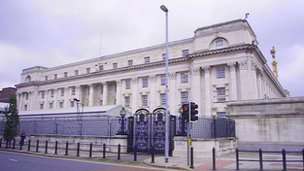
Belfast High Court

Belfast High Court Pic Credit: BBC

CROSS POSTED ON BYLINE.COM

An important judicial decision came out over the Christmas recess in a highly controversial case in Northern Ireland which has led a paedophile to claim £20,000 for harassment because of a blog revealing his criminal past.

The ruling is particularly significant as more people get their news from Facebook and Google rather than traditional mainstream media.

The case has been featured on this blog before. It arose after  Joseph McCloskey set up a Facebook profile page called ” Keep Our Kids Safe from Predators 2 ” which posted information about a convicted sex offender called CG.

CG was released from jail in 2012 after serving a sentence for gross indecency and indecent assault offences against a young girl and a teenage boy.

He is now over 40 and he remains under supervision by the authorities.He has been assessed as posing no significant risk to the public.

His lawyers argued that an online campaign after his details appeared on the page had reached the level of dangerous vigilantism..One user called for him to be hung while others endorsed shooting or castrating him.

CG also claimed he has been threatened with being thrown off a pier during a fishing trip, hounded out of a cinema and had to use a supermarket trolley to fight off another tormentor.

None of the information published  by McCloskey was private. It was all in the public domain at the time of CG’s conviction. CG’s solicitors complained to Mr McCloskey  who removed the posting. He later put two posts disclosing CG’s criminal record and his picture.

The lawyers weren’t satisfied and went to court claiming the sex offender had been harassed on Facebook and his human rights breached by the publication on Facebook misusing private information.

The judge found against the campaigner and Facebook and awarded the sex offender £20,000 damages for harassment.Facebook decided to appeal as it thought the ruling was excessive.

Now the Court of Appeal has decided that Facebook should have taken down the post earlier because it was leading to the harassment of the paedophile.

But very significantly the court ruled that the two other posts which dealt with his criminal record and showed his picture can remain.

The decision by Lord Chief Justice Sir Declan Morgan means that the compensation awarded to CG – which has not be paid because of legal proceedings – will be cut.

But it is also establishing a ruling that contradicts Google’s ” right to be forgotten” procedures saying that public information involving court proceedings can remain on line and cannot be construed as private information.

It was  critical of suggestions that re-publication of conviction information was relevantly private information because in principle “the public has a right to know about such convictions. Information about what has happened in open court can be freely communicated by members of the public”. This was an important aspect of the open justice principle “of very significant weight which can only be outweighed by the interest of the individual in freedom from intrusion in the most compelling circumstances”:

It also rejected the idea that because t some information is covered by the Data Protection Act is it automatically private.

considerable caution should be exercised before reading across  those matters, because the “fact that information is regulated for that [data protection] purpose does not necessarily make it private”.,said the ruling.

For those who want to follow the finer legal detail there is an interesting report by lawyer Christopher Knight, of 11KBW in London here  and a report in the Irish News which dwells on the part of the the Court of Appeal  judgement that was upheld.


How the Legal Ombudsman’s Office ripped off the taxpayer with a £1m irregular incentive scheme

CROSS POSTED ON BYLINE.COM

What  would you think if the organisation that handles your complaint against a poorly performing solicitor or barrister was itself ripping you off as a taxpayer?

That  is the extraordinary situation in the Office of Legal Complaints or Legal Ombudsman for the last six years where well over £1m extra cash has been paid to its staff  without approval from anyone just to keep them from taking jobs in the private sector.

This was exposed last month in a  virtually unreported disclosure from the National Audit Office. I have written it up for Tribune magazine this month.

The office handles tens of thousands of complaints every year from the general public about poor service from legal professionals – whether it is over conveyancing,personal injuries, wills or family disputes. What emerged about what was going in this office of over 200 people has led to resignation or dismissal  ( whether you take his version or the Ministry of Justice’s ) of its £167,000 a year head, Adam Sampson  who has been described by his permanent secretary as “ not a fit and proper person” to continue  as an accounting officer to Parliament.

He presided over what the NAO called a ” novel and contentious” irregular payment scheme which saw its top officers and the rest of his staff benefit from pay enhancements well beyond anything else available in Whitehall currently suffering pay freezes and one per cent pay rises.

The two unauthorised pay schemes were aimed to retain legal staff who might be tempted to leave and join the private sector. One for senior executives was according to the annual accounts “a benefit in addition to salary and was ­believed by the OLC at the time to be necessary to attract and retain the best candidates nationally to senior posts within the organisation”. Some £33,000 was paid out the last financial year – ­altogether some £348,000 has been paid over six years.

The second scheme for general staff allowed up to an extra 3 per cent to be paid on top of their salaries to encourage them not to leave to join the private sector. This cost nearly £900,000.

Neither scheme was authorised by the Ministry of Justice and neither was spotted for four years either. Successive Lord Chancellors -Kenneth Clarke and Chris Grayling didn’t notice.

On top of this there is suggestion of  alleged expenses fiddling by the chief executive.

The report said an arrangement from 2009 assumed “Mr Sampson to be living in Birmingham [where the OLC offices were based from January 2010] despite his only spending up to two nights a week in Birmingham away from his London home.”

The claims involved train fares which could not be solely justified for business use between London and Birmingham.

The Ministry has reported him to the tax authorities for not declaring them as a benefit in kind. Altogether he had received over £27,000 in benefits in kind over the last two years in office.

What is extraordinary is that the two schemes are still in existence today and the Treasury is still trying to end them this year. The reason is that the contracts drawn up by lawyers are so watertight that the Treasury is having difficulty unravelling them.

One can only say that if the lawyers at the Office of Legal Complaints spent as much time providing a good service to the  public as they did in drawing up lucrative contracts for themselves Whitehall would be a much better place.

Putting Lawyers First: Will the Child Sex Abuse Inquiry really benefit survivors?

New Zealand dame Justice Lowell Goddard : Putting lawyers first pic credit: http://www.teara.govt.nz/

New Zealand dame Justice Lowell Goddard : Putting lawyers first pic credit: http://www.teara.govt.nz/

The extraordinary disclosure reported on the Exaro website and in The Sunday Times today that the Goddard Judicial inquiry into child sexual abuse will recruit a record number of in-house QCs and lawyers raises  more than just a few eyebrows.

It appears that Ben Emmerson, the QC who survived the cull that abolished the independent panel, will be interviewing for 20 more barristers – ten of them QC’s – this month This far outstrips the number employed for the Leveson inquiry into the press or the very long running Saville Inquiry into the  Northern Ireland ” Bloody Sunday ” atrocity.

It is not surprising that survivors – already excluded from the panel and any meaningful input into the proceedings – have reacted with fury. If you also take into account that every organisation from the police to local government, the security services to Whitehall and ministers, would want to bring along their own QC at public expense, you can see where the phrase ” lawyer fest” comes from.

And you have to add that most of the remaining shrunk panel are also lawyers or connected to the law. The remaining people are  Alexis Jay, author of the report last year on CSA in Rotherham; Drusilla Sharpling, barrister and former senior prosecutor; Malcolm Evans, professor of public international law; and Ivor Frank, barrister and advisor to the Home Office..Only Alexis Jay is not connected to the law.

If you compare the Goddard panel with the former Hillsborough Panel and the Gosport Independent Panel (I declare an interest I am a member) and you can see how the members come from diverse backgrounds with different interests. They are not predominately lawyers.

True it is clear that  Emmerson has asked for a wide range of legal expertise including specialists in child care, local authorities, public law and criminal law.But that is not the same as having a mix of people with different experience away from the law courts.

Indeed the whole process could end up as  being an intimidatory experience for any survivor wishing to give evidence.

Ben Emmerson: A Thomas Cromwell figure? Pic Credit: UN

Ben Emmerson: A Thomas Cromwell figure?
Pic Credit: UN

There is also a question about Emmerson himself. He is a very well-regarded human rights lawyer but he is also ( according to past members of the panel ) an arrogant and bombastic figure who might well create division rather than the healing process needed in such a sensitive area.

His powers of patronage are large and he appears to be creating his own Empire  Indeed in another century  a parallel could be drawn with Thomas Cromwell  – a brilliant lawyer and advocate for Henry VIII  (read Hilary Mantel’s excellent novels) who wielded enormous patronage. He ended up being beheaded for heresy and treason on Tower Hill. I am not suggesting such an ISIS style modern fate for Emmerson but the way this has been done suggests he is acting as a Cromwell type figure to Lady Goddard and Theresa May. His solutions may not be the right ones and one would not want  the inquiry to be not trusted as a result.

The other inquiries have  one public aim – putting the families involved first. The parallel aim for the Goddard Inquiry should be to put the survivors at the centre of its work. At the moment it is looking like that it is putting lawyers first – and  if lawyers are not careful, they will seen  by survivors ( if they have not already said so) as exploiting survivors for their own personal careers.,

Rough Justice : When pro bono is not pro bono

Rough Justice for Tony Hunt

UPDATE: Today (Tuesday) Mr Justice MacDuff intervened in the case to halt the costs hearing against Mr Hunt  this week to allow a full appeal by  his lawyers into whether he should be liable for the £500,000 bill from Hogan Lovells.


This week in a cramped room in Clifford’s Inn a 69 year old former magistrate will in all likelihood be made bankrupt by the legal system. The tragic story of Tony Hunt- a man wrongly convicted then cleared of a rape charge that was not brought by his accuser, AB, until seven years after the event is written up by me in the Sunday Telegraph  this week  – see –  http://bit.ly/kJH3W1 .

The “mistake” Mr Hunt made was to seek to clear his name after spending two horrific years in the sex offenders wing of Winchester gaol by seeking damages in the civil court from the woman, egged on by her woman friend and Hampshire Police, who accused him of rape.

The case at the time became a cause celebre because it was seen by women as a ground breaking ruling to prevent men acquitted of rape pursuing their ” victim” in the courts. When he lost there was general jubilation for fear that if he had won it would put off women from bringing cases against rapists.

 But now another side has emerged that is as deeply disturbing. Tony Hunt applied for compensation as you might if you have been wrongly imprisoned – but was turned by the Home Office. Evidently you need incontrovertible proof of innocence, notoriously difficult to prove in rape cases which are rarely witnessed, to get any money.

 So he reluctantly turned to the civil courts where he was advised-despite the later judgement – that he had to sue his accuser and not the police or the Crown Prosecution Service – to get any money.

But the real shock was to come after he failed. The woman who had accused him was desperate for cash to defend herself. She had gone to her MP, Julian Lewis, who, impressed by her plight contacted the solicitor general, Vera Baird, who, in turn, rang Hogan Lovells, a very expensive  firm of international City lawyers, who decided to take her case.

 They decided to act for her free of charge or  pro bono.  But just a few weeks into the case they suddenly changed their position to acting for her under a conditional fee arrangement. This made no difference to her, but it meant that if Mr Hunt lost, he would face huge bills.

This is precisely what has happened. A year after the case they are demanding £500,000  from him – knowing that he has no funds. The fees would have been nothing like this if a Winchester lawyer had taken the case anyway, but the multi-million pound company charge a lot for solicitors and engage expensive barristers. Now they have pursued him to a costs hearing – it has taken several days so far- while at the same time winning prizes and public acclaim for pro bono work, including runner-up at the prestigious Wig and Pen awards, for this case.  Hunt’s lawyers have failed to convince the judge to take account of this curious dual approach.

These are some of Hogan Lovell’s on the record explanations for this behaviour “Any money recovered from Mr Hunt will, in the first instance, be given to AB to balance the costs she incurred with her original firm of solicitors.  Any money that might be due to us would be donated to charity.  We do not profit in any way.”
 
“It is for the Costs Court to determine what are fair and reasonable expenses for Mr Hunt to pay for the defence of AB against his legal action.  Mr Hunt can appeal the ruling of the Costs Court.”
 
“The Courts have made these cost orders against Mr Hunt because he has lost at every stage. AB has done nothing but defend herself from his claims.”
 
“At any time Mr Hunt could have stopped his litigation against AB.  The choice has always been his.”
 
“The door to negotiation has always been and remains open.” 
 
“The use of a conditional fee arrangement created a level playing field for AB to defend herself against Mr Hunt.   Each is exposed to the potential of having to pay their opponent’s costs if they lose.”
  I am no lawyer but it seems to me Hogan Lovells have tried to have their cake and eat it. They have received public plaudits for their pro bono work but are now going to bankrupt the guy under  an arrangement they haven’t actually highlighted during the Wig and Pen awards ceremony.They admit they don’t need the money, even AB , I am told, is not bankrupt. And if we follow their argument, Mr Hunt, had no right to defend himself once he realised that he was up against expensive solicitors, if he couldn’t afford the bills. Rough justice indeed.