Top London coroner faces accusation of tampering with an inquest audio and a judicial review on the handling of her hearing into the death of an ITV journalist

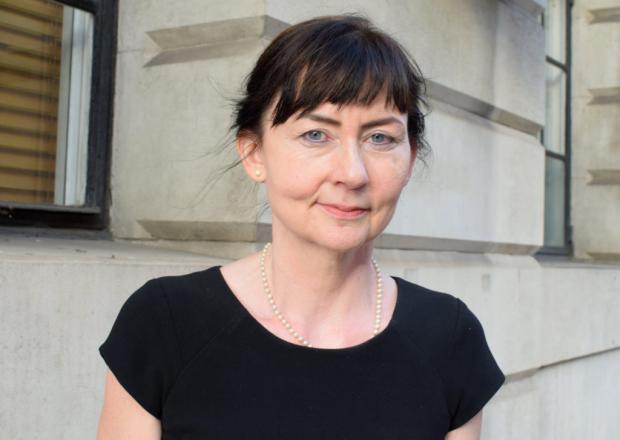
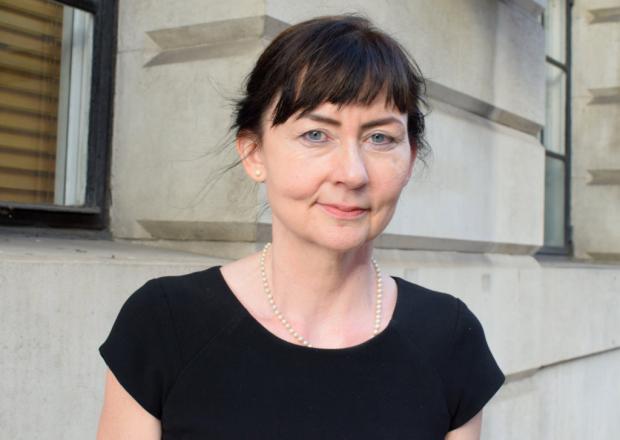
Senior coroner Mary Hassell Pic credit: Archant

Judge blocked her attempt to keep her name secret during the hearing

A highly controversial senior coroner is facing serious allegations that she or her staff removed parts of a transcript and recording of her hearing into the death of a talented and hardworking ITV news editor Teresa McMahon who was found hanged at her home four years ago.

Mary Hassell found that she committed suicide and ruled out that she was subject to ” coercive control” by her ex boyfriend, Robert Chalmers, an NHS estates employee, who had previous convictions for violence. Mary Hassell believed the words of the pathologist ,Dr Mohammed Bashir, who examined the body but kept no photographic evidence and discounted domestic violence and Greater Manchester Police who decided from the start that no crime had been committed and never took any photographs either at the scene of her death.

Throughout the hearing this version was challenged by Teresa’s aunt, Lorna McMahon, who was frequently interrupted by Mary Hassell when she raised questions about the competence of Greater Manchester Police in handling the investigation into her niece’s death.

I was present at the hearing at the hearing with many other journalists. My report on it is here.

Yesterday’s hearing at the Royal Courts of Justice was meant to decide whether the court could give her permission to bring a judicial review into Mary Hassell’s hearing claiming her conduct was irrational and procedurally unfair in coming to her verdict.
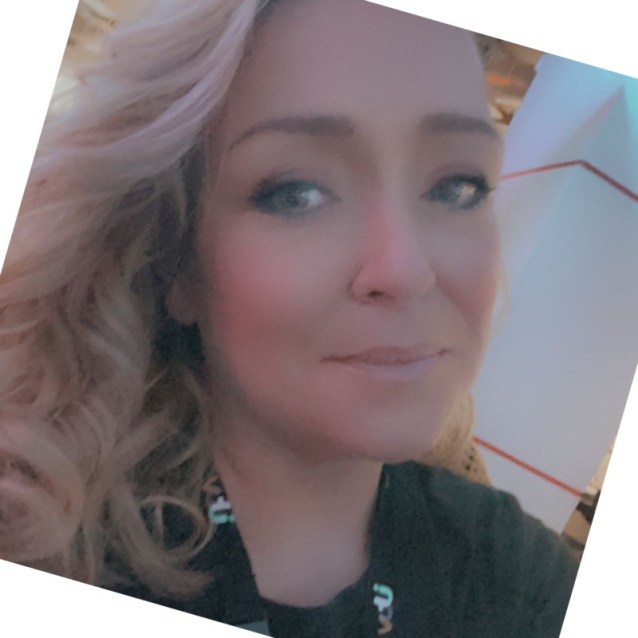
Teresa McMahon

But the hearing took a completely different turn under Mr Justice Stephen Morris when Lorna McMahon, having obtained both the transcript and audio recording of the hearing said parts of both, covering descriptions of previous violence against her niece by her ex boyfriend had been omitted.

It also emerged from correspondence I have seen from Mary Hassell’s lawyers and a public ruling by a previous judge Mr Justice Kerr, that the coroner had tried to get her name kept out of the public domain during the hearing.

Her lawyers claimed ” it was customary” to be not named. She wanted it done under ” the slip rule” which meant there would be no hearing about the application. The judge ruled this procedure could not used in this way and rejected her application because it raised issues of ” open justice”.

When Mr Justice Morris heard Lorna McMahon’s evidence he weighed up whether to continue the hearing or adjourn it to allow her complaint to be properly looked at and for her to provide evidence from other people at the original hearing – including members of the public and journalists – to back up her claim.

All sides in the case agreed it was an extremely serious allegation which could be viewed as a criminal case of perverting the cause of justice.

Her own lawyer, Jonathan Glasson KC, agreed as such and but added by adjourning the case until the late autumn it meant that the accusations against the coroner were left hanging over her for some weeks.

The judge also made it clear by adjourning the hearing it did not mean that he was convinced about Lorna’s case and said she would need more evidence.

The directions he gave are worth reporting in full:

IT IS ORDERED THAT

  1. The application for permission to apply for judicial review is adjourned

2. By 4pm on 12 August 2025, the Claimant is to file and serve a witness statement, verified by statement of truth, identifying any and all parts of what was said at the hearing of the inquest by the Defendant on 5 December 2024 (“the Hearing”) which she contends have been omitted from the audio recording of the Hearing provided to the Court and the Claimant by email dated 14 July 2025 at 513pm and sent by Payne Hicks Beach LLP (“the Audio Recording”).

3. At the same time as filing and serving her witness statement pursuant to paragraph 2 above, the Claimant is to file and serve any and all witness statement evidence from others (including witnesses called at the Hearing and/or members of the press and/or members of the public) in support of her contention that parts of what was said at the Hearing have been omitted from the Audio Recording.

4 By 4pm on 9 September 2025, the Defendant is to file and serve a witness statement, verified by statement of truth, in response to the evidence filed and served pursuant to paragraphs 2 and 3 above, to include an explanation as to how the Audio Recording was produced.

5.By 4pm on 23 September 2025, the Claimant, if she so wishes, is to file and serve a written statement stating whether, and if so, why, she seeks a further oral hearing for directions in respect of the matters covered by paragraphs 2 to 4 above.

6.As soon as possible thereafter, the matter is to be placed before a judge (if possible, Mr Justice Morris) on the papers to consider directions for the progress of the case, and in particular whether there should be a further oral hearing dealing with the matters covered by paragraphs 2 to 4 above, taking account of all necessary reasonable adjustments.

7 The case to be reserved to Mr Justice Morris, if possible.

8. Costs of the adjournment and of the matters raised above reserved

This is the second recent case where there has been controversy about Mary Hassell’s handling of inquests.

Earlier that year she held an inquest into the tragic death of Gaia Young,25, who  was rushed to accident and emergency at University College Hospital with severe headaches only to die of an unexplained brain condition and doctors have yet to correctly diagnose what was wrong with her.

Again Mary Hassell  patronised and showed no empathy for her bereaved mother, Lady Dorit Young, who had lost her only child ,Gaia, and failed to properly investigate her death. The full story is on the Truth for Gaia website. She even blocked her from making a statement at the inquest. I reported that hearing and you can read about it here.

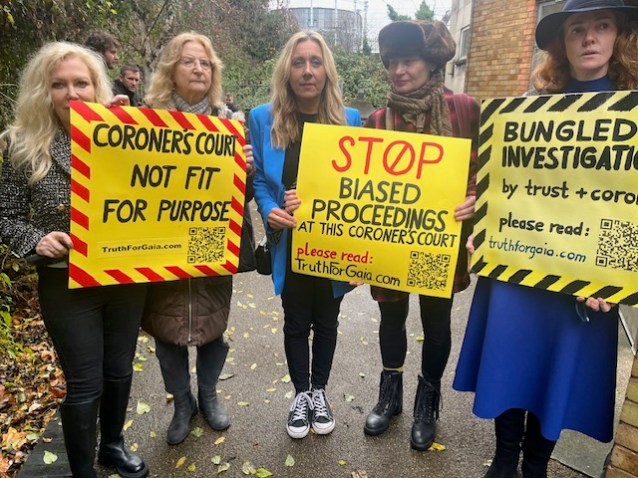
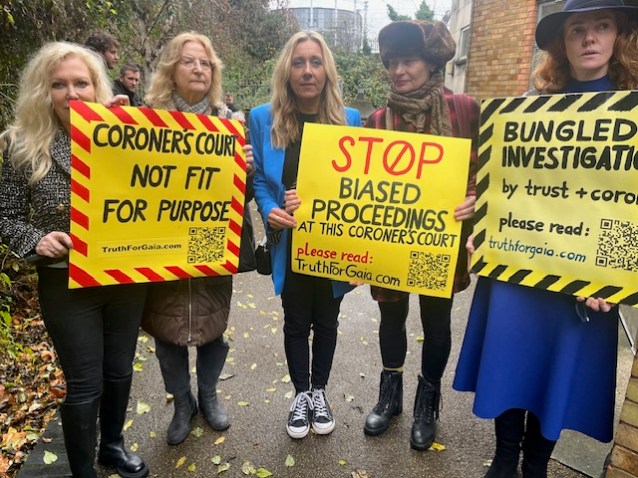
The treatment of both relatives led to a protest outside the coroner’s court during Teresa’s inquest. Pictures are below.
One-Time
Monthly
Yearly

Make a one-time donation

Make a monthly donation

Make a yearly donation

Choose an amount

£5.00
£10.00
£20.00
£5.00
£15.00
£100.00
£5.00
£15.00
£100.00

Or enter a custom amount

£

Your contribution is appreciated.

Your contribution is appreciated.

Your contribution is appreciated.

DonateDonate monthlyDonate yearly

Please donate to Westminster Confidential

£10.00
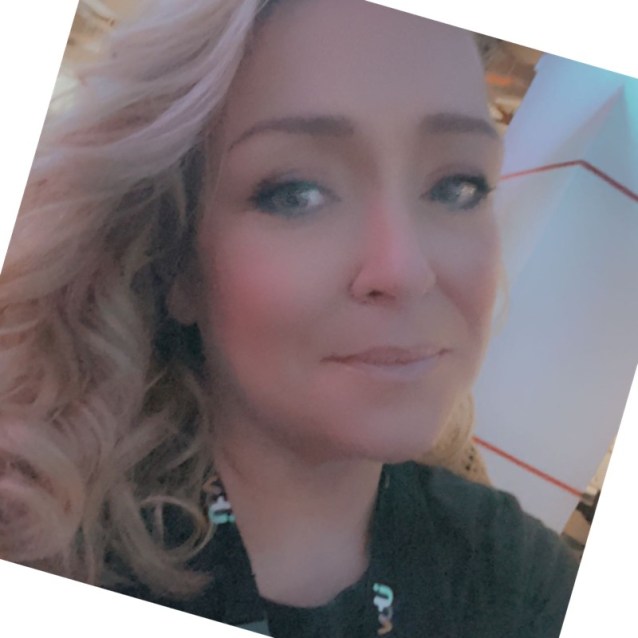
The tragic death of a talented and hard working ITV news editor and the dramatic inquest that fell short of providing answers

Teresa McMahon Pic credit Linked In

Coroner Mary Hassell now facing bereaved members of two families unhappy about the way she conducts inquests

Teresa McMahon was a well liked news editor for ITV’s Granada Reports who had a first class honours degree in journalism and was based in Salford. From humble beginnings she was rated by colleagues as ” a highly competent news editor, who had worked on and overseen – some of the biggest news stories including the Manchester Arena terror attack, the coronavirus outbreak and Tyson Fury’s world heavyweight championship win.”

Over three years ago she was found hanged at her home in Little Holten, Salford and it took until last week for an inquest to be held. What emerged is that the police “investigation” into her death, the pathologist’s report and the conduct of the coroner who heard the case, Mary Hassell, fell well short of the professionalism and unbiased news values Teresa McMahon had practised during her life.

The hearing itself did not start for an hour after lawyers for Lorna McMahon requested an adjournment because she had not received all the documentation she needed, had no confidence in the robustness of the process and thought her rights to participate compromised procedures under Section 2 of the European Court of Human Rights legislation particularly in relation to domestic abuse.

Michael Etienne Pic credit: Garden Court Chambers

Her lawyer, Michael Etienne, from Garden Court Chambers, who acted pro bono, highlighted concerns that coroners did not pay enough attention as to whether domestic abuse by a partner or ex partner led to suicide and cited previous cases. He told the coroner ” the inquest will (or at else is very likely to) fall short in its primary duty to provide a full and fearless inquiry into these important matters.”

All this was rejected by Mary Hassell, the coroner who insisted she would conduct a frank and fearless inquiry.

The hearing had already been moved from Manchester West coroner’s court to Inner London because of a conflict of interest and concern about the involvement of Greater Manchester Police. A senior coroner had recused himself from hearing – hence the delay in hearing the case.

Mary Hassell ” suicide verdict” Pic credit: Archant

Mary Hassell decided that it was a suicide and ruled that there was no coercion or control by her ex partner Robert Chalmers that led to her death.

Mohammed Bashir – no ” Silent Witness” material

For her the star witness was Pathologist Dr Mohammed Bashir. He insisted that the ligature around her neck was consistent with hanging and not strangulation but he knew nothing about her complaint about domestic abuse and said there were no other marks on her body. Extraordinarily he had taken no photos when he examined the body and his evidence was partly contradicted by the policeman who went to the scene who noted bruises on her breast and biceps. Certainly Dr Bashir would not have qualified for a star role in ” Silent Witness.” He was no Dr Nikki Alexander and Lorna McMahon complained that the body had not been examined by a forensic pathologist.

This lax approach was compounded by the so called investigation by Greater Manchester Police. Detective Chief Inspector Gareth Humphries who arrived on the scene and immediately ruled out murder. She was already dead and it was Robert Chalmers, who snapped the cord. Her brother Bernard, who was also there, confirmed that Chalmers had done it by himself,

No pictures taken by pathologist or police

Extraordinarily again he did not take any pictures either and apologised to the coroner for not doing so. “Policy at the time was to take photos if you think there’s a crime. I did not think there was a crime at the time. I could have accessed the digital camera and I did not. I wish I had. If I had, you would have got photos for the answers you seek and I apologise that I did not.”

Instead he read her journal which he found in the bedroom where she expressed her loneliness, lack of contact with her daughter, and a list of complaints about the way her ex Robert Chalmers had treated her.

But only three weeks before this she made a complaint about domestic abuse to a police constable under Clare’s Law and was wrongly told that she had no right to find out whether he ex had convictions for violence. She then withdrew the complaint and police found that they had given her the wrong advice but could not contact her to tell her.

A lot of this came out during the hearing because of persistent questioning by Lorna McMahon not the coroner. She ended up being told off because the coroner did not think her hearing should be an inquiry into the police.

Her ex, Robert Chalmers, was supposed to give evidence but did not turn up. Mary Hassell issued an arrest warrant and he was taken by the police from his home to Bolton Coroner’s Court where he had to give evidence. He is a NHS estates manager working for the trust in Salford.

Her ex was nervous and unprepossessing

He emerged as a nervous, unprepossessing character, replying with monosyllabic answers and denying he was in any way responsible for her death. His only concession was that their relationship was ” volatile” – an under statement given neighbours had witnessed shouting, him being thrown out of her flat, and she tearfully sitting outside her house with her head in her hands. He also denied that he alone had snapped the cord contradicting her father’s statement.

Her father did not give evidence in person either but the coroner accepted a statement from him as he said he was to ill to attend. He painted a sad picture of his daughter being caught up in an alcohol fueled relationship with a man was not good enough for her. But it was also revealed that this man had been his best man at his wedding and he had known him for 25 years.

When his sister, Lorna, complained she could not question him, Mary Hassell accused her of preventing him coming because she had damaged his health by her attitude towards him. It was clear brother and sister did not get on but a coroner should be above that.

The final indignity was a decision by the coroner to first vet Lorna’s statement to the hearing and then ban most of its contents. Her reason was that coroner’s hearings were not a place where either side could try to influence a coroner’s verdict. To my mind this was preposterous. It was obvious that Mary Hassell was a very strong minded woman and the idea that anybody could influence her in any way was absurd. She may even have made up her mind before the full hearing.

I suspect the real reason is that she did not want any more criticism of Greater Manchester Police in public or more details about the behaviour of Teresa’s ex including his past, particularly as this hearing was well covered by the press and TV.

Lorna McMahon (far left) and Dorit Young ( second from right) demonstrate outside the coroner’s court

And it is not the first time she has silenced a bereaved relative. Lady Dorit Young was similarly treated over the death of her only daughter, Gaia. That is why there was a small demonstration outside the coroner’s court whereby Lady Young and her supporters and Lorna combined to protest. You can read about their case on https://truthforgaia.com/ and an earlier blog by me here.

One-Time
Monthly
Yearly

Make a one-time donation

Make a monthly donation

Make a yearly donation

Choose an amount

£5.00
£10.00
£20.00
£5.00
£15.00
£100.00
£5.00
£15.00
£100.00

Or enter a custom amount

£

Your contribution is appreciated.

Your contribution is appreciated.

Your contribution is appreciated.

DonateDonate monthlyDonate yearly

Please donate to Westminster Confidential

£10.00
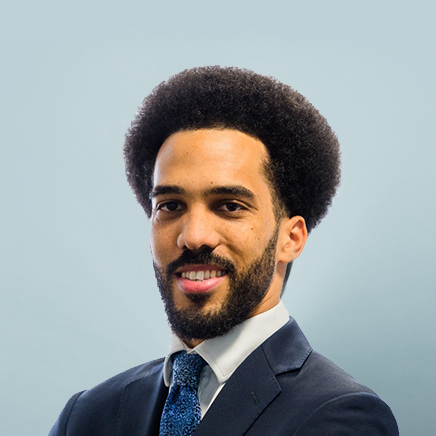
How a leading teaching hospital and a coroner failed a young woman who was brain dead 17 hours after being admitted to A & E

Gaia Young

Case for a new inquest after coroner Mary Hassell failed to find adequate explanation for her death

This is an extremely tragic tale of what happened when a 25 year old healthy and talented woman, Gaia Young, was rushed to accident and emergency with severe headaches only to die of an unexplained brain condition and doctors have yet to correctly diagnose what was wrong with her.

The failure by one the country’s leading teaching hospitals, University College Hospital in London was compounded by an utterly abysmal inquest conducted by coroner Mary Hassell. She patronised and showed no empathy for her bereaved mother, Lady Dorit Young, who had lost her only child ,Gaia, and failed to properly investigate her death. The full story is on the Truth for Gaia website.

Now more than three years after her death there is still no explanation of what led to this terrifying and tragic event which is why there must be a fresh inquest that can get to the truth of what really happened.

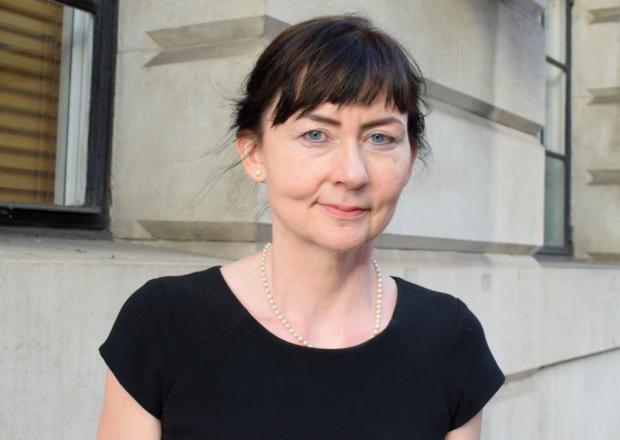
Mary Hassell the coroner pic credit: Archant

Gaia Young was admitted to the hospital with a headache ,vomiting and became confused while waiting at the hospital after a perfectly normal day when she had gone shopping and cycling. Her sudden admission to A&E came at a weekend when many doctors are off duty and was seriously understaffed at the time. She had two CT scans of the brain which led to doctors deciding they would conduct a lumbar puncture to diagnose what was wrong.. The on call radiologist who examined the scan was not a specialist neuro radiologist and thought the scan was OK so a lumber puncture was a normal procedure..

The first attempt at the lumbar puncture, was done by a doctor under supervision who had done very few lumber punctures, did not work. So it was decided to attempt a second one which sadly led to her death as the brain was ” coned ” – pushed into the neck. Just before this the neurologist registrar was concerned when she saw Gaia’s CT head scan. She worried that the CT might show brain swelling and consulted with a neuroradiologist and consultant neurologist at Queens.
It emerged later that a specialist neuro radiologist could see subtle differences in the CT scan that meant there could be raised intra cranial pressure. If that was the case a lumbar puncture would not be undertaken because it was too dangerous . Also if she had a fundoscopy – a eye check that examines the retina and the back of the eyes – it would have showed raised intra cranial pressure. That did not happen.

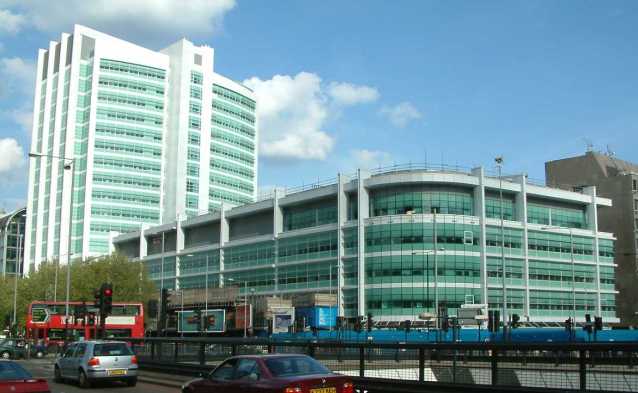
University College Hospital

The tragedy is that University College Hospital is a centre of excellence and has access to top class neurologists. And nearby is University College, London whose faculty of brain sciences is judged to be the best in Europe and will get new facilities shortly. That this happened in a part of London where there is such expertise in the study of the brain is doubly tragic.

After considerable pressure from Dorit Young, university College Hospital says it will do a further investigation but has only just started it. A statement from the hospital said: “We understand the sudden death of a loved one has a lasting impact and offer our ongoing sympathies to Gaia’s mother.   

   “In 2022, we agreed to commission a range of independent experts – a neurologist, neuro-ophthalmologist, neuro-intensivist and neuro-radiologist – to explore further the circumstances surrounding Gaia’s death. We agreed with Lady Young the scope of the reviews and the experts who will undertake them. In August 2024, she consented to releasing some of Gaia’s medical records but further consent is needed so the reviews can begin. 

“We are committed to learning from external opinion and scrutiny and will share the reports with Lady Young. We have already developed new clinical guidance and training following our internal investigation.”   

It is the failing of the inquest held in 2022 that has added so much stress to Dorit, Gaia’s mother. The coroner is an independent judicial officer, appointed by the local authority, whose main role is to decide the cause of death. In this case Mary Hassell failed. Part of the problem is that nearly all coroners are not medically trained so they could find evaluating medical evidence beyond their skill set. And hospital trusts are aware of this and could decide to limit evidence available at an inquest. It is up to the coroner to probe that evidence to get to the truth. She is also expected to allow the bereaved to participate in the hearing.

Not only did that not occur at Gaia’s inquest but the coroner positively blocked Dorit’s request to bring independent medical evidence from a neurologist by refusing to hear it.

Instead the evidence concentrated on the findings by the post mortem of how she died and not on the original cause of why she died.

As she says:” Professor Al-Sarraj’s report [ he did the post mortem] is detailed and descriptive of the brain injury as a secondary event; it does not provide an explanation of a primary event. It provides a description of the pathology of tissue at the time of death; it does not necessarily provide an explanatory
pathogenesis in time but rather the description of an end point. Accordingly, the cause of death remains unknown.”

Independent expert barred by the coroner

When the inquest was held there were no independent experts giving evidence other than the two pathologists; there were no independent clinicians to give evidence on the care provided. The hospital was permitted to investigate itself in an independent judicial process; there was no external scrutiny.
The coroner backed the trust opposing her request for an independent neurologist and other experts to attend.Instead it left the trust to choose its own experts and this did not include a neurologist.

Before the inquest was held the hospital wrote to Dorit saying:
“The purpose of the serious incident investigation is primarily to review the care of your daughter and to identify any learning. We do not have the same purpose as the Coroner who needs to determine the cause of death.”
As she said; “This denotes an astonishing lack of medical curiosity for a leading clinical and research
institution. It is crass. I am surprised that UCLH consider that it does not need “to determine the cause of death”; this position conflicts with the papers which considers the risk for the recipient of a liver from brain dead donors.” Gaia’s organs were donated.”

Worse was to follow at the hearing. Dorit wanted to make an impact statement on her daughter’s death. This was refused by the coroner. It is on the Truth for Gaia website.

In it she says “It felt like Coroner Hassell favoured her ‘local’ hospital; she breached principles of proper inquiry and natural justice. I am still waiting to receive the Court approved list of documents upon which it relied in reaching its judgement. If the Coroner had taken my submission into account, her inquiry might have taken a proper course in considering a differential diagnosis, but the one-day hearing barely scratched the surface of the complex medical issues of Gaia’s death. This predictably led to an inconclusive determination, adding nothing to understanding how Gaia died, nor whether her death was avoidable.”

She wanted to publish the transcript of the hearing. Again the coroner refused threatening her with contempt of court and imprisonment if she did. The coroner was overruled by the chief coroner.

The coroner declined to comment after I put the complaints about her behaviour to her.

Dorit wrote to the Attorney General complaining about the handling of the hearing by the coroner and the failure to produce a witness statement that was subsequently available after the inquest. Officials replied that this” may amount to a reason to seek a fresh inquest.”

Lessons do need to be learned from this whole debacle. For a start procedures at the hospital should be changed even if this was a rare case. A decent coroner would have recommended some. But overall it shows up the weakness of a system whereby a hospital can first say it’s not their job to investigate the original cause of a death but a matter for the coroner and then not present enough evidence for the coroner to reach a judgement. Both the coroner and hospital have failed Dorit. This is a case of miscarriage of justice – people have a right to know the cause of death of a loved one and the public need to know to get a remedy should there be a repetition of this tragedy in similar circumstances.

One-Time
Monthly
Yearly

Make a one-time donation

Make a monthly donation

Make a yearly donation

Choose an amount

£5.00
£10.00
£20.00
£5.00
£15.00
£100.00
£5.00
£15.00
£100.00

Or enter a custom amount

£

Your contribution is appreciated.

Your contribution is appreciated.

Your contribution is appreciated.

DonateDonate monthlyDonate yearly

Please donate to Westminster Confidential

£10.00