NEW: Since this post was published I have learned that Rebecca Hilsenrath has been awarded an honorary KC and been appointed a member of theCivil Justice Council, chaired by the Master of the Rolls,Sir Geoffrey Vos. She is responsible for advising the judiciary on the use of alternative dispute resolution, where disputes are settled outside the courts. Ironically this would include the demand from CEDAWinLAW to solve the dispute over compensation for 50swomen pensioners which ministers oppose. She was and still is chief executive of the Parliamentary Ombudsman’s Office when the former ombudsman ,Robert Behrens, recommended compensation forpartial maladministration by the DWP. It would be curious to know what her position will be on this ifthis ever came up.
John Edwards, the Information commissioner, has ruled that the Equality and Human Rights Commission must answer what action it took when it was revealed that its former chief executive, breached Covid rules at the height of the pandemic by driving from north London to her holiday cottage in Wales for a family Christmas in 2020.
The decision is a partial victory for Mark Benny, a dogged campaigner, who sought answers to what action it took when it became publicly known through an article in The Times that she had driven hundreds of miles when there was a ban on any long distance travel as part of the national lockdown.
But the information commissioner has decided not to release a report of an EHRC investigation or correspondence from her because it goes into her private life and might cause unwanted distress.
Rebecca Hilsenrath’s Welsh holiday cottage
However his ruling is significant for a number of reasons. He has had to weigh up public interest in this case versus a person’s right to privacy. And he has come down very firmly that there is a public interest case about how senior public figures conducted themselves during the pandemic. He also ruled that public bodies cannot, as the EHRC did, impose a blanket ban under the privacy section of the Freedom of Information Act, to refuse to confirm or deny anything because it involves personal data.
This could have wider implications since public bodies use this technique where there are controversial appointments or resignations to refuse to provide information because itinvolves personal data
John Edwards, Information Commissioner
Rebecca Hilsenrath’s case was particularly controversial because she resigned her chief executive’s job at EHRC only to be parachuted into a top position at the Parliamentary Ombudsman’s Office where since became Interim Ombudsman and chief executive, an equivalent or even better status than she had at the EHRC.
Extraordinarily when Mark Benny pressed the Parliamentary Ombudsman’s Office on what they knew or whether they took into account of her Covid breach during her appointment, the office said it had lost the papers on her appointment process.
So now the EHRC will have to answer his questions within 30 days or as the Commissioner says in his report “failure to comply may result in the Commissioner making written certification of this fact to the High Court pursuant to section 54 of the Act and may be dealt with as a contempt of court.” The questions he has asked include whether there was a proper investigation into the breach, whether it was completed and what was the outcome. He also wants to know whether she was suspended by the EHRC or put on gardening leave and whether she was dismissed or decided to resign.
All the public had at the time was a terse statement by the EHRC to the press. It said:
“The Equality and Human Rights Commission said they will consider whether further action against its chief executive is needed. “She has apologised for this error of judgement,” said EHRC chair Baroness Kishwer Falkner. “I will establish all the facts before deciding if any further action is required.”
Nothing has been heard of this since and it is now known whether it came up again when she was interviewed to be Interim Ombudsman last year.
What the ruling by the Information Commissioner does is say that Mark Benney’s request was legitimate and it was necessary for the information to be released. But he thought this could be done through his questions and it was not a legitimate interest to release the full report because it contained details of her private life.
Interestingly he thought it might throw some more light on what happened at the Parliamentary Ombudsman’s Office. He said “he considers that disclosure of the requested information would allow further scrutiny of that process.”
Last week I attended a conference which aims to unite diverse groups fighting racism to form a national campaign to stop the rising tide of prejudice, harassment and ideological views that portray black and brown people ( especially immigrants) as a threat.
The conference was organised by the law firm Equal Justice Solicitors whose chief executive Lawrence Davies made an impassioned speech at the end saying “no ” to all these traits and go on the offensive to get real integration in this multi racial country.
The response is opportune as the forces backing discrimination are rising high here and in the United States. Donald Trump is abolishing any approach that backs diversity, equality and inclusivity and Reform, who are expected to do well in the local elections this week, are committed to abolish the Equality Act, leave the European Court of Human Rights and will need to leave the UN Convention on the elimination of all forms of discrimination against women and girls, which Margaret Thatcher agreed to join in 1986.
Lawrence Davies put up a blog on his newsletter The Intercessor and it very much reflects what he said at the conference so I am reproducing most of it here as it covers a lot of issues and has good examples.
He wrote:”Obviously, at present we are in the midst of an invisible war. The “culture wars” were quietly declared by the Conservative government in 2020. Their aim was to prevent black people empowering themselves by mobilising and using the energy from the #BlackLivesMatter movement to become a political force, such as that which helped the Democrats win the November 2020 election.
“It is an ideological war. Those who do not accept the alleged British way of life (“white is right”) are to be humiliated, made to feel unwelcome, harassed and invited to leave Britian. DEI is to be ended. Unconscious bias training is to stop in the civil service. White (northern working class) people are to be viewed as the real victims, not black people or women. Diversity (and equality) has gone too far. The term “Institutional Racism” is unhelpful and must not be used by the EHRC in any report findings. Black ministers (NB: who ideologically see no racism) were deployed to implement the war tactics to deflect from and provide deniability from their innate racist motivation.
One chess move in that war was the decision by the institutionally racist Home Office (which oversees the institutionally racist Met Police) to implement the Hostile Environment – a policy of deliberately seeking to make the Windrush generation uncomfortable and unwelcome living in the Britain.
Another was to label all illegal immigrants as criminally minded threats to our way of life and culture.
It started in 2016, although ideologically decades before that. The anti-foreigner element to the Brexit campaign was a rallying call to lone wolf social media racists and incels alike.
Racial harassment at work rose from 16% to 31% in the period of 2016 to 2020. It has become much worse since then.
We had race riots in the summer of 2024. Every alleged crime committed by a black person was taken as a justification to visit personal injury on the whole black community, be it in Southport or anywhere else, due to racist stereotypes about aggressive black people. They are all the same. They have it coming etc.
By contrast, every heinous crime committed by white people of course did not lead to any attacks on the majority white community. The ideologically motivated, Andrew Tate loving, Kyle Clifford was not stereotyped as the danger that white people pose to others.
Reform UK promised in its manifesto to abolish the Equality Act 2010, removing all legal protection against racism at work, in education and in health services. They believe, like Jeremy Clarkson, in the white man’s right to call a black person a “N…” at work or in a hospital, without accountability, or liability.
In any non-racist, civilised country, the Law should of course protect the black community from such racism. However, our Law does not. 30% of black people suffer racism at work but only 1% feel sufficiently safe and empowered to utilise their rights under the Equality Act 2010. 99% of racist incidents therefore are simply suffered and not formally complained of. Any Law that 99% of victims are too afraid to use is NOT fit for purpose.
No incentive for organisations or corporations to change
Of the 4% (within that 1%) who exercise their rights and win, they win small and the employer does not change. It is statistically more likely that the racist co-worker or manager will be promoted rather than sacked. Awards for racism which would attract $10 million compensation in the USA attract an award of less than £12,000 in the UK. There is no economic incentive for corporations and organisations to change culturally over a £12,000 award.
Public inquiries into the worst racist cases from the Lawrence Report to Casey Report in 2023 have uncovered the obvious Institutional Racism but led to no real or structural change. In fact, matters are regressing. Doreen Lawrence told me that the police are as bad now as they were in 1993.
In any event “landmark” Employment Tribunal cases do not effect structural change. They just enthuse the claimant and the lawyers who believe that such case do lead to change. But 99% of victims of the new rights won’t exercise them. Metaphorically successfully sailing a boat across a hostile ocean, and against the constant current, to land somewhere (hopefully) safe does not change the presiding structural current, or get close to freezing the Moon – that invisible power, wealth, influence controller.
Meanwhile, Racists are becoming emboldened. That’s exactly what happens when the Law does not work to protect people at work, or outside work.
Wayne Hammond (white) called John J Campbell (black, Union official) a “fucking monkey” at work (Sheffield Teaching North Hospitals NHS Foundation Trust) in a heated discussion about union subscription deductions from wages. The Employment Tribunal found that the remark at work was not made by Hammond in the course of his employment and that the Trust had taken all reasonable steps to prevent such remarks being made (even though it is clear that the steps had not prevented the racist abuse), so neither the Trust nor Hammond were liable.
On 20 March 2025 the Employment Appeal Tribunal rejected the union (UNISON) backed appeal. The union failed to challenge the ET Decision on the grounds that it was perverse.
So the current Law permits a black worker to be called a “fucking monkey” at work provided the conversation is about union matters and the Trust has carried out all reasonably practicable preventative steps to prevent such racist conduct.
The current Law also says that if you are called an “N” at work and pinned to the wall by your manager in front of witnesses it is not perverse (legally wrong) for you to receive only £2,500 in compensation. Nor is it perverse for the appeal court to opine that awarding more than £20,000 in punitive damages would bring UK Law into disrepute, whereas in fact the opposite is true.
The current Law says I can (randomly) scream at you at work and cause you to have a mental breakdown and you have 3 years to sue me but if I (deliberately) scream racist abuse at you causing the same injury you only have 3 months less a day to sue me. Of course, the Law says you have 6 years to sue me if I sell you a defective television…..
Betty Knight posted a post on LinkedIn which tagged a former colleague and effectively stated that the senior team at the college was racist (having previously won a claim at the ET that her constructive dismissal was an act of racial harassment). One white employer (then the head of HR) said she felt harassed by that posting and rather than blocking Betty, instead, chose to report her to the police for criminal harassment. The aggressor said that she did so on her own phone, from her car in the car park, and her employer knew nothing about it and had not authorised the reporting. The ET found that extremely aggressive conduct was not done in the course of the perpetrator’s employment. The matter is on appeal. Either the EAT will find that (allegedly) popping out of the office to report a black person to the police for a LinkedIn post, that LinkedIn itself had no issue with, is part of the employer’s responsibility under the current Law or it will not. In either case, the current Equality Act 2010 is not fit for purpose. No Law that 99% of race victims fail to utilise protects the race victim. The fear of retaliation and the knowledge that Justice will be very expensive and unlikely to be achieved (4%) means that we have only cosmetic rights.
We need a new Inequality Act to be implemented as soon as possible to tackle the rising and ideologically driven racial harassment and tackle the underlying and long-standing structural racism.
In the last year, a black man shopping in an ASDA in London, with a black elderly friend who had had a stroke, was surrounded by plain-clothed security staff and asked about their intentions, being the only black customers in the store. He was then asked if he knew how to lift a voodoo curse from a white person.
Similarly, a black women made her way around Tescos with her daughter only to be surrounded by security staff and asked about her intentions, again being the only black customers in the store. When she complained a manager/supervisor apologised for the matter and offered her “a “bunch of bananas”, smirking at her.
None of the racist white Tesco or ASDA staff concerned were dismissed.
So reading this post, you may feel that won’t happen to me, and as only 25% of British people admit to be very or a little racist, you may (hopefully) avoid being targeted and harassed at work, but know if unfortunately you end up working with or for a racist colleague, once you complain you will be retaliated against because the current Law does not prevent retaliation, or the original racist act, any more than the training the Sheffield Trust did. In fact it permits and encourages it.
Anyone telling you that you have rights not to be racially discriminated against is lying. Yes, there are rights but almost all are unable and/or too afraid to exercise them. A right is not a right unless it is enforceable, and can be exercised safely.
Further, 95% of black school children face racist banter and harassment at school. So the next generation, will face a far more racist world than you did. Racist banter is becoming normalised. It is destroying black lives, and people’s sense of safety and damaging their mental health.
As our society becomes more intolerant under the hate-mongering by Reform UK and BRUV (Andrew Tate’s political vehicle to become PM – NB: 27% of men under 40 years of age believe his misogynistic views of women are correct and kids are 5 times more likely to view violence against women as legitimate having viewed his literature).
So do YOU feel safe at work, in education, in the NHS, when contacting the police, online and offline?
What more can WE do to ensure black people, women and the community as a whole are safe from racist sexist (RaX) people?
Finally, if 25% of British people remain admittedly racist, hopefully that means than more than 50% are not racist and therefore in fact that being British no longer means being racist. Because cultures evolve. So being British no longer means being slave-owners or profiting from the slave trade. Or where the rape of an unmarried girl or women is seen as a criminal rape and no longer viewed as damage to property. Our culture did evolve into a fair and more tolerant (ie: less racist), diverse community but war has been declared on that evolved culture and they want to drag us back to the 1970s culture (and some want to drag us back into chains).
It is time to say NO.
NO more.
Be safe, and prosper, “
Professor Patrick Vernon
Among those who spoke at the conference were Professor Patrick Vernon, pro chancellor at the University of Wolverhampton and board chair of the Birmingham and Solihull Trust; Professor Miranda K Brawn Ahmed who is chair of People, Culture and Education Committee on Guy’s and St Thomas NHS Foundation Trust, veteran race discrimination campaigner Lee Jasper, Andy George, president of the National Black Police Association; Roger Kline, research fellow at Middlesex University; Hira Ali, an author and Ritka Wadhwa, founder of Cultural Intelligence. All were determined to make a big change so expect some strong action soon.
Three were good examples from the audience notably at Waltham Forest council where the executives and managers were being held to account over cuts and redundancies to make sure black people were not unfairly treated.
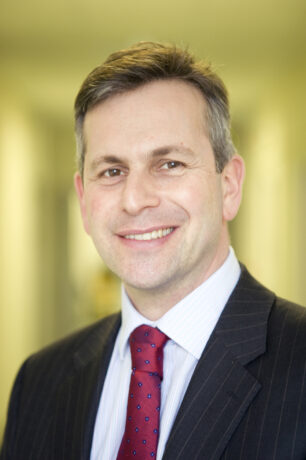
Daniel Elkeles, moving from CEO of the London Ambulance Trust to NHS Providers. He is the former chief executive of the Epsom and St Helier NHS Trust.
In May Daniel Elkeles will become the £240,000 a year chief executive of NHS Providers, a membership body that covers all hospital, mental health, ambulance and community trusts. His job as NHS Providers will be to “to deliver high-quality, patient-focused care by enabling them to learn from each other, acting as their public voice and helping shape the system in which they operate.”
He will also following the demise of NHS England be a key link between the trusts and Wes Streeting, the health secretary, and the PM Sir Keir Starmer, whom he met in his present role as CEO of the London Ambulance Service.
His brief as NHS Providers say is to “build effective relationships with key stakeholders in central government, with regulators and across healthcare; champion member interests and raise their profile positively in the media.”
His appointment was lauded in the trade magazine the Health Service Journal, while the chair of NHS Providers, Professor Sir Terence Stephenson, said:
“He will spearhead our new strategic vision and help members deliver improvements for patients, service users and the communities they serve during a period of immense change and challenge in the health service.
“We have been through a robust process to find the right individual to provide leadership and support for our members, to influence key decision makers, and inspire and lead our staff team, reflecting our values and our commitment to becoming an anti-racist organisation.” The HSJ went further saying: “During his time at Epsom and St Helier, Mr Elkeles led on plans, and secured funding, to build a brand new £500m specialist emergency care hospital in Sutton.
He also oversaw a “significant improvement” in patient care, quality, finance and leadership, culminating in the organisation being rated as “good” by the CQC.
The CEO also led on initiatives to improve culture and morale, resulting in Epsom and St Helier having strong scores in the staff survey in measures about equality, diversity and inclusion, as well as staff health and wellbeing.”
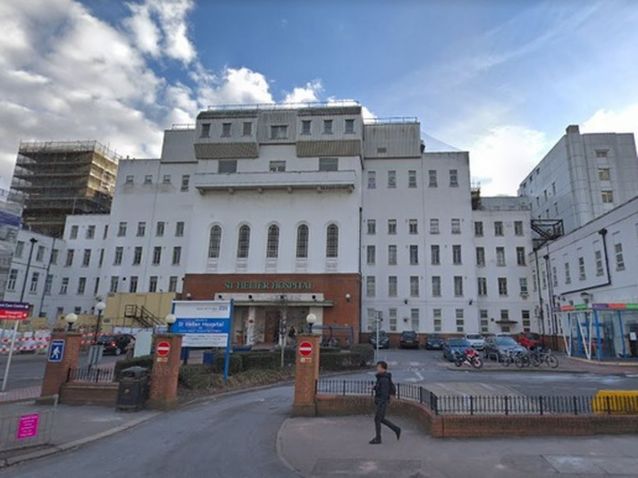
St Helier Hospital
What is missing from this plaudit is that the main hospital in that trust, St Helier, is falling down and in desperate straights with leaky roofs, brown water in the taps, and nothing is going to be done to replace it until 2036 under Labour’s current hospital building programme. Nor does Mr Elkeles appeared to have done anything much about it when he was chief executive.
But far worse this ” robust process” to select him as the best person for the job seems to have missed two rather key and worrying incidents in his career at St Helier. One led to prolonged employment tribunal hearings, the other reached the desk of Sir Robert Behrens, the former health service commissioner.
The employment tribunal case involved an extremely competent doctor who was dismissed after being branded as ” unfit for purpose” – a legal term that doesn’t exist for people -at a hearing organised by the trust. I am not naming her in this article but people may find part of the story familiar to readers of my blog.
What I am concentrating on is the role of the chief executive in dealing with her case.
Among the papers released for the tribunal were private emails between Mr Elkeles and her, which then became public documents.
In one Mr Elkeles offers a deal for her to leave the trust and escape what would amount to a disciplinary hearing if she drops any action against the trust.
He wrote: “We ensure MYT[ Mid Yorks NHS Trust] agree that you can go there and we jointly set up with them the required training and support 2) ESTH will pay your salary for a period of 6-12 months (to be agreed) whilst you are at MYT 3) At the end of the agreed 6-12 months period ESTH will no longer be your employer 4) ESTH agree to cease the MHPS process[ this was a hearing questioning her competence]which means we can find a way to ensure you are re-validated (not my area of expertise but i am sure there will be a way) 5) You need to drop all the actions you are taking against ESTH. If we can agree this then I would hope that everyone can move forward positively.”
When she refused to do this he wrote back: “I made a proposal on how to provide a constructive ending to this process on Friday. I did not expect to receive this type of reply from you which in my view does nothing to try and find a solution to this issue but just perpetuates the current impasse we seem to have reached. I therefore withdraw my offer and any input from me as CEO to resolve this informally. The hearing that is scheduled for Monday and Tuesday next week should continue as planned and reach whatever conclusion the panel believe is appropriate.”
What he was asking was that she withdrew any allegations against the trust of sexism and racism ( she was the sole woman at that level in that department and from an ethnic minority) and also hide a whistleblower claim about an avoidable death of a heart patient there which the trust admitted later in public they avoided reporting to the local coroner.
Her lawyer also produced statistics showing that despite the trust employing, like most London trusts, a very diverse range of people, it did not have a very good record in treating them.
As far as validation was concerned the General Medical Council revalidated her anyway – despite multiple claims of incompetence from the trust which were all dismissed by an independent medical expert asked to examine them.
The second case which involved the widow of a patient who died in agony at St Helier Hospital with nurses refusing to give him pain relief was covered on my blog. You can read the case here.
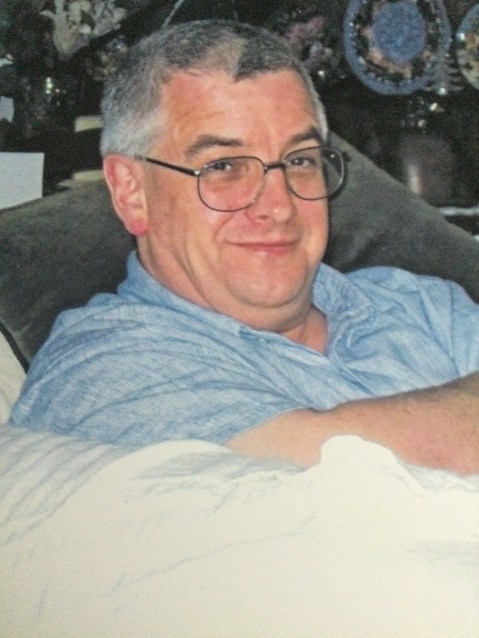
Robert Sheppard: Left to die in agony by St Helier Hospital
Her complaint to the Health Services Commissioner about his treatment led an apology from the chief executive but other matters by the management were brushed under the carpet. This included the fact that Robert Sheppard had picked up a bacterial infection called klebsiella which attacks people with a weak immune system and it was never notified by the hospital to the authorities, In fact his initial death certificate which would had to be provided by the hospital’s doctors airbrushed out that he had the infection.
Wendy , his widow, said:” Dying with dignity was something not given to Robert. I will never forgive St.Helier Hospital. It’s failures towards Robert were ‘swept under the carpet’ by the Hospital management. My complaints were misconstrued to make St.Helier look in a better light and incidents that happened weren’t recorded in Robert’s medical notes so I am told. “
All this raises questions about how Daniel Elkeles will do in his new job. Will he really speak truth to power or will he bury issues from public scrutiny to protect the reputation of the NHS trusts , who are his members? Will patient safety and equality and race issues be tackled with vigour or sacrificed to make sure his organisation gets a good press.
Electric car charging at home, Clean energy filling technology. Pic credit:www.freepik.com
A damning report from MPs today reveals that 1.2 million disabled drivers have been blocked by the government from being able to use electric charging points cars at motorway service stations and garages.
While the UK is on target to increase the number of charging points for the growing number of electric cars not one of the 73,000 charging points reaches accessibility standards laid down by the government for disabled people to use them.
The reason is that to install disabled friendly charging points has been left as a discretionary option for installers rather than a mandatory requirement by government.
Sir Geoffrey Clifton-Brown MP
Sir Geoffrey Clifton Brown, the Tory chair of the Commons Public Accounts Committee, said: “It is of deep concern that the needs of disabled drivers are being ignored. Not a single charge point in the country is currently fully accessible. We are risking baking a serious injustice into the fabric of a major part of our national infrastructure. Government similarly needs to understand how to remedy financial inequalities for those who have no choice but to use public charge points. Our report therefore challenges the Government – it must move at pace to overcome current delays and encourage take-up, while taking the time to ensure no-one gets left behind in this all-important shift to the future.”
The report warns: “Many disabled people are reliant on their cars as existing public transport does not adequately cater for their needs. Failure to address problems with the uptake of the standard will mean that the public charge point network will continue to develop without meeting the needs of drivers with disabilities.”
The treatment of disabled motorists reflects the disparaging attitude both the last Tory and the present Labour government seem to have for disabled people. Rail travellers are similarly badly treated with patchy provision to access station platforms and the London underground is only partly accessible with Euston underground been seen as the worst station in Europe. Compare this to the excellent provision for disabled people on public transport in Singapore, Sydney, Adelaide and Rio. I have had a good experience taking my late wife in a wheelchair round these cities.
And it comes at a time when the new government is planning a £6 billion cut in disabled people’s benefits and is expecting the disabled to get to work without providing proper facilities for them to travel there.
The treatment of the disabled is just one criticism of the present electric charging provision. The report found a very uneven distribution of electric charging points round the country. London, where ministers mainly live, has 250 charging points per 100,000 of the population. While Northern Ireland has just 36 per 100,000 population – suggesting that people taking their electric car on holiday there might have problems. In England the worst areas for provision were the North West, including the Lake District and the East Midlands, including Lincolnshire.
Most charging points are in urban not rural areas and there is also a problem connecting charging points to the national grid – which suggests that when they are used more widely we might find them running out of juice.
The previous government set aside £950 million to do this – but the report reveals nothing has yet been spent as pilot projects were subject to delays.
There is also an economic problem with public charging points paying 20 per cent VAT while those who have the space for a home charger paying only 5 per cent VAT. So it is much more expensive to use public chargers.
There may be a further problem for the many people who live in terraced houses who install an electric charger and then put cables across the pavement and roads to charge their parked cars.
So much for the green revolution which we are all promised. It is certainly happening, but not been managed well and disabled people are just an after thought as far as policy makers are concerned.
Head of the National Audit Office raises pertinent questions about the future direction of Whitehall in annual speech
Anybody reading the latest tranche of reports from the National Audit Office and the Commons Public Accounts Committee could be forgiven for thinking the UK is living in a dystopian world. Indeed fiction writers could use their reports as a basis for a dystopian novel or a new TV series.
The problem is that it is not fiction, it is factual based evidence.
Never in my 40 years of reporting the NAO have I seen so many things run by Whitehall going wrong. Yes we have had scandals, waste of public money and even corrupt deals exposed by them. But the last tranche of reports almost beggars belief.
Simultaneously we have had the biggest backlog of building maintenance, totally £49 billion, the largest ever NHS waiting lists for operations, the Home Office admitting it has made 1000 mistakes and wasted tens of millions on acquiring sites for housing asylum seekers, half the local authorities in England on the verge of bankruptcy, outdated computer systems without proper security protection, record homelessness, and a huge backlog of people waiting for special education places or treatment in psychiatric hospitals.
Innovate or die
It is against this background that Gareth Davies, the head of the National Audit Office, addressed a well attended meeting yesterday in Parliament of MPs, peers, former permanent secretaries, academics and journalists.
While he did not use my journalistic hyperbole, his message was a simple one to Whitehall, innovate or die. And although the NAO is strictly non party political, there was an underlying message to the present government, sharpen your act or lose the next election.
As he put it: “we have a new Parliament and a new Government, but many of the same problems of rising demand and not enough money to quickly fix the gaps in key public services. We also face other challenges that risk causing widespread disruption, from global instability and climate change to public health emergencies and cyber threats.”
NHS needed fundamental reform
He was particularly critical of the department for Health and Social Care and the NHS, the biggest employer in the UK.
” Figures from NHS England in May last year showed it was still 8 per cent lower in productivity in 2023/24 than before the pandemic and much work is underway to address this.”
He went on later: ” In the last few months, our reports on supporting children with special education needs and NHS financial sustainability both identified the need for fundamental reform in the face of rising demand and costs, alongside unsatisfactory outcomes. This means tackling the causes of avoidable demand and allocating resources in a redesigned system where they can have maximum impact on outcomes.”
He is pleased that Whitehall is piloting AI but also warned that new technology is not the whole answer to greater productivity. He also emphasised that ministries need to employ the best skilled people – notably recently in the need for people with good computer skills and capable of negotiating good procurement deals.
He is also wanted Whitehall to concentrate on tackling resilience to protect the country. This included fighting cyber attacks and the risk of future pandemics. He revealed the NAO would soon publish a report looking at the international and domestic implications of protecting the UK from another pandemic like Covid 19 which came from abroad.
Civil servants must be less risk averse
Finally he wanted civil servants to be less risk averse and try out well managed schemes, dropping those that don’t work quickly.
His solution was summed up in four succinct points.
First, a clearly articulated risk appetite and a spread of investments, to maximise the chances of success in innovation
Second, harnessing new technology as I’ve already mentioned
Third, a culture of fast learning and evaluation, stopping failed experiments quickly and scaling up successes
Finally – and close to home for us – an accountability and scrutiny framework that encourages well-managed risk taking
” It’s no coincidence that innovation thrives in times of crisis, such as when lives are at stake. Organisations rapidly adjusted their risk appetites during the pandemic to meet urgent needs,” he said.
He pointed that Whitehall fears that they would hung up to dry by MPs and the press if they failed was now no longer true -instead MPs on the public accounts committee were now more critical of civil servants who failed to look at new ways of tackling problems rather than following safe bureaucratic procedures.
So what are the NAO doing themselves? “our refreshed strategy from 2025 to 2030 takes fully into account the risk appetite set for the range of innovative projects. We will continue to look for and highlight positive examples of innovation, including where unsuccessful initiatives have been stopped in favour of more promising ones. As well as featuring these in our reports on departments and organisations, we will publish what we learn across government as part of our programme of lessons learned reports.”
AI is also coming to the NAO so auditors can spend more time making professional judgements on department’s performance and less time on manual exercises.
Talking to people who attended afterwards it was clear that MPs and academics are well aware that innovation is necessary or we will not be able to deliver public services to meet growing demand. MPs seemed especially aware that the NHS was not functioning properly – whether it was their local health trust – or the bureaucracy at the top. MPs have already publicly criticised the top management of the NHS for being complacent.
Over the next five years how Whitehall balances the money needed for innovation and risk taking against the perennial problem of working in a public sector which has been neglected for too long and needs ” first aid” to keep going will be crucial. Whitehall should treat the present state of public services as a national crisis which can only be tackled by radical innovation.
Parliament’s watchdog, the National Audit Office, has qualified last year’s annual accounts of the Department for Business and Trade, for failing to providing accurate estimates of the money needed to compensate the Post Office victims of the Horizon scandal and overspending its budget by over £200m.
The disclosure is the latest blunder in the handling of the scandal where hundreds of postmasters were wrongly accused of fiddling their books and some spent time in prison for crimes they did not commit Instead there was a cover up by the Post Office when the computer system was at fault.
Gareth Davies, the head of the National Audit Office, who audited the ministry’s accounts, says the omission to provide Parliament with the correct figures and the £208m proposed overspend on the scheme amounted to a breach of the ministry’s spending limits and has been classified as irregular spending.
Kemi Badenoch. Pic credit: Gov uk
The decision to pay out compensation to the postmasters and quash their convictions happened when Kemi Badenoch, now the Tory Party leader, was business secretary. She was the sole shareholder of the Post Office under the present constitutional arrangement for running the business.
Last year the government set up compensation schemes for the postmasters – one to compensate them for the money they lost through the computer misrepresenting their accounts and another to compensate those who had been wrongly convicted.
What the accounts revealed is that the ministry did not hold enough data to properly estimate how much compensation it would have to pay out and put forward to MPs estimates to approve its spending that were not accurate – hence the overspend.
Under the first scheme the Horizon Shortfall Scheme (HSS), which is intended to support those who accounts were falsified by the computer system , Individuals who qualify can choose to either accept a fixed sum of £75,000 or opt for full assessment by an independent advisory panel.
The Post Office is inviting current and former postmasters to apply if they wish to but haven’t yet done so, as there will be a closing date for the scheme. It has advised the ministry that it anticipates a response rate of approximately 25-30% and that the majority of new claimants will accept the fixed sum offer. However, the auditors say due to the limited amount of available data on which to base this estimate, the eventual outcome could vary significantly.
Under the Horizon Conviction Redress Scheme (HCRS) intended to compensate individuals who had their convictions overturned. Because this scheme is in its early stages, there is limited data upon which to base an estimate of future settlement values.
But the ministry just assumed that the proportion of applicants who choose to accept the fixed sum offer (rather than submit a full claim for detailed assessment) will be similar to the take-up rate for those who had their convictions overturned by the court and are being compensated through the Overturned Conviction (OC) scheme; It also assumed that the average settlement value for those choosing not to accept the HCRS fixed sum award will be significantly lower than its equivalent estimate for OC claimants.
Neither of these propositions could prove to be accurate because the period for claiming compensation is not over. And by estimating an extra £208 million to be spent on the second scheme led to the ministry breaching its obligation to tell Parliament how much it intends to spend.
The Department for Business and Trade said:”This issue took place as a direct result of the decision to rightfully offer further redress to Horizon scandal victims, at a time when the high volume and complexity of claims meant there was significant uncertainty on the cost estimates.
“We have acknowledged this to the NAO and remained determined to ensure that all affected postmasters receive the financial address they deserve to right these historic wrongs’
A further £1.8 billion has been provided since these accounts were reported.
Coroner Mary Hassell now facing bereaved members of two families unhappy about the way she conducts inquests
Teresa McMahon was a well liked news editor for ITV’s Granada Reports who had a first class honours degree in journalism and was based in Salford. From humble beginnings she was rated by colleagues as ” a highly competent news editor, who had worked on and overseen – some of the biggest news stories including the Manchester Arena terror attack, the coronavirus outbreak and Tyson Fury’s world heavyweight championship win.”
Over three years ago she was found hanged at her home in Little Holten, Salford and it took until last week for an inquest to be held. What emerged is that the police “investigation” into her death, the pathologist’s report and the conduct of the coroner who heard the case, Mary Hassell, fell well short of the professionalism and unbiased news values Teresa McMahon had practised during her life.
The hearing itself did not start for an hour after lawyers for Lorna McMahon requested an adjournment because she had not received all the documentation she needed, had no confidence in the robustness of the process and thought her rights to participate compromised procedures under Section 2 of the European Court of Human Rights legislation particularly in relation to domestic abuse.
Michael Etienne Pic credit: Garden Court Chambers
Her lawyer, Michael Etienne, from Garden Court Chambers, who acted pro bono, highlighted concerns that coroners did not pay enough attention as to whether domestic abuse by a partner or ex partner led to suicide and cited previous cases. He told the coroner ” the inquest will (or at else is very likely to) fall short in its primary duty to provide a full and fearless inquiry into these important matters.”
All this was rejected by Mary Hassell, the coroner who insisted she would conduct a frank and fearless inquiry.
The hearing had already been moved from Manchester West coroner’s court to Inner London because of a conflict of interest and concern about the involvement of Greater Manchester Police. A senior coroner had recused himself from hearing – hence the delay in hearing the case.
Mary Hassell ” suicide verdict” Pic credit: Archant
Mary Hassell decided that it was a suicide and ruled that there was no coercion or control by her ex partner Robert Chalmers that led to her death.
Mohammed Bashir – no ” Silent Witness” material
For her the star witness was Pathologist Dr Mohammed Bashir. He insisted that the ligature around her neck was consistent with hanging and not strangulation but he knew nothing about her complaint about domestic abuse and said there were no other marks on her body. Extraordinarily he had taken no photos when he examined the body and his evidence was partly contradicted by the policeman who went to the scene who noted bruises on her breast and biceps. Certainly Dr Bashir would not have qualified for a star role in ” Silent Witness.” He was no Dr Nikki Alexander and Lorna McMahon complained that the body had not been examined by a forensic pathologist.
This lax approach was compounded by the so called investigation by Greater Manchester Police. Detective Chief Inspector Gareth Humphries who arrived on the scene and immediately ruled out murder. She was already dead and it was Robert Chalmers, who snapped the cord. Her brother Bernard, who was also there, confirmed that Chalmers had done it by himself,
No pictures taken by pathologist or police
Extraordinarily again he did not take any pictures either and apologised to the coroner for not doing so. “Policy at the time was to take photos if you think there’s a crime. I did not think there was a crime at the time. I could have accessed the digital camera and I did not. I wish I had. If I had, you would have got photos for the answers you seek and I apologise that I did not.”
Instead he read her journal which he found in the bedroom where she expressed her loneliness, lack of contact with her daughter, and a list of complaints about the way her ex Robert Chalmers had treated her.
But only three weeks before this she made a complaint about domestic abuse to a police constable under Clare’s Law and was wrongly told that she had no right to find out whether he ex had convictions for violence. She then withdrew the complaint and police found that they had given her the wrong advice but could not contact her to tell her.
A lot of this came out during the hearing because of persistent questioning by Lorna McMahon not the coroner. She ended up being told off because the coroner did not think her hearing should be an inquiry into the police.
Her ex, Robert Chalmers, was supposed to give evidence but did not turn up. Mary Hassell issued an arrest warrant and he was taken by the police from his home to Bolton Coroner’s Court where he had to give evidence. He is a NHS estates manager working for the trust in Salford.
Her ex was nervous and unprepossessing
He emerged as a nervous, unprepossessing character, replying with monosyllabic answers and denying he was in any way responsible for her death. His only concession was that their relationship was ” volatile” – an under statement given neighbours had witnessed shouting, him being thrown out of her flat, and she tearfully sitting outside her house with her head in her hands. He also denied that he alone had snapped the cord contradicting her father’s statement.
Her father did not give evidence in person either but the coroner accepted a statement from him as he said he was to ill to attend. He painted a sad picture of his daughter being caught up in an alcohol fueled relationship with a man was not good enough for her. But it was also revealed that this man had been his best man at his wedding and he had known him for 25 years.
When his sister, Lorna, complained she could not question him, Mary Hassell accused her of preventing him coming because she had damaged his health by her attitude towards him. It was clear brother and sister did not get on but a coroner should be above that.
The final indignity was a decision by the coroner to first vet Lorna’s statement to the hearing and then ban most of its contents. Her reason was that coroner’s hearings were not a place where either side could try to influence a coroner’s verdict. To my mind this was preposterous. It was obvious that Mary Hassell was a very strong minded woman and the idea that anybody could influence her in any way was absurd. She may even have made up her mind before the full hearing.
I suspect the real reason is that she did not want any more criticism of Greater Manchester Police in public or more details about the behaviour of Teresa’s ex including his past, particularly as this hearing was well covered by the press and TV.
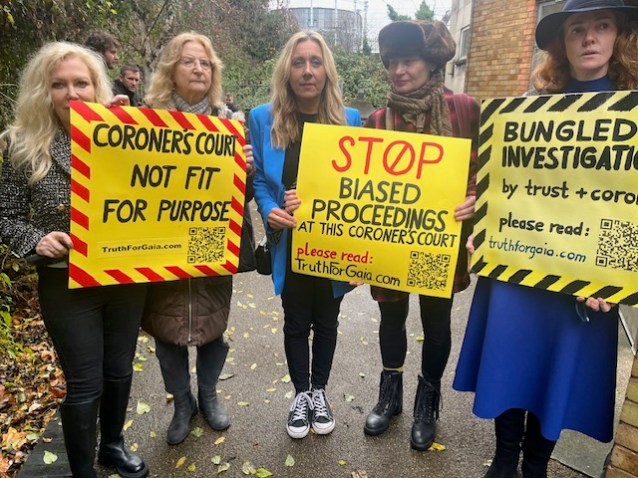
Lorna McMahon (far left) and Dorit Young ( second from right) demonstrate outside the coroner’s court
And it is not the first time she has silenced a bereaved relative. Lady Dorit Young was similarly treated over the death of her only daughter, Gaia. That is why there was a small demonstration outside the coroner’s court whereby Lady Young and her supporters and Lorna combined to protest. You can read about their case on https://truthforgaia.com/ and an earlier blog by me here.
Her role in the Lucy Letby case comes out in a savage cross examination at the Thirlwall inquiry
Claire McLaughlan may not be nationally known but has great influence in the NHS. She has become the “go to” person when health trusts want to deal with what they see as troublesome doctors raising inconvenient issues such as patient safety and helping trusts to discredit whistleblowers who do this. Her career has included being head of fitness to practise at the Nursing and Midwifery Council and as associate director at the National Clinical Assessment Service. Her work for NHS also includes being a lay member of the Performance Advisory Group and chair of the Performance List Decision Making Panel, which assigned people to internal NHS inquiries. . For more information I have written up her profile here.
She gave evidence last week to Lady Justice’s Thirlwall Inquiry, which is investigating what went wrong at the Countess of Chester hospital that led to the murder of babies by nurse Lucy Letby. She claimed she has great expertise in examining doctors, dentists, pharmacists and nurses behaviours and attitudes when they were facing complaints.
Lucy Letby Pic credit: BBC and Cheshire Constabulary
She was called to the inquiry as a lay reviewer appointed by the Royal College of Paediatrics and Child Health. She was asked to review the maternity department at the Countess of Chester Hospital. She was part of a team led by Dr David Milligan, a retired neonatal paediatric consultant; Dr Graham Stewart, a paediatrician from Glasgow and Alex Mancini, a neo natal nurse, representing the Royal College of Nursing.
The review, invited by the Countess of Chester medical director, Ian Harvey, came before the involvement of the police but after consultants who suspected Lucy Letby had been threatened by the management after they raised concerns.
Given her evidence that at one stage she was in a position to review 300 doctors including their competence while she was at the National Clinical Assessment Service it is rather remarkable that in two cases covered by this blog – Dr Chris Day, then a junior doctor at Woolwich Hospital and Dr Usha Prasad, a cardiology consultant at Epsom and St Helier Trust(now combined with St George’s), she has a history of distorting facts to the detriment of their careers. More of that later.
At the Thirlwall inquiry, Ms McLaughlan was skewered by the experienced barrister, Nicholas de la Poer, from New Park Court chambers who previously appeared at the Manchester Arena bombing and Grenfell Tower inquiries. In many cases, she couldn’t recall or answer his persistent questions.
Nicholas de la Poer KC Pic Credit: New Park Court chambers, barrister for the Thirlwall inquiry
From the start he challenged her about her statement that she was a “non practising barrister” – and what that meant she could have practised as a barrister in the past. He pointed out Sue Eardley, the head of health policy at the Royal College of Paedriatrics, “appears to have ascribed some considerable significance … to the fact that you were a qualified barrister when being asked about your experience of legal process. In fact, is this fair: your experience as a barrister would not have involved you engaging in any legal process,” he suggested.
His questioning effectively revealed that she had given a misleading impression to the Royal college in 2014 particularly as she had to change her description to being an unregistered barrister in later years.
She could not answer why the person who engaged her for 14 reviews for the college from 2014 had that impression.
It then emerged from her and other witnesses that prior to the review coming up to the Countess of Cheshire the team were never told that consultants had raised complaints that babies there could have been murdered. It was sprung on them 12 hours after they arrived.
This is significant because a review by a Royal College cannot take place if there is suspicion of misconduct or criminal behaviour. It has to be cancelled immediately but it wasn’t.
Claire McLaughlan’s response to this was that while doctors had raised this possibility, people said that Lucy Letby was a good nurse, therefore it should not have been cancelled. She later went on to attack one of the consultants who did.
“Well it is possible to be a good nurse and murderer?” was the lawyer’s response. She also claimed she was given false assurances by the trust.
Lack of empathy for the parents of the dead babies
The questioning was also revealing about Claire McLaughlan’s views on her role of safeguarding patients and the public interest. When quizzed about that she claimed she had a wider role and unlike other witnesses never expressed regret about the babies’ deaths and the effects on the their parents. She was rather vague about her own safeguarding training.
When it came to the crunch about the doctor’s concerns about the deaths of the babies she depicted Dr Steve Brearery’s concerns as a personal rather than a professional judgement. Cross questioned by the lawyer she insisted:
“In my opinion I cannot speak for the whole team. This was the personal view, feelings, interpretation of one person regarding Ms Letby, it was not based on fact and was uncorroborated. Even now I would not consider his view as objective or impartial as he was too involved, too close to the situation and had a conflict of interest.”
She went on to attack him for preparing a rota sheet showing who was on when a baby died.
“It’s not normally the role of somebody of that doctor’s status and experience to have any involvement, is my understanding, in the rostering of staff. And therefore I would not have — I wouldn’t have called it his professional role for him to take on the analysis that he apparently did of those rosters.”
Later when questioned by Lady Justice Thirlwall herself she claimed the document could have been manipulated because she had not seen the source of the material.
It was also revealed that she tried to get the report for ” balance” to say that some of the babies died because of congenital problems without any medical knowledge- but this was not included.
Frankly her evidence seems to betray a prejudice against doctors, a lack of empathy for patients, and it was obvious that her preferred solution would have been to treat it as an internal disciplinary matter run by the human resources department. This would have chimed with what the trust wanted to do as one non executive director said to ” contain it.”
She also seemed to suffer a loss of memory and recall about what documents she had seen and conversations that had taken place. There was also a rather bizarre incident about how she got hold of Lucy Letby’s telephone number. She couldn’t explain why and thought someone else might have put it there.
She has previous form with other doctor’s and consultants. One of the most egregious cases involves Dr Chris Day a whistleblower who is still fighting as ten year old battle with Lewisham and Greenwich Health Trust, after he reported two avoidable deaths in the intensive care unit at Woolwich Hospital.
She interviewed Dr Day on behalf of the trust and I’ll let his pleadings tell the story. The way she distorted the interview was sent to Department of Health, the courts and senior people at the top of the NHS who took no action.
Also evidence submitted by ,Dr Sebastian Hormaerche, a consultant anaesthetist, severely criticised Claire McLaughlan’s investigation and safeguarding in this case, not commenting on two serious incidents.
In Dr Usha Prasad’s case, a well qualified cardiologist who was popular with patients who was also whistleblower over an avoidable death at Epsom Hospital, was dismissed. Claire McLaughlan presided over an internal hearing and decided she was ” unfit for purpose.” No such ruling exists in employment law. To decide this she ignored the fact that the General Medical Council revalidated her to work anywhere in the NHS as a competent and well qualified doctor. But no doubt Ms McLaughlan thought that was just a personal rather than a professional view.
One can only wonder how many other doctors have suffered from Claire McLaughlan.
The full day’s evidence from Claire McLaughlan and others ishere.
Donald Trump; Pic Credit: The Trump Organisation website
Donald Trump plans the biggest deportation of illegals ever seen in American history – accusing them of being criminals, mentally unstable, drug dealers and even eating people’s pets.
But like every political policy there are always unintended consequences. And one of them has been building up since 2020 ever since the notorious storming of the Capitol in Washington and the endless legal battles claiming the last US election had been stolen from him.
Well qualified US citizens – not the people Trump is targeting to leave the country at all – are deciding to get out of the USA and one country – Norway – is even taking advantage of Trump’s victory to encourage them to leave as soon as possible.
Facts and figures about the Americans leaving for Europe emerged this weekend on the website Dispatches Europe – see the article here – and the Dutch based website is offering tips on what they need to do to settle there.
And while the UK mainstream media – and both Tory and Labour governments- has been agonising over our illegal immigration and asylum problem – the boat people – the number of US citizens in the UK has jumped from 137,000 in 2013 to over 166,000 by 2021. This is the latest known figure and the highest in Europe. It could be higher by now.
While US techies who become digital nomads – are well known to be keen to travel to exotic places where they can work and surf ( both on the sea and on line), this seems a new phenomena.
Dispatches Europe says the biggest jump between 2021 and 2022 has been US citizens turning up in Portugal – not an obvious choice – with numbers jumping for 28,700 to 41,200 – an increase of 30 per cent.
The second highest jump is Germany – an increase of 19 per cent – from 12,400 to 15,300. Spain has seen a 9 per cent rise from 35,400 to 38,900. While Ireland has seen a 11 per cent rise from 11,700 to 13,200. Over a longer period the Netherlands saw an increase from 15,500 to 24,000 between 2013 and 2022.
Last year the Economist noticed the trend quoting that many Americans “are fleers rather than seekers.“
Norway has gone further to cash in on Trump’s victory
One country has gone further. Another article in Dispatches Europe ( seehere) features EmigrateMe, a site to reach out to disillusioned Americans, particularly but not necessarily with Norwegian descent, to come and work near Oslo.
It offers ” free healthcare and schools, reasonably priced housing, culture and a “high tolerance for religious beliefs and sexual orientation, stunning nature, clean air and fresh water.” What is not to like?
Obviously the figures are not huge compared to the huge population of the US. But once Trump gets into office – will a growing trickle grow into a big flood. And what will Labour under Sir Keir Starmer and Tories under Kemi Badenoch do faced with a new US invasion?
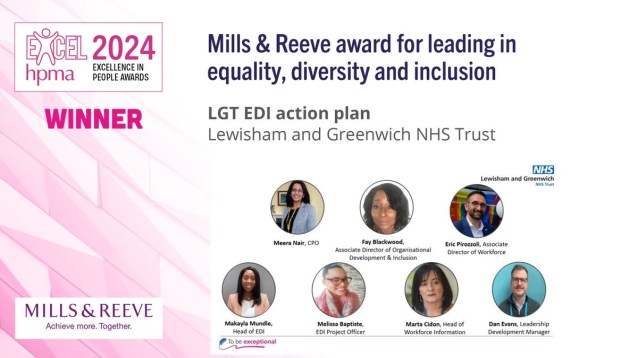
This weekend Lewisham and Greenwich NHS Foundation Trust won a national award for its diversity and inclusion just after a still to be published national staff survey reveals a high level of dissatisfaction about discrimination and bullying among its employees.
The trust which has one of the highest proportion of ethnic minority staff in the country is one of the Excel HPMA award winners. The award is sponsored by a major law firm, Mills and Reeves, which deals with personal injury cases including medical negligence. It is one of a number of law firms sponsoring national NHS awards. Other sponsors include Capsticks for NHS innovation; Bevan Brittan for digital analytics; Browne Jacobson, for employee engagement; and Hill Dickinson for excellence in culture and talent. Ironically, three of the firms are involved in persecuting whistleblowers revealing patient safety issues – two, Capsticks and Hill Dickinson, were leading lawyers for the Lewisham and Greenwich Trust in the continuing ten year battle with Dr Chris Day, who highlighted two avoidable deaths in Woolwich Hospital’s intensive care unit. His long running case resumes at an employment tribunal later this month.
The survey shows the huge difference between the UK breakdown of the current population as referenced by the Office for National Statistics. This stands as 84 per cent white and 16 per cent from ethnic minorities. It also varies enormously from the average picture of an NHS trust. 78 percent of staff in NHS trusts are white, only 43 per cent are white at LGT. Nearly 24 per cent are black British , African and Caribbean compared 14 per cent in average and Asian and British Asian are over 26 per cent of staff compared to nearly 4 per cent in the average NHS Trust.
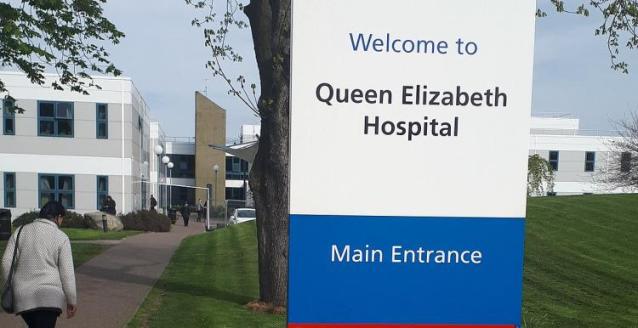
One of the trust’s two major hospitals.
Given this breakdown when asked about whether staff were discriminated by their boss, the trust comes out as worse than average for a NHS trust and similarly in regards to career progression. Also there is a particularly bad result when they were asked how patients, relatives and the public treated them. Interestingly white people – who are a minority in the trust – had a significantly higher rating for satisfaction about future career promotions than ethnic minorities employed there.
Nor do the staff say they would recommend a friend or relative to have treatment in the trust’s hospitals – this is also below average.
When asked whether staff would leave the moment they found another job, some 20 per cent working there said yes – this compares with just over 15 per cent for the national average. And nearly a quarter of the staff said they would look for another job within 12 months – compared to just over a fifth on average.
Morale at the trust has got worse over the last year while there has been a slight improvement in the NHS as a whole.
However the 10 people employed on the trust’s board rate themselves as one of the best in the country.
There is also a big difference in morale among medical staff and ancillary staff. A BMA survey in 2022 produced some startling results
“Have you personally experienced any instances of bullying, harassment or discrimination within the last 12 months?” they were asked. 44% replied yes.
“If you have personally experienced bullying, undermining, harassment or discrimination in the past 12 months, did you report the incident(s)?”43% replied they had reported this and no satisfactory action had been taken.”
“Why did you not report any instances of bullying, undermining, harassment or discrimination?
42% replied they did not believe action would be taken. 26% replied they felt it would be held against them
All this suggests that this award must be more of a paper exercise than the reality there. I would have expected that the trust would be rated as one of the best in some instances. But this does not appear to be case. No doubt the media department there will praise the award to the highest level, executives will congratulate themselves and the law firms will delight in the glory. But it doesn’t look as though it was really deserved.








 Westminster Confidential