London borough of Richmond and the Met Police deny historic child sex abuse after survivor’s predator gets jailed for six years

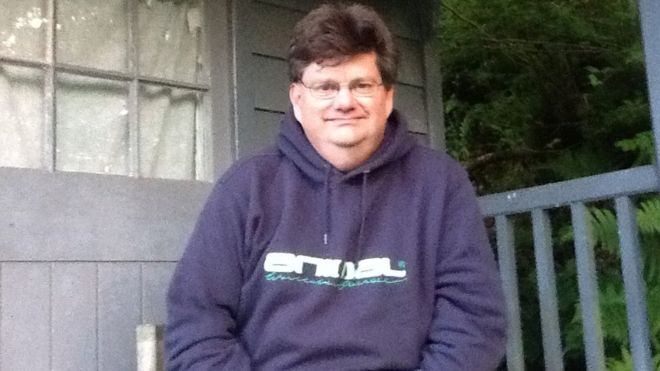
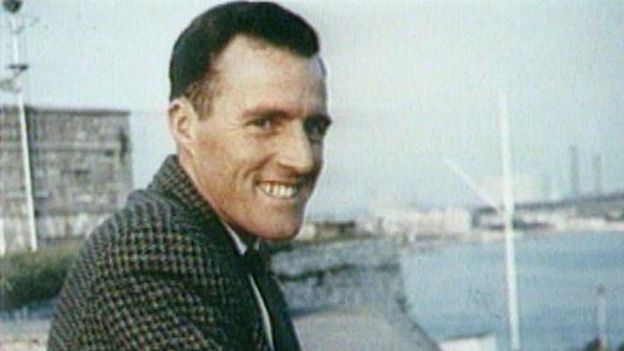
Keith Hinchliffe

Met Police says it was not a crime for council staff to proposition children for sex in 1984

Keith Hinchliffe, the child sex abuse survivor, who got his predator sentenced to six years in jail 40 years after he abused him for three years , is facing an uphill battle with the Met Police and the London borough of Richmond to get compensation or even recognition there was a problem.

The Met Police are describing his allegation that he was propositioned for sex by a member of staff at Grafton Close Children’s home as ” not a crime” and the council have employed lawyers and insurers to say it did not fail in its duty of care to look after him.

Keith’s abuser, Phillip Saunders, had open access to the children’s home where he took him out to sexually abuse him and the member of staff propositioned him when she invited him to her flat in return for saying she would help him leave the home early.

Documents show the Met Police has reviewed the allegations he made in 1984 which resulted in ” no further action” but came to the same conclusion again. The documents show that at first Richmond Council tried to say there was no evidence that he was at the home and then because he was not certain whether her name was Christine or Linda they could not trace anybody.

But the most damning finding was that the Met concluded that no crime existed in the first place.

The report said: “You stated ..that you had been propositioned but that the suspect had not touched you or physically sexually abused you. You stated that it was verbal comments only. I agree that crimes of such nature are fully within the public interest, however, there has to have been a crime committed for that interest to exist.”

Detective Sergeant Alex Woolley of the Met Police Child Sex Abuse Investigations Team, wrote to him saying: ”

“In relation to what happened you at Grafton Close, this report has been closed and classified as a “no crime”.
“Clearly the conduct of the member of staff is entirely unacceptable. However, we have to apply the law as it was at the time that the incidents happened. This happened before the Sexual Offences Act 2003 and so we have to consider what legislation is available to us in the 1980s.”
Keith Hinchliffe was very dissatisfied by the decision and has appealed to the London Mayor’s Office for Policing and Crime (MOPAC) for a review of the case at the end of October when Saunders was convicted. The office has accepted his complaint but warned him it could take 8 months to get a reply because of a backlog of complaints against the Met.

Richmond’s response has been even more negative. First they questioned whether he had ever been at Grafton and said there were no records showing he was there. Then by pursuing the issue with his local MP and a Freedom of Information request the South London Legal Partnership found a log confirming he had been admitted to Grafton Close and discharged six weeks later. But it said all the social work records at that time had been destroyed. It refused to release any documents on the Fernbridge investigation by the Met into child sexual abuse at Grafton Close home in 2015 which the authority did confirm it had co-operated with the police on the grounds that they were too sensitive because they contained details of third parties involved.

When he persisted in pursuing Richmond over this the council turned the case over to lawyers in Nottingham, Browne Jacobson, an Anglo-Irish firm, who cover business, government and health issues.

The firm in a letter this month set out to demolish Keith’s claims of negligence or breach of duty of care at Grafton Close. It cited case law to exonerate social workers who may be involved in his case and also said he had to meet stringent tests to bring any claim that the staff failed to protect him. One of them included he couldn’t produce documents to show the council’s policies at the time – since the council has destroyed all the records.

You can’t bring a negligence case if there was no duty of care -Richmond Council’s lawyers

The lawyers also said he was out of time to bring a case and they would challenge this in court. They were also sceptical of whether the conviction of Saunders would help. The lawyers wrote to him saying ” a claim in negligence cannot succeed if there is no duty of care in the first place”.

It goes on to say the council have neither admitted or denied the conviction of Mr Saunders but would need a certification of conviction or indictment.

The firm warned him they had agreed to represent Richmond if he brought a case and that he could incur substantial costs and he should take independent legal advice.

Since publication of the first blog I have been contacted by one other resident at Grafton Close suggesting there was a woman member of staff at Grafton Close who did sleep with at least one of the boys there. What Keith is exposing is a cess pit of behaviour which the Met and Richmond Council want to forget.

I don’t think Keith is going to give up on this so I expect there will be further developments. Watch this space.

One-Time
Monthly
Yearly

Make a one-time donation

Make a monthly donation

Make a yearly donation

Choose an amount

£5.00
£10.00
£20.00
£5.00
£15.00
£100.00
£5.00
£15.00
£100.00

Or enter a custom amount

£

Your contribution is appreciated.

Your contribution is appreciated.

Your contribution is appreciated.

DonateDonate monthlyDonate yearly

Please donate to Westminster Confidential

£10.00
Exclusive: Child sex abuse survivor gets his predator jailed 40 years after he committed multiple sex acts against him in London and Buckinghamshire

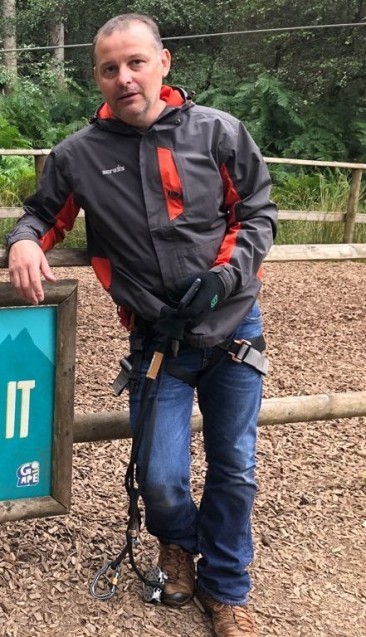
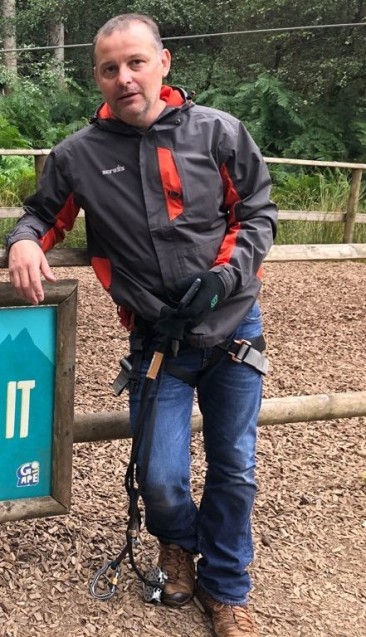
Keith Hinchliffe. He contacted me and gave me permission to use his name to encourage other survivors to come forward and get justice in the courts and compensation.

Judge described him as ” an immensely impressive witness, honest, reasonable and composed under pressure”

A child sex abuse survivor has got justice 40 years after he was groomed and sexually assaulted by a paedophile who went on to commit other offences against boys in Holland and a girl in Kent.

Philip Saunders, 67, was sentenced to six years in jail, with the judge saying only a rule that sentences had to reflect the law in the 1980s stopped him from giving him an even longer sentence.

Keith Hinchliffe, now 54, was abused at Saunders home, in his car, in his office at night, at Wembley Stadium and his predator was given open access to Grafton Close children’s home in the London borough of Richmond to take him out to abuse him when he was put in care.. The abuse continued for three years starting when he was 12 until he turned 16. Saunders was 27 at the time.

His case raises questions again about the role of Richmond Council under Liberal Democrat control and the Met Police in the 1980s who took no effective action to stop paedophiles abusing children in the borough. Grafton Close is the same home where a Roman Catholic priest, Tony McSweeney, was jailed for three years for indecent assault after escaping justice for 35 years following a fresh Met Police investigation in 2015. Like Saunders, McSweeney was able to take boys out of the home with the help of John Stingemore, then the deputy manager of the home, who was already a convicted paedophile. Stingemore died before the case got to court. See my blog on this here.

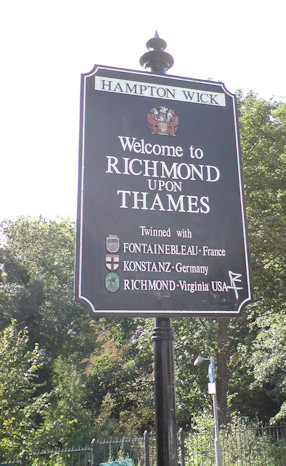
Richmond on Thames Council sign

Keith reported the incidents to the Met police when he was at Grafton Close care home in 1984 and allegations that he had been propositioned for sex as a 15 year old by a woman staff worker at the home. The Met interviewed him and decided to take no further action.

Keith plucked up courage in 2019 to report the abuse again after seeing the BBC investigation into paedophile Jimmy Saville and went to the NSPCC who reported it to Thames Valley Police.

Unlike the Met, Thames Valley Police took his claims seriously and the case went to Reading Crown Court where Saunders tried to deny everything but he was convicted last October and sentenced in December.

The judge, recorder John Ryder, in his sentencing remarks in court, told the whole grisly story. He revealed that Saunders, after abusing Keith, went over to the Hague and sexually abused two boys in his care and was sentenced to two years and six months in jail. In 2005 in Maidstone he was jailed for four years for three indecent acts with a young girl, the daughter of his current wife.

Saunders got access to Keith and his family because he was his sister’s boyfriend for about a year. The judge described how he got Keith to stay overnight at his home in Langley and then asked him to sleep in his bed because he claimed the spare bed was broken. The abuse began overnight and then he was given expensive gifts. This included a microcomputer – rare in 1982 – a Raleigh bike and a Michael Jackson DVD, Thriller. He also exploited the boy’s passion for fast cars taking him to test drives and shows.

” unusually expensive gifts were to groom him for sex abuse”

As the judge said: “giving unusually expensive gifts coveted by an adolescent boy and exploitation of his interests were a means of grooming him to sex abuse.”

He also took pictures of him with an Instamatic camera naked or dressed up at his home, in his car, at work and at Wembley Stadium where he took him to see an American football match.

Keith told the Judge if he didn’t comply Saunders , who is six foot four inches tall, became violent.

The judge says he said: “If I didn’t do things, he would let me know. Arm behind back- pain” .”Rebuffed once and pinned to floor and decanter of scotch all over my face as punishment and made to pleasure him again.”

Other times he was plied with drink, forced to watch pornography and forced to perform oral sex on him.
These events made Keith feel both fear and shame and he started skipping school. The judge summed up his evidence as finding “relationships hard. No friends. Initial abuse hard, aftermath is life changing. Did not finish education. Rebelled. Hated the world and everything around me. Navigated life without education guidance and to relive events in court and answer challenges again and again – had almost broken him.” His changed behaviour led him to be put into care by Richmond council.

He was too ashamed to tell his family and feared his father, an ex merchant navy man, would take it out on him if he knew. He has now told his mother, his present wife and has children of his own and has a job as a furniture maker. But he told the police he now regretted never taking exams at school and getting a good job because of the constant abuse from Saunders.

The judge said:

“I found Keith Hinchliffe an immensely impressive witness, honest, reasonable and composed under
pressure about [a] sensitive and damaging experience. Impressive man.” He described him as an ” insightful and measured in expression”. “Trauma and fear and shame shaped his personality and altered [his] outlook on the world.”

The judge was highly critical of Saunders for trying to deny the whole story and showing no remorse for what he had done.

” You continue to deny any sexual activity at all with him.{You] told PSR author only interested in adult female relationships. That assertion is completely contradicted by the facts in the Holland conviction. I have no doubt on the basis of evidence I heard from KH at trial – he suffered substantial and serious psychological harm as result of your actions. {You] abused a position of trust in relation to him.”

The police interview with Keith revealed he partly came forward because he had seen in the media that perpetrators of historic child sexual abuse were now being caught and jailed.

Despite securing a conviction against Saunders he is now having to fight the Met and Richmond Council to get redress. They won’t admit they did anything wrong in the 1980s or had a duty of care towards him. In the second part of this grisly story I will be revealing their responses to him.

One-Time
Monthly
Yearly

Make a one-time donation

Make a monthly donation

Make a yearly donation

Choose an amount

£5.00
£10.00
£20.00
£5.00
£15.00
£100.00
£5.00
£15.00
£100.00

Or enter a custom amount

£

Your contribution is appreciated.

Your contribution is appreciated.

Your contribution is appreciated.

DonateDonate monthlyDonate yearly

pl;ease donate to Westminster Confidential

£10.00
Revealed: The secret child sex abuse scandals at Dolphin Square

An amazing new book by ex MP Simon Danczuk and author Daniel Smith

New book published today reveals child sex scandals dating back to the 1980s and a thwarted Met Police investigation that wasn’t the discredited Operation Midland

An amazing new book today reveals the notorious history of one of London’s iconic block of flats – the 1930s built Dolphin Square overlooking the Thames- home over the last nine decades to the rich and famous, spies, Fascists, entertainers and glitzy film stars and even the unofficial home of the Free French army during World War II.

The authors chronicle the lives of about 300 people who lived there from Oswald and Diana Mosley who were interned in World War Two, the Vassall Russian spy and Profumo sex scandals of the 1960s to murders down to an amazingly discreet character, Major Monty Chidson, who smuggled diamonds out of Amsterdam in a daring do operation during the German invasion of Holland. It kept them out of Nazi hands in the Second World War.

This book has been well covered by the Daily Telegraph magazine and other national media with one extraordinary exception. Not a single word has been written about the groups of men who used Dolphin Square for child sex abuse despite two chapters in the book devoted to their alleged crimes.

I am going to concentrate on these stories because you won’t read them anywhere else – I suspect because both the police and the media have been bruised by the activities of Carl Beech, a paedophile who posed as a survivor and fed elaborate and detailed stories of the rich and powerful abusing children and is now in jail for perverting the course of justice.

The terrible heart rending tale of David Ingle

The first story dates from 1982 is of David Ingle, described as an articulate and handsome youth from Lincolnshire, who was taken to Dolphin Square by a Lincolnshire farmer, Gordon Dawson,, after being repeatedly raped by him.

The authors write “According to David, he suffered abuse in three locales: in Lincolnshire, at Dolphin Square and in guesthouses close to the spectacular Blickling Estate in Norfolk. All the while, David’s life away from Dawson was unravelling. He became withdrawn and his previously high performance at school dipped steeply. His only real peace came in the company of the horses he loved to ride”

Dawson took him to London while on church business where he sub leased a flat in Dolphin Square. He took him to dinner with “important people” from the Church of England and MPs. Later he was taken back to the flat. The authors write: “He does have memories of waking up in the flat the next morning, sometimes hearing the voices of men milling about the apartment. He frequently experienced pain in his body that he knew did not correspond to the physical effects of the rapes that Dawson had perpetrated. In other words, he was assaulted by some person or persons other than (or in addition to) Dawson on these weekends. Unable to recall the specifics of the attacks, he would feel ashamed, stripping the bed of soiled sheets, removing the very evidence of his abuse in his anxiousness that no one should know what had been done to him.”

It took him to 2007 to go to Lincolnshire Police to complain about Dawson. The police told him that he was not the first to complain about him. They went to arrest Dawson but once he knew about David’s complaint he went into the woods and was found dead with a bullet to the head.. An inquest gave an open verdict.

The case was raised again in 2015 under the Met Police’s Operation Fairbank but because he couldn’t name anyone it was dropped. Lincolnshire Police also re-opened their inquiry but could not progress the case further.

“It felt to David as if he would only be listened to if he could come up with the name of a ‘big-hitter’ to investigate, or else he would need to produce a signed confession from one of his abusers, or perhaps a videotape.”

William van Straubenzee

The second story comes from the late David Weeks, Tory leader of Westminster about the role William van Straubenzee, a Tory minister who was solicitor to the Dolphin Square Trust and also a paedophile. Weeks said van Straubenzee was a gatekeeper to getting a flat in Dolphin Square. Straubenzee himself lived in a grace and favour flat in Lambeth Palace. The authors write, using evidence given to the Independent Inquiry into Child Sexual Abuse:

William van Straubenzee in 1970. Picture credit :BBC

‘In 1982, MI5 received information that suggested that William van Straubenzee engaged in sexual activities with young boys whilst in Northern Ireland [he had been Northern Ireland minister
between 1972 and 1974]. This information was shared with the Cabinet Office, who shared it with the Prime Minister (Margaret Thatcher).’ MI5 confirmed that if this intelligence had been received today, under current policy it would be passed to the police.”

Incendiary evidence

The third story is the most dramatic. The authors write:

“Among the most incendiary evidence of wrongdoing at Dolphin Square came in a statement taken from a former police officer identified only as GB. It was entered into evidence only at the end of the last day of hearings in IICSA’s Westminster investigation and the witness did not appear in person to give evidence, nor were they seemingly provided with questions by the inquiry to which GB would have been
legally obligated to give answers. The statement adduced in evidence dated from 20 December 2016 and was given as part of Operation Winter Key, the Metropolitan Police’s investigation into allegations of
non-recent abuse.”

He revealed another investigation called Operation Mileshogue.

“GB’s statement was wide ranging. It included allusions to surveillance of a London MP who was suspected of hosting young people overnight in his constituency office. But it also included significant detail of police operations concerning Dolphin Square in the 1990s.”

“MH was … an intelligence gathering operation revolved around a guy called [NAME REDACTED] … He had been a rent boy himself, living in Greenwich at that time. He had a series of young boys. One was [WM-A118] another was (WM-A119] and another 5 or 6. Those boys I interviewed on tape several times. suggested that these children were thirteen or fourteen when they were speaking to them but that their abuses had started when they were as young as 8.]
“They claimed one another had been abused by other people, were taken to parties and things by [NAME REDACTED] himself he was like a modern day Fagan [sic]. He also had them doing robberies and burglaries but he was also an informant for the police, inform on them and then turn up as their appropriate adult. These were kids all from local Children’s Home”.

GB then referred to the ‘Fagin-figure’, saying: ‘He also mentioned Dolphin Square he had been there as a child himself, been abused.’
GB discussed how they had made requests for additional investigative resources to senior officers but their requests were repeatedly refused or bounced back as it was ‘too difficult to do at this time’ and ‘we weren’t regarded as a priority of the Paedophile Unit at that time, GB said: ‘They didn’t want to know about a mass operation with loads of kids to interview. They didn’t know how to deal with it.’
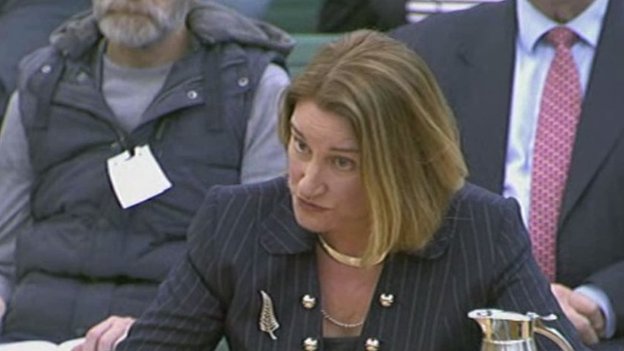
I asked the child sex abuse inquiry their reaction to this. A spokesman denied the inquiry had not weighed up GB’s evidence and pointed instead to an inquiry by the Independent Office for Police Conduct into GB’s allegations. and evidence from Met Police Commander Catherine Roper about the operation. She gave evidence on a number of child sex abuse investigations in London to the inquiry.

Whatever the disclosures both the inquiry and the book conclude there was never a specific VIP paedophile ring.

But they do say: “it is fair to conclude from a wealth of evidence, powerful individuals who did abuse children in Dolphin Square and who got away with it because of who they were and who they knew: in other words, they abused because they knew they could.”

Scandal at Dolphin Square: A notorious history . History Press £20

Please donate to Westminster Confidential to allow me to continue my forensic investigations.

One-Time
Monthly
Yearly

Make a one-time donation

Make a monthly donation

Make a yearly donation

Choose an amount

£5.00
£10.00
£20.00
£3.00
£9.00
£60.00
£3.00
£9.00
£60.00

Or enter a custom amount

£

Your contribution is appreciated.

Your contribution is appreciated.

Your contribution is appreciated.

DonateDonate monthlyDonate yearly

please donate to Westminster Confidential

£10.00
Carl Beech Verdict: A savage blow that does not mean we ignore all future child sex abuse investigations

Carl Beech: !8 year prison sentence for perverting the course of justice and fraud Pic credit:BBC

The Carl Beech verdict is a blow to child sex abuse investigations. After the trial and thorough investigation by Northumbria Police Beech he emerged as a prolific, manipulative and malicious paedophile who made false allegations against powerful people and sparked off a huge investigation by the Met Police.

 Both myself and the reporter, Mark Conrad, who investigated Beech, part company with Exaro’s former editor in chief, Mark Watts, in deciding that the verdict was “unsafe” or that he didn’t get a fair trial. Beech chose not to call a single witness in his defence and when the net was closing he fled the country.

Now the question is asked should journalists have ignored him from day one and reported nothing taking the line that no one in “the great and good” has ever sexually molested a child and anybody alleging that is a fantasist.

 Or should we try diligently to get to the truth of the matter given the limited tools journalists have compared to a police force or the powers and scope an inquiry can have to investigate a case?

The simple solution is to say allegations, particularly historic, of child sex abuse, are so problematic, so difficult to prove, that anybody coming to a journalist suggesting they are a survivor of sexual abuse should be turned away. That would a devastating to the many thousands of survivors themselves who would have no other recourse other than going to an overworked police force. It wouldn’t be just a case of not being believed but being ignored.

 It was also play into the hands of any paedophile to do what he or she liked – knowing their victims would never be listened to and they could hide behind the new populism that most child sex abuse in the UK is just a string of false allegations.

The latter fact is wrong. If you look at recent convictions hardly a week goes by -without either individuals or paedophile gangs being convicted in the courts- and that includes historic cases.

While Operation Midland was going on the National Crime Agency successfully prosecuted people in North Wales – including a police superintendent – the late Gordon Angelsea- who had denied child sex abuse crimes for years and successfully sued Private Eye and the Observer. He was one of 11 people so far successfully prosecuted through Operation Pallial including John Allen, an owner of children’s home and gang of five paedophiles led by a former professional wrestler.

Gangs have been convicted in Rotherham, Hull, Stoke on Trent, Rochdale, Lichfield and Newcastle upon Tyne to name a few.

And the idea that there isn’t a single prominent person who indulges in child sex abuse has been proved untrue with the conviction of the late Bishop Peter Ball, Bishop of Lewes and Gloucester, who convinced people at the very top, including Prince Charles, for years that accusations against him were a pack of lies. And Sir Cyril Smith MP whose escaped crimes in Rochdale were exposed in a report by the Independent Inquiry into Child Sexual Abuse.

The only way you can investigate child sex abuse is to look for any outside facts that might stand up the likelihood of the case, test the person’s knowledge of the places where it is alleged to have happened and do a thorough test to see if the “ victim” can identify his perpetrator. You also rely on other people – not sexually abused themselves – to act as whistleblowers or people in authority at the time who can stand up the circumstances of a story.

The problem with the Carl Beech investigation was the way he undermined any diligent reporting by meticulously researching details about his victims and their premises so the” right” answers would come out.

The other was the odd way Exaro was run. Unlike nearly all news organisations there were no internal news conferences where ideas could be swapped and challenged. Reporters were forbidden from discussing the individual child sex abuse case they were investigating with any other reporter.

 As a result I did not know the true identity of Carl Beech until it was made public. I have never met him, never exchanged any emails or talked to him.

 Perhaps he would have been exposed if a tech savvy reporter had seized his computer – but I doubt the public would support journalists seizing other people’s computers while they were conducting investigations.

 There has been criticism of my colleague Mark Conrad for conducting a picture identity test after Beech had alleged 12 people had sexually abused him.  He tells me that consisted of inserting the 12 into 42 different people and took place before the police started their investigation.

 The reason why it was done was because of the disastrous episode on BBC Newsnight where the survivor Steve Messham was never shown a picture of the late Lord McAlpine who was wrongly alleged to have abused him – which would have prevented a false allegation circulating on social media..

Investigating historic child sex abuse is one of the most difficult areas to do in journalism.  Carl Beech has made it even more so. One lesson is that people who say they were sexually abused will in future have to face more scrutiny by both the police and journalists investigating their claims.   The law about anonymity for people being investigated for child sex abuse might have to be tightened up – though I would be careful in advocating this.

 But what must not happen is that the default position should move from believing a survivor to taking the view that the accusation is false. That way would provide paedophiles – who are the most cunning and manipulative of all people – with a free market to abuse whoever they wish and get away scot free.

Nick and allegations of the Westminster paedophile ring: The perversion of justice charge sheet

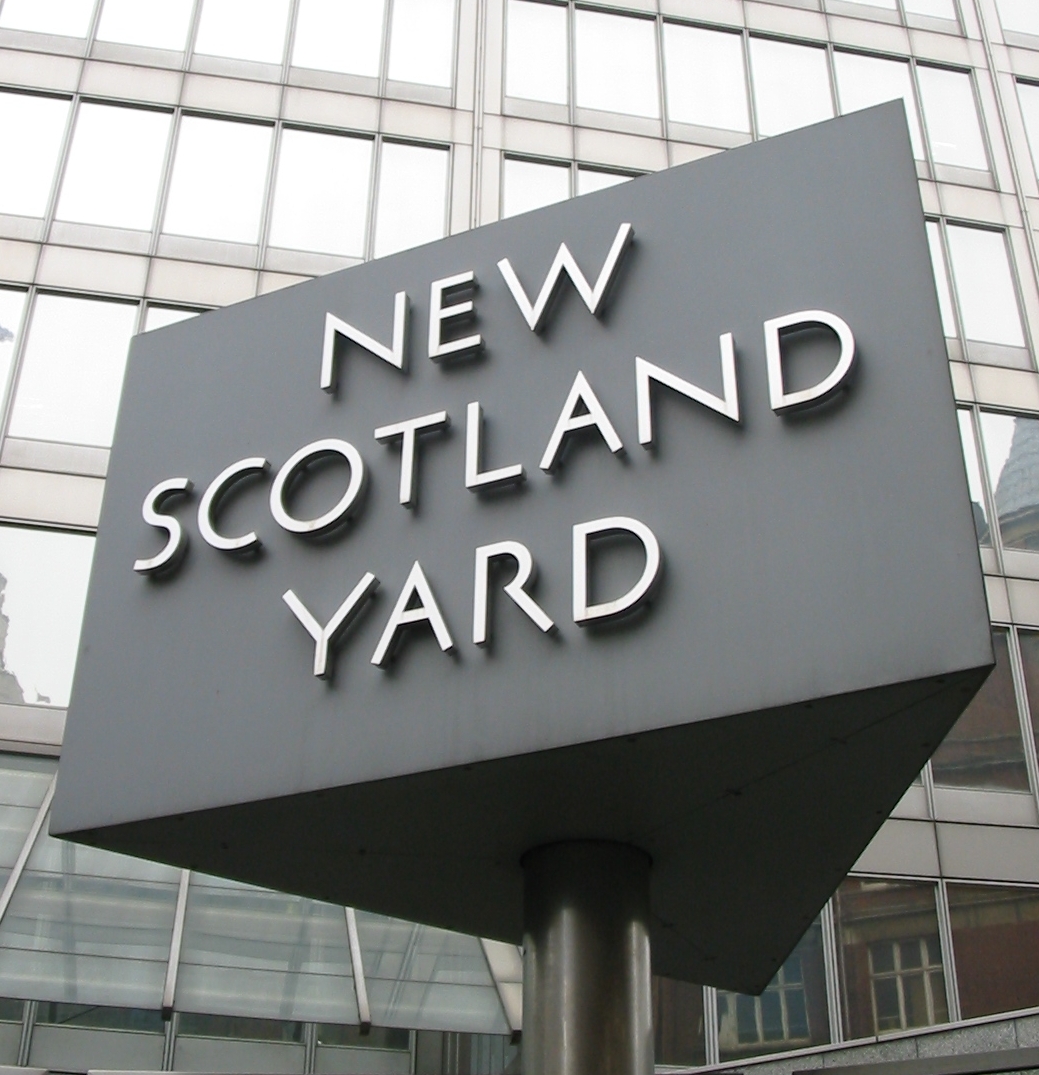
New_Scotland_Yard

Sign outside old Scotland Yard building Pic Credit: Wikipedia

CROSS POSTED ON BYLINE.COM

The Crown Prosecution Service has decided  there is sufficient evidence to charge “Nick ” the  50 year old man whose allegations led to Operation Midland – the Met Police investigation into  allegations that prominent politicians and military figures were involved in the sexual abuse and murder of children -with perverting the course of justice.

Details of the charges are:

Doing acts tending and intended to pervert the course of public justice, in that he made a false allegation of witnessing the child homicide of an unnamed boy committed by Mr Harvey Proctor

Doing acts tending and intended to pervert the course of public justice, in that he made a false allegation of witnessing the child homicide of a boy called Scott

Doing acts tending and intended to pervert the course of public justice, in that he made a false allegation of witnessing the child homicide of an unnamed boy, other than the unnamed boy in charge

Doing acts tending and intended to pervert the course of public justice, in that he falsely alleged that he had been sexually and physically abused by a paedophile ring, with senior ranking officers within the military, military intelligence, a TV presenter and other unidentified men accused as members

Doing acts tending and intended to pervert the course of public justice, in that he falsely alleged that he had been sexually and physically abused by a paedophile ring, with politicians, a TV presenter, and other unidentified men accused as members

Doing acts tending and intended to pervert the course of public justice, in that he provided a list of sexual abusers and locations falsely alleging that he had been subjected to physical and sexual abuse by the said sexual abusers at the said locations

Doing acts tending and intended to pervert the course of public justice, in that he provided sketches of locations at which he had been physically and sexually abused, falsely claiming that he had produced them from memory

Doing acts tending and intended to pervert the course of public justice, in that he provided and repeated the name of Aubrey, falsely alleging that Aubrey had been present and subjected to physical and sexual abuse when with him

Doing acts tending and intended to pervert the course of public justice, in that he provided a pen knife and two military epaulettes falsely alleging that he had retained them from when he was abused as a child

Doing acts tending and intended to pervert the course of public justice, in that he falsely claimed that he had suffered serious injuries as a result of having been sexually and physically abused as a child

Doing acts tending and intended to pervert the course of public justice, in that he falsified a ‘Proton’ email account, and provided false information purportedly sent from ‘Fred’, an individual who he had named as present when he was abused by a paedophile ring

Doing acts tending and intended to pervert the course of public justice, in that he went together with investigators on site visits and falsely alleged that it was at locations identified by him during those visits that he had been subjected to physical and sexual abuse by a paedophile ring

Fraud, contrary to the Fraud Act 2006, section 1, in that on or about the day of day of 26 September 2013, dishonestly made representations to the Criminal Injuries Compensation Authority, namely that he was subjected to abuse by a paedophile ring, knowing this to be untrue and intending thereby to make a gain for himself.

Following a  highly critical report  on the Met Police investigation by  retired judge Sir Richard Henriques, which has never been fully published,  Northumbria Police were asked to investigate Nick.

Frank Ferguson, CPS Head of Special Crime, said: “The CPS has considered a file of evidence from Northumbria Police relating to allegations of perverting the course of justice and fraud by a 50-year-old man.

“The police investigation provided evidence that the man had made a number of false allegations alleging multiple homicides and sexual abuse said to have been carried out in the 1970s and 1980s….

“He has today been charged with 12 counts of perverting the course of justice and one count of fraud and will appear before Westminster Magistrates’ Court in due course.

Criminal proceedings in relation to this matter are now active and it is extremely important there should be no reporting, commentary or sharing of information online which could in any way prejudice these proceedings.”

In order to ensure that ” Nick” has a fair trial as  the moderator of my site I will not be allowing any comments to be published  on this blog entry.

Britain: A nation of paedophile voyeurs

simon-bailey-police-chief

Police chief Simon Bailey, also in charge on Operation Hydrant co-ordinating cases of allegations of child sexual abuse Pic credit :BBC

CROSS POSTED ON BYLINE.COM

Simon Bailey,  the National Police Chiefs’ Council lead for child protection, has caused a storm of controversy this week by suggesting  that people who view pornographic pictures of children on the net should not be prosecuted.

He wants to limit prosecutions to people who direct  child sexual abuse on line and those seeking to groom young people on line so they can later rape them. As he says:

“There are tens of thousands of men seeking to exploit children on line with a view to meeting them with a view to then raping them and performing the most awful sexual abuse on them. That’s where we believe the focus has got to be, because they’re the individuals that pose the really significant threat.”

He wants people who just view child sexual abuse to be given a caution and put on the sex offenders register because he says the police haven’t the resources to prosecute them.

He told the Times : “We’re able to asses whether a paedophile viewing indecent images of children is posing a threat of contact abuse and in circumstances where that individual does not pose a threat of contact abuse they should still be arrested, but we can then look at different disposal orders than going through the formal criminal justice system.”

He described this group as the ” tip of the iceberg”.

Now what is shocking about this is the scale of the problem. We are now having the police say although they are prosecuting 400 people a month they cannot cope with the numbers who are committing this  crime because it is so widespread. What does this say about the nation we now live in?

yvette-cooper-pic-credit-twitter

Yvette Cooper Pic credit : Twitter

Yvette Cooper, chair of the home affairs select committee, has responded very robustly to this in a letter she released to Simon Bailey.

” This raises some very serious concerns about the scale of online child abuse, about the level of resourcing the police have available for it, about the systems the police has in place to deal with this new and increasing crime and also about the priority being given to it by police forces.”

“You also referred to there being a significant number of “very low-risk” paedophile offenders and you stated that the police have become very adept at assessing the risk to children in terms of which offenders will move on from viewing indecent images to committing contact abuse offences.

“This was certainly not the case a few years ago when the police indicated that making such assessments was very difficult. I would therefore be grateful if you could set out the evidence to support your statement, including the changes which have taken place in the last few years to bring about the improvements in risk assessment to which you refer.”

Finally she warns that will people who are not prosecuted still go on the Disclosure and Barring Service.

“Specifically, could you explain, under the current disclosure and barring rules, if a case was dealt with outside the criminal justice system, what information would then be available to organisations carrying out checks on people applying for voluntary or paid positions with children. ”

He has until March 7 to reply. I hope he will be summoned to explain himself before Parliament.

His assessment seems to suggest we are turning into a nation of paedophile voyeurs because the offence is so widespread. This would suggest we are becoming a very sick nation indeed.

Paedophile loses case to ban Facebook from publishing his criminal past

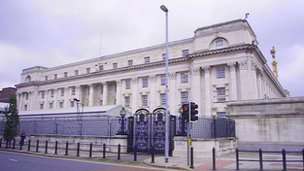
Belfast High Court

Belfast High Court Pic Credit: BBC

CROSS POSTED ON BYLINE.COM

An important judicial decision came out over the Christmas recess in a highly controversial case in Northern Ireland which has led a paedophile to claim £20,000 for harassment because of a blog revealing his criminal past.

The ruling is particularly significant as more people get their news from Facebook and Google rather than traditional mainstream media.

The case has been featured on this blog before. It arose after  Joseph McCloskey set up a Facebook profile page called ” Keep Our Kids Safe from Predators 2 ” which posted information about a convicted sex offender called CG.

CG was released from jail in 2012 after serving a sentence for gross indecency and indecent assault offences against a young girl and a teenage boy.

He is now over 40 and he remains under supervision by the authorities.He has been assessed as posing no significant risk to the public.

His lawyers argued that an online campaign after his details appeared on the page had reached the level of dangerous vigilantism..One user called for him to be hung while others endorsed shooting or castrating him.

CG also claimed he has been threatened with being thrown off a pier during a fishing trip, hounded out of a cinema and had to use a supermarket trolley to fight off another tormentor.

None of the information published  by McCloskey was private. It was all in the public domain at the time of CG’s conviction. CG’s solicitors complained to Mr McCloskey  who removed the posting. He later put two posts disclosing CG’s criminal record and his picture.

The lawyers weren’t satisfied and went to court claiming the sex offender had been harassed on Facebook and his human rights breached by the publication on Facebook misusing private information.

The judge found against the campaigner and Facebook and awarded the sex offender £20,000 damages for harassment.Facebook decided to appeal as it thought the ruling was excessive.

Now the Court of Appeal has decided that Facebook should have taken down the post earlier because it was leading to the harassment of the paedophile.

But very significantly the court ruled that the two other posts which dealt with his criminal record and showed his picture can remain.

The decision by Lord Chief Justice Sir Declan Morgan means that the compensation awarded to CG – which has not be paid because of legal proceedings – will be cut.

But it is also establishing a ruling that contradicts Google’s ” right to be forgotten” procedures saying that public information involving court proceedings can remain on line and cannot be construed as private information.

It was  critical of suggestions that re-publication of conviction information was relevantly private information because in principle “the public has a right to know about such convictions. Information about what has happened in open court can be freely communicated by members of the public”. This was an important aspect of the open justice principle “of very significant weight which can only be outweighed by the interest of the individual in freedom from intrusion in the most compelling circumstances”:

It also rejected the idea that because t some information is covered by the Data Protection Act is it automatically private.

considerable caution should be exercised before reading across  those matters, because the “fact that information is regulated for that [data protection] purpose does not necessarily make it private”.,said the ruling.

For those who want to follow the finer legal detail there is an interesting report by lawyer Christopher Knight, of 11KBW in London here  and a report in the Irish News which dwells on the part of the the Court of Appeal  judgement that was upheld.


Abuse of Trust: A horrible reminder of a child sex scandal as the Jay inquiry prepares to examine Greville Janner

frank-beck-pic-credit-bbc

Frank Beck. Pic Credit:BBC

CROSS POSTED ON BYLINE.COM

Today  when the pendulum seems to swinging again to start disbelieving claims by survivors  that they were sexually abused the republication of a book examining one of the first major  child sex scandals is a timely reminder of what victims faced in the 1970s and 1980s.

Abuse of Trust looks at the case of the long dead Frank Beck, a charismatic social worker who got away with abusing possibly up to 200 children for two decades before finally being caught and convicted.

It is particularly relevant as Alexis Jay’s child sex abuse inquiry is planning to resurrect the dire situation in Leicestershire social services at the time with an examination of the role of the then local MP, Greville Janner, who was facing multiple charges of child sexual abuse at the time of his death last year.

The book written by two diligent journalists, Mark D’Arcy, a BBC Parliament correspondent and Paul Gosling, an ex Leicester councillor and an experienced freelance journalist, and has been updated by Paul with the latest information about the allegations and investigation into Greville Janner.

The involvement of Greville Janner – who always claimed he was falsely accused by the paedophile Frank Beck  of sexually abusing boys – will be highly  controversial as his family, led by his son, Daniel Janner,QC intend to try and stop the hearing going ahead. They want instead go to the civil courts so all  the allegations from 33 survivors against him can be subject to rigorous cross examination.

This book however concentrates on the horror facing  disturbed children sent to be looked after by Beck and his colleagues and the brutal techniques Beck, an ex Royal Marine, used to subdue, sexually abuse and infanticise teenagers, using faux psychological techniques. He also bullied and sexually abused his staff, manipulated and conned local councillors.

It is highly revealing about the lack of backbone among senior social work management and the failure of democratically elected councillors, particularly in the Liberal Party,who allowed him to stand as a councillor, to take a grip on the situation. The police are also seen as failing to believe the children. It is equally damning of  investigations that followed by distinguished people – notably by Andrew Kirkwood,QC – into the scandal after Beck was convicted and the tragic consequences of Beck’s techniques – which led one disturbed kid to later murder a young boy simulating  the strangulation technique used by Beck.

And it shows the role of insurance companies ,in this case Zurich Municipal, in trying to deny  the council’s responsibility for what happened to these kids -later to be used with similar force in suppressing a report into North Wales child sex abuse.

It is also clear from the book that Beck was not the only person sexually abusing people and  there could have been part of a ring that was never properly investigated. He may have murdered one of his boys – but this was never satisfactorily pursued.

He also like many paedophiles attracted people who believed in his innocence – notably Bernard Greaves, a Liberal Democrat  and Lord Longford  who supported killer Myra Hindley.

I would recommend this book to anyone who wants to remind themselves about sheer nastiness, brutality and cover ups that seem to dog this area.

Abuse of Trust: Frank Beck and the Leicestershire Children’s Home Scandal. 

available from Canbury Press £15


Exaro: Survivors and witnesses details safeguarded

There have been rumours on the internet that details of survivors and witnesses have been leaked from Exaro following its sudden closure last week.

This is to tell you that both I and Mark Conrad have received full assurances that all information not only affecting  our child sexual abuse allegations but  a wide area of other investigations have been safeguarded as required to comply with privacy and data protection laws. Anyone suggesting anything to the contrary is wrong.


A disturbing child sex abuse case that raises awkward questions about insurers

lowell goddard

Justice Lowell Goddard giving evidence to House of Commons home affairs committee. Pic credit: BBC

CROSS POSTED ON BYLINE.COM

My colleague Tim Wood reveals on the Exaro website today a damning story about how a victim of historic child sex abuse was failed by the Church of England because it took more notice of its insurers than survivors of abuse.

Joe as he was publicly known eventually won £35,000 in compensation over a case involving abuse by a church official dating back to the 1970s.

As Tim Wood  writes on Exaro: ” Joe claims that the church initially put financial considerations above its duty of pastoral care when handling his case, and called on the Church of England to do more to help abuse survivors.

Joe told Exaro: “The church should stop seeing child sex abuse survivors through a corporate lens and start viewing us through a theological lens of healing and justice.”

In an emotional letter to the Right Reverend Paul Butler, the Bishop of Durham, Joe claims that the church played out a “monstrous charade” in initially trying to close down his case.

The letter, written in April and seen by Exaro, claims that the Ecclesiastical Insurance Group (EIG), founded by the church in 1887, administered Joe’s case and started what he describes as a “damage limitation process.” Joe also claims that Bishop Butler, the Church of England’s head of safeguarding, was complicit in the strategy and began “blanking him” despite appeals for help.

To his credit Bishop Butler  who is head of the Church of England’s safeguarding body has apologised to Joe saying : ” “I am also extremely sorry that when the solicitor’s letter arrived regarding a claim, I did not over-rule the legal and insurance advice I received regarding having no further contact with you. I should have made it clear it would have been better to maintain contact.”

And the insurance company has also said it was misunderstood and didn’t intend to interfere with pastoral care.

However there is a wider question about the role of insurance companies and suppressing allegations of child sexual abuse.

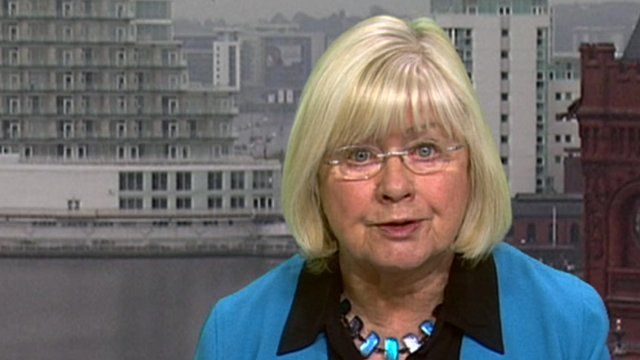
ann clwyd

Ann Clwyd, the Labour Mp for the Cynon Valley, has been campaigning for changes in the law to prevent insurers putting up road blocks in investigating child sex abuse in council run homes.

Last year she secured a debate in the Commons in  which she said that reports into abuse in homes run by the former Clwyd County Council had been “prevented from publication by the council’s insurers.”

Ms Clwyd said: “[The] council did not allow the inquiry to place a notice in the local press seeking information because this was considered to be unacceptable to the insurers. It’s interesting that the insurers of the county council were also the insurers of the North Wales Police.”

Describing how the report was then “suppressed”, she said only 12 copies were made and it was “virtually unseen by committee or council members”. She argued that if it had been published “it would have sounded alarm bells and things would have moved much faster”.

She added: “It was not until July 2013 that the redacted version of the Jilliings report was finally published after a request by the BBC under the Freedom of Information Act.”

So far ministers have not taken any action despite a recommendation by the Law Commission  way back in 2004.

This seems to be to be an ideal issue to be taken up by  the Goddard inquiry into child sexual abuse. And the Church of England case appears to be yet another example that should be investigated.