Charity Commission loses permission to take Parliamentary Ombudsman to judicial review over safeguarding cases

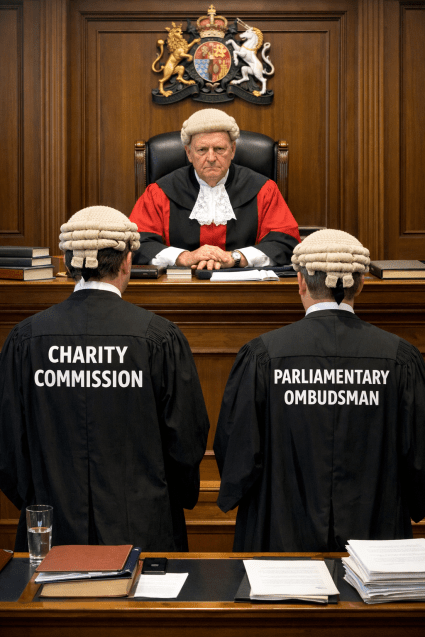
Picture generated by AI ChatGPT

A judge has blocked the Charity Commission from challenging the powers of the Parliamentary Commissioner through a judicial review.The decision is a victory for Parliament which said permission to grant the review would be academic, non justiciable and a breach of Parliamentary privilege.

However the small print of the ruling by Mr Justice Fordham clarifies the law over what is covered by Parliamentary privilege and what is not and how far charities can be expected to investigate cases when the police and the Crown Prosecution Service decide there is not enough evidence to prosecute.

Harrowing cases

The two cases where there was a dispute between the Parliamentary Ombudsman and the Commission were extremely harrowing. Both complainants waived their anonymity. One brought by Damian Murray, concerned the failure to investigate historic child sexual at a now closed school run by Roman Catholic Marist Brothers in Blackburn, Lancashire. A former pupil at the school he learned from another pupil’s memoirs that the principal, Father O’Neill was a paedophile. Not only was this covered up but he was venerated with a Requiem Mass at his death and had a school building named after him, when it was known he was a paedophile by the authorities.

The second case involves Ms Lara Hall, a volunteer and a victim of sex trafficking, who sought help from the Help for Persecuted Christians charity and ended up having an extra marital affair with the chairman of the trust, WiIson Chowdhury. She complained according to the judgement that it was ” an abusive and exploitative relationship”. He resigned but his wife has now been appointed the chair.

The issue was not that the Charity Commission did not accept the complaints but neither the complainants nor the Ombudsman felt it had not done enough to investigate them and assess risk and communicate what it had done. So the Parliamentary Ombudsman decided to issue a further report. This can be done “if injustice has been caused to the person aggrieved in consequence of maladministration and that the injustice has not been, or will not be, remedied, she] may, if [she] thinks fit, lay before each House of Parliament a special report upon the case.”

The judge is scathing about the Charity Commission’s failings in dealing with this. He says it was ” plainly wrong” for the Commission to claim that a risk assessment review should apply only to future cases and equally wrong to say the Parliamentary Ombudsman to have overreached herself by evaluating and examining the risk reviews rather than factually reporting them.

The judgement noted the Commission claimed a ” symptomatic of a more widespread systemic unlawfulness in the Ombudsman’s approach to cases about the Charity Commission actions.” He ruled “But, in my
judgment, it is plainly not open to the Commission to contest the findings of maladministration in these cases.”

Judge Sir Michael Foreman

The judgement backs the Charity Commission in saying the Parliamentary Ombudsman’s decision letter cannot expect the Commission to act as a criminal investigator , prosecutor or decision maker over these issues – when its main job is to investigate the mismanagement of charities. This made the Ombudsman’s letter flawed.

There was also a very interesting subtle clarification of Parliamentary privilege. While accepting Parliament’s argument that it was a breach of Parliamentary privilege to go for a judicial review – it said the special report by Parliamentary Ombudsman that followed her main report could be challenged in the courts and was not subject to Parliamentary privilege . The Charity Commission does not intend to do this.

The Parliamentary Ombudsman spokesman said:

“One of our roles is to hold public bodies to account, acting on behalf of Parliament. This is an important principle to uphold, and the Court’s decision supports that principle by refusing the Charity Commission’s request for permission to judicially review.

“Our reports were laid before Parliament after failing to reach agreement on compliance with the Charity Commission.

“At the heart of what might seem like a matter of process are two people, Miss Hall and Mr Murray, who have suffered significant injustice. Securing resolution for the complainants remains the priority, alongside making sure the lessons identified in our investigations are implemented.

 “While the Charity Commission has made some changes after our original reports, we hope the Commission will now focus on working constructively to fully comply with our reports and provide the assurance that the public are entitled to expect.”

A Charity Commission spokesman said:

“We reiterate our apologies to the two complainants in these sensitive cases. We have long accepted that there were important lessons for the Commission to learn from these, and we have previously apologised and paid compensation to each complainant.

“We brought this case in good faith to get clarity from the courts on the respective remits of the PHSO and Commission, to provide certainty to the sector we regulate. While we are disappointed with the decision not to permit a full hearing, the judgment provides a clearer basis on which both organisations can perform the distinct roles Parliament has given us.

“The court has reaffirmed the Commission’s role in regulating charity governance rather than acting as a safeguarding authority, and indicated that we cannot be expected to reinvestigate serious criminal allegations made against charity trustees.

“We recognise we need to draw further lessons from the court’s decision, particularly in terms of how we record and communicate our assessments of risk, and we will immediately review key aspects of the two cases in question.”

Complainant Damian Murray said: “My actual primary concerns about the deliberate concealment of sexual abuse at the former St Mary’s College Blackburn by the Marist Fathers charity have yet to be acknowledged let alone addressed by the CC since I first raised them in 2018. And whilst PHSO, Mr Justice Fordham and PACAC have also made no adjudication about my original concerns, and have not been asked to do so, I am very grateful for the care and seriousness with which they have within their remits taken account of the grave issues of governance and regulatory failure I have raised, and the sensitivity and professionalism with which they have dealt with me personally to date.”

The full judgement is here.https://drive.google.com/file/d/1vhcXwEWJm6uivRi-CvhoXYP8YJKyp3f7/view?usp=sharing

One-Time
Monthly
Yearly

Make a one-time donation

Make a monthly donation

Make a yearly donation

Choose an amount

£5.00
£10.00
£20.00
£5.00
£15.00
£100.00
£5.00
£15.00
£100.00

Or enter a custom amount

£

Your contribution is appreciated.

Your contribution is appreciated.

Your contribution is appreciated.

DonateDonate monthlyDonate yearly
cards
Powered by paypal

Judge reserves judgement in legal dispute between the Charity Commission and Parliamentary Ombudsman

n extraordinary one day court hearing yesterday is still to decide whether the Charity Commission can bring a judicial review against the Parliamentary Ombudsman for exceeding her powers in two cases involving safeguarding of children and adults involving two separate charities.

Both cases were dramatically accelerated last year when the Speaker, Sir Lindsay Hoyle, gave permission for Parliament to report the Charity Commission to the Committee of Privileges for trying to stop two reports by the Parliamentary Ombudsman being published until the courts decided what the legal position of the two bodies were in the handling of the cases. The Committee of Privileges is still considering the report on the matter more than six months after the referral.

Yesterday’s hearing allowed both sides to present arguments in what could be a landmark judgement on how far the Parliamentary Ombudsman can rule on action taken by charities to safeguard people and whether the Charity Commission is a regulatory body with no powers to compel charities to investigate cases which fall short of a police action.

The two cases were both dramatic and involved both historic child sexual abuse and a much more recent serious sexual assault. The first case became public when the complainant,Damian Murray contacted this blog and revealed a long standing cover up of historic child sexual abuse by a paedophile principal at a now closed religious school in Blackburn. You can read the story here.

The second case involved a complaint against another charity of a serious sexual assault on a vulnerable woman volunteer by the chair of the charity who entered into an inappropriate relationship with her.

Both complaints were upheld by the PHSO and compensation was paid. The dispute arises over whether the Charity Commission should have gone much further to remedy this and investigated both situations. This included whether the second charity should have been wound up and whether the religious foundation which ran the school should have been further investigated despite in both cases there were no police investigations.

The Charity Commission is saying the Parliamentary Ombudsman is exceeding her powers by demanding this. The Commission told the court that the body is a regulatory body and does not have the resources to do this and furthermore would put charities across the country in double jeopardy as they would be obliged to investigate cases where the police and the Crown Prosecution Service had decided that criminal proceedings had little chance of success.

In the argument before Judge Fordman the Commission said; “the PHSO’s decision in effect requires the Commission to carry out a quasi-criminal investigation in circumstances where the Commission does not consider it appropriate to do so, and where other relevant criminal and safeguarding agencies have investigated but not pursued a prosecution. This fundamentally misunderstands the nature of the Commission’s role, as well as its own legitimate policy as to how its resources should be deployed.”

The PHSO in its submission to the judge asked him to throw out the case. It argued that the judicial review was academic because the two reports had already been published and the Commission’s case was inarguable as it was irrational to say the case had been remedied and the ombudsman had wide discretion involving her findings. Finally it argued that the hearing interfered with the proceedings of Parliament.

A spokesperson from the Charity Commission said:
“We acknowledge that the two complaints which led to our legal disagreement with the Ombudsman arose from some very difficult personal experiences, as was heard in court. We have long accepted that there are important lessons for the Commission to learn from the two cases in question and we have previously apologised to both complainants.

“However, at the heart of this case are vital principles about citizens’ right to due process when accused of a criminal offence, and separately avoiding charities being subject to undue overlapping regulation.

“First, the Ombudsman has told the Commission that we should assess the credibility of serious criminal allegations made against charity trustees where those allegations have already been investigated and not taken further by the police and other appropriate authorities. This runs contrary to long standing legal principles designed to ensure fairness to all.

“Second, the Ombudsman has gone beyond its legal remit by effectively second guessing our regulatory decisions. If left unchallenged, charities would in effect be subject to two overlapping regulators, creating confusion and uncertainty for them and the public.

“We have worked hard, over a lengthy period of time, to resolve these matters with the Ombudsman directly, but this has regrettably not proven possible. While we have pursued this legal action reluctantly, we are glad of the opportunity to present our case and seek the clarity of the courts in resolving this issue for the benefit of both organisations, the charitable sector, and the public we serve.”

One-Time
Monthly
Yearly

Make a one-time donation

Make a monthly donation

Make a yearly donation

Choose an amount

£5.00
£10.00
£20.00
£5.00
£15.00
£100.00
£5.00
£15.00
£100.00

Or enter a custom amount

£

Your contribution is appreciated.

Your contribution is appreciated.

Your contribution is appreciated.

DonateDonate monthlyDonate yearly
cards
Powered by paypal

Will the final report from the Child Sex Abuse Inquiry be a real game changer for children or just gather dust?

Alexis Jay, chair of the inquiry

It was unfortunate that the long awaited final report from the Independent Inquiry into Child Sexual Abuse coincided with the resignation of Liz Truss, the shortest serving PM in British history. The Westminster psychodrama has drained political discussion of any policy initiatives from the government while the main protagonists in the Tory Party fight each other to the death for the top job.

If Theresa May , who commissioned the inquiry, was still PM I suspect that action would have been taken promptly. As it is there will be no response from the government for six months and I doubt whether we will see any new laws for years. Particularly if Boris Johnson becomes PM again as he made it vividly clear that investigating child sex abuse was a waste of money. You only have to look at how long it is taking to reform the antiquated Mental Health Act to see a parallel.

Having reported on it and even helped to initiate the inquiry as a journalist, I have followed it with a lot of interest , both when I was on Exaro News and on this blog. I have mixed feelings about the £186m inquiry .

On the plus side the scale of the inquiry – some 15 investigations in every institutional area of the UK from the Roman Catholic Church and Church of England to local authority care and the reach of the global internet – should put to bed any misconceptions that child sex abuse is not a major epidemic in this country. And it proves that in many instances that those in charge of those institutions are more than willing to turn a blind eye and pretend it doesn’t exist either for reputational reasons or because they actively connived in the sexual exploitation of children.

Also it did provide a much needed voice for thousands of survivors who might never get real justice but at least now felt people had listened to their appalling life changing experiences.

Carl Beech, a false flag victim of child sexual abuse, who made up allegations damaged real survivirs

On the other hand I felt -because it was closely tied to the legal profession- they felt they had to be ultra cautious and only take on proven cases by perpetrators – whether Bishop Ball or dead people like Sir Cyril Smith – because the fury from families of the living, I am thinking of Greville Janner, wanted no discussion of anything to suggest that he might have been involved.

The inquiry also took place during the conviction of paedophile Carl Beech whose detailed revelations turned out to be made up and the Metropolitan Police spent millions investigating them. I suspect that made them more cautious and the media ultra cautious in reporting fresh allegations.

The downside of this is that has protected more paedophiles from media scrutiny and made authorities less likely to believe victims. One only has to see the total silence in the media of the allegations revealed in Simon Danczuk and Dan Smith’s book, Scandal at Dolphin Square, of a well researched story of David Ingle, a victim of abuse by a Lincolnshire farmer there.

Now the proof will be in the legacy of this inquiry. It has proposed the mandatory reporting of sexual abuse – making it a criminal offence not to do so. But there is an argument whether this goes far enough.

Richard Scorer, the head of abuse law at Slater and Gordon, which represented more than 120 victims at the inquiry, said there should also be a criminal penalty for failure to report abuse that is reasonably suspected, otherwise organisations will continue to turn a blind eye.

He is reported in a good analysis by Rajeev Syal in the Guardian as saying:” Children rarely disclose abuse, perpetrators almost never do,” he said. “Mandatory reporting can only work if the requirement to report suspicions has consequences, such as a criminal sanction. The inquiry’s proposal falls short of what survivors seek.”

More must be done to support whistleblowers of sexual abuse

More can also be done to support whistleblowers in this situation.

Jayne Senior, Director of Safeguarding at WhistleblowersUK, said;
“After a week of political turmoil, it would be easy to overlook the damning reports exposing the failure by every possible authority to protect Children and the most vulnerable in our society and the Whistleblowers who have selflessly spoken up only to become targets and subsequently victims themselves.”

The report also proposes a national compensation scheme for survivors of sexual abuse and “the creation of a Child Protection Authority (CPA) in England and in Wales. The CPAs will have powers to inspect any institution associated with children. They will not replace current inspectorates in relation to the statutory authorities, but may require inspection of those authorities by existing inspectorates. The CPAs over time will become centres of expertise, and may extend their child protection functions to other forms of harm experienced by children.”

There are also 17 other recommendations. They vary from tougher controls of the internet to extending the debarring and disclosure scheme for staff to those working overseas with children to the end of pain compliance techniques for children held in custody.

The problem is that again unfortunately these measures come at a new time of austerity and fresh spending cuts so I can’t see a government committed to lifting the burdens of regulations wanting to implement them soon.

The problem is immense and the report estimates that child sexual abuse costs the country £10 billion and of the 13 million children in the UK “Babies, toddlers and children are potentially at risk, with current
estimates indicating that 1 in 6 girls and 1 in 20 boys experience child sexual abuse before the age of 16.”

But it is going to take a lot of action and public pressure to make the government act and also create a gamechanger situation for the millions of children suffering sexual abuse which is a global problem.

Please donate to Westminster Confidential to allow me to continue my investigative reporting.

One-Time
Monthly
Yearly

Make a one-time donation

Make a monthly donation

Make a yearly donation

Choose an amount

£5.00
£10.00
£20.00
£3.00
£9.00
£60.00
£3.00
£9.00
£60.00

Or enter a custom amount

£

Your contribution is appreciated.

Your contribution is appreciated.

Your contribution is appreciated.

DonateDonate monthlyDonate yearly

please donate to Westminster Confidential

£10.00

The Curate’s Egg: Child Sex Abuse inquiry reveals the Anglican Church has only half tackled the problem

Alexis Jay; Chair of the inquiry. Pic credit: iicsa

It is over six years ago that on Exaro News I worked with seven MPs from all parties to press Theresa May, then home secretary, to launch the Independent inquiry into Child Sexual Abuse. Now after two general elections only two – Caroline Lucas and Tim Loughton – remain as MPs.

Another Zac Goldsmith is now a government minister and peer. The remaining four Tom Watson, Simon Danczuk, Tessa Munt and John Hemming are Parliamentary history.

At the time with the help of Exaro colleague Mark Conrad, we drafted the letter that went to Theresa May – on behalf of the MPs- outlining the scale of abuse in the UK and citing specific cases and saying what needed to be tackled. She acted.

Tim Loughton MP

As Tim Loughton, a former children’s minister, put it at the time:

“Virtually every week, the public is bombarded with new stories about sexual abuse of children coming to light, yet they stretch as far back as the 1960’s.

“Few areas have been left untouched with increasingly alarming stories involving schools, churches, care homes, entertainment, sport and of course politicians and celebrities.

“Most alarming is a consistent theme of the reluctance or, more worryingly, the seeming complicity of police and other agencies to investigate the allegations seriously, and pursue the perpetrators rigorously.”

A lot has happened since – including the sentencing of Carl Beech, a paedophile , who made false allegations against prominent figures – as well as successful prosecutions in North Wales by the National Crime Agency – of paedophiles who got away with it for years.

Now the work of this inquiry has begun to bear fruit – and the publication this month of its over arching report into the Anglican Church and The Church of Wales is its most detailed investigation yet.

The report reveals both some progress and failure to tackle the problem. But I am pretty convinced without the catalyst of the national inquiry the Church would have continued to bury its head in the sand and still not taken half the measures it has.

The history of child sexual abuse in the church is damning. Since the 1940s as the report says 390 people have been convicted as sex offenders.

It goes on:” In 2018, 449 concerns were reported to the Church about recent child sexual abuse, of which more than half related to church officers. Latterly, a significant amount of offending involved the downloading or possession of indecent images of children. The Inquiry examined a number of cases relating to both convicted perpetrators and alleged perpetrators, many of which demonstrated the Church’s failure to take seriously disclosures by or about children or to refer allegations to the statutory authorities.”

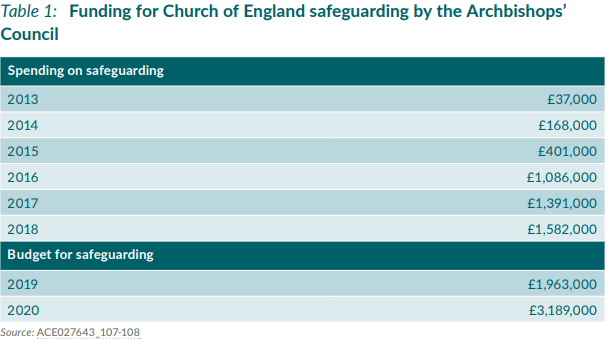
As extraordinary are the figures spent on safeguarding children – see below. A pathetic £37,000 was spent for whole Anglican church in 2013 a year before the call for the inquiry . The last year for 2020 is not fully approved.

The report shows failings in the culture of the church which allowed paedophiles to hide and a highly complex devolved hierarchy which meant there are many gaps for allegations of child sexual abuse not to be reported because of the autonomy of different sections of the church. For example cathedrals are not as you might expect run by bishops but the Dean and Chapter. Also although safeguarding has now been highlighted, the people in charge are designated as advisers rather than officers, allowing the clergy the last word on whether action should be taken.

On the plus side it looks as though the Church is taking safeguarding seriously and training its staff about the issue. Newly recruited ordained priests seem to have the most detailed training and the church is at last doing criminal checks before appointing anyone to an important position.

There have been a number of attempts to check back on historical sex abuse allegations. The numbers checked look impressive at 40,000 but only 13 cases were identified as it was mainly a book keeping exercise.

Salisbury cathedral – one of seven dioceses where past cases of child sex abuse are being re-examined because they may not have been competently checked. Pic credit: Flickr

When this was re-examined by Sir Roger Singleton, a safeguarding expert, he recommended: ” An “updated version” of the PCR[ Past Case review} should be conducted in the dioceses of Ely, Lichfield, Rochester, Salisbury, Sheffield, Winchester, and Sodor and Man given “the absence of evidence that the Past Cases Review had been carried out competently in these dioceses”.

This is now being done again and will report in 2022.

counselling cancelled

The report also includes some rather horrifying cases because the system did not work properly. In one case a person who was claiming compensation from the Church’s insurers for past sexual abuse had his counselling cancelled because a lawyer advised the Church he shouldn’t have it since he was claiming against the Church,

It is also clear that much abuse was not revealed at the time. When the inquiry looked into a past case of Bishop Victor Whitsey, who died in 1987, but was during his career Bishop of Chester, Suffragan Bishop of Hertford at St.Albans and a priest in Blackburn and Manchester, some 19 people came forward saying he abused them including a brother and sister.

The report also discloses that there is still much to do . The Church is divided about mandatory reporting of child sexual abuse, with even the Charity Commission thinking they could be flooded with too many cases; the position over insurance and compensation for victims is unresolved and the process of clergy discipline measures needs reform and artificial time limits covering complaints removed. The rules over disclosure of child sexual abuse during confessions needs to change – exempting it from the sacred duty of confidentiality. And record keeping in the Church of Wales needs a thorough overhaul as there is a serious problem there.

The inquiry plans to come back over these issues and rightly so.

But perhaps one of the most chilling and sad paragraph in the report is a description of the Church’s problems with sexuality.

fear and secrecy over sexuality

“There was a culture of fear and secrecy within the Church about
sexuality. Some members of the Church also wrongly conflated homosexuality with the sexual abuse of children and vulnerable adults. There was a lack of transparency, open dialogue and candour about sexual matters, together with an awkwardness about investigating such matters. This made it difficult to challenge sexual behaviour.
Mr Colin Perkins, diocesan safeguarding adviser (DSA) for the Diocese of Chichester, told us that homosexual clergy may have found themselves inadvertently “under the same cloak” as child sexual abusers, who sought to mask their behaviour “in the same cultural hiding place”.

For those who follow this blog this report signals that I am back keeping a regular eye on child sexual abuse issues. Those who follow me on the fight for 50swomen know I don’t give up easily.

Search for Justice: New Podcast on the 50s women struggle for their delayed pensions

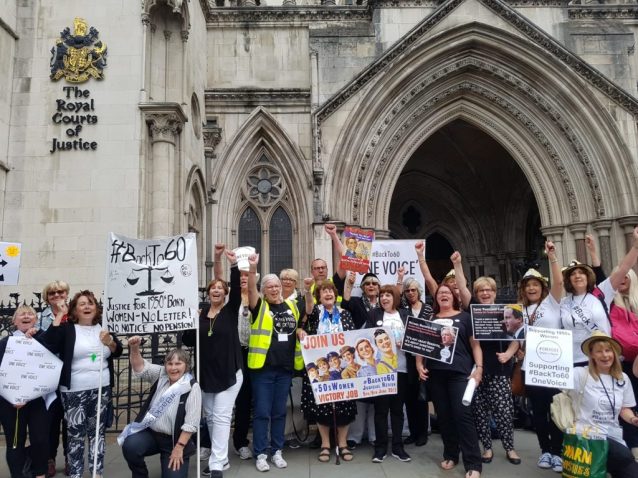
BackTo60 at the Royal Courts of Justice before the pandemic set in. They are now applying to appeal to the Supreme Court after losing their judicial review

I have given a long interview to Dave Niven, one of the country’s leading figures on the safeguarding of children, for socialworldpodcast on the issue of justice for the 50swomen. This podcast is aimed at the social work and caring professions and is watched by 2000 people in the field.

Dave contacted me after a gap of over 20 years because he had seen my writing on the plight of the 50s born women and wanted me to do an interview for his podcast. We last collaborated on a story in the 1990s when I was on The Guardian though both of us can’t remember what the story was exactly about.

He now runs his own consultancy, David Niven Associates (info@dnivenassociates.co.uk) which provides media training, and consultancy on child protection and safeguarding.

The podcast can be listened to here. That is the link to his site where you will also find other podcasts.

regular series of podcasts

It is part of a regular series of weekly podcasts on Thoughts on the Social World. Previous people who have been interviewed include Jim Gamble, a former national policing lead for child protection and the architect and CEO of the UK Child Exploitation and Online Protection (CEOP) Centre. He is now  CEO of the INEQE Safeguarding Group. http://www.ineqe.com

He also recently interviewed Christopher Lamb, a former Australian ambassador and chief diplomat with the International Federation of Red Cross and Red Crescent Societies (IFRC) in Geneva. He is now an adviser.to IFRC and the Australian Red Cross.

My own interview covers the case I have made on my blog for justice and proper equality for the 50swomen. I also talk about the exposures I did on The Guardian which led to the resignation of Tory ministers Neil Hamilton and Tim Smith over the “cash for questions” scandal in the 1990s and the first resignation of Peter Mandelson from the Labour government over his hidden ” home loan” to buy a posh pad in Notting Hill. And also my award winning story on how the former head of the Student Loans Company devised a scheme for legitimate tax avoidance which led to the government discovering that they had 2500 civil servants doing the same thing.

Byline Times Exclusive: Charity Commission to condemn Oxfam over Haiti sex exploitation but ignore damning report exposing 23 other charities

Oxfam to be damned tomorrow while 23 other international charities could have a worse history of sex exploitation of women

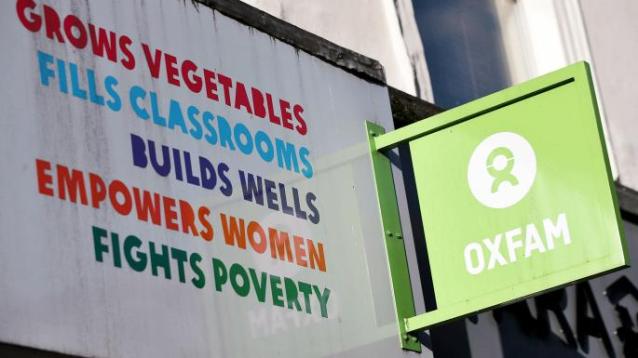
 The Charity Commission will tomorrow issue an excoriating report on Oxfam’s mismanagement and failure to act over the sexual exploitation of victims of the Haiti earthquake in 2011.

But the Commission will ignore a much wider scandal that suggests that 23 of the world’s biggest overseas aid charities are hiding far worse sexual exploitation of vulnerable people by their own staff and of fellow women and gay aid workers.

The full story is in Byline Times here.

Is the Church of England getting the message on child sex abuse survivors?

Justin Welby: Is the church getting the message?

Justin Welby: Is the church getting the message?

Whisper it not too loudly but is the Church of England finally getting the message that it needs to fundamentally change its attitude to child sex abuse survivors?

Nearly two years ago the then new Archbishop of Canterbury, Justin Welby,issued warm words and an apology for all the harm the church had done to people by its priests. He was also pressing before the government finally agreed for an overarching inquiry into child sexual abuse.

Now there are going to be new laws to ensure that training of everyone from a vicar to a bishop in safeguarding, the scrapping of time limits in bringing child sex abuse cases and looking at the funding of help for survivors.

As I report on the Exaro website

The CoE is also to change canon law to make bishops accountable for the safeguarding of children in their diocese for the first time since it broke away from the Roman Catholic church during the reign of King Henry VIII. The changes mark what one expert called a wholesale “re-writing” of the CoE’s policy towards safeguarding children in the wake of scandals over paedophile priests.

One spokesman from the Church said :“These measures are part of wider approach by the church based on what the survivors of sexual abuse want us to do. The whole impetus is on tackling the problem from the survivor’s point of view.”

All this is good progress in the right direction. But much will depend how it is enacted. Often directives from the top are not implemented by people on the ground. People must make sure that they are or otherwise it will not work and we could do without more public relations exercises.

The Church of England’s approach is not being replicated by the Roman Catholics as the recent stories about the Salesian Order revealed- with the appalling Salesian response to further examples of historic child sex abuse exposed by the police after Graham Wilmer, a survivor and now a member of the independent panel into child sexual abuse revealed them in his new book The Devil’s Advocate.

The next few months will be  telling for the Church and the independent inquiry.