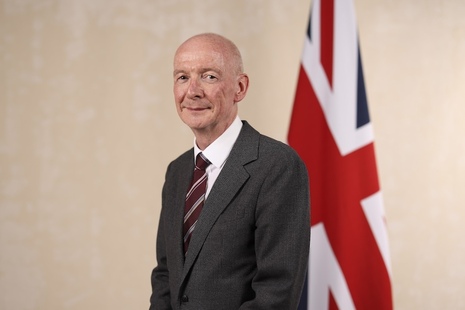
The 18 year old research report that derailed work and pension secretary Pat Mc Fadden and forced him to review his decision to pay nothing in compensation to 3.6 million 50s born women is a comprehensive and damning document. No wonder he didn’t go into details in his Parliamentary statement this week on what the Labour government then did not do to inform the women and the first cohort of men who faced a rise in the pension age.
The key finding by researchers on the exercise of sending 16 million letters with automatic pension forecasts was that it was a “ systematic failure to reach the target populations most in need of provision.”
The research is very thorough. It took over a year to do it. It involved covering 16 million letters. Researchers interviewed 11,690 people. It involved both the women in the target 50-59 age group and men aged 59-64. ( 2007 was the year it was revealed that both men and women faced the pension age going up to 66). But it also involved men and women aged 20-49 to see if they were aware of the pension changes.
The first fact discovered was that out of the 16 million letters sent out, staggeringly 11 million went unread.
The report said The APF ( automatic pension forecast) was least effective among those who most needed it:
- Those with no pension knowledge: 16% readership
- Those without pension provision: 25% readership
- Younger people: 20-24% readership
- Lower socioeconomic groups: 30% readership
This represents a systematic failure to reach the target populations most in need of intervention.
All the letters did was reinforce people better off people’s decision to take early action to safeguard themselves.
It said This suggests the APF largely reached people who would have acted anyway, providing little marginal benefit.
There was also a Self-Selection Bias.
Those who read the APF were systematically different:
- 64% already had basic/good pension knowledge
- 33% already had pension provision
- Higher income and socioeconomic status
The APF appears to have reinforced existing advantages rather than closing gaps.
It concluded:” “This research provides rigorous evidence that mass information provision, while well-intentioned, has minimal impact on pension knowledge or retirement planning behaviour. The APF initiative reached 16 million people but meaningfully engaged only about 5 million, with measurable behavioural impact likely affecting fewer than 1-2 million.
It lays down three fundamental truths.
- Information Is Not Enough Knowledge deficits are not the primary barrier to retirement planning. The research shows that those with the greatest information needs were least likely to engage with information provided.
- Existing Advantages Compound The APF was most effective among those who already had pension knowledge, existing provision, higher incomes, and greater financial capability—reinforcing rather than reducing pension inequality.
- Behaviour Change Requires Architecture, Not Just Information The minimal difference between APF and control groups demonstrates that passive information provision cannot drive behaviour change for complex, long-term decisions like retirement plan.
The report did tell ministers what they should do and why it was needed – that included specifically targeting the groups who did not respond in the future and running a systematic campaign to raise awareness of the change. As the Parliamentary Ombudsman found the result was maladministration.
DWP in ministerial flux
The ministry at the time was in flux. The year 2007 saw Peter Hain replaced by John Hutton – now both peers – as work and pension secretaries. The minister responsible for pensions changed as well from Mike O’Brien ( long left Parliament and working as a lawyer) and Dame Rosie Winterton.
There was zilch coverage in the media about its findings – the Iraq War was raging at the time – and it is not clear whether the report was kept for internal use anyway.
What will the impact be? First Pat McFadden says the review would not necessarily lead to the government paying out compensation. Secondly it could affect the judicial review brought by WASPI on the failure to act on the Parliamentary Ombudsman’s report and pay out compensation, as he said he had informed the high court about his decision to review the issue.
This could torpedo the hearing due on December 9 because judges may not want to hear the case if the minister says he is reviewing the situation.
As I have stated many times this would not have happened as CedawinLaw , the other main group campaigning for restitution for women, has said if they had applied instead for mediation and a court ruling to enforce it. But sadly WASPI has always refused to work with other groups wanting to create an impression in the media that they are the only people concerned about the issue.
Also the issue of past discrimination against these women as well as maladministration could have been included in the case. But Waspi do not seem to be bothered about this.
Not so transparent McFadden
There is one other issue to raise. Pat McFadden made a big issue of being transparent in his statement. But in fact he made it difficult for journalists to access this report. Normally when a minister makes a statement – and it will the case in the Budget – all the papers are available in the Vote Office to lobby journalists. In this case this paper was only available in the House of Commons library which can only be accessed by MPs. I would like to thank the anonymous MP who got me a copy.
Since then the library have allowed the report to be available to the public. The link is here.
Make a one-time donation
Make a monthly donation
Make a yearly donation
Choose an amount
Or enter a custom amount
Your contribution is appreciated.
Your contribution is appreciated.
Your contribution is appreciated.
DonateDonate monthlyDonate yearlyYou can also donate via PayPal using the link below.

 Westminster Confidential