Head of the National Audit Office raises pertinent questions about the future direction of Whitehall in annual speech
Anybody reading the latest tranche of reports from the National Audit Office and the Commons Public Accounts Committee could be forgiven for thinking the UK is living in a dystopian world. Indeed fiction writers could use their reports as a basis for a dystopian novel or a new TV series.
The problem is that it is not fiction, it is factual based evidence.
Never in my 40 years of reporting the NAO have I seen so many things run by Whitehall going wrong. Yes we have had scandals, waste of public money and even corrupt deals exposed by them. But the last tranche of reports almost beggars belief.
Simultaneously we have had the biggest backlog of building maintenance, totally £49 billion, the largest ever NHS waiting lists for operations, the Home Office admitting it has made 1000 mistakes and wasted tens of millions on acquiring sites for housing asylum seekers, half the local authorities in England on the verge of bankruptcy, outdated computer systems without proper security protection, record homelessness, and a huge backlog of people waiting for special education places or treatment in psychiatric hospitals.
Innovate or die
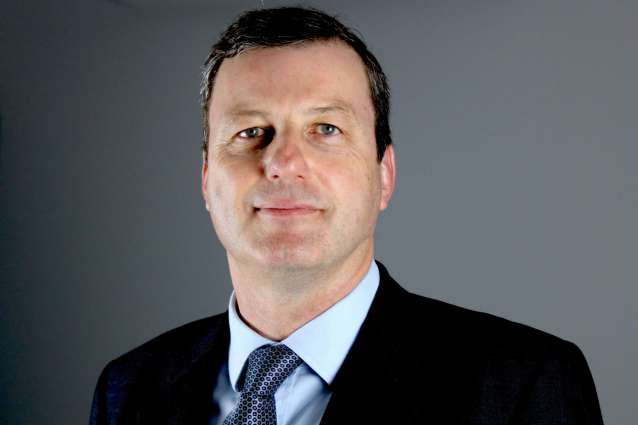
It is against this background that Gareth Davies, the head of the National Audit Office, addressed a well attended meeting yesterday in Parliament of MPs, peers, former permanent secretaries, academics and journalists.
While he did not use my journalistic hyperbole, his message was a simple one to Whitehall, innovate or die. And although the NAO is strictly non party political, there was an underlying message to the present government, sharpen your act or lose the next election.
As he put it: “we have a new Parliament and a new Government, but many of the same problems of rising demand and not enough money to quickly fix the gaps in key public services. We also face other challenges that risk causing widespread disruption, from global instability and climate change to public health emergencies and cyber threats.”
NHS needed fundamental reform
He was particularly critical of the department for Health and Social Care and the NHS, the biggest employer in the UK.
” Figures from NHS England in May last year showed it was still 8 per cent lower in productivity in 2023/24 than before the pandemic and much work is underway to address this.”
He went on later: ” In the last few months, our reports on supporting children with special education needs and NHS financial sustainability both identified the need for fundamental reform in the face of rising demand and costs, alongside unsatisfactory outcomes. This means tackling the causes of avoidable demand and allocating resources in a redesigned system where they can have maximum impact on outcomes.”
He is pleased that Whitehall is piloting AI but also warned that new technology is not the whole answer to greater productivity. He also emphasised that ministries need to employ the best skilled people – notably recently in the need for people with good computer skills and capable of negotiating good procurement deals.
He is also wanted Whitehall to concentrate on tackling resilience to protect the country. This included fighting cyber attacks and the risk of future pandemics. He revealed the NAO would soon publish a report looking at the international and domestic implications of protecting the UK from another pandemic like Covid 19 which came from abroad.
Civil servants must be less risk averse
Finally he wanted civil servants to be less risk averse and try out well managed schemes, dropping those that don’t work quickly.
His solution was summed up in four succinct points.
- First, a clearly articulated risk appetite and a spread of investments, to maximise the chances of success in innovation
- Second, harnessing new technology as I’ve already mentioned
- Third, a culture of fast learning and evaluation, stopping failed experiments quickly and scaling up successes
- Finally – and close to home for us – an accountability and scrutiny framework that encourages well-managed risk taking
” It’s no coincidence that innovation thrives in times of crisis, such as when lives are at stake. Organisations rapidly adjusted their risk appetites during the pandemic to meet urgent needs,” he said.
He pointed that Whitehall fears that they would hung up to dry by MPs and the press if they failed was now no longer true -instead MPs on the public accounts committee were now more critical of civil servants who failed to look at new ways of tackling problems rather than following safe bureaucratic procedures.
So what are the NAO doing themselves? “our refreshed strategy from 2025 to 2030 takes fully into account the risk appetite set for the range of innovative projects. We will continue to look for and highlight positive examples of innovation, including where unsuccessful initiatives have been stopped in favour of more promising ones. As well as featuring these in our reports on departments and organisations, we will publish what we learn across government as part of our programme of lessons learned reports.”
AI is also coming to the NAO so auditors can spend more time making professional judgements on department’s performance and less time on manual exercises.
Talking to people who attended afterwards it was clear that MPs and academics are well aware that innovation is necessary or we will not be able to deliver public services to meet growing demand. MPs seemed especially aware that the NHS was not functioning properly – whether it was their local health trust – or the bureaucracy at the top. MPs have already publicly criticised the top management of the NHS for being complacent.
Over the next five years how Whitehall balances the money needed for innovation and risk taking against the perennial problem of working in a public sector which has been neglected for too long and needs ” first aid” to keep going will be crucial. Whitehall should treat the present state of public services as a national crisis which can only be tackled by radical innovation.
Make a one-time donation
Make a monthly donation
Make a yearly donation
Choose an amount
Or enter a custom amount
Your contribution is appreciated.
Your contribution is appreciated.
Your contribution is appreciated.
DonateDonate monthlyDonate yearlyPlease donate to Westminster Confidential
£10.00
 Westminster Confidential