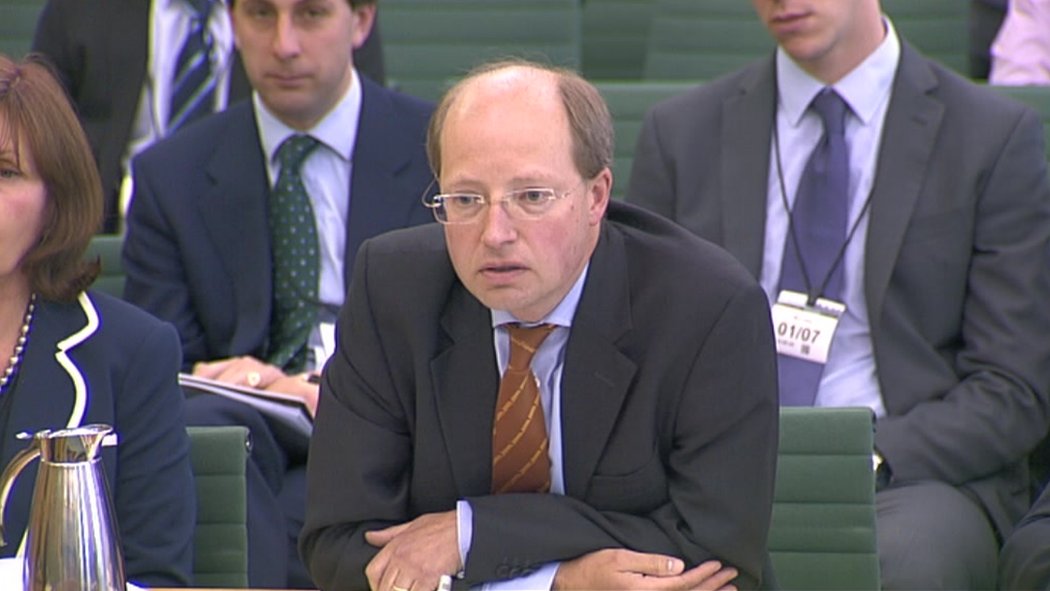
Dropped: The vile Saudi Arabian contract that helped prop up a barbaric justice system

JusticiaCROSS POSTED ON BYLINE.COM

The Cabinet revolt that ended the £5.9m contract bid by the now doomed Just Solutions International – the commercial arm of the Ministry of Justice – is to be welcomed.

Justice Secretary  Michael Gove’s decision to press home ending this deal over the head of Philip Hammond, the foreign secretary, and initially, David Cameron, is the only morally acceptable case. Britain could not be seen helping a country that uses public beheadings, floggings and crucifixion as a routine part of its justice system.

When I first saw the disclosure of the deal in a routine half yearly report of the Ministry of Justice laid before Parliament I had no idea we had a commercial arm of the ministry, let alone that we had already done deals with Oman and Macedonia and were bidding for a Saudi contract.

Thanks to the work of. lawyer David Allen Green – known as Jack O’Kent on Twitter- who has assiduously followed this issue since -Downing Street has become embarrassed – and finally thrown in the towel. You can follow him on the JackofKentblog

I am also delighted that Lord Falconer, the shadow Lord Chancellor has reported this to the National Audit Office – because Just Solutions International set up by Gove’s predecessor, Chris Grayling, deserves a thorough financial examination.

I am also pleased that Jeremy Corbyn, the Labour leader used his conference speech to demand David Cameron dropped the deal. I realise that he reads Tribune where I also featured developments there.

So for once justice has been done and seen to be done in the full glare of the media – rather than injustice being sneaked out in obscure Parliamentary reports.

Justice for the Orgreave miners 30 years on: But from Theresa May?

Theresa May, home sercretary, could granjt an inquiry into the Orgreave  dispute 30 yaers after it happened. Pic Credit: conservatives.com

Theresa May, home secretary, could grant an inquiry into the Orgreave dispute 30 years after it happened. Pic Credit: conservatives.com

CROSS POSTED on BYLINE.COM

UPDATE: Since this post was written the Orgreave Truth and Justice Campaign  submitted their findings today (Tuesday 15 December)

An extraordinary decision may soon be made by one of the most right ring of Tory ministers, Theresa May, to set up either an independent panel or public inquiry into the police handling of the 1984 miners strike.

The epic battle between the Arthur Scargill led National Union of Mineworkers and the Thatcher government  over pit closures was one of the most iconic events of its time. It divided miners  and  led to pitch battles between the police and miners, notably at Orgreave coking plant in South Yorkshire but also in Wales, Scotland and Kent.

The role of the police in handling the strike has left a bitter residue between mining communities and the police which still exists today long after the pits were closed and communities were left without work.

As I wrote in Exaro News last week Theresa May agreed to meet an extraordinary delegation of Labour MPs, lawyers, ex miners through the Orgreave Truth and Justice Campaign ( see their website here) at the end of July and has agreed to accept  a detailed legal submission from Mike Mansfield and three other distinguished barristers arguing for the case to set up an independent inquiry.

Barbara Jackson, secretary of the Orgreave Truth and Justice Campaign, said that May seemed receptive to the idea of an inquiry, said: “As a first step, we would like to see an independent panel set up that would gather together all the documents and search for others that have not come to light, before we have a public inquiry.”

“We would want Theresa May to examine the submission, which will be a very substantial document.”

Louise Haigh, newly-elected MP for Sheffield Heeley and shadow minister for the Cabinet Office and another Labour MP, Ian Lavery, a newly-appointed shadow civil service minister and former president of the National Union of Mineworkers, attended the meeting with May. So far, 65 MPs back the inquiry call.

Haigh, whose uncle took part in the miners’ strike, said: “Serious questions – which have undermined trust in the police in those communities affected and more widely – remain unanswered. Perjury, perverting the course of justice, misconduct in a public office, and whether actions were influenced by the highest levels of government are just some of the allegations levelled at the police.”

This is all the more interesting as the Independent Police Complaints Commission had thrown out  re-opening the issue claiming that most of the documents would no longer exist because of the passage of time.

There seems to be me to be a rather unusual move by May, who would have sided with Thatcher over the dispute. However I have noticed that she is very independently minded – setting up the Goddard Inquiry into child sexual abuse despite a spate of problems – and also wanting an inquiry into the use of undercover police infiltrating  protest movements.

This is happening because of a rather extraordinary confluence of events – May is seen to be increasingly wanting to question police methods while those fighting for justice for the Orgreave miners show no sign of going away.

The two could well combine to create an independent panel inquiry which could at last get to the roots of one of the biggest festering sores in trade union history. It is just ironic that it could take a Tory home secretary to do something that a Blair and Brown government did nothing about for 13 years.

The BBC Panorama child sex abuse fall out: No one yet knows the truth

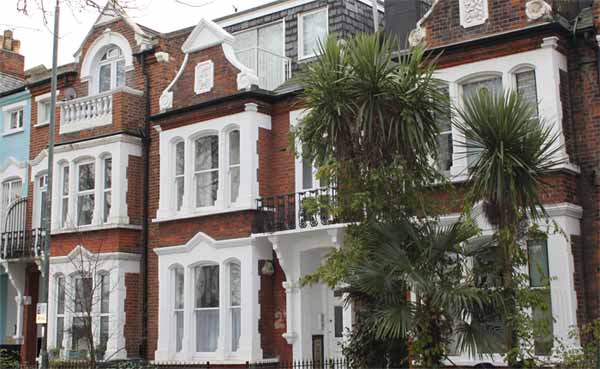
Elm Guest House:  One of the alleged venues which Panorama debunked

Elm Guest House: One of the alleged venues which Panorama debunked

CROSS POSTED ON BYLINE.COM

Investigating allegations of historic child sex abuse is the most difficult job I have ever undertaken as a journalist.

Normally in an investigation you can get documents, find trusted sources, and corroborate information.

 Child sex abuse is  by its nature a private act between two  people-one who is not capable of giving consent.

 The person who is abused is likely to  be damaged for life by such an experience and could find it difficult to relate to other people. So prior to the Jimmy Savile expose hardly anybody believed them.

 The perpetrator  who would suffer huge damage to his or her reputation if found out  will go to any length to cover their tracks -including, if the current  Met Police criminal investigation , Operation Midland, is to be believed, murder.

Rack this up and say you wish to uncover acts more than 30 years ago- when mobile phones  and the internet were science fiction- involving very, very powerful people in high places who can pull strings and you have made it doubly difficult.

That is why it is absurd  for the BBC to put out a documentary claiming to reveal the truth about the Westminster paedophile ring when the story is only half complete, when the police haven’t finished their investigation, and nobody has tested the evidence.

The result was a documentary that probably left the public confused, the police visibly annoyed because it could have put off new people coming forward to help them complete their investigations and the survivors who were interviewed by the BBC worried they had been traduced.

The programme was right to show that closed cases including paedophile teachers and headmasters , celebrities and other powerful people had been found guilty because brave survivors had come forward, been believed, and won justice in the courts.

They were also right to raise the questions of when a suspect should be named publicly – because of the damage it could cause to their reputation. But I have little sympathy for Harvey Proctor, the ex MP who protested too much, because he put into the public domain what the allegations were against him before an investigationhas concluded whether they could be true or false. He is no shrinking violet.

At the moment information about this dark side of British history is coming to light in a piecemeal fashion. So the BBC cannot possibly know the ” truth ” about events in the past. It would have been far better if the Panorama team, who say they have spent a year on this, had waited another year before promising to come forward with a considered judgement.

 I would like them to concentrate on how the BBC has come to terms in tackling its own problem in handling the culture that allowed paedophiles like Jimmy Savile and Stuart Hall to thrive unchecked. They have a big report from Dame Janet Smith which will eventually have to be published – and they have already looked at the damage Jimmy Savile caused in the NHS. That would be a Panorama worth watching.

An important read: Why Exaro director Tim Pendry feels we should continue to investigate the Westminster paedophile ring

JusticiaI am reproducing this comment from  Tim Pendry one of Exaro’s directors, following the BBC Panorama programme last night. It tries to put into context the current investigation into child sex abuse. I have my own views and may do a blog myself later.

PERSONAL STATEMENT ON EXARO AND THE CURRENT MEDIA WAR OVER THE REPORTING OF CHILD ABUSE

[This personal statement on the current ‘smear campaigns’ being undertaken against the Founders of Exaro and against Exaro itself was published on my Personal Blog at the weekend. There may be more to say on the innuendo employed in that smear campaign but not at this time. Exaro must be allowed to continue its investigative work, as must the police, into allegations of child abuse by significant persons without further distraction. If the allegations are not true, then Exaro and the Police will eventually find out and say so. And if they are true … ]

When I created ExaroNews I had no idea of where it would lead. Its purpose was simply to ‘hold power to account’ through investigative journalism under the leadership of an honest editor … a type in our society who is as valuable as an honest cop. We found that honest editor in Mark Watts.

The next stage was to get funding and this we did. What few seem to understand is that the funding came with a condition on our part – no interference by the shareholders in editorial decision-making. There was no quarrel with this and I signed away my own ability to tell Mark what to do, neither to cajole nor to threaten.

A risk was taken by us that he would continue to maintain the highest journalistic standards and not be frightened by the brute weight of the political establishment, of the dark forces to be found in every society or of rival media embarrassed that Exaro would achieve what they had signally failed to do – hold power to account – despite their massively greater resources.

Exaro does not have massive resources but it has had sufficient resources to follow through on what has become one of the biggest investigations of our age – allegations that child abuse and worse (if anything can be worse) were covered up by the powerful. This was the decision of the editorial team and no one else.

Those who followed the Kincora Case are fully aware of what very small groups of people within the system are capable of. One should not ever assume that institutions are necessarily acting in our interest simply because that is what they claim that they are doing. To me (as an outsider), it was always reasonable that they should investigate this matter much as they have investigated many other matters.

At no time (to my knowledge) has Exaro pre-judged the issue in regard to the child abuse allegations – the police once used an unfortunate turn of phrase but that is not the responsibility of Exaro. Exaro appears to have listened to claims and undertaken what investigation it could, reasonably publishing the results. Even to suggest (as one blogger appears to have done) that Exaro had the power or influence to initiate police investigations is almost comically absurd.

The mainstream media’s initial approach to Exaro was to try and kill it by ignoring it. Its ability to set the agenda has emerged as a result of editorial persistence. The police make their own decisions on what is worthy of investigation from their perspective and what is not. The allegations have clearly been taken seriously by the police who, despite the ragged and sensationalist reporting of the mainstream media, have reiterated their own high professional standards in an important statement.

That article is well worth re-reading because it makes it very clear that the police are very concerned about the reporting of witness statements and the risks that the media might prejudice their investigations and later court cases while still managing to assert their belief in the importance of the responsible media in assisting investigations.

The publication by Exaro of this police statement in full (which no other media have done despite their public interest claims) is taken by me to mean that Exaro is in in agreement with it. Subsequent public comment by the Editor of Exaro on Twitter suggests that he remains concerned about the conduct of other media in relation to the witnesses and any pre-judgment of investigations. He must speak for himself – I cannot.

The allegations are also taken seriously by some prominent and rather politically brave politicians – it is gratifying that their courage has not halted their careers. Being taken seriously by police, leading politicians and Exaro does not make allegations true but it does make them worthy of investigation in a free and open society. If not, we may as well be in a closed dictatorship.

It must be made clear that at no time (despite my own close interest in the subject of which the Editor knew nothing) have I had any say or influence in the subject matter of the investigation. Neither I nor any Director were consulted on the investigation at its inception or since. I have no idea whether the allegations are true or false. I consider it reasonable, by the very nature of things, that mistakes may have been made or could yet be made but also that the allegations are far from being easily dismissed.

Everything I have read to date (noting that this has been going on now for some two years or so) suggests that Exaro and, entirely separately, the investigating police officers have cause to be interested in the allegations, have no political angle whatsoever, are professionally committed to what they are doing in their very different spheres and are utterly right to reveal any possibility of wrong-doing in the public interest in order to explore the evidential base for claims.

One is not naive – I am aware of past scandals such as the absurd satanic abuse claims of several decades ago. The possibility of such phenomena as false memory or political manipulation has to be taken into account but the right approach is not to walk away but to investigate even these possibilities rationally and in an evidence-based way, especially in the wake of the Jimmy Savile Scandal which the BBC signally failed to investigate adequately while it was happening on its very door step. In my opinion, the BBC lacks all credibility in this area and should stand down.

My own interest is now simply as an observer while others are engaged in serious professional struggles that might have equally serious reputational consequences for them if they do get it wrong. That is their risk – I don’t actually share that risk. But let me give one solid reason why I suggest that the investigation may have merit and it is this.

If the investigation had no merit, I would not personally be subject, over many months, to repeated and aggressive internet attacks on my integrity based on half-truths and failures to obtain the facts directly from me (it is not as if I am hidden on the internet), including attacks on relatives of mine using innuendo.

The flow of false claims about Exaro and the individuals involved in Exaro suggest that we are seeing a campaign of deliberate attempted destabilisation of the investigations in which some mainstream media have now found themselves to be ‘useful idiots’. These mainstream journalists too must investigate but they should equally investigate the sources for the claims against the investigation. In this world of smoke and mirrors, this is becoming a test case about the sort of journalism we want in our country and so of the sort of politics and justice we are prepared to tolerate.

I am personally subject to these attacks simply because I founded Exaro News and own a minority stake in the Holding Company that owns it. That is all. It is a form of political terrorism because the aim is to create fear and anxiety surrounding reputation. The attackers seem to believe that, by attacking me, they can destabilise Exaro. They do not seem to realise that, no matter what they say about me or members of my family or my businesses or my politics, I have no power to stop any investigation even if I wished to do so – and I do not.

The nature of those personal attacks – which it seems involved hiring private investigators (who seem to have done a very poor job) to build a dossier on me (and others) which included family members – indicates that someone is rattled by these investigations. It suggests that the investigations are dangerous to someone. It suggests, on that basis alone, that the investigations are worthwhile.

Here, I write in a wholly personal capacity. I do not speak for Exaro Holdings, I do not speak for Exaro News. I speak only for an individual who has no regrets whatsoever in having kick-started an organisation, now wholly editorially independent of me and which has been so since its formation as a Company, that is prepared to turn up stones to see what lies beneath them.

I cannot take responsibility for the investigations which means I cannot take either the blame or the credit for what happens next. What I will do is say that, on the balance of probabilities and on the very fact of the attacks on me in the undergrowth of the internet, Mark Watts seems to have struck a nerve. I hope that he and his hardworking team continue to refuse to be brow-beaten as I will refuse to be brow-beaten.
Child Sex Abuse Inquiry: Correcting a misleading report in the Guardian

On September 23  my old employer The Guardian published a report on developments in the Westminster paedophile inquiry.

The article examined the big pressures facing ” Operation Midland” the Met Police criminal investigation into claims against prominent people accused of child sex abuse. and also raised issues by survivors about the role of Exaro, – I am a freelance contributor – in the setting up of the child sex abuse inquiry.

The passage affecting me said :

“Others have raised concerns about Exaro to senior Home Office officials over its role in the setting up of what eventually became the Goddard inquiry.

One complaint came last November over the presence of its journalist, David Hencke, a former Guardian reporter, at a private meeting for survivors and their representatives. A second complaint was made to another senior inquiry official three months later, alleging that the role Exaro was playing – “seemingly with the assistance of panel members” –was “causing havoc” among some survivors.”

The facts are these.

My attendance at the meeting in question was approved by the then secretariat of the  independent panel following a request by a panel member. The meeting was not about establishing the inquiry but a consultation exercise involving survivors and other people interested  and concerned about the issue of child sexual abuse. At the meeting I was completely open, stated who I was, and agreed, because some of the accounts given by people there were very harrowing, never  to report anything that was said. I never have. No  one raised  any objections at the time. and I was thanked by the secretariat for making my position clear afterwards.

If there have been any complaints afterwards no one from the Home Office has raised them with me. I am sure they would if it was regarded as a serious matter.

I  want to put the record straight because in an entirely different capacity I am  a member of an independent panel dealing with very sensitive issues and I would not like people to think that I had gatecrashed meetings on child sex abuse without being invited in the first place.

I asked The Guardian to correct this misleading point but its Readers Editor declined. That is their prerogative. But it is also my right to put the record straight on my own blog.

So afraid of the Saudis: How the Brits daren’t cancel a contract to bolster barbaric justice

CROSS POSTED  ON BYLINE COM

Jeremy Corbyn has challenged David Cameron to explain why the British government can’t cancel a contract with the Saudis to provide training for their prison system just as it is about to execute a teenage dissident and crucify his body.

The Prime Minister who rightly does not spare a word in condemning Islamic State for its barbarism from throwing gay people off high buildings, and the public beheading of dissidents and hostages, is coy about financing the Saudis to behead its own dissidents or lash its social media bloggers like Raif Badawi.

Michael Gove, the new justice secretary, last week announced he was closing down Just Solutions International, the commercial wing of the Ministry of Justice that was flogging expertise to unsavoury regimes including Oman and the Saudis.

Except  that in its afterlife it will continue with a contract to Saudi Arabia,His decision reverses the policy of his predecessor, Chris Grayling, who was planning to expand its business as a way of raising revenue for the ministry without being particular about which regime’s justice system they were supporting.

The existence of Just Solutions International was revealed earlier on my own blog. So it i is good news that Michael Gove, the new justice secretary,is closing it.

This is a secretive organisation that the ministry refused to reveal any details about – despite admitting there are 2000 emails about its operations. A splendid thorough investigation of the background of the company’s bid for Saudi Arabia has been written up by David Allen Green on his Jack of Kent blog.

I have also written a story for Tribune highlighting how ministers are admitting that the real reason they have not cancelled it is because in Andrew Selous’s words -( he is the junior minister at the Ministry of Justice) – “The critical factor was the strong view from across Government that withdrawing at such an advance stage would harm HMG’s broader engagement with Saudi Arabia.”

This replaced the phoney reason originally given to Parliament which ministers had to withdraw that it couldn’t be cancelled because the government faced penalty clauses. Despite that it is still reported in some media that this is the reason.

This is an appalling situation and the fact that Jeremy Corbyn linked this to the case of teenager Ali Mohammed Baqir al-Nimr who will be beheaded for a ” crime ” he committed when he was 14  deserves highlighting.

He wrote: “Will you step in to terminate the Ministry of Justice’s bid to provide services to the Saudi prisons system – the very body, I should stress, which will be responsible for carrying out Ali’s execution?”

The Labour leader concluded: “Ali’s case is especially urgent – the secrecy of the Saudi system means that he could face execution at any time, and even his family may only find out after the event. There is therefore no time to spare in taking this up with the Saudi authorities, if we are to prevent a grave injustice.”

Not only should he take this up  and the Foreign Office has said it will – but this contract should not go ahead. Britain should not dirty its hands with aiding a regime that imposes such cruel punishments anymore than it should support the Islamic State.

In Britain the National Audit Office ought to look at the setting up of Just Solutions International and decide whether this experiment in commercialising a department was ” value for money”..This should then be taken up by the Commons public accounts committee.

The secrecy around this is totally unjustified and it appears only Parliament can properly investigate it.

Right On: A warning to the national press over Operation Midland – the murder and child sex abuse investigation

JusticiaCROSS POSTED FROM BYLINE.COM

I am not surprised at all to see this warning from the Attorney General’s Office to the national press and social media sites not to try to identify ” Nick” the survivor in the Operation Midland  murder and sexual abuse inquiry.

It seems that some papers wanted to close down this inquiry and one of the people interviewed twice by the police, Harvey Proctor, was completely irresponsible in revealing and naming people who may or may not be the subject of investigation,

So just in case the national press don’t have room tonight to cover this statement here it is in full:

The Metropolitan Police Service (MPS) is currently investigating allegations made by a complainant that he was sexually abused by a number of men including various high profile figures.

The Solicitor General, Robert Buckland QC MP, would like to remind editors, publishers and social media users that where an allegation of a sexual offence has been made, no matter relating to the complainant shall be included in a publication if it is likely to lead to members of the public identifying him. Publishing such material is a criminal offence and could be subject to prosecution.

In addition, while the Solicitor General recognises the legitimate public interest in the press commenting on cases of this nature, he wishes to draw attention to the risk of publishing material that gives the impression of pre-judging the outcome of the investigation and any criminal proceedings that may follow, or which might prejudice any such proceedings.

The Attorney General’s Office will be monitoring the ongoing coverage of Operation Midland and editors and publishers should take legal advice to ensure they are in a position to comply with their legal obligations.

Child Sex Abuse: The Met Police’s honest attempt to safeguard survivors and alleged abusers

Scotland Yard: a honest statement Pic Credit: Wikipedia

Scotland Yard: a honest statement
Pic Credit: Wikipedia

CROSS POSTED ON BYLINE.COM

Yesterday unusually the Met Police issued a long statement on Operation Midland – the most controversial criminal investigation into allegations that young boys were murdered and sexually abused by people involved in a Westminster paedophile ring.

The press  coverage has concentrated on the mea culpa by the Met Police itself when a senior investigating officer described some very sensational allegations by an abuse survivor called ” Nick” as ” credible and true”.

The force stuck by its description as ” credible” but dropped the reference to ” true”.As their statement says:”only a jury can decide on the truth of allegations after hearing all the evidence.

“We should always reflect that in our language and we acknowledge that describing the allegations as ‘credible and true’ suggested we were pre-empting the outcome of the investigation.”

But the long statement – it is about 1200 words- also calls for the media and some of the accused,to modify their behaviour both in the interest of protecting vulnerable survivors and not defaming alleged abusers so they can get a fair trial.

The words in the statement covering survivors were particularly pertinent.- coming straight after the Daily Mail has gone as far as it could to identify ” Nick” in a piece in Saturday’s paper and on-line – including a pixellated picture and details about his mother and the job he held.

The Met Police make the eminently sensible suggestion that the press should be extremely careful about identifying vulnerable people – and suggest that print and on-line journalists should follow broadcasters and incorporate part of the regulator Ofcom’s code  when interviewing vulnerable people.

Their definition is much wider than minors. Vulnerable people “may include those with learning difficulties, those with mental health problems, the bereaved, people with brain damage or forms of dementia, people who have been traumatised or who are sick or terminally ill.”

One could  say someone who has been sexually abused as a kid has certainly been traumatised. Unsurprisingly, this does not seem to have been mentioned in the print media.

The police statement adds: ” Our other main concern is the risk that media investigations will affect the process of gathering and testing evidence in our criminal investigation. In recent weeks, one journalist reporting on Operation Midland has shown the purported real identity of someone making an allegation of sexual assault to a person who has disclosed that they have been questioned by police concerning those allegations.”

It rightly warns:”it is extremely distressing to discover that their identity might have been given to anyone else, particularly if that is to someone who may be involved in the case. Secondly, possible victims or witnesses reading the article may believe their identities could be revealed as well, which could deter them from coming forward.”

The police also make it clear  that until someone is charged they will not name anybody. There is a case for protecting individuals who stand accused of such a heinous crime – both murder and sexual abuse – who are still alive from being exposed because it will prejudice a trial. The problem with historic child sex abuse many of those involved are now dead – and it is their reputation that is at risk not a future trial.

However the accused also have to behave responsibly as well. Harvey Proctor, the former Tory MP, who has been questioned by the police as part of the investigation, has the right to call a press conference to defend himself. But it is very irresponsible to name other people who may or may not be under investigation by the Met Police or demand that his accuser be named.

It is not surprising that this has become such a controversial issue. The stakes are very high. People’s reputations face ruin and proving historic child sex abuse is a very difficult thing to do as it takes place in private and people are hardly going to admit to it.

What is required now is some space for the police to continue this complex and difficult investigation.

Everyone, not just the police, needs to tread very carefully and try to report this honestly and objectively, without fear or favour, and without blunting the detailed investigative skills needed to do the job.

How the golden oldies and the disenchanted young combined to give Stormin’ Corbyn victory

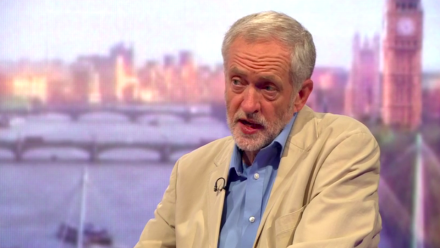
Jeremy Corbyn: Now leader. Pic credit: Labour List

Jeremy Corbyn: Now leader. Pic credit: Labour List

CROSS POSTED FROM BYLINE.COM

Jeremy Corbyn’s landslide victory to become Labour leader has come as a shock to the Westminster bubble and the political Establishment.

Those who followed opinion polls and betting odds thought he might win but did not think it would be such an overwhelming victory.

I suspect – from a growing number of anecdotal chats – that his victory is partly due to an unique revolt that spanned two generations and came together in a perfect storm to overthrow the political Establishment.

My generation –  who are around the same age as Jeremy Corbyn – suddenly decided they were fed up to the back teeth of the Labour Party apologizing for its existence and assuming post Blair there is only one way to run a society.

We feel uneasy at the rapidly widening gulf between the rich and the poor, do not like to see public services denigrated, do see the value of a trade union, and don’t like the nasty politics that treat refugees as opportunists trying to get a slice of the good life.

We also yearn for proper debates about major issues – like should we renew Trident and what is the future of the NHS and the welfare state, how serious is climate change etc. At the moment this is never discussed because of a sickening consensus that only way to solve anything is to get the rich to make even more money and bow to the international gods of global capitalism.

I know a number of people who looked at the Labour candidates and thought with the exception of Corbyn they sounded remarkably the same. So like the grandfathers and grandmothers we now are – the swinging sixties generation- decided they wanted a change.They voted for a new grandfather of the nation.

Young people who have talked to came to a remarkably similar conclusion. The politically aware tell me they found conventional party politics “ boring” with politicians too scared or too worried to say little more than political platitudes. They liked Corbyn because he said what he thought and cut through the crap. They wanted someone to lead rather than just follow.

They wanted someone who was going to challenge the status quo and was not part of the “posh boys” network. And further more they expect him – rather like the people who,like to like Nigel Farage,- to make mistakes.so may not be put off by a campaign denigrating him.Indeed such a campaign could be counter productive.

So far the reaction from the Tories has been hysterical with some like Michael Gove even claiming that Britain’s national security is now at risk with Jeremy Corbyn at the helm.

Really? I look forward to the first person to market a T shirt saying “I am a national security risk” and for David Cameron to order his or her arrest for wearing it.

Top mandarins revolt over ministers wasting taxpayers money

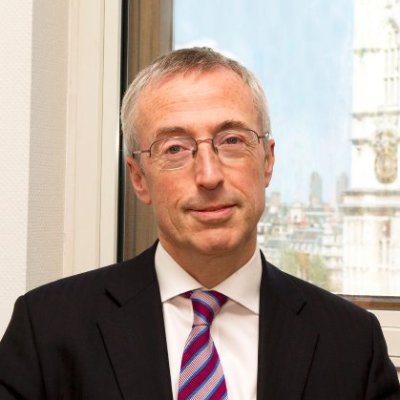
Martin Donnelly, permanent secretary at Department of Business, Innovation and Skills, challenged ministers twice

Martin Donnelly, permanent secretary at Department of Business, Innovation and Skills, challenged ministers twice

CROSS POSTED FROM BYLINE.COM WHERE MY WHITEHALL AND WESTMINSTER SCOOPS NOW APPEAR AND NEWS STORY IN TRIBUNE MAGAZINE

A revolt is stirring in Whitehall among the country’s top mandarins. While a top Treasury civil servant backed as “value for money” a £1 billion loss on the sale of RBS shares, in six other cases this year senior civil servants have revolted against ministerial requests to spend money.

The figure is remarkable since in the previous three years of coalition government not a single civil servant demanded a direction from ministers to spend money.

Now in eight months ministers have been challenged six times and all involve giving money to the private sector.

The one most recently highlighted was the charity Kids Company where two Cabinet Office ministers had to overrule a refusal by the then Cabinet Office permanent secretary, Richard Heaton, to spend £3m on the charity. He was proved right when the charity went bust.

But there have been similar tussles between senior officials and ministers in three other departments over payments to cover a private coal mine closure, new trains for the Trans Pennine Railway, consultant fees for an airport study, free shares for Rail Mail workers and subsidising private insurance policies in areas of flood risk.

This objections either happened in the dying days of the coalition or since the Tories won a majority.

The private coal mine objection came over the closure of Hatfield Colliery. Originally the government were involved in trying to save the mine but instead this was reversed and the money earmarked for saving the mine was switched to closing it. In this case Martin Donnelly, the permanent secretary of the Department for Business and Innovation seemed to want a direction to do this.

Phillip Rutnam, p;ermanent secretary at the Department of Transport before the Public accounts Committee; Still credit:BBC

Phillip Rutnam, permanent secretary at the Department of Transport before the Public Accounts Committee. Still credit:BBC

The row over the early £250m replacement of Pacer diesel units came in the Department of Transport when the permanent secretary, Philip Rutnam said their early replacement in 2020 was not economic but this was overruled by Patrick McLoughlin as part of George Osborne’s Northern Powerhouse policy.

Mr Rutnam said their replacement was poor value for money and there were better ways of achieving improvements including modernising existing units. Mr McLoughlin decided the units were unpopular with the public and needed replacing.

Mr McLoughlin also overruled his permanent secretary, when he objected to spending money on consultants to review a decision to build houses on Manston Airport in Kent because of objections from Thanet Council, then Conservative now UKIP controlled. Mr Rutnam could not see why the money was justified and Mr McLoughlin admitted it was to help the council which could not finance the work.

Sajid David, the new business secretary, also overruled objections from Martin Donnelly, to an extension of free shares to Royal Mail staff. Donnelly had described the policy as “novel, contentious and repercussive” and not value for money for the taxpayer.

Former Dewfra permanent secretary, Bronwyn Hill, challenged value for money on flood insurance subsidy

Former Defra permanent secretary, Bronwyn Hill, challenged value for money on flood insurance subsidy

Finally Elizabeth Truss, the new secretary of state at Defra, overruled objections from her former permanent secretary, Bronwyn Hill,  to spending taxpayers’ money on the government subsidising private insurance for homes in flood areas. Again value for money and lack of knowledge of how much this could cost were the main reason. Papers for the current draft legislation reveal it could cost the taxpayer anything between £122m and £431m over a ten year period to do this.

All this suggests that the new Conservative majority government which is due to take some very contentious decisions in the next five years is not only going to face tough parliamentary opposition. It seems that top Whitehall officials are going to scrutinise exactly where they are spending money in this new age of austerity and fight back if they think ministers are wasting it.

Even if the civil servants are overruled there are consequences. Each action will be scrutinised by the National Audit Office and could lead to questioning at the Commons public accounts committee.