Time for a full scale investigation into the abusive and bullying behaviour towards women by Judge Philip Lancaster

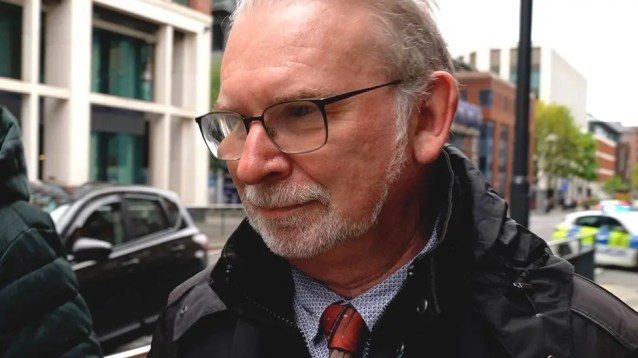
Judge Philip Lancaster Pic Credit BBC News

New revelations by the BBC TV journalist Michael Buchanan today show what appears to be serial bullying and abuse towards women claimants by Judge Philip Lancaster at employment tribunal hearings

His news report today reveals that eight women have now separately come forward to say they were badly treated when they presented their cases before the judge since 2018. They describe their experience before him as “patronising, degrading, psychologically abusive, and misogynistic.”

The 67 year old judge who presides over employment tribunal hearings in Leeds is often rude and abrasive towards women and in one case even suggested that a claimant had mental health problems.

One woman claimant Angela Gates brought a case of disability discrimination and constructive dismissal against her employer in 2021.

She says a hearing in front of Judge Lancaster made her feel “like a villain being prosecuted”.

She says: “I felt I couldn’t give my side on anything.”

The four-day hearing was held on Zoom, and Ms Gates, 53, says Judge Lancaster regularly shouted at her, repeatedly telling her to be quiet. She says his behaviour was “appalling and degrading, verging on psychological abuse”, adding: “I don’t believe I’ve been given a fair trial.”

Another woman, who wished to remain anonymous, had similar treatment over a constructive dismissal and unfair treatment case.

“He made my life hell “

She said: He made my life hell,” she recalls. “He’d put his hands on his head, and appeared disinterested in what I was saying. He repeatedly asked why I was asking [my employer’s witnesses] particular questions and raised his voice numerous times. I felt useless.” She is now appealing the ruling.

Seven women are now planning to contact their MPs about their treatment as it is virtually impossible to complain about a judge as the system is rigged against them. You can refer a case to the Judicial Conduct Investigation Office or previously complain to Judge Barry Clarke, President of the Employment Tribunals in England and Wales. Or even to the Senior President of Tribunals, Sir Keith Lindblom. All seem set up to protect judges not complainants. Barry Clarke refused to act and Sir Keith ignored it.

Judge Barry Clarke, President of Employment Tribunals in England and Wales – protecting judge Lancaster from complaints

In a letter written by Alison McDermott, a management consultant, who complained about the way Judge Lancaster treated her in her case against Sellafield and the Nuclear Decommissioning Authority, to Adam Jones of the Judicial Conduct Investigation Office she says:

“It is simply not tolerable the way this judge has conducted himself, whether it is arbitrarily excluding the public, treating me less favourably, allowing bullying in the courtroom, treating me with hostility and contempt, ignoring evidence, attempting to block evidence, actually blocking exploration of evidence, vilifying me, acting partially, and failing to document procedural matters.

” I urge you, therefore, to conduct a thorough investigation into what went so badly wrong in my case and to exhibit, transparency and accountability – behaviours which the legal profession professes to uphold. I sincerely hope that I and the other key witnesses mentioned in this letter of complaint will be interviewed, as would occur with any other formal complaint or grievance investigation. In my experience as a consultant with over 20 years investigating organisational cultures and problems, it is not washing dirty linen in public that causes a problem but allowing it to fester in plain sight.”

Of course the office had no intention of doing such a thing. Judges, as I reported yesterday, are protected because the notes on the cases are kept private even when they are the only official record of the tribunal hearing. It is impossible to get hold of the evidence that would prove a judge was biased and judge Clarke would not reveal how many complaints he has received.

05/07/2024. London, United Kingdom.Chancellor and Secretary of State for Justice, Shabana Mahmood. poses for a photograph following her appointment to Cabinet by Prime Minister Sir Keir Starmer in 10 Downing Street. Picture by Lauren Hurley / No 10 Downing Street

So this leaves the Lord Chancellor to act but as I reported yesterday it is almost impossible to write to her directly – without officials in the ministry of justice or the judiciary intervening.

I would have thought Shabana Mahmood, a highly successful woman with an ethnic minority background, should ask for an investigation into Judge Lancaster. Many of the women who complained about him are from ethnic minorities as well. None of them should have had to put up with such egregious treatment and does the Lord Chancellor want to preside over system where a judge can treat women as dirt.

Please donate to Westminster Confidential

£10.00

Historic conference at the Royal Society of Medicine on Patient Safety paves way for campaign to protect whistleblowers from trusts in the NHS

Yesterday a conference of doctors, patients and journalists held at the prestigious Royal Society of Medicine in London highlighted the appalling treatment of doctors by NHS management who raise patient safety issues to protect patients. Examples were given from doctors who had been dismissed after they raised patient safety issues and how trust managers spend unlimited funds on lawyers to make sure they lose employment tribunal cases, sometimes even aided by the judges hearing them.

The conference arranged by Justice for Doctors, a new organisation representing many of the affected doctors, coincided with a series of articles in The Daily Telegraph, which showed that these are not isolated cases but involve doctors right across the country and is a national problem which trusts are trying to hide.

One of the main organisers is David. E. Ward,, a retired cardiologist from St George’s Hospital, South London, who has already written two guest blogs on this site. I have included his planned closing statement to the conference as a fresh blog from him as it succinctly sums up all the issues that were raised.

By David Ward

First, I would like to thank all the contributors to this historic meeting. In a way it is a celebration of all those oppressed whistleblowers who have spoken up for patient safety.

I would personally like to thank my friend Professor Somerville who has been a driving force behind this and many other ideas to stand up for whistleblowers. Jane and I have been trying to set up a second meeting about Patient Safety for 5 years following the first one in March 2019 when we re-enforced our personal campaign to expose – and do something about – the appalling treatment of doctors who speak up for patient safety also known as ”whistleblowers”. During our campaign we met the Justice for Doctors group who helped to organise this meeting

In the past 3 decades a Hospital Trust with its senior management has accrued the powers to destroy a doctor’s career by imposing restrictions, suspensions, referrals to regulators (GMC, CQC) and, astonishingly, an unfettered power to dismiss. These major life-changing decisions are arbitrary and undertaken, incredibly, without any independent or regulatory oversight. For dismissal, “get out” is apparently sufficient.

Allegations against the victimised doctor may be based on made-up and unsubstantiated claims. If major criteria for dismissal cannot be met there is always the “loophole” of “some other substantial reason” which conveniently does not exclude but also does not mandate any additional explanation.

Doctors who see poor practices, faulty equipment, processes (and the like) are obliged to speak-up by Duty of Candour (HSCA 2008 reg 20). But by speaking up but they may put their careers at risk as we have seen so many times recently.

The “The National Guardian” program introduced by Sir Robert Francis and intended to accommodate doctors who speak-up, evidently does not function as intended. It’s called “marking your own homework”.

Investigations into a whistleblower together with their concerns should be independent of the Trust in which they work and be seen to be so. But evidently, they are not. Furthermore, the Trust managements who make these decisions are themselves unregulated. That doesn’t seem right? Does the phrase “judge, jury and executioner” come to mind? Managers should also be regulated, shouldn’t they?

Arcane procedures such as MHPS appeal hearings can be overseen or conducted by “dodgy” external “agencies” some of which claim spurious credentials. These agencies are, in effect, “hired guns” available and willing – for a fee – to “confirm” the Trust’s unfounded allegations and to assist their aims – to dismiss the “troublemaking” doctor; not because of “incompetence” but because the doctor has “annoyed” Trust management by raising concerns about Patient Safety or something else. The reactions of management are often vengeful, as we have seen.

I know of at least one of these agencies which has appropriated and misunderstood (in a written formal report) the phrase not “fit-for-purpose” to describe a doctor in support a Trust’s decision to dismiss. The agency seemed totally unaware that this is not only fictitious nonsense but possibly libellous. No such phrase exists in English Employment Law. Unfortunately, NHS England has also been duped. I know because I’ve asked – in person.

The Judiciary, in the form of Employment Tribunals may be called into action if the dismissed doctor seeks to restore their career via this route. This is a bad choice by the victim as the evidence confirms. Only 3% of Claimants, “win” – not the most apt word – in this system. Put another way, 97% lose! Is that “open and fair justice”? I think not. Some of the judgments are beyond comprehension.

There are many practices which seem grossly unfair, perhaps deliberately. Some obvious ones stand out:

1. Inequality of arms; the law firms acting for the dismissing Trust are funded by each of us – the taxpayer. The Claimant, the doctor, healthcare worker will have no external source of funds except  perhaps by “crowdfunding”. Furthermore, if they lose their case, they may required to pay not only their own legal fees but the law firm’s fees too! That’s not fair. I can show you some law firm invoices which would shock you. The phrase “inequality of arms” doesn’t touch it.

2. “Cost threats” are a notorious device employed to, shall we say, “persuade” a claimant to withdraw their claims before, during or after a Tribunal. It’s another weapon deployed by the Respondent, the dismissing Trust, to force the claimant to surrender and withdraw their claims.

3. Non-disclosure agreements or NDAs, are devices designed to conceal the devious practices used to threaten the claimant (and, as it happens, to suppress evidence). They have no place in inquisitorial proceedings in this context. They should be banned.

4. The Public Interest Disclosure Act (PIDA) 1998; I quote: a worker has the right not to be subjected to any detriment by any act, or any deliberate failure to act, by his employer done on the ground that the worker has made a protected disclosure.

In other words, a doctor cannot be dismissed, for example, for raising patient safety concerns. So, any dismissal has to be attributed to another perceived misdemeanour.  Read any recent case and it is evident that the “whistleblowing” or “patient safety” concerns were discounted and irrelevant to the dismissal. It was about an “attitude”, a “manner of speaking” and similar unquantifiable and, in most cases, unverifiable attributions. Ask one of the presenters today.

5. At a time of great need for medical expertise, doctors are still being persecuted and dismissed having committed NO offence. The law firms which spend so much public money to pursue the claimants should have no place in any procedures which are primarily about patient safety. Furthermore, the concerns and the person who raised them should be formally registered and documented, including all steps taken towards a solution. This is not happening. Doctors who raise concerns about patient safety are treated like criminals! This must stop!

6. Last but not least the patient safety concerns, the very things that trigger most of these shenanigans. What happened to those? Well, they get buried and forgotten don’t they. What a wonderful system. All that waste of public funds to destroy a doctor’s career instead of correcting potentially dangerous practices. That is why a register is needed.

The problem is a nationwide one of the same gravity as the “Great Post Office Scandal”. Perhaps NHS whistleblowers need a TV drama-documentary because we have seen how that shifts public opinion and awakens the media with unprecedented force. I’ve already draw up a potential cast list!

Last, there should be a searching, durable, logical and legally sound review of the treatment of ALL whistleblowing related laws and processes. Whistleblowers are the canaries in the coalmine. They do society a favour. They should be praised – not persecuted.

This is the 21st century! What country do we live in?

Thank you all for attending. Thank you to all those who presented. And particular thanks to Dr Salam Al-Sam, Dr Azhar Ansari and the Justice for Doctors group.

UPDATE: Who came and Who didn’t send anyone

Newspapers who sent a reporter: Times, Guardian, Daily Mail, Standard,

Major media who sent a reporter: Sky News 

Major media one would have expect to send reporter:

BBC, ITV, GBNews, LBC

Major regulatory professional bodies who were notably unrepresented: (very bad show I think especially as some of their members Fellows were major subject dig the WB scandal). If they didn’t know or just couldn’t be bothered –  it’s shameful, either way!

BMA, CQC, GMC, Royal Colleges (all of them, Physicians, Surgeons, Obs and Gynae), National Guardians Office (FTSUG), HMCTS (at least they could have send a junior barrister), Law firms; all those with an obvious interest in oppressing Claimants

Please donate to Westminster Confidential

£10.00

Whistleblower Dr Chris Day’s appeal: Has Judge Andrew Burns KC ruling made it impossible for him to get open justice?

Andrew Burns KC

UPDATE: In a further twist in this long saga, High Court judge Dame Jennifer Eady, President of the Employment Appeal Tribunal initially took a decision not to read Dr Day’s letter complaining about the injustices in the procedure of his tribunal case against Lewisham and Greenwich NHS Health Trust . Now it has been decided that another judge will rule whether she should read the letter. Such a move has been opposed by the trust, who are represented by Old Square Chambers.

Superficially the ruling by Deputy High Court judge Andrew Burns looked like a victory for the long campaigning whistleblower Dr Chris Day to get a fair hearing at his forthcoming Employment Appeal Tribunal. He was granted an appeal on six of the ten grounds presented to the hearing and he was publicly commended by the judge for restoring the employment rights of 54,000 doctors which had been taken away in a sleight of hand by the now merged Health Education England.

But a closer look at the judgement gives a rather different picture. Instead of allowing a full appeal of employment judge Ann Martin’s flawed hearing he introduced caveats and blocked the re-examining of crucial issues. These include examining whether MPs and the press have been misled by the NHS and their lawyers, whether deliberate concealment has occurred and such startling behaviour as a Lewisham and Greenwich health trust communications director destroying mid hearing 90,000 emails that could have helped Dr Day’s defence and subsequently declining to appear as a witness.. It also allowed the health trust’s lawyers to to traduce Dr Day’s public reputation and misrepresent his motives without fear of being dragged before the libel courts or even being properly cross examined about this at the tribunal.

Three Wise Monkeys – a rather good print by Swedish musician and artist Andreas Magnusson see https://printler.com/en/poster/167372/

In short Andrew Burns judgement is a ruling equivalent to the infamous “three wise monkeys” carving at a Japanese shrine. He ” sees no evil, he hears no evil and speaks no evil” at that flawed tribunal. And he has been given by Dr Day a chance to review his findings to take account of these omissions.

Dr Day’s points requesting a review are here.

To put it simply he is blind to Ann Martin’s mishandling of that tribunal, he is deaf to Dr Day’s arguments to put this right, and he is silent about the outrageous behaviour of the trust’s employees and their lawyers, particularly Ben Cooper, KC on traducing Dr Day’s reputation and it being broadcast to MPs, the public and other trusts.

As Dr Day puts in an email accompanying his crowd justice website ” which goes into all the legal details “The Judge has allowed me to have an appeal but taken all my weapons and has blocked key issues being explored.”

Ben Cooper KC

The language used against Dr Day by Old Square chambers lawyer Ben Cooper would be defamatory outside a court room. He is described as ” having an obsessive belief in his victimhood”, accused of an “elaborate rewriting of history by him to fit in with his narrative” and condemned his evidence as ” dishonest and underhand.”

When pressed on this by Dr Day’s barrister Andrew Allen KC at the June 2022 Mr Cooper conceded he had no example of what he meant from Dr Day’s witness statement and Mr Allen was then prevented from cross examining Mr Cooper on Dr Day’s supplementary statement rebutting Mr Cooper’s insults and allegations.

My Statement on Ben Cooper KC – DrChrisDay

To make matters worse Ben Cooper’s attack on Dr Day’s character has been picked up by a lawyer defending lawyers Hill Dickinson against Dr Day in another case. Dijen Basu, KC from Sergeants Inn Chambers, in a skeleton argument in a case still to be heard said of Dr Day ” The diagnosis of whistleblowitis is a pithy way of describing a man who had developed an obsessive belief in his own victimhood to the point of being prepared to dishonest and underhand in pursuit of what he saw as the virtue of his cause as Mr Cooper described him.”

The irony of this attack is the case revolves around Hill Dickinson depriving 54,000 junior doctors of their whistleblowing rights whilst not revealing key commissioning contracts  in disclosure the firm were paid to draft. Now who was really being dishonest and underhand!

As Dr Day purchased the transcript of Ann Martin’s tribunal he has been able to point out that cross examination of Ben Cooper’s claims was halted by the judge but she went on to allude to Ben Cooper’s argument against Dr Day in her public judgement. Dr Day argued that this a breach of court procedure but the judge did not agree.

Judge Andrew Burns did agree he had made a mistake in describing Dr Day’s withdrawal in a previous hearing in this long dispute as being caused by duress rather than misrepresentation.. This was when his lawyer Chris Milson, without his instructions, tried to negotiate a settlement which included a confidentiality clause. Dr Day was able to get Judge Burns to accept that his case was not one of duress but one of serious allegations of misrepresentation from a number of lawyers whose accounts of the infamous settlement of the Day Case in 2018 do not add up.

Dr Day has now written to Judge Dame Jennifer Eady, President of the Employment Appeal Tribunals, asking her to intervene.

Dr Chris Day

Letter to Dame Eady President of the Employment Appeal Tribunal – DrChrisDay

He writes: “It may come as no surprise that I and large numbers of doctors feel deeply let down by the way the EAT has handled my case over the last 10 years. I believe its decisions have not been logical and have ignored evidence, pleadings and important appeal points. I believe the most likely explanation for
this is the EAT’s failure to manage properly the conflicts of interests and human factors that have come into play when Judges have dealt with certain issues in my case affecting their legal colleagues.”

He goes on: “The destruction, concealment and ignoring of large amounts of evidence at the June 2022 ET hearing of my case and the obstruction of 2 of our proposed cross examinations was widely reported and shocked people. Many were expecting these obvious issues to be dealt with decisively by the appeal tribunal. Instead, I have had to get into an argument with the EAT about whether such extraordinary conduct is enough for me to advance procedural unfairness as a ground of appeal”

He adds: “I am seriously considering whether I can proceed with an appeal in this court whilst the EAT refuses to answer” these points.

A check on social media of Judge Burns X account by 54,000 doctors, a group who campaign for the whistleblowing rights of junior doctors reveals how closely 3 of the lawyers involved on both sides of the Day settlement are connected socially.

Judge Andrew Burns, a former lawyer at Devereux follows and is followed by Chris Milsom – Dr Day’s lawyer in a previous 2018 case that settled ; he follows Old Square Chambers, which has a leading role in pursuing whistleblowers; Martin Hamilton, managing partner, Capsticks who Dr Day alleges misled MPs and the Board of Lewisham and Greenwich about his case and settlement. Other followers include Nadia Motraghi, KC, another Old Square Chambers that was against Dr Day, who also pursued Dr Usha Prasad, a whistleblower cardiologist at Georges and Epsom St Helier NHS trust.

Dame Jennifer Eady

Finally it turns out that judge Dame Jennifer Eady – whom Dr Day is relying on to adjudicate about this – is a former lawyer at Old Square Chambers from 1990 to 2013. During her time at Old Square Chambers, for 13 years from 2000, Ben Cooper KC, and from 2004 Nadia Motraghi were colleagues. It would be amazing if they don’t know each other very well as they practised in the same field.

So how will Dr Day get a fair hearing when three of the lawyers he is accusing of misleading on the settlement are so closely linked to the judge and the final arbiter is their former colleague now in an all powerful position to control the entire employment appeal tribunal system.

My final point from covering a number of whistleblower tribunals is that I am disgusted at the way very senior professional lawyers seem to enjoy denigrating, insulting, and belittling the careers of eminent doctors whose main concerns are to protect the public from bad medical practices which endanger lives.


Please donate to Westminster Confidential

£10.00

Disciplined: The Adelaide train driver who said he locked disabled people on a train if they used the wrong carriage

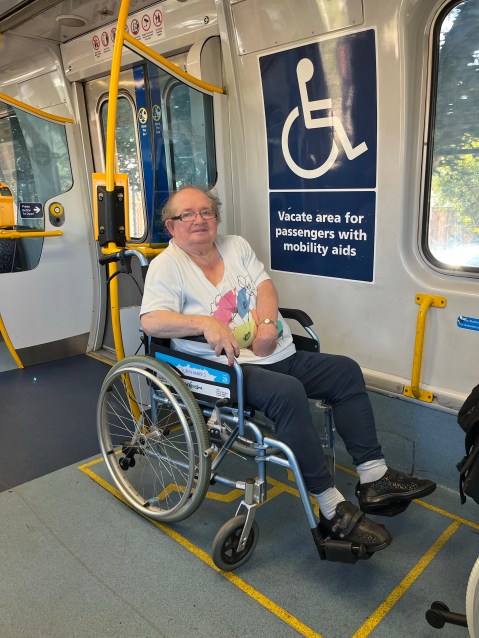
Our visit to Australia using a wheelchair to get around six big cities has been a heart warming experience. Visiting Darwin,Brisbane,Sydney, Melbourne, Adelaide and Perth we found staff in museums and galleries and the Northern Territories Parliament extremely helpful. Pavements had dropped kerbs and public transport was disabled friendly with spaces for wheelchairs on trains.

Margaret on the Adelaide metro – trouble free on the way in – the problem came on the way back

It was therefore completely unexpected and out of character when we ran into trouble on the Adelaide metro system – not with the train but its driver.

Each four coach metro train has two carriages with spaces for wheelchairs. On the way back at Adelaide City station I put Margaret in the nearest carriage and as the platform was level with the train it was no problem. When we reached the terminus Outer Harbor where the QM2 was docked the train is higher than the platform so I expected the driver to put down a ramp.

“You have got in the wrong disabled carriage”

We saw him put a ramp down for a wheelchair in a carriage nearest his cab. And other passengers alerted him to our need. What happened next was unbelievable. He came up to us saying we had got in the wrong disabled carriage and he was not going to let us out.Instead he said he was going to lock us in and we would have to return to the City station – a 40 minute journey – and start again He said he did this to other disabled passengers if they broke the rules.

There followed a short stand off as I refused to take my finger off the button that kept the door open before he finally relented and said as we were visitors to Adelaide he would put a ramp down but we were not to do it again This took less than 5 minutes but he still complained that he had lost part of his meal break.

The situation was all the more worrying because we had only 20 minutes to board the boat and if he had sent us back we would be stranded in Adelaide.

Good ending

This has had a good ending. I decided to complain to the metro authority using their website It was easy to use and contained information so I could identify the exact train service. They promised to reply within ten days but replied in three thanking me for providing accurate information. Not only did I receive an apology for the distress but they said they had identified the driver and given him a talking to. They also said appropriate action had been taken against him.

This restored my faith in the way the authority handled the complaint and made us feel disabled people were respected there.

It was also good to see the authority taking the issue seriously and replying promptly. There were no quibbles and I hope the individual reflects on his egregious behaviour and no longer thinks he can treat disabled people in this uncaring and disrespectful way.

Review: Social Media & The Seven Deadly Sins: A stunning critique of what went wrong

Book cover of Social Media & The Seven Deadly Sins

I am not a competent authority on using social media. I am no gamer. Indeed I haven’t played a computer game in my life. Yet I do worry as a journalist about the effect of social media on our lives. How it created a super rich elite, how people’s personal data can be manipulated for huge financial gain, how ” fake news” can spread in an instant and how democracy can be destroyed by dark forces on line.

This is a remarkable, well written first book. Its author, Rory Wilmer, is an insider who has made money from digital marketing and advertising for big companies. As he says himself: “I have got to a moral crossroads within myself… I too, have been part of – making a living and a career on the back of surveillance capitalism, data mining and the exploitation of people’s addiction to social media”.

He points out how we, the avid consumers of social media, who never read the terms and conditions of the websites we sign up to – submit to exploitation by allowing companies to make huge profits by “leeching your data and selling it to the highest bidder”. They do this by using clauses allowing them to change the terms and conditions without” even informing you of why and how.”

How an atheist takes a Biblical script

The book is cleverly constructed taking, as an atheist, a Biblical script of the Seven Deadly Sins and dividing the faults of social media between them.

His chapter on lust – reveals the scale of a male dominated internet – and how pornography and sexual titualation. is rife. Put one search for girls on Instagram – and you will find 8 million images of girls. Put one for boys – and you get 2 million images. Everyday 95 million images are loaded onto Instagram – that is 4 million an hour.

He cites Twitter as a site that allows pornography and sexual exploitation of children and is scathing of some of activities of dating sites in protecting data.

His gluttony chapter covers everything from celebrity chefs, promoting diets to wanting the perfect body. His chapter on greed looks at our appetite for viral blogs and clicks while sloth looks at our laziness in discerning the truth -leaving us to believe fake news and be prey to ideas that the earth is still flat and covidiocy. It also deals with sinister Q-Anon movement and interference in elections, topically including Russia.

Making money out of wrath

This book challenges us to look behind what we click and also not to fall for provocations. The chapter on wrath looks at trolls and the nasty Incels movement – the misogynist white supremacists who use the internet to rage that they have not been laid by women and act out fantasies on the internet of raping and dominating women.

This is a thought provoking book. There is of course another side of the internet – its virtues in bringing people together, making people aware, revealing the truth about disastrous situations like the current invasion of the Ukraine and allowing ordinary people the freedom to develop their own ideas and publish them without having to get approval from officialdom. The author is promising a sequel- the seven virtues of social media. I await this with interest.

Social Media & The Seven Deadly Sins by Rory Wilmer. Available from Amazon £14.99 hardback, £8.99 paperback and free with Kindle Unlimited

Please donate to my blog Westminster Confidential to allow my forensic journalism to continue.

Please donate to Westminster Confidential

£10.00

Finally shopworkers to get more protection: Tougher law for those who attack them

In the dying days of last week’s Parliament the government finally quietly agreed that shopworkers alongside other workers who serve the public should get greater protection from abusive customers.

USDAW campaign poster

Ministers are using the Police, Crime and Sentencing Bill to make it an aggravated offence to assault or abuse people who are serving the public. At present it is up to the judges’ discretion whether it is under the present sentencing guidelines.

It follows years of campaigning by USDAW, the retail workers union, to get more protection for shopworkers and growing evidence, sadly, of more violence, abuse and threats, from customers to staff.

The government chose the House of Lords to amend the bill last Wednesday night.

Baroness Williams., minister of state at the Home Office: Official portrait

Baroness Williams of Trafford, a junior home office minister, said: “The amendment places in statute the aggravating factor applied by the courts in cases of assault where an offence is committed against those providing a public service, performing a public duty or providing a service to the public.

…..”This includes assault occasioning actual bodily harm, wounding with intent to cause grievous bodily harm, malicious wounding and threats to kill, as well as an inchoate offence in relation to any of these offences. These are the assault offences most likely to be experienced by front-line workers. Importantly, the provision also allows the court to apply the aggravating factor to any other offence, where the court considers this factor relevant.”

“This amendment will reinforce in statute the seriousness with which the courts should treat these offences. It will send a very strong signal to the public that assaults of this kind are totally unacceptable. The Government want to ensure that all those who serve the public can feel protected from abuse when working.”

Baroness Trafford added: “

“During the pandemic we have all seen some appalling stories of how shop workers have been treated. USDAW has been really good in standing up to that.

I pay tribute to John Hannett, the former general secretary of USDAW, to Paddy Lillis, the present general secretary, to the staff and to the many hundreds of thousands of USDAW members who have not let this issue rest. I also pay tribute to some really good employers, the supermarkets that understand the problems their staff have. The Co-op, Tesco and many others have stood up and backed the union and its members. This amendment has also been led by the work of Daniel Johnson MSP in Scotland. He got his Private Member’s Bill through last year. “

Lord Vernon Coaker, official portrait

The move was welcomed by all peers include Lord Coaker, who as Vernon Coaker was Labour MP for Gedling in Nottinghamshire, and an USDAW member, who proposed a specific offence to protect shopworkers resulting in one year’s imprisonment.

The union itself described it as ” a step in the right direction” after years of campaigning for it.

Former Tory minister Baroness Neville-Rolfe said: ” That is against a background of 455 security incidents a day, according to the BRC,[British Retail Consortium] and very few prosecutions.

Inadequate police response

“The police response to these incidents has historically been inadequate. We need to ensure that the police have the right resources and can put a higher priority on prosecuting these retail crimes. This is particularly important given the role of retail workers in enforcing Covid restrictions such as masks, but also in addressing knife crime and shoplifting23>

She succeeded, in getting a promise from the minister to review how the new measures were working in a year’s time.

This was backed up by Lord Dholakia, a Liberal democrat peer, who said: “forces such as Thames Valley Police inform local shops that they will not send out officers to deal with shoplifters who steal less than £100-worth of goods. How can this foster trust and build confidence? It cannot; it means that many businesses feel as if they are alone in this fight—a fight that is a risk to their very business.”

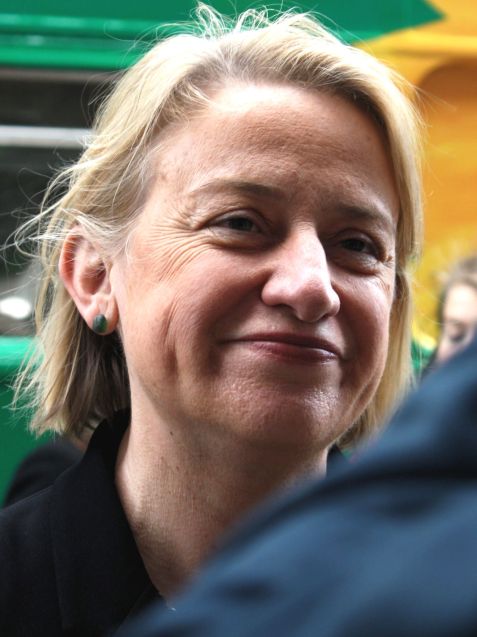
Natalie Bennett Green P:arty peer

Green Party peer Baroness Natalie Bennett also pressed the minister whether the change in the law would cover threats over the phone or on line. The minister thought it would.

One extraordinary omission in this debate was any reference to the fact that Therese Coffey, the work and pensions secretary, is about to submit an application from the United Kingdom to ratify the International Labour Organisation’s new convention outlawing violence and harassment at work.

This change in the law speaks directly to both the spirit and letter of the new convention and will certainly be used as an example that the UK is complying with it. Yet it seemed to have passed ministers and peers by. Perhaps this government is so disjointed that Therese Coffey has not talked about it with Priti Patel, the home secretary. Given all the furore on everything else perhaps she forgot to tell her.

Please donate to Westminster Confidential to allow me to continue my forensic investigations.

Please donate to Westminster Confidential

£10.00

The cheapskate botched and useless investigations into child sexual abuse by Leicestershire Police that led to no timely prosecution of Greville Janner

Child Sex Abuse Inquiry keeps private more detailed report to protect victims

Another coruscating report from the Independent Inquiry into Child Sexual Abuse has condemned Leicestershire Police and Leicestershire County Council for their handling of allegations from survivors of abuse.

Following damning reports by the inquiry into Rochdale, the London borough of Lambeth, the Church of England and the Roman Catholic Church, a picture is now emerging across many parts of England of failures among the police, social services and the churches to tackle this problem with thousands of survivors being let down by authorities that should have protected them.

The national press and the BBC have rightly highlighted the failures of the police and the council to adequately investigate claims by survivors yet again in cases of historic child sexual abuse.

However it is in the mind blowing detail of the report that exposes how incompetent the police and council were in handling the investigations. It reveals a picture of quarrelling under resourced police officers, hiding of key evidence, and a difference of approach to investigations into a VIP figure, Lord Janner, from other less prominent people.

Police incompetence

The report shows there were two separate police investigations into child sexual abuse by Leicestershire Police – one in 2000 Operation Magnolia – into abuse at two children’s homes and the second -Operation Dauntless in 2005 – into specific complaints against Greville Janner. The first also involved Lord Janner though it was mainly directed at suspected staff in the homes.

The initial budget for the first operation was just £10,000- and it kept being paused as investigating officers were put on other police work including murders.

The inquiry reports: “Detective Constable (DC) Nigel Baraclough, one of the team of officers involved in Operation Magnolia, told us that the Operation was a low-priority investigation, allocated to the least experienced SIO[senior investigating officer]and Deputy SIO, and was poorly staffed. The Operation was classed as a Category C investigation, the lowest of three gradings for a major investigation.”

During the investigation two residents alleged they had been sexually assaulted by Lord Janner which would normally trigger a reference to the assistant chief constable. This does not appear to be have been done and one officer thought the allegations were “lies”. Lord Janner was never interviewed. Nor were the two cases ever referred to the Crown Prosecution Service. The rest of the allegations against staff of physical or sexual abuse led to no prosecutions by the CPS. The statements given by the two children against Lord Janner were locked away in a drawer at Market Harborough Police Station.

They only resurfaced after fresh allegations were made against Lord Janner in 2005 when Operation Dauntless was launched. Even then no attempt was made to reinvestigate them or even find out whether the children were still alive. Officers argued whether Lord Janner should be arrested and his home searched.

“Staggering, bewildering and disappointing” a policeman’s verdict

Detective Sergeant Swift-Rollinson told the inquiry it was “incredible that an individual such as Lord Janner should be treated any differently by not interviewing him, not arresting and searching” his properties. He stated that the fact that Lord Janner “was not allowed the opportunity to dispel those allegations or provide a reasonable account is staggering, bewildering and disappointing”.

This time the CPS was informed but before any further investigations took place. The CPS advised not to interview Lord Janner or pursue this any further. The inquiry describes the view as complacent. The case was wound down despite protests from some officers.

It was not until 2012 when Leicestershire Police launched a further investigation, Project Enamel, that Lord Janner was finally charged when 33 former children came forward. By then Lord Janner was not well and died before any trial could take place.

This has left a situation where all the complainants have no resolution to what happened to them and Lord Janner’s family are left denying the charges but cannot challenge them in court. Daniel Janner, his son, has however been wrong in trying to stop the inquiry investigating the circumstances as this report will remain a permanent guide on how not to investigate child sexual abuse cases. Without it other police forces could be tempted yet again to dismiss such allegations.

One issue the inquiry has decided I find rather difficult. This comes from the decision to produce two reports – an expurgated report-now published – and a much longer and more detailed unexpurgated report. The inquiry’s explanation is that they have to protect the anonymity of those who allege were sexually abused for life. They did not answer my questions on whether the survivors will see the report, whether they also took this decision to prevent any litigation from Lord Janner’s family who have been opposed to the inquiry and would find the details of the allegations pretty damning.

A spokesman told me: “In order to protect the identity of complainants, who are entitled to lifelong anonymity under the Sexual Offences (Amendment) Act 1992, a part of the public hearing for this investigation was held in closed session, reflecting the necessity for a restricted report.  The Inquiry took steps to ensure that as much evidence was heard in public as possible, and the same approach was taken in regard to the unrestricted report. Whilst the restricted report cannot be publicly published due to anonymity issues, it will still be used by the Chair and Panel to inform findings and any recommendations they choose to make in the Final Report. ”

Professor Alexis Jay, Chair of the Inquiry

Chair to the Inquiry Professor Alexis Jay said:“Despite numerous serious allegations against the late Lord Janner, police and prosecutors appeared reluctant to fully investigate the claims against him. On multiple occasions police put too little emphasis on looking for supporting evidence and shut down investigations without pursuing all outstanding enquiries.”

“It was a similar picture for Leicestershire County Council, which had a sorry record of failures in relation to the sexual abuse of children in its care over several decades. A number of council staff had concerns about Lord Janner’s association with a particular child in residential care, and further enquiries should have been carried out.”

“This investigation has brought up themes we are now extremely familiar with, such as deference to powerful individuals, the barriers to reporting faced by children and the need for institutions to have clear policies and procedures setting out how to respond to allegations of child sexual abuse, regardless of the prominence of the alleged abuser.”

Previous Blogs https://davidhencke.com/2017/04/11/independent-child-sexual-abuse-inquiry-will-investigate-the-late-greville-janner-and-whether-there-was-a-cover-up/

https://davidhencke.com/2016/10/16/why-the-children-of-greville-janner-believe-he-must-be-innocent-of-33-child-sex-abuse-allegations/

https://davidhencke.com/2016/09/11/abuse-of-trust-a-horrible-reminder-of-a-child-sex-scandal-as-the-jay-inquiry-prepares-to-examine-greville-janner/

https://davidhencke.com/2014/12/13/police-re-open-child-sex-abuse-investigation-into-labour-peer-greville-janner/

https://davidhencke.com/2016/09/06/daniel-janner-is-wrong-to-say-all-allegations-of-child-sex-abuse-against-his-father-must-be-fabricated/

Please consider a donation to my blog to continue the detailed forensic work on my many investigations.

Please donate to Westminster Confidential

£10.00

DWP dumps on benefit watchdog and ignores plea for more help for victims of domestic violence

The Department of Work and Pensions has rejected any changes to its new minimalist regulations to exempt victims of domestic violence -mainly women – from paying the ” bedroom tax ” and helping them to find out how they could qualify to keep more of their benefits.

Ministry turns down plea from social security watchdog

As I reported ten days ago the release of minutes from the little known Social Security Advisory Committee revealed in July the body chaired by Stephen Brien who worked for Ian Duncan Smith’s think tank had written to the ministry criticising the proposed regulations for being too narrow and the ministry for not running a prominent campaign to let victims know they will now be exempt.

The exemption applies to anybody who wants to stay in their own home and has thrown out an abusive partner and enrols in a sanctuary scheme – which provides extra locks, a fireproof letterbox and in extreme cases a reinforced door to a ” panic room” should the abusive partner return and break into the house.

The problem is that not all women know about this and the exemption only applies to council homes and flats. Also abuse from stalkers or strangers is not covered by the new regulations.

Mr Brien wrote: “Given the vulnerable situations of those affected, there is a compelling case for the Department to examine what options exist in terms of proactively identifying those potentially affected. This should be supplemented by a strong communications strategy that sets out clearly the criteria for this exemption, along with guidance on how to access it.”
“There is a risk that a number of claimants entitled to take advantage of this scheme, particularly those who have already benefitted from a sanctuary scheme security adaptation prior to these regulations coming into force, will be unaware of this change.”

Ministry rejects plea to change the regulation

But the DWP has told me not only will there be no changes but they had already implemented the regulations which came into force on October 1.

A DWP spokesperson said:

“The Department offers support to victims of domestic abuse, whether in the private rented sector or not. The benefit system acts as a safety net for people who find themselves in need of financial support with living and housing costs for a variety of reasons. A range of Universal Credit measures are designed to support victims of domestic abuse, including special provisions for temporary accommodation, same day advances, easements from work-related requirements and signposting to expert third-party services.”

Now for these regulations to become law they have to be scrutinised by Parliament. So I looked up what had happened.

It turns out the ministry laid the regulations before the House of Commons and the House of Lords on September 9 – a Thursday evening just before MPs and peers went off for the weekend. They were laid under what is known as a negative statutory instrument – which means that unless a peer or a MP objects they automatically can become law three weeks later.

Not one MP or peer spoke up about this

The regulations were laid alongside numerous other regulations including changes to Covid 19 pandemic regulations. Not one MP or peer objected or even spoke about it.

They would not have known about the criticism from the watchdog body because its minutes had not been published then. Nevertheless this shows up the ineffectiveness of MPs and peers – who have more time – in scrutinising what the executive is doing.

Given the high profile issue of violence against women after the kidnap and murder of Sarah Everard by a serving Met Police officer it is pretty deplorable that a ministry can get away with this.

Benefits watchdog keeps mum

I sent the ministry’s response to the watchdog body – which regards scrutinising regulations as its main priority – and it decided not to comment, preferring to keep silent about its advice being ignored .I haven’t had a reply from the House of Lords on why the new regulations were missed.

However I have discovered the ministry has issued new advice six days ago to its housing benefit officers. It is here and victims of domestic abuse should challenge officials about getting an exemption.

For those in England I would suggest contacting Shelter. The charity has a comprehensive guide for victims of domestic abuse here. It includes a list of other charities who can help.

So if the ministry, the social security watchdog and Parliament are so ineffectual, at least this blog can highlight some information so more people know about it.

Previous Blog

https://davidhencke.com/2021/10/03/exclusive-half-baked-and-half-hearted-dwps-help-for-women-facing-domestic-abuse-and-violence/

Please consider a donation to allow me to expand and develop this blog to hold more people and government to account

Donate to Westminster Confidential

£10.00
EXCLUSIVE: Half baked and half hearted: DWP’s help for women facing domestic abuse and violence

With the horrendous murder of Sarah Everard by a serving Met police officer dominating the headlines by coincidence the government’s benefit watchdog this weekend released minutes of a meeting with officials from the Department for Work and Pensions on tackling domestic abuse.

Domestic abuse Pic credit: HelpGuide.org

The little known Social Security Advisory Committee was examining new regulations from the ministry due to come into law on payments and help for victims (usually women) of domestic abuse.

You might not think the DWP would have any role in domestic violence but actually it can help by removing benefit penalties and also open the door to money to improve security measures in a victim’s home.

The ministry must have been pretty tardy in doing anything about this as the reason for the new regulations stemmed from a government defeat at the European Court of Human Rights.

At the centre of this case was the much loathed ” bedroom tax ” where 14 per cent of your housing benefit payment can be clawed back if you have more bedrooms than you need.

Women who throw out an abusive partner or grown up member of the family could find themselves liable for this ” tax” if they want to stay in the family home. This regulation exempts them.

No relief from benefit penalties if you are pursued by a stalker

But as the committee found it is a pretty narrow concession. If you are being abused by a stranger or a stalker you can’t escape the penalty. The ministry has decided they are not ” family” even if they are being as violent or frightening as any member of the family.

And it only applies if you live a council house or flat – is you live in private rented accommodation you have to apply for a discretionary housing payment – and given it is discretionary you may not get it. And that applies whether it is family or a stalker.

That’s why I think the change is half hearted and half baked -designed to help a minimum number of people.

But the meeting also disclosed much more. To qualify for these payments and removal of penalties you have to enrol in a sanctuary scheme. This is service which can protect you in your home -by installing extra locks, fireproof letterboxes and in some cases a ” panic room” with a reinforced door where you can flee from attack from an abusive partner or intruder and call the police.

But guess what? The onus is on the claimant to find out about the sanctuary scheme – not on the Department to tell them about it. Just like the millions of 50swomen over their pensions and the millions of people opted out of SERPS who have lost out on a guaranteed minimum pension, the ministry is not bothered to ensure they know. Both of these issues led to rulings of ” maladministration” against the ministry by the Parliamentary Ombudsman.

Department for Work and Pensions hasn’t a clue

But it is even worse than that. The ministry hasn’t a clue how many people are in sanctuary schemes because there is no central record.

Only next year will local authorities have a duty to collect this information but otherwise it is being left to charities, the police and other bodies to tell claimants. The minutes say: “A number of ways to identify claimants in scope of the measure were attempted – requests were made to local authorities, the Ministry of Housing, Communities and Local Government and the Home Office – but the information is not available”

Details of the sanctuary scheme are here – it is aimed at charities.

Stephen Brien;:Chair of the Social Security Advisory Committee

Such a situation has led the chair of the committee, Stephen Brien, to write to the DWP:

“Given the vulnerable situations of those affected, there is a compelling case for the Department to examine what options exist in terms of proactively identifying those potentially affected. This should be supplemented by a strong communications strategy that sets out clearly the criteria for this exemption, along with guidance on how to access it.”
“There is a risk that a number of claimants entitled to take advantage of this scheme, particularly those who have already benefitted from a sanctuary scheme security adaptation prior to these regulations coming into force, will be unaware of this change.

” A number of claimants will be unaware “-Stephen Brien

“Given the vulnerable situations within which this group finds itself, there is potential risk of harm should these claimants remain unaware of the support available to them resulting in their leaving a home where additional security has been installed.”

He also said the definition of who could escape the penalty was too narrow and should be extended to stalkers and that there was not enough being done to support people in private rented accommodation.

“The narrow focus adopted by the Department could lead to inconsistent treatment of people at risk of violence because their circumstances fall outside of those defined by the regulations.”

The SSAC has not formally objected to the new regulation but is seeking some improvements.

This seems to be yet another example of the ministry not informing people of their rights and in this case in an area where public concern has been heightened by the issue of male violence makes it doubly important that something is done. Will the DWP do it though?

please donate to help me investigate more stories

westminster confidential

£10.00

Exclusive: “Frightening” DWP letter to pensioners: Report for telephone interview or we can stop your pension

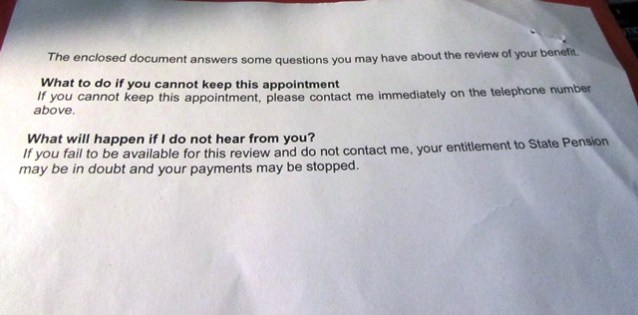
The ” frightening” DWP letter ( the telephone numbers of the pensioner and the official and his name have been blacked out

This a picture of the offending page 2 of the DWP letter

The headline in this story is a paraphrase of an extraordinary letter to be sent out to 15,000 people randomly chosen by the Department for Work and Pensions. Some 180 pensioners are being contacted this month.

The ministry has mounted an exercise to check fraud and error in payments for the state pension alongside universal credit, attendance allowance, PIPs, carer’s allowance, pension credit, housing benefit, and the employment and support allowance. It is run by the Performance Measurement Team. The ministry are asking people on other benefits to send them original documents showing their savings, pay slips, rent books and tenancy agreements.

It comes as the ministry faces a potentially damning report from a National Audit Office inquiry into the underpayment of state pensions to tens of thousands of women under the old state pension system replaced in 2016.

The NAO want to know how these mistakes occurred , what is being done to put them right and what lessons have been learnt. The NAO made it clear yesterday it had nothing to do with this exercise mounted by the DWP.

This also comes on top of a finding of “maladministration” by the Parliamentary Ombudsman over the ministry’s failure to inform 3.8 million 50swomen adequately about the rise in the pension age from 60 to 66.

The letter reproduced above is pretty insensitive to say the least – since it will be going to elderly people aged anywhere from 66 to their 80s and 90s.

Onus put on pensioners not the DWP

As you can see it puts the onus on pensioners to answer questions correctly-with the threat of prosecution or fines if they don’t.

” You have a personal responsibility to make sure all the information you give during the call is correct and complete.

If it isn’t and we pay you too much money you may have to pay the money back. You also risk being prosecuted or having to pay a financial penalty.”

But it gets worse. Under the heading What will happen if I do not hear from you it says:
If you fail to be available for this review and do not contact me, your entitlement to State Pension may be in doubt and your payments may be stopped. ( Bold type my emphasis).

This is “coercive and threatening language”- Rosie Brocklehurst

Pensioner Rosie Brocklehurst

Rosie Brocklehurst from St Leonards, is one who got the letter and contacted me.

She saId: “There could be 15000 terrified pensioners receiving this letter all of whom are being threatened with having their state pension. stopped if they do not “make themselves available.” This is abusive coercive and threatening language in my lexicon.”

She is 71.  She said: “The letter they send out is couched in language that is designed to frighten and certainly frightened me. I am not well and have had a chronic condition for 18 months. I have no other income but state pension and pension is not means tested. I am married and claim nothing else but my pension..”

Two points First you have to claim your pension but the calculations are done by the DWP. So if the figure is wrong it is not your responsibility, it is theirs and there is a history of the ministry getting things wrong.

The second is you are entitled to your pension. There is no way the DWP or anybody else can take it away from you. Whoever drafted that letter should have changed it for pensioners. I suspect that it may be illegal for the government to stop pension payments which they have already calculated. Certainly if the grounds are not agreeing to be interviewed.

I have contacted the DWP press office but they took over two days to reply. This is their reply;

“We urge people not to worry. We would only suspend payments in very specific circumstances such as where a pensioner has died and we are continuing payments.

“These reviews, introduced in 1997, take a sample of claims from across several benefits to help us identify cases where the department has paid the wrong amount.”

“The wording of our letters is kept under constant review.”

However what does it not say is that the state pension was exempt from all reviews since 1997. A decision to include it was taken in February this year. No explanation was given why the ministry suddenly decided to include it.