Glyndebourne case: When Courts Don’t Listen: A Struck-Out Claim, A Void Application, and a Law Firm in Freefall

Joe Milner ex Loch Employment Law now Brightstar Law Ltd

Three months after this blog first reported (see here) unusual conduct by a leading employment law firm, public records reveal just how far that conduct went — and how the courts may have got it very wrong.

High Court records confirm that on 8 October 2025, Loch Employment Law Ltd launched a breach of contract claim (Case No. BL-2025-001254) against a group of former employees and entities, including a newly formed legal outfit called Brightstar Law Ltd.

Among the seven named defendants is Joe Milner, formerly a director of Loch Employment Law and Claudia Yorath former Group People Director for Loch Group.

Strikingly, Milner and Brightstar have fired back. Part 20 counterclaims have been filed not just against Loch Employment Law, but against its parent company Loch Associates Group Ltd, and even against Pamela Loch, the firm’s founder, in her personal capacity.

The public filings suggest not a polite departure — but a full-blown legal and commercial rupture.

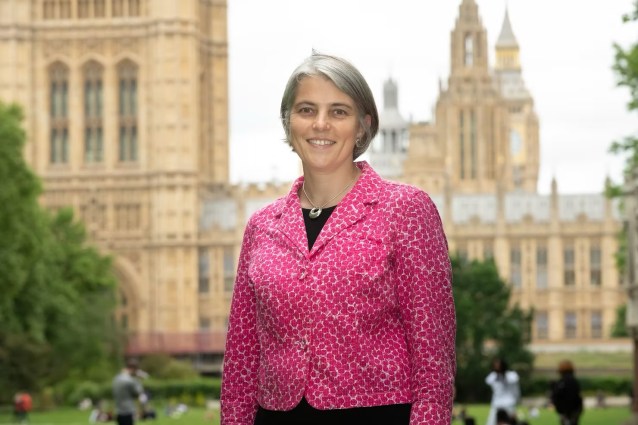
Pamela Loch -founder of law firm

The Timeline That Should Have Stopped Everything

Official records from Companies House show that Milner’s directorship at Loch Employment Law ended on 24 July 2025. The company filed the required TM01 termination form the very next day.

And yet — a full 35 days later, on 28 August 2025, a legal document known as an N260 Statement of Costs was filed with Milner’s signature, identifying him as “Partner” of Loch Law.

That same day, a strike-out application brought in Loch Law’s name was allowed by the High Court. Costs were awarded against the claimant. The judge, Master Eastman, made no reference in his ruling to the fact that the signatory had no authority to act on behalf of the firm.

Four days later, on 1 September 2025, Milner became a director of Brightstar Law Ltd — a direct competitor.

A Warning Ignored

What makes this situation particularly troubling is that the issue was flagged to the court in advance.

According to public filings, the claimant — who had no legal representation — had:

  • Submitted evidence from Companies House showing Milner’s removal
  • Filed detailed submissions alleging that Milner’s filings were unauthorised
  • Cited Yonge v Toynbee [1910], a century-old case establishing that documents filed by solicitors without authority are void
  • Provided metadata analysis suggesting that at least one signature may have been reused from unrelated proceedings.

Despite these warnings, the strike-out application was allowed to proceed. The claimant’s submissions appear to have been entirely disregarded. There is no indication that the court considered the authority of the solicitor filing the costs claim — or whether the underlying application was even valid.

 The Legal Consequence: A Void Strike-Out?

Lawyers consulted about the case (who are not connected to the parties) note that if Milner lacked authority, the strike-out application was not merely procedurally defective — it was void.

It is a foundational principle of English law that someone without standing or instructions cannot bind a firm. If the court had taken proper account of this, the claim might never have been struck out — and costs might never have been awarded.

That it was allowed to proceed suggests a serious failure to scrutinise who was behind the filings.

Vindicated — But at What Cost?

The claimant, Edward Romain, who now runs Blind Justice, a community interest company supporting litigants in person, appears to have been correct in every material respect, Milner had no authority and the strike application should not have been entertained.

Yet the cost order remains. The ruling stands.

In the view of legal observers, this raises a deeper question: How many other strike-outs, cost rulings or orders are being granted without the court verifying the authority of the legal representative?

When professional parties operate in bad faith — or when firms collapse mid-case — the risks to access to justice are real. The consequences fall heaviest on litigants without lawyers.

A Case That’s Still Unfolding

The High Court dispute — Loch Employment Law Ltd v Brightstar Ltd & Ors (BL-2025-001254) — remains live as of 2 December 2025.

Whether regulators or courts will revisit the earlier strike-out ruling is unclear. But one thing is certain: a litigant was right, and the system failed to listen.

One-Time
Monthly
Yearly

Make a one-time donation

Make a monthly donation

Make a yearly donation

Choose an amount

£5.00
£10.00
£20.00
£5.00
£15.00
£100.00
£5.00
£15.00
£100.00

Or enter a custom amount

£

Your contribution is appreciated.

Your contribution is appreciated.

Your contribution is appreciated.

DonateDonate monthlyDonate yearly

cards
Powered by paypal

Government commissioned research reveals whistleblowers have no faith in the system to protect them

Glum whistleblower at an Employment tribunal. Picture created through AI

A research report published this July by the new Labour government has painted a devastating picture of the failure of the culture of the whistleblower system in the United Kingdom.

The report, originally commissioned by the Tories under Rishi Sunak, and undertaken by researchers at Grant Thornton, one of the big accountancy firms, pulls no punches. It reveals how whistleblowers, whether in industry, the NHS and other public bodies, see a failure by the courts, employers, and even those appointed to help them, to protect them.

The sad news is the report, commissioned by the Department of Business and Trade, looks like remaining on the shelf – and the one improvement planned by the justice ministry could make matters worse. It plans to appoint 50 new employment tribunal judges to handle an increase in whistleblowing cases, among other issues, following the implementation of the new Employment Rights Act. For those who follow my blogs, they will know, they are more than often part of the problem, not the solution.

For a start whistleblowers found the terms used to describe whistleblowers as vague and confusing.

The report notes that terms like “reasonable belief,” “public interest,” and “worker” are seen as subjective, vague, inconsistent, and narrow, creating uncertainty about whether protections actually apply. One whistleblower expressed surprise when an Employment Tribunal decided their concerns didn’t meet legislative requirements despite their employer telling them they did.

The majority of whistleblower participants reported feeling victimized by their employer after blowing the whistle. The research found that many whistleblowers believed the framework doesn’t provide effective protection in practice. The “protection” offered is essentially just the right to seek redress after harm has already occurred, not proactive prevention of retaliation.

Multiple barriers for whistleblowers

Multiple barriers existed for whistleblowers when their case came before an employment tribunal. These included:

Resource imbalance: They lacked time, money, knowledge, and skills compared to their employers Mental toll: The process was described as complex, draining, and requiring resilience many didn’t have Evidential burden: Proving detriment was directly related to their disclosure was extremely challenging Delays: Tribunals experience significant delays

Time limits: Strict deadlines created additional barriers

Unfair treatment: Limited access to evidence and risks around non-disclosure agreements

Lack of trust: Many didn’t believe tribunals would be balanced or deliver meaningful

Nor did whistleblowers find people designated to help them such as regulators much good.

They found they could not protect them from detriments or victimisation. Some were conflicted particularly where there had been regulatory failure.

Several whistleblowers stated it was “not easy” to blow the whistle internally: They found:

  • Little faith in the process based on previous experience
  • Fear of retaliation after hearing stories from others
  • Restrictions from non-disclosure agreements
  • Conflicts of interest when those receiving reports were implicated
  • Lack of independence in investigations
  • Concerns not being properly investigated or addressed
  • No feedback or perceived remedies

The report describes the huge tolls on whistleblowers. At employment tribunals,phrases from whistleblowers included: public execution,exhausting, beyond difficult, miserable. complex, ardous, horrible and abusive, soul destroying,toxic and unsafe.

Litigants in person fared worse with descriptions that they were not treated respectfully by judges, lawyers and other parties and that they were not impartial.

Many stated they would not blow the whistle again due to negative experiences

Cases that involved international jurisdictions were even more complicated with slow co-operation from countries and regulators abroad.

The report makes suggestions for change. These are:

  • create a central body for whistleblowing
  • ongoing engagement and research to assess and monitor all aspects of the GB
    framework
  • efforts to improve effectiveness should be multifaceted and monitored
  • improved mental health support for individuals
  • legal advice and a degree of financial security while the claim progresses
  • consideration of disincentives and incentives, for example implementation of a United
    States style reward system

I contacted the ministry about the report:

A Government spokesperson said:

The Employment Rights Bill will strengthen protections for whistleblowers reporting sexual harassment at work and extend time limits for bringing tribunal claims from three to six months.

“We are also fixing the employment tribunal system by ensuring more cases are resolved before reaching them and recruiting more Employment Judges.”

They said that didn’t regard the report’s conclusions as firm recommendations and many of the suggestions were outside the remit of the ministry.

The full report can be read here.

One-Time
Monthly
Yearly

Make a one-time donation

Make a monthly donation

Make a yearly donation

Choose an amount

£5.00
£10.00
£20.00
£5.00
£15.00
£100.00
£5.00
£15.00
£100.00

Or enter a custom amount

£

Your contribution is appreciated.

Your contribution is appreciated.

Your contribution is appreciated.

DonateDonate monthlyDonate yearly
You can donate by PayPal using the link below

https://www.paypal.com/ncp/payment/865JAS3QJ3C

A horrendous tale: How a strapping lad was injured for life at work and then fell victim to corporate power and unfair justice

Happier times. Matthew Reynolds (right) enjoying a drink with his late dad, Howard, before his horrendous accident

Matthew Reynolds was a strong strapping lad who earned good money – £80,000 a year – as a welder at the Tata Steel works in Port Talbot, South Wales. He had already bought his own flat and his future was bright.

Then one day as he was welding steel a large heavy refractory brick in the roof of the works came loose and fell 150 feet hitting him on the side of his back. His injuries confined him at the time to a wheelchair, cost him his well paid job, and damaged his spine so he can’t easily move his neck and caused other painful injuries. He had to sell his flat in Port Talbot at a loss ( it was up a flight of stairs) and move back home with his mother in rural Lincolnshire. Today he can barely hobble around, needs help to dress himself and has very little likelihood of getting another job.

This story is not about his injuries -horrendous as they are – but what happened when he tried to claim compensation from Tata Steel so he could live a reasonable life as a disabled person who would always need expensive help and care.

Any reasonable person would expect a multinational company run by a billionaire to pay substantial compensation, especially as the incident had to be reported to the Health and Safety Executive and the company admitted liability.

But in today’s world corporate responsibility is not that straightforward or even ethical. Tata Steel appear to employ health insurers to assess their responsibility and the offer made to Matthew was less than his annual salary – over £50,000 – for a lifelong injury. The figure based on 6 per cent of his claim was recommended by Tata’s health insurers – either coincidently or in line with initial payments offered to sub postmasters.

Just £9500 initial compensation for being left in a wheelchair

As a result he has had to use the county court system for the last SEVEN years to put in a claim and it remains unpaid at the moment. The only money he has received is an initial interim payment of £9500.

Tata, Dousan Babcock, who were managing the site, and Primetals Technologies Ltd- combined to oppose his claim seem to be relying solely on the initial assessment made at accident and emergency department in October 2018 which found no bones were broken but there was serious damage to soft tissue. However three independent specialist doctors have linked other serious damage to himself to the accident. Three and half years later, Mr Caspar Aytott, of Cheltenham Spine Centre found the severe pain had spread from his lower back into his flank, up to his chest into the shoulder and neck with difficulty raising his left arm. This is despite having physiotherapy and two spine injections which had no effect.

Then a rheumatologist found 20 months later that he still had chronic pain and was suffering from fibromyalgia and post traumatic stress disorder due to the accident. A third independent doctor, Karen Simpson, who examined him found he had damaged nerves and wanted him to have rehabilitation which he never got.

Matthew Reynolds today -now aged 45

What was clear was that he was not returning to full health and getting worse not better. In the meantime his case was dragging on through the slow county court system, which has been heavily exposed by the Commons Justice Committee in a recent report. See my story on this blog here.

During the proceedings that followed his solicitor, supposed to be a family friend who offered to take his case on a ” no win, no fee” basis gave him spectacularly bad advice. This included him cancelling his GMB union subscription, not getting a crucial Health and Safety Executive report on the accident and losing all his original wage slips so a judge could not give him a substantial interim payment at another hearing.

So bad was his role that a judge took a rare decision to remove him from representing Matthew on the grounds of bad communication and mismanagement. There is even an allegation that while representing Matthew he was trying to arrange a dinner with Tata’s leading solicitor in London, Leanne Conisbee.

Matthew and his mother Denniel were meanwhile getting poorer by the minute, racking up the maximum on Matthew’s credit cards, their house faced repossession and a huge bill from their solicitor for handling their case. His mother ended up taking a equity loan on the house. They now rely on food banks to eat and have to pay court fees for every hearing in his case. They have an old Fiat 500 to get around with an adapted front seat as Matthew is in pain if he bends his back.

In desperation Matthew from a wheelchair supervised some men at work to get money for the fees. He did not declare this to court and the lawyers for Tata were tipped off and pounced accusing him of being ” fundamentally dishonest” for not doing so.

After the solicitor had been taken off the case the bundles were returned to Matthew. Included was an email sent to Rodney Fern, a barrister who had tried to prevent the solicitor being removed from the case, which revealed the dirty tricks being prepared by Tata against Matthew.

It read: ” the insurers, as you rightly say, are going to try and starve Matthew Reynolds out. They are not going to withdraw the application on fundamentally dishonesty as this is to be used as a bargaining tool. although it is without any substance.”

Tata’s lawyers said he was ” fundamentally dishonest” in court

I saw it used at Doncaster County Court this year when Matthew tried to get an interim payment. It had to be refused by a sympathetic judge because the law says anybody judged to be ” fundamentally dishonest” cannot be paid. The barrister for Tata was determined he would not get any money.

The situation has now escalated. Last month Matthew asked for a longer period as a litigant in person to prepare for this week’s hearing. He wanted a longer hearing of 10 days, wanted to call 16 extra witnesses including people who witnessed the accident and professional medical people.

All this was refused by both the circuit judge William Hanbury, a former property and local government barrister and senior circuit judge, Mark Gargan. Seven years ago Mark Gargan was found to have given a wrong judgment by the court against a terminally ill claimant in a personal injury claim against a firm when he threw out his case claiming he and his lawyers had ” flagrant disregard” for the rules. The case was reported in the Law Society Gazette here.

Official Portrait: Lee Pitcher MP Pic Credit: Laurie Noble Photography

The judge took the decision despite receiving a letter from Matthew’s new Labour MP, Lee Pitcher, who represents Doncaster East and the Isle of Axholme.

In it he points out that Matthew, through no fault of his own, has lost his lawyers and is now fighting three large corporations having to navigate ” complex legal proceedings at significant financial and emotional cost”.

He adds: ” it is difficult to see how this can be viewed as a fair and balanced process. That an individual in such a vulnerable position should be left to fight such a case unaided, while the companies involved have already accepted liability, raises serious questions about access to justice.”

“Mr Reynolds has shown remarkable courage in pursuing this case and deserves to be treated with dignity and fairness without.”

His GP also sent a letter to the court saying Matthew was in no fit state to conduct the case and the hearing should be delayed but this was rejected by the judge. Using rather twisted logic the judge rejected this saying even with a delay Matthew would still be in the same state of health in the future – something the big corporations are trying to deny in their case.

He was sent 1500 pages of evidence from the three corporations and given 10 days to digest it and respond before the hearing. He told the judge: ” OK I’ll give these barristers/ solicitors a welding manual. I’ll set them up, give them the equipment ..you’ve got 5-10 days to go for a perfect weld.”

The hearing never went ahead this week. Both Matthew, who had a week of sleepless nights, and his pensioner mother were too ill to attend and drive to the court in Sheffield. I contacted the clerk to the case to find out what would happen next but was told there was no hearing for the rest of the week.

The only new development is that lead solicitor, Leanne Conisbe from Clyde and Co in the City of London has submitted a 74 page victim impact statement – claiming that she and not Matthew had suffered as a result of organising the case. The judge has ruled out his mother putting in a four page victim impact statement.

One-Time
Monthly
Yearly

Make a one-time donation

Make a monthly donation

Make a yearly donation

Choose an amount

£5.00
£10.00
£20.00
£5.00
£15.00
£100.00
£5.00
£15.00
£100.00

Or enter a custom amount

£

Your contribution is appreciated.

Your contribution is appreciated.

Your contribution is appreciated.

DonateDonate monthlyDonate yearly

Please donate to Westminster Confidential

£10.00

Yet another potentially dangerous leak at Sellafield nuclear waste plant

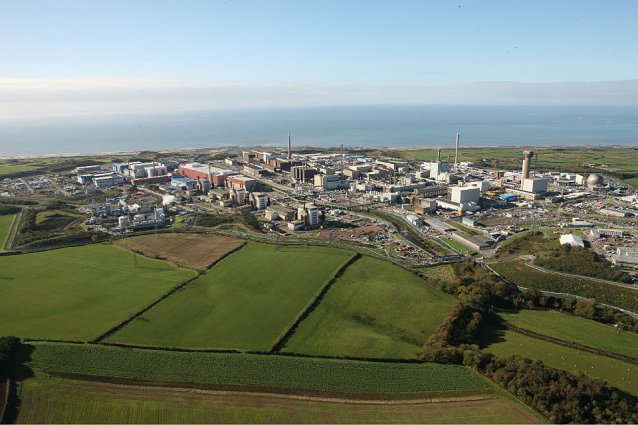
The giant Sellafield site

The Sunday Mirror reports today of yet another potentially serious leak affecting worker safety at Sellafield which was not publicly released two years ago.

A whistleblower told the paper that an elevated level of nitrogen which can cause asphyxiation was released in the most dangerous building on the site – the Magnox nuclear storage facility which is also leaking contaminated water into the ground.

As I reported in Byline Times last month the 100 year clean up is already 13 years behind schedule and £20 billion over budget and its own nuclear safety experts say is becoming increasingly unsafe. The article is here.

What is disturbing is that the whistleblower told the newspaper. “It was most serious because it could have killed somebody. The whole point of having all these safety procedures is to stop people breathing in inert gas, so we can evacuate before there’s a chance of breathing it in.”

The source said the leak in May 2023 was raised as an incident report and “was of a level that needed to be escalated”. But it was not escalated, according to the whistleblower, who added that “no lessons were learned”.

The source said: “There is no confidence or trust in the senior management now. We are dealing with nuclear waste and people are afraid to speak up. The problem is that people are being victimised if they report safety issues.

“Or they are escalated to managers who then try to cover them up or sweep them under the carpet. And that is a really dangerous culture in a place like Sellafield.”

This new disclosure just comes after a report from the Commons Public Accounts Committee that was highly critical of the management at Sellafield and the oversight of the dangerous site by the Nuclear Decommissioning Authority. It was also highlighted safety issues as the buildings reach the end end of their life span and MPs were sceptical of claims by the senior management that relations with staff are improving and a toxic culture of bullying and harassment had been stopped.

Officially Sellafield told the paper:”This was reported and investigated swiftly and thoroughly. Our regulator was informed in line with established protocols,” they said. “Our Safecall system remains independent providing a safe and confidential reporting system for the whole of the NDA group.

“Whistleblowers are respected, protected, and valued and we actively encourage employees to report matters of concern. Without exception, issues raised are taken seriously, investigated appropriately, and treated confidentially. We strongly advise anyone with a concern about a safety event or investigation to report it so we can act on it.”

They added that during routine testing of a nitrogen delivery system in the Magnox Swarf Storage Silo in 2023, a control valve was opened causing a ‘brief increase in flow and pressure of nitrogen’.

‌ The paper reports that Ex-Sellafield HR consultant Alison McDermott raised safety concerns in an employment tribunal in 2021. The management ended and her contract and spent hundreds of thousands of pounds of taxpayers’ money to undermine her concerns at employment tribunals.

Alison McDermott

Alison, who lives near Ilkley, West Yorks, said: “In my experience, leaders cover up problems and lash out at people who speak out. That’s a terrifying state of affairs at a nuclear site. In my 30 years in HR it’s the most secretive, punitive toxic culture I’ve ever experienced.”

To my mind it suggests that Sellafield still has a very long way to go to convince Parliament and the public that they are handling safety issues properly at this plant.

One-Time
Monthly
Yearly

Make a one-time donation

Make a monthly donation

Make a yearly donation

Choose an amount

£5.00
£10.00
£20.00
£5.00
£15.00
£100.00
£5.00
£15.00
£100.00

Or enter a custom amount

£

Your contribution is appreciated.

Your contribution is appreciated.

Your contribution is appreciated.

DonateDonate monthlyDonate yearly
Please donate to Westminster Confidential

£10.00

Putin’s seizure of 147 leased civil aircraft leads to a multi billion legal victory for firms against insurance companies

President Putin Pic credit: President’s office Russia

Case came as a result of action taken after Russia launched Ukrainian war

An extraordinary ground breaking judgment last week which has received little publicity outside the insurance and legal world has cost the insurance industry, including Lloyds of London, billions of pounds in claims as a direct result of the current Ukraine war.

At the time Russia invaded Ukraine in 2022 Russian civil aviation firms, mainly Aeroflot and S7, a private Siberian airline, were leasing 147 aircraft and 16 spare engines from companies across the world. As soon as this happened the companies wanted their planes back as they came under sanctions against Russia issued by the EU, US, and the UK.

But the move was thwarted by PresIdent Putin who passed a law banning the export of all the planes and the spare engines from leaving Russia and they are still there today.

The decision led to an extraordinary legal case coming before the Commercial Court in London when six of the companies came together to claim against their insurers to get their money back in a joint action that could cost the insurers over £3.4 billion.

Mr Justice Butcher; Pic Credit: Judiciary website

The case which has been quietly rumbling on for five months was a lawyers’ bonanza with more than 50 barristers employed on both sides-. It was heard by Mr Justice Butcher who has issued a 230 page ground breaking judgment covering 100 years of case law.

The six leasing companies were Aercap Ireland: Dubai Aerospace Enterprise, Falcon 2019-1;KDAC Aircraft Trading; Merx Aviation Servicing and Gasl Ireland Leasing A-I. Aercap Ireland, based in Dublin, is the world’s largest aircraft leasing company.

The insurance companies involved included Lloyds,AIG Europe; Chubb European Group and the underwriting group Kiln Syndicate 510. KDAC settled with Chubb before the end of the case. To add to complications under Russian law they had also to have insurance from Russian companies.

S7 – the Siberian Airline which leased many of the jets

The dispute centred round whether the aircraft were covered by ” all risks” policies or ” war risks” polices. The judge ruled that they were covered by “war risks” policies because of the action of Putin in banning them leaving Russia. This will mean the companies will not get all the money they claimed but it will still run to billions of pounds The judge also rejected an argument from the insurers that sanctions against Russia prevented them paying out any money.

The ruling is also significant as it would spark off other claims against insurers and there were 400 leased aircraft in Russia at the time. The insurers have until the end of this week to appeal.

One-Time
Monthly
Yearly

Make a one-time donation

Make a monthly donation

Make a yearly donation

Choose an amount

£5.00
£10.00
£20.00
£5.00
£15.00
£100.00
£5.00
£15.00
£100.00

Or enter a custom amount

£

Your contribution is appreciated.

Your contribution is appreciated.

Your contribution is appreciated.

DonateDonate monthlyDonate yearly

Please donate to Westminster Confidential

£10.00

Generation Dumbed Down: Smart phones are destroying teenagers ability to read, write and study maths

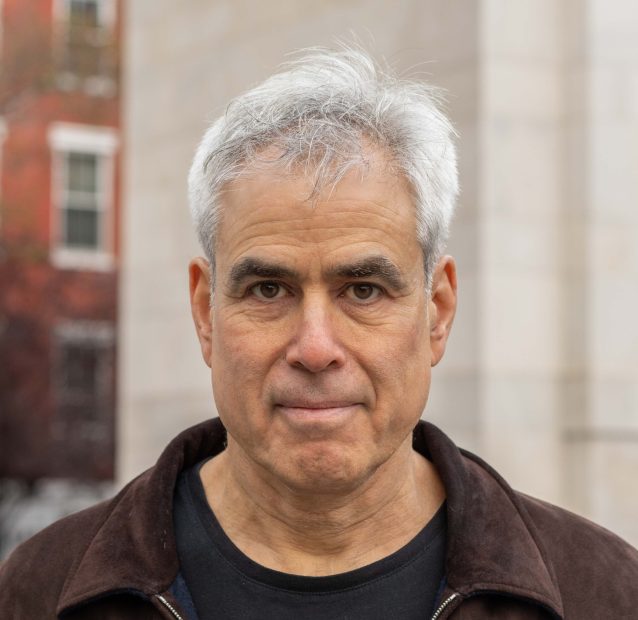
Jonathan Haidt

Yesterday I attended an extraordinary lecture by Jonathan Haidt ( pronounced height) a US social psychologist revealing extremely worrying trends following the invention of smart phones on kids education’s prospects.

It showed both in the UK and the US that educational attainment – far from rising – is dropping and that issues like mental illness and self harm are rising.

His research can precisely connect the emergence of the ubiquitous smart phone and a dramatic change in attainment in schools, increased loneliness among teenagers, who then become vulnerable prey to malevolent influencers or in the most extreme cases tricked by criminals and paedophiles.

We are all aware of teenagers being glued to their phones – even when walking down the streets – and might have thought this is a passing phrase with nothing to worry about. This research suggests otherwise.

Situation in UK worse since Covid lockdown

Part of the increase in isolation comes from this present generation’s experience of the Covid pandemic and lockdown. One might then expect to see some bounce back when life returned to normal. But his research shows the opposite, the situation in the UK and US is worse post Covid.

The main players in this are undoubtedly short videos on Tik Tok, Snapchat and Instagram – which provide addictive instant distraction and gratification for teenagers, and make more detailed lessons studying books or complicated maths formula seem boring. Add this to the distractions of X Box computer games and kids can – and sometime do – have 24 hours glued to screens only to be tired and irritable the next day.

Jonathan Haidt pointed out in his lecture that puberty is also the time when the brain develops new connections allowing teenagers to understand more complex concepts and ideas as well as emotional development. But fed on a permanent diet of addictive videos and porn is not helping the brain to develop and probably damaging it.

Given the power of Big Tech to influence politicians – brilliantly illustrated recently when a victorious Donald Trump was surrounded by billionaire tech barons- can we do anything about it?

The answer according to him is yes. Schools can play a big role in curbing the rot by banning the use of phones while teenagers are learning. My daughter, who teaches at a private school in Luton dealing exclusively with kids who have been expelled from other mainstream schools, all phones have to be handed in at the beginning of the day and returned when they leave. Even the staff are restricted from using phones so as not to set a bad example to the kids there.

Schools – and there are by no means enough of them – that have done this according to his research have seen a dramatic increase in educational attainment in English, maths and science and a dramatic decrease in disrupted lessons making it easier for teachers to do their job.

Sir Keir Starmer should be concerned

The government ought to be concerned about this. Sir Keir Starmer, has set great store on increasing the skills of a new generation so he can get the growth needed to boost jobs and the economy. But it is being undermined by this trend where the latest generation are being continually distracted by what they see on their smart phone. Employers are not keen to take on people whose spend time exclusively on their phones and as a result have worse literacy and mathematical skills.

For those who want to follow this up you should go to Jonathan Haidt’s website https://www.anxiousgeneration.com/ where his research team has all the details you need to know about this trend and its implications seem to have passed us all by.

One-Time
Monthly
Yearly

Make a one-time donation

Make a monthly donation

Make a yearly donation

Choose an amount

£5.00
£10.00
£20.00
£5.00
£15.00
£100.00
£5.00
£15.00
£100.00

Or enter a custom amount

£

Your contribution is appreciated.

Your contribution is appreciated.

Your contribution is appreciated.

DonateDonate monthlyDonate yearly

Please donate to Westminster Confidential

£10.00

Mass use of phones

Teens in circle holding smart mobile phones – Multicultural young people using cellphones outside – Teenagers addicted to new technology concept

MP calls on Sellafield chief executive to apologise to whistleblower after spending £750,000 to silence her

Euan Hutton, chief executive of Sellafield, found himself being called to apologise in public to whistleblower Alison McDermott by her local MP, Anna Dixon at a highly charged hearing of the Commons Public Accounts Committee last week.

Anna Dixon MP

The chief executive was clearly embarrassed to face questions about spending such a lot of public money to silence the whistleblower after she produced a report about the toxic culture of bullying and harassment at the UK’s biggest nuclear waste plant.

Alison McDermott, a well respected management and diversity consultant, had faced a series of tribunals and costs hearings.which cost Sellafield over £750,000 by employing top flight lawyers.The main hearing was before judge Philip Lancaster, a judge now facing complaints from 10 women, including Alison, for his patronising and misogynist approach to female litigants who appear before him.

Anna Dixon,Labour MP for Shipley, raised the issue at the beginning of the hearing which was to examine Sellafield’s record so far in running down the waste facility over the next 100 years.

She pointed out that Alison had been head hunted through Capita to work for Sellafield and was then employed directly because of her excellent work. After she produced a report revealing a toxic culture of bullying and harassment at Sellafield this all changed and she was removed from Sellafield.

She told him :” I understand that at that time you did not invoke your whistleblowing policy or take a statement, as required by your own policy. Instead, you spent some £750,000 on legal fees. Perhaps you would confirm that. You refused mediation for three years, and pursued Alison for costs twice and lost on both occasions. As you will know, the remit of this Committee is concerned with the proper ethical use of public funds. As the new CEO, Mr Hutton, I would ask you whether you think this was a good use of public money.”

….” I have seen the treatment of other whistleblowers, which is similar to the treatment of my constituent, that has serious detriment to health, mental health and indeed professional reputation. Alison, as you probably recognise, is sitting here in the public gallery. I recognise that you are not willing to say very much. I am disappointed in that, because most of this is historic and in the public domain. I wonder whether you might apologise to her for the way that she has been treated by Sellafield.”

Mr Hutton replied implying that the situation in Sellafield then was ancient history.

Euan Hutton, chief executive Sellafield Pic credit: gov.uk

“Over the last seven or eight years now, we have made really big strides forward in addressing some of the issues that there were at that time.
You might say that I would say that but, in the most recent staff survey, which concluded, I think, a fortnight ago—I only say “I think” because I cannot remember whether it was a fortnight ago—we have seen significant improvement.”

Anna Dixon concluded: “I am going to come back later and challenge whether these problems have really completely gone away. I do not think that I heard an apology, but I hope you will at least agree to meet with me and my constituent, Alison. “

Since the hearing Alison McDermott has written an open letter to Mr Hutton, David Peattie, group chief executive of the Nuclear Decommissioning Authority and Paul Vallance, a non executive director of the NDA saying:

“The PAC’s examination has now raised serious questions about your leadership and your organisations’ management, culture, and safety practices.

I’ve made no secret of the toll this has taken on me. But each time I was faced with the choice between comfortable silence and speaking the truth, I chose the latter— without hesitation. That decision is one I will always carry with quiet pride. I can look myself in the mirror, sleep peacefully, and carry a clear conscience—something that is priceless.

I can’t help but wonder: how do you reconcile your actions?

What kind of man do you see when you look in the mirror? “

The PAC has now to produce a report following the hearing. I somehow think it will not be a glowing endorsement of practices at the UK’s biggest waste facility.

Alison McDermott
One-Time
Monthly
Yearly

Make a one-time donation

Make a monthly donation

Make a yearly donation

Choose an amount

£5.00
£10.00
£20.00
£5.00
£15.00
£100.00
£5.00
£15.00
£100.00

Or enter a custom amount

£

Your contribution is appreciated.

Your contribution is appreciated.

Your contribution is appreciated.

DonateDonate monthlyDonate yearly

Please donate to Westminster Confidential

£10.00

Ministry slammed by auditors for not getting correct Parliamentary approval for paying out Post Office victims

Parliament’s watchdog, the National Audit Office, has qualified last year’s annual accounts of the Department for Business and Trade, for failing to providing accurate estimates of the money needed to compensate the Post Office victims of the Horizon scandal and overspending its budget by over £200m.

The disclosure is the latest blunder in the handling of the scandal where hundreds of postmasters were wrongly accused of fiddling their books and some spent time in prison for crimes they did not commit Instead there was a cover up by the Post Office when the computer system was at fault.

Gareth Davies, the head of the National Audit Office, who audited the ministry’s accounts, says the omission to provide Parliament with the correct figures and the £208m proposed overspend on the scheme amounted to a breach of the ministry’s spending limits and has been classified as irregular spending.

Kemi Badenoch. Pic credit: Gov uk

The decision to pay out compensation to the postmasters and quash their convictions happened when Kemi Badenoch, now the Tory Party leader, was business secretary. She was the sole shareholder of the Post Office under the present constitutional arrangement for running the business.

Last year the government set up compensation schemes for the postmasters – one to compensate them for the money they lost through the computer misrepresenting their accounts and another to compensate those who had been wrongly convicted.

What the accounts revealed is that the ministry did not hold enough data to properly estimate how much compensation it would have to pay out and put forward to MPs estimates to approve its spending that were not accurate – hence the overspend.

Under the first scheme the Horizon Shortfall Scheme (HSS), which is intended to support
those who accounts were falsified by the computer system , Individuals who qualify can choose to either accept a fixed sum of £75,000 or opt for full assessment by an independent advisory panel.

The Post Office is inviting current and former postmasters to apply if they wish to but haven’t yet done so, as there will be a closing date for the scheme. It has advised the ministry that it anticipates a response rate of approximately 25-30% and that the majority of new claimants will accept the fixed sum offer.
However, the auditors say due to the limited amount of available data on which to base this estimate,
the eventual outcome could vary significantly.

Under the Horizon Conviction Redress Scheme (HCRS) intended to compensate individuals who had their convictions overturned. Because this scheme is in its early stages, there is limited data upon which to base an estimate of future settlement values.

But the ministry just assumed that the proportion of applicants who choose to accept the fixed sum offer
(rather than submit a full claim for detailed assessment) will be similar to the take-up rate for those who had their convictions overturned by the court and are being compensated through the Overturned Conviction (OC) scheme;
It also assumed that the average settlement value for those choosing not to accept the HCRS fixed sum award will be significantly lower than its equivalent estimate for OC claimants.

Neither of these propositions could prove to be accurate because the period for claiming compensation is not over. And by estimating an extra £208 million to be spent on the second scheme led to the ministry breaching its obligation to tell Parliament how much it intends to spend.

The Department for Business and Trade said:”This issue took place as a direct result of the decision to rightfully offer further redress to Horizon scandal victims, at a time when the high volume and complexity of claims meant there was significant uncertainty on the cost estimates.

“We have acknowledged this to the NAO and remained determined to ensure that all affected postmasters receive the financial address they deserve to right these historic wrongs’

A further £1.8 billion has been provided since these accounts were reported.


One-Time
Monthly
Yearly

Make a one-time donation

Make a monthly donation

Make a yearly donation

Choose an amount

£5.00
£10.00
£20.00
£5.00
£15.00
£100.00
£5.00
£15.00
£100.00

Or enter a custom amount

£

Your contribution is appreciated.

Your contribution is appreciated.

Your contribution is appreciated.

DonateDonate monthlyDonate yearly

Please donate to Westminster Confidential

£10.00

Sexual harassment at work to be treated as a whistleblower complaint under new employment law

But no answers from the ministry on plans to cost and scope the establishment of an Office of the Whistleblower

The Department for Business and Trade is changing the law to strengthen the right of people to report sexual harassment at work by making it a protective disclosure under whistleblowing legislation.

Bizarrely this measure was missed by mainstream media when the bill was published last month with most of the coverage being devoted to the measure improving employees rights in the job market and repealing some of the Tory legislation restricting trade union actions.

But there is a section of the new bill devoted to strengthening the rights of people who suffer sexual harassment at work. It proposes a three pronged attack to change the current law.

First it is strengthening the duty of employers to do something about the issue by amending the Equality Act to say they must take ” all reasonable steps ” to stop it happening.

This change has already been noted by lawyers who take up sexual harassment cases since it significantly reduces the wriggle room for employers to get out of any responsibility.

The new bill spells out what specific actions employers should take and will be further covered in regulations to be issued by ministers. These include carrying out assessments to deal with sexual harassment, publishing company policy, and drawing up reporting and complaints procedures.

The definition of sexual harassment is also extended to say “that sexual harassment has occurred, is occurring or is likely to occur“. ( my bold emphasis)

The second big change is that employers would have to act if a third party is sexually harassing their employee opening up the ground to take action if there are subject to unwanted sexually offensive social media attacks or customers are sexually harassing their employees.

The final big change is to incorporate reporting of sexual harassment as a protected statement under whistleblowing legislation by amending the 1996 Employment Relations Act so it is covered by PIDA.

A Department for Business and Trade spokesperson said:

“We’re committed to making workplace rights fit for the modern workplace and that’s why the Employment Rights Bill will strengthen whistleblowing protections, including women who report sexual harassment at work.

“We encourage workers to speak up about wrongdoings to their employer or a regulator and we will ensure they’re protected if they’ve been dismissed or treated unfairly for doing so.” 

There is a really good blog on sexual harassment changes in the law, including some prior to the new bill, by Mandy Bhattal, a senior solicitor at Leigh Day. The link is here.

While this is good news, especially for women, there are certain caveats to be made. The main one is that if a person ends up being dismissed or feels she has to leave her job, the case is likely to go to the employment tribunal system. It is fact that some male employment judges appear to be patronising and offensive towards women. I am thinking of the way judge Philip Lancaster treated whistleblower Alison . McDermott, during her case involving Sellafield. Eight women have complained about they way he treated them in different cases.

Nasty playbooks by barristers at employment tribunals

Secondly there is a rather nasty playbook used by barristers and solicitors engaged by employers to deal with whistleblowers at employment tribunals. They discredit them by bringing up other matters unrelated to the whistleblowing issue. This includes suggesting the person is a bully or cannot work with their colleagues. I fear a new playbook being invented to present the woman as a flirt or leading men on to undermine her case.

Indeed looking at the bill altogether employment tribunals are going to be central to the implementation of the new laws and safeguards for workers – increasing the need for their procedures to be reformed as I have said before.

Office of Whistleblower silence

Last week Baroness Jones of Whitchurch, the new junior minister at the Department for Business and Trade, took peers by surprise, by suddenly announcing the ministry was evaluating whether to set up a new Office of the Whistleblower, a demand long pressed by Whistleblowers UK, headed by Georgina Halford Hall. Their site is https://www.wbuk.org . WBUK is also doing a national survey of whistleblowers experience and perceptions which will lead to a detailed report to develop proposed improvements to the UK Whistleblowing Framework. The link for the survey is here .

She told peers in answer to a question from Liberal Democrat Baroness Kramer:” With regard to an office for the whistleblower, there are a number of ideas around this. We are looking at the role and remit that such a body could have. There will be a need to look at the cost, role and function of a potential new body, but we are looking at all the ways we can ensure that whistleblowers are protected at the workplace, as they should be. “

Baroness Kramer had previously promoted a bill to create such an office.

Baroness Jones also gave an answer to hereditary peer, Lord Cromwell, on non-disclosure agreements.

She told him “We have already noted the concerns about the misuse of non-disclosure agreements. We share his concern, because they are being used to silence whistleblowers and cover up sexual harassment and discrimination. I stress that there are existing legal limits to how NDAs can be used in an employment context, which means they are void and unenforceable in certain circumstances. The use of NDAs is not something we would support and, if there were ways of limiting it, we would do so.”

I contacted the ministry’s press office about Baroness’s Jones remarks. I asked them for the timetable for reviewing the need for an Office of the Whistleblower, whether there was a plan for a consultation paper on the idea and when such a review would report.

Answer came there none, it was completely ignored and instead I was told about the new measures affecting sexual harassment.

I am rather surprised. Either Baroness Jones had gone off piste or the civil servants at the ministry aren’t keen on this. I don’t believe she would have risked making such a statement which is reported in Hansard and is now permanently on the record. So we have a mystery. I am sure campaigners will follow this up.

One-Time
Monthly
Yearly

Make a one-time donation

Make a monthly donation

Make a yearly donation

Choose an amount

£5.00
£10.00
£20.00
£5.00
£15.00
£100.00
£5.00
£15.00
£100.00

Or enter a custom amount

£

Your contribution is appreciated.

Your contribution is appreciated.

Your contribution is appreciated.

DonateDonate monthlyDonate yearly
Please donate to Westminster Confidential

£10.00

Judge quashes £10,000 costs order against rail safety whistleblower

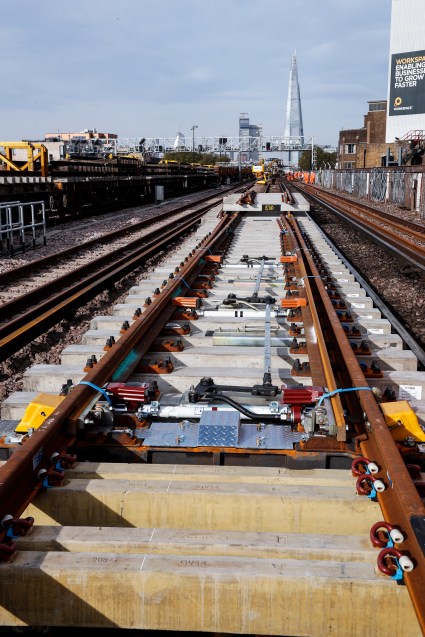
One of Vossloh Cogifer UK Ltd biggest projects: Supplying 149 sets of points outside London Bridge Station Pic credit: Network Rail.

Nigel Midgley, a former employee with Vossloh Cognifer, a private contractor to Network Rail, who was dismissed after he reported rail safety issues to the Health and Safety Executive, today got a £10,000 costs order quashed by a judge at an Employment Appeal Tribunal.

VCUKL is a wholly owned subsidiary company of Vossloh Cogifer a French managed but German owned global company. VCUKL’s Managing Director is Mrs Wendy Anne Preston and its main customer is Network Rail.

The judge ruled that the UK based company had been wrong to with hold from an employment tribunal, part of a email sent by Edward Flanaghan, head of Gosschalks Solicitors in Hull, to Mr Midgley offering to settle the case without going to a tribunal.

Instead it left the first and last two paragraphs out of the letter, sending a redacted version to the tribunal omitting the offer but painting a nasty picture of Mr Midgeley as a failed probationary employee who was sacked but used whistleblowing complaints to explain his dismissal. It told the tribunal that these had no merit and Mr Midgley had no chance of winning his case.

Judge Martyn Barklem however ruled that the omission of the offer by the employer to settle the case changed the whole picture presented to the tribunal and would have not led to the award of costs. He also saw it as an attempt to stop a litigant in person, who was not a qualified lawyer, to abandon the case. He pointed out that no judge had decided that Mr Midgley did not have a case. The company also tried to argue that Mr Midgeley should not have disclosed the unredacted letter to the employment appeal tribunal because it was covered under legal privilege. This was rejected by the judge.

David Stephenson, Pic Credit: Doughty Chambers

Mr Midgley’s case was taken up by an advocate, David Stephenson from Doughty Chambers, whom the judge praised for his succinct presentation of the issues. The company did not employ a lawyer in person to present their case but gave a written submission. The judge revealed their non appearance was for commercial reasons as it would have cost them more than £10,000 to be represented. This highlights what is wrong with public authorities like the NHS and Sellafield which have access to unlimited sums of taxpayer’s money to pursue whistleblowers like cardiologist Usha Prasad and human resources consultant, Alison McDermott, through the tribunal system, while a commercial company would cut its losses.

More disturbing stuff about NDA’s

There is more disturbing stuff about the way lawyers from Gosschalks and the private rail company behaved in Mr Midgeley’s case. He was strongly supported by his wife, Keely Midgley, over his whistleblowing claims and treatment by the company. She sent a large volume of emails to directors of the company and posts were put up on Linked in. The company then threatened Mr Midgley with harassment proceedings unless it stopped.

But the most disturbing part of the proceedings was the COT3 agreement which the company wanted him to sign written up by their lawyers.

Among the provisions were: “The Claimant will not publish, cause, assist or knowingly permit to be published (including but not limited to by his wife) in any media whatsoever, any article or comment relating to his employment with the Respondent, or its termination, or the existence or terms of this agreement.  The Claimant will not contact by any means any customer, supplier, employee, consultant, advisor or other organisation with which the Respondent has a professional relationship in respect of any matter whatsoever.”

It also banned him from approaching the Information Commissioner or making any data subject request. ” The Claimant will not make any further Data Subject Access Request under the General Data Protection Regulations ((EU) 2016/679) (GDPR) or the Data Protection Act 2018 or other legislation and agrees that any existing or ongoing such request should be treated as withdrawn. The Claimant will not make any complaint to the Information Commissioners Office in respect of Subject Access Requests and further waives any civil claim for damages in respect of breaches of data protection legislation.”

The proposed agreement led a firm of lawyers, Marjon Law, to disagree on Mr Midgley’s behalf.

“We would contend that Mr Midgley is entitled to use all documents that were read to or by the court, or referred to, at a hearing which has been held in public. To that end, we do not believe that the draft undertaking for him is reasonable or appropriate. In any event, Mr Midgley should be able to disclose documents from the Claim for the purpose of:
(a) reporting a suspected criminal offence to the police or any law enforcement agency or cooperating with the police or any law enforcement agency regarding a criminal investigation or prosecution;
(b) doing or saying anything that is required by HMRC or a regulator, ombudsman or supervisory authority;
(c) whether required to or not, making a disclosure to, or co-operating with any investigation by, HMRC or a regulator, ombudsman or supervisory authority regarding any misconduct, wrongdoing or serious breach of regulatory requirements (including giving evidence at ahearing);
(d) complying with an order from a court or tribunal to disclose or give evidence;
(e) disclosing information to HMRC for the purposes of establishing and paying (or recouping)
tax and National Insurance liabilities arising from his employment or its termination; or
(f) making any other disclosure as required by law.”

The company’s lawyer’s disagree and said this was only guidance and could be ignored.

If I take this with moves to silence whistleblowers at Sellafield through non disclosure agreements this suggests that lawyers seem to think they can force litigants in person to shut up about matters that affect public safety whether in the NHS, Sellafield or on Network Rail.

One-Time
Monthly
Yearly

Make a one-time donation

Make a monthly donation

Make a yearly donation

Choose an amount

£5.00
£10.00
£20.00
£5.00
£15.00
£100.00
£5.00
£15.00
£100.00

Or enter a custom amount

£

Your contribution is appreciated.

Your contribution is appreciated.

Your contribution is appreciated.

DonateDonate monthlyDonate yearly

Please donate to Westminster Confidential

£10.00