Fined £3.5m for professional misconduct: Grant Thornton approved dishonest accounts for London and Lincolnshire’s privatised fire engines

GrantThornton

Grant Thornton: A big fine for professional misconduct Pic credit: Wikipedia

CROSS POSTED ON BYLINE.COM

In 2011 this blog was involved with the Fire Brigades Union in investigating the handing over of London’s and Lincolnshire’s  fire engines to a private company called Assetco.

The company nearly went bust  in 2011 owing £140m. Shareholders and banks hoping to make money from privatising the emergency services lost millions and small shareholders were ruined.

The  City Hall Tories under Brian Coleman, then  the elected chair of London’s fire authority now nowhere in public life, saw the  flagship policy as a future blueprint for privatisation. Instead it was a disaster compounded by an Old Etonian baronet buying London’s fire engines for £2  from Assetco only to go bust himself leading to another company taking over.

Now six years later the grim and unsavoury truth has come out. A report from proceedings taken by the Financial Reporting Council against the auditors of the Assetco, big accountancy firm, Grant Thornton, and the accountant who audited the company Robert Napper,  has led to a £3.7m fine for  both of them for professional misconduct. Neither Grant Thornton nor Mr Napper made any financial gain out of the scandal.

The facts are staggering. Over two years Grant Thornton   were found to have committed no fewer than TWELVE  cases of professional misconduct which meant the accounts presented to the public were mainly fictitious. Robert Napper was found to have  ELEVEN cases of professional misconduct.

As the report says: “This misconduct adversely  affected or potentially adversely affected a significant number of people in the United kingdom.”

It points out shares were trading at £6 during this period and fell to £1 in 2011 when the real situation was known. The report adds: ” The share price in 2009 (£6) reflected financial statements that contained an inflated balance sheet and included some significant revenue that was fictitious.”

An accompanying report reveals the scale of the dishonesty and cover ups. They range from fictitious payments amounting to millions of pounds from City Hall to buying up a firm for a relative  with shareholders money and creating a rental firm that let property out to directors. So extensive was the deception that I intend to use further blogs to describe in detail what happened.

As the report says: ” GT and Mr Napper were deliberately misled by AssetCo’s  management but the exercise of proper scepticism would have led to dishonesty being uncovered.”

Grant Thornton  was fined £3,500,000, reduced to £2,275,000 after  they co-operated with council and given a severe reprimand;

Mr Napper was fined  £200,000, reduced to £130,000 after  he co-operated  with the inquiry

Grant Thornton also had to pay £200,000 as a contribution to the Executive Counsel’s costs.

Mr Napper, an accountant with 23 years experience, was seen to have acted so badly that they have also recommended he be barred for three years from membership of his professional organisation ( the ICAEW –Institute of Chartered Accountants in England and Wales) for breaching  their code of ethics.

Mr Napper, from South Oxfordshire has since retired.  The Executive Counsel of the FRC said: ” The misconduct of Mr Napper , in its totality, is so damaging to the wider public and market confidence in the standards of members and in the accountancy profession and the quality of corporate reporting in the United Kingdom that removal of the member’s professional status is the appropriate outcome in order to protect the public or otherwise safeguard public interest”.

Further inquiries by me show Mr Napper in his Linked In page was publicly  endorsed by seven people including  Perry Burton, head of London audit, for Grant Thornton. and Natasha Pettiford-White, an executive assistant at Grant Thornton. Mr Burton’s recommendation would carry considerable weight as he is an auditor of 20 years experience.

Gareth Rees QC, Executive Counsel to the FRC, said:
“The Respondents have admitted widespread and significant failings in their audit work, and GT specifically has accepted there were serious failings in the execution of certain aspects of the firm’s quality control procedures. This misconduct is rightly reflected in the seriousness of the sanctions, such as the exclusion of Mr Napper from membership of the ICAEW ( the accountants professional organisation) and the fines on both Respondents.”

Matt Wrack, general secretary of the FBU, said :

“It is mystifying that central government did not spot this scandal, when the Fire Brigades Union and firefighters themselves were warning about it for years.  Leading politicians and fire service managers were responsible for allowing a gang of spivs to take over essential equipment and vehicles, the property of the people of London and Lincolnshire.  Both of the authorities for these regions need to investigate fully to ensure this never ever happens again. ”

Grant Thornton were approached and did not reply. I have written about this in Tribune magazine.

In my view this shows that one of our big accountancy firms was derelict in its duty in protecting the public from people who obviously wanted to fleece shareholders and took no care in auditing the books of people in charge of vital emergency  vehicles in London  and Lincolnshire. It also shows the real dangers of privatisation and we cannot  trust big accountancy firms to act in the public as opposed to their private commercial interests. You will see the scale of the scandal in future blogs.



The Treasury: Destroying Britain’s world leadership in green technology

cop 21 carbon capture

Carbon capture from Cop21

CROSS POSTED ON BYLINE.COM

There has been much said that Britain doesn’t capitalise on its own innovation – and leaves other countries to do so. Much of the blame is put on companies not wanting to invest – but it is often acknowledged that the state has a role to pump prime innovation.

In green technology Britain is seen to have surrendered the lead it once had on wind farms – with nearly all the technology now being imported.

What has not been really reported is the role of the Treasury in encouraging or discouraging green technology. Until now.

A report by the Commons Public Accounts Committee in the dying days of Parliament shows just how baleful the Treasury has been in destroying Britain’s world prospects coupled with writing off taxpayers money. And the main culprit in the last six years must be George Osborne and to a lesser extent, former Liberal democrat energy secretary, Chris Huhne- despite the Liberal  Democrats green image.

Officially the report was on the abandonment of carbon capture technology. –

The Commons  criticised the handling of decisions by the last coalition and Conservative governments to waste some £168m by cancelling competitions to develop new carbon capture technology before its potential could be realised.

The Mps concluded: “ The UK has now missed opportunities to be at the forefront of a growing global industry” but say this is part of the pattern where the Treasury halts projects for short term financial gain over the last decade.

“The UK may now have lost any competitive advantage to export CCS technology to countries that are seeking options to reduce their own carbon dioxide emissions, which could have created engineering and R&D jobs in this country. This is reminiscent of government decisions in the 1980s not to develop renewables, meaning the UK lost its position as the world leader in emerging technologies such as wind power.

“Neither the Department nor the Treasury evaluated the potential benefits for the UK’s economy of having a globally competitive CCS sector prior to the competition being cancelled.”

What is more damning is how MPs go on to provide a shopping list of failure to support green technology.

“These included cutting feed-in tariffs for solar and onshore wind; scrapping the zero-carbon homes regulation; withdrawing the grandfathering support policy for biomass projects; privatising the Green Investment Bank; and cutting subsidies for low-emission vehicles.”

The original decision to halt the first attempt at carbon capture technology was made by Chris Huhne when he cancelled an experiment at Longannet power station in Scotland. Then George Osborne halted for short term savings a development at Drax coal fired power station in 2015.

Mean while in the rest of the world 20 projects are going ahead. As Mps conclude:

“Halting CCS’s deployment means that the UK will have to pay billions of pounds more to meet its decarbonisation targets, has missed opportunities to be at the forefront of a growing global industry, and has damaged investors’ confidence in working with the government on CCS in the future.”

Given we are supposed to be proudly standing alone -post Brexit – and need to develop new technologies here, this is doubly damaging. But then it seems politicians are more interested in rhetoric than action.

I have written a piece in Tribune on this.


Why Theresa May must ensure transparency between top politicians and big business during Brexit negotiations

Theresa and Philip May

Theresa and Philip May: Pic Credit: ITV

CROSS POSTED ON BYLINE.COM

Tonight Theresa May and her husband Philip May appeared on the BBC One Show together – providing a major personal boost for the PM during the General Election campaign.

Last month Byline carried a story about the Cabinet Office being asked to investigate an issue that is very close to home to both of them – whether there could be any conflict of interest between her role as Prime Minister and his role as a senior investment manager of the Capital Group, which moves billions of pounds every day in the money markets.

The question is important – not because there is any evidence that either Theresa or Philip May  have abused that relationship to make money – but because the Whitehall rules are still pretty lax in ensuring that there is full transparency despite fine words in the Ministerial Code of Conduct.

As it says :“Ministers must ensure that no conflict arise, or appears to arise, between their public duties and their private interests.”

I raise this because last month the Cabinet Office insisted that there was no investigation into this and that  “The Prime Minister has declared in full her interests and the interests of her husband.”

That reply covers a multitude of sins because the same code allows nothing to be declared by Theresa May if she puts her investments in a ” blind trust” and leaves it to the trustees to invest. Similarly her husband Philip need only declare very basic information because  such details “would involve unjustifiable intrusion into the private affairs not only of Ministers, but of their close family.”

I also raise it because the Cabinet Office seemed unduly sensitive about this inquiry. I am told by another media source that it privately briefed that not only was there no investigation but there was no email correspondence about such a complaint or response from the Cabinet Office about it.

I have double checked my sources and indeed discovered a civil servant from the Cabinet Office did acknowledge the complaint and promised to examine the issue  after it was pointed out that billions if not hundreds of millions of pounds are involved in currency movements depending on speculation on Brexit.  I won’t embarrass the civil servant by naming the person on this site as I know the source won’t want to be identified.

This leads me to one conclusion. If the Conservatives do win the election, for the next two years the money markets will be desperate to know the state of Brexit negotiations – as there are hundreds of millions if not billions of pounds to be made by having an ” inside track “.

Therefore I think declarations by ministers and their close relatives – given the close connections between the City and prominent Tories – should be made much more transparent. This is one for Lord Bew and the Committee on Standards in Public Life but it needs to be sorted quickly.


Tony Blair’s top donor goes Bercow

lord levy

Lord Levy

CROSS POSTED ON BYLINE.COM

On the very, very last day of Parliament  John Bercow, the Speaker, who faces the prospect of a contested General Election ( breaking normal precedent) announced some £20,000 in donations from some very surprising and controversial sources.

Released  the day Parliament was dissolved  it was revealed the music impresario Lord Levy – who infamously  and in his view unjustly got involved in the ” Cash for Honours” scandal has given a £5000 donation to John Bercow which presumably will go towards his election campaign.

Lord Levy, well known as Tony Blair’s tennis partner and  New Labour’s chief fund raiser  and at one stage close confidant of the former Labour PM, was arrested but never charged over the scandal which suggested that the party was soliciting donations with the hint of possible peerages for the party backers. The furore that followed led to a breach between Blair and Levy which subsequently, I understand, been healed.

john bercow

John Bercow, the Speaker Image credit: bbc

The second donation  is from property tycoon Sir David Garrard who was also involved in  the ” cash for honours” scandal before the police dropped the investigation. He had switched from supporting the Tories to New Labour.

He is also a fan of  former Labour leader Ed Miliband and gave Labour a whopping £500,000 at the last general election. He has given John Bercow a more modest £5000.

The third £5,000 donor is Sun Mark Ltd, run by entrepreneur Dr Rami Ranger ,who has won no fewer than five Queen’s Awards for Enterprise, for distributing products to supermarkets worldwide. His autobiography, From Nothing to Everything, I suspect, appeals to John Bercow, or at least the title would.

The final £5000 comes  I suspect from Michael Keegan, who is  the head of Fujitsu for the UK and Ireland. It would have been much more fun of it had been Michael Keegan-Kay, an American comedian and actor, who spent six seasons on madTV but that donation would be banned under the rules blocking foreign donors though.


A Whitehall management disaster that could wreck Britain’s trade deals after Brexit

UKTI blog-online

Jazzy representation by UKTI of Britain’s export trade that belied the mismanagement of their contract

CROSS POSTED ON BYLINE.COM

If you were running a business would you employ people without checking how much you are paying them? Would you lose your documents for  outlining  your business case for a crucial contract? Would you also sign a deal that was  so complex – running to over 600 pages – without understanding what you are doing?

Of course you wouldn’t or you’d soon be bust.

This and more was done by a Whitehall agency in a botched up privatisation contract which allowed the contractor to rip off the government and the taxpayer and left the agency looking daft.

What is more serious is that the agency is UK Trade and Investment – the very organisation that  will be at the heart of advising British firms on how to capitalise on exports and encouraging foreign firms to invest in Britain – post Brexit.

While ministers have been flying round the world promising an exciting future for trade deals outside Europe – the body that actually has to do all the  nitty gritty work has been an embarrassing failure that couldn’t organise the proverbial p… up in a brewery.

The whole sorry saga was outlined in a report by MPs on the Public Accounts Committee which came out during the recess following a National Audit Office investigation. I also wrote about this  and another privatisation failure involving tax credits in Tribune magazine.

The firm which ripped off the department was PA Consulting who were asked to supply staff to provide specialist advice to exporters. One extraordinary fact in the report is that PA Consulting jacked up consultants rates by £142 a day – some 29 per cent – between the bid and the deal ..and UKTI did not even notice it.

The MPs said : ”

“UKTI displayed poor governance and did not keep proper records. It made a simple matter as complex as possible. It negotiated significant changes to the contract with PA when it should have gone back to the market. It pushed to sign the contract before it had finished these negotiations. All this was unfair to other bidders and left UKTI exposed to being exploited by PA.

“For its part, PA fell well short of the appropriate duty of care that we expect contractors to demonstrate when in receipt of taxpayers’ money; instead of looking out for its client, PA took advantage of UKTI’s poor decision making. It sold UKTI a service it is not clear it needed and failed to give the fair breakdown of its costs and profit that UKTI asked for.

“Instead, it used the negotiations to pass on costs to UKTI that it had said in its bid that it would bear, and to increase its profit from the contract while telling UKTI that its profit had not increased. Our inquiry has been hampered by the lack of proper records from all parties concerned.”

The MPs are demanding a forensic audit of UKTI as a result of this fiasco. I should say so or otherwise I don’t see British firms getting any meaningful help from this group of naive incompetents  when we do start having to negotiate new trade deals.

Thames Water: Unfit to protect our environment


Sewage around Marlow pc credit Environment Agency

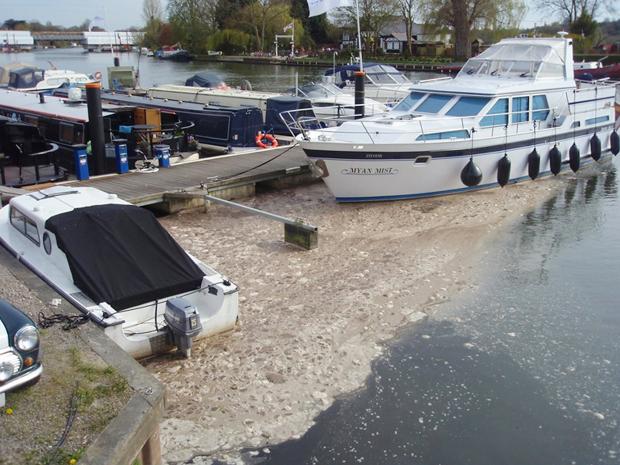
Raw Sewage and foam around sailing boats on the Thames. pic credit: Environment Agency

CROSS POSTED ON BYLINE.COM

The record £20m fine for  Thames Water’s multiple pollution of the River Thames and its tributaries  with over 1.4 billion tonnes of untreated sewage shows  how badly the company was managed.

It makes the incident where the company polluted the Wendover Arm of the Grand Union Canal seem small fry compared to the damage the company caused to humans, livestock. wildife and fish across Hertfordshire,Buckinghamshire, Berkshire  and Oxfordshire.

Thames Water admitted 13 breaches of environmental laws over discharges from sewage treatment works in Aylesbury, Didcot, Henley and Little Marlow, and a pumping station at Littlemore.

It also pleaded guilty to a further charge on March 17 over a lesser discharge from an unmanned sewage treatment plant at Arborfield in Berkshire in September 2013.

The court at Aylesbury also took into account seven further incidents at sewage sites on the Thames in 2014.

thames waterWhat was extraordinary was the lax attitude of  top managers who ignored warnings from staff about failures in the system

 No wonder the judge Francis Sheridan said: “This is a shocking and disgraceful state of affairs. It should not be cheaper to offend than take appropriate action.”

He added: “What a dreadful state of affairs that is.

“Logbook entries reflected the pathetic state of affairs and the frustration of employees.

“Thames Water utilities continually failed to report to the Environment Agency despite (managers) being fully aware of the issues and reporting governance.”

He later said of the firm: “There is a history of non-compliance.”

Anne Brosnan, the Environment Agency’s chief prosecutor, said in The Guardian: “Thames Water was completely negligent to the environmental dangers created by the parlous state of its works. Our investigation revealed that we were dealing with a pattern of unprecedented pollution incidents which could have been avoided if Thames Water had been open and frank with the EA as required.”

But should  we be surprised? Thames Water is a remote multinational making huge profits – and a £20m fine – large as it is – will still hardly dent a £742m annual profit.It is also only a quarter of the annual dividend paid to investors.

And it’s owners include Kuwaitis, the Chinese, Canadians and other international foreign investors . What will they care if fish die in Oxfordshire and  humans running sailing clubs become ill.

They are now claiming it is better managed and promising tigher controls. But they won’t want to sacrifice the bottom line and have a captive audience who can’t live without water or disposing their waste.

If ever there is a case for the return of  public ownership Thames Water have made it today. They have proved themselves unfit to protect the environment.


Exposed: The Whitehall high flyer who stole ministry secrets to help Adam Smith International bid for overseas aid contracts

rajadasgupta.jpg

Raja Dasgupta: pic credit Daily Mail and keyword suggestions

CROSS POSTED ON BYLINE.COM

This is Raja Dasgupta. He was a fast stream entrant to the civil service elite. He had a  good career . He started in the private office of  Alan Duncan ,the minster for international development in 2011.

He was promoted to climate change manager in South Africa in 2012 and then became head of the business effectiveness team in 2014 also in South Africa.

His Linked In profile says : “I have played a leading role on strategic business planning for DFID’s regional Africa programme, directly advised and worked with UK International Development ministers, and officially represented the UK during international treaty negotiations at the United Nations.”.

His Linked In profile which detailed his career now appears to have been taken down following  the exposure about his activities.

But in June last year he joined Adam Smith International – a British private overseas aid contractor ( annual income £130m) which relied on 80 per cent of its money from the Department for International Development – as a senior manager based in Nairobi, Kenya.

Now he has proved to be the catalyst that has brought down ASI Ltd – which has been effectively banned from bidding for any more contracts until the organisation has proved to the ministry that it has been completely reformed. Three senior founder directors, Peter Young ( in his youth a far right Tory), Andrew Kuhn and  Amitabh Shrivastava have resigned and the founder executive chairman,William Morrison, is to leave once the reforms are completed.

Three separate sources in England and Africa  (and the Mail on Sunday) have named Raja  Dasgupta as the civil servant who gave confidential ministry  information to ASI Ltd which gave them a competitive edge to bid for contracts across Africa.

One source said : “when moving to ASI in South Africa he took with him DFID country plans and country specific private sector engagement plans that DFID would then rank bids against, it set out specific priorities and specific sectors and markets that DFID wanted to focus on…This then allowed ASI to bid on contracts specific to these Southern Africa private sector engagement plans as set out and created by DFID and FCO.( Foreign and Commonwealth Office).”

Certainly the official findings of a DFID report – which does not name him – confirm this.

“The withdrawal by ASI is the result of serious concerns about the company’s behaviour:

  • ASI employees sought to make use of improperly obtained DFID documents shared within ASI by a former member of DFID staff.
  • The documents in question were draft internal DFID documents which contained information clearly confidential to the Department.
  • The documents were nevertheless shared widely within ASI, including to senior personnel, in full knowledge that ASI should not have had access to the documents.
  • This was done with a view to exploiting the material to ASI’s commercial advantage.
  • At no point did ASI or any of its employees question this or raise concerns with DFID.
  • DFID has conducted its own forensic investigation into these allegations. There have been serious questions over ASI’s ethical integrity. It is therefore right that ASI is taking action to address this.”

I tried to contact Raja Dasgupta by ringing his Nairobi office. There was no reply nor message facility to leave my name. I tried to contact ASI’s media team and did leave a message about whether Raja was still working for them. They have not come back to me.

Reprehensible as his actions were, this story has wider ramifications. He is not just a rogue  chancer or trader even if DFID seem to pin the blame on him. The culture exposed at Adam Smith International is a damning indictment of the British company. They knew they had access to confidential material which could be used for commercial gain. They wanted to make more profits in a company that already paid six figure salaries  and huge dividends to its top people. They were millionaires dealing in poverty. That is why – even if it is reformed – DFID are right to say there will be no “quick fix” which allows them to resume business next month.

But it also raises questions about DFID and its capacity to monitor what is going on. While the aid budget has gone up – the staff budget has been cut. So fewer people are monitoring larger sums of aid. DFID will not release the  full forensic report into what happened – either to the public or to the Select Committee for International Development, which holds the ministry to account. What have they got to hide.

This story began when the Mail on Sunday exposed the firm trying and failing to hoodwink the Select Committee on International Development by creating favourable reports of their work. It has now morphed into an example of how British private contractors can try and rip off the British taxpayer for private gain by any means they see as necessary.


A British made overseas aid scandal that has ended in ruined reputations for the people who promoted it

Mail on Sunday story

The Mail on Sunday story that started the scandal. Is there more to this?

CROSS POSTED ON BYLINE.COM

In the last few days one of Britain’s bigger contractors to our overseas aid programme has voluntarily suspended participating in bidding  for any new work and seen the resignation of three of its principal founders.

Adam Smith International – turnover £130m  and making a £17m profit in 2015 – makes  a lot of its money promoting overseas aid programmes funded by the  British taxpayer in places from Afghanistan to Jordan, Nigeria, St Helena, Syria. Iraq and Libya to name but a few. It also received funds from  among others the Canadian government, the European Commission and the World Bank.

However last year it faced an expose in the Mail on Sunday which revealed that it was attempting to hoodwink  a Parliamentary committee investigating the role of  private contractors by encouraging favourable views of its work.

That committee – Commons Select Committee on International Development – produced a damning report last month which concluded it had tried to mislead Parliament.

It concluded that Adam Smith International behaved improperly and it was only the failure of the company to convince MPs that they are not being reported to the Committee of Privileges for misleading Parliament.

The report said : “Adam Smith International has acted improperly …It overstepped the mark in soliciting the submissions of written evidence, including  applying pressure to beneficiaries to submit evidence with implied or explicit references to continuation of funding.

“ASI sought to unduly influence the International Development Committee by engineering the submission of what at first sight appeared to be independent evidence of its value and effectiveness as a mechanism of development delivery. We are very concerned at the serious lack of judgement displayed by ASI…, the actions of ASI went well beyond what was appropriate.

“That we did not accept the material in question as evidence meant that we were not misled or influenced. This reduces the seriousness of the impact and therefore we are not seeking a referral of this matter to the Committee on Privileges.

“Nevertheless, we deplore the sort of inappropriate conduct that ASI staff have engaged in—particularly the attempts to conceal ASI’s involvement in collecting the beneficiary testimonials and the inappropriate pressure that was put on beneficiaries to provide testimonials”.

The committee were not wholly satisfied and planned a further investigation with a report due at Easter.

adam smith intrernational

Then last week the top people in charge of the company quit.

William Morrison, Executive Chairman of ASI, said in a statement on its website:

“The company’s mission is to foster the social and economic development of some of the poorest and often most conflict-ridden countries in the world. Our comprehensive reform emphasises the importance to our staff of this mission.  We regret that certain deficiencies of policy and procedure resulted in our failure to meet the highest standards of corporate governance, such that we did not meet the expectations of DFID and the public, to whom we are accountable.”

The organisation is to reform itself as “an enterprise with primary focus on a social mission, with a mandate to consider its triple bottom line, taking into account its social, environmental and financial performance.”
It will also establish a foundation and reinvest a significant percentage of net earnings in developing countries, in part through the new foundation.

It announced three founding directors – Andrew Kuhn, Amitabh Shrivastava and Peter Young – will step down. And William Morrison himself , a founding director and ASI’s Executive Chairman, will step down after leading ASI through the restructuring.

Looking back through early Companies House accounts show the firm originated as an off shoot of the Adam Smith Institute – a neoliberal think tank – and its first directors included two founders of that think tank Madsen Pirie and Eamonn Butler. The Institute was recently revealed in a survey to be the least transparent about where it got its money.

One of the other directors Peter Young, who has just quit, had been there 24 years.

The highest paid director was paid £223,000 a year and the remaining directors shared another £500,000 a year between them. Malcolm Rifkind, the former Tory foreign secretary, is also a non executive director.

The company was nearly struck off the Companies House register  in December – but the action was withdrawn in February.

One can only wonder whether there is more to this story than even meets the eye – given how quickly it has started a damage limitation exercise. One waits the MPs findings with growing interest.

Hidden:The secret influencers bankrolling centre right think tanks to change your mind

policy-exchange-direct-line-to-government

Policy Exchange – direct line to government but secret about donors. Here Theresa May address a seminar as home secretary Pic Credit: Flickr

CROSS POSTED ON BYLINE.COM

An important report was published today by  Transparify , examining British think tanks whose reports and proceedings influence government policy on anything from education to health, and attitudes to smoking and climate change.

What it reveals is that while a number of British think tanks are open about who funds them – including the Institute for Government, Transparency International and the Overseas Development Institute- and some like RUSI ( the Royal United Services Institute )have improved their transparency – some of the most influential think tanks which impact on current Tory government policy are extremely secretive.

Nearly all of the secretive think tanks are on the Right of the spectrum. They are the Adam Smith Institute,Policy Exchange, the Centre for Policy Studies,Policy Network, Civitas,the Institute of Economic Affairs, and the International Institute for Strategic Studies.

What the report reveals is that the largely US financed Adam Smith Institute – a firm advocate of privatisation and libertarian thinking particularly over smoking- does not disclose ANY details of its donors or where it gets its money . It is dominated by a sister organisation Adam Smith International (UK) ltd, which receives British taxpayers money and World Bank cash  for advising foreign governments and has a turnover £130m. Adam Smith International has its own website  which does provide details of its projects and staff- and shows its projects vary from assisting privatisation to good governance. It only has one project in Jordan tackling climate change.

ASI’s American equivalent, according to the report, has filed a tax return showing it has received $1.2 million in donations but only spent just over $5000 in the US.

The Centre for Policy Studies, according to the report, has been active in fighting further regulation of the tobacco industry. It does not disclose its donors.

The Institute of Economic Affairs, according to the report, also has had backing from tobacco companies. It also claims it managed to change Government policy over the funding of charities financed by a ” mystery ” donor.

The report says : “In early 2016, The Independent reported that the IEA had “secured [a] change in government policy” on the back of a £15,000 donation from a “mystery donor” whose identity the IEA refused to reveal. The IEA told the newspaper that it had met with ministers or officials “as often as we were able” to discuss the proposal with them.”

Policy Exchange – which is a very active think tank with frequent debates involving MPs from all parties – and  very influential.  It was forced to withdraw large sections of one study The hijacking of  British Islam which controversially named mosques up and down Britain of spreading hate speech – which turned out to be untrue. Again we do not know all the donors to Policy Exchange but we do know it has strong links with ministers, including Lord Maude, a former civil service minister.

According to the Sunday Times, Policy Network was initially bankrolled by Sir Evelyn de Rothschild, a banker who by 2002 had reportedly donated £250,000 to the organisation. It is had not published details of donors for two years and is dominated by prominent Labour right wingers. Its president is Lord Mandelson who runs his own lobbying consultancy Global Counsel.

Finally there is the case of  the International Institute for Strategic Studies which appear to be transparent but missed out donations totalling £25m from one big donor, Bahrain.

Leaked papers revealed that secret memorandum of understanding had been drawn up between the think tank and Bahrain’s ruler to fund the organisation. The report says:

The Guardian reported a figure of £25 million, noting that this would account for “more than a quarter of IISS’s income“. Compiling data from multiple sources, pro-democracy group Bahrain Watch arrived at a figure of £30 million, corresponding to just over a third of IISS‟ overall income. The Middle East Eye published calculations according to which Bahraini funds may add up to nearly half of total IISS income.”

Given Boris Johnson, the foreign secretary, as reported on this blog, launched his new ” East of Suez” policy in Bahrain – it appears that Britain will be driven to defending Bahrain should a new wave of Arab unrest spread. It now appears in return that Bahrain will be in a strong position to influence the British government to present itself as a modern liberal society when it is obviously not the full picture.

Don’t get me wrong. I am not against the Adam Smith Institute, Policy Exchange or the Institute for Economic Affairs campaigning on any issue they want in a democratic society – including if they want to take up issues raised by tobacco companies or climate change.

But I am against secret backers using think tanks to try and influence government – and  public debate from  behind the scenes – and creating the illusion that these bodies are simply independent researchers with no agenda.

Transparify have done an invaluable job in drawing attention to this. The full report which has not been funded from external sources is here.


Standards at the tax office: A damning indictment from professional people who should know

hmrc

HMRC offices. pic credit: gov.uk

CROSS POSTED ON BYLINE.COM

This blog has covered serious complaints about the way Her Majesty’s Customs and  Excise is being managed – the latest being the revelations from the National Audit Office on plans to make 38,000 staff commute for hours to 13 new regional offices and close 170 existing ones.

Some of the strongest complaints have come from the staff and the main union, the Public and Commercial Services Union, which has been highly critical of government cuts. People might say, well, unions would complain, as they have duty to save jobs and how much notice should we take of this.

So it is extremely interesting  that the Institute of Chartered Accountants in England and Wales, which represents some 147,000 professional people, has produced such a damning survey on what they think about HMRC’s services.

Far from having confidence in the government’s latest tax strategies or services they provide to business and the public, their findings in this year’s services are damning.

To summarise  from their report:

8 in 10 agents think that HMRC service standards have not improved over the past year.

 Half of agents say that services over the past 12 months have not changed.

Nearly a third (32%) think that they have deteriorated.

Nearly a fifth (18%) think that they have improved

The results are fairly consistent over the different taxes.

Agents appear to have similar frustrations with HMRC’s service quality as last year, specifically around ‘getting it right first time’ and getting information they require.

 Just a fifth of agents (20%) trust HMRC to ‘get it right first time’, while over a half do not (55%). Employer payroll is perceived particularly negatively, with two thirds (67%) not seeing HMRC staff in this area getting it right first time.

Similarly, less than a third (29%) of agents find it easy to get information they need from HMRC, while many (41%) do not.

And they are scathing about the government’s plans to digitalise the tax services – part of the plan to close 170 offices – and have 13 regional centres.

Agents’ views on moving to digital

 Only 3 in 10 (29%) of agents are positive about HMRC moving more of its services online.

Over half (53%) of agents are negative about moving services online.

Furthermore, only 15% of agents think that HMRC is supporting the role of tax agents in this move, while over half (54%) do not.

Frankly if I was in charge of HMRC ( and I am glad I am not) I would be rather worried by this survey. Since it came out it appears they have offered some talks about some of the problems,

But they are mainly very complacent. As the report itself notes :

This result is all the more surprising given that HMRC’s own performance statistics to September 2016 show a steadily improving performance in the previous 12 months.

The difference, it suggests  may be explained by a number of factors, including:

“That although HMRC’s telephone service for the public is much improved, for agents the telephone response time is not the real problem. The service standard on the agent dedicated line is already good and usually agents using the line have not had a problem getting through to HMRC.

Agents by their nature deal with clients who have more complicated affairs, and for them the expectations of service quality are different to those of the wider taxpayer population. So, as in previous years, agents again highlighted the problems in ‘getting it right first time’, coupled with the ability to get through to speak to the right person quickly to resolve complex queries. We know that HMRC is working to improve performance in these areas, for example through the ‘once and done’ initiative, and the survey results suggest that HMRC should seek to build on this initiative.

There is also a perception effect: it can take years to change a perception even though standards may have improved in the interim. We believe that HMRC’s own research in earlier years would also appear to point to this effect.”

However all in all this is a pretty resounding vote of no confidence in the tax service from a body  whose members deal with them everyday.