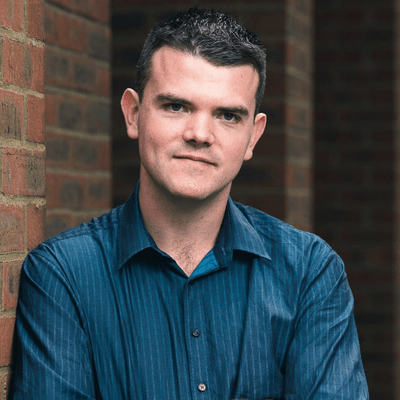
New revelations by the BBC TV journalist Michael Buchanan today show what appears to be serial bullying and abuse towards women claimants by Judge Philip Lancaster at employment tribunal hearings
His news report today reveals that eight women have now separately come forward to say they were badly treated when they presented their cases before the judge since 2018. They describe their experience before him as “patronising, degrading, psychologically abusive, and misogynistic.”
The 67 year old judge who presides over employment tribunal hearings in Leeds is often rude and abrasive towards women and in one case even suggested that a claimant had mental health problems.
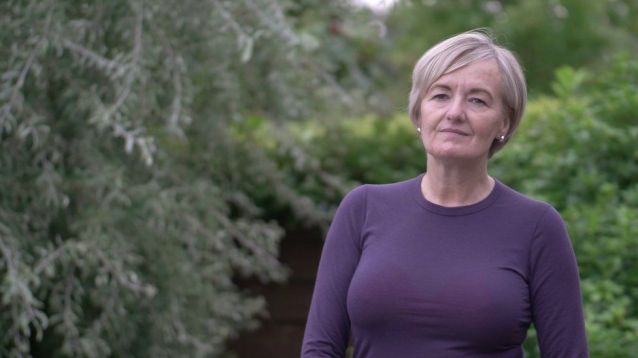
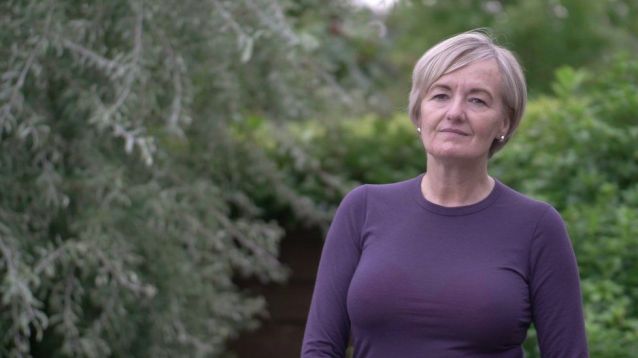
One woman claimant Angela Gates brought a case of disability discrimination and constructive dismissal against her employer in 2021.
She says a hearing in front of Judge Lancaster made her feel “like a villain being prosecuted”.
She says: “I felt I couldn’t give my side on anything.”
The four-day hearing was held on Zoom, and Ms Gates, 53, says Judge Lancaster regularly shouted at her, repeatedly telling her to be quiet. She says his behaviour was “appalling and degrading, verging on psychological abuse”, adding: “I don’t believe I’ve been given a fair trial.”
Another woman, who wished to remain anonymous, had similar treatment over a constructive dismissal and unfair treatment case.
“He made my life hell “
She said: He made my life hell,” she recalls. “He’d put his hands on his head, and appeared disinterested in what I was saying. He repeatedly asked why I was asking [my employer’s witnesses] particular questions and raised his voice numerous times. I felt useless.” She is now appealing the ruling.
Seven women are now planning to contact their MPs about their treatment as it is virtually impossible to complain about a judge as the system is rigged against them. You can refer a case to the Judicial Conduct Investigation Office or previously complain to Judge Barry Clarke, President of the Employment Tribunals in England and Wales. Or even to the Senior President of Tribunals, Sir Keith Lindblom. All seem set up to protect judges not complainants. Barry Clarke refused to act and Sir Keith ignored it.
Judge Barry Clarke, President of Employment Tribunals in England and Wales – protecting judge Lancaster from complaints
In a letter written by Alison McDermott, a management consultant, who complained about the way Judge Lancaster treated her in her case against Sellafield and the Nuclear Decommissioning Authority, to Adam Jones of the Judicial Conduct Investigation Office she says:
“It is simply not tolerable the way this judge has conducted himself, whether it is arbitrarily excluding the public, treating me less favourably, allowing bullying in the courtroom, treating me with hostility and contempt, ignoring evidence, attempting to block evidence, actually blocking exploration of evidence, vilifying me, acting partially, and failing to document procedural matters.
” I urge you, therefore, to conduct a thorough investigation into what went so badly wrong in my case and to exhibit, transparency and accountability – behaviours which the legal profession professes to uphold. I sincerely hope that I and the other key witnesses mentioned in this letter of complaint will be interviewed, as would occur with any other formal complaint or grievance investigation. In my experience as a consultant with over 20 years investigating organisational cultures and problems, it is not washing dirty linen in public that causes a problem but allowing it to fester in plain sight.”
Of course the office had no intention of doing such a thing. Judges, as I reported yesterday, are protected because the notes on the cases are kept private even when they are the only official record of the tribunal hearing. It is impossible to get hold of the evidence that would prove a judge was biased and judge Clarke would not reveal how many complaints he has received.
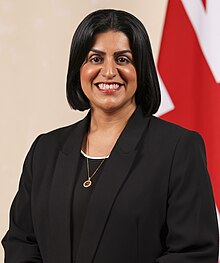
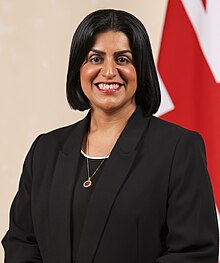
05/07/2024. London, United Kingdom.Chancellor and Secretary of State for Justice, Shabana Mahmood. poses for a photograph following her appointment to Cabinet by Prime Minister Sir Keir Starmer in 10 Downing Street. Picture by Lauren Hurley / No 10 Downing Street
So this leaves the Lord Chancellor to act but as I reported yesterday it is almost impossible to write to her directly – without officials in the ministry of justice or the judiciary intervening.
I would have thought Shabana Mahmood, a highly successful woman with an ethnic minority background, should ask for an investigation into Judge Lancaster. Many of the women who complained about him are from ethnic minorities as well. None of them should have had to put up with such egregious treatment and does the Lord Chancellor want to preside over system where a judge can treat women as dirt.
05/07/2024. London, United Kingdom.Chancellor and Secretary of State for Justice, Shabana Mahmood. poses for a photograph following her appointment to Cabinet by Prime Minister Sir Keir Starmer in 10 Downing Street. Picture by Lauren Hurley / No 10 Downing Street
By David Hencke and Alison McDermott
Direct complaint to the Lord Chancellor signed by 150 people is being blocked by officials at the Ministry of Justice
Whitehall and the judiciary are engaged in an extraordinary exercise to block, obfuscate and deny there is a legal issue over the public release of judge’s notes where they amount to an official record in employment tribunals.
We are now in the absurd position of Barry Clarke, the President of Employment Tribunals in England and Wales, both admitting the judge’s notes where tribunals are not recorded are the only official record but saying at the same they must remain private because they are personal notes under the Data Protection Act.
Employment tribunals are already in transition. After a new practice ruling the aim is that all hearings will be recorded but that is not happening yet in many cases. Also transcripts of the hearings can be made available but litigants have to buy them at huge cost and are not provided before the six weeks deadline to appeal. So what’s the point of them ?
But for a majority of tribunals the only official record is the judge’s notes – which can be used by appeal judges when they are adjudicating on an appeal to guide them. Barry Clarke has recently ruled that they are the official record but the public, press and both parties involved in a case cannot see them.
Thus the one vital official record of what the judge has recorded about the case is kept secret – contrary to any policy of transparency and open justice. It also means judges are not open to scrutiny, could be biased against either the claimant or defendant, are out of step with other European court systems and in the days of digital recordings, keep an archaic system of hand written notes. It also means if there are complaints against judges – the secrecy of the notes means the judge can withhold the information to prove it which is very helpful to an errant judge.
So what is legal position of this which allows this type of official record to be withheld? This is the question that led Alison McDermott, a former ET complainant against Sellafield, and 150 other people to wrote to the Lord Chancellor demanding an explanation, using the examples I have quoted and many more.
The letter is here. But guess what? You can’t send it direct to the Lord Chancellor’s Office or even to the Lord Chancellor as an MP unless you are a constituent in Birmingham, Ladywood. Instead you can only write to the ministry of justice and hope it can be passed on.
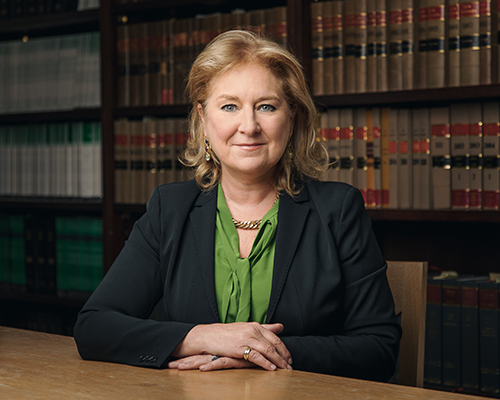
Dame Sue Carr: Pic Credit: Rory Lindsay
So Alison McDermott and I decided another tack. I put questions into the Ministry of Justice press office to ask for explanations. Alison had previously been told by Dame Sue Carr, the Lady Chief Justice that the only way she would get answers was to go to the Appeal Courts – an incredibly expensive business. This is also absurd as it puts the onus on the claimant to get a ruling to clarify the law and makes a lot of money for lawyers. Most people are not involved in tribunals so why should they be denied from knowing where the law stands?.
These are the questions I put to the Ministry of Justice which it refused to answer:
1.Does the MoJ agree that an official record of legal proceedings, including Employment Tribunal hearings, must be made available to parties and the public?
2.Which specific law or authority allows judges to withhold their notes from ET proceedings, given that ET President Barry Clarke has recently confirmed that these notes serve as the official record where no other record exists?
3. If no such law or authority exists will the MoJ commit to releasing all judges’ notes?
4.. If not, does the MoJ acknowledge that judges’ notes cannot be considered the official record, as official records must be accessible?
5. In the absence of an accessible official record, does the MoJ agree this breaches the right to a fair trial under Article 6 of the Human Rights Act? If not, what is the justification?
6. Why is the MOJ suggesting that this can be resolved by individual appeals, as proposed by the Lady Chief Justice to Ms McDermott, rather than providing a clear policy response that would benefit all ET users?
Answer came there none. The ministry declined to answer any questions and said it was a matter for the Judicial Office to answer the questions.
I put the same questions to the Judicial Office press office. I heard nothing for a week and then sent them a reminder. The initial response was to refer them back to the Ministry of Justice until they suddenly realised I had already contacted them.
The office then sent a reply. This is it.
“We have answered the questions we can from a judicial perspective (see below) but other questions are for not for us and you may wish to ask other parts of Government.
Parties involved in an Employment Tribunals are given decisions following a hearing. If the decision is a judgment, the Tribunal will either give an oral judgment with reasons or reserve its decision and give a written decision at a later date. ” It goes on to quote existing rules and procedures.
So here we have it. They haven’t answered my questions. There is a failure to confirm what the lawful basis is for a judge to withhold the official record of an ET hearing and they have side stepped whether the refusal to do so breaches the right to a fair trial.
Judge Barry Clarke, president of the England Wales employment tribunals- an outlier with Europe advocating secrecy
Alison using AI found how outdated and Nethanderal this is compared to other advanced democracies. In France, Germany, Spain, the Netherlands, Sweden, Belgium and Italy all parties have access to the judges’ notes. This leaves the UK as an outlier, failing to provide basic transparency in proceedings that can have life-altering consequences. .
It added: “The practices in these European countries generally support greater transparency and access to court records, including judges’ notes, in employment cases. This trend aligns with principles of fair trial and effective appeal rights, as parties are given the opportunity to fully understand and, if necessary, challenge the basis of decisions made against them.”
The conclusions using AI are very powerful;
“The current state of the UK’s employment tribunal system is untenable and legally questionable. It operates on a contradiction that undermines the very principles of justice it’s meant to uphold. The solution is clear, legally grounded, and non-negotiable:
Judges’ notes must be released to all parties.
All hearings must be recorded.
These records must be made accessible to all parties involved.
These steps are essential for maintaining the integrity of the UK’s legal system, ensuring compliance with human rights law, and upholding the principles of natural justice and open courts. The time for obfuscation and delay is over. It’s time to resolve this legal paradox and restore faith in our justice system. Release the notes, record the hearings, and let justice be truly seen to be done.”
Only in the UK do we pursue a policy of secrecy masquerading as privacy to cover up official records, frustrating claimants and respondents in employment tribunals, and protecting judges from any scrutiny that could effectively challenge them. What a backward country we are. A judicial review can change this and looking at procedures in Europe eventually lead to a well deserved adverse ruling against the UK in the European Court of Human Rights. We understand that the Lord Chancellor holds the copyright to all court records so she can decide to release them.
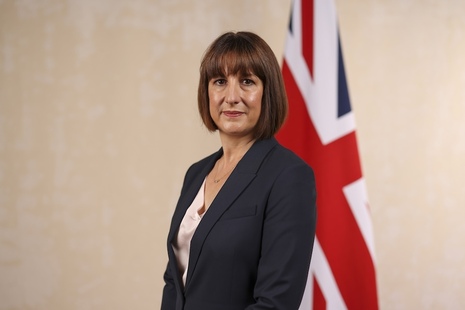
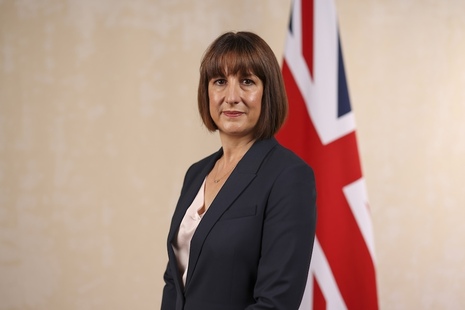
05/07/2024. London, United Kingdom. Rachel Reeves, Chancellor of the Exchequer poses for a photograph following her appointment to Cabinet by Prime Minister Sir Keir Starmer in 10 Downing Street. Picture by Lauren Hurley / No 10 Downing Street
UPDATE: Statistics released today (Tuesday) show claims for Winter Fuel Allowance jumped by 214,000 last year. More and more people over 80 are claiming the £300 higher allowance which had reached 3.3 million for the firsttime. Thenew figures mean the government will save even more money by abolishing it for all those not claiming pension credit, particularly from the very elderly.Figures released also show that those state pensioners living in EU countries who will continue to get the allowance amounted to 34,300. Over three quarters of them, some 26,000, live in the Republic of Ireland while those in Northern Ireland will get nothing. Qualifying for the allowance last year was this week which raises whether those claiming pension credit after this week will get the money for this winter.
Chancellor’s decision fuels racism when it is revealed her cuts are aimed at 95 per cent of white British born people
At last no doubt embarrassed by the Equality and Human Rights Commission which said the new Labour government was in breach of the Public Sector Equality Duty, the Treasury and the Department of Work and Pensions have had to release a breakdown of who is affected by the abolition of the winter fuel allowance.
Both departments used the mechanism of a Freedom of Information request made in August and chose a Friday afternoon to slip it out after Parliament had gone into recess to avoid too much publicity.
The clue is in what the announcement is called – an Equality statement – not an impact statement which was demanded by the House of Lords. In fact there has been no impact statement prepared at all even when Age UK said that about two million pensioners who will lose the annual £200 or £300 payment are just above the cut off point.
The document itself makes a claim that more men than women are affected by the change. But this is based on percentages not the actual figures. As it says: “This means that 85% (5.2m) of women receiving a Winter Fuel Payment (WFP) will lose out, compared to 91% (4.8m) of men. The reason for this is that women live longer than men and are more affected by the loss of the payment. The gender breakdown is 54% (6.1m) of those who received a WFP in GB in 2022/23 Female, and 46% (5.2m) Male.
The figures reveal that the older you are, the bigger the loss you make, partly because the payment for over 80s is £300 rather than £200 per household.
The statement says: ” Although a smaller proportion of those aged 80+ will lose out than those under 80, due to the higher rate of WFP from that age, older pensioners who are affected will be proportionally worse off financially as a consequence of the policy.”
This is still 2.7 million people in top of the 7.9 million aged 66 to 79 who lose out.
Then there is the effect on the disabled – those claiming attendance allowance and disability living allowance. Here 1.6 million lose out and they must be the most vulnerable to the cold.
So if you are woman, more elderly and disabled you are worse off. If you are all three it is catastrophic.
The government has made a lot of noise about the 880,000 people not claiming pensions credit who could qualify by applying and getting the winter fuel allowance. But the paper says despite all the noise ministers are only expecting another 100,000 to claim leaving 780,000 still going without it.
The figures for existing claimants for pension credit are interesting. The most successful claimants are men not women – despite men being in a minority. The least successful are couples and there is a nasty reason for this. Under the Tories rules were changed so that both people had to be aged 66 to get it. So if you had a man who was 66 married to a woman who was 62 you would be excluded from claiming it until the man was 70 and the woman 66. No wonder the take up is lower. And Labour haven’t changed the rules.
Finally there is an ethnic breakdown. In the UK among the general population 84 per cent of the people are white British and 16 per cent are from ethnic minorities. Among the pensioner population, 95 per cent are white British and only five per cent are from ethnic minorities. So Labour in this case has targeted anybody who was born here far more heavily than people who were not.
This may well explain why I am getting a backlash from readers of this blog who complain that the government is doing more for people who have just arrived here than the population who have worked here since they were 15. They think it is unfair.
Cheerleader for Nigel Farage?
So we have the extraordinary situation that Rachel Reeves is inadvertently becoming the cheerleader for Nigel Farage by providing him with a platform to say that British born people are being unfairly penalised.
Her policy among that generation may well drive them to support Reform because they have a grievance that only Labour has created and cannot be blamed on the Tories. This unfortunate situation aids racism and has more purchase with people than tales of a £22 billion black hole.
Then there are international repercussion. The last government was already in trouble with the UN Convention on the Elimination of all Discrimination against women and girls (CEDAW) in Geneva. Although we ratified it nearly 40 years ago when Lady Thatcher signed us up, we have not implemented in law many of the provisions. This is a new policy – even though it was done administratively – and the government has not tested the impact on women which is against the convention.
More close to home there could be a case for indirect discrimination against women because although the policy appears to be fair to all pensioners, women are again bearing the brunt of it.
Of course as I argued in a previous blog both Rachel Reeves and Sir Keir Starmer know that many pensioners will die before the 2029 general election so they won’t be here to vote. By implementing this cruel policy for those just above the cut off point they know many more will join them as they freeze in their homes this winter.
1950s born women to face a quadruple whammy to their hopes over compensation, heating allowances, fuel bills and new taxes
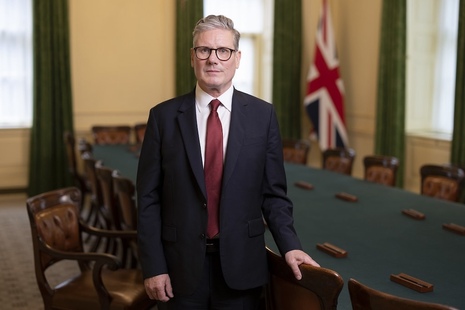
Sir Keir Starmer in the Cabinet Room Pic credit: Gov Uk
In just 50 days of a new Labour government pensioners rather than the better off have been singled out to pay the price to balance the books of running the country.
They are the people who are often not in the best of health, have worked most of their life and most don’t go around rioting and throwing fireworks or bricks at the police.
So for Sir Keir Starmer and Rachel Reeves they are a soft target to save money, particularly if your object is to grow the economy.
Rachel Reeves, Chancellor of the Exchequer poses for a photograph following her appointment to Cabinet by Prime Minister Sir Keir Starmer in 10 Downing Street. Picture by Lauren Hurley / No 10 Downing Street
To them the elderly are a burden. That is because they would find it difficult to have enough energy to start new businesses, expensive to look after since they are more likely to use the NHS, and the cost of pensions is the real big ticket item for the Department for Work and Pensions costing £125 billion a year – far outstripping any payments to other people. The total DWP annual pay out to people is £258.4 billion – so pensions are almost half the bill. Rachel Reeves will know all about this as her partner, Neil Joicey was finance director at the DWP.
If ministers are prepared to ignore that pensioners feel they have contributed to their pension and it is theirs by right, it would be rather convenient for the Treasury if they died sooner than later. Life expectancy is already stagnant and the new Starmer and Reeves measures could see it fall. Also pensioners were the last group who chose to vote Conservative rather than Labour at the general election, so it would be politically convenient with a five year government guaranteed by its large majority if many had died by 2029. The dead can’t vote.
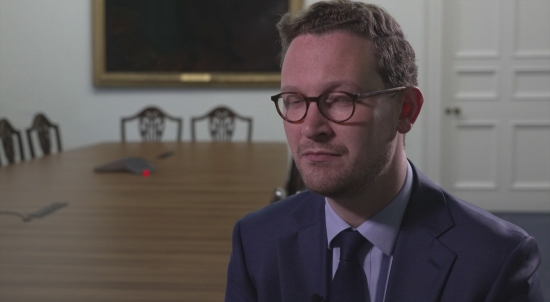
Darren Jones Pic credit: ITN News
The justification for means testing the fuel allowance – worth up to £300 per pensioner household – put by Darren Jones, the new Chief secretary to Treasury, was that it was a blanket benefit costing £1.4 billion claimed by the rich and poor. True a 90 year wealthy woman living in Kensington might not miss it, but an average 66 year old man living in Blackpool and about to die a year after getting his pension, will.
But his argument could also be used to abolish the universal state pension- and for all I know is being discussed in the Treasury – since it goes to billionaires -as well as the poorest.
The cut off point to lose the fuel allowance is £218.25 a week for single pensioners and under £332.95 for couples. Some 880,000 earning less than this could apply for pension credit but the forms are daunting for this. I checked to qualify you have to answer up to 243 questions. Read it here.
Some of the questions are bizarre. Why would you have to tell the DWP for example, if you share your home, with another person, whether he or she has ever been in prison or held in custody at a police station? Why do you have to tell them whether they have ever had four weeks holiday outside the UK? If you have over £10,000 in savings you have to fill in an additional 31 questions on another form. You have to disclose all the money send original bank and building society savings books and reveal how much cash you hide at home. You are expected to fill in the form yourself, if you can’t expect a visit from a DWP civil servant demanding why you can’t. No wonder a lot of people are put off and Ed Miliband’s cheery suggestion you apply, appears to mean he hasn’t a clue how detailed the forms are.
The other outrageous thing is that any government proposing a change should do an impact assessment on what this will mean. This was ignored by Rachel Reeves- so keen was she to announce the cuts.
On top of this we now know, after the announcement from the regulator, Ofgem, that energy prices are going up 10 per cent from October adding an average £149 to people’s bills just as the £300 fuel allowance is being abolished. At the same time Labour pointedly did not agree to raising pensioners tax allowances so with the triple lock in place, to avoid the poorest pensioners with little or no extra pension in place starting to pay tax again.
Michael Shanks MP and junior energy minister
As for the 1950s born women the chance of any compensation – even the paltry sums of between £1000 and £2900 recommended by the Parliamentary Ombudsman — is getting dimmer by the day. A rather frank answer to a constituent from Michael Shanks, the new Labour MP for Rutherglen and junior energy minister, has revealed the Treasury has taken over deciding whether they get a penny.
He wrote:” My understanding is it is being looked at seriously by Treasury and DWP Ministers now they are in post and fresh discussions are taking place about what happens next.
He went on: “You may be disappointed we didn’t simply commit to compensation for all, but as we have discussed before, I think it is more complex than that and I’m not convinced a one size fits all approach is right, or a good use of public money. The PHSO has recommended £1-3,000 per person, costing up to £10bn. However, this would give compensation to women who did know about the change – around 43% of WASPI women according to the PHSO. We need to ensure that any compensation is fair, so that at such a difficult time for the country financially we are not paying out thousands of pounds of compensation to women who were well aware of the changes, and that we are not insulting those badly affected with a mere £1-3,000.”
I have looked at the PHSO report and couldn’t find a reference to this 43 per cent who knew. If this is true it means that over 1.5 million will get nothing even if the government decides some compensation is due.
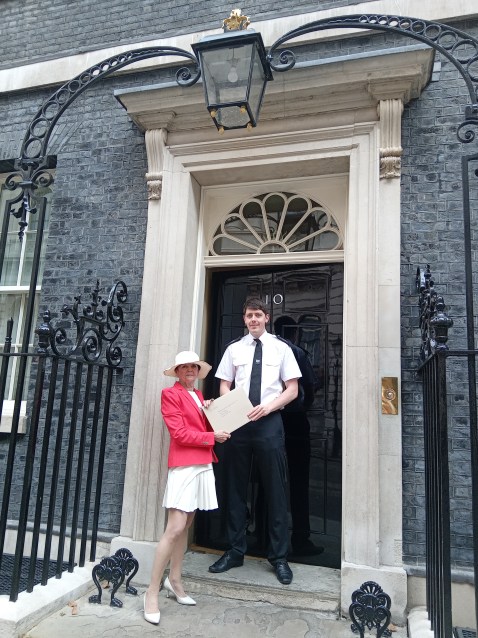
Meanwhile the campaign by CEDAWinLAW goes on. Jocelynne Scutt, the former Australian judge, who headed an independent tribunal into the fate of 50s women who lost their pensions for six years, was handing in a letter following a petition signed by 37,000 at Number Ten Downing Street today to drive home to Sir Keir the strength of feeling over the discriminatory issue and the need for mediation with ministers. WASPI, which represent 186,000 of the 3.5 million affected say they will have a meeting with minsters next month.
Here’s a newly edited video of the visit by Jocelynne Scutt explaining the latest moves by CEDAWinLAW.
If you were thinking of complaining about your employer’s solicitor trying to force you to sign a NDA barring you from complaining to the police, another regulator, or ban you from making freedom of information (FOI) requests or subject access requests to your company or public body, you might as well not bother.
For new figures released this year following a request under the SRA’s voluntary Transparency Code (it is not signed up to FOI) reveals how miniscule the action over misused NDAs is taken by the SRA that polices over 167,000 practising solicitors.
Over the last four years, believe it or not, action has only been taken in less than FIVE cases where NDA’s are involved out of the 10,000 complaints about solicitors received by the SRA every year.
Figures released to David Change (he is on X @DavidChange12) where the sole complaint was about the misuse of Non Disclosure Agreements amount to just 41 over the last four years. Of these 13 were not investigated and there were fewer than five warning letters issued over the four year period, similar for letters of advice, and public and private rebukes. In some years the SRA was almost completely inactive. In 2023 it is issued just what looks like one public rebuke. For the first five months of this year it says it has had just one complaint and taken no action so far.
Sellafield
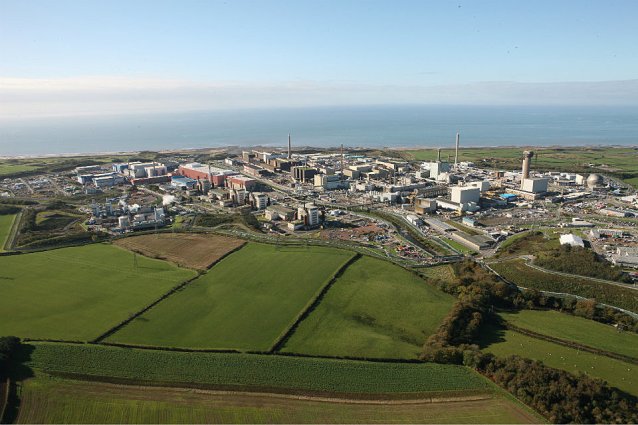
One of the complaints I know about involving a whistleblower in Sellafield, the nuclear waste site, the documents I have seen, show that solicitor Emma Mills, a partner in law firm DLA Piper, had tried to force the person to sign away his rights to make FOI and Subject Access Requests to Sellafield and withdraw a complaint to a regulatory authority about the company’s human resources department. The SRA replied to him that she had behaved correctly without it looks like bothering to investigate further. Yet the Information Commissioner’s Office told me that asking anybody to withdraw FOI’s or SAR’s was outside the law.
The SRA’s figures do contain a caveat. They did not check whether among cases whether the complaint against other activities by solicitors included a complaint about misusing NDA’s, so the figure could be higher. It was too expensive under FOI guidelines for them to check further.
The fact that there is a problem with the misuse of NDA’s is not disputed. A snapshot of the present situation was put together by the Legal Services Board and published this year.
Concealed illegal activity included harassment and discrimination
The report said: “Examples of alleged illegal activity reported by respondents as having been concealed by NDAs included unlawful harassment and discrimination (e.g., on the grounds of sex, race, disability and maternity), sexual assault and abuse, fraud and tax evasion. Many respondents reported NDAs being related to employment disputes. In defining misuse, some respondents questioned whether NDAs should ever be used to conceal misconduct, prevent a victim of wrongdoing from seeking support or reporting to regulatory or law enforcement bodies.”
The report was a snapshot – for example there was just one case cited involving the NHS – when certainly health trusts use them more widely to cover up scandals in the health service. It showed that many employees pushed to sign NDA’s, felt an imbalance of power between their knowledge of what they were signing and the company’s lawyers and were bullied into signing NDA’s. Others felt the firm did not care about their mental state or threatened them with facing an employment tribunal where the company’s lawyers would expose their failings.
There was also a mismatch between the fine words of the evidence given by the SRA to the Legal Services Board who showed they understood that lawyers did pressurise people to sign NDA’s and the actions it took when it received a complaint as shown by these statistics.
What this pointing to is a change in the law governing the issue of Non Disclosure Agreements which should be outlawed if they contain any reference to people losing rights given by Parliament to make FOI or subject access requests or complain to any regulatory authority including the police and HMRC.. What is clear from the Legal Services Board report is that many employees are totally unaware of their rights which can then be exploited by dodgy companies and irresponsible public authorities. As for the SRC this record of handling complaints is abysmal.
There appears to be growing evidence that the Solicitors Regulation Authority,(SRA), the body that regulates and upholds professional standards for lawyers, is inconsistent in its judgements, over sympathetic to lawyers, particularly from large firms, and is not regarded by the public and whistleblowers as protecting their interests.
I took up the treatment of two whistleblowers who separately complained to the SRA about lawyers acting for the Sellafield nuclear waste site and the Nuclear Decommissioning Authority (NDA) recently. . Both complaints were rejected by the SRA who said the lawyer had behaved correctly. Yet they raised serious questions about the use of Non Disclosure Agreements (NDAs) to crush people complaining to regulators and use Subject Access Requests and Freedom of Information requests to obtain information from public authorities.
alison McDermott
One, Alison McDermott, who lost a consultancy contract after exposing bullying at the nuclear plant, even asked her former MP, Philip Davies, to complain about her complaint to the SRA being used against her by lawyers in a costs hearing. The chief executive of the SRA, Paul Philip, rejected this and cited the NDA’s view that she had acted “‘vexatiously, abusively, disruptively or otherwise unreasonably’ in the way that her employment proceedings were conducted.” In fact both organisations lost most of their £40,000 claim against her.
She had previously complained about Deshpal Paneseer KC, a barrister from Old Square Chambers, representing the nuclear site, for the language he used against her saying she was a fundamental liar but got nowhere with this.
The costs claim included trying to get retrospectively the costs of a freedom of information request that Sellafield had granted. In fact there is no provision under the FOI Act for retrospective claims – the public authority has to decide within 20 working days of the application whether to grant it or not.
The second whistleblower – who I have not named – complained to the SRA about Emma Mills, a solicitor with DLA Piper, a proposed NDA ( this one known as a COT3) which demanded he withdraw all FOIs and Subject Access Requests and a complaint to a regulatory authority or face a £14,000 costs hearing despite withdrawing his case at an employment tribunal.
He wrote : “I am a Whistleblower acting in the public interest, and I regard the behaviour of Emma Mills and the Respondent as menaces and harassment, pushing me to accede unwillingly into signing a COT 3 contract which is not in my best interest, and under the threat of pursuing me for costs if I do not sign the COT3 contract.”
Again the SRA rejected this and again it is not lawful under the FOI Act as there is no provision in the Act for an organisation to ban a person using FOI. This was confirmed by the Information Commissioner’s Office.
Inconsistences in judgements
The inconsistency is shown by a recent decision by the SRA over a similar case reported on Linked In by Loopline Media. The full article ishere. A law firm Orrick Herrington & Sutcliffe (UK) LLP had been employed by a German firm Payone, a Digital payments service firm, based in Frankfurt with employees in the UK. The report found the law firm had tried to impose a settlement with a whistleblower to withdraw a complaint to the Pensions Regulator that it was breaking UK law by failing to provide a proper pension for employees. The SRA found the law firm had could have negatively impacted the reputation of the legal profession. Orrick’s conduct was found to fall short of the SRA’s ethical standards, prompting regulatory interception by way of a letter of advice.
However the firm have been treated with kid gloves. No disciplinary action is being taken and a full report is not being published. The Pensions Regulator is investigating the firm.
Damning conclusion on the Legal Lens blog
The state of the SRA is thoroughly criticised in a post, also on Linked in, by John Barwell, a data privacy expert. In a damning blog, he points out multiple failures by the SRA. questioning whether a body funded by solicitors can really police solicitors. His damning conclusion is :
“The Solicitors Regulation Authority was established to protect the public and ensure that the legal profession operates with integrity. However, its track record shows that it is a regulator in name only, failing to achieve these goals. The mishandling of cases involving prominent law firms is not just an isolated failure—it is symptomatic of a regulator that has lost its way. Without significant reform, the SRA risks becoming an even more useless entity, incapable of holding the legal profession accountable. It is time for the SRA to step up, enforce its regulations consistently, and restore public confidence in its ability to regulate the legal profession effectively. Until then, it will remain a toothless watchdog, incapable of fulfilling its vital role in the justice system.”
I would add more thing – there is a question mark over its choice of solicitors to do its work – especially if you are a whistleblower in the NHS. The law firm which holds the contract is Capsticks, which also holds a major contract with the NHS to represent trusts. It is fiercely proactive in pursuing whistleblowers trying to expose patient safety concerns in the NHS and earns a substantial income – funded by the taxpayer – to represent trusts in these cases. If Capsticks is seen as bringing the profession into disrepute – a complainant may report them to the SRA only to find that Capsticks handles their cases. I know of one barrister who did spot what he thought was bad behaviour but he told me it was not worth going to the SRA about Capsticks since the SRA was their client.
I asked the SRA for a comment on my two cases last week but they have not released it yet. I will put it up when it arrives.
Please sign letter by whistleblower to Shabana Mahmood
Two years ago some 317 people agreed to sign a letter to Sir Keith Lindblom, senior president of the tribunals, calling for transcripts and recordings of employment tribunal cases to be made available.
Employment tribunals appeared to be one of the few legal proceedings where records were not kept and claimants and whistleblowers – often appearing as a litigant in person – were put at a big disadvantage against big corporate companies, NHS trusts, powerful public bodies like Sellafield, who employed expensive barristers, often using taxpayer’s money, to discredit employees and whistleblowers bringing cases against them.
The companies and public bodies could afford – unlike a litigant in person – to employ notetakers or paralegals – so they had their own records – so if a person appealed against a tribunal verdict – he or she was at a big disadvantage.
Within just seven days we had backing from well over 300 people – from a former economic adviser to No Ten Downing Street, Sir Adam Ridley, 80 medical consultants, numerous GPs, nurses, teachers, to a former deputy groundsman at the Chelsea Pensioners hospital, a lorry driver, an actor, writer and a poet. This suggests there is a wide ranging feeling that there is something wrong in the justice system.
Judge Barry Clarke, President of the Employment Tribunals in England and Wales
Barry Clarke, the head of the employment tribunals in England, responded to the letter by announcing, where possible, employment tribunal proceedings would be recorded, so they would be transcripts of the proceeding.
But now two years later this has proved to be a Pyrrhic victory – hence the need for a fresh letter. It has also reached an impasse with the top judges in the employment tribunal digging their heels in to prevent further change. Thus only an appeal to the Lord Chancellor can remove this obstacle.
What has happened is that where tribunals have recorded proceedings, obtaining a transcript, if a judge allows it, costs thousands of pounds, well beyond the means of most claimants.
Where there is no recording the only record of proceedings is the judge’s notes. Judges have jealously guarded releasing this to the public – but it is the only record a judge covering an appeal in the case will see.
First it took a considerable time for the judiciary to concede this was the official record – arguing it was a private and personal note. Now Barry Clarke has conceded this is an official record of the case but does not want this released to the claimant, the public or the press. This hardly fits with the image that Britain’s legal system is proud of its reputation for ” open justice.”
Alison McDermott
Alison McDermott, a whistleblower who challenged Sellafield over its toxic culture towards its employees, has drafted a letter to go to the Lord Chancellor. You can read her blog and the text of the letter here . All you have to do is text Yes to Alison if you want to sign.
Last time the strength of feeling of the need for change was very high. My blog on the campaign is here. It also lists the 317 who signed. This time Alison is not planning to publish all the names.
A very disturbing story is emerging from Sellafield about attempts by the management and its lawyers to make whistleblowers sign away their rights to make freedom of information and subject access requests to their organisation or face large costs bills through the employment tribunal system.
This attempt – when I checked with the Information Commissioner’s Office – is outside the law as Parliament gave all UK citizens the inalienable right to make FOI requests to public authorities and subject access requests. No public sector organisation can ask a person to withdraw a subject access request or an FOI request let alone use it as bargaining chip in litigation at an employment tribunal.
Yet lawyers either through total ignorance about the FOI Act or a deliberate attempt to con whistleblowers threatened with costs into giving up their rights under British law appear to be using this as a tool to harass whistleblowers.
The misuse of FOI legislation has emerged in two whistleblower cases involving Sellafield and the Nuclear Decommissioning Authority. One is well known – the case of Alison McDermott, a human resources and diversity consultant, who has been involved in a long battle with the nuclear authorities after they attempted cover up a toxic and bullying culture.
The second which I covered recently involved the tragic case of a whistleblower who self harmed when threatened by Sellafield with costs after he withdrew a claim at an employment tribunal.
Documents from Sellafield that I have seen reveal that a legal document drawn up by their lawyers and Emma Mills, a partner with DLA Piper, an international law firm, included this demand:
“The Claimant hereby further agrees …to withdraw any and all outstanding data subject access requests and/or Freedom of Information requests.”
For good measure it added that he was “to withdraw any complaint made to the Chartered Institute of Personnel and Development (CIPD).”
The withdrawal of FOI requests is directly linked to Sellafield’s claim for £14,000 costs against him after he withdrew his claim at the tribunal. If he does the legal document reads: “The Respondent hereby confirms that it shall immediately write to the Employment Tribunal in the terms of the letter at Appendix withdrawing its outstanding application for costs against the Claimant in relation to the conduct of the Tribunal Claim.”
Luckily the whistleblower was savvy enough not to agree to sign this. As he wrote to the management:
“A COT3 [ name of the document] that limits my ability to exercise my statutory rights under the Freedom of Information Act 2000 (FOIA) and the General Data Protection Regulation (GDPR) could be considered an undue restriction.”
When I put what had happened at Sellafield to the Information Commissioner’s Office this was the response from a senior press officer: “Everyone has the right to ask an organisation for copies of the personal information held about them. As well as the right to request recorded information held by public authorities.“
“There is no option in data protection or freedom of information law for organisations to remove these rights for an individual, and the ICO would intervene where requests were not being handled in line with the law. “
Sellafield are now saying: ” Sellafield Ltd have not breached any legal requirements, and involved ACAS as an intermediary.
“The individual is not subject to any restrictions preventing them from making an information request under either FOI or data protection legislation.”
That is correct but would not have been had the whistleblower signed the agreement.
Emma Mills; Partner at DLA Piper
I contacted Emma Mills , the partner with DLA Piper, who was paid by Sellafield, to draft the agreement directly, pointing out that she did not seem to know what the Freedom of Information Act says by drafting such a demand which appears to be outside the law. She has not responded.
Now there is another issue where the Nuclear Decommissioning Authority (NDA) lawyers have linked applications for FOI’s and subject access requests to a cost hearing against a whistleblower.
During a cost hearing against Alison McDermott two more lawyers, Jonathan Coley of Pinsent Masons and Rachael Levene, a barrister with Nine StJohn Street chambers, which accused her of being disruptive, abusive and vexatious in bringing a case against the NDA, cited FOI and DSAR requests as costing the authority a lot of expense. The accusation read to recover costs: “Submitted four Data Subject Access Requests and six Freedom of Information Requests over the last three years, the majority of which were complex and involved significant work and additional legal time and cost by the Second Respondent to answer. “
Rachel Leve KC at Nine St John Street Chambers
The £20,000 cost claim was thrown out by a judge at a recent hearing but again this claim shows total ignorance of FOI legislation.
The correct procedure if the NDA wanted to challenge the cost of the FOI requests ( it can’t charge people for subject access requests) would have been to raise the cost issue when she submitted them not tag the costs to the authority at a later hearing to intimidate the whistleblower. The NDA had granted the requests – it can’t then demand reimbursement later. Of course if it had at the time Alison would have the right of appeal right up to the Information Commissioner’s Office and knowing her determination would have had no problem in doing so.
I suspect that the behaviour of these lawyers to restrict people’s rights to use freedom of information and subject access requests could be more widespread than we know – because of the secrecy surrounding non disclosure agreements. It appears they are backed up by the Solicitor’s Regulation Authority if they do so but that is for another story.
I would make two points. If you are presented with an NDA containing such restrictions send it to the Information Commissioner’s Office before you sign it. Secondly if you have had attempts as a whistleblower to silence you by restricting your rights under this legislation let me know.
This picture is emblematic of the desperate straits some whistleblowers end up after they raise safety issues. They find themselves facing persecution by their bosses, horrendous costs they cannot afford for taking a case to an employment tribunal and put under extreme pressure by lawyers to sign an agreement taking away they rights to ever talk about the safety problem again and in this case lose their legal right to put in a Freedom of Information request or Subject Access Request to Sellafield for the rest of their life.
David Peattie, chief executive officer of the NDA Pic credit: gov.uk
This picture was sent as a last gasp plea to David Peattie, chief executive of the Nuclear Decommissioning Authority; Euan Hutton, chief executive of Sellafield; David Vineall, Sellafield’s group chief people officer, the Office for Nuclear Regulation and Claire Coutino, former Tory secretary of state for energy security. Only Claire Coutino expressed concern enough to want to meet the whistleblower but she was persuaded by her civil servants not to do so. We now have a new energy secretary, Ed Miliband following Labour’s landslide election victory, and I am planning to contact him to draw his attention to how whistleblowers are treated at Sellafield.
Ed Miliband, Labour’s new energy security secretary
To protect his privacy I am not naming the whistleblower after publishing such a personal and disturbing picture. But another source thought it was in the public interest to share a large file of emails and documents which reveal his correspondence and the reaction of the most senior figures inside Sellafield and the NDA.
The man involved was a loyal Sellafield employee for decades- in a potentially highly dangerous nuclear waste site where over 140 tons of plutonium is stored including from nuclear military waste warheads – and he was one of a large number of people employed to secure safety at the plant.
Some eight years ago he began to raise safety issues leading to what is said to be a highly critical issue. An email sent to the Office for Nuclear Regulation, the watchdog body, outlines his story.
After raising this at a whistleblower pre meeting in 2022 followed by a meeting with the former chief executive, Martin Chown, he suddenly found he was subject to an internal disciplinary inquiry by Sellafield based on the bogus claim that he had brought alcohol on the premises which is strictly forbidden at Sellafield. Terrified that they would try to pin this false claim on him, the employee voluntarily went to a local police station and submitted to a blood test, which revealed that he had zero alcohol in his system.
Euan Hutton, chief executive of Sellafield Pic credit: Gov uk
When he challenged this pointing out that this could be verified by the plant’s security cameras it was found that the film when he entered the plant had been “inadvertently wiped “. If this is correct, then this is terrifying lapse in security for Europe’s most dangerous nuclear site and fuels existing concerns about Sellafield being prosecuted for criminal offences for IT breaches. An inquiry under his senior manager, concluded against him and he was served with a ” final written warning.”
The then HR manager, Emily McDonnell, who claimed she saw the employee drinking alcohol on site, is notably the same individual involved in Alison McDermott’s whistleblowing case. McDonnell accused McDermott of poor performance, but her word document supporting this claim was missing. At McDermott’s ET hearing, it was revealed that McDonnell had written her complaint letter on a personal computer and “forgot to save it,” leading the ICO to rule the letter unlawful. This pattern is striking: in both cases, McDonnell made accusations with evidence that was either missing or questionable. Ms McDonnell now holds down a senior HR role at BAE systems in Barrow in Furness – I wonder if her new employers are aware of her involvement in these two key cases?
David Vineall, human resources director, Sellafield. Pic credit: gov.uk
The employee decided to go to an employment tribunal claiming detriment under the whistleblowing legislation. But after a one day preliminary hearing as a litigant in person he found it too much.– at the forefront of his mind was the also way Sellafield relentlessly pursued Ms McDermott for costs for three years, without remorse – see link here.
He told the Office for Nuclear Regulation: ” I gradually realised that I was woefully ill-equipped, both psychologically, and in terms of the necessary skills, and expertise to present and argue my case. The remorseless pressure from Sellafield Ltd was understandably taking its toll, and after a prolonged period of relentless pressure, including sustained pressure to sign a highly questionable, and restrictive COT3, ( equivalent to an upgraded non disclosure agreement) I capitulated and withdrew my Employment Tribunal claim, I could not face the prospect of facing a judge, and Sellafield Ltd.’s QC in court.”
Emma Mills, DLA Piper Pic credit: DLA Piper
So he withdrew his claim and was immediately served with a costs order for £14,000 so Sellafield could recover the costs of the hearing. The woman solicitor behind both the costs order and the non disclosure agreement was DLA Piper lawyer, Emma Mills. She is the same lawyer who assisted barrister Deshpal Panesar in the costs case against another Sellafield whistleblower, Alison McDermott. In that case, Judge Robertson dismissed all the grounds used by Sellafield and the Nuclear Decommissioning Authority against McDermott to recover costs and refused to grant any of the £20,000 claimed, stating there was no basis for Panesar’s claim that McDermott had acted dishonestly. (see link here)
The papers show how much Emma Mills was claiming. She was paid £243.14 an hour for attending the 2.6 hour hearing, £232.22 an hour for preparing the case and another £243.14 an hour for dealing with other matters connected to the case. Altogether she earned over £8600 and the whistleblower was expected to pay the bill.
Banned from making FOI and subject access requests to Sellafield
She was also behind the drafting of the highly restrictive non disclosure agreement. As well as silencing the whistleblower it demanded he withdrew a complaint he had lodged with another standards regulator, the Chartered Institute of Personnel Development about HR staff. This came after Ms. McDermott being fired after she submitted a report in 2018 highlighting serious dysfunction in the HR department, raising questions about what they are trying to hide about HR operations. Under it his right to use freedom of information and subject access reports about Sellafield was banned. I quote he was required “to withdraw any and all outstanding data subject access requests and/or Freedom of Information requests” and not pursue any further grievances.
As he said: “A COT3 that limits my ability to exercise my statutory rights under the Freedom of Information Act 2000 (FOIA) and the General Data Protection Regulation (GDPR) could be considered an undue restriction.” He also wrote to David Vineall, Chief People Officer at the NDA (Sellafield’s governing body) – how could he possibly condone the employee being told that he could not speak to his own regulator, the CIPD?
Driven to despair after reaching out to the most senior people at the NDA, including Group People Officer David Vineall, the CEO of the NDA, Peattie and the CEO of Sellafield, Euan Hutton, he was left without support. Hutton refused to intervene, claiming he could not halt the legal process for costs. On November 16 last year, following numerous emails to Hutton that highlighted his acute distress and pleaded for the withdrawal of the costs threat, he self-harmed. Hutton maintained it was a matter for the lawyers. Even after top officials and Ms. Mills saw photographic evidence of his distress, no immediate action was taken.
He said: “Following my self-harming incident, it took Sellafield Ltd nearly two and a half months to withdraw the ET court costs application order. This delay can only be seen as a deliberate attempt to exploit my vulnerability, and extract a concession. Sellafield Ltd.’s delay in withdrawing the threat of court costs unnecessarily prolonged my mental anguish, but they were not finished with me”.
He was informed this year by Manchester Employment Tribunal that Sellafield had withdrawn it costs threat.
But then he was left at home, cut off from access to Sellafield and had his enhanced sick pay withdrawn by his line manager. His manager is insisting he should have a voluntary medical check with the company to see if he is ” fit for work”. Sellafield are now saying he cannot cope and from April 24 this year he has received no money from the public company.
“My manager has now placed me on involuntary sick leave, and against my will. This action is particularly concerning as he cited extracts from my emails relating to the fact, I felt unable to cope, and inappropriately linked it to my disability as justification for placing me on sick leave.”
“My doctor has diagnosed work-related chronic stress, and is in agreement that Sellafield Ltd are responsible for my chronic medical condition. My condition now impacts every aspect of my waking life. I am already on medication to manage my condition, even so, I am constantly anxious and in a state of worry, finding it ever harder to concentrate, or sleep. The stress and anxiety are socially debilitating, and over time I have become ever more cynical, and I have largely withdrawn from friends, avoiding company and socialising.
“At times I cannot see a way forward, and feel helpless, and this feeling of dread has intensified over time. I don’t know where to turn for help, and who I can trust. I regard the constant reminders of where I can get help from Sellafield Ltd, as suspicious and disingenuous.”
In the meantime the bosses in charge of Sellafield say it is a wonderful place to work. In various YouTube videos, Euan Hutton, the chief executive and former mental health champion, espouses the importance of treating people with kindness, yet his actions towards this employee are anything but. He says that “kindness is putting in the time to think about how different people act differently, that’s what kindness is all about”.
A spokesman for Sellafield faced with an article in The Guardian about the toxic culture there, published last December, just after this employee had self harmed said: “There is no place for bullying and harassment at Sellafield. We do not tolerate it and where we find it, we take action. If anyone has information related to employee misconduct we urge them to come forward so we can investigate.
“We’re committed to ensuring all of our employees are respected, included, and able to perform at their best.
As for the protective disclosure about nuclear safety by this employee as far as I know nothing has been done about it.
The Green Party emerge at last moment as offering one of the better deals
The need to pay 3.5 million 50swomen compensation or restitution for their delayed pensions has hardly been a keenly debated issue in this election campaign. In fact it has hardly been mentioned by the main parties.
This table above gives an idea where the parties stand on the issue and does not make good reading.
It is quite clear that whoever becomes PM on Friday – more likely Sir Keir Starmer rather than Rishi Sunak – has no liking for an early decision to pay out the money. After the Parliamentary Ombudsman ‘s report on giving guidance to compensate people up to £2900 for partial maladministration – both the Labour and Tory Party still insist they have to study his findings.
The only word from the Tories is that they will make an ” appropriate decision ” at the time. This could be anything from a low offer or complete rejection- as Department for Work and Pensions civil servants argued in a submission to the Ombudsman’s inquiry.
Labour have done a complete U turn since the 2019 general election when the the shadow chancellor John McDonnell promised £58 billion compensation. Now his successor Rachel Reeves recognises there has been an injustice but has set aside no money to pay them. There is no mention in the Labour manifesto – instead it looks like Rachel Reeves is to prioritise getting equal pay for women in work instead by implementing a clause in the Equality Act. This would meet the UK’s commitment under the UN Convention on the Elimination of All forms of Discrimination against Women (CEDAW) but ignore discrimination caused by the delay in paying out pensions to 50s women.
So voting Conservative or Labour on this issue could mean the 3.5 million women could get nothing in the next Parliament.
The Lib Dems are far too vague about their support – just saying that 50swomen should be” treated fairly and properly compensated ” – but they don’t put a price on their compensation so you have no idea what they are going to support.
Others like the Scottish National Party who were strongly critical of the last government taking no action – do put a price on their compensation – saying it should be what the Ombudsman recommended and in line with what WASPI is demanding.
Quite a number of parties make it clear they support mediation – or Alternative Dispute Resolution. These include the Scottish Party, Alba, and the Alliance Party, Sinn Fein, the SDLP and DUP – virtually all Northern Ireland parties.
Mel Stride refused any mediation
The problem with this is that Mel Stride, the outgoing work and pensions secretary, will not enter talks so no progress can be made on this front – and unfortunately CEDAWinLAW had to abandon their judicial review against him to make him. It is not known if Labour forms the next government whether it will entertain agreeing to mediation.
Plaid Cymru has been very vocal about supporting 50s women and said it would want Parliament to pay higher compensation than the Parliamentary Ombudsman recommended going up to £9950. The party has also pressed the Welsh Assembly to hold an inquiry into how 50swomen have been treated.
George Galloway’s Workers Party is backing full restitution for the 3.5 million women and Gina Miller’s True and Fair Party is supporting mediation and CEDAWinLAW. Nigel Farage’s Reform Party does not give it a mention.
Green Party has strengthened its support for 50swomen
The Green Party are the only party to strengthen its stance on 50swomen during the election campaign. The issue is not mentioned in the manifesto but it has now decided to work with CEDAWinLAW. First Adrian Ramsay, the co-leader of the party, disclosed his mum was affected and backed Waspi’s campaign to get compensation for 50swomen. Then the Green Party Women group announced it would join the ADR group demanding mediation and tweeted “GPW have joined the #ADR group in support of mediation for #50sWomen. These women need JUSTICE. No procrastination. No kicking it down the road. We join@CarolineLucas, our own Co Chair @tinalouiseUK & some of our other PPC’s who have pledged to support. #CEDAWinLAW .”
Amanda Stones from the Green Party Women’s Committee said “As the special interest group in the Green Party that advocates for Women and Girls, and campaigns against sex discrimination we are very determined to try and get this historical discrimination rectified. Many of our members are 50sWomen including some on our own committee. We are extremely pleased to have joined the ADR group and we will be calling on any newly elected Green MP to demand justice for these women from whoever forms the next government. This ongoing discrimination must end.”
Another Green Parliamentary candidate Nataly Anderson, standing in Woking, announced on X she was backing CEDAWinLAW.
So who do you vote for? I am not telling you how you should vote but it seems obvious that a vote for the two biggest parties is unlikely to further your cause. So it will depend on the constituency. A vote for the Greens would help your cause in places like Brighton Pavilion ( Caroline Lucas’s old seat) Bristol Central, Waveney in Norfolk and North Herefordshire where the party stands a chance of winning and means you would have a voice for your cause to put pressure on the government.
In Northern Ireland any of the parties could further your cause, though Sinn Fein never take their seats in the UK Parliament. In Scotland a vote for the SNP or Alba would keep the issue alive while Plaid Cymru in Wales are taking a much stronger line than Labour.
Given there are 3.5 million women who have the vote the decision they take could influence the result of the election. The tricky decision in most of England would be balancing whether you wanted to get rid of the Conservatives at all costs which means voting for either Labour or the Liberal Democrats but that would depend on how strongly you feel on other issues.