If you were thinking of complaining about your employer’s solicitor trying to force you to sign a NDA barring you from complaining to the police, another regulator, or ban you from making freedom of information (FOI) requests or subject access requests to your company or public body, you might as well not bother.
For new figures released this year following a request under the SRA’s voluntary Transparency Code (it is not signed up to FOI) reveals how miniscule the action over misused NDAs is taken by the SRA that polices over 167,000 practising solicitors.
Over the last four years, believe it or not, action has only been taken in less than FIVE cases where NDA’s are involved out of the 10,000 complaints about solicitors received by the SRA every year.
Figures released to David Change (he is on X @DavidChange12) where the sole complaint was about the misuse of Non Disclosure Agreements amount to just 41 over the last four years. Of these 13 were not investigated and there were fewer than five warning letters issued over the four year period, similar for letters of advice, and public and private rebukes. In some years the SRA was almost completely inactive. In 2023 it is issued just what looks like one public rebuke. For the first five months of this year it says it has had just one complaint and taken no action so far.
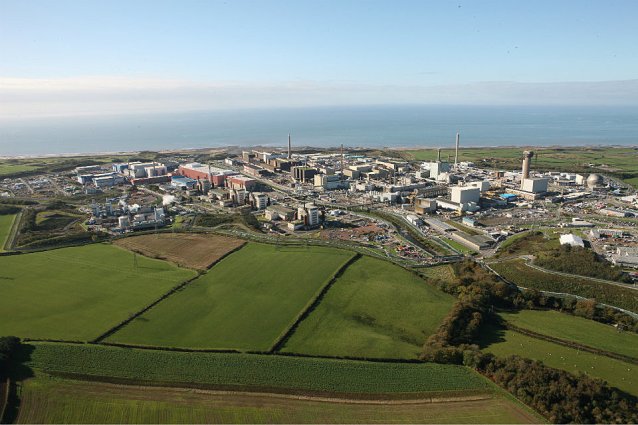
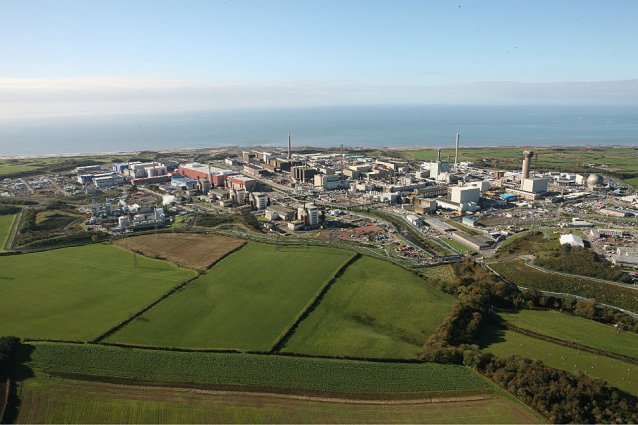
Sellafield
One of the complaints I know about involving a whistleblower in Sellafield, the nuclear waste site, the documents I have seen, show that solicitor Emma Mills, a partner in law firm DLA Piper, had tried to force the person to sign away his rights to make FOI and Subject Access Requests to Sellafield and withdraw a complaint to a regulatory authority about the company’s human resources department. The SRA replied to him that she had behaved correctly without it looks like bothering to investigate further. Yet the Information Commissioner’s Office told me that asking anybody to withdraw FOI’s or SAR’s was outside the law.
The SRA’s figures do contain a caveat. They did not check whether among cases whether the complaint against other activities by solicitors included a complaint about misusing NDA’s, so the figure could be higher. It was too expensive under FOI guidelines for them to check further.
The fact that there is a problem with the misuse of NDA’s is not disputed. A snapshot of the present situation was put together by the Legal Services Board and published this year.
Concealed illegal activity included harassment and discrimination
The report said: “Examples of alleged illegal activity reported by respondents as having been concealed by NDAs included unlawful harassment and discrimination (e.g., on the grounds of sex, race, disability and maternity), sexual assault and abuse, fraud and tax evasion. Many respondents reported NDAs being related to employment disputes. In defining misuse, some respondents questioned whether NDAs should ever be used to conceal misconduct, prevent a victim of wrongdoing from seeking support or reporting to regulatory or law enforcement bodies.”
The report was a snapshot – for example there was just one case cited involving the NHS – when certainly health trusts use them more widely to cover up scandals in the health service. It showed that many employees pushed to sign NDA’s, felt an imbalance of power between their knowledge of what they were signing and the company’s lawyers and were bullied into signing NDA’s. Others felt the firm did not care about their mental state or threatened them with facing an employment tribunal where the company’s lawyers would expose their failings.
There was also a mismatch between the fine words of the evidence given by the SRA to the Legal Services Board who showed they understood that lawyers did pressurise people to sign NDA’s and the actions it took when it received a complaint as shown by these statistics.
What this pointing to is a change in the law governing the issue of Non Disclosure Agreements which should be outlawed if they contain any reference to people losing rights given by Parliament to make FOI or subject access requests or complain to any regulatory authority including the police and HMRC.. What is clear from the Legal Services Board report is that many employees are totally unaware of their rights which can then be exploited by dodgy companies and irresponsible public authorities. As for the SRC this record of handling complaints is abysmal.
There appears to be growing evidence that the Solicitors Regulation Authority,(SRA), the body that regulates and upholds professional standards for lawyers, is inconsistent in its judgements, over sympathetic to lawyers, particularly from large firms, and is not regarded by the public and whistleblowers as protecting their interests.
I took up the treatment of two whistleblowers who separately complained to the SRA about lawyers acting for the Sellafield nuclear waste site and the Nuclear Decommissioning Authority (NDA) recently. . Both complaints were rejected by the SRA who said the lawyer had behaved correctly. Yet they raised serious questions about the use of Non Disclosure Agreements (NDAs) to crush people complaining to regulators and use Subject Access Requests and Freedom of Information requests to obtain information from public authorities.
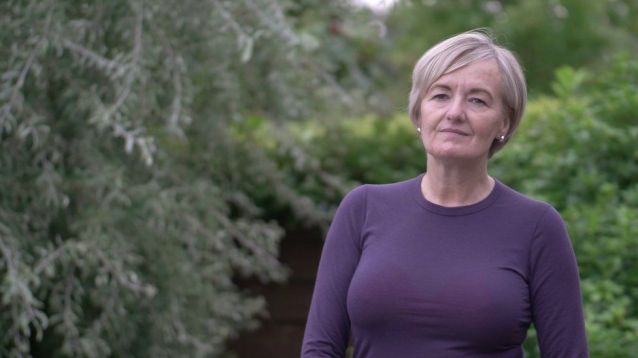
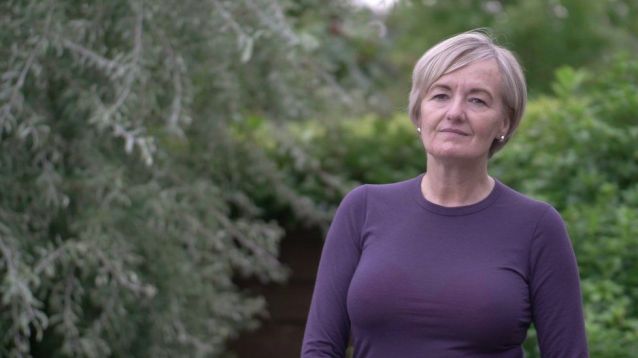
alison McDermott
One, Alison McDermott, who lost a consultancy contract after exposing bullying at the nuclear plant, even asked her former MP, Philip Davies, to complain about her complaint to the SRA being used against her by lawyers in a costs hearing. The chief executive of the SRA, Paul Philip, rejected this and cited the NDA’s view that she had acted “‘vexatiously, abusively, disruptively or otherwise unreasonably’ in the way that her employment proceedings were conducted.” In fact both organisations lost most of their £40,000 claim against her.
She had previously complained about Deshpal Paneseer KC, a barrister from Old Square Chambers, representing the nuclear site, for the language he used against her saying she was a fundamental liar but got nowhere with this.
The costs claim included trying to get retrospectively the costs of a freedom of information request that Sellafield had granted. In fact there is no provision under the FOI Act for retrospective claims – the public authority has to decide within 20 working days of the application whether to grant it or not.
The second whistleblower – who I have not named – complained to the SRA about Emma Mills, a solicitor with DLA Piper, a proposed NDA ( this one known as a COT3) which demanded he withdraw all FOIs and Subject Access Requests and a complaint to a regulatory authority or face a £14,000 costs hearing despite withdrawing his case at an employment tribunal.
He wrote : “I am a Whistleblower acting in the public interest, and I regard the behaviour of Emma Mills and the Respondent as menaces and harassment, pushing me to accede unwillingly into signing a COT 3 contract which is not in my best interest, and under the threat of pursuing me for costs if I do not sign the COT3 contract.”
Again the SRA rejected this and again it is not lawful under the FOI Act as there is no provision in the Act for an organisation to ban a person using FOI. This was confirmed by the Information Commissioner’s Office.
Inconsistences in judgements
The inconsistency is shown by a recent decision by the SRA over a similar case reported on Linked In by Loopline Media. The full article ishere. A law firm Orrick Herrington & Sutcliffe (UK) LLP had been employed by a German firm Payone, a Digital payments service firm, based in Frankfurt with employees in the UK. The report found the law firm had tried to impose a settlement with a whistleblower to withdraw a complaint to the Pensions Regulator that it was breaking UK law by failing to provide a proper pension for employees. The SRA found the law firm had could have negatively impacted the reputation of the legal profession. Orrick’s conduct was found to fall short of the SRA’s ethical standards, prompting regulatory interception by way of a letter of advice.
However the firm have been treated with kid gloves. No disciplinary action is being taken and a full report is not being published. The Pensions Regulator is investigating the firm.
Damning conclusion on the Legal Lens blog
The state of the SRA is thoroughly criticised in a post, also on Linked in, by John Barwell, a data privacy expert. In a damning blog, he points out multiple failures by the SRA. questioning whether a body funded by solicitors can really police solicitors. His damning conclusion is :
“The Solicitors Regulation Authority was established to protect the public and ensure that the legal profession operates with integrity. However, its track record shows that it is a regulator in name only, failing to achieve these goals. The mishandling of cases involving prominent law firms is not just an isolated failure—it is symptomatic of a regulator that has lost its way. Without significant reform, the SRA risks becoming an even more useless entity, incapable of holding the legal profession accountable. It is time for the SRA to step up, enforce its regulations consistently, and restore public confidence in its ability to regulate the legal profession effectively. Until then, it will remain a toothless watchdog, incapable of fulfilling its vital role in the justice system.”
I would add more thing – there is a question mark over its choice of solicitors to do its work – especially if you are a whistleblower in the NHS. The law firm which holds the contract is Capsticks, which also holds a major contract with the NHS to represent trusts. It is fiercely proactive in pursuing whistleblowers trying to expose patient safety concerns in the NHS and earns a substantial income – funded by the taxpayer – to represent trusts in these cases. If Capsticks is seen as bringing the profession into disrepute – a complainant may report them to the SRA only to find that Capsticks handles their cases. I know of one barrister who did spot what he thought was bad behaviour but he told me it was not worth going to the SRA about Capsticks since the SRA was their client.
I asked the SRA for a comment on my two cases last week but they have not released it yet. I will put it up when it arrives.
Please sign letter by whistleblower to Shabana Mahmood
Two years ago some 317 people agreed to sign a letter to Sir Keith Lindblom, senior president of the tribunals, calling for transcripts and recordings of employment tribunal cases to be made available.
Employment tribunals appeared to be one of the few legal proceedings where records were not kept and claimants and whistleblowers – often appearing as a litigant in person – were put at a big disadvantage against big corporate companies, NHS trusts, powerful public bodies like Sellafield, who employed expensive barristers, often using taxpayer’s money, to discredit employees and whistleblowers bringing cases against them.
The companies and public bodies could afford – unlike a litigant in person – to employ notetakers or paralegals – so they had their own records – so if a person appealed against a tribunal verdict – he or she was at a big disadvantage.
Within just seven days we had backing from well over 300 people – from a former economic adviser to No Ten Downing Street, Sir Adam Ridley, 80 medical consultants, numerous GPs, nurses, teachers, to a former deputy groundsman at the Chelsea Pensioners hospital, a lorry driver, an actor, writer and a poet. This suggests there is a wide ranging feeling that there is something wrong in the justice system.
Judge Barry Clarke, President of the Employment Tribunals in England and Wales
Barry Clarke, the head of the employment tribunals in England, responded to the letter by announcing, where possible, employment tribunal proceedings would be recorded, so they would be transcripts of the proceeding.
But now two years later this has proved to be a Pyrrhic victory – hence the need for a fresh letter. It has also reached an impasse with the top judges in the employment tribunal digging their heels in to prevent further change. Thus only an appeal to the Lord Chancellor can remove this obstacle.
What has happened is that where tribunals have recorded proceedings, obtaining a transcript, if a judge allows it, costs thousands of pounds, well beyond the means of most claimants.
Where there is no recording the only record of proceedings is the judge’s notes. Judges have jealously guarded releasing this to the public – but it is the only record a judge covering an appeal in the case will see.
First it took a considerable time for the judiciary to concede this was the official record – arguing it was a private and personal note. Now Barry Clarke has conceded this is an official record of the case but does not want this released to the claimant, the public or the press. This hardly fits with the image that Britain’s legal system is proud of its reputation for ” open justice.”
Alison McDermott
Alison McDermott, a whistleblower who challenged Sellafield over its toxic culture towards its employees, has drafted a letter to go to the Lord Chancellor. You can read her blog and the text of the letter here . All you have to do is text Yes to Alison if you want to sign.
Last time the strength of feeling of the need for change was very high. My blog on the campaign is here. It also lists the 317 who signed. This time Alison is not planning to publish all the names.
A very disturbing story is emerging from Sellafield about attempts by the management and its lawyers to make whistleblowers sign away their rights to make freedom of information and subject access requests to their organisation or face large costs bills through the employment tribunal system.
This attempt – when I checked with the Information Commissioner’s Office – is outside the law as Parliament gave all UK citizens the inalienable right to make FOI requests to public authorities and subject access requests. No public sector organisation can ask a person to withdraw a subject access request or an FOI request let alone use it as bargaining chip in litigation at an employment tribunal.
Yet lawyers either through total ignorance about the FOI Act or a deliberate attempt to con whistleblowers threatened with costs into giving up their rights under British law appear to be using this as a tool to harass whistleblowers.
The misuse of FOI legislation has emerged in two whistleblower cases involving Sellafield and the Nuclear Decommissioning Authority. One is well known – the case of Alison McDermott, a human resources and diversity consultant, who has been involved in a long battle with the nuclear authorities after they attempted cover up a toxic and bullying culture.
The second which I covered recently involved the tragic case of a whistleblower who self harmed when threatened by Sellafield with costs after he withdrew a claim at an employment tribunal.
Documents from Sellafield that I have seen reveal that a legal document drawn up by their lawyers and Emma Mills, a partner with DLA Piper, an international law firm, included this demand:
“The Claimant hereby further agrees …to withdraw any and all outstanding data subject access requests and/or Freedom of Information requests.”
For good measure it added that he was “to withdraw any complaint made to the Chartered Institute of Personnel and Development (CIPD).”
The withdrawal of FOI requests is directly linked to Sellafield’s claim for £14,000 costs against him after he withdrew his claim at the tribunal. If he does the legal document reads: “The Respondent hereby confirms that it shall immediately write to the Employment Tribunal in the terms of the letter at Appendix withdrawing its outstanding application for costs against the Claimant in relation to the conduct of the Tribunal Claim.”
Luckily the whistleblower was savvy enough not to agree to sign this. As he wrote to the management:
“A COT3 [ name of the document] that limits my ability to exercise my statutory rights under the Freedom of Information Act 2000 (FOIA) and the General Data Protection Regulation (GDPR) could be considered an undue restriction.”
When I put what had happened at Sellafield to the Information Commissioner’s Office this was the response from a senior press officer: “Everyone has the right to ask an organisation for copies of the personal information held about them. As well as the right to request recorded information held by public authorities.“
“There is no option in data protection or freedom of information law for organisations to remove these rights for an individual, and the ICO would intervene where requests were not being handled in line with the law. “
Sellafield are now saying: ” Sellafield Ltd have not breached any legal requirements, and involved ACAS as an intermediary.
“The individual is not subject to any restrictions preventing them from making an information request under either FOI or data protection legislation.”
That is correct but would not have been had the whistleblower signed the agreement.
Emma Mills; Partner at DLA Piper
I contacted Emma Mills , the partner with DLA Piper, who was paid by Sellafield, to draft the agreement directly, pointing out that she did not seem to know what the Freedom of Information Act says by drafting such a demand which appears to be outside the law. She has not responded.
Now there is another issue where the Nuclear Decommissioning Authority (NDA) lawyers have linked applications for FOI’s and subject access requests to a cost hearing against a whistleblower.
During a cost hearing against Alison McDermott two more lawyers, Jonathan Coley of Pinsent Masons and Rachael Levene, a barrister with Nine StJohn Street chambers, which accused her of being disruptive, abusive and vexatious in bringing a case against the NDA, cited FOI and DSAR requests as costing the authority a lot of expense. The accusation read to recover costs: “Submitted four Data Subject Access Requests and six Freedom of Information Requests over the last three years, the majority of which were complex and involved significant work and additional legal time and cost by the Second Respondent to answer. “
Rachel Leve KC at Nine St John Street Chambers
The £20,000 cost claim was thrown out by a judge at a recent hearing but again this claim shows total ignorance of FOI legislation.
The correct procedure if the NDA wanted to challenge the cost of the FOI requests ( it can’t charge people for subject access requests) would have been to raise the cost issue when she submitted them not tag the costs to the authority at a later hearing to intimidate the whistleblower. The NDA had granted the requests – it can’t then demand reimbursement later. Of course if it had at the time Alison would have the right of appeal right up to the Information Commissioner’s Office and knowing her determination would have had no problem in doing so.
I suspect that the behaviour of these lawyers to restrict people’s rights to use freedom of information and subject access requests could be more widespread than we know – because of the secrecy surrounding non disclosure agreements. It appears they are backed up by the Solicitor’s Regulation Authority if they do so but that is for another story.
I would make two points. If you are presented with an NDA containing such restrictions send it to the Information Commissioner’s Office before you sign it. Secondly if you have had attempts as a whistleblower to silence you by restricting your rights under this legislation let me know.
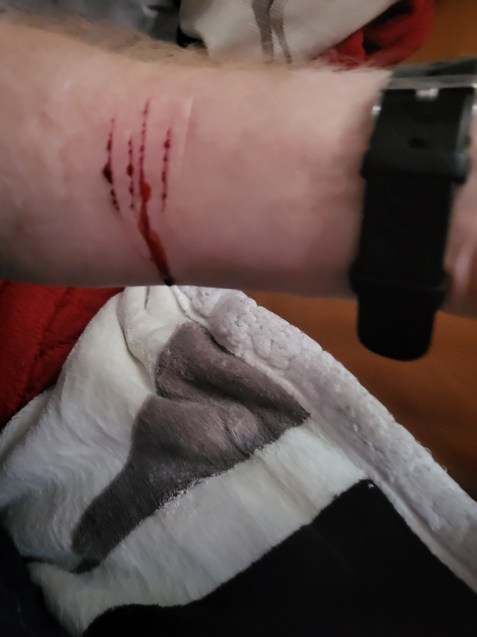
This picture is emblematic of the desperate straits some whistleblowers end up after they raise safety issues. They find themselves facing persecution by their bosses, horrendous costs they cannot afford for taking a case to an employment tribunal and put under extreme pressure by lawyers to sign an agreement taking away they rights to ever talk about the safety problem again and in this case lose their legal right to put in a Freedom of Information request or Subject Access Request to Sellafield for the rest of their life.
David Peattie, chief executive officer of the NDA Pic credit: gov.uk
This picture was sent as a last gasp plea to David Peattie, chief executive of the Nuclear Decommissioning Authority; Euan Hutton, chief executive of Sellafield; David Vineall, Sellafield’s group chief people officer, the Office for Nuclear Regulation and Claire Coutino, former Tory secretary of state for energy security. Only Claire Coutino expressed concern enough to want to meet the whistleblower but she was persuaded by her civil servants not to do so. We now have a new energy secretary, Ed Miliband following Labour’s landslide election victory, and I am planning to contact him to draw his attention to how whistleblowers are treated at Sellafield.
Ed Miliband, Labour’s new energy security secretary
To protect his privacy I am not naming the whistleblower after publishing such a personal and disturbing picture. But another source thought it was in the public interest to share a large file of emails and documents which reveal his correspondence and the reaction of the most senior figures inside Sellafield and the NDA.
The man involved was a loyal Sellafield employee for decades- in a potentially highly dangerous nuclear waste site where over 140 tons of plutonium is stored including from nuclear military waste warheads – and he was one of a large number of people employed to secure safety at the plant.
Some eight years ago he began to raise safety issues leading to what is said to be a highly critical issue. An email sent to the Office for Nuclear Regulation, the watchdog body, outlines his story.
After raising this at a whistleblower pre meeting in 2022 followed by a meeting with the former chief executive, Martin Chown, he suddenly found he was subject to an internal disciplinary inquiry by Sellafield based on the bogus claim that he had brought alcohol on the premises which is strictly forbidden at Sellafield. Terrified that they would try to pin this false claim on him, the employee voluntarily went to a local police station and submitted to a blood test, which revealed that he had zero alcohol in his system.
Euan Hutton, chief executive of Sellafield Pic credit: Gov uk
When he challenged this pointing out that this could be verified by the plant’s security cameras it was found that the film when he entered the plant had been “inadvertently wiped “. If this is correct, then this is terrifying lapse in security for Europe’s most dangerous nuclear site and fuels existing concerns about Sellafield being prosecuted for criminal offences for IT breaches. An inquiry under his senior manager, concluded against him and he was served with a ” final written warning.”
The then HR manager, Emily McDonnell, who claimed she saw the employee drinking alcohol on site, is notably the same individual involved in Alison McDermott’s whistleblowing case. McDonnell accused McDermott of poor performance, but her word document supporting this claim was missing. At McDermott’s ET hearing, it was revealed that McDonnell had written her complaint letter on a personal computer and “forgot to save it,” leading the ICO to rule the letter unlawful. This pattern is striking: in both cases, McDonnell made accusations with evidence that was either missing or questionable. Ms McDonnell now holds down a senior HR role at BAE systems in Barrow in Furness – I wonder if her new employers are aware of her involvement in these two key cases?
David Vineall, human resources director, Sellafield. Pic credit: gov.uk
The employee decided to go to an employment tribunal claiming detriment under the whistleblowing legislation. But after a one day preliminary hearing as a litigant in person he found it too much.– at the forefront of his mind was the also way Sellafield relentlessly pursued Ms McDermott for costs for three years, without remorse – see link here.
He told the Office for Nuclear Regulation: ” I gradually realised that I was woefully ill-equipped, both psychologically, and in terms of the necessary skills, and expertise to present and argue my case. The remorseless pressure from Sellafield Ltd was understandably taking its toll, and after a prolonged period of relentless pressure, including sustained pressure to sign a highly questionable, and restrictive COT3, ( equivalent to an upgraded non disclosure agreement) I capitulated and withdrew my Employment Tribunal claim, I could not face the prospect of facing a judge, and Sellafield Ltd.’s QC in court.”
Emma Mills, DLA Piper Pic credit: DLA Piper
So he withdrew his claim and was immediately served with a costs order for £14,000 so Sellafield could recover the costs of the hearing. The woman solicitor behind both the costs order and the non disclosure agreement was DLA Piper lawyer, Emma Mills. She is the same lawyer who assisted barrister Deshpal Panesar in the costs case against another Sellafield whistleblower, Alison McDermott. In that case, Judge Robertson dismissed all the grounds used by Sellafield and the Nuclear Decommissioning Authority against McDermott to recover costs and refused to grant any of the £20,000 claimed, stating there was no basis for Panesar’s claim that McDermott had acted dishonestly. (see link here)
The papers show how much Emma Mills was claiming. She was paid £243.14 an hour for attending the 2.6 hour hearing, £232.22 an hour for preparing the case and another £243.14 an hour for dealing with other matters connected to the case. Altogether she earned over £8600 and the whistleblower was expected to pay the bill.
Banned from making FOI and subject access requests to Sellafield
She was also behind the drafting of the highly restrictive non disclosure agreement. As well as silencing the whistleblower it demanded he withdrew a complaint he had lodged with another standards regulator, the Chartered Institute of Personnel Development about HR staff. This came after Ms. McDermott being fired after she submitted a report in 2018 highlighting serious dysfunction in the HR department, raising questions about what they are trying to hide about HR operations. Under it his right to use freedom of information and subject access reports about Sellafield was banned. I quote he was required “to withdraw any and all outstanding data subject access requests and/or Freedom of Information requests” and not pursue any further grievances.
As he said: “A COT3 that limits my ability to exercise my statutory rights under the Freedom of Information Act 2000 (FOIA) and the General Data Protection Regulation (GDPR) could be considered an undue restriction.” He also wrote to David Vineall, Chief People Officer at the NDA (Sellafield’s governing body) – how could he possibly condone the employee being told that he could not speak to his own regulator, the CIPD?
Driven to despair after reaching out to the most senior people at the NDA, including Group People Officer David Vineall, the CEO of the NDA, Peattie and the CEO of Sellafield, Euan Hutton, he was left without support. Hutton refused to intervene, claiming he could not halt the legal process for costs. On November 16 last year, following numerous emails to Hutton that highlighted his acute distress and pleaded for the withdrawal of the costs threat, he self-harmed. Hutton maintained it was a matter for the lawyers. Even after top officials and Ms. Mills saw photographic evidence of his distress, no immediate action was taken.
He said: “Following my self-harming incident, it took Sellafield Ltd nearly two and a half months to withdraw the ET court costs application order. This delay can only be seen as a deliberate attempt to exploit my vulnerability, and extract a concession. Sellafield Ltd.’s delay in withdrawing the threat of court costs unnecessarily prolonged my mental anguish, but they were not finished with me”.
He was informed this year by Manchester Employment Tribunal that Sellafield had withdrawn it costs threat.
But then he was left at home, cut off from access to Sellafield and had his enhanced sick pay withdrawn by his line manager. His manager is insisting he should have a voluntary medical check with the company to see if he is ” fit for work”. Sellafield are now saying he cannot cope and from April 24 this year he has received no money from the public company.
“My manager has now placed me on involuntary sick leave, and against my will. This action is particularly concerning as he cited extracts from my emails relating to the fact, I felt unable to cope, and inappropriately linked it to my disability as justification for placing me on sick leave.”
“My doctor has diagnosed work-related chronic stress, and is in agreement that Sellafield Ltd are responsible for my chronic medical condition. My condition now impacts every aspect of my waking life. I am already on medication to manage my condition, even so, I am constantly anxious and in a state of worry, finding it ever harder to concentrate, or sleep. The stress and anxiety are socially debilitating, and over time I have become ever more cynical, and I have largely withdrawn from friends, avoiding company and socialising.
“At times I cannot see a way forward, and feel helpless, and this feeling of dread has intensified over time. I don’t know where to turn for help, and who I can trust. I regard the constant reminders of where I can get help from Sellafield Ltd, as suspicious and disingenuous.”
In the meantime the bosses in charge of Sellafield say it is a wonderful place to work. In various YouTube videos, Euan Hutton, the chief executive and former mental health champion, espouses the importance of treating people with kindness, yet his actions towards this employee are anything but. He says that “kindness is putting in the time to think about how different people act differently, that’s what kindness is all about”.
A spokesman for Sellafield faced with an article in The Guardian about the toxic culture there, published last December, just after this employee had self harmed said: “There is no place for bullying and harassment at Sellafield. We do not tolerate it and where we find it, we take action. If anyone has information related to employee misconduct we urge them to come forward so we can investigate.
“We’re committed to ensuring all of our employees are respected, included, and able to perform at their best.
As for the protective disclosure about nuclear safety by this employee as far as I know nothing has been done about it.
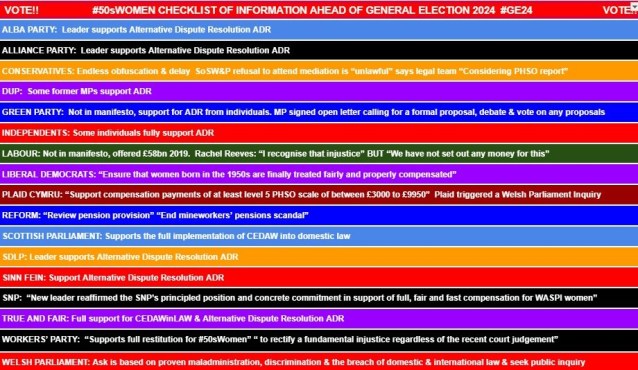
The Green Party emerge at last moment as offering one of the better deals
The need to pay 3.5 million 50swomen compensation or restitution for their delayed pensions has hardly been a keenly debated issue in this election campaign. In fact it has hardly been mentioned by the main parties.
This table above gives an idea where the parties stand on the issue and does not make good reading.
It is quite clear that whoever becomes PM on Friday – more likely Sir Keir Starmer rather than Rishi Sunak – has no liking for an early decision to pay out the money. After the Parliamentary Ombudsman ‘s report on giving guidance to compensate people up to £2900 for partial maladministration – both the Labour and Tory Party still insist they have to study his findings.
The only word from the Tories is that they will make an ” appropriate decision ” at the time. This could be anything from a low offer or complete rejection- as Department for Work and Pensions civil servants argued in a submission to the Ombudsman’s inquiry.
Labour have done a complete U turn since the 2019 general election when the the shadow chancellor John McDonnell promised £58 billion compensation. Now his successor Rachel Reeves recognises there has been an injustice but has set aside no money to pay them. There is no mention in the Labour manifesto – instead it looks like Rachel Reeves is to prioritise getting equal pay for women in work instead by implementing a clause in the Equality Act. This would meet the UK’s commitment under the UN Convention on the Elimination of All forms of Discrimination against Women (CEDAW) but ignore discrimination caused by the delay in paying out pensions to 50s women.
So voting Conservative or Labour on this issue could mean the 3.5 million women could get nothing in the next Parliament.
The Lib Dems are far too vague about their support – just saying that 50swomen should be” treated fairly and properly compensated ” – but they don’t put a price on their compensation so you have no idea what they are going to support.
Others like the Scottish National Party who were strongly critical of the last government taking no action – do put a price on their compensation – saying it should be what the Ombudsman recommended and in line with what WASPI is demanding.
Quite a number of parties make it clear they support mediation – or Alternative Dispute Resolution. These include the Scottish Party, Alba, and the Alliance Party, Sinn Fein, the SDLP and DUP – virtually all Northern Ireland parties.
Mel Stride refused any mediation
The problem with this is that Mel Stride, the outgoing work and pensions secretary, will not enter talks so no progress can be made on this front – and unfortunately CEDAWinLAW had to abandon their judicial review against him to make him. It is not known if Labour forms the next government whether it will entertain agreeing to mediation.
Plaid Cymru has been very vocal about supporting 50s women and said it would want Parliament to pay higher compensation than the Parliamentary Ombudsman recommended going up to £9950. The party has also pressed the Welsh Assembly to hold an inquiry into how 50swomen have been treated.
George Galloway’s Workers Party is backing full restitution for the 3.5 million women and Gina Miller’s True and Fair Party is supporting mediation and CEDAWinLAW. Nigel Farage’s Reform Party does not give it a mention.
Green Party has strengthened its support for 50swomen
The Green Party are the only party to strengthen its stance on 50swomen during the election campaign. The issue is not mentioned in the manifesto but it has now decided to work with CEDAWinLAW. First Adrian Ramsay, the co-leader of the party, disclosed his mum was affected and backed Waspi’s campaign to get compensation for 50swomen. Then the Green Party Women group announced it would join the ADR group demanding mediation and tweeted “GPW have joined the #ADR group in support of mediation for #50sWomen. These women need JUSTICE. No procrastination. No kicking it down the road. We join@CarolineLucas, our own Co Chair @tinalouiseUK & some of our other PPC’s who have pledged to support. #CEDAWinLAW .”
Amanda Stones from the Green Party Women’s Committee said “As the special interest group in the Green Party that advocates for Women and Girls, and campaigns against sex discrimination we are very determined to try and get this historical discrimination rectified. Many of our members are 50sWomen including some on our own committee. We are extremely pleased to have joined the ADR group and we will be calling on any newly elected Green MP to demand justice for these women from whoever forms the next government. This ongoing discrimination must end.”
Another Green Parliamentary candidate Nataly Anderson, standing in Woking, announced on X she was backing CEDAWinLAW.
So who do you vote for? I am not telling you how you should vote but it seems obvious that a vote for the two biggest parties is unlikely to further your cause. So it will depend on the constituency. A vote for the Greens would help your cause in places like Brighton Pavilion ( Caroline Lucas’s old seat) Bristol Central, Waveney in Norfolk and North Herefordshire where the party stands a chance of winning and means you would have a voice for your cause to put pressure on the government.
In Northern Ireland any of the parties could further your cause, though Sinn Fein never take their seats in the UK Parliament. In Scotland a vote for the SNP or Alba would keep the issue alive while Plaid Cymru in Wales are taking a much stronger line than Labour.
Given there are 3.5 million women who have the vote the decision they take could influence the result of the election. The tricky decision in most of England would be balancing whether you wanted to get rid of the Conservatives at all costs which means voting for either Labour or the Liberal Democrats but that would depend on how strongly you feel on other issues.
Taxpayers left with a £1 million bill as whistleblower Alison McDermott wins case not to pay nearly all “unsafe” costs
Sellafield and the Nuclear Decommissioning Authority were all but humiliated in a court judgement in their second attempt to get costs against whistleblower human resources consultant Alison McDermott for exposing bullying and alleged sexual harassment at the plant.
The Nuclear Decommissioning Authority (NDA) and Sellafield failed entirely to get any costs for its main contention that Ms McDermott had acted ” unreasonably” throughout the case. The only award for costs was £5000 shared between Sellafield and Heather Roberts, Sellafield’s human resources director, where the tribunal believed Ms McDermott had been unreasonable in alleging crucial metadata was ” tampered with” by a DLA Piper lawyer, Emma Mills, acting for both of them.
I watched the hearing and it was very clear that Alison McDermott, appearing as a litigant in person with no legal representation, was cool, collected and precise in putting forward her case why she should not pay costs while the opposing highly paid legal team were making absurd over the top claims against her and defaming her character. No wonder these expensive lawyers lost the case and the plot.
The long running case has cost the taxpayer around £1m to bring through the tribunal system and this last costs hearing alone landed Sellafield and the NDA with a £100,000 bill for the taxpayer just to recover £5000. Her findings in her report, commissioned by Sellafield itself, have made national news in the UK and Norway, because it raises nuclear safety issues.
Judge Robertson was critical of the two barristers acting for Sellafield and the NDA and the way they handled the case.
Rachel Levene KC Pic Credit: Chambers and Partners
He found Rachel Levene, who acted for the NDA, had failed to produce any substantive arguments that Ms McDermott should meet £20,000 of the costs. The £3000 a day barrister tried to argue that Ms McDermott was misconceived in bringing the case, had lied in her evidence and ” deliberately exaggerated her evidence” throughout the proceedings. This was rejected by the judge. She put forward six allegations against her which were all rejected for not being specific enough.
He said “Ms Levene couches her allegations in the most general terms. As to allegations (1) and (4), she makes no specific case about the unreasonableness of the claimant’s complaints to the solicitors’ regulatory body or her Freedom of Information or Data Subject Access Requests or why such matters, which did not arise in the course of the proceedings, should lead to a costs sanction against the claimant in the proceedings.As to allegations (2), (3) and (6), Ms Levene makes no case that any specific applications for disclosure against the second respondent were unreasonable. She makes no case as to why the application to strike out the second respondent’s response based on failures in disclosure was unreasonable. She does not explain in what specific ways she contends that the claimant’s amendments to her claims were unreasonable.
The judge also accepted that Ms McDermott was right to turn down an offer of £160,000 to drop the case from the NDA- which Ms Levene tried to make as an example of “unreasonableness”.
Deshpal Paneseer KC Pic Credit: Old Square Chambers
Judge Robertson was also critical of Sellafield’s barrister, Mr Deshpal Paneseer, KC, from Old Square Chambers, who also attacked Ms McDermott for being ” fundamentally dishonest” only using more extravagant and denigrating language. Despite the EAT judge previously saying Ms McDermott was not dishonest he persisted un this. He also contended that her case had “no prospect of success” from the start and that she should not have made serious allegations against very important people.
The judge ruled:” The Tribunal was not persuaded by Mr Panesar’s assertion that the claimant’s allegations were particularly serious because of the standing of the individuals about whom they were made. All allegations of whistleblowing or victimisation are serious and there was nothing unusual about the individuals in this case.( my emphasis) Mr Panesar KC made too much of this. Second, Mr Panesar KC submitted that the claimant had been untruthful in multiple fundamental regards…..But the Tribunal has not found that the claimant pursued claims had no reasonable prospect of success and the first and third respondent’s second application for costs fails.”
One key ruling from this tribunal is that Judge Lancaster, who heard the original case , said she was not a whistleblower. This hearing reaffirmed that one of her complaints about sexual harassment was a protective disclosure – confirming she was a whistleblower. Judge Philip Lancaster’s attitude towards women is also under fire as he is facing complaints from women who have appeared before him at previous employment tribunal hearings.
This was the second time Sellafield and the NDA had tried to get costs from her – even after a High Court EAT judge had already ruled that the costs imposed at a previous hearing were “unsafe” so the nuclear bodies should have known they had little chance of success. As it is the money they have recovered is not even enough to pay for a day of Mr Paneseer’s charges which run at £5500 a day.
There is an extraordinary twist over the metadata Sellafield and Heather Roberts were awarded costs of £5000 against Ms McDermott for alleging their lawyer had ” tampered with it”. The metadata produced at the last minute in the tribunal case after Emma Mills, a DLA Piper oawyer said she had overlooked because of an oversight.
The metadata included criticism of Ms McDermott had been produced on the home computers of Sellafield staff – putting at risk the security of the nuclear plant. A complaint to the Information Commissioner’s Office led to the criminal prosecution of Sellafield and it was found guilty this week.
Hubris of the directors
Frankly this whole proceeding against Ms McDermott by Sellafield and the NDA shows the hubris of the directors of both organisations. The lawyers must have been encouraged to over-egg their case against her, leading the judge to throw it out. Any sensible organisation already warned by another judge that the costs were ” unsafe” would have had cause to think again. Instead they ploughed ahead because they knew the taxpayer would foot the bill. I also think this was a deliberate ploy to cause more distress to Ms McDermott because they hated her findings about the way the nuclear waste plant was run. It may also be aimed at frightening anybody wanting to raise issues like sexual harassment, bullying and nuclear safety. This is not a good place for any business, let alone one dealing with such dangerous materials as nuclear waste.
The King’s Birthday Honours List contains many eminent people from artist Tracey Emin to the not so well known Lord Etherton KC, a retired judge, who compiled a meticulous ground breaking report in 2023 into the disgraceful and inhumane treatment of gay people in the military prior to the lifting of the ban in 2000.
But there are two people who simultaneously received knighthoods which are open to question. They are Robert Behrens, the retiring Parliamentary Ombudsman and Peter Schofield, the current permanent secretary at the Department for Work and Pensions.
Both were at opposite ends over the huge controversy over whether 3.6 million people born in the 1950s should get restitution for maladministration and discrimination over the six year delay in getting their pensions.
Robert Behrens was responsible for compiling a report on whether there was maladministration ( his remit did not have to consider discrimination) over the ministry’s handling of the delay. It was the Ombudsman’s biggest report and he took years to do it, awarded only partial maladministration, and funked giving an award because of ministry opposition, leaving MPs to have to decide whether they get any money.
Peter Schofield was in charge of the department, which was not only totally opposed to giving them a penny, but under his leadership put in a submission to the Ombudsman exonerating his ministry, saying it not made even one mistake, should not be questioned by MPs about it, and further the 3.6 million seeking any money were likely to be fraudsters putting in false claims.
Let down 3.6 million women
Both of them let down 3.6 million law abiding women safe in the knowledge that sooner or later most of them would be dead. But for the government of the day, this was manna from heaven, saving them billions of pounds owed to the women, on top of inevitable pay outs to contaminated blood victims and sub postmasters. I suspect the fact that they were elderly women, who wouldn’t blockade the roads or disrupt public life like Extinction Rebellion and unlikely to be sprightly enough to climb on the roof of Rishi Sunak’s house in protest, was also a factor in their calculations.
No wonder a grateful Establishment would reward those who saved them a lot of money. Of course there is no mention of this in the citations given for the awards, which would add insult to injury. Instead it is tactfully avoided and the awards are for other matters.
For Rob Behrens, and this was emphasised in a tweet on X from his office, the award is more for his role as Health Service Commissioner. He has been outspoken about the toxic culture inside the NHS when patients complain, and in a report called Broken Trust was critical of clinical failings and the way some trusts acted in handling complaints. He followed this up with a letter to the Department for Health jointly with Henrietta Hughes, the Patient Safety Commissioner demanding a fundamental change in NHS culture from a combative to a restorative approach in handling complaints and ensuring there was a patient’s voice on the trust’s executive.
The Ombudsman’s press office reaction to his handling of the 50s women’s case was: “We have set out our findings following a robust, thorough and detailed investigation regarding how changes to the State Pension Age were communicated. It is now for Parliament to take forward and intervene to hold the Department for Work and Pensions to account and provide woman affected with the quickest route to remedy.” I’ll leave you to judge whether that is an adequate explanation.
34 years spent by the DWP producing inaccurate accounts
Now the award to Peter Schofield has to be taken against the background of the ministry’s 34 years of failure to produce accurate accounts because it cannot produce accurate figures on benefits. It is the worst performance across Whitehall and is regularly criticised by the National Audit Office who audit their accounts. According to the citation his award is for the speedy delivery of benefits, especially during the pandemic and for a culture encouraging innovation. I have asked the department to spell out what this means but have had no reply to date.
I notice the delivery of pensions is not cited as a reason to give him a knighthood. This is hardly surprising since the ministry is in the middle of having to pay out millions of pounds to existing pensioners, mainly women again, who have been shortchanged because of the ministry’s mistakes in calculating them. It also has a history of not wanting to implement decisions from the Ombudsman in anything but the most rudimentary way such as over the guaranteed minimum pension .
So do both of them deserve a knighthood? I think the handling of the 50swomen pensions fiasco should have been a factor in NOT awarding one because of the huge number of people who have so far ,been left with nothing. To be fair, Rob Behrens, has been outspoken as Health Services Commissioner, but I have noticed when handling complaints himself, he has been more cautious in his findings.
Orgreave rally being held in Sheffield tomorrow by the Orgreave Truth and Justice Campaign
Campaigners who have fought for years for justice following the infamous ” Battle of Orgreave” during the miners strike and the Hillsborough tragedy have convinced Labour to introduce a new law and hold a long demanded inquiry.
The decision, in the small print of the manifesto, to hold an inquiry into the 1984 “Battle of Orgreave ” where 6000 police fought striking miners picketing a coke plant, has been demanded for years by the Orgreave Truth and Justice Campaign and is now in Labour’s manifesto for the next Parliament.
The decision comes at a key moment when a new documentary on Orgreave will be screened at the Sheffield DocFest on Sunday. The director, Daniel Gordon of Strike: An Uncivil War, has wanted to make the film for a decade after seeing links between South Yorkshire Police handling of the strike and the treatment of families of the 97 Liverpool football fans who died when an overcrowded stand collapsed at Hillsborough in 1989. He gives an interview here to the BBC.
Any such inquiry is likely to be forensic into the police methods used against the miners. My own book on the miner’s strike, Marching to the Fault Line, written jointly with author and playwright Francis Beckett, points a finger at Peter Wright, then chief constable of South Yorkshire Police, who died in 2011, who after Orgreave, wrote a memo released to us under freedom of information, called for Arthur Scargill, to be prosecuted for conspiracy. The memo reached ministers but was blocked by the Director of Public Prosecutions for lack of evidence. Other very limited circulated memos, show that Thatcher, and Cabinet ministers Leon Brittan, Norman Tebbit and Peter Walker had drawn up a strategy in advance for this big confrontation with the pickets with Ian MacGregor , head of the Coal Board and Bob Haslam, chair of British Steel.
Labour’s decision to call for an inquiry has one extraordinary and unlikely precedent. Some nine years ago Theresa May, met with the Orgreave Truth and Justice Campaign, to set up such an inquiry.
As my blogreported then: “Theresa May agreed to meet an extraordinary delegation of Labour MPs, lawyers, ex miners through the Orgreave Truth and Justice Campaign ( see their website here) at the end of July and has agreed to accept a detailed legal submission from Mike Mansfield and three other distinguished barristers arguing for the case to set up an independent inquiry.”
This never happened because Theresa May’s successor as home secretary, Amber Rudd, blocked the inquiry.
Bishop James Jones – who chaired the Hillsborough Independent Panel Pic Credit: BBC
The other significant promise by Labour which could have wide ranging ramifications, is a long demanded implementation of the Hillsborough Law, sought after the independent panel inquiry by Right Revd James Jones, the former Bishop of Liverpool, which forensically examined the tragedy.
This would introduce a duty of candour for all public officials – similar to the professional duty for doctors in the NHS – and say they had to co-operate and assist any public inquiry investigation. It would also provide that taxpayers money will be available for the victims or the bereaved needing legal representation at any inquiry. Effectively this would provide a level playing field between the authorities – who are already funded by the taxpayer – and those who were affected by any future scandal. This has a widespread application – and would affect future inquiries into NHS failings and would have been extremely helpful to those at the Grenfell, Contaminated Blood, and Sub Postmasters inquiries.. Also it would make it very difficult for officials to try and conceal the truth as it would be against the law.
Given that Labour are under fire for producing a cautious and lacklustre manifesto in other areas I am surprised the party has not highlighted these changes. There are also plans to reform the House of Lords, strengthen the independence of the Prime Minister’s adviser on ministerial interests, curb MPs having second jobs and set up an independent Ethics and Integrity Commission. Why have we not heard more of this from Sir Keir Starmer?
John Webster : NHS executive criticised by employment judge
UPDATE: Since publishing this article I have learned that no fewer than four Capsticks lawyers were involved in trying to remove the judge and that the firm was representing BOTH the Integrated Health Board and the NHS human resources firm. Both would have known that there were draft grievance documents that had not been disclosed to the tribunal.
The law firm Capsticks – which has a national contract with the NHS to handle employment tribunal cases – was behind an attempt to remove a judge from hearing a constructive dismissal case involving a senior official at a NHS clinical commissioning group in Norfolk.
The case – highlighted by BBC Norfolk yesterday- led the judge calling for disciplinary action to be taken against senior staff at the board for the way they treated and lied to the claimant.
Mr Clive Rennie, an assistant director, won his case for constructive dismissal against NHS Norfolk and Waveney Integrated Care Board – the successor body to the Norfolk and Waveney Clinical Commissioning Group who had previously employed him.
But not before the tribunal had spent days wrangling to get draft grievance documents which the group said did not exist while the author of the documents, NHS human resources manager Steve Stavrinou, sat at the back of the hearing, not saying a word.
He had been called in by the commissioning group to prepare the grievance papers from NHS Arden and Gem Support Unit which provided HR Services to the group. At first the existence of the draft papers were denied and then excuses such as the managing director being on holiday were used to deny the judge’s order to deliver them.
Judge Postle’s judgement, which was published yesterday, reveals that suddenly there was an application to make him recuse himself from the tribunal. The request came from Capsticks, who were the solicitors for both NHS Arden and Gem Support Unit. and for the Integrated Care Board
Until then, as the judge noted, the person from Capsticks had not been present at the tribunal to hear the proceedings but called for the judge to go.
Alistair Kernohan – Capsticks
Alistair Kernohan of Capsticks,, was in fact the partner, based in Leeds made his case by email.. Un fact Capsricks came to hearing mob handed. Both Miss Whiteley and Miss Aslam were present all the time. They were then joined by Nicola Butterworth, who sat the back of the tribunal. According to Capsticks website. ” Nicola undertakes a broad range of employment litigation work, including unfair dismissal, discrimination and whistleblowing claims. She advises pre-claim and at all stages during the litigation process. Nicola is undertaking a regular secondment at one of the firm’s clients, working closely with the HR team.” Looking at the judgement it looks like the judge did not know she was also there.
Mr Kernohan said: “Employment Judge Postle has demonstrated the premature formation of a concluded view in the Claimant’s favour without properly considering representations from the Respondent and before the Respondent has been able to put forward its evidence. … “Employment Judge Postle’s inappropriate conduct, tone and disparaging comments towards the Respondent and its representatives, has crossed the line between what is tolerable and what is impermissible, to the extent that his comments would give an appearance to the fair minded and informed observer that there is a real possibility that the Employment Judge will carry into his judgment the scorn and contempt his words and behaviour convey.
“Employment Judge Postle has made unnecessary and inappropriate criticisms of the conduct of the Respondent and its representatives which he has expressed in absolute terms, which failed to leave open the possibility of him considering an explanation, despite not having heard or in some cases even invited evidence or submissions from the Respondent’s representative. … “Employment Judge Postle has allowed and facilitated inappropriate conduct of the proceedings by the Claimant’s representative, allowing such conduct to go unchallenged despite representations made by the Respondent or even, on occasion, failing to allow the Respondent the proper opportunity to make representations.”
Marsha Robinson and Neil Ashley of Paladin pic credit: East Anglia in Business
The judge asked Mr Neil Ashley, Mr Rennie’s counsel to comment and records it in his judgement
He told the court: “It is important that we are astute enough to identify that any evidence that such an Application made can be used as a device for a party which finds itself in difficulties because of the quality of its case. Mr Ashley went on to say that he has been practising for 24 years and he had never seen such deplorable conduct on the part of the Respondent’s Solicitors. He stated that rarely has he seen such a ‘car crash’ of a case presented before a Tribunal. Mr Ashley went on to say that at the outset, the Tribunal was told by a Solicitor Advocate that there was no drafts of the Investigatory Report and none had ever existed. This was echoed audibly by Miss Aslam, Solicitor.”
“Two Officers of the Court sat here and told the Tribunal that a 20 page perfectly polished Report had never been the subject of any drafting. This is absurd to the extreme and obvious to us all that it cannot be and no doubt Miss Whitely ( the board’s solicitor) made the statement recklessly and off the cuff without any thought to what she was saying. It was, to my mind, utterly untruthful.”
Miss Whitely did not want to make any comment to the tribunal, relying on Capsticks, to deliver the blow.
The judge and his two members of the tribunal then discuss the matter and unanimously rejected Capstick’s claims.
“There was no disparaging comments towards the Respondent or its Representative, it was simply a case of asking, what is happening about the third party Order for disclosure, concerns about prevarication, delay and the frustration of the Tribunal that the Respondent / its Representative, were doing nothing to advance the process in getting disclosure from the third party.”
The judge went on to be highly critical of John Webster, then director of strategic commissioning at the CCG, who reneged on a promise to allow Mr Rennie to leave and lied to him about the outcome. “Clearly, there had been a conspiracy all along going on behind the scenes,” The judgement stated the tribunal had “found him disingenuous, unconvincing”.
He was also critical of Mr Stavrinou.” Truth is alien to him.”
The successor body has now apologised to Mr Rennie. Mr Webster is now stepping down as deputy chief executive of the Cambridgeshire and Peterborough NHS trust.
Doctors who follow this blog will be interested in the role of Capsticks here – given they have also played a prominent role in recent whistleblowing cases – in Dr Chris Day’s case against Lewisham and Greenwich NHS Health Trust where 90,000 emails that could have helped him were destroyed by a NHS trust witness at the time of the hearing and in Dr Usha Prasad’s case where they initially tried to pursue her for £180,000 costs.
Unfortunately the judges in these cases sided with the trust and took no action over completely unacceptable behaviour or ignored evidence. We need more judges to take a stronger stand against Capsticks bullying tone as Judge Postle did in this case.





















 Westminster Confidential