How Claire McLaughlan got promoted to review Lucy Letby in 2016 two years after the NHS was told she had to apologise for distorting whistleblower Dr Chris Day views in a major health trust investigation

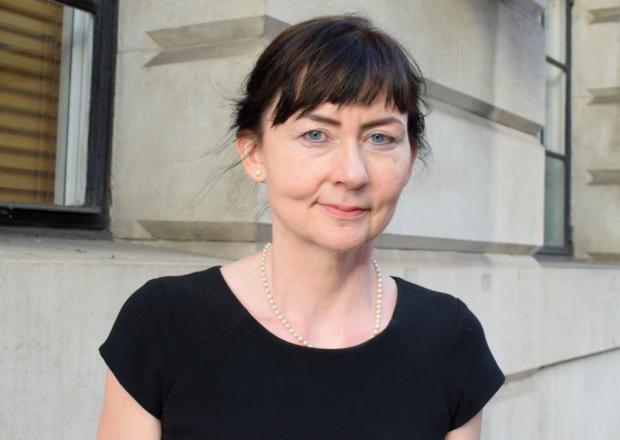
Claire McLaughlan

Her role in the Lucy Letby case comes out in a savage cross examination at the Thirlwall inquiry

Claire McLaughlan may not be nationally known but has great influence in the NHS. She has become the “go to” person when health trusts want to deal with what they see as troublesome doctors raising inconvenient issues such as patient safety and helping trusts to discredit whistleblowers who do this. Her career has included being head of fitness to practise at the Nursing and Midwifery Council and as associate director at the National Clinical Assessment Service. Her work for NHS also includes being a lay member of the Performance Advisory Group and chair of the Performance List Decision Making Panel, which assigned people to internal NHS inquiries. . For more information I have written up her profile here.

She gave evidence last week to Lady Justice’s Thirlwall Inquiry, which is investigating what went wrong at the Countess of Chester hospital that led to the murder of babies by nurse Lucy Letby. She claimed she has great expertise in examining doctors, dentists, pharmacists and nurses behaviours and attitudes when they were facing complaints.

Lucy Letby Pic credit: BBC and Cheshire Constabulary

She was called to the inquiry as a lay reviewer appointed by the Royal College of Paediatrics and Child Health. She was asked to review the maternity department at the Countess of Chester Hospital. She was part of a team led by Dr David Milligan, a retired neonatal paediatric consultant; Dr Graham Stewart, a paediatrician from Glasgow and Alex Mancini, a neo natal nurse, representing the Royal College of Nursing.

The review, invited by the Countess of Chester medical director, Ian Harvey, came before the involvement of the police but after consultants who suspected Lucy Letby had been threatened by the management after they raised concerns.

Given her evidence that at one stage she was in a position to review 300 doctors including their competence while she was at the National Clinical Assessment Service it is rather remarkable that in two cases covered by this blog – Dr Chris Day, then a junior doctor at Woolwich Hospital and Dr Usha Prasad, a cardiology consultant at Epsom and St Helier Trust(now combined with St George’s), she has a history of distorting facts to the detriment of their careers. More of that later.

At the Thirlwall inquiry, Ms McLaughlan was skewered by the experienced barrister, Nicholas de la Poer, from New Park Court chambers who previously appeared at the Manchester Arena bombing and Grenfell Tower inquiries. In many cases, she couldn’t recall or answer his persistent questions.

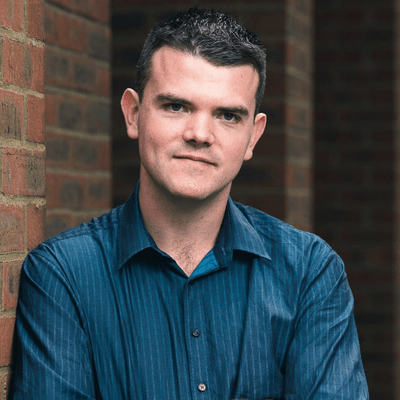
Nicholas de la Poer KC Pic Credit: New Park Court chambers, barrister for the Thirlwall inquiry

From the start he challenged her about her statement that she was a “non practising barrister” – and what that meant she could have practised as a barrister in the past. He pointed out Sue Eardley, the head of health policy at the Royal College of Paedriatrics, “appears to have ascribed some considerable significance … to the fact that you were a qualified barrister when being asked about your experience of legal process. In fact, is this fair: your experience as a barrister would not have involved you engaging in any legal process,” he suggested.

His questioning effectively revealed that she had given a misleading impression to the Royal college in 2014 particularly as she had to change her description to being an unregistered barrister in later years.

She could not answer why the person who engaged her for 14 reviews for the college from 2014 had that impression.

It then emerged from her and other witnesses that prior to the review coming up to the Countess of Cheshire the team were never told that consultants had raised complaints that babies there could have been murdered. It was sprung on them 12 hours after they arrived.

This is significant because a review by a Royal College cannot take place if there is suspicion of misconduct or criminal behaviour. It has to be cancelled immediately but it wasn’t.

Claire McLaughlan’s response to this was that while doctors had raised this possibility, people said that Lucy Letby was a good nurse, therefore it should not have been cancelled. She later went on to attack one of the consultants who did.

“Well it is possible to be a good nurse and murderer?” was the lawyer’s response. She also claimed she was given false assurances by the trust.

Lack of empathy for the parents of the dead babies

The questioning was also revealing about Claire McLaughlan’s views on her role of safeguarding patients and the public interest. When quizzed about that she claimed she had a wider role and unlike other witnesses never expressed regret about the babies’ deaths and the effects on the their parents. She was rather vague about her own safeguarding training.

When it came to the crunch about the doctor’s concerns about the deaths of the babies she depicted Dr Steve Brearery’s concerns as a personal rather than a professional judgement. Cross questioned by the lawyer she insisted:

“In my opinion I cannot speak for the whole team. This was the personal view, feelings, interpretation of
one person regarding Ms Letby, it was not based on fact and was uncorroborated. Even now I would not consider his view as objective or impartial as he was too involved, too close to the situation and had a conflict of interest.”

She went on to attack him for preparing a rota sheet showing who was on when a baby died.

“It’s not normally the role of somebody of that doctor’s status and experience to have any involvement,
is my understanding, in the rostering of staff. And therefore I would not have — I wouldn’t have called it
his professional role for him to take on the analysis that he apparently did of those rosters.”

Later when questioned by Lady Justice Thirlwall herself she claimed the document could have been manipulated because she had not seen the source of the material.

It was also revealed that she tried to get the report for ” balance” to say that some of the babies died because of congenital problems without any medical knowledge- but this was not included.

Frankly her evidence seems to betray a prejudice against doctors, a lack of empathy for patients, and it was obvious that her preferred solution would have been to treat it as an internal disciplinary matter run by the human resources department. This would have chimed with what the trust wanted to do as one non executive director said to ” contain it.”

She also seemed to suffer a loss of memory and recall about what documents she had seen and conversations that had taken place. There was also a rather bizarre incident about how she got hold of Lucy Letby’s telephone number. She couldn’t explain why and thought someone else might have put it there.

She has previous form with other doctor’s and consultants. One of the most egregious cases involves Dr Chris Day a whistleblower who is still fighting as ten year old battle with Lewisham and Greenwich Health Trust, after he reported two avoidable deaths in the intensive care unit at Woolwich Hospital.

She interviewed Dr Day on behalf of the trust and I’ll let his pleadings tell the story. The way she distorted the interview was sent to Department of Health, the courts and senior people at the top of the NHS who took no action.

Also evidence submitted by ,Dr Sebastian Hormaerche, a consultant anaesthetist, severely criticised Claire McLaughlan’s investigation and safeguarding in this case, not commenting on two serious incidents.

In Dr Usha Prasad’s case, a well qualified cardiologist who was popular with patients who was also whistleblower over an avoidable death at Epsom Hospital, was dismissed. Claire McLaughlan presided over an internal hearing and decided she was ” unfit for purpose.” No such ruling exists in employment law. To decide this she ignored the fact that the General Medical Council revalidated her to work anywhere in the NHS as a competent and well qualified doctor. But no doubt Ms McLaughlan thought that was just a personal rather than a  professional view.

One can only wonder how many other doctors have suffered from Claire McLaughlan.

The full day’s evidence from Claire McLaughlan and others is here.

Sexual harassment at work to be treated as a whistleblower complaint under new employment law

But no answers from the ministry on plans to cost and scope the establishment of an Office of the Whistleblower

The Department for Business and Trade is changing the law to strengthen the right of people to report sexual harassment at work by making it a protective disclosure under whistleblowing legislation.

Bizarrely this measure was missed by mainstream media when the bill was published last month with most of the coverage being devoted to the measure improving employees rights in the job market and repealing some of the Tory legislation restricting trade union actions.

But there is a section of the new bill devoted to strengthening the rights of people who suffer sexual harassment at work. It proposes a three pronged attack to change the current law.

First it is strengthening the duty of employers to do something about the issue by amending the Equality Act to say they must take ” all reasonable steps ” to stop it happening.

This change has already been noted by lawyers who take up sexual harassment cases since it significantly reduces the wriggle room for employers to get out of any responsibility.

The new bill spells out what specific actions employers should take and will be further covered in regulations to be issued by ministers. These include carrying out assessments to deal with sexual harassment, publishing company policy, and drawing up reporting and complaints procedures.

The definition of sexual harassment is also extended to say “that sexual harassment has occurred, is occurring or is likely to occur“. ( my bold emphasis)

The second big change is that employers would have to act if a third party is sexually harassing their employee opening up the ground to take action if there are subject to unwanted sexually offensive social media attacks or customers are sexually harassing their employees.

The final big change is to incorporate reporting of sexual harassment as a protected statement under whistleblowing legislation by amending the 1996 Employment Relations Act so it is covered by PIDA.

A Department for Business and Trade spokesperson said:

“We’re committed to making workplace rights fit for the modern workplace and that’s why the Employment Rights Bill will strengthen whistleblowing protections, including women who report sexual harassment at work.

“We encourage workers to speak up about wrongdoings to their employer or a regulator and we will ensure they’re protected if they’ve been dismissed or treated unfairly for doing so.” 

There is a really good blog on sexual harassment changes in the law, including some prior to the new bill, by Mandy Bhattal, a senior solicitor at Leigh Day. The link is here.

While this is good news, especially for women, there are certain caveats to be made. The main one is that if a person ends up being dismissed or feels she has to leave her job, the case is likely to go to the employment tribunal system. It is fact that some male employment judges appear to be patronising and offensive towards women. I am thinking of the way judge Philip Lancaster treated whistleblower Alison . McDermott, during her case involving Sellafield. Eight women have complained about they way he treated them in different cases.

Nasty playbooks by barristers at employment tribunals

Secondly there is a rather nasty playbook used by barristers and solicitors engaged by employers to deal with whistleblowers at employment tribunals. They discredit them by bringing up other matters unrelated to the whistleblowing issue. This includes suggesting the person is a bully or cannot work with their colleagues. I fear a new playbook being invented to present the woman as a flirt or leading men on to undermine her case.

Indeed looking at the bill altogether employment tribunals are going to be central to the implementation of the new laws and safeguards for workers – increasing the need for their procedures to be reformed as I have said before.

Office of Whistleblower silence

Last week Baroness Jones of Whitchurch, the new junior minister at the Department for Business and Trade, took peers by surprise, by suddenly announcing the ministry was evaluating whether to set up a new Office of the Whistleblower, a demand long pressed by Whistleblowers UK, headed by Georgina Halford Hall. Their site is https://www.wbuk.org . WBUK is also doing a national survey of whistleblowers experience and perceptions which will lead to a detailed report to develop proposed improvements to the UK Whistleblowing Framework. The link for the survey is here .

She told peers in answer to a question from Liberal Democrat Baroness Kramer:” With regard to an office for the whistleblower, there are a number of ideas around this. We are looking at the role and remit that such a body could have. There will be a need to look at the cost, role and function of a potential new body, but we are looking at all the ways we can ensure that whistleblowers are protected at the workplace, as they should be. “

Baroness Kramer had previously promoted a bill to create such an office.

Baroness Jones also gave an answer to hereditary peer, Lord Cromwell, on non-disclosure agreements.

She told him “We have already noted the concerns about the misuse of non-disclosure agreements. We share his concern, because they are being used to silence whistleblowers and cover up sexual harassment and discrimination. I stress that there are existing legal limits to how NDAs can be used in an employment context, which means they are void and unenforceable in certain circumstances. The use of NDAs is not something we would support and, if there were ways of limiting it, we would do so.”

I contacted the ministry’s press office about Baroness’s Jones remarks. I asked them for the timetable for reviewing the need for an Office of the Whistleblower, whether there was a plan for a consultation paper on the idea and when such a review would report.

Answer came there none, it was completely ignored and instead I was told about the new measures affecting sexual harassment.

I am rather surprised. Either Baroness Jones had gone off piste or the civil servants at the ministry aren’t keen on this. I don’t believe she would have risked making such a statement which is reported in Hansard and is now permanently on the record. So we have a mystery. I am sure campaigners will follow this up.

Please donate to Westminster Confidential

£10.00

Judge reserves judgement on whether a top legal firm should pay wasted costs for hiding documents that removed 54,000 English doctors from the UK’s legal whistleblowing protection in the Public Interest Disclosure Act

Dr Chris Day

The latest in the long saga of employment tribunal hearings involving whistleblower doctor Chris Day and his ten year fight for justice over patient safety following the avoidable deaths of two patients in the intensive care unit at Queen Elizabeth Hospital, Woolwich ended with a judge reserving her decision.

This particular hearing concerned the role of top NHS lawyers Hill Dickinson, who were paid public money to draft commissioning contracts each worth tens of millions controlling the employment of junior doctors at every NHS trust in the country. As a result some 100 people observed the hearing on line over two days – more than could be accommodated in any of London South Employment Tribunal courts.

Directly involved in the case is the now defunct body Health Education England (HEE) which used to fund, commission and govern the employment and training of all English doctors on their path to hospital consultant or GP at NHS health trusts before it was merged with the rest of the NHS bureaucracy as part of NHS England.

Hill Dickinson was engaged by HEE to draw up a series of contracts called Learning and Development Agreements which were drafted in 2014 underpinning the £2 billion commissioning relationship between HEE and NHS Trust that was concealed from the courts in Dr Day’s case until last  week’s hearing.

But the existence of these contracts — which exposed as false the denial from HEE made by Hill Dickinson that HEE had substantial influence over doctors – were kept from the courts during the long battle by Dr Chris Day over over the loss of his career and claims of deliberate concealment of patient safety issues,

Journalist’s Freedom of Information request was crucial

A freedom of information request put in by the indefatigable investigative journalist, Tommy Greene, resulted in the very LDA contract being disclosed that was in force during the time of Dr Day’s case between Lewisham and Greenwich NHS Trust and Health Education England . This came after Dr Day had agreed to no less than 3 separate settlement agreements one of which designed to protect all lawyers in the case from wasted costs arising out of misconduct. 

This week’s wasted cost hearing was triggered by Tommy Greene’s discovery in July 2019. The hearing had been delayed for over 4 years by the London South Employment Tribunal since Dr Day’s original application. Since all the way back in 2015 and the all the way up to the Court of Appeal in 2017 and down again to the ET in May 2018,  HEE and Hill Dickinson clung to the false factual submission that all contemporaneous documents showed Dr Day’s claim that HEE had substantial influence over the terms of engagement was fanciful.

The wording of the 2014 contract strengthened the power of the postgraduate dean employed by HEE who could end the career chances of an aspiring junior doctor who wanted to become a consultant as well as withdrawing money from a trust who was employing him. This included the power to delete a doctors National Training Number or as Dijen Basu KC, Hill Dickinson’s lawyer, admitted “a career death sentence”.

Yet HEE and Hill Dickinson powered by public money went all the way up to the Court of Appeal to argue that HEE had no substantial influence over a doctors career and that Dr Day’s claim that they did was fanciful. At the EAT level this resulted in Dr Day being threatened for costs for effectively defending whistleblowing for the nation’s doctors

Much of this week’s hearing was taken up with the semantics of whether these contracts really meant the HEE had the upper hand or whether the trust was still really the employer. The Court of Appeal had ruled that both the HEE and the trust were employers. Hill Dickinson admitted the ruling was a game changer but tried to argue it did not apply to Dr Day’s case as he had been employed under an earlier version.

Dr Day argued that if the documents had been shared by Hill Dickinson and HEE at the time of earlier hearings it would have saved taxpayers a fortune and him and his wife 10 years- hence the argument to claim back ” wasted costs” from Hill Dickinson because of all the legal fees spent.

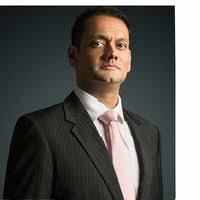
Dijen Basu KC Pic credit: Serjeants’ Inn Chambers

Dijen Basu, barrister from Serjeants’ Inn chambers and a qualified doctor, cross questioned Dr Day about the difference between what is known as the ” gold guide” for junior doctors and the contract — implying he should have worked out for himself the existence of the hidden LDA contracts or could have used the Gold Guide himself to win the case.

Dr Day pointed out that it was Health Education and  Hill Dickinson’s case from the 2015-2018 that the Gold Guide made fanciful Dr Day’s claim that HEE had substantial influence and also made the point that the ” Gold Guide” was worded as mere guidance on how doctors should be dealt with by NHS Trusts while the LDA was a proper contract that gave HEE a right to sue any NHS Trust if the LDA terms were not met.

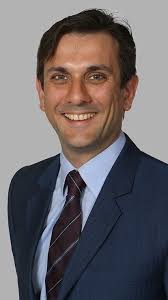
michael wright, partner Hill Dickinson

Michael Wright, a partner with Hill Dickinson, even tried to argue in the hearing that the new contract was not a contract because of the rule in the NHS that different branches never sued its each other so it couldn’t be upheld in the courts. He was rather shot down when it was clear that HEE had the power to withdraw all the money given to trusts if they broke the detailed rules over the training of junior doctors which is just as powerful.

In his witness statement to the tribunal Mr Wright said he first had no knowledge of LDA’s as they were drawn up by the firm’s commercial department not his department. When he did have knowledge he thought they were irrelevant which is his explanation why they were not handed over to Dr Day’s solicitors. After the Court of Appeal ruling which said both HEE and the trust were employers, he still argues that they are just a further extension of the ” gold guide” which is seen as guidance. Much of what really happened was clothed in secrecy as he claimed legal privilege not to disclose discussion that had gone on between Hill Dickinson and HEE.

Judge Kathryn Ramsden

Mr Basu also argued that Dr Day was out of time to pursue this case, which had already failed during a previous strike out hearing on wasted costs. See the Byline Times article on this. He said that the 2014 changes to the LDA came after he left, and urged the judge to throw out the claim because a three day summary hearing was not enough to deal with such a complex issue. He also appeared to suggest to the judge, Kathryn Ramsden, that if she ruled in Dr Day’s favour, she could be overruled by a higher court citing a House of Lords case. Is he prepared to go to Supreme Court over this?

Andrew Allan KC

It took Andrew Allan, KC, funded by supporters on Crowdjustice, o put in real context what Dr Day had had to put up with in his ten year struggle.

In his closing submission he said: “Whistleblowers in the NHS are stamped upon – it happens in case after case – in which extra hurdles are added to the already numerous hurdles in Part IVA
of the ERA[ Employment Relations Act] 1996 – the first is that you must be rich enough fund endless
litigation; the second is that you must have sufficient stamina to survive years of litigation – the second is that you must be perfect – because any imperfection will be seized upon and never let go – the tactic is to attack the whistleblower – they are obsessive – they are litigious – can’t let an injustice go – not the sort of people who get on in the NHS
” The skeleton argument on behalf of Hill Dickinson is a case in point – most of it is taken up in a partisan account of C’s [ Chris’s] litigation which – and frequently inaccurate – such as the comment about him having got nowhere in the EAT.. and is largely irrelevant a comment that C made about LJ Simler (as she was then) in 2020 is a favourite stick to beat C with – what possible relevance it could have to this application is unknown.
And it came back again in My Learned Friend’s oral submission –
These attacks are now routine – that C has had to prepare a ‘smears / misinformation document in anticipation of the same old points being trotted out.” See the smear file on Dr Day’s whistleblowing site on the hearing here.

Dijen Basu’s new smear against Dr Chris Day

And guess what ! At this tribunal a new smear against Chris was laid before the judge and Chris Day was not even asked about during his 4 hours of cross examination  by Dijen Basu so he could reply.
In his late submission to the tribunal Dijen Basu accused Dr Chris Day of failing to refund £55,000 he had received in an earlier costs ruling to his Crowd Justice Fund implying he had pocketed the money.

His submission said: “he accepts that he has raised £470,490 for the crowd funding of his legal costs through Crowd Justice Limited (www.crowdjustice.com) and he has failed to show a single penny
being refunded to Crowd Justice Limited on his behalf, e.g. when HEE paid him £55,000 in
respect of his earlier employment tribunal costs which shows £284,719.61 then received (mostly) from Crowd Justice Limited, the £55,000 from HEE and £3,700 from Dr. Day, being entirely gobbled up by legal fees and disbursements, none of which was a refund to Crowd Justice Limited).”

This allegation was refuted by Crowd Justice Ltd itself who pointed out that none of the money raised to Dr Day goes to himself and is instead paid directly to law firms recognised by the Solicitors Regulation Authority. I am told Hill Dickinson and its law firm were informed this allegation was not the case by Crowd Justice Ltd

Andrew Allan’s and Elizabeth Grace’s submission covers this and can be read in full here.

Yet Dijen Basu went ahead. Given he works as a leading barrister for Serjeants’ Inn Chambers, he should have known this himself. He also markets himself as the go to barrister for chief constables up and down the country for handling police work. I would have thought they might express a bit of a surprise that he chose to influence a judge by using what is false information in a tribunal case.

The next stage in Dr Chris Day’s long fight will be an employment appeal tribunal on July 1 and July 2 next year. He will appeal the extraordinary case where employment judge Martin ignored the destruction of 90,000 emails by a management witness during the hearing against his former employer, Lewisham and Greenwich NHS trust and took no action. She has since wisely retired. My report on the hearing that led to the appeal is here. My verdict on judge Martin’s case – the tribunal of the absurd – is here.

For a full list of legal submissions and witness statements see Chris Day’s whistleblowing site. The link is here.

The rest of my coverage of Dr Day’s case is here.

Please donate to Westminster Confidential

£10.00

How a leading teaching hospital and a coroner failed a young woman who was brain dead 17 hours after being admitted to A & E

Gaia Young

Case for a new inquest after coroner Mary Hassell failed to find adequate explanation for her death

This is an extremely tragic tale of what happened when a 25 year old healthy and talented woman, Gaia Young, was rushed to accident and emergency with severe headaches only to die of an unexplained brain condition and doctors have yet to correctly diagnose what was wrong with her.

The failure by one the country’s leading teaching hospitals, University College Hospital in London was compounded by an utterly abysmal inquest conducted by coroner Mary Hassell. She patronised and showed no empathy for her bereaved mother, Lady Dorit Young, who had lost her only child ,Gaia, and failed to properly investigate her death. The full story is on the Truth for Gaia website.

Now more than three years after her death there is still no explanation of what led to this terrifying and tragic event which is why there must be a fresh inquest that can get to the truth of what really happened.

Mary Hassell the coroner pic credit: Archant

Gaia Young was admitted to the hospital with a headache ,vomiting and became confused while waiting at the hospital after a perfectly normal day when she had gone shopping and cycling. Her sudden admission to A&E came at a weekend when many doctors are off duty and was seriously understaffed at the time. She had two CT scans of the brain which led to doctors deciding they would conduct a lumbar puncture to diagnose what was wrong.. The on call radiologist who examined the scan was not a specialist neuro radiologist and thought the scan was OK so a lumber puncture was a normal procedure..

The first attempt at the lumbar puncture, was done by a doctor under supervision who had done very few lumber punctures, did not work. So it was decided to attempt a second one which sadly led to her death as the brain was ” coned ” – pushed into the neck. Just before this the neurologist registrar was concerned when she saw Gaia’s CT head scan. She worried that the CT might show brain swelling and consulted with a neuroradiologist and consultant neurologist at Queens.
It emerged later that a specialist neuro radiologist could see subtle differences in the CT scan that meant there could be raised intra cranial pressure. If that was the case a lumbar puncture would not be undertaken because it was too dangerous . Also if she had a fundoscopy – a eye check that examines the retina and the back of the eyes – it would have showed raised intra cranial pressure. That did not happen.

University College Hospital

The tragedy is that University College Hospital is a centre of excellence and has access to top class neurologists. And nearby is University College, London whose faculty of brain sciences is judged to be the best in Europe and will get new facilities shortly. That this happened in a part of London where there is such expertise in the study of the brain is doubly tragic.

After considerable pressure from Dorit Young, university College Hospital says it will do a further investigation but has only just started it. A statement from the hospital said: “We understand the sudden death of a loved one has a lasting impact and offer our ongoing sympathies to Gaia’s mother.   

   “In 2022, we agreed to commission a range of independent experts – a neurologist, neuro-ophthalmologist, neuro-intensivist and neuro-radiologist – to explore further the circumstances surrounding Gaia’s death. We agreed with Lady Young the scope of the reviews and the experts who will undertake them. In August 2024, she consented to releasing some of Gaia’s medical records but further consent is needed so the reviews can begin. 

“We are committed to learning from external opinion and scrutiny and will share the reports with Lady Young. We have already developed new clinical guidance and training following our internal investigation.”   

It is the failing of the inquest held in 2022 that has added so much stress to Dorit, Gaia’s mother. The coroner is an independent judicial officer, appointed by the local authority, whose main role is to decide the cause of death. In this case Mary Hassell failed. Part of the problem is that nearly all coroners are not medically trained so they could find evaluating medical evidence beyond their skill set. And hospital trusts are aware of this and could decide to limit evidence available at an inquest. It is up to the coroner to probe that evidence to get to the truth. She is also expected to allow the bereaved to participate in the hearing.

Not only did that not occur at Gaia’s inquest but the coroner positively blocked Dorit’s request to bring independent medical evidence from a neurologist by refusing to hear it.

Instead the evidence concentrated on the findings by the post mortem of how she died and not on the original cause of why she died.

As she says:” Professor Al-Sarraj’s report [ he did the post mortem] is detailed and descriptive of the brain injury as a secondary event; it does not provide an explanation of a primary event. It provides a description of the pathology of tissue at the time of death; it does not necessarily provide an explanatory
pathogenesis in time but rather the description of an end point. Accordingly, the cause of death remains unknown.”

Independent expert barred by the coroner

When the inquest was held there were no independent experts giving evidence other than the two pathologists; there were no independent clinicians to give evidence on the care provided. The hospital was permitted to investigate itself in an independent judicial process; there was no external scrutiny.
The coroner backed the trust opposing her request for an independent neurologist and other experts to attend.Instead it left the trust to choose its own experts and this did not include a neurologist.

Before the inquest was held the hospital wrote to Dorit saying:
“The purpose of the serious incident investigation is primarily to review the care of your daughter and to identify any learning. We do not have the same purpose as the Coroner who needs to determine the cause of death.”
As she said; “This denotes an astonishing lack of medical curiosity for a leading clinical and research
institution. It is crass. I am surprised that UCLH consider that it does not need “to determine the cause of death”; this position conflicts with the papers which considers the risk for the recipient of a liver from brain dead donors.” Gaia’s organs were donated.”

Worse was to follow at the hearing. Dorit wanted to make an impact statement on her daughter’s death. This was refused by the coroner. It is on the Truth for Gaia website.

In it she says “It felt like Coroner Hassell favoured her ‘local’ hospital; she breached principles of proper inquiry and natural justice. I am still waiting to receive the Court approved list of documents upon which it relied in reaching its judgement. If the Coroner had taken my submission into account, her inquiry might have taken a proper course in considering a differential diagnosis, but the one-day hearing barely scratched the surface of the complex medical issues of Gaia’s death. This predictably led to an inconclusive determination, adding nothing to understanding how Gaia died, nor whether her death was avoidable.”

She wanted to publish the transcript of the hearing. Again the coroner refused threatening her with contempt of court and imprisonment if she did. The coroner was overruled by the chief coroner.

The coroner declined to comment after I put the complaints about her behaviour to her.

Dorit wrote to the Attorney General complaining about the handling of the hearing by the coroner and the failure to produce a witness statement that was subsequently available after the inquest. Officials replied that this” may amount to a reason to seek a fresh inquest.”

Lessons do need to be learned from this whole debacle. For a start procedures at the hospital should be changed even if this was a rare case. A decent coroner would have recommended some. But overall it shows up the weakness of a system whereby a hospital can first say it’s not their job to investigate the original cause of a death but a matter for the coroner and then not present enough evidence for the coroner to reach a judgement. Both the coroner and hospital have failed Dorit. This is a case of miscarriage of justice – people have a right to know the cause of death of a loved one and the public need to know to get a remedy should there be a repetition of this tragedy in similar circumstances.

Please donate to Westminster Confidential

£10.00

My interview on the 50swomen pensions scandal and the scrapping of the pensioner’s winter fuel allowance

If pensioners die from winter cold should their gravestones be engraved with the words ” Frozen to Death by Rachel Reeves and Sir Keir Starmer ” for eternity?

This is the recording of my interview last night with Ian Rothwell of Salford City Radio on the failure of the government to agree yet to any compensation for the women born in the 1950s who had to wait six more years to get their pension and the government’s sudden cruel decision to abolish the winter fuel allowance with little notice for 10.8 million people.

A reminder the original story on my blog has now got over 190.000 hits reflecting the strong feeling people have about Labour’s decision to do this leaving many of the poorest pensioners, many over 80, between £200 and £300 worse off this winter by setting such a low income level to qualify for the money.

Please donate to Westminster Confidential

£10.00

Time for a full scale investigation into the abusive and bullying behaviour towards women by Judge Philip Lancaster

Judge Philip Lancaster Pic Credit BBC News

New revelations by the BBC TV journalist Michael Buchanan today show what appears to be serial bullying and abuse towards women claimants by Judge Philip Lancaster at employment tribunal hearings

His news report today reveals that eight women have now separately come forward to say they were badly treated when they presented their cases before the judge since 2018. They describe their experience before him as “patronising, degrading, psychologically abusive, and misogynistic.”

The 67 year old judge who presides over employment tribunal hearings in Leeds is often rude and abrasive towards women and in one case even suggested that a claimant had mental health problems.

One woman claimant Angela Gates brought a case of disability discrimination and constructive dismissal against her employer in 2021.

She says a hearing in front of Judge Lancaster made her feel “like a villain being prosecuted”.

She says: “I felt I couldn’t give my side on anything.”

The four-day hearing was held on Zoom, and Ms Gates, 53, says Judge Lancaster regularly shouted at her, repeatedly telling her to be quiet. She says his behaviour was “appalling and degrading, verging on psychological abuse”, adding: “I don’t believe I’ve been given a fair trial.”

Another woman, who wished to remain anonymous, had similar treatment over a constructive dismissal and unfair treatment case.

“He made my life hell “

She said: He made my life hell,” she recalls. “He’d put his hands on his head, and appeared disinterested in what I was saying. He repeatedly asked why I was asking [my employer’s witnesses] particular questions and raised his voice numerous times. I felt useless.” She is now appealing the ruling.

Seven women are now planning to contact their MPs about their treatment as it is virtually impossible to complain about a judge as the system is rigged against them. You can refer a case to the Judicial Conduct Investigation Office or previously complain to Judge Barry Clarke, President of the Employment Tribunals in England and Wales. Or even to the Senior President of Tribunals, Sir Keith Lindblom. All seem set up to protect judges not complainants. Barry Clarke refused to act and Sir Keith ignored it.

Judge Barry Clarke, President of Employment Tribunals in England and Wales – protecting judge Lancaster from complaints

In a letter written by Alison McDermott, a management consultant, who complained about the way Judge Lancaster treated her in her case against Sellafield and the Nuclear Decommissioning Authority, to Adam Jones of the Judicial Conduct Investigation Office she says:

“It is simply not tolerable the way this judge has conducted himself, whether it is arbitrarily excluding the public, treating me less favourably, allowing bullying in the courtroom, treating me with hostility and contempt, ignoring evidence, attempting to block evidence, actually blocking exploration of evidence, vilifying me, acting partially, and failing to document procedural matters.

” I urge you, therefore, to conduct a thorough investigation into what went so badly wrong in my case and to exhibit, transparency and accountability – behaviours which the legal profession professes to uphold. I sincerely hope that I and the other key witnesses mentioned in this letter of complaint will be interviewed, as would occur with any other formal complaint or grievance investigation. In my experience as a consultant with over 20 years investigating organisational cultures and problems, it is not washing dirty linen in public that causes a problem but allowing it to fester in plain sight.”

Of course the office had no intention of doing such a thing. Judges, as I reported yesterday, are protected because the notes on the cases are kept private even when they are the only official record of the tribunal hearing. It is impossible to get hold of the evidence that would prove a judge was biased and judge Clarke would not reveal how many complaints he has received.

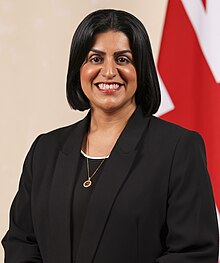
05/07/2024. London, United Kingdom.Chancellor and Secretary of State for Justice, Shabana Mahmood. poses for a photograph following her appointment to Cabinet by Prime Minister Sir Keir Starmer in 10 Downing Street. Picture by Lauren Hurley / No 10 Downing Street

So this leaves the Lord Chancellor to act but as I reported yesterday it is almost impossible to write to her directly – without officials in the ministry of justice or the judiciary intervening.

I would have thought Shabana Mahmood, a highly successful woman with an ethnic minority background, should ask for an investigation into Judge Lancaster. Many of the women who complained about him are from ethnic minorities as well. None of them should have had to put up with such egregious treatment and does the Lord Chancellor want to preside over system where a judge can treat women as dirt.

Please donate to Westminster Confidential

£10.00
Ministry of Justice and Lady Chief Justice Dame Sue Carr refuse to explain the lawfulness of withholding official ET court records

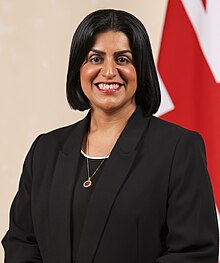
05/07/2024. London, United Kingdom.Chancellor and Secretary of State for Justice, Shabana Mahmood. poses for a photograph following her appointment to Cabinet by Prime Minister Sir Keir Starmer in 10 Downing Street. Picture by Lauren Hurley / No 10 Downing Street

By David Hencke and Alison McDermott

Direct complaint to the Lord Chancellor signed by 150 people is being blocked by officials at the Ministry of Justice

Whitehall and the judiciary are engaged in an extraordinary exercise to block, obfuscate and deny there is a legal issue over the public release of judge’s notes where they amount to an official record in employment tribunals.

We are now in the absurd position of Barry Clarke, the President of Employment Tribunals in England and Wales, both admitting the judge’s notes where tribunals are not recorded are the only official record but saying at the same they must remain private because they are personal notes under the Data Protection Act.

Employment tribunals are already in transition. After a new practice ruling the aim is that all hearings will be recorded but that is not happening yet in many cases. Also transcripts of the hearings can be made available but litigants have to buy them at huge cost and are not provided before the six weeks deadline to appeal. So what’s the point of them ?

But for a majority of tribunals the only official record is the judge’s notes – which can be used by appeal judges when they are adjudicating on an appeal to guide them. Barry Clarke has recently ruled that they are the official record but the public, press and both parties involved in a case cannot see them.

Thus the one vital official record of what the judge has recorded about the case is kept secret – contrary to any policy of transparency and open justice. It also means judges are not open to scrutiny, could be biased against either the claimant or defendant, are out of step with other European court systems and in the days of digital recordings, keep an archaic system of hand written notes. It also means if there are complaints against judges – the secrecy of the notes means the judge can withhold the information to prove it which is very helpful to an errant judge.

So what is legal position of this which allows this type of official record to be withheld? This is the question that led Alison McDermott, a former ET complainant against Sellafield, and 150 other people to wrote to the Lord Chancellor demanding an explanation, using the examples I have quoted and many more.

The letter is here. But guess what? You can’t send it direct to the Lord Chancellor’s Office or even to the Lord Chancellor as an MP unless you are a constituent in Birmingham, Ladywood. Instead you can only write to the ministry of justice and hope it can be passed on.

Dame Sue Carr: Pic Credit: Rory Lindsay

So Alison McDermott and I decided another tack. I put questions into the Ministry of Justice press office to ask for explanations. Alison had previously been told by Dame Sue Carr, the Lady Chief Justice that the only way she would get answers was to go to the Appeal Courts – an incredibly expensive business. This is also absurd as it puts the onus on the claimant to get a ruling to clarify the law and makes a lot of money for lawyers. Most people are not involved in tribunals so why should they be denied from knowing where the law stands?.

These are the questions I put to the Ministry of Justice which it refused to answer:

1.Does the MoJ agree that an official record of legal proceedings, including Employment Tribunal hearings, must be made available to parties and the public?

 2.Which specific law or authority allows judges to withhold their notes from ET proceedings, given that  ET President  Barry Clarke has recently confirmed that these notes serve as the official record where no other record exists?

3. If no such law or authority exists will the MoJ commit to releasing all judges’ notes? 

 4.. If not, does the MoJ acknowledge that judges’ notes cannot be considered the official record, as official records must be accessible?

5. In the absence of an accessible official record, does the MoJ agree this breaches the right to a fair trial under Article 6 of the Human Rights Act?  If not, what is the justification? 

6.  Why is the MOJ suggesting  that this can be resolved by individual appeals, as proposed by the Lady Chief Justice to Ms McDermott, rather than providing a clear policy response that would benefit all ET users?

Answer came there none. The ministry declined to answer any questions and said it was a matter for the Judicial Office to answer the questions.

I put the same questions to the Judicial Office press office. I heard nothing for a week and then sent them a reminder. The initial response was to refer them back to the Ministry of Justice until they suddenly realised I had already contacted them.

The office then sent a reply. This is it.

“We have answered the questions we can from a judicial perspective (see below) but other questions are for not for us and you may wish to ask other parts of Government.

Parties involved in an Employment Tribunals are given decisions following a hearing. If the decision is a judgment, the Tribunal will either give an oral judgment with reasons or reserve its decision and give a written decision at a later date. ” It goes on to quote existing rules and procedures.

So here we have it. They haven’t answered my questions. There is a failure to confirm what the lawful basis is for a judge to withhold the official record of an ET hearing and they have side stepped whether the refusal to do so breaches the right to a fair trial.

Judge Barry Clarke, president of the England Wales employment tribunals- an outlier with Europe advocating secrecy

Alison using AI found how outdated and Nethanderal this is compared to other advanced democracies. In France, Germany, Spain, the Netherlands, Sweden, Belgium and Italy all parties have access to the judges’ notes. This leaves the UK as an outlier, failing to provide basic transparency in proceedings that can have life-altering consequences. .

It added: “The practices in these European countries generally support greater transparency and access to court records, including judges’ notes, in employment cases. This trend aligns with principles of fair trial and effective appeal rights, as parties are given the opportunity to fully understand and, if necessary, challenge the basis of decisions made against them.”

The conclusions using AI are very powerful;

“The current state of the UK’s employment tribunal system is untenable and legally questionable. It operates on a contradiction that undermines the very principles of justice it’s meant to uphold. The solution is clear, legally grounded, and non-negotiable:

  1. Judges’ notes must be released to all parties.
  2. All hearings must be recorded.
  3. These records must be made accessible to all parties involved.
  4. These steps are essential for maintaining the integrity of the UK’s legal system, ensuring compliance with human rights law, and upholding the principles of natural justice and open courts. The time for obfuscation and delay is over. It’s time to resolve this legal paradox and restore faith in our justice system. Release the notes, record the hearings, and let justice be truly seen to be done.”

Only in the UK do we pursue a policy of secrecy masquerading as privacy to cover up official records, frustrating claimants and respondents in employment tribunals, and protecting judges from any scrutiny that could effectively challenge them. What a backward country we are. A judicial review can change this and looking at procedures in Europe eventually lead to a well deserved adverse ruling against the UK in the European Court of Human Rights. We understand that the Lord Chancellor holds the copyright to all court records so she can decide to release them.

Please donate to Westminster Confidential

£10.00
Winter Fuel Allowance: Equality statement reveals the scale of Rachel Reeves nasty blow to poor and disabled women pensioners

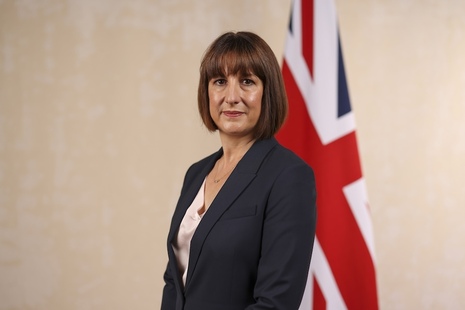
05/07/2024. London, United Kingdom. Rachel Reeves, Chancellor of the Exchequer poses for a photograph following her appointment to Cabinet by Prime Minister Sir Keir Starmer in 10 Downing Street. Picture by Lauren Hurley / No 10 Downing Street

UPDATE: Statistics released today (Tuesday) show claims for Winter Fuel Allowance jumped by 214,000 last year. More and more people over 80 are claiming the £300 higher allowance which had reached 3.3 million for the first time. The new figures mean the government will save even more money by abolishing it for all those not claiming pension credit, particularly from the very elderly. Figures released also show that those state pensioners living in EU countries who will continue to get the allowance amounted to 34,300. Over three quarters of them, some 26,000, live in the Republic of Ireland while those in Northern Ireland will get nothing. Qualifying for the allowance last year was this week which raises whether those claiming pension credit after this week will get the money for this winter.

Chancellor’s decision fuels racism when it is revealed her cuts are aimed at 95 per cent of white British born people

At last no doubt embarrassed by the Equality and Human Rights Commission which said the new Labour government was in breach of the Public Sector Equality Duty, the Treasury and the Department of Work and Pensions have had to release a breakdown of who is affected by the abolition of the winter fuel allowance.

Both departments used the mechanism of a Freedom of Information request made in August and chose a Friday afternoon to slip it out after Parliament had gone into recess to avoid too much publicity.

The clue is in what the announcement is called – an Equality statement – not an impact statement which was demanded by the House of Lords. In fact there has been no impact statement prepared at all even when Age UK said that about two million pensioners who will lose the annual £200 or £300 payment are just above the cut off point.

The document itself makes a claim that more men than women are affected by the change. But this is based on percentages not the actual figures. As it says: “This means that 85% (5.2m) of women receiving a Winter Fuel Payment (WFP) will lose out, compared to 91% (4.8m) of men. The reason for this is that women live longer than men and are more affected by the loss of the payment. The gender breakdown is 54% (6.1m) of those who received a WFP in GB in 2022/23 Female, and 46% (5.2m)
Male.

The figures reveal that the older you are, the bigger the loss you make, partly because the payment for over 80s is £300 rather than £200 per household.

The statement says: ” Although a smaller proportion of those aged 80+ will lose out than those under 80, due to the higher rate of WFP from that age, older pensioners who are affected will be proportionally worse off financially as a consequence of the policy.”

This is still 2.7 million people in top of the 7.9 million aged 66 to 79 who lose out.

Then there is the effect on the disabled – those claiming attendance allowance and disability living allowance. Here 1.6 million lose out and they must be the most vulnerable to the cold.

So if you are woman, more elderly and disabled you are worse off. If you are all three it is catastrophic.

The government has made a lot of noise about the 880,000 people not claiming pensions credit who could qualify by applying and getting the winter fuel allowance. But the paper says despite all the noise ministers are only expecting another 100,000 to claim leaving 780,000 still going without it.

The figures for existing claimants for pension credit are interesting. The most successful claimants are men not women – despite men being in a minority. The least successful are couples and there is a nasty reason for this. Under the Tories rules were changed so that both people had to be aged 66 to get it. So if you had a man who was 66 married to a woman who was 62 you would be excluded from claiming it until the man was 70 and the woman 66. No wonder the take up is lower. And Labour haven’t changed the rules.

Finally there is an ethnic breakdown. In the UK among the general population 84 per cent of the people are white British and 16 per cent are from ethnic minorities. Among the pensioner population, 95 per cent are white British and only five per cent are from ethnic minorities. So Labour in this case has targeted anybody who was born here far more heavily than people who were not.

This may well explain why I am getting a backlash from readers of this blog who complain that the government is doing more for people who have just arrived here than the population who have worked here since they were 15. They think it is unfair.

Cheerleader for Nigel Farage?

So we have the extraordinary situation that Rachel Reeves is inadvertently becoming the cheerleader for Nigel Farage by providing him with a platform to say that British born people are being unfairly penalised.

Her policy among that generation may well drive them to support Reform because they have a grievance that only Labour has created and cannot be blamed on the Tories. This unfortunate situation aids racism and has more purchase with people than tales of a £22 billion black hole.

Then there are international repercussion. The last government was already in trouble with the UN Convention on the Elimination of all Discrimination against women and girls (CEDAW) in Geneva. Although we ratified it nearly 40 years ago when Lady Thatcher signed us up, we have not implemented in law many of the provisions. This is a new policy – even though it was done administratively – and the government has not tested the impact on women which is against the convention.

More close to home there could be a case for indirect discrimination against women because although the policy appears to be fair to all pensioners, women are again bearing the brunt of it.

Of course as I argued in a previous blog both Rachel Reeves and Sir Keir Starmer know that many pensioners will die before the 2029 general election so they won’t be here to vote. By implementing this cruel policy for those just above the cut off point they know many more will join them as they freeze in their homes this winter.

Please donate to Westminster Confidential

£10.00
How Starmer and Reeves pension savings are deliberately driving the elderly to an early grave

1950s born women to face a quadruple whammy to their hopes over compensation, heating allowances, fuel bills and new taxes

Sir Keir Starmer in the Cabinet Room Pic credit: Gov Uk

In just 50 days of a new Labour government pensioners rather than the better off have been singled out to pay the price to balance the books of running the country.

They are the people who are often not in the best of health, have worked most of their life and most don’t go around rioting and throwing fireworks or bricks at the police.

So for Sir Keir Starmer and Rachel Reeves they are a soft target to save money, particularly if your object is to grow the economy.

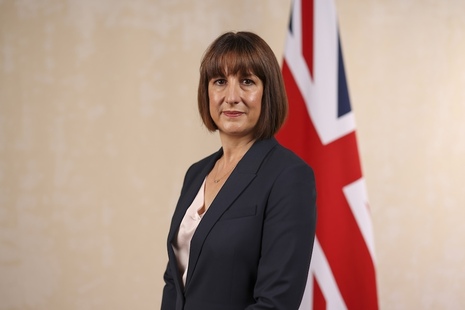
Rachel Reeves, Chancellor of the Exchequer poses for a photograph following her appointment to Cabinet by Prime Minister Sir Keir Starmer in 10 Downing Street. Picture by Lauren Hurley / No 10 Downing Street

To them the elderly are a burden. That is because they would find it difficult to have enough energy to start new businesses, expensive to look after since they are more likely to use the NHS, and the cost of pensions is the real big ticket item for the Department for Work and Pensions costing £125 billion a year – far outstripping any payments to other people. The total DWP annual pay out to people is £258.4 billion – so pensions are almost half the bill. Rachel Reeves will know all about this as her partner, Neil Joicey was finance director at the DWP.

If ministers are prepared to ignore that pensioners feel they have contributed to their pension and it is theirs by right, it would be rather convenient for the Treasury if they died sooner than later. Life expectancy is already stagnant and the new Starmer and Reeves measures could see it fall. Also pensioners were the last group who chose to vote Conservative rather than Labour at the general election, so it would be politically convenient with a five year government guaranteed by its large majority if many had died by 2029. The dead can’t vote.

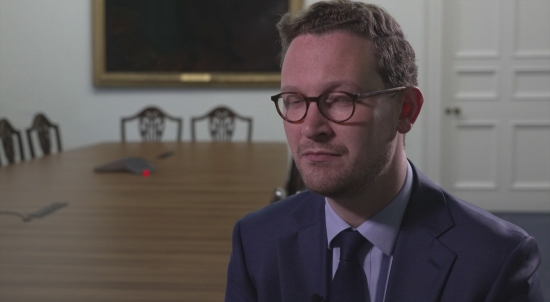
Darren Jones Pic credit: ITN News

The justification for means testing the fuel allowance – worth up to £300 per pensioner household – put by Darren Jones, the new Chief secretary to Treasury, was that it was a blanket benefit costing £1.4 billion claimed by the rich and poor. True a 90 year wealthy woman living in Kensington might not miss it, but an average 66 year old man living in Blackpool and about to die a year after getting his pension, will.

But his argument could also be used to abolish the universal state pension- and for all I know is being discussed in the Treasury – since it goes to billionaires -as well as the poorest.

The cut off point to lose the fuel allowance is £218.25 a week for single pensioners and under £332.95 for couples. Some 880,000 earning less than this could apply for pension credit but the forms are daunting for this. I checked to qualify you have to answer up to 243 questions. Read it here.

Some of the questions are bizarre. Why would you have to tell the DWP for example, if you share your home, with another person, whether he or she has ever been in prison or held in custody at a police station? Why do you have to tell them whether they have ever had four weeks holiday outside the UK? If you have over £10,000 in savings you have to fill in an additional 31 questions on another form. You have to disclose all the money send original bank and building society savings books and reveal how much cash you hide at home. You are expected to fill in the form yourself, if you can’t expect a visit from a DWP civil servant demanding why you can’t. No wonder a lot of people are put off and Ed Miliband’s cheery suggestion you apply, appears to mean he hasn’t a clue how detailed the forms are.

The other outrageous thing is that any government proposing a change should do an impact assessment on what this will mean. This was ignored by Rachel Reeves- so keen was she to announce the cuts.

On top of this we now know, after the announcement from the regulator, Ofgem, that energy prices are going up 10 per cent from October adding an average £149 to people’s bills just as the £300 fuel allowance is being abolished. At the same time Labour pointedly did not agree to raising pensioners tax allowances so with the triple lock in place, to avoid the poorest pensioners with little or no extra pension in place starting to pay tax again.

Michael Shanks MP and junior energy minister

As for the 1950s born women the chance of any compensation – even the paltry sums of between £1000 and £2900 recommended by the Parliamentary Ombudsman — is getting dimmer by the day. A rather frank answer to a constituent from Michael Shanks, the new Labour MP for Rutherglen and junior energy minister, has revealed the Treasury has taken over deciding whether they get a penny.

He wrote:” My understanding is it is being looked at seriously by Treasury and DWP Ministers now they are in post and fresh discussions are taking place about what happens next.

He went on: “You may be disappointed we didn’t simply commit to compensation for all, but as we have discussed before, I think it is more complex than that and I’m not convinced a one size fits all approach is right, or a good use of public money. The PHSO has recommended £1-3,000 per person, costing up to £10bn. However, this would give compensation to women who did know about the change – around 43% of WASPI women according to the PHSO. We need to ensure that any compensation is fair, so that at such a difficult time for the country financially we are not paying out thousands of pounds of compensation to women who were well aware of the changes, and that we are not insulting those badly affected with a mere £1-3,000.”

I have looked at the PHSO report and couldn’t find a reference to this 43 per cent who knew. If this is true it means that over 1.5 million will get nothing even if the government decides some compensation is due.

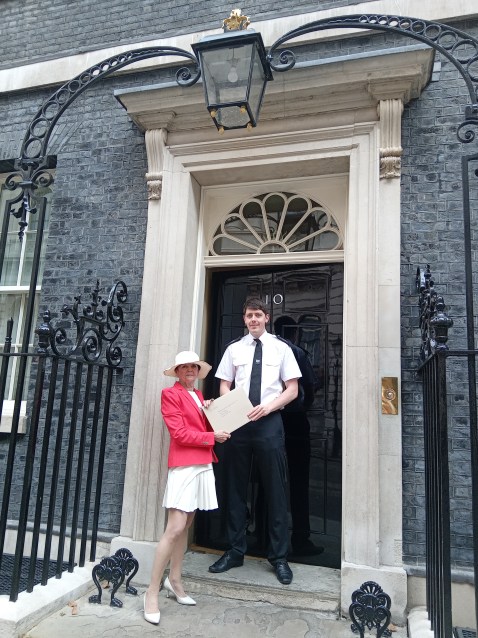
Meanwhile the campaign by CEDAWinLAW goes on. Jocelynne Scutt, the former Australian judge, who headed an independent tribunal into the fate of 50s women who lost their pensions for six years, was handing in a letter following a petition signed by 37,000 at Number Ten Downing Street today to drive home to Sir Keir the strength of feeling over the discriminatory issue and the need for mediation with ministers. WASPI, which represent 186,000 of the 3.5 million affected say they will have a meeting with minsters next month.

Here’s a newly edited video of the visit by Jocelynne Scutt explaining the latest moves by CEDAWinLAW.

Please donate to Westminster Confidential

£10.00
The extraordinary failure by the Solicitors Regulation Authority to police lawyers who misuse non disclosure agreements to silence whistleblowers and employees

If you were thinking of complaining about your employer’s solicitor trying to force you to sign a NDA barring you from complaining to the police, another regulator, or ban you from making freedom of information (FOI) requests or subject access requests to your company or public body, you might as well not bother.

For new figures released this year following a request under the SRA’s voluntary Transparency Code (it is not signed up to FOI) reveals how miniscule the action over misused NDAs is taken by the SRA that polices over 167,000 practising solicitors.

Over the last four years, believe it or not, action has only been taken in less than FIVE cases where NDA’s are involved out of the 10,000 complaints about solicitors received by the SRA every year.

Figures released to David Change (he is on X @DavidChange12) where the sole complaint was about the misuse of Non Disclosure Agreements amount to just 41 over the last four years. Of these 13 were not investigated and there were fewer than five warning letters issued over the four year period, similar for letters of advice, and public and private rebukes. In some years the SRA was almost completely inactive. In 2023 it is issued just what looks like one public rebuke. For the first five months of this year it says it has had just one complaint and taken no action so far.

Sellafield

One of the complaints I know about involving a whistleblower in Sellafield, the nuclear waste site, the documents I have seen, show that solicitor Emma Mills, a partner in law firm DLA Piper, had tried to force the person to sign away his rights to make FOI and Subject Access Requests to Sellafield and withdraw a complaint to a regulatory authority about the company’s human resources department. The SRA replied to him that she had behaved correctly without it looks like bothering to investigate further. Yet the Information Commissioner’s Office told me that asking anybody to withdraw FOI’s or SAR’s was outside the law.

The SRA’s figures do contain a caveat. They did not check whether among cases whether the complaint against other activities by solicitors included a complaint about misusing NDA’s, so the figure could be higher. It was too expensive under FOI guidelines for them to check further.

The fact that there is a problem with the misuse of NDA’s is not disputed. A snapshot of the present situation was put together by the Legal Services Board and published this year.

Concealed illegal activity included harassment and discrimination

The report said: “Examples of alleged illegal activity reported by respondents as having been concealed by NDAs included unlawful harassment and discrimination (e.g., on the grounds of sex, race, disability
and maternity), sexual assault and abuse, fraud and tax evasion. Many respondents reported NDAs being related to employment disputes. In defining misuse, some respondents questioned whether NDAs should ever be used to conceal misconduct, prevent a victim of wrongdoing from seeking support or reporting to regulatory or law enforcement bodies.”

The report was a snapshot – for example there was just one case cited involving the NHS – when certainly health trusts use them more widely to cover up scandals in the health service. It showed that many employees pushed to sign NDA’s, felt an imbalance of power between their knowledge of what they were signing and the company’s lawyers and were bullied into signing NDA’s. Others felt the firm did not care about their mental state or threatened them with facing an employment tribunal where the company’s lawyers would expose their failings.

There was also a mismatch between the fine words of the evidence given by the SRA to the Legal Services Board who showed they understood that lawyers did pressurise people to sign NDA’s and the actions it took when it received a complaint as shown by these statistics.

What this pointing to is a change in the law governing the issue of Non Disclosure Agreements which should be outlawed if they contain any reference to people losing rights given by Parliament to make FOI or subject access requests or complain to any regulatory authority including the police and HMRC.. What is clear from the Legal Services Board report is that many employees are totally unaware of their rights which can then be exploited by dodgy companies and irresponsible public authorities. As for the SRC this record of handling complaints is abysmal.

Please donate to Westminster Confidential

£10.00