CEDAW People’s Tribunal opens with powerful attack on decades of neglect of women’s rights and views

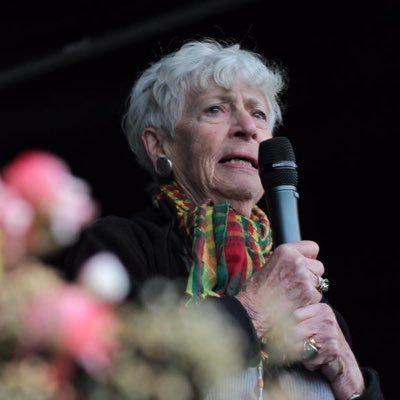
Margaret Owen, first witness at the CEDAW People’s Tribunal

A leading women’s human rights barrister yesterday launched a wide ranging attack on the failure of the UK to stamp out discrimination against women -during the 41 years after the UN convention on the elimination of all forms of discrimination against women (CEDAW) was passed.

Margaret Owen,-from the National Council of Women founded in 1895 and which has more than 40 women’s organisations affiliated to it – criticised the government, Brexit and Liz Truss, the current women’s minister and international trade secretary for all contributing to either ignoring or downgrading women’s rights.

She was the first witness to a unique tribunal – the CEDAW People tribunal – which has been set up with the help of one of the country’s leading human rights law firms, Garden Court Chambers. The tribunal will hear evidence and then with the help of judges and leading QC’s plans to draw up a women’s bill of rights aiming to implement the convention into UK law.

The UN convention was ratified by Margaret Thatcher in 1986 but has never been implemented by the UK.

Ms Owen’s position was that women’s groups used to have a statutory right to be consulted about government legislation but all this was swept away when more wide ranging changes were introduced. She thought CEDAW could introduce new procedures restoring statutory rights for women’s groups.

” Now all we have is consultations with the Government Equalities Office.”

She said that the civil servant there was sympathetic but had already told women’s groups that the provisions of CEDAW was “unlegislatible” -saying there was already human rights legislation. Shed said this amounted to an ” oxymoron”.

She accused Liz Truss of having ” a conflict of interest ” in being both negotiating trade deals -including arms deals – with regimes – some of whom were misogynistic – while standing up for women’s rights. She attacked the recent cuts in overseas aid which she said had damaged help for women and girls-partiuclarly in health and providing contraception.

Scottish developments on legislation
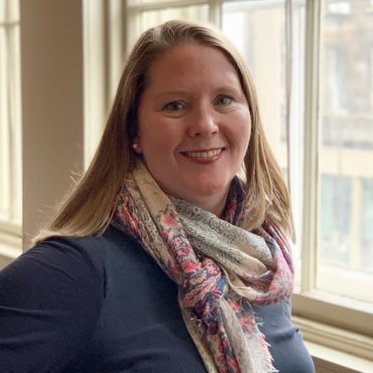
Kasey McCall-Smith from Edinburgh Law School

Developments in Scotland, which is preparing to legislate to put the UN Convention into Scottish law, were explained by Dr McCall-Smith, a lecturer in Public International Law and Programme Director for the LLM in Human Rights. She is a US qualified lawyer and an adviser to the Scottish government.

She explained that Scottish interest in women’s rights had grown out of the country having a more progressive policy towards children’s rights than in England.

She said there were three ways of introducing CEDAW into Scottish law. One was to create a framework of law putting the entire convention on the statute book. The second, as had happened in South Africa, was to put it in the country’s constitution, and the third was to introduce sectional changes into individual laws. She thought the most effective was the first.

She also pointed out that the present 2010 Equalities Act failed because it was ” gender neutral ” rather than ” gender sensitive ” to women – when much of the existing discrimination affected mainly women.

She also said the current CEDAW convention- written before the introduction of the internet and social media – should not be regarded as a static situation but should be developing all the time. She said it was important it covered economic, social and cultural rights.

As a US lawyer she said a Women’s Bill of Rights should be able to strike down legislation that would become incompatible once it was law. She added that Britain leaving the EU also had created a problems because EU law – while not perfect- was more supportive of women’s rights.

Women ambassadors told to go to the ” diplomat wives room”

Jennifer Cassidy – Oxford University

Jennifer Cassidy , a policy adviser, and a former UN diplomat, gave a grim picture of the way women diplomats were treated. She said that while the Foreign office always used statistics to show there were more women diplomats, they were not sent to the most important capitals in the US, France or Brussels. In some countries where women were not given equal status, some women ambassadors were told by their hosts to go to the ” diplomats wives room” until they had to point out they were the ambassador.

Wales “gender sensitive” act on domestic abuse

Rachel Minto Cardiff University

The most positive picture was given by Dr Rachel Minto, a politics lecturer at Cardiff university. She said that Wales already had passed new legislation on domestic abuse which was ” gender sensitive” legislation on domestic abuse recognising that most of the victims were women not men. This was in contrast to the Westminster legislation which was ” gender neutral”. She also said that women’s groups were keeping up links with the EU despite Brexit

Over 18000 trafficked people awaiting a Home Office decision about their fate
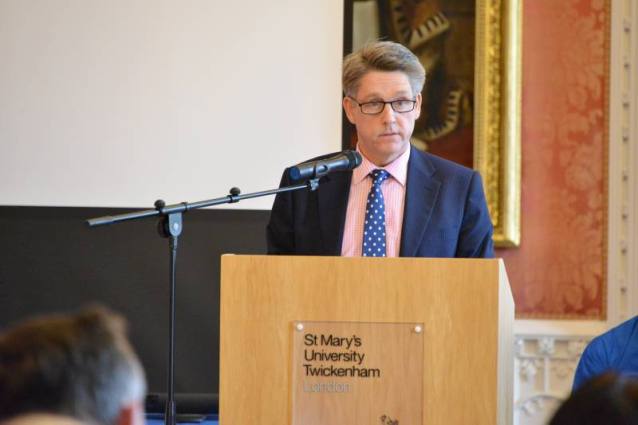
Kevin Highland, former first Anti Slavery Commissioner

Kevin Highland, former head of the Met Police’s Human Trafficking Unit, gave a grim picture of the treatment of trafficked victims in the UK. The Home Office is currently holding some 18,000 awaiting a decision whether they can stay here. He thought CEDAW could help improve the treatment of women and girls, particularly pregnant women, who have just been offered a paltry extra £3 a week by the Home Office to help them.

He was highly critical of failures by police forces to investigate trafficking because it was complicated crossing police borders – and found investigators had treated trafficking as ” a game of tennis” passing the ball from one force to another.

He was also revealed that the” county lines ” drug dealers who used vulnerable children to carry drugs across the country also ran a ” county lines” trafficking in young girls – often for prostitution. He told the tribunal they often targeted vulnerable children in care homes, promising them a new life only to be dragged down into alcoholism, drugs and prostitution.

Northern Ireland ” years behind in women’s rights”.

Rachel Powell – Women’s Resource and Development Agency, Belfast

A startling picture of how far women are behind in Northern Ireland in gaining their rights was highlighted by two witnesses, Rachel Powell, and Jonna Monaghan, from the Northern Ireland Women’s European Platform.

Rachel Powell provided some alarming statistics showing how 30 per cent of women in Northern Ireland, earn nothing, staying at home. Many others with higher qualifications take low paid part time jobs because they have unpaid caring responsibilities.

Opposition to women’s rights from the Democratic Unionist Party and to CEDAW in particular, were highlighted by both of them. The current first minister, Paul Givan, is piloting the Severe Fetal Impairment Bill, through the Northern Ireland Assembly to restrict abortion despite the UK government in Westminster passing an anti abortion bill. The Assembly is at the moment refusing to implement the UK legislation.

There were also fears that the people in Northern Ireland would not get new rights if the EU passed further laws now the UK has left Brexit even though Northern Ireland is still in the single market.
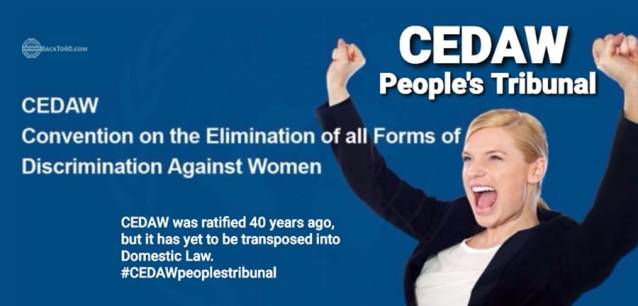
CEDAW People’s Tribunal: Exclusive coverage this week on this blog

Tomorrow is the start of three days of hearings in London of the CEDAW People’s Tribunal which will examine the case for the UK to introduce into domestic legislation the ground breaking UN Convention on the Elimination of all forms of discrimination against women and girls

I am planning to have a daily blog on the highlights of the hearings as the issues raised will be wide ranging and effect the future of women in all walks of life from pensions to domestic abuse and equal pay.

Britain is unusual in ratifying the convention some 36 years ago under Mrs Thatcher but in not implementing the changes into UK law – though some issues have been partially implemented through the 2010 Equality Act.

The majority of other countries did both – ratification followed by legislation. The hearing also comes at a key time.

Scotland has decided to implement the convention in full and the Parliament at Holyrood is already working out how to do it – after the Scottish National Party included it in its manifesto and won the election.

In Wales the Labour Party which won the Welsh Parliament elections is also committed to introducing it.

And very recently Jersey decided to ratify the convention – leaving just England and Northern Ireland as laggards in this respect.

The hearings are being organised by a very powerful team of women lawyers from Garden Court Chambers and have attracted enormous interest from women’s groups – some of whom have sent in written submissions and others are planning to give evidence. Each evening I will publish details of those who have given evidence. Watch this blog for future coverage.

50s women pensions: Flaws in the Parliamentary Ombudsman’s preliminary maladministration report ?

Last week I had sight of the Parliamentary Ombudsman confidential preliminary report into whether there was maladministration in informing some four million women that their pensions would have to wait another six years before they got their penswion.

The report found that there was – but only from 2005. The report exonerated the Department for Work and Pensions for its handling of everything from 1995 – when the Pensions Act was passed – to 2004.

Its official words were: ” Between 1995 and 2004, accurate information about changes to State Pensions Age was publicly available in leaflets, through DWP’s agencies and on its website. What the DWP did reflects expectations set out in the Civil Service Code, the DWP Policy Statement, the Pension Services Customer Services Charter and the Benefit Agency Customer Charter”.

I thought I would check their findings against the release of hitherto secret documents from the DWP following the court case brought by BackTo60 which I obtained when the case was over.

The Ombudsman’s report says it applied the same standard to events that happened before 2005 and after 2005 – when internal documents showed the ministry did have tougher standards for the delivery and supply of information for benefits and pensions from 2006 which strengthened the Ombudsman’s hand.

What surprised me therefore was the lack of weight in the Ombudsman’s report placed on a key document in February 1997 -just months before the general election that saw Tony Blair’s landslide victory.

It read: “Ministers have seen your submission of 20 January seeking agreement to run an advertising campaign aimed at informing/reminding women of the change in state pensions age following the Pensions Act 1995.

“Ministers do not see a pressing need at this stage to run such a campaign but would be prepared to re-consider at a later date.”

Lack of curiosity

There seems to be a remarkable lack of curiosity by the Ombudsman about this. For a start the internal document shows it went right up to Peter Lilley, then Secretary of State, which is the highest level in the ministry. Secondly they don’t ask what sparked civil servants to seek such action.

Perhaps it might be because the the DWP devoted just two sentences in an appendix to the legislation to any thought of communicating the change to millions of people. They decided to leave it in the hope that employers might voluntarily tell their staff. Why should they, surely it is the government’s job? The DWP anyway insisted in the court case they had no obligation to tell anybody.

The second point is that the Ombudsman is right to mention that leaflets were printed, there was some advertising and were distributed in benefit offices and citizen advice bureaux. What they don’t say is the quantity. Internal documents show the DWP spent just £80,000 printing 47,000 leaflets to inform the 3.8 million women affected. How pathetic is that for a communications policy?

Priority given to independent financial advisers

Priority was given to informing independent financial advisers, representing the wealthiest pensioners, who received personalised letters. For some reason, this letter appeared to be missing from the 1,600 pages of documents submitted by the DWP as part of the judicial review.

Yes some £6.5 million was spent by Alistair Darling, the Labour social security secretary in 2001 on advertising -including the notorious talking dogs advert – but ministers at the time tell me the emphasis was then on getting people to take out a second workplace pension to supplement the state pension not on the impending rise in the pension age for women.

So it seems curious for me that the Ombudsman has let off the ministry for this period while coming down strongly against them after 2005 when people had little time left to plan to alter their retirement plans. The evidence that millions of people didn’t know as the internal documents reveal is shaming for the DWP, as is the slow way they reacted to the facts. Indeed, ironically it was only because civil servants feared someone would complain to the Ombudsman that they thought they must cover their backs.

Flaw in the process

My other thought about the report is the process. Normally the Ombudsman might be dealing with one family or a small group of people in handling a maladministration case. In this instance they are asking six people to respond to their report on behalf of four million people. It puts a huge burden on those six people to have the knowledge and time to respond to get this right. I don’t know who they are but I am not sure in this case this is entirely the right process – since they can’t share the findings with other people or get advice.

This is one reason once I discovered the report had been circulated rather more widely than the six – including with the DWP and MPs – that I thought, on public interest grounds, it ought to be more widely known.

Ian Rothwell radio programme: Interview on CEDAW with me and on BackTo60 with Joanne Welch

Here is the Salford City Radio programme broadcast last night. I talked about the importance of tackling all discrimination against women and girls in the CEDAW People’s Tribunal. I explained how the issue had evolved from the Back To 60 judicial review over discrimination against women who lost their pensions into a three day hearing later this month with the backing of top lawyers from Garden Court Chambers.

Joanne Welch talked about the latest developments in the Back To 60 campaign which is a burning injustice issue for millions of women born in the 1950s and waited six years to get their pension.

Revised All Party Pension Inequality Group for Women to act as bridge to get justice

The new Parliament has seen a complete revamp of the all party group tackling the long standing festering issue of pension inequality for millions of women caused by the mishandling of the rise in the women’s pension age.

Out go Carolyn Harris, the former chair and Labour MP for Swansea, East and co chair Tim Loughton, Conservative MP for East Worthing and Shoreham.

In come Andrew Gwynne, Labour MP for Denton and Reddish as the new chair and Peter Aldous, Conservative MP for Waveney as co chair.

The good news is that the change means a fresh start and a move to a more inclusive approach taking in the views of all the different women’s organisations that represent those born in the 1950s who were faced with a wait for up to six years to get their pension. Unfortunately under his predecessor Carolyn Harris this was not always the case and it was a never completely clear what this group of MPs wanted in compensation for the millions of women affected by the change.

Andrew Gwynne summed up the change succinctly.

“The APPG on State Pension Inequality exists to keep the issue of the 1950s women’s pension injustice alive.

“As new Chairs, Peter Aldous and I are informally taking evidence from all the 1950s women’s groups to get as much information as possible. We also await the Ombudsman’s report.[This is the report on maladministration]

“We recently had a good meeting with BackTo60 who are providing information to us about CEDAW and whether there is a parliamentary route on the issue.”

I gather that as well as Waspi and Waspi 2018 they have asked Joanne Welch, who ran BackTo60, to address a full meeting of the committee.

welcome news

This is particularly welcome news as for years we had a ridiculous position of a major court case seeking a judicial review of the government’s handling of the issue running alongside complaints to the Parliamentary Ombudsman – with the former being ignored by this committee. The first dealt with the past inequalities that were enshrined by the legislation, the second with whether the Department for Work and Pensions was guilty of maladministration in handling it.

The first ultimately failed but the fact that it took place at all is due to a ruling by Mrs Justice Lang – a remarkably independent woman judge – who decided that it couldn’t have possibly been known in 1995 that the new act would cause such present hardship to a group of women born in the 1950s. She incidentally took an equally controversial decision to save at the eleventh hour from destruction Brandon Station on the Suffolk/ Norfolk border designed by the architect who supervised the stone carvings in the Houses of Parliament. See my blog here.

The great news is that MPs will now look at all proposals from full restitution to compensation, take account of what the Parliamentary Ombudsman finally says, and be able to present their views to ministers who have been extremely reluctant to award any money at all to the 50s women.

CEDAW People’s Tribunal

They have also acknowledged the link to CEDAW – the UN Convention on the Elimination of all Discrimination Against Women, ratified by Margaret Thatcher in 1986.

With a CEDAW People’s Tribunal due to be held from June 21 in London with the backing of lawyers from Garden Court Chambers – it also very likely that the plight of the 50swomen will form part of wide ranging submissions covering violence to women, unequal pay and job discrimination.

The other members of the committee are: Philippa Whitford, SNP MP for Central Ayrshire; Liz Saville Roberts, Plaid Cymru MP for Dwyfor Meirionnydd; Ruth Cadbury, Labour MP for Brentford and Isleworth; Jason McCartney, Conservative MP for Colne Valley; and Gavin Newlands ,SNP MP for Paisley and Renfrewshire North.

CEDAW People’s Tribunal: Links for hearing announced

The long awaited UN Convention for the Elimination of All Discrimination Against Women People’s Tribunal will take place in London for three days at the end of the month.

Here is the announcement:

 CEDAW PEOPLE’S TRIBUNAL   You are warmly invited to view the Tribunal Hearings which take place between 9-5pm on these 3 dates:- Monday 21st June  21          View Here 
Tuesday 22nd June  21        View Here  
Wednesday 23rd June 21     View Here  

The inquisitorial Tribunal will examine a body of evidence out of which a body of learning will evolve. Opening and Closing Statements by Garden Court Chambers will be followed on the final day by the President of the Independent Judges Panel’s ‘Brief Summary’. A Report will be published ahead of August Bank Holiday accompanied by a film where more information will also be shared.

Huge interest

Since there is a lot of interest by holding the hearings on line to reach the maximum number of people. The hearings will be chaired as reported before by leading QC’s and Barristers from Garden Court Chambers.

For full details of all the people involved please see my previous blogs for their profiles. More details about the issues to be debated will be published later but it is expected to comprehensively cover all the points in the Convention about discrimination against women and girls.

My previous blogs on the issue are here:

https://davidhencke.com/2021/04/08/womens-discrimination-what-is-cedaw/ https://davidhencke.com/2021/03/31/independent-panel-of-judges-announced-to-head-tribunal-examining-discrimination-against-women/

https://davidhencke.com/2021/05/05/exclusive-whats-missing-for-womens-rights-in-the-uk-former-judge-dr-jocelynne-scutt-and-former-chief-prosecutor-nazil-afzal-talk-about-cedaw/

https://davidhencke.com/2021/05/14/exclusive-londons-largest-human-rights-law-chambers-backs-initiative-to-end-all-discrimination-against-women-in-the-uk/

Later in the same week the Labour Party’s Women Conference will also be debating a motion to commit the party to supporting the UN Convention into British domestic law. The Scottish National Party is already committed to implementing the convention into Scottish law and has started to prepare to do this after winning the Scottish Parliamentary elections in May.

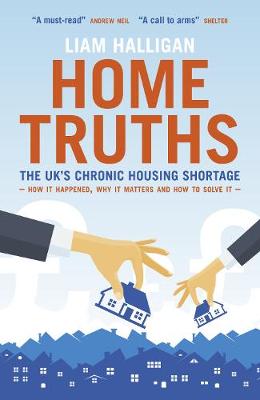
Book review: Home Truths and the disaster facing the Tory Party if it can’t help Generation Rent

Liam Halligan Pic credit: Twitter

This is a humdinger of a book. Its author Liam Halligan – a cerebral Brexiteer rather than a flag waving, Rule Britannia supporter – exposes and then tries to solve – the biggest crisis facing the younger generation. They either can’t afford to buy their own home or haven’t a hope in hell if they are poor in getting social housing.

The huge hype in house and land prices – which is still going on despite the pandemic – is exposed in this book as part of deliberate policy by landowners and an oligopoly of huge house builders – to maximise profits, provide sub standard new homes and prevent any changes in planning laws which would release land for housing.

The government is committed to ” build, build, build” hundreds of thousands of new homes for the young generation who increasingly are having wait until they are 40, if they are lucky, to own their own home. Like many political promises this is unlikely to materialise under present government policies and he explains in graphic detail why this will not work.

Instead by subsidising buyers under the Help to Buy scheme they are fueling house price rises and only helping the better off – who also get help from the Bank of Mum and Dad – to acquire a home.

Home Truths book

This well researched book shows that Attlee’s government had the idea of how to both build a lot of council housing and incentivise builders to expand home ownership. But both aims have been destroyed by successive governments -including the error under Tony Blair and Gordon Brown – not to build any council houses.

The current Tory promise is undermined by the fact – exposed in the book – that the party is hamstrung by its donors – many of whom are committed to making more money by keeping house prices high and building land rationed. The big builders have also gobbled up many of the small builders – the very people who have incentives to build homes fast – to strengthen their monopoly.

The result was in 2017 that Jeremy Corbyn garnered votes from the young frustrated at having to eke out of their lives in either overpriced rent sharing properties or stay at home with mum and dad while they were in their 30s. Now without Jeremy Corbyn around to scare the Tories, the government might think they can still get away with it.

Ian Mulheirn Pic credit: Institute for Global Change

Labour need to step up to this problem. They are not financed by landowners. One thing they shouldn’t do is take any notice of the Tony Blair Institute. The former PM’s chief policy maker actually believes there is no housing shortage. Ian Mulheirn is using Blair’s platform to peddle the idea and argue that we should not build hundreds of thousands of new homes. Presumably he is happy for the young to pay ever increasing rents or stay with their parents., The big builders and private landlords must love him.

What is good about this book is that the author also proposes solutions which are pretty radical and involve a major reform of planning legislation ,changes to the value of land and penalties for builders who just hang on to sites. And a major social housing programme as well. Well worth a read. If the Tories don’t act they risk alienating a whole generation.

Electoral rolls falling and Millennials head for Spain

I have added a couple of my own blogs that illustrate the results that the author hasn’t mentioned. One shows the declining electorate in central London because so many properties are going to overseas buyers and are used as AirBnB’s. The others show that if we are not careful this permanently rising market could be used for property developers to take over the care home market. The third is a very recent article in the i paper showing that the millennials are voting with their feet and helping fuel a Spanish property boom. Talented tech savvy young Brits are finding you can rent a whole villa in Marbella for the price of a crummy flat share in London and they are basing themselves there. The country is starting to lose vital young talent.

https://bylinetimes.com/2019/12/05/zombie-neighbourhoods-londons-disappearing-voters/

https://davidhencke.com/2021/03/15/how-the-genteel-retiree-world-of-centenarians-was-shattered-by-the-ruthless-modern-model-of-social-care-capitalism/

https://inews.co.uk/news/uk/costa-del-covid-millennials-swap-uk-drizzle-work-remotely-spain-gain-post-brexit-rights-1003386

Why author Andrew Lownie’s fight to stop the Cabinet Office keeping secret Lord Mountbatten’s diaries must be supported

Lord Mountbatten: Pic credit: Allan Warren and Wikipewdia

The Cabinet Office under Michael Gove is getting an appalling reputation for its handling of Freedom of Information requests. It is already facing court action from Open Democracy after being accused of blacklisting journalists making requests and setting up – totally against the spirit of the legislation – a clearing house to handle requests from journalists and advise other departments how to handle them. Under the FOI Act you don’t even have to disclose your own identity to get information – it is a public right.

But now it has plumbed new depths in trying to censor important historic documents years after the death of Lord Mountbatten, one of the country’s most interesting and controversial figures. And it is hoping to make it impossible for the author of his biography, Andrew Lownie, to challenge the Cabinet Office by making it too expensive for him.

The diaries of Lord Mountbatten were purchased by Southampton University for £2.8 million – with £2 million from the taxpayer – as part of a huge archive covering both Lord Mountbatten and Lord Palmerston. The archives is known as the Broadlands archive, named after his famous home.

Andrew Lownie has written an excellent biography, The Mountbattens: Their Lives and Loves, published two years ago. It explores the lives of both Mountbatten and his wife Edwina. It was his research for this book that led him to the Broadlands archives, and he has been attempting to gain access to the diaries and documents from 1935 onwards.

So far using the Freedom of Information Act he has spent four years successfully fighting the Cabinet Office and Southampton University to get the censored part of the diaries released. He has won every step of the way and the Information Commissioner has ordered them to be released.

Cabinet Office employing two QCs at vast expense to fight the disclosure

But now the Cabinet Office and Southampton University are going to a tribunal to stop the release of the diaries and have employed, at vast taxpayer’s expense two QC’s to argue why these documents should not see the public light of day.

Andrew Lownie has launched a crowdfunder appeal to raise £50,000 to defend himself against these two QCs.

 The documents could shed light on the royal family and the independence and partition of India. Lord Mountbatten was the uncle of Prince Philip, Duke of Edinburgh, confidant of Edward VIII (Duke of Windsor) and the last Viceroy of India, while Lady Mountbatten had a close relationship with the Indian leader Jawaharlal Nehru.

The Guardian took up the issue and suddenly the Cabinet Office decided to release the diaries up to 1934 but no further. This means that some of the most interesting episodes that also included Lord Mountbatten’s controversial war record in the Navy and the extraordinary coup attempt against Harold Wilson, and possibly his version of the advice he gave to Prince Charles, our future king, when he was a young man, remain secret.

Andrew Lownie deserves enormous support to take on the Cabinet Office which must, rather than Southampton University, be behind this censorship of these documents. They belong to the nation, not Michael Gove or the Royal Family.

Support Andrew Lownie’s appeal

I suggest you get on to his crowdfunder page here and donate if you can. I have also written an earlier review of his book on this blog.

The link is: https://davidhencke.com/2019/11/18/book-review-the-mountbattens-their-lives-and-loves/

Exclusive: London’s largest human rights law chambers backs initiative to end all discrimination against women in the UK

Garden Court Chambers

Plans for a People’s Tribunal in London later this year to hear the case for implementing the UN Convention to eliminate all discrimination against women (CEDAW) have received a huge boost after one of London’s leading international law firms have offered to work for them free of charge.

Garden Court Chambers, which has 197 barristers and 27 QC’s, and specialises in human rights cases has offered the services of six of its leading women barristers and QC’s to head up the People’s Tribunal which aims to draw up an ” oven ready ” Bill of Rights for Women which could be put into British law. All are working pro bono.

Smita Bajaria, a solicitor, is also working pro bono and will be instructing the barristers for the CEDAW tribunal.

The decision by Garden Court Chambers, to offer such a huge amount of pro bono work to the inquisitional tribunal is thought to be unprecedented in legal circles. All will be working on the preparation and presentation of the legal arguments and examine over 20 witnesses across the three day tribunal hearing.

The six QCs and barristers are:

Sonali Naik: Pic Credit: Garden Court Chambers

Sonali Naik QC

Sonali has an extensive judicial review practice in challenges to Home Office policy, trafficking and unlawful detention and has won a number of high profile cases including a landmark case which found that Priti Patel, the home secretary, had acted illegally in demanding the “instant removal” of migrants without having access to lawyers.

Amanda Weston QC:.

Amanda Weston QC

A leading expert on public and administrative law and judicial reviews and on the preferred counsel list for taking up cases for the Equality and Human Rights Commission.

Nicola Braganza. Pic Credit; Garden Court Chambers

Nicola Braganza

An expert on gender and race discrimination. Won a landmark case against the Home Office in the Supreme Court for the Public and Commercial Services Union and Prospect union over the discrimination against black and older applicants in promotion tests , winning a settlement of over £1m.

Louise Hooper Pic credit: Linked In

Louise Hooper

She is an equality and human rights lawyer with a particular expertise in cases involving child, refugee and migrant rights, sex, gender, LGBTI+, trafficking and detention. Advises the Council of Europe.

Maria Moodie Pic Credit Twitter

Maria Moodie

A specialist public law practice in the areas of community care (Adult and Children Act cases), human trafficking, migrant welfare, housing, and immigration and asylum law.

GraceBrown Pic credit: Legal 500

Grace Brown

She commenced practice in 1995 inspired by the desire to promote the rights of the under privileged and disadvantaged and quickly established herself as a well-respected and busy human rights and immigration barrister. She is on the preferred list of Lawyers for the Equality and Human Rights Commission.

A statement from the CEDAW People’s tribunal said : “Every woman and girl born in the UK should be able to realise, as of right, her true potential.

“There is no reason why CEDAW cannot be transposed into domestic law and the delay in doing so is nothing short of unconscionable.

OUR GOALS

• A published Report out of the tribunal hearing signed-off by the Independent Panel of Judges

• Instructions for a Women’s Bill of Rights

• A film of the journey

• Roadshow e-Drop-Ins

The CEDAW Peoples Tribunal will leave a lasting legacy by providing a body of evidence for individuals, women’s campaign groups and politicians to hold governments to account.

This will lead to changes in laws and the creation of new laws to bring about a Women’s Bill of Rights and substantive, transformative equality for all women and girls.”

The tribunal website is here.

Labour: Revival or Nemesis?

Sir Keir Starmer: Labour leader Pic credit: BBC

Labour needs popular policies that attract people from Carlisle to Camden

It would rather cruel to say Sir Keir Starmer named after Labour founder Keir Hardie should be the leader that led to its nemesis. But the weekend’s election results in the North East and the Midlands show it is Boris Johnson’s Conservatives that are the new champions of working class voters there not Labour.

That is not to belittle Labour’s achievements in Wales, Cambridgeshire, the West of England and the South Coast. In Worthing for example, Labour has gone from having no councillors there for 51 years, to a place where the Tories are reduced to a majority of just one.

But it is to say that Labour have lost the plot. They are fighting quite a different Tory Party than under Theresa May or David Cameron and they don’t seem to have got the message. This Tory Party is a high spending, interventionist party wrapped up in the trappings of Rule Britannia and law and order. It is prepared to spend loads of cash in targeted working class areas where it can garner votes and is happy for an image of Gunboats at Dawn with the French in Jersey over fishing rights knowing that a NATO ally is unlikely to open fire.

For Labour there is a choice it can either ape the flag waving ,law and order, overseas aid cutting agenda of the Tories or it could look for new ground to take on the changed Tory Party.

I have four ideas for the latter and they all affect millions of people whether they live in the North, Midlands or South of the country. If successfully implemented they could change hearts and minds.

Having a decent affordable home for Generation Rent

The first is finding a home to live. For younger people under the age of 40 this is rapidly becoming an unobtainable dream as house prices continue to surge way above wages. They are either stuck in expensive flat sharing or forced to continue living in their parent’s home. No chance to aspire to start a family there. And with little council house building social housing is not easily available for the poor.

For a real analysis of this problem read a book called Home Truths by Liam Halligan. It is a comprehensive analysis of what has gone wrong. Labour could do little better than plagiarise the ideas in this book as part of their manifesto.

The Tories – though promising to build more homes- are on the back foot on this one. Their second largest group of donors are property developers – whose rationale has to be to get the most profits for their shareholders and investors. This, as the book explains, means ensuring that house prices continue to rise and they will only rise if they drip feed rather than grossly expand house building. So here’s one policy that will appeal whether you are in Brighton or Barnsley- and it can be sloganised in simple terms as it is both aspirational and a basic need.

Time for Labour to embrace the new world of freelance working

The second is the new world of work. The old huge battalions of workers in the mines, shipyards and even steel no longer exist – the new world of work is often hi tech , freelance contracts or new businesses or low paid work in Amazon or Deliveroo. Yet neither the outdated national insurance system nor employment law helps them. Ed Miliband promised a small step in reforming national insurance under his leadership – to ensure at least the self employed millions got basic help. And this group were the worst off under the furlough scheme. Again the government is weak in this area and whether you have a start up in Maidenhead or Middlesbrough you will benefit.

Women’s rights

Then there is the equality issue -particularly for women. Johnson is not particularly popular among women. And women are half the electorate. There are still issues of inequality, low pay and a law and order issue over women’s safety – so a women’s bill of rights to end injustice and make them safer in the streets would be very popular.

Equal access to the green revolution

Finally there is the issue of green policies. Yes the government is committed to these – but will help be distributed fairly or will electric cars be the prerogative for the better off. There is an area where carefully pointing out the problems and promising to do something about it will be attractive.

These are just some ides.. But whatever happens Labour has to up its game and get out of this continual internal battle talking to themselves and talk to the voters instead. Otherwise it will lead to its traditional male working class voters permanently voting Conservative and its more left wing voters backing the Green Party. It could disappear down a hole in the middle if it doesn’t get its act together and decide what it stands for.