50’s Women:”Nobody will see their pension entitlement changed by more than 18 months” – Theresa May’s crass error

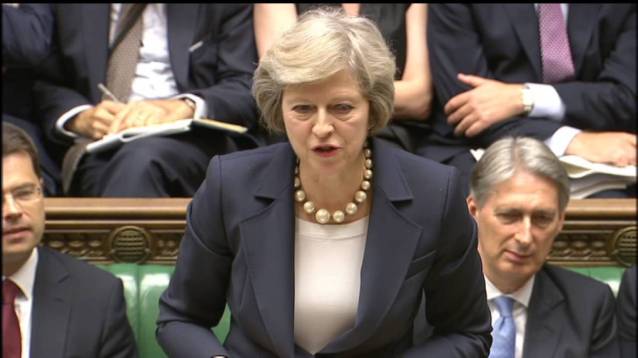
theresa may in parliament

Theresa May in Parliament Picture YouTube

CROSS POSTED ON BYLINE.COM

There was an extraordinary error by the Prime Minister, Theresa May, when she was challenged by Ian Blackford, the Scottish Nationalist leader, at Prime Minister’s Questions in Parliament today.

Mr Blackford used one of his two questions to raise the plight of the 3.8 million WASPI women who have been hit by the government’s  decision to raise the pension age from 60 to 65, then 66 and 67.

Mr Blackford asked: “Yesterday we celebrated the achievements of the suffragette movement, which was about democracy, equality and fairness for women.

“However, today in the United Kingdom, 3.8 million women are not receiving the pension to which they are entitled. A motion in this House last November, which received unanimous cross-party support—the vote was 288 to zero—called on the Government in London to do the right thing. Will the Prime Minister do her bit for gender equality and end the injustice faced by 1950s women.”

The Prime minister replied:

“As people are living longer, it is important that we equalise the pension age of men and women. We are doing that, and we are doing it faster. We have already acted to give more protection to the women involved. An extra £1 billion has been put in to ensure that nobody will see their pension entitlement changed by more than 18 months. That was a real response to the issue that was being addressed. If the right hon. Gentleman wants to talk about equality, he has to recognise the importance of the equality of the state pension age between men and women.”

What this showed is what 3.8 million women waiting up to SIX years for their delayed pension have yet to get the message across. Theresa May just thinks you have a little wait of 18 months. And this £1.1 billion  concession is just a future cost to the government over the next two years, no money has been paid out yet.

This ignorance – caused by her only taking into account the changes in 2011 affecting the rise in the pension  age from 65 to 66 for both men and women – shows how ignorant the Prime Minister is.  Considering she is in that age group herself – but guaranteed to get a large Parliamentary and Prime Ministerial pension in her right-plus a big payout for her wealthy hubby – shows the gulf between the Metropolitan elite and the ordinary person. Mo misery for her in her old age.

But it was good news that the SNP leadership were taking women pensioners plight seriously. About time Labour and Liberal Democrats did the same.

UPDATE:  Ian Blackford said today (Thurs) : ” The Prime Minister’s reply was outrageous. She was being economical with the truth. We are all know there have been some horrible cases as a result of this policy and something will have to be done.

“I am not just sympathetic I will not let this matter go.”

Later Guy Opperham, under secretary for works and pensions, made a statement in Parliament saying  the government were  not going to do anything and would fight any legal challenge by the 3.8 million people to change its mind. He was cagey about announcing the last date when people who were never told about the change until years afterwards could complain about maladministration.

Watch him and the short debate that followed here

Guy Opperman has a majority of 9,286 over Labour in his Hexham constituency in Northumberland. There are 6000 constituents who are 50s women and have suffered from a policy he has no intention of changing. If they all switched to his nearest challenger he could lose his seat. That is up to you.

IMPRESS reject arbitration and compensation claim from ex MP over Esther Baker investigation story on this blog

esther baker

Esther Baker

CROSS POSTED ON BYLINE.COM

The press regulator, Impress, has refused a request for arbitration and compensation from former Liberal Democrat MP, John Hemming, over an article published on this blog last September when the Crown Prosecution Service decided not to  issue criminal proceedings against the ex MP and two other people over allegations of child sex abuse from Esther Baker.

The article reported, almost in full, statements issued by Staffordshire Police and the ex MP after the decision was announced by the CPS. The CPS concluded there was ” insufficient evidence ” to proceed, the ex MP said he had been the subject of false allegations.

Since then Esther Baker has appealed the CPS decision and a ruling is expected some time in the autumn.

This blog is not directly covered by the regulator, IMPRESS, but because I cross post articles on the independent platform, Byline, it is indirectly covered since Byline has agreed to be regulated by IMPRESS.

IMPRESS’S regulatory committee ruled  that the article  on its own could not been seen  as Mr Hemming claimed as ” harassment”. And it dismissed his claim for compensation by saying that any  alleged harm caused to Mr Hemming  by this article was ” trivial ” and ” too insignificant to meet the  test ” for a claim.

For the record  and to prevent other people putting  any spin on this decision this is the text of the ruling sent to Byline:

“I am writing to advise you that an IMPRESS Regulatory Committee recently met to consider John Hemming’s request for arbitration. Having carefully considered his request in accordance with the IMPRESS procedures they have decided that the request is not suitable for arbitration under the CIArb/IMPRESS Arbitration Scheme. The reasons for their decision are set out below.

Reasons for Board arbitration suitability decision:

Rule 8.3 of the IMPRESS Regulatory Scheme requires the Board to make an administrative assessment of whether a claim is covered by the scheme. For the avoidance of doubt, this decision is not based on an assessment of the merits of a claim.
Rule 46 of the Regulatory Scheme Procedures provides six administrative criteria that need to be satisfied before a claim can be accepted under the scheme.

The Board considered each of these in turn:
(i) The claim is made against a publisher regulated by IMPRESS.
The Committee was satisfied that the claim was made against a publisher (Byline) that was regulated by IMPRESS at the time of the act complained of (6 September 2017).
(ii) The claim is related to one of the areas of law covered by the scheme.
The Committee was satisfied that the claim related to an area of law covered by the scheme, namely defamation and harassment. With regards to the claim for harassment however, though this related to one of the areas covered by the scheme, the Committee determined that the claim for harassment did not satisfy the relevant test. This was because, under a claim for harassment, a ‘course of conduct’ required two or more events to be characterised as such. The claimant therefore could not bring a claim against the publisher for the publication of one article.
(iii) The claim is not a pre-publication matter where it is appropriate for it to be directed to the courts.
The Committee was satisfied that the claim did not relate to a pre-publication matter where it was appropriate for it to be directed to the courts.
(iv) The claim provides a clear statement setting out the harm or financial loss suffered by the claimant.
The Committee was not satisfied that the claim clearly set out the harm or financial loss that the claimant had suffered as a result of the published article. It noted that the claimant largely relied on the fact that the article was part of a wider campaign against him which he accepted that Byline was not a party to.
(v) The claim describes a specific action or activity of a publisher that has caused the alleged harm or financial loss.
The Committee was not satisfied that the claimant adequately described how it was the article published by Byline that caused the alleged harm and loss to the claimant. This is because, although the claimant identified specific harm and loss caused by the ‘wider campaign’, the claimant failed to specify any harm or loss which arose as a direct result of the article published by Byline. The Committee determined that any harm or loss caused to the claimant by the publisher was trivial or incidental in conjunction with the remainder, and was thus too insignificant to meet the test.
(vi) The claimant explains why the complaint is not suitable for resolution by the IMPRESS complaints procedure.
The Committee accepted that given that (i) the complaint did not, on the face of it, appear to engage the Standards Code and (ii) the claimant sought financial compensation as a remedy, it was not suitable for resolution by the IMPRESS complaints procedure.
In conclusion, the Committee decided that the claimant’s request for arbitration should be refused on the grounds that parts (iv) and (v) of the test were not met.

How angry 50s women deprived of a pension can boot their MP out of a job


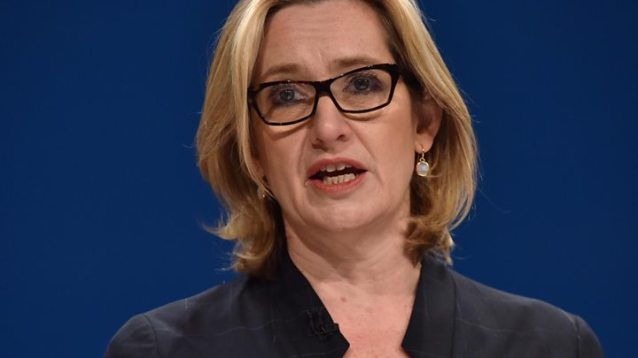
amber rudd

Home secretary Amber Rudd- most high profile Tory who could be unseated by angry people who have lost their pension for up to six years Pic credit: BBC

CROSS POSTED ON BYLINE.COM

Many angry  50s women  frustrated they can’t get a pension for up to six years – have the power at the ballot box to knock out the MPs who voted for the change. Since the next general election will be closely fought and many seats have narrow majorities they are literally – no pun intended -in poll position to effect change.

There isn’t a constituency in the United Kingdom that has less than 3000 of  these pensioners according to a breakdown helpfully provided by the House of Commons library.

And it is the current Theresa May government and her DUP allies  who are vigorously pursuing  higher and higher  retirement ages for future generations of pensioners that are the MPs most at risk. The Conservatives got a high proportion of votes from the over 60s at the last general election so  need these votes to win the next election.

The biggest voter power of this group  is in the Isle of Wight – where there are over 10,000 people affected by the raising of the pension age.The Tory MP, Bob Seely appears to have an impregnable 20,998 majority – but that would be halved if this group of people voted didn’t vote for him.. The main challenger there is Labour who came second and if people switched their vote to Labour it would become a highly marginal seat.

Much more vulnerable is home secretary  and ironically women and equalities minister Amber Rudd, whose Hastings and Rye seat, has 7400 people affected. She has a majority of 366 and Labour is the main challenger. There are 20 times more people hit by the change than her majority.

Another ultra marginal is Calder Valley where the Conservative MP Craig Whittaker,a Treasury whip, has a majority of 609 over Labour. There are 7000 people affected by the change in his constituency.

Similarly Corby where Tom Pursglove has a Conservative majority of 2,690 – it is more than outnumbered by 7,300 people affected. Both Milton Keynes seats (North and South) have small 2000+ Tory majorities but over 14,000 people affected between them.  And Scarborough where Conservative MP Robert Goodwill has a 3435 majority is dwarfed by 7,100 people affected.

The entire London borough of  Barnet  is another  hotspot.  Chipping Barnet, where Theresa Villiers, Conservative MP and ex minister, has a 353 majority has 6,200 people affected. Labour is again the main challenger. Next door Hendon which also has 6.200 people affected. Tory MP Matthew Offord has a majority of 1072 over Labour .In Finchley and Golders Green Tory Mike Freer has a majority of 1657 over Labour and there are 6000 people affected.

There are also a string of  safe Tory seats with between  7,000 and 7,800 pensioners who have lost out where the Tory majority can be severely dented or turned into marginals by switching to the highest challenger. Among these are  Beverley and Holderness ( Graham Stuart majority 14,042); Bridgewater and West Somerset ( Ian Liddell-Grainger majority 15,448); Croydon South ( Chris Philp majority 11,406); South Dorset ( Richard Drax majority 11,695), Wells (James Heappey, majority 7585 over liberal democrat) and Berwickshire, Roxburgh and Selkirk ( John Lamont, majority 11,060).

Among Labour seats with over 7,000 pensioners affected  include marginal Colne Valley (Thelma Walker majority 915) and  safe seats Croydon North and Brent North. The most marginal with over 7000  affected people is Rutherglen and Hamilton West held by Gerrard Killen with a majority of 265 over SNP.

DUP seats with the largest numbers of people affected ( 6500 and 6400 respectively)  are Upper Bann held by David Simpson with a 7,992 majority and Antrim North held by Ian Paisley Jnr with a 11,546 majority.

None of the Welsh Parliamentary seats had more than 7000 pensioners.

In addition there are those with lower numbers of people affected but who could influence the result. One is East Worthing and Shoreham which has 6,100 people affected. The MP is chair of the All-Party Parliamentary Group on State Pension Inequality for Women pensioners group, Tim Loughton. He has a 5106 majority over Labour.

These  results suggest that Waspi  and BackTo60 supporters supporters have more influence than they realise. It is a question of energising it.

Check your own constituency in the table here.  It is an Excel document. Go the page and scroll until the bottom and click on constituency estimates.


Why the shabbily treated 50’s women pensioners must go on the offensive and win back their money

CROSS POSTED ON BYLINE.COM

westminster-houses-of-parliment-big-ben-london

Time to get MPs to back the case of the 50s Women pensioners who have lost out

Today the One Voice BackTo60 group  published a report by me that they commissioned on  the case for lowering the pension age from 65, to going on 66,  to 60.

The idea is regarded by all main parties as impossible  and prohibitively expensive  and all conventional thinkers believe cannot be achieved.

They base their claims on growing longevity, that the national insurance fund  which pays out pensions is in the red, that all of the rest of Europe is raising pensions and that the new pension age is an equality measure.

All these facts are WRONG. For the first time in the UK , the projected age when we die is FALLING in poorer areas.

The National Insurance Fund is in the black. The hardship that 50’s pensioners are facing today are a calculation to save the government putting up national insurance rates until 2030. If the government did restore the money owed to the 50s pensioners, it would still be in the black until well beyond 2020.

The tide has begun to turn in Europe against raising the pension age. Poland, a country much poorer than the UK but starting to catch up with us fast, has LOWERED the pension age from 62 to 60. France under Macron is considering whether to implement a pledge by former president Mitterand to lower the pension age from 62 to 60.

And the idea of having of having an equal pension age for men and women is only superficially equal because of a host of unequal measures that the 1950s generation has had to put up with since they were born – from not being able to get mortgages, lower pay, lower occupational pensions, expected to quit work for long periods to bring up a family etc etc.

BackTo60LogoWhite

One Voice The group that is challenging the government over the shabby treatment of 50s women.

So how can the 3.3 million women affected get a result. For a start they are many and the Establishment are few. Their sheer voting power is enough to change any general election result.

Then you have two official reports – one by the totally respected House of Commons library and the other the  current five year review of the state of the national insurance fund.

You need to weaponise the facts contained in both those reports to your advantage.

The House of Commons library report contains an accompanying document that gives a breakdown of where you all are – by Parliamentary constituency. Check the MPs majority and target him or her to change their mind. MPs are always worried about being re-elected, play on their fears.

The NI fund reveals the money is there – but also reveals that a future generation of pensioners will suffer if wages don’t go up ( that automatically increases NI contributions) and also if immigration stops – the flow of young, healthy people to  the UK who automatically pay into the NI fund increases resources for pensioners ( elderly people don’t come to  the UK because of its  cold damp, drizzly winters – they prefer sunny Spain or Portugal).

Then there are the political  parties. Not a single mainstream party has a decent policy for you.

The Tories only plan further rises in the pension age and have no interest in helping you out.

The Labour Party’s  works and pensions spokesperson Debbie Abrahams has a cost neutral proposal which reduces the age to 64  but gives you a reduced pension for life. Totally unsatisfactory.

The Liberal Democrat spokesman, Stephen Lloyd, has an idea of giving everyone of you £15,000 tax free – a sticking plaster plan. How can you live on £15,000 for six years in some cases?

Put very simply you can explain to the Tories that they are in government because of older people’s votes. Tell them you won’t for them and very likely they won’t be in government.

You can influence Labour  by targeting its huge membership of nearly 570,000. This means that even in constituencies where there is a big Tory majority – there is often now a big  local Labour Party. For example my constituency Hertfordshire  South West ( incidently the safe seat of David Gauke, the former works and pensions secretary) has 800-900 members. Lobby them, get them to put up a motion to the next party conference and get the Labour Party to change its policy.

You can also influence the Liberal Democrats – who now have more members than the Tories – and the Scottish and Welsh Nationalists to do the same thing.

Show them you are not going away and redress the shabby treatment you have received and win the argument.


Designer label Dudes: Beware of a new police ” street strip and search ” plan for Rotterdam

A Rotterdam police arrest pic credit Lou Robens

A Rotterdam police arrest – not yet to do with designer dudes Pic credit: Leo Roubos Flickr

CROSS POSTED ON BYLINE.COM


If there is going to be a return to  the Met Police  expanding controversial ” stop and search ” of mainly black youths in London to combat rising knife crime – this is nothing compared to an initiative planned by police chiefs in Rotterdam to tackle suspected drug dealers.

The Dutch police are planning to stop  and search young people wearing designer gear in the city if they will decide they are too poor to be kitted out in Gucci jackets. If they don’t believe they should  be wearing them, they are going to confiscate them on the spot.

Frank Paauw, chief of Rotterdam police, is reported to have told De Telegraaf ( in Dutch). ” We are going to undress them in the street”.

“These young people have no income, sometimes even debts from a previous conviction, but also wear an outfit that exceeds 1500 euros. That is undermining the rule of law if you make it very big, but also a completely false signal to local residents. Taking away is therefore important, “says Paauw.

Police will be on the lookout for include “big Rolex[es], Gucci jackets, all those kinds of clothes,” the department spokesperson said.  One wonders what would happen if they are wearing Calvin Klein boxer shorts.

Not surprisingly people have slammed the idea  because it could lead to racial profiling. The  Netherlands version of the website  Vice contains some particularly strong criticism  after Vice spoke with  young people in Rotterdam.

“Police won’t consider a white guy walking around in an expensive jacket to be a potential drug dealer,” said Quincy, a 20-year-old man. “But it’ll be a different story with minorities.”


Does the demise of UKIP offer a lifeline to embattled Tories?

ukip-tory

Will the Tories replace UKIP? Pic credit: Matt Dent; A mad man with a blog

CROSS POSTED ON BYLINE.COM

The performance of UKIP  in the polls has  been pretty disastrous for some time now. But if the party dies this weekend which other party is going to benefit from its demise.

After losing their only MP at the general election the party performed very badly at local level and is continuing to do so. And ironically Britain’s departure from the European Union will destroy its biggest base which is in Brussels. So by 2019 when we leave it is possible that UKIP will have completely disappeared from the political scene. It is very much a case  of don’t get what you wish for.

But the destruction of UKIP  at the moment appears to be more of a problem for Labour than the Tories. It is a considerable dilemma for Jeremy Corbyn on how he handles Brexit and suggests he, as well as Theresa May, is caught between a rock and a hard place over this issue.

Younger Labour Party voters – particularly in London and the South – are very strongly pro Remain – welcoming the diverse nature of the UK and enjoying the reality of visa free travel across most of Europe.

But Labour voters outside this group – in the North, Midlands, East Anglia and parts of Kent- are pro Brexit. And furthermore the former UKIP voters are obviously keen for Britain to leave.

So for Labour to get back these working class voters it has to be seen to be  both supporting Brexit and sympathising with Remain  at the same time. It also means the party – which has had success particularly at the last election – has highlighted domestic issues like the NHS, education, transport, housing and student loans rather than Brexit.

Labour’s dilemma is shown up in a scattering of local council by-elections across the country this month. Of course one should not put too much score on local election results – because of low polls and because simply that they are local.

But one trend has emerged where UKIP had a previous strong showing.in local areas and either doesn’t stand or puts up a candidate who is trashed by the electorate.

What appears to be happening  is that both Labour and the Tories are gaining votes – but the Tories are getting the lion’s share. This means that either Labour cannot win the seat or as in Bolton last night – they lose a seat to the Tories.

The results in Thanet in Kent –  a former UKIP stronghold where they got control of the council – is a case in point. It has seen the Tory and Labour vote go up – but has allowed the Tories to retain their seats with a bigger majority. Roughly two in three former UKIP voters seem to have switched to the Tories compared with one in three supporting Labour.

In Bolton where on a  nearly 30 per cent poll – the Tories took a seat off Labour – the result again showed  both the Tories and Labour gaining votes – but the Tory share of the vote went up 16.7 per cent to take a seat in a safe Labour Parliamentary constituency. Again UKIP had polled very well in the ward in the past.

Similarly in Newport Pagnell, a council seat on Milton Keynes council  where UKIP had got a big share of the vote last time – the Tory share jumped over 15 per cent – while Labour jumped just under 12 per cent. UKIP got  nearly a quarter of the votes last time but didn’t stand.

These actual votes may explain the closeness in the polls between Labour and the Tories – the Tory vote is simply being buoyed up by former Kippers. It may also explain why William Hague, the former Tory leader, would like to see UKIP wound up as the best chance for the party to stay in power.

It is also quite clever  of Boris Johnson to raise the issue that the NHS would get even more money after we leave the EU – it is aimed at those people keeping faith with Brexit believing the country will enter a Shangri La once we are out.

I personally don’t believe a word of it – but to my mind it does suggest to me that Labour should not take the next election for granted. They have to continue to work on these voters by offering a much fairer society. But it also leaves them with a very delicate balancing act over Brexit.


Will Indian Immigration to the United States Increase? A blog that debunks the Donald Trump view of immigrants

This is the other side to the Donald Trump view of America. It shows the big contribution being made by immigration to the United States by often highly educated Indians and debunks with lots of facts the idea that immigrants are scroungers or even necessarily poor. Some of those people condemning immigration to the UK could learn from this analysis of the facts.

annetbell's avatarTalesAlongTheWay

Indian Immigrants in the United States
Indian college student applying henna.

A college student applies henna, the Indian tradition of painting elaborate designs on the skin. (Photo: University of Illinois Springfield)

Immigrants from India first arrived in the United States in small numbers during the early 19th century, primarily as low-skilled farm laborers. In recent decades the population has grown substantially, with 2.4 million Indian immigrants resident in the United States as of 2015. This makes the foreign born from India the second-largest immigrant group after Mexicans, accounting for almost 6 percent of the 43.3 million foreign-born population.

In 1960, just 12,000 Indian immigrants lived in the United States, representing less than 0.5 percent of the 9.7 million overall immigrant population. Migration from India swelled between 1965 and 1990 as a series of legislative changes removed national-origin quotas, introduced temporary skilled worker programs, and…

View original post 2,267 more words

Peter Preston: An appreciation

Peter Preston

Peter Preston Pic credit: The Guardian

CROSS POSTED ON BYLINE.COM

There are two people who changed my life as a journalist. One was Brian MacArthur, who took me on The Times Higher Education Supplement in 1973. The other was Peter Preston who appointed me as a reporter on The Guardian in 1976.

I still remember the first interview  with Peter Preston for my job at the Guardian when he out of the blue suddenly asked what my politics were – probably not the politically correct question you might expect in applying for a reporter’s job.

” Disillusioned Labour “, I said.. “Aren’t we all ” came back the riposte.

PP was a man of few words but enormous depth. You could not always fathom what he was thinking but what you did know he was utterly committed to the newspaper, perpetually fascinated by stories and would defend you against the powerful who might seek to censor or even ridicule you.

He was utterly committed to press freedom both at home and abroad and not bothered or even remotely interested about becoming a member of the Establishment.

He also got me out of scrapes – both on a personal and professional level. After I joined the Guardian my wife, Margaret and I bought our first house. I had spotted a small ad for a four bedroom  refurbished terraced house in Holloway which even in the late 1970s appeared to be too cheap at around £23,000. She was sceptical whether there was something wrong but it passed a survey and we got a mortgage. She turned out to be right when the joists which held the main staircase started to give way and cracks appeared. I asked for a mortgage to repair it but found the building society would charge extra interest to give me a loan. I mentioned this to Peter Preston and he offered me a £500 loan from the Guardian which I paid back from my salary – just in time to prevent the staircase collapsing.

In another instance rather the worse for wear  I foolishly remarked to the Tory housing minister, then John Stanley, that their divisive housing policies could lead to a breakdown in society  between rich and poor and end up with people kidnapping prominent people- citing  how would Michael Heseltine ( then Environment Secretary)  feel if someone kidnapped his daughter.

He interpreted that to mean that I knew someone in the IRA who would, contacted Heseltine, who called in Special Branch. An inspector rang the Guardian for my home telephone number and they refused to give it to him, saying they would contact me. When I got home later  ( no mobile phones then) and found the message I rang the inspector and convinced him I was no terrorist. ” I am glad you rang I was just about to send someone around to batter down your door”, he said.

The next day Peter Preston wrote to Heseltine pointing out that there was difference between a Guardian reporter having strong views and being a terrorist and sought an apology for his over reaction. Heseltine declined to apologise saying he had to protect his family.

What neither of them knew is that our baby sitter for the night was a lovely middle aged Irish lady, who had a very strong Sligo accent. If she had answered the phone to special branch, I will leave it to your imagination to think what would have happened next.

PP was  a amazing innovator. Others like David McKie, in his Guardian obituary, have much more eloquently explained the huge innovations he introduced to the design and content of the paper during his long editorship.

But on a  straightforward reporting level he thought out of the box. In 1986 I was very nearly poached by the Independent, offering me first social services correspondent and then Whitehall editor. He responded with the idea of sending me down to the lobby with a brief that had never been held by anyone – to use Parliament as a base to investigate MPs, lobbyists and Whitehall – and not follow the day to day lobby events.

Never a supporter of the Westminster club,  I think he really put me down there as an unguided missile to see what would happen. And when I started to get into trouble he always backed me.

He took on the Privileges Committee  when they were considering removing me from Parliament over the leaking of the National Audit Office memo which revealed the ” Rover sweeteners” scandal – the  secret bung given to then British Aerospace for buying ailing British Leyland.

He also neatly diverted Neil Hamilton MP – when he wrote to him a year before the ” cash for questions” scandal broke in 1994 – warning him about my activities and saying there was ” nothing worth printing ” about the story. The story which started when Mohammed al Fayed  inadvertently revealed to him he had been paying MPs was one of his crowning glories.

He will always be  my hero – despite the Sarah Tisdall scandal  where he was forced by the courts to give away a then unknown source – because he backed reporting and was interested in news. His reaction to a good story was normally one word ” terrific”. When he said that you knew the story was home and dry.


Time to bin Keep Britain Tidy

image003

Time for Keep Britain Tidy to be put in the bin

CROSS POSTED ON BYLINE.COM

Nearly three years ago Parliament produced a damning report saying England was one of the worst developed countries in the world for litter and fly tipping. Worse than most of the rest of Europe, worse than Japan and worse than the United States and Canada.

Furthermore this situation has remained the same for 12 years under successive Labour, Coalition and Tory governments. And this is despite tens of millions of pounds of taxpayers money being poured into the former quango Keep Britain Tidy to provide leadership to tackle this problem.

The deregulatory coalition government of Tories and Liberal Democrats  thought they would find a solution by abolishing the quango and turning it into a charity  which now has to raise funds from cash strapped local authorities and big business.

The knee jerk reaction of a Left minded blogger might be to persuade an incoming Labour government to push taxpayer’s money back to Keep Britain Tidy. But after an investigation looking at its precarious finances and its rather lacklustre approach to tackling the problem this would be the worst thing it could do.

The real problem is that successive gutless ministers of all parties  (perhaps they have at the back of their minds that they could take lucrative directorships after leaving politics)  won’t tackle the real cause of much of our litter – the  products of big multinationals like McDonalds and Wrigley’s and the tobacco companies –  who take no or little responsibility for the problem.

There is a parallel here  with  Her Majesty’s Revenue and Customs – who connive with big multinationals to avoid paying their fair share of tax which would go a long way to providing better public services and a cleaner  public space.

There is a simple solution here either these companies pay up for a clean up or the Government levies a tax on them ( not us) to employ someone else to do it. I bet the firms would come up soon with some innovative solutions to avoid either.

Now why have I concluded that Keep Britain Tidy is a no no solution  despite being told by some people that its  new director,Allison Ogden-Newton is much livelier than her predecessor, Phil Barton.

The charity has a guilty secret. It has a pension deficit of  £4.5m  for a closed scheme on a turnover of just £5m and assets worth £2.5m. For some private companies this  could lead them to cease trading.

The 2015-16 accounts lodged with the Charity Commission say :

 “The pension deficit as at 31st March 2016 is £4.511m. Future contributions to the scheme have been negotiated with the Trustees of the scheme.
The Company is the principal employer and paid approximately £131,000 to reduce the deficit this year. Keep Britain Tidy will continue to make contributions in line with terms agreed at the last triennial review until any new scheme of payments is agreed. In the financial year to March 2017 it will pay approximately £134,000 towards reducing the deficit in addition to the scheme running costs of approximately £72,000.”


The report reveals that the trustees – who would be liable if  Keep Britain Tidy went bust – certify it is a going concern. But to do this they have had to put aside £2m – equivalent to six  months operating costs -to ensure that it stays afloat.

Allison-Ogden-Newton_1

Allison Ogden-Newton, new chief executive of Keep Britain Tidy

When I put this to the charity – who first ignored my request – I got this reply from Ms Ogden-Newton.

 “Our Annual Accounts have been audited by RSM UK Audit LLP and a clean audit opinion has been given. Standard audit procedures include an assessment of Keep Britain Tidy as a Going Concern and this specifically includes an assessment of our ability to meet the agreed pension scheme contributions. No issues were raised in this respect.
 “We have an agreed schedule of contributions between Keep Britain Tidy and the Pension trustees in order to address the pension deficit and this has also been submitted to the Pensions Authority whom have accepted this plan.
 “To that end we and the relevant authorities consider our agreed repayment programme to be satisfactory and sustainable for both the fund and Keep Britain Tidy.”
Now that is all well and good – but I don’t believe it doesn’t restrict its activities. It has got some income from the 5p levy on plastic bags ( notably £500,000 from Lidl) but as a Defra paper reveals most private companies use the levy to fund other worthy causes whether it is the Alzheimer’s Society, the Woodland Trust, animal welfare or Kew Gardens.
The other major reason why Keep Britain Tidy does not seem to be working well was shown up when MPs questioned the former chief executive at the Commons communities and local government committee.
 He was taken apart by MPs of all parties in an evidence  session.
He produced figures which he couldn’t defend, evidence that MPs found flawed and finally admitted that Keep Britain Tidy refused to talk to the tobacco industry. Given cigarette stubs are a source of litter MPs found this extraordinary.
Clive Betts MP

Clive Betts MP, chair of critical House of Commons report on the state of England’s litter.

Clive Betts, the Labour chairman of the committee, also made this observation.

 ” Frankly Keep Britain Tidy was not a main part of our report or inquiry,. We were more interested in some of the innovative work down by local authorities to tackle fly tipping and litter.”
 Now this is really damning with faint praise given Keep Britain Tidy was meant to be the leadership body.
Since then nothing has improved much. A House of Commons library briefing on litter last July said this :
“Levels of litter in England have hardly improved in over a decade and 81% of people have said they are angry and frustrated by the amount of litter in the country. Local government net expenditure on street cleaning (which includes but is not limited to clearing litter) in 2015/16 was £683 million.”
It also clear that by dividing up responsibility between four Whitehall departments doesn’t work. Perhaps the Cabinet Office should take over responsibility for a national litter strategy. At the moment neither Keep Britain Tidy nor the various ministries seem capable of negotiating with a paper bag.


Blog in 2017: The Grenfell tragedy has resurrected the madness of fire privatisation

Grenfell_Tower_fire_morning

Grenfell Tower: The next morning Pic credit: Wikipedia

CROSS POSTED ON BYLINE.COM

This year my small news site received an extraordinary boost from a five year old post which appeared to have been regenerated by the Grenfell fire tragedy.

The Grenfell disaster showed the bravery of the London fire brigade in tackling such a grim scenario. Heroism and extreme tragedy side by side.

The post that got revived in the wake of the fire was the almost unbelievable story of how an Old Etonian baronet living in a semi in Wellingborough, Northants had got his hands on the management of London’s entire fire engine fleet for £2. It is probably still the most egregious act of privatisation in this country. He of course had to hand it back after a few weeks as he couldn’t run it.

sir aubrey brocklebank

Sir Aubrey Brocklebank: Sacked by the London Fire Brigade; Picture courtesy Daily Telegraph

The public authority had been powerless when the dodgy private company they gave the contract to maintain the fire engine fleet- Assetco London – handed over  London’s fire service to the baronet as the directors realising the game was up and fled the scene.

The good news here – though it has never been reported  by mainstream media-  is the authorities in their own slow way are ensuring the perpetrators get their just deserts.

Grant Thornton , the auditors for Assetco, have been fined  £3.5m (reduced to £2.275m  after they co-operated with the Financial Reporting Council) and found guilty of no fewer than 12 cases of professional misconduct.  The details are in this blog.

assetco_3417t

Assetco’s John Shannon stands astride two London fire engines

Robert Napper, the individual accountant  responsible for auditing Assetco was fined £200,000, reduced to £130,000 after  he co-operated  with the inquiry. He had already retired but I traced him to an Oxfordshire village enjoying his expensive wines. 

Now Assetco directors John Shannon, Raymond ” Frank ” Flynn and Matthew Boyle are to face a disciplinary tribunal by the Financial Reporting Council on January 15. The statement is here.

The press release reads: 

“The Formal Complaint contains multiple allegations against each of Mr Shannon, Mr Flynn and Mr Boyle. The Formal Complaint includes allegations they acted dishonestly or recklessly; that they breached the fundamental principles of integrity and objectivity in the manner in which they prepared the financial statements; and that their conduct fell significantly short of the standards reasonably to be expected of members of Chartered Accountants Ireland (CAI). The complaint covers a wide range of issues which pervaded AssetCo plc’s financial statements.

Some idea of what was going on has already been covered on this blog. Don’t hold your breath that the London Evening Standard will cover the story.

The original blog attracted over 2,500 hits when it was published. This year it topped my ratings with over 14,700 hits – showing that readers are interested in such issues.

Altogether over five years it has received some 20,000 hits.

The other stories have been posted on both my blog and byline.com – so the figures on my blog will be a small proportion of the number of hits on the stories.

The second highest hit from readers tells the heroic story of a London Midland train driver whose quick reaction in nine seconds prevented a commuter disaster near Watford. It  came out in an accident report and had over 5170 hits and can be read here.

ConservativesTwo stories about the plight of the Conservative Party also rated highly. A story revealing that membership of the Conservative Party had plummeted to 100,000 attracted nearly 5000 hits and one on changes to the Tory Party constitution attracted well over 1700 hits. The two blogs are here and here and on Byline here and here.

The real block to enormous boundary changes in Parliamentary constituencies is the DUP and this blog  and byline.com disclosed this last July. The links are here and here. 

On my site it got 2600 hits – mainstream media have finally followed it up last week but put the blame on Jeremy Corbyn instead.

Also popular was a blog on how secret influencers are bankrolling right wing  think tanks by the organisation Transparify . This attracted over 2400 hits on my site and the links are here and here.

dave-prentis-pic-credit-twitter

Dave Prentis, general secretary, Unison Pic Credit: Twitter

The attempt to force Unison to rerun the election for the general secretary Dave Prentis also attracted a lot of readers. Again the public hearings by the Certification Officer received no coverage in mainstream media except the Morning Star. All the blogs received over 1000 hits – the largest being  over 1850 hits for a blog publishing the statement of a former union official who accused the union of ” anti Democratic practices”. The link is here and here. 

The issue is not quite over as a judge is due to hear the opponent’s case again  for an appeal on February 8.

Three other issues made the top slots – the  bonus payments to top DWP civil servants who set up the hated Universal Credit payments which I also wrote up for the Sunday Mirror; the scandal of 3.3 million pensioners who will have to wait years for the state pension and the prospect of two Tory Lord Chancellors facing legal action for institutional racism over the appointment of judges and tribunal members.

All this has to show that there is a  public appetite for investigative journalism and the mainstream media are increasingly ignoring important stories by sticking to a narrow agenda. Much more to come in 2018.