Half baked and half finished: How courts and tribunals burned through £1 billion on computers to improve access to justice and failed

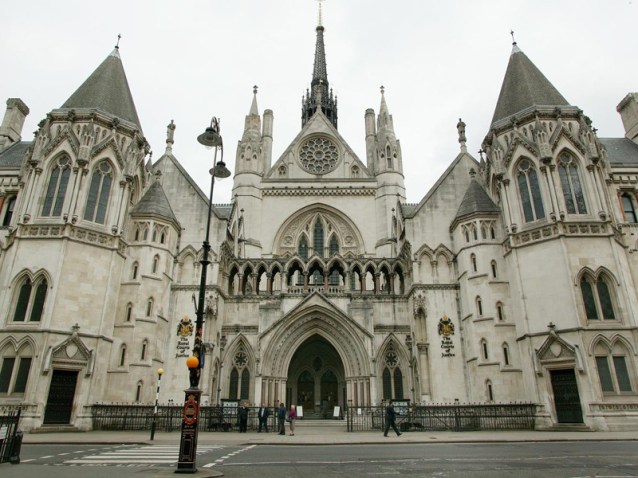
Royal Courts of Justice

It is portrayed by HM Courts and Tribunals Service as “our vision for reform to make the justice system more straightforward, accessible and efficient.”

But this £1.3 billion digital court reform programme has been exposed by the National Audit Office and last week by the House of Commons Public Accounts Committee for having failed to meet its objectives. This ambitious programme started in 2016 has been much delayed and only half completed. As MPs commented last week it has ” burned through” over £1 billion of public money and is the on the verge of running out of cash before half the benefits can be realised.

No one would argue that the courts and tribunal system is antiquated and needs reform. One only has to watch judges in the employment tribunal system writing down what claimants and respondents are saying by hand in courts that don’t keep proper records of hearings to realise how antiquated it is.

But once again it looks like that Whitehall has fallen for an expensive simplistic digital solution for a service which is incredibly wide ranging and complex. The aim was to create a common computer platform to serve 44 different aspects of justice from the criminal courts to magistrates courts and from the family and divorce courts to the probate service and the tribunal service.

Timetable five years behind schedule

It also had a timetable to be completed by 2020. Now we will be lucky whether the truncated programme will be up and running by 2025. Also £1.3 billion won’t be enough – there is only £120 million left to spend and that is nowhere enough to meet what is needed. And £22 million was wasted trying to integrate the Crown Prosecution Service into the system which didn’t work.

Also there are promises of big savings by going digital. This is always promised and we will see whether that really happens.

Also plans to have fully digital probate and divorce services had not fully worked. The MPs said:

“HMCTS found that significant proportions of its online divorce and probate cases required manual interventions from staff and in March 2022 HMCTS identified that 55% of divorce cases could not be completed online.”

In addition it appeared that both services discriminated against ethnic minorities.

Both the Bar Council and the Law Society were not impressed. The report says:

The Law Society “explained that there were functionality issues with online portals for family services, such as family public law. These issues led to problems, including instances of solicitors not getting necessary notifications which made the system difficult to use and, in some cases, significantly delayed cases. It told us that it had frequently expressed concerns to HMCTS about the functionality and design of some reformed services.”

System developed in a vacuum – Bar Council

The Bar Council told MPs:” the designers and producers of the common platform appeared to
have a limited understanding of working needs and practices, and “displayed a marked reluctance for the system to be designed in conjunction with, and for the benefit of, professional court users”.

It said it looked like the system had been designed in a vacuum.

As for the general public, it looked like that it was going to be a problem at magistrates courts ,purely because most of the defendants didn’t have any legal representation and therefore might not have proper access to the system to defend themselves.

Meanwhile the project continues so far with the pausing of integrating possession orders, special tribunals except for the Criminal Injuries Compensation Tribunal.
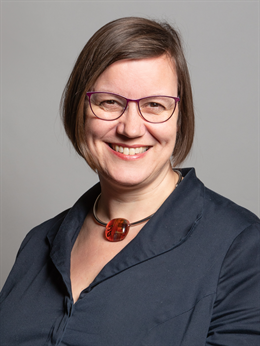
Dame Meg Hillier MP

Dame Meg Hillier MP, Chair of the Committee, said:

“Our courts were already stretched thin before the pandemic, and the backlogs now faced pose a real threat to timely access to justice. These are services crying out for critical reform, but frustratingly HM Courts & Tribunal’s attempts appear in some cases to be actively hindering its own staff’s ability to carry out their jobs. In particular, the roll-out of the Common Platform digital system was a blow upon a bruise for pressured court users.”

Given there are already many issues whether the courts do deliver justice, this rather botched computer programme does not give you much faith in the system.

Please donate to Westminster Confidential to allow me to continue my forensic reporting.

One-Time
Monthly
Yearly

Make a one-time donation

Make a monthly donation

Make a yearly donation

Choose an amount

£5.00
£10.00
£20.00
£3.00
£9.00
£60.00
£3.00
£9.00
£60.00

Or enter a custom amount

£

Your contribution is appreciated.

Your contribution is appreciated.

Your contribution is appreciated.

DonateDonate monthlyDonate yearly

Please donate to Westminster Conbfidential

£10.00
Will a DWP £1 billion digital “transformation plan” for health assessments of disabled benefit claimants be a new disaster?

The National Audit Office last week gave its verdict on plans by the Department for Work and Pensions to digitalise and transform all the health assessments of disabled people claiming benefit and Personal Independence Payments (PIP) by 2029 and raised serious concerns whether it would work..

This is not a minor matter for the disabled. Some 3.9 million working age people claim these benefits and those claiming both PIP and the Employment and Support Allowance have to pass two health assessments. By 2025-6 the number of claimants is estimated to rise to 5.8 million. Every year private contractors assess nearly two million people. There also has been a rise in people claiming ESA as a result of the pension age for women going up from 60 to 66 and for men from 65 to 66.

As usual this report appears to have had little coverage in the national media -despite the millions of people that will be affected.

High risk of delay, cost overruns without achieving benefits

Gareth Davies, the head of the NAO, said:

“While the Programme is ambitious and has the potential to make savings and improve the experience of those being assessed, the scale and complexity of the transformation leaves it at high risk of delay, cost overruns, and of not achieving the intended benefits.”

He called for the department to revise its business plan for the £1 billion scheme and for more transparency so that perhaps even MPs can understand its implications.

At present disabled people have to provide multiple documents and fill in long forms to claim and the system is unpopular. The new system will digitalise the process, cut out duplication but will still depend on private contractors assessing whether people are unfit enough to claim.

Therese Coffey, former DWP secretary of State

Appeals over claiming PIP are unnecessarily high with decisions by the private firms being overturned and there have been cases where people turned down for disabled benefits have died and the DWP under Therese Coffey covered up reports about this. See this report in the Disability News Service.

The transformation is going to take place alongside new five year contracts for three private companies, Capita. US company Maximus, and Australian firm Ingeus worth over £1.6 billion with an IT contract to Atos to provide the computer back up. Nearly all the companies (except Ingeus) have been linked to claimants deaths as an article in Disability News Service reveals.

Limited testing of system using state appointed medical advisers

At the same time there is going to be a limited state provided service in London and Birmingham where the DWP will employ medical assessors directly. The aim according to the NAO report is to ” test and learn ” the new system and pass on the information to the contractors.

The NAO is sceptical whether this twin approach will work in time for the national 2029 launch as the contracts awarded to these firms will not be flexible enough to make changes without no doubt further expensive negotiations.

One of the main aims of the scheme is to save public money through digitalisation and the DWP estimates a £2.6 billion saving up to 2035. One wonders though whether all the disabled people will be able to use computers to apply on line ( all PIP applications will be on line) eventually. Can they download apps etc and do they all possess smart phones?

Once again I am going to be sceptical about this – particularly after the NAO’s report on Making Tax Digital which it revealed has been subject to long delays and huge increases in costs. Given other areas I have covered in the DWP I have little confidence they can get things right.

Please donate to Westminster Confidential to allow me to continue my forensic reporting

One-Time
Monthly
Yearly

Make a one-time donation

Make a monthly donation

Make a yearly donation

Choose an amount

£5.00
£10.00
£20.00
£3.00
£9.00
£60.00
£3.00
£9.00
£60.00

Or enter a custom amount

£

Your contribution is appreciated.

Your contribution is appreciated.

Your contribution is appreciated.

DonateDonate monthlyDonate yearly

Please donate to Westminster Confidential

£10.00

Revealed: the damning figures that show the NHS can’t cope with patient demand

St George’s University Foundation Trust’s A & E department Pic credit: health trust

If you thought the NHS was at breaking point and want to know why – the National Audit Office have today provided a handy fact and figures guide to the decline of the country’s most cherished service.

A new report from Parliament’s financial watchdog charts the scale of both the failure of the NHS to respond to emergencies fast enough and the unprecedented demand from the public to use its facilities in the 13 years the NHS has been run by the Tories and the coalition government.

These are the startling figures:

711,881 A&E patients waiting over four hours from arrival to be admitted, transferred or discharged in December 2022, an all-time high. Since fallen to just over 550,000 in March this year.

90,998 ambulance handovers to A&E taking longer than 30 minutes in March 2023, equivalent to 25.9% of all ambulance handovers

32.0m reported number of appointments in general practice provided in October 2022, an all-time high, compared with 27.1 million reported in October 2018

92.3% general and acute hospital beds occupied during Q4 2022-23,representing record levels

88 seconds mean time to answer 999 calls related to health issues in December 2022, an all-time high

July 2015 the last time the NHS met its target for 95% of A&E patients to be admitted, transferred, or discharged within four hours of their arrival

8.4 million 111 calls answered within 60 seconds in 2021-22, compared with 11.2 million to 13.3 million between 2014-15 and 2020-21

1.27 million full-time equivalent NHS staff in February 2023, compared with the most recent low of 0.96 million in June 2013

£21.5 billion estimated annual cost in 2020-21 of providing the services reviewed in this report

Big variations in different regions in England

Delving deeper into the figures there are big variations in different regions of the UK. For example those being admitted, treated and discharged from A&E within four hours varied between 67.9 per cent in the East of England to 75.9 percent in the South East – both noticeably lower than the standard 95 per cent treated in that time just after the Tories got into power in 2011.

Similarly among ambulance response times there were wide variations. In 2021-22, the mean Category 1 (life threatening incidents like strokes and heart attacks) incident response time for the London ambulance service was 6 minutes 51 seconds compared with 10 minutes 20 seconds for the South-West ambulance service.,

In the same year the mean Category 2 incident response time for the ambulance service in the Isle of Wight was 26 minutes 20 seconds, compared with 1 hour 1 minute 57 seconds for the South-West ambulance service.

Some other points emerge why this is happening. The growing elderly population and general population increase in the UK is increasing demands on the NHS and effects of the Covid pandemic has left its mark.

More staff recruited but more off sick from stress

The government can claim it has recruited more NHS staff, including GPs and ambulance drivers. But this has been offset by more staff going off sick and more staff leaving the NHS because they can’t cope with the workload. I should not think the government’s attitude to keeping down pay rises in the middle of a cost of living crisis has helped either.

The government is promising a great £2.5 billion recovery programme and has allocated the extra money. But the NAO report says:

“More people than ever before are receiving unplanned and urgent NHS care every day. To support these services, the NHS is spending increasing amounts of public money and employing record numbers of people. Nevertheless, patients’ satisfaction and access to services have been worsening, suggesting there is no single, straightforward solution to improving what is a complex and interdependent
system.”

The real test will come next winter -since the government is promising much better services by March 2024. If it fails it will just add to the multiple problems facing this government and increase the distrust between the public and politicians.

Please donate to Westminster Confidential to allow me to continue my forensic reporting.

One-Time
Monthly
Yearly

Make a one-time donation

Make a monthly donation

Make a yearly donation

Choose an amount

£5.00
£10.00
£20.00
£3.00
£9.00
£60.00
£3.00
£9.00
£60.00

Or enter a custom amount

£

Your contribution is appreciated.

Your contribution is appreciated.

Your contribution is appreciated.

DonateDonate monthlyDonate yearly

Please donate to Westminster Confidential

£10.00

Yet another pension scandal .. Tory government cheats 4000 scientists out of their pensions by giving misleading advice when their company was privatised

Their misleading advice has cost retired workers dear

The Commons Public Accounts Committee this week published a damning report on a long running pension scandal which has seen retired pensioners lose hundreds of thousands of pounds from their pension pots because of misleading official advice given to them 27 years ago.

The pensioners were all employees of the AEA Technology – the state owned commercial arm of the UK Atomic Energy Authority – which was privatised in 1996 by Sir John Major’s Tory government.

This sorry tale took place almost at the same time as the government had implemented the 1995 Pensions Act which raised the retirement pension for 1950s women from 60 to 65 and the DWP has been found guilty of partial maladministration by Rob Behrens, the Parliamentary Ombudsman.

The Tory government gave AEAT employees just one month to exit their contributory Whitehall pension scheme for a new one with the company taking over AEA. 90 per cent of the staff did.

Crucial to this rushed decision was an independent report by the Government Actuary’s Department which told all staff that the scheme was as good as remaining in the state scheme and might even be better.

What it failed to tell people was that if the company went bust or the pension scheme failed all the staff would lose their guaranteed protection of their pension savings that is provided by the government. It would be transferred to the Pension Protection Fund, lose all their inflation protection up to 1997, and they would live for the rest of their lives with only a 2.5 pc annual increase in their pension.

Government Actuary’s report was secretly changed by UKAEA lobbying

According to the written evidence from an ex employee David Roberts, a freedom of information request has revealed that this ” independent” report was tampered with by AEAT and the UKAEA behind the scenes. They got it rewritten because it was not persuasive enough to get people to quit the government scheme .

He wrote:” The sections which have caused the complaints were significantly changed as the result of a telephone conversation between UKAEA and GAD on 5/11/1996. “

GAD also failed to undertake a risk assessment about the switch.

In 2012 AEAT which had already cut funding to the pension scheme went into administration. The company was bought by Ricardo, an American firm, who immediately divested all its nuclear work .Its headquarters of a new firm are now in California.

One would have thought they sacked employees could get redress but for the last 11 years they have got nowhere.

They are barred from complaining to either the Parliamentary Ombudsman or the Pensions Ombudsman.

Current legislation bars the Parliamentary Ombudsman from looking into case involving private pensions – and the government has just told the Commons Public Administration Committee there is no priority to change the law.

The case could come under the Pensions Ombudsman but there is a 15 year cut off point from when the event happened which blocks him from awarding any compensation.

Nobody in government takes responsibility

As the PAC report says:

“Nobody in government has taken overall responsibility for the case. There has been no independent review because the relevant ombudsman services have said they cannot investigate the information given to members in 1996, clearly highlighting that there are gaps in the routes of appeal people have for complaints about their pensions.”

The response from government since 2012 has been appalling. The DWP not only did not help but confused the issue. The report says: “In July 2013, DWP produced a factsheet summarising the complaints government had received and a response to each on behalf of the government. In February 2014, it then sent scheme members a further letter explaining that it was not responsible for the case.”

But it didn’t tell them who was and it turned out to be the Cabinet Office.

Sir Steve Webb- declined to help as pensions minister

Ministers were no better. Sir Steve Webb, then the Liberal Democrat pensions minister, would not intervene to change any rules to help the pensioners -saying if AEA Technology rules were changed it would affect other government services that had been privatised citing the BT pension scheme. He was actually wrong in this case, it is protected should BT go bust.

Two MPs tried to use private members bills to rectify the situation by changing the Ombudsman’s powers – but they were blocked by the Conservative government.

The government has escaped responsibility by never setting up an independent review of what happened and the Government Actuary’s Department has tried to avoid censure by saying their report was not the main reason why people switched their pension. This is contradicted by the employees who gave written evidence to the PAC.

people abandoned by an uncaring state

The whole saga is simply part and parcel of a government that cares little for the welfare of the ordinary citizen and tries to evade responsibility for its errors. Meanwhile people – who contributed to their pension and even put extra contributions to increase it – are just abandoned by an uncaring state. One person lost 40 per cent of their pension and all are affected by the cost of living crisis since they are not protected by the huge rise in annual inflation by the Pension Protection Fund.

Please donate to Westminster Confidential to allow me to continue my forensic investigations

One-Time
Monthly
Yearly

Make a one-time donation

Make a monthly donation

Make a yearly donation

Choose an amount

£5.00
£10.00
£20.00
£3.00
£9.00
£60.00
£3.00
£9.00
£60.00

Or enter a custom amount

£

Your contribution is appreciated.

Your contribution is appreciated.

Your contribution is appreciated.

DonateDonate monthlyDonate yearly

Please donate to Westminster Confidential

£10.00

HMRC’s digital tax disaster – overspent, behind schedule and a huge hidden bill for taxpayers

Making Tax Digital |Government logo pic Credit: gov.uk

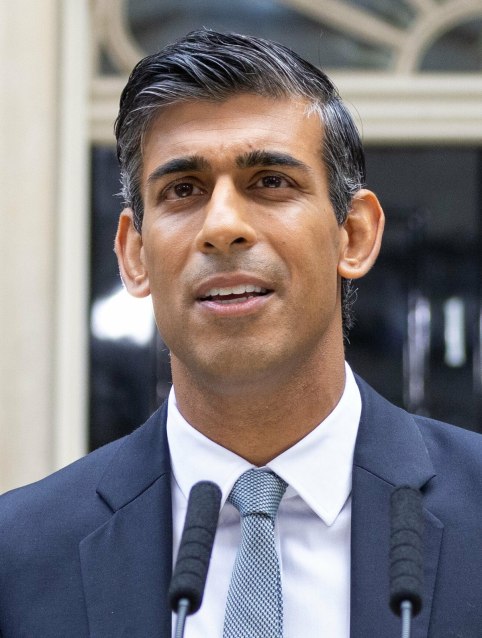
Rishi Sunak promised the UK will be a Science and Technology Superpower with world class digital technology attracting high skilled people from all over the world to come and work here.

Last October Chris Philp, then Minister for Tech and the Digital Economy,.at the Department for Digital, Culture, Media and Sport, also promised a bright future for the digital economy outlining the UK’s digital future with a host of government initiatives.

Rishi Sunak Pic Credit; Wikipedia

Back down to the real world the National Audit Office today published a report on one of the government’s initiatives – Making Tax Digital -and what a sorry story it is. For those familiar with Whitehall failures – it was the same story – the cost of the scheme had sky rocketed, its planned introduction had been delayed again and again – and worse, those businesses planning to go digital to pay their VAT, there was a huge additional cost, which somehow HMRC forgot to inform the Treasury.

The huge cost of switching the tax system to digital was supposed to cost £226 million when it was planned in 2016. This covered all VAT payments, businesses who pay via self assessment schemes and corporation tax. Instead it will now cost a staggering £1.3 billion – some five times the original estimate.

And it won’t be on time.

Scheme repeatedly delayed

The original programme was repeatedly delayed. Originally HMRC planned the entire changeover in 2020.

As the report says: “The timeframes for MTD[ Making Tax Digital] were agreed before HMRC had fully explored the range of options.” As a result large parts of the programme had to be rescheduled .And then came Brexit and the Covid pandemic which the hit the programme. Only VAT for larger firms was introduced before 2020 -in 2019 – and VAT for smaller companies waited until 2022 and the whole exercise cost £70m more than planned.

But it is the plan to switch over to digital tax for the self assessment businesses has been hit the most. The report said: In December 2022, the government pushed back the timetable for Self Assessment for the fourth time, delaying benefits and increasing costs further. On the advice of HMRC the government announced it would delay the start date for MTD for Self Assessment and take a phased approach to introducing it.
It won’t be implemented until 2026 or 2027 and even then not fully – as the original plan envisaged. It will apply to annual income above £50,000 in 2026 and above £30,000 in 2027. No date has been given for income below £30,000 which is still ” under review”.

HMRC left out cost to people of paying their VAT

On top of this HMRC in its business case forgot to tell the Treasury that it also landed business and taxpayers a bill for £1.45 billion. This is because for the digital system to work businesses and the self employed have to submit returns over three months and need to buy or lease expensive software to do it. So the government has put the cost on businesses avoiding the cost themselves. In my small way it hit me over VAT. Since my income was below the threshold I decided the simplest way was to deregister for VAT so the government now get nothing. Previously it was a simple form to fill in your quarterly VAT return supplied by HMRC.

HMRC said. “A project of this scale naturally comes with challenges, but MTD will deliver a strong return on investment for the taxpayer. We have always been wholly transparent about costs for business. We remain committed to ensuring that free software will be available for those with the simplest tax affairs.”

Gareth Davies ,Head of the NAO, said: ““The repeated delays and rephrasing of Making Tax Digital have undermined the programme’s credibility and increased its costs. They put at risk the support of taxpayers and delivery partners, including those who are essential to the programme succeeding.  

“Our audit identified the omission of significant costs from some business cases. It is obviously important that business cases for major programmes such as this contain all the relevant information to support decision-making.”

My view is a bit broader than that. I am getting very fed up with rhetoric from leading politicians telling the public that every project is world class when clearly it isn’t. This report from the NAO shows what is happening in the real world, not in the complacent fantasy world of the present Tory politicians who govern us.

Please donate to Westminster Confidential so I can continue by forensic analysis of government policies.

One-Time
Monthly
Yearly

Make a one-time donation

Make a monthly donation

Make a yearly donation

Choose an amount

£5.00
£10.00
£20.00
£3.00
£9.00
£60.00
£3.00
£9.00
£60.00

Or enter a custom amount

£

Your contribution is appreciated.

Your contribution is appreciated.

Your contribution is appreciated.

DonateDonate monthlyDonate yearly

please donate to Westminster Confidential

£10.00

Promises, Promises! Suella Braverman’s half baked response to the Independent Inquiry into Child Sex Abuse report

Suella Braverman Pic credit: BBC

While the Parliamentary Lobby were excited about Suella Braverman’s latest escapade trying to fix a private driving awareness course for herself to avoid penalty points on her licence, yesterday she took the opportunity to issue a very important statement on how the Government will tackle child sex abuse.

Whether the timing was aimed as the latest diversionary tactic to avoid further embarrassment , the result was a half thought out and half baked response to a very detailed and important piece of work on a scandal which shames our nation.

Alexis Jay, who headed the inquiry, spent seven years investigating what was seen as as ” a national epidemic ” of child sexual abuse which affected virtually every single religious order, schools, the internet, and grooming gangs across the country. Her report exposed heinous cases of child sexual abuse from teachers to bishops and appalling attempts to cover up what had happened. While by no means perfect, it also did provide some outlet for the survivors to speak out about what had happened to them.

Government hyperbole

Yesterday with I am afraid the typical hyperbole the government uses at almost every occasion now Suella Braverman claimed that the reforms proposed were “on a level not seen before” and would “mark a step change in our approach to child sexual abuse”.

She told MPs: “This Government have risen to the inquiry’s challenge. We are accepting the need to act on 19 of the inquiry’s 20 final recommendations. She promised MPs “fundamental cultural change, societal change, professional change and institutional change.”

But when you examine closely what the government proposes to do it is nothing of the sort. Many of accepted recommendations are surrounded by caveats for further reviews and debates and none are going to be implemented immediately.

Alexis Jay, chair of the independent child sex abuse inquiry

And I am not the only person saying this. The chair of the inquiry, Alexis Jay, told the Independent today:

“We are deeply disappointed that the government has not accepted the full package of recommendations made in the final report,” she added.

“In some instances, the government has stated that a number of them will be subject to consultations, despite the extensive research and evidence-taking which the Inquiry carried out over seven years.

“”The package announced by the government will not provide the protection from sexual abuse that our children deserve.”

Similar doubts were expressed by the NSPCC, the children’s charity.

If you study the detailed response from the government – you can find it here – you will see it is riddled with caveats and rejects more than one finding as the minister claimed.

The headline change – setting up a compensation scheme for the survivors – is a promise but subject to much more consultation before it is to be implemented. A more competent government would have laid the bare bones of the scheme, how much money will be provided and then asked people, including survivors, to comment yesterday.

Similarly with mandatory reporting of child sex abuse by professionals – which was thoroughly debated by the inquiry before recommending it – it won’t happen immediately. Instead it is put out for more consultation. Do we need any more?

Other accepted recommendations are a con. The recommendation for a children’s minister at Cabinet level is glossed over by saying we already have one – the education secretary. Yet provision for children is more than just education. And Rishi Sunak could do with someone present at the Cabinet to fight children’s issues.

And the creation of new child protection authority does not look likely to happen any time soon.

And there is one extraordinary proposal. Braverman rejects – the inquiry’s recommendation to outlaw inflicting pain on residents of young offenders institutions and secure units – claiming that there are ways of safely inflicting pain on young people. Is she some sort of a sadist who enjoys bringing pain and misery to the young or just plain stupid? Pain is pain full stop. If anyone knows how this might be done I would like to hear from them.

The government is also relying on its on line safety bill to outlaw child pornography but it seems the paedophiles are already one step ahead of her. Sajid Javid, ex minister and Tory MP for Bromsgrove intervened in her announcement to say they are already using artificial intelligence to produce child sexual images. How is this to be traced?

Frankly this was a disappointing statement dressed up as the government taking action. Ministers and civil servants have had seven months to respond and could have laid the groundwork for real change rather an promising more consultations. But given Suela Braverman’s track record why should we be surprised.

Please donate to Westminster Confidential

£10.00

Subscribe to get access

Read more of this content when you subscribe today.

One-Time
Monthly
Yearly

Make a one-time donation

Make a monthly donation

Make a yearly donation

Choose an amount

£5.00
£10.00
£20.00
£3.00
£9.00
£60.00
£3.00
£9.00
£60.00

Or enter a custom amount

£

Your contribution is appreciated.

Your contribution is appreciated.

Your contribution is appreciated.

DonateDonate monthlyDonate yearly

Vibrant Papua New Guinea contemporary art exhibition which slams and praises politicians tackling asylum seekers

Captain Cook looks down on the Papua New Guinea people Painting by Mathias Kauage

Queensland’s Art Gallery is well known for its collection of Aboriginal art. But when we visited it on a day stop in Brisbane what attracted us was a special free exhibition of contemporary Papua New Guinea artists called Kin, reflecting the close relationships among the country’s painters.

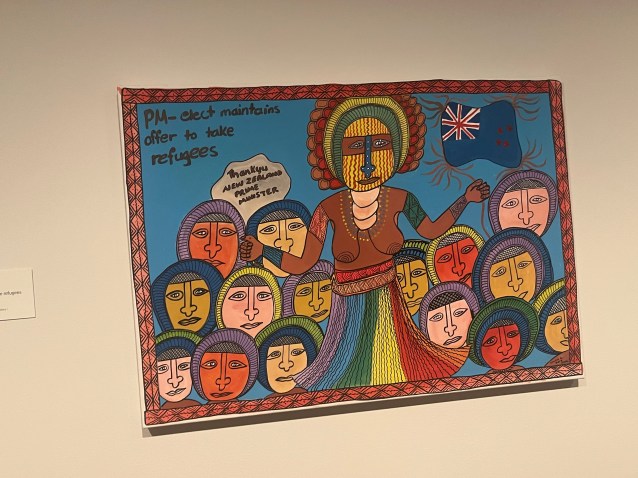
It celebrated the work of Mathias Kauage and more recent painters and was a riot of vibrant colours and political messages touching on issues like refugees now right at the heart of debate in Britain. It included a remarkable painting of Captain Cook looking down on residents of Papua New Guinea – see above.

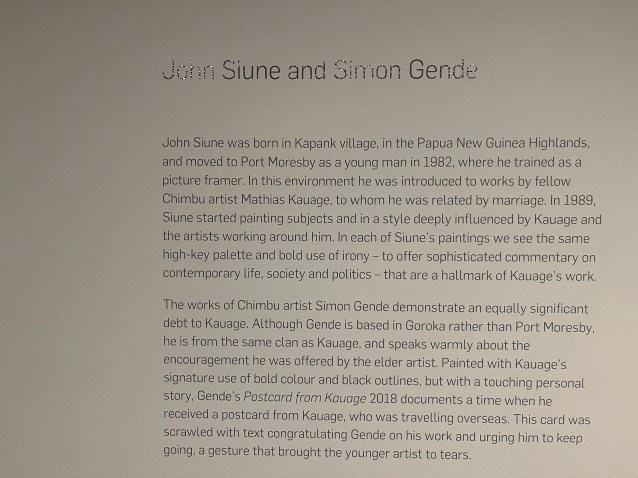
Detailed caption of two modern Papua New Guinea painters who have followed through from Mathias Kauage
A painting celebrating the former New Zealand Premier welcoming refugees

The paintings don’t shy away from tackling political issues particularly on the red hot issue in the UK and Australia on asylum seekers and refugees. A particular striking picture praises Jacinda Arden accepting and helping refugees.

One wonders how the painters would portray Suella Braverman and Rishi Sunak -both brown British politicians deporting largely brown and black asylum seekers from the shores of the UK. Perhaps the UK’s leading art gallery Tate Britain should commission them to paint a series to counteract the baleful influence of Right wing Aussie politician Tony Abbott on stirring up hate and resentment in this country.

Dramatic portrayal of the 2012 Australian general election struggle

Two other striking paintings by the group stand out. One is a painting of the Left v Right Australian general election where the combatants are portrayed as Aboriginal chiefs.

Another is of refugees kept in a holding camp in Papua New Guinea similar to the UK plan for one in France.

Australia’s harsh holding camp for migrants and asylum seekers

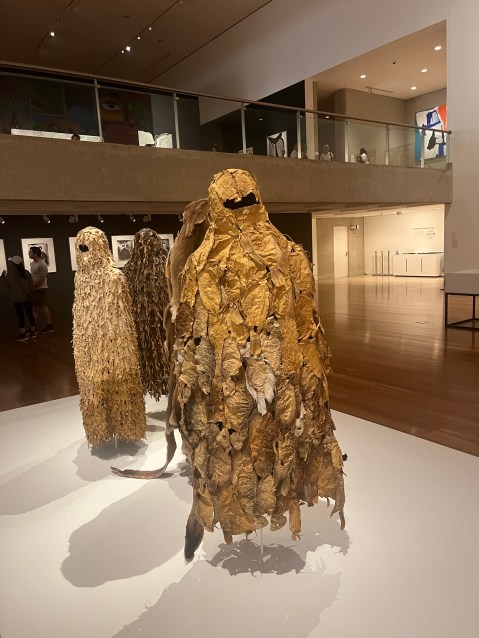
Two other striking exhibits in-the exhibition including a remarkable sculpture representing people literally getting under other peoples skins and an amazing collage by an Iranian born artist now living in America using decorative images used by Pakistani lorry drivers to beautify their vehicles .

a striking exhibit using different skins
Amazing collage by an Iranian painter

Book Review: Jaded Jerusalem – A horrific serial killer thriller set in Wales and London during the miners’ strike

Jaded Jerusalem

A serial killer haunts the streets of the Rhondda Valley. Bent Police who torture suspects and beat up a whistleblower colleague come to the Rhondda on a mission to get rid of evidence. In North Wales two children escape the clutches of a care home run by a paedophile only to be murdered later. And in London a far left group backing the miners strike is run by a control freak hypocrite with a penchant for sexually abusing young women.

This is a riveting and horrific tale and there is hardly a sympathetic character in the book. Only Terry Vaughan, a local policeman who joined the force to escape the Valleys and is described as a ” wet behind the ears sheep-shagger ” by his bent superiors emerges as a hero in the tale.

Roger Cottrell

The author, Roger Cottrell, is a former investigative crime reporter and was a young Trotsykite on the Central Committee of the Worker’s Revolutionary Party during the miner’s strike. Now a script writer for TV and film in Ireland and a university academic this is part of a ” work in progress” trilogy.

For those, like me, who love to frighten themselves watching edgy Scandi Noir on BBC 4 on a Saturday night this tale is a perfect fit. Indeed the author has already written a script.

Put together in the mix, an ambitious graduate local reporter nicknamed ” Clever Trevor” with a drug habit in the Rhondda; an ambitious woman hack on the Sun and News of the World and those senior bent police officers, all on the trail of a serial killer who murders paedo victims and young women who support the miner’s strike. It also a cover up of a paedophile ring involving Westminster politicians. To add a literary angle the mysterious killer who taunts the police goes by the name of Azazel, the fallen angel who joined Satan in Milton’s Paradise Lost and Dante’s Inferno creeps into the story.

Azazel as portrayed by Gustav Dore in Paradise Lost

For those who remember this era the background of the miner’s strike with pickets stoning coaches bring in scabs, and police from the Met roughing up striking miners in the back of vans, is very familiar. Added spice comes when striking miners smash up Rhondda’s police station and the police wreck a miner’s club in retaliation.

Some references in the book are more than just fiction. There is the murder of a black social worker Americk Fraser for trying to expose a paedophile ring operating in the London borough of Lambeth. He was handcuffed to shopping trolley, doused in lighter fuel and set ablaze and dumped in the Thames. In real life Bulaq Forsythe a black social worker was murdered for trying to expose a paedophile ring in Lambeth. He didn’t die in such horrendous circumstances But he had notes linking the South Vale Care Home in South Norwood to paedophiles. The Met Police launched an investigation into his death but nothing came of it. Now we know from the official Independent Inquiry into Child Sexual Abuse and a recent internal inquiry there was widespread child sexual abuse in Lambeth.

Similarly the North Wales care home where the boys absconded in the book had for years been part of a paedophile ring and its ring leaders in the 1980s included the late North Wales Police chief superintendent Gordon Angelsea. He was never exposed until a National Crime Agency investigation secured his conviction in 2016. All the stuff about Masonic links and the police co-operating with care homes is based on grim fact.

And Liam O’Leary, the head of the Workers Revolutionary League, is based on the now long dead Gerry Healy, the head of the WRP, who is said to have sexually abused 26 women and employed two thugs to impose discipline in the far left organisation.

This is indeed a very dark book but made more menacing because a lot of the fiction in the tale has a basis in reality. It has a very dramatic ending which I won’t spoil by revealing but it is very cinematic. Read it if you can stomach it.

Jaded Jerusalem by Roger Cottrell. Available from Amazon £12.99

Please donate to Westminster Confidential to allow me to continue my investigations.

One-Time
Monthly
Yearly

Make a one-time donation

Make a monthly donation

Make a yearly donation

Choose an amount

£5.00
£10.00
£20.00
£3.00
£9.00
£60.00
£3.00
£9.00
£60.00

Or enter a custom amount

£

Your contribution is appreciated.

Your contribution is appreciated.

Your contribution is appreciated.

DonateDonate monthlyDonate yearly

Please donate to Westminster Confidential

£10.00

Eco or ego Legacy Ltd: How a Labour peer was caught in the crossfire of an Irish company brought to its knees by ” mismanagement and intransigence “

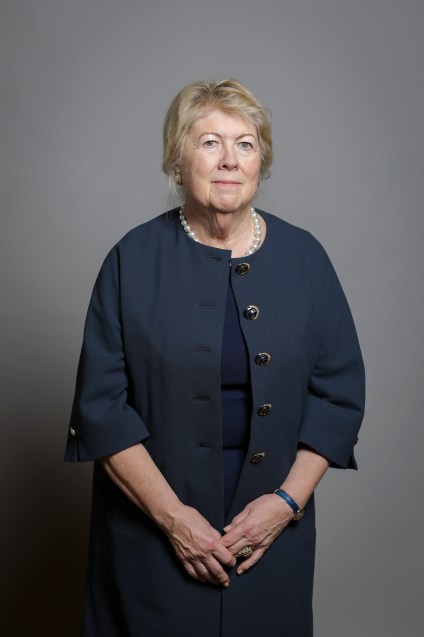
Baroness Mary Goudie Official Portrait pic credit: parliament.uk

Last week the House of Lords Conduct Committee recommended Baroness Mary Goudie, a Labour peer, be suspended for six months from Parliament for entering a consultancy with an Irish eco company, which was declared late and providing advice to the firm who they should lobby in Parliament.

Normally this blog would condemn utterly any public figure who sells their expertise in Parliament for financial gain but there seem to be some rather peculiar circumstances in this case that make this judgement unduly harsh. Yes Baroness Goudie should be punished for breaching the Nolan code of conduct but her actions pale into insignificance compared to the behaviour of the bust company itself.

Obviously the role of the company is outside the remit of the House of Lords Conduct Committee but researching the history of this short lived firm reveals an extraordinary saga of events and Baroness Goudie seems to be left taking the rap.

For a start the case against her has been brought SIX years after the event in Parliament and FOUR years after a petition in the Dublin High Court forced it to go bankrupt. And the complainant has turned up with six year old emails, her consultancy contract worth 20,000 Euros over 10 months and internal corporate details of what she promised to do for them. It would suggest the person was either a member of the firm or knew someone there.

Parliamentary meetings never took place

She did plan to facilitate a meeting in Parliament where the directors could lobby an MP who belonged to an all party group on funerals and bereavement and write to the permanent secretaries of DEFRA and the Ministry of Justice. But the meeting never took place and the MP met the directors of ecoLegacy without Baroness Goudie being there. And there is no trace of any letter ever being written to the permanent secretaries.

Wrongly used the House of Lords library to help company

She wrongly used the House of Lords library to prepare a report for use by the company but as to be explained later it really didn’t tell them anything as the firm was using a new untried technology for cremation. Nor did she use debates in the Lords to promote the firm but was very late in registering her interest.

Now if we examine the firm its management record is appalling. It describes its business as “Provider of alternative processes to burial and cremation. The company offers burial and cremation alternatives that turn human deceased bodies into calcium and carbon powders and returns the powders in a biodegradable urn and seed which can be grown as a tree, helping families to remember their loved ones who departed.”

This sounds a lovely eco-friendly idea and the directors sought huge sums from wealthy American investors in ” start up ” schemes promising good returns. By the time it went bankrupt according to the Irish Business Post it had raised 7.2 million Euros and was running at a big loss.

Judge Deirdre Murphy at the Kennedy Summer School. Pic credit: Kennedy Summer School

The most devastating critique came from an Irish Judge Deirdre Murphy when she heard a petition from The William Jay Gencarella Family Trust, based in the US, in 2018

Her judgement read: “Two founding members of the company Tony Ennis and Brian McKimm, featured extensively in the evidence adduced on the hearing, both on affidavit and on cross-examination, but neither provided direct evidence to the court. The hearing was not so much “ Hamlet” without the prince as “ Two Gentlemen of Verona” without the two gentleman. During the course of the hearing there were allegations and counter-allegations that both had misappropriated company funds over the years. The court has the impression that in many respects the hearing of this petition was a proxy war between the two founding members, in which the petitioner has been ill-served and was liable to suffer collateral damage.”

She “appointed Declan Taite as liquidator to EcoLegacy Ltd which she said had been “brought to its knees” by the “mismanagement and intransigence” of one of its founders, Tony Ennis.

In another case before a judge in Dallas, Texas, three groups, Fox Bend Development Associates, Ltd., Fred and Michele Secker, and Jeffrey Hicks Trust 2005, sought to sue ecoLegacy. The citation reads: ” that Ennis made fraudulent misrepresentations and omitted material facts in soliciting Plaintiffs to invest a total of $3,250,000 into ecoLegacy. Plaintiffs assert claims for fraud, negligent misrepresentation, violation of Texas and federal securities laws, and costs and attorneys’ fees. “

Ennis got the case dismissed because there was an arbitration agreement built into the contract.

Was the project just a piece of Irish baloney?

The question must be asked whether the whole scheme was just a piece of Irish baloney. One engineer who worked on the project called Remo says it was not and could have succeeded but was brought down by disputes between directors. All this makes the crimes of Baroness Goudie seem small beer. if this is the Lords Conduct Committee suspension template, I can only think the alleged behaviour of Lady Mona on behalf of Metpro, the PPP supplier now being sued by the government, would see her banned for five years.

The other big question is whether Baroness Goudie knew about all these shenaghins. The main court drama came after she had finished her consultancy. If one looks at her website, it looks as though eco-funerals were never at the top of her agenda. Instead she is known internationally as a women’s rights and peace campaigner holding a number of distinguished positions. On the balance of probabilities, I think not. The problems in the company were not her fault but she should have checked it out more thoroughly rather than relying on a ” trusted friend”. It was a clash of egos that bought ecoLegacy down. It was more ego than eco.

Please donate to Westminster Confidential to allow me to continue my forensic reporting.

One-Time
Monthly
Yearly

Make a one-time donation

Make a monthly donation

Make a yearly donation

Choose an amount

£5.00
£10.00
£20.00
£3.00
£9.00
£60.00
£3.00
£9.00
£60.00

Or enter a custom amount

£

Your contribution is appreciated.

Your contribution is appreciated.

Your contribution is appreciated.

DonateDonate monthlyDonate yearly

please donate to Westminster Confidential

£10.00

Updated Direct Discrimination: Former Judge Jocelynne Scutt’s report published on the 50swomen pension delay

Former judge Jocelynne Scutt today published her full report on the plight of 1950s women who have waited up to six years to get their delayed pension. As expected it provides copious arguments why the women have been cheated, why the 50swomen were the first group targeted and contains some heart rending cases. You can download the report here. It is a large file as the report runs to 155 pages including appendices.

Here is the entire speech by Jocelynne Scutt to MPs in Parliament this week. This explains the logic of her argument.

The full speech from Jocelynne Scutt to MPs

Some 3.8 million women suffered direct discrimination by the Tory government’s decision in 1995 to raise the pension age, of women to 65 and then 66, MPs and peers will be told at a briefing in Parliament today.

This is the main finding of a big report by Jocelynne Scutt, a former Australian judge who served on the Fiji bench and was Tasmania’s first Anti Discrimination Commissioner. She now teaches law at the University of Buckingham and is a member of both the Australian Labor Party and the British Labour Party and is a Labour councillor in Cambridge.

Her report followed a hearing by the CEDAWinLAW People’s Tribunal last July which specifically looked into the plight of 50sborn women where some of the women and Dr Elgun Safarov, vice chair of the UN Convention for the elimination of all forms of discrimination against women and girls (CEDAW) from Geneva, gave evidence. The UN committee is currently challenging the UK government to explain its failure to write the convention into UK law some 36 years after Margaret Thatcher ratified it.

The ruling in the report to be published in due course is much tougher than the case put forward by two members of BackTo60 in the court hearings following the judicial review. Then lawyers argued that the women had suffered indirect discrimination as their opportunities to pay contributions into the National Insurance fund, among other issues, to qualify for a full pension were not equal with men.

Jocelynne Scutt argues that this was not indirect discrimination but direct discrimination of a specific group of women who had been singled out to wait for their pension while everyone else was unaffected. It has also to be taken into account that 9.8 million men over 60 who decided not to claim unemployment benefit were given free auto-credits which ensured that nearly all got a full pension for life. It was going to be offered to women until 2018 but that idea was swiftly scrapped.

Every one of these women – many who have worked since the age of 15 as well as bringing up a family- was promised by the government when they started work that they could retire at 60 and planned to do so. And given the Department for Work and Pensions told the courts that it was not obliged under the 1995 Act to tell them personally this had changed – this only came in when men were affected by a rise in their retirement age.

Jocelynne Scutt has already delivered the report to Rishi Sunak at Downing Street. She argues that 50s women were treated unfavourably from the start. The 1995 decision did not affect any women born in the 1940s, targeted the 1950s women while those born in 1960s and 1970s onwards had much longer to adjust. The Parliamentary Ombudsman’s report agrees there was partial maladministration in that 50s women were not properly informed. In fact hardly anyone was properly informed until it all changed with men and women facing a rise in their pension age to 66.

Full restitution must be honoured – Jocelynne Scutt

Jocelynne Scutt says “Government and Parliament have a responsibility to face up to and acknowledge the grave wrong done. There is no room for obfuscation or quibbling. Historical discrimination requires relief. There is a moral imperative to right this wrong. The law is on the side of the 1950s-born women. 1950sborn women alone are the group targeted. This is a debt of law and honour. Full restitution is the only proper legal, ethical and moral outcome. Full restitution must be honoured.

The briefing is in the House of Commons at 2.0pm today.

Please donate to Westminster Confidential to allow me to continue my forensic reporting.

One-Time
Monthly
Yearly

Make a one-time donation

Make a monthly donation

Make a yearly donation

Choose an amount

£5.00
£10.00
£20.00
£3.00
£9.00
£60.00
£3.00
£9.00
£60.00

Or enter a custom amount

£

Your contribution is appreciated.

Your contribution is appreciated.

Your contribution is appreciated.

DonateDonate monthlyDonate yearly

Please donate to Westminster Confidential

£10.00