Danger on the Line: Damning safety findings that put passengers and train drivers at risk

stream_img

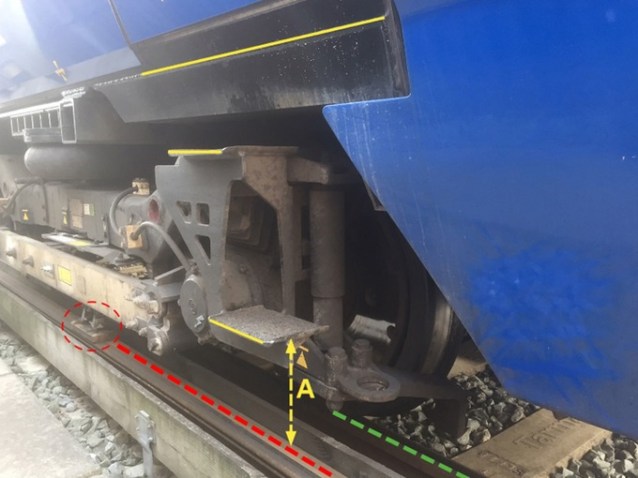
People had to step over this live rail to get off the train. It didn’t even have a protected board at the time Pic credit: Aviva Trains

CROSS POSTED ON BYLINE.COM

A  damning report was published this month by the Rail Accident Investigation Branch into an incident nearly a year ago which led to 450 passengers being urged to leave a stranded train and walk along the tracks within inches of a live high voltage electric rail.

The report is not only critical of this incident but raises the question whether there are systemic failures in our semi privatised railways which need urgently addressing. It reveals a string of other incidents that have happened in the last five years.including two cases where express train drivers had to lie under their trains to avoid being mowed down by trains coming in the opposite direction.

These include;

A Virgin Express train driver had to cower under his Inverness to London express just north of York to prevent being mowed down by a 105mph express in the opposite direction. The trainee signalman had failed to tell the driver of the stopped train that he had not halted other trains in the area.

Exactly the same thing happened again at Stafford six months ago when a Manchester to London Virgin express stopped because of a fault. The driver who was badly shaken had to hide under the train to avoid being run over by an express coming in the opposite direction.

Passengers getting out on to the tracks at Gospel Oak and waking to the station in 2013 – and a suburban train going forward without permission to take passengers off at Hackney Downs and almost overrunning a junction where it could have crashed into a train coming in the opposite direction.
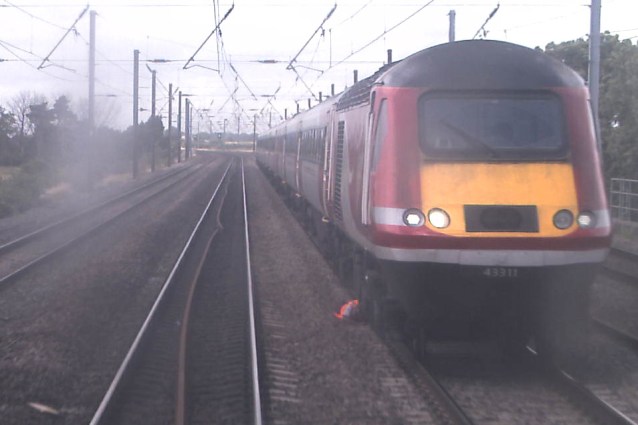
 

Figure_2

You can just see the driver nearly under the Virgin Train north of York from this CCTV picture. Pic Credit: Virgin Trains

This latest report  was about a passenger train that was halted outside Peckham Rye station in South London last November after a fault automatically stopped the train.

The driver , who did not have a guard, got the go ahead from the private operator Aviva’s control centre to get passengers off the train. As the report says:

“This involved passengers climbing down vertical steps to ground
level, very close to the live electric conductor rail (third rail) and walking along the side
of the line for about 30 metres to Peckham Rye station.

“Soon afterwards, an operations manager from Govia Thameslink Rail, which manages
Peckham Rye station, contacted the member of station staff and realised where they
were and what was happening. The operations manager immediately instructed
the driver to stop the evacuation, and requested that he contact the signaller and
his company’s controller for further instructions. ”

…”The train driver and the signaller did not reach a clear understanding
about the actions that were required to safely detrain the passengers. The delay
caused unrest among the passengers on the train and contributed to stress and task
overload of the driver, which affected his decision making. The driver’s experience
and skills did not enable him to cope with these demands, and Network Rail did
not effectively implement its own procedures for managing an incident involving a
stranded train.”

The scandal revealed here is the lack of communication between Aviva’s control centre, Network Rail, the signalman, which all put passenger safety at risk.

Of course both Network Rail and Aviva have said they have taken measures to deal with it. But the report reveals that in Aviva’s case very little has been done – particularly at its control centre. Inspectors returned after the incident and found:
l the environment within the control room was noisy and poor equipment was still
being used, both of which may cause distraction, and the floor plan was still too
small;
2 poor communications (verbal / IT systems and written notes) were observed
and still evident;
3 a lack of coordination and awareness of the different roles within the control
room was still evident”

Simon French,Chief Inspector of Rail Accidents concluded: “Following previous incidents, the railway industry has put in place policies for managing incidents in which trains become stranded. This incident has shown that when things go wrong, these policies may not be effective. …. We are recommending that, both locally and nationally, the incident management arrangements should be reviewed, and processes put in place to exercise them regularly. It’s not enough to have a plan – it must work when it is needed, and if it has never been practised the chances are it won’t work.”

The report on Peckham Rye can be read in full here  and the reports on the Virgin train incidents can be read here and here.


Why these liars, cheats and fraudsters should be prosecuted for ripping off taxpayers and cheating London’s firefighters

assetco_3417t

John Shannon , former chief executive of Assetco. now exposed as a liar and fraudster, banned for 16 years from practising as an accountant and ordered to pay £550,00 in fines and costs

CROSS POSTED ON BYLINE.COM

This month one of the most devastating reports into a privatisation rip off was published by the Financial Reporting Council, which regulates chartered accountants. It involves a saga much reported on this blog, the failed privatisation of London and Lincoln’s  fire engines, handed over to what are now revealed to be liars and fraudsters who ran Assetco at the time.

The three top directors, chief executive, John Shannon; chief financial officer, Frank Flynn; and group financial controller, Matt Boyle, could not even be bothered to attend a tribunal hearing to defend themselves against 27 allegations of misconduct. Shannon and Boyle are thought to be somewhere in South East Asia Flynn is in Northern Ireland

Between them they lied and hid millions of pounds ripped off from income paid by London fire brigade – the London Fire and Emergency Planning Authority – through a string of Northern Ireland companies and a consultancy to Abu Dhabi and falsified invoices from the London authority to boost the income of Assetco  duping shareholders so  they could live on the hog with large salaries.

The worst culprit was John Shannon  who has been banned as practising as a chartered accountant  for 16 years – a new British record – fined £250,000 and ordered to pay £300,000 in costs. This was the same man who wined and dined the now disgraced former Tory chair of the London fire authority, Brian Coleman, while simultaneously ripping off the authority for personal gain.

His story included in a damning  FRC report  is a trail of dishonesty and improper financial gain for himself and his family, His first act  in 2008 was to take £1.5 million out of Assetco, ostensibly to invest in a Northern Ireland property company, Jaras Property Development. In fact the report found  the money was transferred almost immediately from the company to Mr Shannon’s personal bank account to pay off a loan.

To compound his action when Assetco’s accounts were prepared for 2010 he created a false invoice and lied about the use of the money to fellow directors and the auditors, Grant Thornton.

The second dishonest act involved Assetco’s take over of Graphic, a company that provided lettering for vehicles, in 2010. Mr Shannon claimed he was owed £685,000 by the company. No documentation was ever found to prove the debt but the money taken from Assetco was the exact same money owed by this son, Joel, to clear a debt with another business he was running. The report concludes this was a sham.

He then moved to fiddle the accounts of another Assetco business, Assetco Abu Dhabi, which was launched with a  £15m share issue. Included in the costs was a management fee to a firm called XYZ2 for £900,000. In fact there were no management services provided by this company, instead the money was used to pay off  interest owed.

Earlier Mr Shannon and his fellow directors Frank Flynn and Matt Boyle inflated the goodwill value of three other companies,UV Modular Limited (“UVM”), The Vehicle Application Centre Limited (“TVAC”) and Simentra Limited (“Simentra”). All three had been bought by Assetco and had huge operating losses, all became insolvent, yet between them they were valued at over £15m.

UVM which built ambulances and mobility vehicles for the NHS was ” in a parlous financial condition ” and collapsed. It got contracts from the NHS by offering cheap deals which meant it lost money.

TVAC built chassis and fire appliances was acquired in 2007 and went bust in 2008 and was an operational disaster. But it was obviously intended to service fire engines for London.

Simentra had just three staff and was supposed to provide management advice for emergency services.

The report found Mr Shannon was well aware of this yet  allowed the £15m for goodwill to be included as an asset in the company’s accounts.

Mr Shannon, Mr Flynn and Mr Boyle also inflated income from the London fire authority on purchasing equipment and  providing emergency crew training. All this led to inflated accounts which Mr Shannon claimed he had not seen but the report found that he had lied to them about his knowledge of what was agreed to be published in the accounts. There is an earlier report on my blog here.

The conclusions against Mr Shannon are stark :” While there have been no actual convictions, certain of the activities contained within the allegations could be characterised as causing or facilitating fraud. The Jaras and Graphic Allegations amount to fraud on AssetCo by Mr Shannon. The XYZ Investment was also a fraud.”

The report also says the level of dishonesty even put the fire fighters  work at risk. It is as well that Assetco  operations in London and Lincolnshre went bust before the tragic Grenfell fire or their services would have only compounded the problems.

Most of the misconduct by Flynn and Boyle was to assist in covering up rather than exposing the dishonesty of Shannon.

Raymond “Frank” Flynn (former Chief Financial Officer) for  banned from practising for 14 years and Matthew Boyle (former Financial Controller) for 12 years. Additionally, £150,000 and £100,000 respectively have been imposed and they share paying  part of the £400,000 costs bill.

The Financial Reporting Council has a memorandum of understanding with the Serious Fraud Office which could launch a criminal investigation.

The SFO told me that they were aware of the case but could neither confirm nor deny whether they would take action. In my view they should pursue these people – even if they have left the country- with the aim of securing convictions so they can spend some time in British jails.


The Great £300m Probation Bail Out: You Pay, They Prey

Richard_Heaton

Richard Heaton, permanent secretary Ministry of Justice. Pic Credit: wikipedia

CROSS POSTED ON BYLINE.COM

On Wednesday two very highly paid civil servants £185,000 a year Richard Heaton, Permanent Secretary, Ministry of Justice and £190,000 a year Michael Spurr, Chief Executive, HM Prison and Probation Service will appear before MPs to explain their latest botch  up  – the privatisation failure of parts of the probation service.

I hope MPs on the Commons Public Accounts Committee will not only be briefed by the excellent National Audit Office report  and investigation into the failure of Community Rehabilitation Companies – the fancy name for profit making companies like Sodexo and Seetec.

They should also read the coruscating report by Dame Glenys Stacey HM Chief Inspector of Probation and Peter Clarke  HM Chief Inspector of Prisons last June on the performance of these companies and their failure to either help ex offenders go straight or protect the public from child abusers and  perpetrators of domestic violence.

This sorry tale goes back to 2015 when Chris Grayling ( he of the  current Virgin rail privatisation botch ups)  was Justice Secretary and thought it a brilliant idea to privatise swathes of the probation service for prisoners serving 12 months or more who were at low risk of self harm.

Michael Spurr

Michael Spurr, Chief Executive of the Prisons and Probation Service. Image credit: Channel4

From the very beginning they bungled it. They planned to give the 21 companies £3.7 billion until 2022 to handle and help large numbers of prisoners. The companies planned for this but Whitehall  had overestimated the number of low risk ex offenders leaving prison and underestimated the number of high risk ex offenders who are still being helped by the publicly run probation service. As a result the companies would only get £2.1 billion.

So of course now the companies are in deep trouble facing losses of  £443m by 2022. So what do these top civil servants do. They give them more  of your cash to help them with their profit margins.

They have had a £42m bail out for dealing with fewer offenders in 2016 and another £22m to keep the companies going while the ministry kindly re-negotiates their contracts  to deal with fewer ex prisoners.

It has now agreed to pay another £278m up to 2022 but has changed the terms of contract so the private firms will get even less money if any of the released prisoners re-offend.

Now if you read the inspectors’ report on the performance of these companies, this is a sick joke. The inspectors think their provision is so bad and useless that they might as well not exist.

They said: “Clearly there is more time for resettlement work with these prisoners, but CRCs are making little difference to their prospects on release. We found them no better served than their more transient fellow prisoners were some eight months ago. The overall picture was bleak. If Through the Gate services were removed tomorrow, in our view the impact on the resettlement of prisoners would be negligible. ”

But not only are they useless but they could be a menace to society. They were so bad at rehabilitating prisoners – they spent their time sitting at desks  writing up reports on the computers – rather than helping them face to face. Some prisoners left to become homeless with little chance of getting a job.

But more seriously they let out child abusers, violent individuals who had beaten up their partners and drug addicts putting their victims at risk by having no proper supervision or rehabilitation plans.

In my view this £300m would be better spent funding refuges for victims of domestic  violence ( in desperate short supply) or linking it back to the publicly run service.

You are paying for these companies to prey  on the taxpayer without  delivering any decent result and also allow  released criminals to prey on  their victims by their failure to rehabilitate them. No doubt the two highly paid civil servants will distance themselves from their failed policy  when they appear before MPs on Wednesday


Blog in 2017: The Grenfell tragedy has resurrected the madness of fire privatisation

Grenfell_Tower_fire_morning

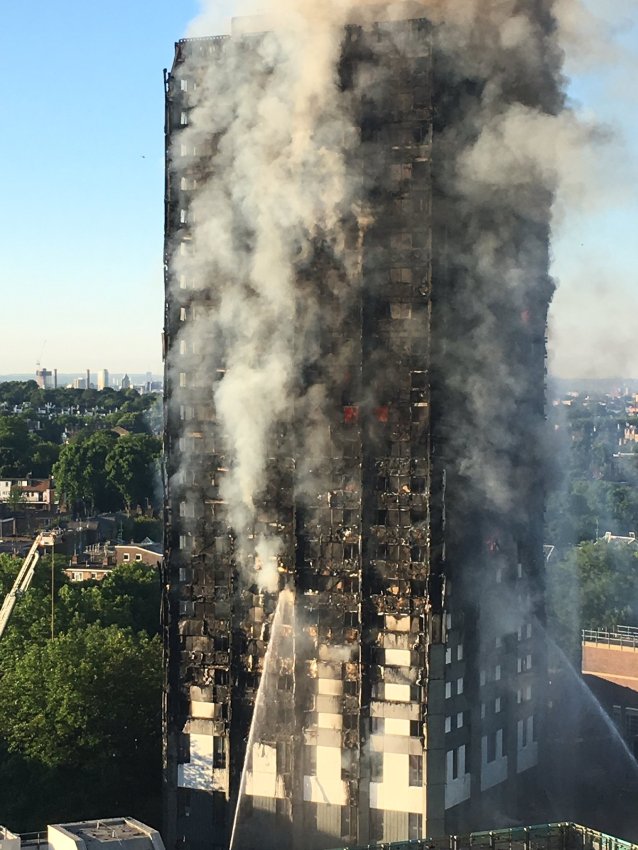
Grenfell Tower: The next morning Pic credit: Wikipedia

CROSS POSTED ON BYLINE.COM

This year my small news site received an extraordinary boost from a five year old post which appeared to have been regenerated by the Grenfell fire tragedy.

The Grenfell disaster showed the bravery of the London fire brigade in tackling such a grim scenario. Heroism and extreme tragedy side by side.

The post that got revived in the wake of the fire was the almost unbelievable story of how an Old Etonian baronet living in a semi in Wellingborough, Northants had got his hands on the management of London’s entire fire engine fleet for £2. It is probably still the most egregious act of privatisation in this country. He of course had to hand it back after a few weeks as he couldn’t run it.

sir aubrey brocklebank

Sir Aubrey Brocklebank: Sacked by the London Fire Brigade; Picture courtesy Daily Telegraph

The public authority had been powerless when the dodgy private company they gave the contract to maintain the fire engine fleet- Assetco London – handed over  London’s fire service to the baronet as the directors realising the game was up and fled the scene.

The good news here – though it has never been reported  by mainstream media-  is the authorities in their own slow way are ensuring the perpetrators get their just deserts.

Grant Thornton , the auditors for Assetco, have been fined  £3.5m (reduced to £2.275m  after they co-operated with the Financial Reporting Council) and found guilty of no fewer than 12 cases of professional misconduct.  The details are in this blog.

assetco_3417t

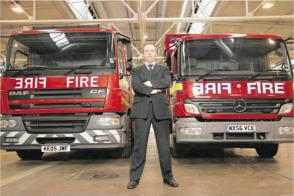
Assetco’s John Shannon stands astride two London fire engines

Robert Napper, the individual accountant  responsible for auditing Assetco was fined £200,000, reduced to £130,000 after  he co-operated  with the inquiry. He had already retired but I traced him to an Oxfordshire village enjoying his expensive wines. 

Now Assetco directors John Shannon, Raymond ” Frank ” Flynn and Matthew Boyle are to face a disciplinary tribunal by the Financial Reporting Council on January 15. The statement is here.

The press release reads: 

“The Formal Complaint contains multiple allegations against each of Mr Shannon, Mr Flynn and Mr Boyle. The Formal Complaint includes allegations they acted dishonestly or recklessly; that they breached the fundamental principles of integrity and objectivity in the manner in which they prepared the financial statements; and that their conduct fell significantly short of the standards reasonably to be expected of members of Chartered Accountants Ireland (CAI). The complaint covers a wide range of issues which pervaded AssetCo plc’s financial statements.

Some idea of what was going on has already been covered on this blog. Don’t hold your breath that the London Evening Standard will cover the story.

The original blog attracted over 2,500 hits when it was published. This year it topped my ratings with over 14,700 hits – showing that readers are interested in such issues.

Altogether over five years it has received some 20,000 hits.

The other stories have been posted on both my blog and byline.com – so the figures on my blog will be a small proportion of the number of hits on the stories.

The second highest hit from readers tells the heroic story of a London Midland train driver whose quick reaction in nine seconds prevented a commuter disaster near Watford. It  came out in an accident report and had over 5170 hits and can be read here.

ConservativesTwo stories about the plight of the Conservative Party also rated highly. A story revealing that membership of the Conservative Party had plummeted to 100,000 attracted nearly 5000 hits and one on changes to the Tory Party constitution attracted well over 1700 hits. The two blogs are here and here and on Byline here and here.
The real block to enormous boundary changes in Parliamentary constituencies is the DUP and this blog  and byline.com disclosed this last July. The links are here and here. 

On my site it got 2600 hits – mainstream media have finally followed it up last week but put the blame on Jeremy Corbyn instead.

Also popular was a blog on how secret influencers are bankrolling right wing  think tanks by the organisation Transparify . This attracted over 2400 hits on my site and the links are here and here.

dave-prentis-pic-credit-twitter

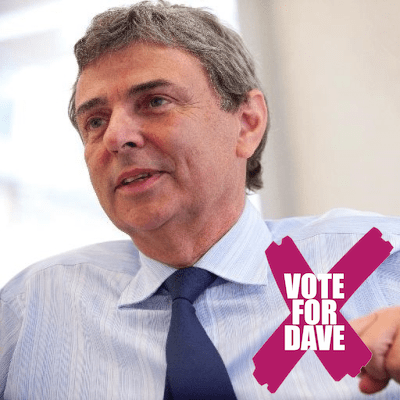
Dave Prentis, general secretary, Unison Pic Credit: Twitter

The attempt to force Unison to rerun the election for the general secretary Dave Prentis also attracted a lot of readers. Again the public hearings by the Certification Officer received no coverage in mainstream media except the Morning Star. All the blogs received over 1000 hits – the largest being  over 1850 hits for a blog publishing the statement of a former union official who accused the union of ” anti Democratic practices”. The link is here and here. 

The issue is not quite over as a judge is due to hear the opponent’s case again  for an appeal on February 8.

Three other issues made the top slots – the  bonus payments to top DWP civil servants who set up the hated Universal Credit payments which I also wrote up for the Sunday Mirror; the scandal of 3.3 million pensioners who will have to wait years for the state pension and the prospect of two Tory Lord Chancellors facing legal action for institutional racism over the appointment of judges and tribunal members.

All this has to show that there is a  public appetite for investigative journalism and the mainstream media are increasingly ignoring important stories by sticking to a narrow agenda. Much more to come in 2018.


Have the Tories already sold our future green investments down the dump?

GPC_Trustees

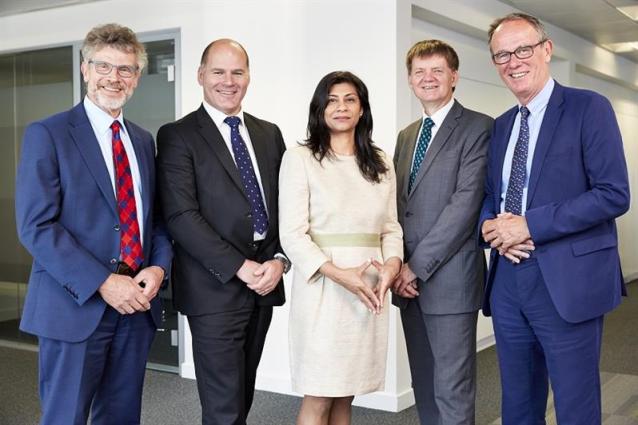
Safeguarding UK green interests?The five new trustees of the Green Purposes Company – James Curran,Trevor Hutchings, Tushita Ranchan,Robin (Lord) Teverson and Peter Young. Pic Credit: Green Purposes Company

CROSS POSTED ON BYLINE.COM

The present government has two song sheets. One is that Britain must big up everything we do to become a ” world leader ” after Brexit. The second is that we must do everything we can to cut the deficit – whether it is fresh benefit cuts or selling off anything the government owns as fast as possible..

The two came into conflict recently with the sale of the Green Investment Bank – and the deficit cutters won. The story of the sale of the Green Investment Bank is told in a recent report by the National Audit Office. Unfortunately the detail  did not lead to much coverage in mainstream media which is why I am writing about it now. I have written a news story for Tribune magazine.

The deal which has allowed the sale to go ahead to Australian private equity bankers Macquarie for £1.6 billion is at the lower end of the its worth and without waiting for returns from big wind farm projects which are still under construction with public money.The NAO said this could have netted another £63m. This is the same company, by the way, that owns Thames Water, responsible for some of the worst pollution in the River Thames and also locally on the Wendover Arm of the Grand Union Canal (see an earlier blog).

The companies  behind the sale did very well. The business department paid out a £1.1m success fee to Bank of America Merrill Lynch and a retainer of nearly £300,000 for completing the sale – part of a bill for £4.5m to sell the bank.

Macquarie picked up the bill for another £5m success fee paid  to UBS by the Green Investment Bank itself to handle the sale.

The Department appointed Herbert Smith Freehills (HSF) to act as its legal adviser for the sale. HSF’s fee increased from £1 million to £2.36 million owing to the extended period required to complete the sale, the need for advice on restructuring GIB, the retained assets, the special share arrangements and judicial review which failed to challenge the sale.

Altogether Macquarie paid over £10m of the state bank’s fees to get their hands on the state bank. But what did they get in return?

An article in the This is Money website gives us a clue. It shows the government removed the restriction that the Green Investment Bank should only concentrate on the UK so Macquarie  could make money  worldwide and ignore the UK if it wanted. Greg Clark, the business secretary, personally signed this concession.

Macquarie of course denies this pointing out that it had invested £38m in a West Yorkshire waste from energy  from waste project and insisting it will be a big player in the UK and Europe.

But events since the take over suggest otherwise – and there is no guarantee either that it will continue to focus only on green energy. Greg Clark let the bank get away with a non binding public statement to finance green projects for the next three years and the setting up of a trust – the Green Purposes Company  -which could shame the new owners if they fail to keep to their pledge.

The evidence of backsliding comes from the trustees. In theory they have powers to prevent changes to GIB’s green purposes, but this does not extend to control of, or input to, investment decisions.

The five trustees are independently appointed and seem to be sound environmental figures. They include James Curran, former chief executive of the Scottish Environmental Protection Agency, and Lord Teverson, a former Liberal Democrat energy spokesman.But they are not paid to monitor such a big private equity company and a check on the website of the Green Purposes Company does not give much comfort either.

It reveals the first project  is in Sweden – with a 300 million Euro investment in what will be Europe’s largest onshore wind farm joint with the US listed company GE which is in financial trouble in the United States.

The second is in a £30m investment in solar power in India – admittedly with a UK solar park company, Lightsource, partly owned by BP. The company is concentrating on green power in the Middle East, Asia and Europe as part of its partnership with BP.

And the third investment will  be a 136 million Euro energy from waste scheme in Dublin, jointly run by a New Jersey incineration company, Covanta.

So far the new bank has invested £38m in the UK and over £400m (partly with GE) abroad.

The NAO conclude in their report  the future direction of GIB’s investment focus and its relationship with the trustees remain untested. From the first four projects it seems quite clear that the UK will be on the sidelines. The 436 million Euro investments will be great news for Donald Trump’s ” America First ” policy but not such great news for Theresa May.


London Midland admits it got it wrong over its passenger assistance service

Berkhamsted-station-is-stepfee-21

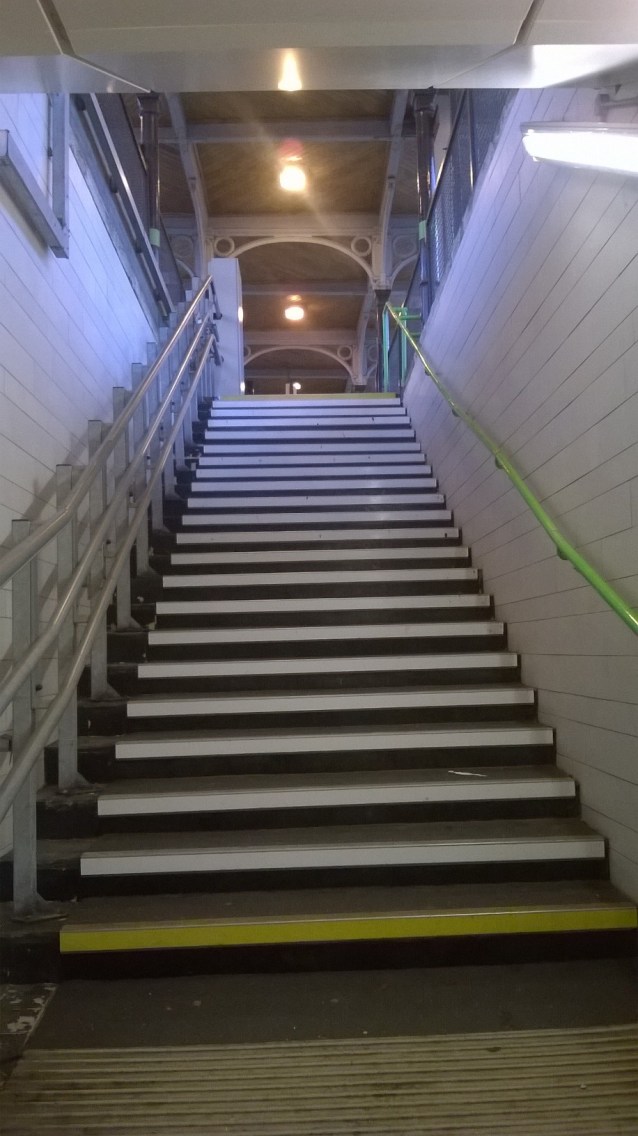
Rather a lot of stairs to go up or down if you are disabled or have a buggy at Berkhamsted station if the lift is out of order.

CROSS POSTED ON BYLINE.COM 

London Midland has admitted that a ” breakdown in communication ”   meant it didn’t know that one of its stations was unstaffed, had a faulty lift and that its  emergency passenger help service didn’t work last Sunday.

The admission came in an email from the company in response to a complaint I lodged after being dumped at Berkhamsted with my disabled wife Margaret at the end of a weekend break from Liverpool.

I highlighted this in a blog earlier this week purely because I thought the situation was potentially dangerous and that train companies should be more careful in ensuring that their passengers can travel safely.

An email from Sarah Brassingham, a customer relations adviser, admits :  ” Unfortunately there was a breakdown in communication that meant that the team at Milton Keynes Central were unaware of the issues at Berkhamsted that evening, which were obviously compounded by the issues with the help point on your arrival.

Steps are being taken to address this with the stations and Passenger Information teams, and our Facilities team are resolving the issues with both the lift and the Passenger Information points as quickly as possible.

I can assure you that we take any assistance failures extremely seriously and apologise again for the inconvenience and distress caused.”

We have been offered a rail refund for the Milton Keynes to Berkhamsted journey but it does raise wider questions. One solution would be to ensure that whoever helps a disabled person  to get on the train informs the guard about the person’s destination – so if there is no one there the guard can help. at the other end But that still doesn’t get over the problem of faulty lifts or emergency help systems not working.

London Midland say their policy is ” Pre-booked assistance is provided by the station team at staffed stations and by the Conductor on board the train when the station you are getting on or off the train at is unstaffed.”

That raises another question. London Midland still has guards. If Southern get their way they won’t be any and presumably if they have any unstaffed stations disabled people won’t be able to get off the trains or be unable to travel.

That is one reason to back the RMT union case to keep guards on trains and fight the company and Chris Grayling, the transport secretary, who want to get rid of them.


Can’t rely on London Midland:How staff cuts and technical failures dump on disabled and vulnerable rail passengers

london midland train

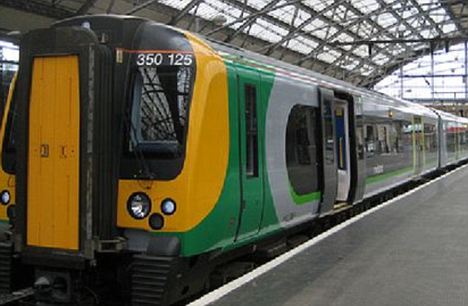
London Midland train

CROSS POSTED ON BYLINE.COM

This weekend my wife and I returned from a weekend in Liverpool where I had been speaking at a GMB Justice Campaign conference.

My wife is recovering from a stroke and we use the passenger assistance service to travel by train as she needs a little help boarding trains and avoids using stairs.

This weekend we got a good service when we boarded the train at midday on a Friday in Berkhamsted and a good service at London Euston  and Liverpool Lime Street on the way up and at Liverpool Lime Street and Milton Keynes where we changed trains on Sunday on the way back.

But the support fell apart when we returned to Berkhamsted just before seven o’clock on Sunday evening. I am writing about what happened here because it has wider implications for rail  travel and what steps rail companies take to protect people in an emergency.

Berkhamsted Station has recently installed lifts to aid the disabled, people with heavy luggage and families with pushchairs to get from the platforms to the subway below.

When we got to Berkhamsted  a town with 27,000 people) there was no one there to help my wife off the train and the lift was out of order. But it didn’t say it was out of order. Instead you could access the lift to go down to the subway. It just wouldn’t respond to go down to the subway.

Thinking this should be reported I pressed the alarm. Immediately I got an automated message saying ” don’t panic” and then the lift dialled an emergency number. There was no reply. I repeated the exercise still no reply. Luckily the doors had not closed or else we would have been trapped inside the lift until some one rescued us.

On the platform there is also an automatic system for passengers to contact someone should they need emergency assistance. I pressed that. Believe it or not I got message saying the number was unobtainable. So if say someone had been assaulted or sexually attacked on the platform – the emergency assistance system was faulty

When we eventually got off the station ( there is another roundabout route down a ramp through a station car park ) I found a notice on the ticket office saying there it had closed all day Sunday – so  there had been no staff at the station all day.

What has shocked me is that London Midland seem to have no ” duty of  care” to passengers – and their systems which are supposed to work when they are no staff – appear to be just there for show.

We did meet one member of London Midland  staff working that night – a man on the train from Milton Keynes to Berkhamsted checking tickets. So the company gave more priority to making sure it got all its revenue on Sunday for its shareholders and directors – than bothering to provide staff or checking that emergency procedures worked  to aid its passengers. And with plans to get rid of guards and close as many ticket offices as possible it can only get worse.

I have written to London Midland for an explanation and look forward to their reply.


The train driver who averted a major disaster on a London commuter line in nine seconds

s300_Watford_tunnel_landslip

The two collided trains in the Watford Tunnel.Pic credit: British Transport Police

An accident  report out today on the landslip at Watford that derailed an early morning  London Midland commuter train last September reveals the importance of having properly  trained staff  on our railways.

It reveals that without prompt action by the driver there would have been large number of casualties and possibly fatalities when another commuter train running in the opposite direction collided with the derailed train.

It also shows having a guard on the train meant that passengers on the service who had not been injured got immediate reassurance and help after the driver was trapped in the cab following the accident.

The report praises both the driver and the guard for the way they handled the accident – caused by heavy rain leading to a landslip on the line just inside the entrance to a tunnel at Watford.

Simon French, Chief Inspector of Rail Accidents said:

 ” The collision of a passenger train with a derailed train in Watford tunnel on the morning of 16 September last year serves as a reminder of why everyone in the railway industry continues to work so hard to manage risk – the collision of two trains in a tunnel is a scenario we all hoped never to witness.

The derailment of the 06:19 service from Milton Keynes could so easily have led to a catastrophic sequence of events were it not for two notable factors. The first was the sheer professionalism of the driver who, within moments of becoming derailed, had the presence of mind to apply the brake and then transmit an emergency message using the train’s ‘GSM-R’ radio. His actions alerted the driver of a train approaching in the opposite direction who immediately applied the brake. As a consequence, the northbound train had reduced speed from 79 to 34 mph before striking the derailed train a glancing blow. This reduction in speed may well have made a big difference to the eventual outcome.

The second mitigating factor was the slotting of one rail of the track in the gap between a gearbox and a traction motor on three of the axles, so preventing the derailed train deviating any further into the path of the approaching train. This unintended consequence of the train’s design probably made the difference between a glancing blow and something closer to a head-on collision.

The report reveals that the driver had just nine seconds to alert the oncoming train after his train had been derailed – but as a result it certainly saved lives.

The circumstances of the crash are also a grim warning in the age of climate change given that very heavy rain caused the landslip at exactly the same spot  as another landslip in 1940.

The rail accident investigators found details of the earlier landslip in Network Rail’s archives but unfortunately the  management of Network Rail had not alerted people  who had  been working on removing vegetation and trees in the cutting on the need to  revamp an old drainage system.

The report also reveals that had there been a serious accident access by the emergency services to the scene would have been difficult and there did not appear to be any plan for organising a major rescue should an accident happen in the Watford tunnels.

All this suggests to me is that ministers and privatised railway companies – such as Southern railways – who want to save money by continually cutting staff should be wary of doing so. It could cost lives and passengers need help and reassurance should the unexpected happen on their daily commute.


Gag, cover up and secret privatisation: What is the real story behind the NHS clinical correspondence scandal

archives

NHS archives. Pic credit: Health IT Central

CROSS POSTED ON BYLINE.COM

A week ago the media was full of the huge scandal of over 700,000 clinical correspondence documents – including details of sensitive patient conditions – going missing and  instead of being delivered to GPs being dumped in rooms.

The story was originally broken by the  Guardian in February this year which revealed that NHS England was secretly working on how to sort out it  without disclosing the scandal to the public. Jeremy Hunt had made a perfunctory statement to Parliament in 2016 not disclosing the full state of affairs in July 2016.

Last week the National Audit Office published a very thorough investigation into the scandal – including discovering that somehow the NHS also lost  highly confidential reports dating back to 2005 which identified children subject to child protection orders which must never be disclosed to the public without the individual’s consent. And in 1788 cases it look possible that patient treatment could have been harmed as a  result.

The mislaid and unprocessed correspondence covers GPs and now abolished Primary Care Trusts in the East Midlands, North East London and South West England .

The NHS has paid GPs £2.6m up front  to examine the mislaid documents but they have yet to complete the work so a proper picture can still not be obtained.

In one bizarre incident some 205,000 documents were kept in a room marked “ clinical notes”. The report says: “A subsequent review found that the label had been removed by an SBS general manager because “you don’t want to advertise what’s in that room”.

“ NHS SBS told us that it was important that documents were held securely and therefore not having a label on the door was appropriate as part of this.”

Now this scandal is bad enough but in the small print of the National Audit Office report there lurked another extraordinary scandal – SBS  and its auditors, BDO, decided to frustrate the National Audit Office finding out what had gone wrong.

Both the company and the auditor refused to hand over the files unless the National Audit Office signed an indemnity letter – which  could get them off the hook should enraged patients decide to sue them for their negligence.

The NAO to its credit refused to do so and in its own report says, if it had, Parliament would not have been told the full story. As the report says:

“NHS SBS and BDO felt unable to share with us their reports into the incident unless we also signed a letter (which would indemnify them). This is common practice among audit organisations.

“We declined to sign any letter that would limit our ability to report on the incident.”

Instead the NAO used its statutory powers to force NHS England, which had copies of the documents after signing the indemnity letters, to hand them over.

Now NHS Shared Business Services was set up as a joint venture with the private sector  under the Blair administration in 2004 when John ( now Lord ) Reid was health secretary. It was an equal partnership between the  Department of Health and Xansa Ltd,a British outsourcing technology company 50 per cent owned by the staff. In 2007 it was taken over by Steria, a French  rival, with British staff pocketing millions of pounds as the French paid a 70 per cent premium on the share price.

In 2014 Steria merged with another French rival Sopra creating a French owned global conglomerate. They are now planning to take over a Swedish firm

But two years before Andrew Lansley, then secretary of state for health, quietly and without any public announcement, transfered a single share to the French company, so it became the majority owner and could dictate policy. Just to make sure the Department of Health, which had civil servants on the board, declined to take up the directorships on the grounds of ” conflict of interest”.

I asked BDO and NHS Shared Business Services why they had sought to frustrate the NAO.

BDO replied putting the onus on the privatised company  saying :

“BDO was in no way obstructive or concerned about making its reports accessible to the relevant third parties.” BDO has a contractual duty of confidentiality to clients as well as an ethical duty of confidentiality under the Code of Ethics of the Institute of Chartered Accountants in England & Wales (ICAEW). Therefore, unless required by law or regulation, we cannot disclose information to third parties (such as the NAO) without the express permission of our client. 

The letters dealing with obtaining the necessary consents and agreeing the basis for access are drafted in accordance with professional guidance issued by the ICAEW. As the NAO report acknowledges in its report (paragraph 3.19), this is “common practice among audit organisations”.

 Patients of the NHS are not a party to such letters and therefore their legal rights are completely unaffected.”

NHS Business Shared Services said :

“The recent NAO report highlights a number of failings in the mail redirection service provided to NHS England. We regret this situation and have co-operated fully with the National Audit Office in its investigation. All of the correspondence backlog has now been delivered to GP surgeries for filing and NHS England has so far found no evidence of patient harm. NHS SBS no longer provides this mail redirection service.”

There appear to be contradictions in both statements.  I gather the safe delivery of clinical correspondence  is now in the hands of Capita.


Revealed: The bucolic wine buff accountant who let privatisation spivs fiddle London fire brigade

image

Robert Napper: Pic credit: Twitter

CROSS POSTED ON BYLINE.COM

He has been fined £120,000 and barred for three years from his professional body for ” professional misconduct ” by the Financial Reporting Council in April for his part in allowing a now bust private firm to fiddle its income from London Fire Brigade.

But before this happened Robert Napper, a partner with Grant Thornton, one of the big accountancy names, had already quietly retired with his pension to live in the rural Oxfordshire countryside and become a pillar of the local community.

Grant Thornton will have to pay a £2.3m fine for their part in allowing Assetco to fiddle the books after the company took over responsibility for maintaining London’s 700 fire engines in a privatisation deal which went badly wrong.

The scheme had been pushed by the now disgraced former Tory chair of the London fire brigade, Brian Coleman, to save money and curb the power of the Fire Brigades Union. Coleman was wined and dined by the director John  Shannon and given a Christmas hamper from Harvey Nicks for his trouble.

The union all along protested about the way the company was run – but even they did not know it was fiddling and inflating the books with false invoices for claims that were never made ( see my earlier blog).

To be fair neither Robert Napper nor Grant Thornton made any money out of it – indeed the auditors ended up as creditors with unpaid bills. But they did allow enormous latitude to the directors of Assetco, John Shannon and Frank Flynn, to fiddle the books and rip off the company, the shareholders and ultimately the taxpayer.

So who is Robert Napper who got duped? He lives in East Hagbourne in South Oxfordshire near Didcot.  It is a village of 1882 people with  a mixture of  modern properties (where he lives)  and many  chocolate box cottages. It has a community shop and post office which Robert Napper is one of the directors.

Village_cross_East_Hagbourne

Village Cross at East Hagbourne. Pic Credit: Creative Commons Rob Stallard

He was a senior accountant with 23 years experience who as a partner – one of the top paid jobs at Grant Thornton –  and should have known better. The report by the FRC distinguishes between his role and junior staff who were inexperienced in handling Assetco’s accounts.

It also turns out that he is a serious wine buff – his Twitter account includes many pictures of fine wines- and the best food to accompany it. Among these are his Christmas 2015 selection ( see below).

CXVy90IWcAAqHHd

Robert Napper’s Christmas wine collection

He will have to pay the fine in instalments. I contacted him to ask him if he had anything to say about the scandal or whether he knew the whereabouts of the people who had duped them.

He said he could not comment because of legal reasons though he did say he was not appealing the findings against him.

As for John Shannon and Frank Flynn they appear to have fled the country – he thought one of them could be in Thailand. Anyone who knows where they are could  they contact me and I would be very grateful.