The new Parliament has seen a complete revamp of the all party group tackling the long standing festering issue of pension inequality for millions of women caused by the mishandling of the rise in the women’s pension age.
Out go Carolyn Harris, the former chair and Labour MP for Swansea, East and co chair Tim Loughton, Conservative MP for East Worthing and Shoreham.
In come Andrew Gwynne, Labour MP for Denton and Reddish as the new chair and Peter Aldous, Conservative MP for Waveney as co chair.
The good news is that the change means a fresh start and a move to a more inclusive approach taking in the views of all the different women’s organisations that represent those born in the 1950s who were faced with a wait for up to six years to get their pension. Unfortunately under his predecessor Carolyn Harris this was not always the case and it was a never completely clear what this group of MPs wanted in compensation for the millions of women affected by the change.
Andrew Gwynne summed up the change succinctly.
“The APPG on State Pension Inequality exists to keep the issue of the 1950s women’s pension injustice alive.
“As new Chairs, Peter Aldous and I are informally taking evidence from all the 1950s women’s groups to get as much information as possible. We also await the Ombudsman’s report.[This is the report on maladministration]
“We recently had a good meeting with BackTo60 who are providing information to us about CEDAW and whether there is a parliamentary route on the issue.”
I gather that as well as Waspi and Waspi 2018 they have asked Joanne Welch, who ran BackTo60, to address a full meeting of the committee.
welcome news
This is particularly welcome news as for years we had a ridiculous position of a major court case seeking a judicial review of the government’s handling of the issue running alongside complaints to the Parliamentary Ombudsman – with the former being ignored by this committee. The first dealt with the past inequalities that were enshrined by the legislation, the second with whether the Department for Work and Pensions was guilty of maladministration in handling it.
The first ultimately failed but the fact that it took place at all is due to a ruling by Mrs Justice Lang – a remarkably independent woman judge – who decided that it couldn’t have possibly been known in 1995 that the new act would cause such present hardship to a group of women born in the 1950s. She incidentally took an equally controversial decision to save at the eleventh hour from destruction Brandon Station on the Suffolk/ Norfolk border designed by the architect who supervised the stone carvings in the Houses of Parliament. See my blog here.
The great news is that MPs will now look at all proposals from full restitution to compensation, take account of what the Parliamentary Ombudsman finally says, and be able to present their views to ministers who have been extremely reluctant to award any money at all to the 50s women.
CEDAW People’s Tribunal
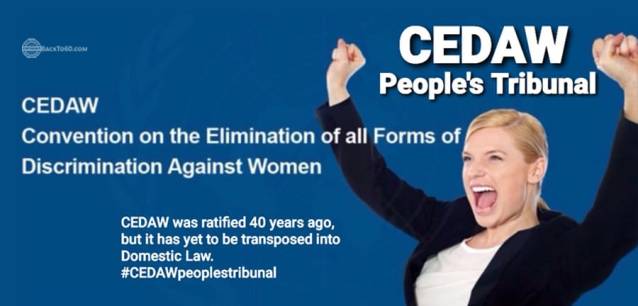
They have also acknowledged the link to CEDAW – the UN Convention on the Elimination of all Discrimination Against Women, ratified by Margaret Thatcher in 1986.
With a CEDAW People’s Tribunal due to be held from June 21 in London with the backing of lawyers from Garden Court Chambers – it also very likely that the plight of the 50swomen will form part of wide ranging submissions covering violence to women, unequal pay and job discrimination.
The other members of the committee are: Philippa Whitford, SNP MP for Central Ayrshire; Liz Saville Roberts, Plaid Cymru MP for Dwyfor Meirionnydd; Ruth Cadbury, Labour MP for Brentford and Isleworth; Jason McCartney, Conservative MP for Colne Valley; and Gavin Newlands ,SNP MP for Paisley and Renfrewshire North.
Provisional findings point to some compensation likely to be paid to women born in the 1950s and 1960s
A confidential letter seen by this website shows the Parliamentary Ombudsman, Sir Robert Behrens, has managed to both exonerate and damn the Department for Work and Pensions for its handling of the administration of the rise in the pension age for millions of women born in the 1950s and 1960s,
The letter contains the provisional findings of an investigation which has taken years to undertake by his office – also wrongly temporarily halted because of a court case brought by Back To 60 seeking full restitution of the hundreds of millions lost by pensioners on grounds of inequality not maladministration.
The ministry is exonerated for all the work it did between 1995 and 2004 – from the passing of the 1995,Pensions Act.
DWP exonerated for first nine years of the announced change
The relevant paragraph reads: ” Between 1995 and 2004, accurate information about changes to State Pensions Age was publicly available in leaflets, through DWP’s agencies and on its website. What the DWP did reflects expectations set out in the Civil Service Code, the DWP Policy Statement, the Pension Services Customer Services Charter and the Benefit Agency Customer Charter”.
But the provisional report go on to make findings of maladministration for the department’s handling of events from 2005 to 2007 when it belatedly found out through internal research that people still did not know about the change and needed targeted information.
The report reveals that at the time the ministry had a sufficient database to have issued targeted information to people who were affected by 2005. But the huge delay in sending out letters meant in the worse case scenario many women did not get an official letter until 14 years after the event. The letter quotes Paul Lewis, a financial campaigning journalist, saying on average women born in the 1950s did not get a letter until one year and four months before they turned 60.
DWP ” did not get it right “
It says: ” We think DWP’s decision making following the 2003/04 research failed to give due weight to relevant considerations, including what research showed about the need for ” appropriately targeted” information, what was known about the need for individually tailored information, or how likely it was doing the same thing would achieve different results. It failed to make a reasonable decision about next steps. In Augusts 2005 DWP did not ” get it right”. And its failure to use feedback to improve service delivery meant it did not seek continuous improvement. Our provisional view is that it was maladministration.”
” We think DWP then failed to act promptly on its 2006 proposal to write directly to affected women, or to give due weight to how much time had already been lost.. It did not get it right because it did not meet the requirements of the Civil Service Code and it did not take all relevant considerations into account. And it failed again to use feedback to improve service delivery and seek continuous improvement.. Our provisional view is that was also maladministration.”
” We think maladministration led to a delay in DWP writing directly to women about changes in the state pension age. In our view that letters would have been issued around 28 months earlier than they were if the maladministration had not happened.”
This led to women who were not aware of the changes being given less time to make changes to their retirement plans. ” The next stage of our investigation will consider the impact that injustice had.”
The report seems to exonerate Whitehall for the way it handled the pension changes in 2011 with letters going out 18 months after the further change. But because of a huge delay in sending out letters to the women affected by the changes in 1995 many did not know until just before they thought they were going to retire.
The long awaited UN Convention for the Elimination of All Discrimination Against Women People’s Tribunal will take place in London for three days at the end of the month.
Here is the announcement:
CEDAW PEOPLE’S TRIBUNAL You are warmly invited to view the Tribunal Hearings which take place between 9-5pm on these 3 dates:- Monday 21st June 21 View Here Tuesday 22nd June 21 View Here Wednesday 23rd June 21 View Here
The inquisitorial Tribunal will examine a body of evidence out of which a body of learning will evolve. Opening and Closing Statements by Garden Court Chambers will be followed on the final day by the President of the Independent Judges Panel’s ‘Brief Summary’. A Report will be published ahead of August Bank Holiday accompanied by a film where more information will also be shared.
Huge interest
Since there is a lot of interest by holding the hearings on line to reach the maximum number of people. The hearings will be chaired as reported before by leading QC’s and Barristers from Garden Court Chambers.
For full details of all the people involved please see my previous blogs for their profiles. More details about the issues to be debated will be published later but it is expected to comprehensively cover all the points in the Convention about discrimination against women and girls.
Later in the same week the Labour Party’s Women Conference will also be debating a motion to commit the party to supporting the UN Convention into British domestic law. The Scottish National Party is already committed to implementing the convention into Scottish law and has started to prepare to do this after winning the Scottish Parliamentary elections in May.
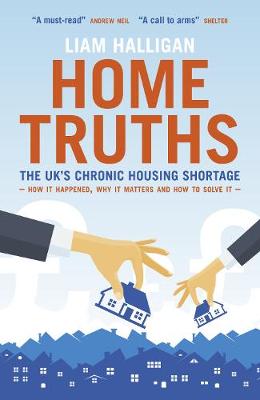
This is a humdinger of a book. Its author Liam Halligan – a cerebral Brexiteer rather than a flag waving, Rule Britannia supporter – exposes and then tries to solve – the biggest crisis facing the younger generation. They either can’t afford to buy their own home or haven’t a hope in hell if they are poor in getting social housing.
The huge hype in house and land prices – which is still going on despite the pandemic – is exposed in this book as part of deliberate policy by landowners and an oligopoly of huge house builders – to maximise profits, provide sub standard new homes and prevent any changes in planning laws which would release land for housing.
The government is committed to ” build, build, build” hundreds of thousands of new homes for the young generation who increasingly are having wait until they are 40, if they are lucky, to own their own home. Like many political promises this is unlikely to materialise under present government policies and he explains in graphic detail why this will not work.
Instead by subsidising buyers under the Help to Buy scheme they are fueling house price rises and only helping the better off – who also get help from the Bank of Mum and Dad – to acquire a home.
Home Truths book
This well researched book shows that Attlee’s government had the idea of how to both build a lot of council housing and incentivise builders to expand home ownership. But both aims have been destroyed by successive governments -including the error under Tony Blair and Gordon Brown – not to build any council houses.
The current Tory promise is undermined by the fact – exposed in the book – that the party is hamstrung by its donors – many of whom are committed to making more money by keeping house prices high and building land rationed. The big builders have also gobbled up many of the small builders – the very people who have incentives to build homes fast – to strengthen their monopoly.
The result was in 2017 that Jeremy Corbyn garnered votes from the young frustrated at having to eke out of their lives in either overpriced rent sharing properties or stay at home with mum and dad while they were in their 30s. Now without Jeremy Corbyn around to scare the Tories, the government might think they can still get away with it.
Ian Mulheirn Pic credit: Institute for Global Change
Labour need to step up to this problem. They are not financed by landowners. One thing they shouldn’t do is take any notice of the Tony Blair Institute. The former PM’s chief policy maker actually believes there is no housing shortage. Ian Mulheirn is using Blair’s platform to peddle the idea and argue that we should not build hundreds of thousands of new homes. Presumably he is happy for the young to pay ever increasing rents or stay with their parents., The big builders and private landlords must love him.
What is good about this book is that the author also proposes solutions which are pretty radical and involve a major reform of planning legislation ,changes to the value of land and penalties for builders who just hang on to sites. And a major social housing programme as well. Well worth a read. If the Tories don’t act they risk alienating a whole generation.
Electoral rolls falling and Millennials head for Spain
I have added a couple of my own blogs that illustrate the results that the author hasn’t mentioned. One shows the declining electorate in central London because so many properties are going to overseas buyers and are used as AirBnB’s. The others show that if we are not careful this permanently rising market could be used for property developers to take over the care home market. The third is a very recent article in the i paper showing that the millennials are voting with their feet and helping fuel a Spanish property boom. Talented tech savvy young Brits are finding you can rent a whole villa in Marbella for the price of a crummy flat share in London and they are basing themselves there. The country is starting to lose vital young talent.
Earlier this month the appeal panel set up by the Epsom and St Helier University NHS Trust under Mrs Claire McLaughlan rejected the appeal by Dr Usha Prasad, the cardiologist, against her sacking. She is said to be ” unfit for purpose”. For many the verdict was thought to be inevitable given the enormous lengths the trust had gone to dismiss her, but the findings are worth highlighting because it is a perfect example of why this internal system is in disrepute and needs to be scrapped.
The unwieldly nature of the Maintaining High Professional Standards Appeal system set up in 2003 by the NHS is itself “unfit for purpose” as illustrated by an enlightening article in the Health Services Journal by Alastair Currie, a partner with the law firm Bevan Brittan.
“No sane NHS manager would use MHPS”
He wrote: “MHPS is a calamitous mess of a document,” and goes on to say:
“MHPS, at 59 pages, is a bloated mixture of inconsistent policy verbiage and labyrinthine procedure. It seems designed to promote High Court debate … and so it often does. There is a devastating trail of case-law left by MHPS, each case involving a doctor or dentist and their employer becoming miserably entrenched in MHPS for years before landing in the courts.”
“No sane manager wants to touch MHPS, let alone use it frequently or to intervene early in borderline bad practice. It is well known that any attempt to use MHPS risks years of disputes and litigation.”
Bevan Brittan lawyers Alastair Currie and Tim Gooder Pic credits; Bevan Brittan
So it is a supreme irony that the law firm Bevan Brittan is the very company that facilitated the MHPS hearing on the Usha Prasad case. While Alastair Currie denounced the system in the most colourful language, his colleague Tim Gooder, was fixing up the arrangements for the hearing. Still never get between a law firm and their business to make money. I wonder which ” insane” manager from the trust engaged them.
Now to the hearing itself. The report begins with a desperate defence that the three main members of the panel are independent. Claire McLaughlan emphasises that she is a non practising barrister. What she should have said, I am told, is that she is an unregistered barrister because she has never worked for a law firm and never completed any pupillage. The analogy which she should know is that a qualified doctor is not properly qualified until he or she has worked in a hospital.
Dr Zoe Penn has a high flying job as a medical director and lead for professional standards at NHS England and Improvement (London region). She, I understand, has refused to communicate any explanation of the decision hiding behind the “labyrinthine procedure” of MPHS.
And Ms Aruna Mehta, a former banker and non executive director of the trust, I gather was appointed to the trust without any competition for the post.
The panel could not find that Dr Prasad was ” not fit to practice” because she has been both exonerated and revalidated by the General Medical Council. They didn’t even bother to read all the detailed expert findings in the GMC report. So citing the bad relations in the hospital trust between medical colleagues they decided that Dr Prasad was not fit for purpose.
Back of an envelope decision
The relevant paragraph said: “The GMC were concerned with Dr Prasad’s fitness to practise whereas the MHPS panel were concerned about Dr Prasad’s fitness for purpose. The Panel are fully cognisant that these are two different considerations, with different tests, thresholds, processes and outcomes. Fitness to practise distinguishes behaviours which are not in keeping with GMC requirements on good medical practice and therefore may have an impact on a doctor’s licence or registration from behaviours which are not in keeping with a doctor’s ability to carry out a particular professional role. Although the latter do not breach the threshold for GMC action it does mean that a doctor is not fit for purpose.”
Yet nowhere are these different tests and thresholds explained nor how a human being rather than a system or faulty goods can be classified as unfit for purpose. It is as almost Mrs McLaughlan made the concept up on the back of the envelope just to find anything to attack her. And also safe in the knowledge that the MHPS protects her from explaining herself.
Certainly there are purple passages slamming Usha Prasad’s perceived failings: “Dr Prasad made mediation unviable, refused to participate in a behavioural assessment, made a placement impossible, refused a sabbatical, did not engage with the Trust’s MHPS investigation, responded antagonistically throughout and submitted multiple grievances as a result of any challenge. She appears unable to accept help from her peers but sees everything through the prism of victimhood.”
Yet this is at total odds with reports from Pinderfields Hospital near Wakefield where has received glowing tributes for being able to work there with colleagues while on a placement from St Helier – the report seems to suggest that she is a Jekyll and Hyde figure.
Dr Richard Bogle, then lead cardiologist and Dr James March, the trust’s medical director
The report does not exonerate other senior figures in the cardiology department. Dr Richard Bogle, who was head of the cardiology department, is criticised: “The Panel were concerned about some of Dr Bogle’s actions and non-actions while clinical leader and how little leadership he demonstrated. He displayed little empathy in relation to the anonymous letters. As the departmental leader he could have undertaken an investigation himself into the relationships within the department.”
Also the inquiry has to admit that the way the trust collected evidence against her to send to the GMC was dubious. “The 43 cases do appear to have been gathered in a haphazard, rather than properly random, fashion. This could be construed as a hunt for evidence rather than a proper audit of clinical care against known gold standard best practise which is properly comparative with others i.e. benchmarking.”
This sorry saga has ended with a popular and competent cardiologist dismissed from the trust and declared to be ” unfit for purpose” as a human being. The truth, as I see it, is that it is the system that judged her that is ” unfit for purpose” not Dr Prasad.
Professor Jane Somerville; Pic credit: World Heart Foundation
Professor Jane Somerville, a distinguished cardiologist , who took part in the first heart transplant in the UK, has put up this comment on the situation:
This story highlights a serious problem within the National Health Service which needs urgently to be addressed by the Department of Health. The number of new whistleblowing scandals is steadily increasing. It is concerning when dismissal of a senior doctor following a “whistleblowing” event (as in this case) occurs at a time when insecure young doctors and new consultants are worrying about what sort of National Health Service has employed them – and in the middle of the worst pandemic for 100 years! In David Hencke’s excellent factual reports, a BAME consultant, easily bullied by the Trust despite being found by our regulatory body (the GMC) to be ” fit to practice” has lost her livelihood on grounds of not being “fit for purpose”. This interesting phrase does not appear in English Employment Law, and when used applies to services or goods. Perhaps the Trust wishes to show she is as useless as a cardboard box!
Why does the Department of Health or NHS England allow hospital Trusts to do this, to fight whistleblowing staff but fail to address their original concerns or even pay any lip service to them, using vast sums of taxpayers money (>£700k going on £1m in the case of Dr Chris Day, see @drcmday on Twitter) which the “little person”, the doctor under fire, cannot hope to match? In an exercise of gross imbalance of power and taxpayers’ money Trusts respond to whistleblowers by using panels of seemingly prejudiced and dubious panellists and often expensive lawyers.
These bullying Trusts have too much power and no one seems to be able or willing to control their excesses. This is not a unique case. There have been several very prominent examples in the national press over the past 2 decades. The Department of Health should be concerned about the oppression of their vital professionals, unequipped to fight back and often not helped by representative bodies (such as the BMA), or seniors who may themselves be too frightened of a Trust’s retribution. This cannot be a fair outcome for whistleblowers whose primary motives are to preserve and maintain patient safety, often requesting simple as well as fundamental changes and fair but thorough investigation of underlying problems. A Trusts’ response to whistleblowing often seems corrupted by internal bias. The Department of Health turns a blind eye or does not care. Sir Robert Francis QC was asked to report (2010 and 2013) on failings of Mid Staffs management and avoidable loss of lives. He made many (290) recommendations and introduced the Freedom To Speak Up Guardian. Only a few of 290 recommendations were adopted and FTSU process is not functioning as intended. The Dept of Health should be ashamed of ignoring its responsibilities to the NHS, its doctors (and nurses) and the British electorate. Not to mention the huge sums of taxpayers money expended to save face and cover up the initial problems as well as the labyrinthine process itself.
Lord Mountbatten: Pic credit: Allan Warren and Wikipewdia
The Cabinet Office under Michael Gove is getting an appalling reputation for its handling of Freedom of Information requests. It is already facing court action from Open Democracy after being accused of blacklisting journalists making requests and setting up – totally against the spirit of the legislation – a clearing house to handle requests from journalists and advise other departments how to handle them. Under the FOI Act you don’t even have to disclose your own identity to get information – it is a public right.
But now it has plumbed new depths in trying to censor important historic documents years after the death of Lord Mountbatten, one of the country’s most interesting and controversial figures. And it is hoping to make it impossible for the author of his biography, Andrew Lownie, to challenge the Cabinet Office by making it too expensive for him.
The diaries of Lord Mountbatten were purchased by Southampton University for £2.8 million – with £2 million from the taxpayer – as part of a huge archive covering both Lord Mountbatten and Lord Palmerston. The archives is known as the Broadlands archive, named after his famous home.
Andrew Lownie has written an excellent biography, The Mountbattens: Their Lives and Loves, published two years ago. It explores the lives of both Mountbatten and his wife Edwina. It was his research for this book that led him to the Broadlands archives, and he has been attempting to gain access to the diaries and documents from 1935 onwards.
So far using the Freedom of Information Act he has spent four years successfully fighting the Cabinet Office and Southampton University to get the censored part of the diaries released. He has won every step of the way and the Information Commissioner has ordered them to be released.
Cabinet Office employing two QCs at vast expense to fight the disclosure
But now the Cabinet Office and Southampton University are going to a tribunal to stop the release of the diaries and have employed, at vast taxpayer’s expense two QC’s to argue why these documents should not see the public light of day.
Andrew Lownie has launched a crowdfunder appeal to raise £50,000 to defend himself against these two QCs.
The documents could shed light on the royal family and the independence and partition of India. Lord Mountbatten was the uncle of Prince Philip, Duke of Edinburgh, confidant of Edward VIII (Duke of Windsor) and the last Viceroy of India, while Lady Mountbatten had a close relationship with the Indian leader Jawaharlal Nehru.
The Guardian took up the issue and suddenly the Cabinet Office decided to release the diaries up to 1934 but no further. This means that some of the most interesting episodes that also included Lord Mountbatten’s controversial war record in the Navy and the extraordinary coup attempt against Harold Wilson, and possibly his version of the advice he gave to Prince Charles, our future king, when he was a young man, remain secret.
Andrew Lownie deserves enormous support to take on the Cabinet Office which must, rather than Southampton University, be behind this censorship of these documents. They belong to the nation, not Michael Gove or the Royal Family.
Support Andrew Lownie’s appeal
I suggest you get on to his crowdfunder page here and donate if you can. I have also written an earlier review of his book on this blog.
Plans for a People’s Tribunal in London later this year to hear the case for implementing the UN Convention to eliminate all discrimination against women (CEDAW) have received a huge boost after one of London’s leading international law firms have offered to work for them free of charge.
Garden Court Chambers, which has 197 barristers and 27 QC’s, and specialises in human rights cases has offered the services of six of its leading women barristers and QC’s to head up the People’s Tribunal which aims to draw up an ” oven ready ” Bill of Rights for Women which could be put into British law. All are working pro bono.
Smita Bajaria, a solicitor, is also working pro bono and will be instructing the barristers for the CEDAW tribunal.
The decision by Garden Court Chambers, to offer such a huge amount of pro bono work to the inquisitional tribunal is thought to be unprecedented in legal circles. All will be working on the preparation and presentation of the legal arguments and examine over 20 witnesses across the three day tribunal hearing.
The six QCs and barristers are:
Sonali Naik: Pic Credit: Garden Court Chambers
Sonali Naik QC
Sonali has an extensive judicial review practice in challenges to Home Office policy, trafficking and unlawful detention and has won a number of high profile cases including a landmark case which found that Priti Patel, the home secretary, had acted illegally in demanding the “instant removal” of migrants without having access to lawyers.
Amanda Weston QC:.
Amanda Weston QC
A leading expert on public and administrative law and judicial reviews and on the preferred counsel list for taking up cases for the Equality and Human Rights Commission.
An expert on gender and race discrimination. Won a landmark case against the Home Office in the Supreme Court for the Public and Commercial Services Union and Prospect union over the discrimination against black and older applicants in promotion tests , winning a settlement of over £1m.
Louise Hooper Pic credit: Linked In
Louise Hooper
She is an equality and human rights lawyer with a particular expertise in cases involving child, refugee and migrant rights, sex, gender, LGBTI+, trafficking and detention. Advises the Council of Europe.
Maria Moodie Pic Credit Twitter
Maria Moodie
A specialist public law practice in the areas of community care (Adult and Children Act cases), human trafficking, migrant welfare, housing, and immigration and asylum law.
GraceBrown Pic credit: Legal 500
Grace Brown
She commenced practice in 1995 inspired by the desire to promote the rights of the under privileged and disadvantaged and quickly established herself as a well-respected and busy human rights and immigration barrister. She is on the preferred list of Lawyers for the Equality and Human Rights Commission.
A statement from the CEDAW People’s tribunal said : “Every woman and girl born in the UK should be able to realise, as of right, her true potential.
“There is no reason why CEDAW cannot be transposed into domestic law and the delay in doing so is nothing short of unconscionable.
OUR GOALS
• A published Report out of the tribunal hearing signed-off by the Independent Panel of Judges
• Instructions for a Women’s Bill of Rights
• A film of the journey
• Roadshow e-Drop-Ins
The CEDAW Peoples Tribunal will leave a lasting legacy by providing a body of evidence for individuals, women’s campaign groups and politicians to hold governments to account.
This will lead to changes in laws and the creation of new laws to bring about a Women’s Bill of Rights and substantive, transformative equality for all women and girls.”
Labour needs popular policies that attract people from Carlisle to Camden
It would rather cruel to say Sir Keir Starmer named after Labour founder Keir Hardie should be the leader that led to its nemesis. But the weekend’s election results in the North East and the Midlands show it is Boris Johnson’s Conservatives that are the new champions of working class voters there not Labour.
That is not to belittle Labour’s achievements in Wales, Cambridgeshire, the West of England and the South Coast. In Worthing for example, Labour has gone from having no councillors there for 51 years, to a place where the Tories are reduced to a majority of just one.
But it is to say that Labour have lost the plot. They are fighting quite a different Tory Party than under Theresa May or David Cameron and they don’t seem to have got the message. This Tory Party is a high spending, interventionist party wrapped up in the trappings of Rule Britannia and law and order. It is prepared to spend loads of cash in targeted working class areas where it can garner votes and is happy for an image of Gunboats at Dawn with the French in Jersey over fishing rights knowing that a NATO ally is unlikely to open fire.
For Labour there is a choice it can either ape the flag waving ,law and order, overseas aid cutting agenda of the Tories or it could look for new ground to take on the changed Tory Party.
I have four ideas for the latter and they all affect millions of people whether they live in the North, Midlands or South of the country. If successfully implemented they could change hearts and minds.
Having a decent affordable home for Generation Rent
The first is finding a home to live. For younger people under the age of 40 this is rapidly becoming an unobtainable dream as house prices continue to surge way above wages. They are either stuck in expensive flat sharing or forced to continue living in their parent’s home. No chance to aspire to start a family there. And with little council house building social housing is not easily available for the poor.
For a real analysis of this problem read a book called Home Truths by Liam Halligan. It is a comprehensive analysis of what has gone wrong. Labour could do little better than plagiarise the ideas in this book as part of their manifesto.
The Tories – though promising to build more homes- are on the back foot on this one. Their second largest group of donors are property developers – whose rationale has to be to get the most profits for their shareholders and investors. This, as the book explains, means ensuring that house prices continue to rise and they will only rise if they drip feed rather than grossly expand house building. So here’s one policy that will appeal whether you are in Brighton or Barnsley- and it can be sloganised in simple terms as it is both aspirational and a basic need.
Time for Labour to embrace the new world of freelance working
The second is the new world of work. The old huge battalions of workers in the mines, shipyards and even steel no longer exist – the new world of work is often hi tech , freelance contracts or new businesses or low paid work in Amazon or Deliveroo. Yet neither the outdated national insurance system nor employment law helps them. Ed Miliband promised a small step in reforming national insurance under his leadership – to ensure at least the self employed millions got basic help. And this group were the worst off under the furlough scheme. Again the government is weak in this area and whether you have a start up in Maidenhead or Middlesbrough you will benefit.
Women’s rights
Then there is the equality issue -particularly for women. Johnson is not particularly popular among women. And women are half the electorate. There are still issues of inequality, low pay and a law and order issue over women’s safety – so a women’s bill of rights to end injustice and make them safer in the streets would be very popular.
Equal access to the green revolution
Finally there is the issue of green policies. Yes the government is committed to these – but will help be distributed fairly or will electric cars be the prerogative for the better off. There is an area where carefully pointing out the problems and promising to do something about it will be attractive.
These are just some ides.. But whatever happens Labour has to up its game and get out of this continual internal battle talking to themselves and talk to the voters instead. Otherwise it will lead to its traditional male working class voters permanently voting Conservative and its more left wing voters backing the Green Party. It could disappear down a hole in the middle if it doesn’t get its act together and decide what it stands for.
Dr Jocelynne Scutt, President of panel of judges of the CEDAW People’s tribunal , Nazir Afzal Legal Consultant to the tribunal
Two of the leading people talk in advance of the planned People’s Tribunal in London
Later this year there will be a People’s Tribunal in London to evaluate the need for the UN Convention on the elimination of all discrimination against women to be put into domestic law. The convention, signed and ratified by Margaret Thatcher in 1986 has never been put into domestic law though parts of it are in the Equalities Act, 2010.
The tribunal will examine the failure to integrate CEDAW into domestic legislation; decide whether those delays are legitimate or not; and make necessary recommendations as to how the Convention can be given full effect in the UK, advancing women in all aspects of society and recognising historic inequalities.
Dr Jocelynne Scutt, the Australian feminist who is president of the panel of judges CEDAW People’s Tribunal and Nazir Afzal, newly appointed Legal Consultant to the tribunal. have talked about their hopes for a massive legal change.
Jocelynne Scutt is a senior law fellow at the University of Buckingham. She was Tasmania’s first anti discrimination commissioner and is a member of the Labour Party in Cambridge and the Australian Labor Party. She is a former judge in Fiji.
Nazil Afzal, is the former Chief Crown Prosecutor for NW England and formerly Director in London. Most recently, he was Chief Executive of the country’s Police & Crime Commissioners. During 24 year career, has prosecuted many high profile cases and advised on many others and led nationally on Violence against Women & Girls, child sexual abuse, and honour based violence. His prosecutions of the so called Rochdale grooming gang and hundreds of others were groundbreaking and drove the work that has changed the landscape of child protection. He is the new legal consultant to the tribunal.
Jocelynne Scutt believes there are many cases -particularly those involving violence against women and rape cases- where women are still not seen as credible because of prejudice or the way they dress. She points to protests from women groups over rape cases with placards saying ” Wearing a dress does not mean yes” as a good example of the way women are treated by men. She says this is similar to the ” stop and search” policy by the police where just because a black man is driving a posh car it is assumed it is either stolen or he is a drug dealer.
She said one of the big changes CEDAW could bring is to change the law to make people treated as a whole human being instead of being categorised in different legal columns. She cited a discrimination case brought on both sex and gender and racial discrimination.
” The law as it is either treats the case as a sex and gender case with a bit of ethnicity added on or a an ethnicity discrimination case with a bit of gender discrimination. People are not like that.”
The standard in courts is still based on ” Benchmark Man”
She says courts are still dominated by white male values despite the fact we have more women barristers and judges. ” As one of my colleagues says the standard is Benchmark Man- that is still the standard for everything.”
She thinks that middle class women have an advantage over working class women to progress in their careers.
” Middle class women in professional jobs can get through the glass ceiling or at least see it . For working class women – such as cleaners and care workers – they are stopped by a concrete canopy- they can’t even see the glass ceiling let alone break through it” This is something that CEDAW would change.
Both she and Nazil Afzal believe CEDAW will bring about big changes. She is optimistic that support for CEDAW will build and build to become a major issue.
Nazil believes there is no legal impediment to introducing CEDAW only a political one. He also believes that if Scotland and Wales decide to implement CEDAW while England declines to do so – it ” will lead to an even greater postcode lottery in judicial decisions than it is now.
” Probably only one per cent of lawyers understand CEDAW”
He believes that at present the vast majority of lawyers don’t understand CEDAW even though its is recognised by the courts as international law.
” Probably only one per cent of lawyers -unless it is their speciality – don’t understand it and probably among that one per cent only one per cent understand it fully “
He thinks the passing of the Domestic Abuse Bill has made the case for putting CEDAW into domestic law and also for the United Kingdom to sign up to the Council of Europe Istanbul Convention on preventing and combating violence against women and domestic abuse.
Some 45 countries have signed up and 34 have ratified the convention. The UK is not one – one of the stumbling blocks for the UK is that it would have to give migrants equal rights.
Ground breaking moves to end all discrimination against women could become law in Scotland and Wales by next year if as predicted, the Scottish National Party and the Welsh Labour Party win Thursday’s devolved Parliamentary elections.
Manifestos for both parties commit them to introducing the CEDAR convention into Scottish and Welsh law and the Scottish Tory leader, Douglas Ross, has also given his support to write the convention into Scottish law.
The decision will have far reaching effects on the equality and rights of women and put huge pressure on Boris Johnson, the Tory leader, and Liz Truss, who is also equalities minister, to have to follow them or face a postcode lottery on women’s rights across the UK. It will also be an enormous boost to the planned People’s Tribunal on CEDAW to be held later in London.
The issue has not made the headlines because it has been overshadowed by the row over Scottish independence and the funding of Boris Johnson’s flat which have dominated the news. But it has implications for equal pay, violence against women, job discrimination and could resurrect unfair treatment over the raising of the pension age again.
Far reaching proposals
The Scottish proposals are the most far reaching. Not only do they want to end all discrimination against women but they also want to implement three other UN Conventions which have not been put into law by the British government.
These cover: The International Covenant on Economic, Social and Cultural Rights; The Convention on the Elimination of All Forms of Racial Discrimination and the Convention on the Rights of Persons with Disabilities.
Scotland has already passed laws to implement the UN Convention on the Rights of the Child into domestic law
. This has infuriated Boris Johnson and he is going to the Supreme Court to stop Scotland implementing it -saying it is beyond Holyrood’s powers.
But he can’t do anything about the CEDAR convention because Margaret Thatcher signed and ratified the convention in 1986. Unless he decides the UK will leave the convention which would create a storm.
Fraser Meechan from the Scottish Government’s Equality and Human Rights division, said in a letter to Ann Fenner, communications leader to CEDAW tribunal ; “The intention, dependent on the election outcome, is to introduce the proposed Bill in the next Parliamentary session. A multi-treaty human rights Bill of this nature is innovative and ambitious. Therefore, careful thought and extensive engagement will be required, both during its development and throughout implementation, to ensure it is done right.”
A task force is already working on the details of the legislation.
Wales for CEDAW
The Welsh manifesto commitment means the Wales will follow on CEDAR.
The move has caused the Government Equalities Office in London to start meetings with women’s groups on what changes they would like to see in England – as they are now aware of the proposals in both Scotland and Wales. This is the first time the Government Equalities Office has had regular meetings on CEDAW beyond the UK commitment to review progress on CEDAW every four years.
So what started as a move to open a debate on women’s rights through the CEDAW People’s Tribunal has now turned into a serious and urgent issue for Whitehall and ministers. The decision by Nicola Sturgeon to do this is a gamechanger that will have repercussions across the whole of the UK.

















 Westminster Confidential