London Midland admits it got it wrong over its passenger assistance service

Berkhamsted-station-is-stepfee-21

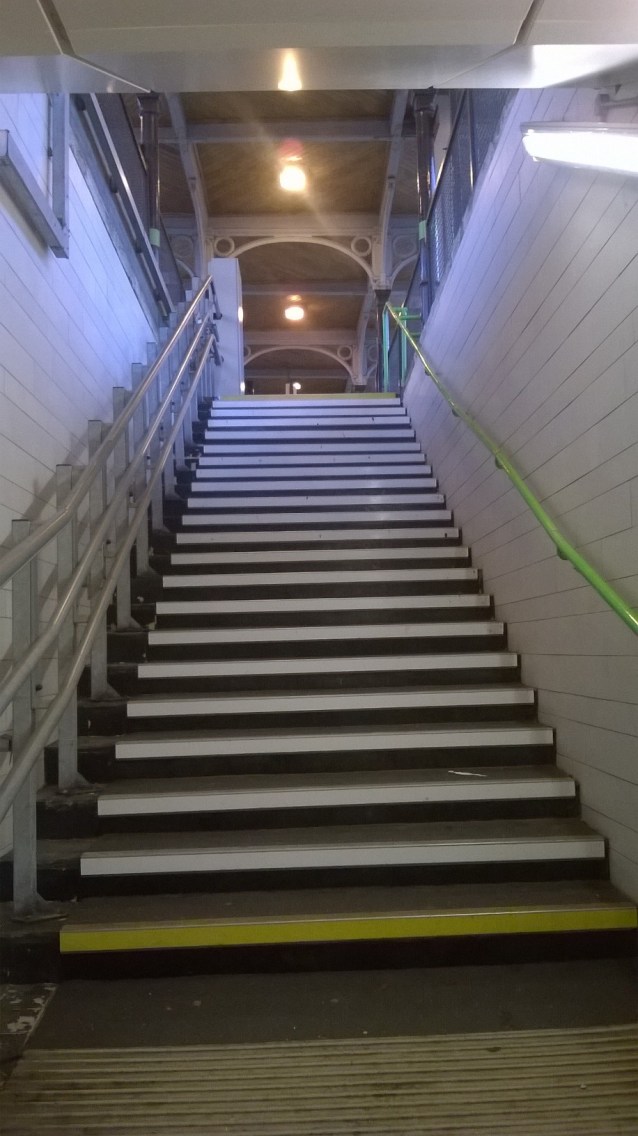
Rather a lot of stairs to go up or down if you are disabled or have a buggy at Berkhamsted station if the lift is out of order.

CROSS POSTED ON BYLINE.COM 

London Midland has admitted that a ” breakdown in communication ”   meant it didn’t know that one of its stations was unstaffed, had a faulty lift and that its  emergency passenger help service didn’t work last Sunday.

The admission came in an email from the company in response to a complaint I lodged after being dumped at Berkhamsted with my disabled wife Margaret at the end of a weekend break from Liverpool.

I highlighted this in a blog earlier this week purely because I thought the situation was potentially dangerous and that train companies should be more careful in ensuring that their passengers can travel safely.

An email from Sarah Brassingham, a customer relations adviser, admits :  ” Unfortunately there was a breakdown in communication that meant that the team at Milton Keynes Central were unaware of the issues at Berkhamsted that evening, which were obviously compounded by the issues with the help point on your arrival.

Steps are being taken to address this with the stations and Passenger Information teams, and our Facilities team are resolving the issues with both the lift and the Passenger Information points as quickly as possible.

I can assure you that we take any assistance failures extremely seriously and apologise again for the inconvenience and distress caused.”

We have been offered a rail refund for the Milton Keynes to Berkhamsted journey but it does raise wider questions. One solution would be to ensure that whoever helps a disabled person  to get on the train informs the guard about the person’s destination – so if there is no one there the guard can help. at the other end But that still doesn’t get over the problem of faulty lifts or emergency help systems not working.

London Midland say their policy is ” Pre-booked assistance is provided by the station team at staffed stations and by the Conductor on board the train when the station you are getting on or off the train at is unstaffed.”

That raises another question. London Midland still has guards. If Southern get their way they won’t be any and presumably if they have any unstaffed stations disabled people won’t be able to get off the trains or be unable to travel.

That is one reason to back the RMT union case to keep guards on trains and fight the company and Chris Grayling, the transport secretary, who want to get rid of them.


Can’t rely on London Midland:How staff cuts and technical failures dump on disabled and vulnerable rail passengers

london midland train

London Midland train

CROSS POSTED ON BYLINE.COM

This weekend my wife and I returned from a weekend in Liverpool where I had been speaking at a GMB Justice Campaign conference.

My wife is recovering from a stroke and we use the passenger assistance service to travel by train as she needs a little help boarding trains and avoids using stairs.

This weekend we got a good service when we boarded the train at midday on a Friday in Berkhamsted and a good service at London Euston  and Liverpool Lime Street on the way up and at Liverpool Lime Street and Milton Keynes where we changed trains on Sunday on the way back.

But the support fell apart when we returned to Berkhamsted just before seven o’clock on Sunday evening. I am writing about what happened here because it has wider implications for rail  travel and what steps rail companies take to protect people in an emergency.

Berkhamsted Station has recently installed lifts to aid the disabled, people with heavy luggage and families with pushchairs to get from the platforms to the subway below.

When we got to Berkhamsted  a town with 27,000 people) there was no one there to help my wife off the train and the lift was out of order. But it didn’t say it was out of order. Instead you could access the lift to go down to the subway. It just wouldn’t respond to go down to the subway.

Thinking this should be reported I pressed the alarm. Immediately I got an automated message saying ” don’t panic” and then the lift dialled an emergency number. There was no reply. I repeated the exercise still no reply. Luckily the doors had not closed or else we would have been trapped inside the lift until some one rescued us.

On the platform there is also an automatic system for passengers to contact someone should they need emergency assistance. I pressed that. Believe it or not I got message saying the number was unobtainable. So if say someone had been assaulted or sexually attacked on the platform – the emergency assistance system was faulty

When we eventually got off the station ( there is another roundabout route down a ramp through a station car park ) I found a notice on the ticket office saying there it had closed all day Sunday – so  there had been no staff at the station all day.

What has shocked me is that London Midland seem to have no ” duty of  care” to passengers – and their systems which are supposed to work when they are no staff – appear to be just there for show.

We did meet one member of London Midland  staff working that night – a man on the train from Milton Keynes to Berkhamsted checking tickets. So the company gave more priority to making sure it got all its revenue on Sunday for its shareholders and directors – than bothering to provide staff or checking that emergency procedures worked  to aid its passengers. And with plans to get rid of guards and close as many ticket offices as possible it can only get worse.

I have written to London Midland for an explanation and look forward to their reply.


Esther Baker child sex abuse case: “Insufficent evidence”to prosecute as accused ex MP outs himself “

esther baker

Esther Baker

CROSS POSTED ON BYLINE.COM

 UPDATE  20 January 2018: Since this blog was published Esther Baker has been given core participant status at the Independent Inquiry into Child Sexual Abuse. She has appealed the decision by the Crown Prosecution Service who are currently reviewing the case

She is still regarded by Staffordshire Police as a witness for a separate inquiry with another police force into child sexual abuse and exploitation.

The two year long police investigation into allegations by Esther Baker against a former Liberal Democrat MP and two other people has ended with no prosecutions against any of the people following a decision by the Crown Prosecution Service that there is ” insufficient evidence” to get a conviction in court. Her case was highlighted,among others, by Exaro News, and centred around allegations that as a young girl she was sexually abused in the woods in Staffordshire by a number of prominent people while police officers looked on.

Staffordshire Police said in a  carefully worded statement which was supportive of Esther : “We have now concluded a thorough and sensitive investigation into a number of non-recent child sexual abuse allegations made by Esther Baker.

Throughout this process our priority has been to support Esther and ensure all potential lines of enquiry were carefully assessed and investigated. We submitted the findings to specialist lawyers at the Crown Prosecution Service (CPS) who have now concluded that there is insufficient evidence to provide a realistic prospect of conviction of any suspect in this case.

We recognise this investigation, and subsequent review by the CPS, has taken a great deal of time. ”

Supt Amanda Davies said “It was vital we gave the victim the time, space and support she needed to disclose the information. Over 100 hours of interviews were conducted by specially trained officers, and throughout the investigation we have kept her informed and continued to provide support.

“In this case Esther made the difficult decision to waive her right to anonymity and we will continue to support her, as we would with all victims of crime. We want to take this opportunity to reassure other potential victims that their identity is protected by law.”

“Supporting victims remains our absolute priority, rest assured you can contact us confident that you will be listened to and we will provide the support you need.”

Three people were interviewed under caution during this investigation, one of whom was arrested, he has now been released from bail.

John Hemming, the former Liberal Democrat MP for Birmingham, Yardley, decided yesterday to reveal that he was subjected to allegations from Esther Baker and interviewed by the police though not arrested. In a long statement on his own blog, reproduced below, he attacked the Labour Party and accused his successful opponent,  Jess Phillips, Labour MP for Birmingham, Yardley of a campaign against him over the case ( even though he was never named) which he claimed was a perversion of the course of justice. He also attacked Sky News and Exaro for their reporting of it.

 He said :“I am pleased that the Police have now made it clear that there has been a concerted effort to promote false criminal allegations against me and that the allegations had no substance whatsoever.

I would like to thank Emily Cox, my children, Ayaz Iqbal (my Solicitor), my local lib dem team and many others who supported me through this dreadful experience. 

There are many worse things that happen to people, but this was a really bad experience.

It is bad enough to have false allegations made about yourself to the police, but to have a concerted campaign involving your political opponents and many others in public creates an environment in which it is reasonable to be concerned about ill founded vigilante attacks on your family and yourself. Luckily there was a more substantial lobby to the contrary as well, which included many people who were themselves real survivors of abuse, which has helped. 

I am normally someone who helps other people fight injustice. Being subject to an unjust campaign of vilification is something I do not wish to repeat.

The police themselves have handled the allegations well. However, although it was obvious from the start that the allegations were nonsense, it has taken two years for this to be resolved. Identifying why that is will take time, but I believe that the system is too tolerant of false allegations. The current CPS guidelines on handling false allegations are in my view too tolerant of malicious allegations and need review. The unnecessary delay of around 2 years in resolving the issue I believe arises from procedures that are being used being flawed.

It has been in the public domain for 2 years that the complainant changed her allegations in early 2015 from those she had made publicly previously and that she had stated publicly that she had never met a politician…

It should be noted that the newspapers generally have handled the issue reasonably well. Exaro and Exaro’s funder have behaved dreadfully. Sky should recognise that not only was their broadcast of the original allegations in May 2015 a complete nonsense, but also had it been based upon truthful allegations that it would have undermined a criminal investigation. The attempts to drum up additional false complainants through the use of publicity highlights a difficulty with publicising cases whilst a police investigation is going on. There are people who will make false allegations merely because someone suggests that they are looking for such allegations.

Some members of the Labour Party, including my opponent in the last two General Elections, have invested considerable time in promoting these allegations. The promotion of the complainant as an expert in this subject area as a consequence of these allegations has caused additional difficulties for my family.

I am not myself aware of another situation where members and supporters of a political party have promoted such allegations in such a public manner – essentially arming the villagers with torches and pitchforks and setting off on a lynching. There were public attempts to prevent me from standing as a candidate because of allegations made maliciously by a Labour Party member backed by other members of the Labour Party. Many Labour members will find this unacceptable and it is an issue that needs consideration by the Labour leadership.

I have asked the police to investigate this attempt to pervert the course of justice and await their response. There are, of course, many procedural options that are open to me to obtain justice for my family. I will consider those over the near future.”

Two points need to be made as I suspect that this case will not be going away for some time.

First because other allegations  ( not involving the ex MP) made by Esther are still under investigation by Staffordshire Police with another police force, relating to when she was a teenager and she is intending to appeal the CPS decision.

Second it is clear Mr Hemming will not let this go. On his criticism of Exaro there are two points. He wrongly blames the former owner and funder, Jerome Booth, for publication of the story. Jerome never knew or wanted to know what stories Exaro was investigating and read the stories for the first time  like everyone else when they were published.

Secondly Exaro never named him throughout the investigation and when the police revealed his age which would have made it easier to identify him through ” a jigsaw identification ” removed the tag Liberal Democrat.


The £20,000 benefit bonus rewards for the metropolitan elite at the Department of Work and Pensions

neil couling

Neil Couling – £145,000 a year

CROSS POSTED ON BYLINE.COM

Last week I had a story in the Sunday Mirror about top bonuses and pay rises for five of the most senior  and well paid civil servants at the Department of Work and Pensions over the last two years.

The information was published in the annual report and accounts  of the DWP released last month. These same accounts were qualified for the 29th year  running according to the the National Audit Office – because of fraud and error in payouts to claimants rendered them inaccurate and wrong.



Sir Robert Devereux pic credit Twitter

Sir Robert Devereux – £190,000 a year Pic credit : Twitter

The bonuses announcement came at the same time as 31 Labour MPs had called for a pause in the roll out of the ministry’s new Universal Credit  programme – which replaces five benefits – because of reported chaos in its administration leaving some claimants without money for up to six weeks. One of those 31 MPs, Kevan Jones, who represents Durham North said the bonuses were a ” reward for failure”.

He described them as “an insult to many of my constituents who are already living on the breadline. In my constituency they plan to introduce this in November which could leave thousands of people without money in the run up to Christmas.”

mayank-prakash_square

Mayank Prakash £220,000 a year including £20,00 bonus Pic credit: DWP Digital

Within days of the publication of the story the FDA ( the First Division Association) which represents the top civil servants attacked the article in a report in Civil Service World.

Jawad Raza, FDA national officer for DWP, said officials should not be used as targets by political opponents of the system simply for doing their jobs.

“The suggestion that these civil servants have been ‘rewarded for failure’ shows a blatant disregard for the facts regarding their pay and

Jeremy Moore pic credit

jeremy moore – £135,000 plus £20,000 bonus

wilfully misrepresents the true complexity of their roles,” he said.

“Senior civil servants have delivered billions of pounds worth of savings since 2010 with an ever reducing workforce. These are highly skilled professionals working in challenging circumstances and they deserve to be adequately remunerated without having their names and faces spread across news pages.”

Sorry Jawad I think there is more to this.

The five civil servants are Sir Robert Devereux, permanent secretary at the Department of Work and Pensions; Neil

WAxtX_a1

Andrew Rhodes – £140,000 a year plus £15,000 bonus

Couling, director general of universal credit; Jeremy Moore, director of strategy; Mayank Prakash, director general of digital technology and Andrew Rhodes, director of operations have received between £10,000 and £20,000 each .They are nearly all paid more than Theresa May, the PM.

The bonuses were awarded for “ top performance “ and “ leadership “when the rest of Whitehall is limited to one per cent pay rises and many benefits have been frozen.

Sir Robert last year received up to £20,000 extra on a salary of up to £185,000 a year. This year he hasn’t received any bonus but his basic salary has moved to £190,000 a year.

Neil Couling, who is directly responsible for universal credit, got a bonus of up to £20,000 last year on a salary of £125,000 a year. This year instead of a bonus his salary has jumped by £20,000 to £145,000 a year.

Mayank Prakash, director of digital strategy has received a bonus of up to £20,000  this yearon top of salary of £200,000 taking his annual salary to £220,000 .

Jeremy Moore, director of strategy, has received bonuses two years running –  totalling up to £40,000 over the two years – taking his total salary to £155,000 a year.

Andrew Rhodes, director of operations has received a £10-15,000 bonus this year, taking his salary to £155,000 a year. He also claimed £37,600 in travel expenses.

The ministry insist that all these pay rises were decided objectively by line managers.

In a statement it said:

Line managers are required to make an evidence-based and objective assessment over whether objectives have been met, not met or exceeded. 

 Individual performance is assessed by the individual’s line manager through an appraisal discussion, with supporting evidence from a range of stakeholders.

But apart from Sir Robert – whose bonus was decided by Sir Jeremy Heywood, the Cabinet Secretary – the Department declined to say who these line managers are and which outside organisations and people recommended they should get bonuses. The bad news for the DWP is that Kevan Jones plans to table a Parliamentary Question next month to find out who.

Now the FDA has a point that compared to the top of the  private sector they are badly paid. A report put out by the House of Commons library revealed that the top 3000 bankers are ALL earning over £884,000 a year – which makes £20,000 sound small beer. But if anything that reflects that huge growth of inequality in Britain.

At other end of society how effective are these five top men ( note they are all men) in delivering what they are supposed to do. All are responsible in one way or another for the delivery of Universal Credit.

At present they are using Newcastle-upon-Tyne – to roll out the full effect of Universial Credit.

Catherine McKinnell , Labour MP for Newcastle North, said:“ My office has been deluged with complaints from constituents about a Universal Credit system that is clearly struggling to cope and failing to deliver the support that claimants need in anything like an orderly or timely fashion.”

Her debate can be read here.  Suffice to say it reveals a very sorry picture. The  new IT system means people can’t talk to a human. It has  a verification process that requires claimants to produce photographic identification such as a passport or driving licence, “which many simply do not possess and certainly cannot afford, even though some have been in receipt of benefits for several years.”

“I also have numerous examples of Universal Credit claims being shut down before they should be; of documentation being provided to the DWP, at the constituent’s cost, and repeatedly being lost or even destroyed; and of totally conflicting, often incorrect, information being provided to constituents about their claims.”

For a time the ministry effectively banned MPs from taking up cases by making impossible verification demands before they would talk about it.

What this shows to me is a growing disconnect between the people at the top – who are computer savvy, have nice centrally heated homes, no problems with bills, can afford expensive holidays, and can’t conceive of anyone not having a passport – designing a system for poor, dispossessed, desperate people without any understanding of how the world works for them.

It was this disconnect between the elite and the poor  in the USA that led to the rise of Donald Trump and I suspect this huge gulf between the Metropolitan elite – whom top Whitehall civil servants are part – and the provincial poor is in the end going to propel Jeremy Corbyn into Downing Street.
 

Edintfest: 70 years of challenge and innovation

edinburgh inetrnational festival - Rhinoceros

CROSS POSTED ON BYLINE.COM

This year the Edinburgh International Festival celebrated its 70th anniversary . So did I.

The opera, music, dance and drama festival tends to be overshadowed by the huge Edinburgh Fringe with its thousands of zany, rude, comical and political shows. But the international festival with its world class productions never fails to either stimulate or challenge you – even if you live near London  and can already see a very wide range of productions.

I have been a recent convert  attending the festival – starting post early semi retirement when I left the Guardian in 2009 – before that I was sometimes expected to stand in for the dead season of political coverage in mid August or went on a family holiday.

But what constantly surprises now my wife and I do try to go every year is the extraordinary range of productions. I have been entertained, moved, frightened and only occasionally bored by what we have seen. This year was no exception, even if underlying some of the themes has been the rather alarming and dangerous state of the world in 2017.

No more so than the joint Scottish and Turkish production of Rhinoceros  – Eugene Ionesco’s Theatre of the Absurd play – drawing from his experience of the rise of Fascism and authoritarianism in Romania in the 1930s. It is very, very funny but it tells of the growth  and attraction of authoritarian rule by people being turned into Rhinoceri until only one person was left. It was particularly poignant that it was a joint production with the DOT theatre company from Istanbul, given the rise of Erdogan.

Equally dramatic for anyone who likes flamenco music was the Maria Pages Company production of Yo, Carmen – an energetic and beautifully choreographed performance partly using Bizet’s music from Carmen. This eight all women group  also had a strong Feminist message that women were not there just to please men.

Surprisingly disappointing was the premiere of Alan Ayckbourn’s new play   The Divide- a  Dystopian  sci fi picture of Britain after the Plague in the 22nd century. This was a diminished world of separated men and women – but it suffered from following a similar theme to the recent Handmaiden’s Tale on TV – and in two parts was over long and more of a narrative than a drama. This will come to London at the Old Vic next year. Not everybody stayed including us.

Anoushka Shankar – daughter of the late Ravi Shankar – also pursued a ” shock and awe” theme in her loud and strobe lighting musical story of the refugee crisis. Classical Indian music it was not – but a  Westernised performance with an electric sitar.

As interesting was the supporting act – A gawwali ( Arabic meaning word of the prophet says the programme)  performance singer – Faiz Ali Faiz- with a male chorus, two harmoniums, a tabla and handclappers is sung rather like an Indian repetitive raga.  The sacred music dates back 700 years to the Sufi mystics. The performance was also a political statement against Muslim fundamentalism which bans singing. It was a complete revelation to us in more ways than one – since it had not been billed by the Festival when I booked the tickets.

Finally there was the revival of the Incredible String Band – the 60s psychedelic folk band – with one of its original members, Mike Heron, who with musical friends and relations, turned the clock back 50 years to a less troubled time, with both spirited and poignant performances. In its time incredibly innovative music and still powerful today. An avid follower in the audience told me to watch out for Trembling Bells, a more recent Glasgow psychedelic folk group, who occasionally join forces with the band.

One parting shot – since my wife became disabled following a stroke four years ago- access to events has been important. She doesn’t now need a wheelchair but can only walk slowly and needs rails -particularly on stairs to keep her steady. The Edinfest venues  vary from good- the Lyceum and Usher Hall – to antiquated – the Kings Theatre – and more difficult, the Playhouse. Unfortunately at the Playhouse we were allocated seats in the circle  which had no rails to get there- and if it had not been for one of the helpful ushers and a member of the public – she could easily have fallen. This put her off returning for the Incredible String Band concert.

But overall such different, innovative and challenging stuff in just six days is why the international festival is really worth seeing. Happy 70th birthday Edinfest and long may it continue !


The train driver who averted a major disaster on a London commuter line in nine seconds

s300_Watford_tunnel_landslip

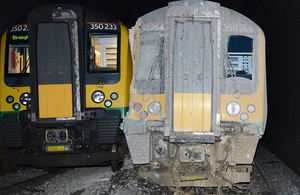
The two collided trains in the Watford Tunnel.Pic credit: British Transport Police

An accident  report out today on the landslip at Watford that derailed an early morning  London Midland commuter train last September reveals the importance of having properly  trained staff  on our railways.

It reveals that without prompt action by the driver there would have been large number of casualties and possibly fatalities when another commuter train running in the opposite direction collided with the derailed train.

It also shows having a guard on the train meant that passengers on the service who had not been injured got immediate reassurance and help after the driver was trapped in the cab following the accident.

The report praises both the driver and the guard for the way they handled the accident – caused by heavy rain leading to a landslip on the line just inside the entrance to a tunnel at Watford.

Simon French, Chief Inspector of Rail Accidents said:

 ” The collision of a passenger train with a derailed train in Watford tunnel on the morning of 16 September last year serves as a reminder of why everyone in the railway industry continues to work so hard to manage risk – the collision of two trains in a tunnel is a scenario we all hoped never to witness.

The derailment of the 06:19 service from Milton Keynes could so easily have led to a catastrophic sequence of events were it not for two notable factors. The first was the sheer professionalism of the driver who, within moments of becoming derailed, had the presence of mind to apply the brake and then transmit an emergency message using the train’s ‘GSM-R’ radio. His actions alerted the driver of a train approaching in the opposite direction who immediately applied the brake. As a consequence, the northbound train had reduced speed from 79 to 34 mph before striking the derailed train a glancing blow. This reduction in speed may well have made a big difference to the eventual outcome.

The second mitigating factor was the slotting of one rail of the track in the gap between a gearbox and a traction motor on three of the axles, so preventing the derailed train deviating any further into the path of the approaching train. This unintended consequence of the train’s design probably made the difference between a glancing blow and something closer to a head-on collision.

The report reveals that the driver had just nine seconds to alert the oncoming train after his train had been derailed – but as a result it certainly saved lives.

The circumstances of the crash are also a grim warning in the age of climate change given that very heavy rain caused the landslip at exactly the same spot  as another landslip in 1940.

The rail accident investigators found details of the earlier landslip in Network Rail’s archives but unfortunately the  management of Network Rail had not alerted people  who had  been working on removing vegetation and trees in the cutting on the need to  revamp an old drainage system.

The report also reveals that had there been a serious accident access by the emergency services to the scene would have been difficult and there did not appear to be any plan for organising a major rescue should an accident happen in the Watford tunnels.

All this suggests to me is that ministers and privatised railway companies – such as Southern railways – who want to save money by continually cutting staff should be wary of doing so. It could cost lives and passengers need help and reassurance should the unexpected happen on their daily commute.


The collapse of the local press: A disaster facing local democracy

Grenfell_Tower_fire_morning

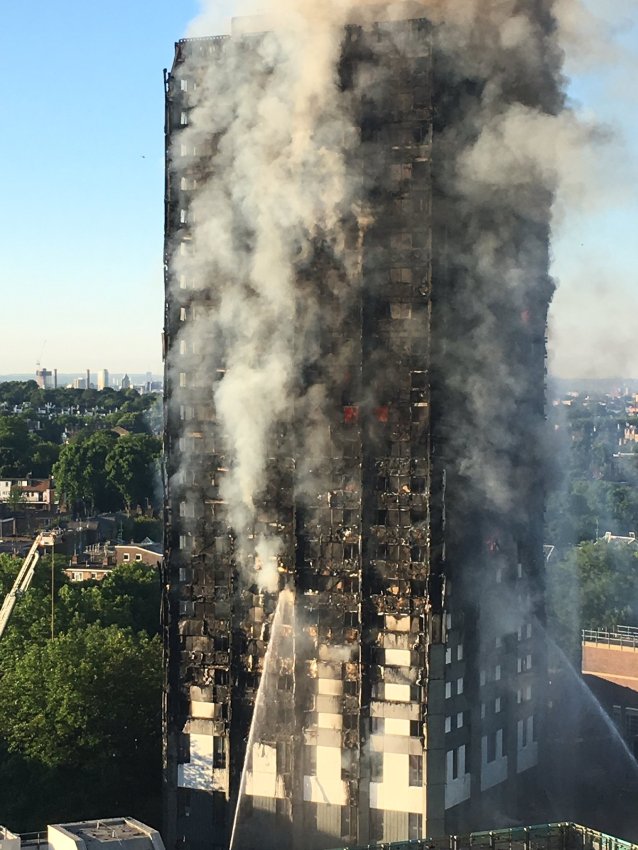
Grenfell Tower: The next morning Pic credit: Wikipedia

I recently wrote a piece for the National Union of Journalists campaign,Local News Matters fighting to keep local newspapers alive. While much time has been devoted to the plight of the national press losing swathes of staff, not enough attention has been given to the almost total collapse of local news reporting.

The catalyst was the appalling Grenfell Tower fire which erupted with a huge loss of life, and why ,until then, nothing had been written about it. The fire not only destroyed a community but exposed the appalling lack of local reporting in the months leading up to the fire.

The local residents association – the Grenfell Action Group – had been warning of fire safety issues in Grenfell Tower and other blocks of flats as long ago as 2013.

But they had been ignored and when their blogs got too critical they were threatened by  the solicitor to the Royal Borough of Kensington and Chelsea with defamation proceedings unless they took down the critical posts.

The reason why their concerns went unreported was entirely due to the state of the local press. As Grant Feller, a former reporter, wrote in Press Gazette
In 1990 there would have been two rival papers the Chelsea News and the Kensington News and a team of ten reporters looking at everything in the borough.
“But today there is no-one there. There is a newspaper that cares for Londoners, reflects London and does its bit for London – and that’s the Evening Standard. But it doesn’t do these types of stories.”
Indeed there are only two on line papers Kensington Chelsea and Westminster Today and the Kensington and Chelsea Times. Both are mainly life style and leisure publications. The KCWT contained just one article on the Tower disaster culled from coverage already broadcast by the BBC. The Kensington and Chelsea Times had one original story by a named reporter when the fire had taken hold and one story on an appeal for the victims.
This is not unusual. A damning submission from the NUJ to Sadiq Khan, the Mayor of London, gives details of the parlous state of the capital’s papers and their reporting abilities. It warns that events are not being properly covered, staff have been slashed to the bone, pay is appalling with many journalists not able to afford to live in London in rented accommodation yet alone get a mortgage. The situation is similar in the rest of the country.
Ex editors feel the same. Mike Gilson, who has had a stellar career in regional and devolved national journalism from the Portsmouth News to the Brighton Argus and from The Scotsman to the Belfast Telegraph, recently quit the Argus after trying to revive good investigative local journalism.
In article in the Press Gazette quoting from an essay he wrote for a book Last Words? How Can Journalism Survive the Decline of Print? he says :
“In Brighton searing images and accounts of the Shoreham Air Show tragedy last year, as an out-of-control vintage aircraft sped from a clear blue sky into unsuspecting motorists on the A27, were online before journalists, photographers and writers, had even made it to the scene.
But we still need journalists with the time, training and passion to avoid this ever-increasing deficit. No amount of digitally empowered bloggers, many of them diligent thorns in the side on a range of issues, will make up for the loss of professional reporting.
In some towns courts, council meetings and trust boards are all going unreported now.”
Now some of the slack has indeed been taken up by the growth of bloggers and citizen journalists. But however good these people are they are not a substitute for a well staffed paper with ten fully paid reporters covering a local community.
Bloggers just like the Grenfell Action Group are also vulnerable to being picked off by powerful people and threatened with defamation if they criticise wealthy powerful individuals or even public bodies. The case of the Camarthenshire blogger,. Jacqui Thompson, who was threatened with losing her home after a bitter legal dispute between her and the chief executive of her local council, Mark James. is an example. He used public money to sue her and fight a counter claim despite criticism from the National Audit Office in Wales. She is still left with paying out £25,000 over a dispute that began with her filming the council.
Frankly this means that people in powerful positions are beginning to realise they can get away with things that ought to be investigated by an independent press. Whether it is local corrupt deals, appalling child sexual abuse claims or people being bullied and harassed by the wealthy, those in authority and criminals knowing they have a 90 per cent chance of getting away with it.
The conclusion is obvious. If we don’t do anything to stem the collapse of local reporting we will have a democracy in name only, with no substance because nothing will be reported.

The £5 billion pay out to people who shouldn’t have received it

DWP-Department-for-work-and-pensions-500x320

Department for Work and Pensions – £3.5 billion of overpayments detected by auditors

CROSS POSTED ON BYLINE.COM

Here is a strange paradox. The government has imposed a tough and to many people unfair benefits and  tax credits regime which has squeezed the poorest – both the unemployed and those in work.

Yet this summer accountants have revealed that HM Revenue and Customs and the Department for Work and Pensions has paid out £5 billion to people on benefits and low incomes who should not have received it. And they predict that even more will receive these payments next year. I have written about this in Tribune magazine this week.

The disclosure comes in the annual audit of both departments by Parliament’s financial watchdog, the National Audit Office, who have qualified the accounts of both departments – as not being a true and accurate description of public spending.

According to the NAO report: “HMRC estimates that the overall level of error and fraud that resulted in overpayments in Tax Credits in 2015-16 increased to 5.5% of Tax Credits expenditure (from 4.8% in 2014-15)

“HMRC estimates that the overall level of error and fraud resulting in underpayments in Tax Credits in 2015-16 remained at 0.7% of Tax Credits expenditure (0.7% in 2014-15). This equates to overpayments of £1.57 billion and underpayments of £210 million.

“HMRC has told us that it believes the level of error and fraud in Tax Credits will increase further when measured for 2016-17. Two main factors have been identified that will lead to this increase: the introduction of the ‘Commercial with a view to a profit’ self-employment test for those who are self-employed and the impact of the Concentrix contract. The impact of these factors on error and fraud levels will not be measured until June 2018, and so the estimate of error and fraud in 2015-16 remains the most up-to-date indication available of error and fraud in Tax Credits expenditure for 2016-17.”

Concentrix were sacked by the department after a privatisation programme went wrong – and they were not up to the job.

Worse are the figures for DWP.

The  NAO’s findings are: “Excluding State Pension, overpayments are at the highest levels since 2009-10, while underpayments are at the highest recorded levels.”

Overpayments amount to £3.4bn, excluding the state pension, an increase of £400 million while underpayments are £1.5bn In percentage terms this amount to an increase to 4.1 per cent of all overpayments and 1.9 per cent of all underpayments.

The report says: “Amongst benefits measured annually for fraud and error, Employment Support Allowance and Housing Benefit overpayments are at the highest recorded levels, and Jobseeker’s Allowance overpayments have returned to the highest levels since 2010-11.

The NAO questions some of the techniques used by the DWP to calculate fraud – saying it assumes that when people don’t get back to the department for a re-assessment that they have been fraudulently claiming. This may not be the case. Also, information is out of date.

“The absence of up-to-date information on error rates in large benefit streams creates a risk that the department is not targeting its fraud and error interventions effectively,” the report says. “For example, Disability Living Allowance, which accounted for £11.5 billion of expenditure in 2016-17, has not been measured for fraud and error since 2004-05.”

All this points to some serious mismanagement by the ministries – which have been squeezed by successive coalition and Tory governments. But it doesn’t mean that those at the top have suffered. I shall return to some interesting findings in their annual reports.

Uncork the Gauke: Could the Tories go for another grey man to lead the party – like John Major

david gauke gov uk

David Gauke: potential leader? pic credit; Gov uk

CROSS POSTED ON BYLINE.COM

August is the time of the year when lobby journalists love to speculate on leadership plots. If Jeremy Corbyn had done really badly in the June general election – it would be all about who is going to succeed him. But as it is Theresa May who lost her majority and authority – the speculation is all about who will replace her – even though she is at the moment determined there will be no vacancy. So I thought I would add my pennyworth.

The last Tory PM to be deposed in office was Margaret Thatcher in 1990 and she was at that point even more unpopular than Theresa is now. Her disaster was the poll tax – which was quickly replaced by the present council tax – after she stood down.

People forget that at the time John Major was the least known of the candidates who stood to be leader and PM.

Just as now the leadership favourites were big beasts –  the two top runners were Michael Heseltine – who had resigned over a row over the  fixing of an order for a new generation of helicopters in what became the Westland affair – and Douglas Hurd, a well known big Tory beast and foreign secretary. Both are now peers.

Heseltine was at the time a bit of blonde bombshell – unpredictable and strident. Nicknamed ” Tarzan ” because- though he denies it – he was accused of swinging the Parliamentary mace in protest against Labour. Definitely regarded as leadership material – he had shades of Boris Johnson in his leadership claims for today.

While Hurd was seen as more thoughtful – just like Michael Gove who prides himself as a radical thinker – sees himself today.

But both these big beasts were trounced by the ” grey man ” – the relatively unknown John Major.

Today there is another relatively unknown man – a John Major for the 21st century. He is David Gauke. In the Westminster bubble he is known by the phrase ” Uncork the Gauke ” for  his ability to smoothe over gaffes made by his then boss George Osborne in successive budgets. He is a safe pair of hands to send to Westminster and handle Opposition anger over ministerial mistakes.

He was first out of the traps to address the Westminster  press gallery lunches this month – and came to put himself over as an agreeable lunch companion with a store of self deprecating jokes. He is also benefiting from Theresa May’s decision to promote him to Secretary of State for Work and Pensions, presumably thinking like Thatcher about Major that he is no leadership challenger.

But don’t be fooled by his manner. At the heart of the man is a determination to continue the Conservative austerity programme. He was careful only to park plans to end the ” triple lock” on pensions and a new charging system for social care. He has since taken the decision to raise much earlier the pension age to 68 – something that was not in the Tory manifesto.

He also showed little real concern that benefit claimants had committed suicide as a result of  tough decisions. He came out in favour of means testing and to a question from me that his ministry was turning into the Department of Corporate Manslaughter – ignored the point – saying  lamely that there might be mistakes by staff.  There is a lot of difference between a  mistake and a suicide.

A lot is at  stake at the next general election – and Jeremy Corbyn has no longer that element of surprise that he is supposed to be a ” no hoper”  to become PM. So expect the unexpected from the Tories – they will devise new ways to stay in power and an unexpected figure emerging as their leader could be one of them.


Revealed: The man who sacked a woman on maternity leave is now head campaigner for women’s equality in Scotland

john_wilkes credit thirdforcenews

John Wilkes, now chief executive of the Scottish Equality and Human Rights Commission Pic credit:Third Force News

CROSS POSTED ON BYLINE.COM

Meet John  Wilkes. He is now chief executive of the Equality and Human Rights Commission in Scotland. The ECHR’s top campaign at the moment is fighting against  the discrimination  of women who take maternity leave from their jobs.

As the ECHR’s own research says on its latest campaigns website says:

  • Around one in nine mothers (11%) reported that they were either dismissed; made compulsorily redundant, where others in their workplace were not; or treated so poorly they felt they had to leave their job; if scaled up to the general population this could mean as many as 54,000 mothers a year.”

Great words. But they didn’t seem to reach John Wilkes before he took up his highly paid post at the ECHR in Glasgow.

Then he held the job of chief executive of the Scottish Refugee Council, a respected body. Now after the findings of a tribunal hearing in Glasgow ot appears to do more for refugees than its own employees.

And one of those was Petra Kasparek,who was employed as a refugee integration adviser, who became pregnant and took maternity leave. When she decided to come back to work she faced a gruelling interview which included responding to some questions she would have been unable to answer properly, and then declared redundant.

The man who stood in for her Stephen McGuire was also sacked.

But a ruling on 6 July by a Glasgow employment tribunal has ruled that both were unfairly dismissed and that Ms Kasparek suffered indirect sexual discrimination under the Equality Act.  Both are to get compensation amounting to thousands of pounds and the tribunal ordered Mr McGuire to be reinstated. The case was championed by their union, Unite, which even proposed ways to solve the dispute without sacking either of them.

But the most severe criticism comes in the tribunal’s view of John Wilkes whose knowledge of the law and procedures as a chief executive seems remarkably lacking for such an experienced official whose Linked In profile portrays him as a top notch executive.

The tribunal said that Mr Wilkes had “a surprisingly poor understanding of the SRC’s ( Scottish Refugee Council’s) policies and procedures.”He  had “a poor grasp of how some of the SRC’s actions were at variance with its formal policies.”

He  and the head of finance there also had”  a striking lack of insight and appreciation of the criticisms levelled at their decisions.”

One of the points raised at the hearing from Mr Wilkes was that Ms Kasparek had not tried hard enough after leaving to get a similarly better paid job so she wasn’t entitled to compensation. In my view the man shows surprisingly little empathy or understanding of women who are looking after a baby.

The damaging point is  he is now in charge of Scotland’s Equality and Human Rights Commission policies including a campaign to help women being unfairly treated at work. One wonders how sympathetic he will be.

I put this to the Scottish EHRC and got a stock reply saying:

“John has brought to the Commission a wealth of experience, knowledge and dedication to our role in creating a fairer society and is making a valuable contribution to our work.”

I did ask whether Mr Wilkes had been sent on a retraining programme since his knowledge of  indirect discrimination under the Equality Act and other laws seemed to be rather minimal. But they told me they had nothing more to say.

Given the recent history of the EHRC in sacking disabled and black staff  I might have been asking the wrong questions. He will probably fit in well with the ethos there.

He is also not the only recent appointment to the EHRC from organisations that had discriminated against women on maternity leave.