Exclusive: Shame of Gatwick’s “strip search ” security staff who target blacks and gays

An inappropriate strip search – picture caption: Pbase.com – not at Gatwick

An extraordinary damning report revealing appalling practices by UK Border Agency staff at Gatwick Airport has gone almost unnoticed and unreported in the run up to Britain’s plan to welcome millions of people from abroad to celebrate the Olympics.

It reveals that overzealous, badly trained and unsupervised staff appear to be singling out Afro Caribbean women for unjustified strip searches and humiliating gay people in public at Gatwick’s North Terminal.

While government ministers, pop stars and airline staff are being allowed to leave and enter the country completely unchecked. through the VIP Sussex  Suite, putting border security at some risk, the cavalier way staff have treated the general public defies belief.

The findings are from no other impeccable source than John Vine, independent chief inspector of the Border Agency,whose highly critical report can be found here. (http://bit.ly/MIMZS6 ).

 It revealed that Afro Caribbean visitors to Britain have been subject to unjustified and possibly illegal strip searches . The searches were spectacularly unsuccessful in finding any illicit goods– with 96 per cent yielding nothing.

The report says  far more women seem to have been targeted for strip searches than men. Twice as many African and Afro-Caribbean people were searched compared to white people. “We found that 16 out of the 24 identified strip searches undertaken involved women. Given that only 30 of the 108 passengers subject to person searches involved women, this indicates that at least 54% of the female passengers stopped and searched were strip searched compared with between 11% – 20% of the men subject to a person search.”

He comments:“Indeed, even in the majority of the identified strip searches conducted (14 out of 24) there did not appear to be a sufficient basis to justify any type of person search, let alone a strip search.

He goes on: “The failure to observe the correct recording procedure can render evidence inadmissible in court and mean officers could face charges of assault in relation to the conduct of person searches.”

 “The extent of any discriminatory practices should be investigated and action taken to ensure officers both understand and comply with the Agency’s duties under the Equality Act 2010.”

As bad were the treatment of gay people. The report describes how one gay person was stopped and had his luggage searched in public and with other passengers passing by.  A request for a less public search was refused twice.

The report is worth quoting in full: “The contents of the passenger’s bag were then openly displayed including photographic equipment. The officer subsequently left the passenger to undertake background checks and later emerged signalling that the passenger could continue on their way. The officer then commented to another officer that the passenger was HIV positive; the colleague then advised that the searching officer should use stronger hand gel. These comments were made within earshot of the passenger and indeed other passengers in the channel.

When subsequently asked why this passenger had been stopped immediately after this interaction, the officer commented that the passenger‘looked like he might be involved in paedophilia’ and then went on to say that ‘the presence of the camera and the fact he had a boyfriend confirmed this’ (no photos were examined).

Notebook records of this exchange were not kept. The inspector describes this as” inappropriate and  unprofessional.”

You might say this is an understatement. Compare this to other parts of the report which reveal a casual attitude to people bringing in cannabis and a lack of consistency over allowing people with  excess cigarettes and alcohol to  bring it into the country. And aircraft are rarely searched – despite one being discovered with cocaine hidden in its panels.
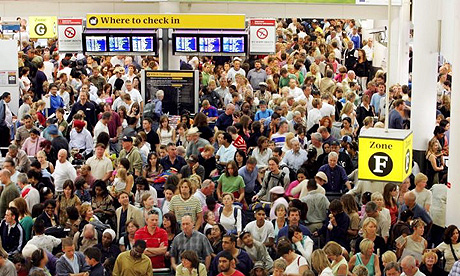
Real Queues at Gatstrip -sorry Gatwick Airport. Pic Cap: The Guardian

Mark Serwotka, general secretary of Public and Commercial Services Union, said: “Some of these findings are very troubling, and it is not the first time John Vine has criticised UKBA, but they are symptomatic of the parlous state the agency is in as a result of massive cuts to staff. UKBA has been left unable to cope, and not just with the queues for passport checks, but with the wide range of services it operates and if further planned cuts go through the situation will get even worse. To prevent this, the government must put a stop to these cuts and start properly investing in staff and the vital services they provide.”

Frankly this is not all that is wrong. It is time the Government got a grip of what looks like a disgraceful racist and homophobic situation at Gatwick before lots of other people are treated like this  – apart from the VIPs of course who are NOT subject to such  treatment.

 There is also  evidence of similar problems in a more recent inspection of Heathrow Terminal Three. The report says: “Person searches were not considered to be justified and proportionate in 31 of the 46 (67%) cases that we reviewed…The finding that unjustifiable strip searches may be taking place at Terminal 3 replicates our inspection findings from Gatwick North. This indicates that this problem is not isolated to one terminal and as a result we believe that Border Force needs to take action to address this issue promptly.”

If  you are reading this and have been treated either to a unwarrented and illegal strip search, homophobic reactions or found that Gatwick  or Heathrow adopted a lax attitude to border controls, contact me at david.hencke@gmail.com and it could go much further than just a report on this website.

Scrap red tape, silence a whistleblower

Whistleblowers under threat

 MPs begin to debate the government’s new  Enterprise and Regulatory Reform bill today (monday). Buried in this legislation in Clause 14 is a plan to limit people with employment contract disputes using the whistleblowers law.

The reasoning behind it is explained in the latest House of Commons Library report on the bill. It says:

“In March 2012, the Department issued its annual employment law review which stated: It has come to light through case law that employees are able to blow the whistle about breaches to their own personal work contract, which is not what the legislation (Public Interest Disclosure Act (PIDA)) was designed for.

Clause 14 would ensure that only disclosures that are in the public interest would attract protection under the whistleblowing provisions of the Employment Rights Act,1996.”

Superficially this sounds quite reasonable.  Whistleblowing legislation should not be used for personal contract disputes. But the way the government is going about this it could sound the death knell for potential whistleblowers just at a time when they are most needed.

Think for one second. A company gets a complaint from a whistleblower about a  nefarious practice. What better way to frighten a whistleblower than by going to the courts claiming this is not in the public interest and demanding a hearing before a judge. The company can then rubbish the whistleblower using the absolute privilege afforded by court hearings for maximum publicity  by claiming the complainer is  a bad worker, in breach of contracts etc – damaging the whistleblower’s reputation.

 There then follows a long dispute about what should be a public interest test – since this until now is only used in Freedom of Information Act disputes in tribunals – with different  judges  defining it in different ways. As Lord Touhig, a whistleblower champion said in a Lords debate: ” This would make a field day for lawyers.”

But there could be another agenda. The government’s fast track privatisation programme for public services has already led to  whistleblowers revealing bad practice as shown in the recent private hearing of the House of Commons Public Accounts Committee. There I am told two Tory MPs put pressure on the committee not to hear in public whistleblowers’ allegations about bad practice in A4e, the private work provider, which has £200m of Department of Work and Pensions contracts.

The next day the Daily Telegraph leaked some of  their evidence and Chris Grayling, the minister for work but one suspects sympathetic to  A4e, used an appearance on BBC Newsnight to cast doubt on the motives of the whistle blowers.  Has he got DWP files on them I wonder or did A4e brief his press office or special adviser?

Now the Guardian’s splendid Rajeev Syal is reporting that Osita Mba, who blew the whistle on former Revenue chief  Dave Harnett’s secret  tax deal for bankers Goldman Sachs, has found himself being investigated by the criminal investigations unit of  Revenue and Customs. (see http://bit.ly/Mo5oXF )

It seems to me that people should back the campaign by Cathy James, chief executive at Public Concern at Work (http://www.pcaw.org.uk )  to stop this piecemeal change. At the very least the clause should be redrafted to define what should be excluded as a personal contract rather than submitting everything to a public interest test. Otherwise the public have every right to believe that the government has something very different in mind. 

Ed Lester to quit head of Student Loans Company

Ed Lester to quit on January 31; Pic cap courtesy of Daily Telegraph

Ed Lester, the civil servant whose tax affairs led Danny Alexander, Chief Secretary to the Treasury to order a  Whitehall wide inquiry, is to step down from the job next January.

The official who took over £182,000 a year in salary and pension without paying tax or national insurance at source is to leave when his current contract ends on January 31 next year. The SLC is already advertising for a successor.

Full details of the decision are in my piece on the http://www.exaronews.com website. Suffice to say since the story broke earlier this year Mr Lester has had to go straight onto the public pay roll and can no longer be paid through management consultants, Penna, to his own personal service company, Placepass, based at his home on an island on the Thames near Marlow.

His company is in the process of being closed down and now 2400 other civil servants and senior NHS executives  paid off pay roll may have to become direct employees by September. A review announced by Danny Alexander to Parliament will also mean that the following tax year people who hold controlling posts in private industry will no longer be able to do this either.

All these changes came from one well placed Freedom of Information request which exposed Mr Lester’s tax arrangements which had even been approved personally by Mr Alexander and  David Willetts, the universities minister. Mr Alexander has admitted to me he didn’t even realise the tax benefits when he approved the post.

 To his credit since then he has ordered the review and been shocked by the findings. But I am expecting a strong reaction from business when  it sinks in what has happened.

Update: In a statement issued today (Saturday) about his decision Ed Smith, chair of the Students Loans Company, said: “Ed Lester’s was appointed as interim CEO of  Student Loans Company in 2010. In that time he has turned the company around and his leadership has been outstanding. He is highly regarded by the Board, BIS and colleagues across the Higher Education sector. “Following the period as interim CEO, Ed was offered a fixed two year contract as substantive CEO from January 2011. This contract is due to expire in January 2013 and Ed has always made clear his intention to move to a new role at that time. As recruitment to such senior posts in public sector can be elongated, we have started the process to recruit Ed’s successor now to ensure they are in place prior to him leaving.

“Ed’s planned departure from Student Loans Company has always been a matter of public record. It is in no way linked to the tax arrangements in his contract agreed by BIS, HM Treasury, HM Revenue and Customs and the Head of the Civil Service.”

Privatising the Police:The scandals behind the bidders

G4S – coming to a police station near you.

Would you trust a private company as much as you would a police force to protect you? Would you believe they follow the same  ethical standards and probity?  Would they train and pay their staff properly?  You could be about to find out as the West Midlands and Surrey police forces start to contract out service provision.

I have just completed a report for Unite the union on some of the companies bidding for £1.5 billion of work with the backing of Theresa May, the Home Secretary. If you link to http://bit.ly/KGVE7I  and download the report you can see my findings on some of the bidders.

A lot are covering up a load of  dark secrets and unethical and immoral practices outside the UK.

If don’t care a damn what happens to Palestinian prisoners on the West Bank in Israel or can’t be bothered that US troops breathe in toxic fumes from burn pits in Kabul or that companies use tax havens to avoid paying out medicare to staff, then you won’t mind what happens to your local police force in Birmingham or Guildford.

Take G4S for example. they have had to admit in their annual report that the need to train people to understand human rights. Evidently their Israeli subsidiary  staff prisons where they practised torture on their Palestinian inmates.

And if you are working in Britain, no prob that the company has axed its final salary scheme for all its employees while lining up a £403,000 a year non contributory pension for its chief executive.when he reaches the ripe young age of 60.

Or that former London police chief,Lord Condon is getting £123,000 plus a year plus his allowances in the House of Lords to promote police privatisation and rubber stamp top salary deals for his fellow directors.

Take another company KVR, best known for building Guantanamo Bay. Not quite as well-known for making sure its 21,000 staff in Iraq need not be covered by Medicare by using a Cayman Island tax haven to avoid having to provide it..

Or in blatant disregard to health and safety they face legal action for burning toxic materials in open tips on US bases in Kabul. So what if troops die from cancer, they are lucky not to be shot by the Taliban instead.

And then they are two home-grown companies. Blue Star, which provided two weeks training for auxiliary firefighters to protect your homes in London, in case the Fire Brigades Union goes out on strike.

And finally Reliance, run by Tory donating Brian Kingham – nice £6m house in Carlyle Square in  Chelsea – finances his company through a rather interesting family  trust – not tax avoiding again, surely not?

Obviously we are going to have a wonderful new era with privatisation – as we ditch ethics for profits.

Exclusive: How you got state funded work experience in a strip club with A4e

From the dole queue to the strip club; Red faces at A4 e and the DWP

The leaked internal audit report into the failings of  A4e featured on BBC Newsnight last month missed an extraordinary bombshell. .

The work provider company run by Cameron’s former work Czar, Emma Harrison, was actually placing claimants to work in night clubs and strip clubs when fun loving Labour minister James Purnell, was works and pensions secretary.

A detailed examination of the audit report reveals that X in the City – a Liverpool lap dancing club – favoured by carousing Premier  League footballers – took at least one person from A4e.

The full story is revealed in my piece for Exaro News, the investigative website.at http://www.exaronews.com

The lap-dancing and strip bar made headlines earlier this year after the Manchester City striker, Mario Balotelli, was fined a week’s wages for breaking a team curfew while visiting the nightspot less than 48 hours before a crucial Premier League match against Bolton Wanderers.

The bar advertises lap dances at £5 a time, and offers a ‘VIP’ deal in private rooms where a half-hour lap dance with champagne costs £50.

The report also reveals that two other claimants were placed in night clubs in Norwich. A4e declines to reveal how many other people got jobs in sex and night clubs at the time in 2009.

The whole matter is also  a bit of an embarrassment for Christian Iain Duncan Smith, the current works and pensions secretary,who has imposed an all out ban on allowing A4e or anyone else telling people to work in lap dancing joints.

At the time of the placement according to his department the ruling was: ‘Jobcentre Plus will no longer advertise jobs that involve the direct sexual stimulation of others because publicly-funded services should not be a conduit to this work. The ban would cover jobs such as lap dancers, web-cam performers and strippers. However, Jobcentre Plus will continue to accept other vacancies in the retail, manufacturing and distribution sectors of the industry. A cleaning job in a lap dancing club could still be advertised, for example.

There is a final irony in all of this. The auditors don’t know whether the person placed there –  one Jamie Nolan – ever took it  up because they were too shy to go in and investigate.

The report says:“It was not possible to conduct a visit to ‘X In The City’ to verify the documents…This employer is a lap-dance bar and was not open during the hours of the audit.”

It was a case of  No sex please, we’re auditors. And the manager of the club claims he can’t remember either. Wow what a mess!

Stuff the poor to help the elderly:Hunt moves to adopt Lansley’s bad plan for the NHS

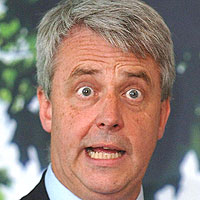
Andrew Lansley: let’s kill off the poor to help the elderly

Update: The new NHS Commissioning Board announced this week it was proceeding with scrapping the existing formula from next April – by adopting a flat rate increase  for funding this year. It also announced it will ” conduct an urgent fundamental review of the approach to allocations, drawing on the expert advice of ACRA and involving all partners whose functions impact on outcomes and inequalities.” This will come into force in 2014-15.

In fact this will mean a redistribution to areas with large numbers of elderly people at the expense of poorer areas like the North East of England, Central Manchester  and Salford and the London borough of Tower Hamlets. All this will be in place for the run up to the next general election.

Fresh from creating chaos as part of his so-called NHS ” reforms” Andrew Lansley has let slip another dastardly plan to cope with the genuine burgeoning costs of a growing elderly population.

Basically it’s very simple: Take away  the NHS cash from the poorest parts of England and give to the relatively affluent seaside resorts and the suburbs.

I am indebted to hawk-eyed reporter David Williamson at the Health Services Journal ( behind a pay wall at http://bit.ly/K7dceG ) for spotting a virtually unreported speech in London during the Parliamentary recess to new commissioning bodies who will  be spending the NHS cash from next year.

He told them they “should be looking at what is in… population data that is likely to give rise to a demand for NHS services”.

“What is likely to make the biggest difference, therefore? Actually it’s elderly population, who were not in substantial deprivation”.

He added :“Some of the lowest spending on stroke and cancer services were in areas with high elderly populations such as Fylde and Eastbourne, places where there were quite a lot of older people who weren’t poor”.

What Lansley is proposing – and the Department of Health is helpfully not making his speech available on its website is seismic in NHS terms. Ever since Clement Attlee set up the NHS, its main aim has been to improve the life chances of the poor most of them die long  before affluent and middle classes.

The Royal College of Nursing in the North East and Newcastle MP former Labour minister, Nick Brown, have spotted exactly what it means.

As Glen Turp, regional director of the RCN put it: “It is well-known that in areas of social disadvantage, local populations experience higher incidents of heart disease, cancer, emphysema, diabetes, as well as a range of other diseases caused in part by our industrial history and the work that our communities undertook. Health outcomes are directly linked to poverty and inequality, and to use age as the measure rather than inequality is simply the wrong thing to do. ”

To ram home his point: “The shocking truth is that if you live in Chelsea and Westminster in London, a man can expect to live to 86 years of age. However, in Hendon, in Sunderland, male life expectancy is only 69. That’s a 17 year difference. It’s nothing short of obscene, and frankly that is what the NHS funding formula should be all about.”

For those interested in more details Tom Gorman has tweeted me a map – showing some of the changes – the link is http://goo.gl/dyuGe .

Lansley plans to be even nastier in the way he plans to implement it. He intends to deny the government is doing it by tipping the wink to a quango  – the Advisory Committee on Resource Allocation which recommends how NHS budgets should be split up.

At the Conference, Lansley gave the game away: “The advisory committee will do this, I won’t— the number crunching should get progressively to a greater focus on what the actual determinants of health need” and that “Age is the principal determinant of health need”.

But there is also a cynical political side to this. By withdrawing money from poor areas, he can halt  the trend of living longer among mainly Labour voters, save the pension bill by ensuring that if they die off at 69 or even younger, they will in future not even need to receive a state pension.

But in the sunlight uplands of mainly Tory areas, the cuts that will inevitably come will be blunted or services improved in time for the 2015 election. And it won’t cost him an extra penny, all the money will be taken from Labour areas.

The formula is almost a Tory right winger’s wet dream.  Ed Miliband’s supporters dying off as they wait for operations in Labour seats, and the prospect of Tory and Liberal Democrat voters living longer and longer in Chelsea, Bournemouth, Eastbourne and Torquay.

Perhaps Mr Lansley should be told what we think of this. His emails are: lansleya@parliament.uk  and andrew.lansley@doh.gov.uk. If that fails perhaps the faceless people who sit on this quango, the Advisory Committee on Resource Allocation, should be contacted. Interestingly, the Department of Health, has not updated their membership since 2008 and archived the list. Perhaps Mr Lansley doesn’t want us to know.

After all , should Mr Lansley be allowed to get away with literally killing off the opposition.

Lansley’s outrageous ban covering up risks in his NHS reform

Today the information commissioner publishes his findings to Parliament on the outrageous veto by Andrew Lansley in preventing publication of the NHS risk register.(see – report here http://bit.ly/MfEPVi )

The health secretary would have us believe that the public and the press are so naive that they must not be seduced in his words  by ” sensationalised reporting and debate ” of its findings.

In other words this is all right from Cabinet ministers and senior officials to read all the risky details  of his reforms – but the public must be treated like children, not capable of understanding the issues. What patronising piffle!

What I really suspect is that Mr Lansley does not want the public to read the full facts – something that when in opposition his Cabinet colleague, transport secretary,Justine Greening, rightly disagreed when it came to the risks of building a further runway at Heathrow.

But now in government it is of course all different, no one must know the real consequences of Mr Lansley’s decisions. I am delighted that Chris Graham, the Information Commissioner, stood firm on this one.

 But I suspect this decision is all part of an attempt by the government to row back on freedom of information. It fits in with Lord O’Donnell’s claim that if this goes on – it will have a chilling effect on discussion. The establishment both in the form of Jack Straw, Tony Blair and now Andrew Lansley, would love a world where we all lived in deference to ministers and senior civil servants.

No doubt charges for FOI will soon follow. Frankly if the government is planning to revert to a closed society, there is one simple solution. The risk register must be leaked.

Exclusive: Millionaire Francis Maude: the bad bill payer

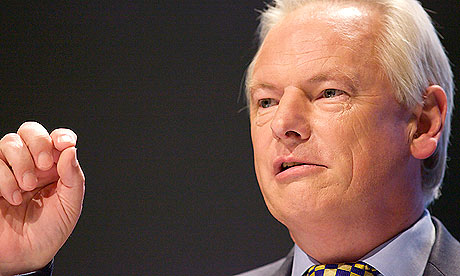
Francis Maude: Difficulties in paying his taxpayer funded bills on time

Do you fall behind with the gas and lecky?Forget to pay your TV licence and struggle to pay charges? Well spare a thought for poor struggling millionaire Francis Maude who just can’t seem to get his act together when it comes to paying his bills.

The man  was rightly castigated  last week over his ill-judged and downright dangerous public advice to stockpile jerry cans. But there is another side to his character which is equally surprising – his record for paying bills on time.

Hidden on the Parliamentary website following the great expenses scandal is an extraordinary documentation of the time when he owned a flat  in Imperial Court in Kennington, south London between 2007 and 2009. ( anoraks can peruse all Francis Maude’s bills at http://bit.ly/Hbu1Vo )

At the time he was severely criticised by the Daily Telegraph ( see http://tgr.ph/HkjDGC ) for purchasing the flat for £430,000- with a £345,000 mortgage- and claiming all the interest when he owned a house outright in Denny Crescent nearby. As a previous blog disclosed he also got a mortgage on this house and let it out to Tory special advisers – Maude’s madrassa – as it became known.

What the documents also  reveal is an amazing lax attitude to paying his gas, electricity  and telephone bills and service charges.  Not just  the delays in paying out the cash but being threatened with disconnection  and legal action for non-payment.

In August 2007 he was threatened with a termination notice for not paying a £36 telephone bill.

At the beginning of 2009 he received a letter from Kevin Roxburgh, head of energy debt collections, at British Gas because he hadn’t paid his £188.24 gas bill for over a month. The letter asks whether he has payment difficulties and tells him about direct debit.

EDF his electricity supplier also suggests he might like to pay by direct debit because of his overdue payments.

Finally he is threatened with legal action for an overdue bill of over £2600 from his landlords. They write to him warning that his long delay has already led to administration charge of £29.37.

The letter warns:” We request that you settle the amount outstanding within 14 days of the date of this reminder in order to avoid incurring additional costs or further legal action.”

The irony about this is that all his bills were being paid anyway by the taxpayer – he didn’t have to pay a penny as he could claim them back through his Parliamentary expenses.

Yet somehow he couldn’t  get his act together to send them a cheque. Finally the records show that he learns there is something easier called direct debit – and two years after moving into the flat actually sets up direct debit payments for his TV licence and  utility bills. This man is supposed to be a world-class banker -the ex md of Morgan Stanley. And he is charge of getting more efficiency in business payments to the government. God help us.

Why charging for Freedom of Information requests will be utterly wrong

Freedom of Information: Charges will put it under threat

This blog was written for the London School of Economics British politics and policy website (the link is http://bit.ly/H7C8lD) and is now up on the site. I have reproduced it here for my followers who may miss it  at the LSE.

It must be very tempting in these times of austerity for government to introduce charges for freedom of information (FOI) requests. Tempting it might be but it would be utterly wrong.

Giving evidence to the Commons Justice select committee’s post legislative inquiry into the FOI Act, I got the strong impression that some Conservative MPs might want to do this. The example of the Republic of Ireland which has introduced charges for requests, internal reviews and appeals to the Information Commissioner, has provided an excuse.

The fact that the new act has been a resounding success with the public, journalists and also private businesses is not a reason to introduce charges. My reasons for not going down this road are not such much to do with limiting the public’s right to know – although as Ireland has shown – this would be the inevitable consequence. They are more fundamental.

As a taxpayer I am obliged – I have no choice – to fund public services from my income. Therefore if I wish to know whether my money has been spent wisely and people have taken the right decisions – I should have the right to ask questions and ferret for information. As a journalist rather than a private citizen I have more time to do this – it is part of my job – and the information I discover can be communicated to thousands, if not millions, of people.

As one recent example showed – the disclosure under FOI that Ed Lester, the chief executive of the Student Loans Company, had found a legal way to avoid tens of thousands of pounds of tax – it can even lead to alerting ministers to something they were unaware.

To introduce charges would in effect be double taxation. I would be charged once for providing the service and again if I wished to find out what officials and ministers had done with my money. This is why I believe it is unacceptable.

A more subtle variant of charging is a suggestion that private citizens still receive the free service but commercial organisations like the media, private firms and official bodies paid the cost of the request – which could be anything up to £600. Again it would unfair and also unworkable. Businesses, law firms and the media – unless they are near bankrupt – pay their share of taxes to the government and again would be charged twice for seeking to find out how and why their money was spent.

It would also be completely unworkable to run such a two tier system. There is nothing to stop me as a journalist, or indeed any business person, asking a friend to put in a FOI and getting it sent to their address. And there is no way officialdom could find out, unless they subject every private requester to a ninth degree inquisition every time they asked a public body for information.

It would be a nightmare scenario for the public sector to police and make officials extremely unpopular with the general public. It might even lead them to face legal complaints, such as falsely accusing individuals of avoiding charges.

What is required urgently is an extension of the freedom of information act to the private sector when it provides public services. The government has an active policy of encouraging private providers – whether charities, mutual or commercial companies – to provide public services. Francis Maude, the Cabinet Office minister, in an address to the Policy Exchange think tank said that turning state provided services into mutuals owned by the staff might indeed be as widespread as privatisation of state industries in the 1980s Thatcher government.

At present the mechanism for extending FOI to new bodies is rather cumbersome – requiring a designation under the Act by ministers – usually following a consultation period. This is woefully inadequate to cope with a major shift from public to private sector providers in Whitehall, local government and the NHS. One simple solution would be to include a standard clause in any private sector provider contract saying that if the company accepted public money to run a public service they would automatically be subject to FOI requests about that particular service.

No doubt they would be a howl of protest from the business community about new burdens and costs to running the service, but given the multi million pound size of most contracts it would be a small price to pay. And if it was a standard contract it would mean that there would be a level playing field for contractors bidding for the work. It could also be confined only to the services they provided in the public sector and not to normal business contracts.

This would bring within the scope of FOI private train operators and bus companies who take taxpayers subsidies but are at the moment outside the act. It would also encourage these bodies to provide a more efficient service since they would have an incentive not to encounter the wrath of the travelling public every time they failed to provide a public service.

The public could also question and challenge the companies when they cut service provision to prove they had a case and also ask for detailed policy on protecting public safety. Similarly, it would provide the public with some protection as the NHS expands the use of private hospitals for operations as they are outside the scope of the act.

The act does require an overhaul in this area. But MPs on the committee should resist the temptation to call for charges to use the act as this would be unfair to the general public and to taxpayers. The right to demand information on services you are required to pay for without being charged is a fundamental human right that should be non-negotiable, even in the present financial climate.

Is the BBC the British Tax Avoidance Corporation?

BBC now in row over paying 3,000 people through personal service companies

The BBC has disclosed that around 3000 people on the Corporation’s books are paid through personal service companies – the same system used until banned by the Treasury by Ed Lester, the Student Loans Company chief, to avoid paying tax or national insurance at source.The full story is in Exaro News at http://www.exaronews.com It comes from a Freedom of Information request by David Mowat, the Conservative MP for Warrington,South and only covers part of the picture.
Altogether the BBC across the globe has 20,000 directly paid employees and 12,000 freelancers – 3,000 of them through personal service companies.
The figures are an underestimate since it does not include many of the BBC’s commercial companies and all of BBC’s talent – defined by them as ” people who appear in presenting or journalistic roles on our television, radio and online.”
So none of the high paid presenters will be in this breakdown nor will be people employed on many of the BBC’s commercial activities. Nor are people supplied through Reed Personnel who can choose to be paid through a personal service company, and BBC has decided to keep their numbers secret.
This means the figure must be much, much higher. A breakdown provided by the BBC – suggests that more than half the 3,000 are taking less than £26,000 a year, which suggests that they are genuine freelance. Another 1300 or so earn over £26,000 – 318 over £50,000 – and of these five earning over £150,000 and 31 over £100,000.
The BBC insist that none of them are permanent staff and like the government point out that none of them are being paid illegally.
A BBC spokeswoman said:”In the main they are hired to do specific jobs for a fixed period of time such as directing, editing and other craft skills. When a person is contracted in this way it is their responsibility to organise their tax arrangements directly with the HMRC. This is entirely in keeping with HMRC regulations and is standard practice across broadcasting and many other industries.”
However there are other questions to be answered. Why are the BBC not doing the same review as Whitehall in finding out whether all these contracts are genuine? David Mowat is right when says the BBC management should do this.
And why can’t we find out what the BBC Talent is paid – rather than the BBC sheltering behind an exemption through their Freedom of Information Act aimed to protect journalists; sources not disclose their pay – since it is paid by the licence payer.
Also rather disturbingly two prominent journos (one ex BBC)have told me the BBC tried to encourage them to be paid through personal service companies when they did not want to do it. Is this pressure from the BBC to avoid having to pay national insurance and encouraging possible tax avoidance. We should be told.