Thomas Hardy: Kept far from the madding crowd

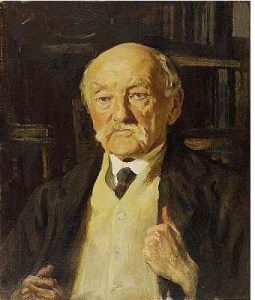
Thomas Hardy: An A list celeb neglected by the National Trust: Pic caption courtesy victorianweb.org

In a year when Britain celebrates Charles Dickens 200th birthday another great British author,Thomas Hardy, is suffering outrageous neglect by one of the great guardians of our heritage, the National Trust.

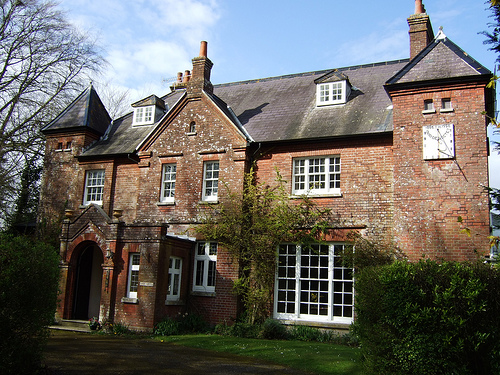
The author’s birthplace in Higher Brockhampton, just outside Dorchester and his rather grander home, Max Gate, where he died in 1928, on the  outskirts of Dorchester, are both owned by the National Trust.

You could however be forgiven if you knew nothing about both the humble cottage and the grand home of the author of Far From the Madding Crowd. For the new National Trust 2012 guide gives just a short mention of the birthplace and  is positively misleading about the bigger home  Hardy, also a qualified architect, designed himself.

 Readers  searching for the opening times for the birthplace cottage  can find them  in the guide-Wednesday to Sundays 11-5  but don’t  go looking for when to visit Max Gate- you are told to ring the trust’s West Dorset Office  instead.

What the guide doesn’t tell you  is that Max Gate is open exactly the same times as his birthplace – but the NT couldn’t get its act together in time to tell anybody this year.
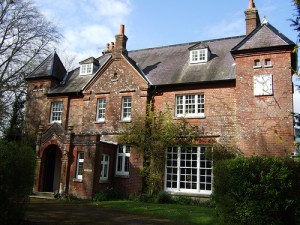
Max Gate: Hardy's hard to find home

All this is compounded by a daft decision by the Highways Agency  responsible for erecting tourist signs  giving people directions to both places. These brown signs are meant to direct people to places of interest – and most National Trust properties get one.

But not Mr Thomas Hardy. The two homes  are both  just off the busy A35 on  its approach to Dorchester and on the Dorchester by-pass and managed by the Highway Agency. But look for sign on the A 35 in vain. There are none.

And the irony is in the case of Max Gate millions of motorists pass within 100 yards of the property totally oblivious of  its existence.

But as the Highways Agency says on its website: ”

All authorities limit the number of signs allowed. This is for road safety reasons, as too many signs can be confusing and distract drivers, and for environmental reasons – too many signs could harm the countryside or street scene.”

Of course this could be remedied by Dorset County Council -in charge of tourism and signage off the major highways – but they have done nothing. Not a sign in sight in the centre of Dorchester on how to get  to Max Gate. Indeed there are more directions for dinosaurs and  a Tutankhamen exhibition ( not  part of Dorset’s heritage but I stand to be corrected) than poor neglected Mr Hardy. His study, restored at Dorset County Museum  does get a mention, but unfortunately the opening hours of museum do not coincide with those at the National Trust.

Idyllic but simple birthplace of Thomas Hardy

Hardy is as much part of out literary heritage as Dickens or Jane Austen. In his time he was the equivalent of an A list celeb –  according to the excellent visitor’s book kept at Max Gate – which records visit to his home from Robert Louis Stevenson and composer Gustav Holst. His novels have translated into memorable films, Julie Christie’s performance in Far From the Madding Crowd, being one.

Yet it would appear – despite valiant efforts from enthusiastic volunteers at Max Gate ( predating Cameron’s equivalent of the Big Society) – the powers that be at the National Trust, the Highways Agency and Dorset County Council care little about one of the country’s literary giants.

 Something should be done. I urge people – frustrated like me on the search for Thomas Hardy – to email them in protest at their neglect. The director general of the National Trust is Dame Fiona Reynolds. Her mail is fiona.reynolds@nationaltrust.org.uk . The chairman is Sir Simon Jenkins, journalist and author and can be contacted at simon.jenkins@guardian.co.uk.

The minister responsible for the Highways Agency is Mike Penning. His direct e-mail is mike.penning@dft.gsi.gov.uk  and the chief executive of Dorset County Council is David Jenkins. His e-mail is  d.h.jenkins@dorsetcc.gov.uk .

It is time that this shameful neglect ended. One would have thought Dorset would want to celebrate rather than hide one of its famous sons. It does bring tourist revenue to the county.  And the National Trust might have just a more than passing interest in encouraging more visitors.

Response from Mike Nixon,secretary of the Hardy Society:

 “I hope it doesn’t come as too much of a surprise that we at the Hardy Society are very aware and can identify with your frustrations you detail on your blog.
I have myself  been involved with a ‘working group’ for a couple of years under the promising title of ‘Hardy Country’, whose members include the National Trust/West Dorset Disrict Council/Dorset County Council etc etc etc!!
We have discussed on a number of a occasions the lack of ‘brown’ signs and lack of promotion of Max Gate.
In fairness to the NT, their national handbook had to go to the printers very early, apparently before the Max Gate opening times had been agreed regionally.
They have this year (and last year) issued an attractive booklet entitled ‘Discover Hardy Country’, which links in Hardy’s birthplace/Max Gate and T.E.Lawrence’s, Clouds Hill, just up the road near Wareham. This is helpful.
There is now a strong working relationship developing between us here at the Society and the NT,including regular meetings.
What I can’t be so positive about is your accurate comments on the ‘brown sign’ debate. I think I raised this on behalf of the Society 3/4 years ago, so far to no avail! ”

 Response from the National Trust:

Nicola Andrews, Assistant Director, Operations (Dorset and Wiltshire) writes:  “The National Trust firmly believes that Hardy was a novelist and poet of the greatest merit, and we are passionate about finding ways to deliver increased access and public benefit from the Hardy places in our care.  We are committed to improving the experiences at both Hardy’s Cottage and Max Gate. As you noted, we are blessed with having wonderful teams of volunteers and staff who help us achieve this. The teams at Hardy’s and Max Gate are fantastic….

When tenants moved out of Max Gate in late 2010, and in line with our desire to increase access, we took the decision to trial opening the full building to the public rather than re-letting it. This was a challenge because we do not own the original contents, were faced with an empty house to interpret, and the loss of rental income. We are realistic in our ambition for Max Gate. It will never be a big visitor attraction because of its location in a quiet residential area.  That said, our aim is to make it a fantastic experience for all those who do visit.  After a year’s trial, we took the decision to continue opening the full building and through the support of generous benefactors and supporters we are slowly furnishing the house and bringing it back to life as it might have been when Hardy himself was there.  

At Hardy’s Cottage, we are working with Dorset County Council and other partners on a bid to the Heritage Lottery Fund for a project to significantly improve visitor facilities and interpretation on site. We hope this bid will be successful, but in the meantime we have recently represented the interior of the cottage drawing out the stories of Hardy’s time there much more clearly. You did not mention your thoughts on the interiors in your blog, but we hope you found the presentation a significant improvement on your previous visit. Our vision is to enable people to experience both the Cottage and Max Gate as they might have been when Hardy and his family lived there: to enable people to sit by the fire with a cup of tea as Hardy and his family would have done; to bring to life his poems and novels encouraging people to immerse themselves in them in his studies and other writing spaces. 

We are also committed to the partnership which is developing and promoting the broader Hardy offer in Dorset, as outlined by Mike Nixon in his response to you. I am sorry you found it difficult to find Hardy’s Cottage and Max Gate.  Signage from the A35 is outside our control but has been a frequent point of discussion between ourselves, the Council and the Highways Agency. We agree that from a visitor’s perspective, and to help us enable as many people as possible to enjoy the Hardy legacy, good signs from the A35 would be invaluable and we would very much like a trial of this. 

We are conscious, however, that there is a delicate balance to be struck when introducing such signage.  Both properties are small in size and cannot cope with large numbers of visitors, both are located in quiet residential areas, Max Gate has no car park and Hardy Cottage visitors make use of the small Council car park at the end of the track.  So, whilst we are keen to trial signage from the A35 and would welcome Highways support for that, we also recognise that we will need to monitor the pressure this causes on the sites and to keep it under review. .. I feel it is unfair to say that we don’t care about this literary giant. We do care, and we would encourage people to visit themselves and form their own judgement. ”

Response from the Highways Agency:

Sean Walsh writes :”I’ve looked into the signing for both sites. Although neither is signed from the trunk road, Max Gate House is adjacent to the A35 junction with the A352 (known as Max Gate junction) and has a brown sign just off the A352 on the local road.  Higher Bockhampton, where his birthplace is located, is signed from the A35 at Cuckoo Lane junction and Stinsford roundabout (in both directions), and I understand that there are signs for “Hardy’s Cottage” on the local roads.

I’m pleased that you’ve noted on your blog that the Agency has to limit the number of signs on its network, both in road safety terms as too many signs can cause a distraction/confusion, and because they can detract from the countryside and street scene.  If you’ve not already seen them, the current rules regarding tourism signs are also on our website at http://www.highways.gov.uk/business/32118.aspx .    I’m not aware that the National Trust has applied for brown tourism signs on the trunk road for these two Hardy sites, although under current guidelines it is unlikely that either would meet the criteria for signing. However, the Government’s approach to the provision of brown signs is under review, with the objective of ensuring that signing policy best reflects the needs of both drivers and the tourism industry. It is expected that the review will be completed and revised policy issued later in the year, although I can’t be more specific than that at the present time.   “

Exclusive: Millionaire Francis Maude: the bad bill payer

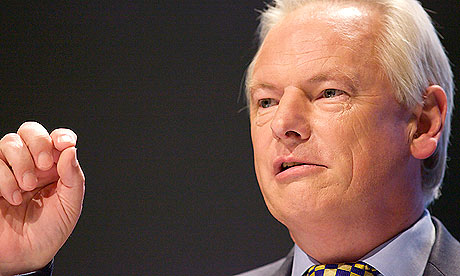
Francis Maude: Difficulties in paying his taxpayer funded bills on time

Do you fall behind with the gas and lecky?Forget to pay your TV licence and struggle to pay charges? Well spare a thought for poor struggling millionaire Francis Maude who just can’t seem to get his act together when it comes to paying his bills.

The man  was rightly castigated  last week over his ill-judged and downright dangerous public advice to stockpile jerry cans. But there is another side to his character which is equally surprising – his record for paying bills on time.

Hidden on the Parliamentary website following the great expenses scandal is an extraordinary documentation of the time when he owned a flat  in Imperial Court in Kennington, south London between 2007 and 2009. ( anoraks can peruse all Francis Maude’s bills at http://bit.ly/Hbu1Vo )

At the time he was severely criticised by the Daily Telegraph ( see http://tgr.ph/HkjDGC ) for purchasing the flat for £430,000- with a £345,000 mortgage- and claiming all the interest when he owned a house outright in Denny Crescent nearby. As a previous blog disclosed he also got a mortgage on this house and let it out to Tory special advisers – Maude’s madrassa – as it became known.

What the documents also  reveal is an amazing lax attitude to paying his gas, electricity  and telephone bills and service charges.  Not just  the delays in paying out the cash but being threatened with disconnection  and legal action for non-payment.

In August 2007 he was threatened with a termination notice for not paying a £36 telephone bill.

At the beginning of 2009 he received a letter from Kevin Roxburgh, head of energy debt collections, at British Gas because he hadn’t paid his £188.24 gas bill for over a month. The letter asks whether he has payment difficulties and tells him about direct debit.

EDF his electricity supplier also suggests he might like to pay by direct debit because of his overdue payments.

Finally he is threatened with legal action for an overdue bill of over £2600 from his landlords. They write to him warning that his long delay has already led to administration charge of £29.37.

The letter warns:” We request that you settle the amount outstanding within 14 days of the date of this reminder in order to avoid incurring additional costs or further legal action.”

The irony about this is that all his bills were being paid anyway by the taxpayer – he didn’t have to pay a penny as he could claim them back through his Parliamentary expenses.

Yet somehow he couldn’t  get his act together to send them a cheque. Finally the records show that he learns there is something easier called direct debit – and two years after moving into the flat actually sets up direct debit payments for his TV licence and  utility bills. This man is supposed to be a world-class banker -the ex md of Morgan Stanley. And he is charge of getting more efficiency in business payments to the government. God help us.

Why charging for Freedom of Information requests will be utterly wrong

Freedom of Information: Charges will put it under threat

This blog was written for the London School of Economics British politics and policy website (the link is http://bit.ly/H7C8lD) and is now up on the site. I have reproduced it here for my followers who may miss it  at the LSE.

It must be very tempting in these times of austerity for government to introduce charges for freedom of information (FOI) requests. Tempting it might be but it would be utterly wrong.

Giving evidence to the Commons Justice select committee’s post legislative inquiry into the FOI Act, I got the strong impression that some Conservative MPs might want to do this. The example of the Republic of Ireland which has introduced charges for requests, internal reviews and appeals to the Information Commissioner, has provided an excuse.

The fact that the new act has been a resounding success with the public, journalists and also private businesses is not a reason to introduce charges. My reasons for not going down this road are not such much to do with limiting the public’s right to know – although as Ireland has shown – this would be the inevitable consequence. They are more fundamental.

As a taxpayer I am obliged – I have no choice – to fund public services from my income. Therefore if I wish to know whether my money has been spent wisely and people have taken the right decisions – I should have the right to ask questions and ferret for information. As a journalist rather than a private citizen I have more time to do this – it is part of my job – and the information I discover can be communicated to thousands, if not millions, of people.

As one recent example showed – the disclosure under FOI that Ed Lester, the chief executive of the Student Loans Company, had found a legal way to avoid tens of thousands of pounds of tax – it can even lead to alerting ministers to something they were unaware.

To introduce charges would in effect be double taxation. I would be charged once for providing the service and again if I wished to find out what officials and ministers had done with my money. This is why I believe it is unacceptable.

A more subtle variant of charging is a suggestion that private citizens still receive the free service but commercial organisations like the media, private firms and official bodies paid the cost of the request – which could be anything up to £600. Again it would unfair and also unworkable. Businesses, law firms and the media – unless they are near bankrupt – pay their share of taxes to the government and again would be charged twice for seeking to find out how and why their money was spent.

It would also be completely unworkable to run such a two tier system. There is nothing to stop me as a journalist, or indeed any business person, asking a friend to put in a FOI and getting it sent to their address. And there is no way officialdom could find out, unless they subject every private requester to a ninth degree inquisition every time they asked a public body for information.

It would be a nightmare scenario for the public sector to police and make officials extremely unpopular with the general public. It might even lead them to face legal complaints, such as falsely accusing individuals of avoiding charges.

What is required urgently is an extension of the freedom of information act to the private sector when it provides public services. The government has an active policy of encouraging private providers – whether charities, mutual or commercial companies – to provide public services. Francis Maude, the Cabinet Office minister, in an address to the Policy Exchange think tank said that turning state provided services into mutuals owned by the staff might indeed be as widespread as privatisation of state industries in the 1980s Thatcher government.

At present the mechanism for extending FOI to new bodies is rather cumbersome – requiring a designation under the Act by ministers – usually following a consultation period. This is woefully inadequate to cope with a major shift from public to private sector providers in Whitehall, local government and the NHS. One simple solution would be to include a standard clause in any private sector provider contract saying that if the company accepted public money to run a public service they would automatically be subject to FOI requests about that particular service.

No doubt they would be a howl of protest from the business community about new burdens and costs to running the service, but given the multi million pound size of most contracts it would be a small price to pay. And if it was a standard contract it would mean that there would be a level playing field for contractors bidding for the work. It could also be confined only to the services they provided in the public sector and not to normal business contracts.

This would bring within the scope of FOI private train operators and bus companies who take taxpayers subsidies but are at the moment outside the act. It would also encourage these bodies to provide a more efficient service since they would have an incentive not to encounter the wrath of the travelling public every time they failed to provide a public service.

The public could also question and challenge the companies when they cut service provision to prove they had a case and also ask for detailed policy on protecting public safety. Similarly, it would provide the public with some protection as the NHS expands the use of private hospitals for operations as they are outside the scope of the act.

The act does require an overhaul in this area. But MPs on the committee should resist the temptation to call for charges to use the act as this would be unfair to the general public and to taxpayers. The right to demand information on services you are required to pay for without being charged is a fundamental human right that should be non-negotiable, even in the present financial climate.

Website passes 100,000 views

This website in just over two years has now hit the 100,000 mark – 100,130 to be precise if you must know. This is far higher than I expected but then I didn’t intend to write over 100 blogs in the same period.

The home page itself has had over 16,000 hits. But for the record the six most popular stories are the tale on Blair’s donors getting 6,5 per cent interest on millions of pounds of loans to Labour (4324 hits); the abortive attempt to criminalise bloggers in Barnet (3433); the armchair audit of Brian Coleman, Barnet Tory councillor and chair of London fire brigade (2843); the Ed Lester tax scam (2785); Francis Maude’s ” House of the Rising Spads” (2702) and the  privatised London fire company Assetco facing a  financial crisis (2592).

 The most popular pic on the site- believe or not – is a joint of roast beef -used to illustrate the true blue Tory rebels fighting Cameron ( an amazing 20,000 views).

 Special thanks to the many people who boosted these figures including Guido Fawkes site, Political Scrapbook, Broken Barnet (Mrs Angry ),Mr Mustard,Liberal  Conspiracy,the London Fire Brigades Union,Political Betting, the Guardian and many others.

So far this year the site has had over 15,000 hits – compared to 17,000 for the whole launch year 2010. Interesting times.

Is the BBC the British Tax Avoidance Corporation?

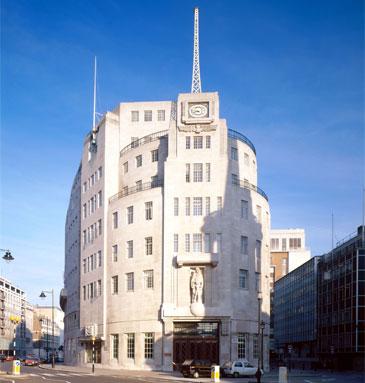
BBC now in row over paying 3,000 people through personal service companies

The BBC has disclosed that around 3000 people on the Corporation’s books are paid through personal service companies – the same system used until banned by the Treasury by Ed Lester, the Student Loans Company chief, to avoid paying tax or national insurance at source.The full story is in Exaro News at http://www.exaronews.com It comes from a Freedom of Information request by David Mowat, the Conservative MP for Warrington,South and only covers part of the picture.
Altogether the BBC across the globe has 20,000 directly paid employees and 12,000 freelancers – 3,000 of them through personal service companies.
The figures are an underestimate since it does not include many of the BBC’s commercial companies and all of BBC’s talent – defined by them as ” people who appear in presenting or journalistic roles on our television, radio and online.”
So none of the high paid presenters will be in this breakdown nor will be people employed on many of the BBC’s commercial activities. Nor are people supplied through Reed Personnel who can choose to be paid through a personal service company, and BBC has decided to keep their numbers secret.
This means the figure must be much, much higher. A breakdown provided by the BBC – suggests that more than half the 3,000 are taking less than £26,000 a year, which suggests that they are genuine freelance. Another 1300 or so earn over £26,000 – 318 over £50,000 – and of these five earning over £150,000 and 31 over £100,000.
The BBC insist that none of them are permanent staff and like the government point out that none of them are being paid illegally.
A BBC spokeswoman said:”In the main they are hired to do specific jobs for a fixed period of time such as directing, editing and other craft skills. When a person is contracted in this way it is their responsibility to organise their tax arrangements directly with the HMRC. This is entirely in keeping with HMRC regulations and is standard practice across broadcasting and many other industries.”
However there are other questions to be answered. Why are the BBC not doing the same review as Whitehall in finding out whether all these contracts are genuine? David Mowat is right when says the BBC management should do this.
And why can’t we find out what the BBC Talent is paid – rather than the BBC sheltering behind an exemption through their Freedom of Information Act aimed to protect journalists; sources not disclose their pay – since it is paid by the licence payer.
Also rather disturbingly two prominent journos (one ex BBC)have told me the BBC tried to encourage them to be paid through personal service companies when they did not want to do it. Is this pressure from the BBC to avoid having to pay national insurance and encouraging possible tax avoidance. We should be told.

How the Student Loan tax scandal broke

Here is a short video produced by Exaro showing how I got hold of the original story and the repercussions that followed. For those interested in this you can view it here.


It also partly a tribute to Whitehall sources who decided this scandal had to stop and  a warning to ministers how clever some Whitehall people are in slipping stuff through right under their noses.

Buried in the Budget:Freelance company tax rules ” shake up ” on way

Almost entirely missed by the press coverage of the Budget this morning, George Osborne, the Chancellor, announced a radical review of  freelance  tax employment rules through what is known as IR 35.

Not mentioned in his speech – the changes were hidden away in the full Budget document. The full story of this change written by Alison Winward  and Frederika Whitehead is on the Exaro news website  at http://www.exaronews.com.

For those worried by the changes to the IR 35 rules   the official Treasury document uses the dreaded word simplification – the same phrase used by the Chancellor to impose a ” Granny Tax ” – a  future loss of  income for 4.5 million pensioners  by freezing tax allowances for most of  those who have  incomes above the state pension. Like pensioners this could affect millions of people.

The full section in the Treasury  reads:

 ” Personal service companies and IR35

 The Government will introduce a package of measures to tackle avoidance through the use of personal service companies and to make the IR35 legislation easier to understand for those who are genuinely in business.

This will include: strengthening up specialist compliance teams to tackle avoidance of employment income; simplifying the way IR35 is administered;

and subject to consultation, requiring office holders/controlling persons who are integral to the running of an organisation to have PAYE and NICs deducted at source by the organisation by which they are engaged. (Finance Bill 2013)”

Basically Hmrc are giving a warning that the  wheeze that enabled Student Loans Company chief Ed Lester to hold one official position in Whitehall, will be banned everywhere. It will also effect local government, the NHS and now the private sector, as people won’t be able to claim it as freelance earnings through a  personal services company. They will have to go through PAYE and pay national insurance.

There is at least a year’s grace before this happens – as legislation is planned for next year’s finance bill – and implementation could be delayed until 2014.

In the meantime the small print announces a crackdown from Hmrc on freelances who use this method. The revenge of Danny Alexander, chief secretary of the Treasury, who missed the whole Ed Lester arrangement when he personally approved all high paid Whitehall staff, looks like being rather more widespread than people anticipated.

Student Loans Chief Ed Lester’s personal company bites the dust

An idyllic scene at Temple Mill Island, which used to be the home of Ed Lester's personal service company.

Student Loans Company chief executive, Ed Lester, is closing down his personal service company after the furore over the revelations of his tax arrangements.

 A notice in today’s London Gazette reveals he and his partner Dolores Hawkins have applied to Companies House to have the firm called Placepass struck off the register.

Full details of the story are on the website http://www.exaronews.com  but suffice to say the company has been around for 14 years during the time Mr Lester worked for the Office for Government Commerce, NHS Direct and Motability and has had various home addresses from Cambridge to London Docklands.

The firm was used  as a ” tax efficient” way for the chief executive  to funnel his £182,000 pay and pension package and his £28,000 in expenses from the Student Loans Company. It was based at his home on Temple Mills island on the River Thames at Marlow, Buckinghamshire. The island is a gated community.

Ed Lester’s decision is interesting . The story of his tax arrangements  is already causing alarm among thousands of other people working for government departments, agencies ,the NHS and local government. The chancellor, George Osborne, is also looking at changing the tax laws covering this in tomorrow’s budget. It will be complicated and people need to watch for the small print in the Budget statement to find out what will happen.

Reported to HMRC:The £100,000 a year Treasury minister too poor to pay an intern

David Gauke MP, the Treasury minister who wants his intern to work for free for at least six months

Today the website graduatefog reports that David Gauke has been reported to HM Revenue and Customs for being in breach of the minimum wage legislation for offering an unpaid ” training post” in his constituency. As readers of this blog know this is not the first time he has had advertised for a six month unpaid vacancy. So perhaps HMRC should take other recent appointments into consideration.+
Since this blog appeared Mr Gauke has attacked as ” morally repugnant” people who pay cash to builders, cleaners etc. if they beleive it is part of tax avoidance. But presumably this does not arise for his interns – as they work for free anyway.

After a Budget that gave  tax cuts for the rich and pay freezes and job losses for the poor, step forward, David Gauke, Exchequer Secretary to the Treasury, forced to answer questions on the pasty tax U turn today. He is the man who will oversee the tax cuts in the new finance bill and has overall responsibility for HM Revenue.and Customs. He is also in charge of policing the minimum wage when unscrupulous employers avoid paying staff ( you couldn’t make this up)

His big contribution to help Britain  moving is to offer one new personal job at his constituency office in Rickmansworth, Herts. There is only one problem. You need to either have rich parents ( who will give you an allowance) or a lot of inherited wealth.  There is no pay and you must be Tory inclined( and obviously believe working for free is a good Tory policy)

The advert is here. http://bit.ly/AlHBho

As a minimum condition you must work for him for  nothing for six months  if not a year or more and you better have at your own expense, learnt advance computer skills ( doesn’t sound that Mr Gauke is computer savvy).
As it says: “Duties will include administration, basic correspondence, diary management, fundraising, campaigning and related tasks. The intern will also have the opportunity to work one day a week in the Westminster office.”

Now I understand as his constituent that Mr Gauke is very hard up. He only has an income of just over £100,000 a year – with his £98,750 salary and he claims from the taxpayer a London living allowance of £3379.15 a year ( desperate problem for MPs having to pay for higher London prices except for the taxpayer paid subsidised food in Parliament)

Funnily enough his expenses paid by the taypayer for the last financial year come to almost the same £98,680.93 as his salary including some £78,000 on staff ( presumably in Westminster rather than Rickmansworth), another £9000+ on accommodation and £10,000+ on administration. So the poor man only has £200,000 going through his accounts.

Then there are his two homes to maintain by Tory standards well below any mansion tax level. But  poor man,since this terrible crackdown on  Mps expenses he has had to lose  such a lot.  He did grab £15,000 a year  in mortgage interest payments ,a  quarterly £687 maintenance charge and car parking fees- all paid  from the  taxpayer on his Westminster Bridge Road apartment in London which he paid  £285,000 in 2007.  Mind you he has had a £30,000 rise in his income since the coalition came to power.

Incidently none of this latest expenses information is on his personal website – which  on this issue doesn’t appear to have been updated since 2009. No doubt this will be done free of charge by his new employee.

What one might have expected from a government with one million young people on the dole – is that Mr Gauke might have just gone down to the Watford or Hemel Hempstead dole office- and given a leg up to some Tory inclined youngster on the dole. Or he might  like many other Mps in his party just decide to pay a minimum wage to one of the newly unemployed graduates. But obviously paying £6 an hour would send him and his wife to the bankruptcy courts. For Mr Gauke, it is not Greed is Good  but Exploitation is Excellent.

Perhaps as a resident of Berkhamsted in his constituency we should launch an appeal for the cash stricken Treasury minister or send food parcels to his new recruit so he can at least survive on an egg sandwich.

Internaware  who campaign at @internaware against exploiting interns are not impressed. Gus Baker said: “Revenue and Customs have set up a hit squad to enforce the minimum wage for interns and yet the minister in charge is refusing to pay the people in his own office.

“David Gauke… is also putting an opportunity out of the reach of the vast majority of young people who can’t afford to work for free.

“At a time of high youth unemployment when young people desperately need to demonstrate experience on their CVs, this is completely irresponsible.”

Mr Gauke is very comfortable with this. He told BBC News which followed this up : “It’s advertising for a post for volunteers. Lots of people want to do it. It’s good experience.

“It involves visiting my local Conservative Association, getting some experience of Westminster.

“I think that’s perfectly reasonable and those that have had the experience of working there have enjoyed it and found it very good experience.”

Anyway for those who want to tell him what they think his e-mail at Parliament is gauked@parliament.uk  and the constituency office address for food parcels is Scotsbridge House
Scots Hill, Croxley Green,Rickmansworth Hertfordshire WD3 3BB.

Cameron’s Nightmare Legacy: Brutalised Britain

The London Spring - creating the brutalised society that could come to fruition by all out privatisation pursued by people like Brian Coleman

London Spring (click on this link for the full theatre programme and venue)

Image a Britain where everything is privatised and the masses impoverished and brutalised. This is background to my partner in crime and fellow author Francis Beckett’s new play, The London Spring, now on at the Etcetra Theatre in the Oxford Arms,Camden.

Set in a transit lounge at Waterloo Station where wealthy Russian, American, Australian and Chinese tourists arrive in the UK it depicts the arrival of Michael, (Mike Duran) a naive but wealthy US medic, who is totally unaware of what a moral cesspit this country has become.

In a series of literally bruising encounters he learns that the privatised police force has to be regularly bribed to provide him with any protection. His suitcase will be nicked at the earliest opportunity, he will have bribe the competing down and outs just to go to the loo and if he steps out in the street to cross Hungerford Bridge he is likely to be mugged and robbed. His only safe way around London is in a tourist coach where he is carefully shepherded and protected by guides.

The picture is of country welcoming rich tourists and health tourists to see its sights, stay at its posh hotels and get state of the art medical treatment. But they are kept well clear of the locals.The Royal Free hospital in Hampstead ( which can already take 49 per cent private patients under Andrew Lansley’s reforms) is now owned by an American owned insurance company and only treats foreign patients and wealthy Brits.

 The play is also an unrequited if a little improbable love affair between the American and down on her luck British trained doctor, Catherine (Suzanne Kendall). There is a superb performance from down and out revolutionary Trot, Jack (Michael Yale) who is both menacing and  a good ranter. And Danny Kennedy, the security officer is a believable privatised Mr Plod.

 It perhaps no coincidence that Francis lives in the London Borough of  Barnet – or Broken Barnet as prolific and hard hitting blogger Mrs Angry calls it on her site – which is the Tories’ flagship authority for planning to privatise everything. In the real world it has already had a private security force, the now bankrupt MetPro, whose officials took secret photographs of its residents attending a  council meeting approving cuts and has even been accused of driving around in fake police cars. They did not accept bribes though I have known private security officers in Britain accept bribes to allow people to park in private car parks when they can’t find anywhere else to park.

Its leading figure Brian Coleman, who harangues single mums, doesn’t believe in anyone else’s human rights and is on record in saying there is nothing that can’t be privatised, might be quite at home in this new brutal Britain. 

The play ends with a demonstration growing across London as tens of thousands gather in Trafalgar Square knowing the authorities ( no doubt  with Mr Coleman as chair of the privatised emergency services for the capital) will shoot demonstrators.

 Fanciful you might think, but the play is running in a week when on  BBC Newsnight Lord Lawson is calling for the retirement age to be raised to 80 and the right-wing Institute of Economic Affairs wants the old age pension to be phased out and people forced to save from their meagre wages or starve.

 Go, see this while it is on this weekend and next week. Perhaps Francis should invite Brian Coleman to see the nightmare results if his wet Tory dream goes wrong.