BMA and ex health minister Norman Lamb back whistleblower doctor Chris Day in patient safety battle

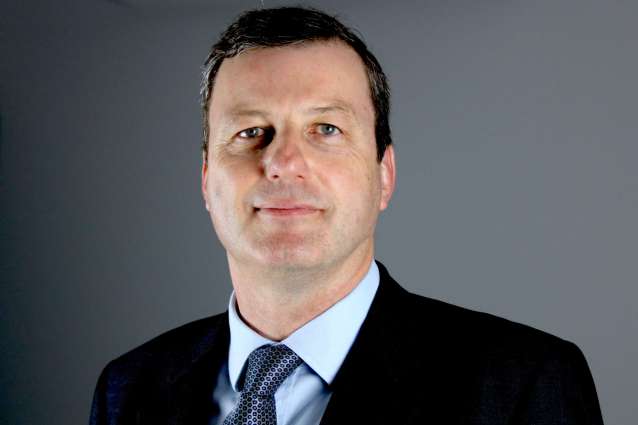
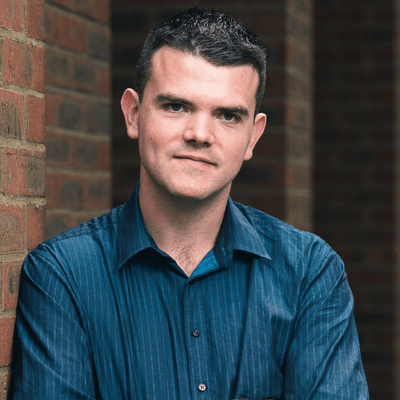
Dr Chris Day now being backed and funded by the BMA Pic credit: Twitter

The tables are beginning to turn in a seven year battle which has cost £700,000 so far to the taxpayer between Chris Day, an anaesthetist in an intensive care unit ,employed by Lewisham and Greenwich Health Trust.

The case against the trust and Health Education England has been drawn out over seven years at employment tribunals and appeal tribunals. He was forced into a settlement in which he had to withdraw his allegations of patient safety being at risk at the ICU unit at Woolwich Hospital in return for the trust accepting he had genuine concerns as a whistleblower at Woolwich Hospital between 2013 and 2014. The trust , using expensive lawyers, threatened to land him with huge legal bills if he continued and started cross examining their witnesses. The allegations included poor staff ,patient ratios at the ICU and inadequate medical supervision. He also made the same allegations to Health England Education.

Trust forced him to settle by threatening him with huge legal bills

As he said: “After two and a half days of my six day cross examination I was contacted by my legal team and told that the NHS respondents had decided to inform me of their intention to seek costs for the entire four week hearing if I proceeded to cross examine any of the NHS’s14 witnesses and ended up losing the case,”

He had no option but to withdraw to protect his wife and family from bankruptcy should this threat be carried out.

“real prospect of success” says judge

But he has won the right to get the enforced settlement out aside and take his case to the Court of Appeal. In giving judgement the Rt Hon Lady Justice Ingrid Simler DBE stated in the Order of the Court of Appeal that “I consider this appeal has a real prospect of success. Permission is granted”. Simler LJ is a highly experienced Judge and she was previously the President of the Employment Appeal Tribunal.

Until now he was left with trying to raise money so he could afford to pay the lawyers to fight the trust. In the last week in what amounts to a major change of heart, the British Medical Association has decided to fund his battle. Internal sources say this may be the first time the BMA has decided to fund a doctor in a whistleblowing case.

A BMA spokesperson said:

“Chris’ case has brought into sharp public focus the challenges and adverse experiences which doctors can face when they make public interest disclosures to blow the whistle on safety concerns they identify, in the course of carrying out their job.

“Doctors have a responsibility to raise concerns they have about the safety of their patients and yet too often they are put in the position of having to blow the whistle on organisational failures when the organisation in question fails to act. The BMA’s own research shows a majority of doctors work in a culture of fear and are worried about recrimination if they speak out about patient safety concerns. The BMA has been calling for an open culture, where speaking out is encouraged and supported and where our NHS learns from concerns and errors, to improve safety for patients.

“The BMA carried out a comprehensive external review of its member support services and we are now making significant improvements in how we support whistleblowing cases and indeed all members who raise concerns within the NHS. This includes offering more specialised legal support given the complexity of such cases. We are grateful to Chris and other BMA members for their input to this review. Different processes would have been followed if Chris’s case was to arise today and we are pleased to be able to offer Chris the support he needs in the next stage of litigation in his case as well as in the wider interests of the profession and patient care”.

Chris Day said:

“I am pleased to announce that I will be accepting support from the BMA in the next stage of litigation in my case.

“I have always remained a member of the BMA and it is clear to me that the new leadership at the BMA is committed to supporting me and my family where it is able to do so. The Association has spent considerable time and effort understanding my situation and provided me with expert legal advice as I considered the best way forward.

“I know the BMA has undertaken a great deal of work to consider how it supports whistle-blower cases and it has sought to learn from the past. They have established new arrangements to ensure better support for potential whistle-blowers, including guaranteeing a meeting with a specialist solicitor and case manager that now takes place before any case is considered too weak to proceed or on cases that are initially considered strong enough to proceed where this view subsequently changes.

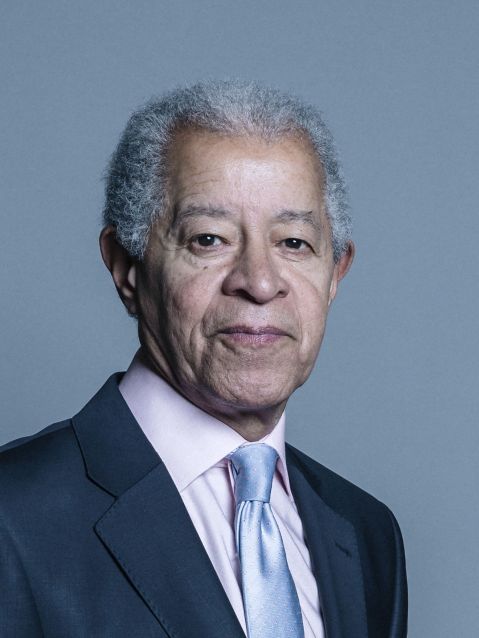
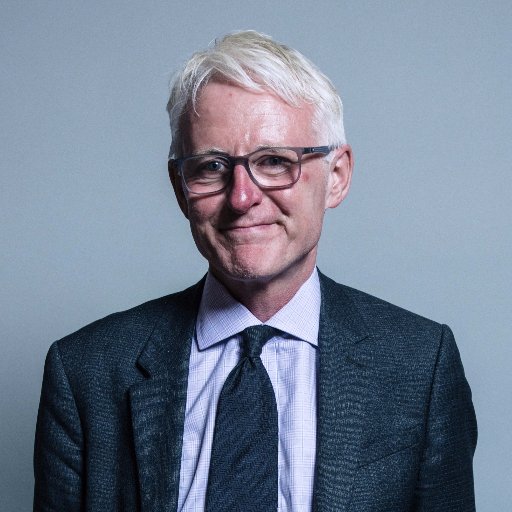
Sir Norman Lamb. Pic credit: Twitter

“I look forward to working with the BMA. The BMA has a critical role in ensuring that no doctor should ever be forced to choose between their career and the safety of their patients and I would encourage every doctor and medical student to join the BMA and take an active role in shaping their trade union. Doctors need a trade union now more than ever.”

Chris Day has also got the support of Sir Norman Lamb, the former Liberal Democrat health minister, who backed him while he was in government. Sir Norman is now the chairman of the South London and Maudsley NHS Foundation Trust., the neighbouring trust to Lewisham and Greenwich. Despite some concern in the NHS establishment he is to continue to support Chris Day and will be a witness.

Given the dire findings in the Usha Prasad case with Epsom and St Helier University Health Trust, reported in this blog, this development is the best news a whistleblower doctor can get.

What are journalists telling you about immigrants, asylum seekers and the new arrivals from Hong Kong

Migration Pic credit: Ethical Journalist Network

Migration has always been a controversial issue – even though today’s United Kingdom along with the United States is one of the most diverse countries in the world.

Next Wednesday the Ethical Journalist Network – which aims to improve standards in journalism -is hosting a free top level webinar with outstanding speakers on how the journalists themselves report this issue.

Since most people form their views on migration from newspapers, TV, radio and increasingly from social media, how issues are reported and reflected across the media have never been more important.

If you are interested in the issue or just curious about how the make up of the country is changing post Brexit this webinar is where you can find out what you are being told or what is not being told about today’s migration issues.

It will cover the issue of the arrival of new people to the UK from Hong Kong -probably one of the largest groups of people to come here since the Ugandan Asians were driven out of their country and Afro-Caribbean people were invited to work in Britain from the West Indies.

It will contrast this with the treatment of people who flee across the Channel to the UK- and are now to be housed in substandard conditions and face being exiled to camps abroad under a new Nationality Bill put forward by Priti Patel, the home secretary.

It will also look at the hostile environment that led to the Windrush scandal which could be repeated when European Union people who did not get settled status here are forcibly deported, denied work and health care.

Chair and Speakers

The event will be chaired by Rizwana Hamid, Director of the Centre for Media Monitoring and EJN UK Committee member.

The speakers are:

Amelia Gentleman is a multi-award-winning journalist who spent six months working on the Windrush scandal for The Guardian which had led to the illegal deportation of Afro Caribbean people who had settled here for decades. She is the author of The Windrush Betrayal: Exposing the Hostile Environment which details the scandal and the effects it had on people’s lives.

Jamal Osman is a  Somali-born award-winning journalist, broadcaster and filmmaker. He is the Africa Correspondent for Channel Four News and has written articles for The Guardian and reported for Al-Jazeera English. His scoops include interviews with Somali pirates, the al-Qaeda-linked Islamist group, Al-Shabab, and an exposure of the illegal trade in UN food aid.

Marzia Rango is the data innovation and capacity building co-ordinator at the International Organisation for Migration in Berlin and is currently managing a project focusing on migration across the Mediterranean to Central Europe. She will be able to give an overall picture of the scale of migration.

Benedict Rogers is the co-founder and chief executive of Hong Kong Watch and co-founder and deputy chairman of the Conservative Party’s Human Rights Commission. He is a human rights activist and a journalist who has written extensively on the plight of people in Hong Kong where democracy is being suppressed by the Chinese authorities.

Chantal da Silva is a freelance journalist who helped expose the appalling conditions asylum seekers face in Napier Barracks despite attempts by the Home Office to hide what was happening. She works for numerous publications including the Independent, the Bureau of Investigative Journalism, Channel 4 and many other TV channels. She focuses on immigration rights.

You can register here at the EJN website or directly at Eventbrite here.

A scandalous cover up: The DWP and Ombudsman let down millions of people promised an indexed Guaranteed Minimum Pension for life

Steve Webb, former Liberal Democrat minister, who piloted the change in pension law in 2014

Only two people given a total of £1250 compensation out of millions who lost out

This is a complicated story but bear with me. Under the old pension arrangements (abolished in 2016) employers who decided to contract out of the old SERPS scheme would save on their national insurance contributions (NICs) but promised whatever happened they would still maintain a Guaranteed Minimum Pension for their workers.

But they would not pay for the indexation of the pension once people retired. That money would be paid by the state. and still is for those who have the old state pension.

But from 2016 with the introduction of the new pension that would cease with the exception of people who received an occupational second pension in the public sector – and that includes ministers, MPs, civil servants as well as other public sector workers. This exception even covers any public sector worker who moved abroad to places like Canada and Australia where their basic state pension is frozen.

This change which could lead to people losing thousands of pounds over their retirement – was spotted independently by two knowledgeable people who having got nowhere with the Department for Work and Pensions complained to the Ombudsman. 11.5 million people affected had opted out of the scheme between 1978 and 1997.

Some 21 months ago the Ombudsman reported that they had been right to spot this. The report noted:

“The National Audit Office (NAO) and the Work and Pensions Select Committee considered that the DWP had provided insufficient and limited information to individuals about the potential negative impacts the new State Pension could have, particularly in relation to indexation on the GMP. The NAO said that some people were likely to lose out and could not find the information they needed.

DWP information was misleading

It concluded:

“The DWP communicated the impact of the 2014 Pensions Act legislative change to the public. ln communicating this change, the DWP said that individuals could increase their starting amount of new State Pension. However, people who were to reach SPA shortly after April 2016 were in fact unable to make significant additional NlCs to do this. The DWP’s information was thus misleading.”

Indeed the DWP gave the impression that the change would make a mere 36p a week difference when in fact people, especially women, would lose over their course of their retirement, thousands of pounds. It is very difficult to estimate how much, but a Treasury estimate on how much money those in the public sector will GAIN by keeping this right – suggests, if inflation stays at 2 per cent, it is £13,000 for every man and £18000 for every woman over their average life span. If it is 3 per cent, it is £19,000 for a man and £27,000 for a woman. Not 36p!

Once they had retired they could do nothing about it. The Ombudsman’s report says that between 2016 and today two million people have already been affected. The bulk of the people have still to claim their pension.

The ministry to confuse matters said that the new triple lock provisions for the basic state pension meant that on average people affected would only be between £2 a week worse off and £4 a week better off. But in fact that has nothing to do with the indexation of GMP, it was part of package of measures for the new pension.

Rob Behrens, Parliamentary Ombudsman

If that change wasn’t bad enough the last 21 months nothing has happened. The Ombudsman made straightforward recommendations and wanted the ministry to report back in three months. He was ignored.

“The DWP should ensure that their literature clearly and appropriately references that some individuals, who have large GMPs and reach State Pension Age in the early years of the new State Pension, may be negatively affected by the changes.
“The DWP should direct individuals to check their circumstances. Further, the DWP should provide details to the public about how they can check their circumstances.. We have recommended that the DWP should ensure that anyone with a complaint of injustice arising from the same maladministration can have their concerns fully considered.”

Ombudsman has no power to compel the DWP to redress the injustice

Well so far the DWP has only offered to produce a fact sheet and not made any attempt to contact a single person who was misled . And the Ombudsman – who has no power to compel people to follow his recommendations – looks like letting them get away with it by agreeing to the offer. So only two people – the complainants Mr Smart and Stephen Kenny – have been compensated -offered £500 and £750 each respectively.

Despite some heroic efforts by Stephen Timms, the chair of the Commons Work and Pensions Committee and some questions from me the ministry has stonewalled in providing detailed information. Both the Ombudsman and the DWP are also silent on how the law was changed in 2014 -since the money was paid out before under the old system and those in public sector rather than the private sector now get it through their occupational pension.

Some readers might find this story eerily familiar. If you are a 1950s or 1960s woman it sounds like a rerun of the denial of pensions to millions of women between 60 and 66. Misleading information, nobody being told, and then no redress.

But there is also something alarming in this tale for the WASPI women who have placed their faith in the Ombudsman to save them. First compensation for the potential loss of tens of thousands of pounds is just £500 and £750. Secondly it could suggest if maladministration is proven that the DWP will just compensate the six women involved in the complaint and ignore the rest of the 3.8 million. Thirdly it looks like the DWP may ignore the Ombudsman’s recommendations -knowing he can’t compel them to do anything – or make it so difficult and obtuse for the women to claim that they will get nothing. After all you can’t prove you never had a letter!

A thank you to one of my readers Christopher Thompson who contacted me about this and helped with unearthing some of the key facts in this story.

Judge orders ex MP and his supporter to pay £14,000 costs in child sex abuse defamation and harassment cases

Former MP John Hemming outside Parliament. Pic Credit: Wikipedia

The long running saga by former Liberal Democrat MP John Hemming to take legal action against journalists and people who had reported or shared unproven child sex abuse allegations against him made by Esther Baker took a new twist last month.

I have already reported the judgement in a case brought by John Hemming and a counter claim by Sonia Poulton in full on this blog last month but there has now been a further hearing to ascertain costs.

Summary judgement case lost by Hemming

Hemming lost a case for a summary judgement giving him aggravated damages against journalist, Sonia Poulton. The case will now go to a full trial.

As reported before Hemming was also unable to strike out most of her defence and the judge ruled that a counterclaim by her for damages for harassment and injunctive relief, pursuant to the Protection from Harassment Act 1997 could go ahead. The latter counter claim was also against Sam Collingwood Smith and Darren Laverty, whom the judge said with the MP ” have been in some communication with one another, and have to some extent supported and assisted one another in various activities, not least litigation.”

The cost hearing began with an attempt by John Hemming’s lawyers and Darren Laverty to argue that as Sonia Poulton had refused an offer of mediation they should not pay her costs. But the judge did not accept this -particularly as her counter claim involved harassment of Sonia Poulton by Hemming, Laverty and Sam Collingwood Smith.

In the end the judge argued that Hemming should pay 85 per cent of her costs amounting to £8000 and Laverty should pay £6000. Laverty objected but has been told he has to pay by November when a case management hearing will be held prior to all the cases going to a full trial. Laverty has a separate claim for damages against Sonia Poulton.

The judge Deputy Master Bard also issued a general warning that litigation should not be used as a means of oppression.

European Court of Human Rights rules against review of the cause of Yasser Arafat’s death

PLO CHAIRMAN YASSER ARAFAT PICTURE by Yaakov Saar

The European Court of Justice has thrown out an attempt by Yasser Arafat’s widow and daughter to have a case that examined the death of former Palestinian leader who died 17 years ago re-opened again.

As predicted by @NewsEchr the court chaired by a Ukrainian judge decided that his widow’s claIm that there had not been a fair trial in France was ” inadmissible” because it was beyond the power of the court to re-examine the evidence.

Yasser Arafat, who died on 11 November 2004 in France at the Percy Military Hospital where he was being treated following a decline in his state of health at a time when he was in Ramallah, Palestine. On his widow’s request, no post mortem was carried out.

Traces of highly radioactive polonium alleged to be found on Arafat’s belongings


In March 2012 traces of polonium 210, a highly radioactive material, suggesting that Yasser Arafat might have been poisoned, were found on his personal belongings that his widow had recovered after his death. They were entrusted to a journalist from the Al Jazeera television channel, C.S., to be analysed.

On 28 August 2012 the public prosecutor of Nanterre opened a judicial investigation on a charge of premeditated murder

Three investigating judges were appointed and three experts were asked to determine the cause of the decline in Mr Arafat’s health. Their operations took place in the presence of French and Swiss teams, together with a Russian team at the request of the Palestinian Authority.

The French judicial expert’s report concluded that the result of radiological analyses did not prove the existence of exposure to polonium 210. The Swiss report disagreed with the French findings. An additional expert’s report, ordered by the investigating judge, confirmed the findings of the French report.

The dispute began when the applicants wanted to submit another expert report and this was refused by the French judges. This led them to appealing to the European Court of Human Rights because they did not think the trial was fair.

The ECHR said that it couldn’t re-open the case again on a quarrel over the admissibility of evidence, this being primarily a matter for regulation by domestic law. It therefore did not fall within the Court’s remit to substitute its own
assessment of the facts and evidence for that of the domestic courts, its task being to ensure that
the evidence was taken in a manner that guaranteed a fair hearing. The judges ruled the application was “inadmissible” thus ending a long legal fight by his widow and daughter.

The new human rights battle: Scotland v Westminster goes to the Supreme Court

Nicola Surgeon: Official Portrait. Scotland’s Minister Nicola Sturgeon said the move was “politically catastrophic and morally repugnant “.

This week the Supreme Court held a ground breaking hearing that could have huge implications for human rights legislation in this country.

The UK government under Boris Johnson took the Scottish government to the Supreme Court to stop them incorporating into Scottish law a United Nations Convention which the UK ratified in 1990 under Mrs Thatcher.

The United Nations The United Nations Convention on the Rights of the Child (UNCRC) is an international human rights treaty that grants all children and young people (aged 17 and under) a comprehensive set of rights. 

It is one of four UN Conventions – the others cover race equality, the disabled – and of course CEDAW- which covers all forms of discrimination against women.


Boris Johnson: pic credit: UK Parliament Jessica Taylor

Just like CEDAW the UNCRC has not been properly implemented. It covers everything from the age of criminality of children ,detention of children, rights for asylum seekers children, and the ill treatment of children including issues like using solitary confinement.

A scathing report from Parliament’s Joint Committee on Human Rights in 2009 expressed severe disappointment on how little the government had done and how fine words used by ministers were not put into practice. Since then there has been a big drop in the number of children being arrested and detained but a lot of other issues, including raising the age of criminal responsibility have not been implemented. The report can be read here.

Now Scotland’s decision to implement it – passed unanimously by the Holyrood Parliament – with every party backing it, has infuriated Boris Johnson who ordered his aides to block it.

This is what happened this week – and the Scots were joined by the Welsh – in fighting the government.

Scotland’s Minister Nicola Sturgeon said the move was “politically catastrophic and morally repugnant “.

Her deputy, John Swinney told MSPs during the final debate on the UN convention bill that the UK government’s request that it be amended amounted to a “orchestrated and sustained assault” on Holyrood’s powers.

Sir James Eadie: now wanting to stop Scotland forcing UK ministers to improve children’s rights

Step forward Sir James Eadie ,the Treasury Devil, who also blocked 50swomen getting any restitution for lost pensions and told the courts that the government was not obliged to tell anybody the value of the state pension.

He has been engaged by Johnson to fight it and it soon emerged why.

He told the court the case concerned “whether the Scottish Parliament has the legislative competence to subject acts of the UK Parliament with the need to comply with the UNCRC and to assign or delegate to the Scottish courts powers to strike down, rewrite or declare incompatible provisions of the acts of the sovereign UK Parliament”.

The UK Government has said their concerns “are not about the substance of the legislation” but whether the Scottish Parliament has the legal ability to pass the bills. In written arguments, Eadie said: “Both bills, [ there was a local government bill as well] in slightly different ways, purport to bestow upon the Scottish courts extensive and, in part, unparalleled powers to interpret and to scrutinise the legality of primary legislation passed by the sovereign UK Parliament at Westminster.”

Don’t give a damn about implementing human rights

It means in slightly less legal language that putting these powerful UN conventions into Scottish law could lead to the Scottish courts striking down unfair and discriminatory laws passed by Westminster – in this case involving the treatment of children. This is precisely why the government fear CEDAW.

So the game is finally up – and it explains why this government is so tardy in putting these conventions into law. They want to bathe in the fine words of these conventions – but really they don’t give a damn for extending human rights to anyone – whether it is a 10 year old child, a 1950s born woman, an asylum seeker, a disabled person or someone who isn’t the same skin colour as the majority of the population.

As MSP Neil Gray warned: “Not only are they threatening the powers of Holyrood but also the rights of Scotland’s children. Scotland’s Parliament has been under sustained attack from the Tories who have been using Brexit, which people in Scotland overwhelmingly rejected, to tighten Westminster control.

“Now they are threatening to strike down legislation that was passed unanimously at Holyrood.”

The all male judges in the Supreme Court who heard the case are reserving judgement.

Nuclear industry leaders contradict each other in landmark whistleblowing case

Whisteblower Alison McDermott

Guest Blog from journalist Philip Whiteley who is covering the whistleblowing case with me

A split emerged between two leading employers in the UK nuclear industry at Leeds Employment Tribunal, in a case where they are both respondents in a whistleblowing claim, in the session on Tuesday 29 June. Representatives of the governing body the Nuclear Decommissioning Authority overwhelmingly backed the version of events put forward by the whistleblower, undermining the defence of Sellafield, the nuclear reprocessing plant.

The case is being brought by Alison McDermott, an experienced equalities professional, who is claiming her sudden termination of contract by Sellafield in October 2018 was in response to her making protected disclosures on acts of bullying at the nuclear reprocessing site in Cumbria. Sellafield’s management initially claimed that the reason for her dismissal was financial only, although at the tribunal it has produced witnesses reporting concerns over her performance.

On Tuesday three senior executives from the governing body, the Nuclear Decommissioning Authority, offered sharply contrasting evidence. All expressed admiration for Ms McDermott’s contribution to improving policies of equality diversion and inclusion (EDI), and all confirmed that there had been concerns over the competence of the HR director who sacked her, Heather Roberts, and the HR function at the nuclear site.

Sellafield Human Resources department ” not fit for purpose”

All said the reason they were given for Ms McDermott’s dismissal was financial. David Vineall, Group HR director at the NDA, said that Ms McDermott had been integral to the EDI ‘journey’ that the industry was embarking on. Under questioning from Ms McDermott’s barrister James Arnold, Mr Vineall conceded that the HR function at Sellafield was ‘not fit for purpose’, the words used in a damning report he had commissioned by external consultancy PricewaterhouseCoopers.

The court heard how the governing body had recommended that Ms Roberts be replaced by Mike Barber, an HR manager at the NDA. Mr Barber, one of the witnesses for the NDA on Tuesday, said he had ‘a very good working relationship with Ms McDermott’ and was ‘surprised’ to hear of her sudden dismissal.

Some of the most damning evidence undermining Sellafield’s case only came to the court’s attention in recent weeks. Mr Arnold pointed to the date of 26 April 2021 when the claimant first learned of an email from 23 October 2018, just a few days before Ms McDermott learned of her dismissal, in which Mr Vineall wrote to colleagues following a meeting with the then Sellafield CEO Paul Foster the day before, where he suggested that Ms Roberts be replaced immediately.

Nuclear Decommissioning Authority ” very nervous” about Ms McDermott’s dismissal

Just last week, the tribunal heard for the first time evidence from Ms Roberts that she had a made a note stating that the NDA was ‘very nervous’ about the timing of Ms McDermott’s dismissal so soon after her critical report.

The revelation that the respondents had hidden evidence from the claimant and the tribunal that was helpful to her case until this year is particularly significant, because there were earlier hearings in the case. There was a preliminary hearing in July 2019, and Ms McDermott had been granted a strike-out hearing, on the basis that her case was strong.

The strike-out hearing took place on 7 July 2020, some nine months before the revelation of Mr Vineall’s email, and 11 months before more evidence from Ms Roberts, also central to the case, was made available during the hearing itself. Judge Lancaster did not rebuke the respondents for this, but it potentially constitutes a breach of tribunal rules by the respondents, as well as a potential breach of whistleblowing legislation, as it potentially caused detriment to the claimant.

Had Judge Batten, sitting alone last July, been made aware of all the relevant evidence, she may have awarded a strike-out in Ms McDermott’s favour, sparing her the ordeal of a further year of litigation and a three-week full hearing.

Section 47 (A) of the Public Interest Disclosure Act 1998, under which the case is being brought, specifically prohibits employers from imposing a detriment on a whistleblower as retaliation for raising issues of concern in the workplace.

Mr Arnold reminded the court that much of the evidence has only been made available to the tribunal as a result of the claimant’s own efforts through subject access requests and Freedom of Information requests. This would indicate a strong claim of failure to follow tribunal rules – potentially a criminal offence by the respondents – though Mr Arnold did not press the case.

Ms McDermott’s data protection rights breached by Sellafield

Sellafield already has a ruling against it in the case. In January, the Information Commissioner’s Office ruled that it had breached Ms McDermott’s data protection rights in the handling of three letters of evidence on which Sellafield is relying to support its case in the tribunal over her performance issues. The letters were produced on non-secure home PCs. The tribunal has permitted Sellafield to use unlawfully produced evidence.

On one of the letters, the metadata was wiped while in possession of DLA Piper, Sellafield’s law firm, temporarily hiding details on the document’s authorship and time of creation. The law firm is separately under investigation by the Solicitors Regulation Authority over the issue.

The case continues.

Exclusive with @NewsEchr: Murder or death by natural causes? European Court of Human Rights ruling 17 years after Palestinian leader Yasser Arafat’s death

Picture of Yasser Arafat by SA’AR YA’ACOV at the time he won the NOBEL PEACE PRIZE in 1994.

Family raise suspicions over his death

As the Middle East is still in turmoil an extraordinary ruling will be made by the European Court of Human Rights concerning events around the death of the Palestinian leader Yassar Arafat nearly 17 years ago.

His family have been suspicious he died from poisoning in 2004 and claim there was not a fair trial looking into this after he died in a French military hospital.

The applicants to the ECHR Suha El Kodwa Arafat and Zahwa El Kodwa Arafat, are French nationals.The case concerns a criminal complaint filed by the applicants, the widow and daughter of Yasser Arafat, who died on 11 November 2004 in France at the Percy Military Hospital where he was being treated, claiming that Mr Arafat had been the victim of premeditated murder.

They claim that the French authorities didn’t give their case a fair trial by refusing to include additional expert evidence.

They wanted an additional expert report on the cause of the decline in Mr Arafat’s health, as they had requested on account of their doubts concerning the origin and traceability of the sample used for that assessment, the methodology applied and the results, which were contradicted by the results obtained by Swiss experts.

They also criticise the refusal to order a fresh expert report on their behalf and to grant their other claims, based on contradictions between the results obtained by the different experts, Swiss and French, from their respective measurements and analyses. In French courts, Arafat’s wife and daughter were unsuccessful with their lawsuits and appeals. In 2017, they appealed to the European Court of Human Rights In French courts, Arafat’s wife and daughter were unsuccessful with their lawsuits and appeals. In 2017, they appealed to the European Court of Human Rights.

The court decision will be announced on Thursday raising an issue that has literally thought to have gone away and could not come at a worse time for Palestinian and Israeli relations. A ruling in their favour might re-open the issue but ECHR News believe they may lose the appeal.

Cedaw People’s Tribunal: Muslim women, migrants and domestic violence victims lives destroyed by no legal aid

Successive governments’ decision to cut drastically the legal aid budget has caused enormous damage to diverse women and girls groups according to witnesses who gave evidence today to the CEDAW People’s Tribunal.

They cover the plight of Muslim women who are forced to seek divorces at Sharia Courts because they cannot afford to go to a civil court, migrants denied access to legal aid and married women fleeing domestic violence going to family courts over the custody of children and divorce settlements. The tribunal is looking at how the Un Convention on the Elimination of all forms of discrimination can be put into UK law.

Legal aid ban putting Muslim women at the mercy of patriarchal fundamentalism

Pragna Patel founder and director of Southall Black Sisters (SBS)
[SBS is, a multi-award-winning women’s organisation founded in 1979 to address the needs of black and minority women experiencing gender violence.
It successfully campaigned for the release of Kiranjit Ahluwalia, a landmark case in which an Asian woman was convicted of the murder of her violent husband. The case reformed homicide law, creating greater awareness within and outside minority communities.]

A damning indictment of the drastic effect of legal aid cuts which had created formidable barriers for all women – but especially black and ethnic minority women – was made by Pragna Patel.

She was particularly critical of the plight of Muslim women fleeing a marriage and unable to access the civil courts because of the lack of legal aid. Instead decisions were taken by unofficial religious courts dominated by conservative patriarchal fundamentalists. ” The woman has no status there, no right to keep her children, no property rights and no inheritance rights. This completely contravenes human rights.”

She cited a case of one woman who has only had a religious marriage – which had never been followed by a civil marriage. As a result when she went to a civil court to get her rights – the court could not rule on the marriage as it has never been legally recognised. The case has gone to the Law Commission but it has so far not ruled on it.

She also attacked the funding system – having won a judicial review against Ealing Council – when it withdrew funding. She said most of the money was now given to ” generic services ” based on getting results set by targets rather than specialist services offering long term support to people.

“Domestic abuse perpetrator given custody of children at his former wife’s expense”

Dr Charlotte Proudman – barrister at Goldsmith Chambers

Dr Proudman highlighted the lack of legal aid holding back women to defend their rights in family courts after quitting their marriage over domestic abuse. She said there was an inequality of arms when they had to appear as a litigant-in-person because they could not afford to pay a barrister. She also said the courts had the discretion on who should pay and where the children should reside in cases – leaving in one instance a woman who had left her husband because of domestic abuse having to pay for her children to be looked after by her abuser – her husband.

She was highly critical of the lack of training for barristers and judges on handling domestic abuse cases – and the failure of the government after the passing of the Domestic Abuse Act to specify what training will be given. She also said that many of the lawyers eyes glazed over when they the issues of women’s rights and certainly CEDAW were mentioned.

She also thought that judiciary was dominated by elite men -” male, pale and stale” – educated at private schools and Oxbridge. She said most of the women were also from the same elite -privately educated and with Oxbridge degrees – meaning neither knew much about the life of the people who came before their courts. She came from a working class background and had gone to a state comprehensive school.

Equality Act has left people working in silos

Esua Jane Goldsmith

Esuantsiwa Jane Goldsmith, from Anona Development Consultancy on International Developments on Human Rights. Esuantsiwa  was one of the first black VSO volunteers, serving as a teacher in Tanzania 1977-79. Esua was a leading figure in the UN process for women, attending the United Nations Fourth World Conference on Women, Beijing 1995, as a member of the UK Government Delegation representing Development INGOs. She was founder and Chair of the Beijing Forum which co-ordinated the input of UK development NGOs.  She was the first black woman Chair of the Fawcett Society, Chair and Co-founder of the Gender and Development Network

Esua has highly critical and disappointed by the failure of the 2010 Equality Act. She had great hopes that the Equality and Human Rights Commission by putting all the equality issues together would be a big improvement. But instead she said it was still working in silos and relying on individual litigation.

She thought putting CEDAW into domestic law would create a much more holistic approach bringing together business, politicians, civil society, ngos and the women’s sector together by breaking down barriers.

She was scathing about the lack of progress of BAME women in Parliament – 35 out of 650 MPs. She also attacked the way white males trolled and pursued prominent black women like Diane Abbot, just because they were powerful people.

Dramatic rise in on line sexual abuse during the pandemic

Kelly Johnson – researcher

Dr Kelly’s areas of research/expertise include domestic and sexual violence, policing, and more broadly violence against women and girls; including Rape Crisis. She has particular research experience in the policing of domestic abuse, image-based sexual abuse (including ‘cyberflashing’, so-called ‘revenge porn’ and ‘upskirting’) and feminist theory.

An alarming picture of the rise in ” revenge porn” during the pandemic leading to sexual violence against was women during the pandemic left the police unable to have the resources to act to control it, Dr Kelly told the tribunal. She said this caused “significant and devastating harm for women”. Black and ethnic minority men were disproportionately involved and many of the attacks were misogynistic with a sense of male entitlement that they could do what they wanted.

When sexual violence followed this the police were not always able to cope – with basic resources like police cars in short supply – so they couldn’t get out to see people. Perpetrators were getting away scot free and were also using on line dating sites.

She called for long lasting cultural changes including much better education of young boys, teaching them the need for consent.

Media stereotyping of women puts pressure on women politicians at national and local level

Sofia Collignon -politics researcher

Sofia is Co Investigator in the ESCR-funded Representative Audit of Britain project, part of Parliamentary Candidates UK and principal investigator in the Survey of Local Candidates in England. Fields of expertise: Gender equality, Participation, Policy design and delivery

The media were criticised for stereotyping women politicians and putting extra strain on women in public life. Some times they were the victims of a campaign of disinformation or not given the opportunity to reply. She called on journalists to be more accurate and carefujl in their reporting of women ;politicians and local councillors.

She said that though there were more women MPs -originally from a low base – an analysis of candidates standing for Parliament showed they were often given unwinnable seats so never got elected. She praised three countries -Sweden, New Zealand and Mexico – for giving women politicians a pro active role. Mexico was particularly praised for having a gender equal role which saw a massive increase in the number of women politicians.

She thought Parliamentary candidates should have compulsory training in equal rights before they stood for Parliament – as part of an initiative to bring CEDAW into domestic law.

The secret UK world of polygamous marriages

Yasmin has worked for more than 30 years predominantly on violence against women, race, faith and gender, and human rights.  She has acted as an expert witness in legal cases providing expert reports on faith based abuse and Muslim marriage practices including polygamy and temporary marriage.  Yasmin is chief Executive Officer at JUNO WOMEN’S AID (formerly Women’s Aid Integrated Services).

An extraordinary picture of the unknown scale of polygamous marriages in the UK was given to the tribunal by Yasmin Rehman.

She said nobody knows the scale of the marriages and the government is blind to the problem. It is hidden because Imans often give secret ceremonies for Muslim men who have one civil marriage to marry other women. There is also a ban on sex outside marriage for Moslems, she said, – which is why there are some additional marriages. Other polygamous marriages avoid bigamy laws – as UK men with a wife and family at home, marry another woman in countries where polygamous marriages are allowed.

She said the religious practice was harmful to women who are given a subordinate role – but the real problem was the clash between the freedom of practices allowed by religion with gender and equality issues. Worse there was some evidence that women were trafficked into the UK for forced polygamous marriages.

” The issue is seen to be in the too difficult box which is why there is not a single politician who is prepared to take the issue up.”

She said only one politician – the former Tory Chancellor, Sajid Javid – had raised part of the issue – but only over children being forced to marry an older man.

Other witnesses

Baljit Banga, executive director of Imkaam, a UK based black feminist umbrella organisation, gave a detailed run down on what was wrong with the Domestic Abuse Act and why there is a need for a much better alternative and Dr Annette Lawson, chair of the national Women’s Commission, abolished in 2010 on why there is a need for some successor funded body to pull all women’s groups together to implement CEDAW.

The hearings are now over and the next stage is to draw up a report.

High court judgement on 50swomen pension’s cannot stand – Jocelynne Scutt tells CEDAW People’s Tribunal

Dr Jocelynne Scutt

The president of the Cedaw People’s Tribunal, and a former judge, Jocelynne Scutt, said today that the decision by the Court of Appeal to turn down the judicial review into the handling of the rise of the pension age for 50s women will be overturned.

She was commenting on evidence to the tribunal from Christine Cooper, chair of accounting at Edinburgh Business School on the plight of 50s women and how CEDAR could redress the issue. She was giving evidence in a personal capacity.

Christine Cooper pointed out that the ruling -part based on the fact that the 1995 legislation allowed the Department for Work and Pensions to say they had no obligation to tell the 3.8 million women about changes to their pension would have wider implications for the rest of government policy if it was applied in other areas. For this reason alone it is likely to be challenged in other cases.

If the UN Convention on the Elimination of all forms of discrimination against women (CEDAW) was part of UK law it would seen as discrimination against a particular group on that ground alone.

Christine Coooer

Christine Cooper strongly defended the 50swomen saying ; ” This is a group of women who did all what was expected of them in society, brought up families and went back to work when they could. The way they have been treated is mad.”

She said if the government had spent the £6.5 million on an advertising campaign to get people to take out a second private pension instead on informing women about the change in 2001 they would have been more prepared. Instead it had only spent £80,000 47,000 leaflets many going to private finance advisers – the people who were most likely to know about it anyway. She said the worst affected people were those who were in low paid jobs, single women, divorced women, women from ethnic minorities and those who had worked part time.

She it was clear that there had been no impact study in 1995 on the effect it could have on the women and the impact study which covered the 2011 Pensions Act was based on how men would be affected. Most women only had months notice – while men had seven years notice of the rise in the pension age from 65 to 66.

She also revealed that the DWP does not keep any information on the gender pay gap ,the gap between the pension earnings of women and men. Instead a survey is done by Prospect, a Whitehall trade union, which revealed that the difference has remained stubbornly at 40 per cent for the last five years -meaning men will get a pension worth £7,500 more than women.

Occupational pension pots for women aged 65 are at present £35,800 – a fifth of the figure for men at the same age.

Government pressure to get trade deals will hit women’s pay – former civil servant

Janet Veitch- former civil servant with extensive knowledge of CEDAW

A former senior civil servant warned that both Brexit and the hostile environment against migrants were going to have a disproportionate effect on women’s rights.

Janet Veitch OBE  is a consultant in the UK and internationally on women’s rights, having worked for ten years for the UK Ministers for Women and as Director of the UK Women’s National Commission.

She is a founder member of the End Violence Against Women Coalition; Vice-Chair of ‘Equally Ours’ and an associate adviser on gender for the British Council. Janet was awarded the OBE for services to women’s rights in 2011.

Janet Veitch said that the UK leaving a market of 500 million people would profoundly affect the British economy because it had yet to find alternative markets. Pressure to get trade deals would lead to a downward pressure on wages and labour conditions, which would predominately affect women, as many were already in low paid jobs.

The ” hostile environment ” against migrants would also lead people to start to condone a critical attitudes against people who looked visually different to themselves. CEDAW might not be a complete panacea but it would force the government to do due diligence on a host of issues.

Horrendous statistics on how women are treated over maternity leave and costly child care

Joeli Brearley – campaigner on maternity rights

A horrendous picture of discrimination against pregnant women was outlined by Joeli Brearley to the tribunal.

Joeil,founder and CEO of ‘Pregnant Then Screwed’, a charity which protects and supports women who encounter pregnancy; maternity discrimination and lobbies the Government for legislative change. This was after being sacked when she was four months pregnant.  Joeli was awarded the 2019 Northern Power Women ‘’Agent of Change’’; and is an International Women Human Rights Defender.

She described the appalling position of pregnant women who were often sacked by employers but then found they could get no redress under the employment tribunal system She said they had, while heavily pregnant only three months to lodge a case, found it would cost them £8000 to do so and many had no knowledge of the law. As a result there were very few cases.

She said women were hit by two major issues -facing pay cuts if they lost their jobs as they had to seek part time work on low pay – and paying for the second most expensive child care costs in Europe.

Typical child care costs took 33 per cent of their salary while single mothers, it took 67 per cent of their earnings. The difference between maternity leave and male parental leave of just two weeks meant only three per cent of men took a major part in looking after the new born baby, even though many more men would have liked to do it. Those who did had a 40 per cent more chance of staying together.

She said the situation had worsened during the Covid 19 pandemic. She thought CEDAW would make a big difference.

Loneliness and misery for women in rural Britain

Nick Newland

Poor transport and health services, loneliness in the remote areas of the UK were all part of the problems facing women in rural England, Scotland, Northern Ireland and Wales.

Nick Newland is from the Association of Country Women Worldwide The organisation exists to amplify the voices of rural women, so that the problems they face and the solutions they raise are heard and acknowledged by international policy-makers and legislators. Rural women are the backbone of families/communities but they go unheard
in legislation, and they remain unprotected and unsupported. ACWW exists to change that.

He hoped CEDAW would lead to women have a much greater say in rural areas – and not just in the odd focus group -so they could get change in their area. He said transport was a major problem for many women – though it was better in Scotland and Wales than England.

He cited an example of one woman living in Monmouth who had to spend seven hours travelling to get a 15 minute jab against Covid 19 in Newport because of the bus timetable.

He also said that loneliness and isolation of women was a major issue – and had been made worse for women by the raising of the pension age. He said getting health care was also a big issue and there was a serious mental health crisis in rural Britain – some times aggravated by their farmer partners committing suicide. There were also cases of brain damage among women who had tried to commit suicide but had not succeeded.

” There is a desperate need for a national strategy , a better quality of life and equality for women in education and health.”

” We have already got one Pakistani here , we can’t take another one” – women’s refuge owner

Rosie Lewis at TUC backed rally

Rosie Lewis is Director of the Angelou Centre , Newcastle supporting the organisation’s services for Black women and girl survivors and has been involved in social justice activism for more than 25 years.

She has given evidence to CEDAW and to the Independent Inquiry into Child Sexual Abuse in order to ensure that the findings of both reflect the state response to violence against Black and minority ethnic women and girls. 

An appalling picture of the treatment of women from ethnic minorities now migrant women and children had been excluded deliberately by the government from new domestic abuse legislation was given by Rosie Lewis

She said they were now being excluded from access to justice, help from specialists and many professional organisations no longer want to know or help them. She cited the case of one woman fleeing a forced marriage being told by the person running a women’s refuge, ” We already have one Pakistani here, we can’t take another one.”

She said a city like Durham now had no specialist organisation that could help people in the surrounding rural areas.

She thought if the UK did adopt CEDAW in UK law it would raise awareness, and improve access to services for ethnic minorities.

Other witnesses.

There was also evidence given today from Catherine Casserley, a barrister specialising in employment, discrimination, and Human Rights law. Co author of ‘Disability Discrimination Claims: An Adviser’s Handbook’. She said CEDAW would make a big difference to the plight of disabled women, including increasing awareness, creating a willingness to change and give a proactive approach to achieving equality.

Cris McCurley, who studied Law at the University of Essex and is a Partner in Ben Hoare Bell LLP; and a member of The Law Society’s Access to Justice Committee. gave some damning evidence of the treatment judges gave in family courts towards ethnic minorities.

Rebecca J. Cook from Toronto University who has made a contribution to international women’s rights as an author, legal educator, editor, lecturer, and participant in numerous conferences sponsored by such organizations as the World Health Organization and Planned Parenthood. She gave a video interview on abortion issues facing women.

Lisa Gormley from the LSE Women’s Peace and Security Policy, gave a talk on violence against women and the role of the Istanbul Convention, which the UK has yet to sign up.

She is an international lawyer specialising in equality for women and girls. She has also worked closely for several years with the UN Special Rapporteur on violence against women, its causes and consequences Lisa a legal adviser in Amnesty International’s International Secretariat (2000-2014).

Finally there was also a video from Professor Diane Elson and Mary-Ann Stephenson analysing how much the government spends on women and the huge pay gap between women and men.

Mary-Ann is the Director of the Women’s Budget Group and has worked for women’s equality and human rights for over twenty years as a campaigner, researcher and trainer. She was previously Director of the Fawcett Society and a Commissioner on the Women’s National Commission.

Professor Diane Elson is Emeritus Professor at University of Essex; member of the UN Committee for Development Policy; and consultant to UN Women.  She has served as  Vice-President of the International Association for Feminist Economics and as a member of G7 Gender Equality Advisory Council (2018).  She one of the pioneers of gender analysis of government budgets.