Top international experts join the People’s Tribunal campaign to end discrimination against women and girls

Aim is to write the UN Convention on the Elimination of Discrimination Against Women [CEDAW] into UK domestic law.

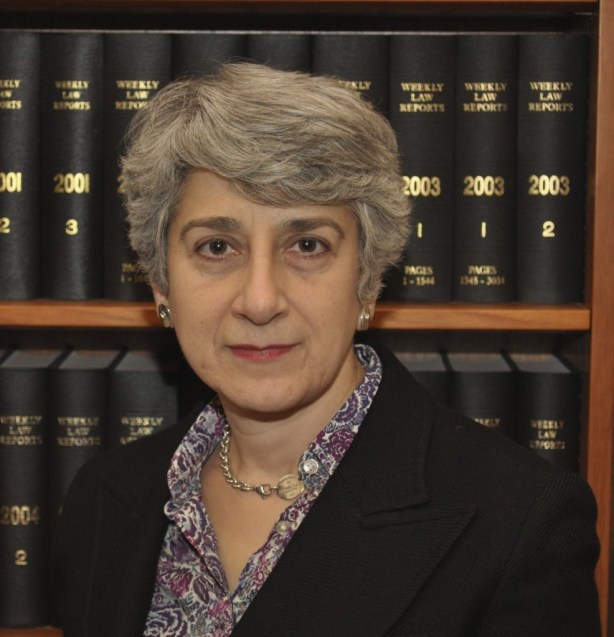
Meghan Campbell: Pic credit Birmingham University

Nearly 40 years ago Margaret Thatcher signed the UK up to the UN convention to end all discrmination against women but successive Tory, Labour and coalition governments have never passed the convention in British law.

Now in an age when the Boris Johnson led Tory government is trying to renege on international law agreements during European Union negotiations and opt out of parts of the European Convention on Human Rights it will face the wrath of women and girls who feel they have been treated as second class citizens for too long in the UK.

The movement has grown out of the far too long campaign by BackTo60 to get women born in the 1950s compensation for the loss of their pensions from the age of 60 which will be decided at a Court of Appeal hearing on Tuesday on grounds of discrimination.

The issue of inequality under CEDAW was an issue in the court case – but because it is not part of British domestic law – it is difficult issue to argue.

Now it looks like with real support from international figures and human rights lawyers that the Conservative government is going to face a campaign that will make the BackTo60 fight look like a sideshow.

It will begin with the setting up of a People’s Tribunal under John Cooper QC and renowned human rights lawyer who was Chair of the International Steering Committee and Prosecutor at the Iran Tribunal in The Hague and is named by The Times as one of the top 100 lawyers in the country.

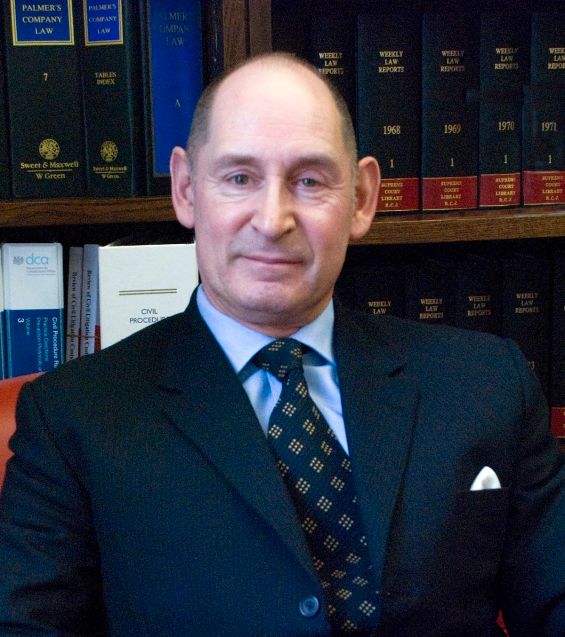
Andrew Byrnes Pic Credit: Oxford University Law Faculty

Now he is joined by three international experts. One is Andrew Byrnes, Professor of Law of Law at the University of New South Wales, Sydney, Australia, where he served as Chair of the Australian Human Rights Centre from 2005 to 2017.

He is an expert on both People’s Tribunals and CEDAW . With Gabrielle Simm (a senior law lecturer at the University of Technology, Sydney) he recently published the edited collection Peoples’ tribunals and international law (Cambridge University Press, 2018) and forthcoming publications includes chapters on the work of the UN Committee on the Discrimination against Women and the UN Committee against Torture, as well as the protection of economic and social rights through the parliamentary process.

He also was involved in the drafting of the CEDAW Optional Protocol, the Convention on the Rights of Persons with Disabilities, and is working with the Asia Pacific Forum of National Human Rights Institutions in current UN discussions about a possible new convention on the human rights of older persons. 

The second international expert who will join the advocacy team is Meghan Campbell, an Associate Professor at the University of Birmingham and Deputy Director of the Oxford Human Rights Hub. Her monograph, Women, Poverty, Equality: The Role of CEDAW (Hart 2018) was shortlisted for the Socio-Legal Scholars Association-Early Career Research Prize. The bookoffers an interpretation of the Convention on the Elimination of All Forms of Discrimination Against Women (CEDAW) to demonstrate how equality and non-discrimination can address the harms of gender-based poverty.
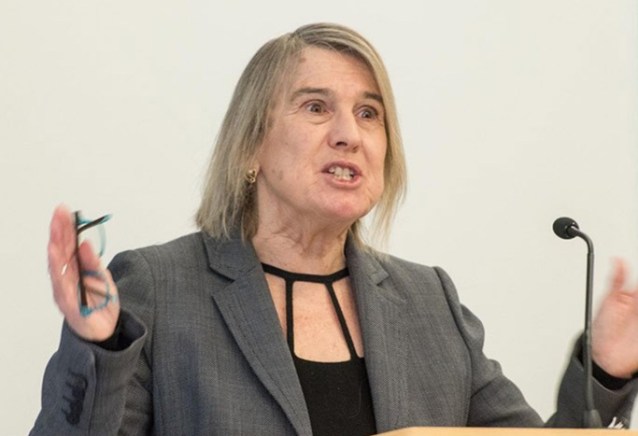
Professor Christine Chinkin Pic credit Twitter

The third international expert is Professor Christine Chinkin CMG FBA is Professorial Research Fellow in the Centre for Women, Peace and Security, where she leads three major projects: ‘A Feminist International Law of Peace and Security’ funded by the AHRC, ‘Gendered Peace’ funded by the ERC and the UKRI GCRF Gender, Justice and Security Hub. Professor Chinkin was Director of the Centre for Women, Peace and Security from 2015-2018.

 She co-edited the book ‘The UN Convention on the Elimination of All Forms of Discrimination against Women: A Commentary’ and authored the chapter on violence against women and girls. She was scientific advisor to the Council of Europe Committee that drafted the Convention on Violence against Women and Domestic Violence (the ‘Istanbul Convention’), the most far-reaching international treaty aimed at tackling violence against women and domestic violence.

Hannah Wilson Pic credit: Women’s Link

She will be joined by Hannah Wilson who works for Women’s Link Worldwide, an international human rights organisation which seeks to use the power of the law to promote social change which advances the rights of women and girls, particularly those facing multiple inequalities. She is based in Madrid and has recently raised issues about the poor conditions of workers harvesting strawberries in Huelva Spain who are mainly women and women’ rights in Rwanda.

Bright energetic women

In addition the People’s Tribunal have recruited a number of new bright energetic women legal associates as volunteers who are starting out in their careers after graduating. They include Isabelle Ehiorobo, a Law graduate from the University of Sussex; Shauna Lyttle who read history at King’s College London and is now completing a graduate LLB and Natalie Payne a recent LLB graduate from the University of Warwick, ( my former university) beginning a postgraduate study in Human Rights Law in 2020.

When the tribunal gets going it will be on a much broader canvas than the BackTo60 campaign. It will raise issues about poor working conditions, poverty, job discrimination, domestic abuse as well as pension discrimination among many others. It should prove a catalyst making discrimination against women a mainstream issue. It will also be a big fight with the government to get legislation on the agenda.

In the meantime the group has a spanking new website which can be reached here. The campaign is just beginning.

Former Minister X v. Ryan Giggs and Sir Philip Green : Parliamentary hypocrisy or protecting a complainant?

Parliamentary Privilege: All right for some

Today I am reproducing a blog by Alistair Parker, a solicitor, with the firm, Brett Wilson LLP, a specialist media and professional litigation solicitors, on the issue surrounding the former Tory minister under police investigation for the alleged rape and sexual assault of one of his female staff.

My position has been that he should not be named – solely to protect the claimant who requested anonymity not to spare him embarrassment. But what this article highlights is the hypocrisy over the use of Parliamentary privilege by MPs – they use Parliamentary Privilege to name other prominent people, whether it is a famous footballer or a well known businessman, knowing they cannot be sued. But when it is one of their own the shutters come down and Parliament protects them as they are supposed to be honourable members.

The irony is that probably every MP and every lobby journalist knows his name but keeps quiet – perhaps only telling curious close friends. Thanks to Brett Wilson LLP for giving me permission to reproduce the blog. The link to their media blog is here.

Suspect anonymity: The hypocrisy of parliamentary privilege – Alistair Parker

1 August 2020 marked the parliamentary revelation that a sitting MP had been arrested by police on suspicion of rape, sexual assault and controlling and coercive behaviour. All offences were alleged to have taken between July 2019 and January 2020 against the MP’s former staffer. Police confirmed the suspect was a male Tory in his 50s, and a former minister. Subject to police guidance, the name of the man was not revealed. This is because he has not been charged and is still under investigation, with a police bail date now extended until early November 2020. 

A man suspected of a serious sexual offence therefore remains a serving MP. He has not had the Tory whip removed or been sanctioned at all, (apparently) for fear that this would identify him. Indeed, his anonymity has been carefully guarded by all sides of the House. Is this a proper observance of the right to pre-charge anonymity, or can we detect a whiff of hypocrisy?

Parliamentary privilege, which by Article 9 of the Bill of Rights 1689 guarantees that “the freedom of speech and debates of proceedings in parliament ought not to be impeached or questioned in any court or place out of parliament”, has long allowed members of Parliament, be they in the Commons or the Lords, to name criminal suspects in these situations.

Both peer and MPs have on occasion exploited this privilege, even identifying individuals who were protected by court injunctions:-

In 2011, then Liberal Democrat MP John Hemming named Ryan Giggs as the footballer who secured an anonymised injunction to prevent publication of allegations he had an affair with a former reality TV star.

Also in 2011, Mr Hemming revealed that the banker Sir (as he then was) Fred Goodwin had obtained a super-injunction protecting his identity in relation to an alleged extra-marital affair. The Liberal Democrat peer Lord Stoneham poured oil on the fire adding “How can it be right for a super-injunction to hide the alleged relationship between Sir Fred Goodwin and a senior colleague?” he asked. “If true it would be a serious breach of corporate governance and not even the Financial Services Authority would know about it.”

In October 2014, Labour MP Jimmy Hood used parliamentary privilege to make serious accusations against Sir Leon Brittan (both have since passed away). Mr Hood said “By the way, the current expose of Sir Leon Brittan, the then home secretary, with accusations of improper conduct with children will not come as a surprise to striking minors of 1984”. Sir Leon was posthumously cleared of any wrongdoing once it was finally established these allegations were among the prolific lies of Carl Beech. 

In November 2018, Labour peer Lord Hain used Parliamentary privilege to name Sir Philip Green as the ‘anonymous businessman’ who had used Non-Disclosure Agreements in settling numerous claims of bullying and sexual harassment with five complainants. This was despite the fact the High Court had maintained the injunction preventing publication of Sir Philip’s name and also that two of the five complainants supported this. We wrote about this matter at the time

The past decade therefore shows that UK politicians, in both houses, have been prepared to use Parliamentary privilege even when it:-

– Breaches civil court orders with impunity,
– Reveals personal details such as extra-marital affairs of high profile individuals, and
– Names a suspect in a serious criminal investigation, where the allegation turned out to be provably false.

Fast forward to the present day: The complainant of ‘Former Minister X’ has apparently been lobbying for his identification by urging MPs and peers to use parliamentary privilege to put his name into the public domain. If this is true, she is doing so despite the strong chance it will result in her own identification.

However, this led to an unprecedented response last week, when the Speaker of the House stepped in to urge MPs not to do so. Sir Lindsay Hoyle warned MPs that “while the investigation is ongoing, I believe that it would be wholly inappropriate for any further reference to be made to this matter in the House, including an attempt to name the member concerned.”

Sir Charles Walker MP: Former chair of the procedure committee which ruled MPs who are arrested should not be named Pic credit: Twitter

Indeed, back in February 2016, the cross-party Procedure Committee voted to end the tradition of the automatic naming of any MP who had been arrested. Its Chairman at the time, Tory MP Charles Walker said that MPs “should have the same rights to privacy as any other citizen, and in future their names should not be put in the public domain if they were arrested, unless this was directly connected to their role as an MP”. It seems Mr Walker had not considered the irony that the right to privacy of “any other citizen” can be trampled on via the use of parliamentary privilege. 

The conclusions we can draw are that, in the last decade, various parliamentarians have been happy to use parliamentary privilege to name and shame those being investigated for crimes and those embroiled in personal civil proceedings – even where they have court orders protecting their anonymity. However, when the ‘shoe is on the other foot’ and the accused party is himself a parliamentarian, it seems the House of Commons is a zealous believer in the right of pre-charge anonymity.

In simple terms, if you are being investigated of a crime, then any parliamentarian can publicly name you without any consequence to themselves. But if you name a parliamentarian who is in a similar predicament, get ready for formal legal consequences.

Although the identity of “Former Minister X” remains a mystery, surely the pattern of politicians protecting themselves could not be any clearer.

Judgement on Court of Appeal for 50s born women pensions fixed for September 15

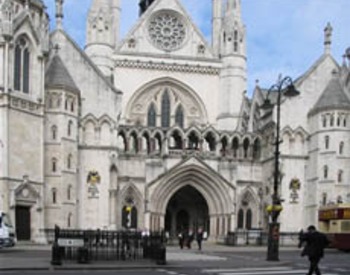
Royal Courts of Justice

The Court of Appeal has announced that the long awaited judgement on the Backto60 case covering 3.8 million women who had to wait up to six years for their delayed pension will be made on September 15.

The judgement will be delivered by email to the two claimants on behalf of BackTo60 campaign and the Department for Work and Pensions. The judgement will be put on the judiciary website.

The official notice published today reads:

NOTICE
Take notice that on TUESDAY, 15 SEPTEMBER, 2020 at 10.30, Judgment will be given in the following.
APPEAL

From The Queen’s Bench Division
(Administrative Court and Divisional Court)
FINAL DECISIONS
C1/2019/2914 The Queen on the application of Delve & Anr -v- The Secretary of State for Work and Pensions.

Covid-19 Protocol:  This judgment will be handed down remotely by circulation to the parties or their representatives by email, release to BAILII and publication on the Courts and Tribunals Judiciary website. The date and time for hand-down will be deemed to be TUESDAY, 15 SEPTEMBER, 2020 at 10.30.

A copy of the judgment in final form as handed down should be available on the Judiciary website (www.judiciary.uk) or BAILII shortly thereafter but can otherwise be obtained on request by email to the Judicial Office.

The decision will be on the merits of whether the DWP handled the policy change properly and whether the women suffered discrimination not on the merits of the plight of the women.

If the judges decide that there were faults in the system the women will have won and be entitled to compensation. If they decide that the DWP acted properly within the law they will lose.

The case has received the attention of three of the most powerful judges in the Court of Appeal.

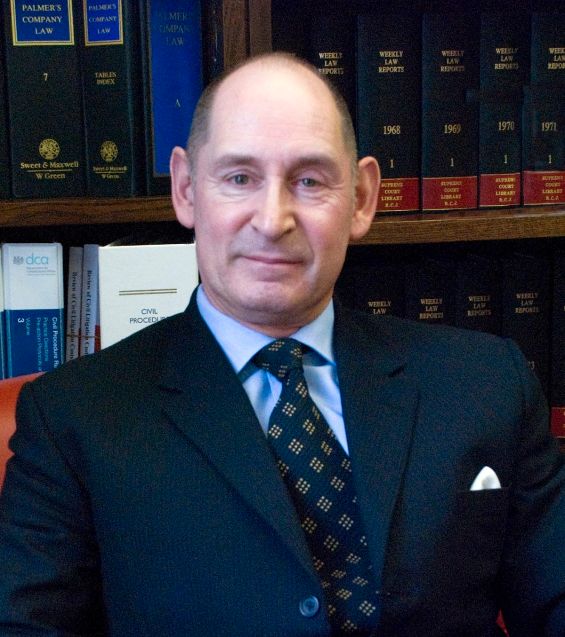
Sir Terence Etherton, Master of the Rolls

They are the Master of the Rolls, 69 year old Sir Terence Etherton; Lord Justice Sir Nicholas Underhill, 68, and Lady Justice Dame Vivien Rose,60.

The DWP engaged Sir James Eadie known as the ” Treasury devil” – one of the most powerful lawyers employed by the government, to argue their case.

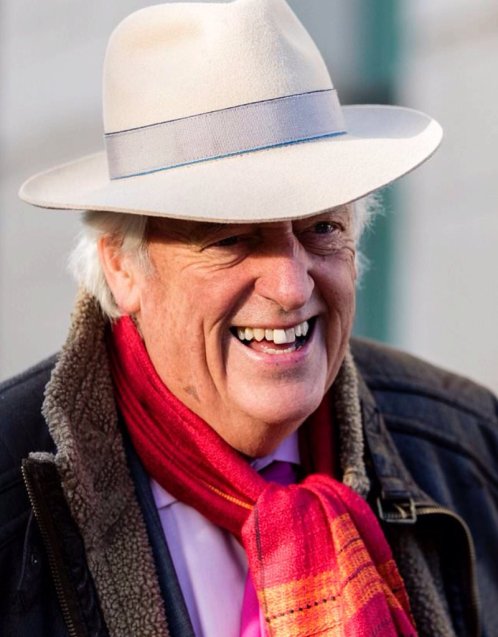
Michael Mansfield

BackTo60 brought in Michael Mansfield, one of the leading human rights lawyers as part of their team.

British stalkers and abusers rejoice: Life will get easier in Europe after Brexit

Government Campaign Poster on Domestic Abuse

Imagine you are being pursued by a stalker or an abusive ex. You get a court order or an injunction to stop them pursuing you. You decide to take a break to get out of the country and away from it all . Your abuser follows you abroad and starts to pester you. You call the local police.

If that happened now a European directive would allow you immediately to invoke the order in 27 countries and the person would be arrested and would likely end up in jail.

But from January 1 the order you obtained from a British court will no longer be recognised and you will have to start from scratch if you want your abuser to be stopped. And the change is coming just as good legislation under the Domestic Abuse Bill will give courts new powers to stop abusers – mainly but not exclusively men – harassing you on pain of being jailed.

Details of this state of affairs has come to light in an obscure report to the Commons European Scrutiny Committee. The issue was thought to be so minor that neither the EU nor the UK thought it worth even discussing in their negotiations – which shows you how low down the agenda domestic abuse is for top officials.

Victims Right Directive

The directive – known as the Victims Rights Directive -allowed any UK court order including restraining and stalking orders to be automatically applicable in the 27 EU countries, including when a person was on holiday there, without having to resort to separate civil action.

It has actually taken a committed Brexiteer – Bill Cash as chair of the committee – to raise the issue at all.

He writes in a report:

“From 1 January 2021, it will no longer be possible for orders made by UK courts to safeguard an individual against a criminal act that may endanger their life, physical, psychological or sexual integrity, dignity or personal liberty to be recognised and enforced in a foreign jurisdiction if that individual moves (even temporarily) to an EU Member State.”

Domestic Abuse Bill

 Her added: “There will no longer be a relatively simple mechanism for ensuring, for example, that the domestic abuse protection orders envisaged in the Domestic Abuse Bill will be recognised and enforced within the EU.”

The junior minister in the Justice department, Alex Chalk, also confirmed this.

“There is “no comparable fallback option” after transition as the European Protection Order is “a unique European Union law-based mechanism”. As a consequence, “an individual seeking a protective order after transition will need to secure a domestic (civil) protection order from the EU Member State that they are visiting.”

Frankly it seems extraordinary that this issue has been overlooked. As it is this measure is very simple – allowing British law to be extended to 27 countries to protect British citizens. Yet we are throwing this away on January 1 for the sake of ideology. I have written about this measure for Byline Times earlier this month.

There is a glimmer of hope that the matter could be taken up by the Women and Equalities Committee in Parliament or the Joint Committee on Human Rights. But sadly there is very little time to do anything about it. Ministers have promised to include the provision in domestic law – so people will have to have a staycation to stay safe.

From hero to zero and fighting back: How celeb chef Mark Hix revived his fish restaurant in Lyme Regis

Celebrity chef Mark Hix

The hospitality industry has suffered huge damage because of the Covid 19 pandemic. Not only are chains like Pizza Express , Frankie and Benny’s closing branches but even more up market venues like the Ledbury in Notting Hill.

One of the latter hit was a number of London restaurants run by Mark Hix, a celebrity chef, author, and owned jointly by the Reading based WHS Restaurant Investments where he had a 25 per cent share.

Without his agreement the company went into administration closing its four restaurants in London and one restaurant and town house in Lyme Regis.

The administrator’s report says that even before the Covid 19 crisis ” the business has struggled to maintain sales… with revenue declining in 2018 and 2019 as a result of sector-wide pressure across the casual dining market”.

But instead of accepting this huge setback by just taking early retirement at 57, Mark Hix went back to his roots in Dorset, bought a fish truck and started selling local fish at a local farm shop. The man who was an chef director at Caprice Holdings ( sadly the Caprice is now closed) before he had his own restaurants is now back on home turf.

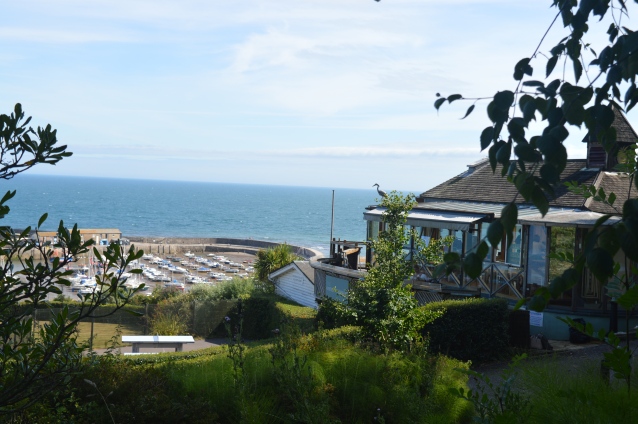
A table overlooking the sea. Pic credit: Matt Austin

He has managed to buy back the lease from Deloitte’s, the administrators, of his first restaurant in Lyme Regis and is working almost non stop to revive the business with some of his signature dishes. Extraordinarily Deloitte’s won’t allow him to use his name in the title of the restaurant, The Oyster and Fish House, and according to an article in the Telegraph Magazine wanted £11,000 for it.

He is a great example of someone who has refused to take Covid 19 lying down and with luck should benefit from the staycation boom in the UK as people flock to the seaside.

There is a curious bizarre local issue about the place he has got back – none of which, I might say, is anything to do with him. Some 60 years ago the land next to the restaurant including a nearby house, reputed to be summer home of the Cadbury family – the famous chocolate manufacturers – collapsed into the sea. This led to Lyme Regis Borough Council ( as it was then) compulsorily purchasing the land.

What didn’t fall into the sea was the gardener’s home Cliff Cottage and the land surrounding it. This included an old garage on the site.

According to Marilyn Bolton, an ex councillor in the past and his present landlord, an informal agreement was made with the then town clerk on the boundary between the new council owned land and her property. This was strongly contradicted by Stan Williams, the deputy mayor, who said there was no agreement allowing her to encroach on council land.

And it is certain this was never legally clarified. Land registry records show that Mark Hix’s restaurant ( the garage was demolished and a new restaurant built) straddle her property and council owned land – enough for it to be legally codified in a lease agreement in 2013. So he has two landlords.

The view of Lyme from the balcony of the restaurant

To make life even more complicated it also straddles a right of way Stile Lane which according to Dorset Council has never been rerouted or extinguished.

Dorset Council said in a statement: “We can confirm that Footpath W2/12 from Pound Street to Marine Parade in Lyme Regis is obstructed by a number of buildings and landscaping works carried out over many years to re-profile the area following landslips and the creation of Langmoor Gardens.”

“The Highway Authority has powers to enforce an obstruction of the public’s right of free passage over a public highway, but there is an alternative route, which is safer and more commodious for the public. Therefore, this is a considered to be a low priority for already stretched public funds.

” When planning permission was granted to extend the building that is currently obstructing the footpath, this did not give permission to obstruct the footpath. The applicant was advised to apply to divert the footpath by legal order and that this order must be confirmed before work commenced. We do not believe that West Dorset District Council received such an application.”

60 year old row over footpath and land encroachment

None of this would matter at a jot – if it wasn’t becoming a live issue after an elderly resident complained about it to the mayor of Lyme Regis, Brian Larcombe, and the deputy mayor, Stan Williams. They are now investigating this and seek explanations.

It appears that secrecy surrounding property and boundary deals by successive town clerks going back years has come back to bite them by not being open about what was going on.

In the meantime if you want to savour a good meal and are holidaying in Lyme I suggest you dine there and enjoy modern British cuisine. You will be helping a very determined man get his business back on track – in defiance of the bean counters and the bureaucrats who seem to have rather messed up.

Cocaine,Guns and Wads of Cash: The double life of criminals from Bromley and Berkhamsted

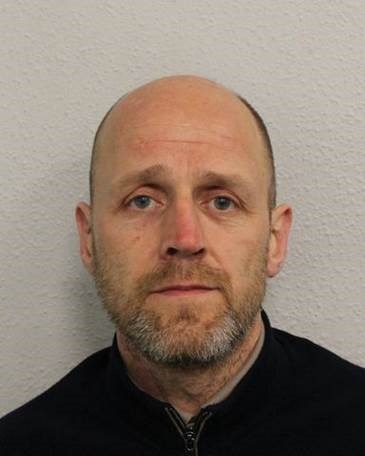
Harry el Araby pic credit: Met Police

One criminal was brought up in his parent’s £1m house in Berkhamsted and runs a vegan supermarket in Hackney

Last month the Metropolitan Police revealed they had arrested 113 people as part of huge Europe wide operation against serious and organised crime. Altogether in the UK some 746 people were arrested after the National Crime Agency working with Europol cracked an encrypted phone network called EncroChat used by criminals.

What emerged was that many of the criminals were not based in the cliched inner city housing estates but in the leafy suburbs and posh, respectable towns in the Home Counties.

At the end of last month two of the criminals who were arrested in May were convicted in the courts after pleading guilty to firearms and drugs offences. Jody Hall, 46, of Carters Hill Close, Mottingham was sentenced to 12 years and Harry El Araby,33, now of  Palmers Road, Bethnal Green, to six years.

Jody Hall; Pic credit:Met Police

A picture of the two characters emerged in the Met Police’s report. Jody Hall lived with is partner in a respectable flat in Mottigham in the London borough of Bromley.

The police who must have been monitoring their phones staged a stake out near his home. They saw Hall leave his flat and go to a lock up garage.

The Met Police report goes on :

“A minute or so later he left the garage carrying a bulky item wrapped in a white carrier bag, which also had yellow and green on it. He carried the item in his right gloved hand to his car where he placed it inside the driving seat area. He then closed the car door and walked away towards his home address empty handed.

A short while later, Hall walked back to the car where he briefly parked in front of his garage and made a phone call before driving to the exit of the close.

Once there he parked and was met by El Araby who arrived on a bicycle with a rucksack on his back.

An exchange took place and El Araby cycled off while Hall returned to his car.”

Then the police pounced. El Araby was stopped and the contents of the bag seized. In it were £10,000 in cash, a Glock hand gun, a silencer and 50 rounds of ammunition.

Cocaine and guns seized by the police Pic credit: Met Police

Hall’s home was raided and police found 11 kilograms of cocaine and £4000 in cash. They checked his garage and found  a revolver concealed in an old washing machine. A specialist search team then conducted a more thorough search and found a Berreta handgun with six rounds of ammunition in the clip.

Neither of them would disclose to the police why they had guns but the suspicion must be that someone was going to be killed.

Detective Constable Gio Antoniazzi, the investigating officer, said: “These guns, and every individual bullet, represent a life that could have been lost or changed forever and so I am delighted that we were able to remove them from streets of London.

“This was a fantastic team effort and the evidence gathered resulted in Hall and El Araby having no option but to plead guilty. I hope this makes people think twice about procuring dangerous weapons.”

On the surface Harry El Araby appears to be a very respectable person. He was brought up in Berkhamsted . His parents house is in a respectable leafy cul de sac in Berkhamsted where house prices have gone up ten fold in the last twenty years. El Araqby registered one of his companies there.

He also runs the Plant Based Supermarket in Homerton, Hackney where last July he gave an interview to East London Lines as a pillar of the local community.

The friendly vegan supermarket in Hackney. Companies House lists Harry Anthony Robert el Araby as a sole director since 2017

He claimed then to be living in New Cross and told a reporter:

“I have been vegan for more than four years and I have tasted a lot of stuff; I try to pick things that I know are good and I try to hit every angle. I feel we have the widest range of vegan products and all are very good quality”.

 “We believe in the little man,” says El Araby. “Most of our suppliers are English, so we support the local economy and we impact the environment less”.

“we contribute to charitable purposes” – El Araby

“There are a lot of smaller brands in here and we try to help them as much as possible, we use coffee from Climpson & Sons, a local coffee place brewed in Hackney that has a better-than-fair-trade policy, we get the bread from Better Health Bakery, which is a charity that helps people get back into work. We try to be local as much as we can and contribute to charitable purposes”

He also tried crowdfunding to raise enough money to create a national website to sell vegan food on line – but only raised £150 towards a £3000 target. He now has a website.

One can only imagine what drove this man brought up in respectable Berkhamsted ( the house last changed hands in 1998 according to the Land Registry) and running an eco friendly shop to a life of crime with guns and bullets and wads of cash. Might make a good crime story for TV and I suspect this won’t be last exposure to come from those 746 arrests last month.

Revealed: The EU deal that allows the DNA and fingerprints of 100,000 people to be shared with 31 countries before they are convicted in court

Digital fingerprint on a black background close up. 3d illustration.

If you are one of 100,000 people who are at any one time charged with an offence and are pleading not guilty you might be rather surprised by a deal that has taken place between the UK and the EU.

While the UK is officially playing hard ball in the official negotiations with the EU Commission it appears to have capitulated to demands to share DNA and fingerprints with 31 European countries not only of criminals but anybody who is charged with an offence in the UK.

What is more all this has been done behind Parliament’s back. The House of Commons was only informed when the deal was completed and not consulted about it. I wrote about this in Byline Times last month.

Reverses Parliament’s view

What is particularly egregious is that five years ago David Cameron’s Conservative government specifically refused to sign up to the same deal because it argued that people were innocent until proved guilty and should not be bracketed with known criminals. And Parliament was not only consulted, it even debated the matter.

None of this would be known now if it was not for the European Scrutiny Committee, chaired by veteran Tory Brexiteer,Bill Cash, had not revealed the row in a recent report .

To do this ministers have used a mechanism known as the Prum Convention, named after a small German town, to change the sharing of information and plan after Brexit to make further changes using “diplomatic notes” so Parliament will again not be consulted. The Convention allows “third party countries to join and covers Iceland, Norway, Liechenstein and Switzerland as well as the 27 EU countries.

James Brokenshire, security minister; Pic credit: gov.uk

 James Brokenshire, the security minister, has defended the changes as necessary as “important public safety benefits”. He added “the Government’s policy to date of not sharing the DNA profiles of criminal suspects “puts us out of step with EU Member States”.

 He also said one other reason was the National Crime Agency and Metropolitan Police Service have identified “risks and missed opportunities associated with not sharing suspects’ data” and support the inclusion of criminal suspects in the Prüm data sharing mechanism.”

Not impressed

However Mr Cash is not impressed and has written to him.

He said: “A change in the Government’s policy on access to the DNA profiles and fingerprints of criminal suspects therefore merits particularly close scrutiny by Parliament, given that it alters the very basis on which Parliament agreed to UK participation in Prüm data exchanges in December 2015.”

He challenged the minister’s written statement to Parliament asking him” to confirm that the notification given to the EU institutions on 15 June 2020 concerning the exchange of suspects’ data covers DNA and fingerprints and, if so, why this was not made explicit in your Written Statement to Parliament of the same date.”

Interestingly the Scottish government has not yet agreed to the change as policing and criminal justice are devolved matter. It has had the support of the Northern Ireland Executive.

The whole saga seems to be yet another example of double standards by the government. They make tough noises about Brexit then give away something that both a former Conservative government and Parliament refused to countenance.

They also like many other issues by-pass the UK Parliament and do deals under wraps and seem to have devised a system that will ensure that Parliament will have no say in any further changes. Another move towards an elective dictatorship rather than Parliament ” taking back control.”

Exclusive: How the People’s Tribunal will fight for every discriminated woman and girl in the UK

This new film released today covers both the reaction to the Judicial Review hearing last month and the birth of the People’s Tribunal. It also shows that under BackTo60’s leadership the two are interlinked.

The BackTo60 campaign was aimed to help 3.8 million women born in the 1950s get full restitution for their pensions. The People’s Tribunal has a hugely enlarged audience covering all women and girls in the United Kingdom and seeking to end the discrimination against all women.

Both are linked by injustice. The 50sWomen campaign wants restitution for the implementation of unfair laws – the 1995, 2007 and 2011 Pensions Act because of the adverse effect on one large group of women.

The People’s Tribunal want the UK to bring into domestic law the UN Convention for the Elimination of Discrimination Against Women (Cedaw).

The UK is already signed up to the convention – Margaret Thatcher did so in 1986 – but unlike other countries has not put the convention into UK law. The UK has also never appointed a representative to sit on the UN committee in Geneva either.

Any such legislation would transform women’s rights to fight discrimination and have a massive effect on the legal system of this country.

It would also give women a massive confidence boost that they would know beyond doubt they are equal to men and if they are treated any worse than men have a powerful tool to pursue any injustice through law.

Some people might think that in modern Britain women already do have equal rights with men. But when you think that despite equal pay laws and an Equality Act under the Blair Labour government, many women still do not have equal pay now nor do they have equal progression in their chosen career.

Despite strides – including all women short lists – there is not equal representation in Parliament among MPs and women more than men suffer domestic abuse.

Professor Jackie Jones, who was an expert witness in the judicial review and is part of the People’s Tribunal team, explains all of this very well in another YouTube video which you can watch below.

Finally all this going to cost money and today the People’s Tribunal launch a big crowdfunding appeal to set up and run the tribunal. They need to raise £75,000 but it will be worth every penny. The link top the crowdfunder is here.

Exclusive: Now 9.8 million men over 60 had their national insurance contributions paid by the state

The revised DWP answer

Revised figure doubled for ” men only national insurance subsidy”

The Department for Work and Pensions has revised the estimated number of men over 60 who received what are known as ” auto credits” towards getting a full pension from 4.65m to 9.8m between 1983 and 2018.

The 4.65 million figure was already staggeringly high but the new figure is more than double the number previously disclosed. It is also well over double the number of 1950s born women who are currently waiting for their pension for up to six years.

The scale of the payments has been kept quiet by the Department for Work and Pensions for 37 years. It was only revealed last month when Myfanwy Opeldus, one of 3.8 million women facing now a six year delay to get her pension, got the admission from the ministry through a Freedom of Information request. 

Letter issued after court hearing

Yesterday the Department for Work and Pensions wrote to her again raising the figure to 9.8 million. The letter came just after the Court of Appeal hearing into the judicial review this week heard about the plight of women affected by the rise in the pension age and was told by Michael Mansfield about the men receiving ” auto credits” which was not known at the time of the first judicial review.

The new disclosure makes it even more galling for the women who were originally promised they would have their national insurance contributions paid between 2010 and 2018 only to have the offer withdrawn a year before it was due to start. A number have had to pay thousands of pounds to make up the sum for a full pension while others simply have not been able to afford it.

The letter does say that not all 9.8 million men would have benefited as some would have died, others would have full insurance records and some would have been working abroad.

enormous subsidy for men

Nevertheless the scale of the subsidy must be enormous and a benefit for people years after it was offered by Sir Geoffrey Howe, the Chancellor of Exchequer in 1983, to encourage men to get off the dole to keep the very high unemployment numbers down at the time.

This story seems to get worse and worse so let us hope there will some justice from the courts for all the women concerned.

50 women’s pensions: An extraordinary Judicial Review Appeal hearing

The Master of the Rolls, Sir Terence Etherton Pic credit Wikipedia

Judges are inscrutable. Like wise old owls you can never be sure what they are thinking. This week’s two day hearing of the Court of Appeal into the rejected judicial review on behalf of 3.8 million women born in the 1950s who saw their pension age rise from 60 to 66 was no exception.

However the proceedings were extraordinary for a number of reasons. For a start the introduction of new technology clashed with the traditional proceedings of the courts.

Hit by Covid 19, the Court of Appeal decided that ” public interest ” in the case was so great that it should be live streamed with some of the judges and lawyers contributing via video link. They were justified with audiences over 2000 peaking at one point to just below 4000 – Court No 71 could never hold anything near that number ever, Covid 19 or not. Now two days later it has been seen by over 16,000 people.

For the first day it worked. But during the second day it ran into a number of technical problems -including cutting people off. And at the very end of the day the technology fizzled out for me so I didn’t see the very last part of the hearing . I have now seen it and Michael Mansfield makes a strong defence of why 50s women have been so badly affected by the delay in the pension age, citing one case where a woman contemplated suicide. He also emphasised the failure to notify people properly, saying there was a common law duty to do so.

Henrietta Hill was questioned by the judges about indirect and direct sex and age discrimination and how the lawyers saw their case being applied.

The judges reserved judgement which means it could be a few months before there is a decision.

Judges were engaged

The three judges presiding over the hearing were engaged with the debate.. The Master of the Rolls, 69 year old Sir Terence Etherton, is also president of the Property Bar Association and chairman of the Trust Law Committee and a visiting professor at Birkbeck College. In his youth he was a fencer and a member of the GB International Fencing Team, including being selected for the 1980 Olympics in Moscow.

Lord Justice Sir Nicholas Underhill Pic credit: Judiciary website

Lord Justice Sir Nicholas Underhill, 68, is a former president of the Employment Appeal Tribunal so well versed in complex cases. He also is a former Attorney General to the Prince of Wales.

Lady Justice Dame Vivien Rose Pic credit: judiciary website

Lady Justice Dame Vivien Rose,60, is the most recently appointed appeal judge of the three, is an expert in EU and UK competition law, tax, has been a Treasury legal adviser and held a post in the Ministry of Defence as Director of Operations and International Humanitarian Law during the Gulf War. Unlike the other two judges, who were educated at public schools, she was educated at a London comprehensive school and is the first lawyer in her family. She also sings in a choir.

Sir James Eadie : Pic Credit: blackstonechambers.com

Given this expertise of the judges it was extraordinary that Sir James Eadie, QC, the Treasury First Counsel, nicknamed the ” Treasury devil” should try to get the Judicial review declared unlawful.

He was building on the questioning in the previous judicial review which raised whether Ms Justice Dame Beverley Lang was right in granting the judicial review for the 3.8 million women in the first place.

He was shot down with a rapier like comment from the Master of the Rolls who pointed out he could have raised this immediately after her judgement at a special hearing and again when the judicial review was heard.

” Not in my brief” -Sir James Eadie

His reply was “it was not in my brief from the DWP ” and talked about ” the bigger picture”. My interpretation of that is Amber Rudd, then works and pensions secretary, would have been well aware that to strike out a review for 3.8 million women would have been political dynamite and caused widespread furore well beyond the actual case.

But Sir James persisted citing judgments which said that the case could have been held in 1995 as soon as the Pension Act was passed. Michael Mansfield,QC dealt with that claim in his summing up.

What is important is that the judges were really engaged with the arguments and tested both sides equally. They looked at the notification ( or non) notification issue of the pension age rise, listened to the arguments involving EU law and the relevance of the UN Convention of the Elimination of Discrimination Against Women and noted the auto credits issue which allowed 4.6 million men over 60 from 1983 to 2018 to have their national insurance contributions paid by the state.

Sir James Eadie’s tactics seem to be to try and get most of the case law raised by Adam Straw and Henrietta Hill for the 50swomen ruled as irrelevant.

At one point the Master of the Rolls intervened to point out to Sir James that Adam Straw’s argument about one particular case was aimed at making a specific legal point not about the content of the case.

The other DWP tactic was to use out of date information. Sir James used 2011 as the reference for the continuing rise in longevity ( and pension payment costs) – the high point of the increase – ignoring it flatlining since. This I gather was corrected by Michael Mansfield later.

Sir James also got it wrong when he said the purpose of the case was to reduce the pension age to 60 for all women. It isn’t. It is to fully compensate the 3.8 million women who feel cheated about waiting six years for a pension and not being properly told about the change.

The DWP switched tactics over the economic plight of the 1950s women – in the original judicial review he made great play of the fact they were not worse off but some were well off.

This time he acknowledged that 1950s women faced economic disadvantages and social ills but these, he argued, were nothing to do with the raising of the pension age.

For people watching this case it must have seemed a bit arcane that it is based on case law rather than – though Michael Mansfield did highlight their catastrophic plight – going into detail of the hardships of 50swomen. Full statements on the hardships faced by the two women cited in the case were passed to the judges by Michael Mansfield.

judgement time

Now for a judgment. The point of a judicial review is to question the administration of a policy to see if it was fit for purpose and had not disadvantaged people.

Therefore don’t expect a judgement ordering the women must have all the money. But you could expect a judgement saying the system cheated them which will have to lead to action by the government to redress the matter.

Either way win or lose the BackTo60 campaign will be considerably enhanced by the outcome of this case – because it highlights the women’s plight and will be a force to reckon with. Going to law is much more powerful than trying to persuade MPs.

After all very few campaigners can claim to have their case examined by the Master of the Rolls and I know BackTo60 lawyers are delighted that they got an appeal on all the points they raised in the first judicial review.