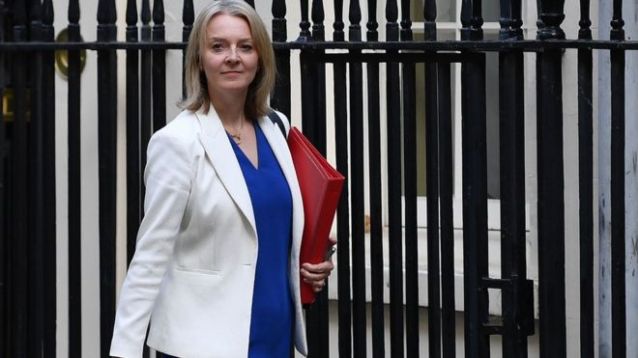
Liz Truss, international trade secretary. Pic credit:BBC
Claims by Liz Truss, the international trade secretary, that the UK’s biggest independent trade deal with Korea hit the ” gold standard” are ruthlessly exposed by a House of Lords committee. The full story on Byline Times here reveals that government’s claims we would be better outside the EU for trade are suspect – and ministers don’t want them properly scrutinised by Parliament.
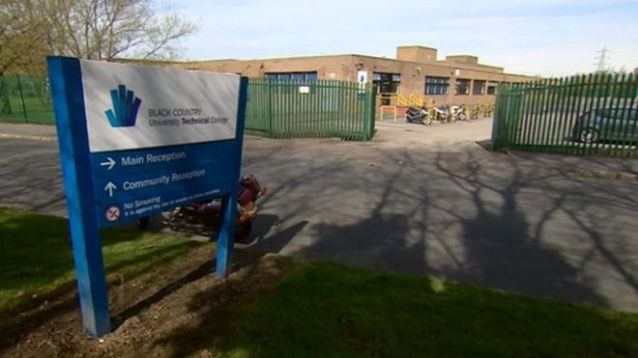
Michael Gove’s legacy:The now closed Black Country University Technical College in Walsall.Pic credit: BBC
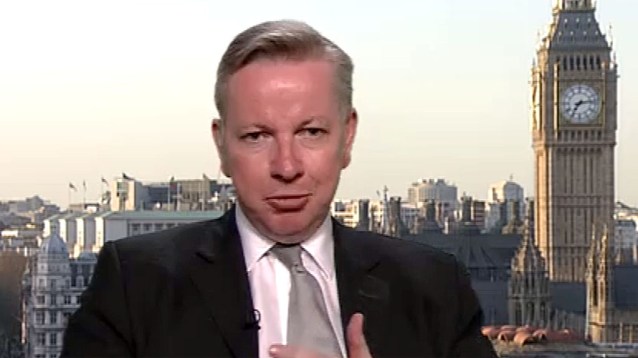
Another day. Another taxpayer disaster for the Conservatives. This time it is the National Audit Office reporting on the full cost of Michael Gove’s failed vocational education initiative which cost taxpayers £800m and left a trail of brand new closed colleges. Read the horrendous details of this latest scandal on Byline Times here.
Michael Gove who admits his scheme has been a failure. pic credit:BBC
Carole Irwin in Spain: Rightly angry at waste of taxpayers money when nothing is paid out to 50s women
Today I have decided to highlight one of my angry blog supporters who lives in Spain and is a victim of the pension scandal that has seen 3.8 million 50s women waiting up to six years to get their pension.
So outraged at the Prime Minister refusing to consider any compensation for the women that she has written to complain to Boris Johnson and highlight how much money he and his ministers have wasted after researching the bills.
As she puts it: ” Had we run our household budgets as you have run yours, we would have lost or homes and been made bankrupt yet you are able to get away with it. You will get extremely good Pensions unlike the true workers of the country who get the smallest Pension in Europe. I actually don’t know how you can sleep at night!
Carole Irwin lives in the mountains behind Malaga. She tells me :
” I am 60 years old and during my working life paid NI payments whilst working as a nurse for several years, and as a civilian in the Police Service. I then brought up my children, so received child benefit credits for those years.
I moved to Spain to retire with my family 14 years ago. 6 years ago l was diagnosed with an incurable and life changing illness. This costs me between 80€ and 90€ in medications per month alone.
This is why I became a member of #WePaidInYouPayOut which has been supporting Back to 60.
….I am one of the many who has received no letter informing me of this change. When I started working it was on the understanding although only an assumed agreement that I would receive my pension at 60.This change of retirement age along with my illness has affected our plans for our future life in Spain. “
This is her full letter to Mr Johnson:
” I am writing to you as l have many concerns about the enormous amounts of money being wasted by Government’s various departments. In order to be concise l am writing it in bullet points so as not to waste your time.
Firstly Chris Grayling ( who possibly has wasted the most money) who has served in several roles during his time in government and unbelievably still is employed as Secretary of State for Transport of the United Kingdom (2016 to 2019). Had he been employed in the private sector would have been dismissed as his record shows how incapable he actually is! *Chris Grayling alone has so far wasted almost 3 billion pounds of public money…
*At least £500 million to sort out the mess he made when attempting to privatise the probation service (source: National Audit Office)
*£33 million when sued by Eurotunnel over Seaborne Freight fiasco (source: The Guardian)
*£38 million – cost to the economy in the north of England due to the rail chaos in July 2018 (source The London Economic)
*£50,000 on the failed ‘lorry jam’ Brexit exercise in Kent (source: The Guardian)
*£70,000 on failed attempt to ban books from prisons (source: The Independent)
*£2 billion cost to taxpayers on the collapse of Virgin Trains east coast franchise (source The London Economic)
*£15 million a year in additional costs to the Carillion contract to run facilities management in prisons (source The London Economic)
*£5 million on ‘wasted rail fares’ for HS2 staff (source: Huffington Post)
*£50 million on cancelled No Deal ferry contracts (source: The Guardian)
*£32 million of charges that were unlawfully collected – which the government were ordered to pay back (source The London Economic)
*£23 million contract to develop a new generation of GPS tracking tags for dangerous offenders written off because the project proved “too challenging” (source The London Economic)
*£60 million over the £130 million original budget on the electronic tagging programme – described by the PAC as a “catastrophic waste of public money” (source The London Economic)
More government waste is shown by the Tax payers alliance.
Although excellent work has been undertaken by the Cabinet Office’s Efficiency and Reform Group in terms of finding savings, taxpayers’ cash has still been wasted in a number of ways, with significant sums ripe for being saved in many areas, including:
*£53 billion – Additional cost of funding pay and pensions for public sector workers over and above the private sector average, based on analysis of figures from the Office for National Statistics and the Pension Policy Institute *£25 billion – Amount wasted through inefficient public sector procurement and poor use of outsourcing, based on an authoritative report from the Institute of Directors *£20.3 billion – Cost to the economy of public sector fraud, according to the National Fraud Authority *£5 billion – Amount paid in benefits to those with an income in excess of £100,000 *£4 billion – Losses to the taxpayer from RBS and the sale of Northern Rock£2.9 billion – Amount spent needlessly by the Department for Business, Innovation & Skills and Department for Culture, Media & Sport, which should both be scrapped *£1.2 billion – Annual subsidy to foreign farmers through the EU’s Common Agricultural Policy The planning of the London garden bridge cost £58 million without so much as a pot plant being placed! These figures are also almost certainly an underestimate. A rigorous assessment of the public sector efficiency commissioned by the European Central Bank found that if the UK’s bloated public sector were as efficient as that in the economies of countries like the US, Australia, and Japan, no less than £137 billion could have been saved in the last year! Those is a Huge amount of money!
In addition to the big ticket items, we have identified hundreds of examples of smaller sums being wasted. It is, however, all still taxpayers’ money and there is no excuse for waste, regardless of the amount involved. Among the culprits identified are:
Arts Council: Gave a £95,000 grant to artists in Brighton for “Skip”, a rubbish dumpster outlined with yellow lights!
Crawley Council: Spent £5,070 on 12,200 hot drinks from vending machines for council employees, when the equivalent number of tea bags would have cost just £200!
Department for International Development: Spent £21.2 million on a road maintenance project in Bangladesh, later pulled due to “fiduciary irregularities” after it emerged that less than 10% had actually been spent on roads!
Durham Council: Funded a £12,000 clothing allowance to allow councillors to wear “Geordie Armani”!
Hull Council: Spent £40,000 on a concert in honour of the councillor who is Lord Mayor this year!
Ministry of Defence: Paid £22 for light bulbs that are normally 65p!
Prison Service: Paid £720,000 to professional actors for role playing that is aimed at helping inmates become employed.
Scottish Government: Signed a £1.4 million 4-year contract for taxis for civil servants in Edinburgh – despite staff being told to use buses.
Stoke-on-Trent Council: Spent £330,000 to pay for redundancy packages and subsequently rehiring 25 members of staff.
All this money wasted by your government was paid for by the hard working tax payers and I’m sure if l did more research l could find many more examples. One being to your own embarrassment the purchasing of water cannons. I wonder what they were worth at the local scrap dealer?
There are a great many extremely angry women not yet receiving their hard earned Pensions which was paid for by themselves throughout their lives by paying national insurance. I’m sure they would not have chosen to waste so much money in the way you did, as had that money still been available you could have decided we earned and deserved our pensions. Had we run our household budgets as you have run yours, we would have lost or homes and been made bankrupt yet to are able to get away with it. You will get extremely good Pensions unlike the true workers of the country who get the smallest Pension in Europe. I actually don’t know how you can sleep at night! Due to the appalling waste as listed above, please do it get too comfortable in your role as Prime Minister as l have a strong feeling come the next general election you will have many people choosing not to vote for your incompetent and cruel party.”
On Byline next month I am planning to try and see how much money the PM has also wasted on the No Deal Brexit which increasingly looks unlikely to happen on October 31. This can be added to the figures she has researched.
But I thought it was worth publishing this gigantic list because it highlights the anger people feel about this issue and the waste of taxpayers money by politicians. No doubt the reply will be stuck in a queue in the PM’s correspondence unit. But wider publication will not allow him so easily to get away with it. Nor should he.
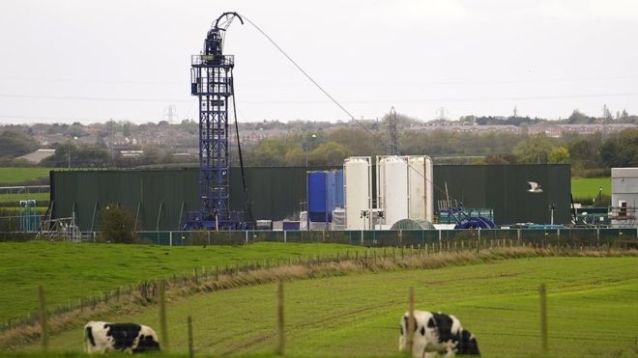
One of the few fracking sites in the UK in Lancashire. Pic credit: BBC Lancashire
Very informative report from the National Audit Office out today on the state of fracking and how it is being held back by unprecedented numbers of protestors and objectors. Read the story here.
Going back to the High Court for permission to appeal
The BackTo60 organisation which represents 3.8 million women who face up to six years delay to get their pension has lodged its application for permission to appeal at the High Court.
The decision to go ahead comes on the back of a successful crowd funding appeal which has raised over £70,000 of the £72,000 in a week. The fund raising is to remain open as it will have to cover both the legal action and further campaigning.
The mass media coverage in the Daily Mail and the Express following the judgement by Lord Justice Irvine and Mrs Justice Whipple to turn down the judicial review on all grounds to compensate the women has boosted interest in the case. Perversely the damning judgement created a wave of sympathy for the women and spread the word to a much wider audience.
Lawyers advising the group including Michael Mansfield have decided there are good grounds for appeal but will have to develop their case in seeking permission to appeal.
No date has been fixed yet for a hearing.
Meanwhile BackTo60 is receiving support from people who used to support the original Waspi campaign but now feel they are no longer interested in helping the bulk of the women who are affected by the big rise in the pension age.
One is Lizzie Spring, a former co-ordinator for Waspi in London.
She told me: ” I’m gobsmacked by the JR. I expected some restitution of our lost income, if not back to 60 at least back to the State Pension Age changes added in 2011. The tone and content of the ruling seems so adamantly ignorant of most women’s lives for the past fifty years. Some of it is risible. Menare discriminated against because women were expected to retire early from paid work, to do the housework, cook and provide them with company? Women’s financial and domestic inequality and lack of opportunities are cultural norms?
” It is shocking that two very materially wealthy people that nobody has elected into power, have the right to inflict such beliefs on so many women. I am not coping with the situation well. It is bewildering to me and almost impossible to believe highly educated people really view women’s historical poverty and imposed inequality in this way. I’m also of course personally still facing being poor my whole old age so I’m frightened and furious about the outcome too.”
She is also scathing about the offer being negotiated with Therese Coffey , the works and pensions secretary, by the two joint chairs of the All Party Parliamentary Group on behalf of Waspi Ltd.
” It means accepting a lower pension and only some compensation after the age of 63 I think it’s a disappointment. It risks compounding the poverty of women with the least money who might take such an offer out of desperation. It contains nothing to support the many women who’ve cashed in small private pensions and/or sold homes to survive for five plus years. The compensation after 63 would take ages to implement even if accepted and if not even backdated, would not be compensation but just a sop for a few. Those of us who’ve finally got state pensions but have spent all our lifetime savings while waiting, will presumably just continue to live in poverty, which is pretty bleak.”
Nor is she impressed by Boris Johnson seeking her vote “Johnson’s entire shtick is being untrustworthy and it’s an embarrassment having him as PM. I’d not vote Tory anyway so his predictable betrayal of 1950s women doesn’t affect my vote.”
And she is interested in the idea of using a Special Temporary Measure in Parliament to compensate the women : “It’s quite exciting on first viewing. But If it’s used as a route it will need to be done with huge amounts of hard evidence.
“Whoever presented the case would need a great deal of sensitive intelligence in relation to how much women are apparently still resented if we ask for equality. If decisions are made by people with no understanding of inter-sectional discrimination it’ll likely have the same outcome. “
The signs are despite a campaign to try and suggest that the settlement being negotiated with the government by the two MPs Carolyn Harris and Tim Loughton is the only game in town, people are starting to vote with their feet and backing groups that want full restitution.
Nanotechnology helping the food industry. Pic credit: European Commission
The Royal Society has issued a dire warning that the UK is already suffering a big drop in science funding from the EU because of Brexit.- MPs in Parliament warn it could get even worse contrary to claims by Boris Johnson. Full storyhere
Boris Johnson’s big U turn on helping 50s born women over their pensions
In July well before the publication of the decision of the judicial review Boris Johnson during the Tory leadership campaign was quoted by Dan Bloom in the Mirror of promising some sort of support for 50swomen who had to wait up to six years for their pension. The quote reproduced by the BackTo60 campaign in the picture below raised hopes that the present government might soften its attitude and offer something.
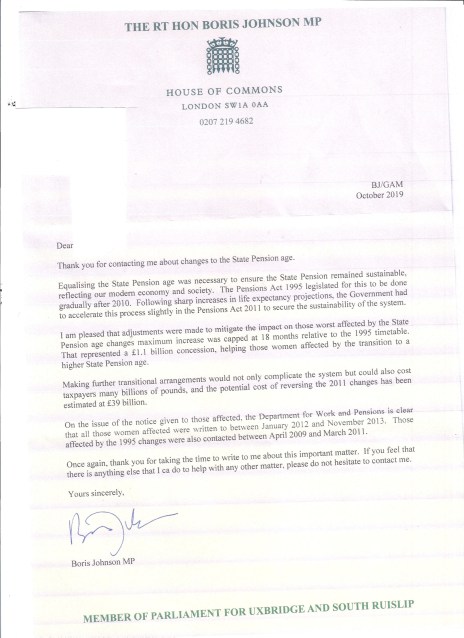
Now just after the publication of the judicial review decision he has changed his mind. Writing to a constituent in Uxbridge and South Ruislip who wishes to remain anonymous he has completely backtracked and also got some of the facts wrong into the bargain.
In a letter to her he now is promising nothing.
” Making further transitional arrangements would not only complicate the system but could also cost the taxpayers many billions of pounds and the potential cost of reversing the 2011 changes has been estimated at £39 billion.”
He then goes on to state that people affected by the 2011 change had all been told between January 2011 and November 2013. And further claims that those affected by the 1995 Pensions Act which raised the pension age were all told between April 2009 and March 2011.
The latter is a major gaffe since even I, as a severe critic of successive governments handling of the issue, would concede that some people were told before 2009. It also is an admission that the whole purpose of introducing the change in 1995 so people had notice was a failure – as April 2009 is just one year before the changes started to take effect. What a monumental own goal.
He also seems to confuse the role of the £1.1 billion concession in 2011 to delay the effect of further changes to the additional rise of the pension age to 66.
He seems to think this was a godsend for women claiming that he was pleased that it mitigated their position. In fact it only delayed the rise and also helped men who started to be affected after 2018.
Finally he talks of the ” sharp increases ” in longevity making the system, unsustainable. Well these cease in 2011 and have flat lined – even falling in the poorer areas such as Blackpool, north of Glasgow and in North Wales.
I can only hope that the PM has a proper understanding of the current negotiations going on over Brexit – because if this is an example of his grasp of facts – they are going to get in a real mess this week.
It also means – if this is now the PM’s view – that Carolyn Harris, Labour MP for Swansea East and Tim Loughton, Conservative MP for Worthing East and Shoreham, are wasting their time seeing Therese Coffey, the new works and pensions secretary to discuss any concessions for the 50s women on behalf of the all party group against pension inequality.
For the women themselves the one power they have left is their vote at a soon to be called general election. Unless they are happy to remain living in poverty voting for a new Conservative government is a waste of space.
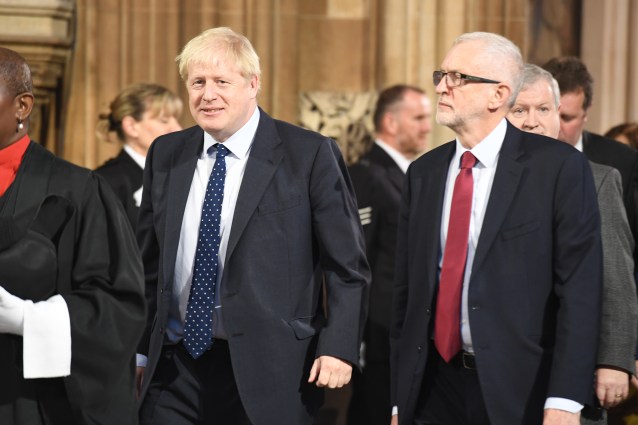
Boris Johnson with Jeremy Corbyn at the State Opening. Pic credit: UK Parliament/Jessica Taylor
I have done a short piece on Byline Times on how Boris Johnson is already reneging on his pledges to act immediately on social care and help the #50sWomen get some compensation for their lost pensions. The link is here.
Tonight I have written a story for Byline Times disclosing that lawyers have decided to seek permission to appeal the Judicial review which rejected all the discrimination claims for the 1950s born women who face a six year delay in getting their pension. The story ishere.
BackTo60 have also launched a £72,000 crowdfunding site to raise money for this action. The crowdfunder site is here. Already at time of writing it has raised over £10,000.
The end of summer time is about to cause new divisions across Ireland as the UK opts out and the Republic of Ireland is expect to have to opt in to a new European Commission directive Pic Credit: Articular/ Freepik
I have done a story today on Byline Times on an issue that will further divide the communities in Ireland – proposed changes by the European Commission to cease putting the clocks forward and back every year. It is coming to a head just as the UK is close to leaving the European Union. You can read it here.






 Westminster Confidential