Theresa May’s wasted £11.2 billion of taxpayers money on initiatives Tory youth doesn’t want

Adam-Smith-InstituteCROSS POSTED ON BYLINE.COM

The Tory conference was supposed to be the point when Theresa May announced a raft of policies to challenge Jeremy Corbyn’s wooing of the youth vote.

If she had  left the main platform of the conference and slipped into a packed Adam Smith Institute fringe meeting at the Manchester conference she would have been sorely disappointed.

The meeting chaired by a young Times journalist ,Grant Tucker, was meant to be a discussion on what  the millennial generation want and how they can get young voters away from Jeremy Corbyn.

Predictably it was hostile to any Corbyn programme of  rent control and nationalisation but what was extraordinary was the hostility to the May announcements earlier in the week.

The meeting was  heavily dominated by the housing crisis facing the young Tories – almost to a man and woman – all privately renting and paying up to 50 per cent of their monthly post tax income for small rooms in shared flats.

The £10 billion put aside to massively expand the Help to Buy programme was universally condemned from both the platform, by Madsen Pirie from the Adam Smith Institute, and by the audience as exactly the wrong thing to do.

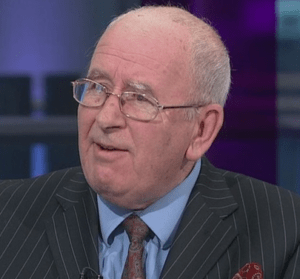
Madsen Pirie

Madsen Pirie Pic credit: wikipedia

They saw it as putting up house prices even more beyond reach and doing nothing to aid the supply of affordable homes. Nor did they want a big council house building programme.

What they wanted was a liberalisation of the planning laws and a mass release of land to allow not a few thousands but a million, yes a million, homes built  in three years to totally change the affordability of housing and bringing back mass home ownership.

Nor were they impressed with a £1.2 billion spent freezing student loans at £9250 and raising the pay back level to £25,000. What they wanted was instead the abolition of the new 6.1 per cent interest rate on loans, pointing out that this could add £5000 to payments soon after students graduated.

So how has May got this so very,very wrong. The answer was plain to see. The Tory leadership is not listening to them. What came over to me was that thus young strand of the Tory’s future had no influence on what their leaders did and were very frustrated and even angry about it.

Unlike at Labour where it is clear that young people – as members of the party had an input – these young people seemed to be treated as election fodder to get the mainly elderly Tory vote out.

There was other thing I noticed at this gathering.There was not a black or brown face to be seen, they were universally white, again unlike Labour. Yet they were not all from the Tory shires, some were from multiracial Bristol, and another from Camberwell and Peckham. Given what diverse place this is, I was surprised there was no ethnic minority representation. I had seen a more diverse audience at an earlier fringe organised by Westminster council.

What this augurs for the future of the Tory Party is not good for them. Their membership is already elderly and falling. If they don’t take any notice of their young membership they are doomed to oblivion – just as Tory campaigner John Strafford said earlier this week.


Exclusive: Tories face “oblivion” says party campaigner as membership plummets to 100,000

ConservativesCROSS POSTED ON BYLINE.COM

One of the Tory’s longest serving campaigners is predicting the party is facing ” oblivion” after losing nearly 40,000 members this summer following Theresa May’s failure to secure a majority government at the general election.

John Strafford, chairman of the Campaign for Conservative Democracy, in an  eve of conference exclusive interview  on the Tribune magazine website, says the real membership of the party has plummeted to around 100,000- way below the 149,500 figure and 134,000 figure used by the party in 2013.

Mr Strafford said: “The party is facing oblivion. If you take the fact only 10 per cent of the membership is likely to be very active they will not have enough people on the ground to fight an election – they won’t even have enough people to man polling stations on the day.

“They are keeping council seats because often the families of the councillors are campaigning with party members to get them re-elected. They simply don’t have the local resources to do this in a general election.”

According to Mr Strafford in 300 of the Parliamentary constituency parties  – nearly half the MPs in Parliament – membership has dropped to 100 people or fewer.

The contrast with Labour could not be stronger – with the party already having 569,500 members and launching a further on line membership drive after their conference.

Membership could also be lower than the Liberal Democrats who have also seen a jump in members from 61,000  to 102,000.

He said a series of recent events had led to this parlous state of affairs. The leadership contest after David Cameron announced his resignation initially led to the Tories recruiting an extra 40,000 members who wanted a say in voting for the next leader and Prime Minister.

But when Andrea Leadsom pulled out from challenging Theresa May – there was no vote for the leadership- and Theresa May became PM without an election.

The situation was compounded when Theresa May called a snap election and rather than allowing constituency parties to select their own candidate – imposed candidates in seats that did not have one selected.

John Strafford pic credit Conservative Home

John Strafford Pic credit: Conservative Home

The bad handling of the campaign irritated party members – as many activists assuming Jeremy Corbyn had no chance  were sent to Labour held seats with large majorities with the aim of toppling the  sitting MP – while leaving Tory marginals undefended. One example was Slough – where instead of the Tories taking the seat the new Labour MP was returned with a huge increase in his majority.

As a result nearly all the 40000 new members recruited by the Tory leadership battle last year have not renewed their membership because, according to Mr Strafford they have found out they have little say in party proceedings or policies. Again the contrast with Labour which is devolving more power to its members could not be stronger. ” They are just not renewing their membership with some constituency parties which recruited hundreds of members finding only a handful renewing.”

The plummeting membership is one reason why some MPs are becoming restive. One  with his ear to ground is Robert Halfon, Tory MP for Harlow, who this week in Conservative Home  backs John Strafford’s analysis that lack of democracy is driving away members.

” I began to realise that, far from being a lunatic, John was quite sane…and it was perhaps us who closed our ears to what he was saying who were the crazy ones. For many years, he rightly predicted that a lack of democracy would lead to a loss of membership. He was right.”

The issue will be raised at the Tory Party conference fringe in Manchester next week.

On Monday the  Campaign for Conservative Democracy will hold a fringe meeting to discuss how to tackle this by injecting some democracy to attract members.

The Adam Smith Institute will hold a meeting on Tuesday to address why 60 per cent of young people are supporting Jeremy Corbyn and how the party needs new policies to attract a younger membership.

How party politics have changed. A year ago it was Jeremy Corbyn whom the Tories regarded as unelectable and a joke. Now it is the Tories that are worried they are becoming unelectable  and are running a party few people would want to join.


Hidden in plain sight: Labour trains a new generation of political activists

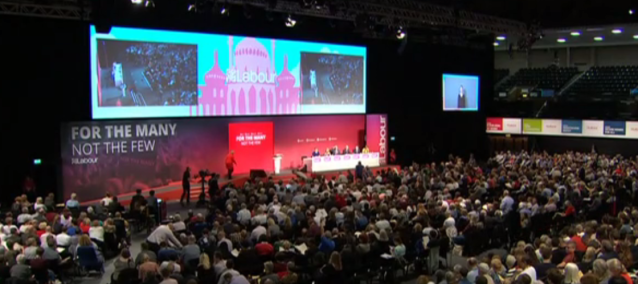
labour_conference Pic credit politicshome

Labour Conference 2017: the top of the iceberg Pic credit: politicshome

CROSS POSTED ON BYLINE.COM

The Labour  Party conference this year was like one huge political iceberg.

The ten per cent that was visible was dominated by the passionate, football chant style support for Jeremy Corbyn and John McDonnell – as the architects of a Labour revival that had seen membership soar to 569,500. It did unveil new and radical policies.It suppressed a public row over Brexit  which I notice Danny Finkelstein on The Times saw as shrewd politics, leaving divided Tories to take the flak. It contained a dispute about whether there was anti-Semitism among  Left wingers despite the best efforts of Guido Fawkes ,the Daily Mail and the Equality and Human Rights Commission to stir the pot.

But under the eyes of the media ( who were given very restricted access to the conference hall) the hidden 90 per cent of the Labour conference was carrying out another revolution which will ensure that the current revival of political activism among the young has a long term future.

Contrary to what most Conservatives would like to think the 369,000 new party members who joined after Corbyn became leader are not all former card carrying members of the Social Workers Party, the Communist Party and other Left wing groupings. And they even applies to those who joined Momentum

Just on a micro political point, members of the local Labour Party in Berkhamsted and Tring in  Hertfordshire have jumped from about 40 to 450 as a result of Corbyn.. If they were all committed former Communists, I think I would have noticed. Having lived in Berko since 1983, the town is not known for having Marxist banners festooned all over Berkhamsted station or the civic centre.

No the truth is – thanks to lack of any political  or civic education in our schools – they have ideals, strong views but little hard knowledge of how to participate in a political democracy. Many may be savvy with social media but need to know how to use it for the benefit of the Labour Party.

There were sessions on door knocking, electoral law, what becoming a councillor is like. making Labour Party branch meetings more fun, championing equality, building up women’s forums,  getting more disabled friendly meetings and how to use the traditional and social media to get your points across. There was also advice on how to tackle the problem of success, too many new members swamping local meetings.

Jeremy Corbyn has already transformed interest in politics by doubling the percentage of people involved in party membership in Britain. Now it looks as though Labour is going to get the new membership to engage in democracy. to help them win the next election. Even if only 10 per cent of the membership become fervent activists – that is still some 57,000 people – more than half the total Tory membership, I am told.

What is going to be interesting is when that hidden 90 per cent of the Labour iceberg hits  the opposition at the next election. Will it be the  sinking of the Tory Titanic or will the Tories try and steer well clear and come up with something new.


How Jeremy Corbyn (with a little help from Tim Farron) brought political activism back from the living dead

Jeremy corbyn rally

Jeremy Corbyn rally – a sign of a revitalised party membership. Pic Credit; Twitter

CROSS POSTED ON BYLINE.COM

As the Labour conferences is just about to start   one of the greatest achievements of Jeremy Corbyn has been to revitalise political activism in Britain.

According to a report in the House of Commons library active membership of  political parties fell to its lowest ever recorded proportion of the population –  at 0.8 per cent – in 2013. It was virtually teetering on near extinction. It had also veered to the right – with UKIP going from now nowhere to 74,000 members.Labour in 2013 was also at a low before Corbyn won the leadership of 190,000 members.

So dire was the membership of political parties that political commentator Andrew Rawnsley in a comment is free article in The Guardian  could joke that as many people had declared their religion in the census as a Jedi knight  than belonged to each of the main two political parties.

After Corbyn’s leadership victory in the autumn of 2015 membership of the Labour Party had soared to 388,000. Under his leadership, despite a hostile press, it grew again to 544,000 by the end of last year. Since then it has risen to 552,000 in June. And on the eve of the party conference now stands at 569,500.

To do him credit the other person who revitalised an ailing party was Tim Farron. Fuelled by their Remain stance the  Liberal Democrat party moved from 61,000 members in December 2015  to 78,000 by the end of last year and to 102,000 by May this year. though this is dwarfed by Labour.

Between the two of them they have increased membership of  political parties to 1.7 per cent of the population – still small – but more than double the numbers in 2013.

The biggest losers are UKIP who have seem their active membership collapse in lone with their poor election performances. Membership of UKIP was around 74,000 in December 2015 but had fallen to 39,000 in July last year and fallen again to 34,000 by December. No new figures have been issued since.

Slightly surprising has been the demise of the Greens – though they seem to have started to turn this around.Their membership fell from 63,000 to 46,000 from 2015 to 2016 but the trend appears to have reversed itself – with an increase back to 55,500 in March this year.

Membership of the Scottish Nats has also stopped growing with it flatlining at around 118,000.

The real mystery is the Tories. They say their membership is 149,000. But this figure has never been updated since 2013 as no political party is obliged to publish its membership numbers in its annual report. Their shyness in producing any new membership figures since then – suggests that they may have suffered a decline in membership.

Certainly if they had any big increase in membership they would have immediately published details – to try and take the shine off Jeremy Corbyn’s extraordinary ability to attract new members in droves.

It has recently come out that the average age of Tory members is 72 which suggests that while there have been enormous increases in Left and Centre parties – the Tories could well be in terminal decline and turning  literally into the party of the living dead!


Why Francis Maude and Amyas Morse are right to ginger up complacent Whitehall

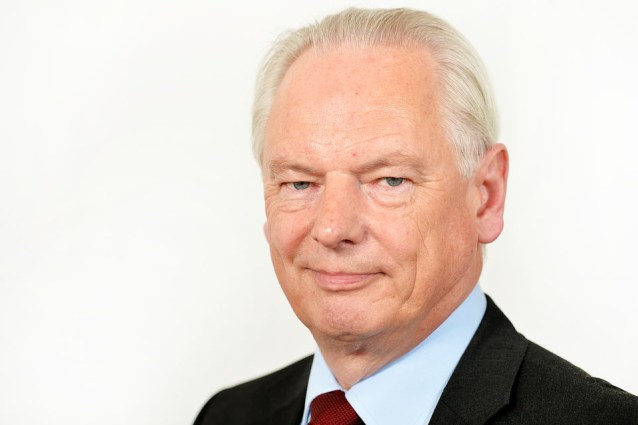
2015 General Election - Cabinet

Lord Maude Pic creditL gov.uk

CROSS POSTED ON BYLINE.COM

Last week I attended  what turned out to be a highly controversial debate on the future of the civil service – one of a series on various issues chaired by John Bercow,  at Speakers House in the House of Commons.

I found myself  surprisingly agreeing with Lord Maude, the former  Tory Cabinet Office minister, and with his opponent, Bronwen Maddox, director  of the Institute of Government, ( who rightly highlighted the mistake to privatise the probation service) over why the top echelons of Whitehall need radical reform.

Don’t get me wrong I am not about to become a card carrying member of the Tory Party ( even if their average age at 72 is nearer mine) and I would  disagree with Maude profoundly over his savage cuts agenda, but on the management of Whitehall he is talking sense. He is also a Whitehall insider and his full speech is here.

I have often wondered why time and time again Whitehall is  dragged before the Commons Public Accounts Committee to explain fiasco after fiasco on how millions if not billions of pounds are wasted on defence contracts, computer projects, collecting tax, benefit errors and big transport  and energy infrastructure projects.

Francis Maude provided part of the answer – our top civil servants are not up to the job. because they are not trained properly  to do it. And they rely, I am afraid, still on too much secrecy, to cover this up.

They are not trained for the complexities of modern Britain and complacently still believe we have the best civil service in the world while the rest of the world is changing fast.

What was more shocking is that he proposed some  modest remedies to change this – and brought down a howl of protest from  stuck in the mud mandarins. He thought it might be a good idea if fast stream graduates got wide ranging training in different government departments over a  two year period rather than being stuck in one ministry.

As he said : ” Bright graduates thought they were joining the Civil Service; and were then surprised to find that they joined a specific ministry where training took a definite second-place to the job to which they were assigned.

My modest reform to make the Fast Stream programme look and feel more like a typical two year graduate training programme met with surprising resistance, with four permanent secretaries, including at the Treasury, showing up to tell me that it was completely impossible.

Apparently, if the Civil Service trained its graduate entry the way high-performing private sector entities do, the government would fall apart. If I insisted, as I did, that Fast Stream trainees did four six months postings in different parts of government, then they would be unable to do any useful work.”

He also suggested a much broader programme for the top senior mandarins – giving them international business school experience – and , believe or not, got threatened with exposure in the Daily Mail for wasting taxpayers money!

As he said: “The second eye-opener was when I proposed that senior civil servants headed for very big responsibilities should be put through top management courses, typically three months, at top business schools. High performing organisations routinely do this; and I have seen people come out transformed into a bigger, more confident and capable leaders. So I proposed first that the ten permanent secretaries should go through these courses before the 2015 election.

“The first objection was that this would be very expensive and that the Daily Mail would make a fuss. My response was to say: Bring it on. If the Mail really want to object to us spending £60,000 on someone managing a budget of tens of billions, I’d love to have the argument.”

He also, in answer to a question from me, about the secrecy surrounding who decided the bonuses paid to top Department of Works and Pensions who are responsible for Universal Credit, called for more transparency. He also suggested that civil servants should be much less timid in challenging ministers over public spending projects – ending the idea that when a top civil servant demands an ” ministerial directive” to do the job it shouldn’t be seen as a nuclear option but commonplace.

Since going to the debate I have discovered he has a strong ally over this – Amyas Morse, head of the National Audit Office -wrote a year ago about the failure of Whitehall to do the job in this area.

“The threat of this can prevent poor decisions about use of taxpayers’ money, and discussions about possible directions can have ‘invisible’ positive influence on decision-making.

” However, the evidence suggests the mechanism is not being used effectively. Major projects where there were clear value for money concerns, such as the FiReControl Project (2004-2011 which had cost £635 million when it was cancelled) or the National Programme for IT in the NHS (costing £11.4 billion between 2002 and 2011), were not the subject of directions.”

Instead the timid mandarins query  tiny projects by comparison – such as the use of money for a consultancy on the future of Manton Airfield in Kent- and are too frightened to challenge really big decisions.

The time has come for a radical change in direction in Whitehall to get better and more broadly trained civil servants at the top who would take better decisions on how they spend our money.


London Midland admits it got it wrong over its passenger assistance service

Berkhamsted-station-is-stepfee-21

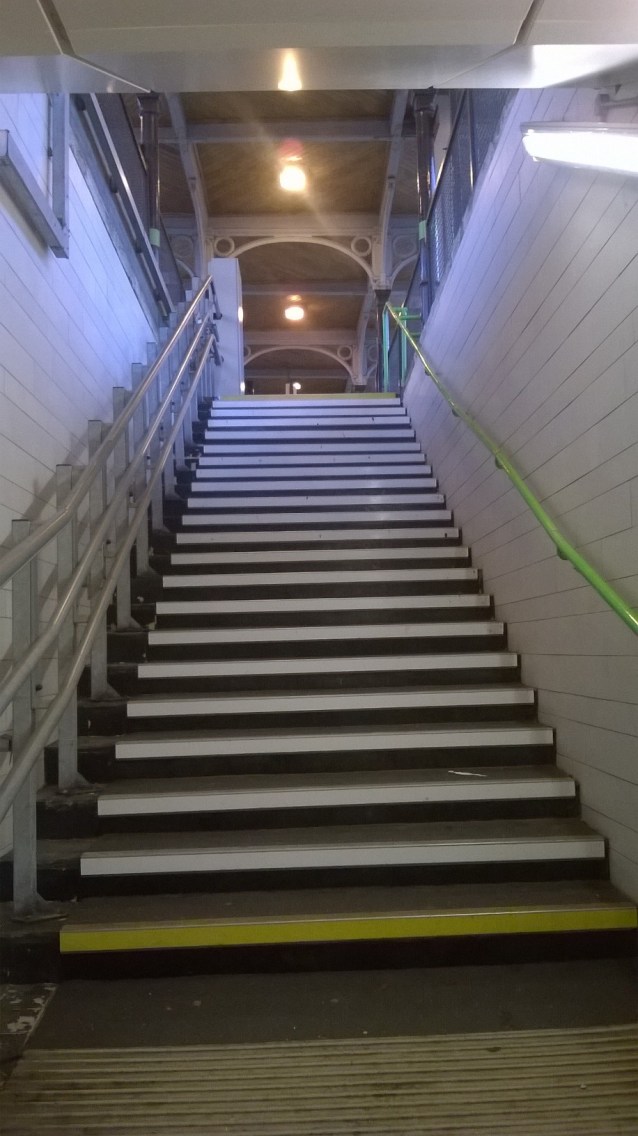
Rather a lot of stairs to go up or down if you are disabled or have a buggy at Berkhamsted station if the lift is out of order.

CROSS POSTED ON BYLINE.COM 

London Midland has admitted that a ” breakdown in communication ”   meant it didn’t know that one of its stations was unstaffed, had a faulty lift and that its  emergency passenger help service didn’t work last Sunday.

The admission came in an email from the company in response to a complaint I lodged after being dumped at Berkhamsted with my disabled wife Margaret at the end of a weekend break from Liverpool.

I highlighted this in a blog earlier this week purely because I thought the situation was potentially dangerous and that train companies should be more careful in ensuring that their passengers can travel safely.

An email from Sarah Brassingham, a customer relations adviser, admits :  ” Unfortunately there was a breakdown in communication that meant that the team at Milton Keynes Central were unaware of the issues at Berkhamsted that evening, which were obviously compounded by the issues with the help point on your arrival.

Steps are being taken to address this with the stations and Passenger Information teams, and our Facilities team are resolving the issues with both the lift and the Passenger Information points as quickly as possible.

I can assure you that we take any assistance failures extremely seriously and apologise again for the inconvenience and distress caused.”

We have been offered a rail refund for the Milton Keynes to Berkhamsted journey but it does raise wider questions. One solution would be to ensure that whoever helps a disabled person  to get on the train informs the guard about the person’s destination – so if there is no one there the guard can help. at the other end But that still doesn’t get over the problem of faulty lifts or emergency help systems not working.

London Midland say their policy is ” Pre-booked assistance is provided by the station team at staffed stations and by the Conductor on board the train when the station you are getting on or off the train at is unstaffed.”

That raises another question. London Midland still has guards. If Southern get their way they won’t be any and presumably if they have any unstaffed stations disabled people won’t be able to get off the trains or be unable to travel.

That is one reason to back the RMT union case to keep guards on trains and fight the company and Chris Grayling, the transport secretary, who want to get rid of them.


Can’t rely on London Midland:How staff cuts and technical failures dump on disabled and vulnerable rail passengers

london midland train

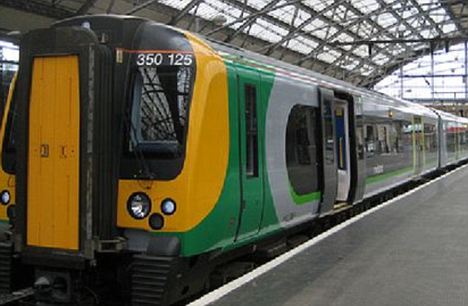
London Midland train

CROSS POSTED ON BYLINE.COM

This weekend my wife and I returned from a weekend in Liverpool where I had been speaking at a GMB Justice Campaign conference.

My wife is recovering from a stroke and we use the passenger assistance service to travel by train as she needs a little help boarding trains and avoids using stairs.

This weekend we got a good service when we boarded the train at midday on a Friday in Berkhamsted and a good service at London Euston  and Liverpool Lime Street on the way up and at Liverpool Lime Street and Milton Keynes where we changed trains on Sunday on the way back.

But the support fell apart when we returned to Berkhamsted just before seven o’clock on Sunday evening. I am writing about what happened here because it has wider implications for rail  travel and what steps rail companies take to protect people in an emergency.

Berkhamsted Station has recently installed lifts to aid the disabled, people with heavy luggage and families with pushchairs to get from the platforms to the subway below.

When we got to Berkhamsted  a town with 27,000 people) there was no one there to help my wife off the train and the lift was out of order. But it didn’t say it was out of order. Instead you could access the lift to go down to the subway. It just wouldn’t respond to go down to the subway.

Thinking this should be reported I pressed the alarm. Immediately I got an automated message saying ” don’t panic” and then the lift dialled an emergency number. There was no reply. I repeated the exercise still no reply. Luckily the doors had not closed or else we would have been trapped inside the lift until some one rescued us.

On the platform there is also an automatic system for passengers to contact someone should they need emergency assistance. I pressed that. Believe it or not I got message saying the number was unobtainable. So if say someone had been assaulted or sexually attacked on the platform – the emergency assistance system was faulty

When we eventually got off the station ( there is another roundabout route down a ramp through a station car park ) I found a notice on the ticket office saying there it had closed all day Sunday – so  there had been no staff at the station all day.

What has shocked me is that London Midland seem to have no ” duty of  care” to passengers – and their systems which are supposed to work when they are no staff – appear to be just there for show.

We did meet one member of London Midland  staff working that night – a man on the train from Milton Keynes to Berkhamsted checking tickets. So the company gave more priority to making sure it got all its revenue on Sunday for its shareholders and directors – than bothering to provide staff or checking that emergency procedures worked  to aid its passengers. And with plans to get rid of guards and close as many ticket offices as possible it can only get worse.

I have written to London Midland for an explanation and look forward to their reply.


Esther Baker child sex abuse case: “Insufficent evidence”to prosecute as accused ex MP outs himself “

esther baker

Esther Baker

CROSS POSTED ON BYLINE.COM

 UPDATE  20 January 2018: Since this blog was published Esther Baker has been given core participant status at the Independent Inquiry into Child Sexual Abuse. She has appealed the decision by the Crown Prosecution Service who are currently reviewing the case

She is still regarded by Staffordshire Police as a witness for a separate inquiry with another police force into child sexual abuse and exploitation.

The two year long police investigation into allegations by Esther Baker against a former Liberal Democrat MP and two other people has ended with no prosecutions against any of the people following a decision by the Crown Prosecution Service that there is ” insufficient evidence” to get a conviction in court. Her case was highlighted,among others, by Exaro News, and centred around allegations that as a young girl she was sexually abused in the woods in Staffordshire by a number of prominent people while police officers looked on.

Staffordshire Police said in a  carefully worded statement which was supportive of Esther : “We have now concluded a thorough and sensitive investigation into a number of non-recent child sexual abuse allegations made by Esther Baker.

Throughout this process our priority has been to support Esther and ensure all potential lines of enquiry were carefully assessed and investigated. We submitted the findings to specialist lawyers at the Crown Prosecution Service (CPS) who have now concluded that there is insufficient evidence to provide a realistic prospect of conviction of any suspect in this case.

We recognise this investigation, and subsequent review by the CPS, has taken a great deal of time. ”

Supt Amanda Davies said “It was vital we gave the victim the time, space and support she needed to disclose the information. Over 100 hours of interviews were conducted by specially trained officers, and throughout the investigation we have kept her informed and continued to provide support.

“In this case Esther made the difficult decision to waive her right to anonymity and we will continue to support her, as we would with all victims of crime. We want to take this opportunity to reassure other potential victims that their identity is protected by law.”

“Supporting victims remains our absolute priority, rest assured you can contact us confident that you will be listened to and we will provide the support you need.”

Three people were interviewed under caution during this investigation, one of whom was arrested, he has now been released from bail.

John Hemming, the former Liberal Democrat MP for Birmingham, Yardley, decided yesterday to reveal that he was subjected to allegations from Esther Baker and interviewed by the police though not arrested. In a long statement on his own blog, reproduced below, he attacked the Labour Party and accused his successful opponent,  Jess Phillips, Labour MP for Birmingham, Yardley of a campaign against him over the case ( even though he was never named) which he claimed was a perversion of the course of justice. He also attacked Sky News and Exaro for their reporting of it.

 He said :“I am pleased that the Police have now made it clear that there has been a concerted effort to promote false criminal allegations against me and that the allegations had no substance whatsoever.

I would like to thank Emily Cox, my children, Ayaz Iqbal (my Solicitor), my local lib dem team and many others who supported me through this dreadful experience. 

There are many worse things that happen to people, but this was a really bad experience.

It is bad enough to have false allegations made about yourself to the police, but to have a concerted campaign involving your political opponents and many others in public creates an environment in which it is reasonable to be concerned about ill founded vigilante attacks on your family and yourself. Luckily there was a more substantial lobby to the contrary as well, which included many people who were themselves real survivors of abuse, which has helped. 

I am normally someone who helps other people fight injustice. Being subject to an unjust campaign of vilification is something I do not wish to repeat.

The police themselves have handled the allegations well. However, although it was obvious from the start that the allegations were nonsense, it has taken two years for this to be resolved. Identifying why that is will take time, but I believe that the system is too tolerant of false allegations. The current CPS guidelines on handling false allegations are in my view too tolerant of malicious allegations and need review. The unnecessary delay of around 2 years in resolving the issue I believe arises from procedures that are being used being flawed.

It has been in the public domain for 2 years that the complainant changed her allegations in early 2015 from those she had made publicly previously and that she had stated publicly that she had never met a politician…

It should be noted that the newspapers generally have handled the issue reasonably well. Exaro and Exaro’s funder have behaved dreadfully. Sky should recognise that not only was their broadcast of the original allegations in May 2015 a complete nonsense, but also had it been based upon truthful allegations that it would have undermined a criminal investigation. The attempts to drum up additional false complainants through the use of publicity highlights a difficulty with publicising cases whilst a police investigation is going on. There are people who will make false allegations merely because someone suggests that they are looking for such allegations.

Some members of the Labour Party, including my opponent in the last two General Elections, have invested considerable time in promoting these allegations. The promotion of the complainant as an expert in this subject area as a consequence of these allegations has caused additional difficulties for my family.

I am not myself aware of another situation where members and supporters of a political party have promoted such allegations in such a public manner – essentially arming the villagers with torches and pitchforks and setting off on a lynching. There were public attempts to prevent me from standing as a candidate because of allegations made maliciously by a Labour Party member backed by other members of the Labour Party. Many Labour members will find this unacceptable and it is an issue that needs consideration by the Labour leadership.

I have asked the police to investigate this attempt to pervert the course of justice and await their response. There are, of course, many procedural options that are open to me to obtain justice for my family. I will consider those over the near future.”

Two points need to be made as I suspect that this case will not be going away for some time.

First because other allegations  ( not involving the ex MP) made by Esther are still under investigation by Staffordshire Police with another police force, relating to when she was a teenager and she is intending to appeal the CPS decision.

Second it is clear Mr Hemming will not let this go. On his criticism of Exaro there are two points. He wrongly blames the former owner and funder, Jerome Booth, for publication of the story. Jerome never knew or wanted to know what stories Exaro was investigating and read the stories for the first time  like everyone else when they were published.

Secondly Exaro never named him throughout the investigation and when the police revealed his age which would have made it easier to identify him through ” a jigsaw identification ” removed the tag Liberal Democrat.


The £20,000 benefit bonus rewards for the metropolitan elite at the Department of Work and Pensions

neil couling

Neil Couling – £145,000 a year

CROSS POSTED ON BYLINE.COM

Last week I had a story in the Sunday Mirror about top bonuses and pay rises for five of the most senior  and well paid civil servants at the Department of Work and Pensions over the last two years.

The information was published in the annual report and accounts  of the DWP released last month. These same accounts were qualified for the 29th year  running according to the the National Audit Office – because of fraud and error in payouts to claimants rendered them inaccurate and wrong.



Sir Robert Devereux pic credit Twitter

Sir Robert Devereux – £190,000 a year Pic credit : Twitter

The bonuses announcement came at the same time as 31 Labour MPs had called for a pause in the roll out of the ministry’s new Universal Credit  programme – which replaces five benefits – because of reported chaos in its administration leaving some claimants without money for up to six weeks. One of those 31 MPs, Kevan Jones, who represents Durham North said the bonuses were a ” reward for failure”.

He described them as “an insult to many of my constituents who are already living on the breadline. In my constituency they plan to introduce this in November which could leave thousands of people without money in the run up to Christmas.”

mayank-prakash_square

Mayank Prakash £220,000 a year including £20,00 bonus Pic credit: DWP Digital

Within days of the publication of the story the FDA ( the First Division Association) which represents the top civil servants attacked the article in a report in Civil Service World.

Jawad Raza, FDA national officer for DWP, said officials should not be used as targets by political opponents of the system simply for doing their jobs.

“The suggestion that these civil servants have been ‘rewarded for failure’ shows a blatant disregard for the facts regarding their pay and

Jeremy Moore pic credit

jeremy moore – £135,000 plus £20,000 bonus

wilfully misrepresents the true complexity of their roles,” he said.

“Senior civil servants have delivered billions of pounds worth of savings since 2010 with an ever reducing workforce. These are highly skilled professionals working in challenging circumstances and they deserve to be adequately remunerated without having their names and faces spread across news pages.”

Sorry Jawad I think there is more to this.

The five civil servants are Sir Robert Devereux, permanent secretary at the Department of Work and Pensions; Neil

WAxtX_a1

Andrew Rhodes – £140,000 a year plus £15,000 bonus

Couling, director general of universal credit; Jeremy Moore, director of strategy; Mayank Prakash, director general of digital technology and Andrew Rhodes, director of operations have received between £10,000 and £20,000 each .They are nearly all paid more than Theresa May, the PM.

The bonuses were awarded for “ top performance “ and “ leadership “when the rest of Whitehall is limited to one per cent pay rises and many benefits have been frozen.

Sir Robert last year received up to £20,000 extra on a salary of up to £185,000 a year. This year he hasn’t received any bonus but his basic salary has moved to £190,000 a year.

Neil Couling, who is directly responsible for universal credit, got a bonus of up to £20,000 last year on a salary of £125,000 a year. This year instead of a bonus his salary has jumped by £20,000 to £145,000 a year.

Mayank Prakash, director of digital strategy has received a bonus of up to £20,000  this yearon top of salary of £200,000 taking his annual salary to £220,000 .

Jeremy Moore, director of strategy, has received bonuses two years running –  totalling up to £40,000 over the two years – taking his total salary to £155,000 a year.

Andrew Rhodes, director of operations has received a £10-15,000 bonus this year, taking his salary to £155,000 a year. He also claimed £37,600 in travel expenses.

The ministry insist that all these pay rises were decided objectively by line managers.

In a statement it said:

Line managers are required to make an evidence-based and objective assessment over whether objectives have been met, not met or exceeded. 

 Individual performance is assessed by the individual’s line manager through an appraisal discussion, with supporting evidence from a range of stakeholders.

But apart from Sir Robert – whose bonus was decided by Sir Jeremy Heywood, the Cabinet Secretary – the Department declined to say who these line managers are and which outside organisations and people recommended they should get bonuses. The bad news for the DWP is that Kevan Jones plans to table a Parliamentary Question next month to find out who.

Now the FDA has a point that compared to the top of the  private sector they are badly paid. A report put out by the House of Commons library revealed that the top 3000 bankers are ALL earning over £884,000 a year – which makes £20,000 sound small beer. But if anything that reflects that huge growth of inequality in Britain.

At other end of society how effective are these five top men ( note they are all men) in delivering what they are supposed to do. All are responsible in one way or another for the delivery of Universal Credit.

At present they are using Newcastle-upon-Tyne – to roll out the full effect of Universial Credit.

Catherine McKinnell , Labour MP for Newcastle North, said:“ My office has been deluged with complaints from constituents about a Universal Credit system that is clearly struggling to cope and failing to deliver the support that claimants need in anything like an orderly or timely fashion.”

Her debate can be read here.  Suffice to say it reveals a very sorry picture. The  new IT system means people can’t talk to a human. It has  a verification process that requires claimants to produce photographic identification such as a passport or driving licence, “which many simply do not possess and certainly cannot afford, even though some have been in receipt of benefits for several years.”

“I also have numerous examples of Universal Credit claims being shut down before they should be; of documentation being provided to the DWP, at the constituent’s cost, and repeatedly being lost or even destroyed; and of totally conflicting, often incorrect, information being provided to constituents about their claims.”

For a time the ministry effectively banned MPs from taking up cases by making impossible verification demands before they would talk about it.

What this shows to me is a growing disconnect between the people at the top – who are computer savvy, have nice centrally heated homes, no problems with bills, can afford expensive holidays, and can’t conceive of anyone not having a passport – designing a system for poor, dispossessed, desperate people without any understanding of how the world works for them.

It was this disconnect between the elite and the poor  in the USA that led to the rise of Donald Trump and I suspect this huge gulf between the Metropolitan elite – whom top Whitehall civil servants are part – and the provincial poor is in the end going to propel Jeremy Corbyn into Downing Street.


Edintfest: 70 years of challenge and innovation

edinburgh inetrnational festival - Rhinoceros

CROSS POSTED ON BYLINE.COM

This year the Edinburgh International Festival celebrated its 70th anniversary . So did I.

The opera, music, dance and drama festival tends to be overshadowed by the huge Edinburgh Fringe with its thousands of zany, rude, comical and political shows. But the international festival with its world class productions never fails to either stimulate or challenge you – even if you live near London  and can already see a very wide range of productions.

I have been a recent convert  attending the festival – starting post early semi retirement when I left the Guardian in 2009 – before that I was sometimes expected to stand in for the dead season of political coverage in mid August or went on a family holiday.

But what constantly surprises now my wife and I do try to go every year is the extraordinary range of productions. I have been entertained, moved, frightened and only occasionally bored by what we have seen. This year was no exception, even if underlying some of the themes has been the rather alarming and dangerous state of the world in 2017.

No more so than the joint Scottish and Turkish production of Rhinoceros  – Eugene Ionesco’s Theatre of the Absurd play – drawing from his experience of the rise of Fascism and authoritarianism in Romania in the 1930s. It is very, very funny but it tells of the growth  and attraction of authoritarian rule by people being turned into Rhinoceri until only one person was left. It was particularly poignant that it was a joint production with the DOT theatre company from Istanbul, given the rise of Erdogan.

Equally dramatic for anyone who likes flamenco music was the Maria Pages Company production of Yo, Carmen – an energetic and beautifully choreographed performance partly using Bizet’s music from Carmen. This eight all women group  also had a strong Feminist message that women were not there just to please men.

Surprisingly disappointing was the premiere of Alan Ayckbourn’s new play   The Divide- a  Dystopian  sci fi picture of Britain after the Plague in the 22nd century. This was a diminished world of separated men and women – but it suffered from following a similar theme to the recent Handmaiden’s Tale on TV – and in two parts was over long and more of a narrative than a drama. This will come to London at the Old Vic next year. Not everybody stayed including us.

Anoushka Shankar – daughter of the late Ravi Shankar – also pursued a ” shock and awe” theme in her loud and strobe lighting musical story of the refugee crisis. Classical Indian music it was not – but a  Westernised performance with an electric sitar.

As interesting was the supporting act – A gawwali ( Arabic meaning word of the prophet says the programme)  performance singer – Faiz Ali Faiz- with a male chorus, two harmoniums, a tabla and handclappers is sung rather like an Indian repetitive raga.  The sacred music dates back 700 years to the Sufi mystics. The performance was also a political statement against Muslim fundamentalism which bans singing. It was a complete revelation to us in more ways than one – since it had not been billed by the Festival when I booked the tickets.

Finally there was the revival of the Incredible String Band – the 60s psychedelic folk band – with one of its original members, Mike Heron, who with musical friends and relations, turned the clock back 50 years to a less troubled time, with both spirited and poignant performances. In its time incredibly innovative music and still powerful today. An avid follower in the audience told me to watch out for Trembling Bells, a more recent Glasgow psychedelic folk group, who occasionally join forces with the band.

One parting shot – since my wife became disabled following a stroke four years ago- access to events has been important. She doesn’t now need a wheelchair but can only walk slowly and needs rails -particularly on stairs to keep her steady. The Edinfest venues  vary from good- the Lyceum and Usher Hall – to antiquated – the Kings Theatre – and more difficult, the Playhouse. Unfortunately at the Playhouse we were allocated seats in the circle  which had no rails to get there- and if it had not been for one of the helpful ushers and a member of the public – she could easily have fallen. This put her off returning for the Incredible String Band concert.

But overall such different, innovative and challenging stuff in just six days is why the international festival is really worth seeing. Happy 70th birthday Edinfest and long may it continue !