Corbyn’s Progress: How council by elections are now panning out

lloyd russell-moyle

LLoyd Russell-Moyle. Victorious Labour candidate in Brighton council by-election last week. Pic credit: Twitter

CROSS POSTED ON BYLINE.COM

The mainstream press has been universally hostile  in reporting Labour’s performance in council by elections. The results either go unreported or they report only Labour defeats. Or they ridicule Corbyn when he chose to mention a Labour gain from UKIP on Ramsgate Town Council ( admittedly he could have cited better examples including  gains in Staffordshire and Essex on bigger councils).

So how exactly are Labour doing. Remember one has to take local council by elections with a degree of scepticism. The polls are lower and local factors play a part  which can distort the result. Nevertheless these are not opinion polls – they are results from people actually bothering to go out and vote. They also tell you something about the state of party organisation whatever is happening at  national level.

I am drawing my conclusions from two websites – http://election-data.co.uk/  – written by Andrew Teale which provides pen portraits of forthcoming by-elections and Vote UK Forum – which produces  detailed results and analysis along with the Twitterfeed @britainelects.

Since the referendum.there have been a rash of by elections across the country. Contrary to what little appears in the press Labour have not done badly. They have recently in rural areas been outclassed by the Liberal Democrats who are winning seats from the Tories, Independents and UKIP with double digit increases in the share of their vote. But most of these seats are not natural Labour territory.And where the Liberal Democrats challenge Labour they make little progress.

So what is really happening? Critics of Corbyn say all Labour is doing is building massive majorities in areas they already hold.

There is evidence for this in a spate of by election results in places like the London boroughs of Haringey, Hackney, Newham, Manchester where Labour have easily held  seats-sometimes with an increased majority.

An example last Thursday in Sussex  was the East Brighton ward  which covers Kemptown and a working class estate called Whitehawk – a traditional safe Labour seat. Labour’s share of the vote went up by over 11 per cent to 57.5 per cent. They had a strong candidate in  Lloyd Russell-Moyle who fought Lewes at the last general election and is a consultant for the United Nations on children and young people. But this is a ward they would not be expected to lose.

But what in other areas where they need to win. In Staffordshire they have taken two seats recently-including one last Thursday with a 19.5 per cent increase in the share of the vote- from UKIP. The seats they are taking back were originally won way back in 2003 before UKIP achieved such prominence.and guess what- UKIP in Staffordshire is a mess. They are split with some resigning the UKIP whip and becoming Independents. A warning to Labour not to do the same.

The other interesting result was in South East Holderness in the East Riding of Yorkshire. This is solid Tory territory since 2000 yet a 18 year old Labour candidate  Patrick Wilkinson,  managed  an increase of 7.9 per cent share of the vote  to run the Tory close – cutting the majority. He has been a member of the party for two years and is an avid supporter of  Corbyn. If the Tory share had not increased by.3.6 per cent it would have been a very close run result. Interestingly UKIP who were second last time saw a big drop in their share.

Yet an error by a young enthusiastic candidate in Totnes, Devon, who hadn’t been a member of the Labour Party long enough to stand for the council, cost the party its only seat on South Hams council in Devon when she had to stand as an independent and gifted the seat to the Liberal Democrats.

Labour is still losing ground to UKIP in Kent, with a working class area of Ashford, Beaver, resulting in a UKIP gain. But UKIP in general are doing badly in almost every seat they stand – and this result seems different to most.other parts of the country.

The jury is still out on whether a Labour party led by Corbyn can succeed or just pile up votes in Labour strongholds.For those voting in the leadership re-election  it will have to be a gut reaction – either stick with Corbyn and see whether his  approach eventually succeeds against a right wing Tory government. Or go for Smith and  return to a more consensual  politics but risk losing these new  energetic members who can  galvanise people to vote.

But what is clear is that a divided Labour Party will eventually fail – luckily at the moment the rows in Westminster are not showing up in local town halls.


Time for Dame Lowell Goddard to explain why she quit

lowell goddard

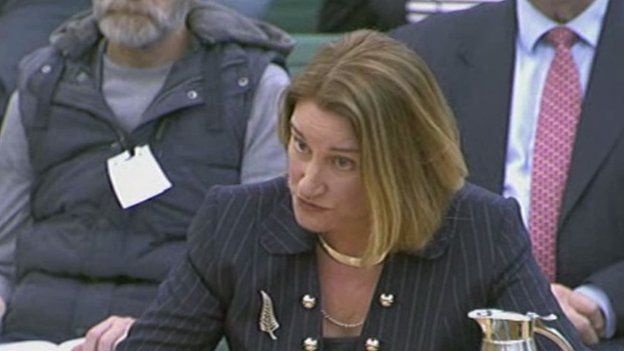
Dame Lowell Goddard giving evidence to House of Commons home affairs committee today. Pic credit: BBC

CROSS POSTED ON BYLINE.COM

The shock decision of Dame Lowell Goddard to quit the child sex abuse inquiry has been compounded by her very terse statement on why she resigned. See here Dame_Lowell_Goddard_letter

Survivors have been suddenly let down  by someone who only two years ago committed herself to a five year comprehensive inquiry that would cover every aspect of child sex abuse from VIP paedophiles to institutions as varied as children’s homes, religious orders,  schools and colleges.
It already has a packed programme  including a controversial hearing of the facts surrounding the allegations against Lord Janner; the scandal in Rochdale around Sir Cyril Smith, Lambeth Council, the Roman Catholic Church and the Church of England to name but a  few. It was also, I understand, to look at the Westminster paedophile ring and Operation Midland but not until 2018.

So her decision to leave at this crucial moment when the inquiry was starting to get into its stride is more perplexing. Her statement today in full  read :

“I announce with regret my decision to resign as Chair of the Independent Inquiry into Child Sexual Abuse, effective from today.

“When I was first approached through the British High Commissioner in Wellington in late 2014, and asked to consider taking up the role, I had to think long and hard about it. After carefully discussing the matter with the Home Secretary and her Officials and seeking the counsel of those people in New Zealand whose opinions mattered to me, I decided that I should undertake the role, given my relevant experience and track record in the area.  It was however an incredibly difficult step to take, as it meant relinquishing my career in New Zealand and leaving behind my beloved family.

“The conduct of any public inquiry is not an easy task, let alone one of the magnitude of this. Compounding the many difficulties was its legacy of failure which has been very hard to shake off and with hindsight it would have been better to have started completely afresh.

“While it has been a struggle in many respects I am confident there have been achievements and some very real gains for victims and survivors of institutional child sexual abuse in getting their voices heard. I have nothing but the greatest of respect for the victims and survivors and have particularly enjoyed working with the Victims and Survivors Consultative Panel which I established.”

What I find particularly perplexing is her implication that she should never have been appointed to continue the inquiry in the first place. If suggests that she did not think things through.

The inquiry following the resignations of Baroness Butler Sloss and Fiona Woolf because of conflicts of interest had already been remodelled – changing it from an independent panel to a  statutory judicial inquiry. Its work  and costs have gone up enormously and Lowell Goddard, as The Times pointed out, has taken time off and obviously misses her family.

The volume of work must be enormous – I know from sitting on a much smaller independent panel myself which I cannot talk about – that historic inquiries generate masses of documents.

In the child abuse area  a chair also needs to have a tough skin and a focused mind – since he or she is entering a minefield of controversy – and will face a barrage of complaints from a small but vocal minority who don’t believe that most of the child abuse took place – and most survivors are liars or bounty hunters.

Remember there are websites  devoted to the idea  that Jimmy Savile was totally innocent and everything has been made up by disturbed people. After all as Dame Janet Smith found the BBC either didn’t know or couldn’t bring itself to believe that he was a paedophile.

Therefore it seems to me that if she thinks there is something wrong in the process she should say so and she owes  the public who paid her a lot of money to chair this inquiry a full and frank explanation.

Reports suggested to me that her decision to go was not sudden. She has been seen as a little distant from event ( and not just physically ). There have been suggestions that Home Officials have tried to capture the direction of an independent inquiry and other suggestions that Ben Emmerson, the counsel in charge of the inquiry, may have had too much power.

Whatever happened we need a full explanation. And action from the Home Office and Theresa May, the PM who originally set up the inquiry as home secretary to make sure investigations and hearings go ahead regardless.

As I am the only person made redundant from Exaro who has a personal website – I intend to continue reporting on child sex abuse issues here and on Byline.com. Those who wish to keep abreast of developments should follow this blog or keep an eye on  Byline.com.


My views on Exaro,the Middle East and Jeremy Corbyn before MPs resigned en masse from his Shadow Cabinet

CROSS POSTED ON BYLINE.COM

This interview with the Lebanon based Arab News Network was about to be put up on the Exaro News  website just before it abruptly  closed. Arranged through Tim Pendry. then a director of Exaro, it puts the case for Exaro’s investigative journalism. It also discusses events in the Middle East and why Jeremy Corbyn became popular with the rank and file membership of the Labour Party. It took some time from the date of the original interview which took place at the end of March before it was put up on YouTube in June. It is rather long so I don’t expect you to listen to the lot.

Expect a sequel to this as  I am planning to do an interview with Fabrice Bardsley on The Bunker Show for Dark City Radio on what happened since for both Exaro and Jeremy Corbyn and my hopes for the future. The broadcast is scheduled to go out on August 10.


On the way: Multi million pound fines for Brexiteer Andrea Leadsom

andrea leadsom

Andrea Leadsom Pic Credit: BBC

CROSS POSTED ON BYLINE.COM

It is probably an extreme irony that Theresa May has dumped  leadership rival Andrea Leadsom right in the slurry with the job at the Department of Environment, Food and Rural Affairs(Defra)

For the Eurosceptic Brexiteer is going to have to eat a lot of humble pie and hand over more money than any other minister to the European Commission long after the United Kingdom has quit the European Union.

Her appointment coincided with the latest accounts from Defra with a caustic comment  from the National Audit Office once again qualifying them because of their incompetence in handing out £2.3 billion of subsidies to British farmers.

But this rap on the knuckles means more than that – as it sets up the UK to have to pay a fortune in fines to the EU. I have written about it in Tribune here.

As the article reports:”Failures under Labour and coalition governments to administer properly a previous farm subsidy programme have already led the Commission to fine the UK £661m.
“But this year’s failure to deliver money to farmers on time – with well over half receiving late payments – has already led to over £65m being set aside for fines in the last financial year.”

As Amyas Morse, head of the National Audit Office, said: “The Department continues to struggle with managing the complex CAP (Common Agricultural Policy) scheme in a way that ensures accurate, timely payments to farmers. As a result, it has incurred EU penalties of £65.8 million related to the CAP scheme in 2015-16, and estimates that it owes 13,000 farmers a total of at least £25.3 million.

“Exit from the European Union will not, in the short term, reduce these penalties. The Department therefore needs to ensure its strategy for tackling these challenges is effective.”

This means that Leadsom and her Eurosceptic farming minister, George Eustice, are going to face a double task until 2020.

First they are going to have to continue sorting out the ministry’s failure to pay farmers on time  while having to devise a national British system of supporting farmers which is bound to be controversial.

The NAO are estimating that if anything the level of fines could go up because of the complexities of the payments.
The ministry is promising a new strategy to sort out the problem – saying it expects payments to be better in 2016 than last year. But to do this it has – already according to the accounts – incurred a £6m increase in its pay bill by having to employ temporary staff to sort out computer failures and mistakes and delays in payments to farmers.

It is going to more than of just passing interest to see how the pair cope with such a mess.

Exaro: Survivors and witnesses details safeguarded

There have been rumours on the internet that details of survivors and witnesses have been leaked from Exaro following its sudden closure last week.

This is to tell you that both I and Mark Conrad have received full assurances that all information not only affecting  our child sexual abuse allegations but  a wide area of other investigations have been safeguarded as required to comply with privacy and data protection laws. Anyone suggesting anything to the contrary is wrong.


Liberal Democrats: On the rise again in the shires?

Liberal-democrats-poster-016

Lib Dem poster Pic credit: http://www.geraldvernonjackson.org.uk/

CROSS POSTED ON BYLINE.COM

Almost without any comment  there appears to  be quite a  Liberal Democrat transformation in voting patterns outside the big cities in the latest rounds of council by-elections

The meltdown in the 2015 general election  left the Liberal Democrats with just eight seats in Parliament.The party seemed incapable of recovering from the damage it suffered from the electorate by going into a coalition with the Tories.

Indeed last year’s council by-elections saw the Lib Dems losing more ground to the Tories in places like Woking and Brentwood. The party made a little progress in the May local elections gaining 45 seats and control of one council, Watford.

Yet since the Brexit vote the Liberal Democrats – unscathed by any party infighting – have made  no fewer than six gains – two in Cornwall and one each in Wiltshire, Surrey, Norfolk and Northampton. I have written about this in Tribune  this week.

The interesting thing is not just the gains but the huge leap in vote share by the Liberal Democrats.

The latest result in Northampton – which came in after Tribune went to press- saw in Westone the Lib Dem share up 36.4 per cent and the Tory share down 28.8 per cent. A very useful website Vote UK Forum  records that in this ward the Lib Dems – despite a low poll – garnered 268 more votes  than in the general election.

The only other factor appears to be that the Liberal Democrat had stood for a nearby area some time ago and there was some resentment that the Tory lived in a village and not in the town.

The party – like Labour – is being helped by the decline in support for the now leaderless UKIP since the referendum. UKIP appears to be both declining and having difficulty in putting up council candidates.
The Lib Dem gain from UKIP in Cornwall was caused by UKIP not putting up a candidate in a seat they already held. As a result the Lib Dem candidate won the Newquay seat with a 57 per cent share of the vote. Conservative and Labour shares were down.
Lib Dems did well defeating another independent in Cornwall and one in Trowbridge, Wiltshire where the party got 45 per cent share of the vote. In North Norfolk they roundly defeated the Tory candidate in a seat which the Lib Dems had not contested at the last council election.

The interesting point is this is not being repeated where the Liberal Democrats are fighting Labour in metropolitan areas.Apart from a modest rise in one Islington seat won convincingly by Labour and a near miss in Southwark the party is performing dismally.

Indeed the challenge to Labour -if any- has come from the Greens who nearly won a seat in the London borough of Lambeth and ate into the Labour vote in both Luton and the London borough of Newham.

This would suggest that the “Corbyn” factor has not damaged Labour in its strongholds – indeed often the opposite with the Labour share increasing. And the Voter UK website also points that the revitalised local Labour Party are by far the best in getting their local vote out – up 10 per cent on average this year. But the Tories are holding off challenges from Labour in Tory marginals.


Exaro: What next?

exaro

CROSS POSTED ON BYLINE.COM

Most people have been shocked at the sudden closure of the Exaro website. Excepting trolls and troll websites that is.It means the  end of an outlet for a cutting edge form of investigative journalism. It certainly made waves  – whether on controversial allegations of child sex abuse and paedophile rings, the Dame Janet Smith findings, tax avoidance, and  media stories like the ” Rupert Murdoch ” tapes.

And it is worth saying  that the owner Jerome Booth, generously funded the site for five years without ever interfering in the editorial content.

Every effort will be made by Mark Conrad and me to see that  these investigations and more will continue and we are having conversations with a number of people on what we do next – whether using the Exaro site or with other media organisations.

But I thought a couple of points should be made to ensure people don’t get the wrong idea.

First, conspiracy theorists please note, the site has not been closed down because of its coverage of the child sex abuse allegations and by hints from dark forces. It is purely the result of a wider financial decision

Second, the site was not scheduled for closure when its former editor in chief, Mark Watts, was first made redundant and then dismissed. Nor at that time were other people expected to lose their jobs. Logically you would not appoint new people to run a  site if you wanted to close it.

Indeed we both had plans for developing new challenging stories  which first appeared in the last few weeks and there were more in the pipeline. We were also looking at new commercial ideas and partners to fund the site.

This has paradoxically put us in a good position to examine alternatives for the future. We are also  looking out for opportunities for Exaro staff who were there at the time of the closure so this excellent team can continue their investigations.

All I can say is watch this space. I am not commenting further  on the  sad and traumatic events of this week. There is the chance of a new era ahead.


A disturbing child sex abuse case that raises awkward questions about insurers

lowell goddard

Justice Lowell Goddard giving evidence to House of Commons home affairs committee. Pic credit: BBC

CROSS POSTED ON BYLINE.COM

My colleague Tim Wood reveals on the Exaro website today a damning story about how a victim of historic child sex abuse was failed by the Church of England because it took more notice of its insurers than survivors of abuse.

Joe as he was publicly known eventually won £35,000 in compensation over a case involving abuse by a church official dating back to the 1970s.

As Tim Wood  writes on Exaro: ” Joe claims that the church initially put financial considerations above its duty of pastoral care when handling his case, and called on the Church of England to do more to help abuse survivors.

Joe told Exaro: “The church should stop seeing child sex abuse survivors through a corporate lens and start viewing us through a theological lens of healing and justice.”

In an emotional letter to the Right Reverend Paul Butler, the Bishop of Durham, Joe claims that the church played out a “monstrous charade” in initially trying to close down his case.

The letter, written in April and seen by Exaro, claims that the Ecclesiastical Insurance Group (EIG), founded by the church in 1887, administered Joe’s case and started what he describes as a “damage limitation process.” Joe also claims that Bishop Butler, the Church of England’s head of safeguarding, was complicit in the strategy and began “blanking him” despite appeals for help.

To his credit Bishop Butler  who is head of the Church of England’s safeguarding body has apologised to Joe saying : ” “I am also extremely sorry that when the solicitor’s letter arrived regarding a claim, I did not over-rule the legal and insurance advice I received regarding having no further contact with you. I should have made it clear it would have been better to maintain contact.”

And the insurance company has also said it was misunderstood and didn’t intend to interfere with pastoral care.

However there is a wider question about the role of insurance companies and suppressing allegations of child sexual abuse.

ann clwyd

Ann Clwyd, the Labour Mp for the Cynon Valley, has been campaigning for changes in the law to prevent insurers putting up road blocks in investigating child sex abuse in council run homes.

Last year she secured a debate in the Commons in  which she said that reports into abuse in homes run by the former Clwyd County Council had been “prevented from publication by the council’s insurers.”

Ms Clwyd said: “[The] council did not allow the inquiry to place a notice in the local press seeking information because this was considered to be unacceptable to the insurers. It’s interesting that the insurers of the county council were also the insurers of the North Wales Police.”

Describing how the report was then “suppressed”, she said only 12 copies were made and it was “virtually unseen by committee or council members”. She argued that if it had been published “it would have sounded alarm bells and things would have moved much faster”.

She added: “It was not until July 2013 that the redacted version of the Jilliings report was finally published after a request by the BBC under the Freedom of Information Act.”

So far ministers have not taken any action despite a recommendation by the Law Commission  way back in 2004.

This seems to be to be an ideal issue to be taken up by  the Goddard inquiry into child sexual abuse. And the Church of England case appears to be yet another example that should be investigated.

How the NHS wasted £16m of your money on a botched privatisation that collapsed within months

portrait-meghillier

Meg Hillier MP:,chair of the Commons Public Accounts Committee, condemned the failings in the scheme

CROSS POSTED ON BYLINE.COM

New ways of  helping the elderly and mentally ill survive in the community and not continually end up in hospital is a cornerstone of government policy.

So when a limited liability partnership offered a cash strapped  NHS commissioning group an initiative which promised better services for these people and could save them £178m over five years it sounded too good to be true.

The trouble is it was. As a devastating report from the National Audit Office reveals today the £800m scheme  ran into trouble just four weeks after it was launched and collapsed seven months later. You can read the full story on the Exaro website.

The scandal of the £800m scheme run by UnitingCare Partnership for Cambridgeshire and Peterborough clinical commissioning group may not be an isolated instance.That is why sources at the National Audit Office have highlighted it in their report – because it exposes an alarming lack of financial expertise inside the NHS and a flawed system to monitor whether projects like this are financially feasible  andcan  be properly checked.

The promised aim of the project was to establish  tapering payments to the partnership – with £152m up front and less money later, ¬ so that the financially challenged commissioning group could put money to better use.

But within four weeks of starting the contract the partnership was asking for an extra £34m, blaming a delay by the commissioning authority in starting the work. When the money was not forthcoming the scheme collapsed after eight months and the NHS was forced to provide services directly.

The NAO report reveals that despite employing reputable financial companies and lawyers, basic errors were made – including a failure to realise that sub-contractors could not recover the VAT from the partnership – a cost that had not been factored into the contract.

Auditors also report that nobody had overall oversight of the contract.

No wonder both Amyas Morse, the head of the NAO, and Meg Hillier, the Labour chair of the Commons Public Accounts Committee have been withering in their criticism.

Amyas Morse said: “This contract was innovative and ambitious but ultimately an unsuccessful venture, which failed for financial reasons which could, and should, have been foreseen.”

Meg Hillier said: “The result is damning: a contract terminated before the ink had even dried out, at an unnecessary cost of £16m.”

What is disturbing is that the NAO point out that Monitor, the body which checks health bodies, had no locus to check whether the scheme was viable and NHS England were too remote to act.”

The report says: ““No organisation was responsible for taking a holistic view of the risks and benefits of this approach, or considering whether the anticipated longer‐term benefits were sufficient to justify additional short‐term support.“

What is really disturbing  is that £16m was wasted -plus £8.9m  on setting up a complex tendering operation and start up costs.

Far better to have spent this extra money on patient and community care – instead of throwing our money down the drain on a scheme that anyone would have thought to be too good to be true.


Labour’s UKIP fear factor: A ballot box illusion

Jeremy-Corbyn1-440x248

Jeremy Corbyn ; Labour doing well in council elections as UKIP declines

CROSS POSTED ON BYLINE.COM

One of the reasons Labour MPs  are deciding to try and ditch Jeremy Corbyn is the fear that following the referendum result UKIP would become the official opposition by seizing swathes of Labour seats in the North and Midlands at the next general election.

Their ( at present) ex leader Nigel Farage boasted to journalists at a reception earlier this year that UKIP would win hundreds of seats from Labour in a Scotland style  melt down as the working class deserted Corbyn over immigration and leadership issues.

Since UKIP achieved its ambition for Brexit this month  one would expect them to be riding high every time voters went to the polls.

But the handful of council by-elections since Brexit are telling a totally different story with Labour actually increasing its share of the vote in some seats – and when under fire mainly losing votes to the Liberal Democrats and the Greens.

Although these results are at present straws in the wind they seem to suggest that public is separating its vote to remain or leave the EU from its support for parties on domestic and local issues. I have written about this in Tribune magazine.

By coincidence two of the first council by-elections  were in heartland UKIP areas in Kent and showed an increase in the Labour vote and a decline in support for UKIP.

In every other seat UKIP contested they lost their previous share of the vote and when they challenged Labour in a Luton ward for the first time came bottom of the poll with a derisory 69 votes.

The by- election in Welling in the London borough of Bexley was in a borough that voted to leave and in an unpromising ward  for Labour that included had one UKIP and two Tory councillors.

Yet the result last Thursday in St Michael’s ward saw the Labour share of the vote increase by 11.5 per cent to come a close second to defeating the Tory who recorded a 2.7 per cent increase in his share. UKIP’s share of the vote declined by 14.7 per cent.  Over 30 per cent of the electorate voted – one week after Bexley recorded a decisive vote to leave.

The second by-election in Newington in Thanet – a UKIP stronghold – saw UKIP just retain the seat by 14 votes. But the UKIP share was down four per cent and the Labour share was up 1.9 per cent. The Tory share was down 2.5 per cent.

Two other results in High Town, Luton and Leatherhead North in Surrey saw Labour lose a share of the vote but not at the expense of a declining UKIP. Leatherhead was a straight battle between the Tories and the Liberal Democrats who gained the seat with a 27 per cent  increase in the share of the vote.

In High Town the main challengers were the Green Party who clipped Labour’s majority and the Liberal Democrats who stood for the first time gaining 14.2 per cent. UKIP got 5.4 per cent of the vote. Labour’s share of the vote was down 13.4 per cent.

Conway in North Wales might be a example that detractors could quote. The Labour share of the vote in last Thursday’s by election in Mostyn fell 6.1 per cent. Local circumstances – the previous Labour councillor, a ship’s captain who hardly attended council meetings – may have been a factor.

The Tory share went up by 4.7 per cent and the Lib Dems by 4.9 per cent. But significantly the UKIP candidate – known in the area as he had stood as an independent – could only muster 75 votes -under 10 per cent of the poll. A full analysis can be seen on  this site.

Given the state of the Labour Party at the moment their performance in local councils is extremely robust. It still has to be tested in a by-election in the North and Midlands. But on the evidence so far the UKIP threat is a myth when it comes to the ballot box.