Judge reserves judgement on whether a top legal firm should pay wasted costs for hiding documents that removed 54,000 English doctors from the UK’s legal whistleblowing protection in the Public Interest Disclosure Act

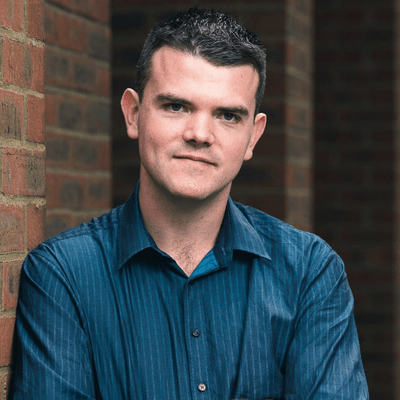
Dr Chris Day

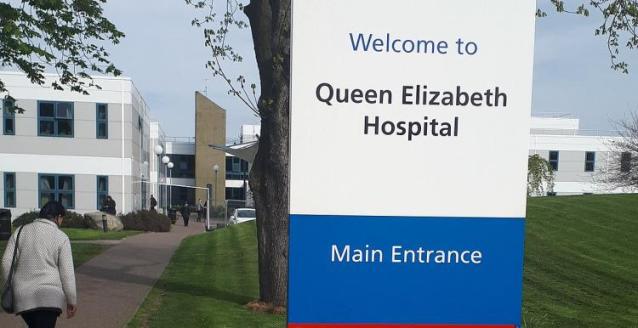
The latest in the long saga of employment tribunal hearings involving whistleblower doctor Chris Day and his ten year fight for justice over patient safety following the avoidable deaths of two patients in the intensive care unit at Queen Elizabeth Hospital, Woolwich ended with a judge reserving her decision.

This particular hearing concerned the role of top NHS lawyers Hill Dickinson, who were paid public money to draft commissioning contracts each worth tens of millions controlling the employment of junior doctors at every NHS trust in the country. As a result some 100 people observed the hearing on line over two days – more than could be accommodated in any of London South Employment Tribunal courts.

Directly involved in the case is the now defunct body Health Education England (HEE) which used to fund, commission and govern the employment and training of all English doctors on their path to hospital consultant or GP at NHS health trusts before it was merged with the rest of the NHS bureaucracy as part of NHS England.

Hill Dickinson was engaged by HEE to draw up a series of contracts called Learning and Development Agreements which were drafted in 2014 underpinning the £2 billion commissioning relationship between HEE and NHS Trust that was concealed from the courts in Dr Day’s case until last  week’s hearing.

But the existence of these contracts — which exposed as false the denial from HEE made by Hill Dickinson that HEE had substantial influence over doctors – were kept from the courts during the long battle by Dr Chris Day over over the loss of his career and claims of deliberate concealment of patient safety issues,

Journalist’s Freedom of Information request was crucial

A freedom of information request put in by the indefatigable investigative journalist, Tommy Greene, resulted in the very LDA contract being disclosed that was in force during the time of Dr Day’s case between Lewisham and Greenwich NHS Trust and Health Education England . This came after Dr Day had agreed to no less than 3 separate settlement agreements one of which designed to protect all lawyers in the case from wasted costs arising out of misconduct. 

This week’s wasted cost hearing was triggered by Tommy Greene’s discovery in July 2019. The hearing had been delayed for over 4 years by the London South Employment Tribunal since Dr Day’s original application. Since all the way back in 2015 and the all the way up to the Court of Appeal in 2017 and down again to the ET in May 2018,  HEE and Hill Dickinson clung to the false factual submission that all contemporaneous documents showed Dr Day’s claim that HEE had substantial influence over the terms of engagement was fanciful.

The wording of the 2014 contract strengthened the power of the postgraduate dean employed by HEE who could end the career chances of an aspiring junior doctor who wanted to become a consultant as well as withdrawing money from a trust who was employing him. This included the power to delete a doctors National Training Number or as Dijen Basu KC, Hill Dickinson’s lawyer, admitted “a career death sentence”.

Yet HEE and Hill Dickinson powered by public money went all the way up to the Court of Appeal to argue that HEE had no substantial influence over a doctors career and that Dr Day’s claim that they did was fanciful. At the EAT level this resulted in Dr Day being threatened for costs for effectively defending whistleblowing for the nation’s doctors

Much of this week’s hearing was taken up with the semantics of whether these contracts really meant the HEE had the upper hand or whether the trust was still really the employer. The Court of Appeal had ruled that both the HEE and the trust were employers. Hill Dickinson admitted the ruling was a game changer but tried to argue it did not apply to Dr Day’s case as he had been employed under an earlier version.

Dr Day argued that if the documents had been shared by Hill Dickinson and HEE at the time of earlier hearings it would have saved taxpayers a fortune and him and his wife 10 years- hence the argument to claim back ” wasted costs” from Hill Dickinson because of all the legal fees spent.

Dijen Basu KC Pic credit: Serjeants’ Inn Chambers

Dijen Basu, barrister from Serjeants’ Inn chambers and a qualified doctor, cross questioned Dr Day about the difference between what is known as the ” gold guide” for junior doctors and the contract — implying he should have worked out for himself the existence of the hidden LDA contracts or could have used the Gold Guide himself to win the case.

Dr Day pointed out that it was Health Education and  Hill Dickinson’s case from the 2015-2018 that the Gold Guide made fanciful Dr Day’s claim that HEE had substantial influence and also made the point that the ” Gold Guide” was worded as mere guidance on how doctors should be dealt with by NHS Trusts while the LDA was a proper contract that gave HEE a right to sue any NHS Trust if the LDA terms were not met.

michael wright, partner Hill Dickinson

Michael Wright, a partner with Hill Dickinson, even tried to argue in the hearing that the new contract was not a contract because of the rule in the NHS that different branches never sued its each other so it couldn’t be upheld in the courts. He was rather shot down when it was clear that HEE had the power to withdraw all the money given to trusts if they broke the detailed rules over the training of junior doctors which is just as powerful.

In his witness statement to the tribunal Mr Wright said he first had no knowledge of LDA’s as they were drawn up by the firm’s commercial department not his department. When he did have knowledge he thought they were irrelevant which is his explanation why they were not handed over to Dr Day’s solicitors. After the Court of Appeal ruling which said both HEE and the trust were employers, he still argues that they are just a further extension of the ” gold guide” which is seen as guidance. Much of what really happened was clothed in secrecy as he claimed legal privilege not to disclose discussion that had gone on between Hill Dickinson and HEE.

Judge Kathryn Ramsden

Mr Basu also argued that Dr Day was out of time to pursue this case, which had already failed during a previous strike out hearing on wasted costs. See the Byline Times article on this. He said that the 2014 changes to the LDA came after he left, and urged the judge to throw out the claim because a three day summary hearing was not enough to deal with such a complex issue. He also appeared to suggest to the judge, Kathryn Ramsden, that if she ruled in Dr Day’s favour, she could be overruled by a higher court citing a House of Lords case. Is he prepared to go to Supreme Court over this?

Andrew Allan KC

It took Andrew Allan, KC, funded by supporters on Crowdjustice, o put in real context what Dr Day had had to put up with in his ten year struggle.

In his closing submission he said: “Whistleblowers in the NHS are stamped upon – it happens in case after case – in which extra hurdles are added to the already numerous hurdles in Part IVA
of the ERA[ Employment Relations Act] 1996 – the first is that you must be rich enough fund endless
litigation; the second is that you must have sufficient stamina to survive years of litigation – the second is that you must be perfect – because any imperfection will be seized upon and never let go – the tactic is to attack the whistleblower – they are obsessive – they are litigious – can’t let an injustice go – not the sort of people who get on in the NHS
” The skeleton argument on behalf of Hill Dickinson is a case in point – most of it is taken up in a partisan account of C’s [ Chris’s] litigation which – and frequently inaccurate – such as the comment about him having got nowhere in the EAT.. and is largely irrelevant a comment that C made about LJ Simler (as she was then) in 2020 is a favourite stick to beat C with – what possible relevance it could have to this application is unknown.
And it came back again in My Learned Friend’s oral submission –
These attacks are now routine – that C has had to prepare a ‘smears / misinformation document in anticipation of the same old points being trotted out.” See the smear file on Dr Day’s whistleblowing site on the hearing here.

Dijen Basu’s new smear against Dr Chris Day

And guess what ! At this tribunal a new smear against Chris was laid before the judge and Chris Day was not even asked about during his 4 hours of cross examination  by Dijen Basu so he could reply.
In his late submission to the tribunal Dijen Basu accused Dr Chris Day of failing to refund £55,000 he had received in an earlier costs ruling to his Crowd Justice Fund implying he had pocketed the money.

His submission said: “he accepts that he has raised £470,490 for the crowd funding of his legal costs through Crowd Justice Limited (www.crowdjustice.com) and he has failed to show a single penny
being refunded to Crowd Justice Limited on his behalf, e.g. when HEE paid him £55,000 in
respect of his earlier employment tribunal costs which shows £284,719.61 then received (mostly) from Crowd Justice Limited, the £55,000 from HEE and £3,700 from Dr. Day, being entirely gobbled up by legal fees and disbursements, none of which was a refund to Crowd Justice Limited).”

This allegation was refuted by Crowd Justice Ltd itself who pointed out that none of the money raised to Dr Day goes to himself and is instead paid directly to law firms recognised by the Solicitors Regulation Authority. I am told Hill Dickinson and its law firm were informed this allegation was not the case by Crowd Justice Ltd

Andrew Allan’s and Elizabeth Grace’s submission covers this and can be read in full here.

Yet Dijen Basu went ahead. Given he works as a leading barrister for Serjeants’ Inn Chambers, he should have known this himself. He also markets himself as the go to barrister for chief constables up and down the country for handling police work. I would have thought they might express a bit of a surprise that he chose to influence a judge by using what is false information in a tribunal case.

The next stage in Dr Chris Day’s long fight will be an employment appeal tribunal on July 1 and July 2 next year. He will appeal the extraordinary case where employment judge Martin ignored the destruction of 90,000 emails by a management witness during the hearing against his former employer, Lewisham and Greenwich NHS trust and took no action. She has since wisely retired. My report on the hearing that led to the appeal is here. My verdict on judge Martin’s case – the tribunal of the absurd – is here.

For a full list of legal submissions and witness statements see Chris Day’s whistleblowing site. The link is here.

The rest of my coverage of Dr Day’s case is here.

One-Time
Monthly
Yearly

Make a one-time donation

Make a monthly donation

Make a yearly donation

Choose an amount

£5.00
£10.00
£20.00
£5.00
£15.00
£100.00
£5.00
£15.00
£100.00

Or enter a custom amount

£

Your contribution is appreciated.

Your contribution is appreciated.

Your contribution is appreciated.

DonateDonate monthlyDonate yearly

Please donate to Westminster Confidential

£10.00
Social Security watchdog warns ministers of flaws in the scheme to scrap pensioner winter fuel allowances

Department for Work and Pensions

In a polite but tough message to Liz Kendall, the work and pensions secretary, the Government’s official advisory body on social security, has exposed flaws in the government’s implementation of its rushed policy to abolish winter fuel allowances for 9.3 million pensioners and encourage the poorest to claim pension credit.

It also undermines the government’s case that it couldn’t consult them in advance because of the short timetable Sir Keir Starmer and chancellor Rachel Reeves imposed on introducing the change.

Dr Stephen Brien, chair of the Social Security Advisory Committee, says in a letter to Liz Kendall, ” I trust you will agree, there are considerable benefits in draft legislation being presented to us for statutory scrutiny before being laid, and that ‘urgency’ should be used only in exceptional circumstances. This Committee has a strong track record of supporting successive Secretaries of State respond at pace to emerging crises and risks. We have often arranged additional meetings to enable scrutiny to take place at short notice, in an attempt to avoid the need for invoking the urgency procedure. ”

In other words; ” we could have accommodated you, if only you had asked.”

The letter goes on to point out problems implementing the plans to increase the uptake in Pension Credit and outline flaws in the changes.

It reveals that although the ministry is committed to recruiting an extra 450 staff to cope with the demand for new pension credit claims not one of them can start handling a single claim for two months because they need training.

As the committee points out:” we remain concerned about the capacity of the Department to process Pension Credit claims in a timely way, ensuring that not only are people able to establish entitlement to Winter Fuel Payments, but also that they can be paid this Winter – at the point at which they are needed most.”

In other words ” given your timetable some of the poorest could wait to winter 2025 to get a penny”.

And it questions the headline figure of £1.3 million savings pointing out it could vary because of the extra costs of paying out more pension credit. The government only provides one example – assuming a 5 per cent extra take up from the 880,000 who could get it.

The letter says: This figure is ” representing a little over 100,000 additional households. We have not been presented with any rationale for such a central case estimate (corresponding to a closing by just 14% of eligible non-recipients).”

The committee would expect the government to provide a range of estimates – and points out that if they don’t provide one, the Office for Budgetary Responsibility will do it for them in the Budget.

It adds; ” this is no substitute for the Department’s timely analysis in support of its own proposals disconnected from the Budget process.”

5000 pensioners could be worse off by switching to pension credit

When it comes to flaws the most glaring one affects a small minority of 5,000 of the 10.8 million pensioners who are affected who claim child tax credits. If they claim pension credit to get the fuel allowance , it reveals, THEY COULD BE WORSE OFF because they lose the child tax credit. And the Department has not even told them.

The letter says: ” In the absence of any tailored communications for this group during the current take-up campaign, the Committee is concerned about the potential for confusion about what this group should do. In particular, there is a potential risk that some people may take steps to move onto Pension Credit in the belief that this would be beneficial, but ultimately be financially disadvantaged.”

It calls for an urgent change to the regulations to allow any pensioner who inadvertently does this to revert back to the existing system.

Then there those on housing benefit – a means tested benefit which does not qualify by itself for pension credit.

The committee says: “The Committee understands that take-up of pensioner Housing Benefit is higher than for Pension Credit and that around 120,000 pensioners on HB only might qualify for Pension Credit if they claimed it.”

It urgently recommends that these people are passported straight onto pension credit for this year only while their claims for pension credit are checked.

Finally there are the disabled. “The Department estimates that around 71% (1.6 million) of people with a disability will lose entitlement to the allowance.” Again the committee calls for the government to target those people who claim means tested benefits because they are disabled to make them aware of pension credit.

It goes on to criticise the government for not having an impact assessment of its own proposals – Sir Keir Starmer thought it wasn’t necessary – and warn the government that the Public Sector Equality Duty could be breached.

“Having identified any disparities in impact across protected groups, we would like to have a greater understanding of how this evidence has influenced, and been reflected in, the regulations. For example, what anticipatory actions have been taken; and what types of disparity are considered a necessary consequence of the policy intent?”

In fact according to the Office for National statistics the cuts are aimed almost exclusively at white British people – only five per cent of those affected are from ethnic minorities.

This again shows how rushed regulations can be full of holes and unintended consequences and that neither Sir Keir Starmer nor Rachel Reeves took enough care over drafting them. Perhaps they genuinely don’t care, as pensioners can’t play a role in their growth plans and the sooner they die off the better. I wonder whether either of them have any grandparents.

One-Time
Monthly
Yearly

Make a one-time donation

Make a monthly donation

Make a yearly donation

Choose an amount

£5.00
£10.00
£20.00
£5.00
£15.00
£100.00
£5.00
£15.00
£100.00

Or enter a custom amount

£

Your contribution is appreciated.

Your contribution is appreciated.

Your contribution is appreciated.

DonateDonate monthlyDonate yearly

Please donate to Westminster Confidential

£10.00

How a leading teaching hospital and a coroner failed a young woman who was brain dead 17 hours after being admitted to A & E

Gaia Young

Case for a new inquest after coroner Mary Hassell failed to find adequate explanation for her death

This is an extremely tragic tale of what happened when a 25 year old healthy and talented woman, Gaia Young, was rushed to accident and emergency with severe headaches only to die of an unexplained brain condition and doctors have yet to correctly diagnose what was wrong with her.

The failure by one the country’s leading teaching hospitals, University College Hospital in London was compounded by an utterly abysmal inquest conducted by coroner Mary Hassell. She patronised and showed no empathy for her bereaved mother, Lady Dorit Young, who had lost her only child ,Gaia, and failed to properly investigate her death. The full story is on the Truth for Gaia website.

Now more than three years after her death there is still no explanation of what led to this terrifying and tragic event which is why there must be a fresh inquest that can get to the truth of what really happened.

Mary Hassell the coroner pic credit: Archant

Gaia Young was admitted to the hospital with a headache ,vomiting and became confused while waiting at the hospital after a perfectly normal day when she had gone shopping and cycling. Her sudden admission to A&E came at a weekend when many doctors are off duty and was seriously understaffed at the time. She had two CT scans of the brain which led to doctors deciding they would conduct a lumbar puncture to diagnose what was wrong.. The on call radiologist who examined the scan was not a specialist neuro radiologist and thought the scan was OK so a lumber puncture was a normal procedure..

The first attempt at the lumbar puncture, was done by a doctor under supervision who had done very few lumber punctures, did not work. So it was decided to attempt a second one which sadly led to her death as the brain was ” coned ” – pushed into the neck. Just before this the neurologist registrar was concerned when she saw Gaia’s CT head scan. She worried that the CT might show brain swelling and consulted with a neuroradiologist and consultant neurologist at Queens.
It emerged later that a specialist neuro radiologist could see subtle differences in the CT scan that meant there could be raised intra cranial pressure. If that was the case a lumbar puncture would not be undertaken because it was too dangerous . Also if she had a fundoscopy – a eye check that examines the retina and the back of the eyes – it would have showed raised intra cranial pressure. That did not happen.

University College Hospital

The tragedy is that University College Hospital is a centre of excellence and has access to top class neurologists. And nearby is University College, London whose faculty of brain sciences is judged to be the best in Europe and will get new facilities shortly. That this happened in a part of London where there is such expertise in the study of the brain is doubly tragic.

After considerable pressure from Dorit Young, university College Hospital says it will do a further investigation but has only just started it. A statement from the hospital said: “We understand the sudden death of a loved one has a lasting impact and offer our ongoing sympathies to Gaia’s mother.   

   “In 2022, we agreed to commission a range of independent experts – a neurologist, neuro-ophthalmologist, neuro-intensivist and neuro-radiologist – to explore further the circumstances surrounding Gaia’s death. We agreed with Lady Young the scope of the reviews and the experts who will undertake them. In August 2024, she consented to releasing some of Gaia’s medical records but further consent is needed so the reviews can begin. 

“We are committed to learning from external opinion and scrutiny and will share the reports with Lady Young. We have already developed new clinical guidance and training following our internal investigation.”   

It is the failing of the inquest held in 2022 that has added so much stress to Dorit, Gaia’s mother. The coroner is an independent judicial officer, appointed by the local authority, whose main role is to decide the cause of death. In this case Mary Hassell failed. Part of the problem is that nearly all coroners are not medically trained so they could find evaluating medical evidence beyond their skill set. And hospital trusts are aware of this and could decide to limit evidence available at an inquest. It is up to the coroner to probe that evidence to get to the truth. She is also expected to allow the bereaved to participate in the hearing.

Not only did that not occur at Gaia’s inquest but the coroner positively blocked Dorit’s request to bring independent medical evidence from a neurologist by refusing to hear it.

Instead the evidence concentrated on the findings by the post mortem of how she died and not on the original cause of why she died.

As she says:” Professor Al-Sarraj’s report [ he did the post mortem] is detailed and descriptive of the brain injury as a secondary event; it does not provide an explanation of a primary event. It provides a description of the pathology of tissue at the time of death; it does not necessarily provide an explanatory
pathogenesis in time but rather the description of an end point. Accordingly, the cause of death remains unknown.”

Independent expert barred by the coroner

When the inquest was held there were no independent experts giving evidence other than the two pathologists; there were no independent clinicians to give evidence on the care provided. The hospital was permitted to investigate itself in an independent judicial process; there was no external scrutiny.
The coroner backed the trust opposing her request for an independent neurologist and other experts to attend.Instead it left the trust to choose its own experts and this did not include a neurologist.

Before the inquest was held the hospital wrote to Dorit saying:
“The purpose of the serious incident investigation is primarily to review the care of your daughter and to identify any learning. We do not have the same purpose as the Coroner who needs to determine the cause of death.”
As she said; “This denotes an astonishing lack of medical curiosity for a leading clinical and research
institution. It is crass. I am surprised that UCLH consider that it does not need “to determine the cause of death”; this position conflicts with the papers which considers the risk for the recipient of a liver from brain dead donors.” Gaia’s organs were donated.”

Worse was to follow at the hearing. Dorit wanted to make an impact statement on her daughter’s death. This was refused by the coroner. It is on the Truth for Gaia website.

In it she says “It felt like Coroner Hassell favoured her ‘local’ hospital; she breached principles of proper inquiry and natural justice. I am still waiting to receive the Court approved list of documents upon which it relied in reaching its judgement. If the Coroner had taken my submission into account, her inquiry might have taken a proper course in considering a differential diagnosis, but the one-day hearing barely scratched the surface of the complex medical issues of Gaia’s death. This predictably led to an inconclusive determination, adding nothing to understanding how Gaia died, nor whether her death was avoidable.”

She wanted to publish the transcript of the hearing. Again the coroner refused threatening her with contempt of court and imprisonment if she did. The coroner was overruled by the chief coroner.

The coroner declined to comment after I put the complaints about her behaviour to her.

Dorit wrote to the Attorney General complaining about the handling of the hearing by the coroner and the failure to produce a witness statement that was subsequently available after the inquest. Officials replied that this” may amount to a reason to seek a fresh inquest.”

Lessons do need to be learned from this whole debacle. For a start procedures at the hospital should be changed even if this was a rare case. A decent coroner would have recommended some. But overall it shows up the weakness of a system whereby a hospital can first say it’s not their job to investigate the original cause of a death but a matter for the coroner and then not present enough evidence for the coroner to reach a judgement. Both the coroner and hospital have failed Dorit. This is a case of miscarriage of justice – people have a right to know the cause of death of a loved one and the public need to know to get a remedy should there be a repetition of this tragedy in similar circumstances.

One-Time
Monthly
Yearly

Make a one-time donation

Make a monthly donation

Make a yearly donation

Choose an amount

£5.00
£10.00
£20.00
£5.00
£15.00
£100.00
£5.00
£15.00
£100.00

Or enter a custom amount

£

Your contribution is appreciated.

Your contribution is appreciated.

Your contribution is appreciated.

DonateDonate monthlyDonate yearly

Please donate to Westminster Confidential

£10.00
Millions of pensioners on or just above the poverty line will lose winter fuel allowance – Age UK research

The government’s refusal to publish a proper impact study of exactly who will be the worst off from the abolition of the winter fuel allowance for 10.8 million pensioners was one of the worst acts of this new Labour government.

Not only was it bad government not to provide the facts on such a big change for so many people but it looks like a deliberate act to conceal the damage ministers knew it would have on vulnerable people. But people are not fools and already where they have a chance to vote in local elections they are showing disdain for what Sir Keir Starmer and Rachel Reeves have done. In a very short time voters have gone from voting for anyone who is not Conservative in the general election to anyone who is not Labour in local elections.

So it is good news today that a major charity, Age UK, has attempted to fill the gap and provide what the government refuses to do.

And it is not surprising that once again women, especially those living alone, the disabled, and the very elderly are most at risk. Elderly women are becoming the favourite target of both Tory and Labour administrations- first they raised the pension age without properly informing women – so 3.6 million 50s born women expecting a pension at 60 had to wait another six years to get one. Then they fiddled figures so people on the old pension would not properly inherit their husband’s pensions. And to add insult to injury the Department for Work and Pensions made huge errors in pension payments to women and is taking ages to pay out what they have lost.

The figures from Age UK research show pensioners living below or just above the poverty line, some 82%, or four in every five, will lose the Winter Fuel Allowance as a result of the Government’s decision, including 80% in this group who are aged over 80 and 78% who are disabled.

It is not surprising that there is such a divide in the UK. A report by IPPR North earlier this year found that life expectancy is falling in poorer areas compared to the wealthier part of the country. A man in the poorest part of Blackpool can expect on average to be dead a year after gaining their pension at 66 while a woman living in Belgravia in Kensington can expect to live to 94.

  The Age UK Report say10.7m UK pensioners will lose their WFP of whom almost one in four (23%) live in poverty or just above the poverty line. Age UK take poverty to mean living 50 per cent below the median income and just above poverty to be 60 per cent of the same figure. Full details of their research methodology can be seen here.

Women as usual to take the highest proportion of the cut

Some 1.4 million are women; 1.1 million are disabled ,800,000 are over 80 and one million live alone.- all factors that could affect their health and well being if they cannot keep warm this winter.

Caroline Abrahams CBE, Charity Director at Age UK said: 

“I think most members of the public will be horrified that this is the outcome of the Government’s decision, because it means that millions of pensioners are being exposed to the risk of failing to be able to stay adequately warm this winter, even though they are living on a low income. There will be widespread agreement, I’m sure, that Ministers must act in the Budget to protect them – and the best way for them to do so by far is to retain WFP as a universal entitlement this winter, before giving their policy options careful consideration as part of the Spending Review next Spring.

“However, if the Government is dead set on pressing ahead, the very least they should do is to greatly expand the numbers of pensioners who will receive a WFP beyond the small group they have so far said will retain it. They could achieve this in part by automatically giving the Payment to pensioners on other benefits, such as Housing Benefit, Council Tax Support, Personal Independence Allowance, Attendance Allowance and Carers Allowance. Even this would not be enough though because many pensioners on low incomes or in vulnerable circumstances would still miss out on a WFP when they can ill afford to do so. This means the Government would need to go further; for example, looking to give extra help to the older people who for various reasons receive only a small proportion of the full State Pension, for whom the WFP is an absolute lifeline.”

Age UK continues to urge the public to show solidarity and sign its petition to Save the Winter Fuel Payment for struggling pensioners.  The petition has now received more than 553,000 signatures showing the strength of public feeling behind the rushed decision to means test the Winter Fuel Payment.

Certainly there is enormous interest in this issue. My own blog has had over 190,000 hits for raising it and some of the comments from distressed people hit by this have been heart breaking. Time for the government to reverse part of this ban. We are not all as rich as Sir Keir Starmer and Rachel Reeves not to need it.

One-Time
Monthly
Yearly

Make a one-time donation

Make a monthly donation

Make a yearly donation

Choose an amount

£5.00
£10.00
£20.00
£5.00
£15.00
£100.00
£5.00
£15.00
£100.00

Or enter a custom amount

£

Your contribution is appreciated.

Your contribution is appreciated.

Your contribution is appreciated.

DonateDonate monthlyDonate yearly

Please donate to Westminster Confidential

£10.00
How come an NHS Trust can win a national diversity award when its ethnic minority staff are reporting bullying and discrimination?

This weekend Lewisham and Greenwich NHS Foundation Trust won a national award for its diversity and inclusion just after a still to be published national staff survey reveals a high level of dissatisfaction about discrimination and bullying among its employees.

The trust which has one of the highest proportion of ethnic minority staff in the country is one of the Excel HPMA award winners. The award is sponsored by a major law firm, Mills and Reeves, which deals with personal injury cases including medical negligence. It is one of a number of law firms sponsoring national NHS awards. Other sponsors include Capsticks for NHS innovation; Bevan Brittan for digital analytics; Browne Jacobson, for employee engagement; and Hill Dickinson for excellence in culture and talent. Ironically, three of the firms are involved in persecuting whistleblowers revealing patient safety issues – two, Capsticks and Hill Dickinson, were leading lawyers for the Lewisham and Greenwich Trust in the continuing ten year battle with Dr Chris Day, who highlighted two avoidable deaths in Woolwich Hospital’s intensive care unit. His long running case resumes at an employment tribunal later this month.

The survey shows the huge difference between the UK breakdown of the current population as referenced by the Office for National Statistics. This stands as 84 per cent white and 16 per cent from ethnic minorities. It also varies enormously from the average picture of an NHS trust. 78 percent of staff in NHS trusts are white, only 43 per cent are white at LGT. Nearly 24 per cent are black British , African and Caribbean compared 14 per cent in average and Asian and British Asian are over 26 per cent of staff compared to nearly 4 per cent in the average NHS Trust.

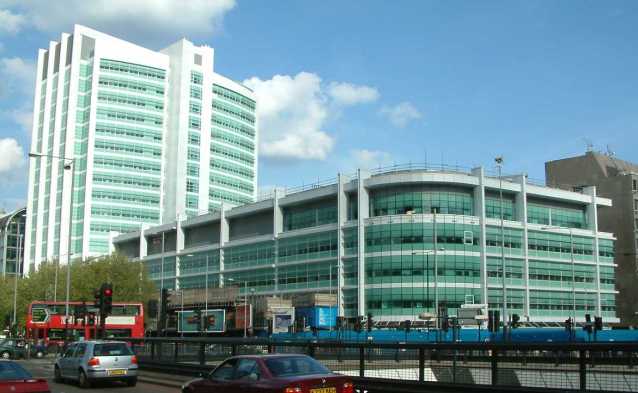
One of the trust’s two major hospitals.

Given this breakdown when asked about whether staff were discriminated by their boss, the trust comes out as worse than average for a NHS trust and similarly in regards to career progression. Also there is a particularly bad result when they were asked how patients, relatives and the public treated them. Interestingly white people – who are a minority in the trust – had a significantly higher rating for satisfaction about future career promotions than ethnic minorities employed there.

Nor do the staff say they would recommend a friend or relative to have treatment in the trust’s hospitals – this is also below average.

When asked whether staff would leave the moment they found another job, some 20 per cent working there said yes – this compares with just over 15 per cent for the national average. And nearly a quarter of the staff said they would look for another job within 12 months – compared to just over a fifth on average.

Morale at the trust has got worse over the last year while there has been a slight improvement in the NHS as a whole.

However the 10 people employed on the trust’s board rate themselves as one of the best in the country.

There is also a big difference in morale among medical staff and ancillary staff. A BMA survey in 2022 produced some startling results

“Have you personally experienced any instances of bullying, harassment or discrimination within the last 12 months?” they were asked. 44% replied yes.

“If you have personally experienced bullying, undermining, harassment or discrimination in the past 12 months, did you report the incident(s)?”43% replied they had reported this and no satisfactory action had been taken.”

“Why did you not report any instances of bullying, undermining, harassment or discrimination?

42% replied they did not believe action would be taken. 26% replied they felt it would be held against them

All this suggests that this award must be more of a paper exercise than the reality there. I would have expected that the trust would be rated as one of the best in some instances. But this does not appear to be case. No doubt the media department there will praise the award to the highest level, executives will congratulate themselves and the law firms will delight in the glory. But it doesn’t look as though it was really deserved.

One-Time
Monthly
Yearly

Make a one-time donation

Make a monthly donation

Make a yearly donation

Choose an amount

£5.00
£10.00
£20.00
£5.00
£15.00
£100.00
£5.00
£15.00
£100.00

Or enter a custom amount

£

Your contribution is appreciated.

Your contribution is appreciated.

Your contribution is appreciated.

DonateDonate monthlyDonate yearly

Please donate to Westminster Confidential

£10.00

My interview on the 50swomen pensions scandal and the scrapping of the pensioner’s winter fuel allowance

If pensioners die from winter cold should their gravestones be engraved with the words ” Frozen to Death by Rachel Reeves and Sir Keir Starmer ” for eternity?

This is the recording of my interview last night with Ian Rothwell of Salford City Radio on the failure of the government to agree yet to any compensation for the women born in the 1950s who had to wait six more years to get their pension and the government’s sudden cruel decision to abolish the winter fuel allowance with little notice for 10.8 million people.

A reminder the original story on my blog has now got over 190.000 hits reflecting the strong feeling people have about Labour’s decision to do this leaving many of the poorest pensioners, many over 80, between £200 and £300 worse off this winter by setting such a low income level to qualify for the money.

One-Time
Monthly
Yearly

Make a one-time donation

Make a monthly donation

Make a yearly donation

Choose an amount

£5.00
£10.00
£20.00
£5.00
£15.00
£100.00
£5.00
£15.00
£100.00

Or enter a custom amount

£

Your contribution is appreciated.

Your contribution is appreciated.

Your contribution is appreciated.

DonateDonate monthlyDonate yearly

Please donate to Westminster Confidential

£10.00

Time for a full scale investigation into the abusive and bullying behaviour towards women by Judge Philip Lancaster

Judge Philip Lancaster Pic Credit BBC News

New revelations by the BBC TV journalist Michael Buchanan today show what appears to be serial bullying and abuse towards women claimants by Judge Philip Lancaster at employment tribunal hearings

His news report today reveals that eight women have now separately come forward to say they were badly treated when they presented their cases before the judge since 2018. They describe their experience before him as “patronising, degrading, psychologically abusive, and misogynistic.”

The 67 year old judge who presides over employment tribunal hearings in Leeds is often rude and abrasive towards women and in one case even suggested that a claimant had mental health problems.

One woman claimant Angela Gates brought a case of disability discrimination and constructive dismissal against her employer in 2021.

She says a hearing in front of Judge Lancaster made her feel “like a villain being prosecuted”.

She says: “I felt I couldn’t give my side on anything.”

The four-day hearing was held on Zoom, and Ms Gates, 53, says Judge Lancaster regularly shouted at her, repeatedly telling her to be quiet. She says his behaviour was “appalling and degrading, verging on psychological abuse”, adding: “I don’t believe I’ve been given a fair trial.”

Another woman, who wished to remain anonymous, had similar treatment over a constructive dismissal and unfair treatment case.

“He made my life hell “

She said: He made my life hell,” she recalls. “He’d put his hands on his head, and appeared disinterested in what I was saying. He repeatedly asked why I was asking [my employer’s witnesses] particular questions and raised his voice numerous times. I felt useless.” She is now appealing the ruling.

Seven women are now planning to contact their MPs about their treatment as it is virtually impossible to complain about a judge as the system is rigged against them. You can refer a case to the Judicial Conduct Investigation Office or previously complain to Judge Barry Clarke, President of the Employment Tribunals in England and Wales. Or even to the Senior President of Tribunals, Sir Keith Lindblom. All seem set up to protect judges not complainants. Barry Clarke refused to act and Sir Keith ignored it.

Judge Barry Clarke, President of Employment Tribunals in England and Wales – protecting judge Lancaster from complaints

In a letter written by Alison McDermott, a management consultant, who complained about the way Judge Lancaster treated her in her case against Sellafield and the Nuclear Decommissioning Authority, to Adam Jones of the Judicial Conduct Investigation Office she says:

“It is simply not tolerable the way this judge has conducted himself, whether it is arbitrarily excluding the public, treating me less favourably, allowing bullying in the courtroom, treating me with hostility and contempt, ignoring evidence, attempting to block evidence, actually blocking exploration of evidence, vilifying me, acting partially, and failing to document procedural matters.

” I urge you, therefore, to conduct a thorough investigation into what went so badly wrong in my case and to exhibit, transparency and accountability – behaviours which the legal profession professes to uphold. I sincerely hope that I and the other key witnesses mentioned in this letter of complaint will be interviewed, as would occur with any other formal complaint or grievance investigation. In my experience as a consultant with over 20 years investigating organisational cultures and problems, it is not washing dirty linen in public that causes a problem but allowing it to fester in plain sight.”

Of course the office had no intention of doing such a thing. Judges, as I reported yesterday, are protected because the notes on the cases are kept private even when they are the only official record of the tribunal hearing. It is impossible to get hold of the evidence that would prove a judge was biased and judge Clarke would not reveal how many complaints he has received.

05/07/2024. London, United Kingdom.Chancellor and Secretary of State for Justice, Shabana Mahmood. poses for a photograph following her appointment to Cabinet by Prime Minister Sir Keir Starmer in 10 Downing Street. Picture by Lauren Hurley / No 10 Downing Street

So this leaves the Lord Chancellor to act but as I reported yesterday it is almost impossible to write to her directly – without officials in the ministry of justice or the judiciary intervening.

I would have thought Shabana Mahmood, a highly successful woman with an ethnic minority background, should ask for an investigation into Judge Lancaster. Many of the women who complained about him are from ethnic minorities as well. None of them should have had to put up with such egregious treatment and does the Lord Chancellor want to preside over system where a judge can treat women as dirt.

One-Time
Monthly
Yearly

Make a one-time donation

Make a monthly donation

Make a yearly donation

Choose an amount

£5.00
£10.00
£20.00
£5.00
£15.00
£100.00
£5.00
£15.00
£100.00

Or enter a custom amount

£

Your contribution is appreciated.

Your contribution is appreciated.

Your contribution is appreciated.

DonateDonate monthlyDonate yearly

Please donate to Westminster Confidential

£10.00
Ministry of Justice and Lady Chief Justice Dame Sue Carr refuse to explain the lawfulness of withholding official ET court records

05/07/2024. London, United Kingdom.Chancellor and Secretary of State for Justice, Shabana Mahmood. poses for a photograph following her appointment to Cabinet by Prime Minister Sir Keir Starmer in 10 Downing Street. Picture by Lauren Hurley / No 10 Downing Street

By David Hencke and Alison McDermott

Direct complaint to the Lord Chancellor signed by 150 people is being blocked by officials at the Ministry of Justice

Whitehall and the judiciary are engaged in an extraordinary exercise to block, obfuscate and deny there is a legal issue over the public release of judge’s notes where they amount to an official record in employment tribunals.

We are now in the absurd position of Barry Clarke, the President of Employment Tribunals in England and Wales, both admitting the judge’s notes where tribunals are not recorded are the only official record but saying at the same they must remain private because they are personal notes under the Data Protection Act.

Employment tribunals are already in transition. After a new practice ruling the aim is that all hearings will be recorded but that is not happening yet in many cases. Also transcripts of the hearings can be made available but litigants have to buy them at huge cost and are not provided before the six weeks deadline to appeal. So what’s the point of them ?

But for a majority of tribunals the only official record is the judge’s notes – which can be used by appeal judges when they are adjudicating on an appeal to guide them. Barry Clarke has recently ruled that they are the official record but the public, press and both parties involved in a case cannot see them.

Thus the one vital official record of what the judge has recorded about the case is kept secret – contrary to any policy of transparency and open justice. It also means judges are not open to scrutiny, could be biased against either the claimant or defendant, are out of step with other European court systems and in the days of digital recordings, keep an archaic system of hand written notes. It also means if there are complaints against judges – the secrecy of the notes means the judge can withhold the information to prove it which is very helpful to an errant judge.

So what is legal position of this which allows this type of official record to be withheld? This is the question that led Alison McDermott, a former ET complainant against Sellafield, and 150 other people to wrote to the Lord Chancellor demanding an explanation, using the examples I have quoted and many more.

The letter is here. But guess what? You can’t send it direct to the Lord Chancellor’s Office or even to the Lord Chancellor as an MP unless you are a constituent in Birmingham, Ladywood. Instead you can only write to the ministry of justice and hope it can be passed on.

Dame Sue Carr: Pic Credit: Rory Lindsay

So Alison McDermott and I decided another tack. I put questions into the Ministry of Justice press office to ask for explanations. Alison had previously been told by Dame Sue Carr, the Lady Chief Justice that the only way she would get answers was to go to the Appeal Courts – an incredibly expensive business. This is also absurd as it puts the onus on the claimant to get a ruling to clarify the law and makes a lot of money for lawyers. Most people are not involved in tribunals so why should they be denied from knowing where the law stands?.

These are the questions I put to the Ministry of Justice which it refused to answer:

1.Does the MoJ agree that an official record of legal proceedings, including Employment Tribunal hearings, must be made available to parties and the public?

 2.Which specific law or authority allows judges to withhold their notes from ET proceedings, given that  ET President  Barry Clarke has recently confirmed that these notes serve as the official record where no other record exists?

3. If no such law or authority exists will the MoJ commit to releasing all judges’ notes? 

 4.. If not, does the MoJ acknowledge that judges’ notes cannot be considered the official record, as official records must be accessible?

5. In the absence of an accessible official record, does the MoJ agree this breaches the right to a fair trial under Article 6 of the Human Rights Act?  If not, what is the justification? 

6.  Why is the MOJ suggesting  that this can be resolved by individual appeals, as proposed by the Lady Chief Justice to Ms McDermott, rather than providing a clear policy response that would benefit all ET users?

Answer came there none. The ministry declined to answer any questions and said it was a matter for the Judicial Office to answer the questions.

I put the same questions to the Judicial Office press office. I heard nothing for a week and then sent them a reminder. The initial response was to refer them back to the Ministry of Justice until they suddenly realised I had already contacted them.

The office then sent a reply. This is it.

“We have answered the questions we can from a judicial perspective (see below) but other questions are for not for us and you may wish to ask other parts of Government.

Parties involved in an Employment Tribunals are given decisions following a hearing. If the decision is a judgment, the Tribunal will either give an oral judgment with reasons or reserve its decision and give a written decision at a later date. ” It goes on to quote existing rules and procedures.

So here we have it. They haven’t answered my questions. There is a failure to confirm what the lawful basis is for a judge to withhold the official record of an ET hearing and they have side stepped whether the refusal to do so breaches the right to a fair trial.

Judge Barry Clarke, president of the England Wales employment tribunals- an outlier with Europe advocating secrecy

Alison using AI found how outdated and Nethanderal this is compared to other advanced democracies. In France, Germany, Spain, the Netherlands, Sweden, Belgium and Italy all parties have access to the judges’ notes. This leaves the UK as an outlier, failing to provide basic transparency in proceedings that can have life-altering consequences. .

It added: “The practices in these European countries generally support greater transparency and access to court records, including judges’ notes, in employment cases. This trend aligns with principles of fair trial and effective appeal rights, as parties are given the opportunity to fully understand and, if necessary, challenge the basis of decisions made against them.”

The conclusions using AI are very powerful;

“The current state of the UK’s employment tribunal system is untenable and legally questionable. It operates on a contradiction that undermines the very principles of justice it’s meant to uphold. The solution is clear, legally grounded, and non-negotiable:

  1. Judges’ notes must be released to all parties.
  2. All hearings must be recorded.
  3. These records must be made accessible to all parties involved.
  4. These steps are essential for maintaining the integrity of the UK’s legal system, ensuring compliance with human rights law, and upholding the principles of natural justice and open courts. The time for obfuscation and delay is over. It’s time to resolve this legal paradox and restore faith in our justice system. Release the notes, record the hearings, and let justice be truly seen to be done.”

Only in the UK do we pursue a policy of secrecy masquerading as privacy to cover up official records, frustrating claimants and respondents in employment tribunals, and protecting judges from any scrutiny that could effectively challenge them. What a backward country we are. A judicial review can change this and looking at procedures in Europe eventually lead to a well deserved adverse ruling against the UK in the European Court of Human Rights. We understand that the Lord Chancellor holds the copyright to all court records so she can decide to release them.

One-Time
Monthly
Yearly

Make a one-time donation

Make a monthly donation

Make a yearly donation

Choose an amount

£5.00
£10.00
£20.00
£5.00
£15.00
£100.00
£5.00
£15.00
£100.00

Or enter a custom amount

£

Your contribution is appreciated.

Your contribution is appreciated.

Your contribution is appreciated.

DonateDonate monthlyDonate yearly

Please donate to Westminster Confidential

£10.00

Winter Fuel Allowance: Equality statement reveals the scale of Rachel Reeves nasty blow to poor and disabled women pensioners

05/07/2024. London, United Kingdom. Rachel Reeves, Chancellor of the Exchequer poses for a photograph following her appointment to Cabinet by Prime Minister Sir Keir Starmer in 10 Downing Street. Picture by Lauren Hurley / No 10 Downing Street

UPDATE: Statistics released today (Tuesday) show claims for Winter Fuel Allowance jumped by 214,000 last year. More and more people over 80 are claiming the £300 higher allowance which had reached 3.3 million for the first time. The new figures mean the government will save even more money by abolishing it for all those not claiming pension credit, particularly from the very elderly. Figures released also show that those state pensioners living in EU countries who will continue to get the allowance amounted to 34,300. Over three quarters of them, some 26,000, live in the Republic of Ireland while those in Northern Ireland will get nothing. Qualifying for the allowance last year was this week which raises whether those claiming pension credit after this week will get the money for this winter.

Chancellor’s decision fuels racism when it is revealed her cuts are aimed at 95 per cent of white British born people

At last no doubt embarrassed by the Equality and Human Rights Commission which said the new Labour government was in breach of the Public Sector Equality Duty, the Treasury and the Department of Work and Pensions have had to release a breakdown of who is affected by the abolition of the winter fuel allowance.

Both departments used the mechanism of a Freedom of Information request made in August and chose a Friday afternoon to slip it out after Parliament had gone into recess to avoid too much publicity.

The clue is in what the announcement is called – an Equality statement – not an impact statement which was demanded by the House of Lords. In fact there has been no impact statement prepared at all even when Age UK said that about two million pensioners who will lose the annual £200 or £300 payment are just above the cut off point.

The document itself makes a claim that more men than women are affected by the change. But this is based on percentages not the actual figures. As it says: “This means that 85% (5.2m) of women receiving a Winter Fuel Payment (WFP) will lose out, compared to 91% (4.8m) of men. The reason for this is that women live longer than men and are more affected by the loss of the payment. The gender breakdown is 54% (6.1m) of those who received a WFP in GB in 2022/23 Female, and 46% (5.2m)
Male.

The figures reveal that the older you are, the bigger the loss you make, partly because the payment for over 80s is £300 rather than £200 per household.

The statement says: ” Although a smaller proportion of those aged 80+ will lose out than those under 80, due to the higher rate of WFP from that age, older pensioners who are affected will be proportionally worse off financially as a consequence of the policy.”

This is still 2.7 million people in top of the 7.9 million aged 66 to 79 who lose out.

Then there is the effect on the disabled – those claiming attendance allowance and disability living allowance. Here 1.6 million lose out and they must be the most vulnerable to the cold.

So if you are woman, more elderly and disabled you are worse off. If you are all three it is catastrophic.

The government has made a lot of noise about the 880,000 people not claiming pensions credit who could qualify by applying and getting the winter fuel allowance. But the paper says despite all the noise ministers are only expecting another 100,000 to claim leaving 780,000 still going without it.

The figures for existing claimants for pension credit are interesting. The most successful claimants are men not women – despite men being in a minority. The least successful are couples and there is a nasty reason for this. Under the Tories rules were changed so that both people had to be aged 66 to get it. So if you had a man who was 66 married to a woman who was 62 you would be excluded from claiming it until the man was 70 and the woman 66. No wonder the take up is lower. And Labour haven’t changed the rules.

Finally there is an ethnic breakdown. In the UK among the general population 84 per cent of the people are white British and 16 per cent are from ethnic minorities. Among the pensioner population, 95 per cent are white British and only five per cent are from ethnic minorities. So Labour in this case has targeted anybody who was born here far more heavily than people who were not.

This may well explain why I am getting a backlash from readers of this blog who complain that the government is doing more for people who have just arrived here than the population who have worked here since they were 15. They think it is unfair.

Cheerleader for Nigel Farage?

So we have the extraordinary situation that Rachel Reeves is inadvertently becoming the cheerleader for Nigel Farage by providing him with a platform to say that British born people are being unfairly penalised.

Her policy among that generation may well drive them to support Reform because they have a grievance that only Labour has created and cannot be blamed on the Tories. This unfortunate situation aids racism and has more purchase with people than tales of a £22 billion black hole.

Then there are international repercussion. The last government was already in trouble with the UN Convention on the Elimination of all Discrimination against women and girls (CEDAW) in Geneva. Although we ratified it nearly 40 years ago when Lady Thatcher signed us up, we have not implemented in law many of the provisions. This is a new policy – even though it was done administratively – and the government has not tested the impact on women which is against the convention.

More close to home there could be a case for indirect discrimination against women because although the policy appears to be fair to all pensioners, women are again bearing the brunt of it.

Of course as I argued in a previous blog both Rachel Reeves and Sir Keir Starmer know that many pensioners will die before the 2029 general election so they won’t be here to vote. By implementing this cruel policy for those just above the cut off point they know many more will join them as they freeze in their homes this winter.

One-Time
Monthly
Yearly

Make a one-time donation

Make a monthly donation

Make a yearly donation

Choose an amount

£5.00
£10.00
£20.00
£5.00
£15.00
£100.00
£5.00
£15.00
£100.00

Or enter a custom amount

£

Your contribution is appreciated.

Your contribution is appreciated.

Your contribution is appreciated.

DonateDonate monthlyDonate yearly

Please donate to Westminster Confidential

£10.00
House of Lords slams scrapping of winter fuel allowance for 10.8 million pensioners in advance of Commons debate this week

Lord Hunt of Wirral, chair of the Lords secondary legislation committee and a former energy minister under Lady Thatcher’s government Pic credit: Official Portrait House of Lords

UPDATE: Government got policy through the House of Commons by 348-228 on September 10. Tories, Lib Dems, Greens, Scot Nats, DUP, Alliance and Reform voted against. Some 53 Labour MPs abstained, one Labour MP voted against.

SECOND UPDATE: A Conservative motion regretting the means testing of the winter fuel allowance and the lack of transparency by Labour was passed by 164 votes to 132 in the House of Lords on Wednesday evening. An attempt by a former Tory pensions minister,Baroness Altmann to annul the cut was heavily defeated.

Infected blood victims may also face further delay for compensation say peers

Peers have slammed the government’s planned means testing of this year’s £200 and a £300 winter fuel allowance for the over 80s which will leave 10.8 million out of 12.3 million pensioners with no money before Christmas.

The Lords secondary legislation committee – which scrutinises laws introduced by government by issuing new regulations which have to be approved by Parliament -is severely critical of the changes, the lack of information, the by passing of proper scrutiny by a government appointed advisory committee and lack of evidence of any research by the Department for Work and Pensions of the effect of the changes.

The committee represents a wide range of peers in the House from Tories, Labour, Liberal Democrat and crossbench peers Including former Labour minister, Tom Watson.

Peers see no need for the urgency to get the change into law by September 16. “We are unconvinced by the reasons given for the urgency attached to laying these Regulations and are particularly concerned that this both precludes appropriate scrutiny and creates issues with the practicalities of bringing in the change at short notice,” the report says.

baroness Altmann

The criticism comes as Baroness Ros Altmann, a former Tory pensions minister, has said she will move a fatal motion in the Lords next week , a drastic power rarely used, to block the government implementing it.

The report points out that winter fuel allowances will continue to be paid this year for people who quit the UK to live in an EU country before 2021. It is likely to be abolished after this year for people who moved to Switzerland, Norway, Liechtenstein and Iceland.

The government are trying to mitigate its effect on the poorest pensioners by encouraging the 880,000 who are entitled to pension credit, to claim. To do this they have to fill in a 243 question form and if they have over £10,000 savings -including money hidden in their homes – get a reduced form of pension credit. So far there has been a five per cent increase in uptake according to the DWP.

The Lords are scathing about this situation.”We are concerned that the Regulations may cause potential inequalities between low income pensioners claiming benefits and low income pensioners not claiming benefits, and it is not clear whether DWP has assessed this risk,” says the report.

The campaign to attract more pension credit claimants is causing admin problems for the DWP with the result that other people due to get pension credit are facing a nine week delay in getting the money, the report reveals. So the government are penalising the poorest as a result of the campaign.

The report also reveals that those on Universal Credit or who live abroad may need to make a claim
for the Winter Fuel Payment. The deadline for making a claim for 2024–25 is 31 March 2025, and claims can be made by post from 16 September 2024 or by phone from 10 October 2024.”

The report also highlights that all pensioners will be hit by the rise in energy prices and many more will start paying tax because of the freezing of personal tax allowances which will go on until 2028.

Keir Starmer and Rachel Reeves are both breaking traditional consultation and witholding information of the effect of the policy change from MPs and peers.

The report says: “All benefits regulations are required by law to be considered by the independent Social Security Advisory Committee (SSAC). This is generally done in advance of the legislation being laid. In this case, the Minister has opted for the urgency provision that allows SSAC consideration to be
retrospective. Since this might be perceived as bypassing SSAC scrutiny, we asked the DWP what, if any, effect an adverse report from that Committee would have after the Regulations have already come into effect. DWP responded that, in line with their legal duty, ministers would lay the report before Parliament, and should the report contain recommendations, lay a statement before Parliament alongside the report. It remains unclear what the practical impact of any statement might be on Regulations which
will have already come into effect.

Compensation for Infected Blood victims

Peers in the same report have slammed the government regulations permitting compensation payment to infected blood victims, promised with great fanfare by ministers.

The committee’s report said: ” We found the Explanatory Memorandum (EM) to the Regulations overly
complex and technical, while lacking basic information about the policy such as how those infected can apply and from when, how long claims will take to be processed, when successful applicants can expect payments to be made, and the basis on which each claim will be assessed.”

The peers castigate the civil servants for not producing a report in simple, plain English and cast doubt on whether promises by the new government to start payment by Christmas will be fulfilled.

They also accuse the Cabinet Office of witholding information about the process.

“We are concerned that the Cabinet Office is withholding information on the impact and cost of
the Regulations until after the time for Parliamentary scrutiny has passed, which is unacceptable and circumvents proper scrutiny of the Regulations. We have not been given a reason why the costs could
not be published ahead of the budget. The House may wish to pursue the issue of costs further.”

The lesson from both the issues raised in this report is that this new government is not in control of Whitehall and allowing civil servants to evade proper scrutiny on the measures they are introducing. Either ministers are being inept in not following proper procedures or this is a deliberate decision not to provide MPs and peers with information allowing them to scrutinise the new government’s decisions.

Sir Keir Starmer says he is expecting to be the most unpopular Prime Minister of modern times. He is certainly knows how to go about it.

One-Time
Monthly
Yearly

Make a one-time donation

Make a monthly donation

Make a yearly donation

Choose an amount

£5.00
£10.00
£20.00
£5.00
£15.00
£100.00
£5.00
£15.00
£100.00

Or enter a custom amount

£

Your contribution is appreciated.

Your contribution is appreciated.

Your contribution is appreciated.

DonateDonate monthlyDonate yearly

Please donate to Westminster Confidential

£10.00