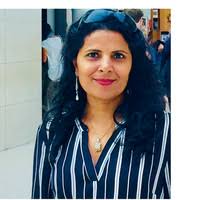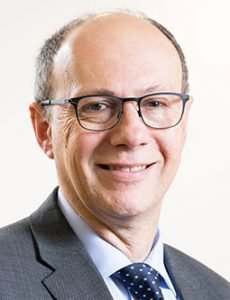
Usha Prasad: Whistleblower Consultant cardiologist faces record £180,000 cost claim from NHS health trust

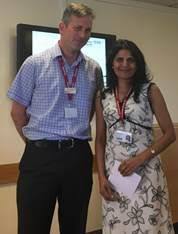
Dr Usha Prasad

It is a fact that among the tens of thousands of employment tribunals held every year claimants do not have to pay their employers costs in 99.95 per cent of all cases.

Therefore it is absolutely extraordinary that Dr Usha Prasad, a whistleblower cardiology consultant at Epsom and St Helier University NHS Trust is facing a special costs tribunal next week for an astonishing £180,000 claim from her employer at the London South tribunal in Croydon.

Even in rare cases where costs are sought the maximum is £20,000 and the level of proof has to be very high. The claimant has to be seen to have been acted “vexatiously, abusively, deceptively or otherwise unreasonably” or has brought proceedings deemed to be misconceived.
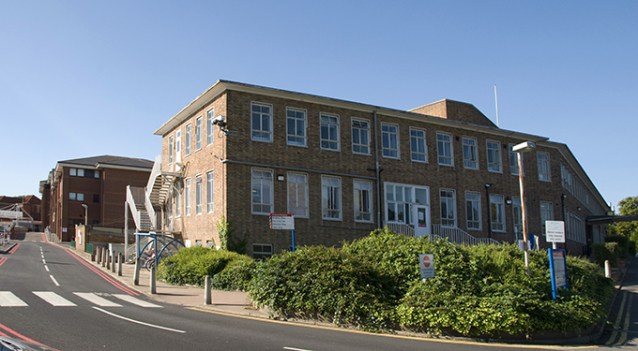
Epsom Hospital part of the Epsom and St Helier NHS Trust

However it is looking like that where whistleblowers are sacked and go to an employment tribunal more and more judges have agreed to hold cost hearings so the public body can recover some or all of its costs. And lawyers acting for these bodies threaten huge costs against whistleblowers to deter them from proceeding further. This has been used against Dr Chris Day in his decade long battle against the Health Education Executive and Greenwich and Lewisham NHS health Trust over patient safety and , against Dr Duffy, author of ‘Whistleblowing in the Wind’. Non NHS whistleblowers also face this. More recently this involved a case against Alison McDermott, a management consultant, at Sellafield and the Nuclear Decommissioning Authority (NDA), who exposed a raft of bullying, harassment and other grave failings at the nuclear plant.

Alison then faced a £40,000 cost hearing – both bodies sought the maximum figure – with judge Lancaster refusing to accept she was a whistleblower- only to have his decision declared  ” unsafe” by a judge at the high court. He determined that the costs were unsafe and must be ‘quashed.’  HHJ Auerbach also  overruled Judge Lancaster and confirmed that Alison was whistleblower. A FOI has revealed that Sellafield and the NDA have spent an extraordinary sum – £660,000 resisting that she was a whistleblower.

Unbelievably Sellafield and the NDA have just sought to reinstate the cost hearing again with the same judge who made the ” unsafe” costs ruling which has already been thrown out by the higher tribunal. Which of course sends a chilling message to any would be whistleblowers at the most dangerous nuclear site in Western Europe.

In Dr Usha Prasad’s case the trust and its lawyers, Capsticks, have gone one step further by getting a hearing next week wanting the judge to order a £180,000 costs finding against her.

Now in researching whether this has happened before – the only case I found which is highlighted by the Association of Costs Lawyers is Gosalakkal v University Hospitals of Leicester NHS Trust, where the paediatrician who made a series of whistleblowing claims walked out of the costs assessment hearing and ended up being ordered to pay £82,000 to the trust. This went to appeal in 2019 and the judge was criticised for misunderstanding the whistleblowing nature of the case and the initial award was quashed. It turned out there was a breakdown of relationships among consultants there as well, a disciplinary hearing and he was dismissed. He left Leicester and got a new job in the United States.

Judge Heap ruled in April 2017 that she could do this citing rule 78 of tribunal regulations set in 2013 which allows her to exceed the £20,000 limit by having a detailed costs assessment or send it to a county court to decide. I am pretty sure Capsticks will be citing these rules and the case next week.

I am sure the Association of Costs Lawyers would have highlighted any higher settlement than this so this will make the Dr Prasad hearing a new record for tribunals pursuing whistleblowers for costs. The biggest sum ever awarded at an ET tribunal to an employer was £432,001.85 in a dispute between Copthorne Hotels and a Mr Tan who had withdrawn any whistleblowing claims.

The problem for Dr Prasad is that these hearings specifically rule out discussing the merits of previous tribunal hearings in her case. She has had enormous support from other practising colleagues at the Epsom Trust trust. You only have to look at a website to see the appreciation of her work at Pinderfields General Hospital in West Yorkshire to see pages of praise from patients. These were made while the case against her was being pursued by the Epsom and St Helier NHS Trust.

She has still to await the official result of an employment appeal tribunal hearing against her case claiming perversity and bias and error of law by the judge involved ( see below) and the trust has secured a costs hearing in just over five months while the average wait for the overloaded employment tribunal system to hear a case is now 335 days. She has been refused access to the judge’s notes to defend herself and her barrister who appeared for her previously is not available to defend her.

Judge Tony Hyams -Parish

The judge who heard her case Tony Hyams-Parish, threw out all “her allegations of victimisation, sex harassment, and sex and race discrimination” and ignored in his judgement the admission from the trust that it had failed to report to the coroner an ” avoidable death” of a heart patient treated by another doctor and tried to get her to change a report on the incident. My reports of this part of the hearing is the only record that it happened. See it here and here.

Capsticks have seized on this to write to her saying :” The Respondent has incurred very substantial costs indeed in defending the unmeritorious proceedings, of in excess of £150,000 plus VAT. The costs incurred correlate to the Claimant’s unreasonable conduct and the unmeritorious nature of her complaints.”

What is also missing is that the trust put in 43 complaints to the General Medical Council to build up a case against her.. Every one of those complaints was thrown out by the GMC after a highly skilled cardiologist looked at them and she was automatically approved to continue working as a doctor without any further revalidation.

The BMA despite receiving letters of support from her medical colleagues has refused to give her any financial backing to fight this hearing, citing that it did not have a 51 per cent or more chance of success. In my view that is short sighted as far as I can see the hearing is about the costs incurred by the trust in fighting a whistleblower case and if they do not challenge this, they are leaving all their members to be hung out to dry by NHS trusts.

Not to put to fine a point on all this my thoughts are this has all the hallmarks of being a ” Kangeroo tribunal ” next week where a litigant in person, an excellent doctor, is being arraigned by legal heavyweights with little chance of being able to defend herself. Let’s see if this is true next week

Please donate to Westminster Confidential so I can continue my forensic reporting.

One-Time
Monthly
Yearly

Make a one-time donation

Make a monthly donation

Make a yearly donation

Choose an amount

£5.00
£10.00
£20.00
£5.00
£15.00
£100.00
£5.00
£15.00
£100.00

Or enter a custom amount

£

Your contribution is appreciated.

Your contribution is appreciated.

Your contribution is appreciated.

DonateDonate monthlyDonate yearly

please donate to Westminster Confidential

£10.00

Exclusive: The horrendous painful death of a Met Police communications officer in St Helier hospital

Robert Sheppard, a civilian Met Police communications officer, who died in agony at St Helier Hospital.

Near death and shouting, in pain all night and day, being totally  confused and hallucinating a nurse said “he will just have to deal with it.”

This is a tragic story of the treatment of the last days of Robert Sheppard. It is a tale of medical error, bad treatment, appalling hospital facilities, mistakes, bad nursing care and a potential cover up of a hospital acquired infection. It could have been completely different if the hospital hadn’t blocked him from being transferred to a local hospice so he could have spent his last days in peace. His widow found out later that the hospice would have taken him.

His widow, Wendy, came forward when she read the story on this blog of the ” avoidable death” of Mr P, a heart patient , a couple of months before at the same hospital. This came out during an employment tribunal hearing brought by Dr Usha Prasad, a cardiologist, when the former head of cardiology, Sr Richard Bogle admitted the hospital should have reported his death to the coroner and the Care Quality Commission three years ago. The judge handling the case Tony Hyams-Parish, airbrushed all the details of the death from his judgement.

The story also reveals the timidity of the Parliamentary Ombudsman, Robert Behrens, who when he examined Mr Sheppard’s treatment, avoided investigating wider safety issues at the hospital.

Daniel Elkeles former chief executive of the trust

The facts in this story are stood up by two confidential letters from the former chief executive of the Epsom and St Helier University Hospital Trust, Daniel Elkeles to his widow.

Mr Elkeles was full of apologies about his treatment but played down the issue of a hospital acquired infection there – which would have had to be reported by law..

Mr Sheppard, who was well treated as a cancer patient at the Royal Marsden Hospital,- was admitted to St Helier’s emergency department with an obstructed bowel on October 10, 2018. A mistake was made when a nasogastric tube was inserted to drain fluid from his stomach but had to be repeated after it became clear it had not reached his stomach. The Ombudsman absolved the hospital from the initial mistake as there are no national guidelines about inserting nasogastric tubes.

Mr Sheppard was put on the Mary Moore Ward in an old building. He was given by mistake a blood stained pillow, he had no bedside lamp and another patient’s damp possessions had been left on his bed.

He picked up a bacterial infection called klebsiella which attacks people with a weak immune system but was discharged on October 22.The hospital insisted that nobody else admitted at the time had the infection.

He was readmitted the next day to ward B1 with a chest infection and tests were carried out and he had got the bacterial infection. From there until his death on November 13 he remained with a fever and back pain and also became hypoglycaemic.

The ward facilities were not much better than Mary Moore ward. Brown water came out of the taps because of a rusting 82 year old water main but the hospital insisted the water was safe. Again he did not have a bedside lamp that worked and bandages were found in his bedding. He requested a wheelchair but the hospital said it didn’t have one for his ward. Also hand sanitiser was not replaced.

As his life ebbed away the chief executive apologised for the ” insensitive ” way the medical staff treated him over his wishes to be resuscitated .

Doctor was ” Grim Reaper”

Wendy said “One morning a Doctor came into Robert’s room  and stood at the end of his bed rather akin to The Grim Reaper and read out a list of the areas Robert had his Cancer in his body. Robert already knew about everything. It was just the way it was done he felt they had written him off.  It was a point of justification by the Hospital without mentioning the Hospital acquired infection Robert had caught courtesy of St.Helier Hospital telling him the Cancer was going to kill him instead. “

The weekend before he died was the worst. He was visited by his 92 year old mother and brother who found him unconscious. His wife stayed with him but found nurses were not bothered to see him and finally workman came in to repair taps just he was about to die.

The chief executive has apologised for this. ” I am extremely sorry that we did not respond with compassion and understanding to your request for nursing support at the end of Mr Shepherd’s life. I am very disappointed that you endured this situation alone and can only apologise that we failed you”.

Even after his death mistakes were made. His initial death certificate airbrushed out the bacterial infection and his cremation notice described Mr Sheppard as retired when he was still working for the Met Police.

” I will never forgive St Helier hospital “

Wendy said:” Dying with dignity was something not given to Robert. I will never forgive St.Helier Hospital. It’s failures towards Robert were ‘swept under the carpet’ by the Hospital management.  My complaints were misconstrued to make St.Helier look in a better light and incidents that happened weren’t recorded in Robert’s medical notes so I am told. “

The Ombudsman’s report concluded: “We have found failings with the support doctors and nurses gave to Mr D[Robert Sheppard] and Ms N[Wendy Sheppard] in the final stages of his life, and that Mr D’s privacy was interrupted in the final moments of life. We also found a failing with how nurses responded to Ms N’s requests for hand sanitiser. What happened led to a loss of dignity for Mr D and made his death even more upsetting than it already was for Ms N.1

The Ombudsman rejected Wendy’s concern about the hospital bacterial infection – weakly citing that for data protection reasons it could not investigate other people. It also said it had no power to investigate mistakes in death certificates. Another example of the weakness of the Ombudsman system.

St Helier Hospital

Please donate to Westminster Confidential to allow me to continue my forensic coverage.

One-Time
Monthly
Yearly

Make a one-time donation

Make a monthly donation

Make a yearly donation

Choose an amount

£5.00
£10.00
£20.00
£3.00
£9.00
£60.00
£3.00
£9.00
£60.00

Or enter a custom amount

£

Your contribution is appreciated.

Your contribution is appreciated.

Your contribution is appreciated.

DonateDonate monthlyDonate yearly

please donate to Westminster Confidential

£10.00

Guest blog: The appalling treatment of NHS whistleblowers parallels the Post Office sub-post masters scandal

Dr David.E.Ward,

 David E Ward, a distinguished retired cardiologist, formerly at St George’s Hospital, South London, responds to the judgement by Tony Hyams-Parish on the case of Dr Usha Prasad

The treatment of NHS whistleblowers is a national scandal of the same iniquitous order of magnitude as the miscarriages of justice meted out to the sub-postmasters. This latter saga began 20 years ago after the installation of faulty software called Horizon from Fujitsu. Incredibly it was not picked up for years because the victims were not believed or they were accused of lying. The evidence was not properly collated or scrutinised. Or was it, but no-one said anything. “No other post office has had this problem” they were told. Perhaps the current Judge led inquiry will find out. Many were incarcerated. Some sold their homes to pay thousands of pounds of fictitious till deficits. Sadly, some committed suicide.

The sequence of events for NHS whistleblowers is different but the outcomes are strikingly similar. The NHS whistleblowers’ stories are largely unknown to the wider public apart from the occasional one featured in a national newspaper.

The WB raises a concern, which by the way is their duty under law, (Duty of Candourhttps://www.legislation.gov.uk/ukdsi/2014/9780111117613)

but instead of welcoming the exposure of the defect of a system (e.g. number of beds in a limited space), faulty equipment (e.g. a diagnostic machine) or a process (e.g. errors in admission procedures – wrong patient or wrong procedure) any of which may lead to patient harm or even death), the Trust fails to act but instead embarks upon a path of vicious and disproportionate reprisals against the WB.

The consequence of this chain of events is often catastrophic for the individual. The whistleblowing doctor may be subjected to repeated internal hearings, quasi-disciplinary proceedings, Maintaining High Professional Standards hearings etc. The latter may be chaired by lay persons with a legal qualification but posing as a barrister. Most doctors subject themselves (they raise an appeal) to an Employment Tribunal in the hope that justice will prevail. Sadly it does not. These proceedings are not formally recorded for later open scrutiny. The judge’s notes (such as they may exist) are private and not made available. It is also a criminal offence to make an electronic recording. The litigant can take notes but how do they manage to do that whilst giving evidence or listening intently to the evolution of their own fate? A preposterous suggestion.

Expensive lawyers who support the health trust

There is another major factor in these processes. They could not proceed without the complicity of the teams of expensive solicitors and barristers who support the Respondent. All this is paid for by the taxpayer. The claimant will of course have their own legal support if they can afford it but which is obviously limited by costs. This gross “inequality of arms” is a major factor in the final “justice” handed out. I don’t think many of us would call that fair and just. Doctors are threatened with enormous costs which in most cases could only be met by selling the family home. Why? Oh yes, it’s to force them to withdraw their claims and believe it or not it usually works!

Judge Tony Hyams-Parish

At Employment Tribunals it appears that the sum total of evidence is not scrutinised. Some evidence appears to be selectively omitted at the discretion of the ET Judge. In the Dr Prasad case (see David Hencke’s last blog) the admission by the lead of cardiology (Dr Richard Bogle) that a death which should have been reported to the coroner was not reported but “covered-up” is not even mentioned in the final judgment! One could ask for the transcript to check that this observation is correct. (Oh, no I can’t because there is no transcript but I did attend the virtual ET hearing and can vouch that I heard it stated!) That worked out quite well then didn’t it? To an outside observer who has some vicarious experience of these Tribunals it is nothing short of gobsmackingly incredible in a western democracy (I don’t have the full panoply of words to describe it!).

Former post office workers celebrate outside the Royal Courts of Justice, London, after having their convictions overturned by the Court of Appeal. Thirty-nine former subpostmasters who were convicted of theft, fraud and false accounting because of the Post Office’s defective Horizon accounting system have had their names cleared by the Court of Appeal. Issue date: Friday April 23, 2021. PA Photo. Photo credit : Yui Mok/PA Wire

The Post Office workers (Horizon scandal) did not commit any crimes neither did the NHS Whistleblowers. They have not broken any laws. Yet how is it that they have failed to present a case of sufficient strength to convince an ET Judge? Their punishment for exposing potentially harmful processes, which could save lives, is to be condemned, lose their careers, their livelihoods, their homes and in some cases their families or even their own lives. Put simply they are crushed by massive inequality of arms – expensive lawyers funded by the taxpayer. Swathes of evidence is ignored.

Is there some sort of collusion between the judiciary and the respondent or their legal representatives? Some MHPS hearings are seemingly very dodgy (some doctors/victims have observed this and can demonstrate it with evidence) up to and including the invention of spurious legal terms such as “fitness for purpose” which is unknown in British Employment law (see David Hencke’s blog on the Maintaining High Professional Standards Appeal).

Then there is always the possibility of undeclared conflicts of interest in the appointment of an ET officials. Just saying…..

Please donate to Westminster Confidential to allow my forensic coverage on this blog to continue.

One-Time
Monthly
Yearly

Make a one-time donation

Make a monthly donation

Make a yearly donation

Choose an amount

£5.00
£10.00
£20.00
£3.00
£9.00
£60.00
£3.00
£9.00
£60.00

Or enter a custom amount

£

Your contribution is appreciated.

Your contribution is appreciated.

Your contribution is appreciated.

DonateDonate monthlyDonate yearly

Please donate to Westminster Confidential

£10.00

Judge covers up “avoidable death” of heart patient and General Medical Council revalidation of Dr Usha Prasad to dismiss her whistleblowing case

Employment Judge Tony Hyams-Parish Pic credit: dmhstallard.com

Publication of avoidable death scandal at Epsom and St Helier University Health Trust leads to another relative coming forward and queries about a former senior staff member in Jersey

An employment judge has thrown out Dr Usha Prasad’s whistleblowing case and all her allegations of victimisation, sex harassment, and sex and race discrimination.

She is also facing a costs claim of an astounding £150,000 plus VAT via the law firm Capsticks from the Epsom and St Helier University Health Trust.

A letter from Capsticks says: ” The Respondent has incurred very substantial costs indeed in defending the unmeritorious proceedings, of in excess of £150,000 plus VAT. The costs incurred correlate to the Claimant’s unreasonable conduct and the unmeritorious nature of her complaints.”

Judge Tony Hyams-Parish’s judgement is long on the detail of all the various top management’s moves against Dr Prasad which led to an unprecedented 28 month suspension from clinical duties and remarkably short on any evidence given by her and her witnesses. He exonerates the actions of the senior management and ignores claims by any of her witnesses. And given he goes into such detail it is rather surprising he doesn’t mention that Daniel Elkeles, the former chief executive of the trust, offered to abandon the internal disciplinary proceedings against her if she dropped the tribunal case against the trust.

Indeed the most twisted part of his judgement is what he leaves out. Take the issue of the GMC revalidation of Dr Prasad. This is his purple passage:

“The Tribunal was invited to consider was the outcome of the claimant’s hearing before the GMC. The GMC began an investigation into the claimant which concluded in March 2021 with no further action to be taken. The claimant continued to state throughout this hearing that she had been exonerated by the GMC, suggesting that their conclusion must cast doubt on the actions and motivations of the respondent. However, the Tribunal found it difficult to draw any such conclusions from the GMC outcome. The Tribunal was not shown the content of the GMC referral or the case examiner’s report. Whilst the GMC and the respondent were looking at the same cases, their remits were likely to be quite different. In any event, the Tribunal was not shown sufficient evidence to decide either way.”

Really? The GMC judgement was entirely based on a list of 43 complaints submitted by the trust and obviously the trust expected it to be endorsed by the GMC. Instead it was sent to very experienced cardiologist in Middlesbrough who had worked at Papworth Hospital and he could not find anything wrong. And not only was this finding approved by the GMC, they revalidated her – taking away the power of the trust to do this. Given many doctors feel they are not well treated by the GMC, this was a remarkable outcome. The GMC was telling the trust to get stuffed.

Dr Usha Prasad with the former chief executive of the trust, Daniel Elkeles

The second area is the glossing over of the main whistleblowing claim. It centred around the avoidable death of a 76 year old man, Mr P, from heart failure, partly caused by negligence, muddle and poor communication at the trust. Dr Usha Prasad, who had no part in the care of the patient, was asked to review the case as an independent person. Evidence was given that an attempt was made to get Dr Prasad to rewrite her findings which included that the death should have been reported to the coroner and the Care Quality Commission. At the hearing Dr Richard Bogle, former head of the cardiology department, admitted that this should have been done – basically saying Usha Prasad’s judgement was right.

But this has been airbrushed from the judgement. If I hadn’t been there to report the case, no one would be the wiser that this happened.

Judge Tony Hyams-Parish disrespectful to dead man’s family

Not only to do I find this a gross omission but in my view the judge is being disrespectful to the man’s family by removing the details of the whistleblowing case. It is though he is thinking so what, a 76 year old dies, who cares?

But Judge Hyams-Parish knows he is on solid ground to ignore all this. He has already told Usha Prasad there is no recording or transcript of the proceedings, and his judges’ notes will never be released. So his judgement is the only record. And it is criminal offence if anyone has a recording.

Judgement a stain on British justice

My view is that this judgement is a stain on British justice which is supposed to be the epitome of ” fair play” and full transparency.

Instead it appears to me to more akin to Russian and Chinese justice .Here there is a semblance of justice but the result is a foregone conclusion. What appears in this case is the forces of the Establishment have been marshalled to intimidate and destroy an individual for the benefit of state power.

One good result of the publicity is that a relative of another person who died at St Helier hospital has come forward to me to investigate their case. And what happened at St Helier seems to have been picked up in Jersey, where this blog has a small circulation, and queries are being raised about a former senior manager at St Helier.

Please donate to my blog to continue my forensic investigations

One-Time
Monthly
Yearly

Make a one-time donation

Make a monthly donation

Make a yearly donation

Choose an amount

£5.00
£10.00
£20.00
£3.00
£9.00
£60.00
£3.00
£9.00
£60.00

Or enter a custom amount

£

Your contribution is appreciated.

Your contribution is appreciated.

Your contribution is appreciated.

DonateDonate monthlyDonate yearly

Please donate to Westminster Confidential

£10.00

Exclusive: Three year cover up of avoidable heart patient death at Epsom and St Helier Health Trust revealed at employment tribunal

Cardiologist Dr Richard Bogle admits trust should have told the coroner and the Care Quality Commission about the death at the time

Former consultant also says old X ray machines at Epsom Hospital put staff and patients at risk from radiation when they are fitted with pacemakers

Dr Richard Bogle, the former head of the cardiology department at the Epsom and St Helier University health trust, admitted to an employment tribunal that the trust should have reported the death of a 76 year old heart patient to the Coroner and the Care Quality Commission three years ago.

The doctor under cross examination from barrister Matt Jackson described the death as “tragic ” and admitted the trust should have informed both the coroner and the CQC. He said that although he was on ward duty he did not know anything about the patient and ” couldn’t have been expected to know about all the patients at St Helier hospital.”

The details came out at a recent tribunal hearing under Judge Anthony Hyams-Parish, brought by Dr Usha Prasad, a cardiologist who has been dismissed by the trust even though the General Medical Council has exonerated and re-validated her as “fit to practice” medicine. She decided to make two protected disclosures under the Whistleblowers Act after the trust covered up her findings on the death. You can read a series of previous articles on this blog about the battle Dr Prasad has had with senior staff at the trust.

The disturbing case of patient Mr P

The patient known as Mr P was admitted in August 2018.Dr Prasad’s witness statement said :”He died of heart failure on 5 September 2018 having been previously admitted from 5 to 15 of August to Ward 6 which is a ward run by cardiology and respiratory medicine at St Helier hospital. Mr P had been admitted with breathlessness and diagnosed with pneumonia. However, an echocardiogram had been ordered by Dr Foran (Cardiologist) which showed evidence of “severely impaired left ventricular systolic function…. [with a] drop in left ventricular function since last scan, previously mildly impaired.” The echocardiogram was performed when Dr Richard Bogle was assigned to the ward and the results could not have been known by Dr Foran. The pneumonia was successfully treated by the respiratory physicians and Mr P was discharged after about 10 days. The echocardiogram had shown signs of severe left ventricular failure but the results were not recognised by the chest physicians or cardiologists on the ward. The patient was discharged after having largely recovered from the pneumonia during his first admission and then was readmitted on 4 September with severe left ventricular failure from which he died shortly afterwards on 5 September 2018. The certified cause of death was heart failure.”

Dr Usha Prasad

Dr Prasad was assigned by Dr James Marsh, the medical director to write up a report on the patient’s death. Her conclusion was that it was a Serious Untoward Incident Level 5 – that is the hospital caused severe harm to the patient leading to his death. This would lead to a report to the coroner and the CQC. The coroner could look at how the patient died and the issues surrounding it to help prevent other deaths.

What followed were attempts by other senior consultants to water down the report and delay its completion which Dr Prasad refused to do. Those involved in this exercise included Mr Karim Bunting, the quality manager at the trust and Dr Simon Winn, Clinical Director for Acute and General Medicine, She was asked to make the report in her words “inaccurate” and Dr Winn drafted an alternative version. He accepted that a serious mistake had been made by not recognising the result of the echocardiogram but put the emphasis on the lack of communication between the respiratory physicians and the cardiologists. He did not accept it as an avoidable death.

It is not known whether the patient’s relatives were properly informed about the circumstances of the death or which version of the report they have been shown if any. There is a duty of candour if someone has died.

Epsom hospital Pic credit: Epsom and St Helier University NHS Trust

The second disclosure of failings at the hospital that came out at the tribunal concerns serious radiation risks from old X Ray machines at Epsom Hospital – which are used when pacemakers are inserted into patients. This puts staff and patients at risk.

Dr Sola Odemuyiwa, consultant cardiologist at Epsom Hospital from 1994 until 2016, He disclosed how an audit by Dr Abhay Bajpai, – specialist in pacemaker devices and electrical rhythms, appointed to take over pacing at Epsom in addition to his other duties – revealed stark contrasts in radiation levels between Epsom and St George’s hospitals. Using a dosimeter, he compared radiation insertion of a similar number of devices at St George’s. With similar average screening times, the total radiation received was substantially higher (up to a hundred times greater) at Epsom than at St George’s.

He says in his witness statement: “When I saw the histograms – the Micrograys of radiation from Epsom a skyscraper beside which the values from St George’s, looked slipper thin, (I attach the relevant data) my heart drummed against my ribs out of apprehension and angry self-reproach as I recalled with dismay how for twenty years I may have been gorging my organs on X-rays. My anxieties ballooned when I learned that Abhay’s readings came from Libra, the more modern of the two machines and that I was often given the older Endura machine, which emitted even higher levels of radiation.”

“Drs Yousef Daryani and Abhay Bajpai, my colleagues on the Epsom site continued to press the Trust over the safety of the X-ray machines. In February 2016, Abhay presented his audit data again at a meeting between Cardiology and Radiology departments. He thought the machines should be replaced. The senior radiographer said she could not change the past but that the machines were working properly.”

He then sought figures for radiation doses he had received during his career at Epsom Hospital.. “The Radiation Protection department at George’s were most helpful and sent me dose records from 2005 to 2008. Where are the data from 1995 I asked. They said they could not retrieve the data from the archive of the Mirion Technologies Dosimetry Services Division.”

The trust itself is adamant that there is nothing wrong with the machines. A long e-mail trail between the consultant and trust officials ended with the Trust insisting that the machines are safe and regularly checked.

Sally Lewis ” our image intensifiers are old and due for replacement “

Sally Lewis, a radiologist and medical examiner at the trust, wrote to Daniel Elkeles, then chief executive of the trust, saying there had been confusion about the reporting of the differing level of doses at Epsom and St George’s using different methods. She said if they had exceeded safety levels it would have triggered an alert.

She admitted; ” We are well aware that our image intensifiers are old and due for replacement … newer machines will with new technology produce lower dose readings which is something we always strive for.”

Dr Odemuyiwa disputes her findings. He said: “The manager misunderstood the report from the Radiation Protection Service. The absorbed dose of radiation, the amount of energy deposit in a small volume of tissue, and the equivalent dose, the impact that dose has on that tissue are numerically the same. The former is measured in mGy and the latter in mSv or milliSievert. Colon and prostate are more sensitive than the head for example.”

A year after leaving the trust he was diagnosed with prostrate and bowel cancer.

He explained to me in an interview: ” When you are fitting a pacemaker you are lying over the patient and are very close to the imaging equipment. If you are going to receive too much radiation the most sensitive organs to cancer are the prostrate and the bowel.”

Dr Odemuyiwa: ” When you are fitting a pacemaker you… are very close to the imaging equipment”

Since he announced his support for his colleague, Dr Prasad, Epsom and St Helier University Trust have declined to revalidate him so he cannot practice medicine.

The trust were contacted about what they intend to do after these revelations but have not responded.

Epsom and St Helier University Trust say on their pinned tweet on Twitter: “We put the patient first by giving outstanding care to every patient, every day.” Draw your own conclusion.

A second blog will look at what the hearing revealed about the issues surrounding the treatment of Dr Usha Prasad. The tribunal is expected to issue its findings in the New Year.

Please donate to my blog Westminster Confidential to help me continue my forensic work.

One-Time
Monthly
Yearly

Make a one-time donation

Make a monthly donation

Make a yearly donation

Choose an amount

£5.00
£10.00
£20.00
£3.00
£9.00
£60.00
£3.00
£9.00
£60.00

Or enter a custom amount

£

Your contribution is appreciated.

Your contribution is appreciated.

Your contribution is appreciated.

DonateDonate monthlyDonate yearly

Please donate to Westminster Confidential

£10.00

Are top NHS officials Stephen Powis and Zoe Penn “fit for purpose”?

They can’t or won’t explain internal NHS procedures used to dismiss the perfectly competent cardiologist Dr Usha Prasad

The long drawn out saga over the dismissal of cardiologist Dr Usha Prasad by Epsom and St Helier University Hospital Trust reported earlier on this blog continues. I will be reporting soon on a lengthy Employment Tribunal recently finished where Dr Prasad made serious protected disclosures about patient and staff safety at the trust and senior consultants were cross questioned about the way they treated Dr Prasad.

In the meantime two retired cardiology consultants Professor Jane Somerville and Dr David Ward, who are championing Dr Prasad’s cause, have tried to get explanations from two of the most senior people in NHS England, Professor Stephen Powis, national medical director and Zoe Penn, Medical Director for the NHS London region and lead official for professional standards. Dr Zoe Penn took time out during the pandemic to sit on the internal Maintaining Higher Professional Standards panel which decided Dr Prasad’s future.

Claire McLaughlan , chair of the MHPS inquiry which found ” unfit for purpose”

At the heart of the matter is a ruling by the internal tribunal that Dr Prasad is ” not fit for purpose” to do her job. This was made by Claire McLaughlan, the never practised barrister who chaired the inquiry. with Zoe Penn. She has refused to explain what that term means which led to the two retired consultants going to the senior NHS officials for an answer.

What the panel could not rule was that Dr Prasad was ” not fit to practice” medicine even though the trust tried its best to be able to do so by sending 43 cases to the General Medical Council to show her failings.

The GMC not only threw out the Trust’s cases but decided to revalidate her to keep on working – taking away the power the trust had to stop her medical career.

Professor Powis’s response to this is: “Fitness for purpose is a phrase used to refer to behaviours which are not in keeping with the doctor’s ability to practise in a particular professional role but do not breach the threshold for GMC action, to be distinguished from those which are not in keeping with GMC
requirements on good medical practice and therefore may have an impact on a doctor’s licence or registration (“fitness to practice”).”

This is a cut and paste job from Claire Mclaughlan’s findings and takes us no further. It almost suggests the panel was upset that the GMC had ruled she was competent and made up something else to get rid of her.

Nobody can point to where in employment law this phrase comes from – let alone any case law of anybody being dismissed for being ” unfit for purpose”. Any employment lawyer who reads this blog is welcome to come forward to explain with some case law.

Disturbing Disclosures

The other disturbing disclosure from Professor Powis is the way he dealt with requests from the two consultants for an inquiry into the whole saga.

As they say : “How is it possible for Trusts to use cost threats, expensive lawyers and dubious (and unregulated) “independent management consultants” (aka hired guns) of the type used in this case, to push whistleblower claimants into submission and thereby achieve the “desired” outcome, i.e. their dismissal? It seems to us that this case is a particularly bad example.

They also say: “NHS Improvement has a duty to oversee behaviour of NHS Trusts. Will it continue to overlook the gravity of this and similar injustices? It is time for a review and improvement of NHS disciplinary and dismissal processes which should include senior NHS managers as well as medical personnel.
Professor Powis’s response was to refer the case to the regional medical director for London, Dr Vin Diwakar, a close colleague of medical director, Zoe Penn. He is a distinguished clinician and a former medical director of Great Ormond Street Hospital in London.

But was he the right person to do this review? He sits on the committee in charge of the re-appraisal and relicensing of medical directors in London with Zoe Penn. Given she was also on the same panel that found Dr Prasad was” unfit for purpose”, it is not surprising that Professor Powis in his own words was ” assured that a fair and independent process has been carried out.”

A really independent review would have called someone outside the London region to do this just as the General Medical Council did when a cardiologist from the North East reviewed her case. His solution would be like Epsom and St Hellier University Trust appointing a friendly cardiologist who would find in their favour at the GMC.

Professor Powis said: “It is not the responsibility of NHS England and NHS Improvement nor that of the
National Medical Director, or NHS England and NHS Improvement more generally, to intervene to resolve in individual employment matters,… although we will consider whether employment matters could indicate wider problems with how a trust is being run.”

Daniel Elkeles Pic credit: London ambulance NHS Trust

However perhaps the most damning issue he is silent about is the disclosure in Dr Ward and Professor Somerville’s letter about the behaviour of the former chief executive of the trust, Daniel Elkeles ( now at the London Ambulance Service) during this period.

I quote:”. It would appear that the CEO acted outside his powers by offering to bribe Dr Prasad to “drop all the actions you are taking against ESTH” and leave the Trust in exchange for which ESTH will “agree to cease the MHPS process”…..By offering these terms he was, in effect, cancelling the investigation. We think this is highly irregular. Do you agree?

What this shows is that Professor Powis is prepared to ignore unethical behaviour in one of London’s health trusts. Either this internal official process was necessary or it shouldn’t have been brought. It is not a bargaining chip to negotiate with a competent consultant. Frankly I think it is akin to blackmail – drop your complaints against the trust or we will make sure you will regret it.

What this nasty little saga shows is that unaccountable officials at the top of the NHS are either too frightened of health trusts or happy to go along with unethical behaviour in the NHS. It is also reveals that this complicated MHPS system is in need of a radical overhaul. It is like those at the top “unfit for purpose”.

Please donate to my blog so I can continue my forensic investigations

One-Time
Monthly
Yearly

Make a one-time donation

Make a monthly donation

Make a yearly donation

Choose an amount

£5.00
£10.00
£20.00
£3.00
£9.00
£60.00
£3.00
£9.00
£60.00

Or enter a custom amount

£

Your contribution is appreciated.

Your contribution is appreciated.

Your contribution is appreciated.

DonateDonate monthlyDonate yearly

Please donate to Westminster Confidential

£10.00

NHS Whistleblowers: Persecuted and trashed by managers to cover up patient safety issues

Issue much more widespread than the public realise

The recent Dispatches programme and article in the Times by journalist Matthew Syed highlighted the plight of whistleblowers in the NHS citing the case of Peter Duffy, a consultant surgeon, working for the Morecambe Bay Foundation Trust. Faced with failures at the trust in the emergencies department he expressed concern for two patients who subsequently died from kidney sepsis.

One would have expected the Trust to have remedied the situation. Instead they turned on him rather than admit any failings. As he told Matthew Syed: ” I was on the receiving end of allegations of bullying, abuse and racism. And so what I hoped would be an attempt to raise standards became an investigation of myself”.

It took five years of toxic attacks and tribunal hearings before he won his case for constructive dismissal. The sad thing is that this is not some isolated instance but appears to be growing in an NHS that is more concerned with its reputation than the safety of patients in its care and is preparing to spend millions of taxpayers money on lawyers fees to undermine any cases brought by whistleblowers. Furthermore it is prepared to spend literally years to wear down anybody who puts their face above the parapet.

Dr Usha Prasad

Readers of this blog will be aware of the case of Usha Prasad, a popular and competent cardiologist ( the General Medical Council has recently revalidated her) who has been driven out of the Epsom and St Helier University Health Trust ( now merged with St George’s Health Trust),

Today she starts a 16 day employment tribunal hearing as a whistleblower. She is backed by Dr Sola Odimuyiwa, from the hospital trust and two retired eminent cardiologists, Professor Jane Somerville and Dr David Ward, who believe her case is just one example of a malign system designed to cover up failures in the NHS. This week the latter two sent a letter to the Sunday Times which was edited down for publication. This is the full text:

“We thank Matthew Syed (Comment Oct 24) for his frank exposure of some of the “mistakes and weaknesses” of the NHS of which the persecution of medical whistle-blowers, as shown by the heinous story of the consultant surgeon, Mr Peter Duffy. He is one example of many.

It is a doctor’s duty of candour to draw attention to matters which are not safe for patients. This action, in good faith, prevents accidents thereby protecting patients. Hospital Trusts may not respond favourably to such complaints and may use their unbridled powers to instigate prolonged, expensive and vengeful disciplinary processes.

Medicine has learnt some of the lessons from aviation safety but the fair and open treatment of whistle-blowers is not one of them. Hospital Trusts are able to fund these processes because they can access public funds not available to the whistle-blower which is a gross imbalance of power. Shady external “management consultants”, who operate by their own rules, and expensive legal firms are hired by Trusts at great expense with the sole aim of ensuring the dismissal of the troublesome whistle-blower. This certainly affects the recruitment and retention of doctors the NHS so badly needs.

A serious consequence of this nefarious process has been the emergence of a cover-up culture in which the initial deficiencies or ‘protected disclosures’ are inadequately investigated.  There is no oversight or regulation of the way Trusts investigate whistleblowers. What informal processes there are may have been designed deliberately to avoid or deflect scrutiny. We have been unable to find a body or organisation to whom to report a Trust’s bad treatment of a whistle-blower. Attempts by supporters of whistle-blowers to engage higher regulatory bodies such as NHS England are usually met with indifference.

For the victimised, whistle-blowing doctor the outcome can be devastating. Their careers are stolen from them. The reputational damage prevents them from securing another job. Serious physical and mental health problems are not uncommon and family lives are destroyed.

We think the investigation of NHS whistle-blowers, of which there have been many notable cases over the past decade, should open and accountable. It is a scandal unknown by the wider public and in need of an independent inquiry.”

A national problem

You can see they believe this is a national problem not an isolated case. It can be backed up by a roll call of cases ( some of which are not yet finished). You can click on the stories reported in various newspapers to get an idea of the scale of toxicity on this issue.

Whistleblowing cases

Dr Raj Mattuhttps://www.theguardian.com/uk-news/2016/feb/04/dismissed-nhs-whistleblower-who-exposed-safety-concerns-handed-122m
Dr David Drewhttps://www.theguardian.com/society/2015/feb/11/nhs-whistleblowers-the-staff-who-raised-the-alarmhttps://www.amazon.co.uk/Little-Stories-Life-Death-NHSwhistleblowr/dp/1783065230?asin=1783065230&revisionId=&format=4&depth=1
Dr Kevin Beatthttps://www.standard.co.uk/news/health/nhs-to-pay-ps870-000-to-whistleblower-doctor-who-spoke-out-on-patient-safety-a4384211.html
Dr Chris Dayhttps://www.theguardian.com/society/2018/oct/02/nhs-whistleblowing-protection-tribunal-junior-doctors
Dr Ed Jesudason https://www.drphilhammond.com/blog/2018/06/28/private-eye/private-eye-medicine-balls-1468-march-16-2018/
Mr Peter Duffyhttps://the-medical-negligence-experts.co.uk/lancaster-surgeon-peter-duffy-nhs-whistleblower-book/
Dr Claire Connollyhttps://www.rllaw.co.uk/success-at-tribunal-for-nhs-whistleblower-dr-claire-connolly/
Dr Minh Alexander, who hosts a blog site about whistleblowing having been one herselfhttps://minhalexander.com
Pandemic whistleblowers inchttps://www.independent.co.uk/news/uk/home-news/coronavirus-uk-nhs-ppe-whistleblowers-job-losses-ppe-a9515856.html
Dr Usha Prasadhttps://davidhencke.com/?s=Prasad&submit=Search
Mr David Sellu, a surgeon in the private sector, was treated badly but he was not a whistleblower just a victim of the judiciaryhttps://www.theguardian.com/global/2019/jun/16/they-look-for-a-scapegoat-a-sugeons-battle-to-clear-his-name-dr-david-sellu

But this is not the end of it by many means. Since I took up Dr Prasad’s case I have become aware through a new group. Doctors for Justice, that there are as many as 35, yes 35, other cases. Nearly all the doctors at the moment are requesting confidentiality until their case becomes public at an employment tribunal hearing. There are many, many other doctors who have quietly quit trusts to find work elsewhere because they don’t want to have to fight their employers for years on end.

Under this system it is the patient that pays the price – and in a number of cases the ultimate price – death. That is why this blog is going to keep an eye on what is going on the NHS until someone has the guts to reform the system and take on a bureaucracy that seems more interested in preserving its reputation than improving patient safety.

Please donate to this blog to allow me to continue my forensic reporting of public issues.

One-Time
Monthly
Yearly

Make a one-time donation

Make a monthly donation

Make a yearly donation

Choose an amount

£3.00
£5.00
£10.00
£3.00
£9.00
£60.00
£3.00
£9.00
£60.00

Or enter a custom amount

£

Your contribution is appreciated.

Your contribution is appreciated.

Your contribution is appreciated.

DonateDonate monthlyDonate yearly

Please donate to Westminster Confidential

£10.00


Unfit for Purpose: The NHS appeal panel that upheld the sacking of Dr Usha Prasad

Earlier this month the appeal panel set up by the Epsom and St Helier University NHS Trust under Mrs Claire McLaughlan rejected the appeal by Dr Usha Prasad, the cardiologist, against her sacking. She is said to be ” unfit for purpose”. For many the verdict was thought to be inevitable given the enormous lengths the trust had gone to dismiss her, but the findings are worth highlighting because it is a perfect example of why this internal system is in disrepute and needs to be scrapped.

The unwieldly nature of the Maintaining High Professional Standards Appeal system set up in 2003 by the NHS is itself “unfit for purpose” as illustrated by an enlightening article in the Health Services Journal by Alastair Currie, a partner with the law firm Bevan Brittan.

“No sane NHS manager would use MHPS”

He wrote: “MHPS is a calamitous mess of a document,” and goes on to say:

“MHPS, at 59 pages, is a bloated mixture of inconsistent policy verbiage and labyrinthine procedure. It seems designed to promote High Court debate … and so it often does. There is a devastating trail of case-law left by MHPS, each case involving a doctor or dentist and their employer becoming miserably entrenched in MHPS for years before landing in the courts.”

“No sane manager wants to touch MHPS, let alone use it frequently or to intervene early in borderline bad practice. It is well known that any attempt to use MHPS risks years of disputes and litigation.”

So it is a supreme irony that the law firm Bevan Brittan is the very company that facilitated the MHPS hearing on the Usha Prasad case. While Alastair Currie denounced the system in the most colourful language, his colleague Tim Gooder, was fixing up the arrangements for the hearing. Still never get between a law firm and their business to make money. I wonder which ” insane” manager from the trust engaged them.

Now to the hearing itself. The report begins with a desperate defence that the three main members of the panel are independent. Claire McLaughlan emphasises that she is a non practising barrister. What she should have said, I am told, is that she is an unregistered barrister because she has never worked for a law firm and never completed any pupillage. The analogy which she should know is that a qualified doctor is not properly qualified until he or she has worked in a hospital.

Dr Zoe Penn has a high flying job as a medical director and lead for professional standards at NHS England and Improvement (London region). She, I understand, has refused to communicate any explanation of the decision hiding behind the “labyrinthine procedure” of MPHS.

And Ms Aruna Mehta, a former banker and non executive director of the trust, I gather was appointed to the trust without any competition for the post.

The panel could not find that Dr Prasad was ” not fit to practice” because she has been both exonerated and revalidated by the General Medical Council. They didn’t even bother to read all the detailed expert findings in the GMC report. So citing the bad relations in the hospital trust between medical colleagues they decided that Dr Prasad was not fit for purpose.

Back of an envelope decision

The relevant paragraph said: “The GMC were concerned with Dr Prasad’s fitness to practise whereas the MHPS panel were concerned about Dr Prasad’s fitness for purpose. The Panel are fully cognisant that these are two different considerations, with different tests, thresholds, processes and outcomes. Fitness to practise distinguishes behaviours which are not in keeping with GMC requirements on good medical practice and therefore may have an impact on a doctor’s licence or registration from behaviours which are not in keeping with a doctor’s ability to carry out a particular professional role. Although the latter do not breach the threshold for GMC action it does mean that a doctor is not fit
for purpose.”

Yet nowhere are these different tests and thresholds explained nor how a human being rather than a system or faulty goods can be classified as unfit for purpose. It is as almost Mrs McLaughlan made the concept up on the back of the envelope just to find anything to attack her. And also safe in the knowledge that the MHPS protects her from explaining herself.

Certainly there are purple passages slamming Usha Prasad’s perceived failings: “Dr Prasad made mediation unviable, refused to participate in a behavioural assessment, made a placement impossible, refused a sabbatical, did not engage with the Trust’s MHPS investigation, responded antagonistically throughout and submitted multiple grievances as a result of any challenge. She appears unable to accept help from her peers but sees everything through the prism of victimhood.”

Yet this is at total odds with reports from Pinderfields Hospital near Wakefield where has received glowing tributes for being able to work there with colleagues while on a placement from St Helier – the report seems to suggest that she is a Jekyll and Hyde figure.

The report does not exonerate other senior figures in the cardiology department. Dr Richard Bogle, who was head of the cardiology department, is criticised: “The Panel were concerned about some of Dr Bogle’s actions and non-actions while clinical leader and how little leadership he demonstrated. He displayed little empathy in relation to the anonymous letters. As the departmental leader he could have undertaken an investigation himself into the relationships within the department.”

Also the inquiry has to admit that the way the trust collected evidence against her to send to the GMC was dubious. “The 43 cases do appear to have been gathered in a haphazard, rather than properly random, fashion. This could be construed as a hunt for evidence rather than a proper audit of clinical care against known gold standard best practise which is properly comparative with others i.e. benchmarking.”

This sorry saga has ended with a popular and competent cardiologist dismissed from the trust and declared to be ” unfit for purpose” as a human being. The truth, as I see it, is that it is the system that judged her that is ” unfit for purpose” not Dr Prasad.

THE USHA PRASAD FILE: PREVIOUS STORIES

 A bizarre tribunal hearing on the treatment of Epsom’s health-trust’s sole woman cardiologist

Top cardiologists back Usha Prasad’s fight against ” badly behaving ” health trust

Botched internal inquiry hearing into Dr Usha Prasad at St Helier Hospital as doctors fight death from Covid- 19

https://davidhencke.com/2021/03/10/exclusive-general-medical-council-investigation-exonerates-dr-usha-prasad-of-any-medical-failings/

https://davidhencke.com/2021/04/21/hidden-justice-in-the-nhs-profile-of-claire-mclaughlan-a-doctors-career-terminator-and-rehabilitator/

Professor Jane Somerville; Pic credit: World Heart Foundation

Professor Jane Somerville, a distinguished cardiologist , who took part in the first heart transplant in the UK, has put up this comment on the situation:

This story highlights a serious problem within the National Health Service which needs urgently to be addressed by the Department of Health. The number of new whistleblowing scandals is steadily increasing. It is concerning when dismissal of a senior doctor following a “whistleblowing” event (as in this case) occurs at a time when insecure young doctors and new consultants are worrying about what sort of National Health Service has employed them – and in the middle of the worst pandemic for 100 years! In David Hencke’s excellent factual reports, a BAME consultant, easily bullied by the Trust despite being found by our regulatory body (the GMC) to be ” fit to practice” has lost her livelihood on grounds of not being “fit for purpose”. This interesting phrase does not appear in English Employment Law, and when used applies to services or goods. Perhaps the Trust wishes to show she is as useless as a cardboard box!

Why does the Department of Health or NHS England allow hospital Trusts to do this, to fight whistleblowing staff but fail to address their original concerns or even pay any lip service to them, using vast sums of taxpayers money (>£700k going on £1m in the case of Dr Chris Day, see @drcmday on Twitter) which the “little person”, the doctor under fire, cannot hope to match? In an exercise of gross imbalance of power and taxpayers’ money Trusts respond to whistleblowers by using panels of seemingly prejudiced and dubious panellists and often expensive lawyers.

These bullying Trusts have too much power and no one seems to be able or willing to control their excesses. This is not a unique case. There have been several very prominent examples in the national press over the past 2 decades. The Department of Health should be concerned about the oppression of their vital professionals, unequipped to fight back and often not helped by representative bodies (such as the BMA), or seniors who may themselves be too frightened of a Trust’s retribution. This cannot be a fair outcome for whistleblowers whose primary motives are to preserve and maintain patient safety, often requesting simple as well as fundamental changes and fair but thorough investigation of underlying problems. A Trusts’ response to whistleblowing often seems corrupted by internal bias. The Department of Health turns a blind eye or does not care. Sir Robert Francis QC was asked to report (2010 and 2013) on failings of Mid Staffs management and avoidable loss of lives. He made many (290) recommendations and introduced the Freedom To Speak Up Guardian. Only a few of 290 recommendations were adopted and FTSU process is not functioning as intended. The Dept of Health should be ashamed of ignoring its responsibilities to the NHS, its doctors (and nurses) and the British electorate. Not to mention the huge sums of taxpayers money expended to save face and cover up the initial problems as well as the labyrinthine process itself.

Professor Jane Somerville

Hidden justice in the NHS: Profile of Claire McLaughlan – a doctors’ career terminator and rehabilitator

Claire McLaughlan. Pic credit: Linked In

The National Health Service has a largely hidden system of justice when a health trust is involved in a dispute with a doctor. It holds internal inquiries and appeals in private to decide whether a doctor should be dismissed.

The people who chair and sit on the inquiry are drawn from a list that a health trust can choose. The same people are also chosen and paid by trusts to build up a case against a doctor. The people who get onto the list normally have had a career in the NHS but are now running their private businesses in Claire McLaughlan’s case offering rehabilitation to doctors who have fallen foul of their own health trust.

I have chosen Claire McLaughlan as an example because she has been and is involved in three high profile cases where doctors have challenged decisions by health trusts to dismiss them. They are Dr Raj Mattu, who won a spectacular £1.2 million settlement after being unfairly dismissed for warning about patient safety in a cardiology department; Dr Chris Day, who is still fighting his dismissal for warning about patient safety at an intensive care unit at Woolwich Hospital, and as readers of this blog will be familiar, Dr Usha Prasad, a consultant cardiologist at the Epsom and St Helier University Health Trust, who is currently awaiting an internal inquiry appeal over her dismissal from the trust.

I did offer Claire McLaughlan an opportunity to comment but have received no reply to my request.

From Royal Navy nurse to clinical assessment services

Claire McLaughan’s nursing career started in the Royal Navy before she became Head of Fitness to Practise at the Nursing and Midwifery Council and then moved to the now renamed National Clinical Assessment Service (NCAS) becoming, an Associate Director. There she developed the NCAS Back on Track Services for doctors, dentists and pharmacists between 2008 and 2014. 

She also did obtain a law degree and was called to the Bar but as far as I could ascertain never practised as a barrister despite calling herself a non practising barrister. Certainly the Law Society do not appear to have any records of her working for chambers.

She left NCAS and set up her own business which offers a huge list of services which are listed on her Linked In page. It begins “Claire provides bespoke, holistic services and access to resources relating to performance management, revalidation, remediation, reskilling and rehabilitation for health professionals and the organisations they work in.”

Her company CC McLaughlin Services ( website here) which appears to be run according to the website from their home in Stockbridge, Hampshire, ( though it has a registered office in Winchester), which they purchased according to the land registry for £600,000 in 2010.

The latest Companies House accounts for the firm show that she and her husband, fellow director, Charlie ,have a thriving business. Latest company returns show it made a profit of £137,000. Both directors pay themselves in dividends rather than salaries which is more tax efficient.

While working in the private sector she holds a number of NHS posts including Chair for NHS England’s Performers List Decision making panels( they decide the internal inquiries) She is also an Invited Review panellist for the Royal College of Paediatrics and Child Health and an appointed lay member of the Royal College of Veterinary Surgeons.

Given this stellar series of appointments it is rather surprising that in two cases she has been subject to criticism- and in one case had to apologise.

The first case involved Raj Mattu, a cardiologist with the University Hospitals Coventry and Warwickshire NHS Trust. He was dismissed after he warned of serious patient safety problems at Walsgrave Hospital. He lost his court battle but won an employment tribunal and was awarded over £1m damages in 2016.( see here).

Claire McLaughlan, who appeared for the trust, was criticised by employment judge Pauline Hughes for an important omission in her evidence. The extract in her judgement says:

Her second case was highlighted by Chris Day. She was paid by Greenwich and Lewisham NHS Trust to investigate his claims of patient safety concerns at and was working with M J Rhoddis Associates. They were paid over £40,000 for the work.

Dr Chris Day; Pic credit: Twitter

In a recent letter to the Care Quality Commission Dr Day said that he came to a meeting with them to explain the circumstances of his concerns – only to find afterwards that the record of what happened had been completely altered, important points were left out, his views were distorted and comments attributed to him which he never said.

He got an apology from Mrs Mclaughlan and the record was altered.

Now at the moment Mrs McLaughlan is about to issue her verdict as chair of an internal inquiry on the fate of Dr Usha Prasad, who has already been exonerated by the GMC, so there can no question of patient safety being at risk. There is the question why this appeal is being heard while we still have a pandemic and St Helier hospital has been hit badly by it. It goes against NHS guidance to have it now and Mrs Mclaughlan as chair of the NHS England Performers List should know. Obviously she has not followed NHS guidance in this instance.

Is it a chumocracy?

These internal NHS hearing are areas where journalists rarely investigate but to my mind raise a lot of questions which need answering. Is this rather closed system open to chumocracy? How curious that people can glide between the public and private sector running a successful business on the proceeds? How independent are these people if they are paid by the trust which obviously in all three cases wants to get rid of the doctor concerned?

And most importantly whatever findings come out – they can ruin the professional careers of doctors – and should that be left to a secretive system to decide their fate? And why is all this taxpayers’ money going on these long and drawn out proceedings which are money making troughs for all the lawyers concerned?

Botched internal inquiry hearing into Dr Usha Prasad at St Helier Hospital as doctors fight death from Covid- 19

Dr Usha Prasad

Epsom and St Helier University Hospital Trust has hit the headlines by allowing the Times (behind paywall) access to their intensive care unit to see the heroic work of doctors and nurses fighting to save people’s lives from the scourge of Covid 19.

This highly commendable act brings home to the public the work of the NHS saving lives and the heartbreak caused by the Uk’s appalling death toll from the pandemic.

Yet while all this was going on the trust chose to hear an appeal by Dr Usha Prasad in the very week when Covid 19 admissions are expected to peak taking away highly skilled consultants away from the front line caring for patients not only fighting the scourge of Covid 19 but from other life and death surgery involving heart, kidney and liver disease. They also tried to take away consultants working for other trusts and a private hospital to bolster their case against her.

Professor Stephen Powis Pic credit: NHS Improvement

The timing of the appeal hearing appears to go against advice from the top of the NHS as prescribed by NHS Resolutions and by Professor Stephen Powis, national medical director of NHS England, NOT to hold such hearings when the NHS is under such pressure.

I checked with the press office of NHS Resolutions and they have supplied me with the guidance for such hearings. They really should only be held if there is an absolute necessity and immediate risk to patient safety.

  The guidance says: “We recommend that serious consideration should be given at this time as to whether alternatives to exclusion or substantial restrictions on clinical practice can be considered, so that the practitioner is not removed from the workplace at a time when there is such immense pressure on clinical staff. “

In Dr Usha’s case there was no immediate risk to patient safety as she is currently a locum cardiologist at Pinderfields Hospital in Yorkshire. There have been no complaints there, quite the opposite, and neither have the General Medical Council ruled she is not fit to practice.

Yet the trust decided to rush ahead with this hearing and not surprisingly, in the current situation, came to grief.

The original plan was for a one day hearing with five witnesses for the trust in the morning and for Dr Usha Prasad’s witnesses in the afternoon. The hearing was organised by Bevan Brittan, a law firm ( more taxpayers money for lawyers). The chair was Claire McLaughlan   an independent consultant, and Associate Director of  the National Clinical Assessment Service with an interest in the remediation, reskilling and rehabilitation of healthcare professionals. The case was also being followed by Dr Zoe Penn, Medical Director NHS England ,London Region and Lead for Professional Standards. She is sitting on the panel with Claire McLaughlan.

It went wrong from the beginning. Instead of starting in the morning, it didn’t start until the afternoon. Two of the five witnesses didn’t attend because, unsurprisingly, they had urgent clinical duties in the middle of a pandemic. None of Dr Prasad’s witnesses were heard as there was not enough time and there will have to be another day set aside for the hearing.

Dr Richard Bogle cardiologist: Pic credit; richardbogle.com

The five people who were due to attend for the trust were extremely busy. They are Dr Richard Bogle, cardiologist at Sr Helier and St George’s ( see CV here):Dr James Marsh, medical director for the trust; Dr Peter Andrews. clinical director and renal specialist; Dr Yousef Daryani, a cardiologist from Ashtead Hospital; and Dr David Fluck, medical director, from the Ashford and St Peters NHS Foundation Trust. The last two did not attend.

Dr James Marsh: medical director. pic credit: Epsom and St Helier University NHS Trust.

Who is missing for the trust is Dr Perikala, the more junior doctor, who made the patient safety allegations in an anonymous letter to among others, Jeremy Hunt, then health secretary presumably expecting he should rush down to St Helier Hospital and put a stop to Dr Prasad immediately. His letter – the subject of three employment tribunal hearings – for some reason does not factor in this hearing.

Altogether I find as a layman this is an extraordinary state of affairs- petty bureaucracy run riot. The tragedy is that this is happening when thousands of NHS patients are dying and medical staff are completely stretched. It undoes all the commendable work the trust has done to bring public attention to how the NHS is doing its best to help people in their direst hour of need.