Rishi Sunak gets a report on why women are still hugely disadvantaged in decision making across the world
Video from Downing Street where Jocelynne Scutt hands in the report on Women, Power and Decision Making to Number Ten
Here is a video taken yesterday when Jocelynne Scutt, a former Australian judge and anti discrimination commissioner and now an academic in the UK, handed in a report to the Prime minister detailing how women are still at a huge disadvantage to men in taking key political decisions in the UK and the rest of the world. She says the position of women is ” lamentable” in the UK
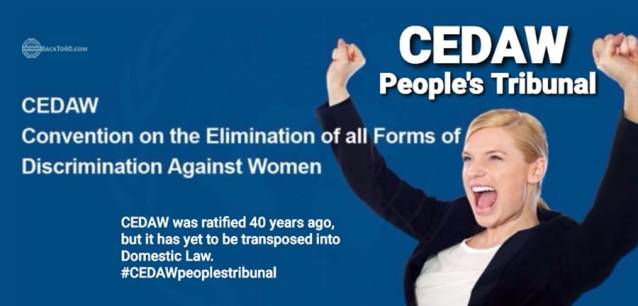
The report by the UK based Cedaw in Law, the organisation which is working with the Geneva based UN Convention on the Elimination of All Forms of Discrimination against Women and Girls (CEDAW). to put pressure on the government to implement in full the convention ratified by Margaret Thatcher in 1986.
The campaign covers everything from the 1950s born women battle for full restitution of their delayed pensions when the age went up form 60 to 66 to the dearth of women MPs and peers in Parliament.
At the moment we seem to be going backwards with Labour having an all white male prospective Parliamentary candidate list for five pending by-elections and former premiers Boris Johnson and Liz Truss putting forward an overwhelming number of men to be new peers in their resignation honours lists Even the Supreme Court which took on a big role under its former woman president, Brenda Hale now has 11 male judges and just a token woman judge.
As the report says : “…overlooking women’s right to equal participation in decision-making leads to an ignoring of, and ignorance about, women’s economic rights, health and wellbeing. Worse, it shows how the failure to ensure women’s participation in decision-making can lead to a wilful failure of government to consider the impact of policy decisions and law-making on women and women’s rights generally.“
We also discovered that the rules governing the delivery of petitions and reports to Downing Street had changed. Previously when Backto60 and trade unionists had delivered petitions to Downing Street it was allowed for people to make a short speech. Now under Rishi Sunak speeches that criticise the PM cannot be made from the steps of Downing Street. We did not discover this until both me and Jocelynne Scutt had made them.
Please donate to Westminster Confidential to allow me to continue my reporting on issues often ignored by mass media.
Tomorrow is the start of three days of hearings in London of the CEDAW People’s Tribunal which will examine the case for the UK to introduce into domestic legislation the ground breaking UN Convention on the Elimination of all forms of discrimination against women and girls
I am planning to have a daily blog on the highlights of the hearings as the issues raised will be wide ranging and effect the future of women in all walks of life from pensions to domestic abuse and equal pay.
Britain is unusual in ratifying the convention some 36 years ago under Mrs Thatcher but in not implementing the changes into UK law – though some issues have been partially implemented through the 2010 Equality Act.
The majority of other countries did both – ratification followed by legislation. The hearing also comes at a key time.
Scotland has decided to implement the convention in full and the Parliament at Holyrood is already working out how to do it – after the Scottish National Party included it in its manifesto and won the election.
In Wales the Labour Party which won the Welsh Parliament elections is also committed to introducing it.
And very recently Jersey decided to ratify the convention – leaving just England and Northern Ireland as laggards in this respect.
The hearings are being organised by a very powerful team of women lawyers from Garden Court Chambers and have attracted enormous interest from women’s groups – some of whom have sent in written submissions and others are planning to give evidence. Each evening I will publish details of those who have given evidence. Watch this blog for future coverage.
Aim is to write the UN Convention on the Elimination of Discrimination Against Women [CEDAW] into UK domestic law.
Meghan Campbell: Pic credit Birmingham University
Nearly 40 years ago Margaret Thatcher signed the UK up to the UN convention to end all discrmination against women but successive Tory, Labour and coalition governments have never passed the convention in British law.
Now in an age when the Boris Johnson led Tory government is trying to renege on international law agreements during European Union negotiations and opt out of parts of the European Convention on Human Rights it will face the wrath of women and girls who feel they have been treated as second class citizens for too long in the UK.
The movement has grown out of the far too long campaign by BackTo60 to get women born in the 1950s compensation for the loss of their pensions from the age of 60 which will be decided at a Court of Appeal hearing on Tuesday on grounds of discrimination.
The issue of inequality under CEDAW was an issue in the court case – but because it is not part of British domestic law – it is difficult issue to argue.
Now it looks like with real support from international figures and human rights lawyers that the Conservative government is going to face a campaign that will make the BackTo60 fight look like a sideshow.
It will begin with the setting up of a People’s Tribunal under John Cooper QC and renowned human rights lawyer who was Chair of the International Steering Committee and Prosecutor at the Iran Tribunal in The Hague and is named by The Times as one of the top 100 lawyers in the country.
Andrew Byrnes Pic Credit: Oxford University Law Faculty
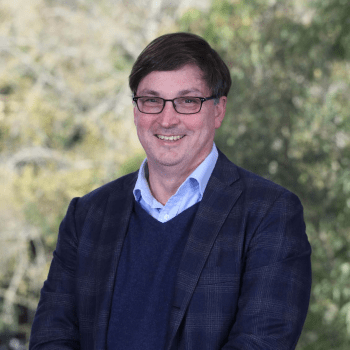
Now he is joined by three international experts. One is Andrew Byrnes, Professor of Law of Law at the University of New South Wales, Sydney, Australia, where he served as Chair of the Australian Human Rights Centre from 2005 to 2017.
He is an expert on both People’s Tribunals and CEDAW . With Gabrielle Simm (a senior law lecturer at the University of Technology, Sydney) he recently published the edited collection Peoples’ tribunals and international law (Cambridge University Press, 2018) and forthcoming publications includes chapters on the work of the UN Committee on the Discrimination against Women and the UN Committee against Torture, as well as the protection of economic and social rights through the parliamentary process.
He also was involved in the drafting of the CEDAW Optional Protocol, the Convention on the Rights of Persons with Disabilities, and is working with the Asia Pacific Forum of National Human Rights Institutions in current UN discussions about a possible new convention on the human rights of older persons.
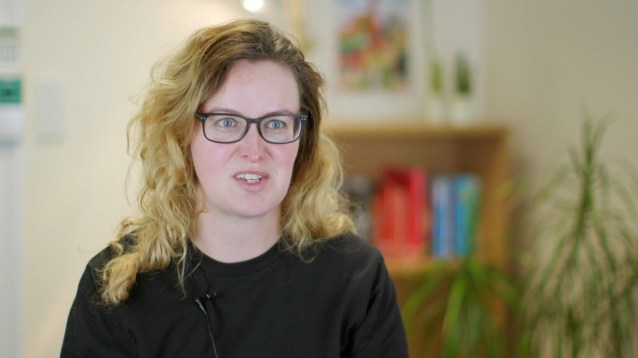
The second international expert who will join the advocacy team is Meghan Campbell, an Associate Professor at the University of Birmingham and Deputy Director of the Oxford Human Rights Hub. Her monograph, Women, Poverty, Equality: The Role of CEDAW (Hart 2018) was shortlisted for the Socio-Legal Scholars Association-Early Career Research Prize. The bookoffers an interpretation of the Convention on the Elimination of All Forms of Discrimination Against Women (CEDAW) to demonstrate how equality and non-discrimination can address the harms of gender-based poverty.
Professor Christine Chinkin Pic credit Twitter
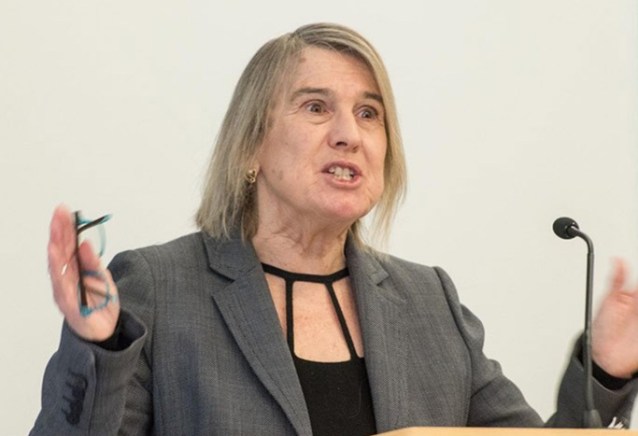
The third international expert is Professor Christine Chinkin CMG FBA is Professorial Research Fellow in the Centre for Women, Peace and Security, where she leads three major projects: ‘A Feminist International Law of Peace and Security’ funded by the AHRC, ‘Gendered Peace’ funded by the ERC and the UKRI GCRF Gender, Justice and Security Hub. Professor Chinkin was Director of the Centre for Women, Peace and Security from 2015-2018.
She co-edited the book ‘The UN Convention on the Elimination of All Forms of Discrimination against Women: A Commentary’ and authored the chapter on violence against women and girls. She was scientific advisor to the Council of Europe Committee that drafted the Convention on Violence against Women and Domestic Violence (the ‘Istanbul Convention’), the most far-reaching international treaty aimed at tackling violence against women and domestic violence.
Hannah Wilson Pic credit: Women’s Link
She will be joined by Hannah Wilson who works for Women’s Link Worldwide, an international human rights organisation which seeks to use the power of the law to promote social change which advances the rights of women and girls, particularly those facing multiple inequalities. She is based in Madrid and has recently raised issues about the poor conditions of workers harvesting strawberries in Huelva Spain who are mainly women and women’ rights in Rwanda.
Bright energetic women
In addition the People’s Tribunal have recruited a number of new bright energetic women legal associates as volunteers who are starting out in their careers after graduating. They include Isabelle Ehiorobo, a Law graduate from the University of Sussex; Shauna Lyttle who read history at King’s College London and is now completing a graduate LLB and Natalie Payne a recent LLB graduate from the University of Warwick, ( my former university) beginning a postgraduate study in Human Rights Law in 2020.
When the tribunal gets going it will be on a much broader canvas than the BackTo60 campaign. It will raise issues about poor working conditions, poverty, job discrimination, domestic abuse as well as pension discrimination among many others. It should prove a catalyst making discrimination against women a mainstream issue. It will also be a big fight with the government to get legislation on the agenda.
In the meantime the group has a spanking new website which can be reached here. The campaign is just beginning.

 Westminster Confidential