Antidote to our hysteria about immigration: City of London welcomes a new Migration Museum

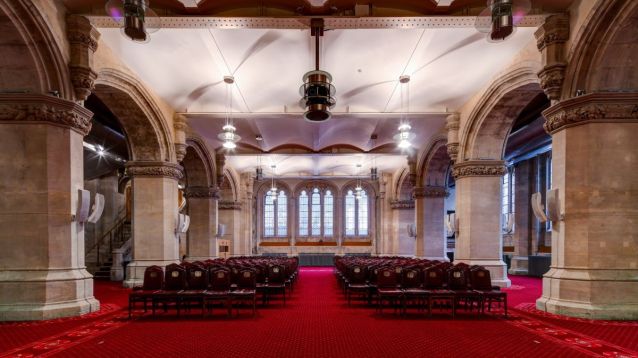
The rather splendid Livery Hall

Last night I attended a reception by the City of London to welcome the opening in three years time of Britain’s first national Migration Museum which will be located in the heart of the capital.

You could not have had a better antidote to the current political antipathy to migrants whether it is from Nigel Farage’s by election and Reform council election victories or Sir Keir Starmer’s ill judged views that we are becoming a nation of strangers because of the number of people wanting to live here.

Nor could there be a bigger statement of support from the City of London in choosing the prestigious Livery Hall at London’s Guildhall to launch this. Talking to officials from the City of London at the reception it was very clear they are extremely enthusiastic about the project.

The Migration Museum project is now 10 years old. It has moved from an old fire station at the back of the Albert Embankment to an empty H & M store in Lewisham shopping centre before getting to the City. It will be a new three floor museum in a brand new building in Aldgate. This latest move has only been made possible by a superb gift from a successful property company , Dominus, set up by a refugee to the UK.

The brilliance of this museum is that it focuses on human interest stories and treats everybody as a human being – not as some bogeyman or threat to the stability of our country. And the stories and history of migration and emigration are so rich and diverse and so much part of this country that it is amazing that no such museum has been created until now to celebrate this.

Also it will not have a metropolitan bias. There are plans for pop up museums all over the country to bring the same human interest stories to the rest of Britain. It will be popular with schools visits and when it is open it is expected to attract 140,000 visitors a year plus another 100,000 on the internet.

Last night’s launch included a panel discussion with Sathnam Sanghera , David Olusoga , Es Devlin, Indhu Rubasingham mediated by BBC news presenter Reeta Chakrabarti.

You can see how enthusiastic people were from this short Youtube video from Dr Krishna Kandiah, director of the Sanctuary Foundation. He says it better than I could express it.

On the way back home from the event on the tube I noticed a couple opposite me. The young man was a typical white Englishman with dark black hair. His girlfriend was a brown Asian lady. It was quite clear they were in love. And I thought those who claim we are a nation of strangers have got it wrong. The missing ingredient is love. In such a diverse country these attempts to drive wedges between people of different races will not resonate with them. Those who want to stir up fear and loathing are on the wrong side of history. Love will conquer all.

One-Time
Monthly
Yearly

Make a one-time donation

Make a monthly donation

Make a yearly donation

Choose an amount

£5.00
£10.00
£20.00
£5.00
£15.00
£100.00
£5.00
£15.00
£100.00

Or enter a custom amount

£

Your contribution is appreciated.

Your contribution is appreciated.

Your contribution is appreciated.

DonateDonate monthlyDonate yearly

Please donate to Westminster Confidential

£10.00
Seeking new trustees: The Migration Museum plans to broaden its appeal

Museum Museum Poster

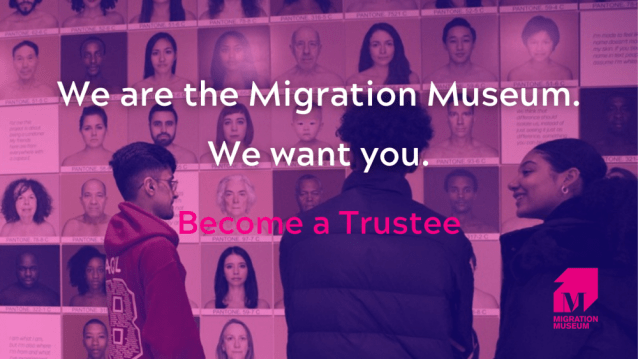
The Migration Museum – an innovative project to create the first permanent home for a museum in the United Kingdom devoted to a story that probably affects every person in the country – is looking for new trustees.

They will come at a time when the museum – at present in a temporary home in a shopping centre in Lewisham, south London is planning to boost its profile and move centre stage to highlight the issue and all its extraordinary facets.

As the prospectus for new trustees says

” Never before has there been stronger justification for there to be a welcoming and stimulating cultural institution – away from the polarising noise of politics and the media – to explore some of the most pressing issues of the day – migration, race, Brexit and our colonial past among them – in a richly aesthetic atmosphere of calm reflection.”

Aim, Vision and Values

The projects aim, vision and values are summed up in three paragraphs:

“Our Mission is to deliver a popular, high-profile and accessible cultural institution, to which every person in the country can feel a sense of belonging and that puts Britain’s migration story at centre stage.

“Our Vision is of a society in which we all (for we all have migration stories in our family past, if we dig a little) feel connected and represented in an essentially British shared migration story.

” Our Values are to promote tolerance, understanding, respect and participation, and to engender a real sense of representation, both beyond our organisation and within it. This means that we are strongly committed to promoting diversity and representation within our Board, not only to reflect the lived experience of our
audiences, but also to deliver role models for those who join, or aspire to join us, as trustees, employees, volunteers or collaborators. “

exciting events

For the last few years the museum has already put on a number of exciting events – from recreating the Jungle camp ( and all the art) made by migrants in Calais to putting on a concert by Aeham Ahmad, the incredibly brave and talented pianist who played his piano on the streets of bombed out Yarmouk in Damascus until he was forced to flee by the Syrian dictator Assad to Germany.

More recently during the pandemic there has been a digital exhibition of migrants contribution to the NHS and a series of digital exhibitions telling the story of emigration from the UK and those who were left behind.

For those who might be interested the deadline for applications is May 3 and the prospectus and all the details are here.

I am one of 120 Distinguished Friends of the Migration Museum and am a strong supporter of the project. I have also written a number of stories on this blog on some of their past exhibitions. Here are a few of them.

Migration Museum You Tube Video on the NHS

https://davidhencke.com/2020/10/07/amazing-new-digital-exhibition-celebrating-how-migrants-around-the-world-came-to-the-aid-of-the-nhs/

https://davidhencke.com/2016/06/10/why-all-the-uk-should-see-this-brilliant-exhibition-on-the-calais-jungle/

https://davidhencke.com/2014/10/12/what-have-the-germans-ever-given-us/

Amazing new digital exhibition celebrating how migrants around the world came to the aid of the NHS

Author and Poet Michael Rosen, recently recovered from Covid-19, narrates this short video on the exhibition

Migration Museum reveals the huge contribution of people overseas who came to the UK to work in the NHS

The NHS has been in people’s minds ever since the Covid-19 pandemic began and will continue to be so if there is a second wave of the virus.

During the worst part of the pandemic people came out in their thousands to clap and cheer the nurses, doctors, paramedics, care workers and ambulance drivers who work long hours in difficult circumstances to try and save people’s lives.

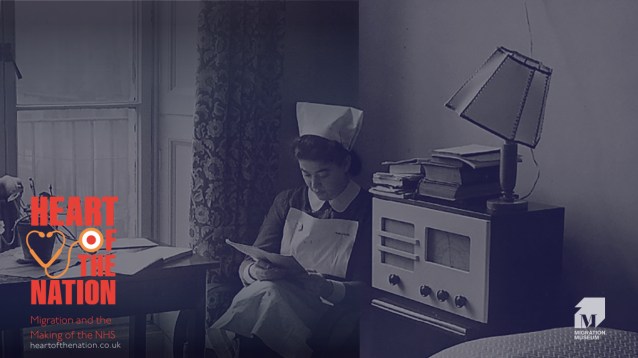
The Heart of the Nation exhibition puts a human face on the thousands of people who come to work and settle in the UK and take jobs in the National Health Service. People often say without them the NHS could not function and this exhibition rather proves the point.

It is not a sentimental account of the role of migrants helping the NHS to provide services for the last 72 years. It is a hard hitting. Some of it is “in your face”. It doesn’t pull punches about what it is like to be an immigrant in the UK.

A picture from the past: Nurses accommodation for new arrivals

It illustrates how migrants have over the years faced racial prejudice, hostility from landlords and even includes a racist cartoon in the national press. that would never be published now. It highlights migrants who found the traditional British diet tasteless and too heavy in carbohydrates which nowadays would be no problem with such a modern diverse range of cuisine in the UK. It includes some very tragic stories – including migrants who died in the Covid-19 outbreak while working in hospitals valiantly trying to save the lives of dying patients.

And it goes behind the scenes in the NHS to show the large number who work as porters and in the labs and stores.

But it is also a celebration – including a Spotify playlist of the music the migrants chose – and tales of young nurses dressed up to the hilt dancing all night to reggae and R & B only to shower and rush back to work at 7.0 am. And one of them was a founder member of a Notting Hill Carnival band designing the first colourful costumes that are a trade mark of that event.

As Allyson Williams said: “Carnival means so much to me. It has always been a celebration of our freedom and emancipation and acknowledgement of our ancestors. Here in London it’s all about family, community and inclusivity. “

“A story that needs to be told “

Aditi Anand, head of creative content at the Migration Museum and curator of the exhibition, said:

“Heart of the Nation highlights the vital role that migrants have always played in the NHS and the extent to which, just like the NHS, migration is central to the very fabric of who we are in Britain – as individuals, as communities and as a nation. Now more than ever, this is a story that needs to be told.”

You can download the digital exhibition here. As a Friend of the Migration Museum myself I am a supporter. But I think you will not be disappointed. It is an eye opener and reminder in times when populist nationalism is on the rise that Britain is also a very diverse and international country and all the better for it.

What have the Germans ever given us

De La Warr  Pavilion, Bexhill on Sea, a German architect's contribution to Britain

De La Warr Pavilion, Bexhill on Sea, a German architect’s contribution to Britain

The Germans have never had a particularly good press in Britain. They are traditionally presented as the ravaging Hun after we fought two world wars against them in the last century.They can be  stereotyped as brutal, beer swilling technocrats with no sense of humour and always obeying orders.

And no one has forgotten the 1966 World Cup – when England beat Germany 4-2 – though many might be happy to forget the 2010 World Cup when Germany beat England 4-1.

Yet there is another side to all this. The German contribution to Great Britain – what contribution you might ask?

There is an eye-opening exhibition organised by the Migration Museum Project at the German Historical Institute in Bloomsbury Square, London, that tells a different story. You have probably not heard of either, so if you are a passionate supporter of UKIP look away now because this is no story of EU benefit  scroungers rushing to Britain to take our jobs and squander taxpayers’ money.

Rather it is a tale of how German immigrants to Britain have created jobs,iconic buildings, boosted trade between the two countries and made us laugh and cry and fought for women’s rights. I have to declare an interest as you would guess from my name – Hencke – I am from part German descent and my great grandfather came to Britain around 1863 and I am afraid, UKIP supporters,subsequent generations  have stayed here ever since.

Indeed this exhibition reveals that in Britain’s first census in 1861 German immigrants were the largest group of immigrants , amounting to 28,644 people, just 0.09 per cent of the population. By 2011 there were 273,654 German born Brits, amounting to 0.43 per cent of the population.

The most fascinating part of the exhibition is the less familiar contributions from German immigrants. Two German chemists built London’s first gas works, the iconic and now listed De la Warr Pavilion in Bexhill on Sea was designed by a German architect, and one of the leading suffragettes, Kitty Marion (Katerina Shafer) was a German immigrant.

And there are many German academics, traders dating back to the Hanseatic League in 1300, and the big wave of Jewish immigration in the 1930s after the persecution by the Nazis.

Less well-known is that there is also a German speaking Somali and Vietnamese population in the UK, people who came as asylum seekers to Germany and have moved to Britain.

And yes there are stand up German comedians in Britain – you can watch one, Henning Wehn, on  a video – and he is funny!

All this is a real antidote to the anti-immigration frenzy sweeping the country, showing the benefits to Britain rather than harping on the horrors of immigration ruining our society.

The exhibition is on in London until October 24, times are on the German Historical Institute website (link above) and admission is free. The exhibition  will move to Manchester and Belfast later.