Department of Transport excludes over one million disabled drivers from the green car revolution

Electric car charging at home, Clean energy filling technology. Pic credit:www.freepik.com

A damning report from MPs today reveals that 1.2 million disabled drivers have been blocked by the government from being able to use electric charging points cars at motorway service stations and garages.

While the UK is on target to increase the number of charging points for the growing number of electric cars not one of the 73,000 charging points reaches accessibility standards laid down by the government for disabled people to use them.

The reason is that to install disabled friendly charging points has been left as a discretionary option for installers rather than a mandatory requirement by government.

Sir Geoffrey Clifton-Brown MP

Sir Geoffrey Clifton Brown, the Tory chair of the Commons Public Accounts Committee, said: “It is of deep concern that the needs of disabled drivers are being ignored. Not a single charge point in the country is currently fully accessible. We are risking baking a serious injustice into the fabric of a major part of our national infrastructure. Government similarly needs to understand how to remedy financial inequalities for those who have no choice but to use public charge points. Our report therefore challenges the Government – it must move at pace to overcome current delays and encourage take-up, while taking the time to ensure no-one gets left behind in this all-important shift to the future.”

The report warns: “Many disabled people are reliant on their cars as existing public transport does not adequately cater for their needs. Failure to address problems with the uptake of the standard will mean that the public charge point network will continue to develop without meeting the needs of drivers with disabilities.”

The treatment of disabled motorists reflects the disparaging attitude both the last Tory and the present Labour government seem to have for disabled people. Rail travellers are similarly badly treated with patchy provision to access station platforms and the London underground is only partly accessible with Euston underground been seen as the worst station in Europe. Compare this to the excellent provision for disabled people on public transport in Singapore, Sydney, Adelaide and Rio. I have had a good experience taking my late wife in a wheelchair round these cities.

And it comes at a time when the new government is planning a £6 billion cut in disabled people’s benefits and is expecting the disabled to get to work without providing proper facilities for them to travel there.

The treatment of the disabled is just one criticism of the present electric charging provision. The report found a very uneven distribution of electric charging points round the country. London, where ministers mainly live, has 250 charging points per 100,000 of the population. While Northern Ireland has just 36 per 100,000 population – suggesting that people taking their electric car on holiday there might have problems. In England the worst areas for provision were the North West, including the Lake District and the East Midlands, including Lincolnshire.

Most charging points are in urban not rural areas and there is also a problem connecting charging points to the national grid – which suggests that when they are used more widely we might find them running out of juice.

The previous government set aside £950 million to do this – but the report reveals nothing has yet been spent as pilot projects were subject to delays.

There is also an economic problem with public charging points paying 20 per cent VAT while those who have the space for a home charger paying only 5 per cent VAT. So it is much more expensive to use public chargers.

There may be a further problem for the many people who live in terraced houses who install an electric charger and then put cables across the pavement and roads to charge their parked cars.

So much for the green revolution which we are all promised. It is certainly happening, but not been managed well and disabled people are just an after thought as far as policy makers are concerned.

One-Time
Monthly
Yearly

Make a one-time donation

Make a monthly donation

Make a yearly donation

Choose an amount

£5.00
£10.00
£20.00
£5.00
£15.00
£100.00
£5.00
£15.00
£100.00

Or enter a custom amount

£

Your contribution is appreciated.

Your contribution is appreciated.

Your contribution is appreciated.

DonateDonate monthlyDonate yearly

Please donate to Westminster Confidential

£10.00

Can Whitehall promote innovation, efficiency and AI technology to help overcome the crisis in providing public services?

Gareth Davies, head of the National Audit Office

Head of the National Audit Office raises pertinent questions about the future direction of Whitehall in annual speech

Anybody reading the latest tranche of reports from the National Audit Office and the Commons Public Accounts Committee could be forgiven for thinking the UK is living in a dystopian world. Indeed fiction writers could use their reports as a basis for a dystopian novel or a new TV series.

The problem is that it is not fiction, it is factual based evidence.

Never in my 40 years of reporting the NAO have I seen so many things run by Whitehall going wrong. Yes we have had scandals, waste of public money and even corrupt deals exposed by them. But the last tranche of reports almost beggars belief.

Simultaneously we have had the biggest backlog of building maintenance, totally £49 billion, the largest ever NHS waiting lists for operations, the Home Office admitting it has made 1000 mistakes and wasted tens of millions on acquiring sites for housing asylum seekers, half the local authorities in England on the verge of bankruptcy, outdated computer systems without proper security protection, record homelessness, and a huge backlog of people waiting for special education places or treatment in psychiatric hospitals.

Innovate or die

It is against this background that Gareth Davies, the head of the National Audit Office, addressed a well attended meeting yesterday in Parliament of MPs, peers, former permanent secretaries, academics and journalists.

While he did not use my journalistic hyperbole, his message was a simple one to Whitehall, innovate or die. And although the NAO is strictly non party political, there was an underlying message to the present government, sharpen your act or lose the next election.

As he put it: “we have a new Parliament and a new Government, but many of the same problems of rising demand and not enough money to quickly fix the gaps in key public services. We also face other challenges that risk causing widespread disruption, from global instability and climate change to public health emergencies and cyber threats.”

NHS needed fundamental reform

He was particularly critical of the department for Health and Social Care and the NHS, the biggest employer in the UK.

” Figures from NHS England in May last year showed it was still 8 per cent lower in productivity in 2023/24 than before the pandemic and much work is underway to address this.”

He went on later: ” In the last few months, our reports on supporting children with special education needs and NHS financial sustainability both identified the need for fundamental reform in the face of rising demand and costs, alongside unsatisfactory outcomes. This means tackling the causes of avoidable demand and allocating resources in a redesigned system where they can have maximum impact on outcomes.”

He is pleased that Whitehall is piloting AI but also warned that new technology is not the whole answer to greater productivity. He also emphasised that ministries need to employ the best skilled people – notably recently in the need for people with good computer skills and capable of negotiating good procurement deals.

He is also wanted Whitehall to concentrate on tackling resilience to protect the country. This included fighting cyber attacks and the risk of future pandemics. He revealed the NAO would soon publish a report looking at the international and domestic implications of protecting the UK from another pandemic like Covid 19 which came from abroad.

Civil servants must be less risk averse

Finally he wanted civil servants to be less risk averse and try out well managed schemes, dropping those that don’t work quickly.

His solution was summed up in four succinct points.

  • First, a clearly articulated risk appetite and a spread of investments, to maximise the chances of success in innovation
  • Second, harnessing new technology as I’ve already mentioned
  • Third, a culture of fast learning and evaluation, stopping failed experiments quickly and scaling up successes
  • Finally – and close to home for us – an accountability and scrutiny framework that encourages well-managed risk taking

” It’s no coincidence that innovation thrives in times of crisis, such as when lives are at stake. Organisations rapidly adjusted their risk appetites during the pandemic to meet urgent needs,” he said.

He pointed that Whitehall fears that they would hung up to dry by MPs and the press if they failed was now no longer true -instead MPs on the public accounts committee were now more critical of civil servants who failed to look at new ways of tackling problems rather than following safe bureaucratic procedures.

So what are the NAO doing themselves?  “our refreshed strategy from 2025 to 2030 takes fully into account the risk appetite set for the range of innovative projects. We will continue to look for and highlight positive examples of innovation, including where unsuccessful initiatives have been stopped in favour of more promising ones. As well as featuring these in our reports on departments and organisations, we will publish what we learn across government as part of our programme of lessons learned reports.”

AI is also coming to the NAO so auditors can spend more time making professional judgements on department’s performance and less time on manual exercises.

Talking to people who attended afterwards it was clear that MPs and academics are well aware that innovation is necessary or we will not be able to deliver public services to meet growing demand. MPs seemed especially aware that the NHS was not functioning properly – whether it was their local health trust – or the bureaucracy at the top. MPs have already publicly criticised the top management of the NHS for being complacent.

Over the next five years how Whitehall balances the money needed for innovation and risk taking against the perennial problem of working in a public sector which has been neglected for too long and needs ” first aid” to keep going will be crucial. Whitehall should treat the present state of public services as a national crisis which can only be tackled by radical innovation.

One-Time
Monthly
Yearly

Make a one-time donation

Make a monthly donation

Make a yearly donation

Choose an amount

£5.00
£10.00
£20.00
£5.00
£15.00
£100.00
£5.00
£15.00
£100.00

Or enter a custom amount

£

Your contribution is appreciated.

Your contribution is appreciated.

Your contribution is appreciated.

DonateDonate monthlyDonate yearly

Please donate to Westminster Confidential

£10.00
Whitehall whistleblowers: Cabinet Office monitors nothing, knows nothing and does nothing

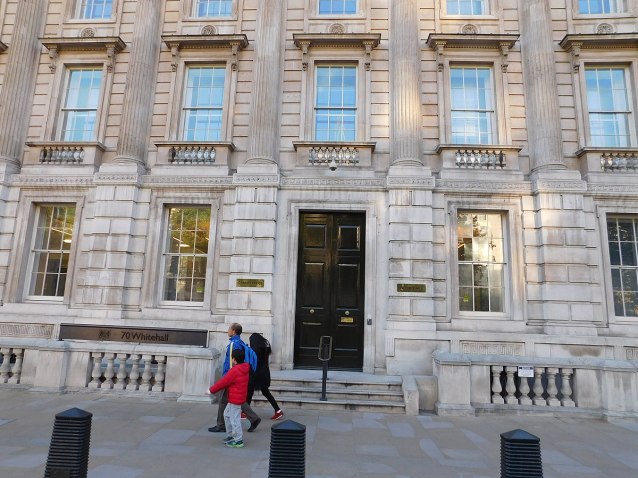
Cabinet Office – 70 Whitehall Pic credit: Wikipedia Commons

The day after Parliament went into recess a damning Public Accounts Committee report exposes why Whitehall like the National Health Service has such an appalling record in dealing with whistleblowers.

The Cabinet Office, the ministry at the apex of power and responsible for co-ordinating all government policy should be interested in improving public service is turning a blind eye to any concerns that are raised by whistleblowers when things go wrong.

The Cabinet Office is supposed to collect data on whistleblowing across Whitehall but the report reveals it is making remarkably slow progress in doing so.

The report says: “There are some key metrics missing, such as data on “ongoing cases” and the length of time an investigation takes, making it difficult to understand whether cases are taking too long and why that might be the case. “

“The current data collection also does not ask for data on the treatment of whistleblowers which would help indicate whether whistleblowers are being treated fairly. Furthermore, some of the existing data collected lacks detail, for example the data shows that less than 5% of investigated concerns lead to changes in policies or procedures which suggests a lack of action is taken in response to concerns.”

40 per cent of Whitehall whistleblowing cases are about fraud

It goes on: “there is a lack of data analysis and sharing of insights regarding whistleblowing across of the civil serviceThe Cabinet Office does not utilise its central position to analyse the cross-government data it collects. It appears that 40 per cent of the whistleblowing cases involve fraud “but there is no further detail beyond this categorisation so the Cabinet Office do not understand why this is the case.”

“A ‘speak up’ environment is not yet embedded throughout departments to encourage people to comfortably raise concerns. There are still negative perceptions of whistleblowing which can create barriers to achieving the right environment for speaking up. The annual Civil Service People Survey in 2022 had a median organisational score of only 52% of people agreeing they ‘think it is safe to challenge the way things are done in my organisation’. So nearly half think it is not safe.

The report says the Cabinet Office and other departments do not seek feedback from whistleblowers and so are missing vital insights into the effectiveness of the process.

“We have seen no clear indications that any departments routinely seek feedback directly from whistleblowers. Some feedback can be given to departments through their Nominated Officers (senior members of staff who are nominated to receive and consider concerns), but it is not collected in a formal or systematic way for it to be informative and there are limitations with anonymous whistleblower.”

The report calls for a radical shake up across Whitehall with a serious approach from the Cabinet Office to monitor what is going on.

Ray of Hope

There is one ray of hope from one organisation that worked with the National Audit Office and obviously takes whistleblowing seriously – that is the Maritime and Coastguard Agency which is principally concerned with safety at sea and environmental protection. It is a Department for Transport agency. In evidence to MPs it has developed a strong whistleblowing policy and takes cases from both staff and members of the public including ships crew.

A fishing vessel Pic Credit: HM Coastguard UK

The external cases were mainly categorised under danger to the environment or health and safety related issues. These cases included safety of vessels in UK ports, failure to meet the obligations under the Maritime Labor Convention (noise and rest hour disturbance), untrained ship crew and fraudulent issue of seafarer competence certification.

Unlike health trusts the anonymity of whistleblowers is protected throughout the investigation and their names kept from the board of the agency.

The evidence says: “A recent example of protecting the identify of a whistleblower was following a report of health and safety concerns in relation to coastguard rescue equipment in one location. In order to protect the identify of the whistleblower the health and safety investigation manager reviewed equipment at more than one location. Similarly where there have been reports of potential travel and expense claim and government procurement card irregularities, spot checks across several employee claims have been undertaken to avoid identifying the whistleblower.”

As a result last financial year there were 34 whistleblowing investigations – 27 from staff and seven from members of the public.

“The internal cases during 2023-24 covered breaches of the civil service code, conflict of interest, recruitment irregularities, possible fraud, Health & Safety, Safeguarding of employees, Security breach, misuse of official position/ influence by improper pressure, GDPR breach and offer of a bribe. Of the 27 cases, four were not classed as Whistleblowing but “Speak Up” and were referred to MCA HR.

“The external cases during 2023-24  were health and safety issues on passenger vessels, potential security/ GDPR breach by an MCA contractor’s employee, security/environmental issue referred to the Joint Maritime Security Centre, a referral to the National Crime Agency and a modern day slavery report transferred to the appropriate authorities via Gov.Uk”

This appears to be exception rather than the norm. But it shows that if whistleblowing was taken seriously in Whitehall and the NHS far more serious safety issues could be investigated and fraud stopped. This lack of interest in whistleblowing – and the negative attitude towards doctors who report patient safety issues in the NHS – is a nasty blot on our public services. It does nothing to protect the public either.

One-Time
Monthly
Yearly

Make a one-time donation

Make a monthly donation

Make a yearly donation

Choose an amount

£5.00
£10.00
£20.00
£5.00
£15.00
£100.00
£5.00
£15.00
£100.00

Or enter a custom amount

£

Your contribution is appreciated.

Your contribution is appreciated.

Your contribution is appreciated.

DonateDonate monthlyDonate yearly

Please donate to Westminster Confidential

£10.00

Half baked and half finished: How courts and tribunals burned through £1 billion on computers to improve access to justice and failed

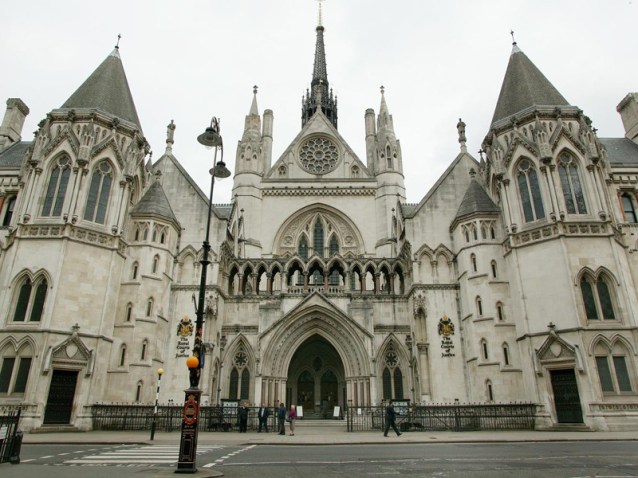
Royal Courts of Justice

It is portrayed by HM Courts and Tribunals Service as “our vision for reform to make the justice system more straightforward, accessible and efficient.”

But this £1.3 billion digital court reform programme has been exposed by the National Audit Office and last week by the House of Commons Public Accounts Committee for having failed to meet its objectives. This ambitious programme started in 2016 has been much delayed and only half completed. As MPs commented last week it has ” burned through” over £1 billion of public money and is the on the verge of running out of cash before half the benefits can be realised.

No one would argue that the courts and tribunal system is antiquated and needs reform. One only has to watch judges in the employment tribunal system writing down what claimants and respondents are saying by hand in courts that don’t keep proper records of hearings to realise how antiquated it is.

But once again it looks like that Whitehall has fallen for an expensive simplistic digital solution for a service which is incredibly wide ranging and complex. The aim was to create a common computer platform to serve 44 different aspects of justice from the criminal courts to magistrates courts and from the family and divorce courts to the probate service and the tribunal service.

Timetable five years behind schedule

It also had a timetable to be completed by 2020. Now we will be lucky whether the truncated programme will be up and running by 2025. Also £1.3 billion won’t be enough – there is only £120 million left to spend and that is nowhere enough to meet what is needed. And £22 million was wasted trying to integrate the Crown Prosecution Service into the system which didn’t work.

Also there are promises of big savings by going digital. This is always promised and we will see whether that really happens.

Also plans to have fully digital probate and divorce services had not fully worked. The MPs said:

“HMCTS found that significant proportions of its online divorce and probate cases required manual interventions from staff and in March 2022 HMCTS identified that 55% of divorce cases could not be completed online.”

In addition it appeared that both services discriminated against ethnic minorities.

Both the Bar Council and the Law Society were not impressed. The report says:

The Law Society “explained that there were functionality issues with online portals for family services, such as family public law. These issues led to problems, including instances of solicitors not getting necessary notifications which made the system difficult to use and, in some cases, significantly delayed cases. It told us that it had frequently expressed concerns to HMCTS about the functionality and design of some reformed services.”

System developed in a vacuum – Bar Council

The Bar Council told MPs:” the designers and producers of the common platform appeared to
have a limited understanding of working needs and practices, and “displayed a marked reluctance for the system to be designed in conjunction with, and for the benefit of, professional court users”.

It said it looked like the system had been designed in a vacuum.

As for the general public, it looked like that it was going to be a problem at magistrates courts ,purely because most of the defendants didn’t have any legal representation and therefore might not have proper access to the system to defend themselves.

Meanwhile the project continues so far with the pausing of integrating possession orders, special tribunals except for the Criminal Injuries Compensation Tribunal.

Dame Meg Hillier MP

Dame Meg Hillier MP, Chair of the Committee, said:

“Our courts were already stretched thin before the pandemic, and the backlogs now faced pose a real threat to timely access to justice. These are services crying out for critical reform, but frustratingly HM Courts & Tribunal’s attempts appear in some cases to be actively hindering its own staff’s ability to carry out their jobs. In particular, the roll-out of the Common Platform digital system was a blow upon a bruise for pressured court users.”

Given there are already many issues whether the courts do deliver justice, this rather botched computer programme does not give you much faith in the system.

Please donate to Westminster Confidential to allow me to continue my forensic reporting.

One-Time
Monthly
Yearly

Make a one-time donation

Make a monthly donation

Make a yearly donation

Choose an amount

£5.00
£10.00
£20.00
£3.00
£9.00
£60.00
£3.00
£9.00
£60.00

Or enter a custom amount

£

Your contribution is appreciated.

Your contribution is appreciated.

Your contribution is appreciated.

DonateDonate monthlyDonate yearly

Please donate to Westminster Conbfidential

£10.00

Yet another pension scandal .. Tory government cheats 4000 scientists out of their pensions by giving misleading advice when their company was privatised

Their misleading advice has cost retired workers dear

The Commons Public Accounts Committee this week published a damning report on a long running pension scandal which has seen retired pensioners lose hundreds of thousands of pounds from their pension pots because of misleading official advice given to them 27 years ago.

The pensioners were all employees of the AEA Technology – the state owned commercial arm of the UK Atomic Energy Authority – which was privatised in 1996 by Sir John Major’s Tory government.

This sorry tale took place almost at the same time as the government had implemented the 1995 Pensions Act which raised the retirement pension for 1950s women from 60 to 65 and the DWP has been found guilty of partial maladministration by Rob Behrens, the Parliamentary Ombudsman.

The Tory government gave AEAT employees just one month to exit their contributory Whitehall pension scheme for a new one with the company taking over AEA. 90 per cent of the staff did.

Crucial to this rushed decision was an independent report by the Government Actuary’s Department which told all staff that the scheme was as good as remaining in the state scheme and might even be better.

What it failed to tell people was that if the company went bust or the pension scheme failed all the staff would lose their guaranteed protection of their pension savings that is provided by the government. It would be transferred to the Pension Protection Fund, lose all their inflation protection up to 1997, and they would live for the rest of their lives with only a 2.5 pc annual increase in their pension.

Government Actuary’s report was secretly changed by UKAEA lobbying

According to the written evidence from an ex employee David Roberts, a freedom of information request has revealed that this ” independent” report was tampered with by AEAT and the UKAEA behind the scenes. They got it rewritten because it was not persuasive enough to get people to quit the government scheme .

He wrote:” The sections which have caused the complaints were significantly changed as the result of a telephone conversation between UKAEA and GAD on 5/11/1996. “

GAD also failed to undertake a risk assessment about the switch.

In 2012 AEAT which had already cut funding to the pension scheme went into administration. The company was bought by Ricardo, an American firm, who immediately divested all its nuclear work .Its headquarters of a new firm are now in California.

One would have thought they sacked employees could get redress but for the last 11 years they have got nowhere.

They are barred from complaining to either the Parliamentary Ombudsman or the Pensions Ombudsman.

Current legislation bars the Parliamentary Ombudsman from looking into case involving private pensions – and the government has just told the Commons Public Administration Committee there is no priority to change the law.

The case could come under the Pensions Ombudsman but there is a 15 year cut off point from when the event happened which blocks him from awarding any compensation.

Nobody in government takes responsibility

As the PAC report says:

“Nobody in government has taken overall responsibility for the case. There has been no independent review because the relevant ombudsman services have said they cannot investigate the information given to members in 1996, clearly highlighting that there are gaps in the routes of appeal people have for complaints about their pensions.”

The response from government since 2012 has been appalling. The DWP not only did not help but confused the issue. The report says: “In July 2013, DWP produced a factsheet summarising the complaints government had received and a response to each on behalf of the government. In February 2014, it then sent scheme members a further letter explaining that it was not responsible for the case.”

But it didn’t tell them who was and it turned out to be the Cabinet Office.

Sir Steve Webb- declined to help as pensions minister

Ministers were no better. Sir Steve Webb, then the Liberal Democrat pensions minister, would not intervene to change any rules to help the pensioners -saying if AEA Technology rules were changed it would affect other government services that had been privatised citing the BT pension scheme. He was actually wrong in this case, it is protected should BT go bust.

Two MPs tried to use private members bills to rectify the situation by changing the Ombudsman’s powers – but they were blocked by the Conservative government.

The government has escaped responsibility by never setting up an independent review of what happened and the Government Actuary’s Department has tried to avoid censure by saying their report was not the main reason why people switched their pension. This is contradicted by the employees who gave written evidence to the PAC.

people abandoned by an uncaring state

The whole saga is simply part and parcel of a government that cares little for the welfare of the ordinary citizen and tries to evade responsibility for its errors. Meanwhile people – who contributed to their pension and even put extra contributions to increase it – are just abandoned by an uncaring state. One person lost 40 per cent of their pension and all are affected by the cost of living crisis since they are not protected by the huge rise in annual inflation by the Pension Protection Fund.

Please donate to Westminster Confidential to allow me to continue my forensic investigations

One-Time
Monthly
Yearly

Make a one-time donation

Make a monthly donation

Make a yearly donation

Choose an amount

£5.00
£10.00
£20.00
£3.00
£9.00
£60.00
£3.00
£9.00
£60.00

Or enter a custom amount

£

Your contribution is appreciated.

Your contribution is appreciated.

Your contribution is appreciated.

DonateDonate monthlyDonate yearly

Please donate to Westminster Confidential

£10.00
How a leading expert on home working is stymied by the government’s “litany” of failures to deliver broadband

John Howkins. You can find him at johnhowkins.com

MPs condemn multiple failures on planned broadband provision

John Howkins is well known in the creative industry as an innovator, author and an international speaker. His books – particularly relevant in the present pandemic – highlight a new way to look at work based at home. His latest book ” Invisible Work” concentrates on how people in work can adapt to the new age of artificial intelligence rather than be made redundant by it.

His world centres on publishing, TV, film, digital media and streaming – all the new technologies brought to us by the huge growth of the new digital age.

Supreme Irony

It is therefore a supreme irony that his opportunity to engage in this age of isolation has been wrecked by a Conservative government breaking its manifesto promise to bring broadband to everyone. The failed manifesto pledge – only a year after it was made – is highlighted today in a new report from the all party House of Commons Public Accounts Committee.

For Mr Howkins’ problem is that he lives in rural Norfolk near Attleborough in the Parliamentary constituency of Mid Norfolk represented by Tory MP George Freeman – a tech enthusiast who has written pamphlets on how technology can save the NHS. But as yet has done nothing to help his constituents get the broadband they need.

Mr Howkins like millions of others living rural Britain has no proper broadband that can download videos in seconds or easily stream Netflix or the BBC I Player. And today MPs on the Commons Public Accounts Committee tell you why.

On November 20 last year Rishi Sunak, the Chancellor, unceremoniously dumped the promise to all voters to get fast broadband by 2025 – and substituted a promise for 85 per cent coverage – dumping most rural parts of the UK ( and many Tory voters) in the process. Cynics might suggest the Tories only made this pledge because Jeremy Corbyn, for Labour, had promised a universal free broadband service – saying it should be a basic utility in the 21st century like water or electricity.

Ministry admits target unachievable

The MPs report concludes that not only in ministers’ words ““clear that Government’s 2019 election pledge to deliver nationwide gigabit broadband connectivity by 2025 was unachievable”  but that even this lower target will be missed.

There is supposed to be £5 billion of our money put aside to bring this about but the report reveals that the Department for Culture ,Media and Sport, has yet to allocate 75 percent of this money one year into government for the contracts to do this.

It also warns : PAC is “increasingly concerned that those in rural areas may have to pay more, and may reach gigabit broadband speeds late” and is not convinced that “if and when rural users finally do get gigabit broadband, they will enjoy the same choice of service provider and the same protections as their urban counterparts”.

The scoreboard of failures by the ministry is appalling Mps found:

  • failure to make meaningful progress to tackle the barriers faced by operators in maximising gigabit connectivity by 2025,
  • failure to demonstrate it has learnt lessons from the superfast programme for the detailed design of the gigabit programme,
  • failure to demonstrate how its centralised procurement model will retain the people, skills and knowledge in local authorities that were critical to success in the superfast programme,
  • failure to give any reassurance that local authorities will get additional funding to retain their expert resources at a time when local government finances are under severe pressure from the pandemic,
  • failure to make any meaningful progress in delivering the policy and legislative changes deemed essential by industry to achieve rapid roll-out,
  • failure “yet again” to prioritise consumers in rural areas

Well done culture secretary Oliver Dowden ( NOT )!

Meg Hillier: chair of the Public Accounts Committee

Meg Hillier MP, Labour Chair of the Public Accounts Committee, said: “With the grim announcement that the country and economy will be locked down for months, the Government’s promises on digital connectivity are more important than ever. But due to a litany of planning and implementation failures at DCMS, those promises are slipping farther and farther out of reach – even worse news for the “rural excluded” who face years trying to recover with substandard internet connectivity.  

“For the foreseeable future, ever more of our lives is moving online, whether we like it or not. Government cannot allow digital inequality to continue to compound and exacerbate the economic inequality that has been so harshly exposed in the Covid19 pandemic. It needs to be clear about timelines in each area so that businesses and individuals can plan for their digital future.”

As for Mr Howkins, his submission to MPs said: ” My current supplier is BT. I have an upload speed of a maximum of 0.3MB and a download speed of 3.0 MB.  BT engineers have visited three times in the past few months and have been unable to improve on these speeds. Several neighbours are in the same position.

“It is therefore difficult to carry on business at present. Our ability to receive even a moderately sized data file is limited. It is impossible to upload a video file of any significant size. Interactive usage (banking) often fails. This week, I led presentations in China and Chile. My own internet link was worse than anyone else’s”

… “The suppliers celebrate their gigabit services but do nothing for those, like me, who would be delighted to have a much lower rate, say 10MB down and 2-3 up.

Regulatory failure

” It is a regulatory failure in the UK that broadband providers are evaluated according to national averages rather than the meeting of local need. So they benefit much more by providing 1GB to a one location, even if it is seldom used, than by providing an increase of 10MB to 10 locations. And providing 1GB to one location is treated as the equivalent to providing 10MB to 100 locations.”

” The pandemic has shown up the extent of the government’s failure.  Although offices will re-open to some extent, the numbers working from home will increase.

I find it extraordinary in 2020 that the UK does not have universal service for broadband as it has for other utilities. Yes, broadband is a utility. “

He told me that he had been reduced to finding a friend who had better connections to do a lot of his work. His only alternative would be to use a local library which had restricted opening times.

He must be one among millions who have this problem and the UK is far behind other European countries.

” I’d be happy if we could reach the standards available in Romania”, he said.

HS2 Fiasco: Should these two top Whitehall figures get the sack for covering it up?

Bernadette Kelly, permanent secretary at the Department for Transport Pic credit: gov.uk
Mark Thurston, the £605,000 a year head of HS2. Pic credit: HS2

The damning report by the Public Accounts Committee out today tells you everything you already knew about HS2 – the high speed rail link from Euston to Birmingham and eventually Manchester and Leeds.

This rail line – at one stage facing being scrapped by Boris Johnson – earned a reprieve despite costs escalating almost out of control from costing £55bn when it was commissioned to an estimated minimum £88 billion today. Even commitments to petitioners against the scheme were wrongly calculated at £245m when the figure is now nearer £1.2 billion .And that may not be the end of the story as costs could still rise while the public will get a much delayed service with fewer trains.

The report also shows there is a huge problem with the redevelopment of Euston station – used by millions of mainline travellers and commuters – which no doubt will create another out of control of budget. We still don’t know the real cost for that.

But what I found really distasteful that Bernadette Kelly, the highly paid permanent secretary at the Department for Transport and Mark Thurston, the UK’s highest paid public official in charge of HS2 – he is on an eyewatering £605,350 salary and got a £46,000 bonus despite not keeping public money under control- conspired to cover up their failings and keep information from the public and Parliament.

The report is quite clear desperate officials were well aware that public money was going down the toilet but decided NOT to tell Parliament and be less than honest in the official annual accounts of HS2 to disguise the mess they faced.

Bernadette Kelly revealed to MPs in March that she had undertaken four separate assessments to see if the project was viable last year – but neglected to tell MPs anything about it when she appeared before them. She claimed it was ” commercial sensitivities ” that held her back.

This is serious stuff. As the report says: ” We are disappointed by the Permanent Secretary’s response to our concerns about her failure to explicitly inform the Committee of the programme’s delays and overspend when asked about the general health of the project.

“This was something that an accounting officer should share with the Committee. Failure of an Accounting Officer to provide accurate information to Parliament is potentially a breach of the Civil Service Code and a breach of Parliamentary Privilege. “

To put it bluntly she may have broken the Civil Service code which lays down the ethics and rules governing how officials should behave and she may have lied to Parliament.

In that case I think there should be an inquiry and if she is found to have behaved as badly as that she should be disciplined or even sacked.

Mark Thurston appears to made sure that his company accounts did not give too many hints of the failure to control money. Why he should have a bonus when his costs went sky high – is a mystery to me. He should pay it back and questions asked whether he is the right man for the job..

I agree with Sir Geoffrey Clifton-Brown MP and deputy chair of the committee: “This PAC report on HS2 is one of the most critical, in both the transparency of Government and the handling of a project, that I have seen in my nine years in total on the committee.

“The Permanent Secretary appeared before the committee in October 2018 and again in May 2019. In March 2019 HS2 Ltd formally told the Department it had breached the terms of the Development Agreement, and would be unable to deliver the programme to cost and schedule – yet the Permanent Secretary did not inform the committee on either appearance that the programme was in trouble.

“This is a serious breach of the department’s duty to Parliament and hence to the public, which as the report says, will undermine confidence. Furthermore, the PAC was in the dark about serious cost overruns and was therefore unable to do its duty to inform Parliament that value for money .on the project was at risk.”

The United Kingdom used to be regarded as a world leader in upholding high standards in public life. The actions of these two individuals in trying to cover their tracks is more in line with a banana republic.

Wasted: £1.35 billion cost overrun (already!) on the cost of replacing Trident

MPs slam latest Ministry of Defence scandal as typical of 30 years of contract mismanagent

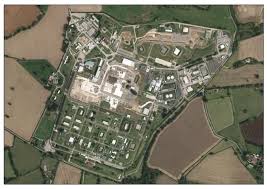
Burghfield Site: Massive cost overrun and six year delay

Taxpayers are set to fork out anywhere between £41 billion ( latest government estimate) and £205 billion ( if you believe the Campaign for Nuclear Disarmament estimate) to pay for replacing Trident.

So it is extremely disturbing to discover that the first facilities to allow this hugely expensive military project to start – are already wildly over budget and years behind schedule.

Our present nuclear deterrent is due to be upgraded in 2030 with the building of four Dreadnought submarines and the government is considering ordering new nuclear warheads from the United States. No doubt this will be one of the discussions between Boris Johnson and Donald Trump.

To get the programme on the road the government signed contracts worth £2.5 billion to upgrade three facilities. They will now cost at least £3.85 billion.

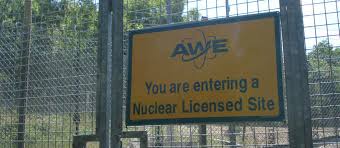
These were a new a new nuclear warhead assembly and disassembly facility at the Atomic Weapons Establishment site at Burghfield.

A new nuclear core production capability at the Rolls Royce site in Derby to produce the latest nuclear reactor core designs.

And a new facility at the BAE Systems shipyard at Barrow-in-Furness where the new Dreadnought class submarines to carry nuclear missiles will be built.

After a damning National Audit Office investigation into the projects MPs on the Commons Public Accounts Committee have produced their verdict on the projects and it is not a pretty sight.

Warning to the public: is your taxpayer’s ,
money safe here?

For a start the whole cost has shot up by well over 50 per cent and we haven’t even completed any of the projects. The worst case is the project at Burghfield whose costs have increased from £1.8 billion to over £2.8 billion and it has gone up 146 pc since first proposed in 2011. It should have been completed three years ago in 2017 but won’t now be ready until 2023.

Similar cost and time overruns apply to the nuclear reactor core programme which will now cost £484 million should have completed next year but won’t be ready until 2026.

And the work at Barrow now costing £240 million won’t be ready until 2022 – some 20 months behind schedule.

Part of the reason for the mess is that the projects were poorly designed and the ministry went ahead before they had finalised the upgrades.

Scathing remarks from Meg Hillier, chair of the public accounts committee
Pic credit: Creative Commons

No wonder Meg Hillier, the chair of the committee, is so scathing today about the waste of money.

“ To utterly fail to learn from mistakes over decades, to spectacularly repeat the same mistakes at huge cost to the taxpayer – and at huge cost to confidence in our defence capabilities – is completely unacceptable.  We see too often these same mistakes repeated.

“The Department knows it can’t go on like this, it knows it must change and operate differently. The test now is to see how it will do that, and soon.

“We expect the MoD to report to us later this year, in its 2020 update on the Dreadnought nuclear submarine programme, on how it is working with industry and other departments to develop and keep in place the skills it badly needs to take forward nuclear work.

We also expect a detailed assessment, of whether the current ownership arrangements for nuclear regulated sites are in the best interests of the taxpayer, to be provided to us by the end of this year.” 

What is extraordinary is this ministry has a track record of over budget and late projects stretching back 30 years. Boris Johnson’s spooky adviser, Dominic Cummings, wants a review of how the ministry runs its entire procurement programme.

I don’t agree with him on practically everything else but in this case he is spot on.

Useful documents: House of Commons library report on the cost of the nuclear deterrent here.

National Audit Office report on the scandal here.

Public Accounts Committee report here.

Revealed:The chaotic free prescription and dental treatment scandal

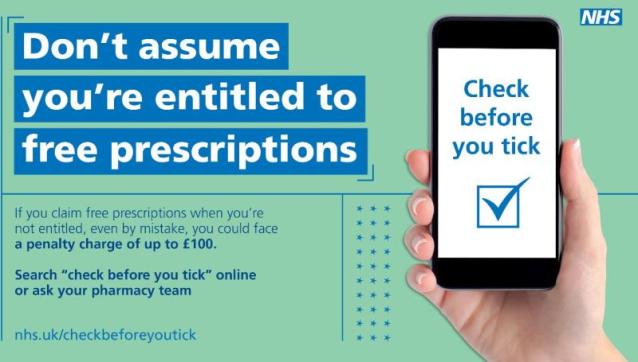
An example of an attempt to check whether you are entitled to a free prescription by Trent Valley Surgery

If you are under 60 and over 16 do you know when you can get a free prescription and free dental treatment? No, if you don’t you are in good company and if you claim could even be one of 1.7 million people in England falsely sent a £100 penalty by the NHS.

A absolutely scathing report out today from MPs on the Commons Public Accounts Committee today describes the whole system for regulating free prescriptions and dental services as ” not fit for purpose “.

It reveals that despite a so called 24 page ” simplified ” guide telling you when you qualify most people are completely confused and rightly so.And if you get it wrong you are automatically guilty of fraud and get a £100 penalty fine rising to £150 if you don’t pay it promptly.

The report said :” Exemptions from prescription and dental charges include age, maternity, receipt of certain means-tested benefits, low income, and long-term medical conditions in some cases, although we are told that this list of long-term conditions has not been updated for 50 years [YES 50 YEARS -my point] save the addition of cancer in 2009. “

Worse qualification for a free prescription does not automatically qualify you for free dental treatment. And if you are on Universal Credit your right to claim will vary from month to month depending on your income.

The report says : “There is currently no way of indicating receipt of Universal Credit on prescription forms, resulting in more confusion, and the Department for Work and Pensions does not confirm eligibility when they write to claimants about their confirmed benefit entitlements.”

The result of all this chaos is that since 2014 no fewer than 5.6 million penalty notices have been issued and 1.7 million have had to dropped once the person challenged it because it was found out they were entitled to claim.

Naturally the threat of penalities has made vulnerable people more frightened of going to the dentist for essential treatment in case they were fined and to get prescription medicines.

Worse the policing of the system to prevent fraud has been an abysmal failure. The report found “nearly 115,000 people have received five or more PCNs [penalty notices] for prescriptions, over 1,600 have received 20 or more—yet only five cases have been referred to the Crown Prosecution Service. Only one has been heard in court ” Yes that it right one court case.

And anyway the NHS does not have a proper system for collecting the debt – relying in part on Capita.

The MPs said: “The PCN process generated a net yield of £25 million for the NHS, a pitiful sum compared to the annual cost of prescriptions which is around £9 billion. We do not dispute that it is right to try and deter fraud and recover costs mistakenly paid by the NHS, but the current system is not fit for purpose.

Now there is a simple high tech solution to check prescription entitlement in real time – and the government is committed to eventually introducing a computerised system. It is trialing one now in just four chemists. How pathetic is that.

Meg Hillier, chair of the committee, makes some very pertinent points .

Patients find it very confusing to understand whether or not they can claim free prescriptions or dental treatment because of a convoluted system that causes patients, in some cases, distress.

“A presumption of guilt means penalty charge notices are issued too readily, particularly where vulnerable people are concerned. Yet where there is clear evidence that people are persistently committing fraud by making false claims, there has been a failure to take effective action.

The Committee fully support efforts to deter fraud and pursue those who claim exemptions to which they are not entitled to but the current penalty notice system is cumbersome, inefficient and not fit for purpose.

The Department should substantially overhaul the system, so that those who are rightfully entitled to free prescriptions and dental treatment get the exemption they deserve.”

Over to the NHS to sort out this scandal – one among many. MPs want to call officials back next year to explain how they have solved it.

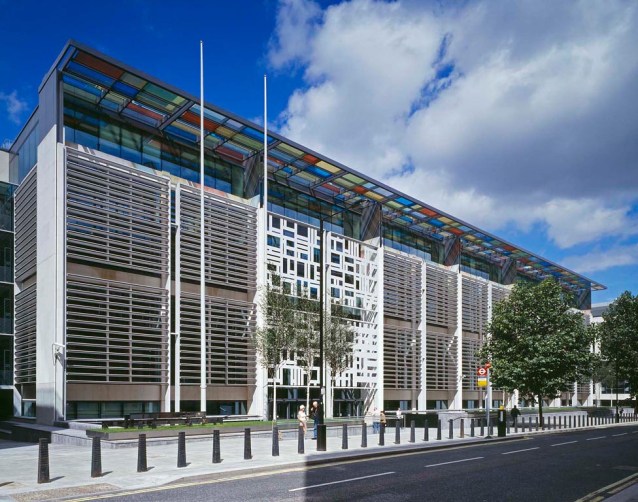
On Byline Times: MPs slam Home Office for “Windrush” scandal that hit 50,000 overseas students over cheating claims

Home Office HQ: MPs accuse the ministry under Theresa May of ” entirely unacceptable” behaviour in handling the problem

MPs today accused the Home Office of learning nothing from another “Windrush” scandal over their treatment of 50,000 overseas students from outside the EU and European Economic Area who were said – many wrongly – of cheating in oral English language tests to get a university place.

The Commons Public Accounts Committee said it is “staggered” by the uncaring attitude of the Home Office over the fate of thousands of students who were accused five years ago and had their visas cancelled or voluntarily left the country as a result. Others had to spend thousands of pounds to win court cases against the government to prove their innocence.

The full story is here on Byline Times.