Social Security watchdog warns ministers of flaws in the scheme to scrap pensioner winter fuel allowances

Department for Work and Pensions

In a polite but tough message to Liz Kendall, the work and pensions secretary, the Government’s official advisory body on social security, has exposed flaws in the government’s implementation of its rushed policy to abolish winter fuel allowances for 9.3 million pensioners and encourage the poorest to claim pension credit.

It also undermines the government’s case that it couldn’t consult them in advance because of the short timetable Sir Keir Starmer and chancellor Rachel Reeves imposed on introducing the change.

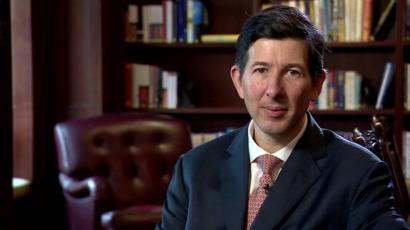
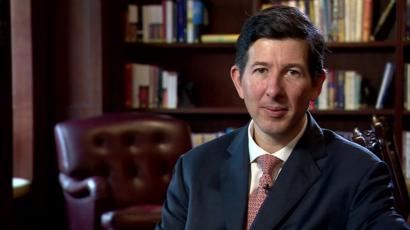
Dr Stephen Brien, chair of the Social Security Advisory Committee, says in a letter to Liz Kendall, ” I trust you will agree, there are considerable benefits in draft legislation being presented to us for statutory scrutiny before being laid, and that ‘urgency’ should be used only in exceptional circumstances. This Committee has a strong track record of supporting successive Secretaries of State respond at pace to emerging crises and risks. We have often arranged additional meetings to enable scrutiny to take place at short notice, in an attempt to avoid the need for invoking the urgency procedure. ”

In other words; ” we could have accommodated you, if only you had asked.”

The letter goes on to point out problems implementing the plans to increase the uptake in Pension Credit and outline flaws in the changes.

It reveals that although the ministry is committed to recruiting an extra 450 staff to cope with the demand for new pension credit claims not one of them can start handling a single claim for two months because they need training.

As the committee points out:” we remain concerned about the capacity of the Department to process Pension Credit claims in a timely way, ensuring that not only are people able to establish entitlement to Winter Fuel Payments, but also that they can be paid this Winter – at the point at which they are needed most.”

In other words ” given your timetable some of the poorest could wait to winter 2025 to get a penny”.

And it questions the headline figure of £1.3 million savings pointing out it could vary because of the extra costs of paying out more pension credit. The government only provides one example – assuming a 5 per cent extra take up from the 880,000 who could get it.

The letter says: This figure is ” representing a little over 100,000 additional households. We have not been presented with any rationale for such a central case estimate (corresponding to a closing by just 14% of eligible non-recipients).”

The committee would expect the government to provide a range of estimates – and points out that if they don’t provide one, the Office for Budgetary Responsibility will do it for them in the Budget.

It adds; ” this is no substitute for the Department’s timely analysis in support of its own proposals disconnected from the Budget process.”

5000 pensioners could be worse off by switching to pension credit

When it comes to flaws the most glaring one affects a small minority of 5,000 of the 10.8 million pensioners who are affected who claim child tax credits. If they claim pension credit to get the fuel allowance , it reveals, THEY COULD BE WORSE OFF because they lose the child tax credit. And the Department has not even told them.

The letter says: ” In the absence of any tailored communications for this group during the current take-up campaign, the Committee is concerned about the potential for confusion about what this group should do. In particular, there is a potential risk that some people may take steps to move onto Pension Credit in the belief that this would be beneficial, but ultimately be financially disadvantaged.”

It calls for an urgent change to the regulations to allow any pensioner who inadvertently does this to revert back to the existing system.

Then there those on housing benefit – a means tested benefit which does not qualify by itself for pension credit.

The committee says: “The Committee understands that take-up of pensioner Housing Benefit is higher than for Pension Credit and that around 120,000 pensioners on HB only might qualify for Pension Credit if they claimed it.”

It urgently recommends that these people are passported straight onto pension credit for this year only while their claims for pension credit are checked.

Finally there are the disabled. “The Department estimates that around 71% (1.6 million) of people with a disability will lose entitlement to the allowance.” Again the committee calls for the government to target those people who claim means tested benefits because they are disabled to make them aware of pension credit.

It goes on to criticise the government for not having an impact assessment of its own proposals – Sir Keir Starmer thought it wasn’t necessary – and warn the government that the Public Sector Equality Duty could be breached.

“Having identified any disparities in impact across protected groups, we would like to have a greater understanding of how this evidence has influenced, and been reflected in, the regulations. For example, what anticipatory actions have been taken; and what types of disparity are considered a necessary consequence of the policy intent?”

In fact according to the Office for National statistics the cuts are aimed almost exclusively at white British people – only five per cent of those affected are from ethnic minorities.

This again shows how rushed regulations can be full of holes and unintended consequences and that neither Sir Keir Starmer nor Rachel Reeves took enough care over drafting them. Perhaps they genuinely don’t care, as pensioners can’t play a role in their growth plans and the sooner they die off the better. I wonder whether either of them have any grandparents.

One-Time
Monthly
Yearly

Make a one-time donation

Make a monthly donation

Make a yearly donation

Choose an amount

£5.00
£10.00
£20.00
£5.00
£15.00
£100.00
£5.00
£15.00
£100.00

Or enter a custom amount

£

Your contribution is appreciated.

Your contribution is appreciated.

Your contribution is appreciated.

DonateDonate monthlyDonate yearly

Please donate to Westminster Confidential

£10.00

Coffey sneaks through tough plan to push 114,000 Universal Credit claimants into jobs while Parliament is in recess

Therese Coffey :Pic credit: gov.uk

The Department of Work and Pensions is to tighten the rules significantly to force 114,000 existing Universal Credit claimants into work as job vacancies soar across Britain.

She is changing the rules so far more people will have to go on what is known as an intensive work search regime where they will be monitored continually by work coaches on how many jobs they have applied for and why they didn’t get them.

Therese Coffey has been planning to do this since January this year and consulted the Social Security Advisory Committee, chaired by the architect of Universal Credit, Stephen Brien, on January 26.

Ian Caplan, DWP’s Director of Employment, Youth and Skills

A letter to the committee from Ian Caplan, director of employment, youth and skills said:

“The Secretary of State wishes to bring in the change as soon as practically possible…for providing immediate support to low-earning households to increase incomes at a time of immense cost of living pressures…. By bringing these regulations into force as quickly as possible, including by laying the regulations in recess, the Department can start making the operational preparations”

SSAC kept decision secret for 8 months

The committee approved the idea on February 4th but agreed to keep the decision secret until last week when it published the minutes of a meeting between DWP officials and the committee.

To make the change the government is using a regulation to uprate what is known as the Administrative Earnings Threshold – a device which sets the level of benefit and earnings dividing those who only receive ” a light touch” regime – ie occasional checks whether they are seeking work – from their local job centre and those put on intensive work search programmes. Those who refuse or don’t co-operate properly with face benefit cuts as a sanction.

It will move the level from £355 to £494 a month for a single claimant and from £567 to £782 a month for a couple. At present some 250,000 people covered by the intensive work search programme are in work – this will increase the number by 50 percent. The government justify it by saying the new level brings it into line with recent rises in the national minimum wage for those in work.

What is more interesting – and perhaps why the minutes were withheld – is the question and answer session between the committee members and civil servants.

While the overall aim of the scheme is to get a higher income for the unemployed – by getting them work or more work for those in part time jobs – the DWP admit they have another agenda. Questioned about the current job vacancies level encouraging this move officials said: “the vacancies position the labour market is considered by some to be hot which could be driving inflation.”

In other words by getting more of the unemployed into work, employers would have a bigger pool of labour and would not have to offer higher wages or even compensate people for the rising cost of living.

Will the unemployed be recruited as strikebreakers?

There may now be an even more compelling reason as Therese Coffey wants this to be law from September 26, since the government plans to use agency workers to break the coming strike wave. What would suit ministers would be if the unemployed could be drafted in as agency workers leading to confrontation with striking workers on trains, buses, schools, the NHS, and the post office with shouts of ” scab” and bringing the police in to make mass arrests of strikers. A reminder of the miners’ strike.

There were other gems from the minutes – which in my view revealed the attitudes of the DWP and committee members

There was much questioning about the effect this could have on 16-24 year olds which suggested the programme could work for them. There was concern about the disabled – and an admission by the DWP that except in Yorkshire it had done hardly any research on how this could affect them.

DWP building

What was tellingly missing was the complete lack of interest from the DWP or committee members about the effects on people over the age of 50 and 60. The DWP didn’t even bother to give the committee a breakdown on them. But it is a fact that the rising of the pension age to 66 -particularly among women has seen a big increase in numbers on Universal Credit who can’t get jobs.

I really wonder whether this is prejudice. Women like Therese Coffey, who is 50, have had stellar careers and I wonder if they think women born in the 1950s and 1960s who are on the dole are failures or nonentities, don’t cause them a lot of trouble and don’t turn physically aggressive like some men. So they can be safely ignored. Certainly any thought about their plight or indeed any old person was spectacularly missing from discussion about this new drive.

Please donate to my blog to allow me to continue my forensic reporting.

One-Time
Monthly
Yearly

Make a one-time donation

Make a monthly donation

Make a yearly donation

Choose an amount

£5.00
£10.00
£20.00
£3.00
£9.00
£60.00
£3.00
£9.00
£60.00

Or enter a custom amount

£

Your contribution is appreciated.

Your contribution is appreciated.

Your contribution is appreciated.

DonateDonate monthlyDonate yearly

Please donate to Westminster Confidential

£10.00

Exclusive: Benefits watchdog wants tougher punishment for jobless and disabled claimants after DWP bungles new sanctions system

New sanctions to be imposed in Jobcentres

From November 3 the Department for Work and Pensions introduced a new tough regime for people claiming the new Jobseekers Allowance and the Employment and Support Allowance. They will like those already on Universal Credit have to sign up to a ” claimant commitment ” to undertake whatever work coaches at the DWP demand from them to get a job, Failure to do so leads to a rising number of financial penalties ultimately leading to the withdrawal of all benefits.

The new regulations like the ones dealing with domestic abuse should have been scrutinised by Parliament but the main body that vets them is the little known Social Security Advisory Committee,(SSAC) a watchdog which is expected to see whether the benefit regime is fair and equitable.

Minutes and correspondence released by SSAC show that it has been doing its job since September and is currently involved in discussing the new regulations with Mims Davies, the employment minister.

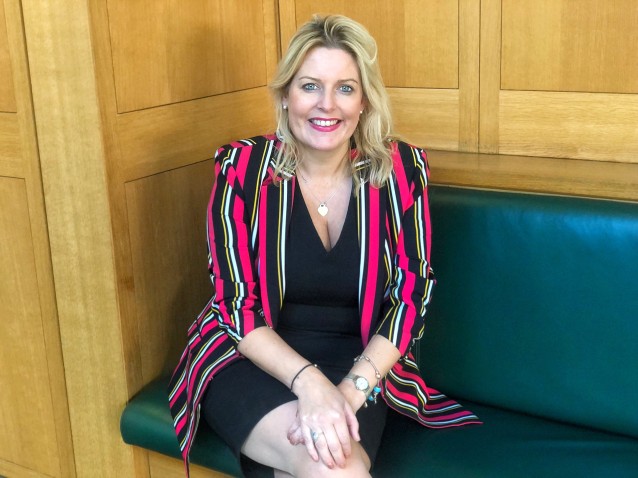
Mim Davies, Parliamentary undersecretary at the Department for Work and Pensions

But people might be surprised to know that SSAC’s main focus has been on increasing the penalties on claimants rather than reducing them.

The reason is that the watchdog spotted that the tabled regulations had a big loophole which, in their view, made them less effective. The hideously complicated benefit system means that there are people who claim both Universal Credit and Jobseekers Allowance or the Employment and Support Allowance. Where they claim both the new regulations say only one penalty can apply on Universal Credit alone – and the Jobseekers Allowance and the Employment and Support Allowance remain untouched.

SSAC want the penalties to apply to both.

Dr Stephen Brien

Dr Stephen Brien, the chair of SSAC wrote to the minister: “in circumstances where the value of UC element of the benefit was lower than the sanctioned amount, the claimant would be in a more favourable position than a claimant solely in receipt of either UC or a new style benefit who would be impacted by the full force of the sanction. As it is possible that the UC element of a dual claim
could be zero, this presents a significant inconsistency.”

He went on: ” the Committee is of the strong view that this inconsistency be reviewed and addressed at the earliest opportunity.” The ministry went ahead with regulations as they stand and is still discussing what it should do while it looks at the effectiveness of the new sanctions.

Since the sanctions system depends on the views of the DWP work coach it looks like the fate of many claimants will decided by individual civil servants. Now it so happens that SSAC has done some serious work on the ” claimant commitment ” rules under Universal Credit which decide whether sanctions will be applied.

The report two years ago is a somewhat idealistic document which expects a parity of esteem between the civil servant handing out the sanction and a desperate claimant getting the benefit. It says the commitment should be accessible, clear, tailored to the claimant’s needs and the state of the local labour market, and agreed by both the claimant and the DWP. It also says claimants should be properly informed.

Real world not the same as the idealistic picture of claimant commitment

However in the real world SSAC found it was pretty mixed picture. It found some good practice but also examples of lone parents not being informed of their right to reduced work searches, re-assessment interviews lasting just ten minutes and “not all work coaches are using discretion fairly or reasonably and opt for generic, rather than tailored, actions. We saw examples of work coaches copying and pasting actions from a shared document which had become standard in their local Jobcentre.”

As usual the DWP itself didn’t seem to have an overall picture of what was happening as it couldn’t be bothered to put together a national picture. So it is rather strange that the present SSAC committee is concentrating on punitive measures. Or is it?

The present committee under Stephen Brien, who worked for Iain Duncan Smith’s Centre for Policy Studies and now works for the United Arab Emirates funded Legatum Institute is more inclined to want to correct inefficiency in the DWP than to take tough action over the welfare of claimants.

What is deeply worrying is that many claimants – particularly more elderly disabled claimants now looking for work in their 60s and suffering poor health could get some very harsh treatment. They might be lucky and get a really sympathetic work coach or they could be landed with a jobsworth or worse a power maniac who enjoys putting the disadvantaged down. Will SSAC be bothered? Documents referred to in this article can be found on the SSAC website here.

Please donate to my site to keep up my forensic monitoring of Westminster and Whitehall.

One-Time
Monthly
Yearly

Make a one-time donation

Make a monthly donation

Make a yearly donation

Choose an amount

£5.00
£10.00
£20.00
£3.00
£9.00
£60.00
£3.00
£9.00
£60.00

Or enter a custom amount

£

Your contribution is appreciated.

Your contribution is appreciated.

Your contribution is appreciated.

DonateDonate monthlyDonate yearly

please donate to Westminster Confidential

PLN 10.00

DWP dumps on benefit watchdog and ignores plea for more help for victims of domestic violence

The Department of Work and Pensions has rejected any changes to its new minimalist regulations to exempt victims of domestic violence -mainly women – from paying the ” bedroom tax ” and helping them to find out how they could qualify to keep more of their benefits.

Ministry turns down plea from social security watchdog

As I reported ten days ago the release of minutes from the little known Social Security Advisory Committee revealed in July the body chaired by Stephen Brien who worked for Ian Duncan Smith’s think tank had written to the ministry criticising the proposed regulations for being too narrow and the ministry for not running a prominent campaign to let victims know they will now be exempt.

The exemption applies to anybody who wants to stay in their own home and has thrown out an abusive partner and enrols in a sanctuary scheme – which provides extra locks, a fireproof letterbox and in extreme cases a reinforced door to a ” panic room” should the abusive partner return and break into the house.

The problem is that not all women know about this and the exemption only applies to council homes and flats. Also abuse from stalkers or strangers is not covered by the new regulations.

Mr Brien wrote: “Given the vulnerable situations of those affected, there is a compelling case for the Department to examine what options exist in terms of proactively identifying those potentially affected. This should be supplemented by a strong communications strategy that sets out clearly the criteria for this exemption, along with guidance on how to access it.”
“There is a risk that a number of claimants entitled to take advantage of this scheme, particularly those who have already benefitted from a sanctuary scheme security adaptation prior to these regulations coming into force, will be unaware of this change.”

Ministry rejects plea to change the regulation

But the DWP has told me not only will there be no changes but they had already implemented the regulations which came into force on October 1.

A DWP spokesperson said:

“The Department offers support to victims of domestic abuse, whether in the private rented sector or not. The benefit system acts as a safety net for people who find themselves in need of financial support with living and housing costs for a variety of reasons. A range of Universal Credit measures are designed to support victims of domestic abuse, including special provisions for temporary accommodation, same day advances, easements from work-related requirements and signposting to expert third-party services.”

Now for these regulations to become law they have to be scrutinised by Parliament. So I looked up what had happened.

It turns out the ministry laid the regulations before the House of Commons and the House of Lords on September 9 – a Thursday evening just before MPs and peers went off for the weekend. They were laid under what is known as a negative statutory instrument – which means that unless a peer or a MP objects they automatically can become law three weeks later.

Not one MP or peer spoke up about this

The regulations were laid alongside numerous other regulations including changes to Covid 19 pandemic regulations. Not one MP or peer objected or even spoke about it.

They would not have known about the criticism from the watchdog body because its minutes had not been published then. Nevertheless this shows up the ineffectiveness of MPs and peers – who have more time – in scrutinising what the executive is doing.

Given the high profile issue of violence against women after the kidnap and murder of Sarah Everard by a serving Met Police officer it is pretty deplorable that a ministry can get away with this.

Benefits watchdog keeps mum

I sent the ministry’s response to the watchdog body – which regards scrutinising regulations as its main priority – and it decided not to comment, preferring to keep silent about its advice being ignored .I haven’t had a reply from the House of Lords on why the new regulations were missed.

However I have discovered the ministry has issued new advice six days ago to its housing benefit officers. It is here and victims of domestic abuse should challenge officials about getting an exemption.

For those in England I would suggest contacting Shelter. The charity has a comprehensive guide for victims of domestic abuse here. It includes a list of other charities who can help.

So if the ministry, the social security watchdog and Parliament are so ineffectual, at least this blog can highlight some information so more people know about it.

Previous Blog

https://davidhencke.com/2021/10/03/exclusive-half-baked-and-half-hearted-dwps-help-for-women-facing-domestic-abuse-and-violence/

Please consider a donation to allow me to expand and develop this blog to hold more people and government to account

One-Time
Monthly
Yearly

Make a one-time donation

Make a monthly donation

Make a yearly donation

Choose an amount

£3.00
£5.00
£10.00
£3.00
£9.00
£60.00
£3.00
£9.00
£60.00

Or enter a custom amount

£

Your contribution is appreciated.

Your contribution is appreciated.

Your contribution is appreciated.

DonateDonate monthlyDonate yearly

Donate to Westminster Confidential

£10.00
How the ” emotionally attached ” architect of Universal Credit will now be its chief DWP scrutineer

Dr Stephen Brien: The architect of Universal Credit. Pic credit: BBC

Self declared non politically active appointee turns out to be one of Iain Duncan Smith’s close advisers

A very important quango appointment has been made by the Conservative government which could affect the treatment of millions of benefit claimants -especially the huge number on Universal Credit.

It is to a fairly obscure body known as the Social Security Advisory Committee – which provides impartial advice on social security. It scrutinises most of the complex secondary legislation that underpins the social security system.

Put it more simply, its advice will influence how the DWP treats millions of poor, disabled, jobless people who are living on the breadline. It will cover a period when the government plans to to claw back money after the huge spending splurge to combat Covid-19.

The appointment is for the chair of the body and it has gone to Dr. Stephen Brien, a man who is publicly credited as the architect of one of the country’s most hated benefits, Universal Credit.

He will now lead until 2024 a committee of people who will both comment on future benefit changes and do independent research on the effects of the benefits system on the poor. The membership of the committee includes Seyi Obakin, Chief Executive of the homeless charity Centrepoint: Phil Jones,Director, The Prince’s Trust Cymru and Liz Sayce, board member of the Care Quality Commission.

Charlotte Pickles.Pic credit: Conservative Home

But Therese Coffey, the secretary of state for works and pensions, has also recently appointed Charlotte Pickles, director of the “non partisan” think tank, Reform and former adviser to Iain Duncan Smith, who piloted Universal Credit. She wrote an article for Conservative Home calling for the abolition of child benefit for millions of people and taxing the Disability Living Allowance. Read it here.

The appointment process for Dr Brien was marred from the start. The works and pensions committee was never informed of the recruitment process which is a breach of Cabinet Office guidelines as the appointment has to be scrutinised by Parliament. They learnt about it after a member of the committee staff spotted it.

This led to an exchange of correspondence between Stephen Timms, the committee’s Labour chairman and Therese Coffey. It is reproduced here.

Not only did Mr Timms complain about the omission but also some subtle change in the wording of the job specification. The 2018 wording asked for ” strong leadership qualities”. The 2020 specification is ” measured and balanced leadership qualities”. Similarly the words ” independent” has been dropped in favour of “impartial”.

Therese Coffey defended the change in wording to reflect the future strategic direction of the organisation and that she wanted ” to strengthen relationships” between ministers and shareholders. She admits she was embarrassed by the omission but can’t bring herself to apologise. It took an earlier letter from Mr Timms to Baroness Stedman-Scott, Lords minister for work and pensions to give her ” sincere apologies”.

The appointment process looked fair – though the small number of applicants -12- were overwhelmingly white with just one disabled person. Six were ruled out without an interview including the disabled person.

Six made the interview including one BAME person. Four were women and two men but only three were considered appointable.

The interviewing panel itself did include one BAME “fast track” woman , Tammy Fevrier, from the DWP Partnership Division.

Dr Brien’s appointment comes under the category of a ” non political ” one according to the code adopted by the Commissioner for Public Appointments. He declares himself :” I am not now and have never been politically active.”

Yet his CV is pretty questionable on this matter. As well as developing the idea for Universal Credit he was on the board of Iain Duncan Smith’s Centre for Social Justice from 2008-11 and 2013-19. This is where he developed the idea of Universal Credit and this is the body that wants to deprive people in their late 60s and early 70s of a state pension by raising the age to 75.

Official Commons portrait of Sir Iain Duncan Smith

On top of this he was a special expert adviser to Iain Duncan Smith in the coalition government from 2010 to 2013 at the DWP where in his words he “Played a substantial role the DWP’s engagement with the Treasury and Office for Budget Responsibility to secure the financial settlement for the reform programme” and “Worked in partnership with the senior officials delivering the Universal Credit”.

This was the time the Treasury insisted on speeding up the rise in the pension age to 66, refused to introduce national insurance auto-credits for women born in the 1950s while keeping them for men and imposed other welfare cuts.

And guess what Charlotte Pickles – also just appointed to SSAC- started her policy career at the Centre for Social Justice and then went on be the expert special adviser to Iain Duncan Smith at the DWP.

Critical friend

MPs did question Dr Brien thoroughly at the appointment hearing – with both Labour MPs Stephen McCabe and Debbie Abrahams pushing him on disabled people’s deaths and whether he was emotionally attached to Universal Credit. See here.

Dr Brien’s mantra was he would be impartial and he kept repeating he will be a ” critical friend” of the ministry.

I wonder. It depends on the balance of being friendly and critical. Either he will use his knowledge- he claims to be passionate about social security since he was 19- to try and make the new system work better. Or will he be part of the new Chumocracy – which takes in everyone from Dominic Cummings, the PM’s adviser and Michael Gove to Rishi Sunak – and give a fair wind to new benefit cuts no doubt with the approval of Charlotte Pickles.

I did an article for Byline Times on how the Conservatives through a former Vote Leave adviser are trying to pack quango appointments with Brexit inclined Tories – though it is not clear whether this is one of them.

I shall be watching. He can start with something he did promise to MPs over transparency. The minutes of SSAC should be public. They have not been published for over a year which is a disgrace. Let’s see how he gets on with this first.